
Understanding the Backswing: Hips vs. Shoulders
When it comes to initiating your backswing in golf, a common question arises: should you start with your hips or your shoulders? In this article, we will explore this question in depth, focusing on the mechanics of a proper backswing and how to engage the right muscles for optimal performance.
The Importance of Setup
Before diving into the specifics of the backswing, it's essential to start with proper setup. Many golfers set up with their head positioned too far back, which can lead to an unstable base and poor swing mechanics. A neutral setup is crucial; you want to feel stacked over your hips and maintain a strong posture throughout the swing.
Engaging the Lower Body
One of the critical aspects of a successful backswing is engaging the lower body, particularly the glutes and hips. If your lower body is not adequately loaded, you might find yourself relying too much on your arms to generate power, leading to a loss of lag and control.
To facilitate this engagement, consider the following drill: during your backswing, focus on feeling tension in your right hip. This might feel exaggerated at first, but it’s crucial for properly loading your muscles. You can practice this by lifting your left foot slightly off the ground, which encourages your weight to shift onto your right foot and engages your glutes.
Correcting Common Mistakes
Many golfers struggle with the sequencing of their swing. A common mistake is allowing the hips to move too loosely, resulting in a lack of control. As you improve, you may become hesitant to move your hips at all, which can lead to an over-reliance on your arms during the swing.
The goal is to find a balance. You should allow your hips to turn naturally in conjunction with your shoulders. However, the primary focus should be on loading your lower body. Remember, the first move in your downswing should be initiated by your hips, not your arms.
Drills to Enhance Muscle Engagement
To help reinforce these concepts, here are a couple of drills you can practice:
- Weight Shift Drill: As you set up, lift your left foot slightly off the ground. This will encourage you to feel the weight in your right glute. Maintain a stable upper body while focusing on the engagement of your lower body.
- Hip Loading Drill: During your backswing, concentrate on turning your hips while keeping your head steady. This will help you feel the tension in your glutes and prepare for a powerful downswing.
Adapting to Different Shots
It's important to note that while these techniques are crucial for longer shots, they can be adjusted for shorter game situations like pitching. For pitches of 70 to 80 yards, you won't need as much power from your lower body, but maintaining the same sequence is essential for consistency.
Key Takeaways
- Engage your lower body during the backswing to maintain control and power.
- A neutral setup leads to better swing mechanics and stability.
- Focus on feeling tension in your glutes to improve muscle engagement.
- Balance the movement of your hips and shoulders for an effective backswing.
- Adapt your technique based on the type of shot you're playing.
See What GOATY Finds in Your Swing
Upload a swing video and get your GOATScore, root cause diagnosis, and personalized drill prescription in 60 seconds.
Analyze My Swing FreeFree, no credit card
Get Your Free Swing AnalysisRelated Articles

Perfect Fix for Inside Golf Takeaway
Discover the perfect fix for an inside golf takeaway to elevate your game and improve your swing mechanics.

Mastering the Right Arm Takeaway in Golf
Discover the crucial role of the right arm in your golf takeaway for a more effective swing. Learn techniques and drills
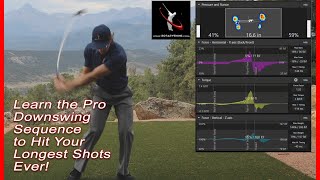
Mastering the Downswing Sequence for Powerful Golf Swings
Learn the essential downswing sequence for powerful golf swings with expert tips from Chuck Quinton. Improve your swing