
Understanding Deceleration in the Golf Swing
In the world of golf instruction, a common misconception is that hitting the ball farther is solely about acceleration. However, what many amateur golfers fail to realize is the critical role that deceleration plays in achieving maximum distance and efficiency in their swings. In this lesson, we will explore why focusing on deceleration can transform your game and lead to better performance on the course.
The Importance of Deceleration
When we talk about deceleration in the golf swing, we're referring to the body's ability to slow down certain parts of the swing at the right time. During the downswing, particularly with longer clubs, the peak speeds occur as the hands move into the hitting zone. It's crucial for the body to start slowing down before reaching the ball. Many amateurs tend to extend their acceleration too long, leading to inefficiencies and strain.
For instance, if you're using an iron like a pitching wedge or a seven iron, your swing generally requires a more controlled, less aggressive motion. This allows your hands to decelerate naturally, which lets the club accelerate through impact. However, with a driver or longer clubs, the absence of a speed limit often leads to excessive acceleration, which can cause issues in your swing.
Common Mistakes and Their Impact
One of the most frequent mistakes amateurs make is failing to decelerate their hips and legs effectively during the swing. As you come down, if your left leg doesn't post up and straighten out, your body continues to rotate when it should be coming to a stop. This causes the right knee to move forward prematurely, leading to a weak follow-through rather than a strong release.
Using 3D motion technology, it's evident that many golfers struggle with the kinematic sequencing of their swings. This can be observed when the head moves off the ball too much during the backswing, causing an inefficient return to impact. When you don't stabilize your left side, it becomes challenging to slow down your hips effectively. The result is a drag through the ball rather than a snap of energy transfer.
Deceleration Techniques
To improve your swing, focus on the concept of 'posting up.' The key is to engage your legs, particularly the left leg, to create a stable platform at impact. This involves actively loading your left glute and preparing it to help decelerate your hips. As you begin your downswing, think about pushing off the ground, which will naturally assist in your deceleration.
For practical application, start with a mini backswing. From there, focus on your left foot pushing the ground away as you decelerate your hips. This motion should feel like a squat to square, where your glutes are activated and your left leg is straightening as you move into the hitting area. This will allow for a clean release of the golf club, resulting in better speed and accuracy.
Building Stability and Power
As you work on these techniques, you'll notice that your hands and arms will become more relaxed, allowing the club to release naturally. This is because the energy is being transferred from your legs rather than being forced through your arms. A good drill to practice is to take a half swing and concentrate on the feeling of your left glute firing as you post up. This will create a more powerful swing without unnecessary tension in your upper body.
Visualizing the Swing
Visualization is a powerful tool in improving your swing mechanics. As you practice, aim to visualize how your legs engage in deceleration to help your upper body follow through more fluidly. Many elite players, like those who follow the GOAT Model, demonstrate this perfectly by showing their hips coming to a near stop at impact, allowing their arms to accelerate through the ball. This principle is what you should aim for in your practice.
Key Takeaways
- Deceleration is crucial for transferring energy efficiently during the golf swing.
- Focus on posting up and engaging your left leg to stabilize your swing.
- Practice drills that emphasize glute activation to enhance your deceleration.
- Visualize your swing to better understand the connection between your legs and upper body.
- Utilizing AI swing analysis can provide insights on kinematic sequencing and help improve your performance.
See What GOATY Finds in Your Swing
Upload a swing video and get your GOATScore, root cause diagnosis, and personalized drill prescription in 60 seconds.
Analyze My Swing FreeFree, no credit card
Get Your Free Swing AnalysisRelated Articles

Unlock Effortless Power in Your Golf Swing
Discover how to achieve distance and consistency in your golf swing with effortless power techniques from Chuck Quinton.
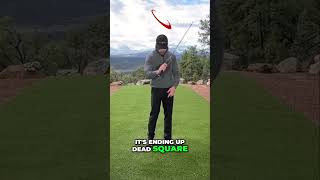
Mastering Clubface Control in Your Golf Swing
Learn how to achieve a square clubface effortlessly in your golf swing with Chuck Quinton's expert tips.
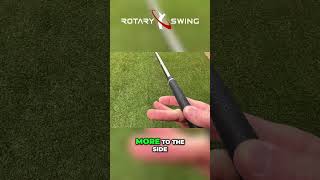
Mastering the Feel of the Sweet Spot in Your Golf Swing
Learn the key to feeling the sweet spot in your golf swing with insights from Chuck Quinton. Improve your game today!