
Understanding the Golf Downswing
The golf downswing is a pivotal phase in the swing that significantly impacts both the distance and accuracy of your shots. At RotarySwing, we focus on how to maximize your swing efficiency, allowing you to hit the ball a long way with minimal effort. This article will detail key principles of the downswing and how to implement them effectively.
The Importance of Body Movement
One of the common sentiments shared by golfers in lessons is, "I don’t feel like I’m doing enough to hit the ball far." This often arises from a misunderstanding of how to effectively use body mechanics in the swing. Most golfers attempt to move the club with their arms and hands, which limits their potential speed and distance.
In contrast, the elite model emphasizes big body movements driven by larger muscle groups. When you focus on your arms, it caps your swing speed, generally preventing amateurs from exceeding speeds of 92 miles per hour. However, by utilizing the muscle mass in your legs, glutes, and back, you can easily surpass 100 miles per hour, achieving tour-level speeds.
Key Principles of the Downswing
1. Shift Your Weight
The first step in the downswing is to shift your weight. This action changes the direction of the club without the need for tight grips or arm tension. By initiating the downswing with a weight shift, you create momentum that propels the club into the correct position.
2. Rotate Your Hips
As you shift your weight, begin to rotate your pelvis towards the target. This hip rotation is crucial as it continues to guide the club down into the hitting area. Focus on relaxing your arms and shoulders during this phase to allow for a more fluid motion.
3. Post Up
After shifting your weight and rotating your hips, the next step is to post up on your lead leg. This action helps to release the club into a powerful impact position. The goal here is to keep the arms and hands relaxed, letting them naturally follow the motion of your body.
Why Relaxation is Key
A common mistake in the downswing is tightening the arms and hands, which can hinder speed and fluidity. When you keep your upper body relaxed, you can generate more speed through the swing. Remember, the arms are not doing the heavy lifting; they are simply following the lead of your body’s larger muscle groups.
Learning from the Elite Model
It's worth noting that many tour professionals apply the fundamentals of RotarySwing in varying degrees. They may have unique swing styles, but they all adhere to the core principles of weight shifting, hip rotation, and relaxation of the arms. Observing these players can provide valuable insights into how you can refine your own swing.
Conclusion
By mastering the downswing through efficient body movement, you can elevate your game to new heights. Emphasizing large muscle movements will lead to more powerful, consistent shots while reducing the risk of injury. As you practice these techniques, remember that AI swing analysis can offer further insights into your mechanics, helping you to identify areas for improvement.
Key Takeaways
- Focus on big body movements instead of using your arms and hands.
- Shift your weight and rotate your hips to create momentum.
- Keep your arms relaxed to maintain speed and fluidity in the downswing.
- Post up on your lead leg to achieve a powerful impact position.
- Learn from the elite model to refine your swing mechanics.
See What GOATY Finds in Your Swing
Upload a swing video and get your GOATScore, root cause diagnosis, and personalized drill prescription in 60 seconds.
Analyze My Swing FreeFree, no credit card
Get Your Free Swing AnalysisRelated Articles
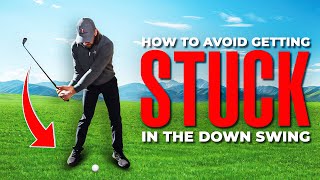
Avoid Getting Stuck in the Golf Downswing: Key Techniques
Learn how to avoid getting stuck in your golf downswing with essential techniques and drills from Chuck Quinton.

Unlock Effortless Swing Speed Like the Pros
Discover the secret to achieving effortless swing speed with key techniques for a more powerful golf swing.

Correcting Weight Distribution in Your Golf Setup
Learn the truth about weight distribution and balance in your golf swing setup to improve your performance on the course