
The Importance of a Proper Golf Grip
Many golfers don’t realize that the grip they use can significantly impact their swing mechanics and overall performance. Often, when struggling with a slice or hook, the immediate adjustment suggested is to change the grip. However, this band-aid fix can lead to loss of clubhead speed and make it difficult to square the clubface at impact. Instead, having a solid grip foundation is critical to maximizing your golf swing.
Checkpoint 1: Positioning the Left Hand
To start, let’s focus on how to correctly position your lead hand (left hand for right-handed players). The grip should rest right at the base of your fingers—not too high in the fingers or too low in the palm. This positioning provides a solid foundation for your grip.
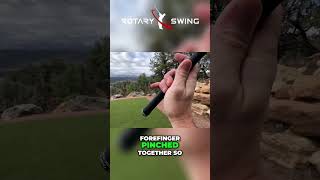
Once the club is positioned correctly, wrap your fingers around it. Pay special attention to the relationship between your thumb and pointer finger; they should be pinched together lightly, forming a 'V' shape. This helps maintain control of the club throughout the swing.
Checkpoint 2: Grip Strength and Visualization
Next, let’s examine how strong or weak your grip should be. Stand in your setup position without the club, resting it against your right thigh. Ensure your shoulders are in a neutral posture and avoid rounding them forward.
Slowly move your left arm across your body until it’s directly under your chest logo. It’s crucial to keep your thumb and pointer finger pinched together during this exercise. When you bring the club back to your left hand, aim to see about two to two and a half knuckles without adjusting your grip. This will help ensure you’re in a neutral position.
Checkpoint 3: The Right Hand Position
Now it’s time to place your right hand on the club. Golf instructors often debate whether an interlock or overlap grip is better, and neither has definitive evidence to support one over the other. Personally, I prefer the interlock grip for better control, especially for those with shorter fingers or wider palms.
For the interlock grip, start by positioning the club in your left hand as directed in checkpoint one. With your right hand, create a 'shadow puppet' with your pinky finger down. As you bring your right hand to the club, interlock your fingers, ensuring you grip at the base of the fingers where it meets the palm. Your thumb and pointer finger should still be pinched together.
Check that the 'V' formed by your right hand is pointing towards your right shoulder while the 'V' of your left hand points to your right ear. This alignment is essential for a proper grip.
Checkpoint 4: Using the Overlap Grip
If you prefer the overlap grip, the process is similar. Instead of interlocking fingers, allow your pinky to rest between the pointer and middle fingers of your left hand. Again, ensure that both V's are correctly aligned as previously described.
Recapping the Key Points
Let’s summarize the checkpoints to ensure you have a clear understanding of how to achieve the perfect grip:
- Position the club at the base of your fingers in your left hand.
- Pinch your thumb and pointer finger together to create a stable grip.
- Ensure you can see two to two and a half knuckles when you grip the club.
- For the right hand, either interlock or overlap your fingers based on your comfort level.
- Confirm that the V's from both hands are correctly positioned.
Remember, you don’t need to change your grip to fix a hook or slice; there may be other swing factors at play. Focusing on these grip checkpoints will provide you with a more solid foundation for a better golf swing.
Key Takeaways
- A proper grip is crucial for squaring the clubface at impact.
- Position the club at the base of your fingers for better control.
- Maintain a light pinch between your thumb and pointer finger.
- Choose between interlock or overlap grips based on your comfort and control.
- Use checkpoints to ensure your grip is consistent for every swing.
See What GOATY Finds in Your Swing
Upload a swing video and get your GOATScore, root cause diagnosis, and personalized drill prescription in 60 seconds.
Analyze My Swing FreeFree, no credit card
Get Your Free Swing AnalysisRelated Articles
Master Your Grip for Complete Control in Golf
Learn how to grip the golf club for optimal control and power, focusing on the middle finger for a better swing.

Master Your Golf Swing with This Game-Changing Technique
Learn how to enhance your golf swing speed with this effective technique focusing on shoulder rotation and arm extension
Avoid This Golf Grip Mistake for More Swing Speed
Learn how to perfect your golf grip to enhance swing speed and performance. Avoid common mistakes with expert tips from