
Introduction to Athleticism in Golf
Golf is often seen as a game that requires finesse and precision, but for many athletes transitioning to golf, their natural athleticism can feel lost. In this comprehensive lesson, we explore how former NFL quarterback Aaron Murray learned to swing a golf club like the elite models do, using athletic principles he's already familiar with. This session reveals common pitfalls amateur golfers face, particularly the tendency to rely solely on upper body strength without properly engaging the lower body.
Understanding the Common Mistakes
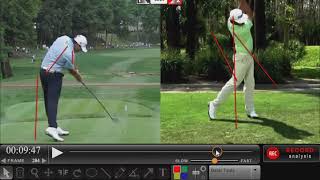
When we first observed Aaron's swing, it was apparent that he was using a lot of upper body strength. Many amateur golfers tend to fire their arms and shoulders from the top of the swing, neglecting the lower body. This issue is prevalent across all levels of golfers. Aaron's hands traced a straight path from the top to the ball, which is a typical sign of an inefficient swing. Instead of utilizing the legs effectively, the swing relied heavily on arm and shoulder strength, leading to inconsistent contact and power.
The Role of the Lower Body
In golf, the lower body is crucial for generating power and maintaining balance. When the lower body is inactive, it can create torque issues that inhibit a smooth swing. In Aaron's case, his hips were square at impact, which meant he wasn't using his legs to their full potential. This lack of engagement not only affects power but also consistency, as the swing becomes reliant on timing and hand-eye coordination rather than proper mechanics.
The Throw the Ball Drill
To help Aaron reconnect with his athletic abilities, we introduced the "Throw the Ball" drill, which is designed to encourage proper sequencing and engagement of the lower body. This drill emphasizes how to load and use the right arm while allowing the lower body to lead the downswing. By visualizing a throwing motion—similar to what he used as a quarterback—Aaron could better understand how to sequence his body movements in the golf swing.
Executing the Drill
The drill begins with focusing on throwing a ball downwards. This action naturally engages the hips and promotes a proper weight shift. As Aaron practiced this motion, he began to feel his lower body participating in the swing, which was a significant shift from his initial upper body-dominant swing. The key was to let the right arm travel back while the hips began to turn, creating the necessary space for a fluid motion.
Integrating the Left Hand
Once Aaron had the right arm movement down, we integrated the left hand into the swing. The goal was to maintain the same lower body engagement while allowing the left hand to guide the clubface. It’s crucial that the left hand does not dominate the swing but rather supports the natural throwing motion. This combination helps to create a swing that feels more athletic and less mechanical.
Observing the Changes
As Aaron continued to work on these drills, the improvements were visible. His hips began to open up more during the downswing, allowing for a more dynamic impact position. We noticed that his hands were dropping straight down rather than moving outward toward the ball, which is essential for creating the correct swing path. This change in sequencing enabled him to achieve a shallower angle of attack, which is key to better ball striking.
Key Concepts for Consistent Golfing
Through this lesson, several key concepts emerged that can benefit any golfer looking to improve their swing:
- Engage the Lower Body: The lower body must lead the swing to create power and maintain balance.
- Practice the Throwing Motion: Utilizing drills that mimic throwing can help integrate athletic movement into the golf swing.
- Focus on Sequencing: Allow the hips to lead the downswing while keeping the arms relaxed for a more efficient swing.
- Integrate Both Hands Smoothly: Ensure that the left hand assists rather than dominates the swing for better control and accuracy.
Key Takeaways
- Utilize your athletic background to enhance your golf swing.
- Engage your lower body to improve consistency and power.
- Practice drills that encourage natural body movements.
- Focus on proper sequencing to achieve a fluid swing.
- Monitor your swing mechanics using tools like AI swing analysis for feedback and improvement.
See What GOATY Finds in Your Swing
Upload a swing video and get your GOATScore, root cause diagnosis, and personalized drill prescription in 60 seconds.
Analyze My Swing FreeFree, no credit card
Get Your Free Swing AnalysisRelated Articles
Two Key Moves for Consistency in Golf Like Koepka
Learn two essential moves from Brooks Koepka's swing for consistent power and ball striking in golf. Improve your game t

Master Your Golf Swing Takeaway for Consistency
Learn the perfect golf swing takeaway drill to enhance your consistency on the course. Discover tips and techniques for

Mastering Left Knee Movement for Consistent Golf Swings
Discover the key to a stable golf swing by optimizing left knee movement for increased consistency and power. Learn how