
Introduction to Golf Swing Extension
Welcome to the final installment of our series, where we’ll focus on achieving proper extension in your finish position. Many amateur golfers struggle with what is commonly referred to as the "chicken wing" look, which can lead to erratic ball striking and inconsistent performance on the course. Today, we'll explore effective strategies to eliminate this issue and enhance your overall swing.
Recapping Key Concepts
Before diving into this week's drill, let’s recap some essential points we've covered in the previous videos:
- Minimizing Head Movement: Keeping your head stable and centered throughout the swing reduces unnecessary movements that can affect your ball striking.
- Controlling Spine Extension: We discussed the importance of maintaining proper spinal alignment to improve your swing mechanics.
- Reducing Tension: Learning how to relax your hands and arms can lead to a smoother and more effective swing.
This series is designed to be a resource you can revisit whenever you start to notice faults in your swing. By practicing the drills covered in each video, you can gradually eliminate bad habits and return to playing your best golf.
The Importance of Extension After Impact
Now, let’s focus on how to create proper extension after impact. Many golfers might wonder why this matters since the ball is already gone. However, the mechanics that occur post-impact can provide valuable insights into your swing faults. For instance, if you frequently see that chicken wing appearance, it can be traced back to improper mechanics during the follow-through.
Understanding the Chicken Wing
To understand the chicken wing phenomenon, imagine pushing your lead arm across your center. As you continue to push, your trail arm will eventually break down. This breakdown typically happens when golfers rely too heavily on their trail side during the swing. Our goal is to counteract this tendency by implementing effective drills.
Drill for Proper Extension
Here’s the drill to help you achieve proper extension:
- Weight Shift: As you swing, focus on shifting your weight onto your left side. Ensure that your left shoulder, left hip socket, left knee, and left ankle are all stacked up properly. This alignment is crucial for maintaining balance and posture.
- Button Position: While releasing the club, keep the buttons on your shirt positioned behind your belt buckle. If you find your buttons moving in front of your belt buckle, it indicates that you’re engaging too much of your trail side.
- Practice the Follow-Through: After achieving the left side alignment, allow the club to pull you into the finish position while keeping your buttons back for as long as possible. This will steepen your shoulder plane slightly, helping your arms stay extended out in front of your body.
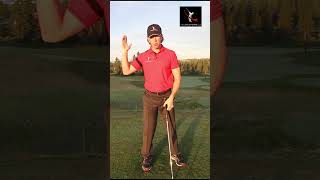
Here’s a quick visual: when you shift left and keep your buttons back, you’ll notice a change in your shoulder plane that encourages proper extension and path for the club. This adjustment not only aids in maintaining the correct swing path but also contributes to more consistent ball striking.
Conclusion
As we wrap up this series, remember that mastering these concepts requires practice. Aim for at least a thousand repetitions of this drill over the next week to solidify your understanding and execution of proper extension in your swing. Consistency and solid ball striking are just around the corner!
Key Takeaways
- Focus on minimizing head movement to improve swing stability.
- Shift your weight correctly to achieve proper alignment during your swing.
- Keep your buttons behind your belt buckle to avoid chicken wing tendencies.
- Practice the follow-through to enhance club path and ball striking.
- Revisit drills as needed to eliminate bad habits and improve performance.
See What GOATY Finds in Your Swing
Upload a swing video and get your GOATScore, root cause diagnosis, and personalized drill prescription in 60 seconds.
Analyze My Swing FreeFree, no credit card
Get Your Free Swing AnalysisRelated Articles

Transform Your Golf Game: Add 20 Yards in 15 Minutes
Unlock your potential and learn to drive your golf ball 20 yards further with this game-changing drill. Discover the sec

Quantum Leap in Your Golf Ball Striking
Discover how to make a quantum leap in your golf ball striking with expert tips and drills for consistent accuracy and d
Master Your Golf Backswing with Rotary Swing Techniques
Learn how to achieve a perfect golf backswing with simple rotary swing techniques focusing on arm elevation, rotation, a