
Understanding the Importance of Transition in Golf
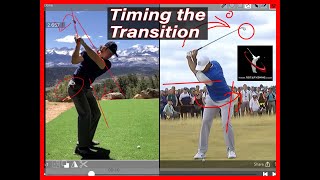
One of the most common aspects of the golf swing that golfers struggle with is the transition from the backswing to the downswing. Many players mistakenly believe that swinging fast and hard from the top will generate speed by the time they reach impact. In reality, the opposite is usually true. To play great golf, hit the ball long distances effortlessly, and enjoy the game for a lifetime, mastering the sequence of the transition and the technique of impact is essential.
If players fail to learn the proper sequencing, they often struggle with issues like flipping the ball, hitting it too high and weak, or failing to compress the ball properly. One of the most enjoyable experiences in golf is hitting a well-compressed shot, and achieving this requires understanding the transition sequence.
Drilling Down into the Transition Sequence
To master the transition from backswing to downswing, golfers need to embrace a methodical approach. This involves hitting a lot of quarter, half, and three-quarter shots to develop a feel for the sequencing and timing before progressing to a full swing.
Start by pausing at the top of your backswing. This pause allows you to focus on the next crucial steps. From the top, initiate your downswing by shifting your weight to the left. As you do this, your left wrist should bend back, and the club should come in narrow, staying close to your right shoulder.
Key Movements to Master
Next, bring your hands down to your right thigh. If your hands reach your right thigh while the club shaft remains parallel to the ground, you have successfully maintained the necessary lag to hit a good shot. If, however, your hands drop down and the club shaft is not parallel to the ground, you risk flipping the club and losing power.
As you shift down, focus on keeping your upper body and hips feeling somewhat shut. This means that your left shoulder should remain low, rather than lifting up and out. Maintaining lag is critical, and one way to reinforce this is by visualizing getting the back of your left hand to the pant seam on your left thigh. Your left arm should be vertical, creating a right angle between your left arm and the club shaft while still keeping it parallel to the ground.
Adjusting for Different Skill Levels
For more advanced players, there’s a point where getting your hands too far ahead can result in hitting low shots and making it difficult to release the clubface effectively. If you’re someone who has struggled with casting the club, sequence your motion down to the right thigh before releasing it. This may feel exaggerated, but it is necessary for preventing casting.
Clubface Control
From a down-the-line perspective, as you transition into your downswing, ensure that your clubface squares early. The ideal position at your right thigh is for the clubface to be slightly shut. If the clubface is too open, it will require more effort to time the flip and square it up at impact. A slightly shut face minimizes the need for aggressive flipping, allowing for a smoother release.
Practicing the Transition
When practicing this drill, it’s beneficial to start without a golf club or even flip the club upside down to focus on the movements. Begin by going to the top, shifting down, and pulling your hands down to the thigh. As you gain comfort with this motion, gradually incorporate the club and work through the transition piece by piece, pausing at each step.
Initially, you may find that your shots travel only 10 to 15 yards. This is okay as you focus on executing each phase correctly. Once you feel confident with the half and three-quarter shots, you can start to integrate more timing and speed into your swings while still maintaining proper sequencing.
Final Thoughts
As you work through your swings, remember that the key to mastering the transition lies in taking things slowly and focusing on technique. Over time, you’ll find yourself in positions you never thought possible, leading to improved performance on the course.
Key Takeaways
- Master the transition from backswing to downswing for better shots.
- Focus on maintaining lag and proper impact alignments.
- Practice with shorter swings before moving to full swings.
- Ensure clubface control for effective timing and release.
- Take it slow to build confidence and technique.
See What GOATY Finds in Your Swing
Upload a swing video and get your GOATScore, root cause diagnosis, and personalized drill prescription in 60 seconds.
Analyze My Swing FreeFree, no credit card
Get Your Free Swing AnalysisRelated Articles
Mastering the Transition in Your Golf Swing
Learn the critical timing and sequence for a perfect golf swing transition. Discover how to improve your swing today!

Transform Your Golf Game: Add 20 Yards in 15 Minutes
Unlock your potential and learn to drive your golf ball 20 yards further with this game-changing drill. Discover the sec

Quantum Leap in Your Golf Ball Striking
Discover how to make a quantum leap in your golf ball striking with expert tips and drills for consistent accuracy and d