
Understanding Hip Movement in the Backswing
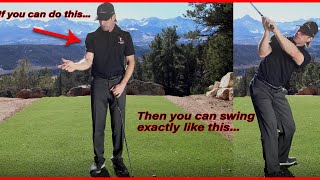
One of the most common questions golfers face is whether to restrict or allow their hips to turn in the backswing. Contrary to the belief that a restricted hip movement leads to better control, the truth is you actually want to load your hips effectively. This involves a combination of shifting and turning your hips correctly to generate maximum power and consistency in your shots.
The Importance of Hip Loading
When we talk about loading your hips, it is crucial to understand that this process begins immediately off the ball. By the time your left arm is parallel to the ground in the backswing, you should already have shifted maximum pressure onto your right leg. This sets you up to transition smoothly back to the left side, where maximum pressure should be on your left leg by the time your left arm is parallel to the ground in the downswing.
Common Mistakes in Hip Movement
Many golfers tend to slide their hips laterally without proper rotation, which leads to a loss of power and control. During the downswing, it is not enough to simply push off the right leg; you need to actively rotate and push up into the ground with your left leg. This not only helps in generating speed but also aids in shallowing the swing plane, which is vital for consistent ball striking.
How to Improve Your Hip Movement
- Focus on the Transition: The key to effective hip movement is the transition phase. As you start your downswing, shift your weight to the left while simultaneously rotating your hips. This dual action helps you create a powerful force that drives the swing.
- Drill for Hip Activation: Practice drills where you focus on loading your left leg as you start the downswing. A simple way to visualize this is to think of stomping your left foot into the ground to activate the muscles in your legs.
- Visualize Your Hips: When practicing, narrow your stance slightly to make it easier to focus on hip movement. Pay attention to how your left knee moves forward as your hips turn. This alignment is crucial for maintaining balance and maximizing power.
- Use AI Swing Analysis: Consider using AI swing analysis tools to measure your hip movement patterns. This can provide valuable feedback on how effectively you are loading your hips and transitioning during your swing.
Putting It All Together
As you work on your hip movement, remember that it’s all about timing and coordination. You want your hips to begin turning at the right moment to create that dynamic stretch needed for a powerful swing. The goal is to allow your hips to turn freely while ensuring that your lower body is actively engaging, especially your left leg, to prepare for the downswing.
Key Takeaways
- Load your hips effectively by shifting pressure onto your right leg during the backswing.
- Transition smoothly to the left side while rotating your hips in the downswing.
- Practice drills to activate your legs and focus on proper hip alignment.
- Utilize AI swing analysis to monitor and improve your hip movement patterns.
- Balance lateral movement with vertical force for a more powerful and controlled swing.
See What GOATY Finds in Your Swing
Upload a swing video and get your GOATScore, root cause diagnosis, and personalized drill prescription in 60 seconds.
Analyze My Swing FreeFree, no credit card
Get Your Free Swing AnalysisRelated Articles

Achieve Perfect Golf Backswing Position in 3 Seconds
Learn how to create a perfect golf backswing position in just 3 seconds with this simple drill. Master your technique fo
Simplify Your Golf Backswing for Effortless Shots
Learn how to simplify your golf backswing for effortless, pure shots with tips on arm relaxation and hip movement.

Unlocking Power: The Baseball Swing Connection in Golf
Discover how a baseball swing can enhance your golf game by improving hip movement and generating power effectively.