
Introduction
Golf is a game of precision, technique, and consistency. Many golfers struggle to achieve a consistent swing, often feeling frustrated with their performance on the course. In this article, we will explore effective techniques to improve your golf swing, drawing from a recent lesson inspired by the elite model of golf mechanics.
The Importance of Setup
One of the most critical aspects of a successful golf swing is the initial setup. Many golfers overlook this fundamental element, leading to a cascade of issues throughout their swing. During the lesson, it became evident that the golfer's setup lacked proper axis tilt and had a weak right-hand grip. This setup flaw can lead to thin shots and inconsistency.
To improve your setup:
- Ensure you have a proper axis tilt. This means your spine should be inclined slightly forward, allowing for a better range of motion and rotation.
- Check your grip. A weak right-hand grip can lead to a breakdown in your swing mechanics. Ensure that your grip is strong enough to maintain control throughout the swing.
Creating Resistance and Stabilizing the Lower Body
Another key takeaway from the lesson was the need to create resistance and stabilize the lower body during the swing. Many golfers tend to over-rotate their hips, which can lead to inconsistency and a lack of power. By stabilizing the lower body, you can create a more powerful and controlled swing.
To achieve this, focus on:
- Initiating your hip turn with the legs rather than the upper body. This will help create a more fluid motion and engage the core effectively.
- Maintaining a slight flex in the knees to allow for better weight transfer and balance throughout the swing.
Understanding the Downswing
The downswing is where many golfers struggle, often rushing the movement and losing the proper sequence. During the lesson, it was emphasized that the hips should lead the downswing, allowing the arms to follow naturally. This separation between the upper and lower body is crucial for generating power and ensuring a consistent swing.
To improve your downswing:
- Shift your weight to the left side before initiating the downswing. This will help you maintain balance and create a more powerful impact position.
- Focus on the hips leading the movement. Your arms should follow the hips, not the other way around. This separation allows for better lag and compression at impact.
Practice Drills for Improvement
To reinforce these concepts, specific drills can be incredibly beneficial. Here are a few drills to incorporate into your practice routine:
- **Hip Turn Drill**: Practice rotating your hips without moving your arms. This will help you feel the separation between the upper and lower body.
- **Weight Shift Drill**: Set up a mirror or use video analysis to check your weight distribution. Ensure that you are shifting your weight to the left side during the downswing.
- **Slow Motion Swings**: Practice your swing in slow motion, focusing on the sequence of movements. This will help you internalize the correct mechanics without the pressure of hitting a ball.
Utilizing Technology for Swing Analysis
In today's digital age, utilizing technology such as AI swing analysis can significantly enhance your learning process. These tools can provide instant feedback on your swing mechanics, highlighting areas for improvement and tracking your progress over time. By integrating these technologies into your practice, you can accelerate your learning curve and achieve a more consistent swing.
Key Takeaways
- Ensure a proper setup with good axis tilt and a strong grip.
- Create resistance in the lower body to stabilize your swing.
- Lead the downswing with your hips to maintain sequence and power.
- Incorporate specific drills to reinforce your learning.
- Use AI swing analysis to track your progress and refine your technique.
See What GOATY Finds in Your Swing
Upload a swing video and get your GOATScore, root cause diagnosis, and personalized drill prescription in 60 seconds.
Analyze My Swing FreeFree, no credit card
Get Your Free Swing AnalysisRelated Articles

89-Year-Old Golfer Learns to Swing Like a Pro
Discover how an 89-year-old golfer transformed his swing to move like a pro, proving age is no barrier to improving your
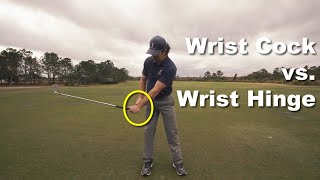
Understanding Wrist Cock vs. Wrist Hinge in Golf
Learn the crucial difference between wrist cock and wrist hinge in your golf swing to improve your performance on the co

Mastering Your Golf Swing: Pushing vs. Pulling Explained
Unlock the secret to a consistent golf swing by understanding the critical difference between pushing and pulling in you