
Understanding the Slide in the Downswing
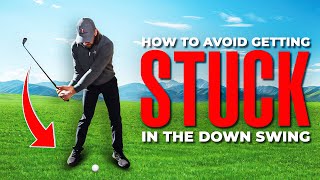
If you've ever struggled with sliding during your golf downswing, you're not alone. Many golfers experience this issue, leading to inconsistent shots and even physical discomfort. Sliding refers to the lateral movement that occurs during the downswing, where your body shifts too far in one direction, often resulting in poor ball contact, block shots, or snap hooks. Moreover, this movement can put unnecessary strain on your back and hips, leading to potential injuries.
What Causes the Slide?
The root cause of the slide typically stems from how you engage your body during the downswing. For right-handed golfers, it primarily occurs when you push too hard from the right side of your body. This excessive lateral movement can shift your hips out past their neutral alignment, resulting in a compromised position at impact.
When you push from the right side, it can lead to various swing faults including casting the club, coming over the top, or even slicing the ball. Understanding this concept is crucial because it allows you to identify what needs to change in your swing mechanics.
The Solution: Pull from the Left Side
To correct the slide, you need to focus on pulling from the left side of your body instead. By utilizing your left hip correctly, you can achieve a more stable and neutral joint alignment. When you engage your left side, your hip will naturally end up in the correct position, improving your overall swing mechanics.
This principle is based on the idea of pushing versus pulling. When you pull from the left side, you promote a flatter left wrist at impact, which is essential for consistent ball striking. Remember, the goal is to maintain proper alignment throughout your downswing to avoid any unwanted lateral movement.
Illustrating the Concept: The Trailer Analogy
To better understand this concept, think of a trailer being towed by a truck. When you push the trailer from the front, it tends to jackknife, leading to an out-of-control situation. However, when you pull from behind, the trailer aligns itself perfectly with the truck. This analogy mirrors the golf swing: pushing from the wrong side leads to erratic movements, while pulling allows for a stable and controlled motion.
The Forces at Play
In the golf swing, we deal with two types of forces: centripetal and centrifugal. The centripetal force is the pulling force that keeps your swing on track, while centrifugal force is the outward push that can lead to instability if not managed properly. Understanding how these forces interact is vital for developing a more consistent swing.
Practical Application and Next Steps
If you're eager to stop sliding and improve your golf game, consider practicing the pulling motion from your left side. Focus on engaging your left hip and maintaining a neutral alignment throughout your downswing. This not only enhances your swing mechanics but also protects you from injury.
For further insights, I recommend checking out my bonus video, which delves deeper into how you can utilize the pulling concept to improve not just your full swing but also your putting and short game.
Key Takeaways
- Sliding in the downswing is caused by pushing too hard from the right side.
- Pulling from the left side helps maintain proper hip alignment and enhances swing mechanics.
- Understanding the forces of pushing and pulling is crucial for a stable golf swing.
- Use the trailer analogy to visualize how proper movement can enhance control in your swing.
- Practice pulling with your left side to eliminate sliding and improve your game.
See What GOATY Finds in Your Swing
Upload a swing video and get your GOATScore, root cause diagnosis, and personalized drill prescription in 60 seconds.
Analyze My Swing FreeFree, no credit card
Get Your Free Swing AnalysisRelated Articles
Avoid Getting Stuck in the Golf Downswing: Key Techniques
Learn how to avoid getting stuck in your golf downswing with essential techniques and drills from Chuck Quinton.

Mastering the Golf Takeaway: RotarySwing Overview
Learn the simple mechanics of the golf takeaway with Chuck Quinton's RotarySwing method for a perfect swing.

How to Eliminate Early Extension in Your Golf Swing
Learn how to fix early extension in your golf swing with simple techniques and drills to improve your game.