
Understanding the Problem of Casting
Welcome to the world of golf transformation! Today, we are addressing a common issue that many golfers face: casting the club. Casting occurs when the wrists unhinge too early in the downswing, leading to a loss of power and control. The good news? It’s possible to overcome this problem and achieve a more effective swing. In this article, we will explore a student’s journey through four lessons, demonstrating how focusing on the left arm can lead to significant improvements.
The Initial Challenge
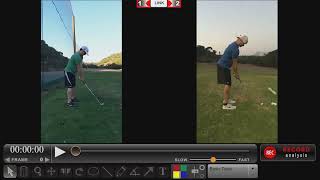
When I first worked with this student, several key flaws were evident in his swing. Firstly, his right knee was weak, bowing out, and the left knee was buckled in, indicating a reverse pivot. This instability stemmed from being overly right-side dominant during the swing. As a result, he was trying to generate power using just the right side of his body, which led to casting and a severe loss of lag in his swing.
Lesson One: Shifting to Left Arm Dominance
To address these issues, we focused on shifting his dominance from the right arm to the left arm. The goal was to teach him how to swing using his lead arm, which is crucial for a more effective and powerful golf swing. In this lesson, I had him practice left arm-only swings, which dramatically changed his body positioning and allowed for a fuller shoulder turn.
By eliminating the right arm's dominance, we saw immediate improvements. His left knee stabilized, and the right knee maintained a proper position, significantly enhancing his overall posture. As he began to understand the importance of the left arm, we noted a substantial increase in lag as he approached impact.
Lesson Two: Reinforcing the Left Arm Technique
In the second lesson, we continued reinforcing the left arm technique. By this point, the student had practiced for a week, and it showed. His swing was starting to resemble that of a golfer. His body was more stacked, and he was able to maintain better lag throughout the downswing.
We focused on achieving a solid impact position, ensuring that the left wrist was correctly aligned. The left arm's dominance allowed him to release the club naturally without reliance on his right side. This was key in creating a more fluid and powerful motion.
Lesson Three: Perfecting the Release
As we progressed to the third lesson, the student demonstrated significant improvements in his swing dynamics. He had learned to use the left arm efficiently, reducing the scooping and flipping tendencies that had plagued his earlier swings. I encouraged him to visualize different release techniques, such as backhanding a shot or rolling the left knuckles under, to reinforce proper release mechanics.
Lesson Four: Adding Momentum and Power
In the final lesson, we introduced the RST Step Drill to create momentum through the swing. This drill involved stepping to the right to initiate the backswing and then transitioning back to the left during the downswing. This movement helped him harness the power of his lower body, creating a more athletic and powerful swing.
By this point, the student had transformed into a significantly more effective golfer. His right knee was stable, and his weight distribution improved, allowing for a more balanced and powerful impact position. The improvement in his swing was not just about technique; it was about understanding how to utilize the body efficiently.
Key Takeaways
- Focus on left arm dominance to improve swing mechanics and reduce casting.
- Utilize drills like the left arm only drill and RST Step Drill to reinforce proper movement.
- Understand the importance of body alignment and weight distribution for a powerful swing.
- Practice consistently to see significant improvements over time.
- Apply AI swing analysis to measure and refine your swing patterns effectively.
See What GOATY Finds in Your Swing
Upload a swing video and get your GOATScore, root cause diagnosis, and personalized drill prescription in 60 seconds.
Analyze My Swing FreeFree, no credit card
Get Your Free Swing AnalysisRelated Articles
Transform Your Golf Swing: From 11 Handicap to 1
Learn how Andrew improved his golf game from an 11 to a 1 handicap using RotarySwing's unlimited swing review groups.

Transform Your Swing: Boost Distance & Accuracy Fast
Unlock your golf potential with proven strategies to enhance distance and accuracy in minutes. Discover secrets to a bet

Unlock Your Golf Potential with RotarySwing's 7-Day Offer
Experience top-tier golf instruction with RotarySwing's 7-day free access to all resources. Start improving your game to