
The Challenge of Golf Tips
Many golfers find themselves on a perpetual quest for the perfect swing tip. Whether it's advice from a friend or a quick fix from an online source, tips are often seen as the go-to solution for improving our game. However, as I, Chuck Quinton, founder of RotarySwing.com, have often pointed out, tips can be misleading and, at times, detrimental to your swing.
Think about it: how many times have you received a tip that simply didn’t work? You might have been told to widen your stance or swing out to right field, only to find that these suggestions didn't yield the results you hoped for. This disconnect is where the importance of context comes into play.
The Importance of Context
To understand why tips can be ineffective, we must first consider their underlying context. Just as in business, where taking on debt can be either a powerful tool or a dangerous risk, golf tips require a similar analysis. Without understanding the context—what works for one player may not apply to another—tips can lead you astray.
For instance, if a player suggests that you should take a wider stance, it might be because they are compensating for their own swing flaws. Their advice may not relate to your unique swing characteristics. That's why the foundation of effective golf instruction should be based on scientific reasoning and objective analysis rather than personal anecdotes.
How to Evaluate Tips
When you receive a tip, ask yourself several questions:
- What is the reasoning behind this tip? Understanding the physics and biomechanics involved can help you determine if the advice is sound.
- Does this advice align with proven principles? Look for tips that have scientific backing or are based on anatomical research.
- How does this relate to my swing? Always consider how a tip fits into your own swing mechanics; does it enhance or hinder your performance?
For example, if someone tells you to rotate your chest more toward the target, you need to consider whether this could potentially lead to injury or adversely affect your swing speed. The principle of releasing the club should be understood in terms of letting go rather than trying to force control over it.
Developing Your Understanding
The ultimate goal is to educate yourself about the golf swing. This means you should be able to critically analyze any tip you receive. By building a solid foundation of knowledge about how your body moves and how the club interacts with the ball, you can make informed decisions about which tips to incorporate into your practice.
When I developed RotarySwing, my first step was to ask myself: what am I trying to achieve with my swing? This question led me to create a set of requirements that guide my teaching principles. Understanding your own goals and the mechanics needed to achieve them is crucial.
End the Chase for Quick Fixes
Once you have a comprehensive understanding of the golf swing, you will start to see that tips are merely small pieces of a larger puzzle. Relying solely on tips can lead to frustration and confusion. Instead, focus on grasping the entire concept of the golf swing.
Every tip must be viewed as part of a holistic system. For instance, a tip on stance width should not be taken in isolation; it should relate to your overall swing mechanics. This understanding helps eliminate the noise of conflicting advice.
Key Takeaways
- Evaluate golf tips critically by understanding their context and reasoning.
- Every golfer's swing is unique; what works for one may not work for another.
- Educate yourself about the fundamentals of the golf swing to make informed decisions.
- View tips as part of a larger system rather than isolated fixes.
- Develop a comprehensive understanding of your swing to reduce reliance on quick fixes.
See What GOATY Finds in Your Swing
Upload a swing video and get your GOATScore, root cause diagnosis, and personalized drill prescription in 60 seconds.
Analyze My Swing FreeFree, no credit card
Get Your Free Swing AnalysisRelated Articles
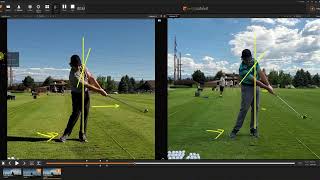
Improving Your Golf Swing: Day 1 to Day 2 Progress
Learn how to enhance your golf swing by analyzing your finish position and making key adjustments from day one to day tw
Transform Your Golf Swing in Just 1 Hour
Learn how to fix your golf swing in one hour with essential biomechanics and techniques from RotarySwing.com.
Mastering the Chip Shot: Proper Setup Techniques
Learn the essential setup for chipping golf shots to ensure consistent and clean contact. Improve your game with these e