
Understanding Golfers Elbow
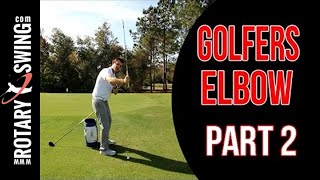
Elbow pain is a common issue that many golfers face. This discomfort can often stem from the mechanics of your golf swing, particularly involving the lead arm. In this guide, we will explore some of the causes of golfer's elbow and demonstrate a simple drill to alleviate pain and improve your swing control.
Common Causes of Elbow Pain
Many golfers experience elbow pain after a session on the course or at the driving range. The frustration of not knowing the source of this pain can be disheartening. Typically, the lead arm, or the left arm for right-handed golfers, is the primary area of stress during the swing. This is where approximately 90-95% of elbow issues stem from.
The Role of the Lead Arm
In a proper golf swing, the lead arm should rotate smoothly. However, many amateur golfers rotate their arms excessively, leading to potential pain. On average, elite players rotate the club at a speed of 300 to 400 degrees per second, while amateurs can exceed 800 to 1500 degrees per second. This excessive rotation can lead to injuries as the elbow may become hyperextended during the swing.
How Elbow Position Affects Pain
When the elbow rotates inward towards the body during the swing, it can lead to discomfort. As the golfer strikes the ball, the force applied can push the arm into a hyperextended position, which is where a lot of pain originates. To visualize this, consider how the elbow's position at impact affects the arm's movement. If the elbow is aligned down the target line, the arm will follow through more naturally, minimizing the risk of injury.
Correcting the Issue: A Simple Drill
Now that we understand the causes of elbow pain, it's time to address them through a specific drill designed to promote proper arm mechanics. By practicing this drill, you can alleviate elbow pain and gain better control of your swing.
Drill Instructions
Begin by setting up in your golf stance, placing about 80% of your weight on your left foot.
Without a club, extend your left arm to about 9:00, ensuring your palm is facing your face.
Slowly pull your elbow down the target line, maintaining a relaxed posture. Focus on keeping your elbow aligned down the target line as you rotate your wrist.
Stop at impact, ensuring your elbow is still pointing down the target line, and your wrist is slightly bowed.
Perform this drill for about 100 to 300 repetitions without a golf club.
Gradual Progression
After mastering the drill without a club, you can incorporate an impact bag. Start by repeating the movements you practiced without a club, ensuring your elbow remains down the target line. Gradually add more width and rotation to your swing while continuing to focus on keeping your elbow aligned properly.
This method helps you to build muscle memory and control over your swing, ultimately reducing elbow pain.
Conclusion
By integrating this simple drill into your practice routine, you can effectively prevent and alleviate golfer's elbow pain. This will not only enhance your control over the clubface but also lead to improved ball striking and overall enjoyment of the game.
Key Takeaways
- Elbow pain often arises from improper lead arm mechanics during the golf swing.
- Excessive arm rotation increases the risk of hyperextension and discomfort.
- Practicing the elbow drill can help align the arm properly, reducing pain.
- Focus on consistent repetition to build muscle memory for better control.
- Using AI swing analysis can provide insights into your swing mechanics for further improvement.
See What GOATY Finds in Your Swing
Upload a swing video and get your GOATScore, root cause diagnosis, and personalized drill prescription in 60 seconds.
Analyze My Swing FreeFree, no credit card
Get Your Free Swing AnalysisRelated Articles
Cure Golfers Elbow: Solutions for Trail Arm Pain
Eliminate trail arm pain in your golf swing with effective tips and techniques to achieve a pain-free game.

Unlock Effortless Power in Your Golf Swing
Discover how to achieve distance and consistency in your golf swing with effortless power techniques from Chuck Quinton.

Master Your Golf Swing: The J Motion Release Trick
Unlock the secret to a powerful golf swing with the J motion release technique. Improve your game today!