
Understanding Lag in Your Golf Swing
In the world of golf, achieving a powerful and efficient swing is crucial for distance and accuracy. One key component of a successful swing is the concept of lag. Lag refers to the angle maintained between the club shaft and the lead arm during the downswing, which can significantly affect clubhead speed. In this article, we will explore how to increase your lag and clubhead speed by at least 5 mph with a focus on your grip and wrist hinge.
The Importance of Grip
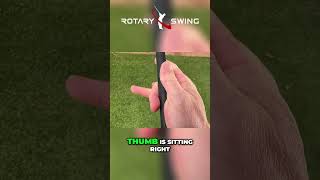
The grip is one of the most fundamental aspects of a successful golf swing. It influences how you hold the club and, consequently, how you deliver it to the ball. A stronger grip position, where the hand sits more on top of the club, allows for better retention of the 90-degree angle between your lead arm and the club shaft. This position is essential for maintaining lag through the downswing.
Stronger vs. Weaker Grip
When you use a weaker grip, where your thumb is positioned too much on the centerline or left of it, you may find it difficult to hold the 90-degree angle during the downswing. This grip often requires muscular effort to maintain the angle, which can lead to cutting the wrist and opening the clubface, resulting in a loss of lag. Maintaining a stronger grip allows for a more natural swing without requiring excessive effort.
Wrist Hinge Mechanics
The wrist hinge is another critical factor in achieving lag. Proper wrist hinge allows you to maintain the angle longer into the downswing, contributing to increased clubhead speed. When the club is parallel to the ground, a strong grip facilitates a natural wrist hinge that keeps the club in the right position without forcing your muscles to work harder than necessary.
Practical Steps to Improve Your Grip and Lag
- Check Your Grip: Ensure your left hand is positioned in a way that promotes a slight arch. This positioning will help you maintain lag as you transition into your downswing.
- Practice Your Wrist Hinge: Focus on maintaining a proper wrist hinge through your backswing and into the downswing, ensuring that you don’t cut your wrists or lose the angle.
- Visualize the Angle: As you practice, visualize the 90-degree angle between your lead arm and the club shaft, and work on retaining that angle as long as possible.
Key Takeaways
- Using a stronger grip helps maintain lag and increases clubhead speed.
- A proper wrist hinge is crucial for retaining the 90-degree angle during the downswing.
- Practice maintaining your grip and wrist position to improve your swing mechanics.
See What GOATY Finds in Your Swing
Upload a swing video and get your GOATScore, root cause diagnosis, and personalized drill prescription in 60 seconds.
Analyze My Swing FreeFree, no credit card
Get Your Free Swing AnalysisRelated Articles

4 Essential Golf Grip Tips for Consistency and Power
Discover key golf grip tips to enhance your swing and maximize speed. Learn how to achieve the perfect grip for better c

Master Your Grip for Complete Control in Golf
Learn how to grip the golf club for optimal control and power, focusing on the middle finger for a better swing.
Mastering the Middle Finger Pressure Point in Golf
Learn how to utilize the pressure point of your middle finger for a better golf swing and increased power.