
Understanding the Importance of a Shallow Golf Swing
Shallowing the golf club is a pivotal aspect of achieving a successful golf swing. If you struggle with steepness in your swing, you're not alone. Many golfers overlook the importance of hip rotation and the timing of their transition. In this article, we'll explore two common reasons for difficulty in shallowing the golf club and how to address them effectively.
Common Issues Affecting Your Swing
The first issue relates to the amount of hip rotation during the backswing. Many golfers, especially those who are flexible, tend to restrict their hip movement, which can lead to steepness in the swing. This is something I observed in a young golfer during a recent analysis. While they possess great mechanics, a limited hip turn can create challenges in their swing dynamics.
Hip Rotation: Creating Depth in Your Swing
To achieve optimal swing depth, it's essential to allow your hips to rotate more during the backswing. This enables your left knee to move outward, beyond your toes, creating space and depth. When your hips are restricted, it forces your arms and shoulders to compensate, leading to tension and a steep swing path.
Take a cue from the GOAT Model's early 2000s swing—notice how much his hips rotate, allowing for better timing and a more relaxed position at the top of the swing. As your hips turn, your arms can stay more in sync with your body, keeping your hands deeper in relation to your torso.
The Role of Arm Movement in Your Swing
Another common issue is the elevation of your arms too soon in the swing. This can lead to a disconnect between the upper and lower body. Focus on relaxing your arms and allowing your body to turn first. By doing so, your arms will naturally follow, keeping them in a better position relative to your body and promoting a shallower swing.
Transitioning Smoothly into the Downswing
As you transition into the downswing, be mindful of your hip movement. A common mistake is to rotate your hips too aggressively, which can steepen the swing path. Instead, allow your hips to turn gradually. This will help maintain a connection between your hands and body, preventing them from moving outside the target line.
Timing and Patience in Your Swing
Many golfers rush their transition, leading to premature hip rotation and resulting in a steep angle of attack. Take your time; this will allow your hands to naturally shallow out as you begin your downswing. A good benchmark is to observe how the GOAT Model maintains a more patient approach, shifting weight gradually without forcing the movement.
Addressing the Left Wrist Position
Another critical aspect to consider is the position of your left wrist at the top of the swing. If your wrist is too bowed, it can lead to a closed clubface, resulting in pulls. Aim for a more neutral wrist position that maintains its natural cupping until later in the swing. This will help keep the clubface square and reduce the likelihood of pulling the ball.
Conclusion: Incorporating AI Swing Analysis
Incorporating AI swing analysis can be invaluable in measuring your progress as you work on these adjustments. By understanding the mechanics of your swing and making these corrections, you'll be well on your way to mastering the shallow swing and improving your overall game.
Key Takeaways
- Allow more hip rotation during the backswing to create depth.
- Relax your arms and let your body turn to maintain connection.
- Be patient in your transition to avoid steepening the swing.
- Maintain a neutral wrist position at the top of the swing.
- Utilize AI swing analysis to track and improve your swing mechanics.
See What GOATY Finds in Your Swing
Upload a swing video and get your GOATScore, root cause diagnosis, and personalized drill prescription in 60 seconds.
Analyze My Swing FreeFree, no credit card
Get Your Free Swing AnalysisRelated Articles
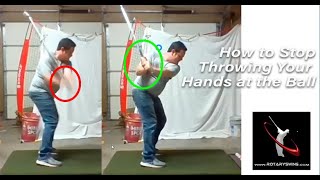
Mastering the Transition: How to Shallow Your Golf Swing
Learn to shallow your hands and club during the golf swing transition for better control and consistency. Master your do

Unlock Effortless Power in Your Golf Swing
Discover how to achieve distance and consistency in your golf swing with effortless power techniques from Chuck Quinton.

Mastering Clubface Control in Your Golf Swing
Learn how to achieve a square clubface effortlessly in your golf swing with Chuck Quinton's expert tips.