
Understanding the Overswing Problem
Many golfers struggle with overswinging in their backswing, often due to overusing their arms. This common issue can lead to inconsistent shots and poor swing mechanics. To prevent this, it's essential to shift your focus from your arms to your core, which is the true engine of the swing.
The Importance of Core Rotation
When you center your attention on what moves your arms during the backswing, you will realize that the core and body play a more significant role. It’s not about just positioning the club; it’s about how your body moves to facilitate that position. By focusing on your core rotation, you can achieve a more controlled and effective backswing.
Drill to Control Your Backswing
To help golfers stop overswinging, I recommend a simple yet effective drill. Here’s how to do it:
- Setup: Start by taking your setup as if you were going to hit a seven-iron. Hinge from your hips and let your arms hang freely from your shoulder sockets.
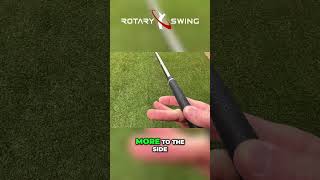
- Hand Position: Extend your hands out in front of you as if you’re shaking hands, keeping them about two inches apart. Ensure that both hands are at fingertip length.
- Backswing Movement: Focus on maintaining this hand position as you rotate your body. Allow your arms to travel upward slightly but keep them in front of your sternum. The goal is to feel tension building in your core as you rotate.
As you perform this drill, you should start to feel a compression in your core that signals you are reaching your limit. This tension indicates that it’s time to transition into the downswing.
Key Positions in the Backswing
When you reach the lead arm parallel position, it’s crucial to keep your arms straight and in the right position. You should feel tightness in your core, not in your arms. At this point, you can grab your lead thumb like a gun and allow for a slight flexion in your trail arm, ensuring that your elbow points downwards. This compact position is all you need for a powerful and effective backswing.
Avoid Common Pitfalls
As you practice this drill, be mindful of a few common mistakes:
- Posture Changes: Ensure that you maintain proper posture throughout the drill. Do not let your shoulders flatten or your head move out of position.
- Arm Movement: Remember that the arms should not move excessively. They should only elevate slightly as you rotate your body.
- Core Engagement: Focus on feeling the tension in your core rather than trying to force the arms back. This will lead to a more connected and controlled swing.
Putting It All Together
When you execute the drill correctly, you will find that your backswing feels shorter and more compact. Many students notice that by focusing on their rotation and maintaining the correct arm positioning, they can prevent overswinging. By doing so, you’ll not only improve your swing mechanics but also enhance your overall performance on the golf course.
Conclusion
To stop overswinging, remember to focus on your core rotation rather than your arms. Utilize the drill we discussed to build a better understanding of how to manage your backswing effectively. With practice and awareness, you will develop a more controlled and powerful swing.
Key Takeaways
- Focus on core rotation to control the backswing.
- Use the provided drill to maintain proper arm positioning.
- Avoid excessive arm movement to prevent overswinging.
- Stay mindful of your posture and maintain tension in your core.
- Practice consistently to enhance your swing mechanics.
See What GOATY Finds in Your Swing
Upload a swing video and get your GOATScore, root cause diagnosis, and personalized drill prescription in 60 seconds.
Analyze My Swing FreeFree, no credit card
Get Your Free Swing AnalysisRelated Articles

Mastering Weight Shift in Your Golf Swing Simplified
Learn the importance of weight shift in your golf swing and how to implement it for better performance on the course.

Master Your Golf Swing: The J Motion Release Trick
Unlock the secret to a powerful golf swing with the J motion release technique. Improve your game today!
Mastering the Feel of the Sweet Spot in Your Golf Swing
Learn the key to feeling the sweet spot in your golf swing with insights from Chuck Quinton. Improve your game today!