Draw vs. Fade in Golf: Distance, Control & What Pros Hit
The short answer: a draw usually adds distance; a fade usually offers easier control. The best choice depends on the shot and your pattern.
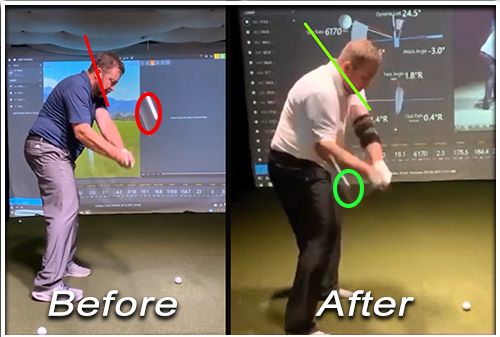
Just about every golfer since the beginning of the game has started out playing a slice, especially witht the driver.
Because getting rid of a slice is so difficult for most golfers because they're taught incorrectly how to fix it, they struggle with the dreaded fade or slice forever.
Of course, with RotarySwing, fixing your slice is something we have helped hundreds of thousands of golfers with and can do it faster than anyone.
So, once you have that slice tamed, is it better to hit a controlled fade or a draw?
And what do most pros hit, a fade or a draw? The answer may surprise you!
Do pros hit a fade or draw most often?
You may be surprised to hear that most tour pros actually hit a fade for one simple reason, it's much easier to control.
That doesn't mean a draw is difficult to control but a fade is easier for one key reason - the release of the golf club.
In a fade, you are simply releasing the golf club less or more slowly in many cases vs. a draw. Of course, you are still releasing the golf club or you would lose too much distance.
But with a fade the club face can be held open just a smidge which is easier to time consistently vs. a draw which is more "free wheeling" in terms of the golf club release.
So, in the fade you are doing less, vs. a draw where you are doing slightly more - that's the simplest way of thinking about it in general terms.
What about the ball flight with a fade vs. a draw?
Another key aspect of the fade is the spin axis of the ball. The ball only spins in one direction and it does so along what is called the "spin axis".
In general, the spin axis for a fade will be tilted slightly more to the vertical in such a way to create a "softer" ball flight, and thus a softer landing, vs. a draw where the axis can easily be tilted too "negative" and lead to a quick hook which is a shot that won't play at all.
So, that's the main reason pros prefer a fade, as Lee Trevino used to say "I can talk to a fade, but a hook just won't listen!"
So, which should you play - a draw or a fade?
It's important to learn BOTH because no one shot is perfect for every situation and you will learn club face control by learning both shots and that will make you a far more versatile player.
Which is better for distance, a draw or a fade?
There's no question that a draw will tend to create more overall distance, especially off the tee where roll is a major factor as the fade will tend to run out less on the ground.
So, if you are looking for more distance, a draw will more easily produce it, especially off the tee.
If you play in windy conditions regularly, a draw will tend to penetrate more through the wind vs. a fade as well and can tend to create a slightly lower ball flight due to a lower overall spin rate as the club will tend to have less dynamic loft at impact.
What do you play, draw vs. fade?
I turned pro as a definitive fader of the golf ball and only hit a draw when I had to as I also found it more difficult to control vs. a fade and it wasn't a natural shot for me due to my swing path.
However, back in about 2013 I made a change to a draw and play that as my predominant shot now.
Why?
The main reason was that I joined a golf club that was designed by my friend Jim Engh and he hits every single ball way from the inside and hits nothing but draws on every shot!
As a course designer, this is the only shot that fits his eye and so the course that we lived at together was very punishing if you missed with a big fade, but wouldn't kill your score if you missed to the left with a big draw.
Because that was where I played most of my golf and I wanted to win (and did!) our club tournaments, I needed to make the switch.
So, I spent one entire summer reshaping my swing to hit every single ball right to left as a draw.
This was a big challenge because your alignment and your sight lines have to adapt off every hole. You find yourself aiming at trouble that before you didn't even know existed.
It took persistence, but by the end of the summer paid off with a big win in our Member-Pro tournament with me shooting a 64 on my own ball.
Looking back, I'm very happy I decided to persevere through the change as I find the draw to be a very powerful shot that I can play in all conditions on any course now as the draw is subtle (about 3-4 yards) but very reliable.
Draw vs. Fade Golf Instruction Videos
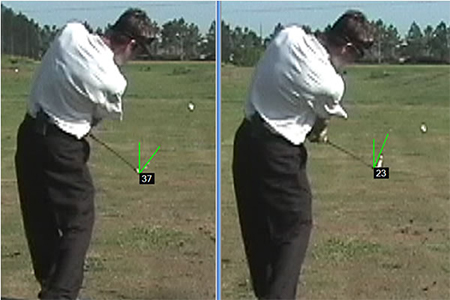 Differences Fade vs. Draw
Learn the differences in the swing mechanics and positions in a fade vs. a draw in golf.
Video Practice Points
- The club face remains slightly open after impact with a fade vs. a draw
- A fade will feel a slight hold off of the release
- A draw you will feel a more "free" release of the golf club
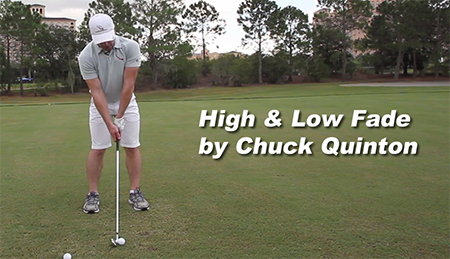 Day 6: High and Low Fade
Learn how to control the trajectory of a fade to hit it higher or lower.
Video Practice Points
- Adjust the ball position slightly to change trajectory
- You will bow your wrist slightly more to lower ball flight
- For a higher trajectory, the wrist will more fully release
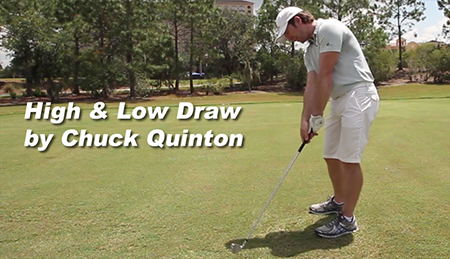 Day 7: High vs Low Draw
The high and low draw vs high and low fade is a more advanced exercise, but once you nail down this shot you can start attacking the course like never before!
Video Practice Points
- As you advance, you will focus more on feel than mechanics
- The key is all in the release
- You will modify ball position slightly to alter trajectory
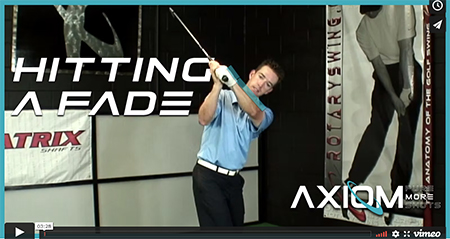 How to Fade the Golf Ball
Learn the simple keys to hitting a powerful yet controlled fade with the driver and irons.
Video Practice Points
- With RotarySwing, a fade is VERY simple!
- Your lead hand is in control
- Change your release timing for more or less fade on the ball
For more golf swing tips for beginners and beyond visit the RotarySwing Youtube channel.
Want to Know if You're Hitting a REAL Draw?
Learn the shot here. Then measure your own pattern with GOATY.
RotarySwing explains the mechanics. GOATY measures your swing and gives you a focused next practice step, so you can stop guessing whether your draw or fade is actually improving.
Analyze My Swing FreeNo download. No credit card. Works on any phone or computer.