For the Back Stabilizer Exercise, you'll need to get down on the floor. Lie face down on a mat with a towel under your head for comfort.
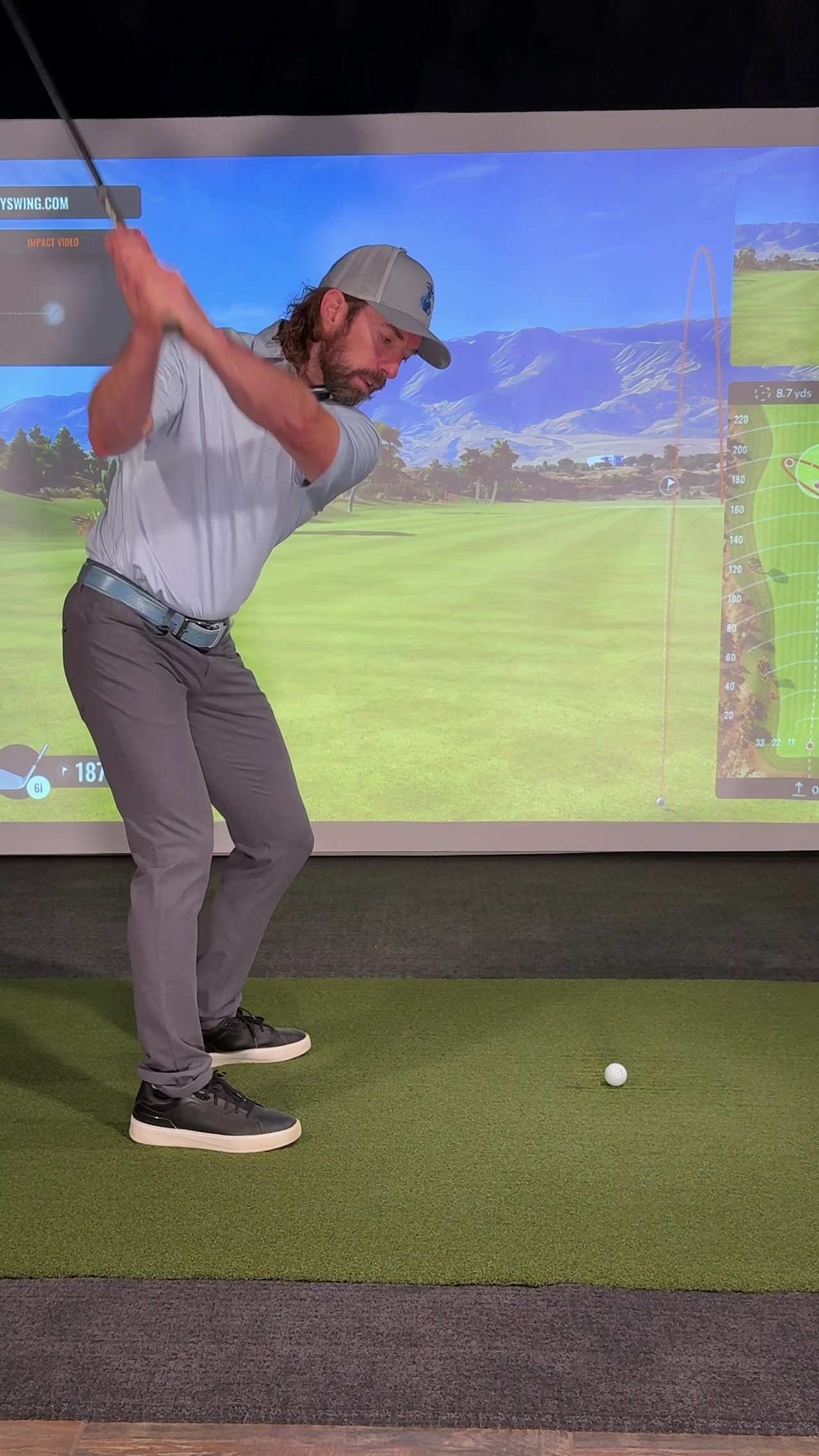
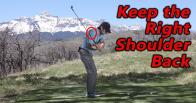
This exercise teaches you how to pull your shoulders down and engage "the box" — as opposed to shrugging up into "the rectangle." As you progress through this program and our other lessons, you'll understand just how critical this shoulder position is to your golf swing.
Is this the fault costing you strokes?
Film one swing on your phone. In about a minute GOATY measures it and names the single biggest thing costing you strokes — free, no card.
Analyze My Swing Free
Related: Golf backswing — the 3 AI-measured gates →
Android users: Download GOATY on Google Play — free AI golf coaching on your Android phone. →
Start by pulling your shoulder blades down as far as you can. You should feel your shoulders settle deeply into your back — this connected position is what we call being "in the box." Your shoulder blades will slide downward toward your belt.
Stop reading about it — feel it in your swing today
GOATY watches your swing live and coaches you between every rep. Free. No signup.
Start Your FREE Live Lesson →Now pull your shoulders up toward your ears. Your shoulder blades will travel approximately four to five inches between the fully depressed and fully elevated positions.
Try a free live lesson with GOATY
GOATY, my AI golf coach, watches your swing through your phone camera and coaches every rep. Free, about 20 minutes, no credit card.

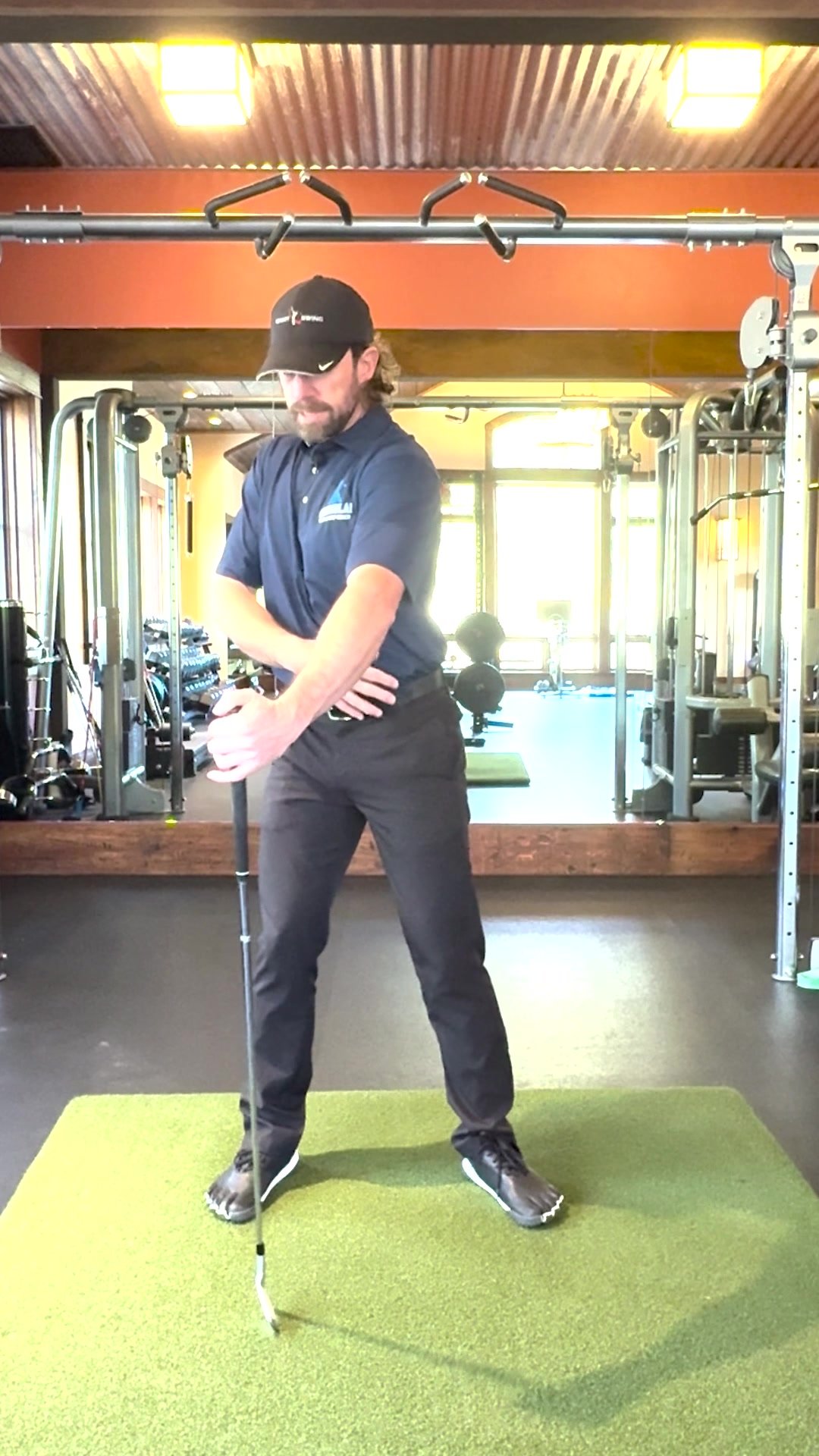
Pull your shoulder blades down toward your belt - this is "in the box"
The Box & the Rectangle

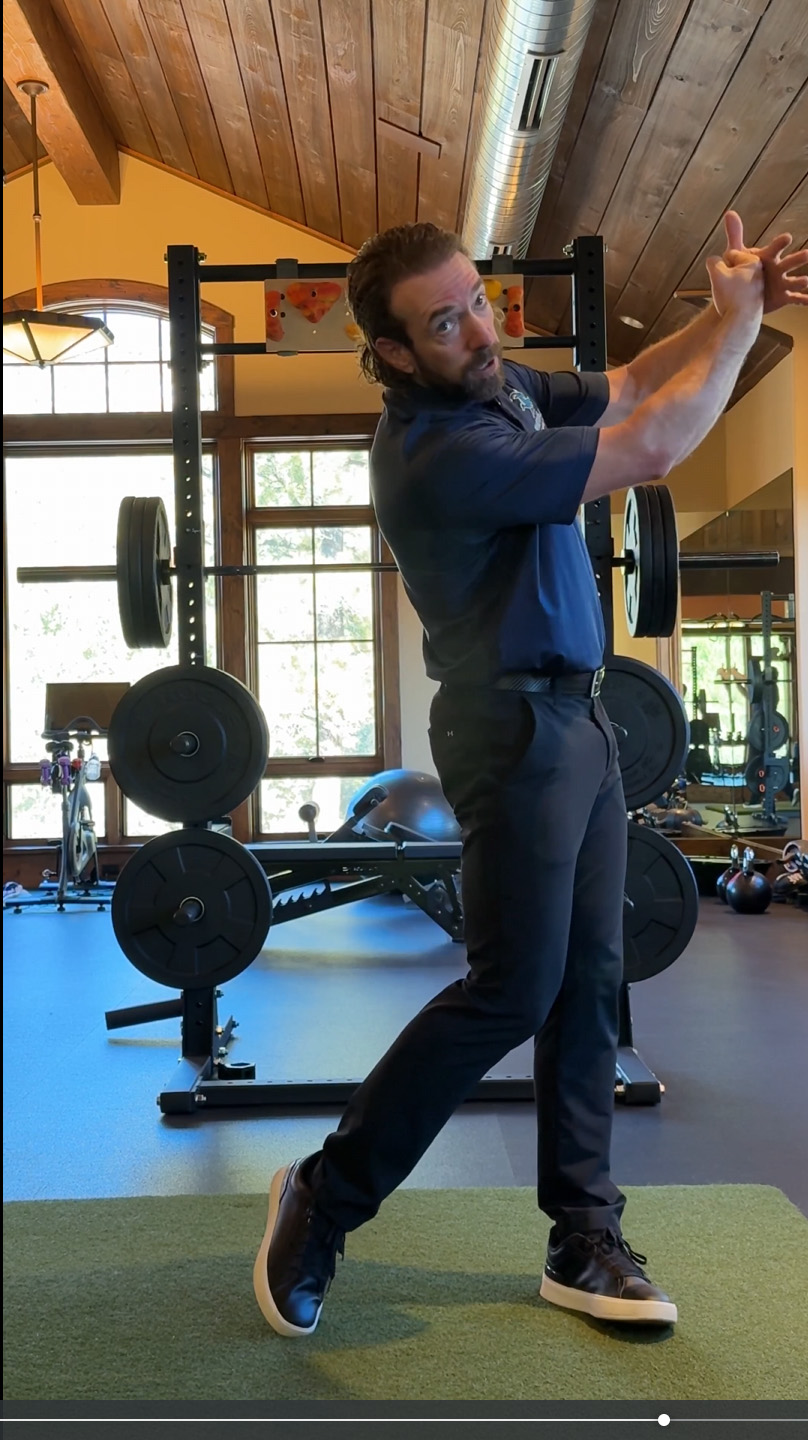
Bring your shoulders up to your ears - this is "in the rectangle"
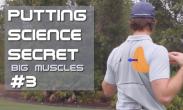
When you pull your shoulder blades down, you're contracting your lats — the large muscles that define the "box" shape of your torso. This is what we mean by being "in the box": activating those powerful core muscles that connect your arms to your body's rotational engine.
Contracting your lats and pulling your shoulder blades into the box is the correct position for the backswing. Engaging these muscles produces more power and maintains connection between your arms and your core.
When you shrug upward toward your ears, you disengage the lats, disconnect from your core, and move up "into the rectangle" — the trapezoidal area across your neck and upper shoulders. These are not the muscles that drive an efficient golf swing.
A Little Extra Challenge
Perform 15 repetitions of this Back Stabilizer Exercise, completing as many sets as you like. This builds strength in the key back muscles while developing your awareness of what it feels like to pull your shoulder blades down and into the box.
To increase the challenge, incorporate arm movement into the drill.
Pull your shoulder blades down as before, but this time bring your arms down to your sides simultaneously. Keep your arms parallel to the ground — don't lift them; just slide them along your body in line with your torso.
Now pull your shoulders back up toward your ears, bringing your arms along for the ride. Keep everything parallel to the ground throughout. This added arm movement challenges your back muscles further and reinforces the box position that transfers directly into your golf swing. For a complete analysis of how your swing mechanics currently perform, try a free AI swing analysis. To practice with real-time coaching, check out a free AI golf lesson.

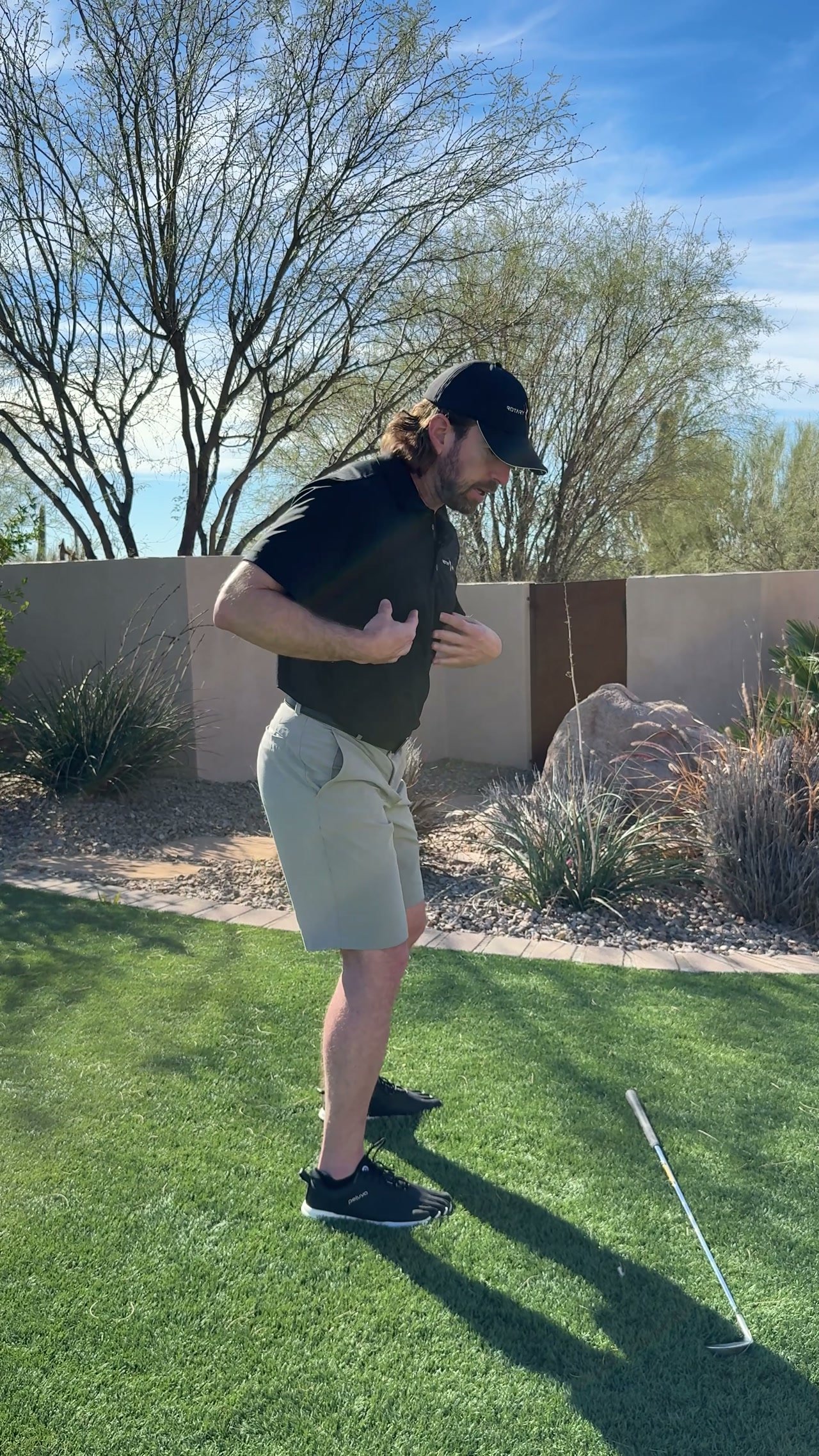
Repeat with arm movement - pull down toward your waist
How to Perform Back Stabilizer Exercises
Learn to engage your back muscles for a more powerful golf swing with these stabilizer exercises.
-
1
Get into position
Lie face down on a mat with a towel under your head for comfort. Ensure your body is straight and relaxed.
-
2
Engage your shoulders
Pull your shoulder blades down toward your belt as far as you can. This engages your lats and helps you feel the 'box' position.
-
3
Lift your shoulders
Raise your shoulders up toward your ears, moving your shoulder blades approximately four to five inches. This is the 'rectangle' position.
-
4
Repeat the movement
Perform 15 repetitions of pulling your shoulder blades down and then lifting them up. Focus on the contraction of your lats.
-
5
Add arm movement
Incorporate arm movement by sliding your arms down to your sides while pulling your shoulder blades down. Keep your arms parallel to the ground.
-
6
Challenge yourself
Continue the exercise by pulling your shoulders back up while keeping your arms alongside your torso. This increases the challenge and reinforces the box position.
Watch part 2 now to see how you're moving your body in the opposite direction of the pros!