The bucket drill is an exercise we use to help golfers understand in golf. If you do not have a bucket handy, a box will work just as well.

Master shoulder turn in golf with The Bucket Drill
One problem many golfers have is understanding how to turn the shoulders rather than tilting them during the golf backswing.
Is this the fault costing you strokes?
Film one swing on your phone. In about a minute GOATY measures it and names the single biggest thing costing you strokes — free, no card.
Analyze My Swing Free
Related: Golf swing shoulder turn — the AI-coached trail hip approach →
Android users: Download GOATY on Google Play — free AI golf coaching on your Android phone. →
They are unsure how to move their arms and they end up making things far more complicated than they need to be.
Stop reading about it — feel it in your swing today
GOATY watches your swing live and coaches you between every rep. Free. No signup.
Start Your FREE Live Lesson →If you do not have a feel for the correct movement, you may end up tilting your shoulders, turning really flat, rolling your arms in, or making other compensations.
Drills, Drills, Drills
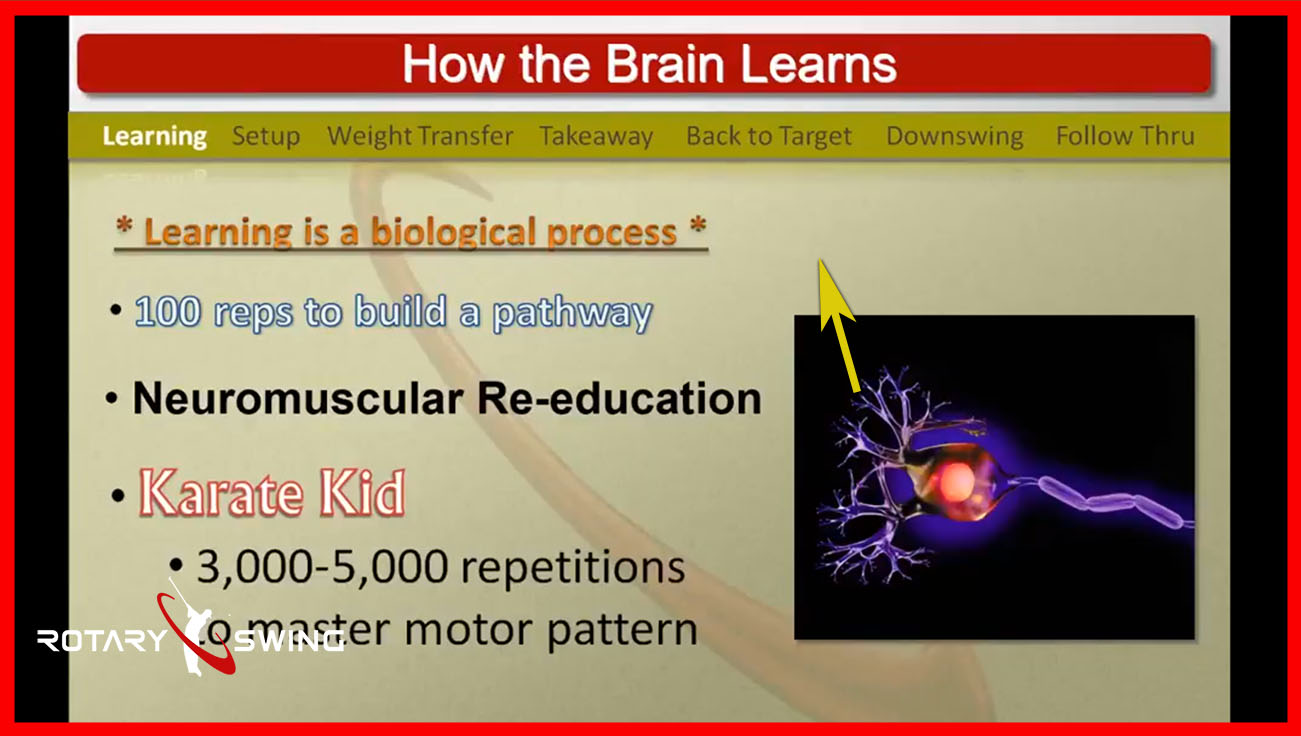
You know by now that the way to improve your golf swing is to learn these simple drills and repeat them over and over again to teach your brain the new movement patterns.
When you practice the drills until the simplified movements become second nature, your body knows exactly what to do when it is time to combine those simple movements into an actual golf swing.
Try a free live lesson with GOATY
GOATY, my AI golf coach, watches your swing through your phone camera and coaches every rep. Free, about 20 minutes, no credit card.
This drill is probably one of the most valuable we have, because it teaches you how to make that simple turn in the backswing.
Many golfers dramatically over-complicate shoulder turn and end up derailing the entire swing. Get this wrong, and you are off track from the very first move.
Pick Up a Bucket and Give It a Try
Fortunately, a simple box or bucket can teach you everything you need to know about shoulder turn in golf.

Don't spill!
Here is all you have to do. Pick up a bucket (or box) and get into your golf setup position.
Hold up the bucket and imagine that it is full of water. That is why we call it the bucket drill — you are imagining a bucket of water.
Now you are going to perform the shoulder turn, being careful not to spill any water.
You cannot tilt the bucket or move it haphazardly. Keep it level as you turn back. Your shoulders should turn to the trail side without tilting forward or rolling backward.
If you simply imagine turning and handing the bucket of water to someone behind you — without spilling, of course — you will turn back correctly every single time.

Don't spill!
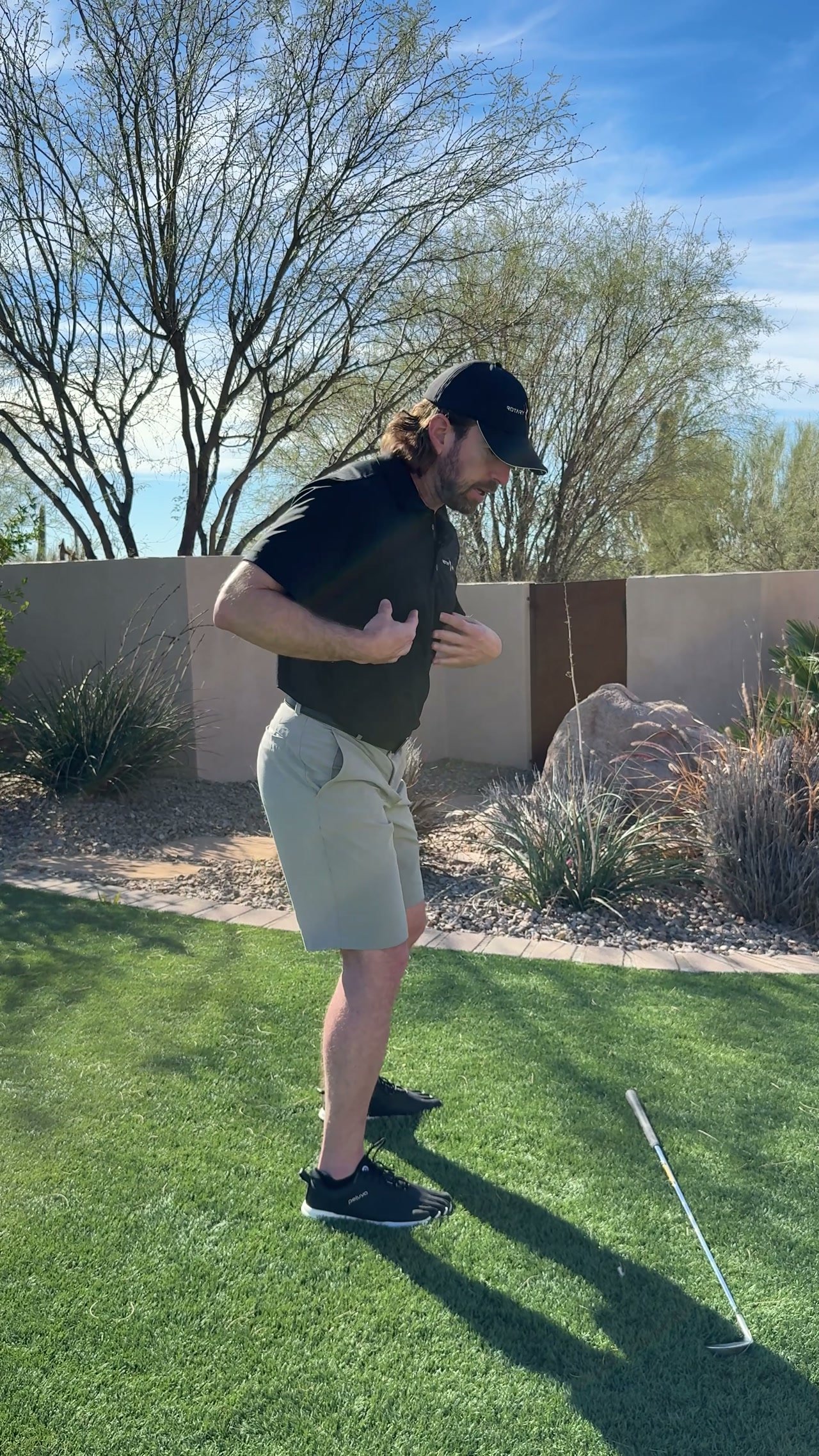
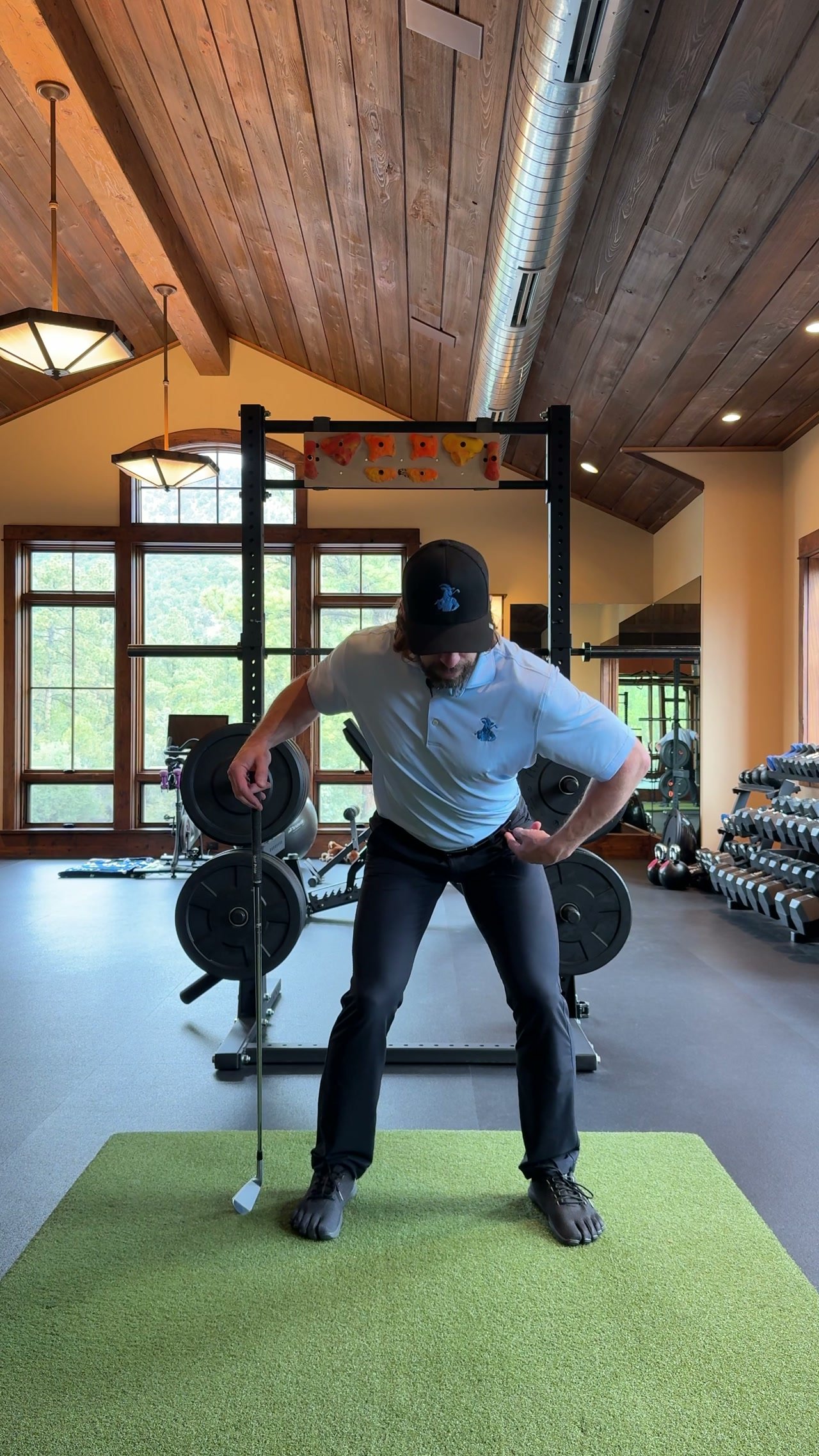
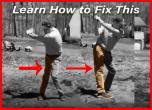
If you are tilting toward the target like in the photo above when you grab the bucket (which is very common), you will notice significant strain in your back when you perform this drill.
As soon as you straighten up and begin doing it correctly, all of that strain will disappear.
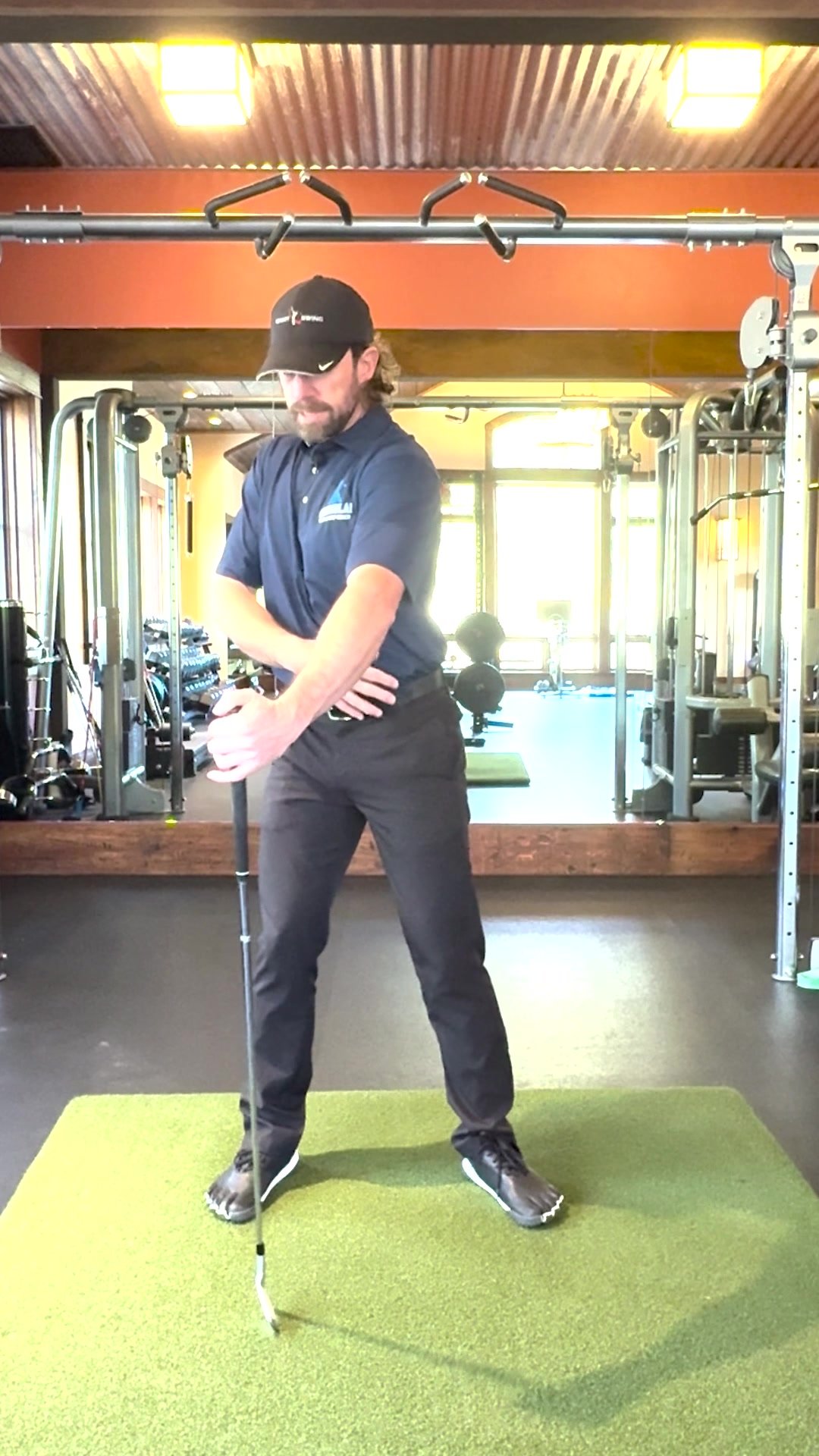
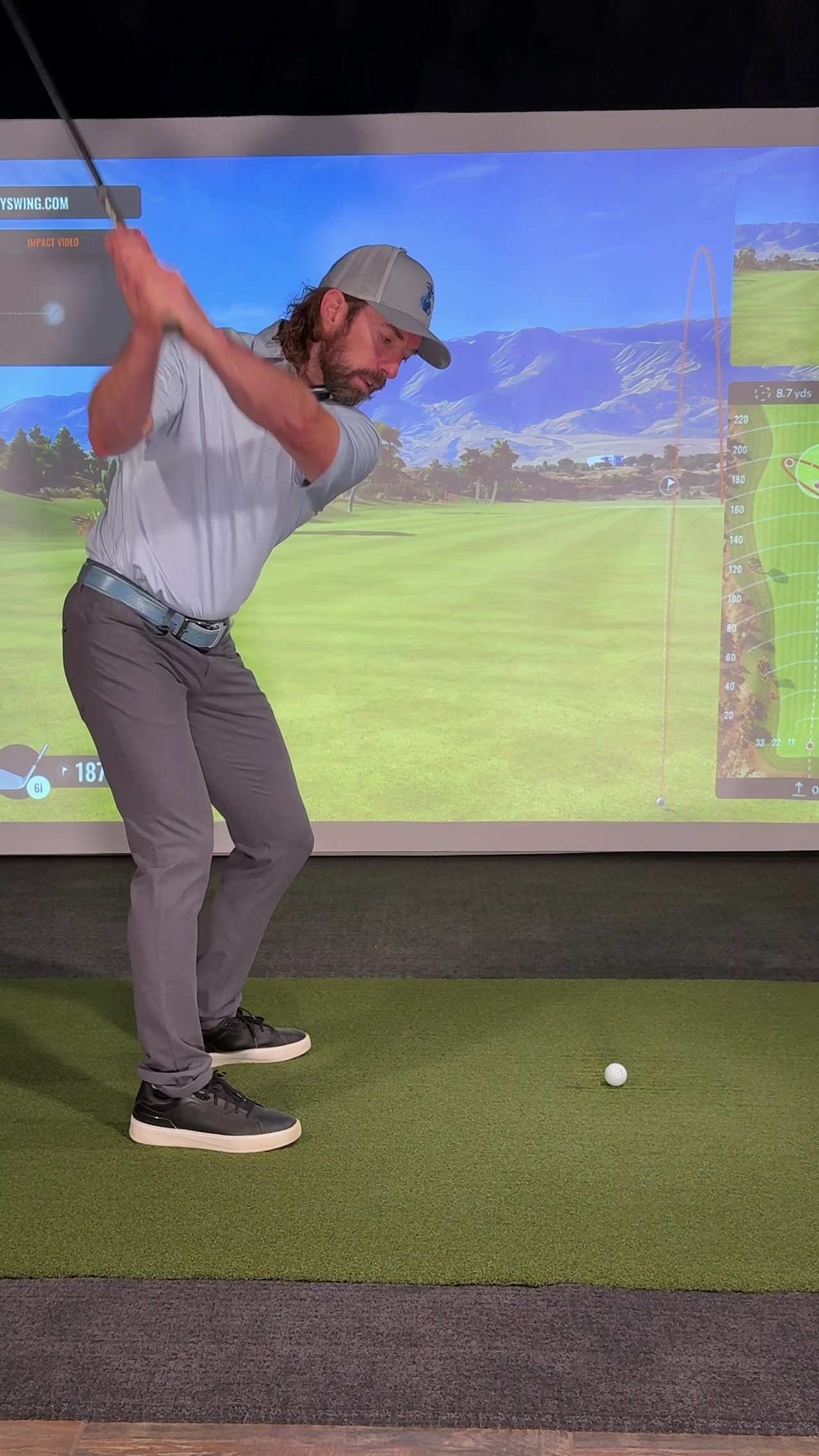
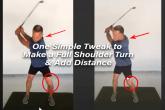
You should look like the photo at the top of the article, with your arms even, your shoulders straight, and your spine leaning slightly away from the target.
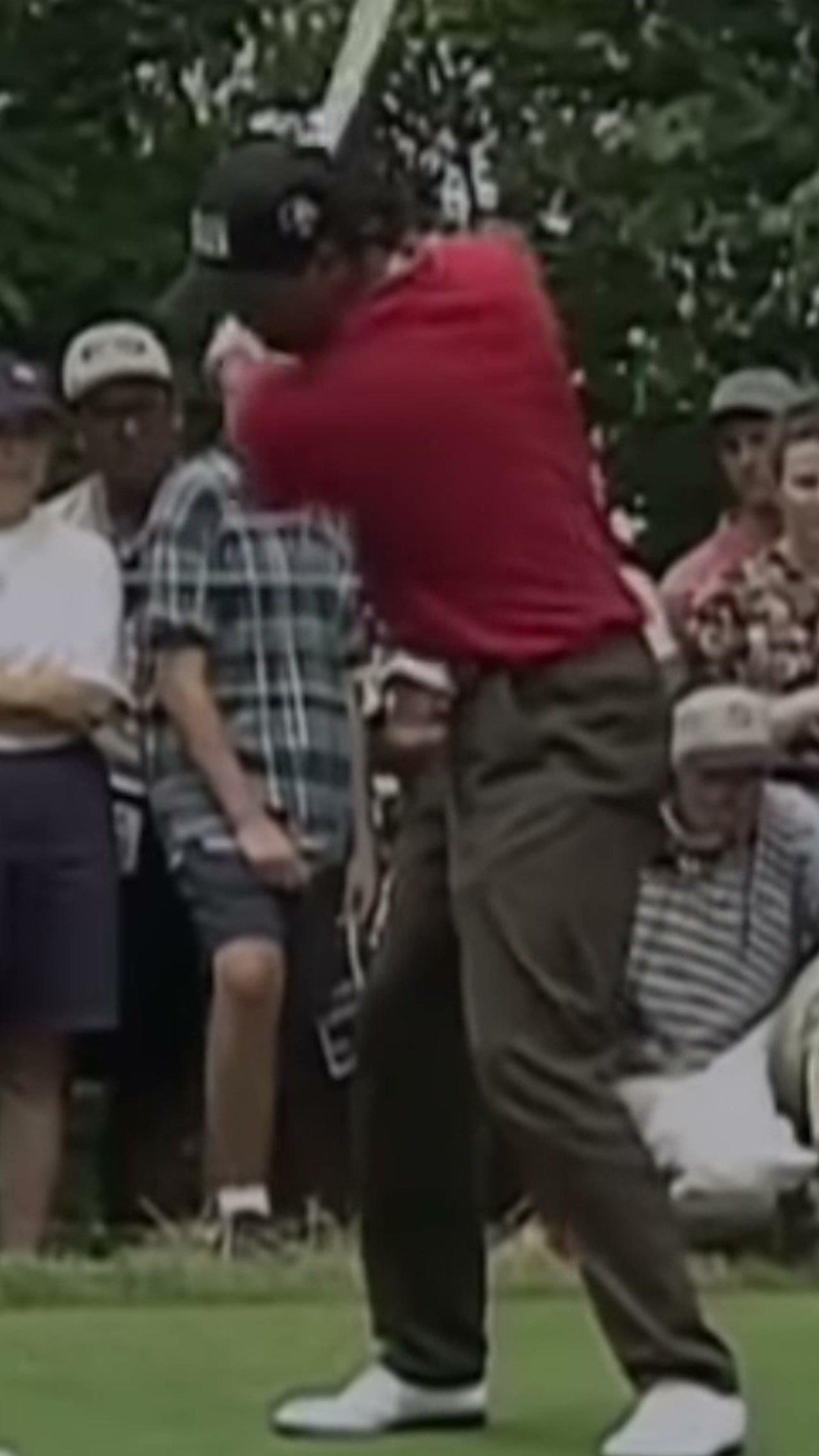
Do not tilt off to the side like the photo at left, getting one arm on top of the other.
People around you should not be able to see into your bucket, because that would mean you are spilling your water.
Keep the bucket level as you turn back.
Got It? Now Repeat It!
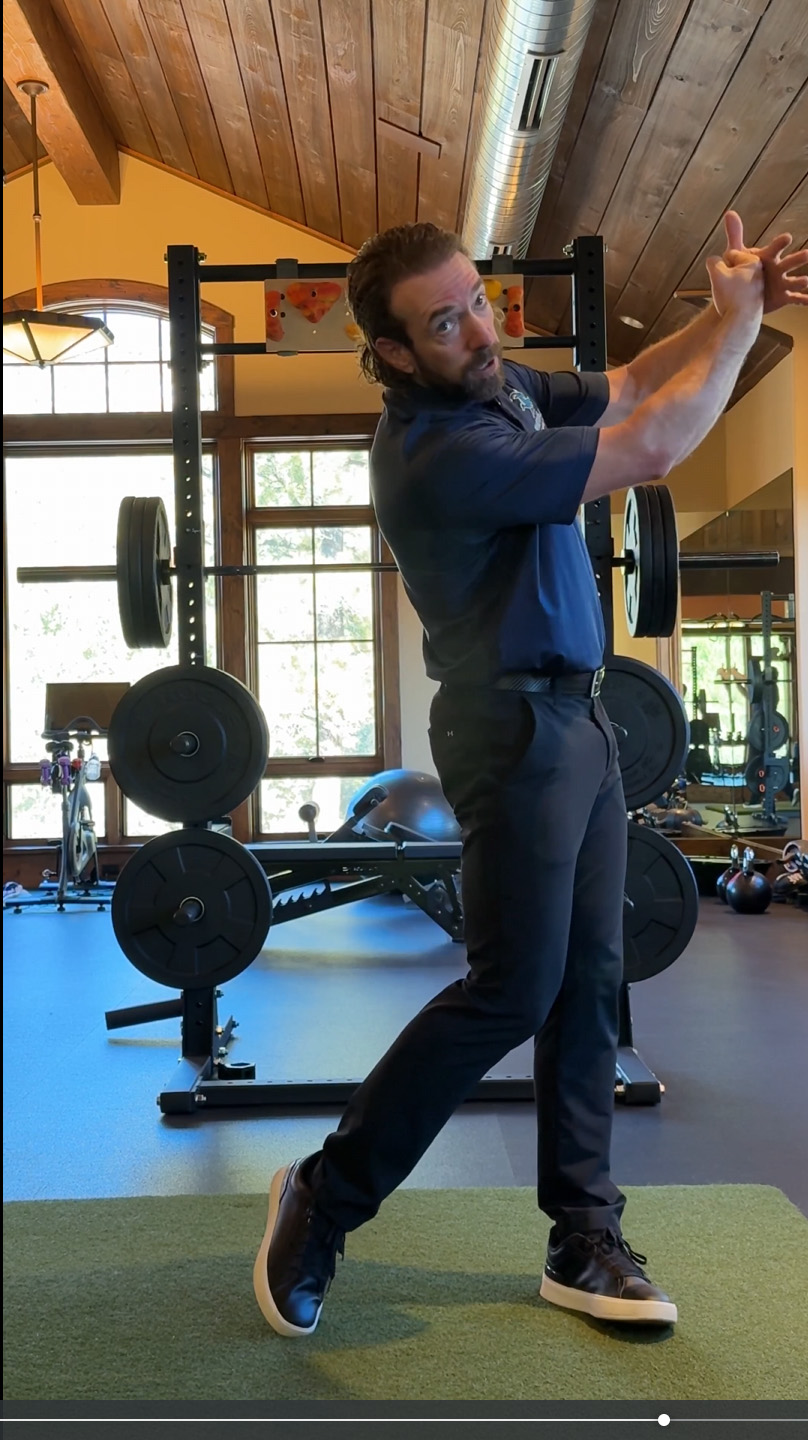
As you become able to turn back while keeping the bucket level, you will feel how your hands, arms, shoulders, and back are working in perfect synchronization.

The Bucket Drill done correctly
This is the movement pattern you want to teach your brain. Repeat it over and over again to groove the correct neural pathways.
Also consider that if you had a bucket actually full of water, it would be quite heavy.
You would not just swing your arms across your body to pass it to someone else. You would turn your entire body to support the weight and prevent spilling.
You would use the large muscles in your core — which is precisely what we are looking for in the golf swing.
It is a fantastic, simple drill to teach you how to turn back correctly without getting overly complicated with your arms.
The rotation in the backswing is really a very natural move, once you have grooved it.
Practice the bucket drill to perfect your shoulder turn in golf. To see how your shoulder turn and rotation compare to elite standards, try a free AI swing analysis.
When you are performing the drill, imagine turning to shake someone's hand or turning to hand someone an object. You will start to understand how to eliminate incorrect movements and rotate correctly in the backswing.
It will truly simplify your takeaway. For real-time coaching on your shoulder turn mechanics, try a free AI golf lesson.
Frequently Asked Questions
What is the purpose of the bucket drill in golf?
The bucket drill is designed to help golfers understand and master the proper shoulder turn during the backswing. By using a bucket or box, golfers can focus on keeping their shoulders level and turning correctly, rather than tilting them. This drill simplifies the movement, allowing golfers to groove the correct patterns essential for an effective swing.
How can I ensure I’m performing the bucket drill correctly?
To perform the bucket drill correctly, hold the bucket as if it’s full of water and assume your golf setup position. As you turn your shoulders back, keep the bucket level to avoid spilling any water. This will help you avoid common mistakes like tilting your shoulders or rolling your arms, ensuring a proper shoulder turn.
Why is it important to avoid tilting the shoulders during the backswing?
Tilting the shoulders during the backswing can lead to significant strain on your back and derail your entire swing. It complicates the movement pattern and can cause compensations that negatively affect your performance. Maintaining a level shoulder turn allows for a more natural and effective swing, promoting better mechanics.
What should I focus on while practicing the bucket drill?
While practicing the bucket drill, focus on the synchronization of your hands, arms, shoulders, and back. Repeat the drill until the correct movement feels natural, ensuring that your shoulders turn without tilting. This repetition helps to establish the neural pathways necessary for a fluid and effective golf swing.
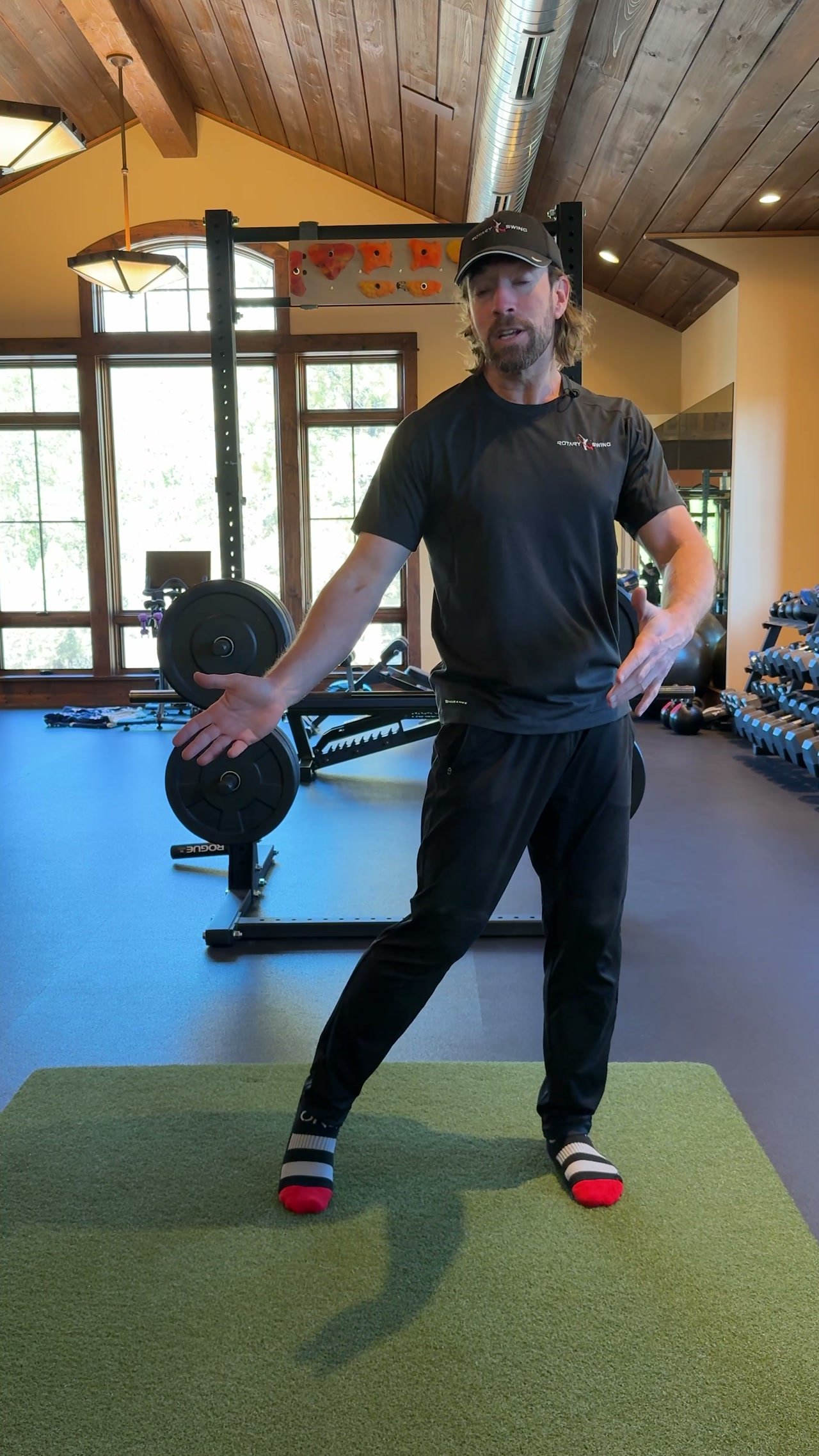
Watch part 2 now to see how you're moving your body in the opposite direction of the pros!