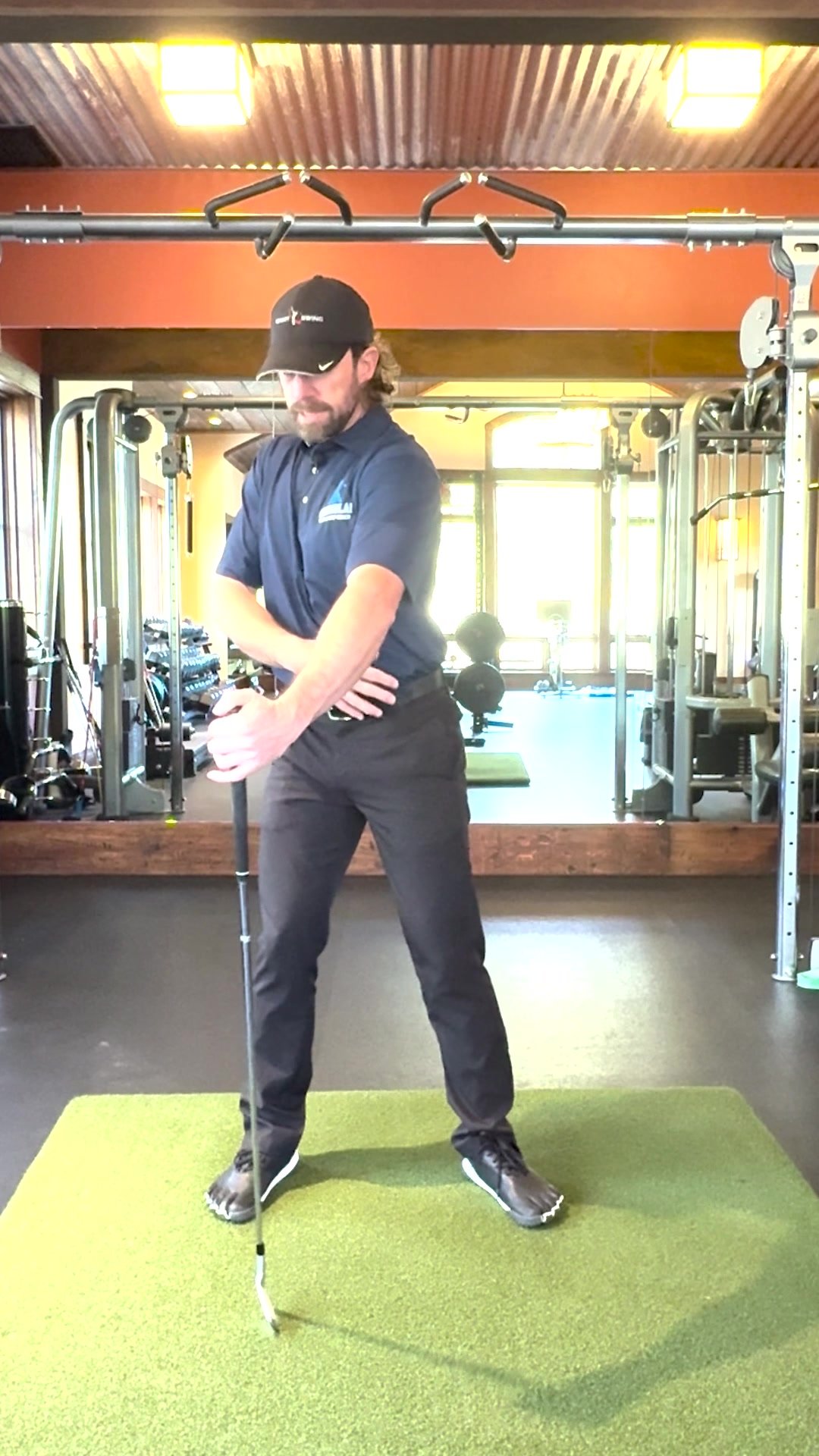
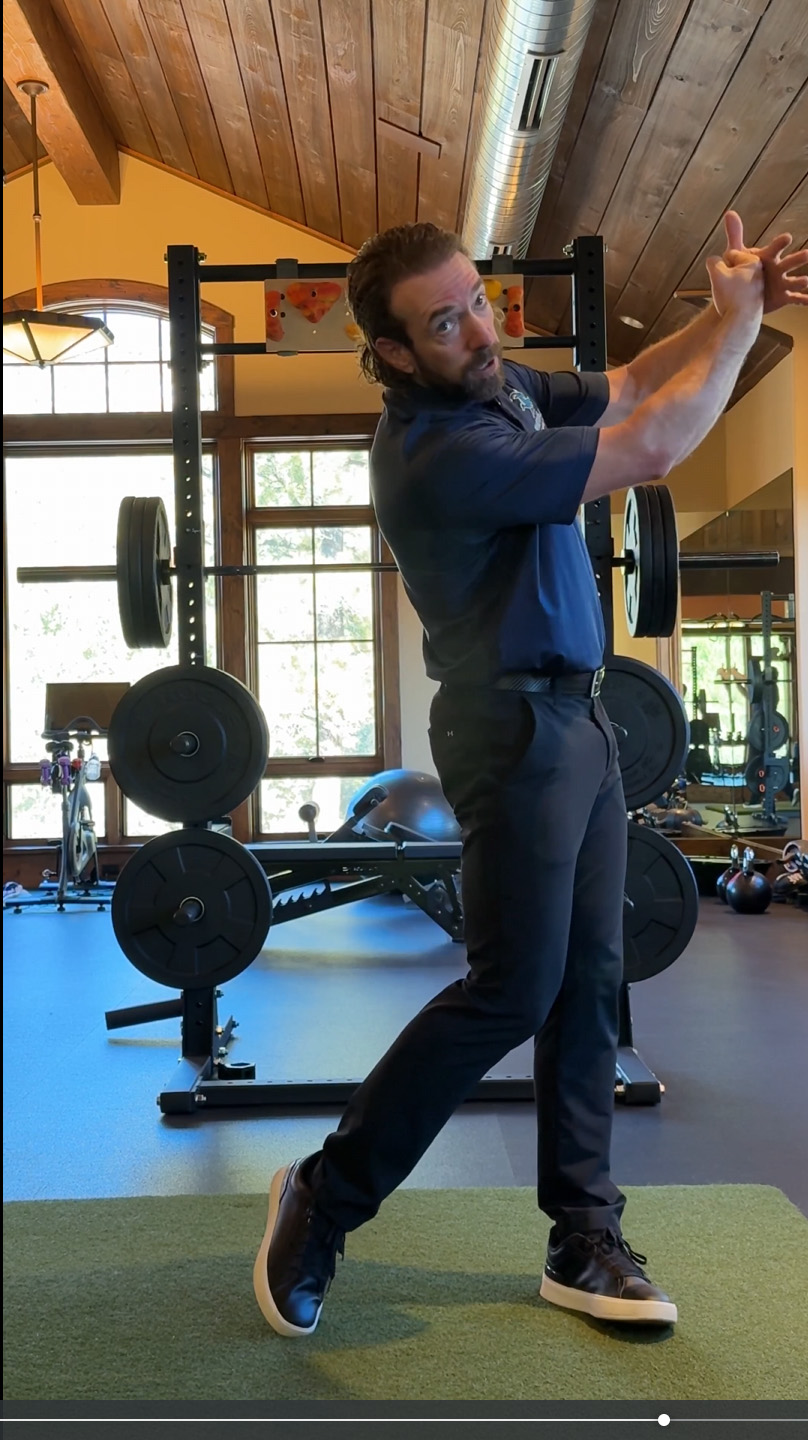
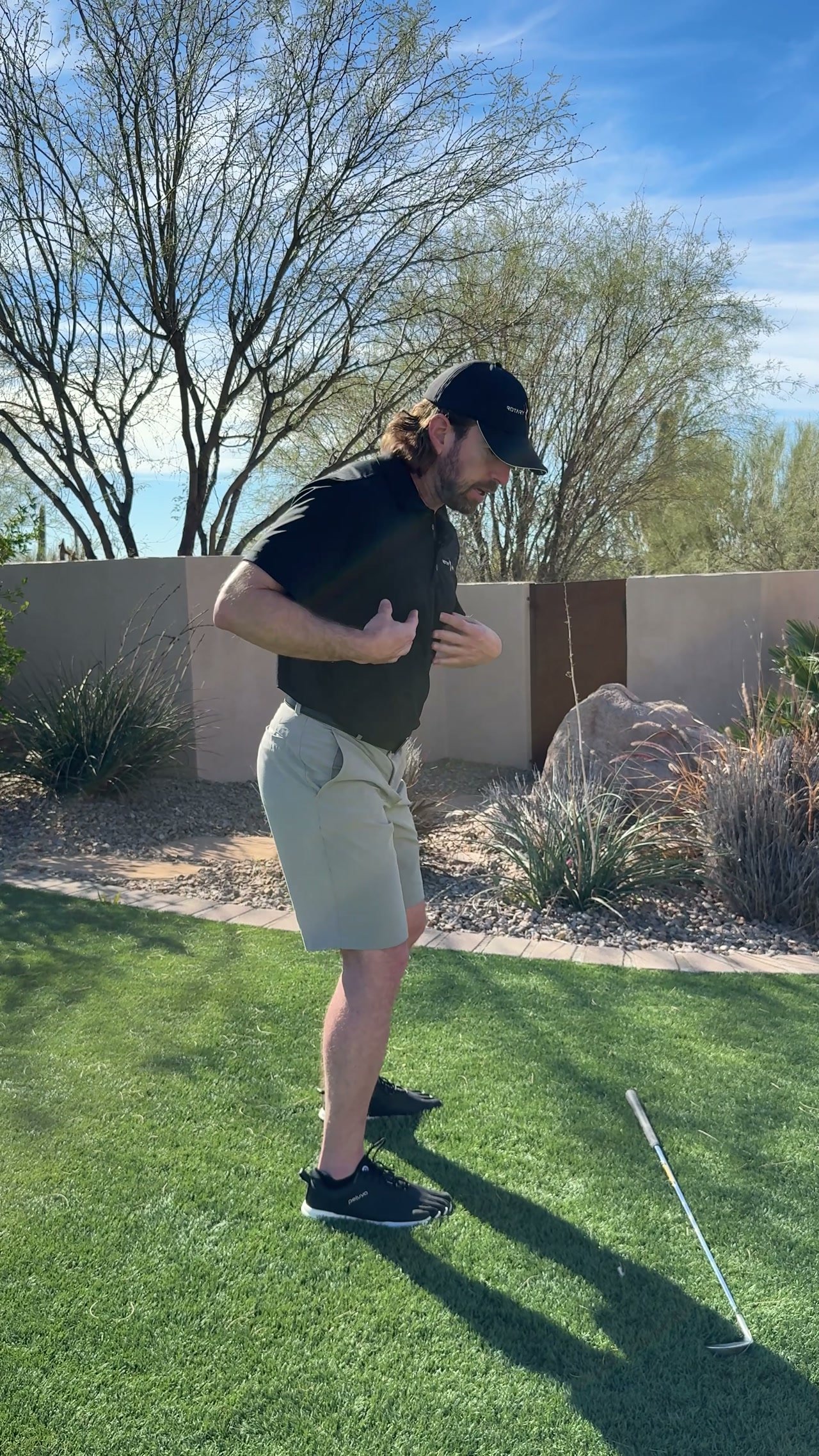
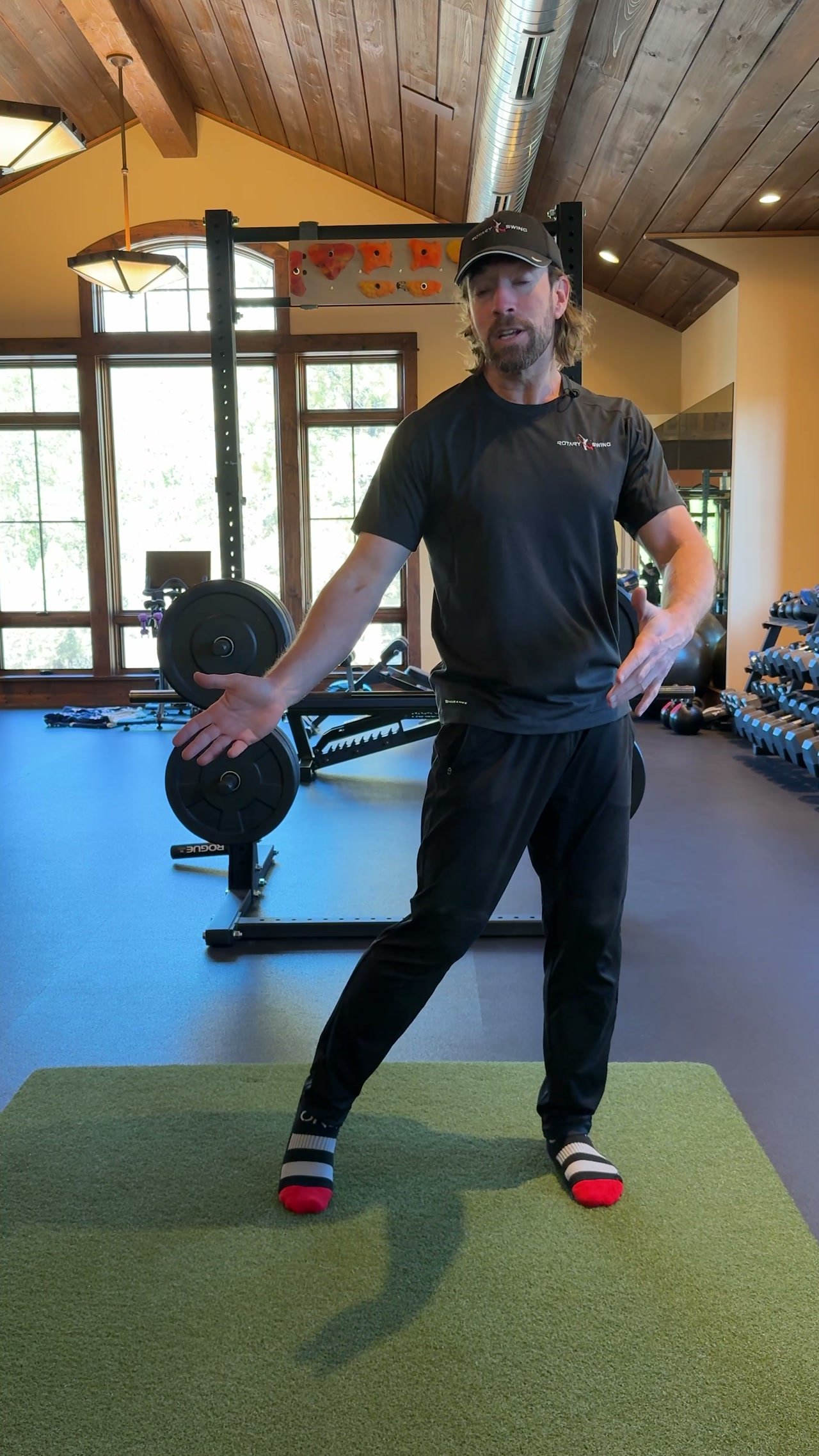
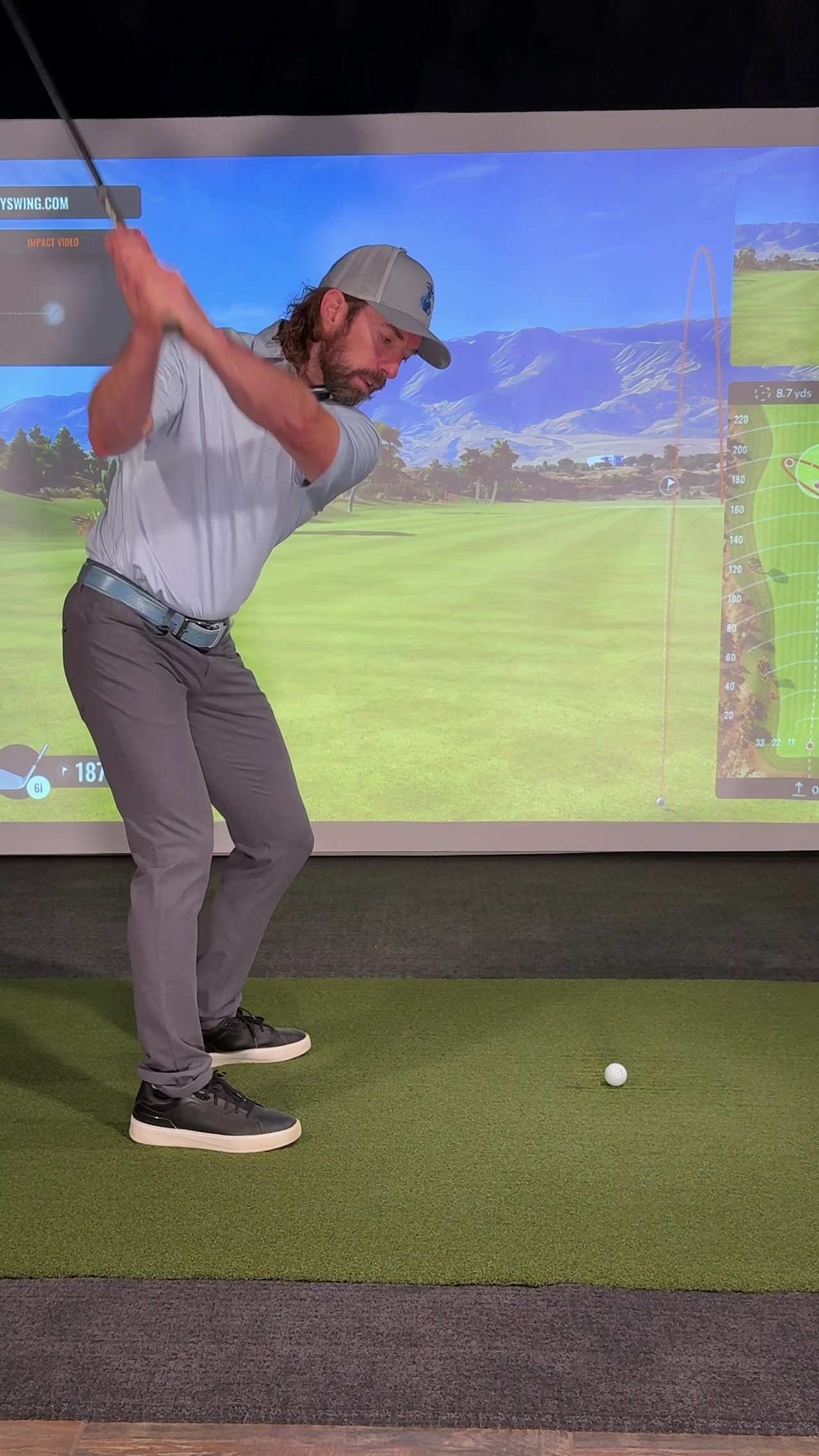
Some golf instructors recommend counting to help develop tempo in golf.

Create good tempo in golf by letting speed build naturally
It's true that statistical data shows the ratio of backswing to downswing is remarkably consistent among Tour professionals who display excellent rhythmical tempo in their golf swings.
Is this the fault costing you strokes?
Film one swing on your phone. In about a minute GOATY measures it and names the single biggest thing costing you strokes — free, no card.
Analyze My Swing Free
Related: How to add swing speed with AI-detected gate coaching →
Android users: Download GOATY on Google Play — free AI golf coaching on your Android phone. →
However, there's no need to get overly caught up in the tempo issue.
Stop reading about it — feel it in your swing today
GOATY watches your swing live and coaches you between every rep. Free. No signup.
Start Your FREE Live Lesson →We've demonstrated time and time again that Chuck can go to the top of his golf swing, stop, have a conversation, then come down and hit the ball close to his full distance — so obviously tempo isn't the deciding factor in how well you strike the ball.
Of course, we're not saying that tempo is unimportant.
Rhythm and tempo are what help unify all the moving parts and make your golf swing consistent and repeatable. A great deal goes into achieving that fluid feel.
It's No Cure-All
Is tempo in golf important? Absolutely — but it's not a cure-all for underlying swing mechanics.
There are entire books dedicated to the importance of tempo, claiming that it fixes golf swing flaws. That's a misleading premise.
Tempo alone doesn't change your movement patterns. You may swing faster or smoother than before, but you're still executing the same fundamental motions.
The one thing it might do is help you stop manipulating the club as much. It might glue things together slightly better, but it's not going to correct your movement in golf.
Tempo Doesn't Mean Rush
Most golfers tend to rush their downswing, ramping their speed up as suddenly as possible.
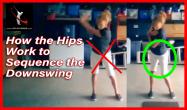
Instead, learn to sequence your golf swing correctly and start the downswing smoothly. Think of it as building to a crescendo.
Build speed steadily, not suddenly. Let it ramp up gradually.
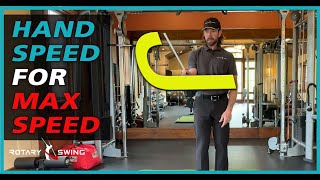
Allow the speed to come to you, because that's what enables you to sequence the larger body parts that simply can't attain the high speeds your hands and arms achieve. For a data-driven look at how well your swing sequencing scores, try a free AI swing analysis.
In other words, yes — tempo is important, but the slower you can go at first when learning new movements, the better.
Learn the new movement patterns, sequence things correctly, and then let the speed come back to you once you've mastered the mechanics. To practice your sequencing with real-time AI coaching, check out a free AI golf lesson that gives you feedback on every rep.
How to Develop Perfect Golf Swing Tempo
Build a consistent swing tempo that holds up under pressure, adds distance, and gives you reliable results every round.
-
1
Find Your Natural Tempo
Record 10 practice swings at what feels comfortable. Count the seconds from takeaway to the top of your backswing and compare to your downswing time. Most tour players have a 3:1 backswing-to-downswing ratio. Knowing your natural ratio is your starting point.
-
2
Use a Metronome to Train Consistency
Set a metronome app to 72 beats per minute. Click 1 starts your takeaway, click 2 is your transition, click 3 is impact. Practice making swings that sync exactly with the clicks. Even 3 minutes per day of metronome work produces measurable tempo improvement within 2 weeks.
-
3
Avoid the Two Most Common Tempo Killers
Tempo breaks most often at the transition when golfers snatch the club down before completing the backswing. Practice pausing at the top of your backswing for one full count before initiating the downswing. This single drill cures 80 percent of tempo problems.
-
4
Build Tempo Under Pressure
Create a pressure situation by betting yourself a small amount on making a great swing. Notice how your tempo changes under pressure. Most golfers rush. Commit to one specific tempo thought to anchor your tempo under pressure.
-
5
Score Your Tempo with GOATY
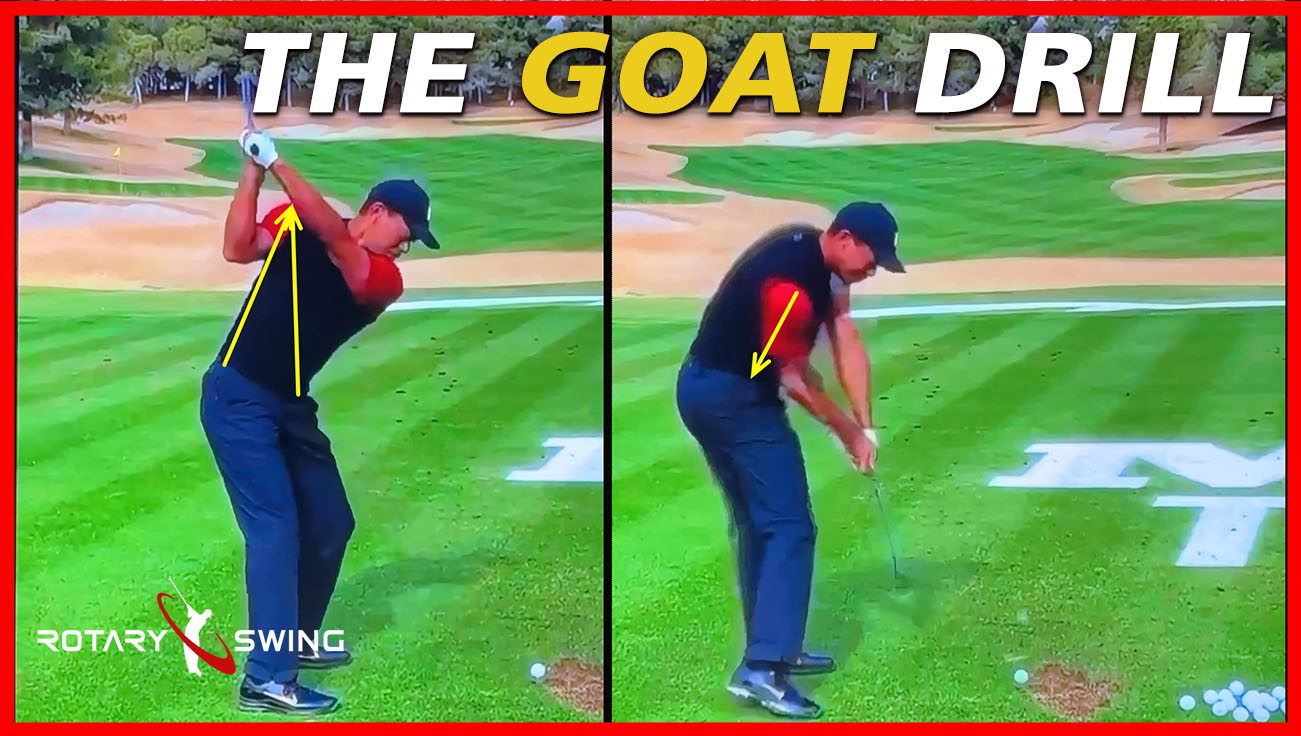
Open GOATY live lesson at rotaryswing.com/goaty/landing/goat_drill_video and take 15 swings. GOATY evaluates your hip and body sequencing on every rep and voices specific tempo coaching between reps. Your WHIP score reflects how well your downswing sequence is timed.
Watch part 2 now to see how you're moving your body in the opposite direction of the pros!