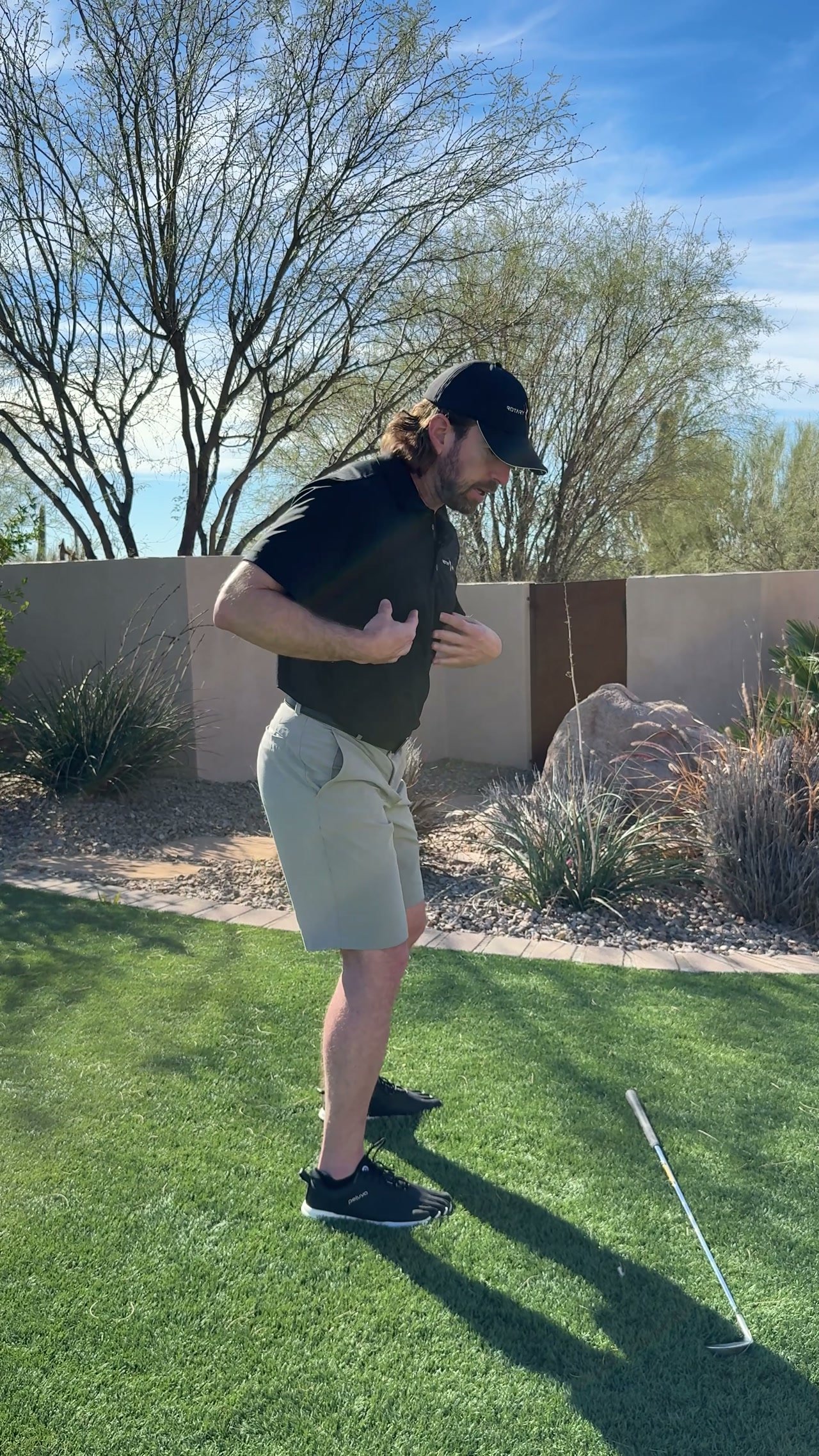
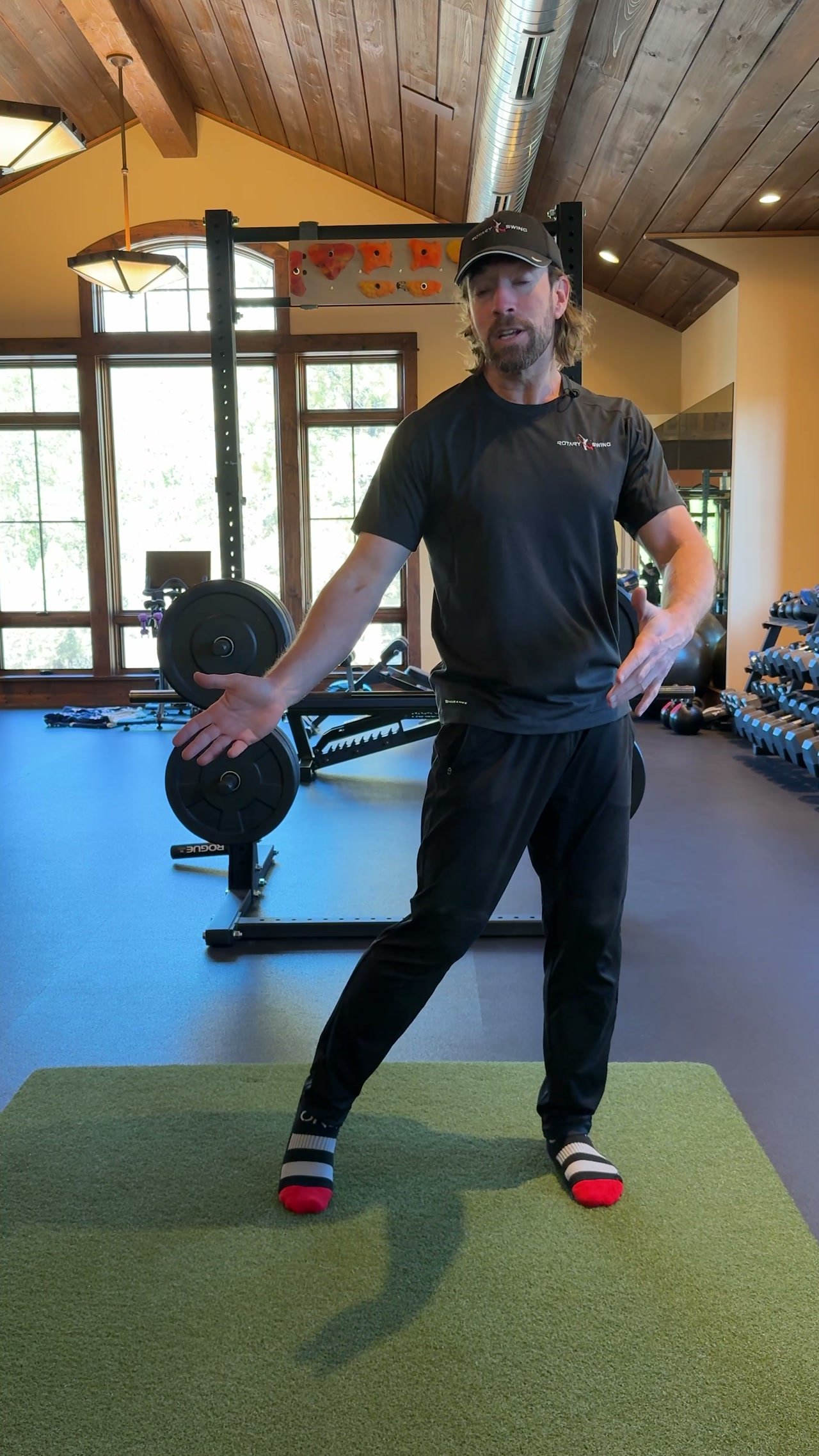
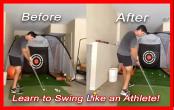
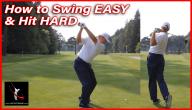
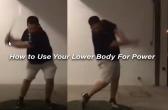
The most common problem we see with the golf stance is players who set up far too wide at address. It is a fault that quietly undermines almost every other element of the swing.

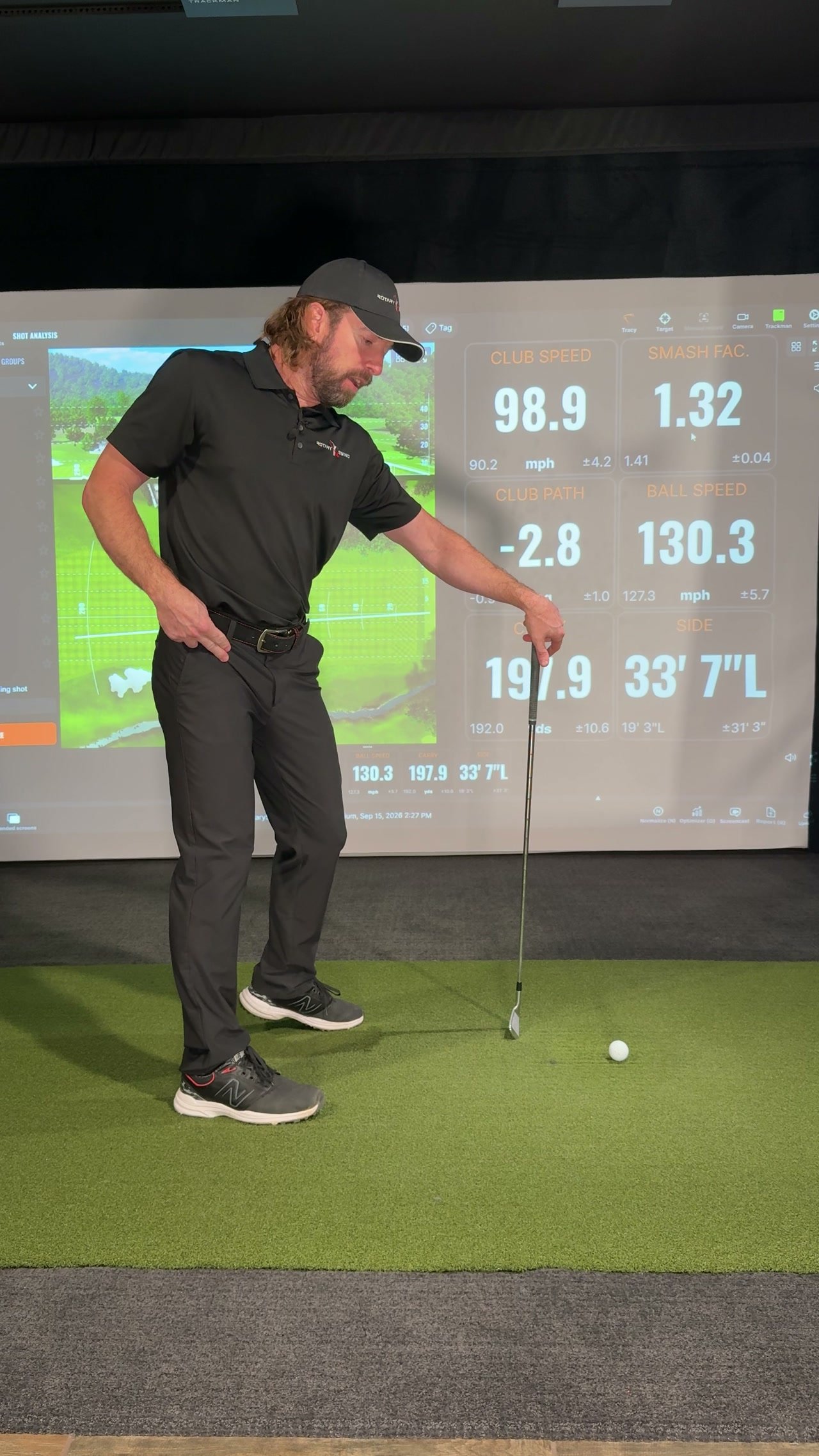
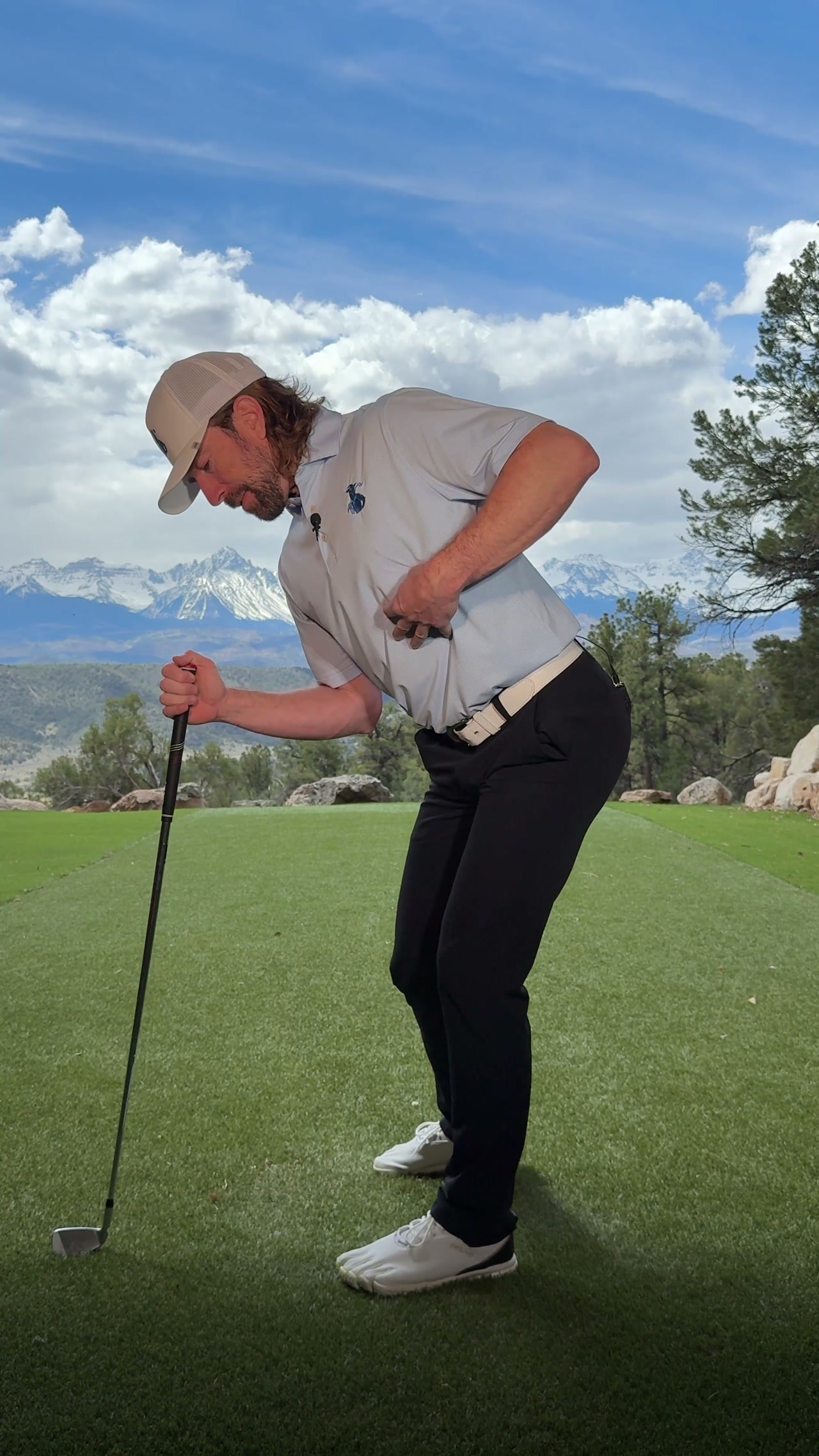
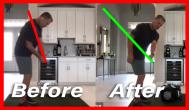
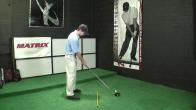
Proper golf is 2" outside neutral
Rarely do we see someone with too narrow a golf stance, but excessively wide setups are all too common — particularly among golfers trying to feel stable and athletic at address.
Is this the fault costing you strokes?
Film one swing on your phone. In about a minute GOATY measures it and names the single biggest thing costing you strokes — free, no card.
Analyze My Swing Free
Related: Golf hip rotation — what AI coaching reveals →
Android users: Download GOATY on Google Play — free AI golf coaching on your Android phone. →
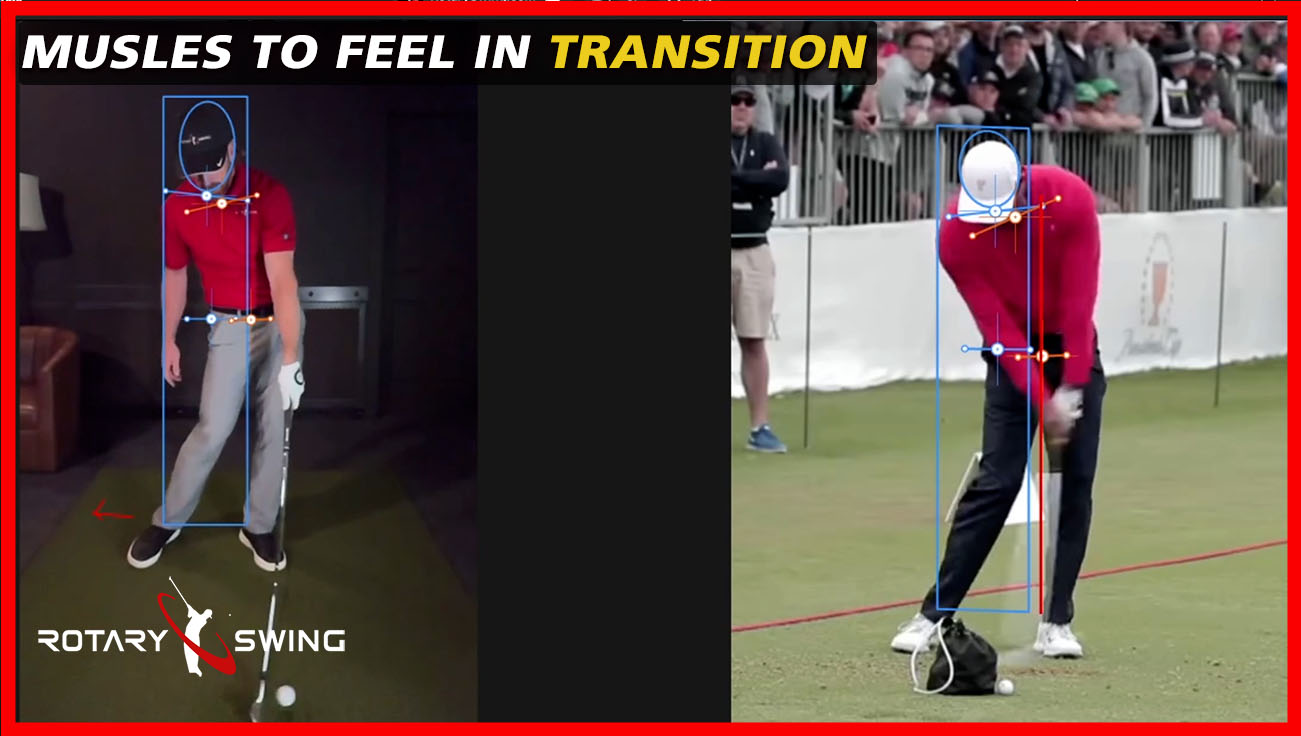
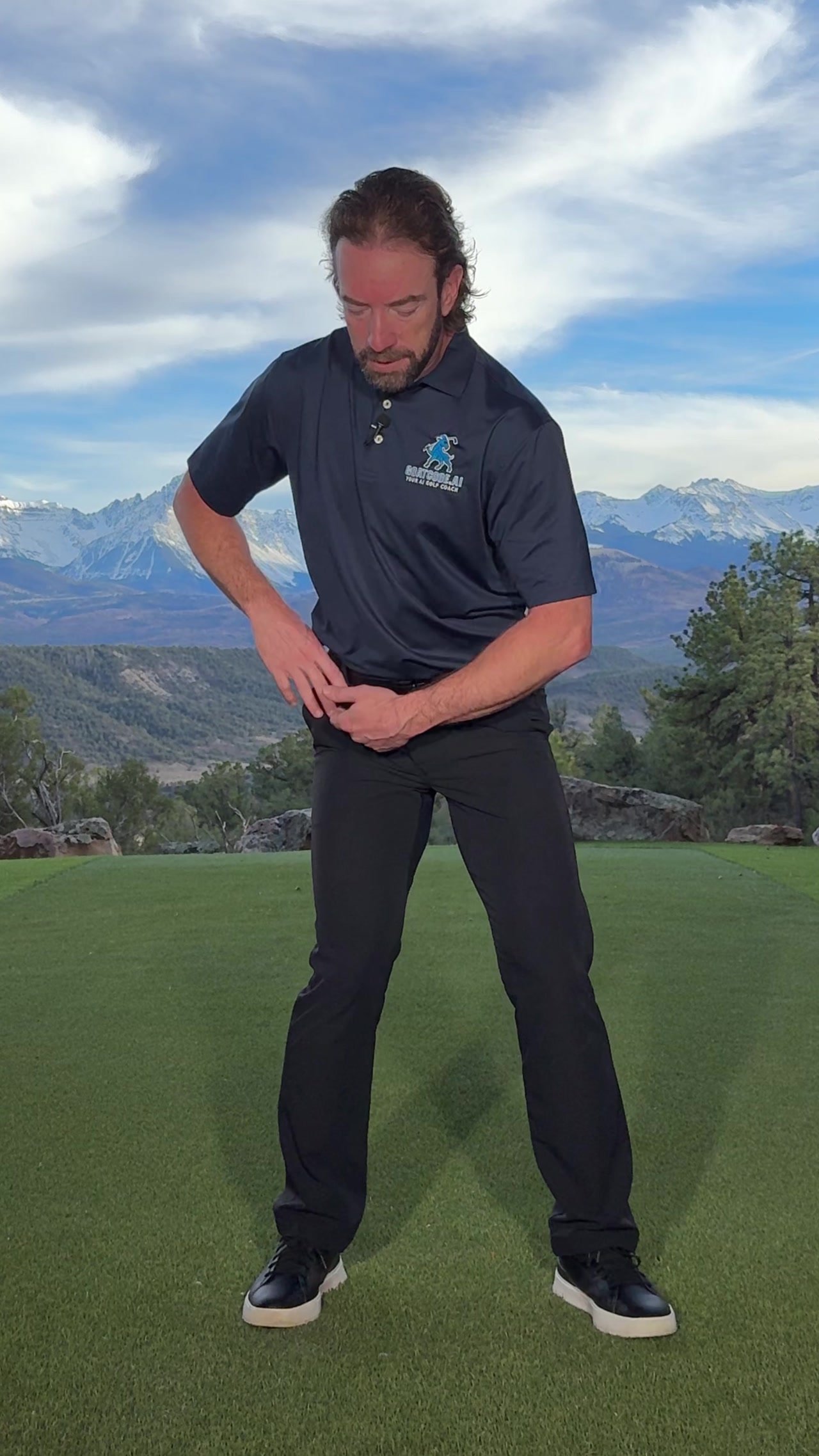
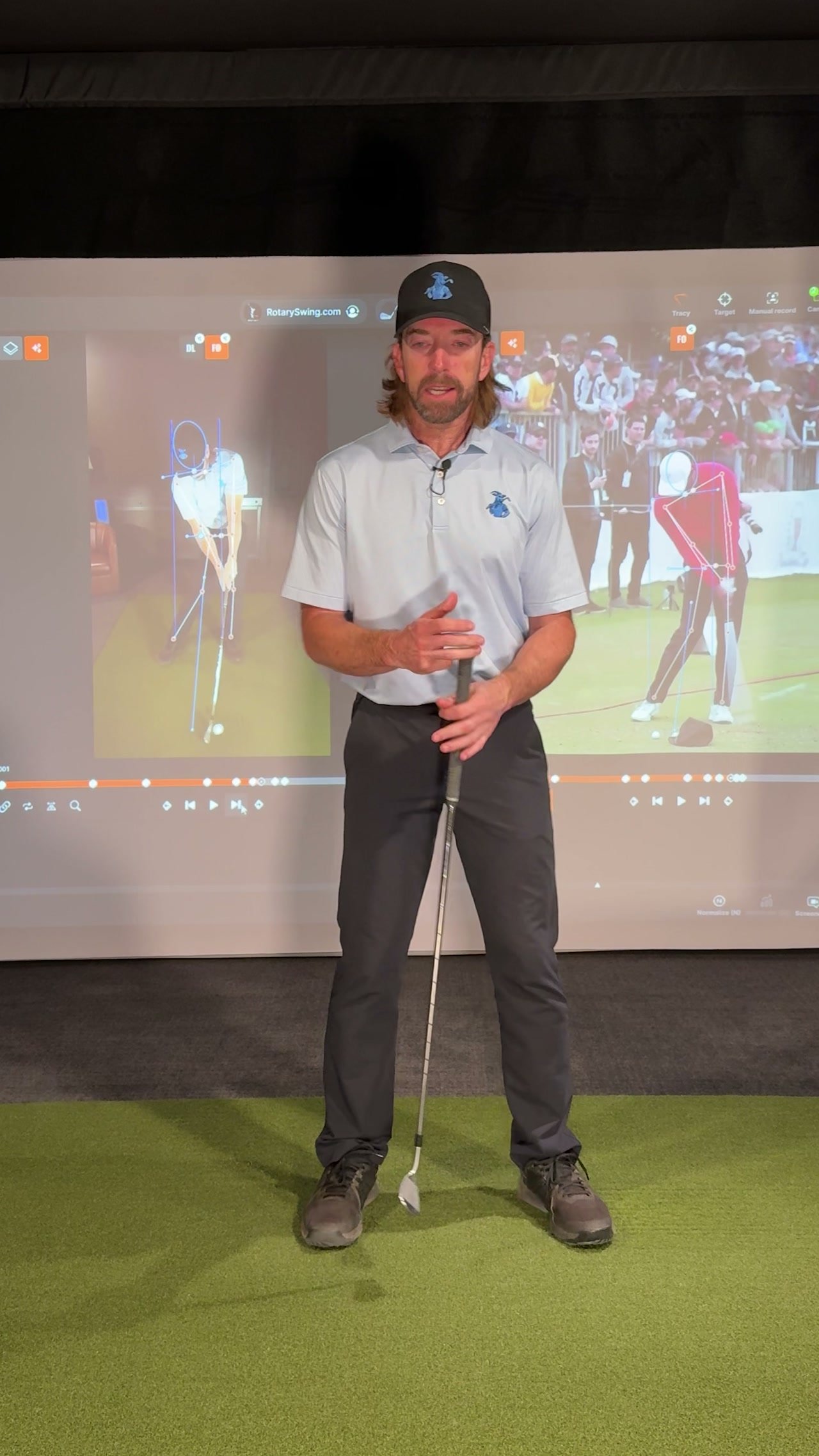
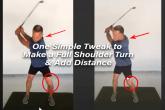
Let's examine the specific problems that come from setting up too wide. Research and biomechanical study tell us that proper stance width should place the feet no more than two inches outside of neutral joint alignment with the hips.
Stop reading about it — feel it in your swing today
GOATY watches your swing live and coaches you between every rep. Free. No signup.
Start Your FREE Live Lesson →Any wider than that and you will struggle to make a full without your head moving laterally throughout the swing, creating a cascade of compensations.
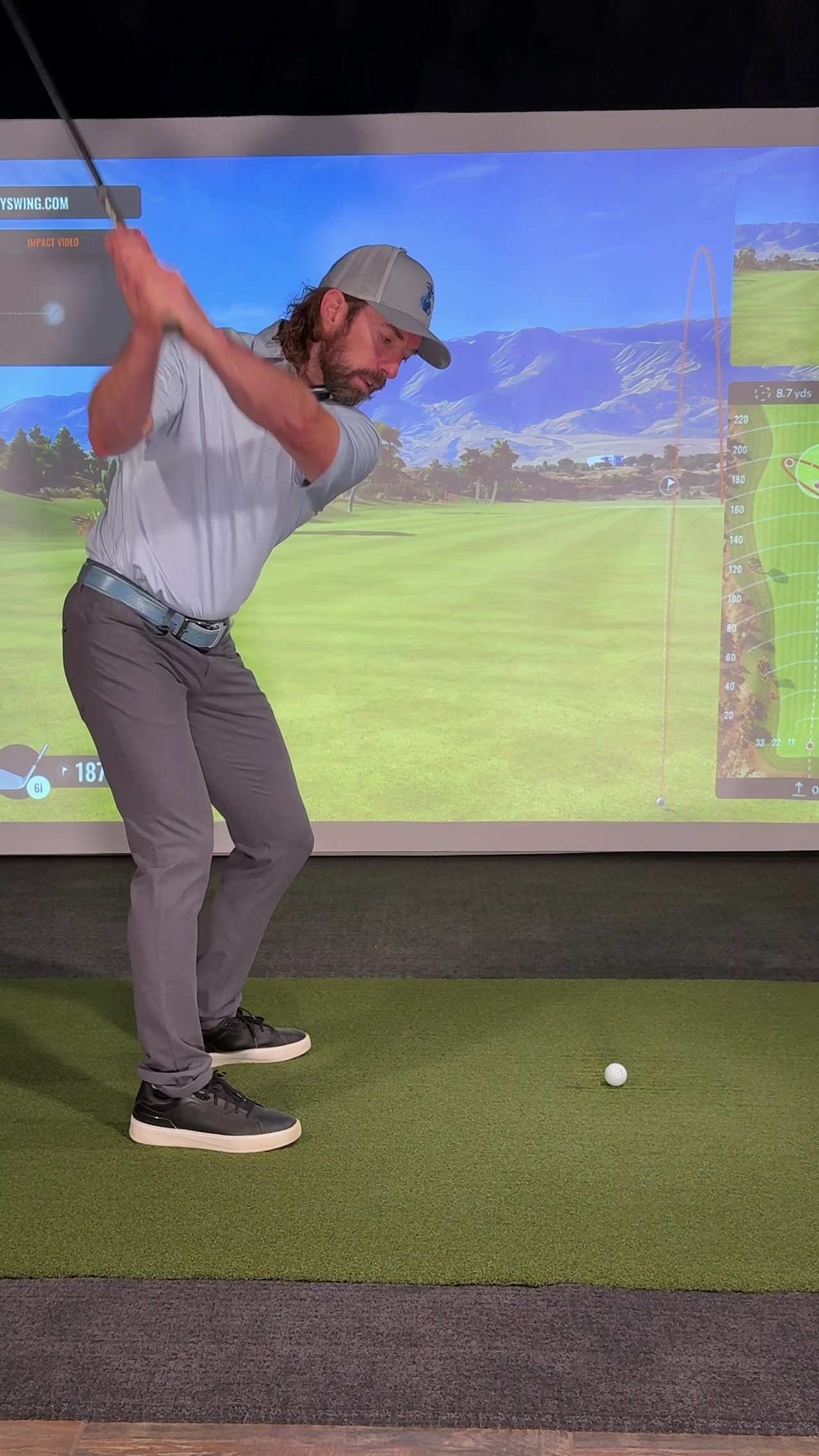
Many golfers love a very wide setup, especially with the driver. It feels grounded and powerful at address, but a wide golf stance prevents you from shifting back to the lead side effectively — and that single limitation costs you both power and accuracy.
Rotation is Impaired
Proper weight transfer is one of the most important biomechanical requirements in the golf swing. Without it, the sequencing of the kinetic chain breaks down from the ground up.
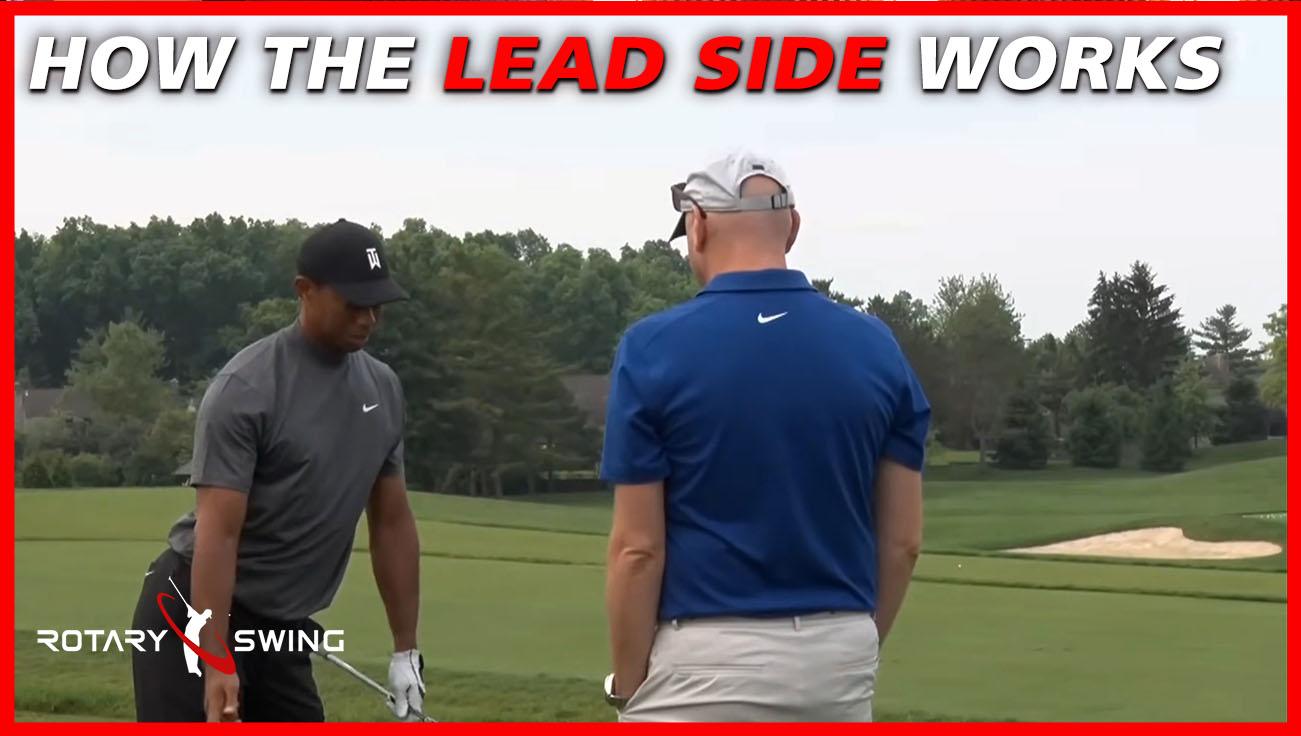
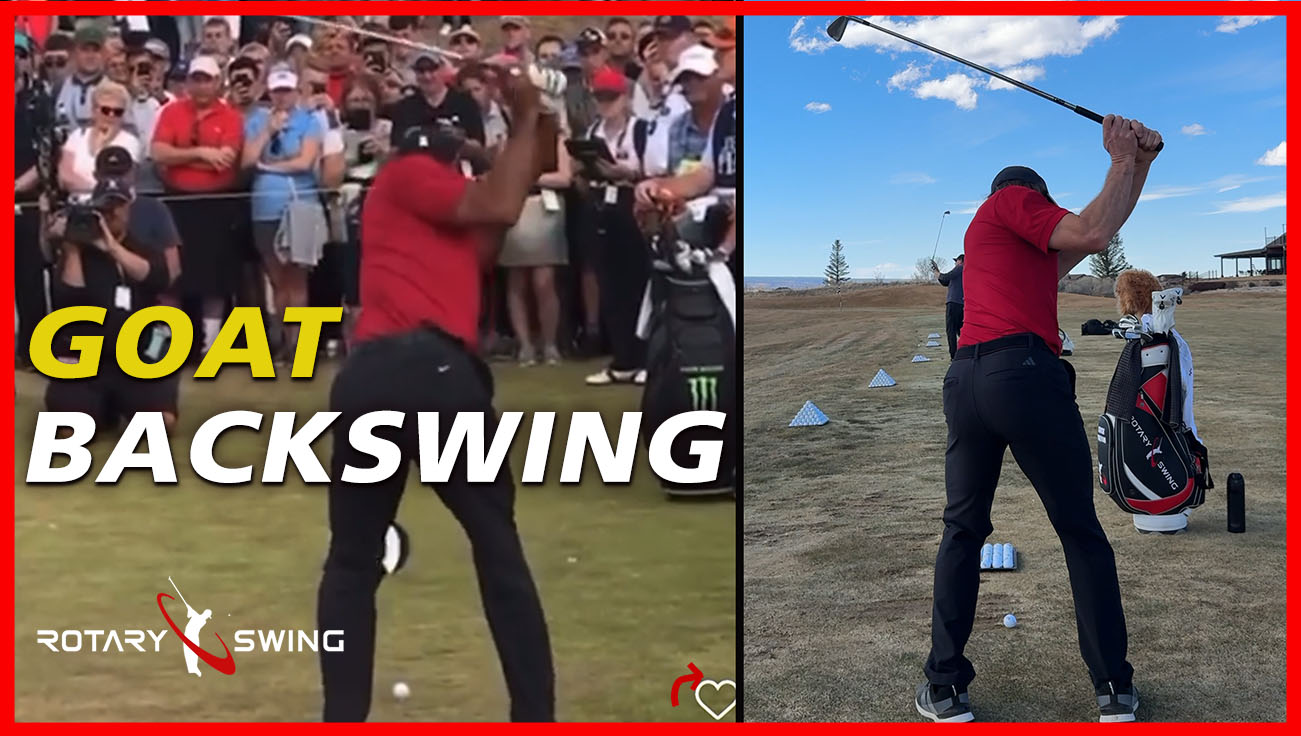
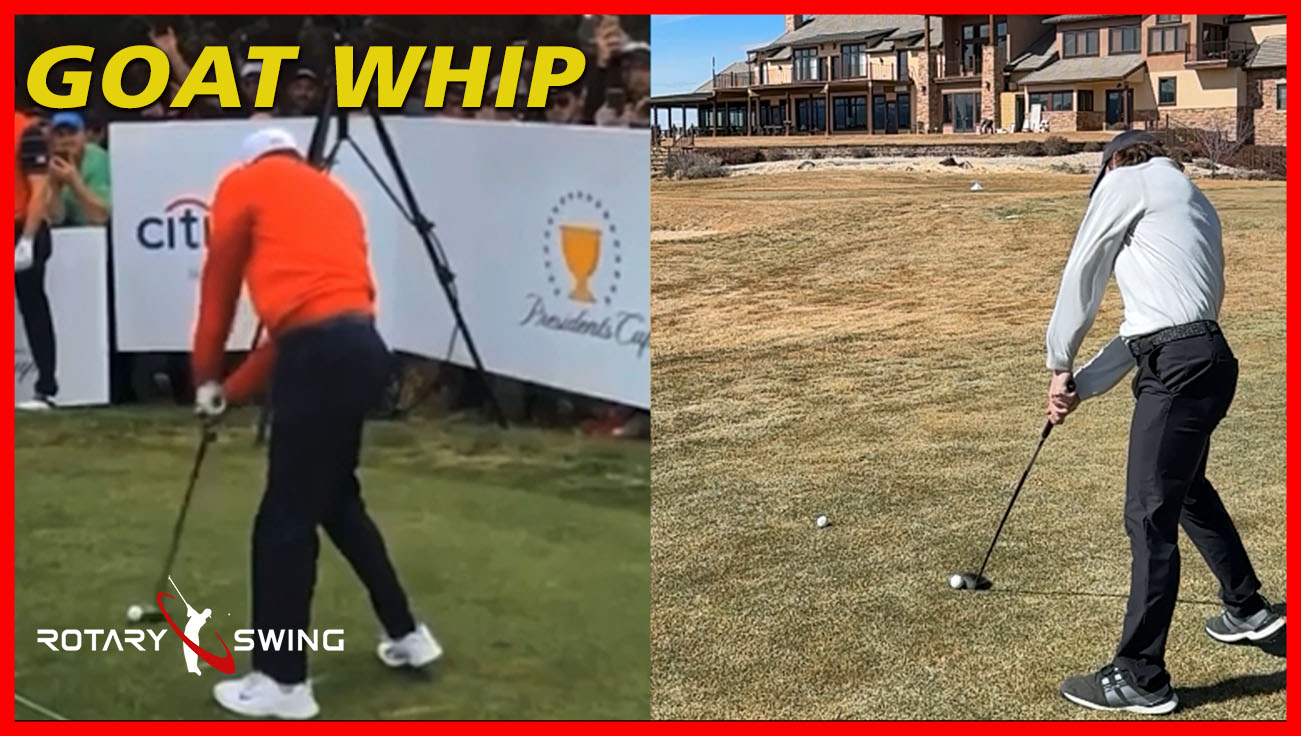
You need to get your weight fully shifted back to the lead side so you can stabilize and brace on the lead glute and lead heel, allowing your hips to clear fully through impact.
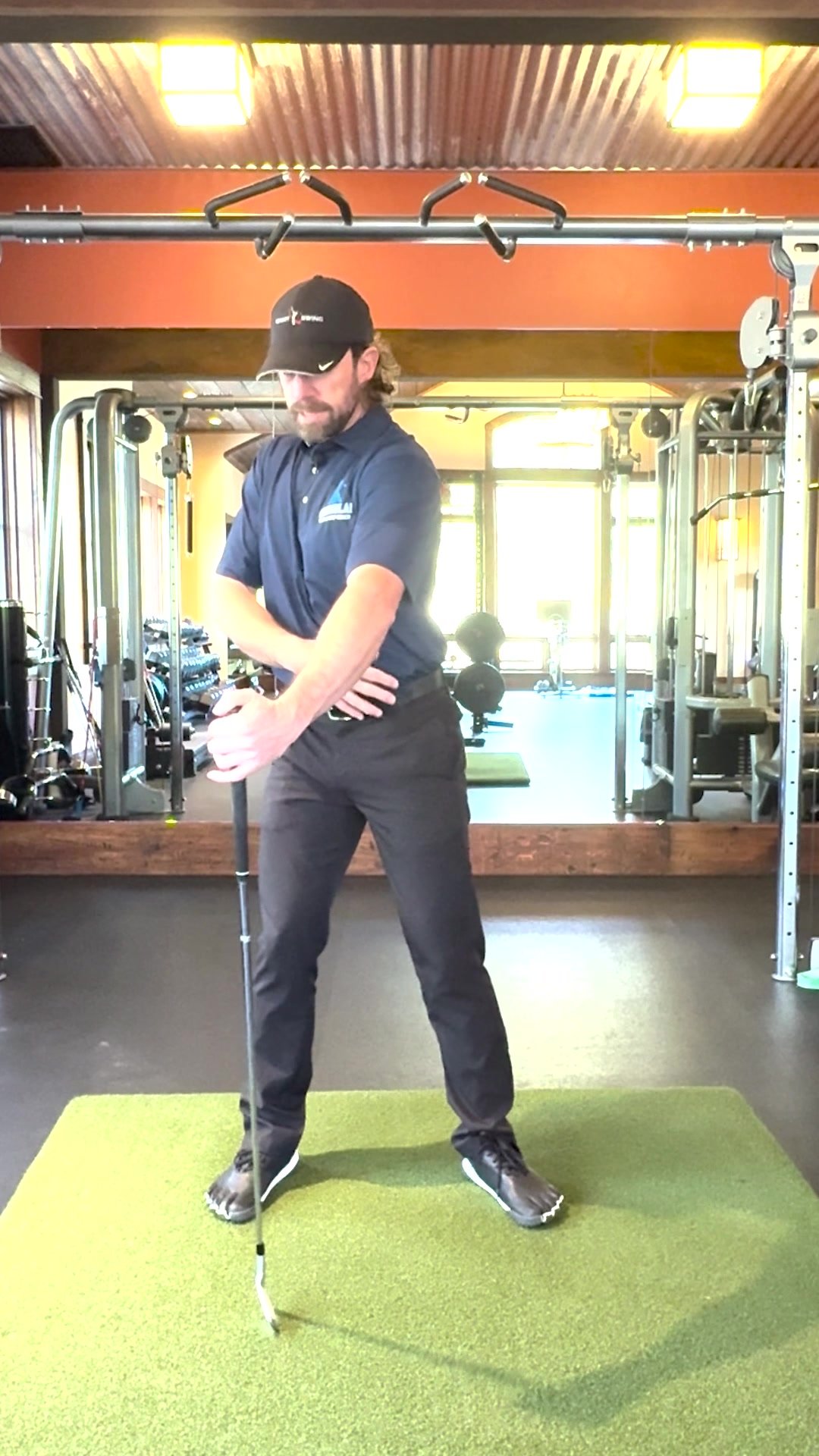
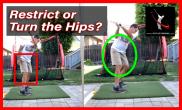
With a wide golf stance, correct hip rotation is simply not possible. You will end up spinning the hips out of the way reactively, or bypassing them altogether, rather than driving a loaded, sequenced rotation.
Try a free live lesson with GOATY
GOATY, my AI golf coach, watches your swing through your phone camera and coaches every rep. Free, about 20 minutes, no credit card.

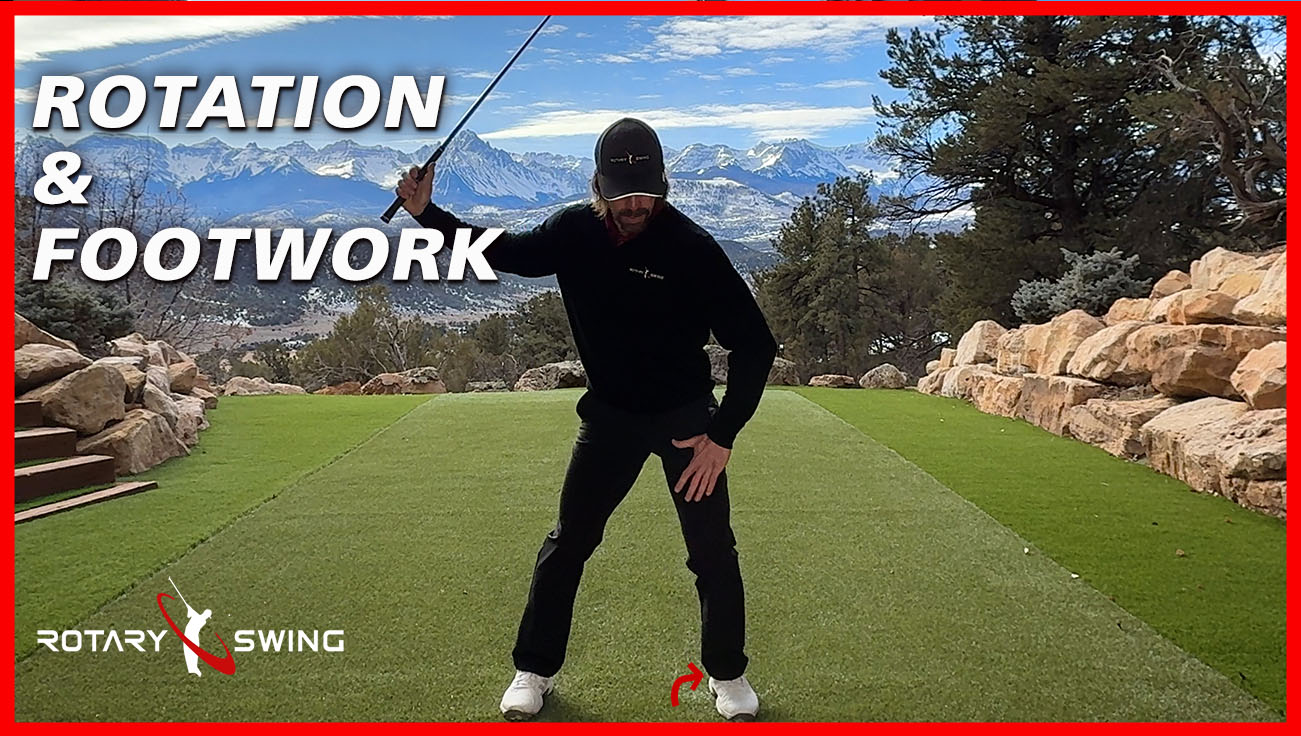
Stance width affects rotation
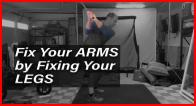
Most golfers with stances that are too wide default to an all-upper-body swing because lower body mechanics cannot function efficiently when the feet are spread beyond the hip-width threshold. The hips are effectively locked, and the arms take over.
Try It and See
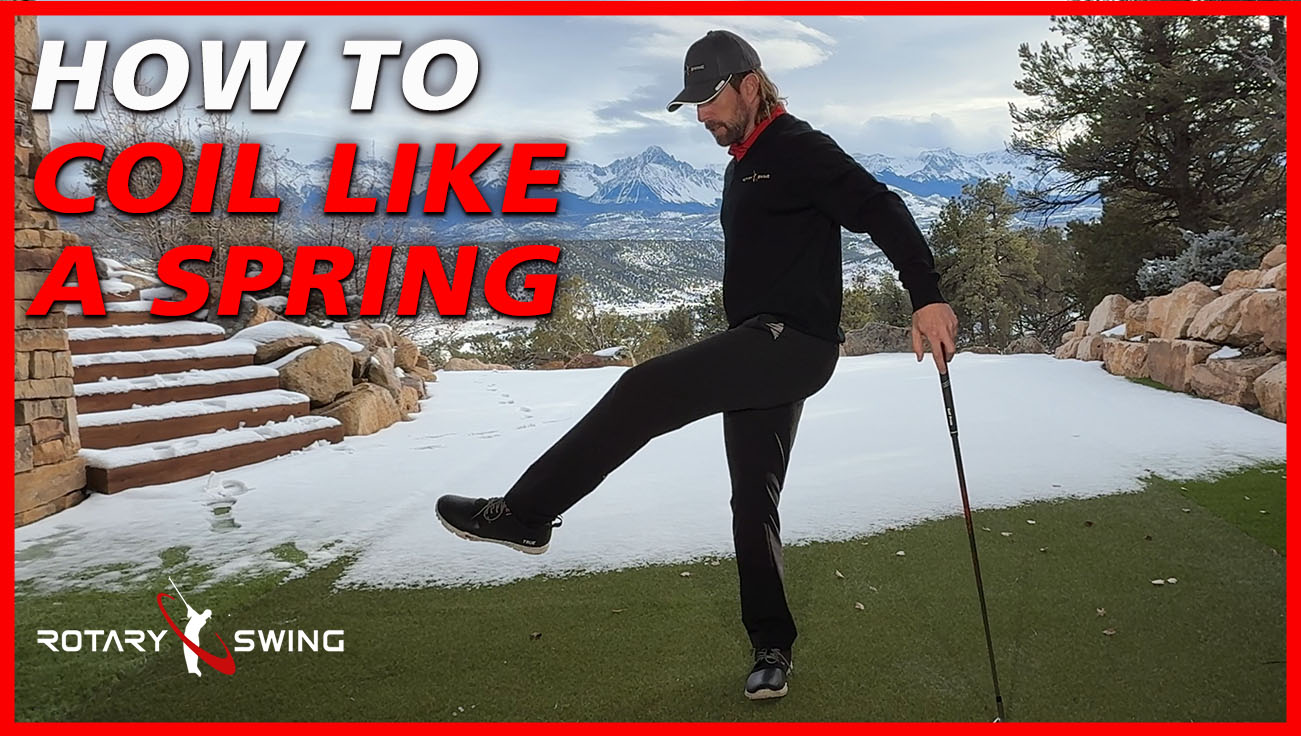
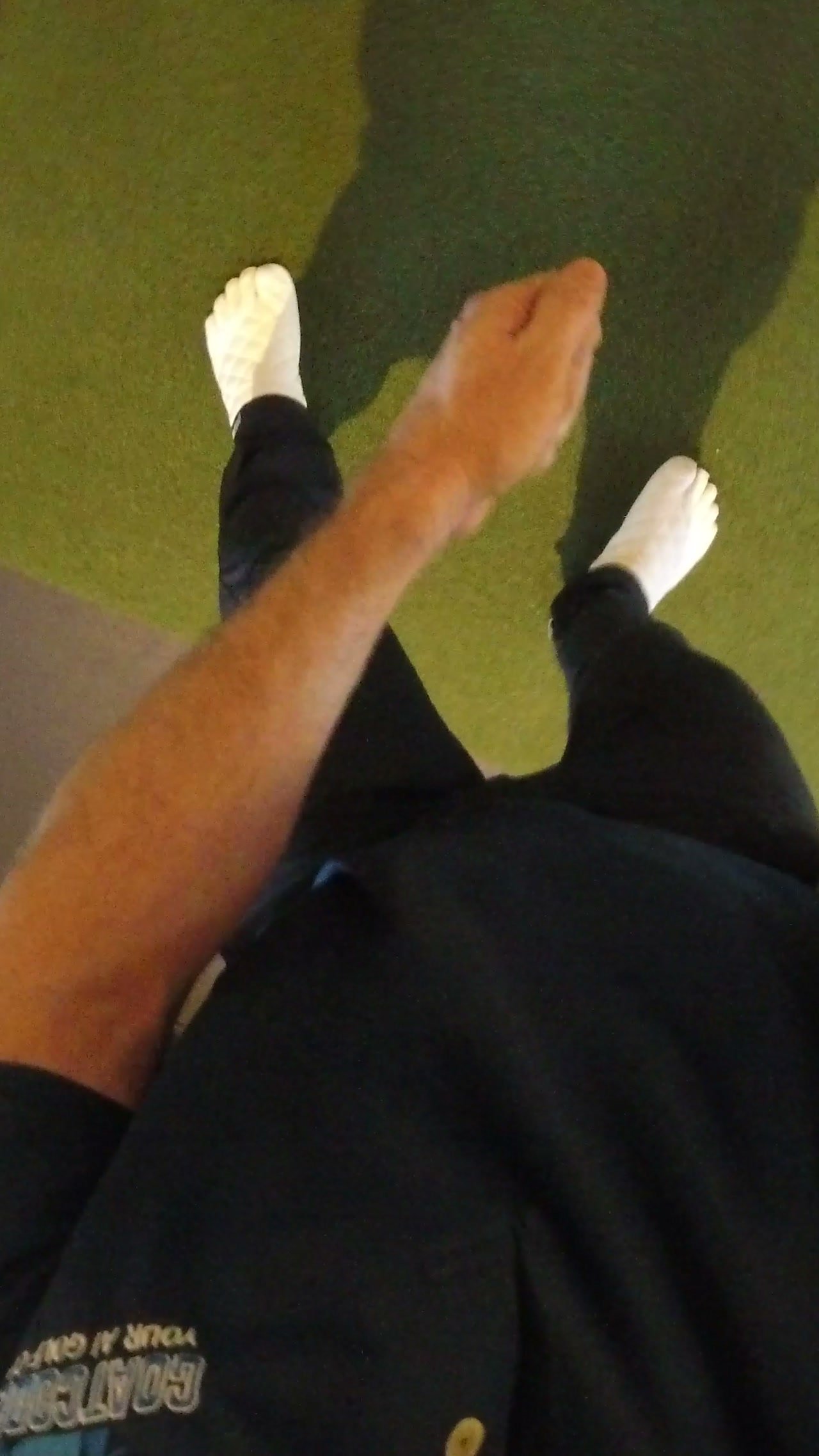
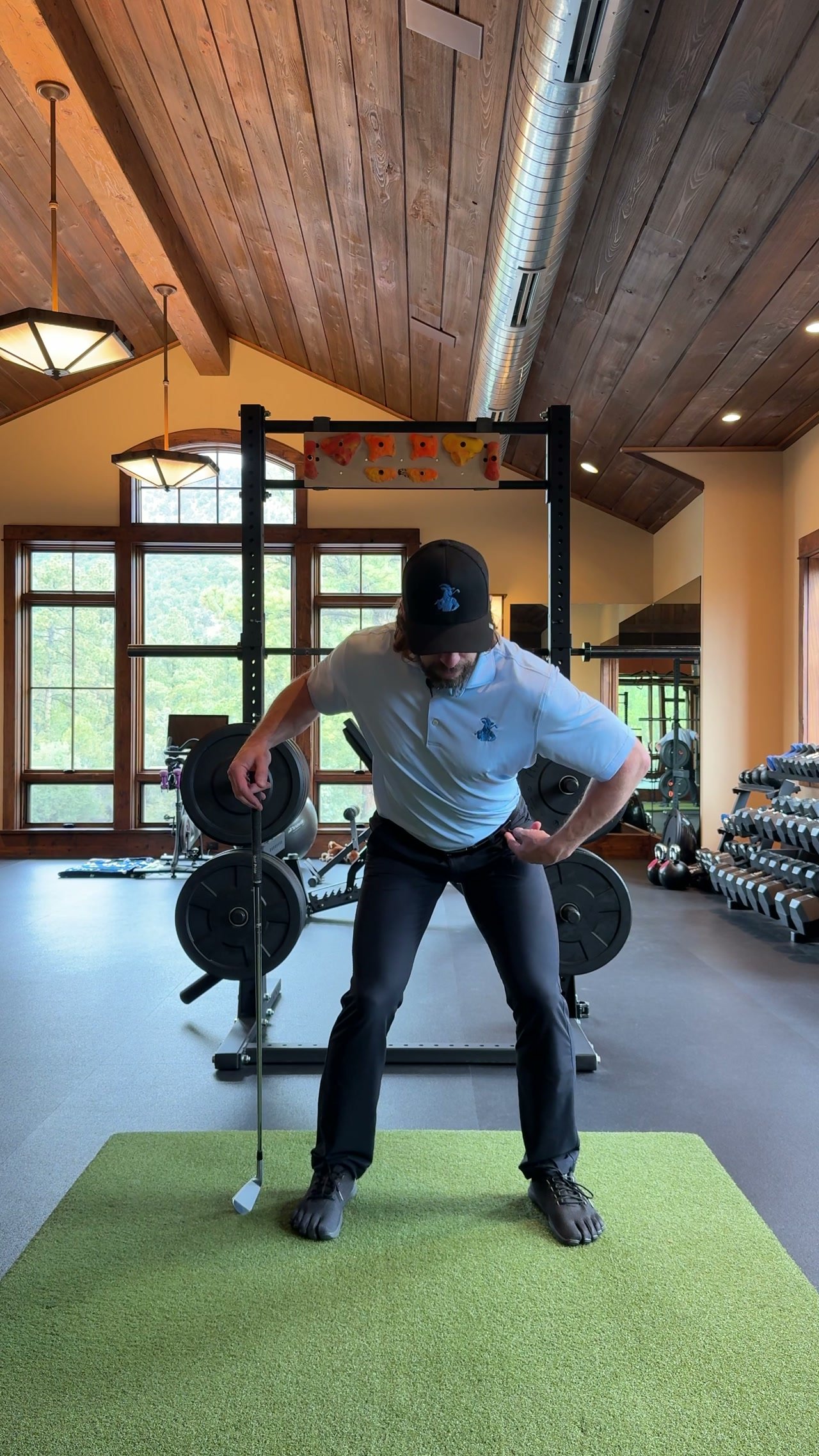
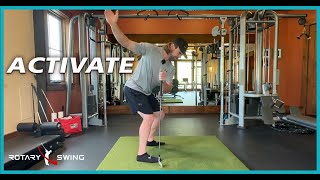
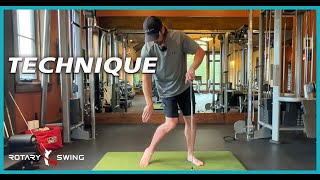
Stand up right now and test this for yourself. When you place your feet close together, you will immediately notice how easy it is to pivot your hips from side to side — you can transfer your weight from one foot to the other with almost no effort.
That effortless shift is exactly what you need. Being able to clear your hips freely in the golf downswing is what creates the speed and compression that separates elite ball-strikers from the rest.
You need to be able to pivot and post on the lead side. That pivot is the engine of the entire motion.
Now widen your feet gradually. You will notice that each additional inch of width requires a larger lateral shift to get back to the lead side — and that shift takes more time, which throws off your sequencing.
The wider the golf stance, the greater the required shift, and the harder it becomes to arrive at the lead side before the club arrives at impact.
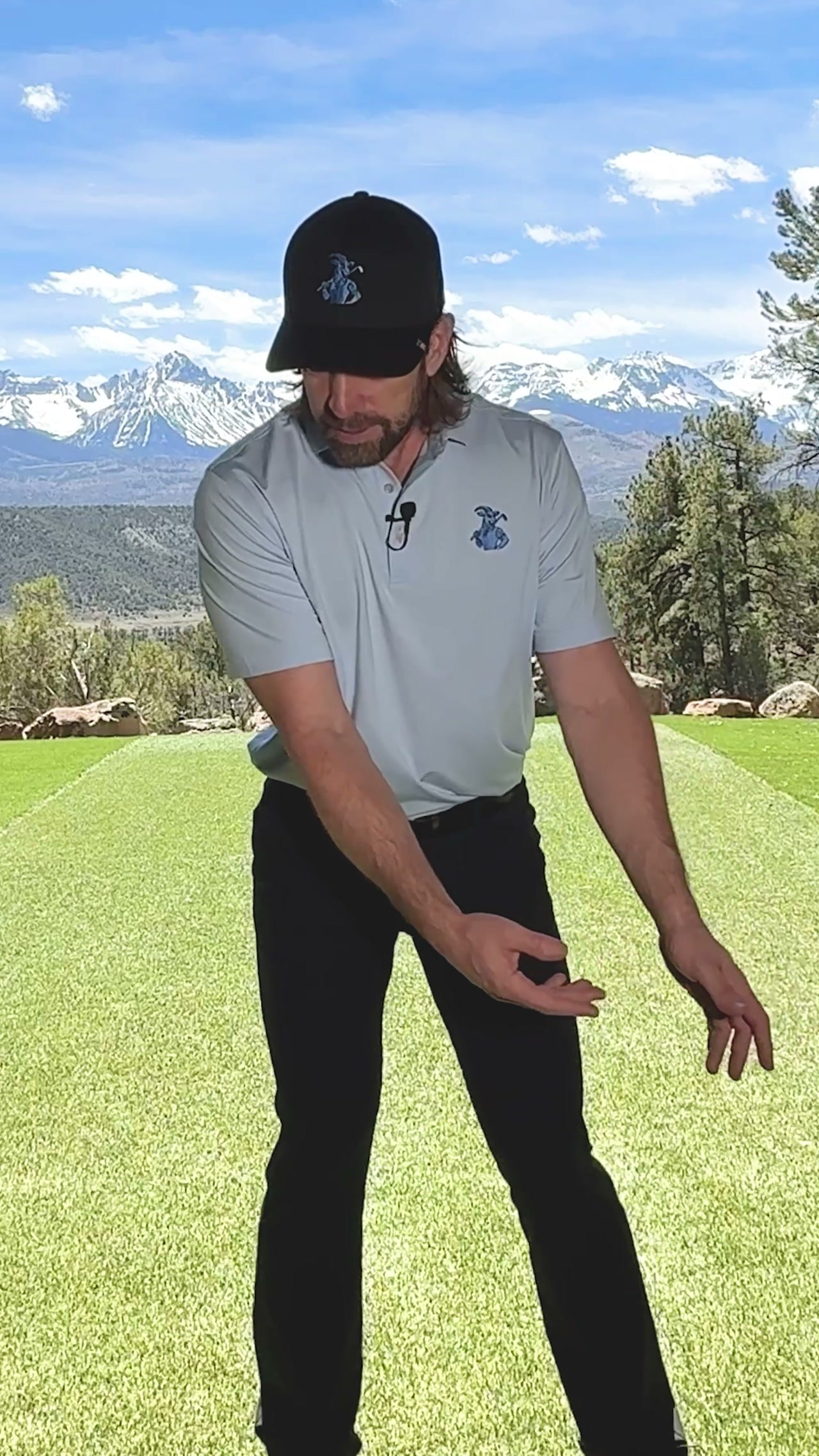
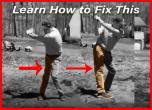
When the golf stance is excessively wide, the typical result is a push off the trail foot, which drives the trail hip forward and forces you to lose your spine angle in the downswing. You become tethered to the ground on the trail side, unable to shift freely, and the upper body compensates by casting and lunging — a recipe for inconsistency.
If you want to see how AI-powered coaching diagnoses stance-related faults in real time, try a free AI swing analysis and see exactly how your setup affects your weight transfer metrics.

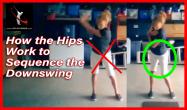
Check your right shoe at follow through
Check Your Trail Shoe
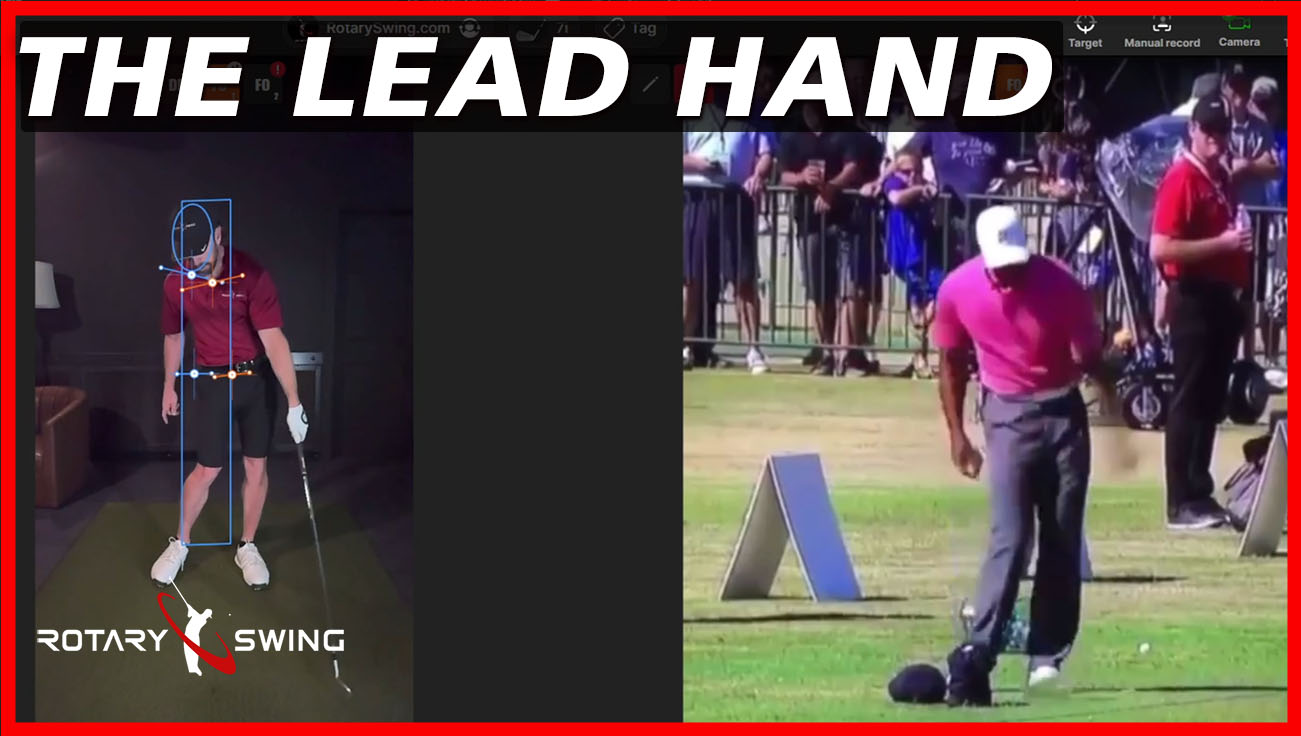
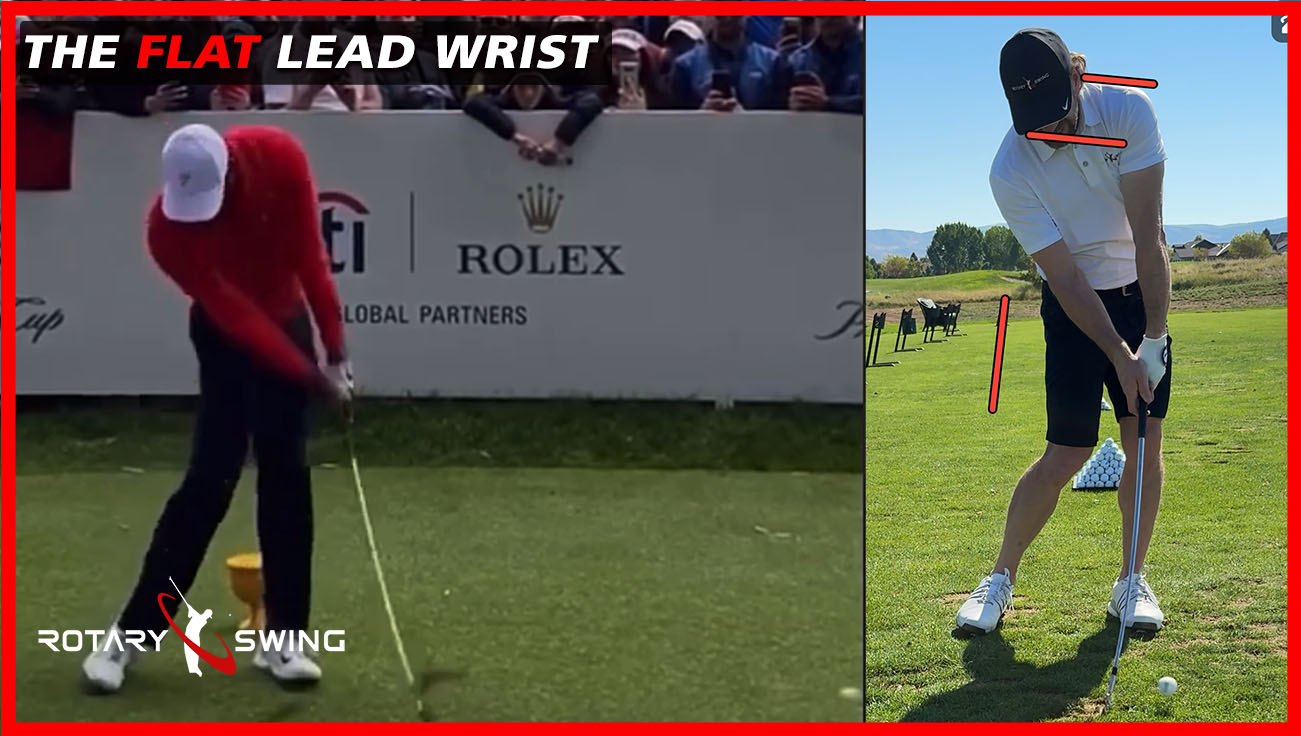
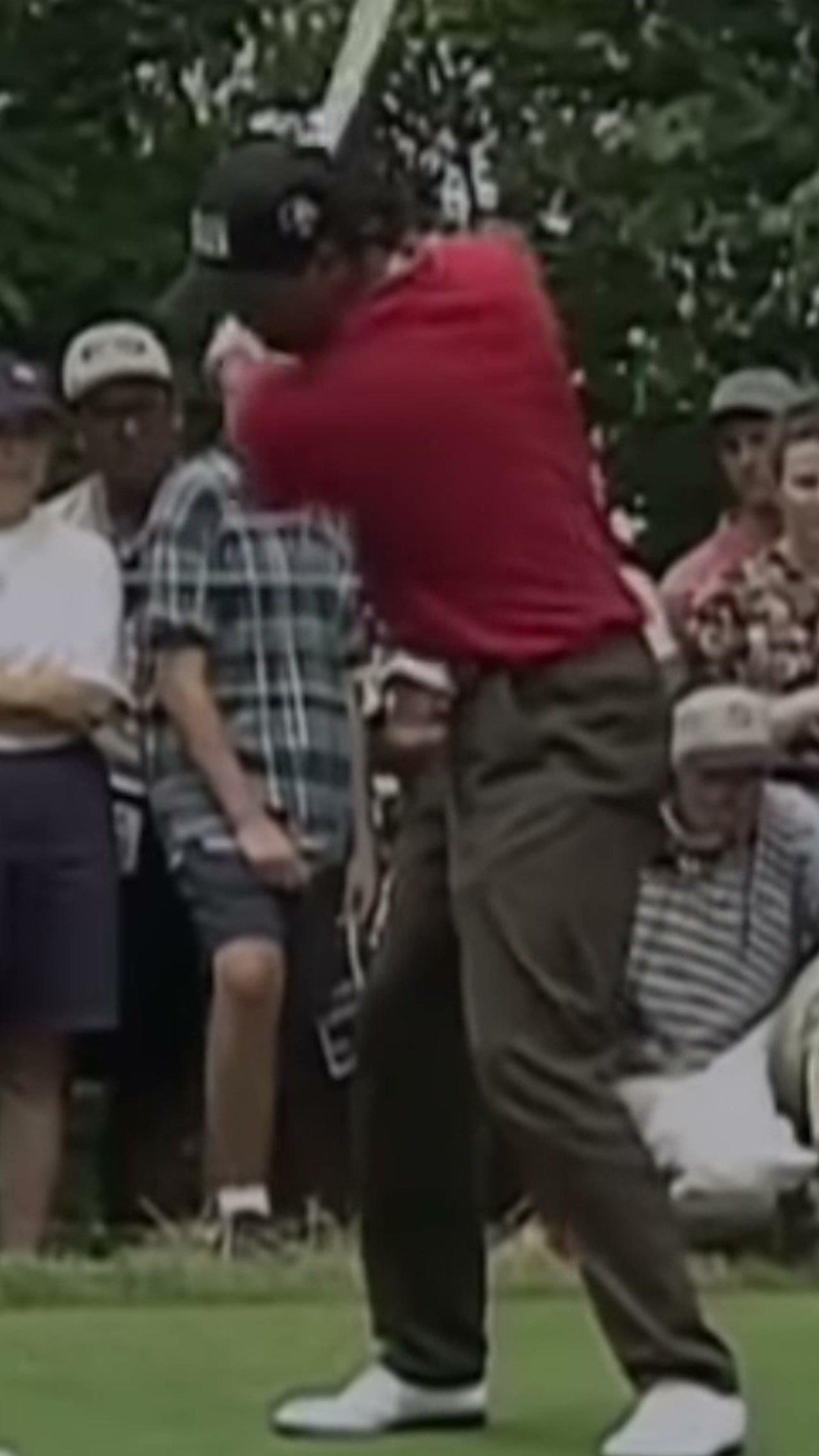
Looking at the swing from down the line, if your stance is too wide, you will almost always be pushing hard off the trail foot in an effort to get your weight back to the lead side.
A simple and revealing check is to observe how your trail foot looks at the finish of your swing.
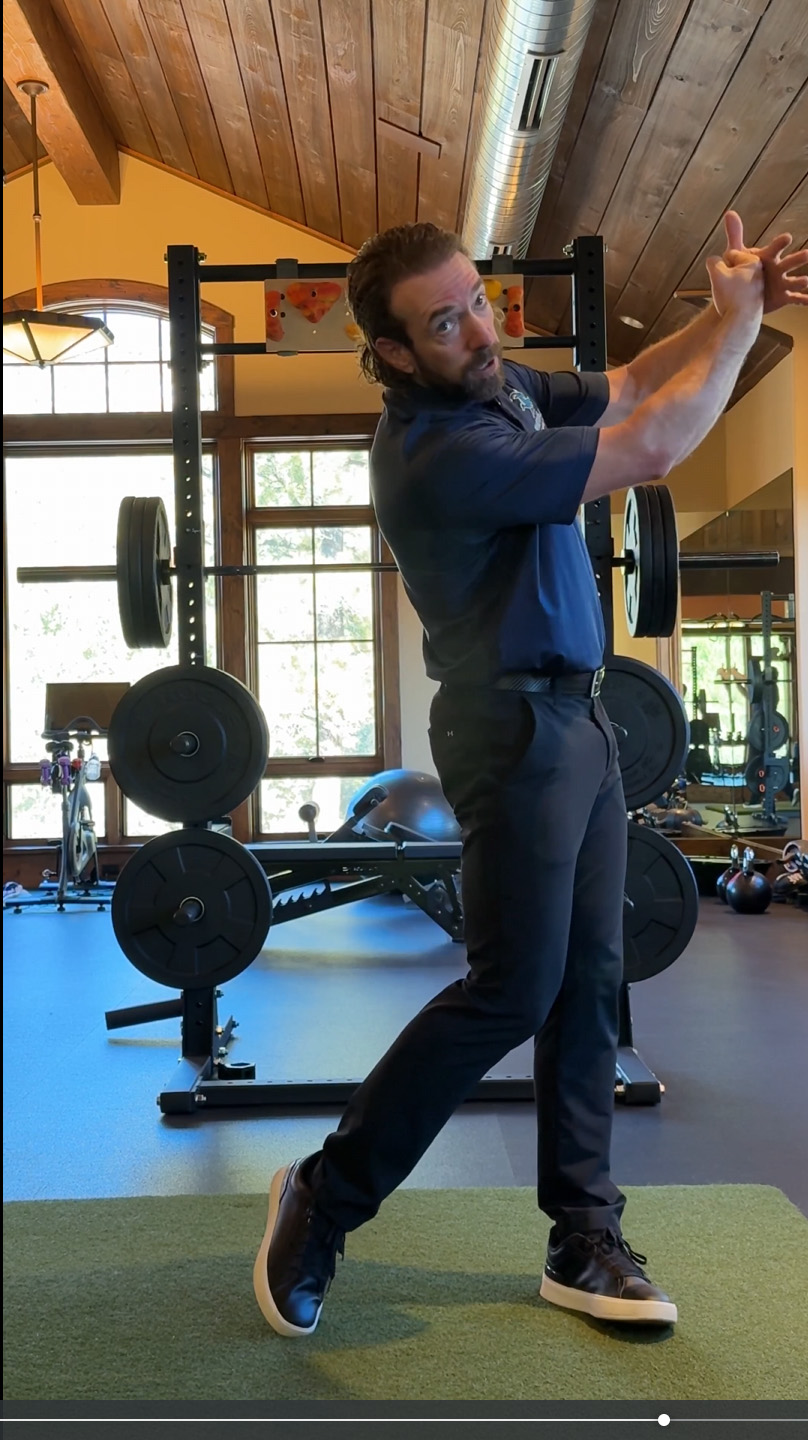
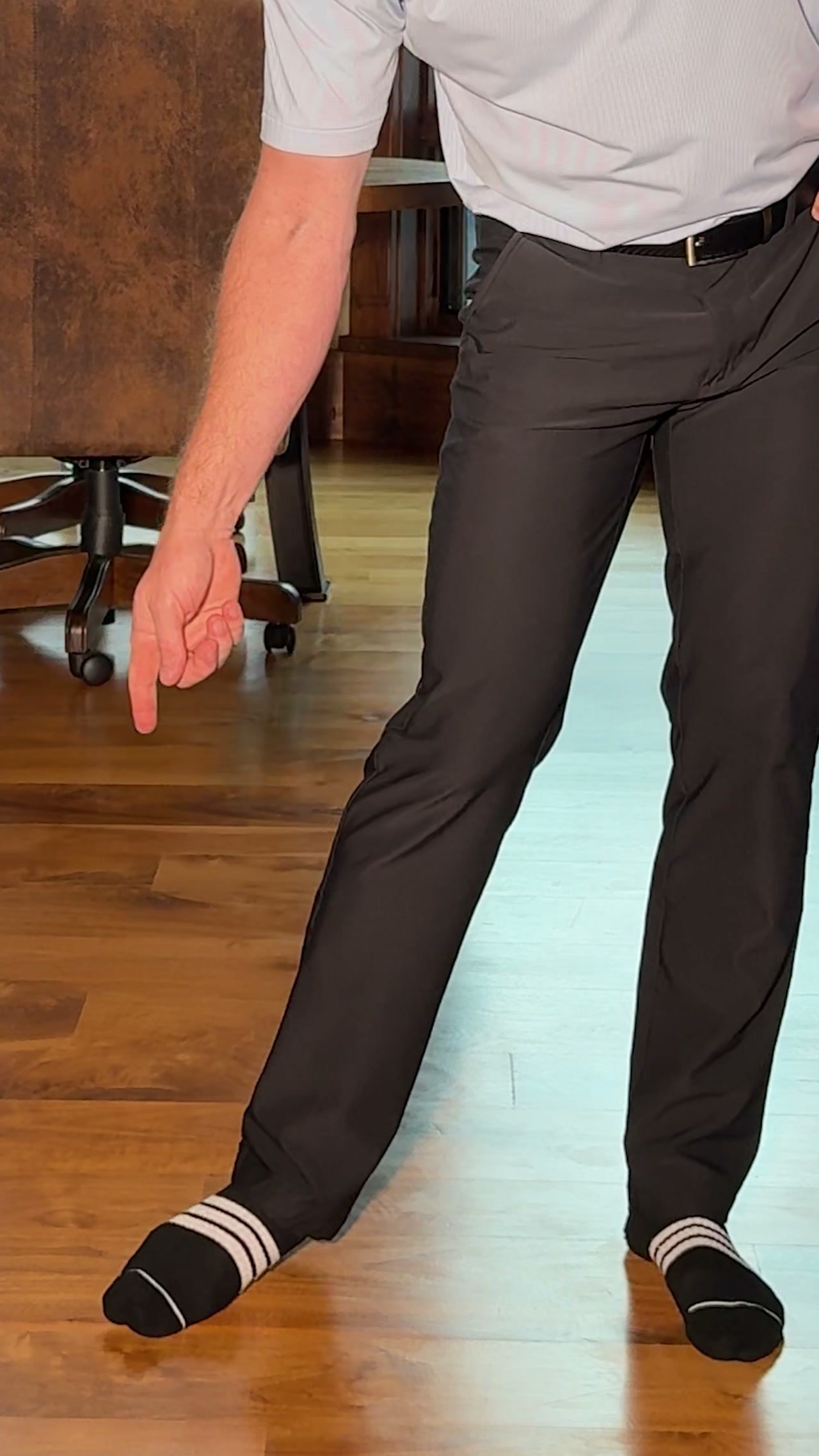
If your trail shoe is bent — meaning the toe is down and there is visible weight pressing through the foot — that indicates weight is still back there well after impact. That is a problem.
Your trail foot should be fully upright at follow through, with virtually no weight remaining on that leg. At the finish, your trail leg's only job is providing light balance support — nothing more.
At minimum, 90 percent of your total body weight at the finish position should be stacked on the lead leg, with your trail heel high and the shoe facing nearly perpendicular to the target line.
If weight remains on the trail leg at follow through, you are not only limiting power and rotational efficiency — you are also placing significant stress on the trail hip and lower back. The body absorbs that force because the weight transfer never completed properly.
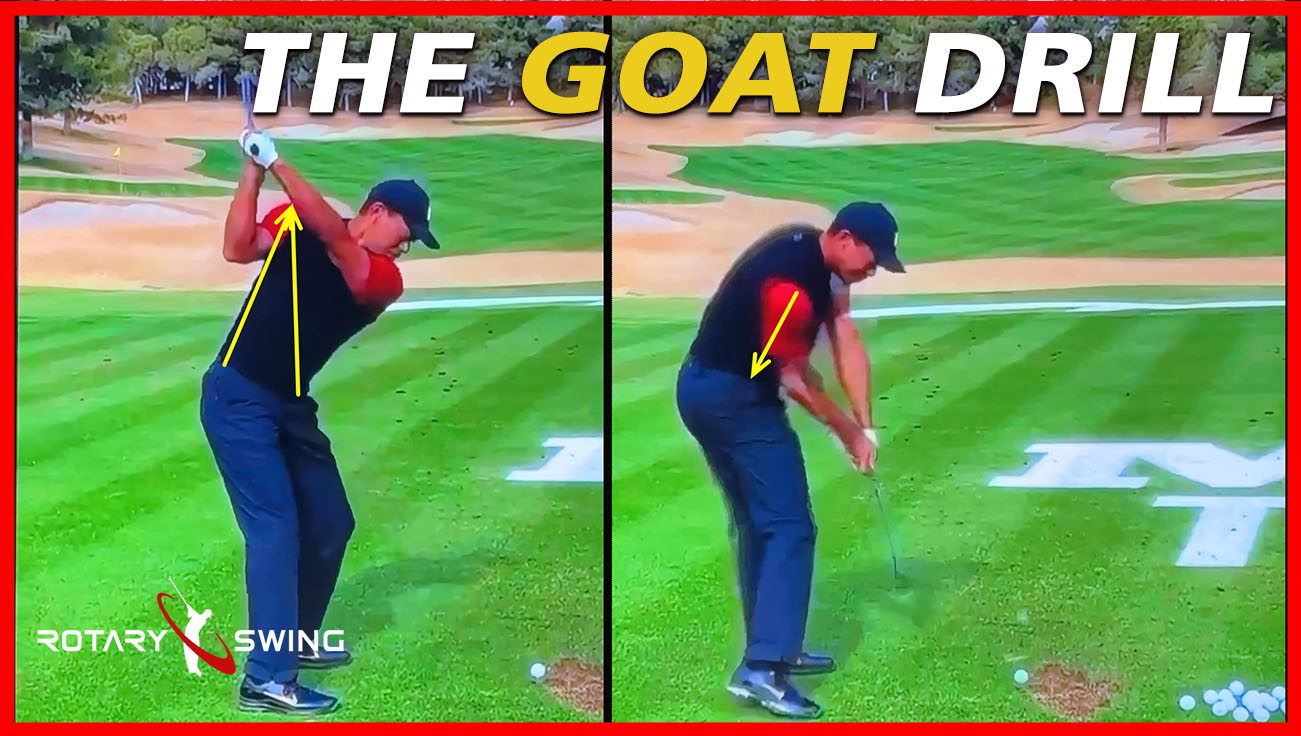
Set up with a golf stance width appropriate to your individual hip structure, and you will eliminate one of the most persistent and damaging swing faults in the game. For structured drills designed to reinforce correct weight transfer patterns, explore the GOAT Drill video lesson and build the movement pattern from the ground up.
Watch part 2 now to see how you're moving your body in the opposite direction of the pros!