Lower body training is frequently overlooked by golfers, yet it's critical to every type of golf swing — especially one built on rotational power.
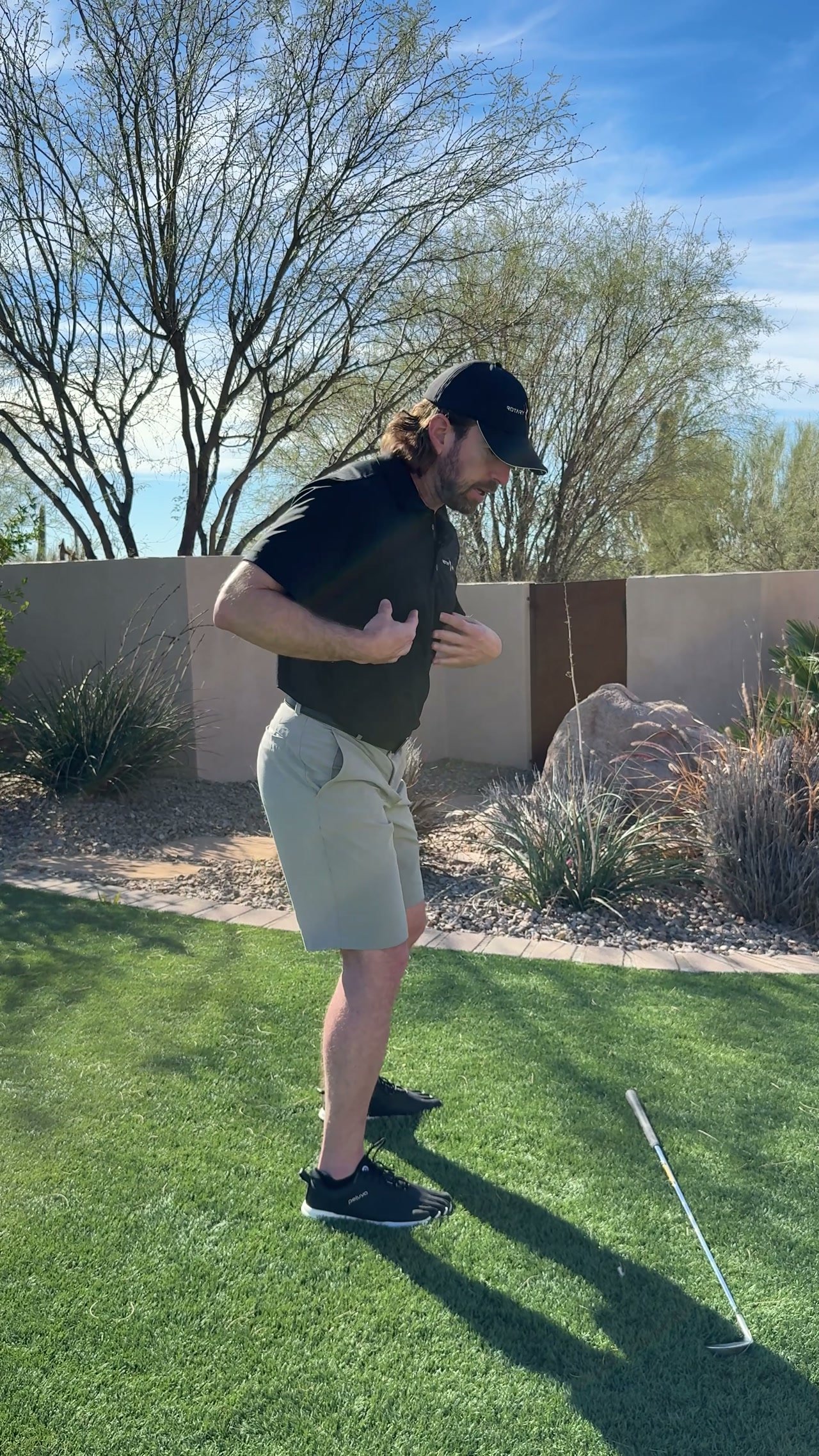
Because we directly control the club with our arms and hands, most golfers instinctively associate the upper body with power generation. That's partially true, but if your upper body is producing strong rotational force, your lower body must be strong enough to stabilize and support that force without breaking down.
Is this the fault costing you strokes?
Film one swing on your phone. In about a minute GOATY measures it and names the single biggest thing costing you strokes — free, no card.
Analyze My Swing Free
Related: Golf swing balance — the G4 gate most amateurs fail →
Android users: Download GOATY on Google Play — free AI golf coaching on your Android phone. →

Upper body rotation requires lower body stability
You can rotate your upper body as aggressively as you want, but if the lower body is unstable, you'll never achieve consistency — regardless of swing style.
Stop reading about it — feel it in your swing today
GOATY watches your swing live and coaches you between every rep. Free. No signup.
Start Your FREE Live Lesson →The lower body is the foundation of your golf swing. You can train these muscles at a gym, but if you have access to a picnic table — which is usually free — you can get a phenomenal workout every morning.
These two exercises develop the explosive power, strength, and stability in your lower body that allow you to rotate your upper body with full authority.
These are advanced movements, so if you're still building your fitness base, start with the intermediate exercises in this series — they train similar patterns in a more controlled way. Approach these with caution and respect.
Picnic Table Jumps - Single Leg Training
The first exercise trains each leg individually. Find a picnic table bench low enough that placing your foot on it keeps your knee at 90° or slightly less. A deeper bend puts unnecessary strain on the knee joint.
A bench approximately one foot off the ground should provide the correct angle for most golfers.
Try a free live lesson with GOATY
GOATY, my AI golf coach, watches your swing through your phone camera and coaches every rep. Free, about 20 minutes, no credit card.
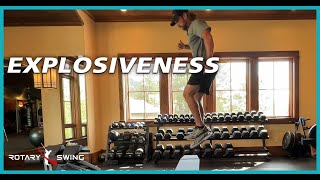
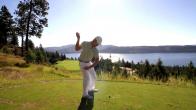
Place one foot on the bench, then explode upward, throwing your arms and all your weight into the air. Use the strength of that raised leg to generate all the upward force. Switch legs at the peak and land with the opposite foot on the bench. Complete 10 reps per leg.

90° or less
Each repetition should be a maximum-effort explosion off the bench — driving as high as you can off each leg in turn.
This exercise strengthens each leg individually, which is essential. When you only perform bilateral exercises — leg presses, back squats, standard jumps — one leg can compensate for the other, leaving an imbalance undetected. Single-leg work like lunges and these bench jumps ensure both legs develop equally.
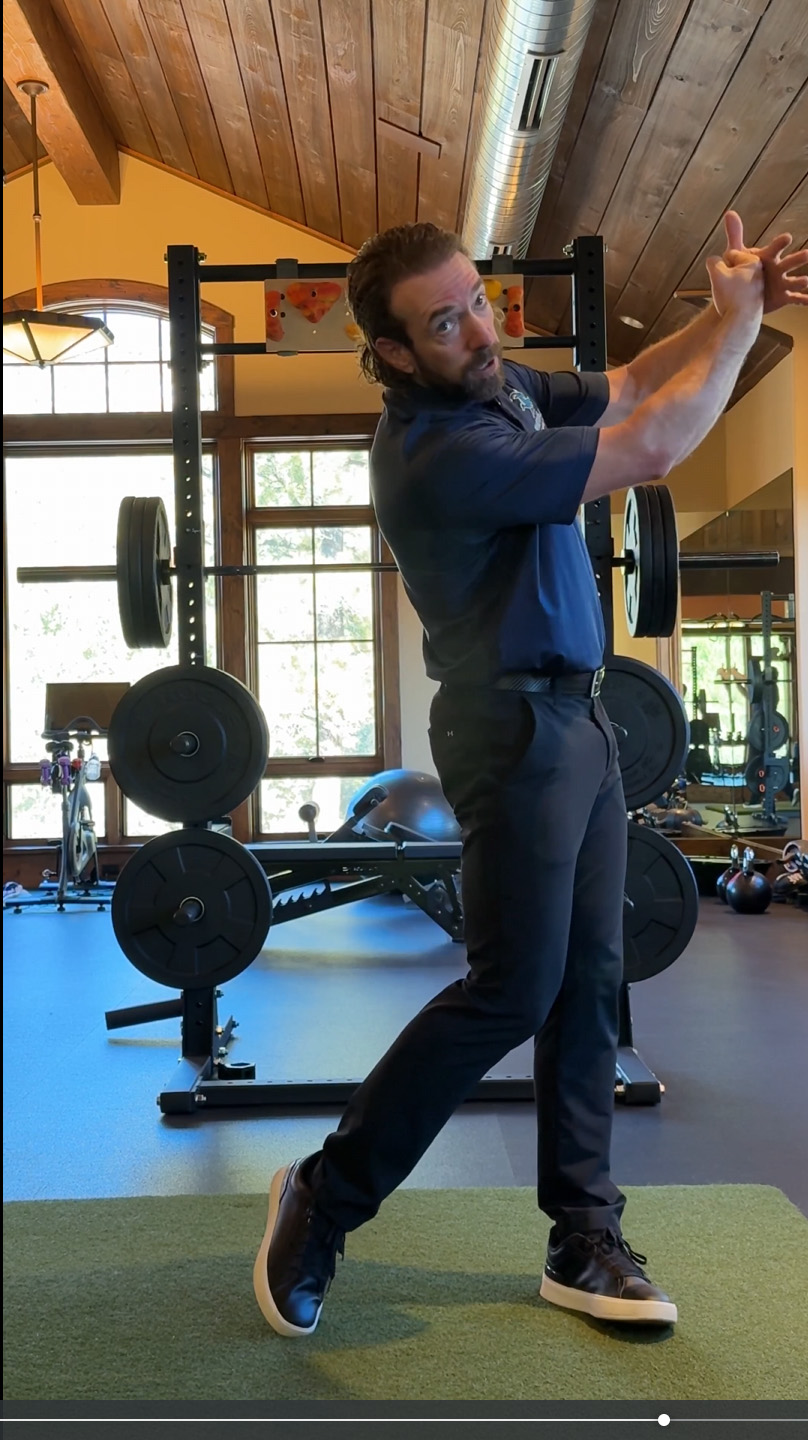
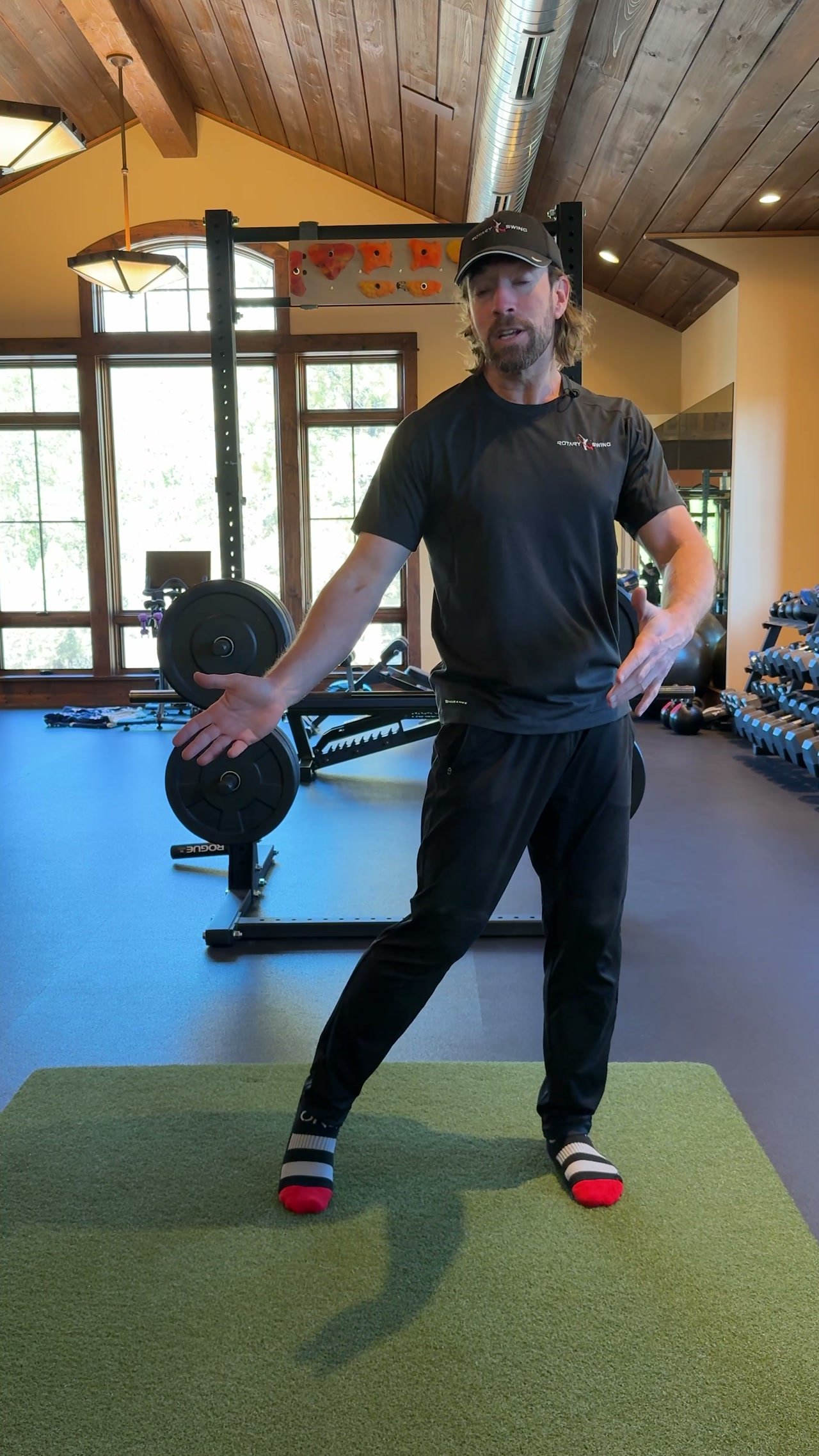
In the golf swing, your lead leg must be exceptionally stable. Most golfers are right-handed but rotate into the left leg on the downswing. If that leg doesn't have adequate hip and glute strength and gives way during the strike, you'll slide laterally — tilting your spine, losing your , and putting your hip and lower back at risk.
Developing a stable lead leg that you can rotate around powerfully is non-negotiable — and single-leg training is the most direct path to achieving it.
Complete three sets of 10 jumps on each leg, switching legs in the air, with approximately one minute of rest between sets.
The amount of rest between sets depends on your conditioning. Shorter rest periods add a cardio benefit, but give yourself at least one minute since this is an explosive, high-intensity movement.

Leap up using the strength of your leg. Switch legs in the air.
This isn't about controlled gym reps at a comfortable tempo. The entire purpose is to explode into the air and train these muscles to produce maximum force in a way that directly transfers to your swing.
Picnic Table Jumps - Both Legs Together
The second exercise is more advanced. You'll be jumping up onto the picnic table surface with both legs — which obviously carries greater injury risk.
Exercise caution and do not attempt this unless you feel completely comfortable and coordinated enough to execute it safely. If you're not in excellent shape or not confident in your ability, this exercise is not appropriate for you.
For the advanced golfer seeking maximum lower body power, this is one of the most effective exercises available.
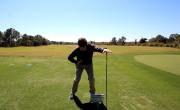
Stand at one end of the picnic table — where there are no benches — and jump onto the table surface with both feet. Drive for full, explosive power: throw your hands upward and use your legs to generate all the force.
Land on the table, jump back down to the ground, take a small hop to find your rhythm, and bounce back up immediately. Complete three sets of 10 repetitions.
Strength Provides Stability
The goal of both exercises is to develop explosive power and structural support in your lower body. As you build strength in these muscles, you'll find you can support aggressive upper body rotation without any breakdown or instability.

Picnic table jumps with both legs together
These plyometric jumps also help lengthen and mobilize the muscles surrounding your lower back, hips, and legs — areas that tend to tighten from sitting and inactivity.
As the muscles connecting your lower back and legs become stronger and more supple, you'll rotate through the ball more freely while maintaining your spine angle — the combination that produces both power and consistency. For a detailed assessment of your current swing mechanics, try a free AI swing analysis. To practice with real-time coaching, check out a free AI golf lesson.
Watch part 2 now to see how you're moving your body in the opposite direction of the pros!