Between packed schedules, family obligations, and the demands of daily life, finding time to stay in shape can feel nearly impossible. After a long day, the last thing most of us want is another workout session.
Most golfers would rather settle into the couch, watch some golf coverage, and decompress with the family.
Is this the fault costing you strokes?
Film one swing on your phone. In about a minute GOATY measures it and names the single biggest thing costing you strokes — free, no card.
Analyze My Swing Free
Related: Golf swing balance — the G4 gate most amateurs fail →
Android users: Download GOATY on Google Play — free AI golf coaching on your Android phone. →
But what if you could turn that couch time into productive golf fitness training? By incorporating low-impact exercises into your TV time, you can improve the balance and endurance that directly translate to a more stable, powerful golf swing — without breaking a major sweat.
Stop reading about it — feel it in your swing today
GOATY watches your swing live and coaches you between every rep. Free. No signup.
Start Your FREE Live Lesson →Here are some simple exercises that target the exact physical qualities your golf swing depends on most.
A Great Exercise Tool
A Swiss ball (also called a balance ball) is one of the most versatile tools for this kind of training. It strengthens the core — which is the primary engine of power in the Rotary Swing — while simultaneously challenging your balance and proprioception.
Try a free live lesson with GOATY
GOATY, my AI golf coach, watches your swing through your phone camera and coaches every rep. Free, about 20 minutes, no credit card.
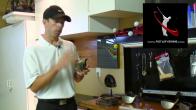
Here's a highly effective exercise you can perform while watching TV. Instead of lying on the couch for an hour, put that time to double use.
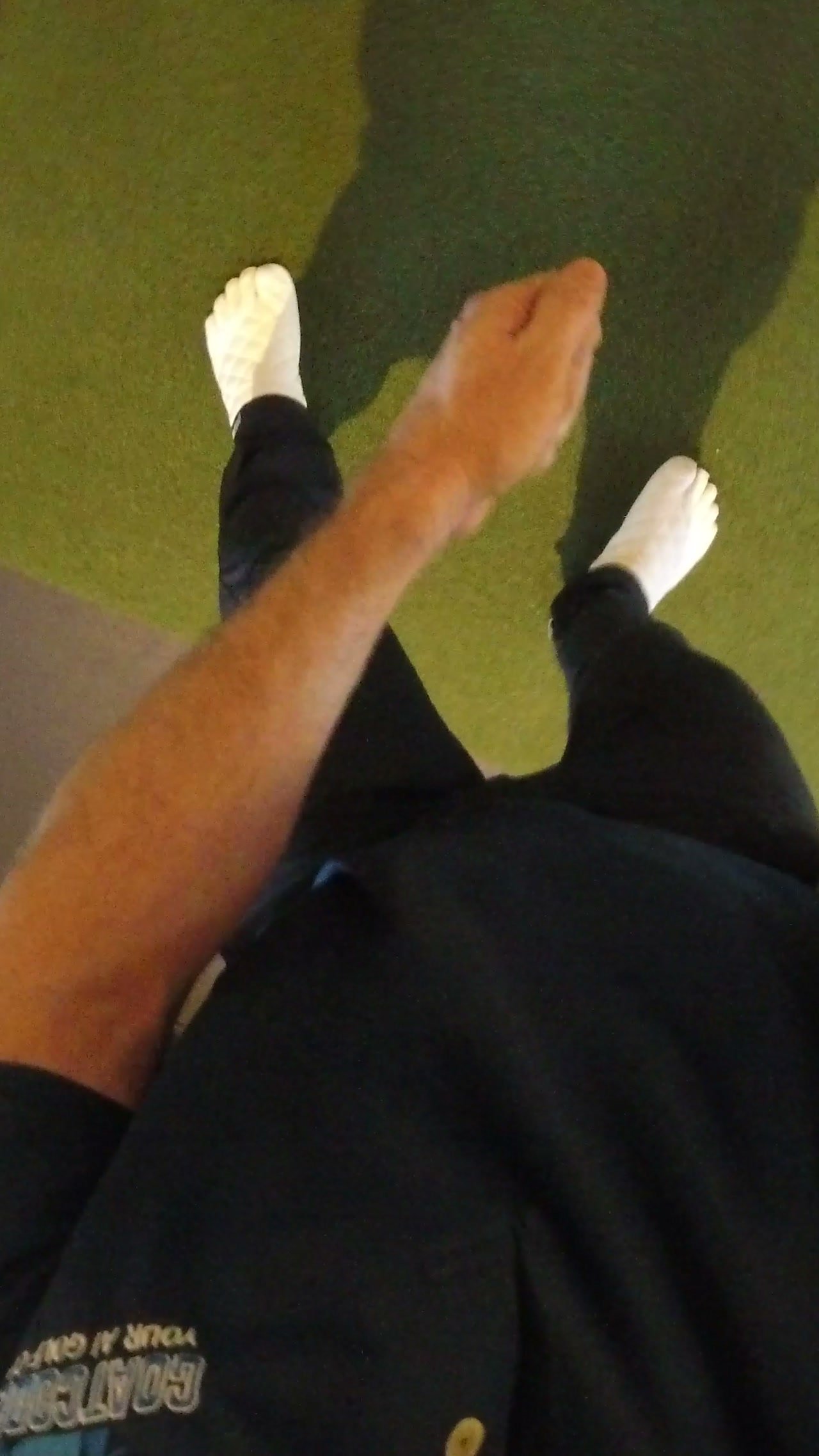
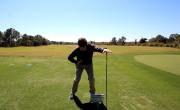
When you're settling in for a longer program, grab your balance ball and stand on it while you watch.

Keep focused by letting the ball oscillate a bit
This exercise is obviously not for everyone. It's an advanced movement and you should not attempt it unless you feel extremely comfortable and confident with your balance.
For those with an advanced fitness level or who enjoy a challenge, standing on the ball is an outstanding way to strengthen the dozens of small stabilizer muscles that work constantly to maintain your balance throughout the golf swing. It will expose every strength and weakness in your kinetic chain.
Place your feet on the ball and stand up carefully. With practice, you'll be able to maintain your balance for an entire TV show — turning passive screen time into meaningful training.
Keep it Moving
Standing still is beneficial on its own, but allowing the ball to oscillate gently beneath you amplifies the training effect considerably. This subtle movement forces your stabilizer muscles to fire continuously and keeps you mentally focused on what your body is doing.
Once you've stood comfortably for a while and your muscles have loosened up, you can layer in additional exercises. Take it slowly and prioritize safety above all else.

Squats
Try squats: Extend your arms forward for balance, then squat down and stand back up. You can build toward three sets of 10 squats during a single show.
Don't push too aggressively. Squatting on the ball is intensely challenging because you're performing the squat itself while constantly fighting to maintain balance on an unstable surface — your stabilizer muscles work overtime.
You can expand to shoulder presses, lateral raises, and many other movements once you're comfortable. It's a genuinely effective way to build core strength, improve your balance for golf, and stay active during time you'd otherwise spend sitting. For a data-driven look at how your swing mechanics are performing, try a free AI swing analysis. To practice with real-time coaching, check out a free AI golf lesson.
How to Use a Swiss Ball for Golf Balance Training
Build the proprioception and balance needed for a stable powerful golf swing using this progressive Swiss ball routine.
-
1
Start with Seated Balance Work
Sit on the Swiss ball with feet flat on the floor. Slowly lift one foot a few inches off the ground and hold 5 seconds each side. This activates the proprioceptors in your ankles and core before progressing to standing.
-
2
Progress to Standing on the Ball
Place the ball against a wall for safety. Put both hands on the wall, step one foot onto the top of the ball, then carefully place the second foot. Keep your core braced and eyes focused on a fixed point straight ahead.
-
3
Hold the Golf Posture Position
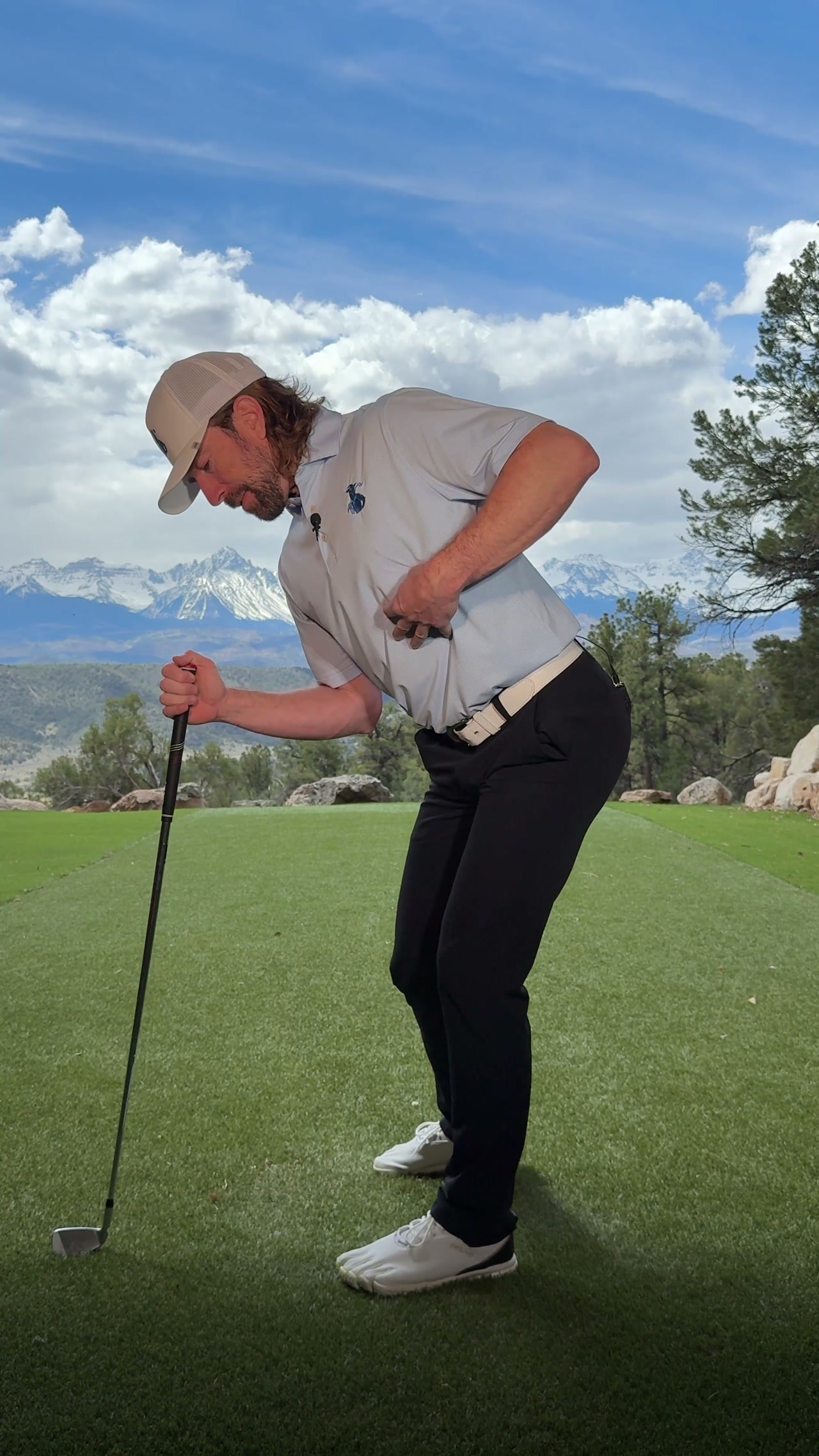
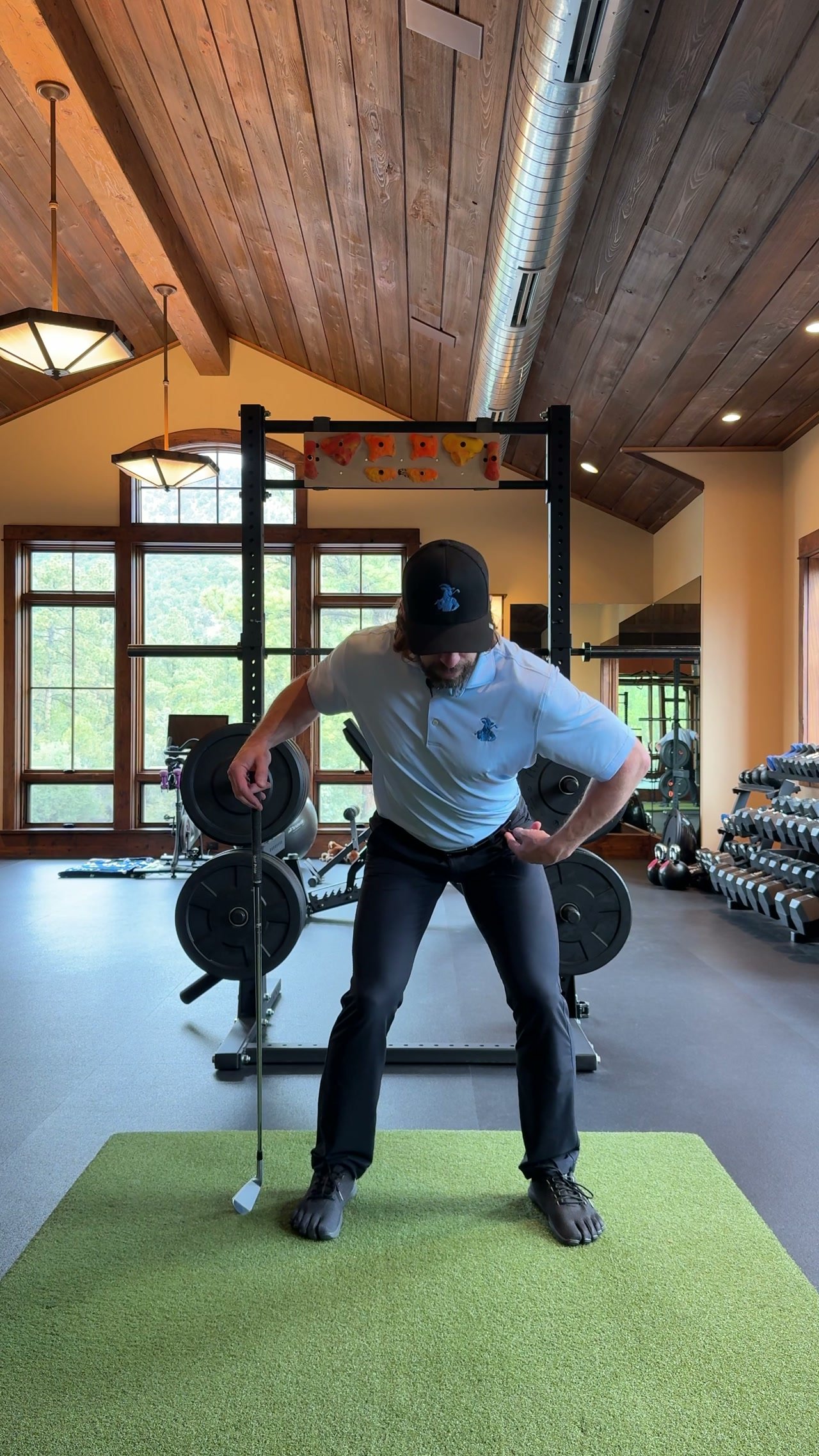
Once balanced, slowly take your hands off the wall and get into your golf address posture with knees flexed, hips back, spine tilted forward. Hold 10 seconds. The instability forces your stabilizing muscles to fire constantly.
-
4
Add Slow Rotational Movement
While balanced in golf posture, make a very slow controlled half-backswing rotation. Hold 3 seconds, then rotate to a half-follow-through position. This trains rotation stability under real proprioceptive demand.
-
5
Transfer Balance Gains to GOATY
After 4 weeks of Swiss ball training, open GOATY live lesson at rotaryswing.com/goaty/landing/goat_drill_video and swing. Better balance reduces head sway and directly improves your ANCHOR score tracked on every rep with real-time voice feedback.
Watch part 2 now to see how you're moving your body in the opposite direction of the pros!