Updated: 7/16/2019
Are you tired of hitting shots fat and thin? Do you struggle with inconsistent divots? Do you actually know whether you have the correct golf ?
Is this the fault costing you strokes?
Film one swing on your phone. In about a minute GOATY measures it and names the single biggest thing costing you strokes — free, no card.
Analyze My Swing Free
Related: Golf swing consistency — how AI measures and builds it →
Android users: Download GOATY on Google Play — free AI golf coaching on your Android phone. →
There is one thing you need to check before anything else:
Stop reading about it — feel it in your swing today
GOATY watches your swing live and coaches you between every rep. Free. No signup.
Start Your FREE Live Lesson →Check your golf ball position.
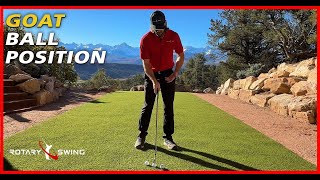
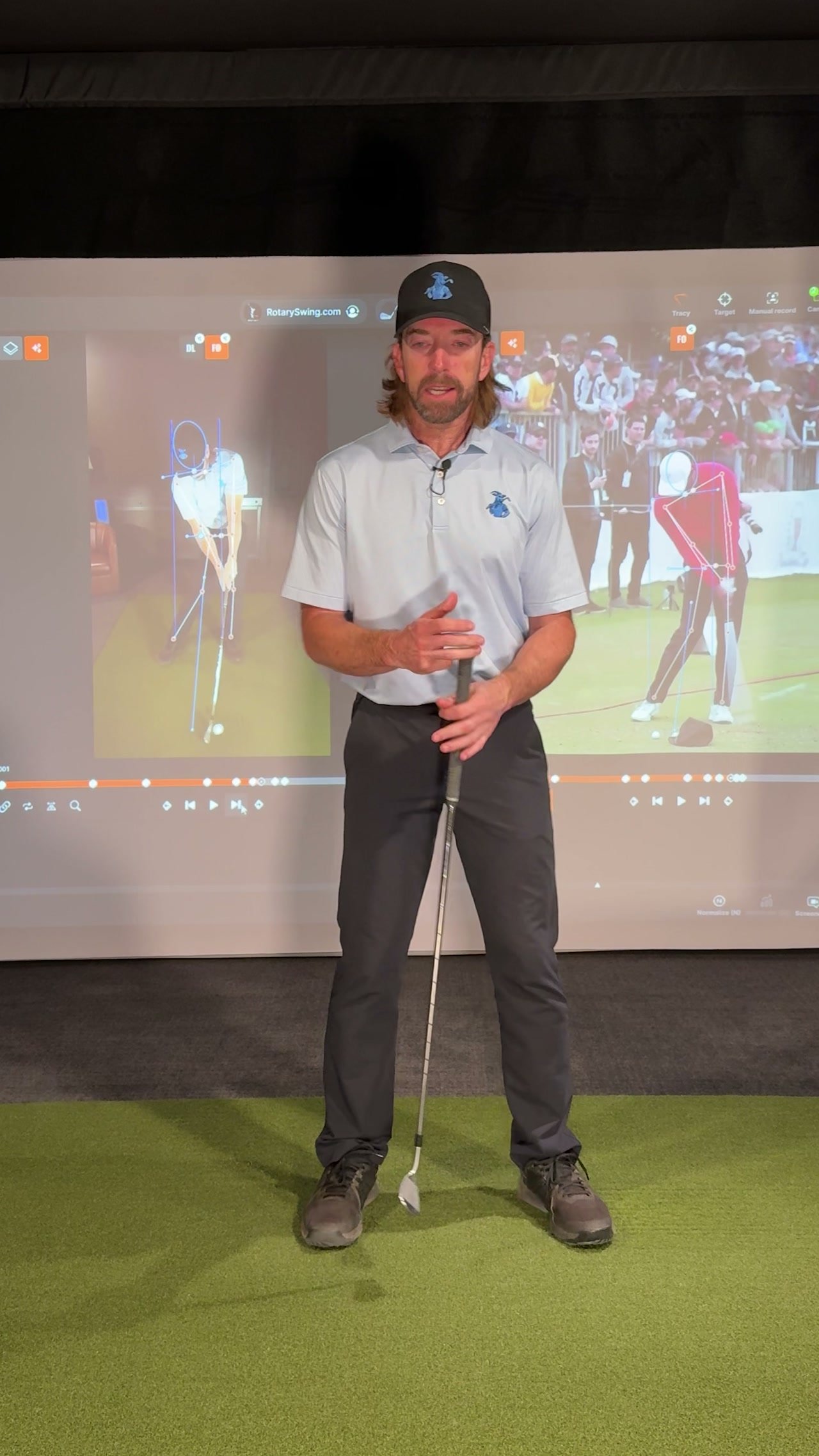
In this video, I explain why traditional golf instruction is once again wrong about ball placement, and how you can use science and physics to become a far more consistent ball striker simply by correcting your golf ball position. If you believe that your golf ball position should change for each club, then you absolutely need to read this article!

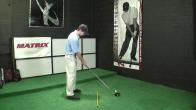
RST Instructor teaches you where to position the ball for irons, hybrids, woods and drivers in this video.
Stock Iron Shot Golf Ball Position
Golf ball position is straightforward with any "stock" iron shot being hit off the ground.
(By stock shot, I mean a shot at normal trajectory with a straight launch direction and no intentional curvature. To hit specialty shots like fades, draws, penetrating wedges, max-distance drives, etc., small adjustments to ball position can be made and are covered in our dedicated videos on those shots.)
First, let us examine what you are trying to accomplish with a stock iron shot off the ground:
- Solid Contact
- Ball-First Contact Before Ground
- A Repeatable Swing with No Manipulations
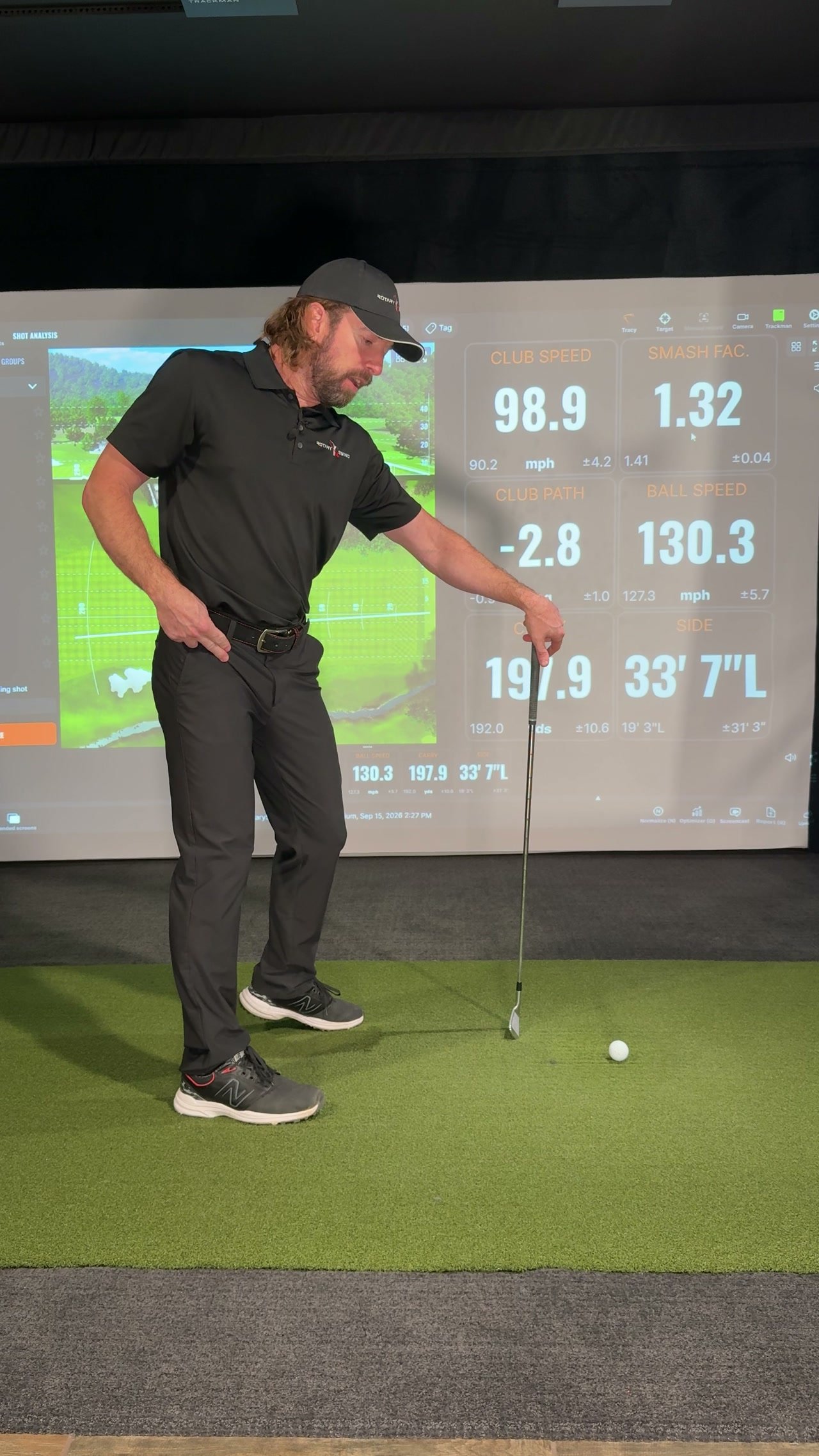
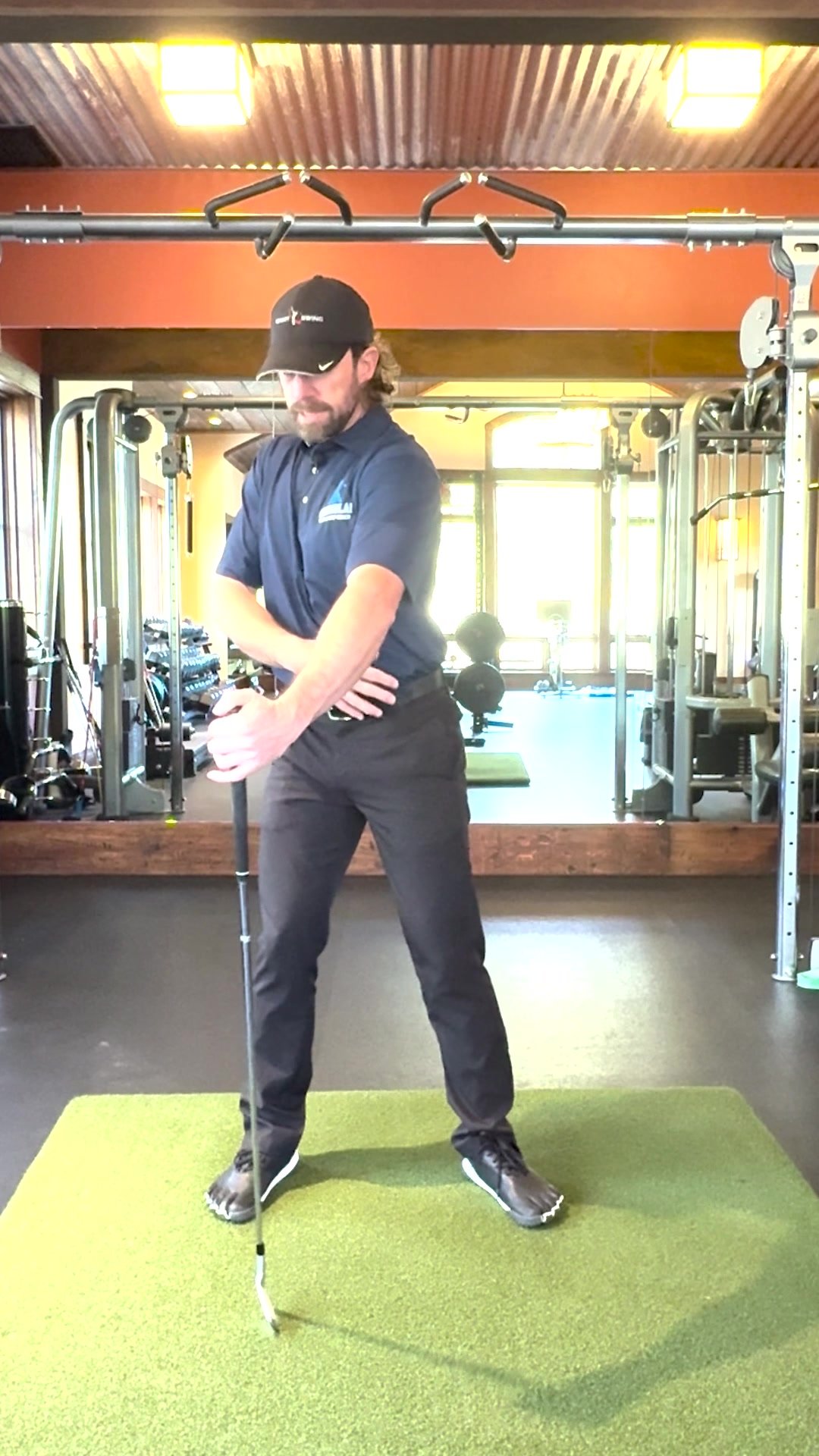
Assuming you are using correct Rotary Swing Tour principles based on biomechanical science, the bottom of your swing arc will always be directly under the lead shoulder.
So, in order to accomplish the goals listed above, we need to place the ball...
...slightly behind the bottom of the swing arc.
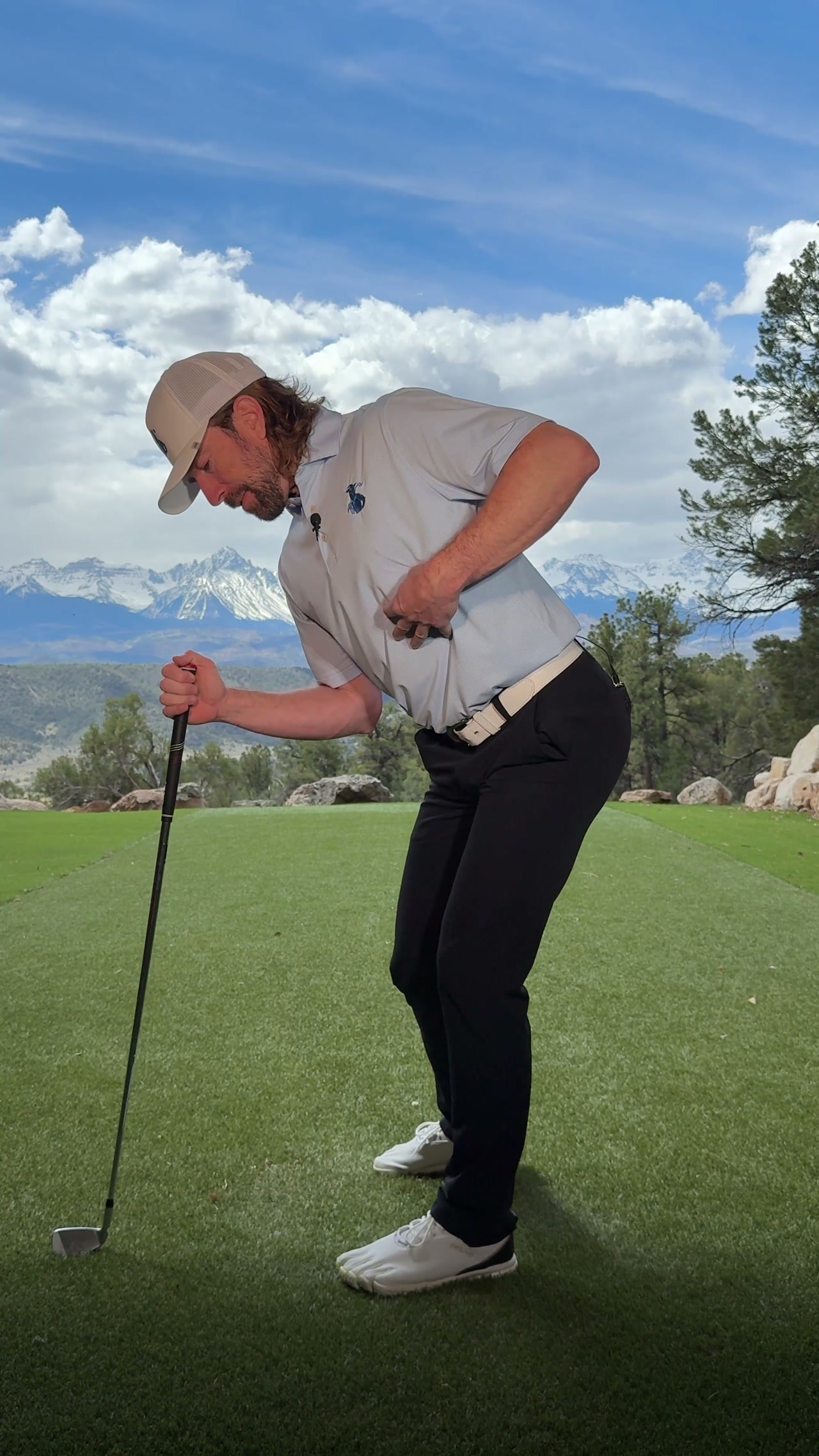
This is why the golf ball position for all stock shots off the ground is under the logo of your shirt or your lead ear.
Maintaining a constant golf ball position allows for clean, consistent contact every single time.
The Driver Golf Ball Position
As I mentioned, these principles typically do not apply to the driver. Why not?
Let us examine what we are usually trying to accomplish with the driver:
- Maximum Distance
- High Launch Angle
- Contact High on (or Above) the Sweet Spot
In order to achieve those objectives, we no longer want to swing steeply down and through the ball.
It is more efficient to make contact with the ball as the club head is traveling much more level through the impact zone. This means moving the ball forward to the bottom of the swing arc.
To achieve an optimal blend of distance and accuracy, the lead heel is, roughly, your desired ball position for the driver.
(Keep in mind this is a simplified explanation of how to maximize your driving distance. Check out our 9-part Bomb Your Driver series for the most comprehensive information you will find anywhere.)
Try a free live lesson with GOATY
GOATY, my AI golf coach, watches your swing through your phone camera and coaches every rep. Free, about 20 minutes, no credit card.
On the other hand, if you prefer more accurate, lower-trajectory drives when maximum distance is not the priority, play the driver like a stock iron shot — off the logo of your shirt.
Stock Hybrids and Fairway Woods Golf Ball Position
Many golfers struggle to hit a 3-wood off the deck, and others are unsure whether to play a hybrid like an iron or a "wood."
Be sure to check out the golf instruction video above because it clears up common misconceptions about proper golf ball position for these clubs. For a data-driven look at how your ball striking and swing mechanics compare to an elite standard, try a free AI swing analysis.
Summary of Key Points on Golf Ball Position
It is time to give yourself the best possible chance at consistent contact by using science to your advantage!
- Stock Iron Shots: Ball Position Off Logo of Shirt / Lead Ear
- Driver - Maximum Distance: Instep of Lead Foot
- Driver - Increased Accuracy: Logo of Shirt / Lead Ear
Video Transcription: Correct Golf Ball Position

The swing arc bottoms out below the left shoulder
I am going to discuss correct golf ball position today. This is one of the most widely misunderstood topics in the golf swing. You hear a tremendous amount of conflicting advice when it comes to ball position in golf.
We want to keep things simple with the Rotary Swing. We are going to use one constant ball position, whether it is with irons, the driver, 3-wood, hybrid — anything through the bag, you are going to have one ball position.
Let me explain the reasoning. As you swing a club back and through, the club travels on an arc. You can visualize this as a circle.
If you have the proper golf swing fundamentals, the bottom of this swing arc is going to be directly under your lead shoulder. That is the longest point in the swing. That is the bottom of your divot.
Obviously we do not want to strike the ball at the very bottom of the divot, so we need to position the ball slightly behind that point. What we recommend is off your lead ear. If you set up with your golf ball position off your lead ear, you are going to swing down, make ball-first contact, then the divot is going to appear in front of your ball every time.

To bomb your driver, place ball at left instep
This ensures the best possible contact and the most consistency in your golf swing. We recommend using this position with all irons, every club in the bag. It does not matter if it is a pitching wedge or a 3 iron — one ball position in golf.
Let us discuss the driver. Again, if you want to maintain maximum consistency and make the exact same golf swing with every club, you are going to use that same golf ball position. The ball position is going to be off your lead ear.
This is slightly different from what most instructors recommend, but it allows you to remain consistent. You will actually be hitting slightly down on the driver, which is exactly what PGA Tour professionals do. The average attack angle for a driver on the PGA Tour is negative 1 degree, meaning they are hitting down and through. It is a very slight amount, but they are still compressing the ball with a descending strike.
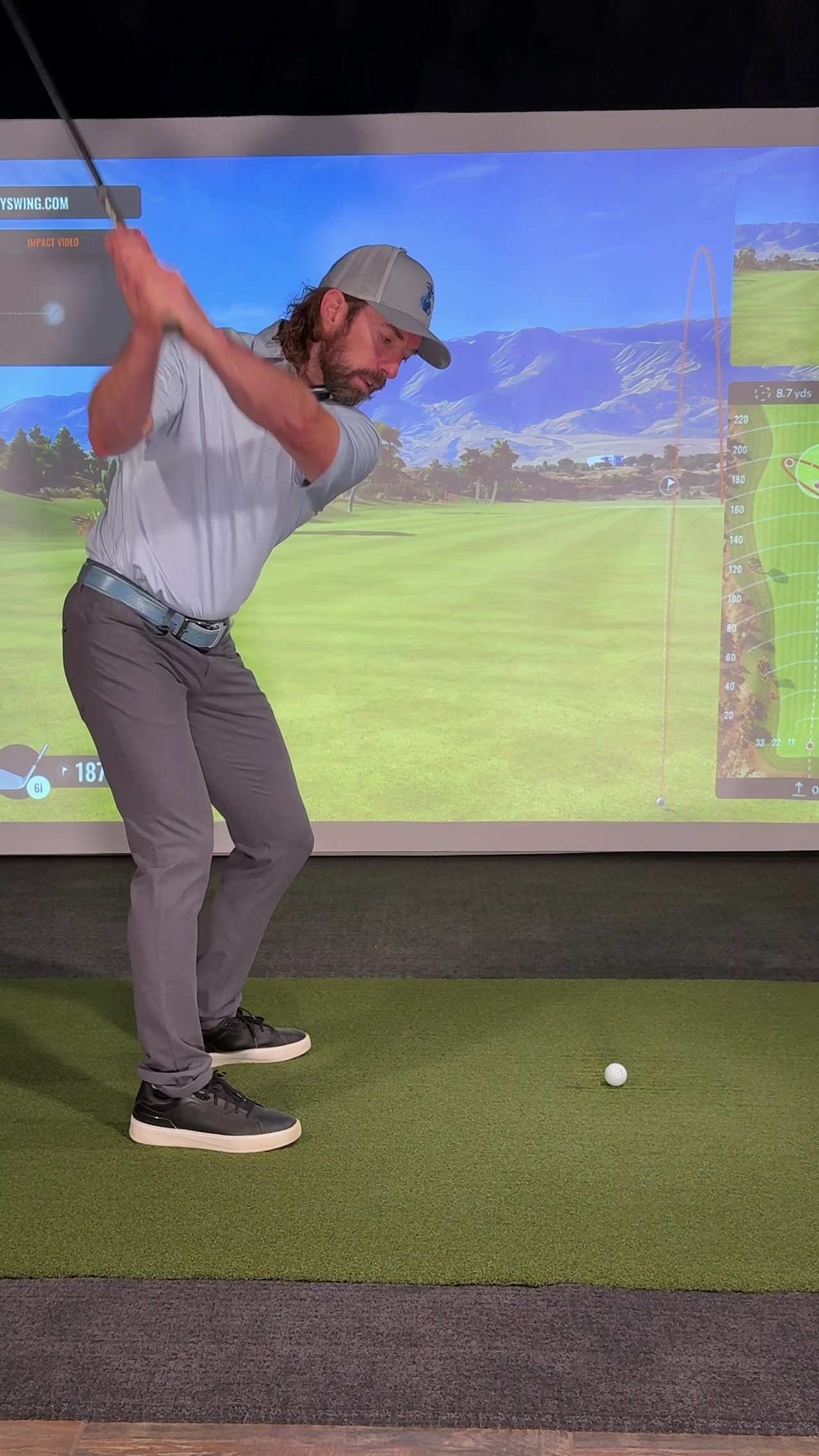
If you want to bomb your driver — achieve maximum distance with a really high and hit it as far as possible — you are going to need closer to a positive 4-degree attack angle. That means we position the ball a little further forward, more off the inside of your lead foot.
That allows you to make the same swing, but you will be catching the ball a little more on the upswing.

The club moves on an arc - hitting it farther forward will send it left
When you do this, you will need to make one small compensation. As I mentioned, the swing travels on an arc. If I move the ball forward, the club head is actually moving back to the lead side as I make contact. That means the face is going to be closing slightly, so the compensation is to align everything a little bit to the trail side.
That means your feet, knees, hips, shoulders, and club are all going to be lined up a little more to the trail side. That way, as the club starts to release as you catch it more on the upswing, the ball flight will be dead straight.
If you do not want to make any compensation with your golf swing, simply line up a little to the trail side and make the same swing.
Again, for maximum consistency: one ball position, everything off the lead ear, no matter if it is a driver or a pitching wedge. If you want to maximize your driving distance, move the ball position slightly forward but you will need to close your stance. For a complete evaluation of how your ball striking mechanics hold up, try a free AI golf lesson that measures your form in real time.
One of the most common mistakes I see with iron play is golfers placing the ball too far back in their stance. When you get the ball too far back — imagine positioning it back by your trail foot — this dramatically steepens the . This can lead to chunked shots, blocked shots, or hooks.

The club moves outward initially - placing the ball back sends it right
Let me explain that in more detail. If the ball is back in my stance, remember — as we moved the golf ball position forward with the driver, the club started to swing back to the lead side. If we move it too far back, the club is now going to swing out to the trail side because it is traveling on an arc.
If I do not square the face, I am going to hit a block. If I over-square the face while my path is going that far to the trail side, I am going to hit a hook. Plus, I am coming in at an extremely steep angle.
The key takeaway: make sure you have one constant ball position off the lead ear for every club in the bag, and you are going to achieve maximum consistency and play some great golf. Keep it simple, and good luck with your game.
Frequently Asked Questions
What is the correct golf ball position for stock iron shots?
For stock iron shots, the correct ball position is slightly behind the bottom of your swing arc, specifically under your shirt logo or your lead ear. This positioning ensures solid, ball-first contact and promotes a repeatable swing without manipulations. Maintaining this ball position is key to achieving clean and consistent strikes.
How should I position the golf ball when using a driver?
When using a driver, the optimal ball position is at the instep of your lead foot. This forward placement allows for a level swing through impact, maximizing both distance and launch angle. If you prefer more accuracy over distance, you can position the ball under your shirt logo, similar to a stock iron shot.
Why is traditional golf ball positioning considered incorrect?
Traditional golf ball positioning often fails to account for the biomechanical principles that dictate swing dynamics. The article emphasizes that the bottom of the swing arc should dictate ball position, which varies between clubs. Correcting these misconceptions helps golfers achieve more consistent ball striking and better overall performance.
What adjustments should I make for hybrids and fairway woods?
For hybrids and fairway woods, the ball position can vary depending on whether you're treating it like an iron or a wood. The article suggests that many golfers struggle with these clubs due to improper ball placement. It's essential to refer to specific instructional videos to clarify the correct positioning for each type of shot.
Watch part 2 now to see how you're moving your body in the opposite direction of the pros!