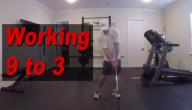
The 9 to 3 Drill is the key to working on the Rotary Swing Tour while on the range actually hitting balls.
While it is much quicker to create new movement patterns without the distraction of hitting a ball and swinging a club, at some point you must begin transitioning to the real world — and this is THE drill to guide you through that transition. Whether you reinforce it with a free AI swing analysis or groove it on the range, mastering this drill changes everything about your ball-striking.
Is this the fault costing you strokes?
Film one swing on your phone. In about a minute GOATY measures it and names the single biggest thing costing you strokes — free, no card.
Analyze My Swing Free
Related: Golf impact position — how AI scores yours →
Android users: Download GOATY on Google Play — free AI golf coaching on your Android phone. →
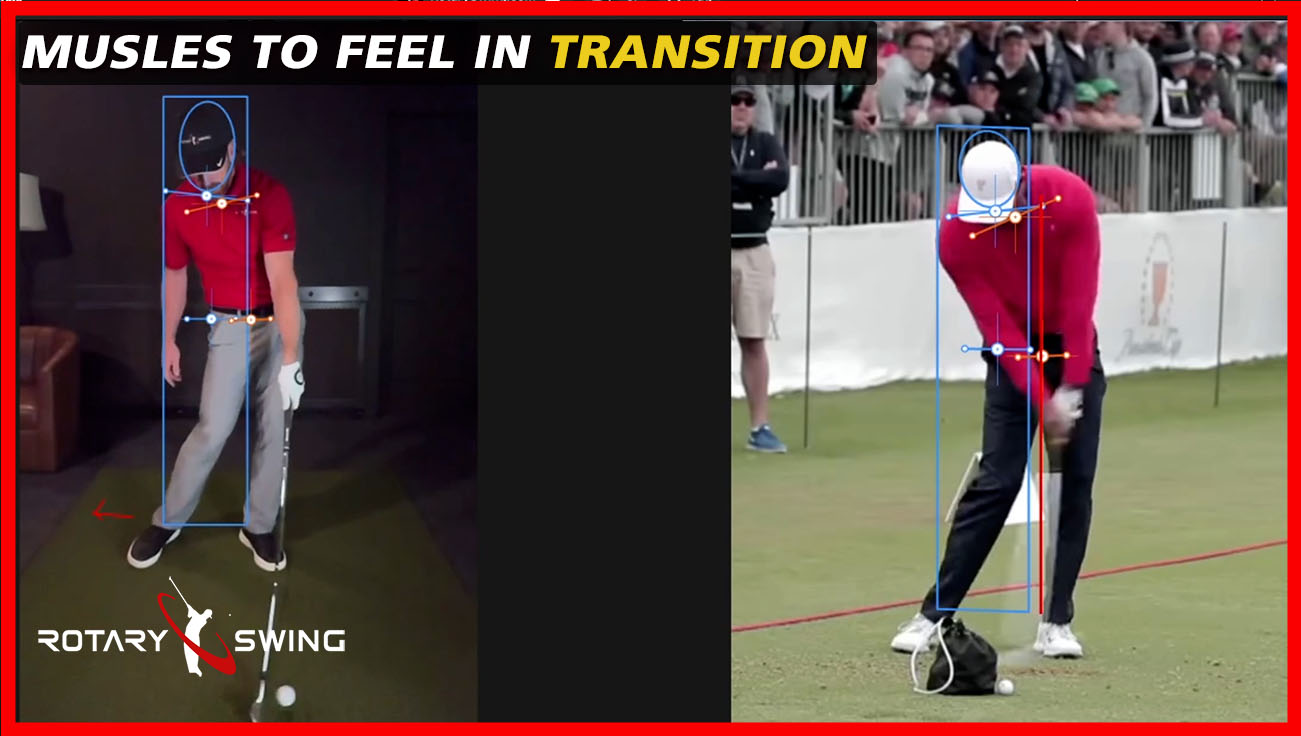
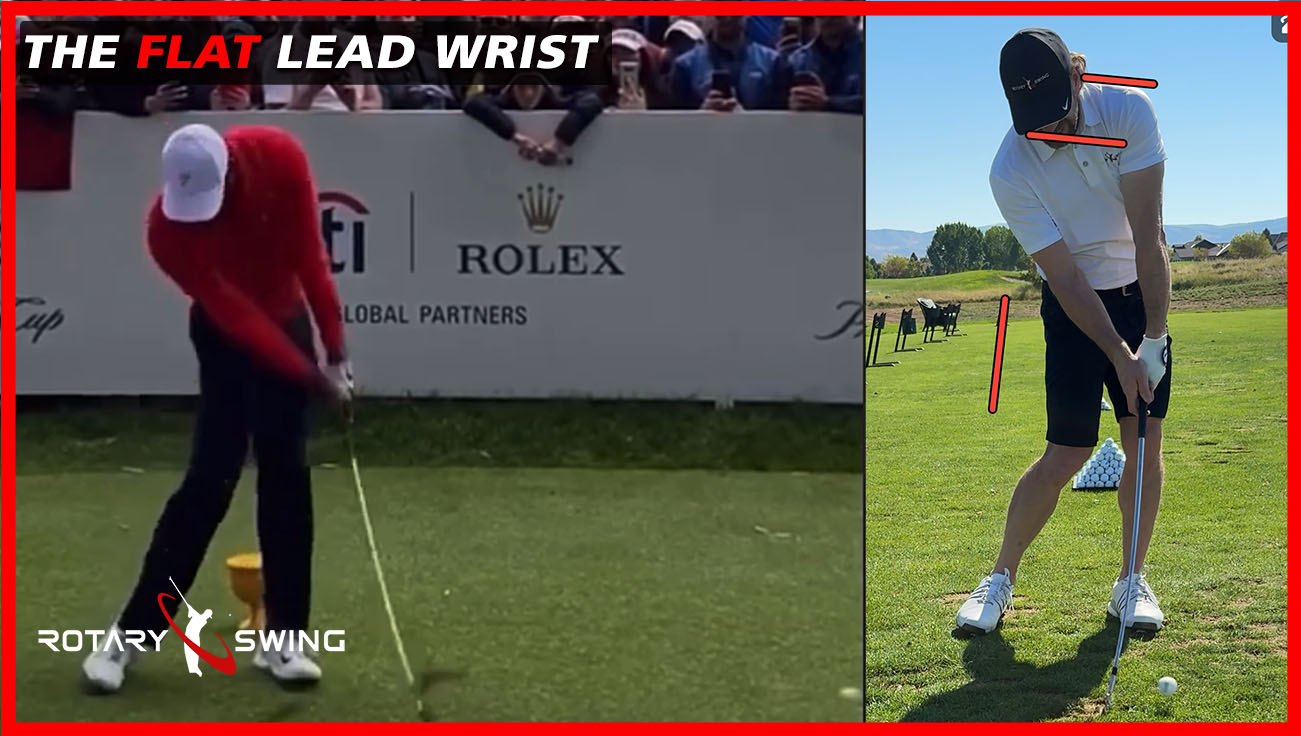
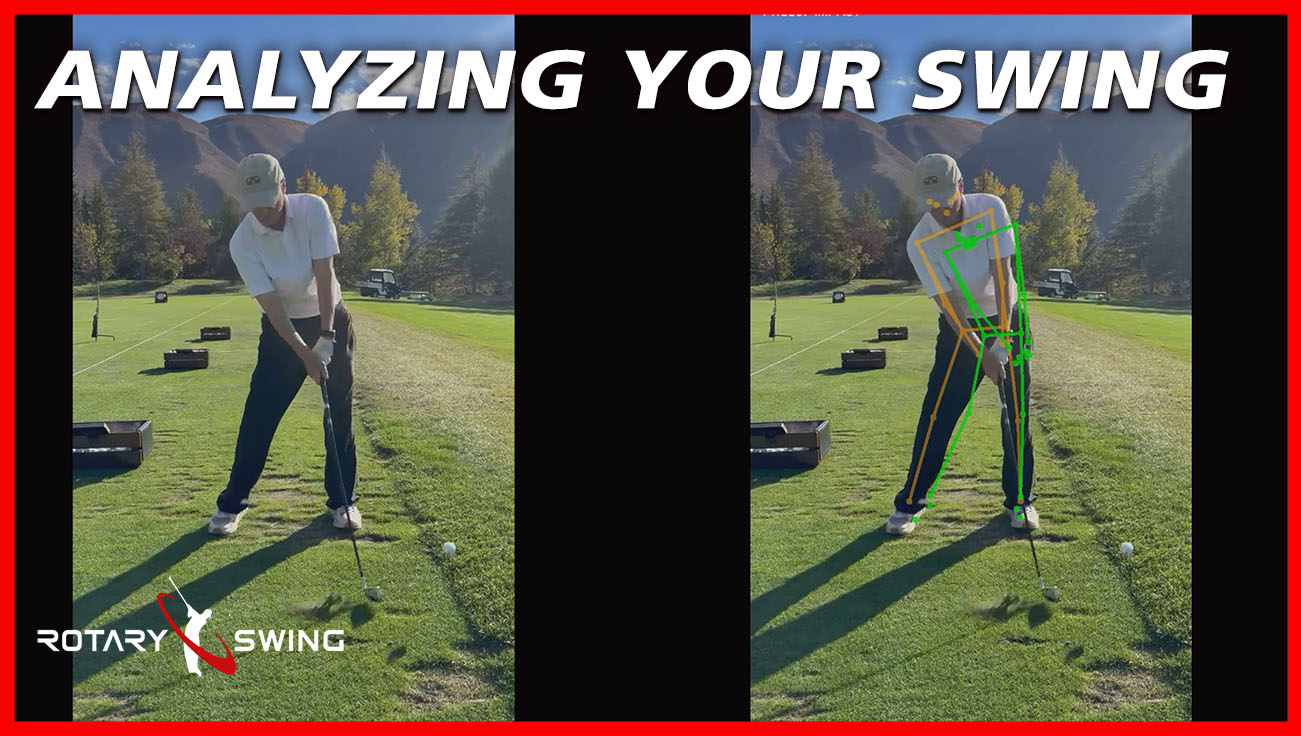
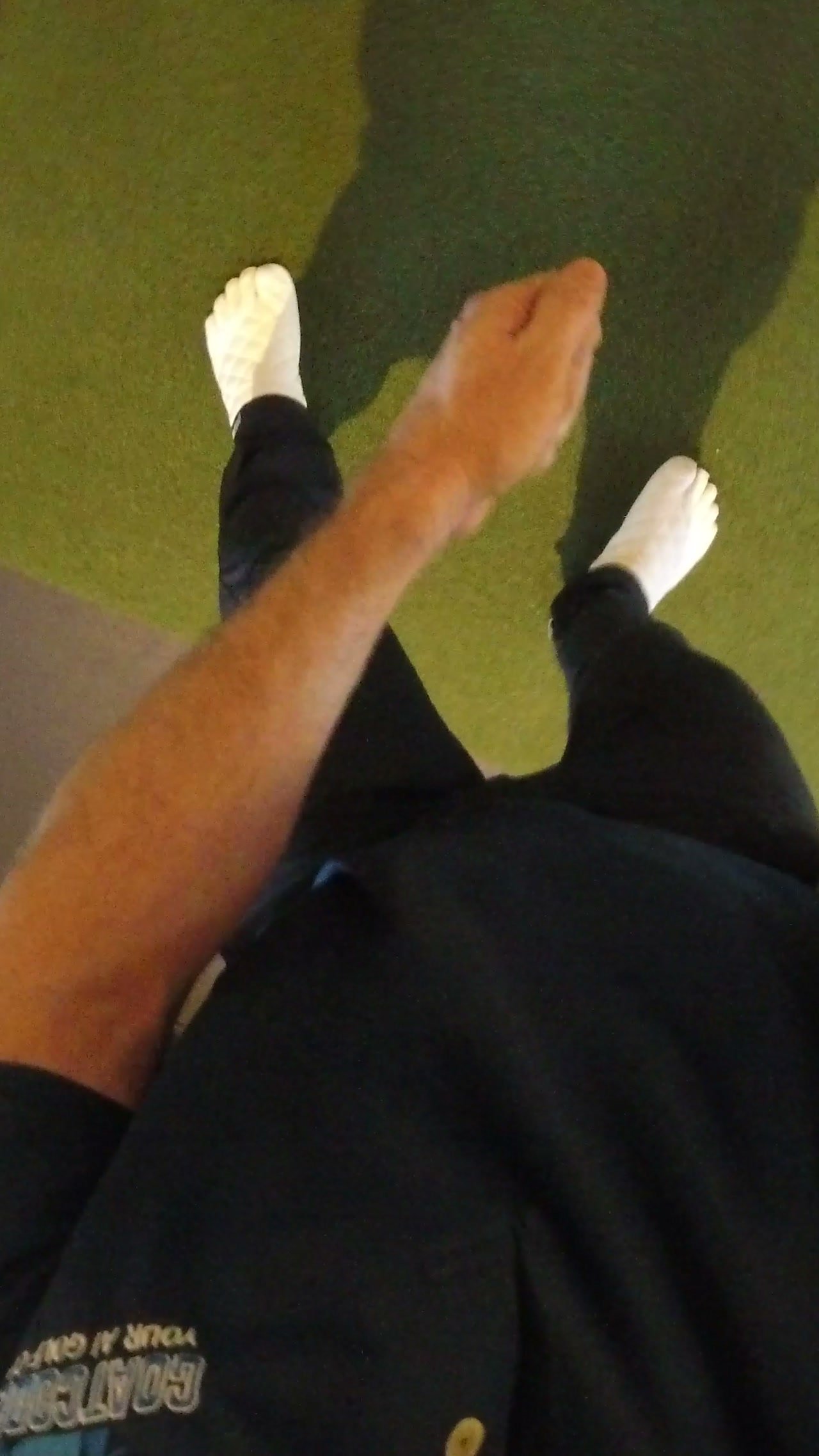
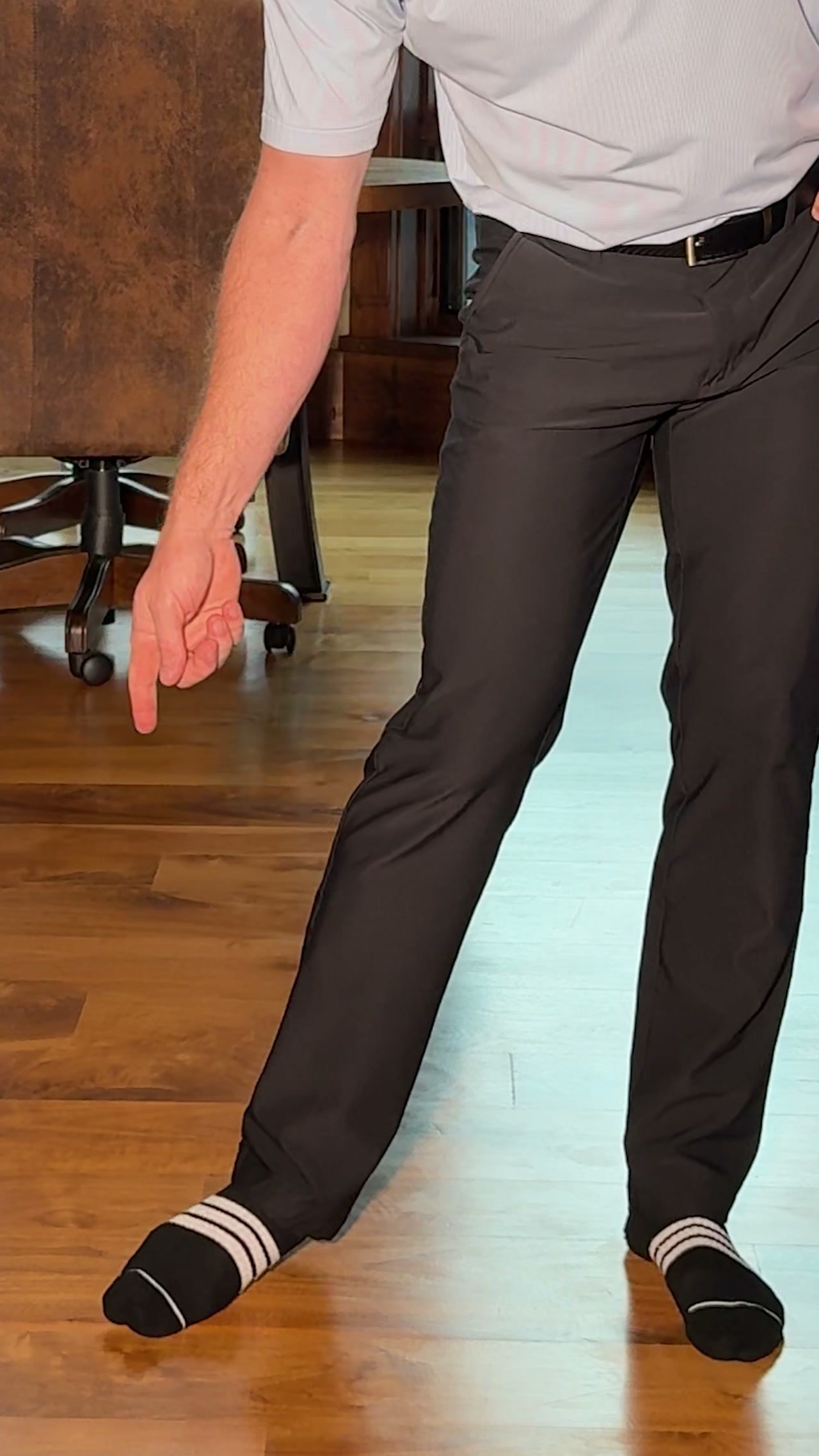
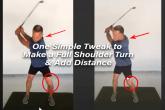
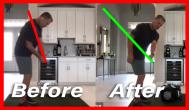
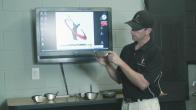
At address, note the red line drawn up from the center of the ankle.
Stop reading about it — feel it in your swing today
GOATY watches your swing live and coaches you between every rep. Free. No signup.
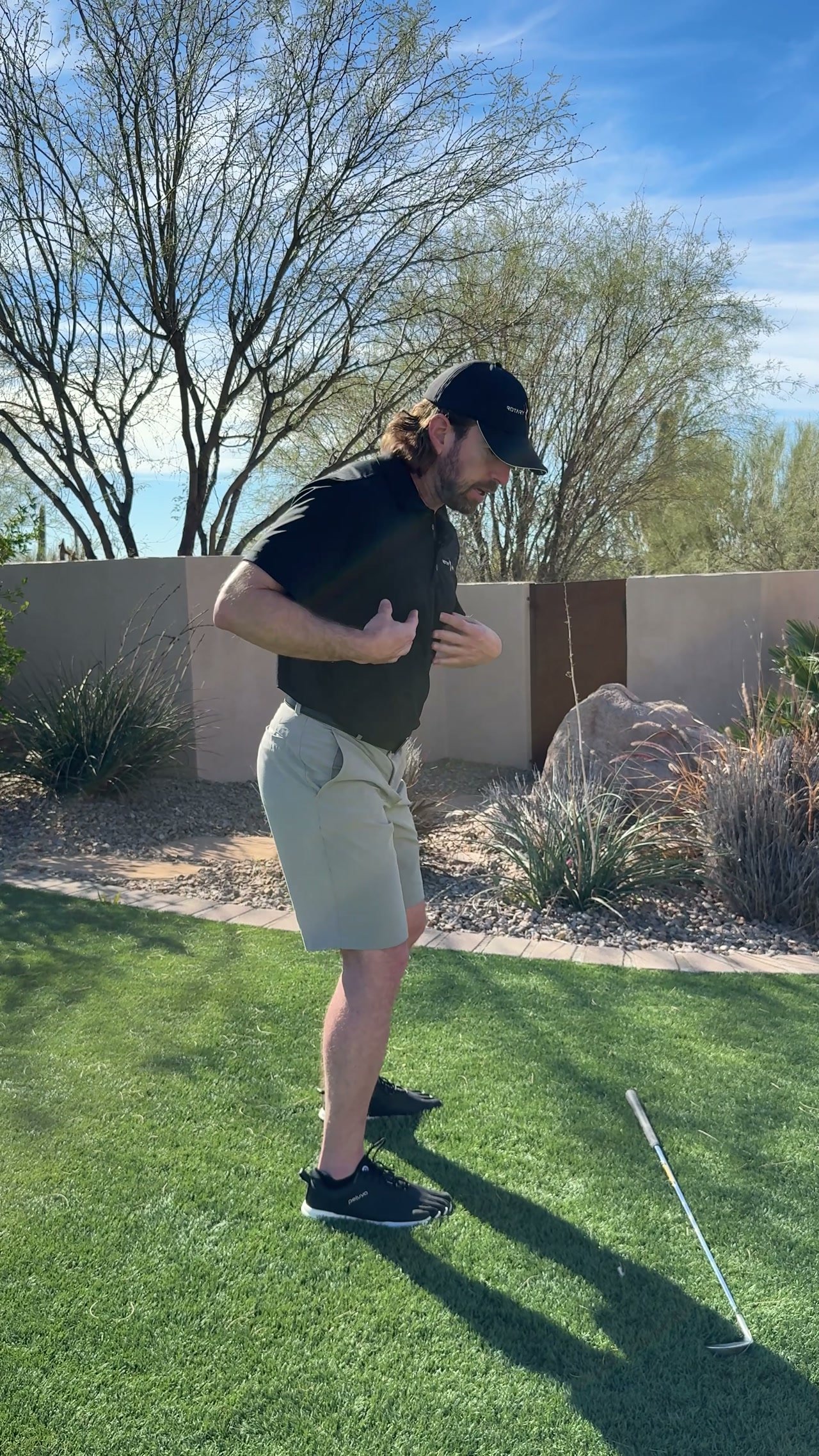
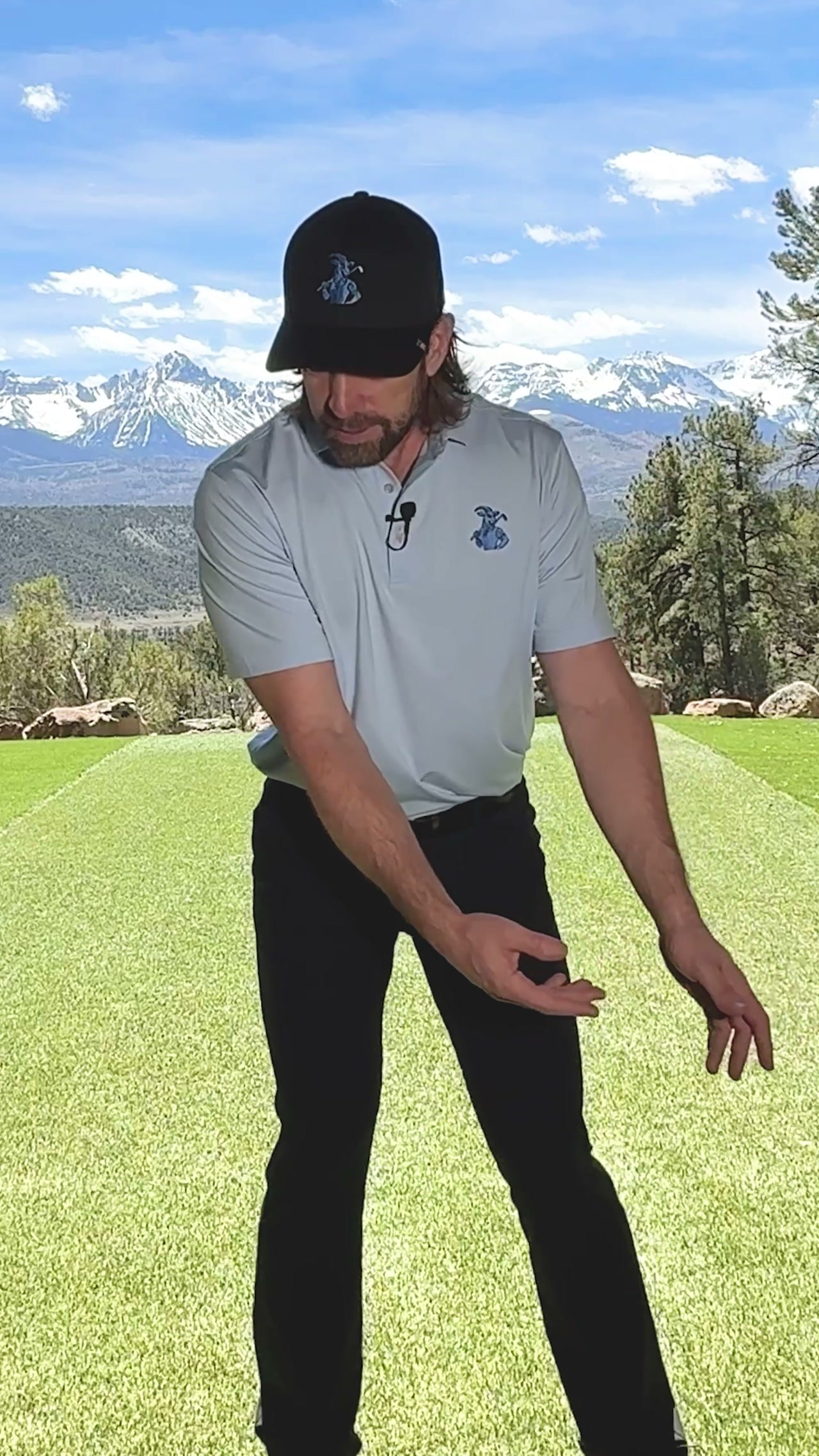
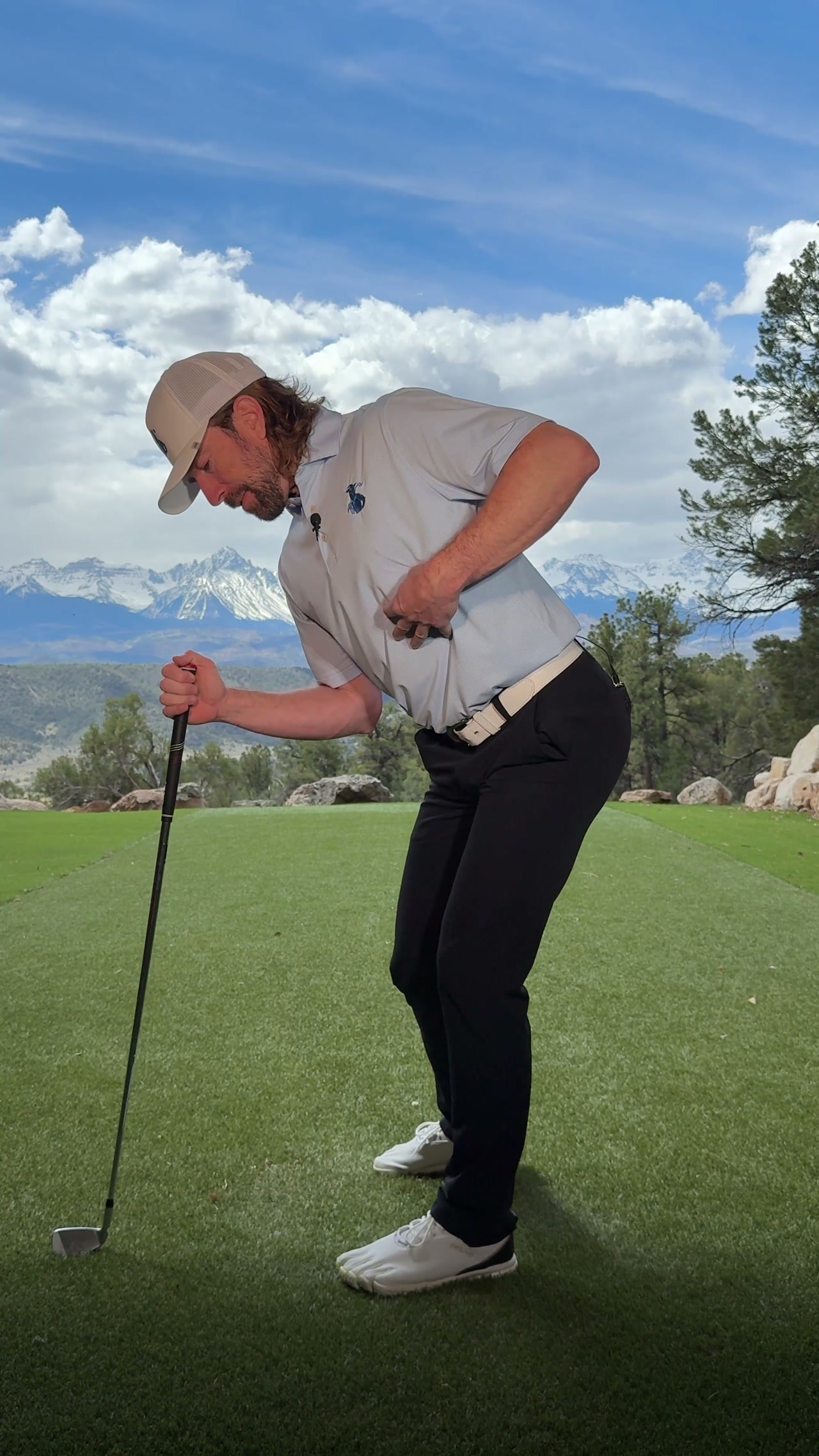
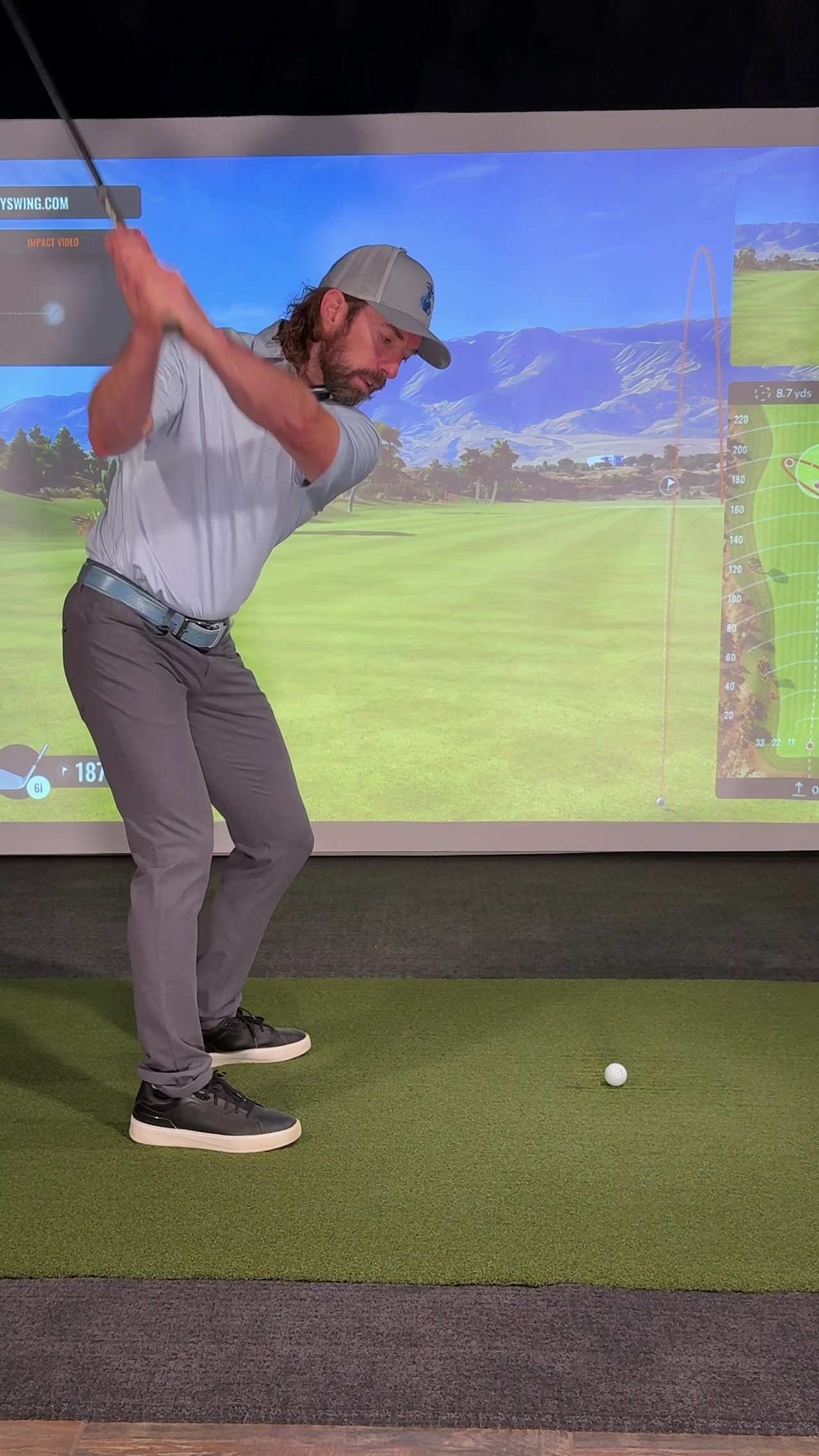
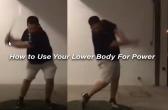
Start Your FREE Live Lesson →At the "9 o'clock" position, you can observe that the hips have shifted slightly away from the target and the body has turned away from the ball.
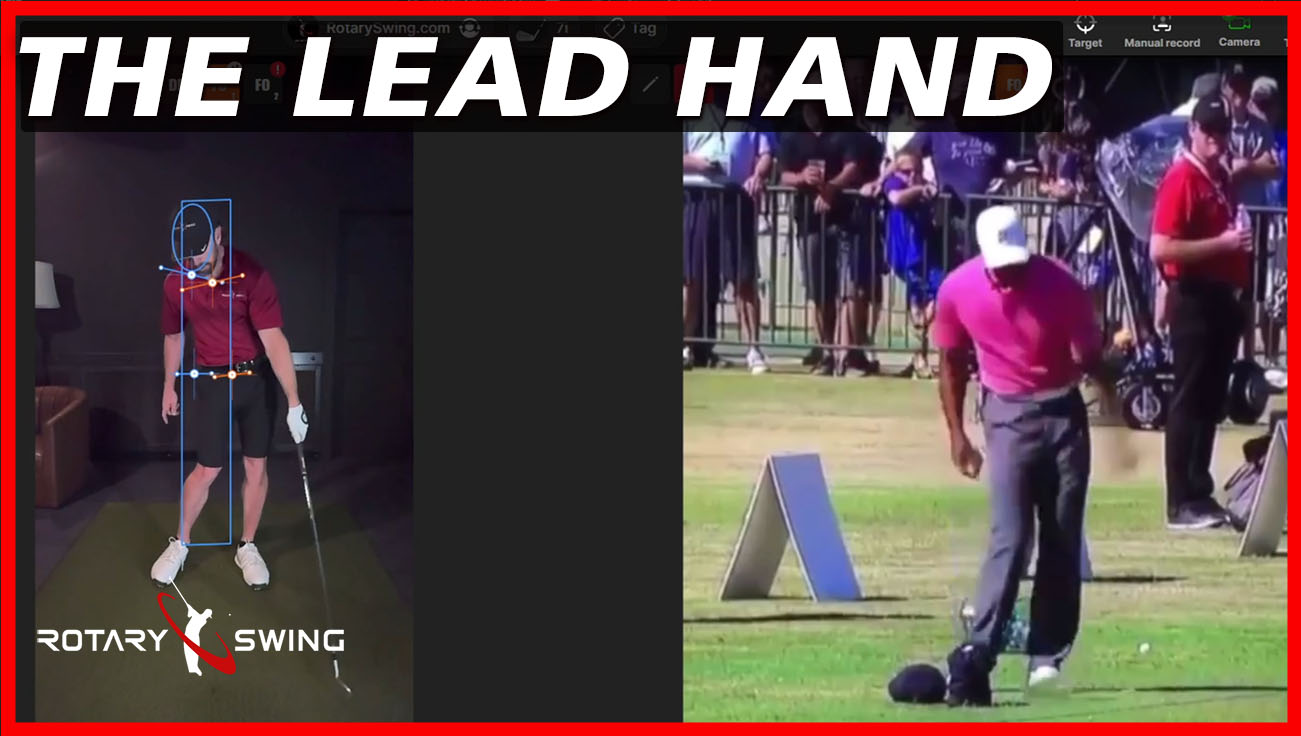
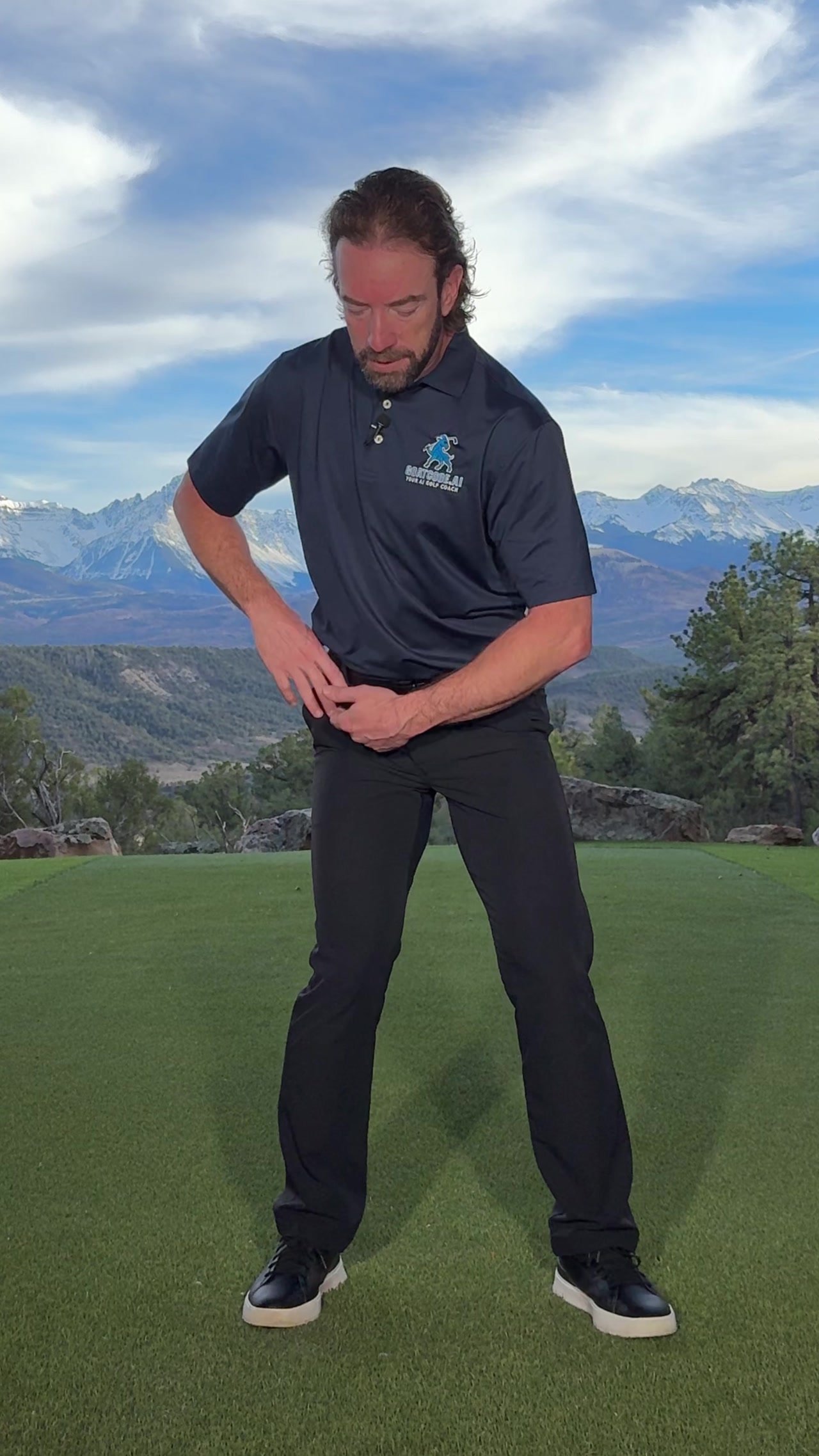
The crux of the golf swing that should be mastered during this drill is getting the lead hip back into neutral joint alignment so the hip can rotate properly through impact.
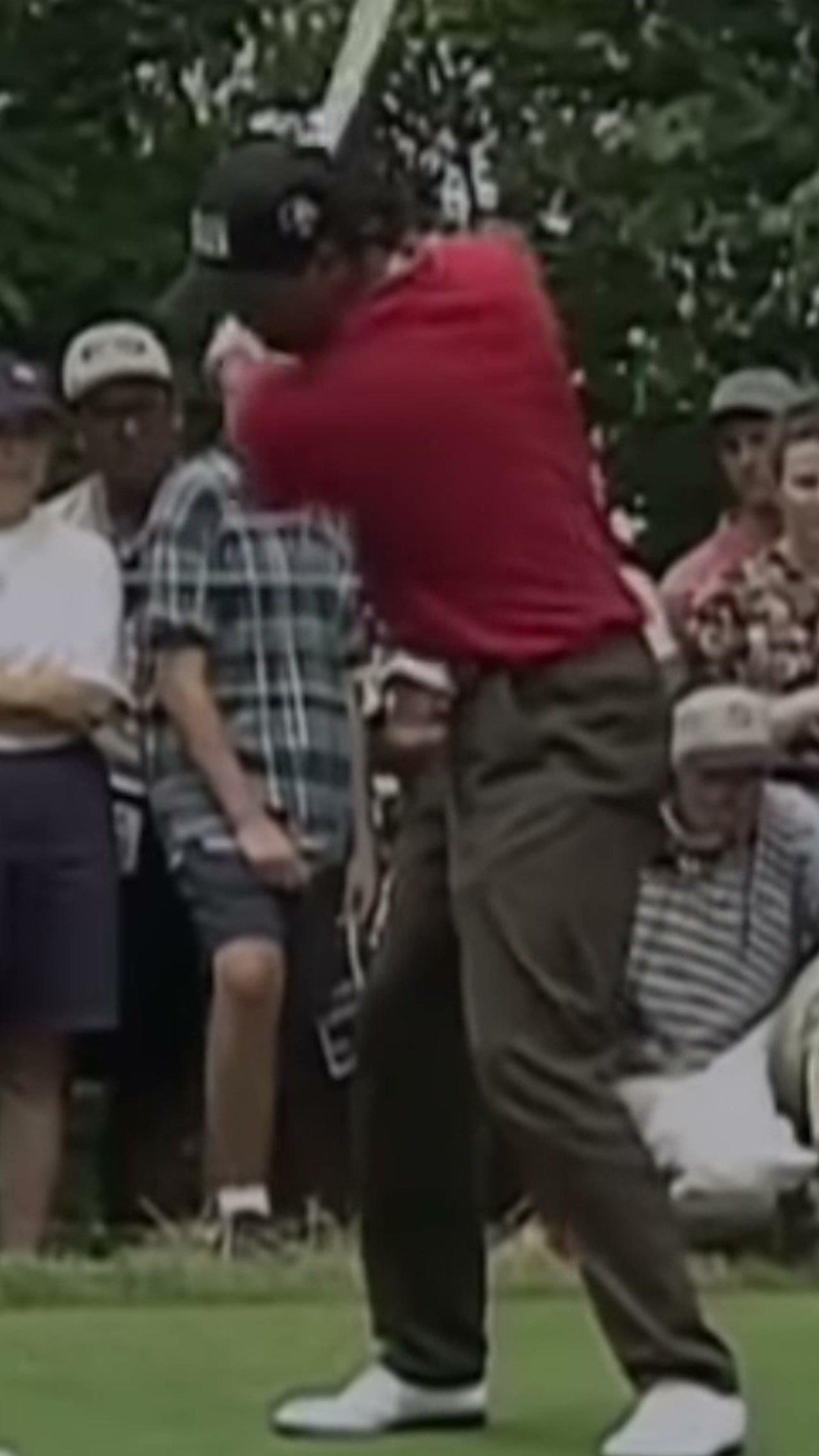
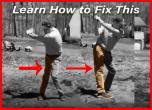
At impact, the shoulder, elbow, wrist, hip, ankle, and knee on the lead side align into neutral joint position.
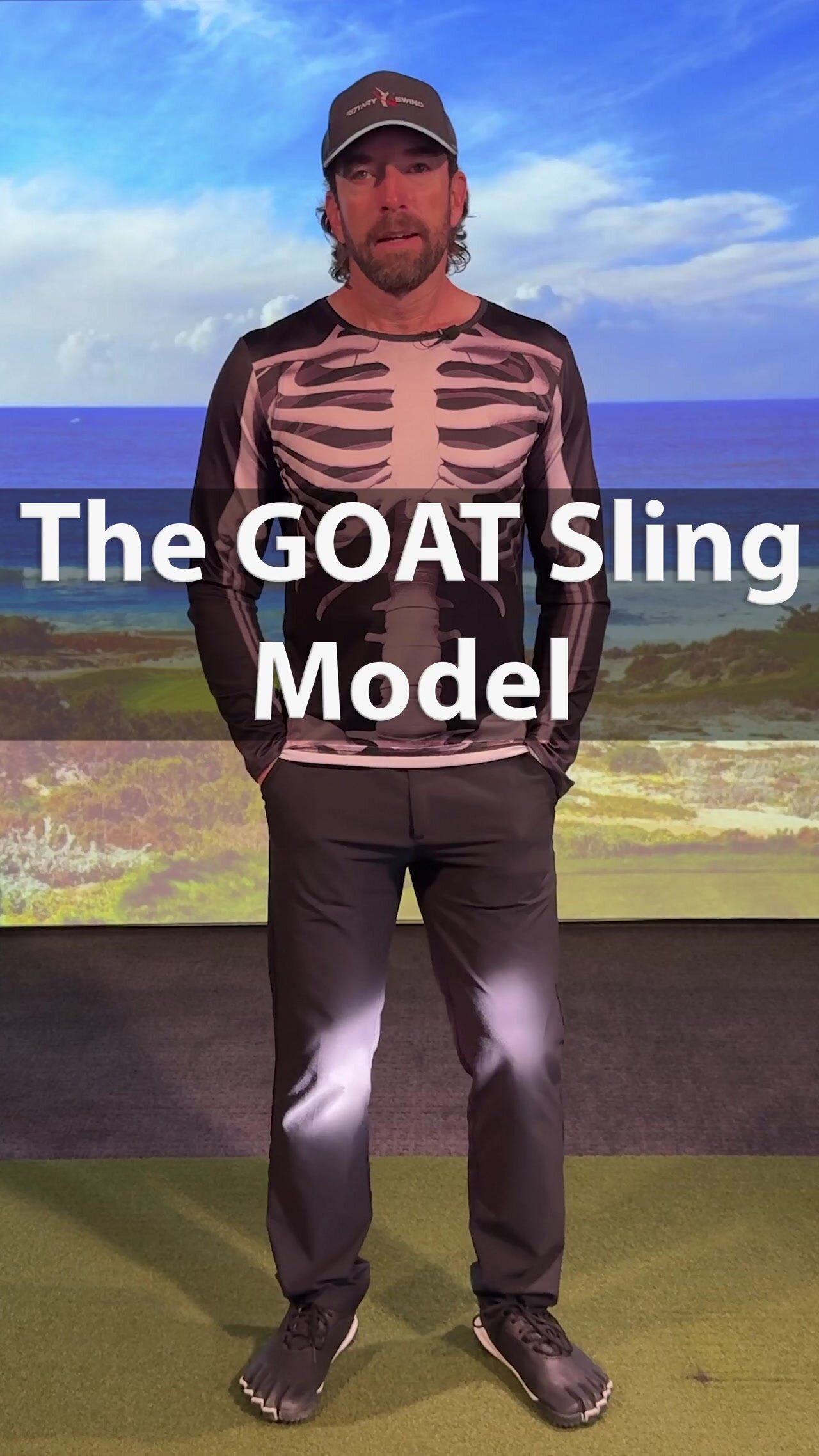
You can see this position demonstrated by an elite tour model above.
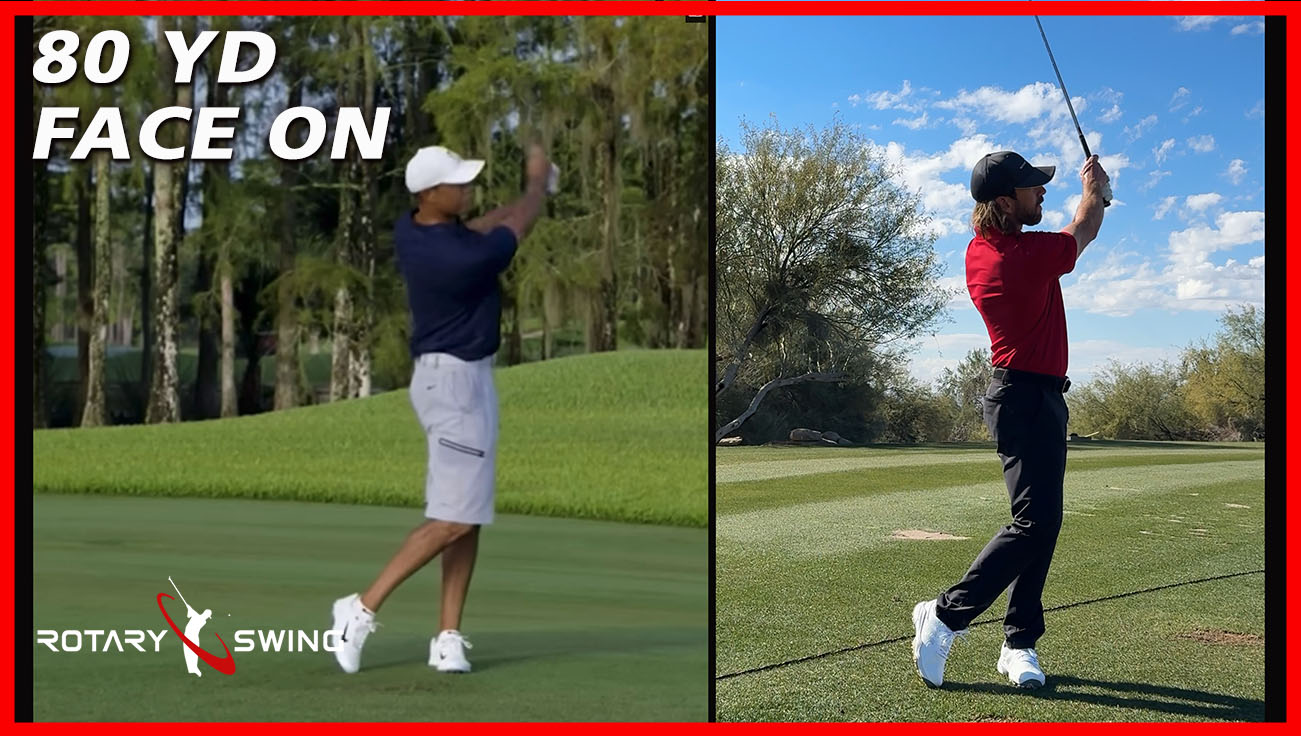
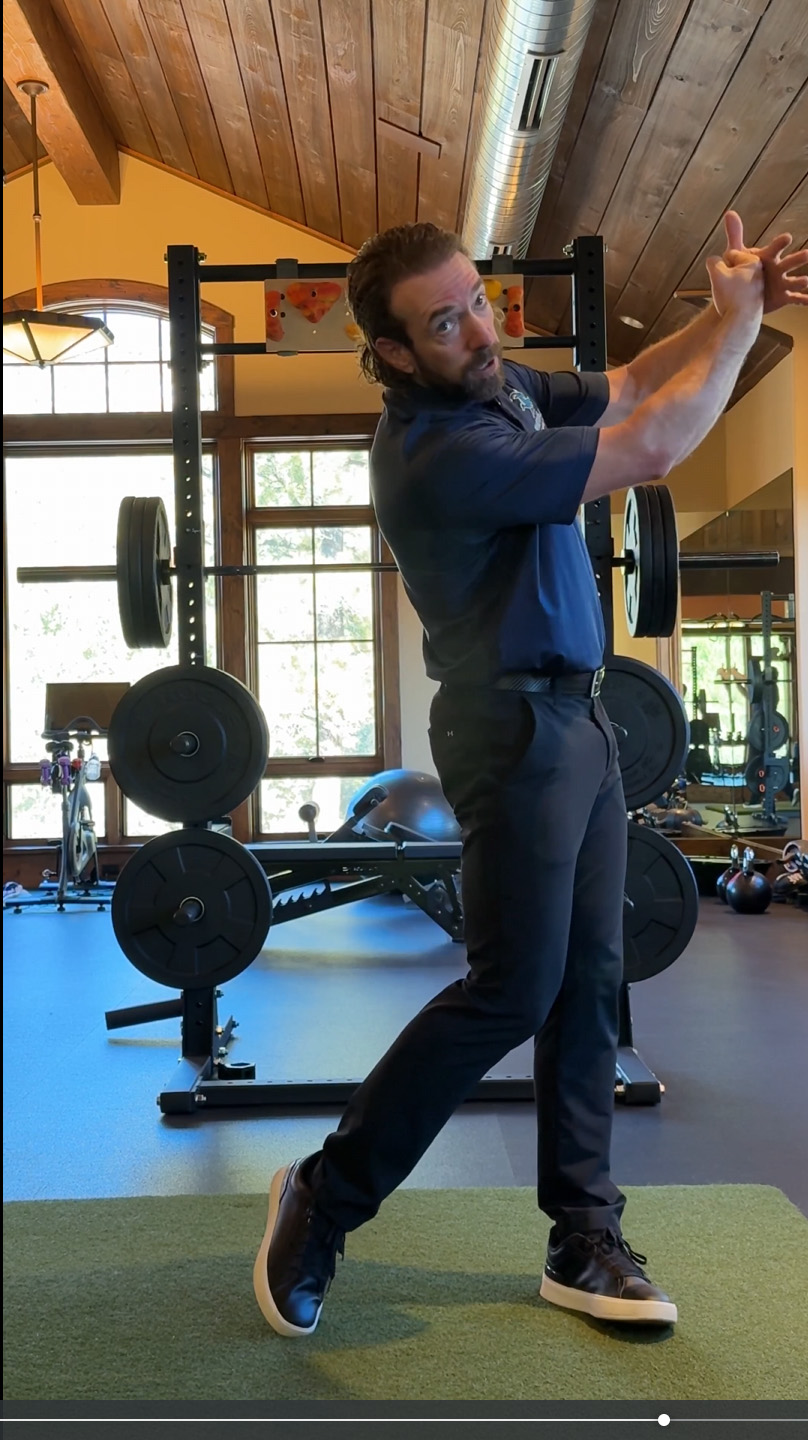
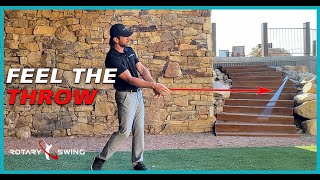
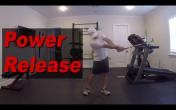
At the follow-through position, the club has fully released, yet the arms remain in front of the chest throughout.
"I love this drill and it will now be part of my pre game warm up - a great way to get striking and weight shifting warmed up."
-James H. | Oct 8, 2012 | Nassau
Video Transcription: Golf Biomechanics - 9 to 3 Drill

9 to 3 Drill
The 9 to 3 Drill has been something that we've discussed extensively on the website, in the forums, and especially at clinics. Students who have attended the clinics have spent significant time learning how to execute this drill correctly — because it is 90 percent of the golf swing.
Try a free live lesson with GOATY
GOATY, my AI golf coach, watches your swing through your phone camera and coaches every rep. Free, about 20 minutes, no credit card.
If you can perform the 9 to 3 Drill correctly, the rest of the swing is just small details that have minimal impact relative to this core motion on your overall golf game and ball-striking quality.
Long story short, it is very much worth your time to pay close attention and understand what you're about to learn and how to do this drill correctly, because this is how you want to practice and how you want to warm up until you have fully mastered it. As stated, it is 90 percent of the golf swing.
The 9 to 3 Drill is essentially taking the club to the point where it is parallel to the ground — or, if you're picturing a clock face, it moves from the 9 o'clock position to the 3 o'clock position on the other side — and doing everything correctly in between, particularly in terms of the body movements being trained.
The fundamental structure is Move 1 and Move 3.

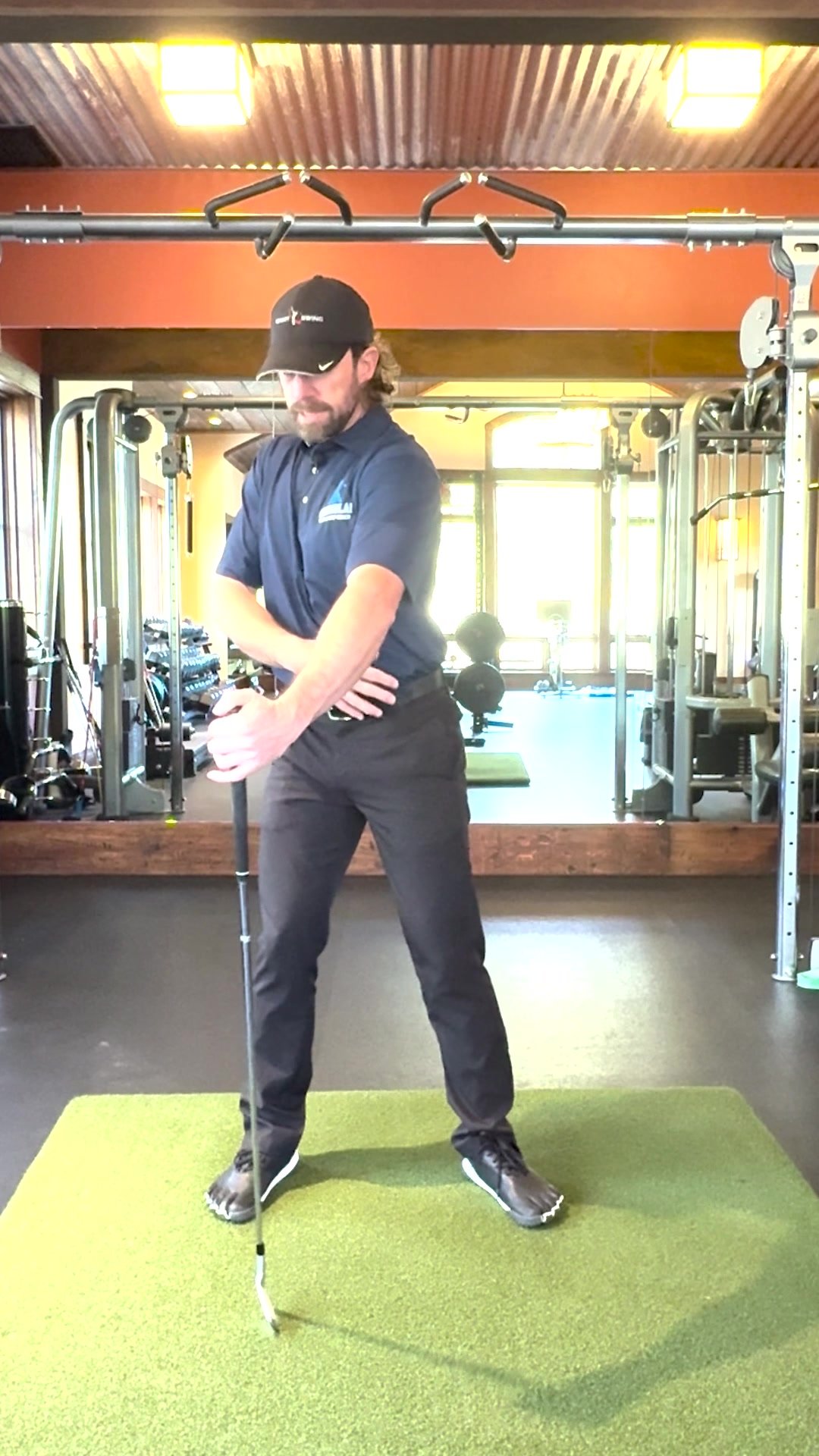
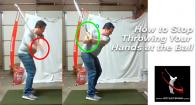
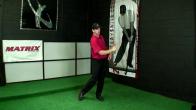
Hands are in front of the chest
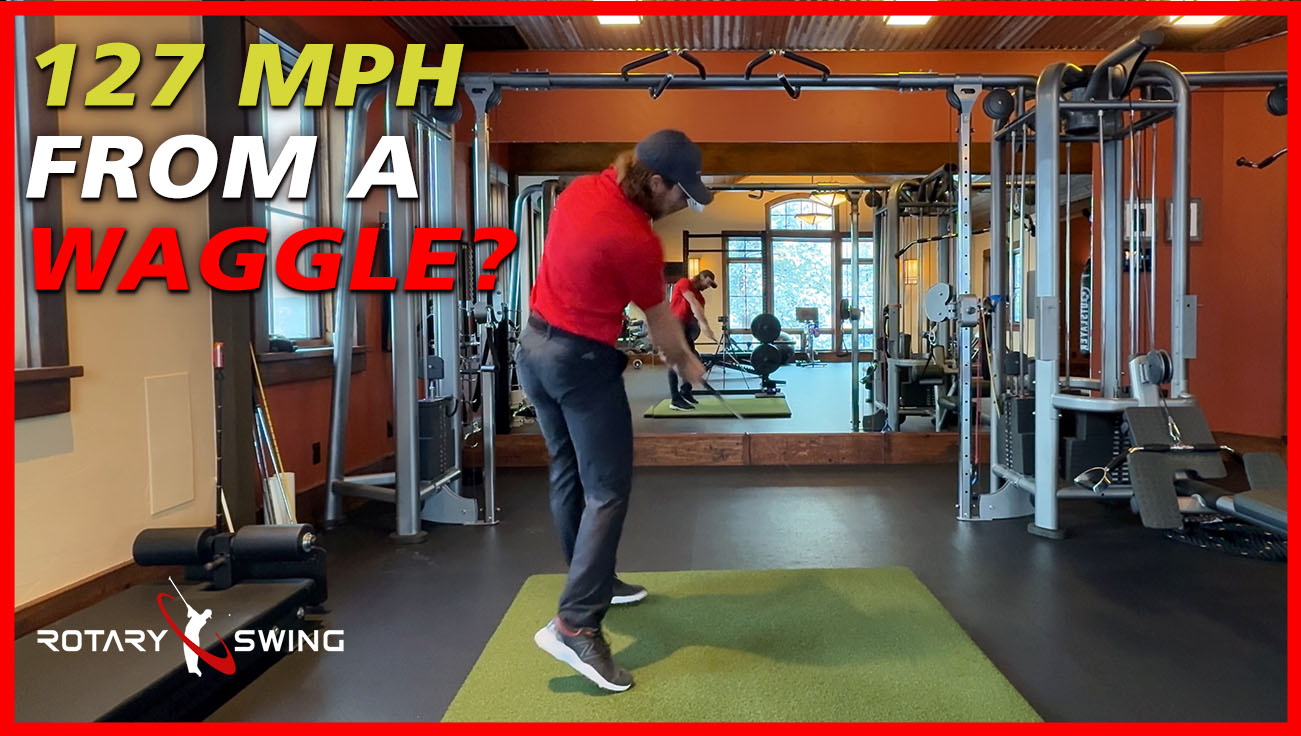
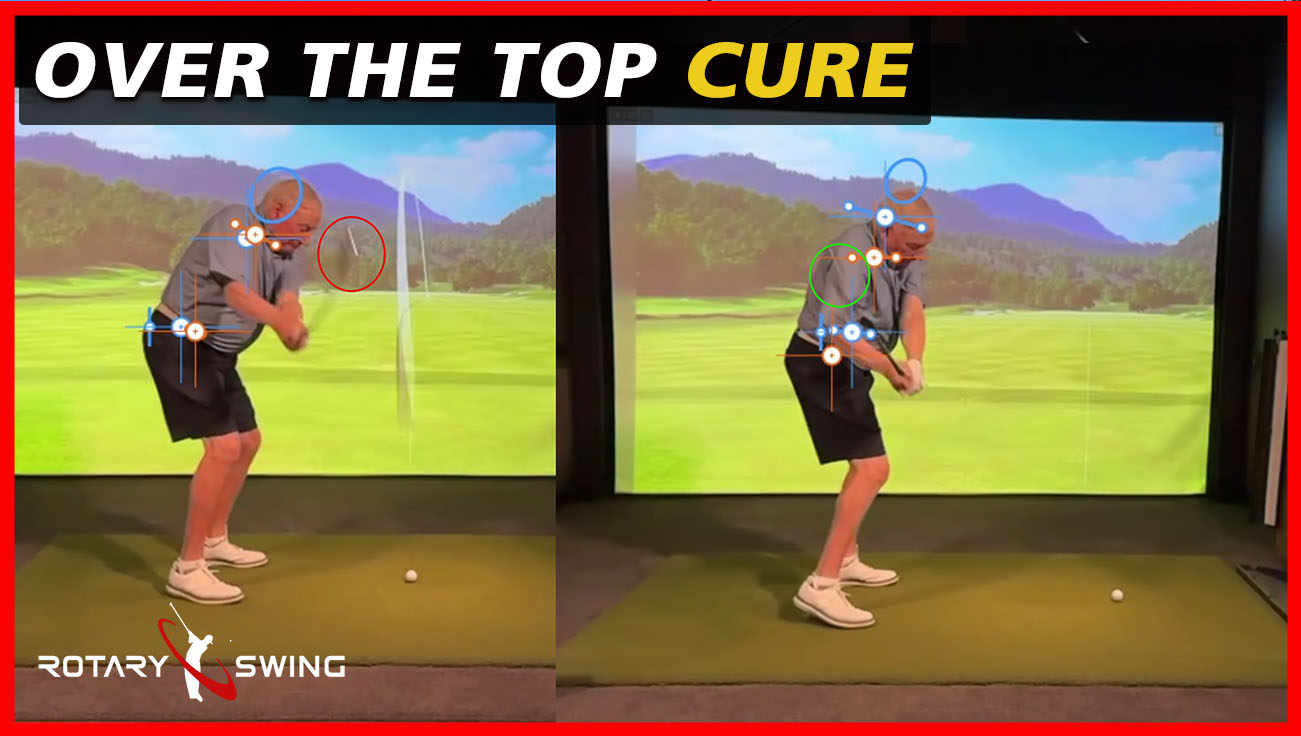
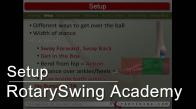
The first piece involves doing the takeaway correctly, and there are three checkpoints here. First, pulling your trail shoulder back — focusing on that trail shoulder blade to create rotation so the upper body turns while the hips remain anchored. Second, pushing your trail heel into the ground to activate the trail glute. Third, keeping your arms in front of your body throughout. That third point is best seen from down the line — hands should stay in front of the chest, not drifting behind it or getting way out in front.
If you simply keep your arms quiet, that is all you are trying to accomplish in Move 1, or the first half of the 9 to 3 Drill.
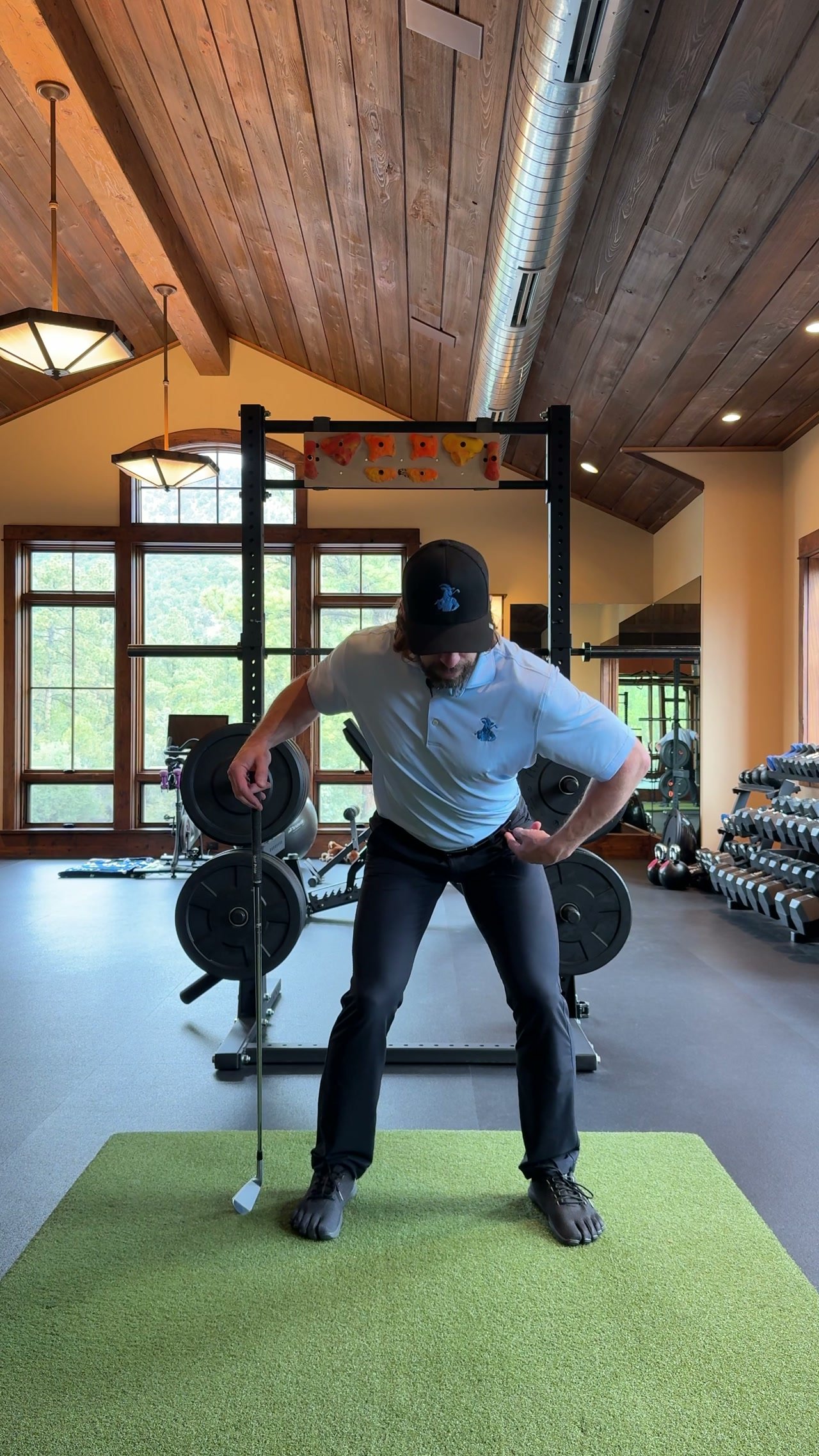
The second half is where most golfers struggle. This is the crux of the golf swing: learning how to properly shift your weight back to your lead side and initiate the early phase of downswing acceleration.
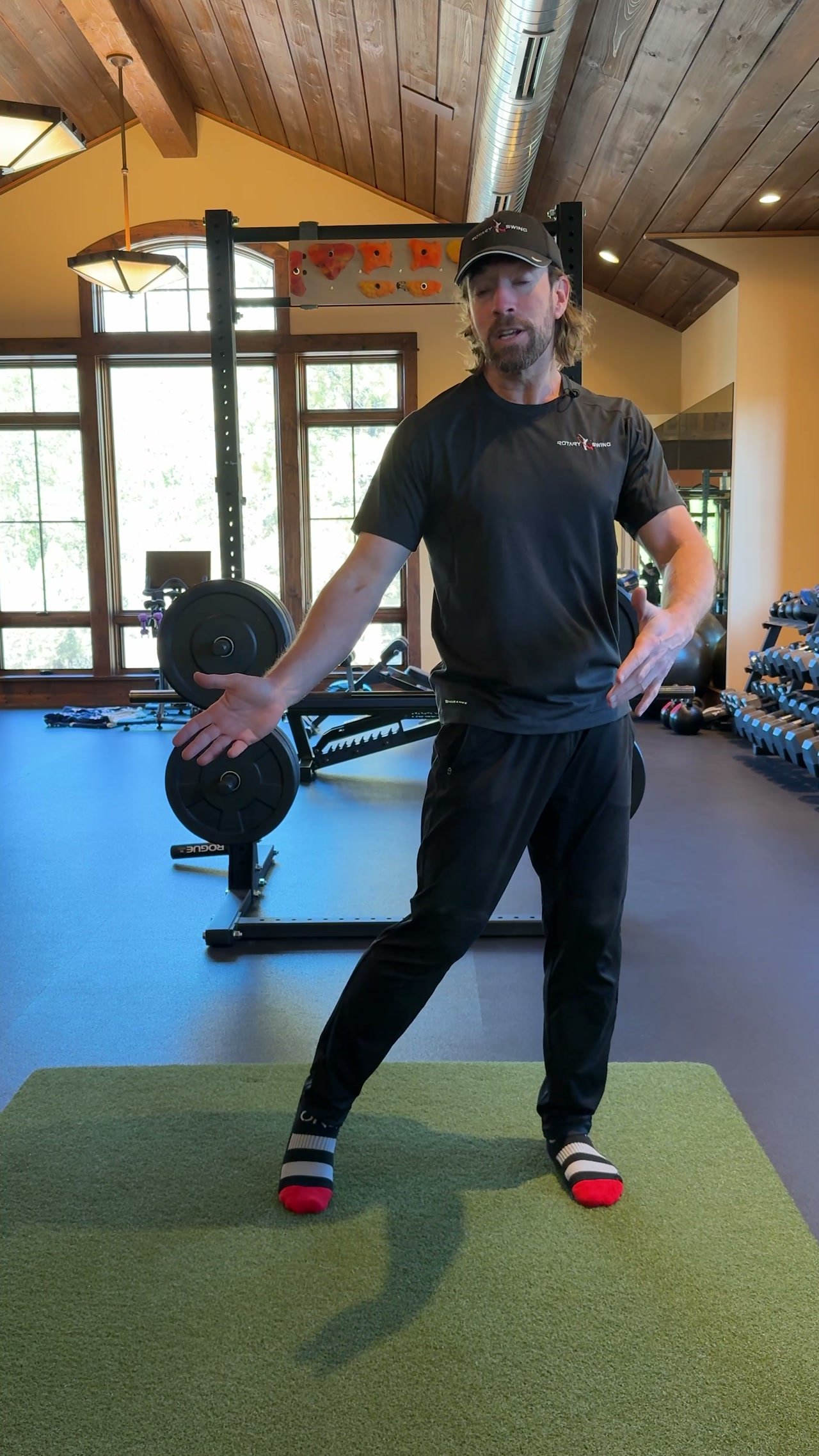
Once you are loaded into that trail-side position, you will use your lead side to shift your weight — specifically your lead hip and lead glute — getting your weight back over your lead ankle. As you begin to turn from the lead oblique and hip area, that rotation will pull your hands down into impact, and then you release to approximately 3 o'clock.

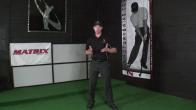
Weight shift
The ball is not going to travel very far at first, and that is intentional. You are trying to control the movement pattern, not maximize distance. The sequence is: 9 o'clock, shift, impact, 3 o'clock.
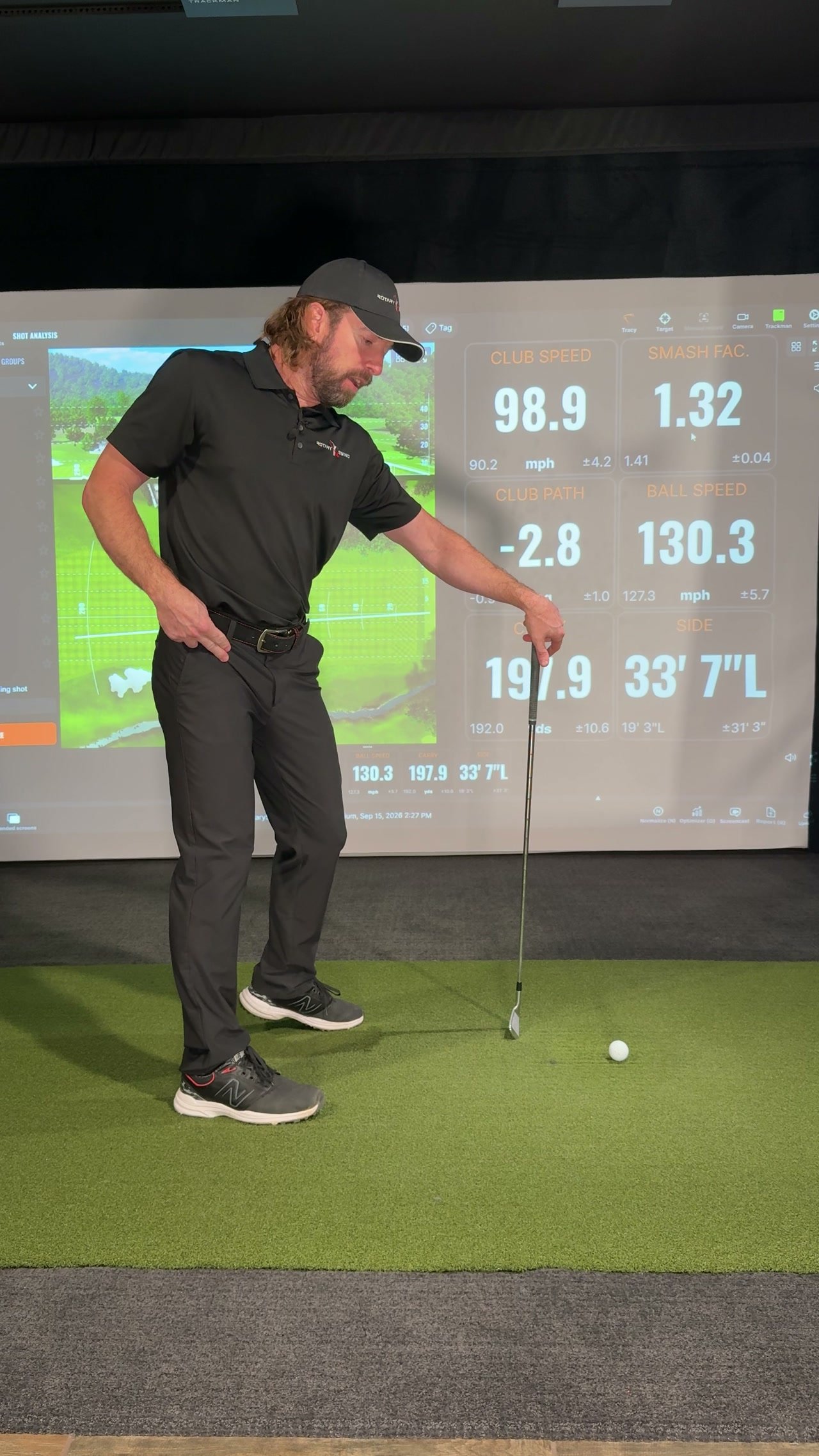
That is all you are doing. At first, you may only hit the ball 10 yards. Starting with short chip-shot length swings is strongly recommended so you can learn how to execute the movement correctly — because returning your weight to the lead side while keeping your head behind the ball and arriving in a proper impact position is genuinely challenging at first. If you want to see how your current impact position measures up, try a free AI swing analysis to get instant feedback on your mechanics.
Let's take a look at the drill in action — first a short version, then the 9 to 3 Drill with wrist hinge added.
After a couple of practice strokes focusing on the correct positions — follow-through, arms in front, wrists releasing naturally with the momentum — you can begin to feel some flow in the motion. The further you hit the ball, you will pass 3 o'clock slightly, and that is fine.

Try to finish here
If you can learn to control the finish so that your arms arrive at the 3 o'clock position, that is where you want to begin.
From there, it becomes a lead-side movement — releasing downward, finding some flow, and letting the swing develop naturally. Now go ahead and hit one.
It is a short shot. Releasing through slightly past 3 o'clock is acceptable as long as all the other movements are correct — just a small amount of momentum to allow the club to release fully is perfectly fine.
The next progression is adding a small amount of wrist hinge. The movement is identical, except you will cock your wrists going back and allow them to release through to the other side. This simply allows you to generate more clubhead speed.

Wrist hinge
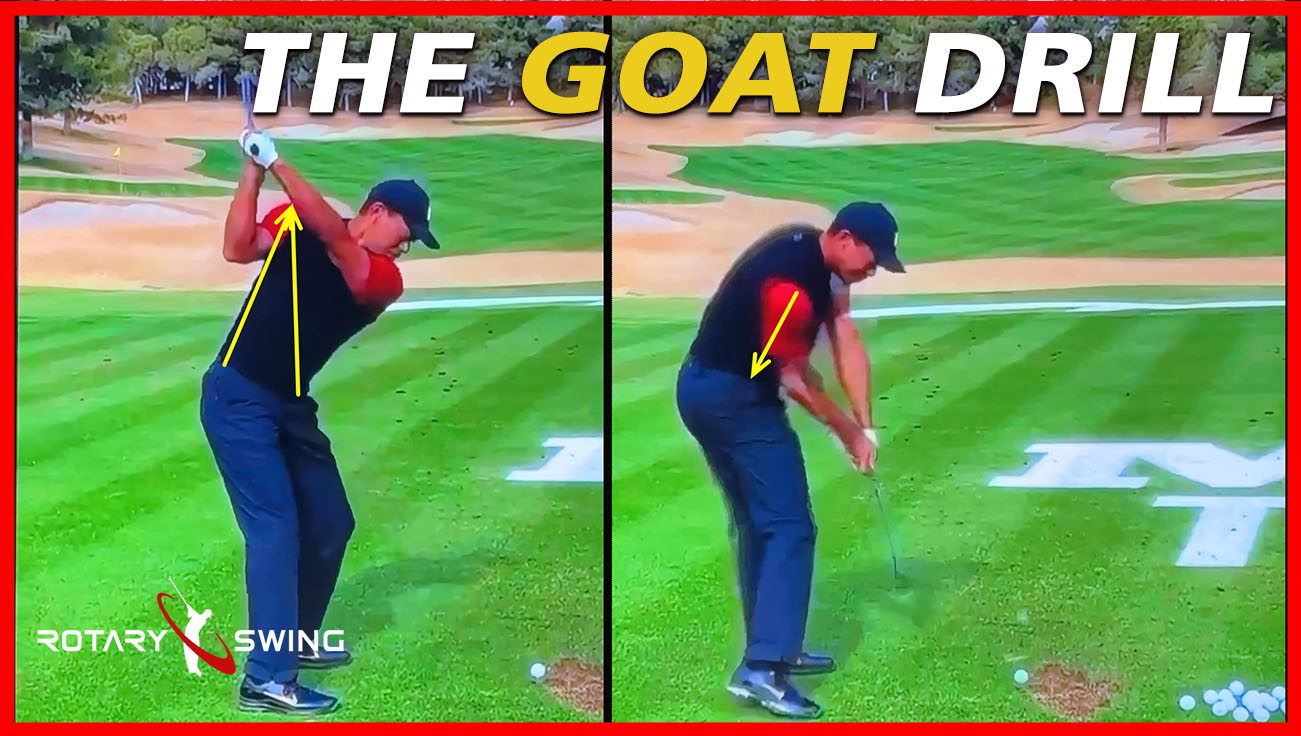
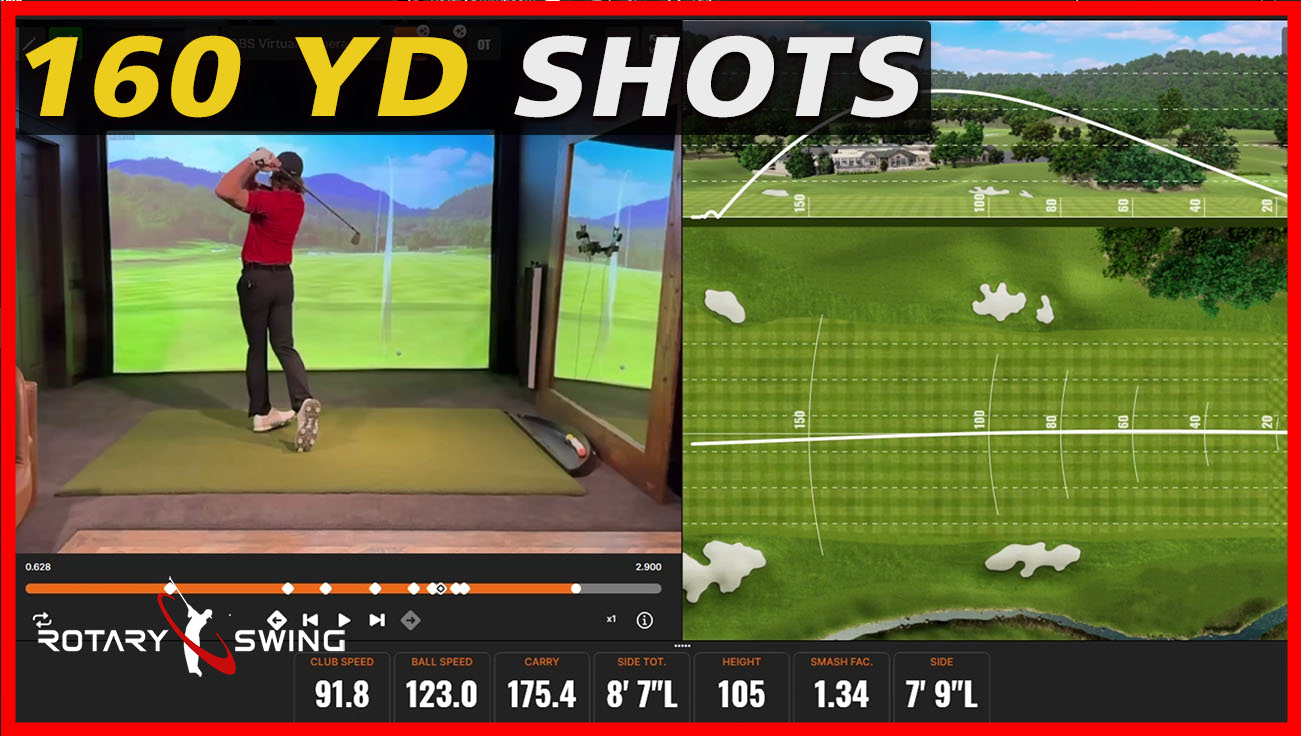
That is the entire purpose of the wrist-hinge variation — this drill will start to feel repetitive after a while, but it is critically important that you invest the time in it. Once you want to start hitting it farther, by adding wrist hinge and getting properly coiled while still executing the 9 to 3 Drill correctly, you should be able to hit the ball approximately 70 to 80 percent of your normal distance. If you want to compare your drill progress to a proven movement model, the GOAT Drill video lesson is the perfect complement to this practice routine.
The same sequence applies — 9 o'clock, wrist hinge, release through.
Everything is identical, just letting the full release happen — 9 to 3 Drill, same fundamental movements throughout.
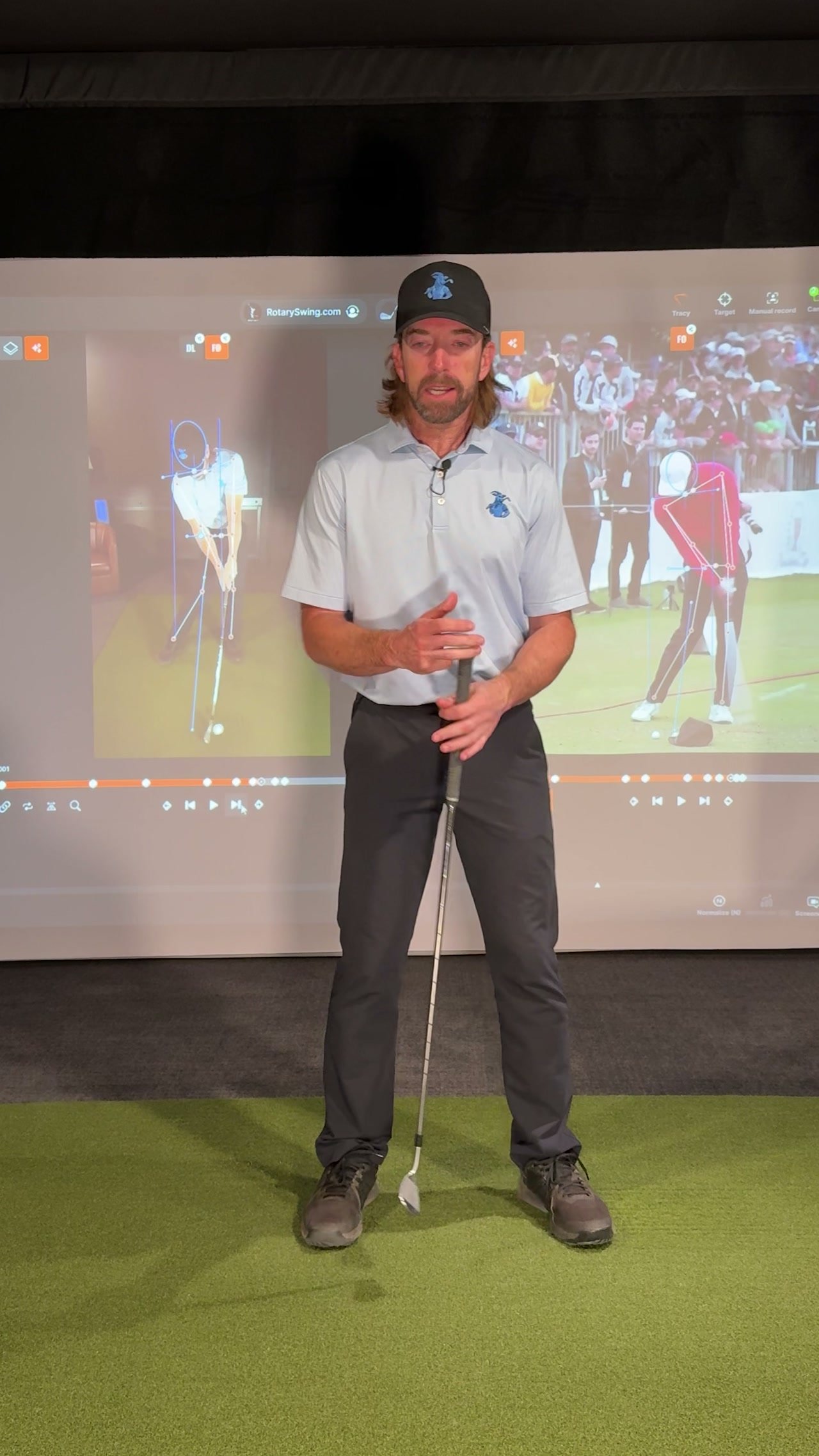
The key checkpoints to verify when reviewing your own swing on video: make sure you are loaded into the trail side with the hips staying relatively quiet in the backswing; more importantly, confirm you are getting your weight back to the lead side, arriving in a solid impact position through the hitting zone, and keeping your arms in front of your body from start to finish.
If you can execute this drill correctly, you will learn to compress the golf ball in a way you never have before, and it will make a tremendous, lasting difference in the quality of your ball-striking.
Frequently Asked Questions
What is the 9-to-3 golf swing drill?
The 9-to-3 drill is a half-swing training exercise where the club swings from the nine o clock position with arms parallel to the ground on the backswing to the three o clock position with arms parallel on the follow-through. By removing the full swing motion the drill lets you isolate impact zone mechanics including body rotation, hand position, and club path without the complexity of a full swing.
What does the 9-to-3 drill improve specifically?
The drill primarily trains consistent contact, controlled rotation through impact, and a square club face at impact. Because the swing is short you can focus entirely on what the body and club are doing at the most critical moment. Many instructors use it to groove a flat lead wrist, eliminate flipping, and build a shallow inside-out attack angle.
How should my body be positioned at the three o clock finish of this drill?
At the three o clock finish your weight should be almost entirely on the lead foot, your lead hip should have rotated past the ball, and your trail heel should have begun to lift. The club should be pointing roughly parallel to the ground with your arms in front of your chest, and your trail forearm should have crossed over the lead forearm in a full release.
How often should I practice the 9-to-3 drill and when should I move to full swings?
Most instructors recommend spending the first half of any practice session on 9-to-3 repetitions before moving to full swings. As few as 20 to 30 focused half-swings per session can meaningfully reinforce impact mechanics. Move to full swings only when the half-swing motion feels natural and your contact improves.
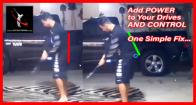
Watch part 2 now to see how you're moving your body in the opposite direction of the pros!