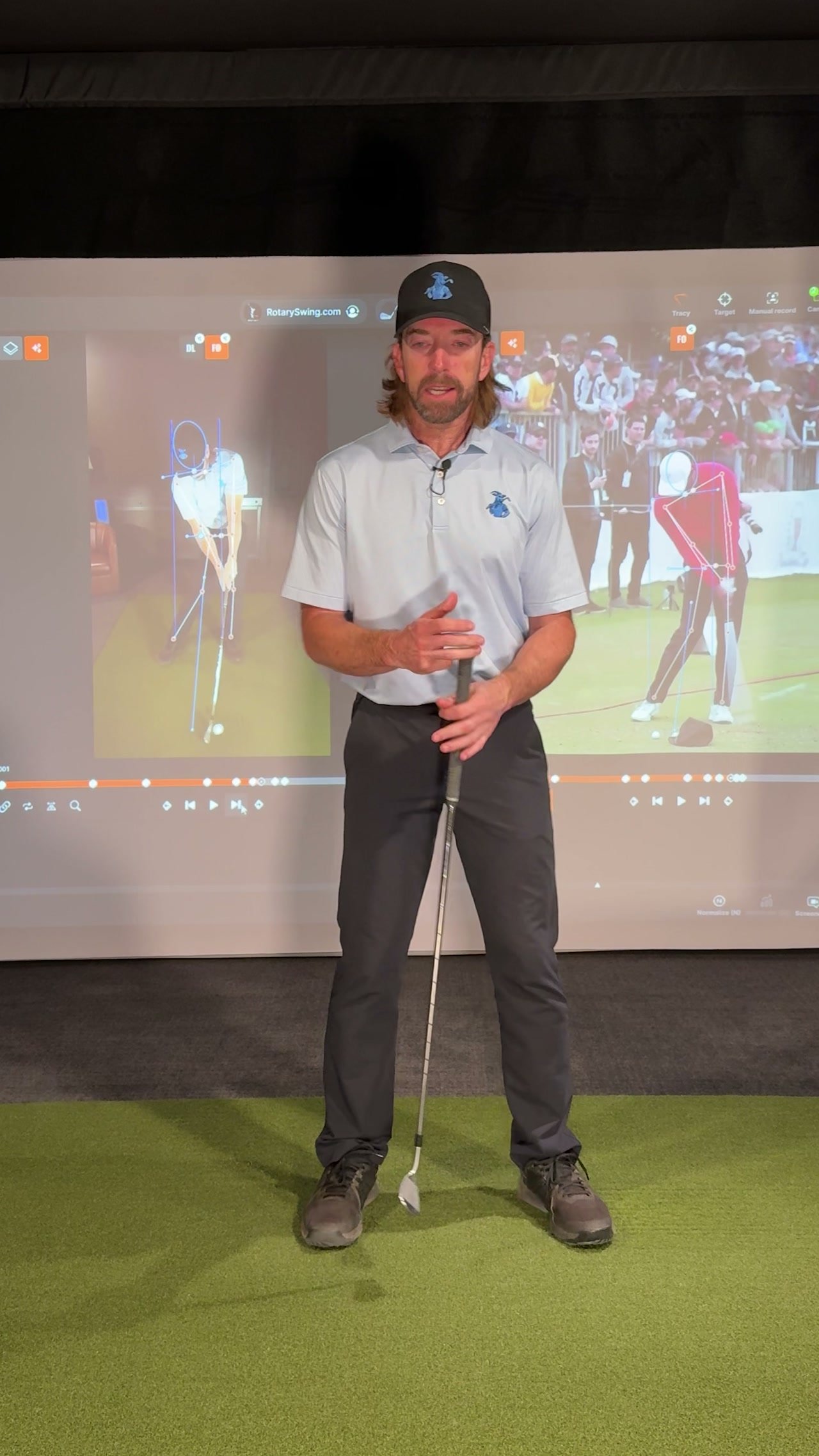
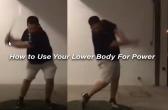
An interesting question was posted on the forum recently. Someone asked, "What is the purpose of loading the trail leg in the golf swing if you are not going to push off the trail leg in the downswing?"

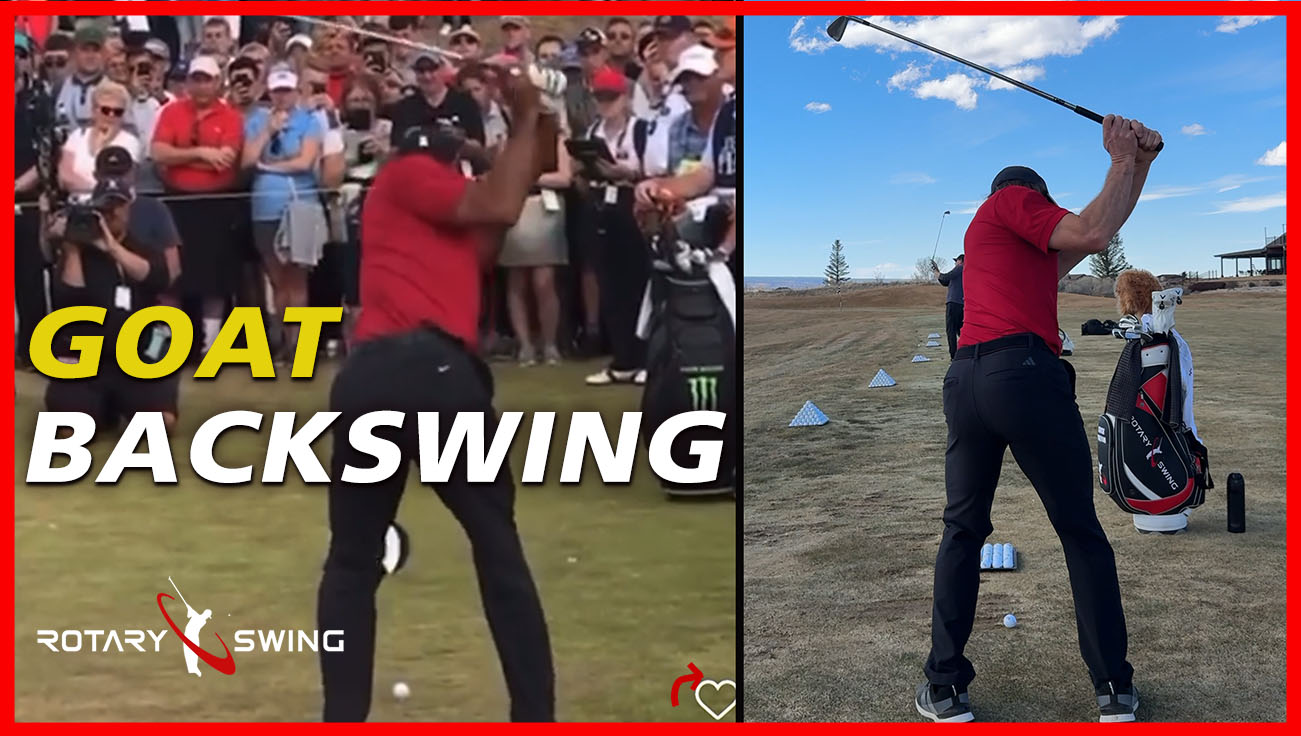
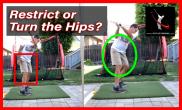
The classic Reverse C
That is an excellent question and, like most things in the golf swing, it has a straightforward answer.
Is this the fault costing you strokes?
Film one swing on your phone. In about a minute GOATY measures it and names the single biggest thing costing you strokes — free, no card.
Analyze My Swing Free
Related: Golf impact position — how AI scores yours →
Android users: Download GOATY on Google Play — free AI golf coaching on your Android phone. →
To start, let us examine why you do not want to push off the trail leg in the downswing.
Stop reading about it — feel it in your swing today
GOATY watches your swing live and coaches you between every rep. Free. No signup.
Start Your FREE Live Lesson →That also has a simple answer.
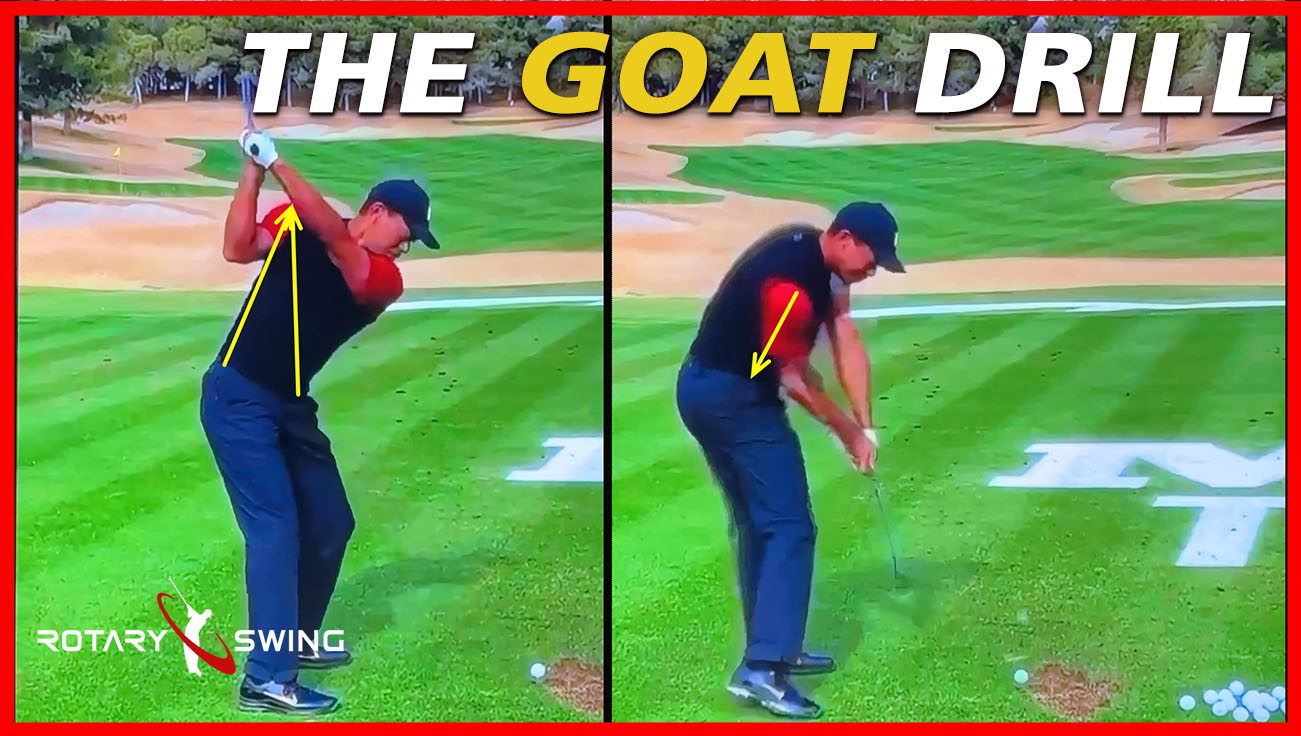
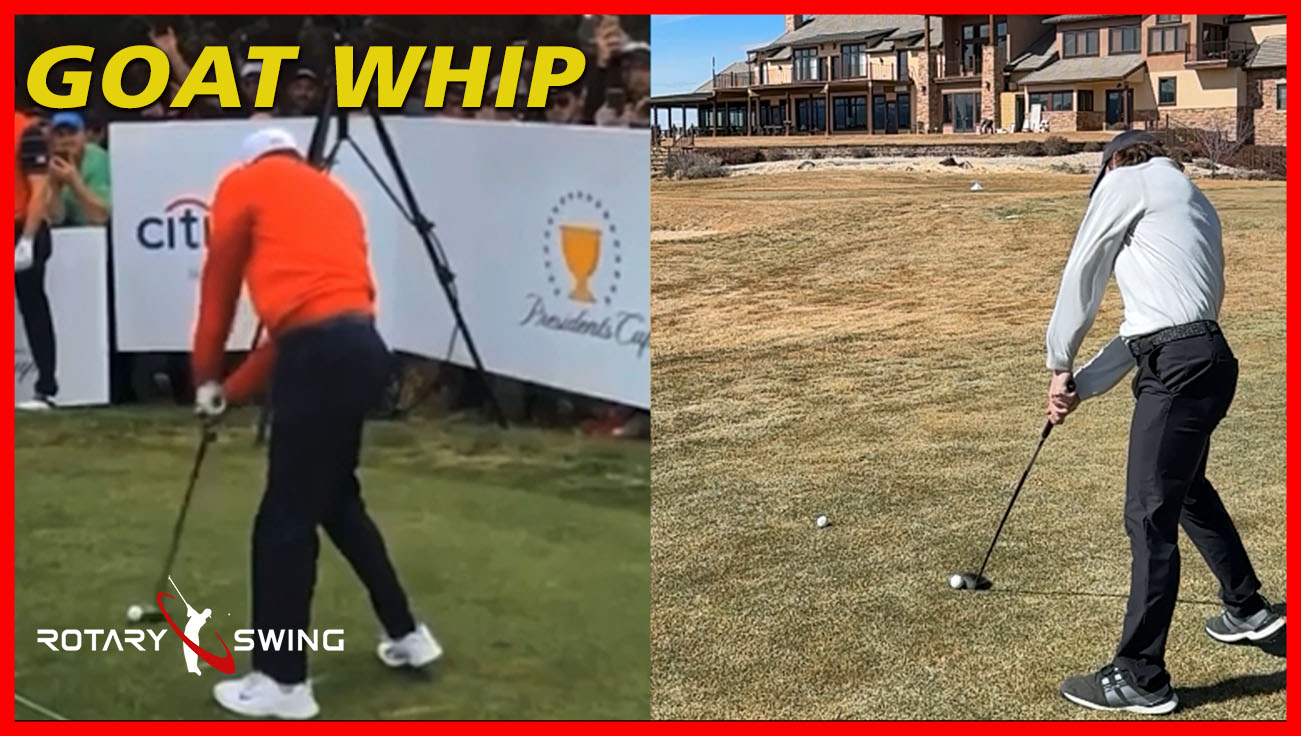
If you think back to the 1960s and '70s, the golf instruction world favored driving off the trail leg.
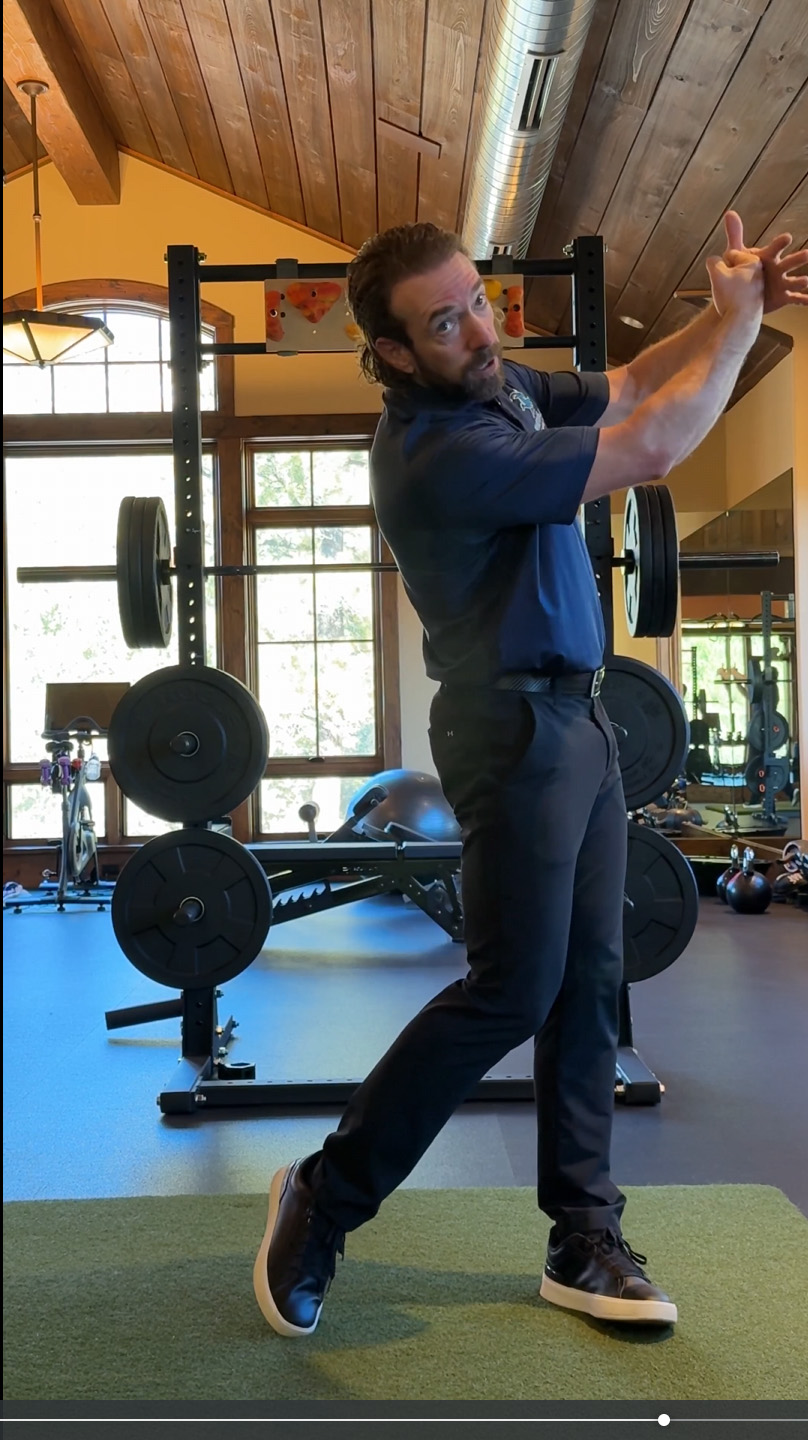
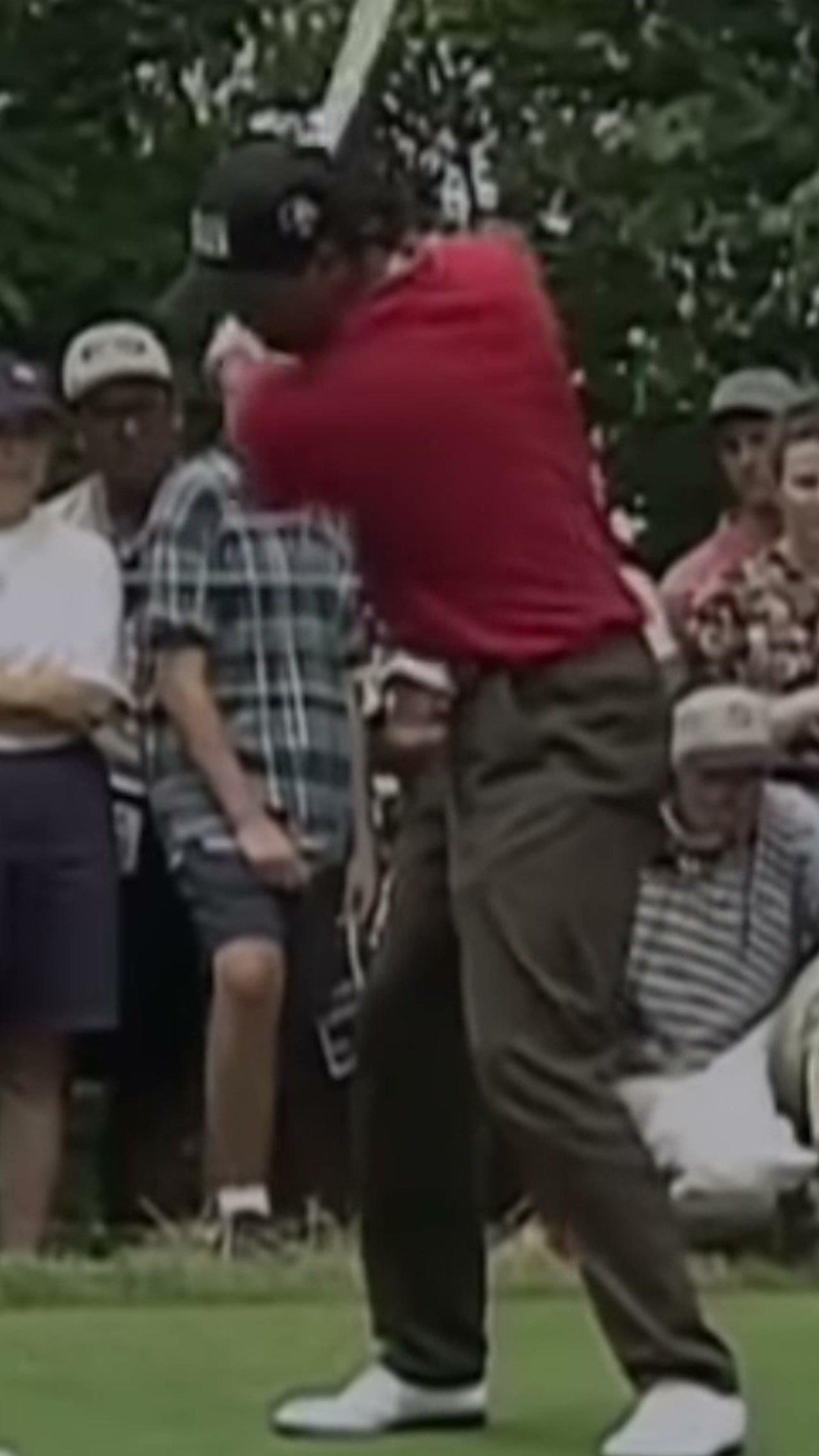
Everyone was teaching that technique, and you saw every golfer finishing in that classic "Reverse C" posture.
What's Wrong With It?
This technique formed the basis for a significant amount of modern golf instruction. Nicklaus did it, Watson did it, Miller did it, Weiskopf did it.
All of these players used to have this very stylized finish, and all of them also eventually had their hips replaced.
The Reverse C is a posture that many golfers came to associate with good form, but if you do not want to undergo hip replacement surgery during your golfing career, there has to be a better way — and of course there is.
Your hip is not designed to absorb a lot of stress in the Reverse C position. The golf swing is a rapid, powerful movement with enormous forces in motion. It puts significant stress on the body, and whether you execute it correctly or incorrectly will determine how well your body can withstand those forces.
Anatomical Absolutes

You can't do it without the right foot
To hit the ball a long distance — and to do so safely and powerfully — we have to understand how the body is designed to move.
Once we understand the biomechanics of our own anatomy, we can design a great golf swing that does not damage the body.
We do not teach you to push off the trail leg in the golf swing because pushing off the trail foot is exactly what creates that Reverse C posture, which in turn is what damages your hip over time.
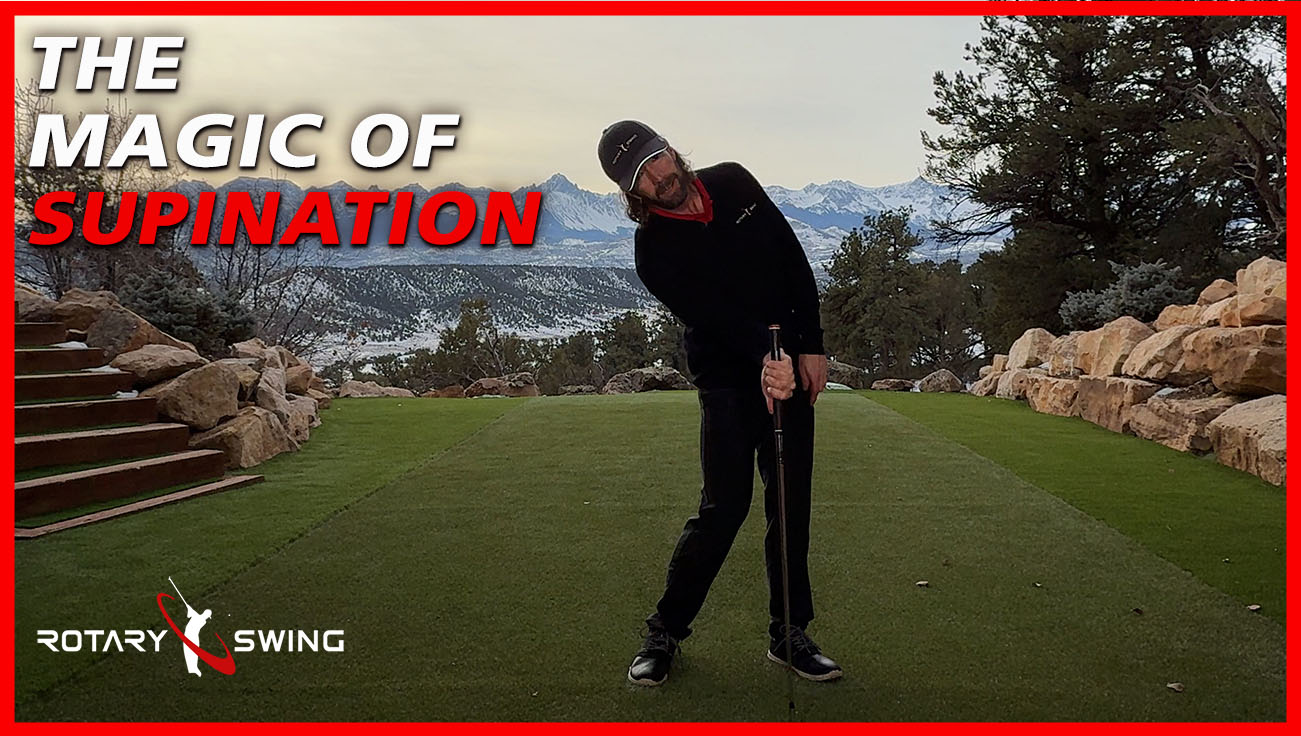
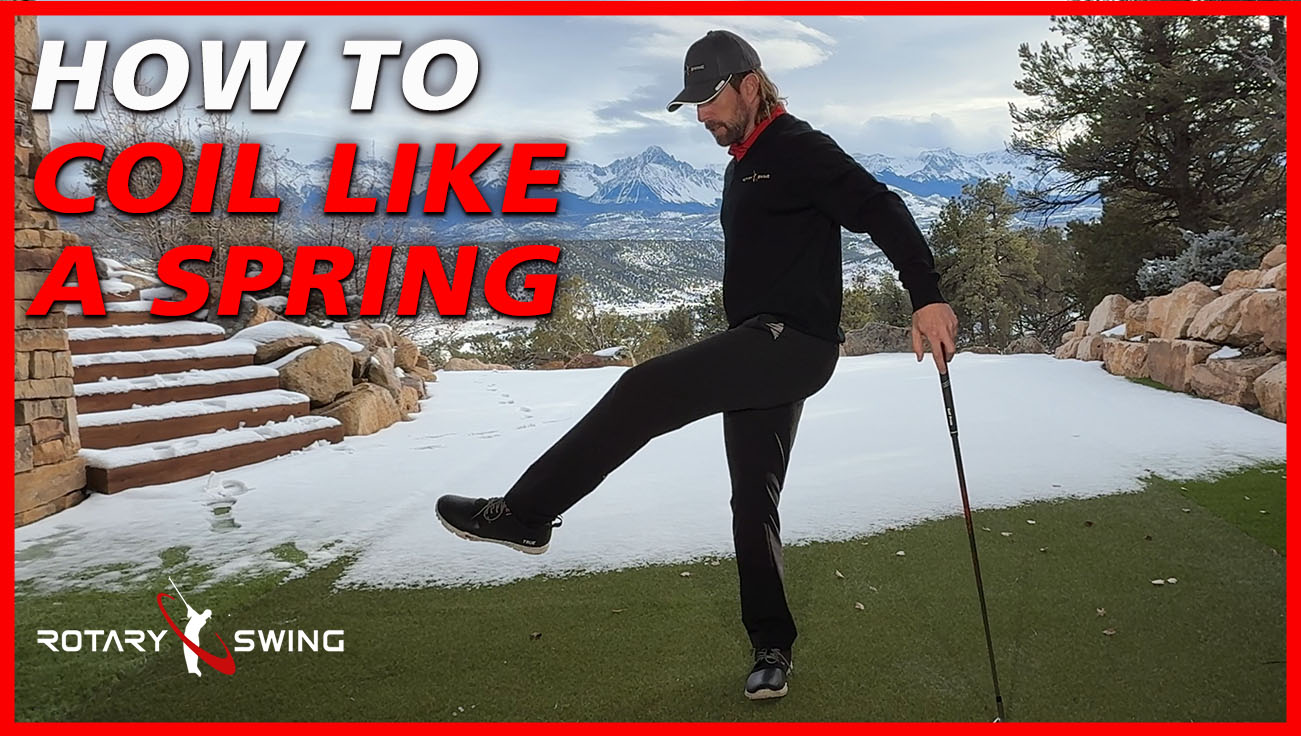
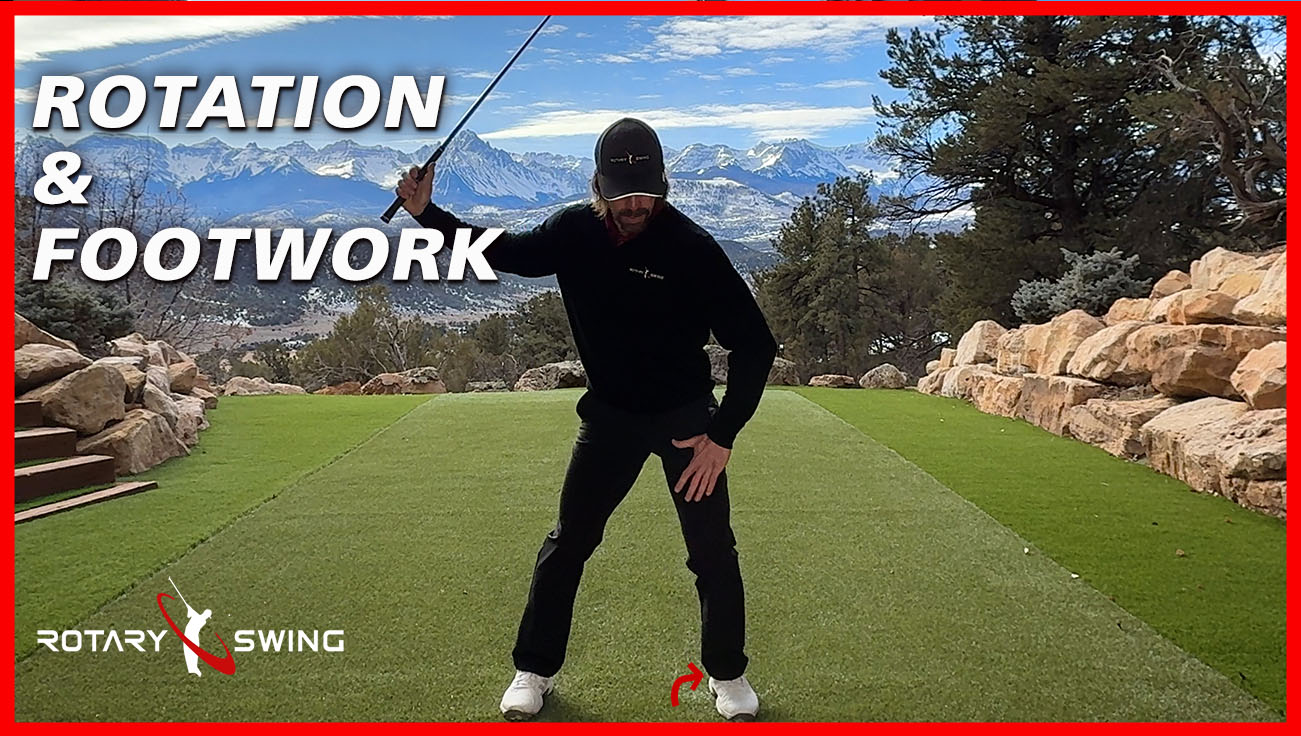
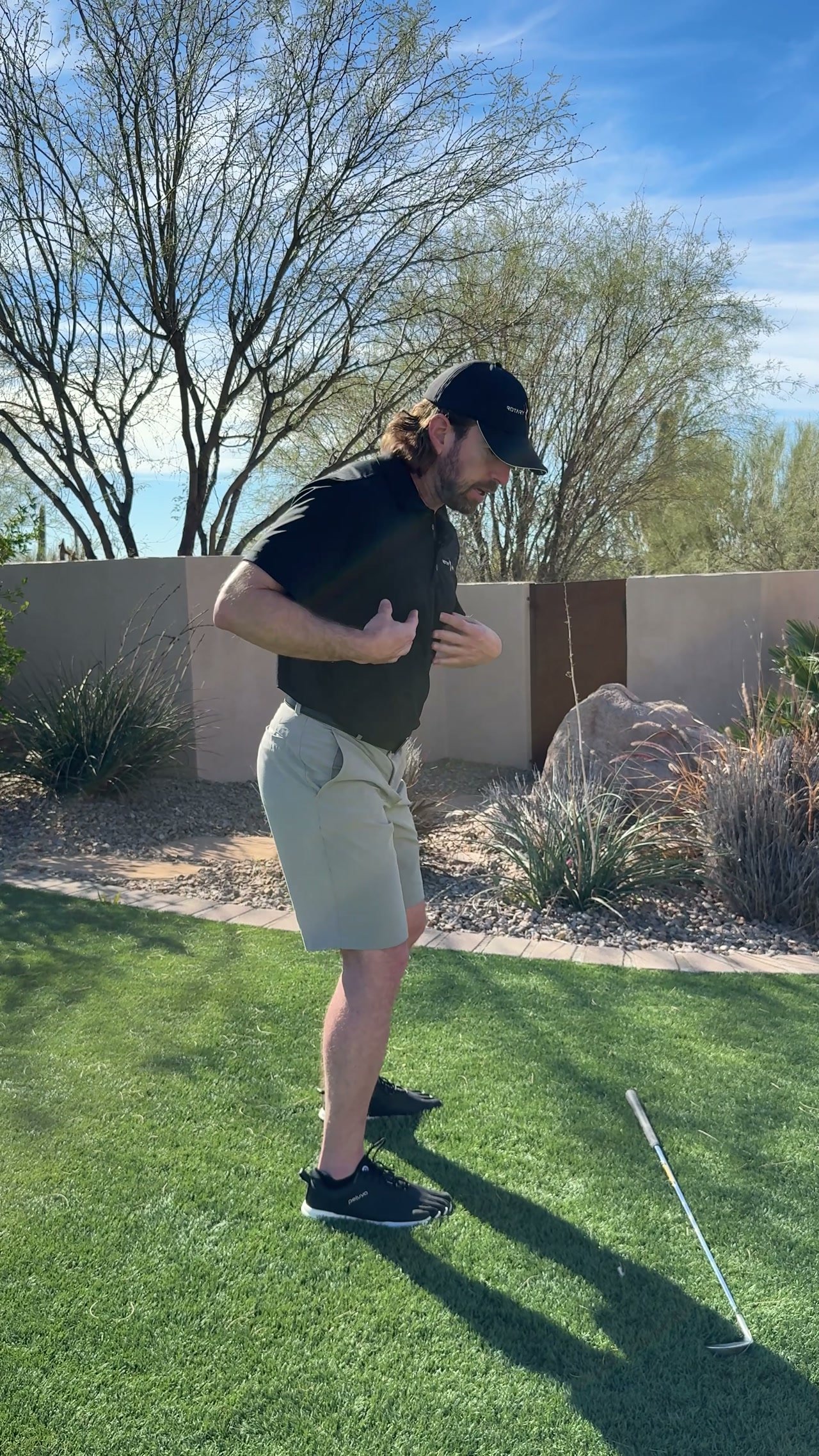
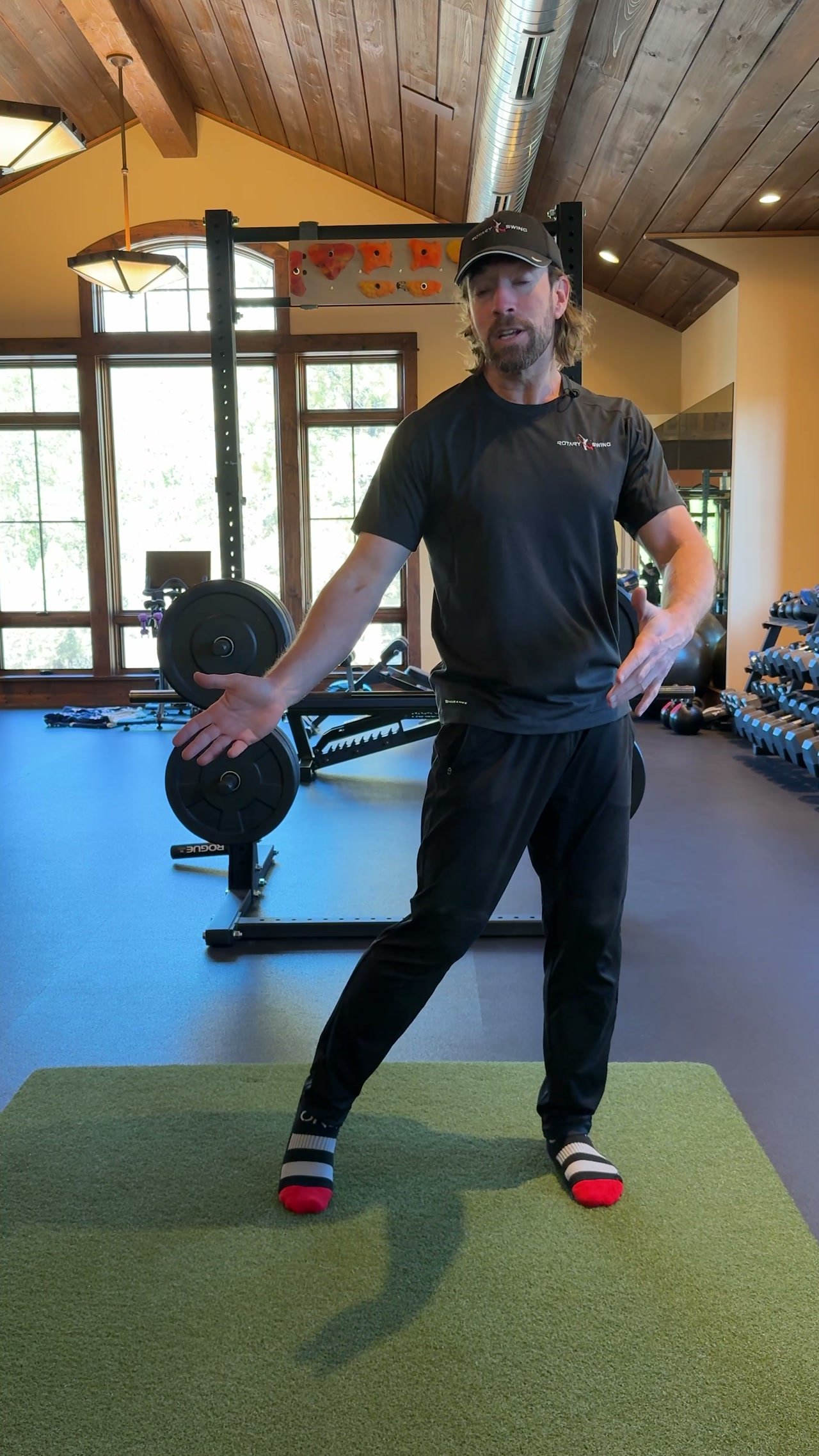
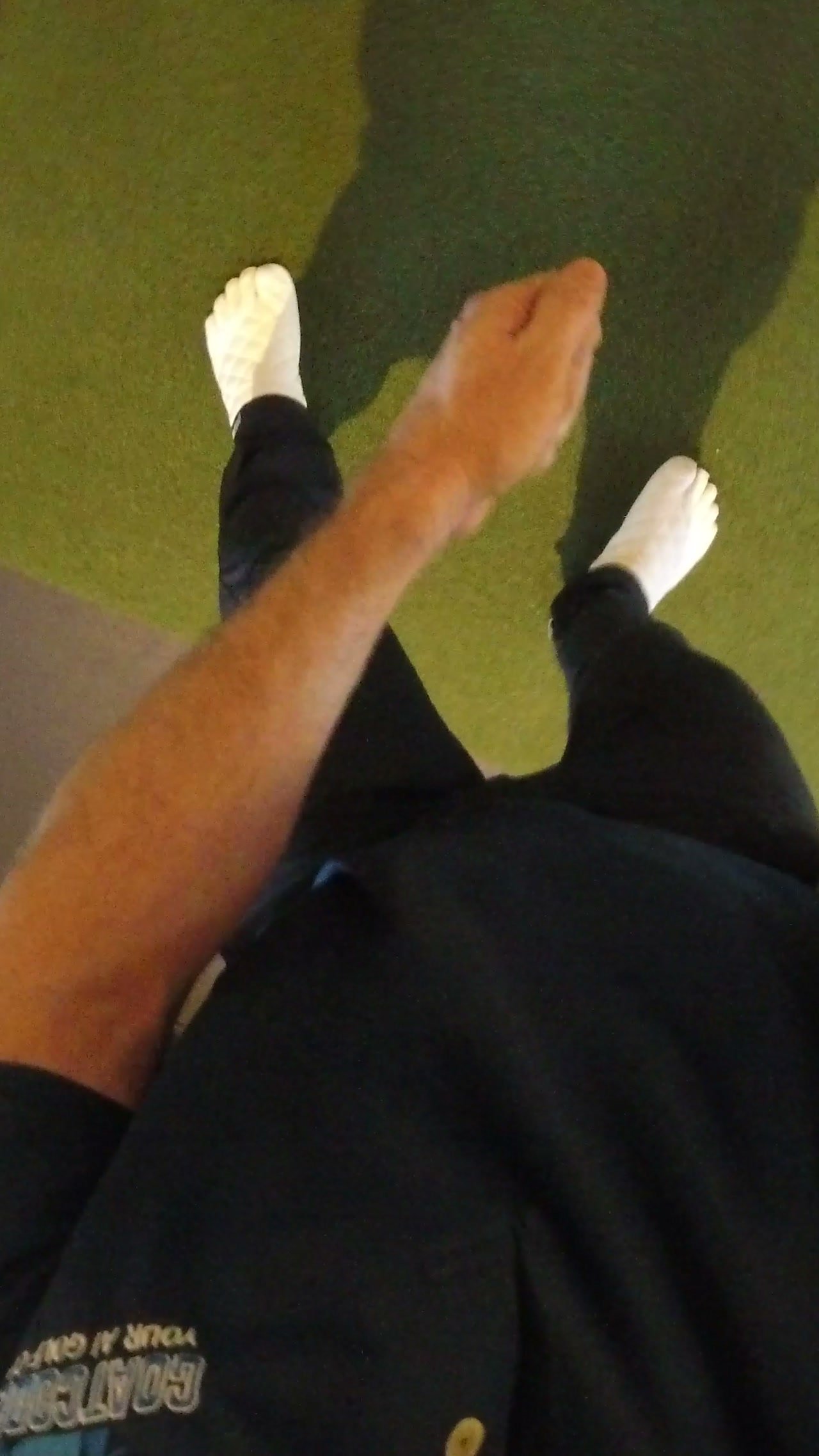
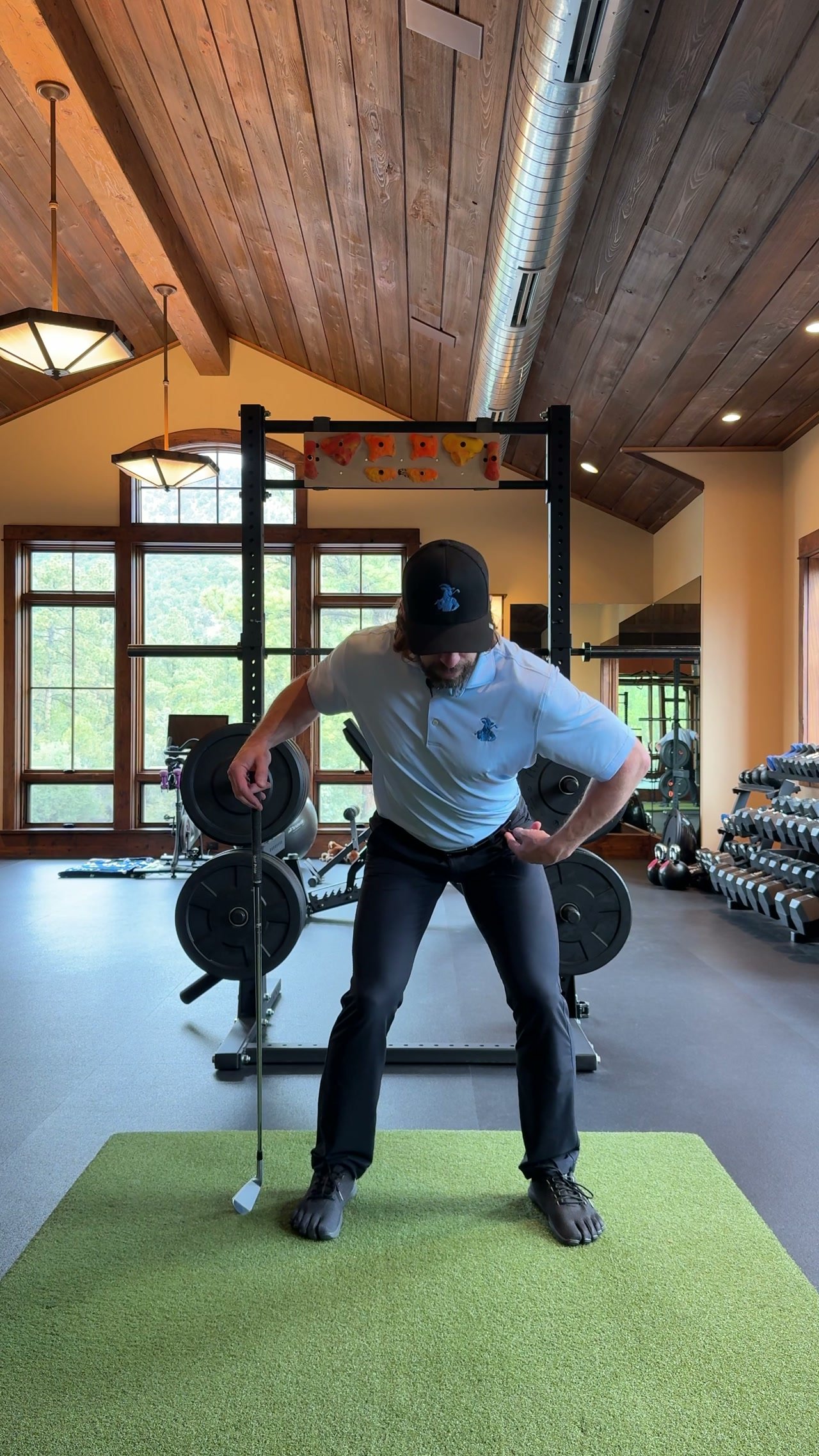
It is easy to experience this for yourself. Simply stand up and lift your trail foot off the ground.
You will see that you cannot really get into the Reverse C posture without that trail foot providing a base to push against.
It is not a position you would naturally try to assume using the lead side of your body alone.
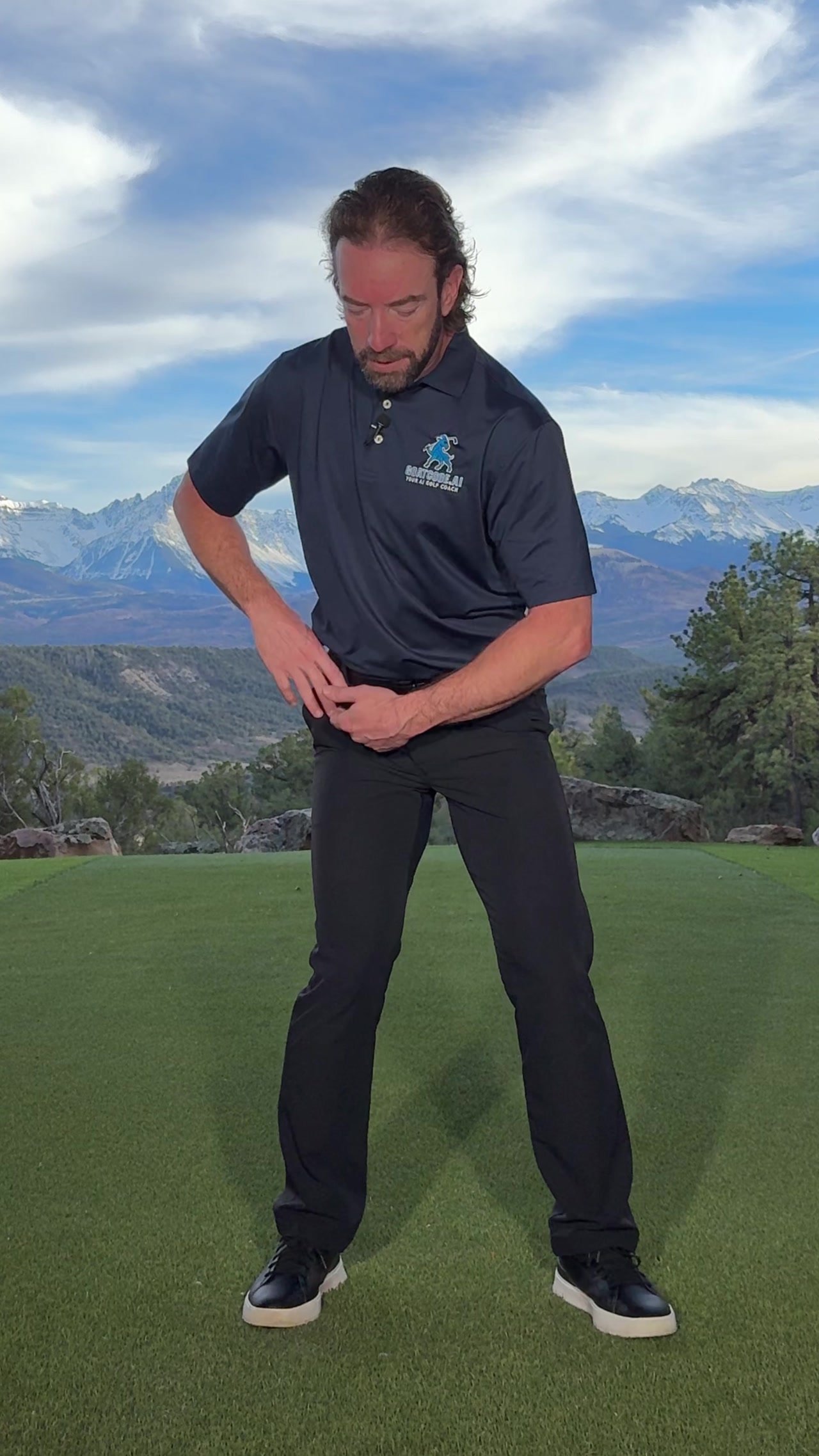
Instead, your body will want to stand more upright. As you find your balance, you will naturally settle in over the main pivot point, which is your lead hip.
Try a free live lesson with GOATY
GOATY, my AI golf coach, watches your swing through your phone camera and coaches every rep. Free, about 20 minutes, no credit card.
You will settle into neutral joint alignment.
Try It Yourself and Feel the Difference
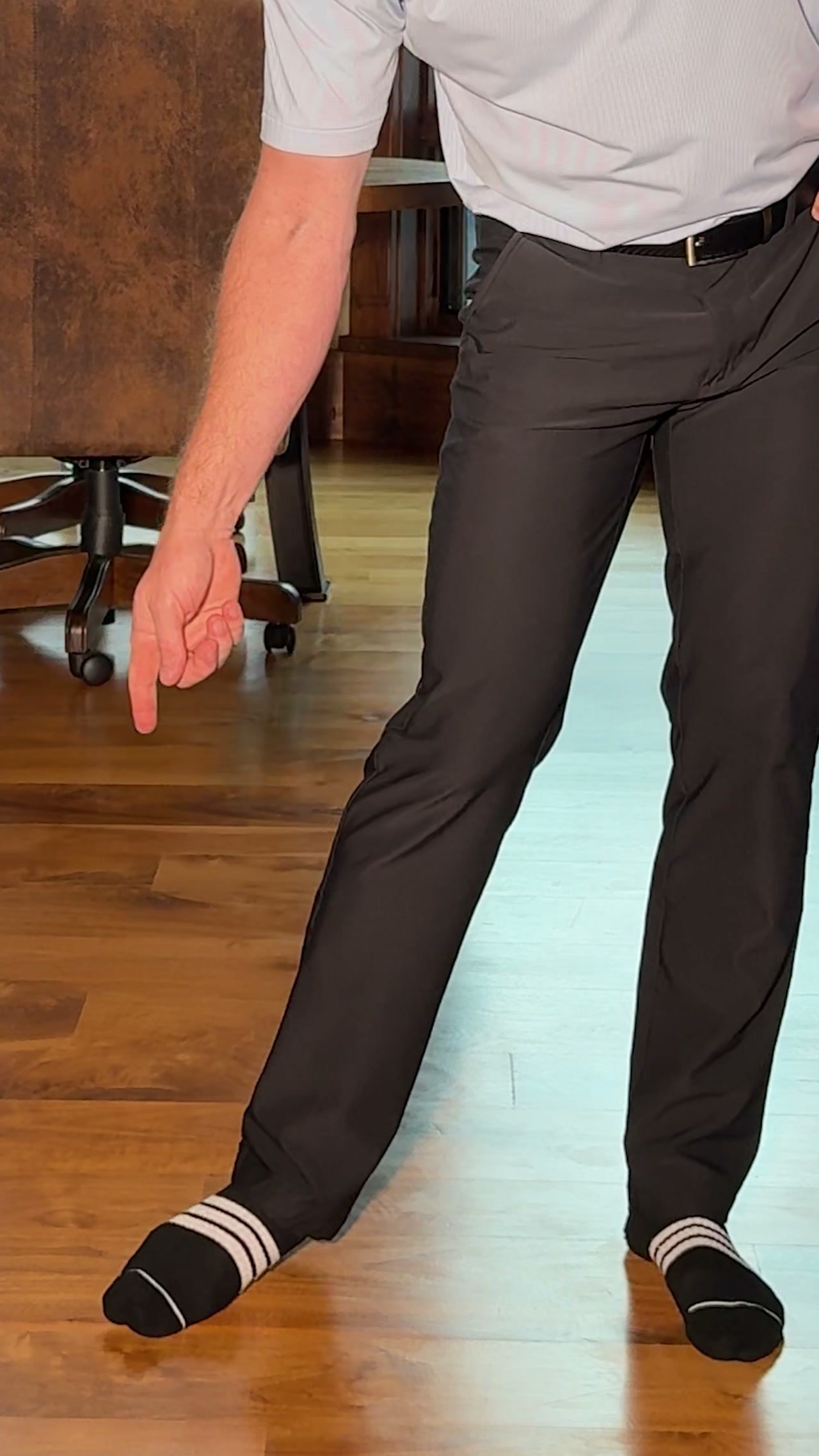
Neutral joint alignment is simply having the center of your hip socket lined up over the center of your ankle. Your joint is designed to pivot safely and efficiently in this position.

When you push off the right leg in golf the left hip is well beyond neutral
As you get yourself stacked over the lead side, you can feel that you are able to pivot very freely. But you will also be pivoting more upright, versus the Reverse C where the lead hip protrudes well beyond neutral.
If you put both feet down and get into the Reverse C, you will immediately feel the strain in your back.
You will have increased side bend, which is extremely hard on the spine.
Furthermore, this position does not give you much freedom to rotate your hip. You will feel strain on the outside of your leg, the outside of your hip socket, and throughout the surrounding musculature.
That is why you do not want to push off your trail leg in the golf swing — because it moves you outside of neutral, into a position that restricts rotation and puts unnecessary strain on many parts of your body. To see how your impact position and weight distribution compare to elite standards, try a free AI swing analysis.
Do This Instead
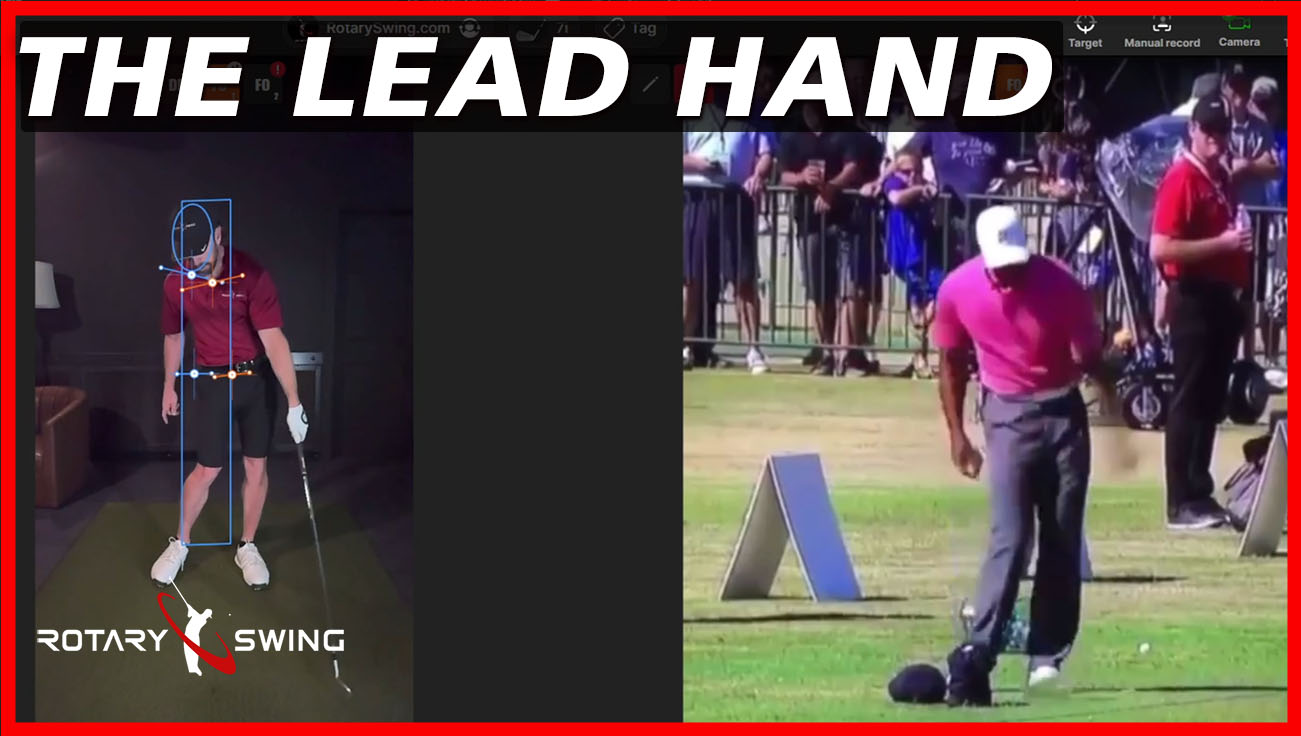
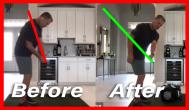
When you use the lead-side musculature to move yourself to the lead side, it naturally pulls you into neutral, where you can post up securely.

Pulling brings you into neutral
Pushing from the trail leg in the downswing offers no such safeguard, and can place you well beyond neutral.
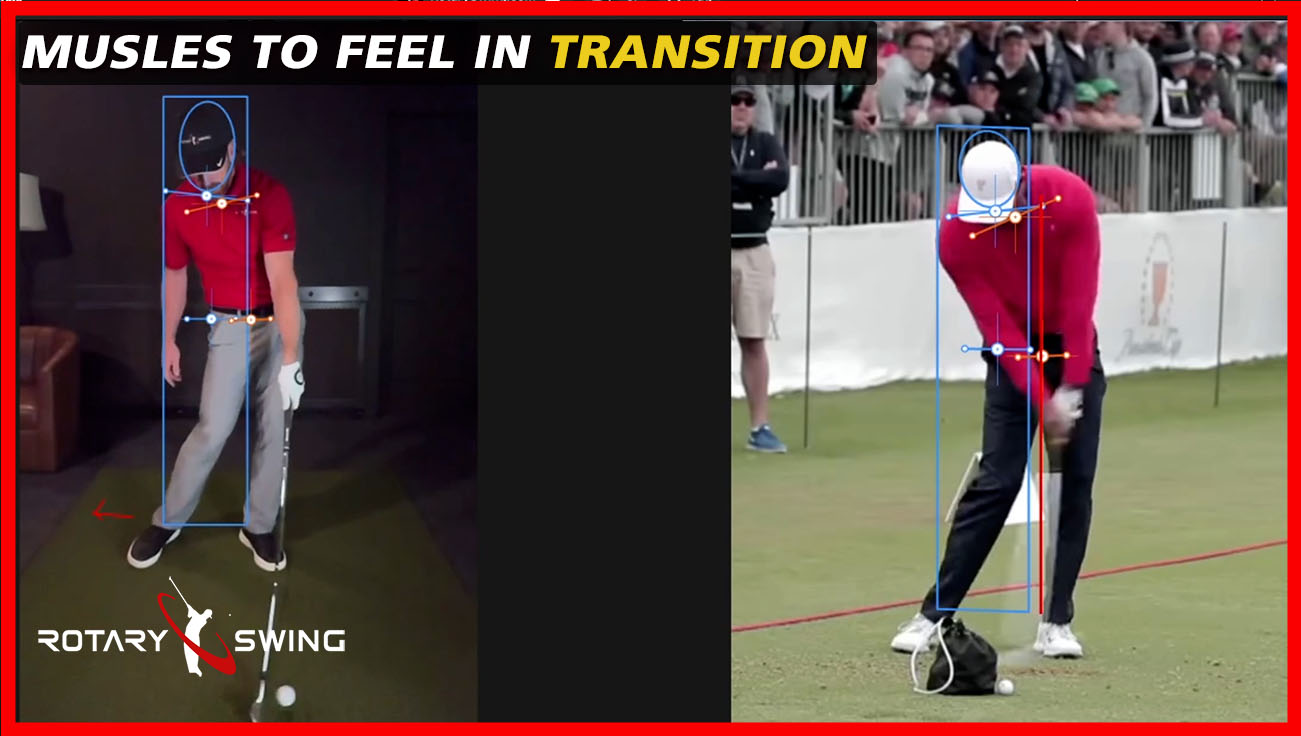
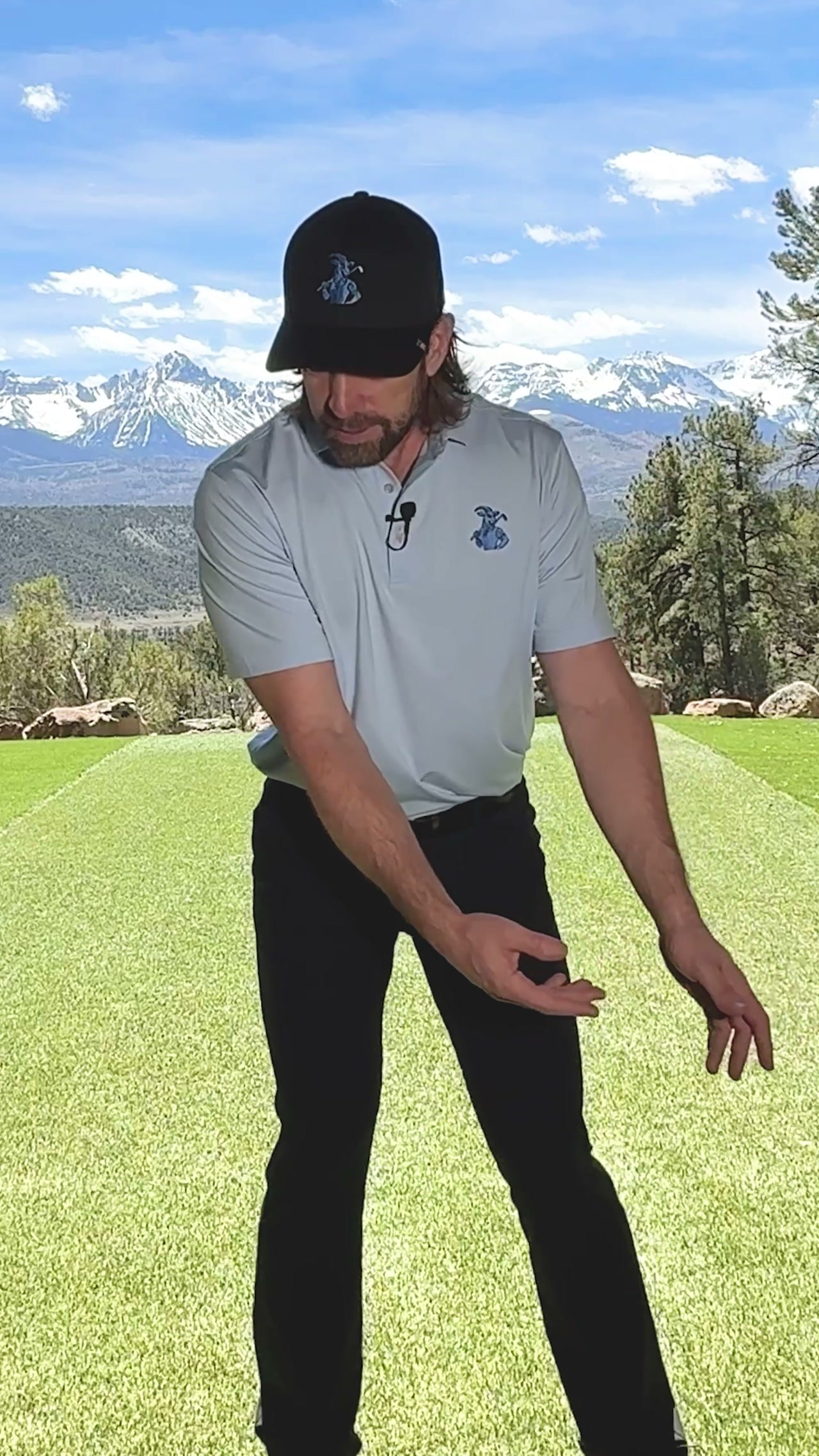
When you do the weight shift to the lead side in the downswing, you want to pull with the inside of your hip muscles (some of which attach down inside your thigh, so you will feel it there as well).
When you pull firmly and contract your glute and hip muscles, that movement actually places you right into neutral.
No matter how hard you contract your lead-side muscles, you will stay right in neutral, exactly where you need to be.
When used correctly, your muscles are designed to move your joints to their maximum functional ability, and no further.
If you did not have that built-in safety mechanism, every time you extended your arm or leg you would risk hyperextending and damaging the joint.
Your muscles are designed to allow you to use your body effectively while simultaneously protecting it.
The same principle applies to your hip. Your lead-side hip muscles are designed to move you right into neutral, and no further.
It is an excellent built-in safety mechanism that lets you get into the correct position, pivot freely, turn your hips as aggressively as you want, and never end up beyond neutral where you would damage your joints.
Then Why Load the Trail Glute in the Golf Swing?
If getting over too far is caused by pushing off the trail leg in the golf swing instead of pulling from the lead side, that brings us back to the original question: Why engage the trail glute and get loaded up on the trail side in the backswing if we are not going to push off the trail foot?
Think of your golf swing in terms of two halves and two sides.
Your body has an upper and a lower half, and a lead and trail side, with the sternum or spine forming the center line.

Not much
Each half, and each side, has a distinct role in the golf swing. Your upper half is designed to provide rotation.
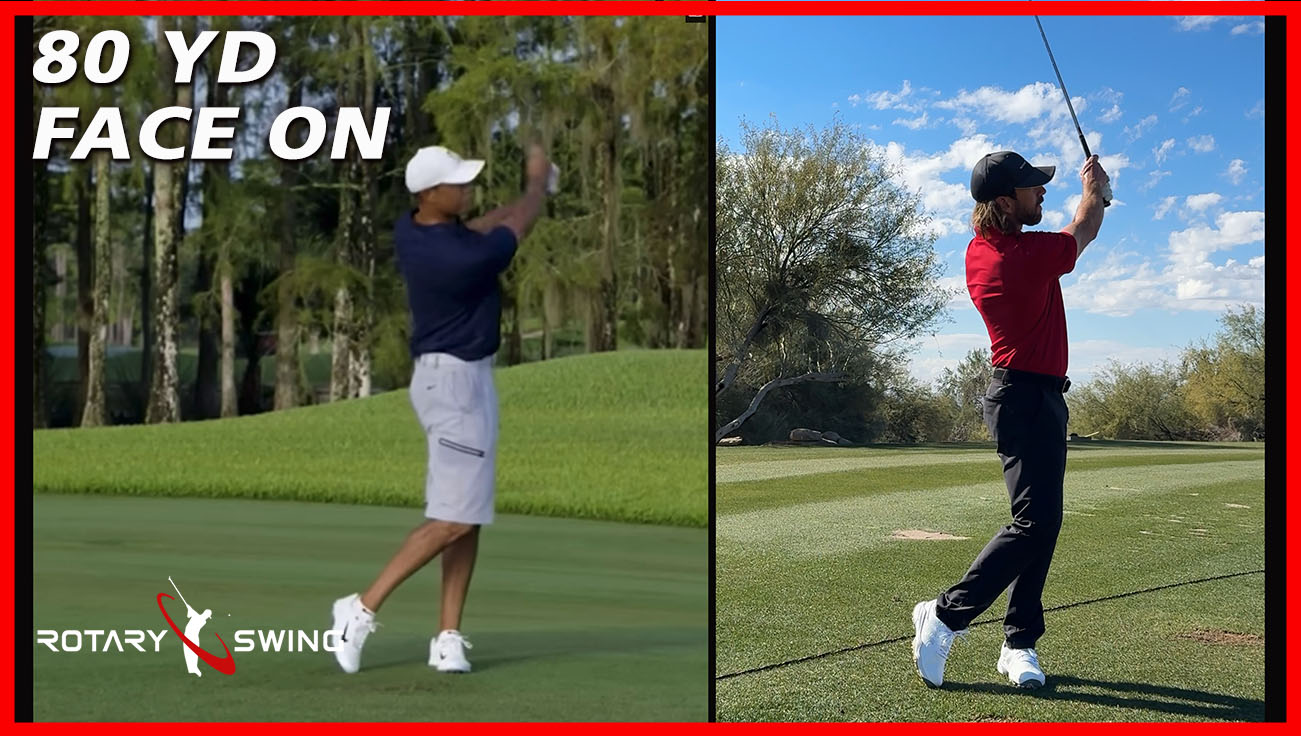
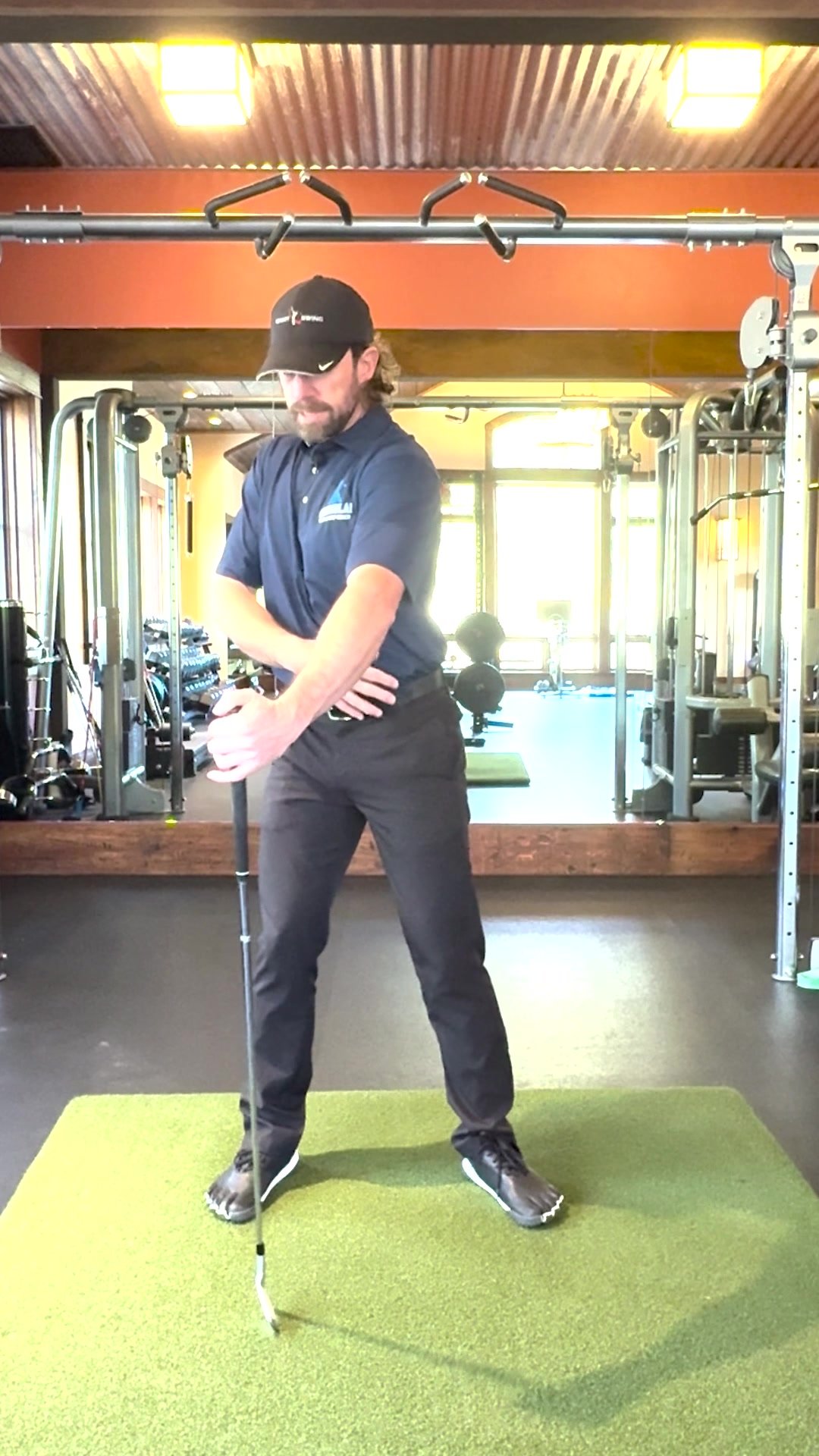
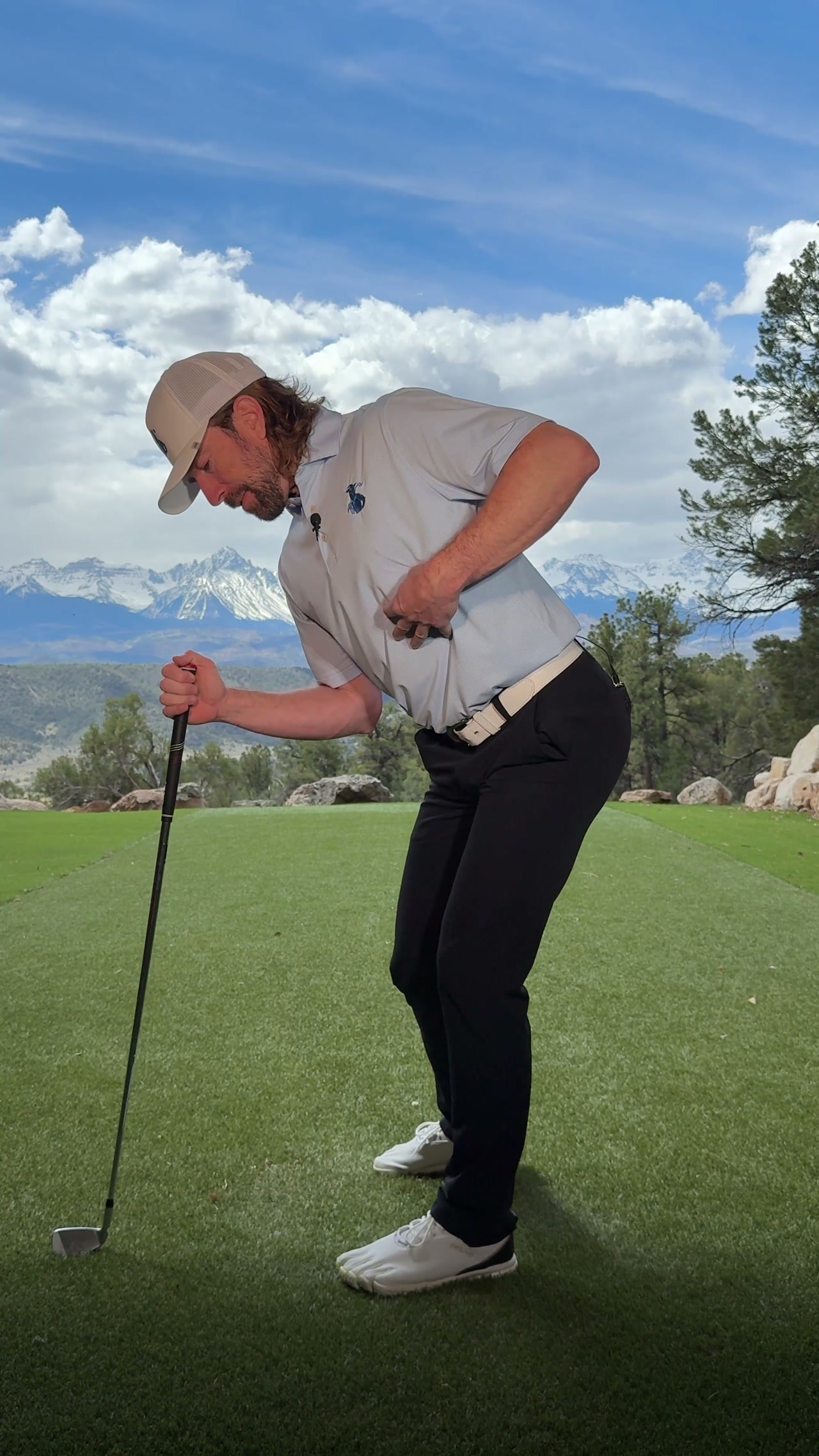
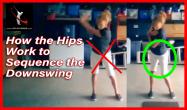
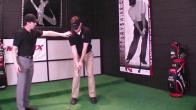
Notice in the photo that the golfer's hips are turning slightly, but the majority of the rotation is provided by the upper torso.
Do not think of your lower body as providing rotation directly. Its job is to support the upper body's rotation.
Your upper body makes a massive turn; your hips do not turn nearly as much.
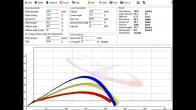
If you have been on the forums, you have probably seen some of the hip research we have conducted with TaylorMade Performance Labs.
Tour professionals do not turn their hips much at all. The hips are providing stability and getting everything prepared to reverse direction on the downswing.

Secondary , hip slide, etc.
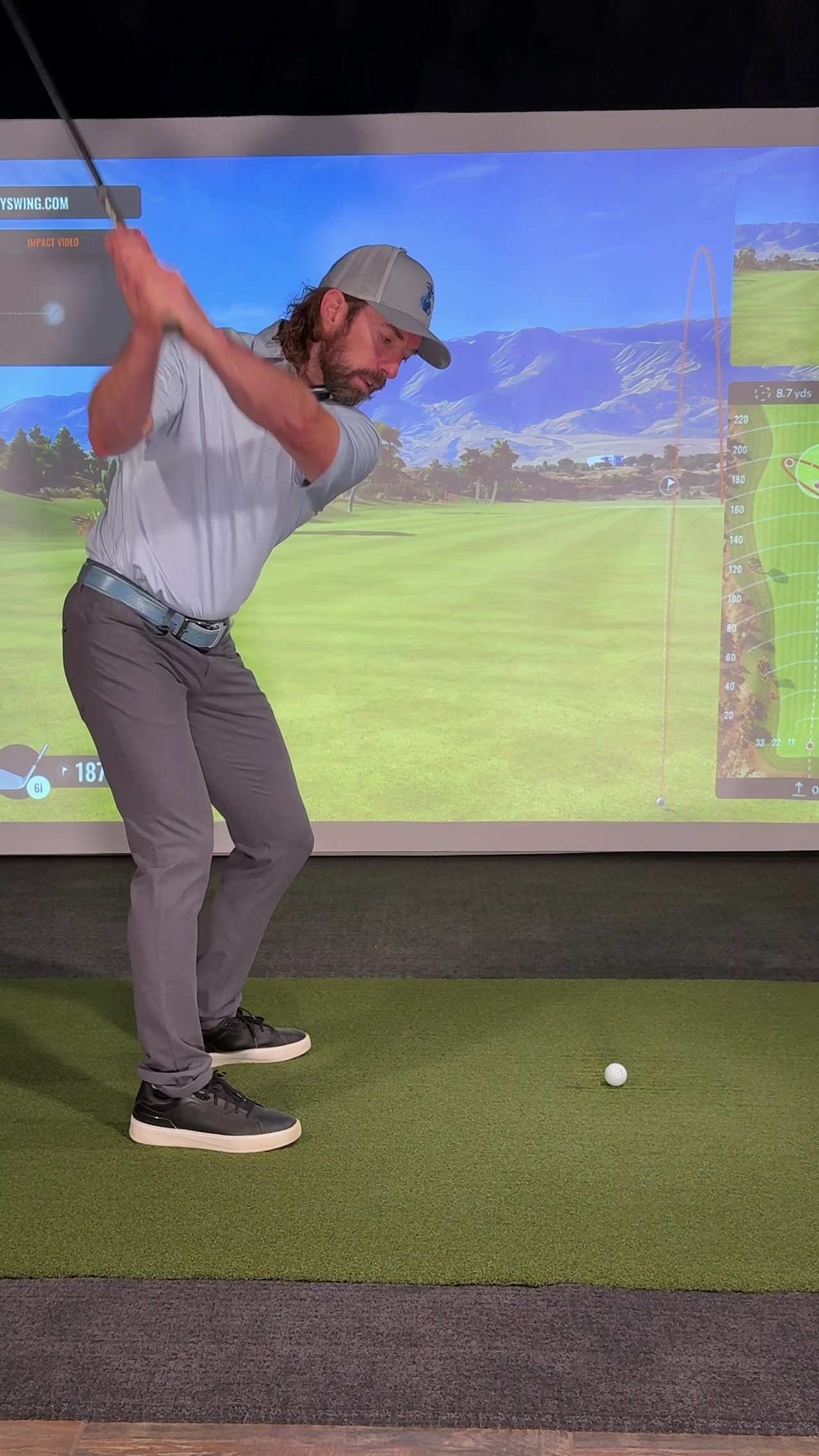
Loading into the trail glute during the backswing allows you to make a powerful turn while supporting the fast, aggressive rotation you will be demanding of your upper body.
The lower body supports that movement — that is its primary function.
You are not loading the trail leg in the golf swing to lunge off of it, but to provide stability and support.
At full speed, the backswing happens quickly — you have a lot of dynamic forces occurring simultaneously.
Loading into that trail glute stabilizes the swing and prevents it from becoming sloppy.
Do not think of it as loading up so you can feel all this power shoving off the trail side. That would cause excessive secondary axis tilt, hip slide, and potential hip damage.
Recognize that the trail glute is there to provide stability and support for a powerful turn, and you will start to understand why we load it in the backswing. For real-time coaching on your loading and mechanics, try a free AI golf lesson.
Watch part 2 now to see how you're moving your body in the opposite direction of the pros!