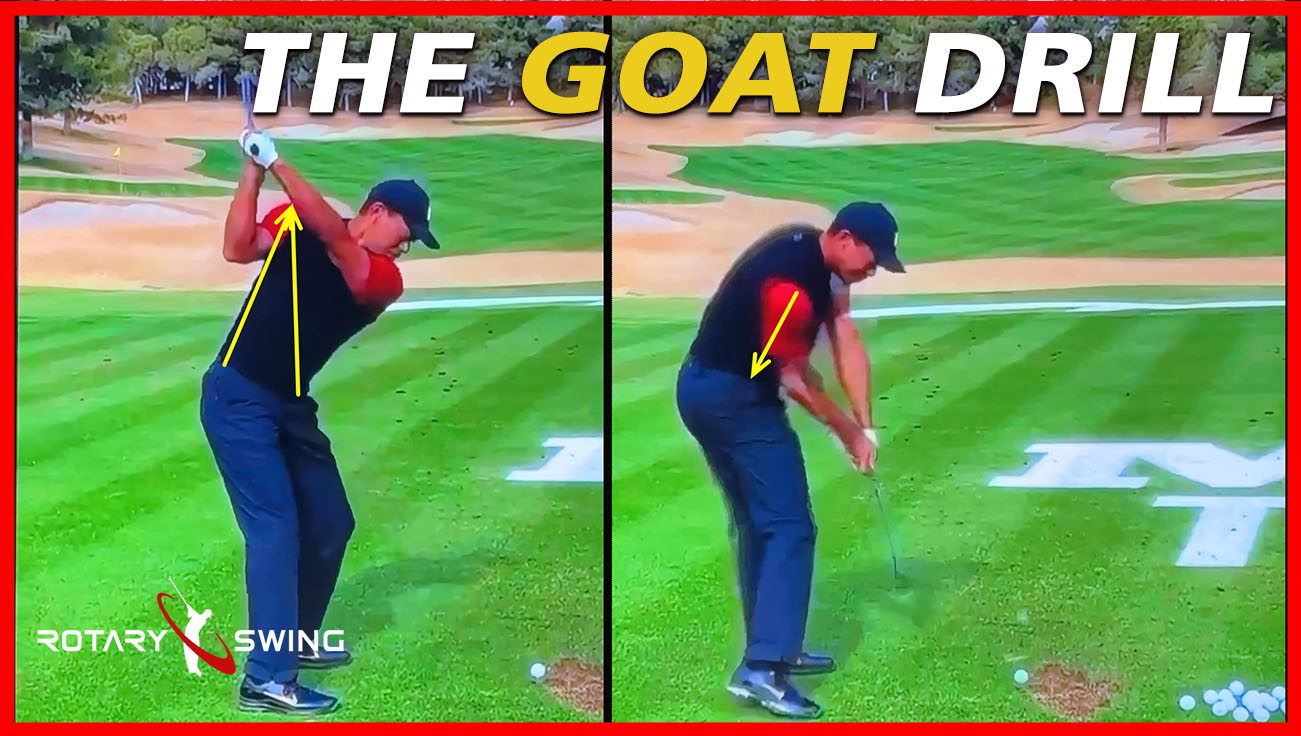
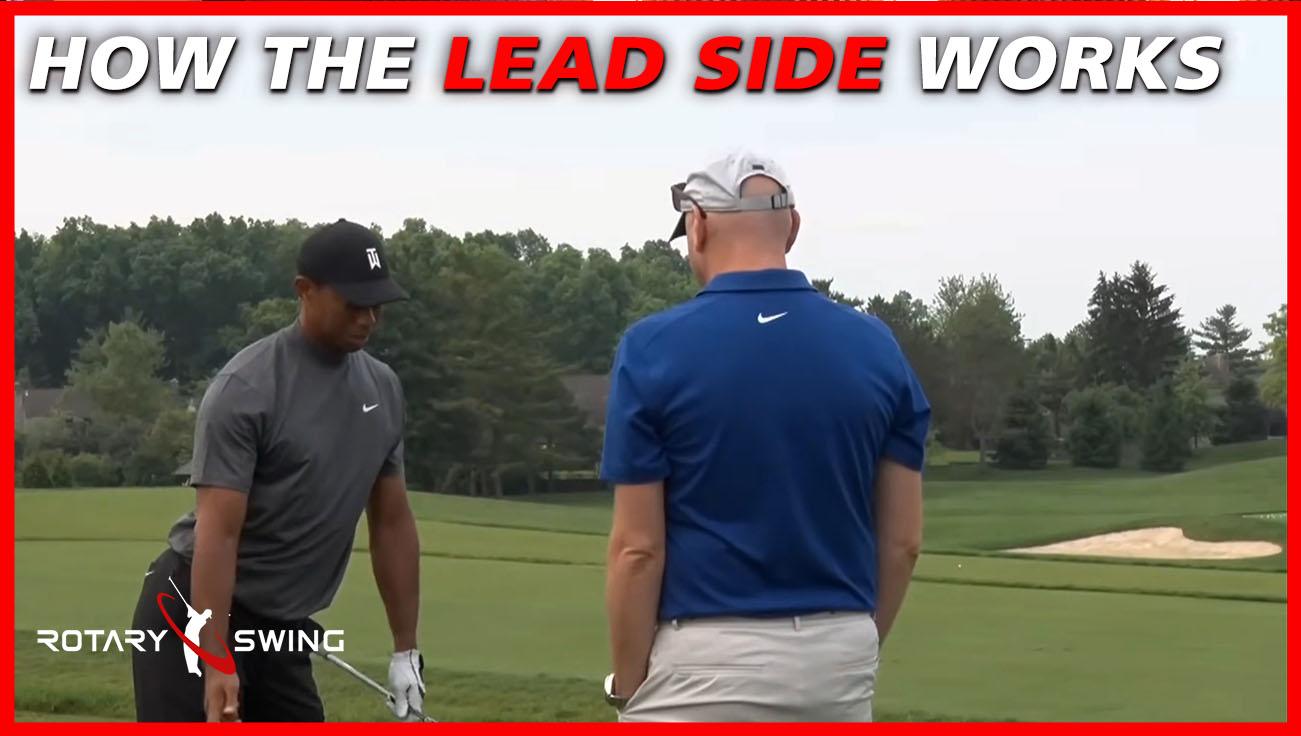
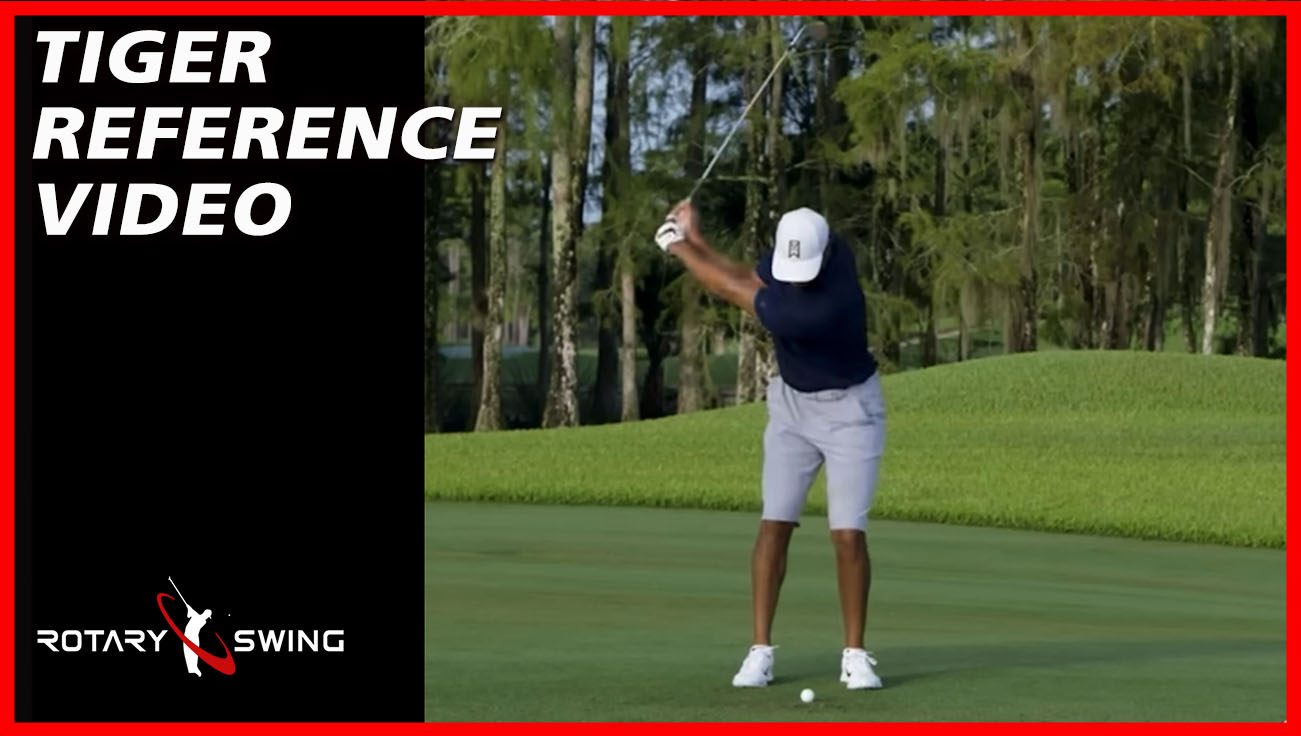
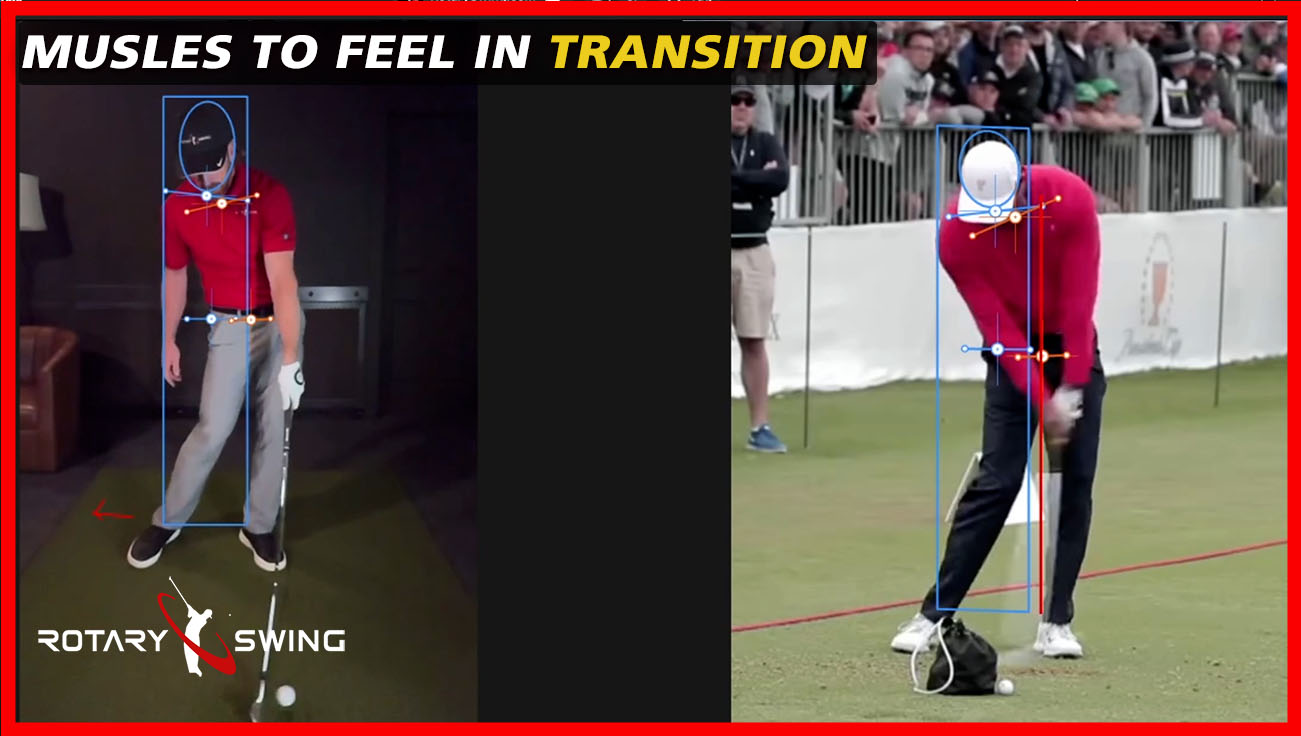
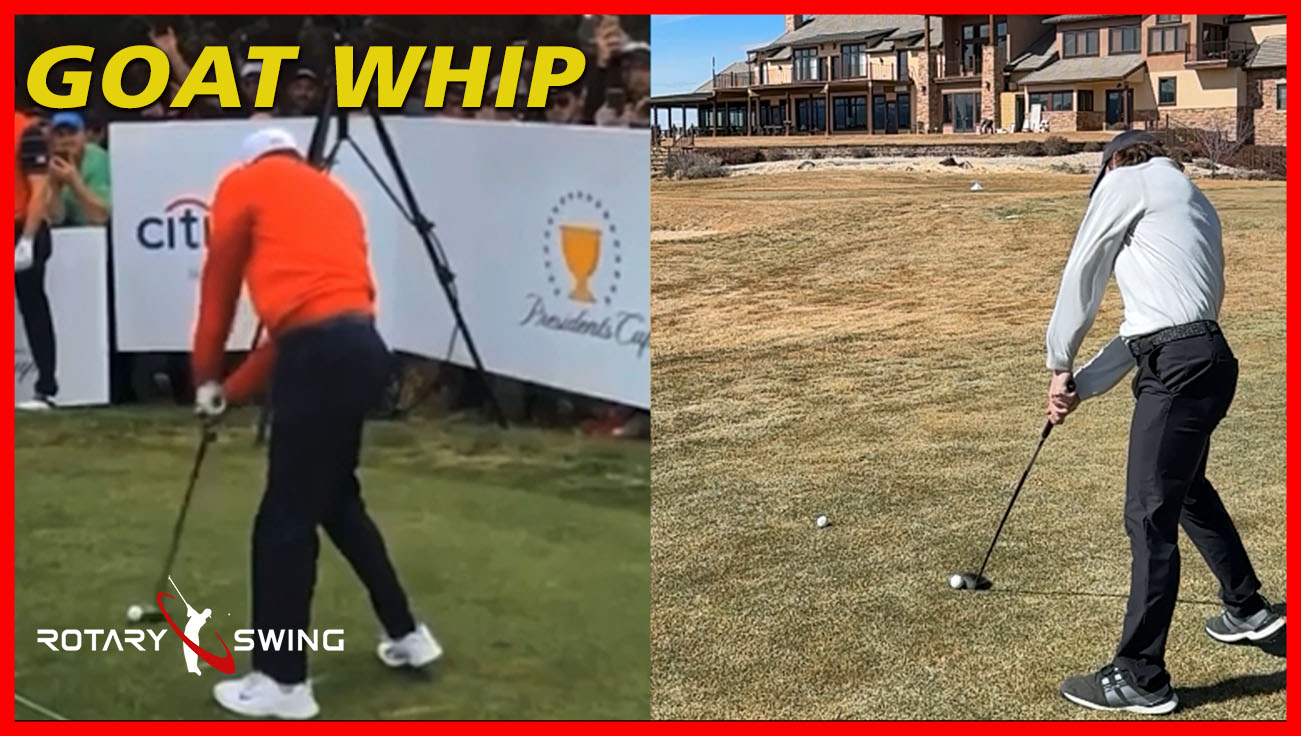
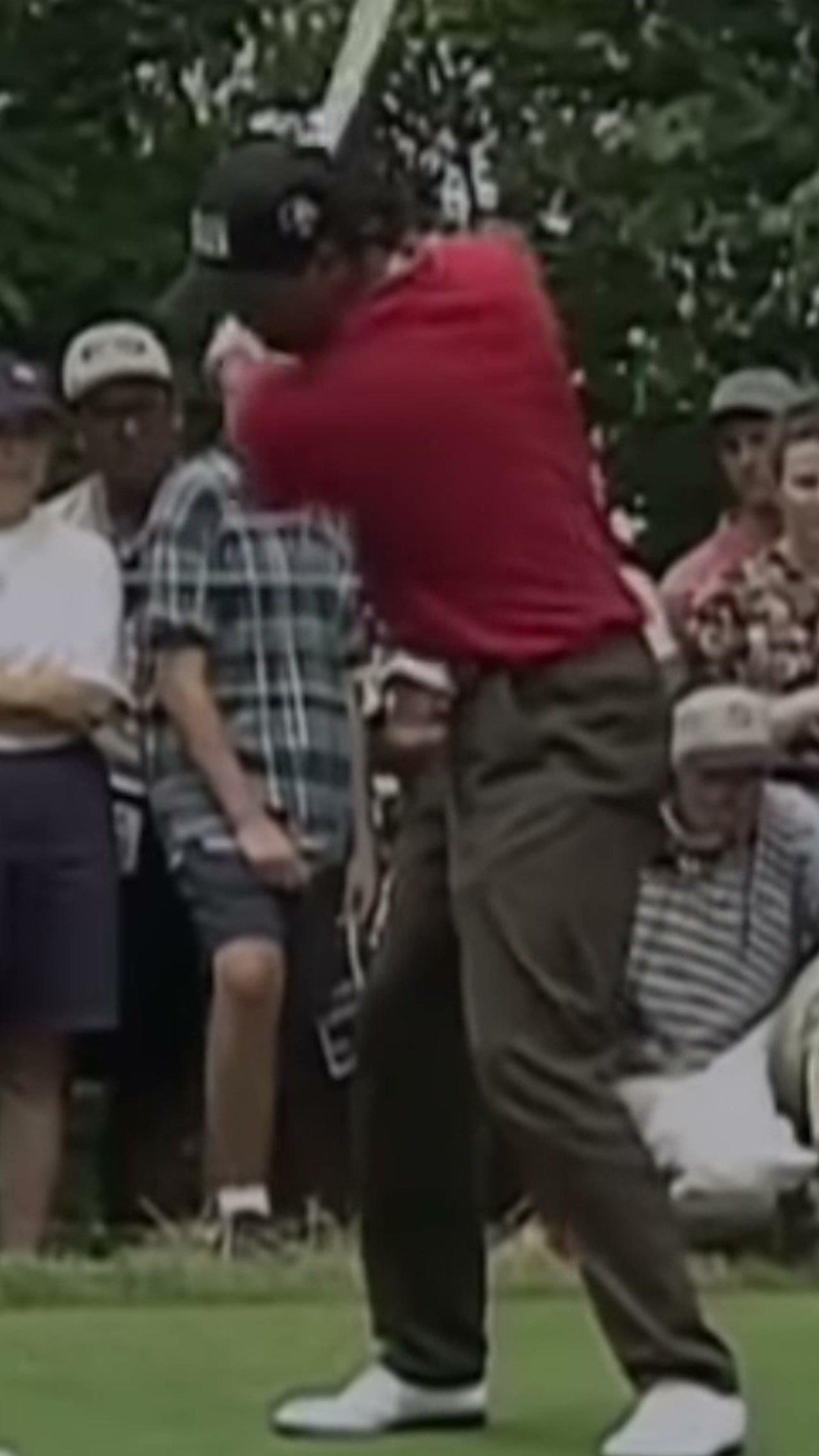
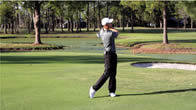
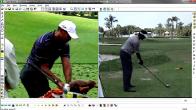
Most instructors and golfers consider ' setup position to be the gold standard for athleticism and balance at address. For what is essentially a static position, Tiger consistently looks like he simply can't miss when he settles in over the ball.
But that's not the focus of this analysis. The real question many of you want answered is whether Tiger sets up as a one plane or two plane swinger, right? The answer is that he sets up "athletically."
Is this the fault costing you strokes?
Film one swing on your phone. In about a minute GOATY measures it and names the single biggest thing costing you strokes — free, no card.
Analyze My Swing Free
Related: Golf swing lag — why AI coaching fixes it faster →
Android users: Download GOATY on Google Play — free AI golf coaching on your Android phone. →
That's the term I use when teaching any golfer — regardless of whether they're working on a one plane, two plane, or any variation. The golfer needs to be poised, relaxed, and balanced at address, and Tiger exemplifies all three qualities perfectly.
Stop reading about it — feel it in your swing today
GOATY watches your swing live and coaches you between every rep. Free. No signup.
Start Your FREE Live Lesson →Spine Angle
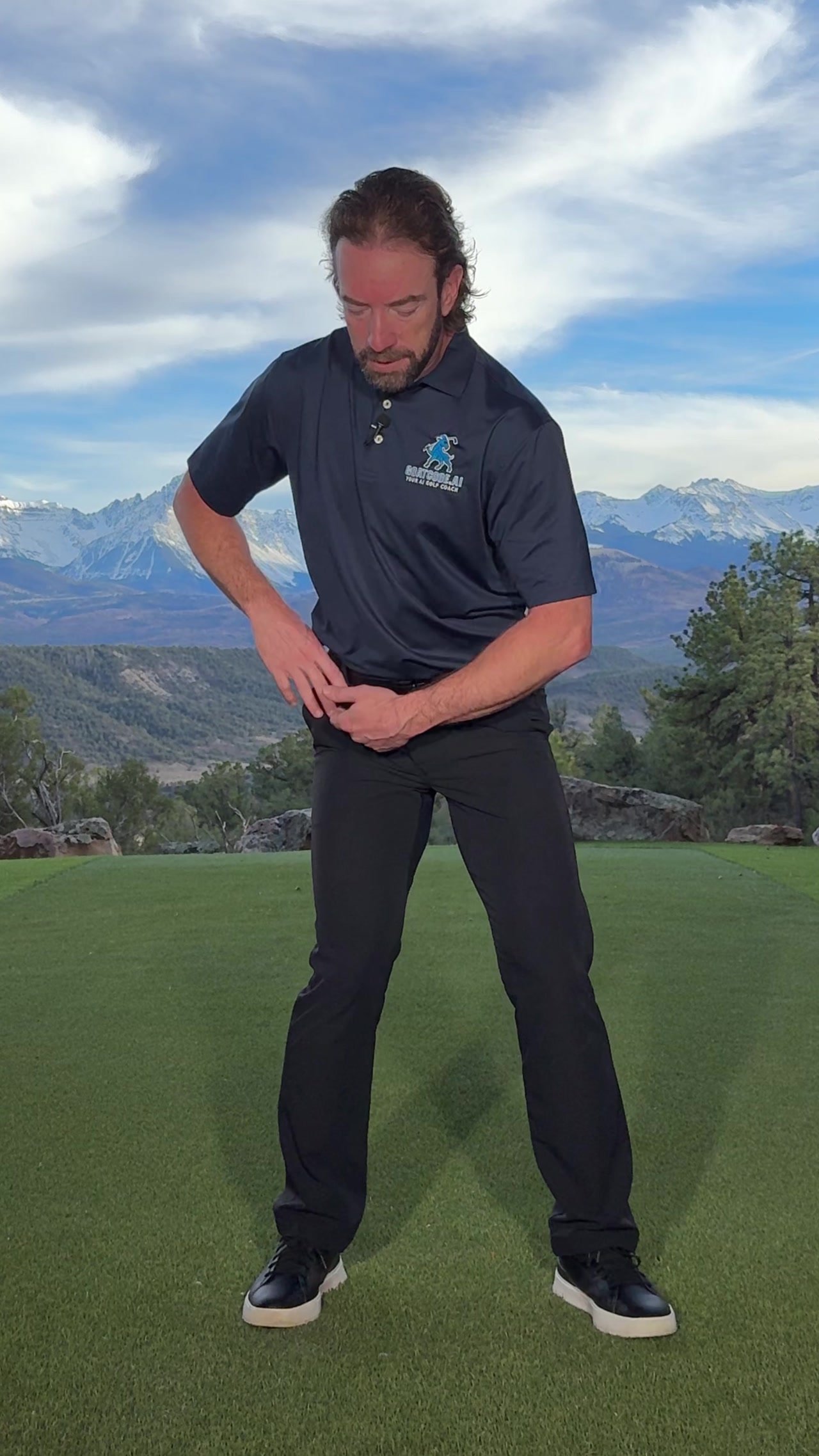
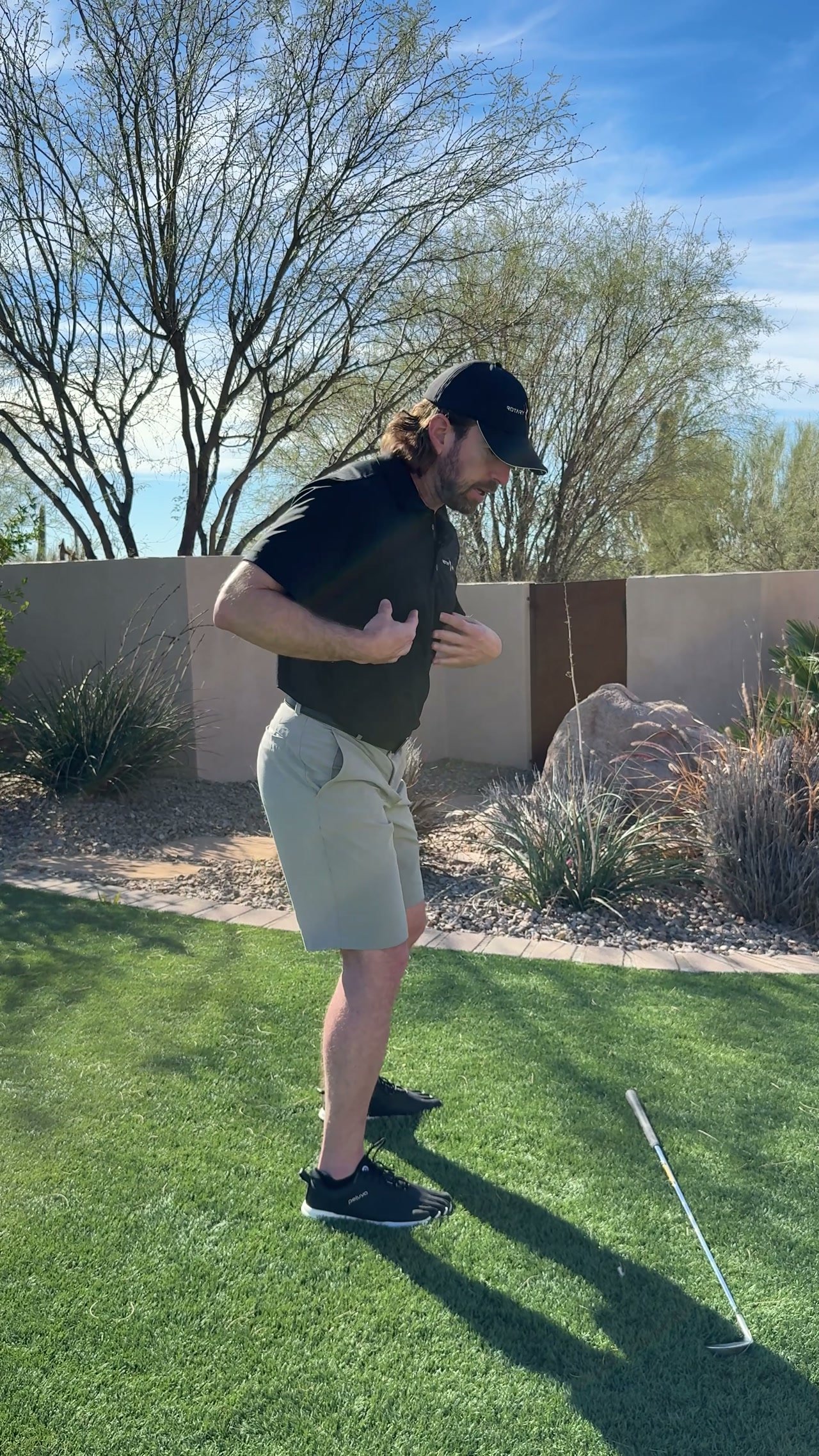
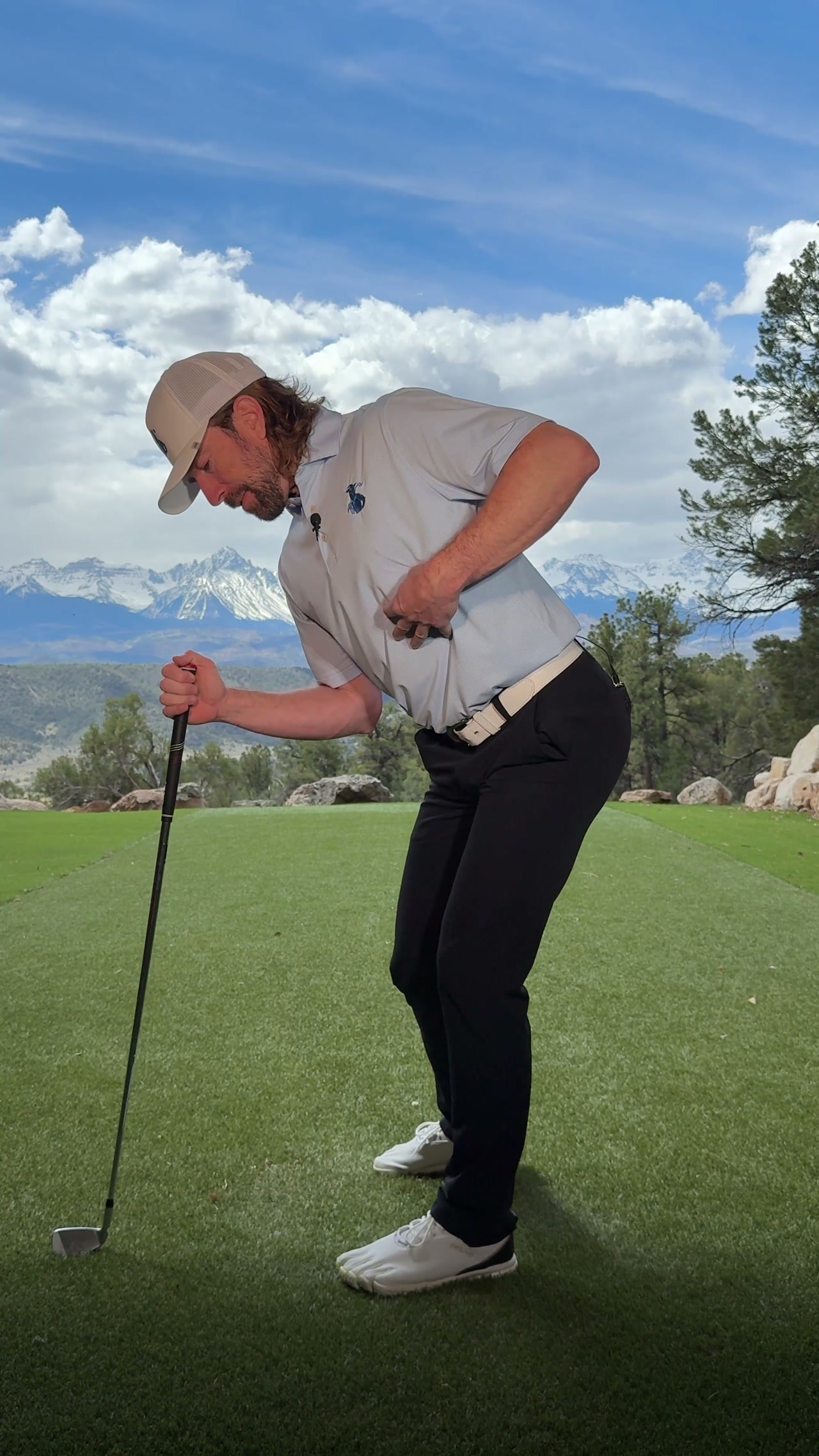
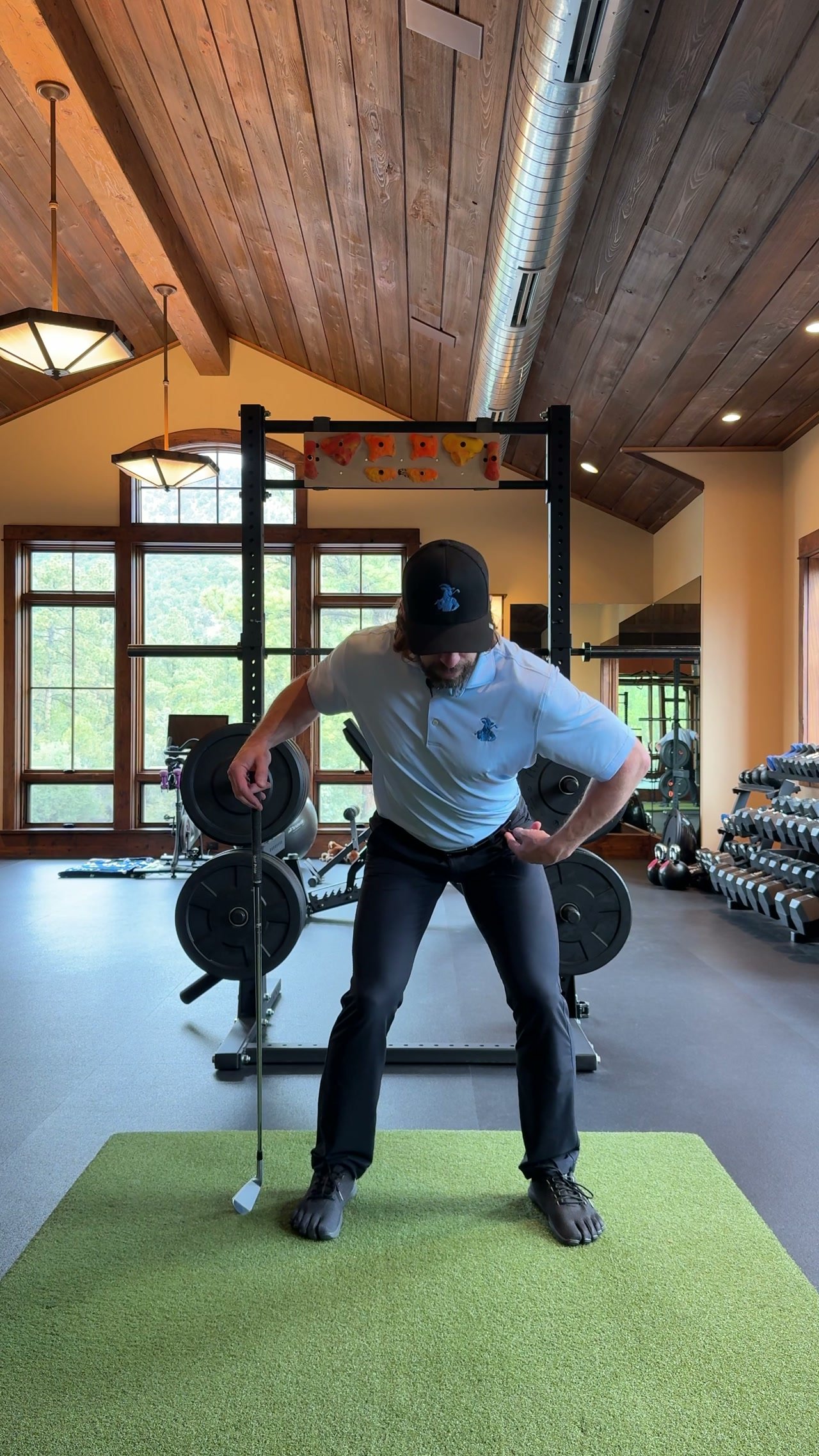
One of the defining distinctions in Jim Hardy's one plane and two plane theories is the amount of spinal tilt toward the ball at address. Hardy recommends 35-45 degrees of forward bend to position the shoulders within his "48-inch zone" at the top of the swing.
While the degree of forward bend is a significant component of Hardy's framework, Tiger doesn't do anything extreme at address. He settles into a spine angle of approximately 38 degrees — not too much, not too little, just right. This positions him comfortably within Hardy's guidelines for a one plane swing setup.
From the face-on perspective, Tiger again presents a model golf setup. The ball is positioned just inside his left shoulder — approximately where the logo on his shirt sits. His head is also behind the ball, with the left side of his head lining up with the back of the ball.
Try a free live lesson with GOATY
GOATY, my AI golf coach, watches your swing through your phone camera and coaches every rep. Free, about 20 minutes, no credit card.
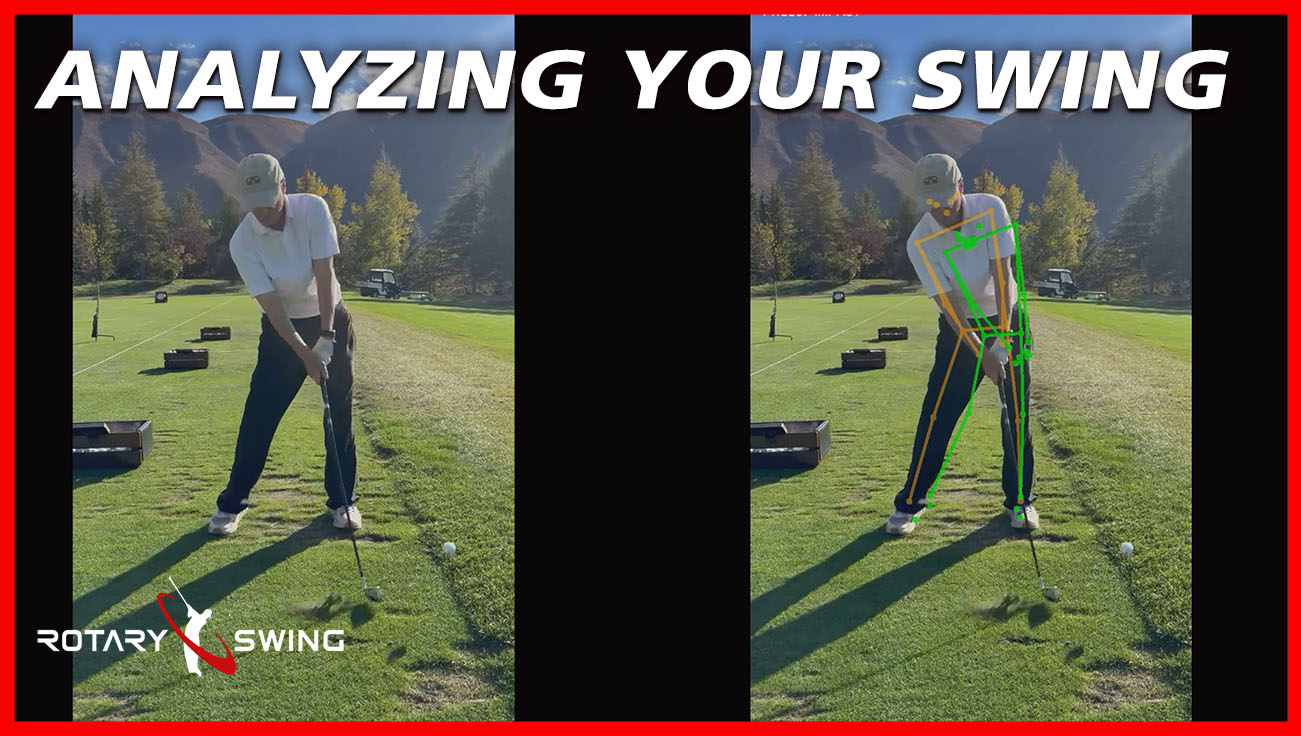
Most amateurs do the exact opposite: head positioned well ahead of the ball with the ball too far back in the stance. Tiger's setup is remarkably neutral — nothing extreme in any direction, which is precisely how it should be. You shouldn't be bent over excessively for your height and build, nor should you stand too tall or crowd the ball. If you're unsure about your own setup, a free AI swing analysis can show you exactly how your address position compares to an elite model.
The Arms
Tiger's arms hang naturally from his shoulders with this mid-iron — not directly below the shoulders, but with a very slight "reach" toward the ball. This subtle extension encourages a flatter and minimizes wrist cock at address, which also tends to shallow out the overall swing path.
Under his previous coaching, Tiger used to take the club very much to the outside with an early wrist cock to keep the club in front of his body. These setup changes serve as a deliberate counterbalance to those earlier tendencies.
The reduced angle between the club shaft and arms at address also makes it easier for Tiger to aggressively rotate the clubface open during the takeaway — but we're getting ahead of ourselves here, so let's stay focused on the setup.
The Body
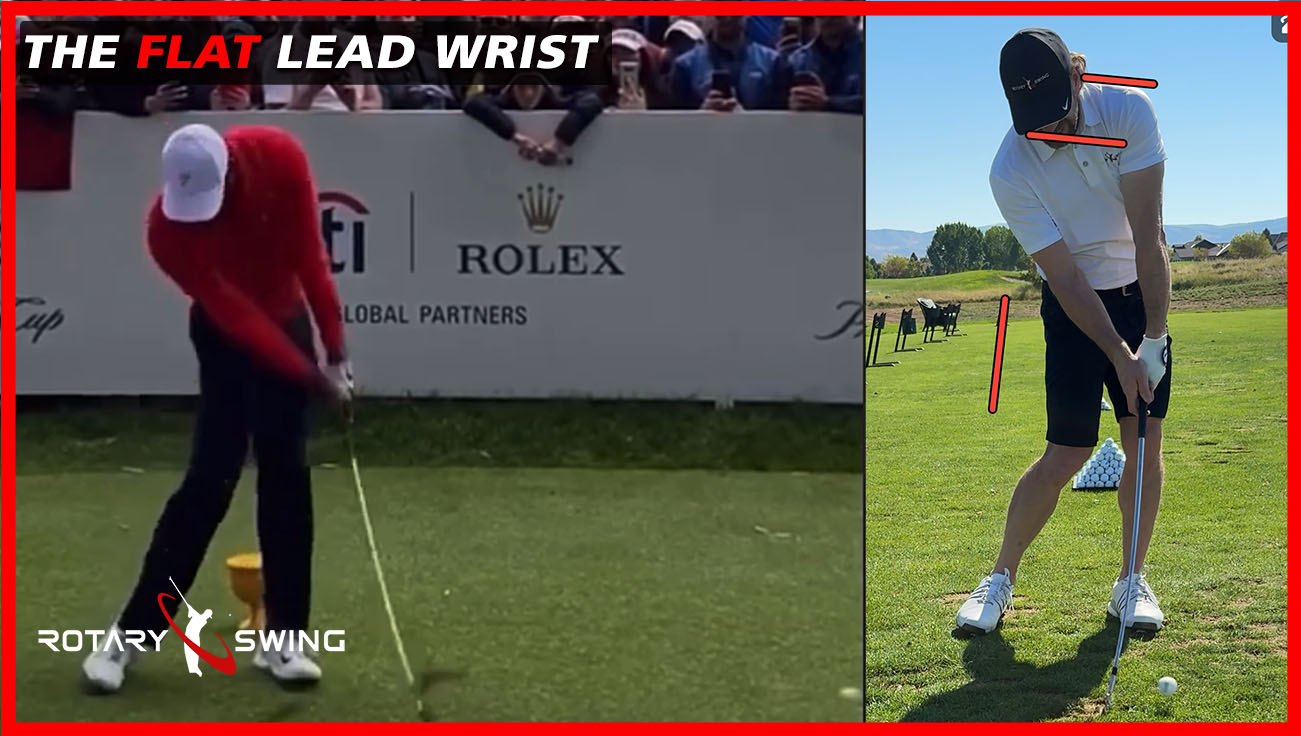
Square, square, and more square. Tiger has always aligned his feet, knees, hips, and shoulders square to the target at address, and that fundamental hasn't changed. The one subtle detail that the observant eye might notice is the position of his right forearm — it actually rests slightly higher than the left at address.
For many years, instructors taught that the right elbow should be bent and positioned from underneath to place the right hand on the club — which would make the left forearm visible from the down-the-line view. Unfortunately, this encourages an path and a swing plane that's too flat, which later promotes hitting too far from the inside.
Much of this teaching philosophy likely developed from attempts to help high handicap golfers stop slicing — but it's fundamentally flawed advice. Hogan set up with the high right forearm, Tiger does, and so do I. It's a subtlety, but it's a far more natural and biomechanically sound position to adopt at address.
Another noteworthy element of Tiger's setup is his spinal tilt away from the target at address — or more accurately, the lack of it. Tiger sets up with his spine more vertical than dramatically tilted away from the target, which also aligns with a one plane setup position.
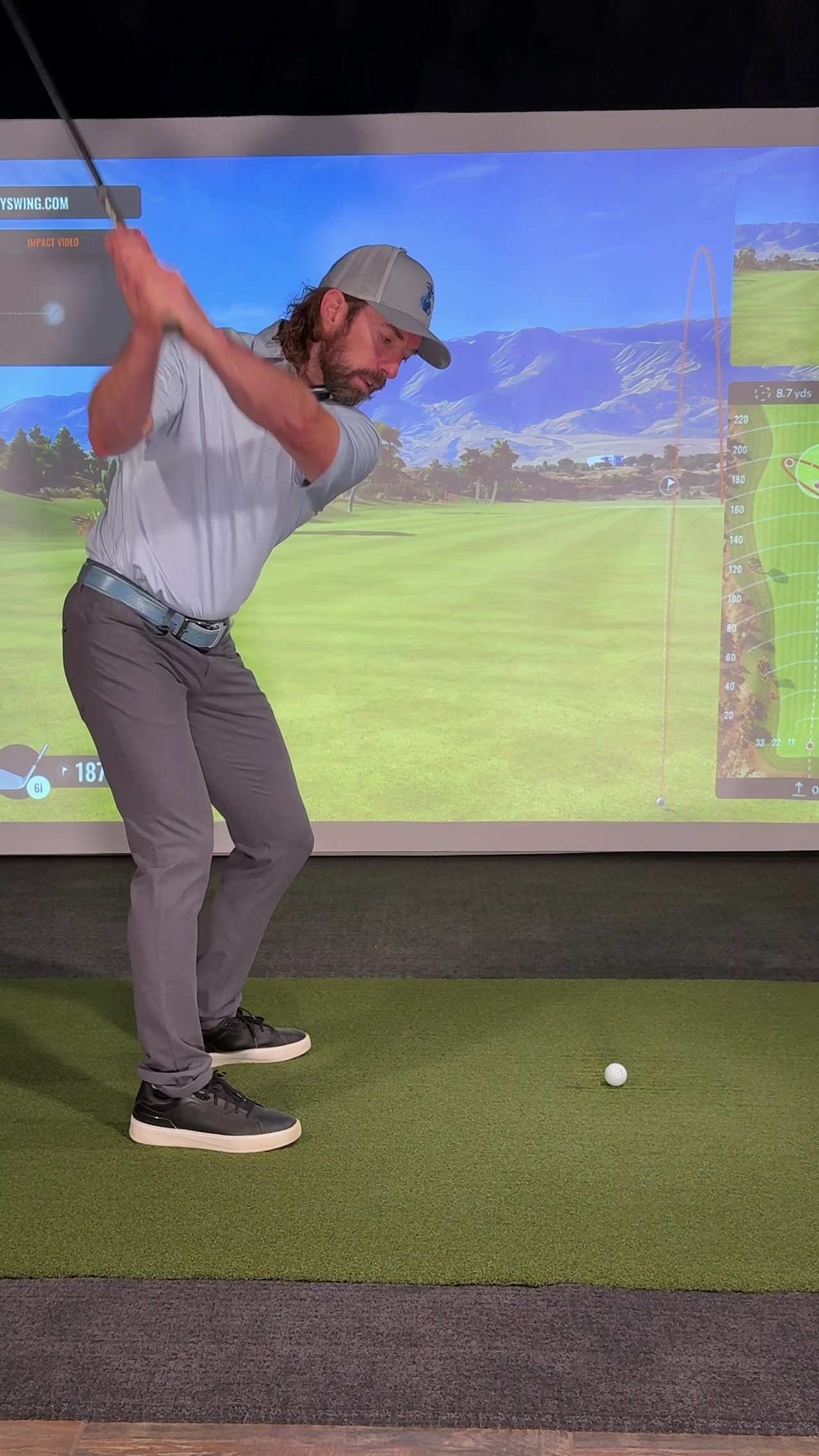
The final detail worth examining is Tiger's weight distribution at address. It's approximately 50/50 or slightly favoring the lead side, spread evenly across his feet. His hips extend quite a bit further behind his heels than many tour professionals, but combined with his steeper spine angle, this positions his weight nicely through center — exactly the kind of balanced athletic setup that the Rotary Swing teaches. You can practice building this same balanced foundation with a free AI golf lesson that gives you real-time feedback on your posture and balance.
How to Set Up Like the GOAT Model at Address
Build the exact address position that elite ball strikers use to set up a powerful, consistent, and repeatable golf swing.
-
1
Position Your Feet Correctly
Stand with your feet shoulder-width apart measured from the insides of your heels. Your trail foot should be roughly square to the target line. Your lead foot should be flared open 20 to 30 degrees toward the target - this allows full hip rotation through impact without restriction.
-
2
Build Correct Spine Angle
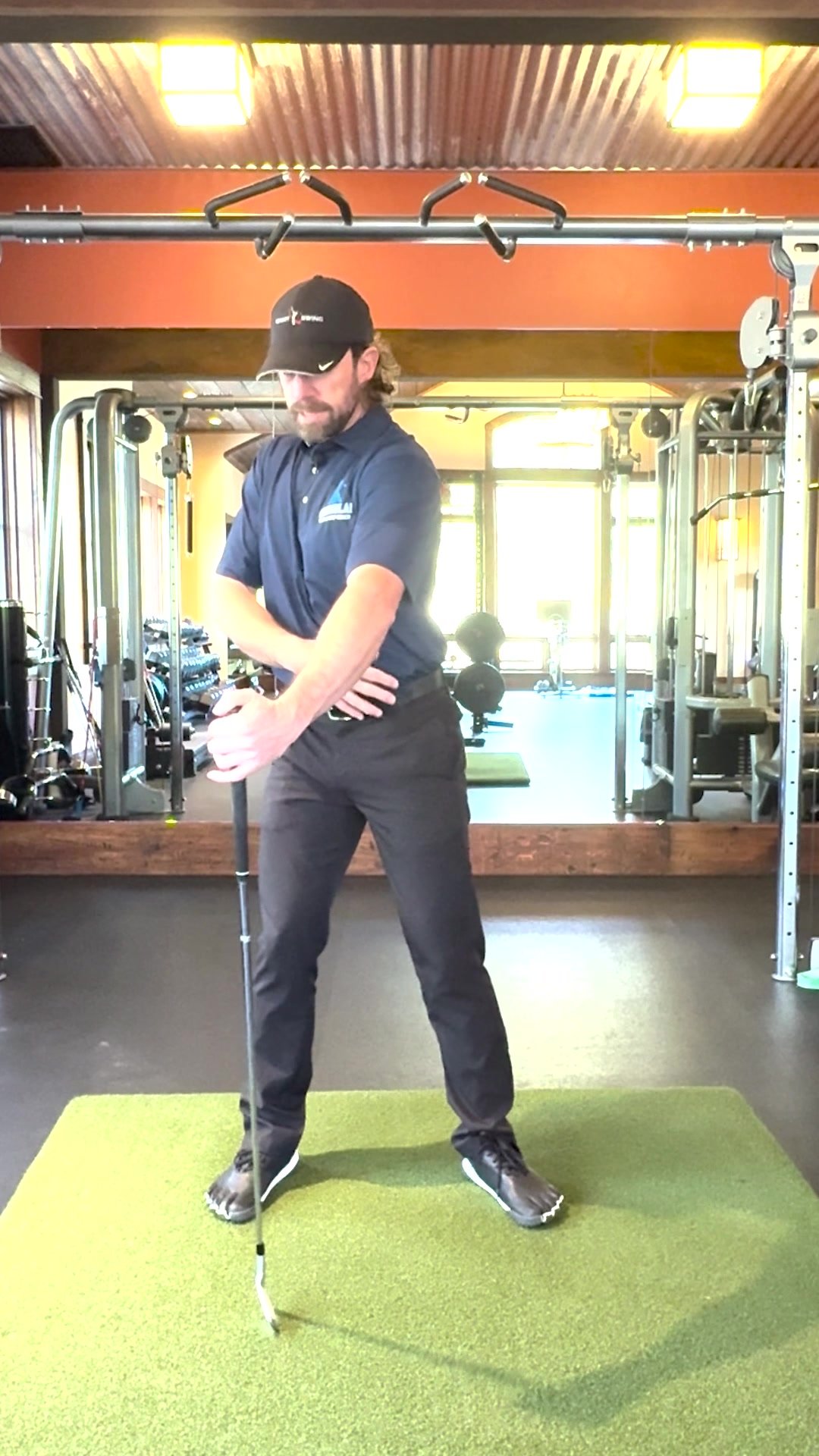
Hold your club vertically against your sternum and bow forward from your hips until the club touches your lead thigh. Your back should be straight not rounded. Your weight should be evenly distributed between both feet and balanced on the balls of your feet, not your heels.
-
3
Position Your Arms and Hands
Let your arms hang naturally from your shoulder sockets. Your hands should be positioned just forward of the ball not behind it. This forward hand position creates the shaft lean at address that sets up proper compression at impact.
-
4
Check Your Eye Line and Posture
Your eyes should be over the ball or just inside the target line. Your head should be in a neutral position not tilted up or down. From this position, you should feel athletic and ready to move like a shortstop waiting for a ground ball.
-
5
Evaluate Your Setup with GOATY
Open GOATY live lesson at rotaryswing.com/goaty/landing/goat_drill_video and take 10 swings. GOATY evaluates your setup and body positions in real time. Correct address fundamentals show up immediately as a higher ANCHOR score with specific voice coaching between every rep.
Watch part 2 now to see how you're moving your body in the opposite direction of the pros!