There is one fundamental in golf that is overlooked by more golfers than any other, and ironically, it is the easiest one to get correct.
Every golfer wonders why their golf setup does not look the same as the elite players at address. After all, they are just standing still, right?
Is this the fault costing you strokes?
Film one swing on your phone. In about a minute GOATY measures it and names the single biggest thing costing you strokes — free, no card.
Analyze My Swing Free
Related: Golf posture — how AI tracks setup through impact →
Android users: Download GOATY on Google Play — free AI golf coaching on your Android phone. →
It would seem that if there is any phase of the golf swing where every golfer can look like the greats, the setup position should be it. However, a tremendous amount of confusing and contradictory information in the golf instruction world has led to the incorrect belief that there is no single correct way to set up to the golf ball and that everyone should look different.
Stop reading about it — feel it in your swing today
GOATY watches your swing live and coaches you between every rep. Free. No signup.
Start Your FREE Live Lesson →
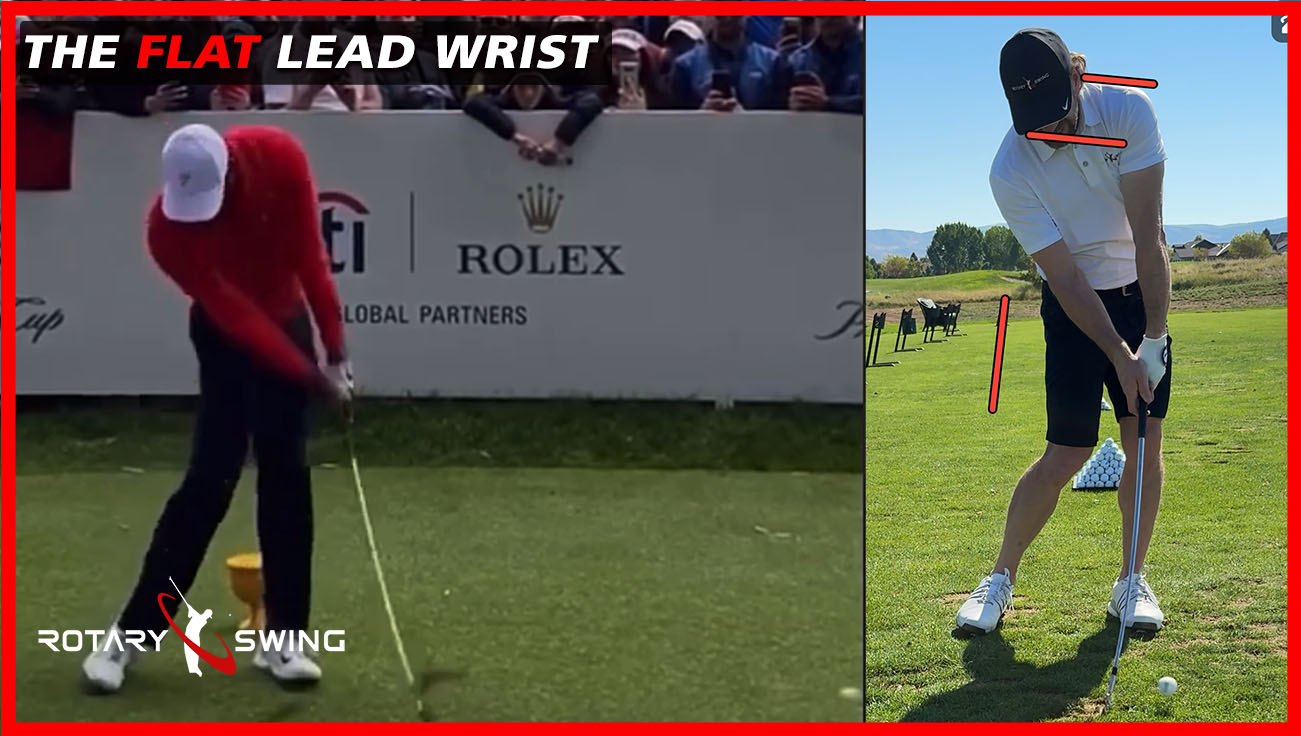
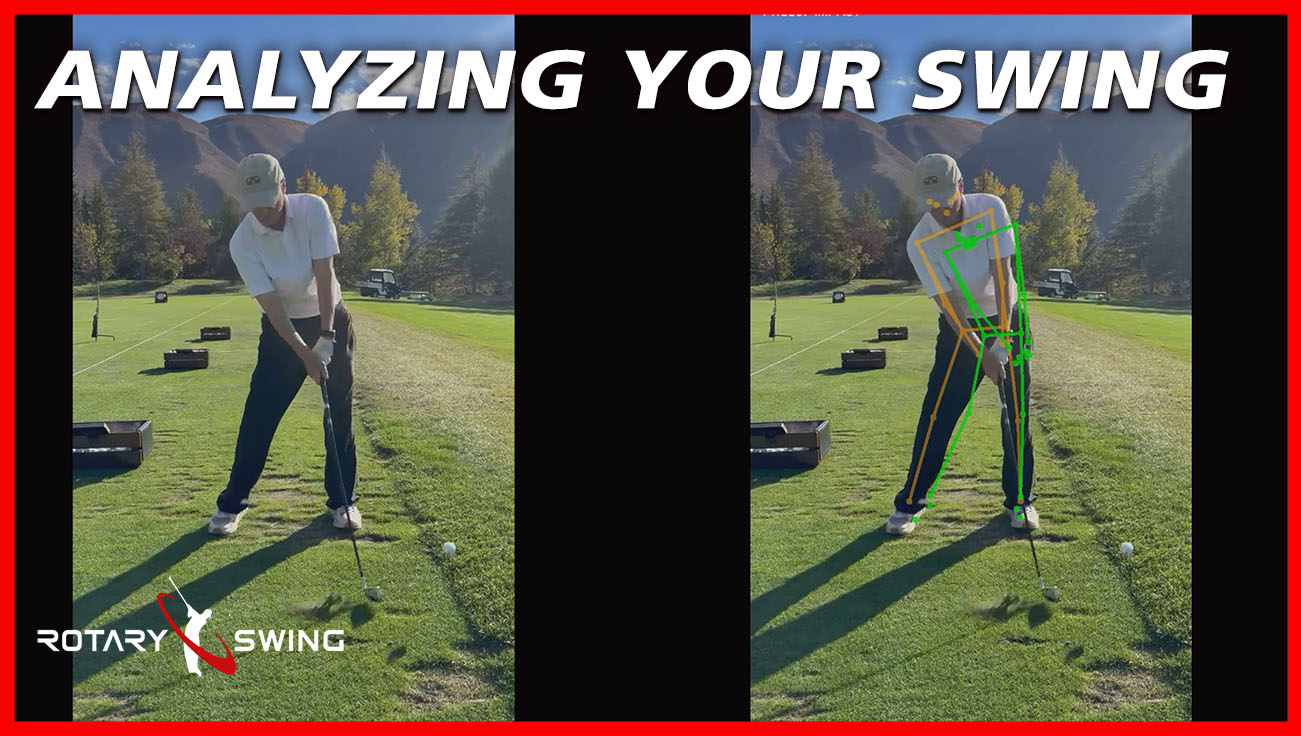
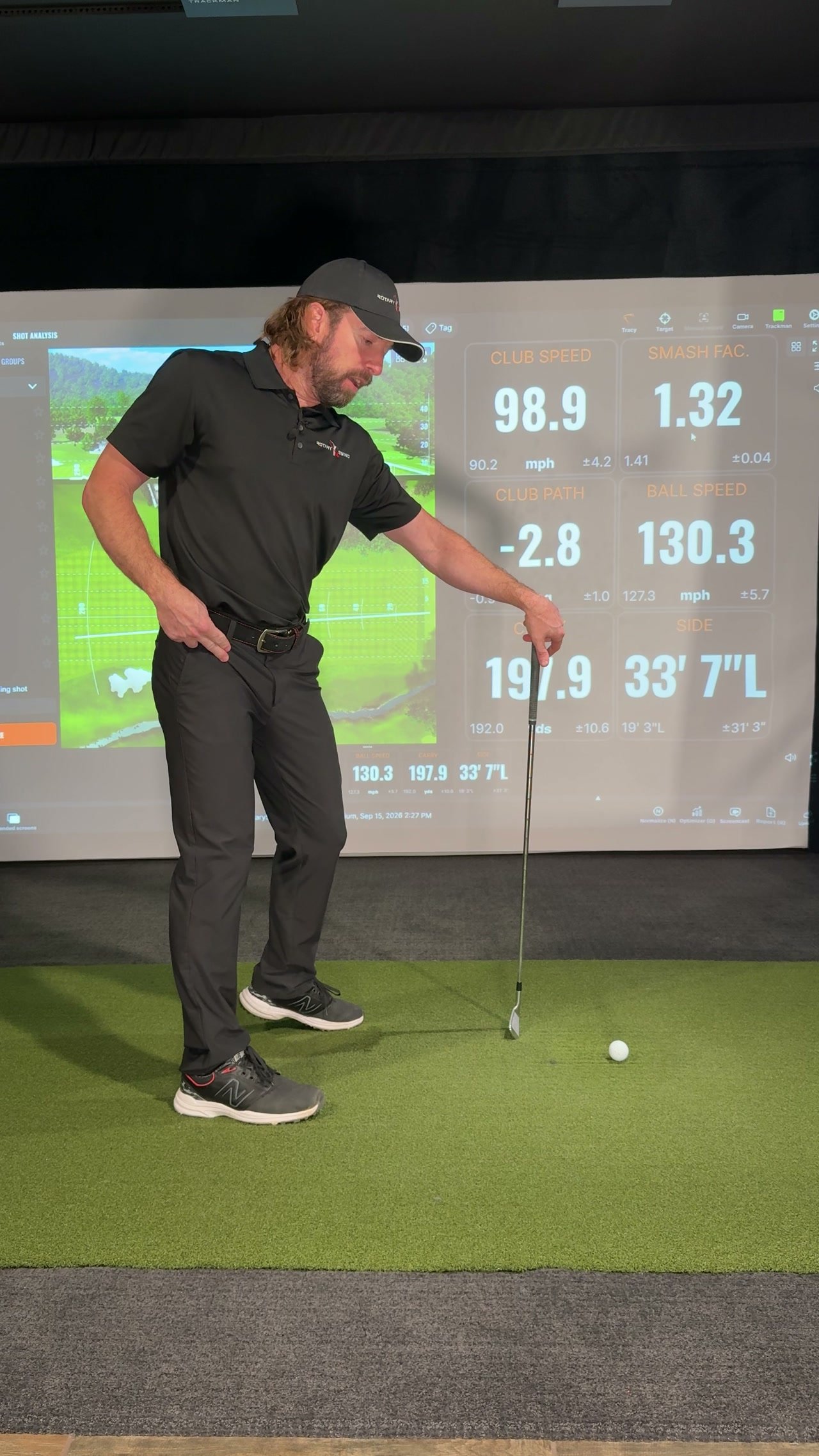
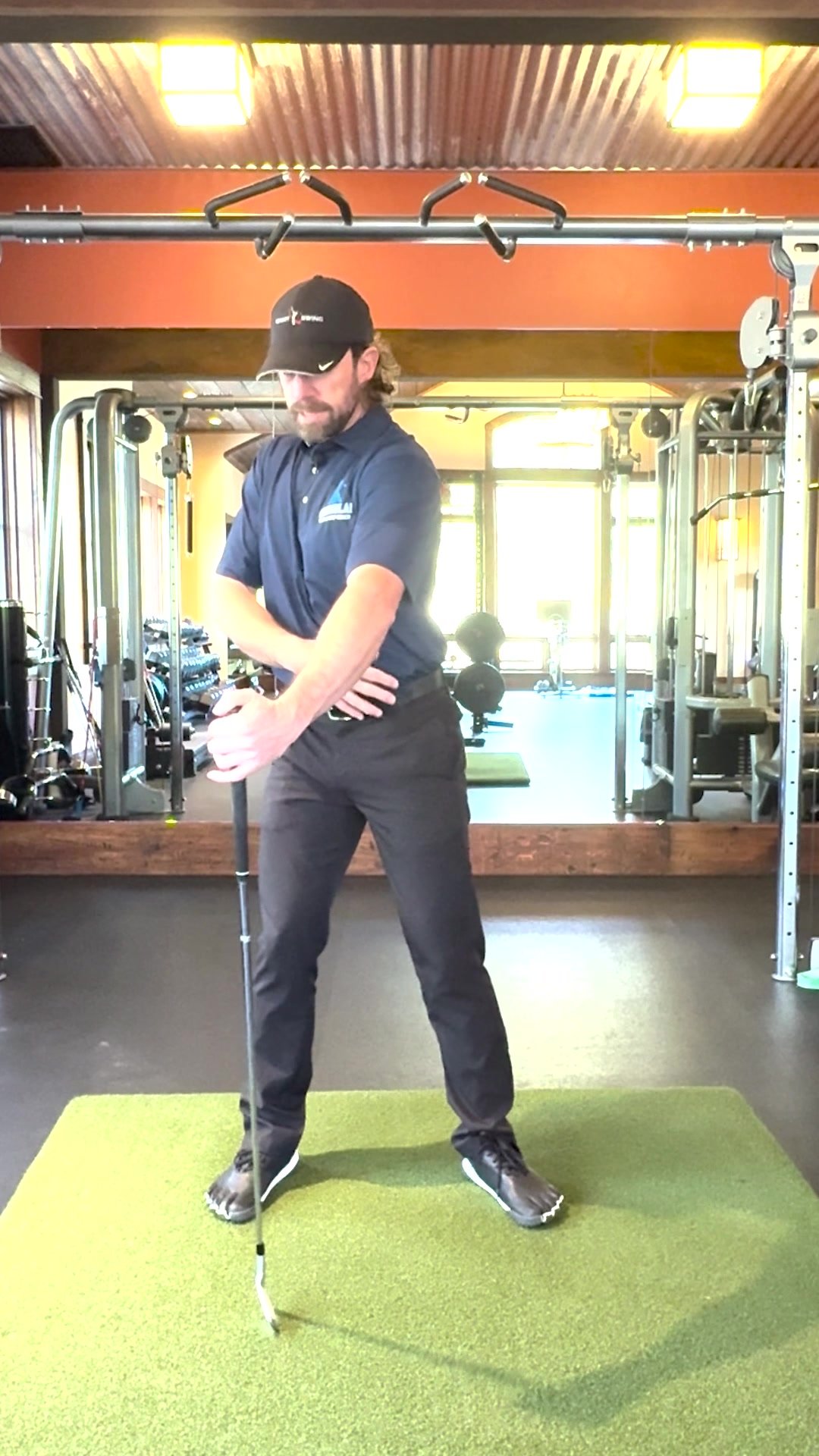
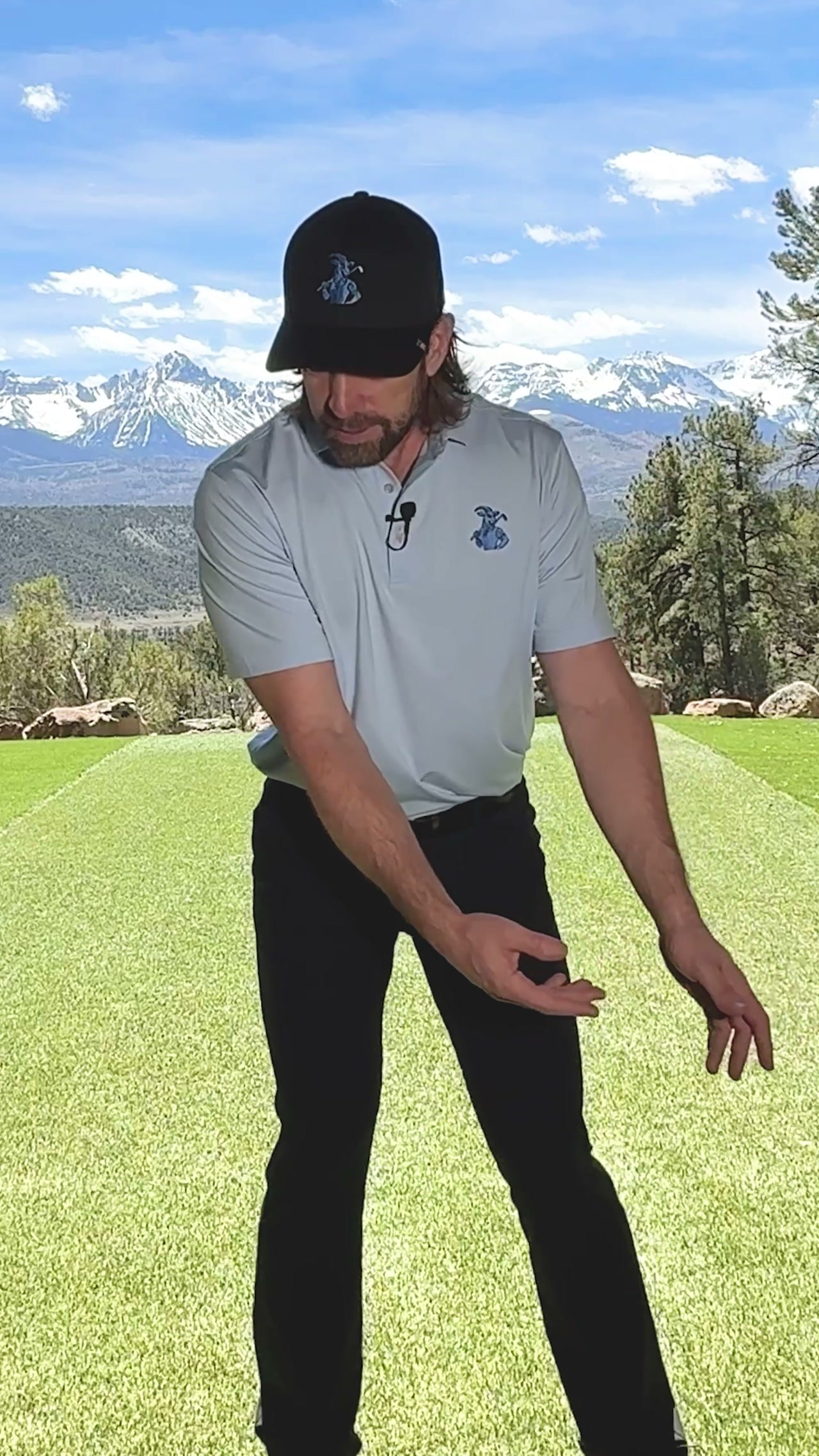
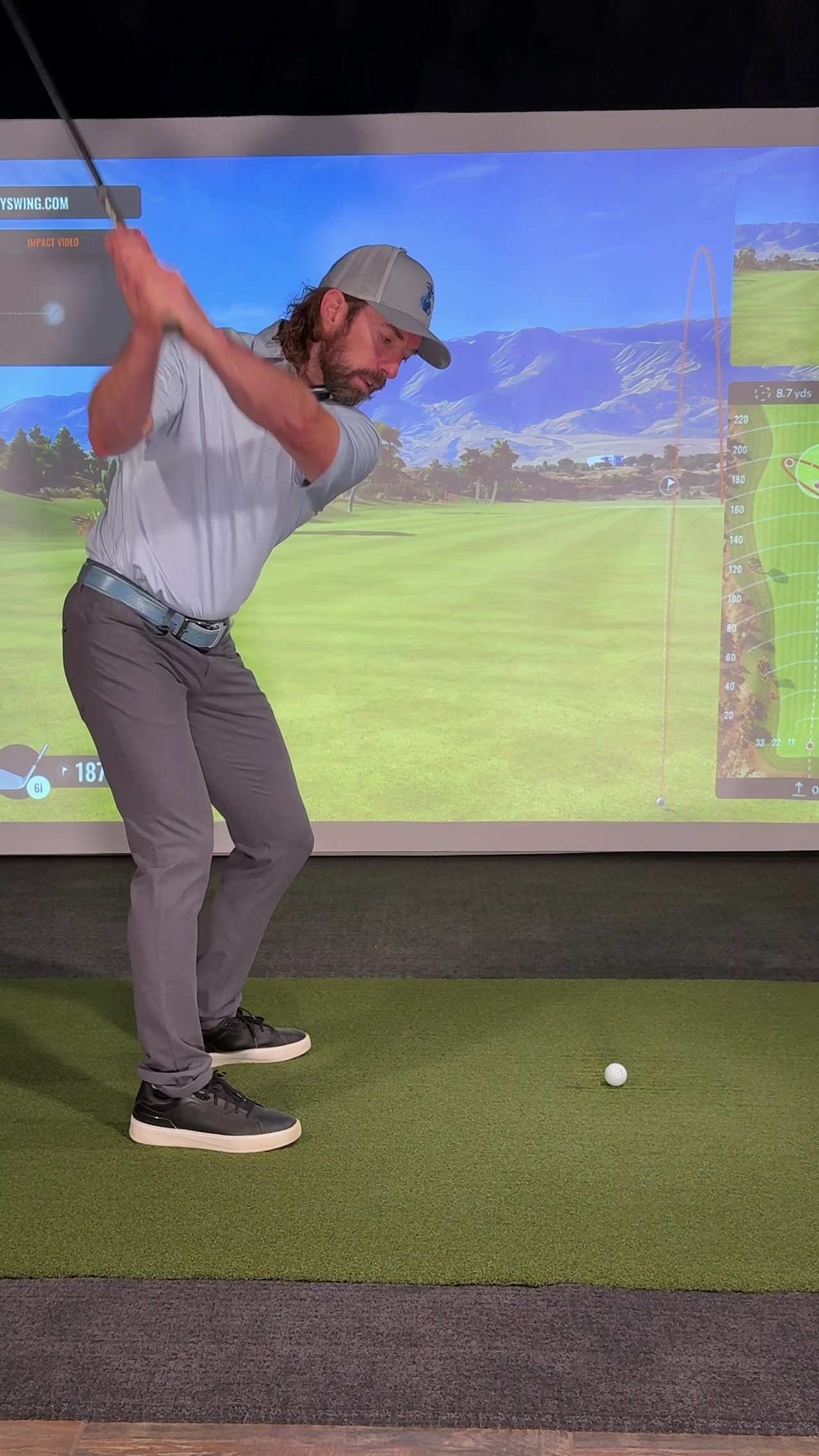
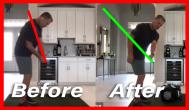
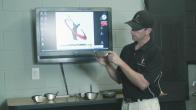
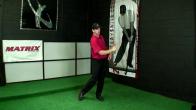
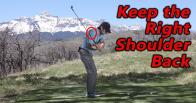
Demonstrating a common fault at address from the video.
Nothing could be further from the truth.
Now, if you have a golf swing built on compensations, major flaws, and other self-taught habits, achieving a biomechanically correct setup is not necessarily going to transform your ball striking overnight.
That would be like removing the intake manifold from a Ferrari and bolting it onto a Yugo, expecting the Yugo to perform like a Ferrari. But if you genuinely want to improve the other aspects of your game to bring them closer to Ferrari-level performance, then it is IMPERATIVE that you learn the correct golf setup and posture.
Every golfer will look slightly different at address even with a perfect biomechanical setup. That is because everyone is built slightly differently — some have a longer torso, longer arms, or longer legs.
These individual differences will alter critical factors such as spine angle and the degree of knee bend at address. However, from one golfer to the next, the similarities in a proper setup will be far more apparent than the differences.
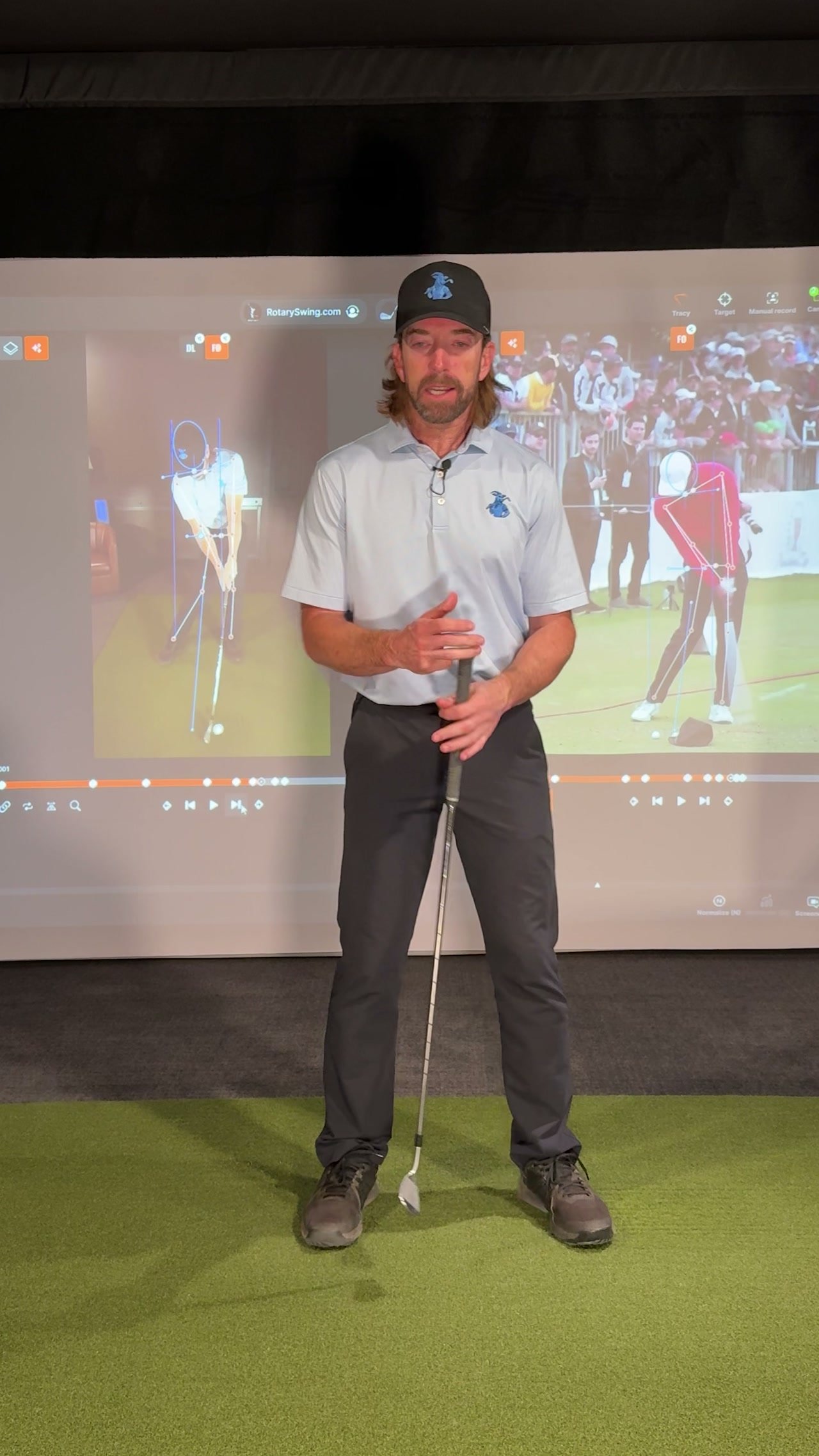
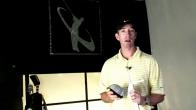
This video provides you with the essential keys to recognize the ways golfers set up INCORRECTLY and how to establish a CORRECT golf setup position. To see how your own posture and mechanics compare to an elite benchmark, try a free AI swing analysis.
It also addresses the fundamental importance of how weight should be distributed throughout the feet at setup. This is another common piece of misinformation that pervades the golf instruction world and one that frequently causes chronic knee and hip pain in the lead leg.
If you are interested in playing golf for a lifetime without requiring surgery, you MUST understand how to set up to the golf ball correctly.
Please note that this is an introductory video and does not cover in depth how to engage the proper core muscles at address. Those fundamentals require a more detailed understanding of the biomechanics of the golf swing and are addressed in subsequent videos.
"Just joined RST as 5 hdcp aiming for scratch. Immediately, I understand the importance of hinging from the hips and how to do it...Looking forward to building proper posture and swinging in balance for the first time ever... "
-Sam O. | July 15, 2012 | London, England
Video Transcription: Correct Posture and Balanced Setup

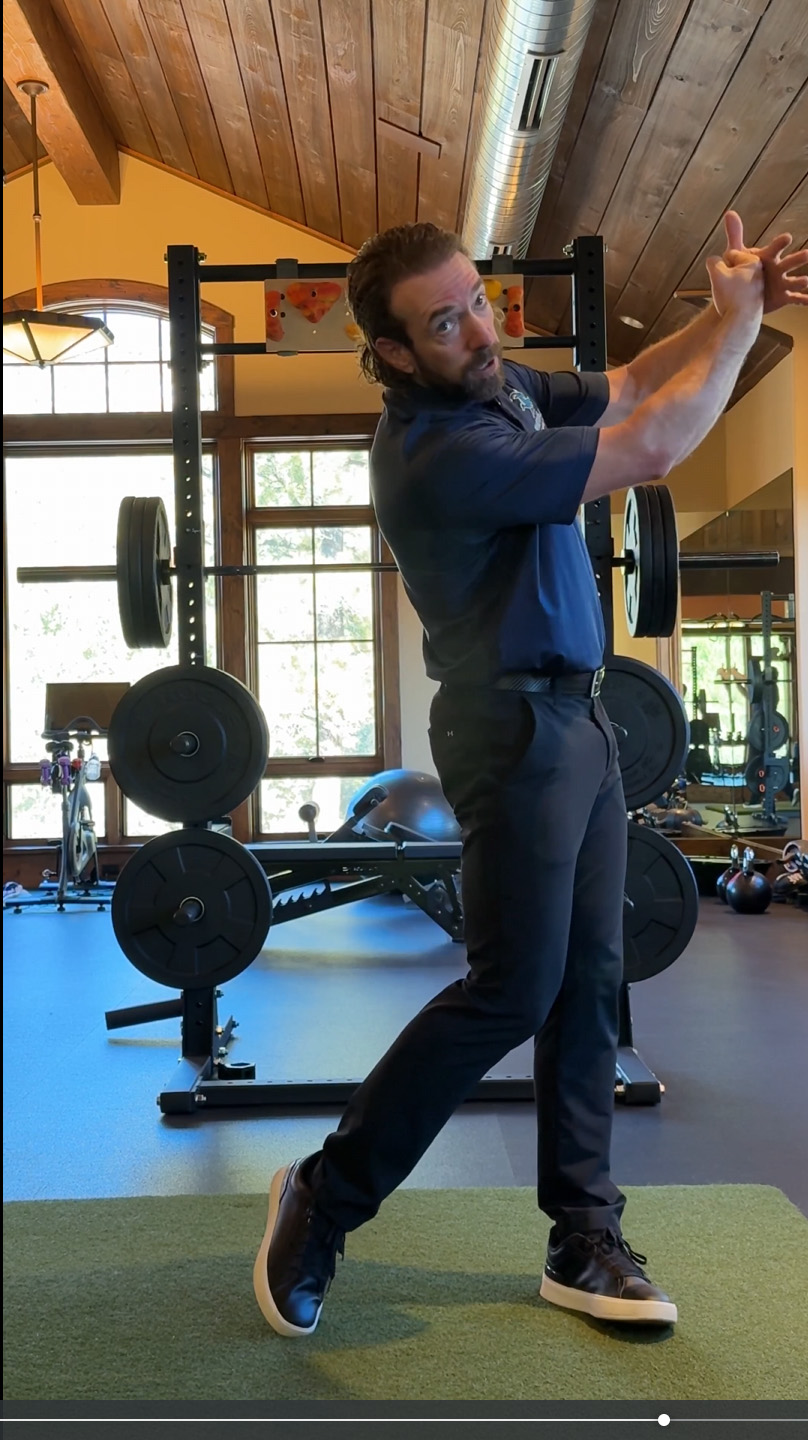
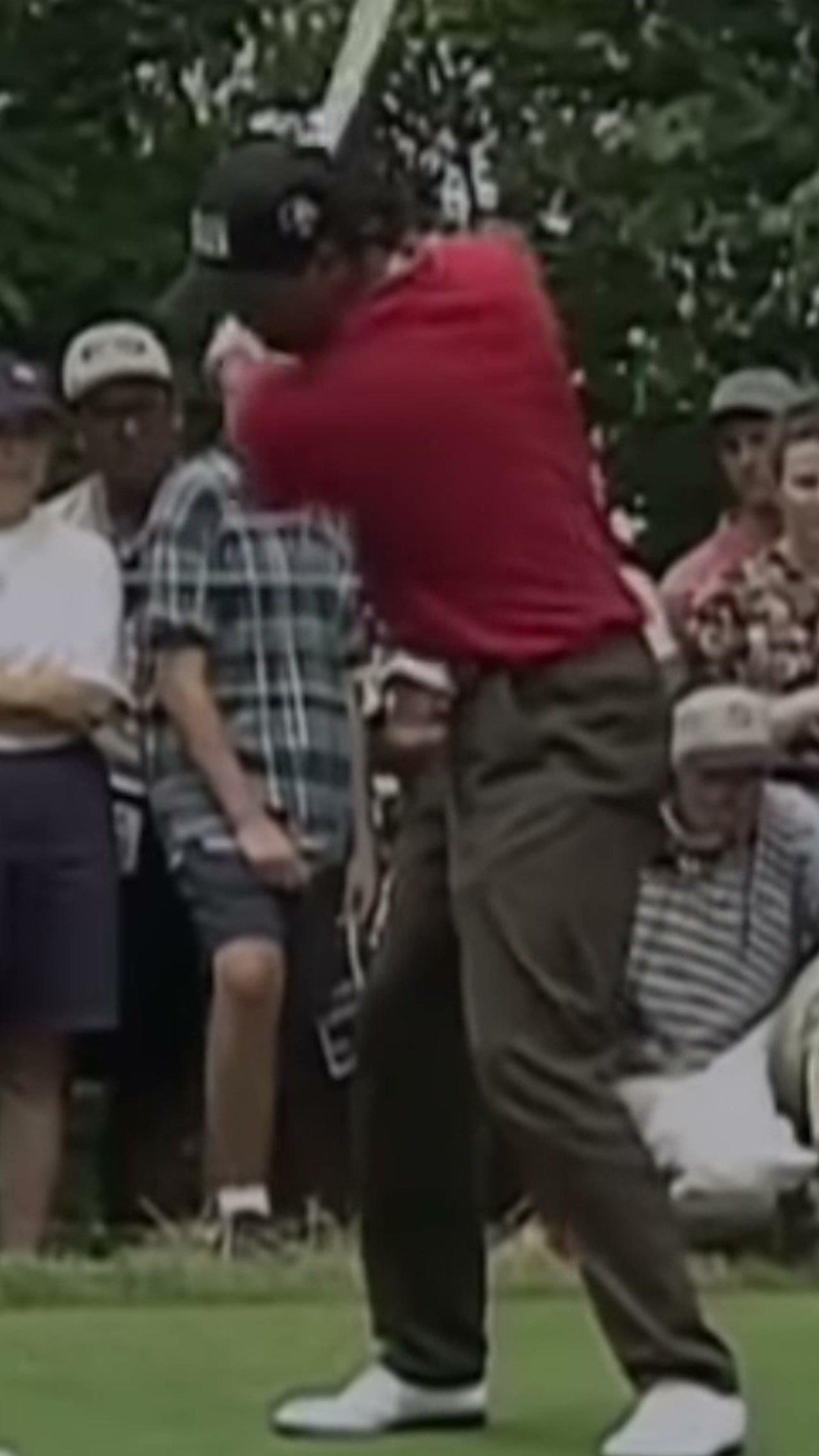
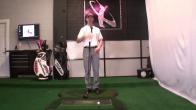
This is an example of poor golf setup posture
Let us discuss how to achieve proper golf setup posture. We will demonstrate the correct way to establish your address position, and we will also identify several common mistakes that many golfers make. Understanding both will help you recognize your own errors and correct them effectively.
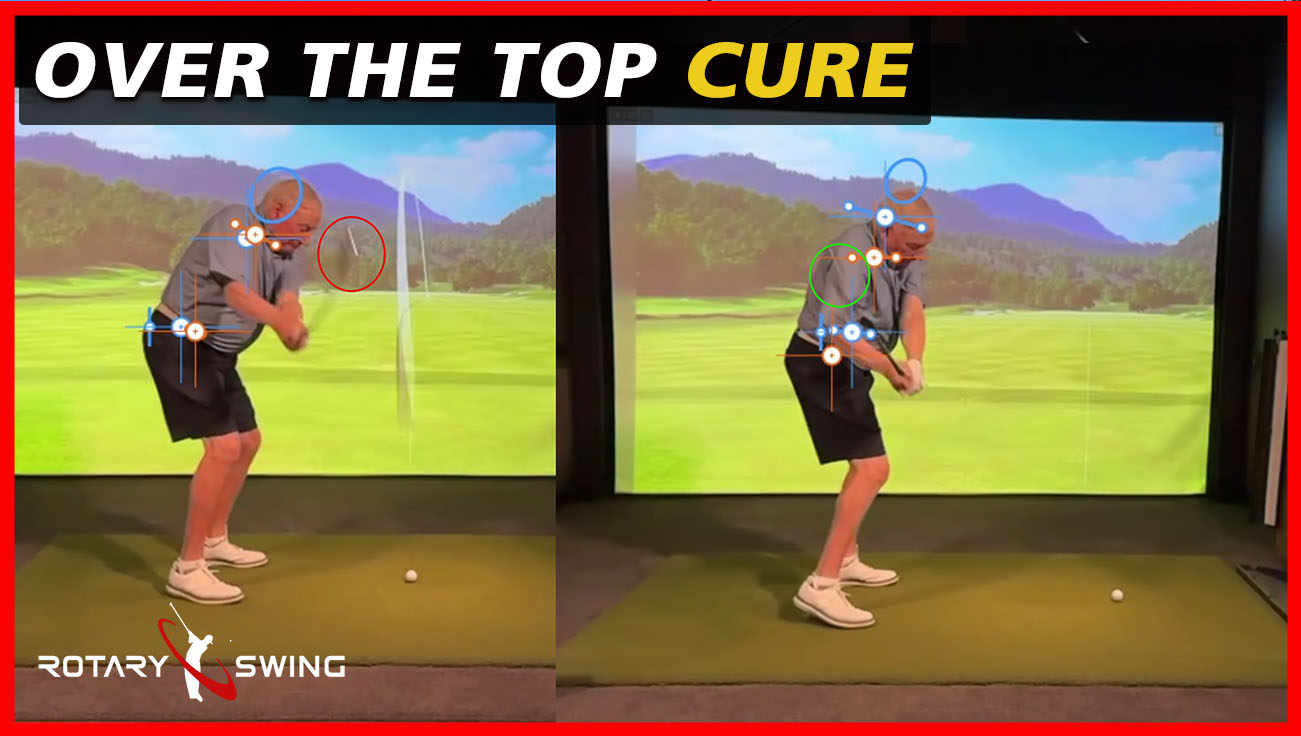
The first mistake that we observe on a regular basis is golfers rounding their neck forward while standing very tall with just a slight knee bend. The result is that the neck is severely cranked forward in poor postural alignment.
The second common error is rounding the shoulders forward. When the shoulders roll inward, the upper back becomes rounded, the neck compresses forward, and the golfer ends up with minimal knee bend in a position that clearly demonstrates terrible golf setup posture.
The most prevalent mistake, however, involves the waist. Golfers bend from their waist rather than from the proper hinge point. What they do is fold at the midsection, causing the entire spine — lower back, upper back, everything — to round into a C-shaped curve.
This position feels comfortable and relaxed to most people, making it seem like a natural golf setup position. The fundamental problem is that it prevents your body from rotating the way it is designed to rotate around the spine. When you achieve proper , each vertebra stacks directly on top of the one below it, allowing the full range of rotational motion.
When the back is rounded and curved, the edges of the vertebrae compress against each other, making it extremely difficult to achieve a full range of motion. In reality, a rounded spine makes a complete essentially impossible.
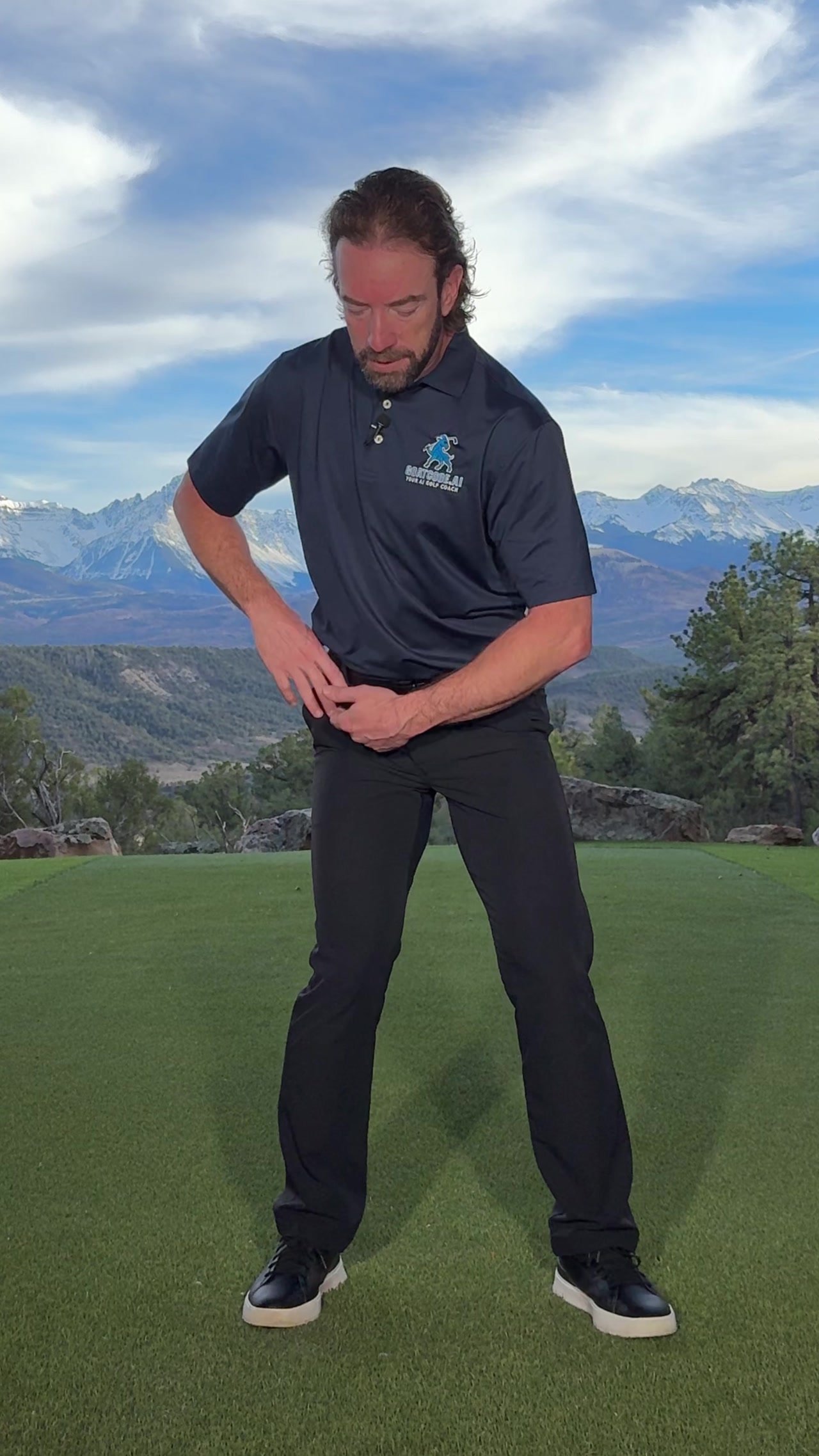
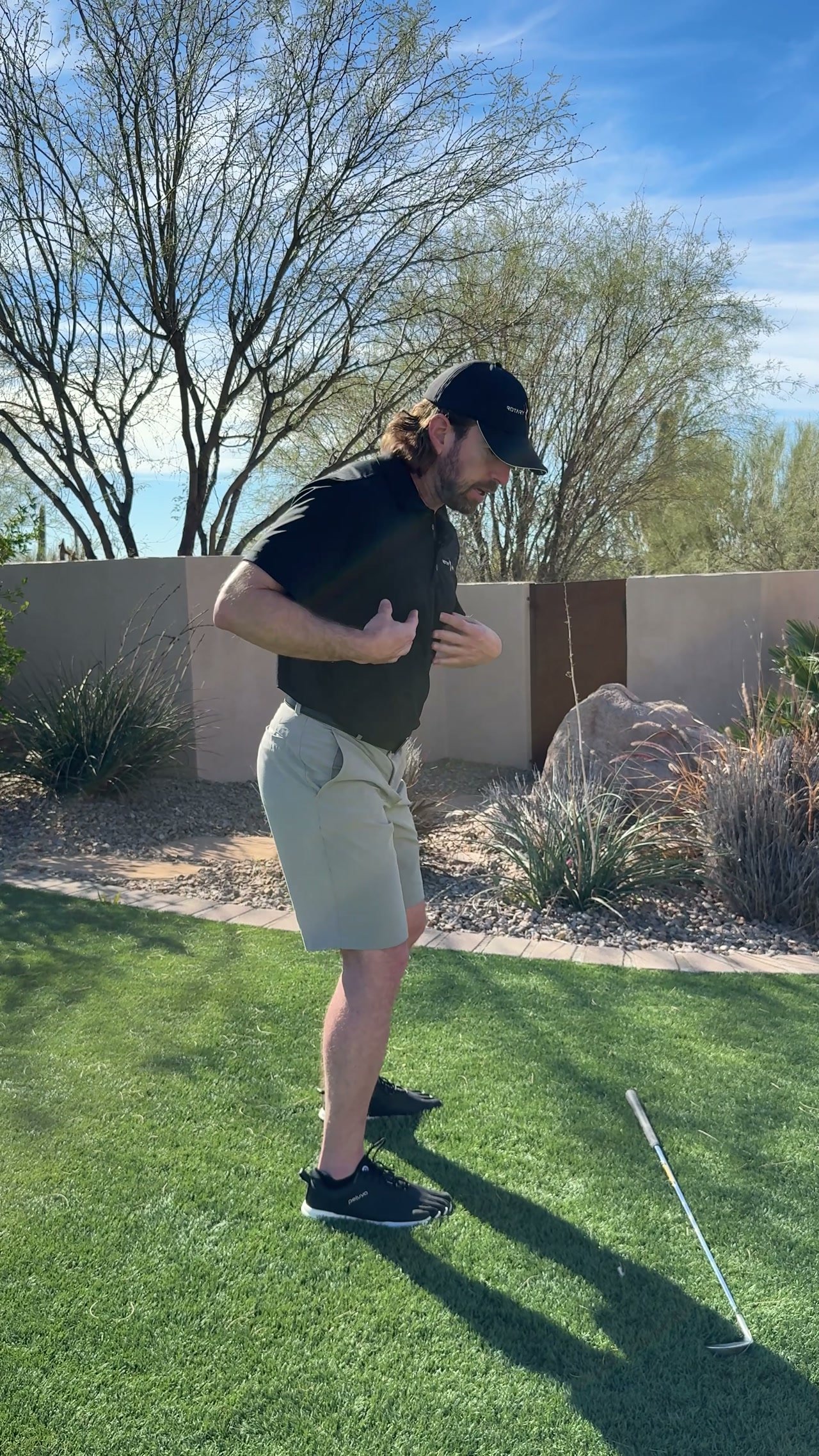
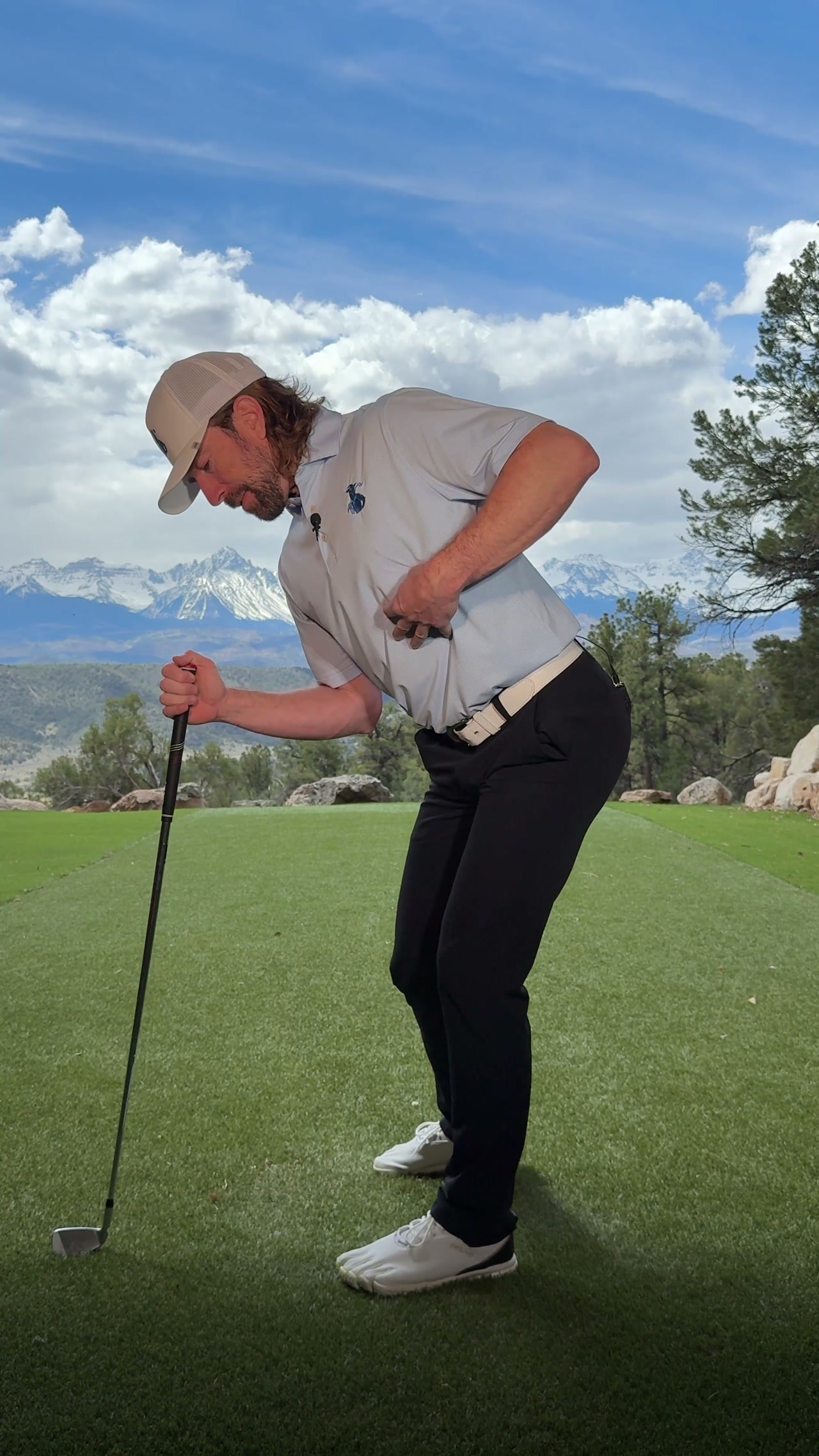
To perform this correctly, we set up and hinge forward from the hip sockets. The hip sockets — located right at the top of the legs — are where we initiate the forward bend in a proper golf setup.

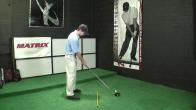
Hinge forward from the hips
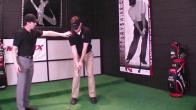
For those who have not given this much thought before, the hip sockets are located just below your belt buckle, typically right inside the first belt loop on your pants. This means we are hinging from a much lower point than most golfers realize.
The first step is to stand in good, biomechanically correct alignment — head high, chin up, shoulders pulled down and back. From this position, all we do is drop the hips back and allow the upper body to hinge forward until we can clearly see the ball.
You should hinge forward far enough that you do not need to round your neck to see the ball. That is how you know you have hinged forward sufficiently. Add a slight knee bend from this position, and you will be in the perfect golf setup posture.
A helpful technique is to place your hands in front of your body and then concentrate entirely on dropping those hips back while adding a slight knee bend.
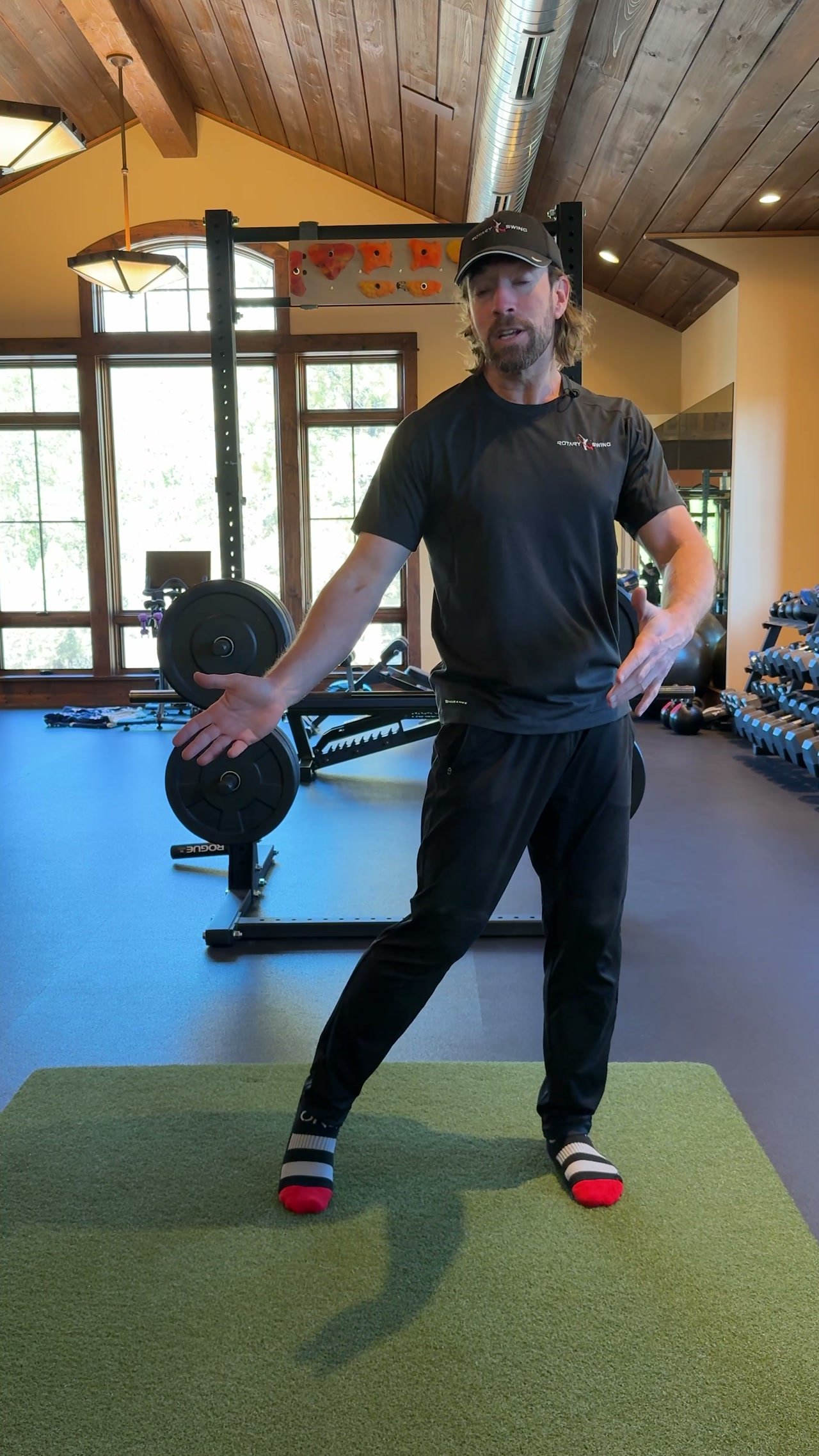
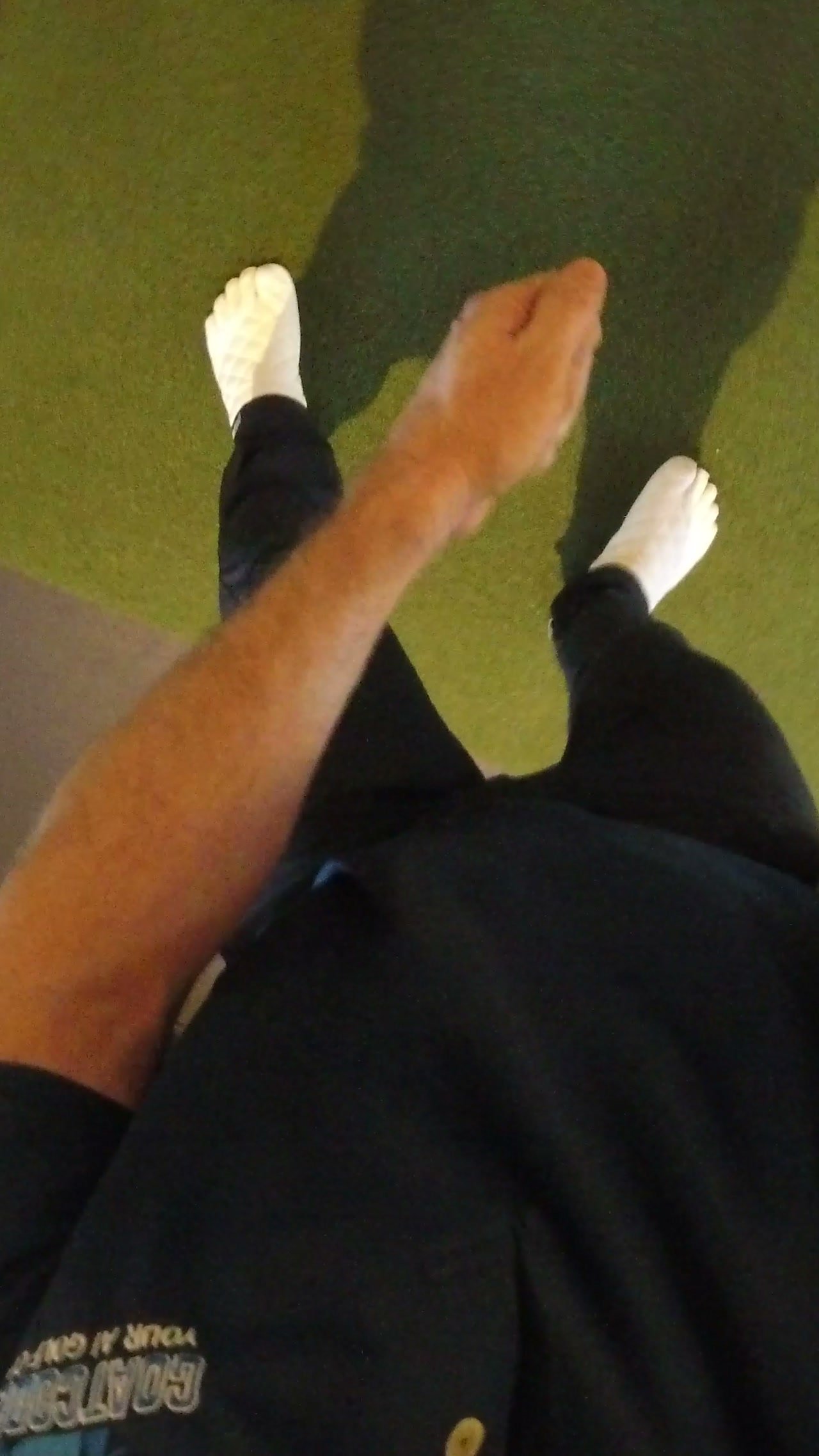
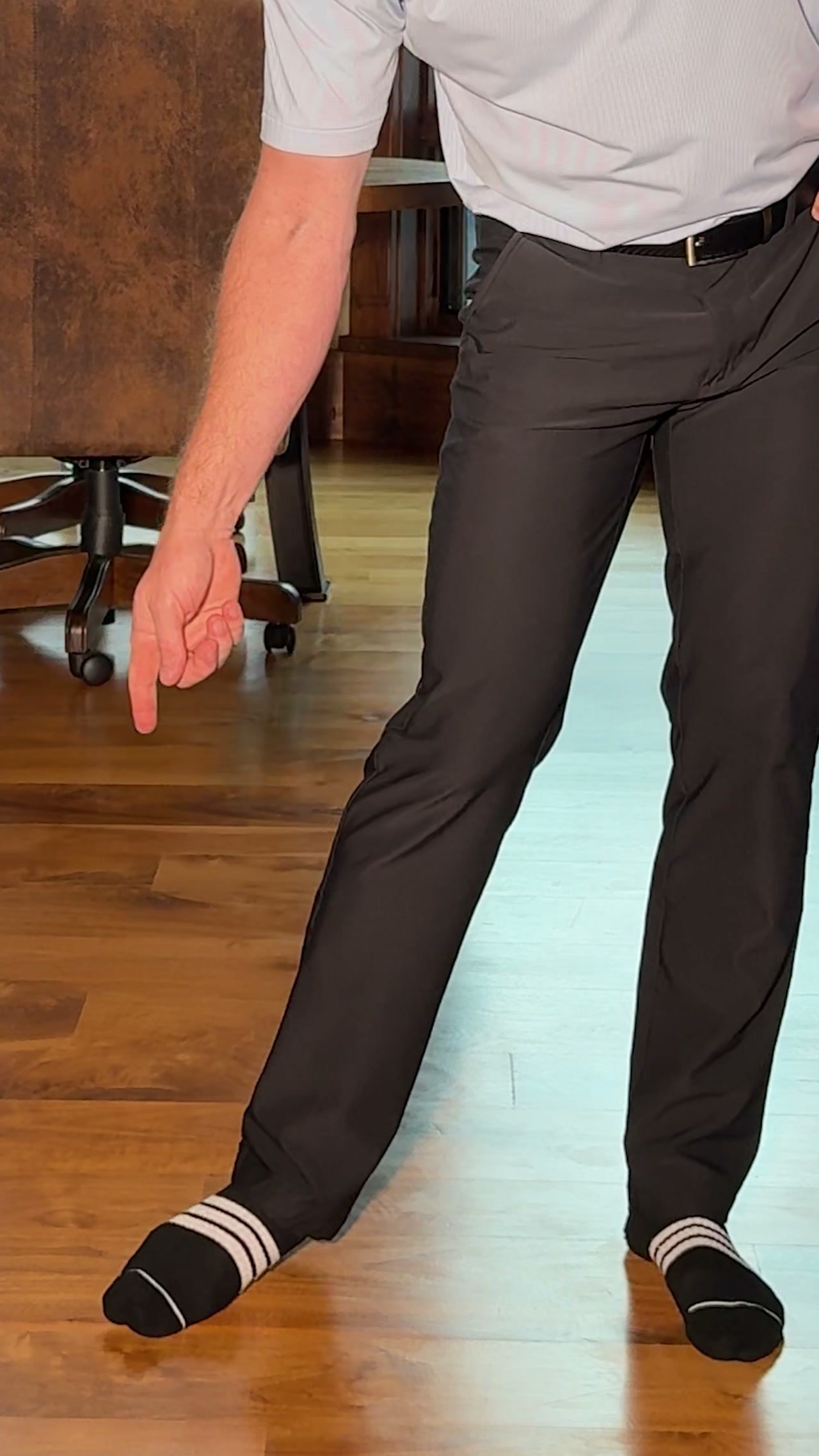
From here, we need to establish proper weight distribution from side to side in our ankles. Start by rolling your ankles to the outside, then roll them to the inside. Continue rolling back and forth until you can feel your weight resting centered in the middle of your ankles.
As you roll back and forth, you will feel yourself moving in and out of balance, and then you will feel stability as you settle into the center. This centered position is where your weight should remain.

Roll your ankles slightly to find the balance point
What we commonly observe is golfers adopting a stance that is too wide, which causes their weight to shift to the outside of the ankles. This creates improper balance. The correct approach is to bring the feet slightly closer together — approximately two inches outside of neutral joint alignment — and then distribute weight evenly between both ankles.
Some of you may feel as though you are sliding your feet together. The sensation of placing pressure on the inside of the ankle may feel unusual compared to what you are accustomed to. This inward centering is what keeps you properly balanced throughout your golf swing. For a data-driven look at how your own posture and balance measure up, try a free AI golf lesson that evaluates your form in real time.
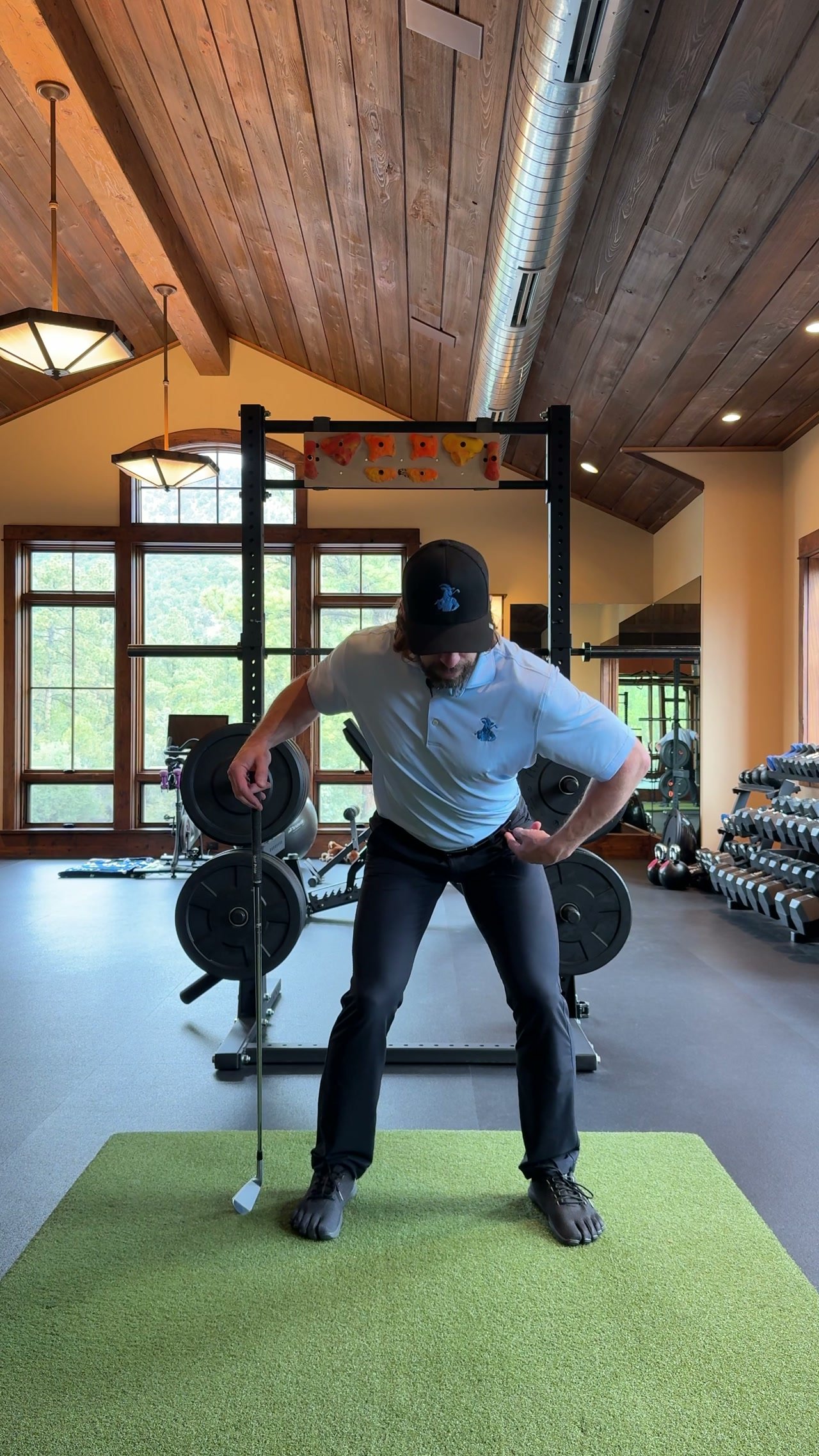
The final component is establishing proper balance from front to back within your stance. Get into good posture — hinge from the hips, add a slight knee bend, and center your weight in the ankles. Then close your eyes, rock forward gently, and rock back gently.

Rock forward and back to find the balance point
As you rock forward and back, allow yourself to settle on the center of your ankle. You will feel a natural balance point where you are completely stable. This is the golf setup position we want at address.
Most golfers carry their weight too far forward on the balls of their feet, and this is largely because the majority of golf instruction explicitly tells them to do so. The common advice is to adopt a position similar to playing defense in basketball or fielding in baseball — a stance designed to enable quick movement in any direction.
That is actually the opposite of what we want in golf. We are trying to remain centered and stable. We do not want to move in every direction, so we need to ensure that weight is centered right in the middle of the ankle, or just slightly forward depending on your individual build.
Most golfers carry their weight too far forward toward the balls of the feet, as we discussed.
Pay close attention to your golf posture. Work through the drills outlined above, and you may even gain distance simply by allowing your body to move more efficiently. Improving your setup position can have a significant positive impact on every aspect of your game.
Frequently Asked Questions
What are the key components of a proper golf setup posture?
A proper golf setup posture includes hinging from the hips instead of bending at the waist, maintaining a neutral spine angle, and ensuring an appropriate degree of knee bend. Additionally, golfers should roll their ankles slightly inward and outward to find their balance point. These elements help create a stable foundation for an effective swing.
Why is it important to have the correct weight distribution at setup?
Correct weight distribution at setup is crucial because it affects balance and can prevent chronic pain in the knees and hips. By ensuring your weight is centered over the middle of your feet, you set yourself up for a more stable and powerful swing. Misalignment in weight can lead to compensations that hinder performance.
How can individual body differences affect golf setup?
Individual body differences, such as variations in torso length, arm length, and leg length, can influence critical factors like spine angle and knee bend at address. While every golfer will look slightly different, adhering to the principles of a biomechanically correct setup will help ensure that the fundamental aspects remain consistent across different body types.
What common mistakes do golfers make in their setup posture?
Many golfers make the mistake of rounding their necks or shoulders forward at setup, which can lead to poor posture. Additionally, bending at the waist instead of hinging from the hips is a frequent error. These mistakes can negatively impact balance and swing mechanics, making it essential to focus on achieving the correct posture.
Watch part 2 now to see how you're moving your body in the opposite direction of the pros!