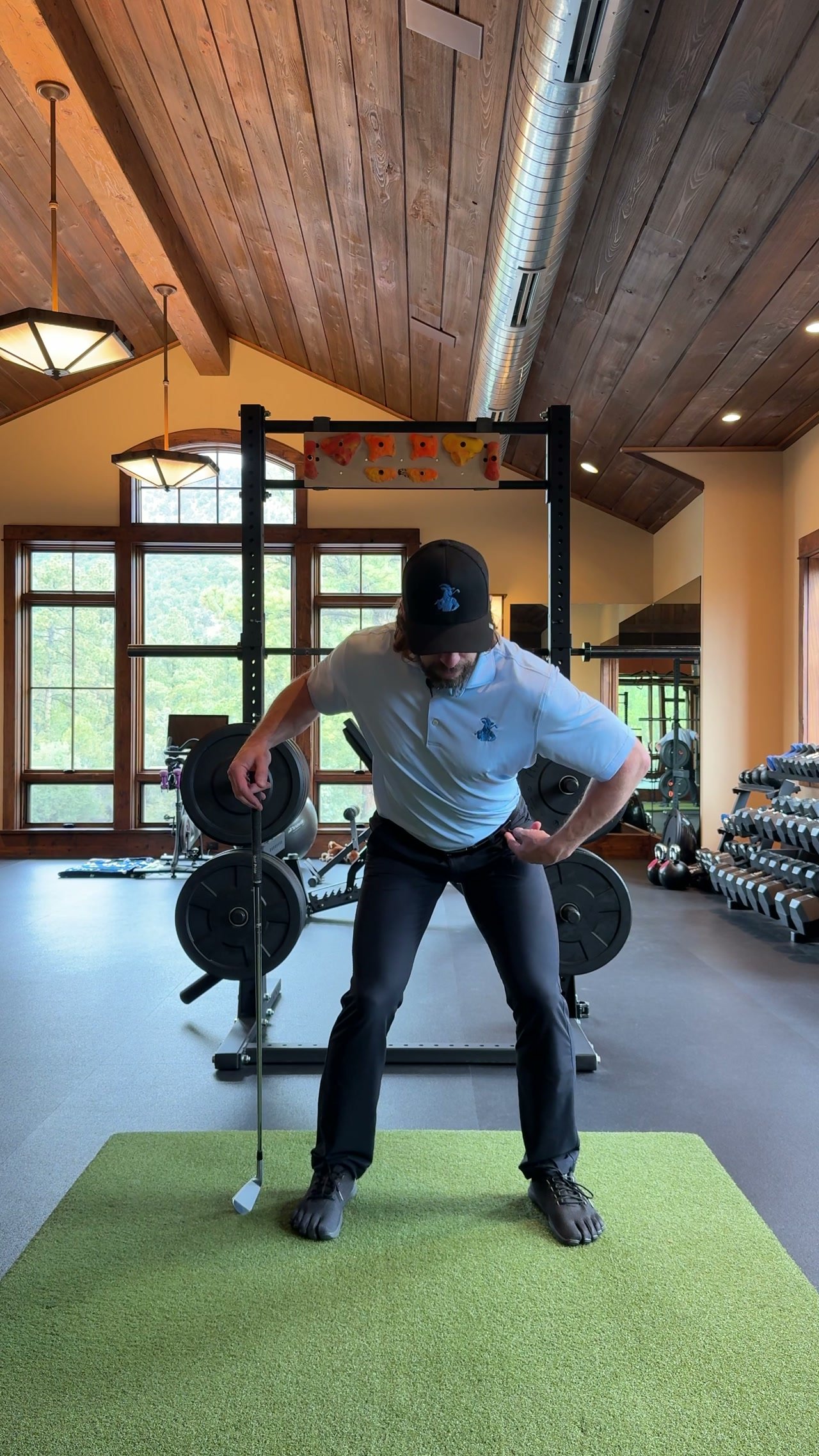
HOW TO SET UP FOR THE DRIVER
"Should you set up the same way for all the clubs in the bag?" is a question I receive constantly. The answer is absolutely yes — you do not want 13 different golf swings! So, if you want to learn how to swing a driver without developing 12 other swing patterns, read on!

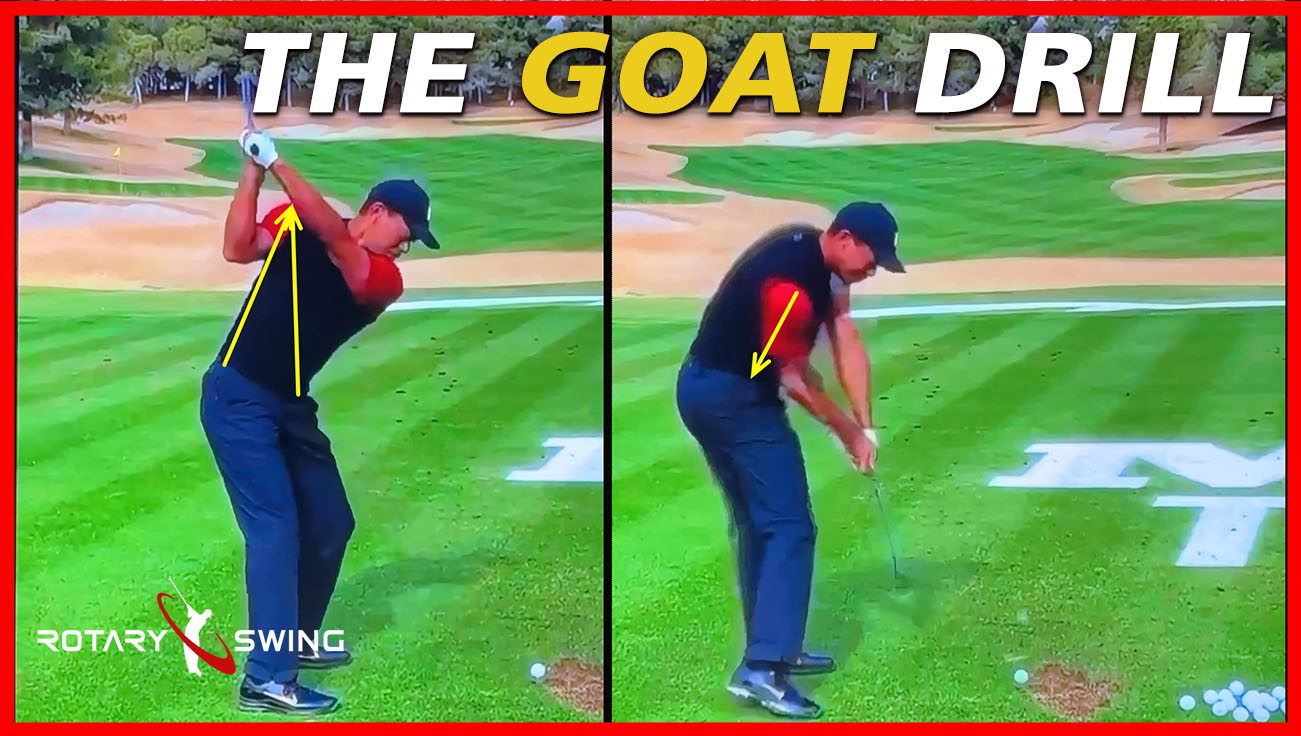
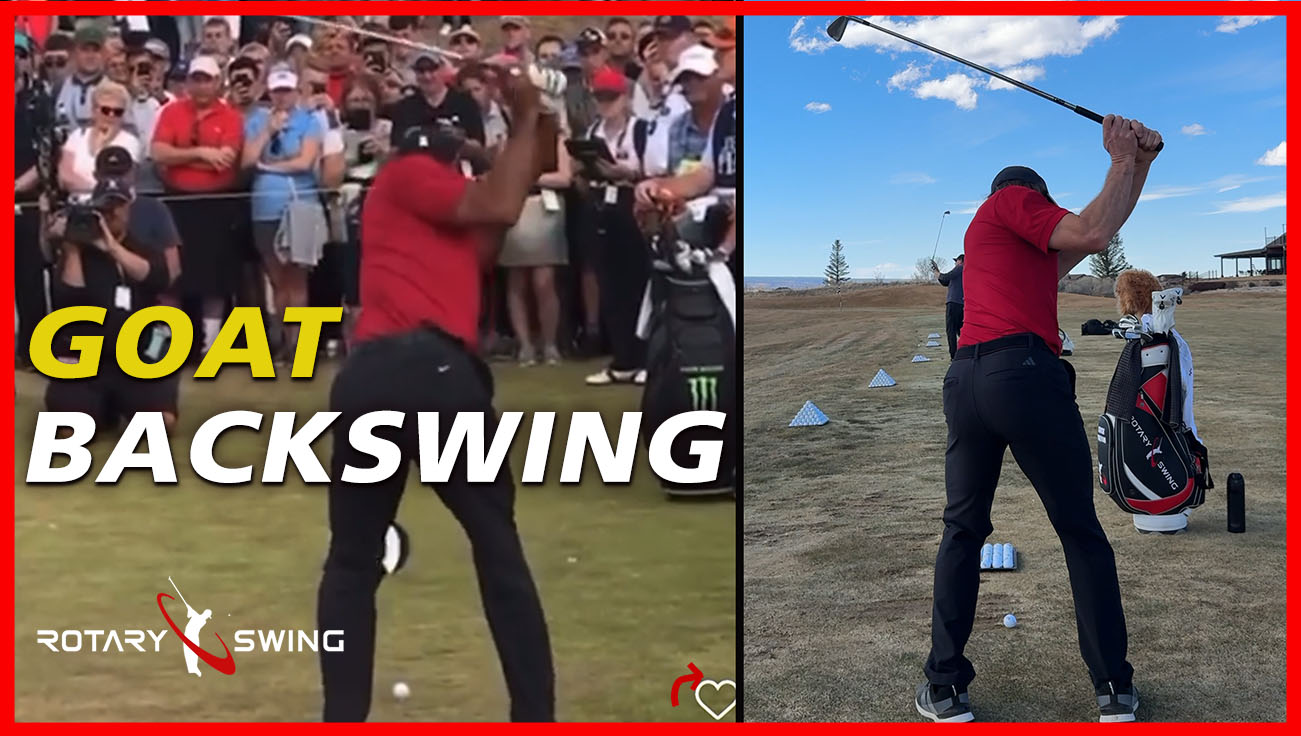
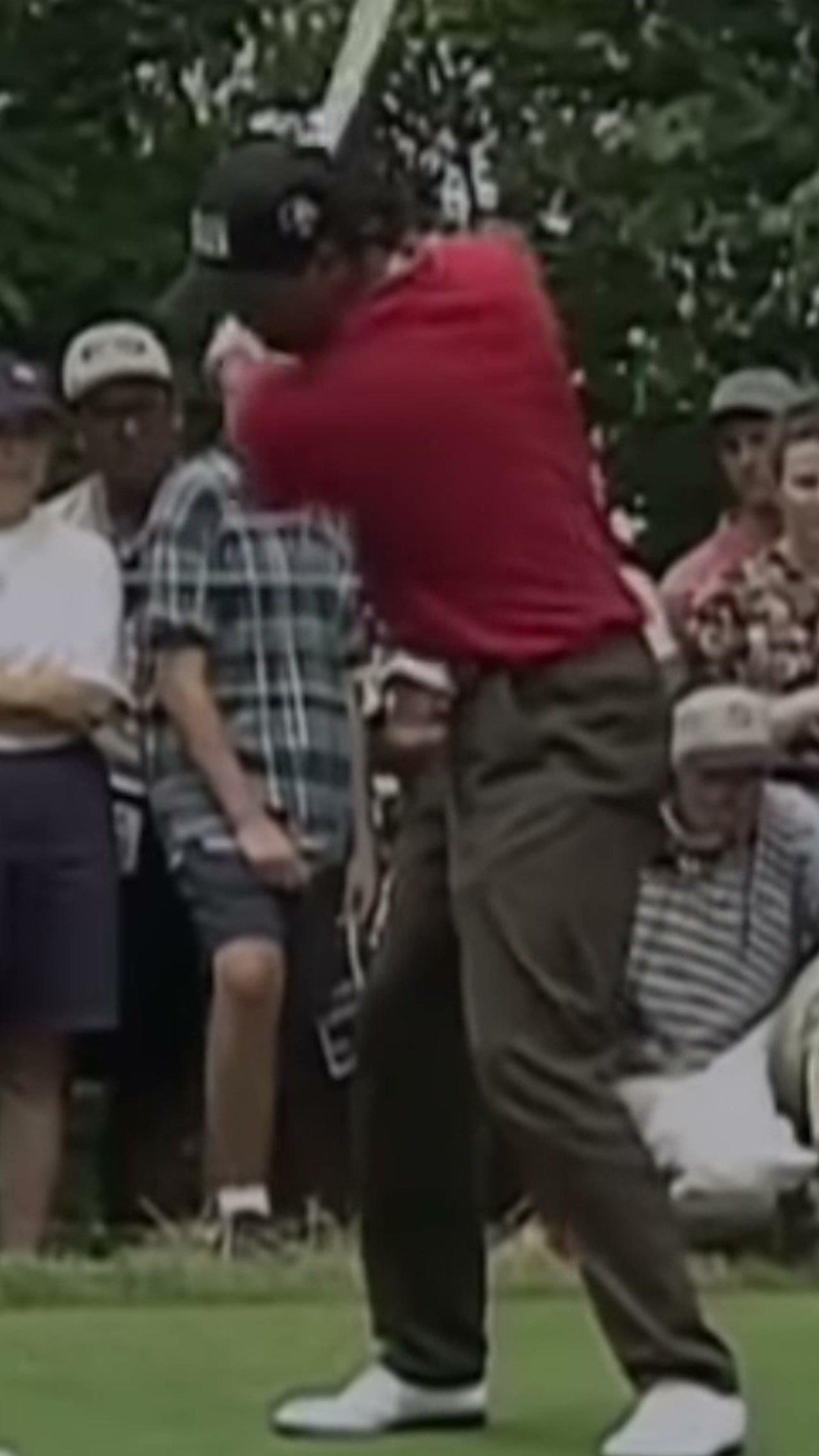
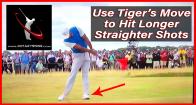
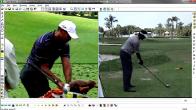
Find out if Tiger's drive setup position here is correct.
However, when it comes to the driver, certain setup adjustments can and should be made when the goal is to maximize distance off the tee.
Is this the fault costing you strokes?
Film one swing on your phone. In about a minute GOATY measures it and names the single biggest thing costing you strokes — free, no card.
Analyze My Swing Free
Related: Golf impact position — how AI scores yours →
Android users: Download GOATY on Google Play — free AI golf coaching on your Android phone. →
I cover these changes in extensive detail in my "Bomb Your Driver Series," which is applicable to any golf swing. But for RST specifically, there are particular elements we want to focus on.
Stop reading about it — feel it in your swing today
GOATY watches your swing live and coaches you between every rep. Free. No signup.
Start Your FREE Live Lesson →Golf equipment has changed dramatically over the past decade, and no club more so than the driver. Because of these technological advances, it is critical that you understand how they affect your so you can get the most out of modern technology and learn how to swing a driver correctly.
"Great video on a very important topic."
-Gøran S. | Dec 13, 2012 | 1 HDCP
If you swing the club exactly the same for every club in the bag, your release point at impact would be in virtually the identical spot. However, this would produce a descending blow with the driver.
This raises the question: Do you actually want a descending blow with the driver?
HOW DO TOUR PROS HIT THEIR DRIVERS?
The answer — it depends!
While most amateurs are seeking to extract maximum distance off the tee, for better golfers that is not always the primary objective.
In fact, most PGA Tour pros actually hit down on the ball approximately 1.3 degrees.
This is because it is much easier to control this impact position, as it is very similar to the impact position for every other club in the bag. No radical changes to swing path or spine angle are required to hit the ball solidly.
On the other hand, amateurs tend to tee the ball way forward in their stances, three inches off the ground, and swing up on it by a ridiculous amount, hoping for solid contact. As evidenced by your local driving range, this approach rarely produces consistent results!
TEE IT HIGH AND LET IT FLY???
You do this because you have heard on television or read in golf magazines that you should swing up on the ball.
That is an extremely misleading statement, because you should NEVER deliberately swing "up" on the ball.
You should always swing down and allow the differences in your driver setup to "collect" the ball on the upswing. Swinging "up" on the ball leads to hitting many shots low on the club face, inconsistent contact, and chronic back soreness.
GOLF DRIVER SETUP HOW-TO FOR THE RST DRIVER SWING
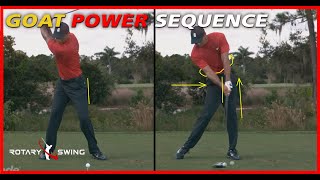
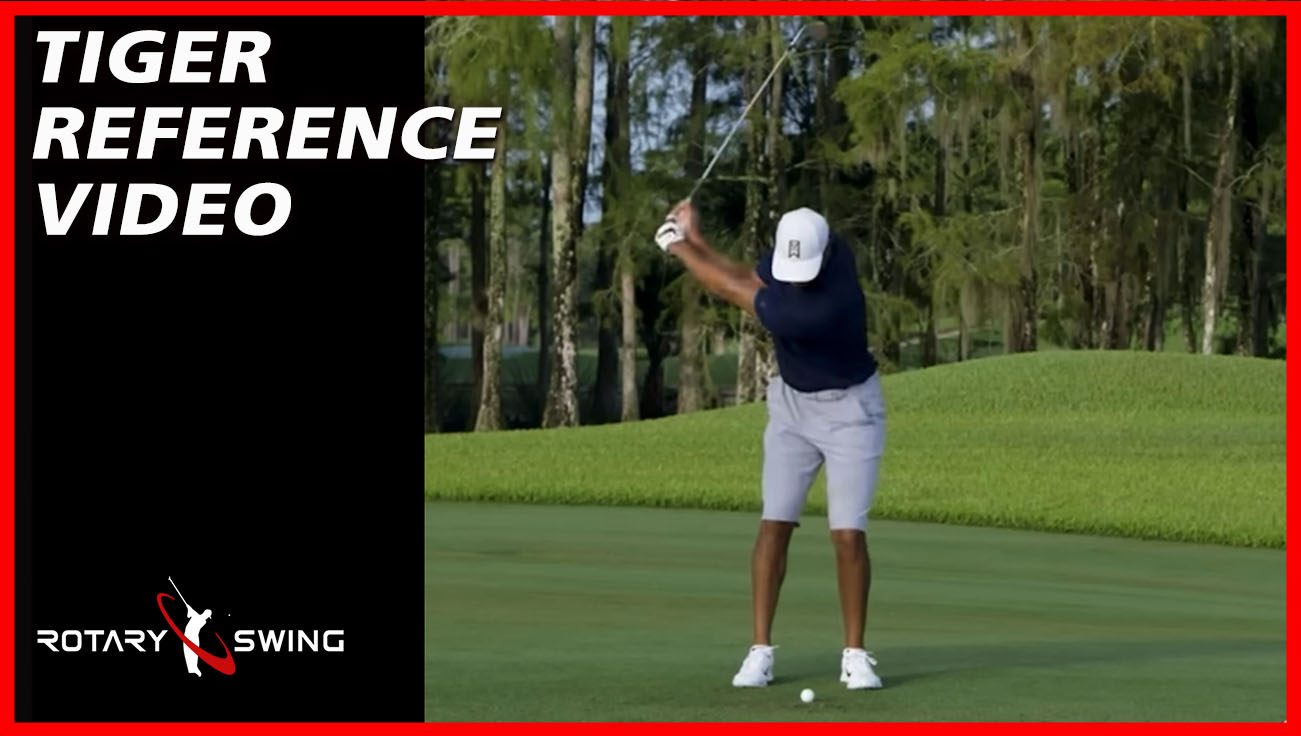
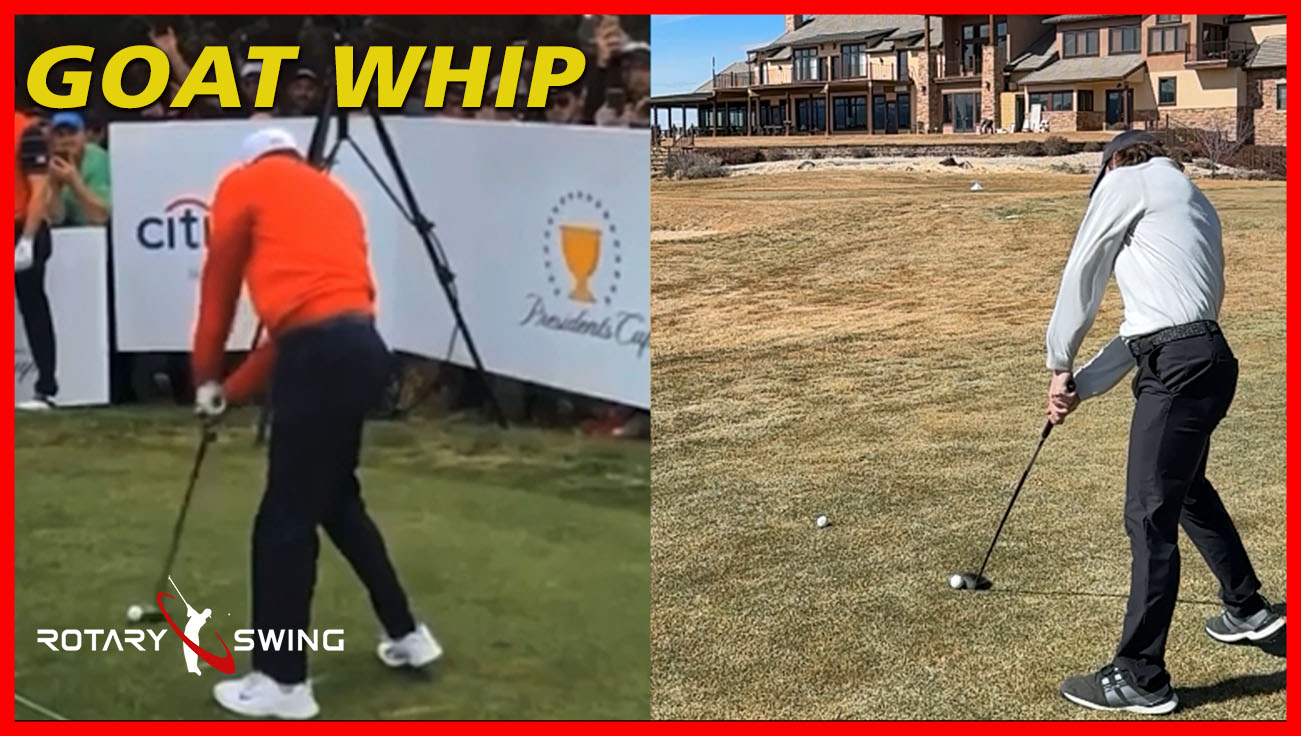
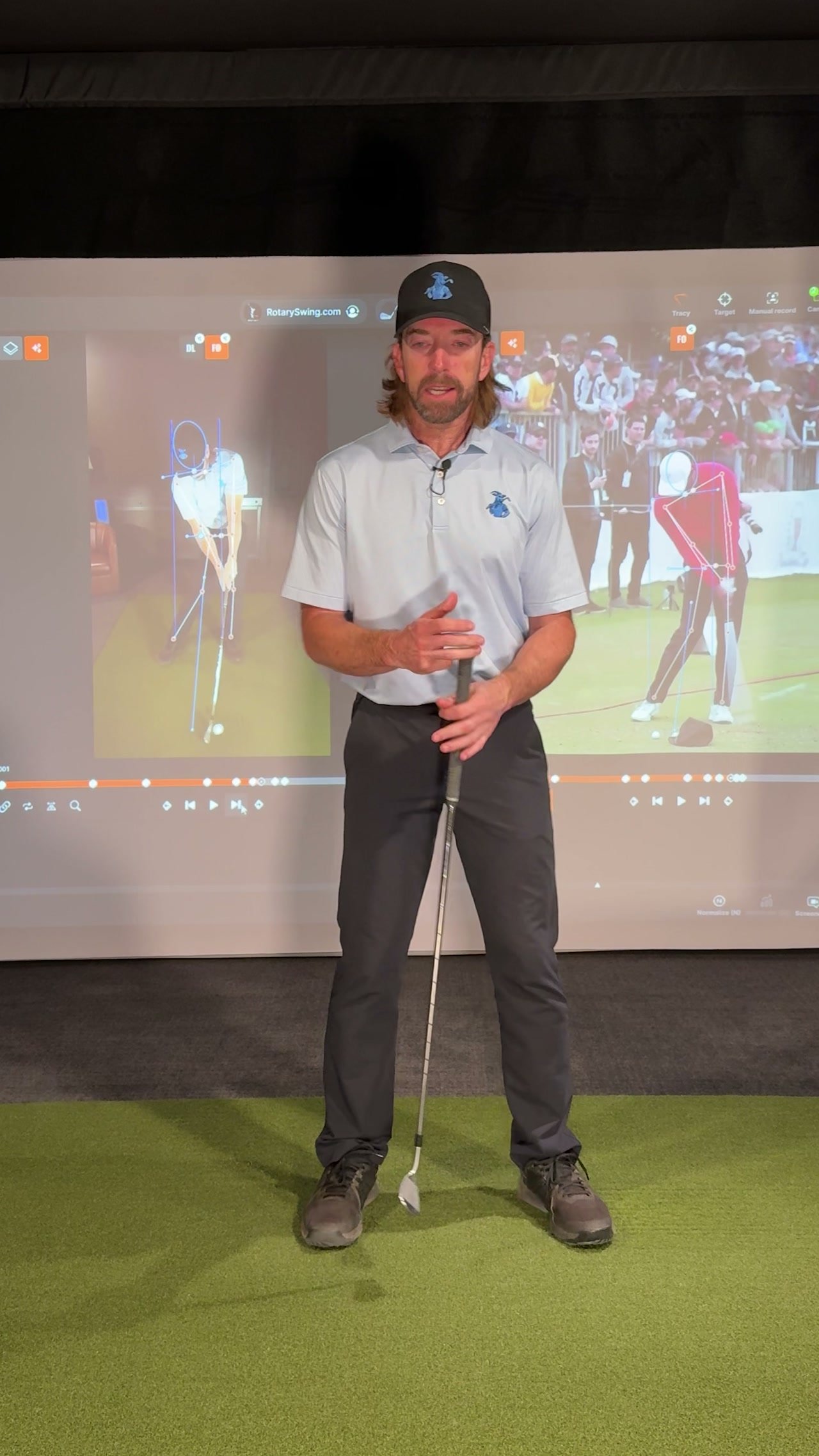
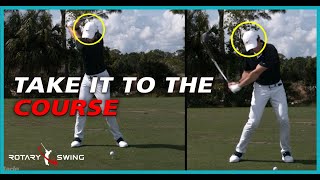
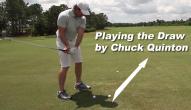
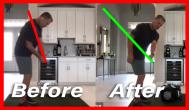
In the image at the top of the article, you probably noticed that Tiger appears to have the ball very far back in his stance.
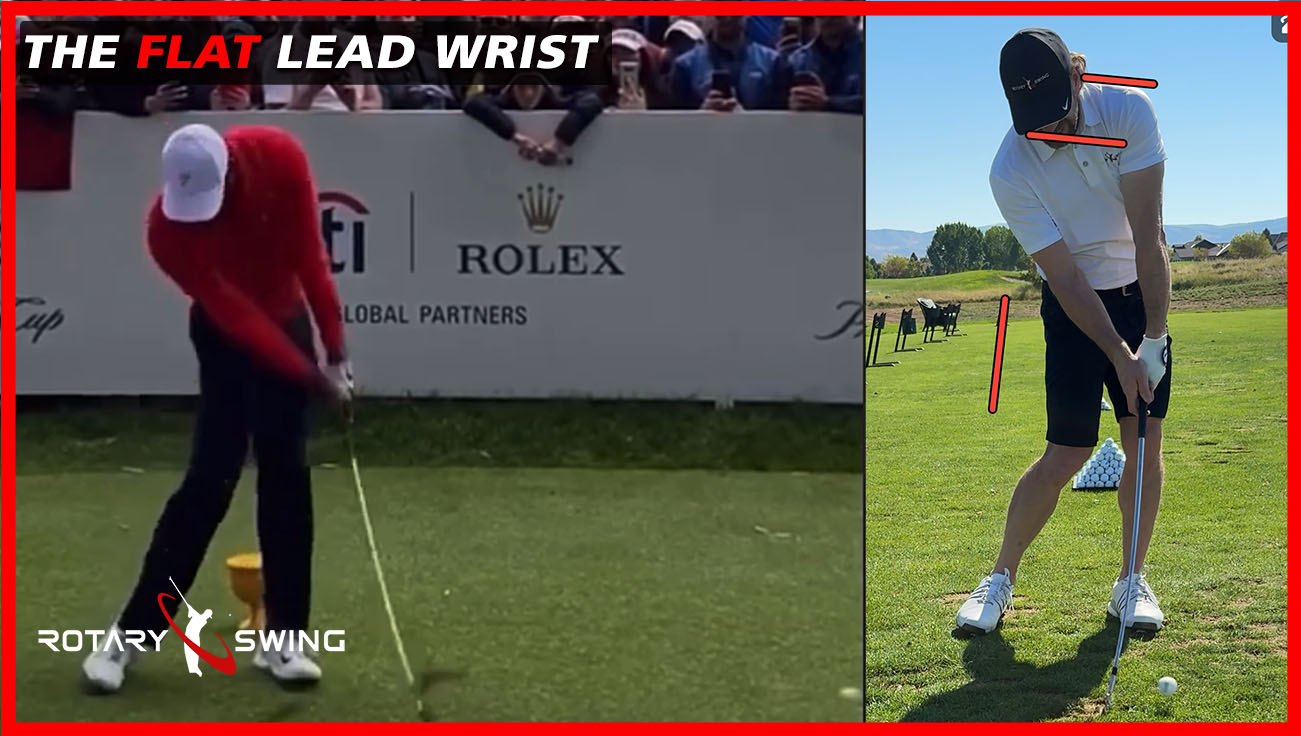
However, if we draw a line down from the lead side of his head, we can see that the ball is actually in the same position he uses for all his shots — the position advocated by RST fundamentals.
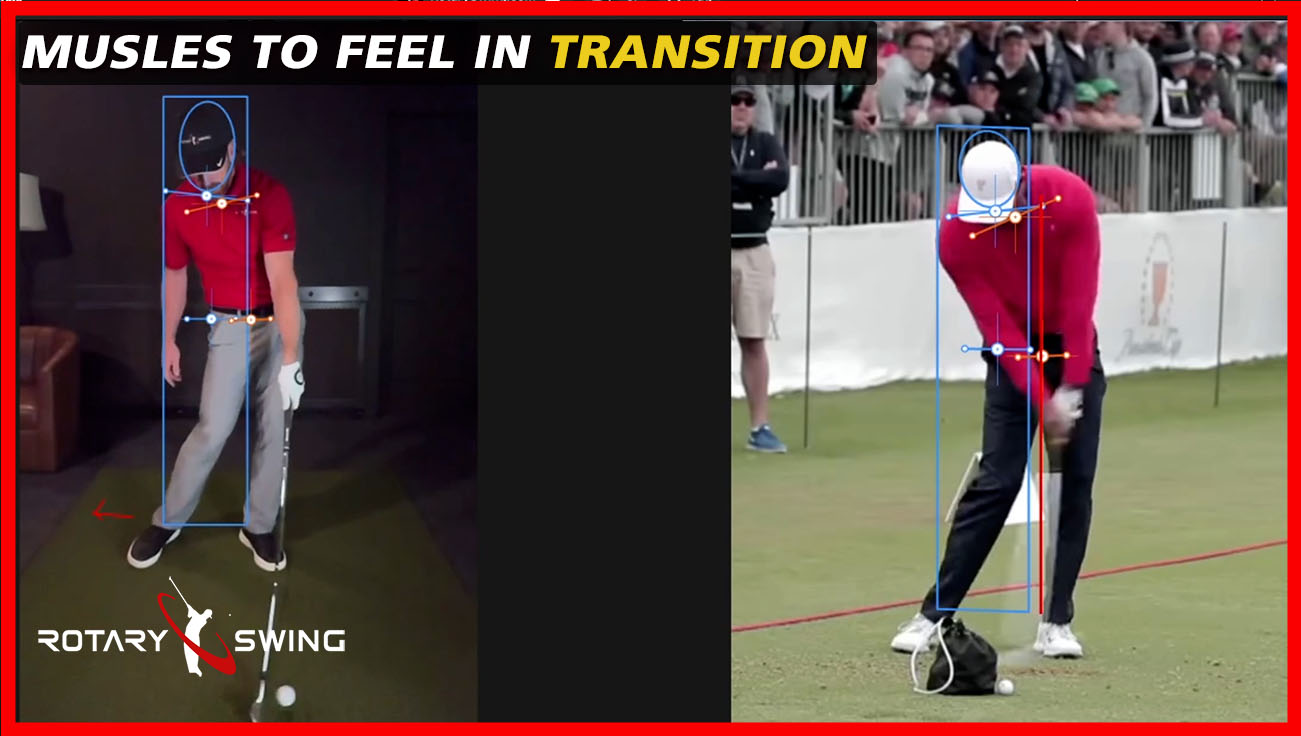
The area where most golfers go wrong is that they do not set up with any axis tilt. If Tiger had no , his head would be positioned in front of the ball, and he would struggle to get the ball airborne because he would end up hitting down on it far too severely.

Tiger has this ball positioned similar to an RST "stock" shot.
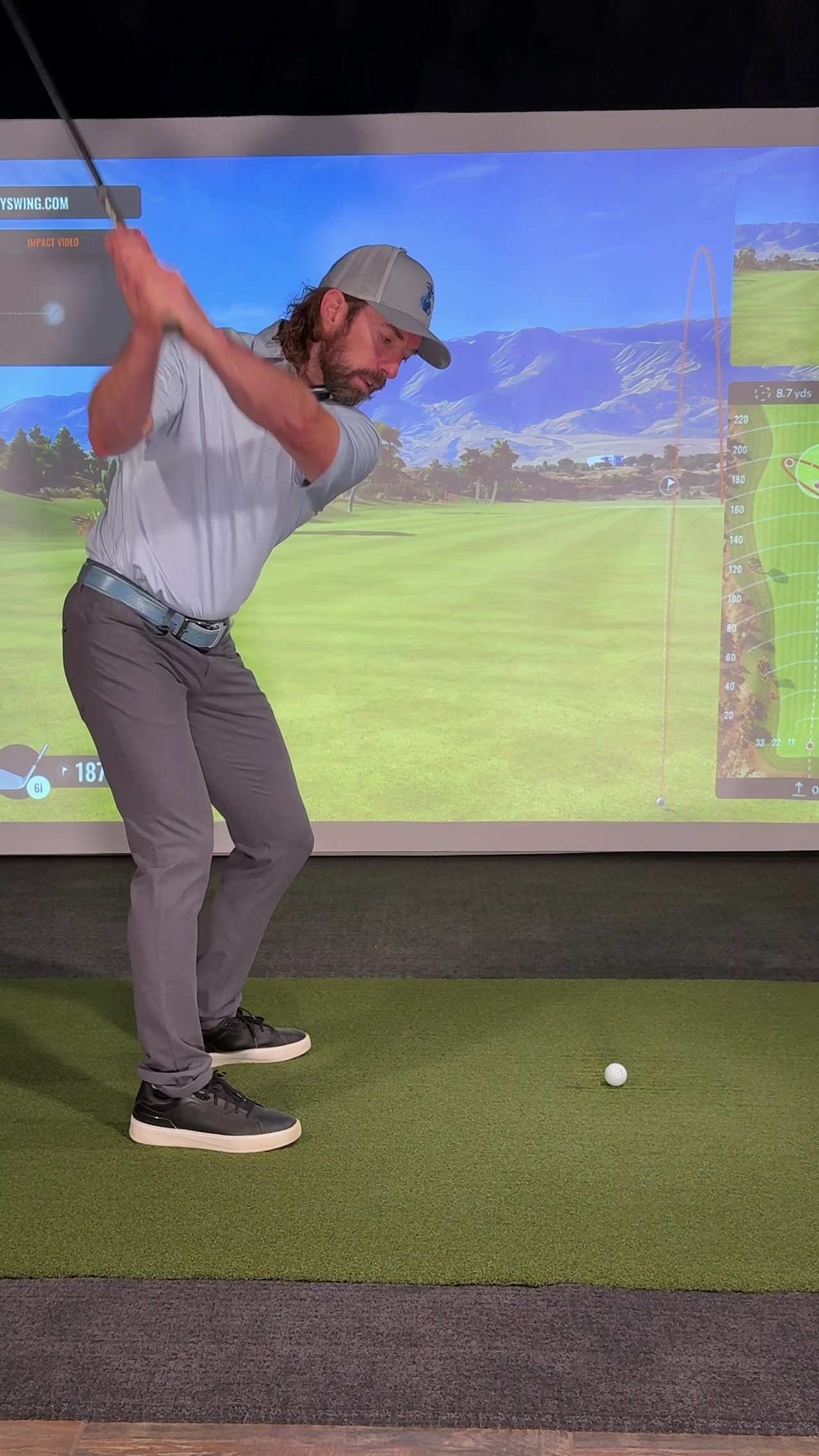
Setting up with proper axis tilt while keeping the ball farther back in the stance allows you to still achieve a positive without positioning the ball so far forward that you must alter your swing by losing tilt and swaying forward during the downswing.
Try a free live lesson with GOATY
GOATY, my AI golf coach, watches your swing through your phone camera and coaches every rep. Free, about 20 minutes, no credit card.
So, believe it or not, Tiger's setup position here is actually excellent for the driver when targeting a neutral angle of attack.
But what if you genuinely want to bomb one and create a very positive angle of attack? Should you just move the ball way forward?
In this Premium video, I demonstrate the basic RST driver setup and the one critical adjustment you must make to hit the ball solidly when you are trying to launch the ball higher for maximum distance. To see how your own driver swing mechanics compare to an elite standard, try a free AI swing analysis.
Click the button below to start watching now!
Video Transcription: RST Driver Setup Adjustments
Many golfers ask whether they should use the same swing for every club in the bag, and the answer is yes, absolutely. You do not want to learn 12 different golf swings!

The driver is an exception
There is just one exception, and that is the driver. The driver has changed dramatically in its design, especially over the last decade. Additionally, we now have tools like launch monitors that allow us to observe and measure how setting up correctly and using our clubs as they are designed can deliver significantly more distance.
Optimizing for the driver will require a few targeted adjustments to your golf swing. The reason we recommend using the same swing with every club in the first place is to establish a uniform release point so your swing always feels identical. The trade-off is that this approach does not fully optimize for today's driver technology, so you will not be maximizing your distance in that one specific situation.
Is That Necessarily a Bad Thing?
If you examine the PGA Tour average, the pros tend to hit down about 1.3 degrees. They have a negative angle of attack exceeding one degree, and we all know that to hit the ball as far as possible, you want to catch it slightly on the upswing.
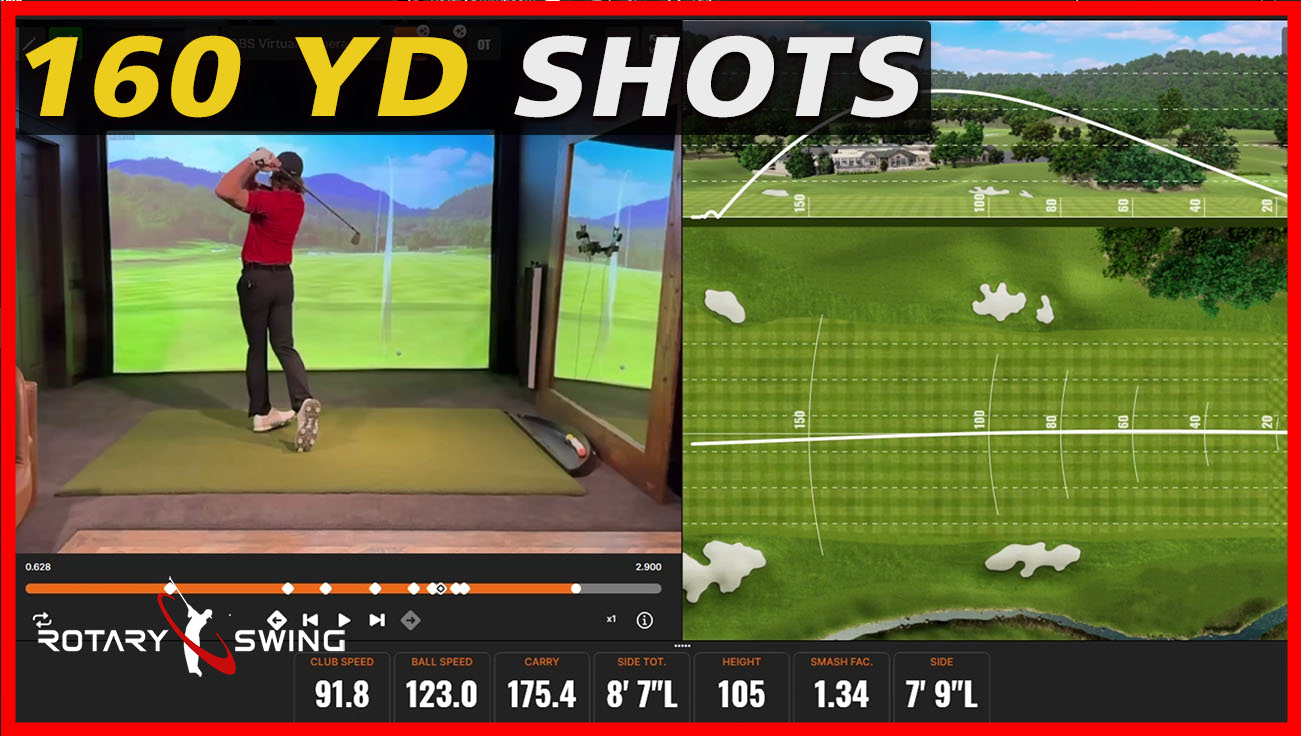
The exact numbers will vary depending on your swing speed, but typically a few positive degrees is sufficient to generate considerably more yardage — getting the ball to fly farther and achieve greater overall distance.
So why do Tour pros hit down on the ball when they know they could be hitting it farther?
Their reasoning is identical to what we teach in RST: to achieve the same release point every single time, for maximum consistency. The pros have enough swing speed to sacrifice a small amount of distance in exchange for greater accuracy and consistency.
Optimizing For Distance
Of course, there are situations when you need to hit the ball that extra distance. You need additional yardage to carry a bunker or hazard, to achieve a softer landing with a higher ball flight, or to take advantage of wind conditions to reach a long par 5.
Those are the situations where specific adjustments make sense, and that is exactly what we are going to discuss.

The driver is an exception
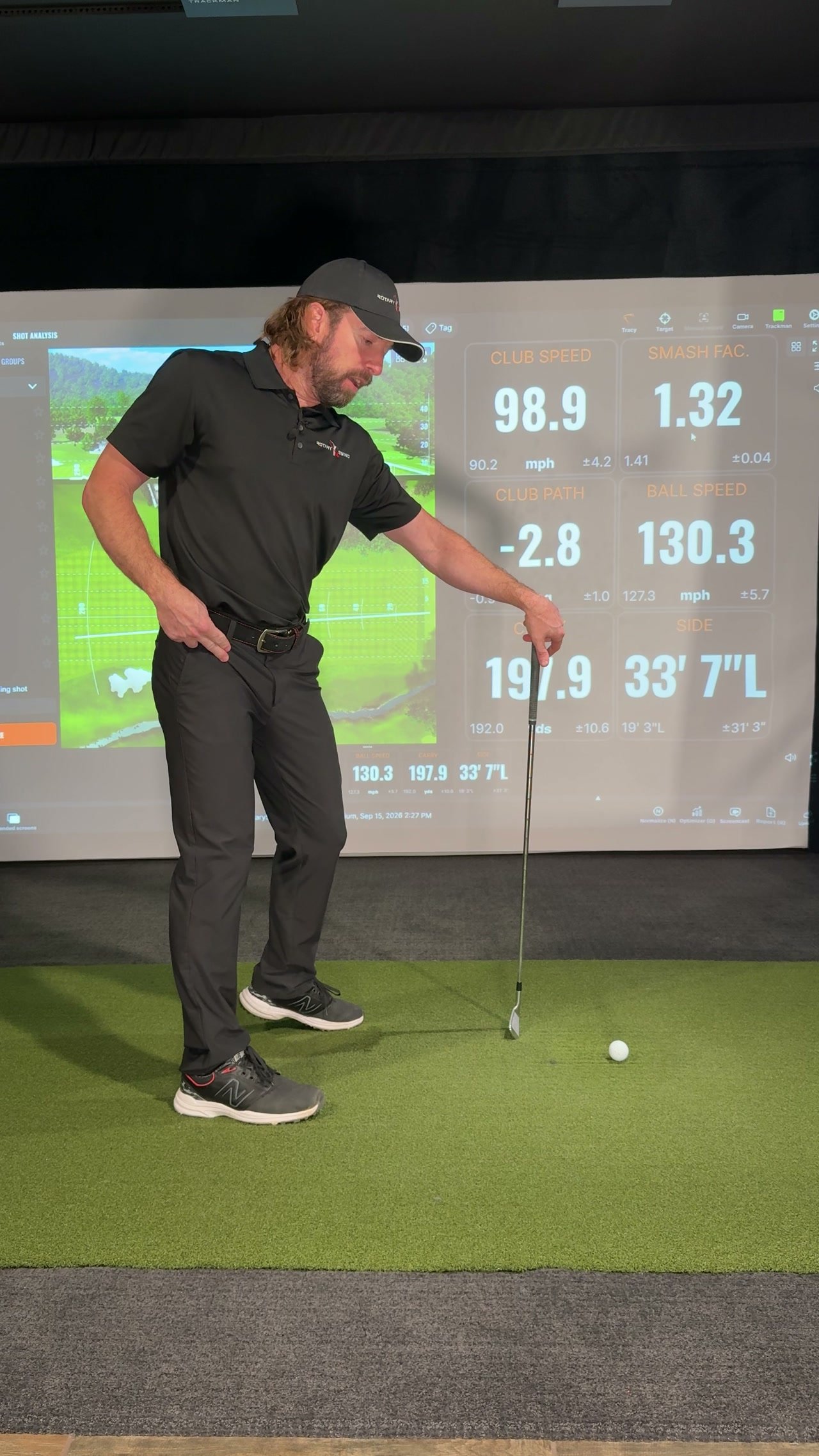
The yellow ball in the photos shows the standard stock shot ball position. You will be hitting slightly down on that yellow ball — sacrificing some distance for the sake of consistency.
We can move the ball just a fraction forward to reduce some of that negative angle. With irons, you may be five or six degrees down. Moving the ball slightly forward — say half a ball-width for a stock shot — will help somewhat, but it will not produce a dramatic difference.
As you come into impact with the yellow ball, your club face should still be squared up.
The white ball is placed approximately six inches in front of the yellow one. This placement allows you to hit the ball higher with the driver.
The yellow rod represents the alignment line. You can see that if you hit the white ball from your normal stance, by the time the club reaches impact the face will be slightly shut and the ball will travel left of your target line.
The club swings on an arc, so by the time it reaches the white ball six inches ahead of the normal setup position, it is already working back to the left and shutting down. The club face is closing.
A Logical Solution

Adjust your stance to compensate
With the ball positioned that far forward, the result will be a pull — but sometimes you still need that shot for extra carry. What do you do when you want to hit the ball really high and extract more distance?
Let us approach this logically. To hit the ball square, you need to move it up several inches to where the white ball is positioned, but how do you adjust so the ball launches on the target line?
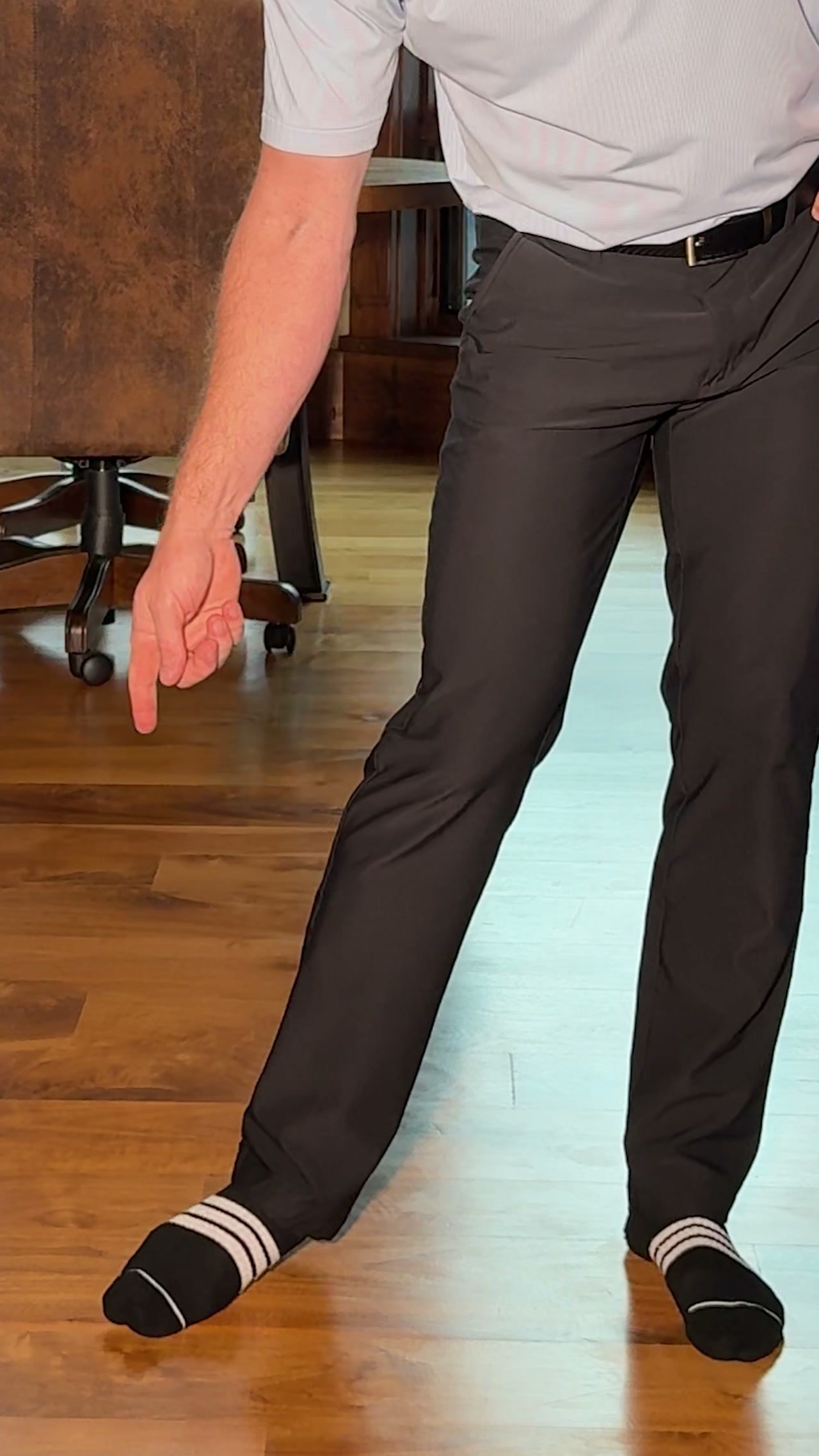
The solution is straightforward: you need to close your setup just slightly. This allows you to achieve a positive angle of attack so the ball follows the target line. The shot would be a pull from your normal stance, so you close your stance as shown in the photo. Now you are set up so that the club face is squared up at the white ball's position.
You are simply adjusting your setup by a few degrees — enough so that the club face matches the alignment at the point where you are releasing.
This delivers a higher and a more positive angle of attack. Move the ball forward, then close your stance slightly to compensate. Relative to your swing path, the club face will be square to your alignment at impact but shut relative to your body position where the ball is at impact.
When you close your setup slightly, the ball launches square to your target line, helping you achieve a more positive angle of attack and extract more carry distance.
Don't Give Up Your Normal Swing!
It remains critically important that you continue practicing standard shots with the driver from the normal ball position. These drives will fly significantly lower compared to the adjusted setup we just discussed, but it is essential to train yourself to at the same point with every club — developing a consistent release point.
That is how you learn to hit the ball straight with every club in the bag. The driver will fly low; you might even take a small divot with the driver when practicing this way, and that is perfectly acceptable. For a data-driven look at how your driver setup and launch metrics compare to elite standards, try a free AI golf lesson that evaluates your form in real time.

Some golfers develop a lot of secondary axis tilt trying for a positive angle
We have many of our Tour players practice this intentionally, because otherwise we observe them creating excessive secondary axis tilt in an attempt to achieve a really positive angle of attack. We have to correct that by having them work on staying tall and hitting slightly down, so the driver releases exactly like a 3-wood, 3-iron, or pitching wedge would.
Once they have that zeroed out — everything squared up, ball coming out low but on line — then we make small setup adjustments to allow them to create a positive angle of attack without trying to lean their spine way back at impact.
You want to use your body in the same way for every club in the bag, but you can modify your setup just slightly to help you hit the driver farther when you need it. Still, continue practicing with the standard setup to develop that consistent, reliable release.
Frequently Asked Questions
What is the correct ball position for hitting a driver?
The correct ball position for hitting a driver should not be too far forward in your stance. Instead, it should be set up similar to the position used for all clubs in your bag, which allows for a neutral angle of attack. This setup, combined with proper axis tilt, helps you achieve a positive angle of attack without compromising your swing mechanics.
How does the setup for a driver differ from other clubs?
While the fundamental setup remains consistent across all clubs, the driver requires specific adjustments to maximize distance. These adjustments include positioning the ball appropriately and ensuring proper axis tilt. This allows you to maintain a consistent swing while optimizing your impact position for the driver, which differs from the descending blow often used with other clubs.
Why is swinging 'up' on the ball a common misconception?
Swinging 'up' on the ball is a misconception because it can lead to poor contact and low shots on the club face. Instead, you should focus on swinging down while utilizing the correct driver setup to collect the ball on the upswing. This approach promotes better consistency and prevents issues like chronic back soreness from improper mechanics.
What can amateurs learn from how tour pros hit their drivers?
Amateurs can learn that many tour pros actually hit down on the ball slightly, which helps them control their impact position. This technique allows for a more consistent swing without radical changes to spine angle or swing path. By adopting a similar approach, amateurs can improve their driver performance and achieve more reliable results off the tee.
Watch part 2 now to see how you're moving your body in the opposite direction of the pros!