The golf impact position is the single most important moment in every swing you make.
That is exactly why RST was built around getting the body and club into the perfect impact position consistently, powerfully, and safely. Every drill, every setup fundamental, and every movement pattern leads to this one critical instant where the clubface meets the ball.
Is this the fault costing you strokes?
Film one swing on your phone. In about a minute GOATY measures it and names the single biggest thing costing you strokes — free, no card.
Analyze My Swing Free
Related: Golf impact position — how AI scores yours →
Android users: Download GOATY on Google Play — free AI golf coaching on your Android phone. →

Using the
impact bag and instructions in this video, you too can achieve this powerful impact position and start hitting the most penetrating, compressed golf shots today!
In this video, I break down exactly what a tour-quality impact position should look like from the face on view, so you can start checking your own positions today.
Stop reading about it — feel it in your swing today
GOATY watches your swing live and coaches you between every rep. Free. No signup.
Start Your FREE Live Lesson →One of the most important pillars of RST is that our methodology has been researched and developed with the help of Ph. D biomechanists and orthopedic surgeons to ensure injury prevention and a lifetime of pain-free golf. This is not guesswork or recycled tips from the range.
Because impact is the moment in the golf swing where the greatest forces act on the body, the proper alignment of the joints is critical, especially for protecting the elbow from injury. Poor impact alignments can cause chronic pain that sidelines golfers for months.
In order to align the joints properly at impact, there is a specific sequence of movements and muscular contractions that you MUST understand and be able to execute to ensure a safe and powerful impact position. Without this knowledge, most golfers are essentially guessing their way through the most violent part of the swing.
In this video, I walk through the ideal positions of
- the spine angle,
- hips,
- knee,
- ankle,
- lead arm,
- lead wrist and
- lead shoulder.
You will also learn the two most important muscles that MUST be contracted to stabilize the body and lock in a proper golf impact position.
Knowing exactly which muscles to feel at impact is one of the key advantages of RST over traditional golf instruction - we don't just teach you what to do, we teach you EXACTLY HOW to do it and EXACTLY which muscles to engage. If you want to see how your own positions compare to the tour model, try a free AI swing analysis to get instant feedback on your impact alignments.
The muscular contraction discussed in this video is one of THE most important aspects of achieving a controlled, repeatable impact position under pressure.
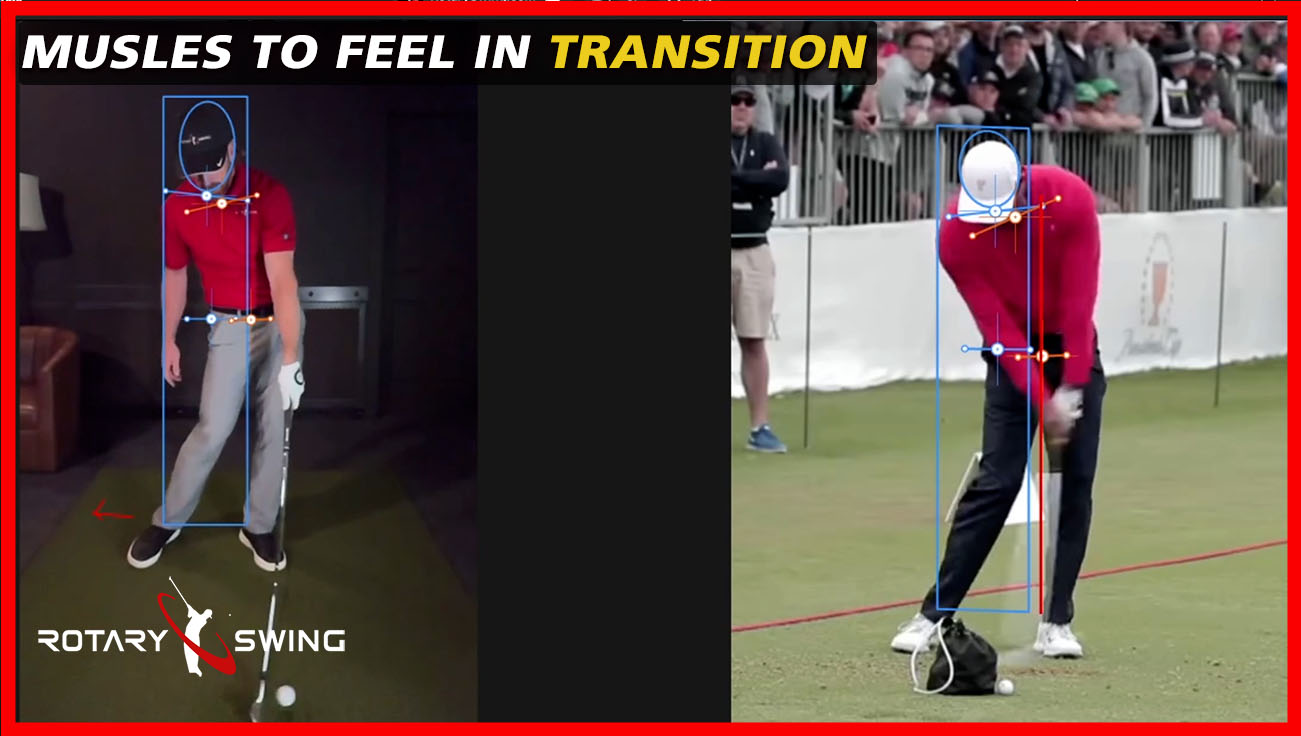
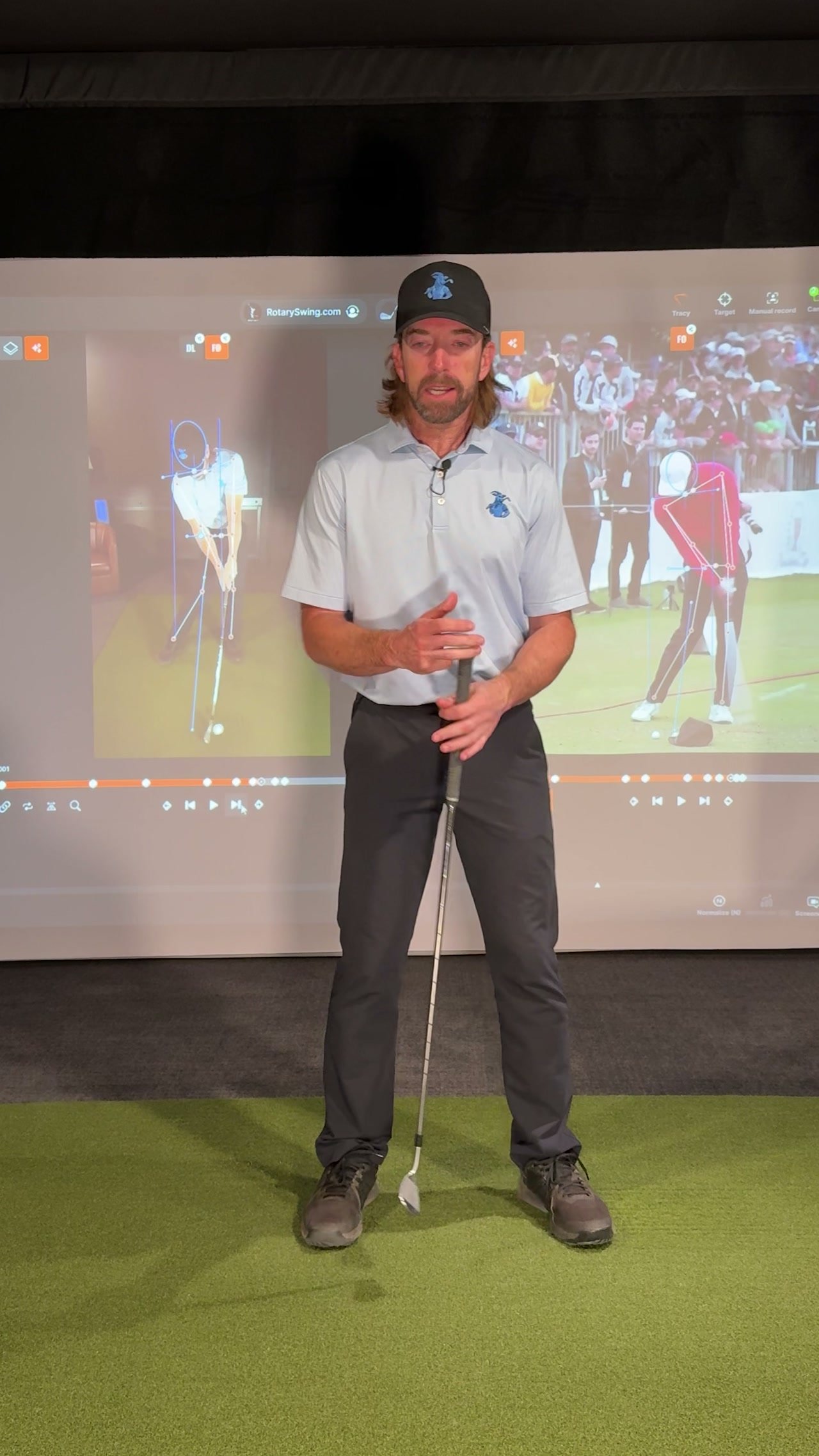
In the screen capture of a professional student of mine below, he is employing the muscular contraction I discuss in the video and using the RotaryConnect to help ingrain this feeling (learn more about the RotaryConnect here).
If you want to hit the ball FURTHER, STRAIGHTER and prevent "golfer's elbow" and other impact related injuries, you must continue reading this article!
Video Transcription: Impact Position Face On
At the end of the day, the most important thing in golf is impact. Everything that we do going back, doing drills on the backswing, getting the takeaway right, the grip right, the setup right - all of that has everything to do with just getting impact right.
That's the whole point of everything that we do to get all these positions correct in the backswing and get all these repetitions in, is to make sure that when we strike this ball, everything is in perfect alignment.
This video is going to cover what that is in a face-on view. We're going to talk about what we call the "impact alignments." We're talking about how the club and the shaft and the joints and everything will line up to get into a perfect impact position so that we can get the ball starting out on line - that's a key - and get the ball struck solidly with a descending blow.
We're going to talk about that. I'm going to grab a club here, and we're going to look at what those impact alignments from a face-on view would look like.

Spine angle of a hip spinner
One of the key things from face-on is that we're trying to get many of the joints on the lead side of our body in almost a straight line. I say "almost;" there's a lot of reasons for that, but for many of you it will feel like you're very, very much stacked over this lead side at impact, compared to what you may be like, especially if you're a hip spinner.
I'm going to show you some things that most golfers do wrong, and then I'm going to show you the correct way to do them.
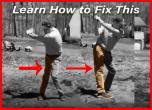
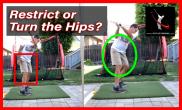
When we look at impact, the most common problem that I deal with on a daily basis with my students on the lesson tee is that the majority of students out there are hip spinners. This typically falls into the better player category.
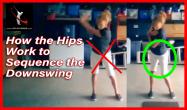
Most of my students are 15 handicap or lower, typically falling on the lower side, so they tend to use the body really well, and get to the point of using it too well. They overdo it. They get their hips firing out of sequence. They get them too open. I'm going to show you what that causes.
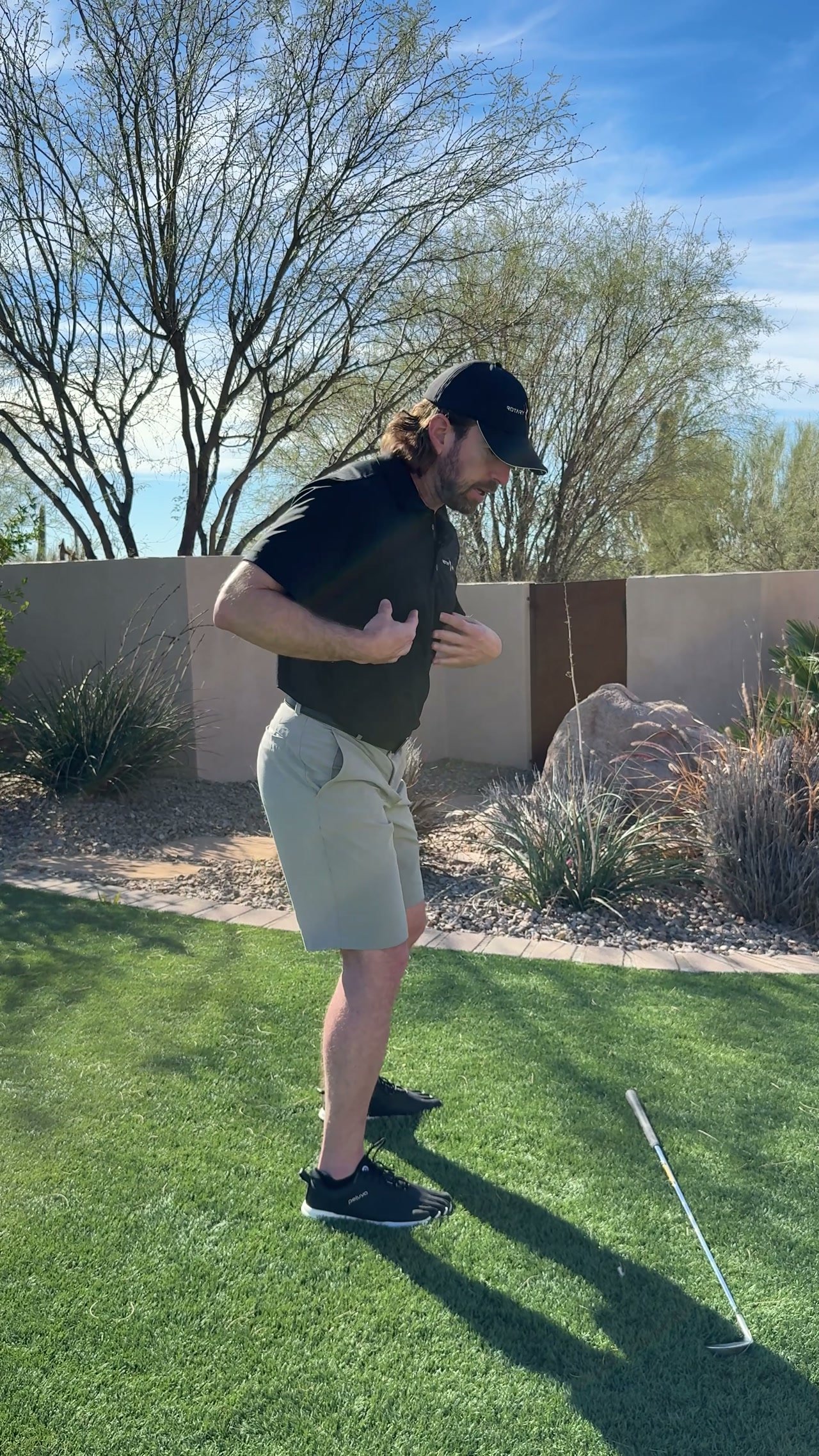
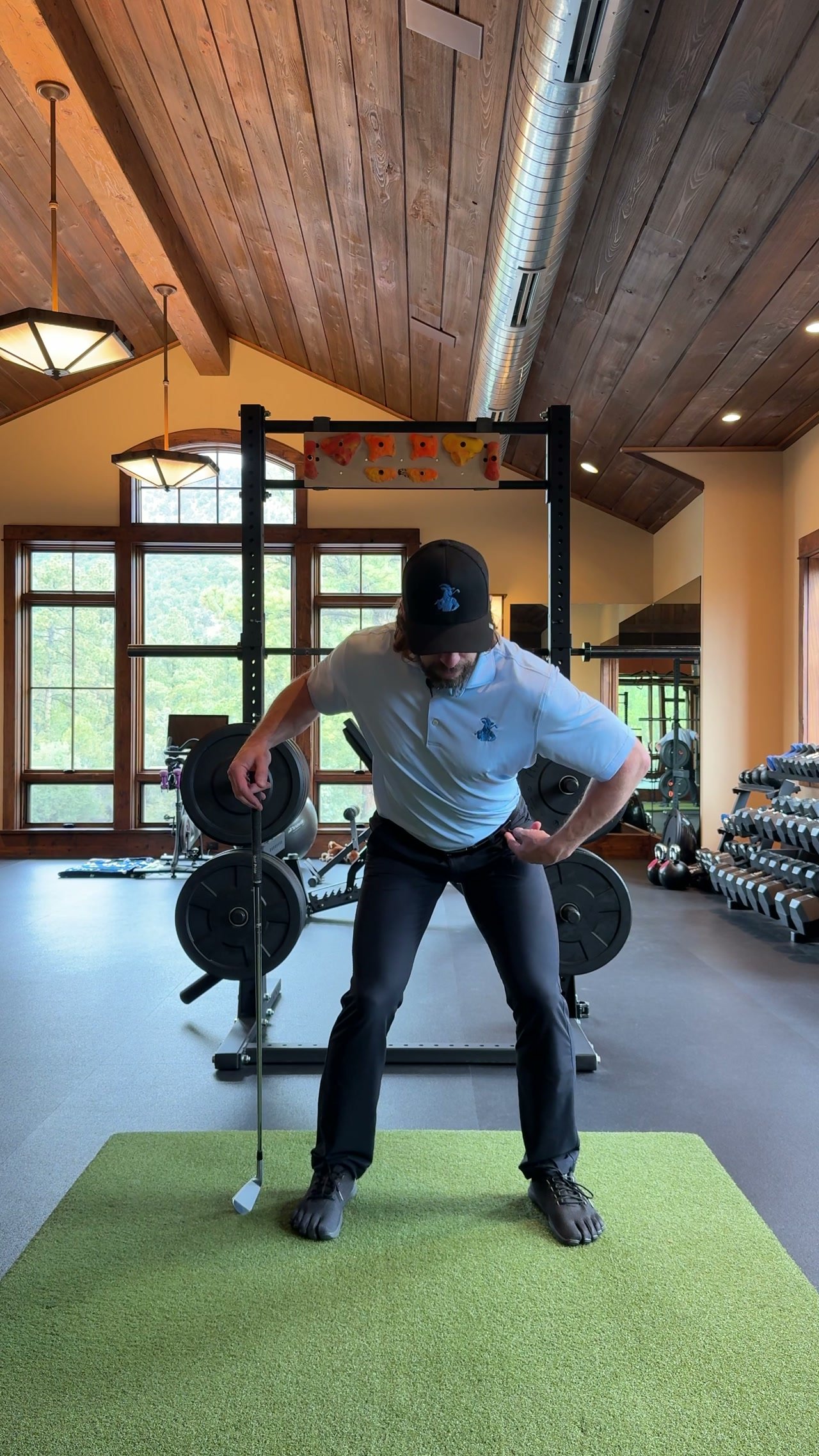
If I were to get into impact position and spin my hips as far open as I can, if you imagine a line straight from my belt buckle, up the sternum of my shirt - we can easily see that if we put a club here - right now that line would be straight.

The club is inside and too shallow
As I keep my head in place and rotate my hips, that line begins to tilt back. When you do this with your golf swing, what you're doing is effectively tilting the . That's easier to understand from down the line.
I'm going to do that same thing. I'm just going to set the club here, in the position where it would be on plane. Now I'm just going to spin my hips as far open as I can. You can see now that as my spine falls back, as I mentioned earlier, what happens is that club begins to drop under the plane. It gets coming into the ball too far from the inside and too shallow.
That's why most of my students spend most of their time working on keeping their hips very, very quiet. That's what's in the Hip Spinners video.
The Belt Buckle Drill is geared toward getting them into a position where they're stacked at impact, so now my spine has the appearance - it's not technically my spine, but this line from the belly button to the sternum - appears to be more upright, versus if I open my hips a lot it now falls back a lot, tilting that plane.

The left hip socket is stacked over the left ankle
Not only that, but it's very hard on your back, and hard on your hip, and completely unnecessary.
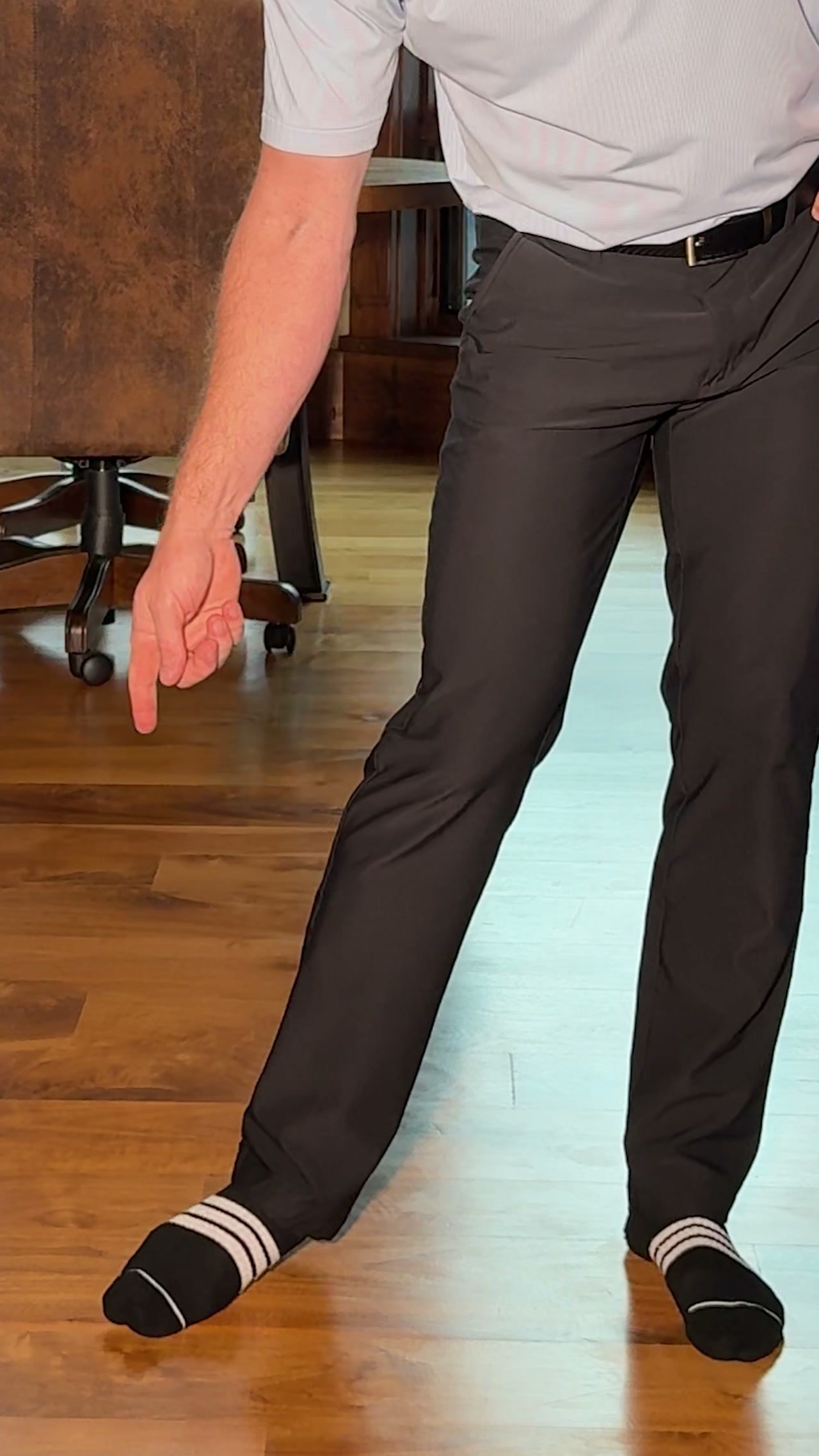
As we come into impact, what we want to feel is that our hips are very square in relationship to the target line, so they would be parallel - if you put a club across your upper thighs here - basically parallel to the target line.
Now, it won't happen like that, nor do we want it to, but it feels that way for most golfers. In fact, a lot of them feel like it's actually shut, in relationship to the target line.
As they come down, our first goal - this happens during the transition as we're setting into this lead side - is to get this lead hip socket over our lead ankle.
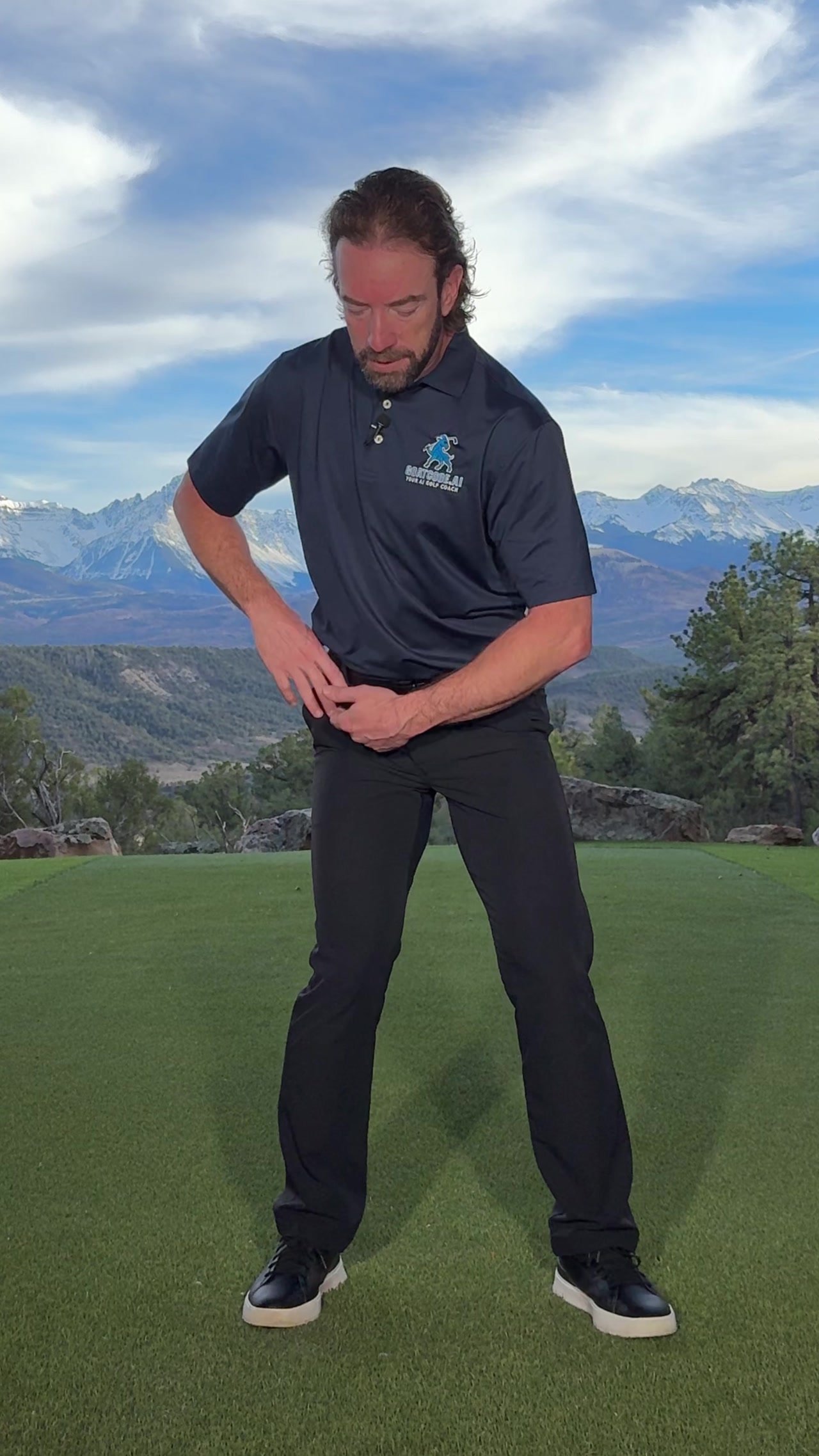
An easy way to check for this, basically your first belt loop on your slacks is typically close enough as a rough guide to see where the center of your hip socket is. Just use it as a rough guide. If that's over your ankle, your hip is in a safe enough position that you can pivot and not be in jeopardy of damaging your hip.
You get outside of that a long ways, and now you can feel it right away. Not only are you compressing your lumbar spine in your lower back, but also your hip. You're putting some strain on the outside of your hip cuff.

The left shoulder is just outside the left foot
If you're inside, we've got other issues because now we haven't completed enough to give ourselves a good descending blow.
First move, we get into what we call neutral joint alignment on that lead side, so my lead hip is stacked over my lead foot. The next move is that, as I'm coming down, my lead shoulder is also very close to being over my lead foot.
Technically, it will actually be a little bit outside of it for a lot of players - that's perfectly OK, because the opposite of that would be, for golfers who spin their hips, their shoulders tend to fall way back behind that hip line.
Now we've got the position where we've tilted our plane again and we have to make some sort of compensation to get the ball to come out on line because as you tilt the plane - imagine this shaft is the plane - as I tilt it this way, now my path is going to come from the inside and swing in-to-out, and now I'm going to have to do something with the club face to manipulate it to come back toward the target. We don't want to do that, obviously.
You're going to feel hip over the lead ankle, shoulder over the lead ankle. It's going to be slightly outside for most golfers; that's ideal because your shoulders are a little bit wider than your hip and you don't want to be tilted too far back.
Now what that's going to feel like is that my spine angle is very vertical. Again it's not, but you're going to feel that, especially if you're a hip spinner. You try and feel that your buttons on your shirt are stacked over your belly button.

Correct impact alignment
Again, the belly button is going to be a little bit open. It's going to be a little open in relationship to the target line and it's going to be a little ahead of the buttons on your shirt, but again it's a good feeling to keep you from spinning open and getting your arms trapped behind your body.
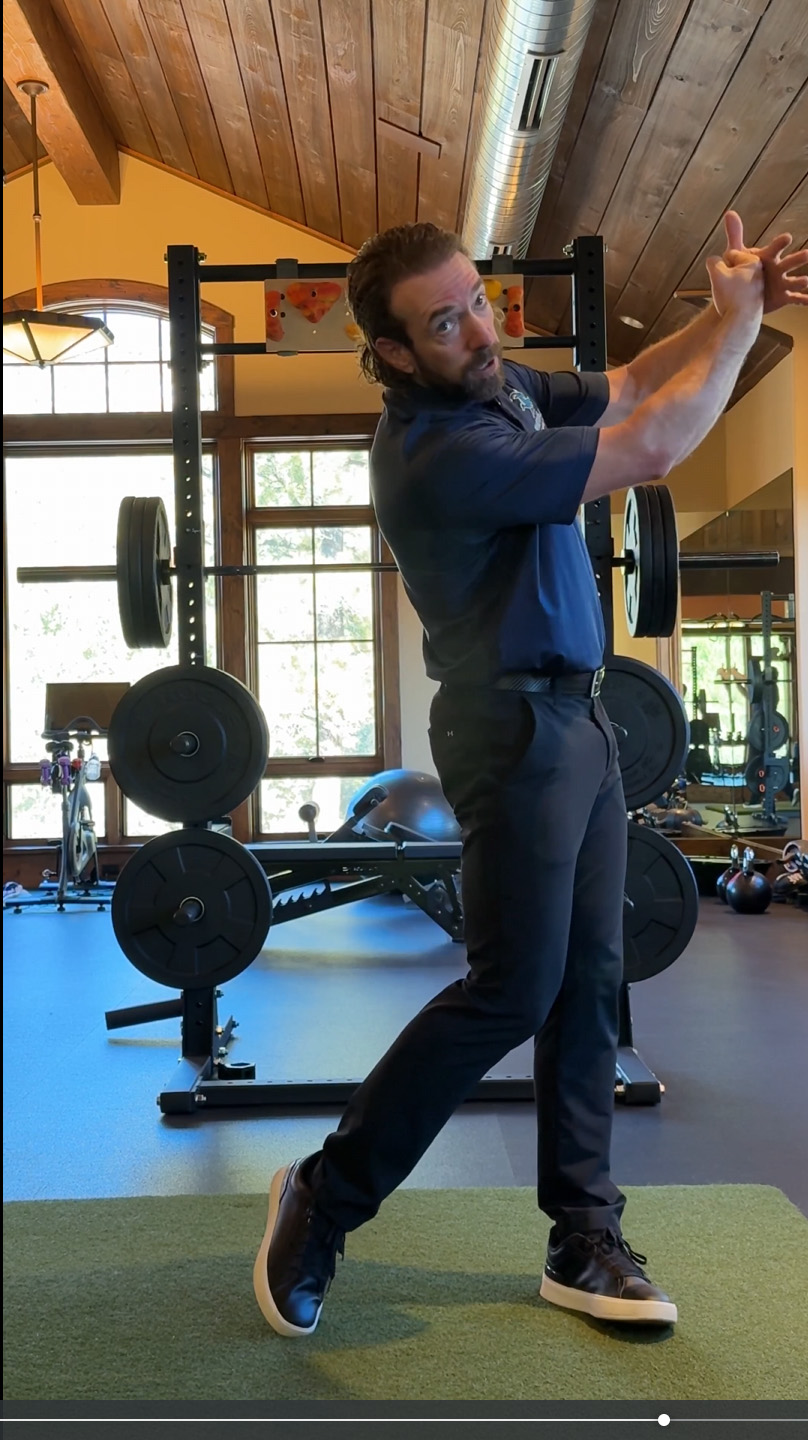
Here's our impact alignment. I'm stacked; my knee, my ankle and my hip are in alignment. My shoulder is basically over the lead ankle, just slightly outside of it. Now we're looking at our arm position.
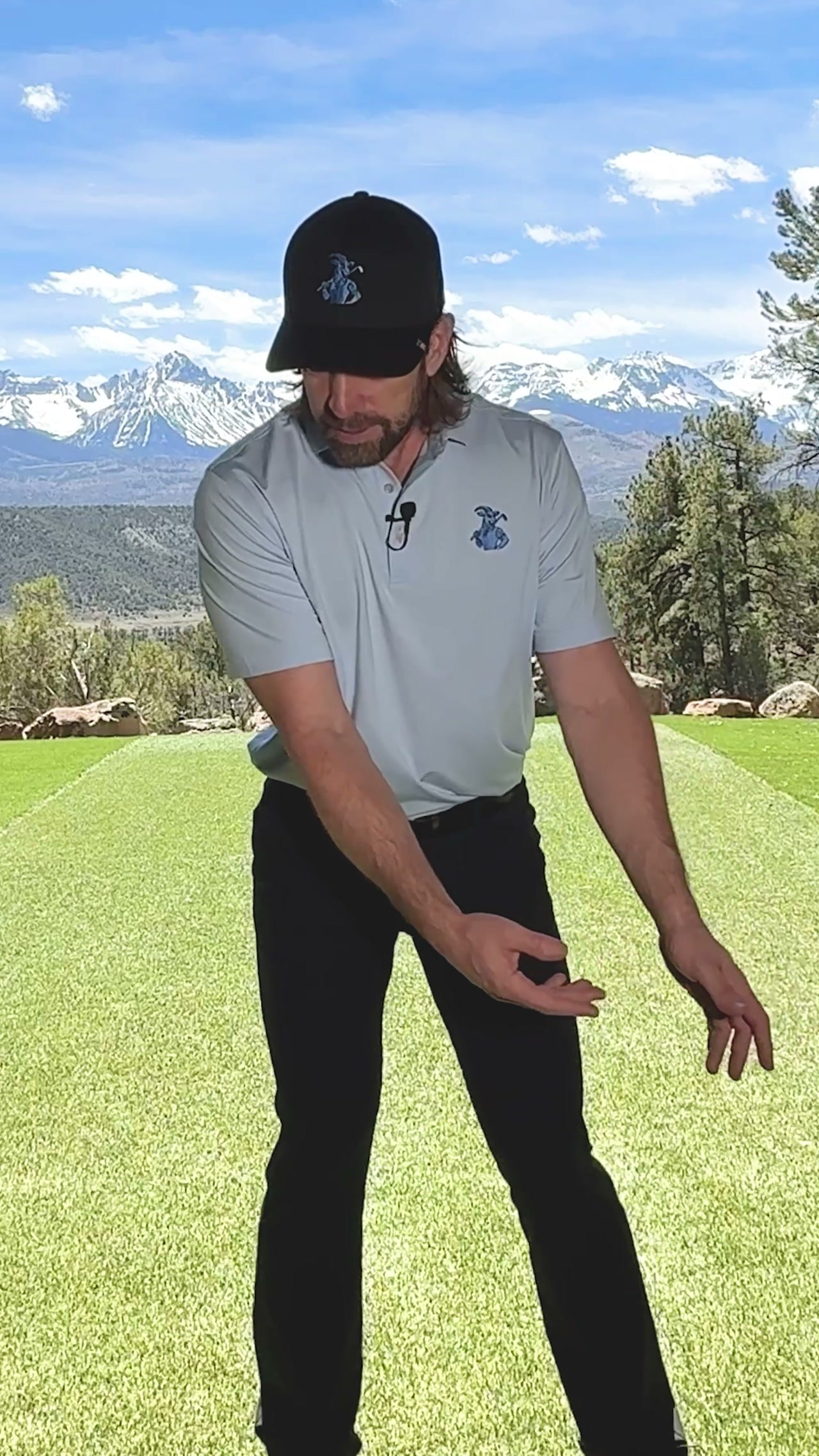
My lead arm is almost in a vertical position, my lead wrist is flat - this is critical - and my lead elbow is pointing more or less at the target, versus being rotated in. That's going to lead to a flippy impact position, so that lead elbow working down the target line and the trail wrist is still slightly hinged back, versus being flipped, which most golfers struggle with.
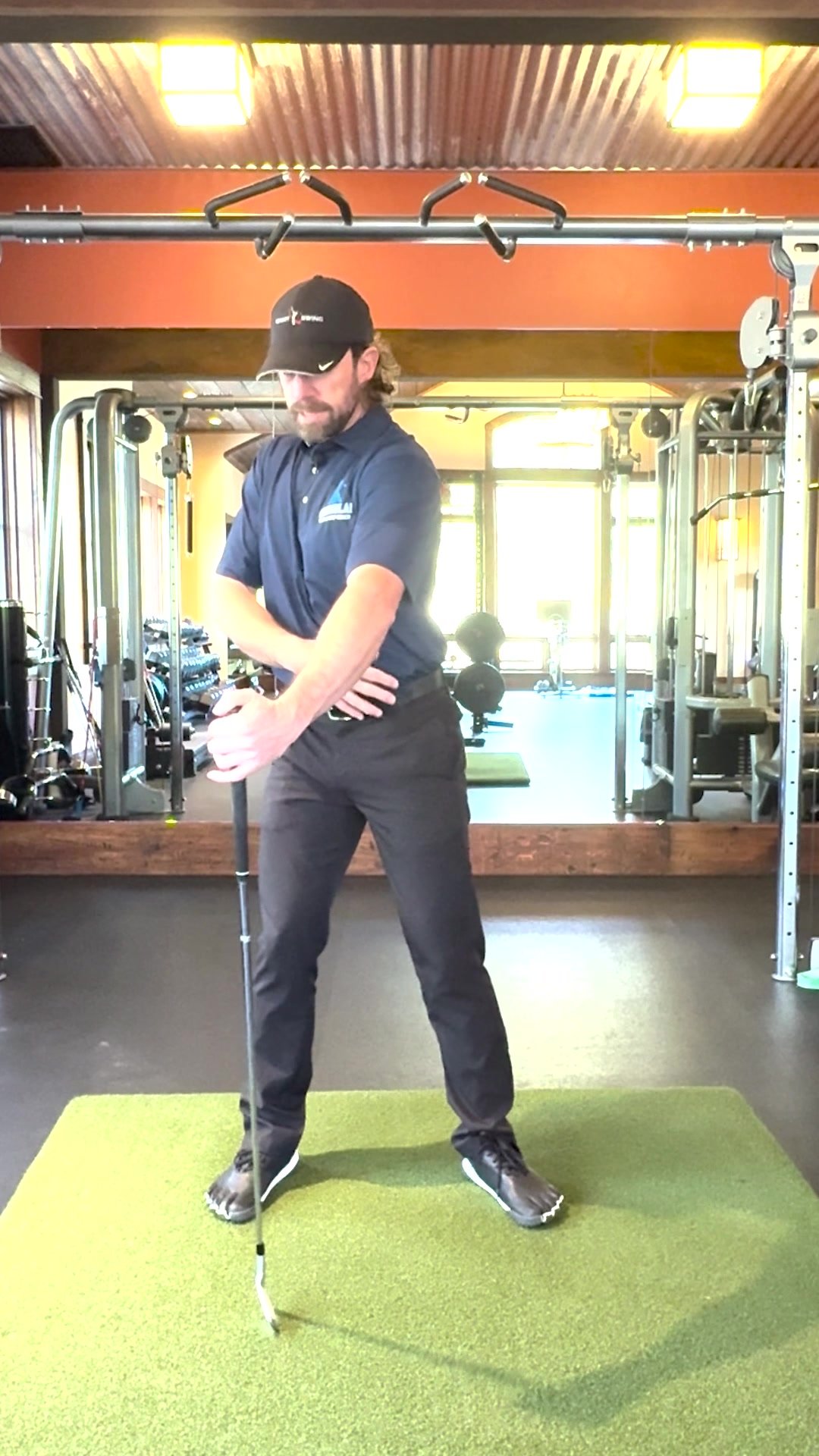
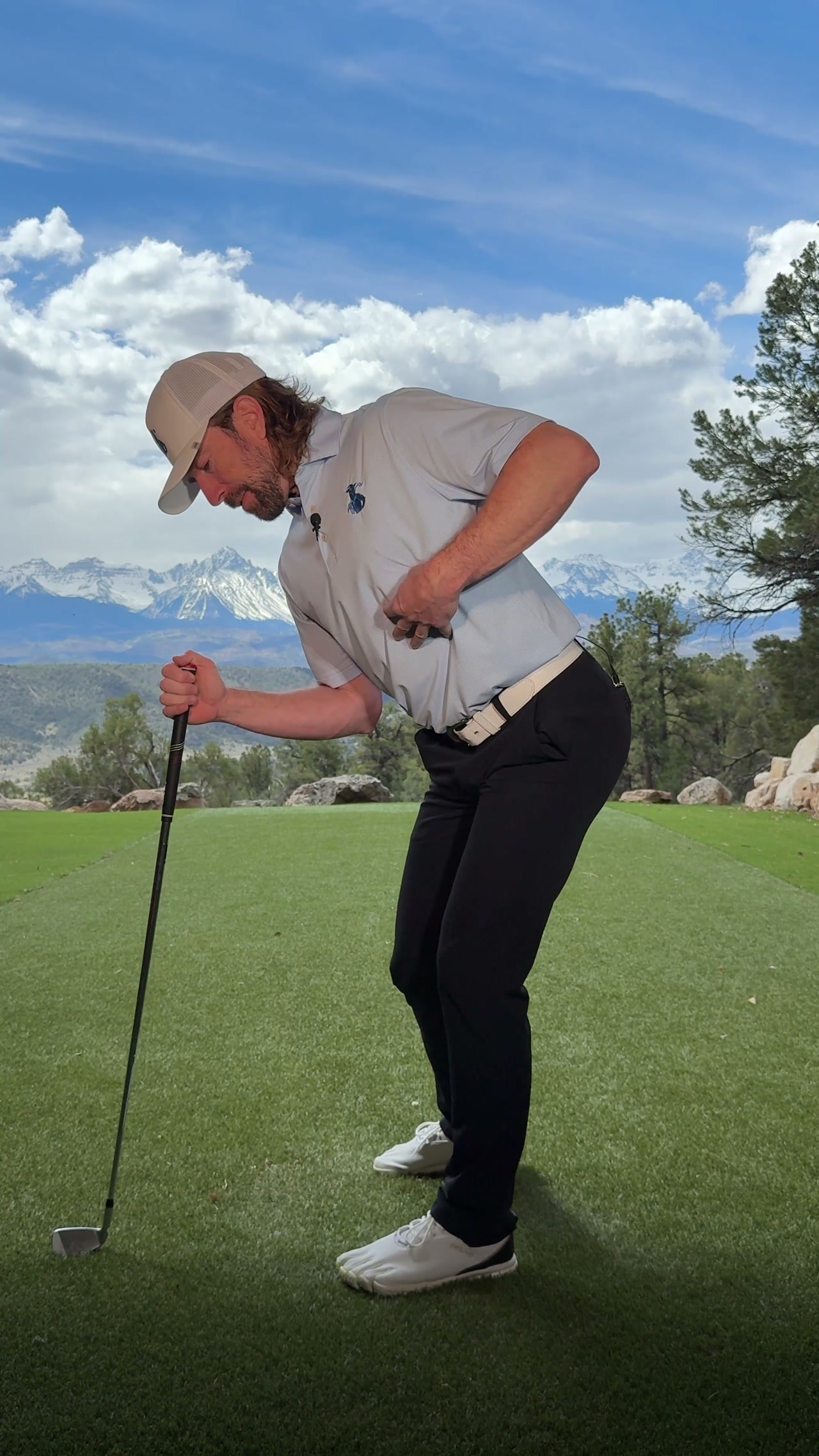
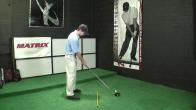
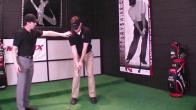
A great drill for this is to grab an impact bag, and you can work on these impact positions by using an impact bag. First thing, I'm going to get onto my lead side. Now as I'm stacked over my lead side I'm now pulling my lead arm down and get into a nice, solid impact position, feeling these positions we just talked about. To practice your downswing sequencing into impact with real-time coaching cues, try a free AI golf lesson that tracks your body positions frame by frame.

Practice with an impact bag
A mirror and a video camera is critical for this. If you don't have a mirror to look into, you're not going to know where you are. You need to work on a mirror, and get yourself in these positions.
Now, what muscles do we want to feel? This is the critical one. When you're working on just hitting little half-shots, or if you're working on the impact bag, getting yourself into a good impact alignment with the bag, one of the critical pieces that a lot of golfers don't do is they don't contract their glutes at impact.
That sounds kind of like a strange thing for a lot of you, but it's critical that you try and feel, as you come into impact, that your glute muscles - your butt muscles - are engaged and providing stability through the strike.
What you're trying to do is provide stability for the upper body and the club releasing, and if your legs are really relaxed and soft, all you're going to do is just come through soft and spinny, and you're not going to have any support for your upper body.
You want to come into impact and literally squeeze your glutes so that you have a lot of stability and support to release that club at the bottom with maximum power.
For a lot of you - especially if you don't use them a lot and you haven't worked out a lot, or you sit at a desk a lot - it may be a struggle at first, but it's a great drill to go into an impact bag, stop at impact, and then literally contract your glutes as hard as you can, just to start getting the feeling of getting those muscles to fire again.

Trying too hard to keep the head behind the ball
That will give you stability at impact that's critical so that you can start to control these impact alignments.
The last thing we're going to look at is where's the head as we come into impact? A lot of golfers get into this position, where they're trying so hard to keep their head behind the ball - now you can see when I do that, my spine tilts back and now I've got that tilted plane again where I'm going to tend to come too far from the inside.
Your head - if we move the impact bag back out of the way and get our ball in here - the left ear should basically be on the back of the ball. It's not tilted back this way. It's in neutral.
For a lot of you, if you're used to being in this position, your head is going to feel very upright. It should be in neutral, close to neutral here, not tilted back this way, not looking under this way. This is the ideal golf impact position.
We've covered basically everything on the lead side. We've got the left ear lined up with the back of the ball, lead hip, ankle and knee in alignment, shoulder feeling like it's over the ankle - it'll be slightly outside of it. Upload a face-on swing video to get a free AI swing analysis and see exactly how your lead-side stack compares to the tour model.

Don't let the right foot come off the ground
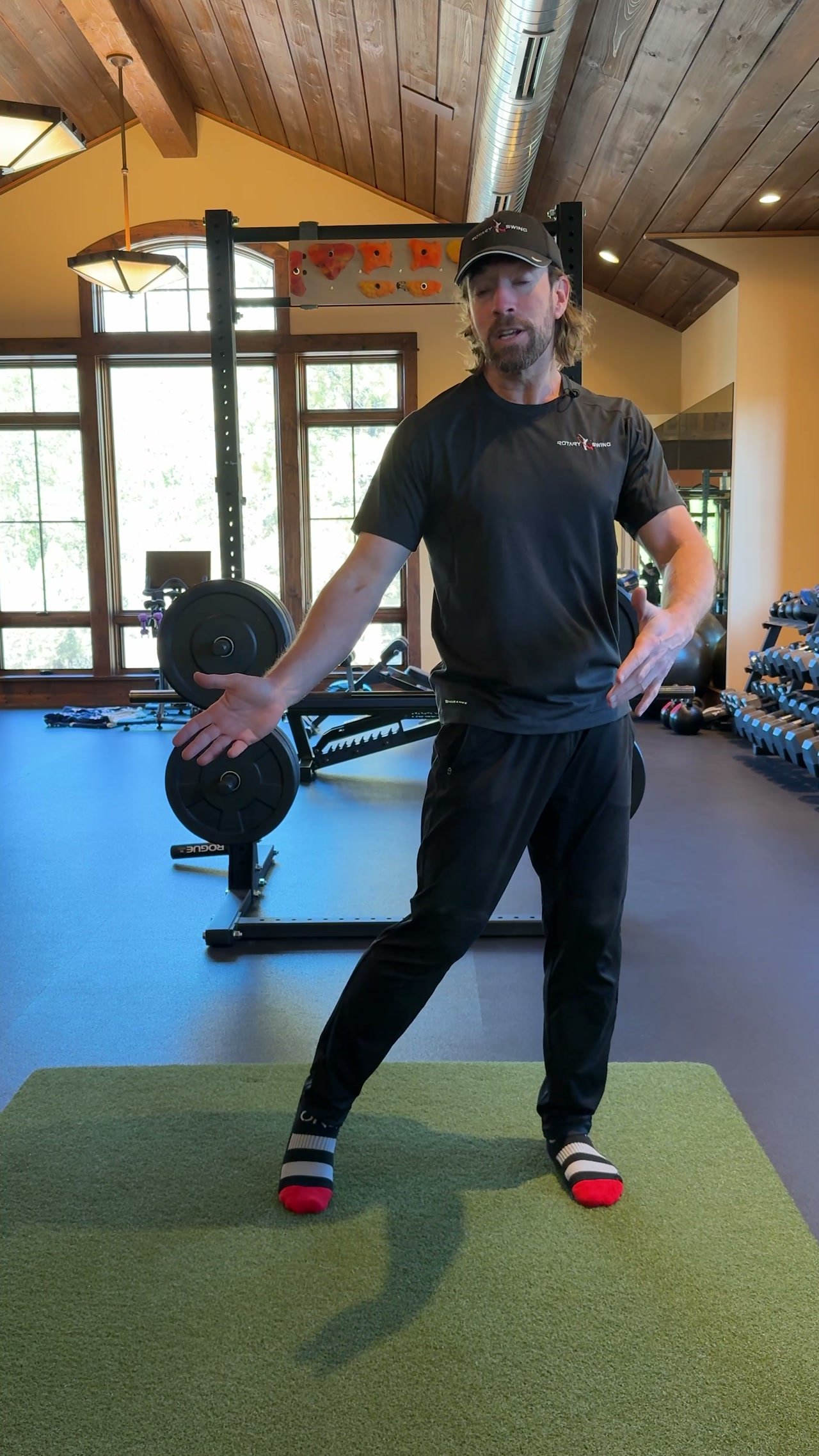
The last thing we're going to talk about is what does the trail foot do? This is critical, again for hip spinners especially, because they have a tendency to come into impact like this. They're pushing off their trail side, they're moving their knee in toward the target or in toward their other knee.
All that does is weaken your lower body. Does this look like I'm in a stable powerful position to deliver the ball a powerful blow? Of course not. It doesn't make any sense.
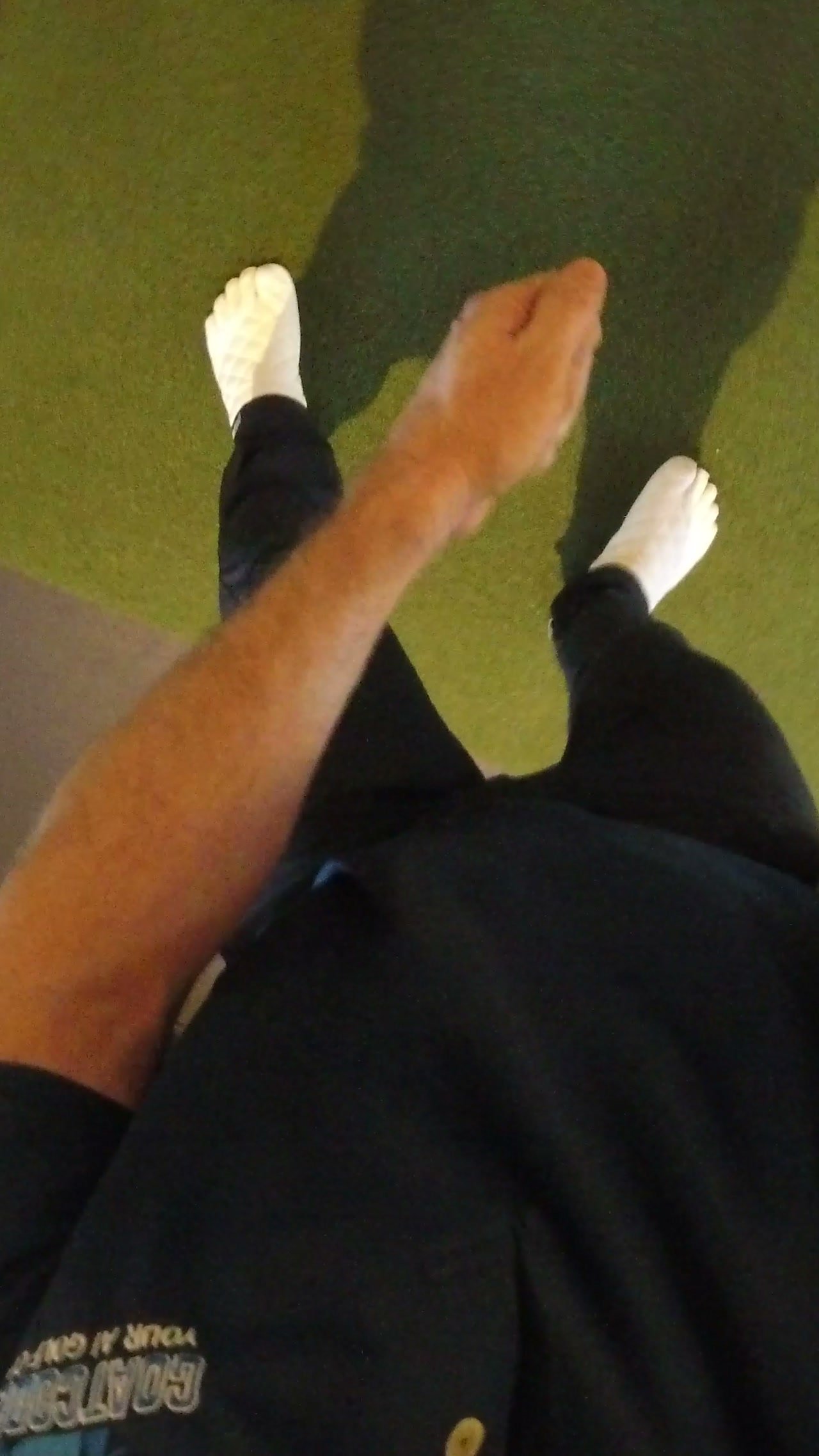
That trail foot, while there's not a lot of weight on it, it's still anchored to the ground. Remember you're squeezing both glutes, so as we come in I'm actually driving force down the inside of my trail foot, technically through this part of my big toe, right about the ball of the foot.
As I'm coming down I'm keeping anchored so I can contract my glutes and stabilize this lower body so I can get into a powerful impact position and then without my hips spinning around.

The RotaryConnect helps you learn to keep the foot anchored
A simple little tool, we now have the RotaryConnect to help us with this, because it makes this position kind of automatic. If I just take this and put it above my knee, just above both knees here, now as I come into impact if I try and spin my hips by pushing off the trail side, it's not going to work. It's going to try and stop me from doing that.
What I can feel now is that I keep this nice, stable width all the way into impact, and now I can drive weight down through both feet.
I'm pushing down into the ground, driving the ball of my trail foot into the ground, what little weight is left there, to stabilize so I can engage the glute, and now I can get to a great impact position and feel that I have stability and width in my lower body, versus trying to just spin my hips around as fast as I can. This is a great training aid to help you with getting into the right impact alignments, face-on.
Go through each piece, individually. This is critical, so that you can get the feeling of seeing yourself in a mirror, getting to the right impact alignments, and then make sure you always video yourself when you're practicing these new moves, so you make sure you're working on the right things.
Watch part 2 now to see how you're moving your body in the opposite direction of the pros!
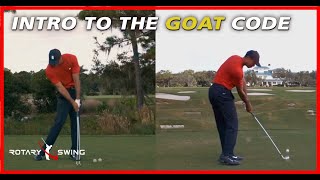
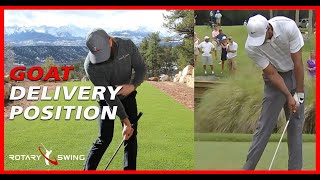









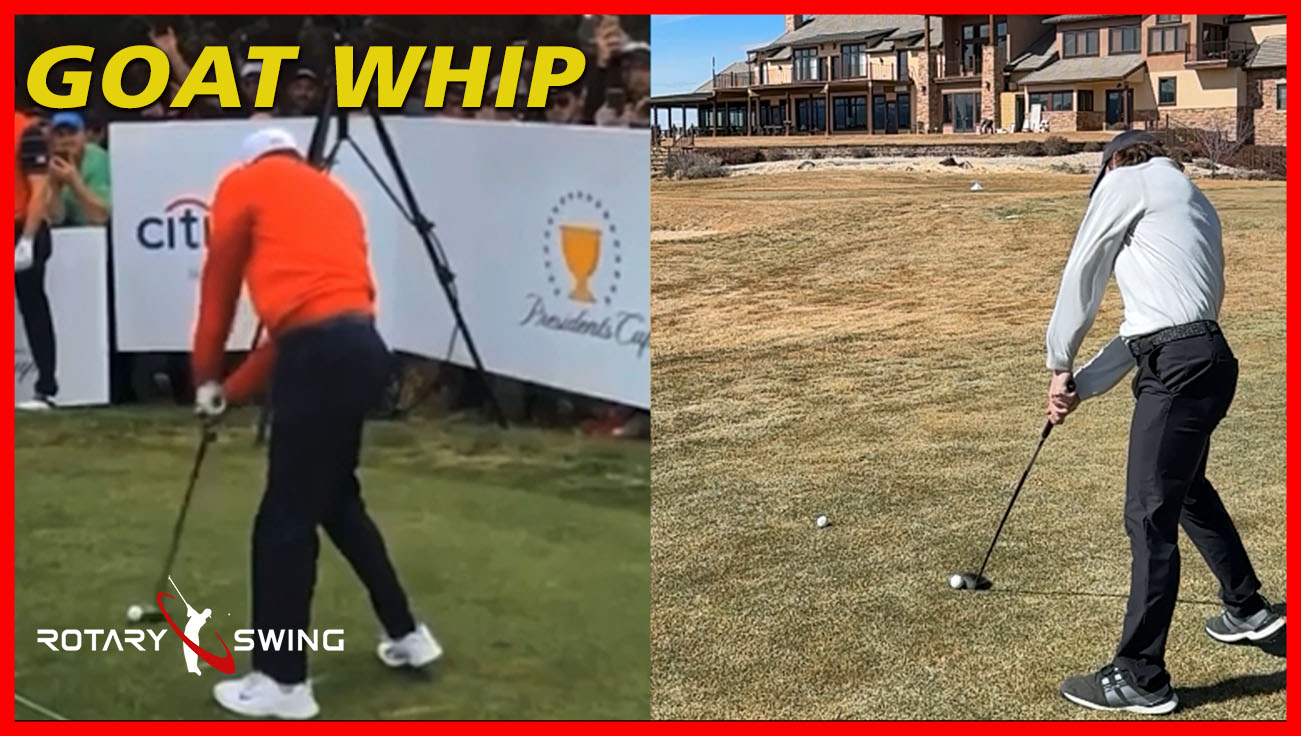
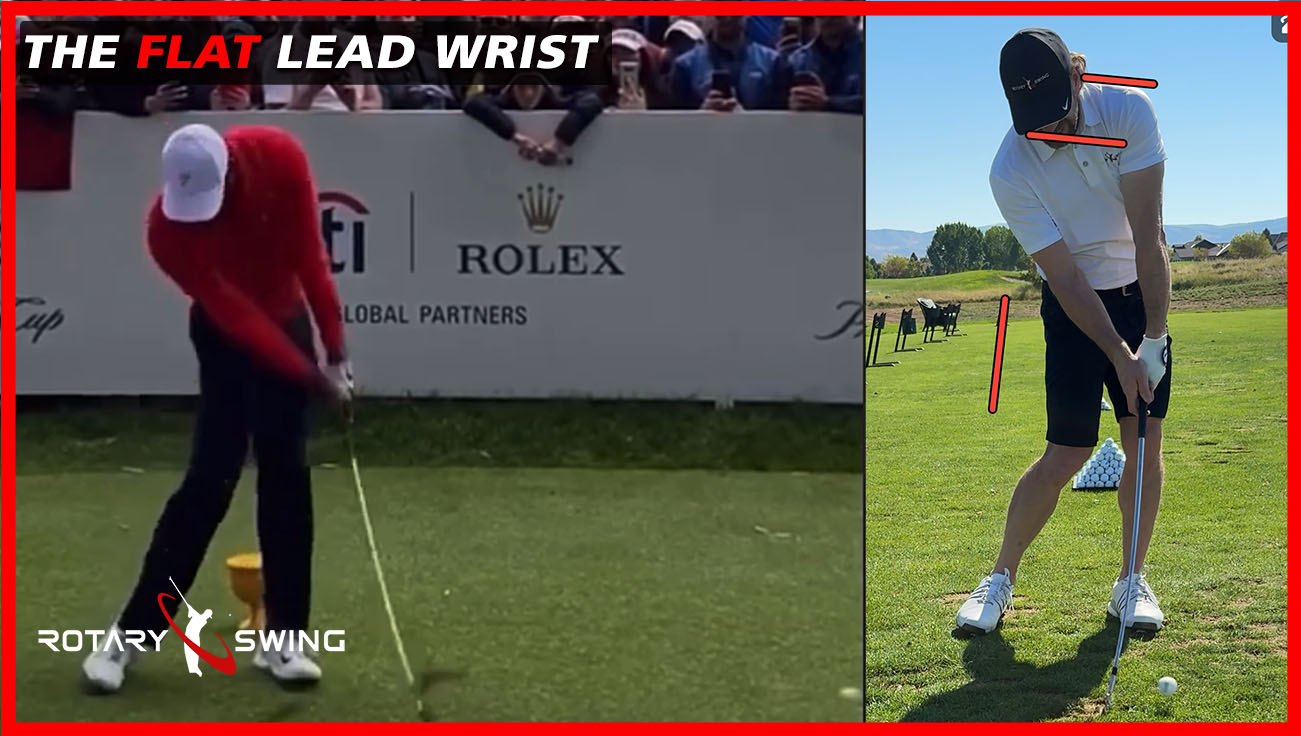
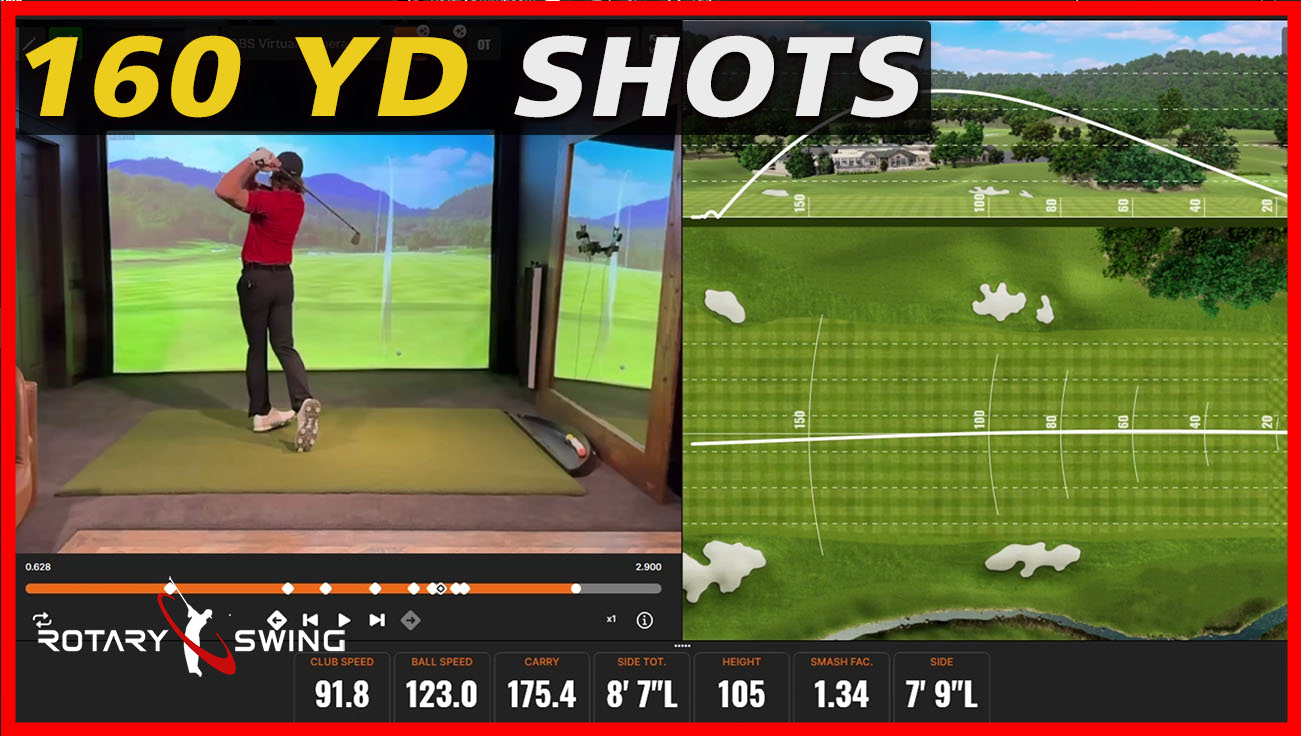

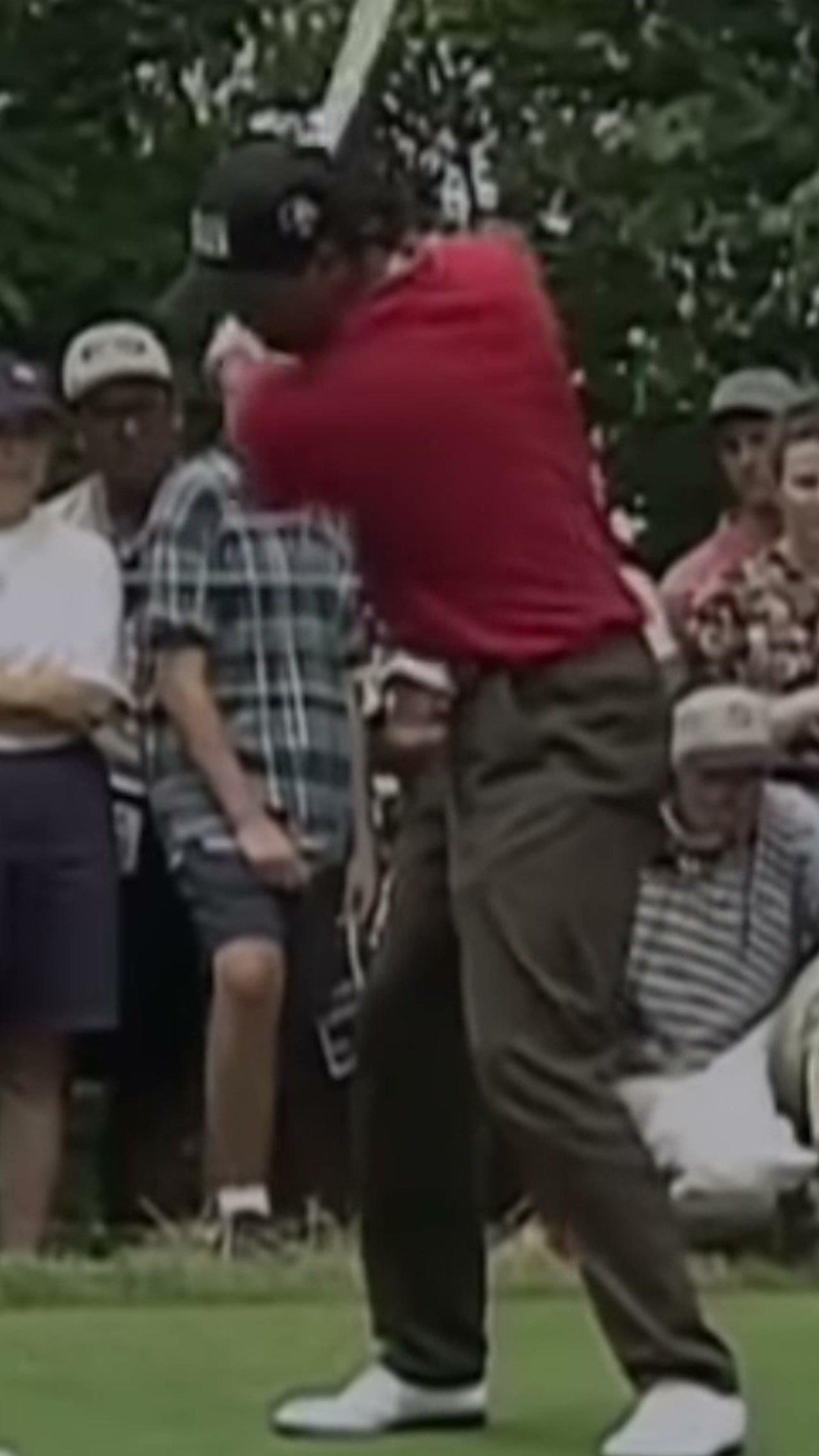
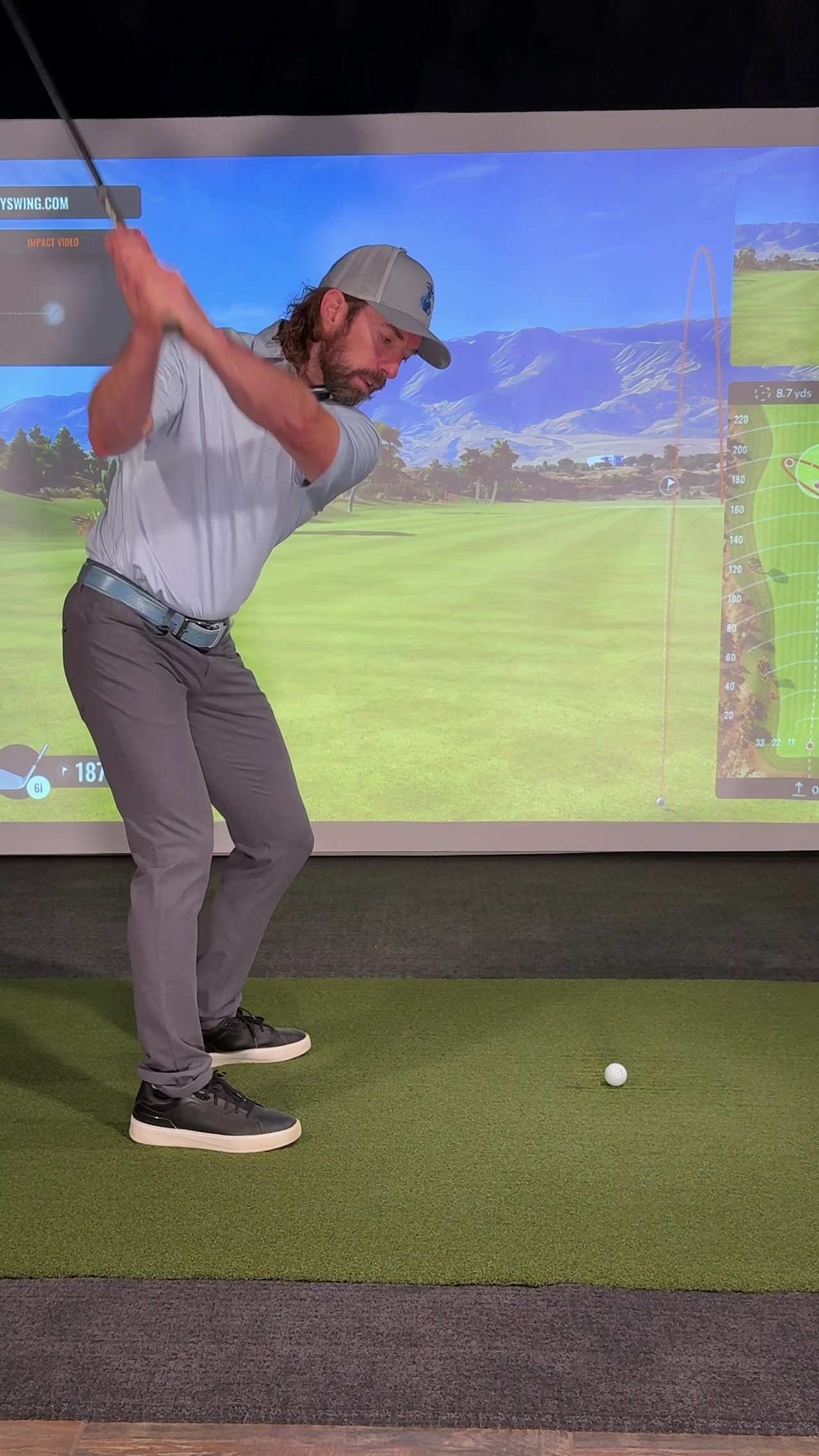



















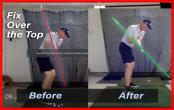
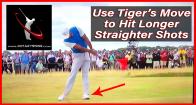
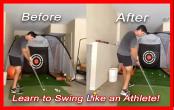
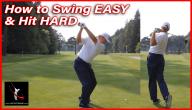

















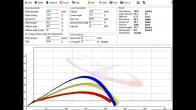
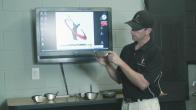
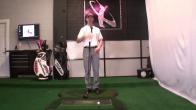

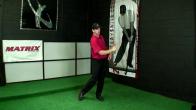
























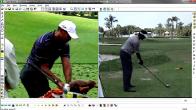




 RST Tour Pro Craig Morrow (8 iron, normal trajectory)
 RST Pro Ik-Joon Lee (7 iron, normal trajectory)
 RST Founder, Chuck Quinton (8 iron, low trajectory)
 Impact alignment of a hip spinner