Does it feel like the harder you swing, the shorter the ball goes? Chances are you're overusing your body rotation to generate power instead of tapping into the far more explosive trail arm speed that separates long hitters from short ones. Increasing distance in golf starts with understanding where real speed actually comes from.
Pick up a stick or an old shaft in your trail hand and whip it into an impact bag. Pay attention to how slowly your body moves compared to how fast you can get that stick accelerating when you let the trail arm do the work.
Is this the fault costing you strokes?
Film one swing on your phone. In about a minute GOATY measures it and names the single biggest thing costing you strokes — free, no card.
Analyze My Swing Free
Related: How AI detects early extension in real time →
Android users: Download GOATY on Google Play — free AI golf coaching on your Android phone. →
You were able to generate that speed by doing two things.
Stop reading about it — feel it in your swing today
GOATY watches your swing live and coaches you between every rep. Free. No signup.
Start Your FREE Live Lesson →
- You threw the trail arm to generate speed
- You added by keeping the trail wrist very soft
Read on to learn how to become the longest hitter in your foursome — and get a free AI swing analysis to see exactly what's limiting your distance right now.
First Step: Review Throw the Ball
The best way to begin incorporating the trail arm and using it to create genuine clubhead speed is by working through the Throw the Ball Drill.
If you haven't done the full Throw the Ball Drill, it's on the website. Review that first. This lesson won't walk through the entire drill from scratch, so go through that foundation and then come back here.

Get into address posture (left), turn with arm in front of torso (center), and throw (right)
This lesson will give a brief overview of the drill so we can discuss exactly how it connects to what we're trying to accomplish with golf swing speed and golf distance.
Go review the Throw the Ball Drill now, then come back.
Now Do It Yourself
Now grab two golf balls. Set up to one ball just as you would at address. Hold the other in your trail hand.
As you turn back, you're going to make a simulated golf swing and get some real speed into it.
A common mistake when people first try this drill is letting the trail arm drift way back behind the head. A lot of golfers really try to load up and launch the ball as hard as possible at the ground, but that's not what we're going for here.
We're trying to replicate an actual golf swing — not just hurl a ball — so you need to keep the trail arm in front of your torso as you turn back. Don't let that trail arm and trail elbow fly away from your body.
Once you've turned back, you're going to shift toward your lead side so your in the golf swing puts pressure over your lead ankle, then throw the golf ball down at the ground. When you're doing it correctly, you should feel a burst of speed through the release.
Weight Shift
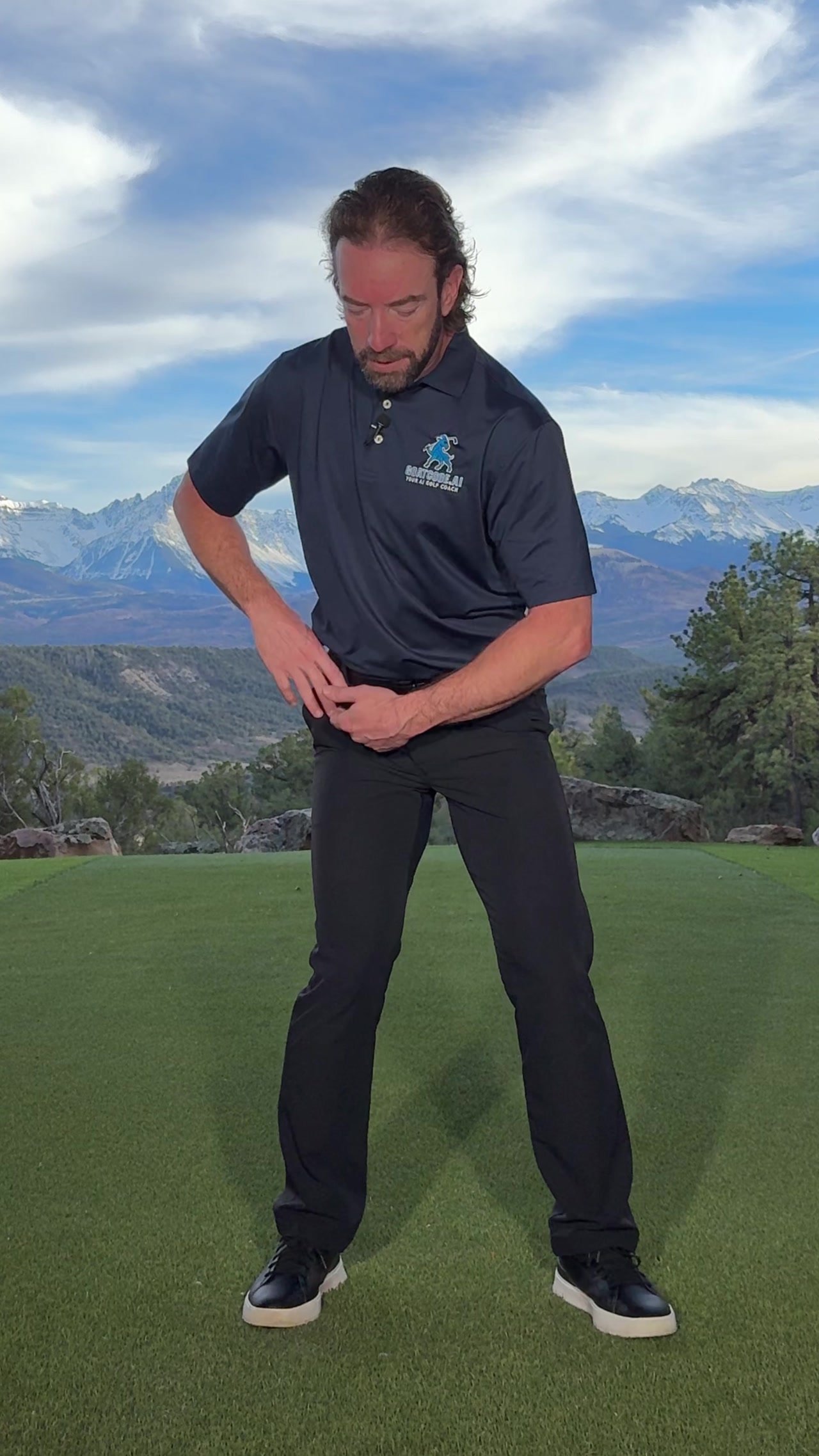
Let's take a closer look at that weight transfer in golf. As you move toward your lead side, make sure your weight settles into the center of your foot, right at the front of your ankle.

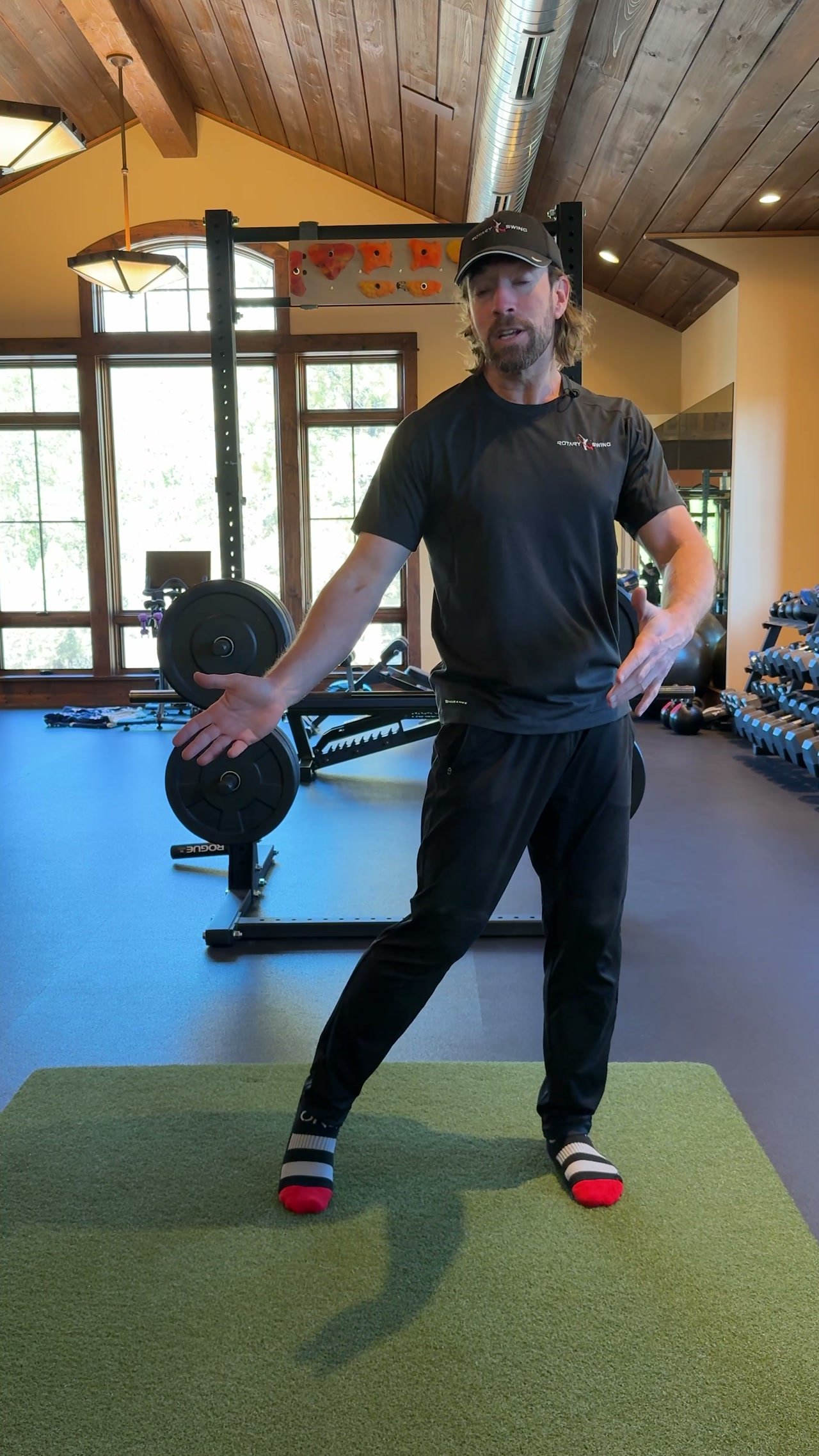
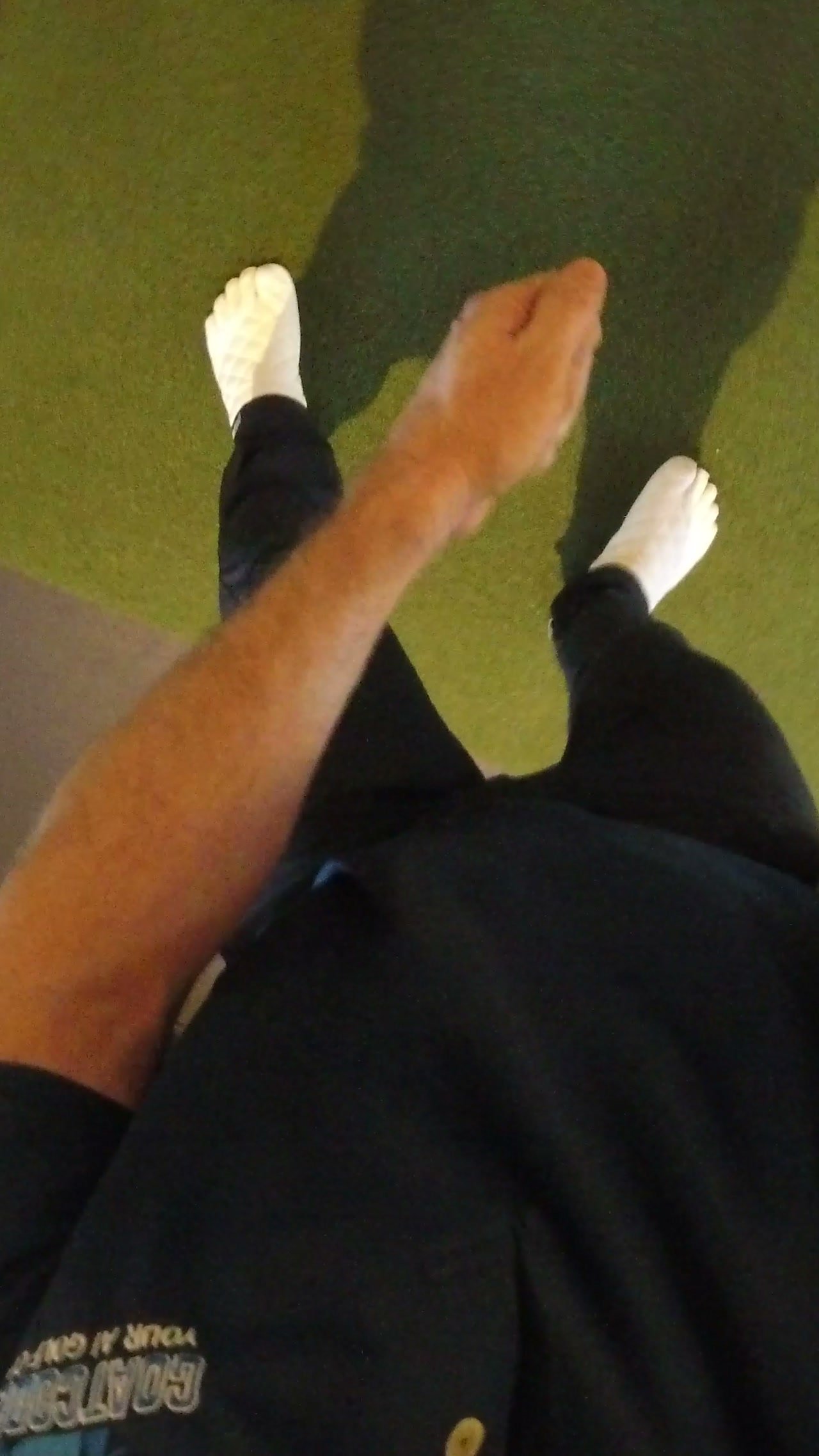
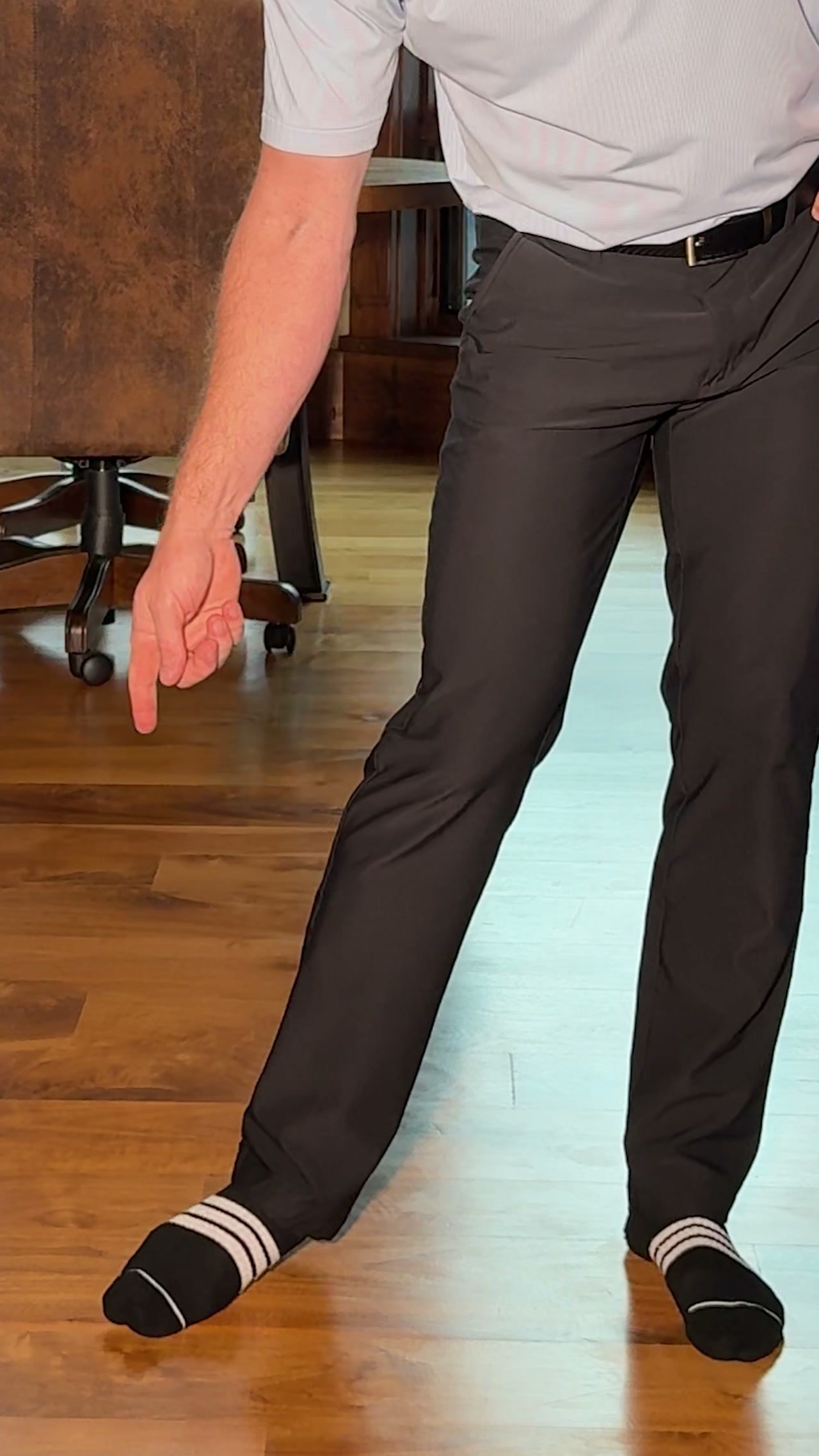
Shift your weight to the center of the left foot
If you let your weight shift to your toes as you move forward, your hips will drive toward the ball and you'll lose the space needed to throw the ball freely — or in a real golf swing, to swing the club through impact without restriction.
Try a free live lesson with GOATY
GOATY, my AI golf coach, watches your swing through your phone camera and coaches every rep. Free, about 20 minutes, no credit card.
That's called early extension and it's covered in detail in the Tush Line lesson. Review that if you're finding your weight drifting over your toes.
Beyond getting your weight onto the center of your lead ankle, you should also be centered over the middle of your foot as seen from face on.
Don't roll to the outside of your ankle because that will push your hip too far forward and out of neutral joint alignment. And obviously you don't want to hang back on your trail foot, since the whole goal is to load onto your lead side.
Simply shift to the lead side. Feel as though you're driving that lead ankle down into the ground. Generate force into the ground, and then throw the ball.
Checkpoints: Chest and Shoulders
There are a few things to check as you work through this drill:

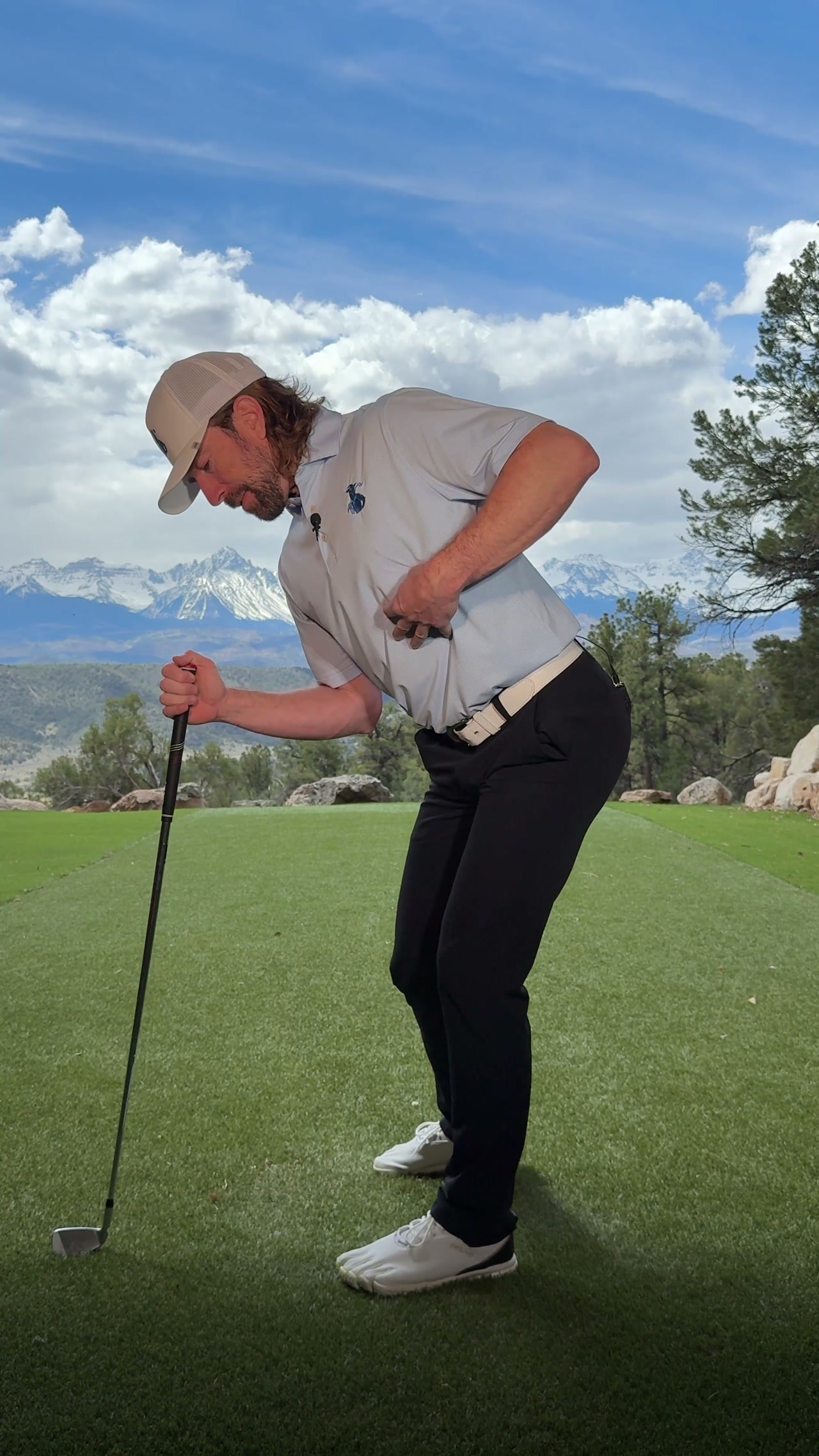
From left to right: Weight on toes, too far left, to far right, correct
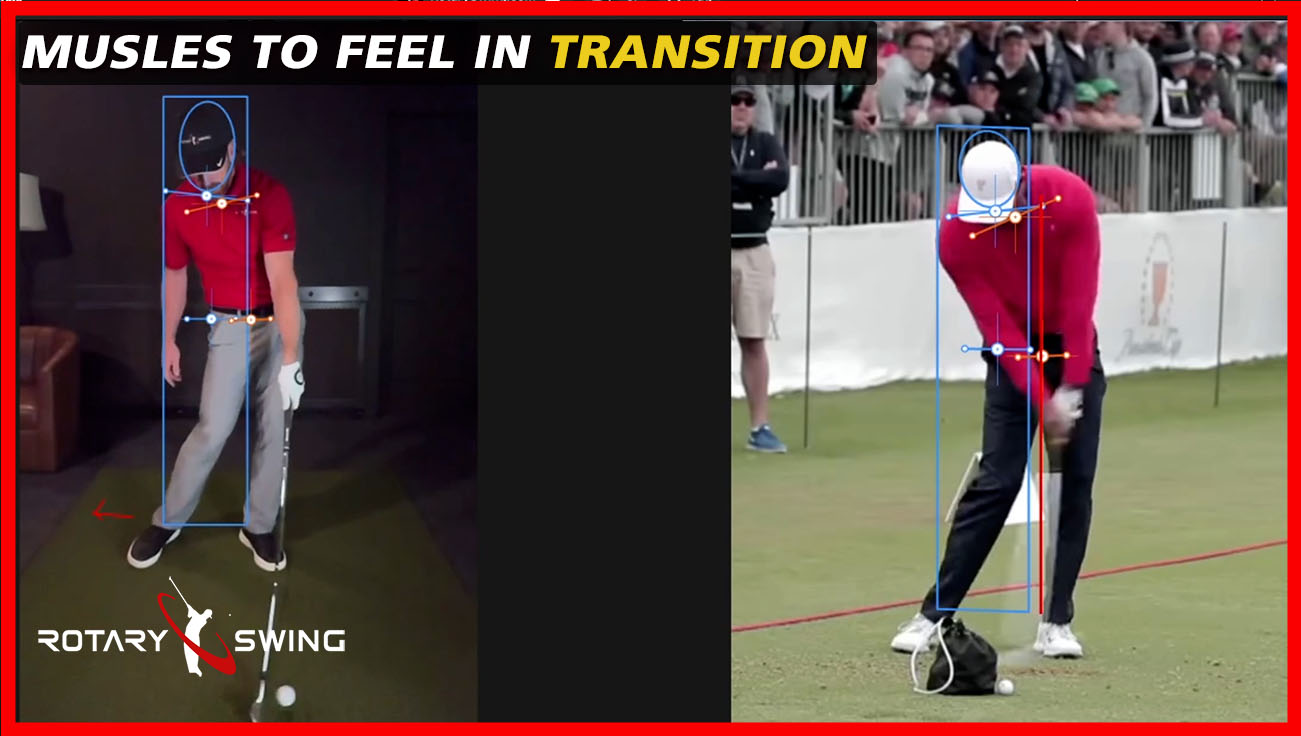
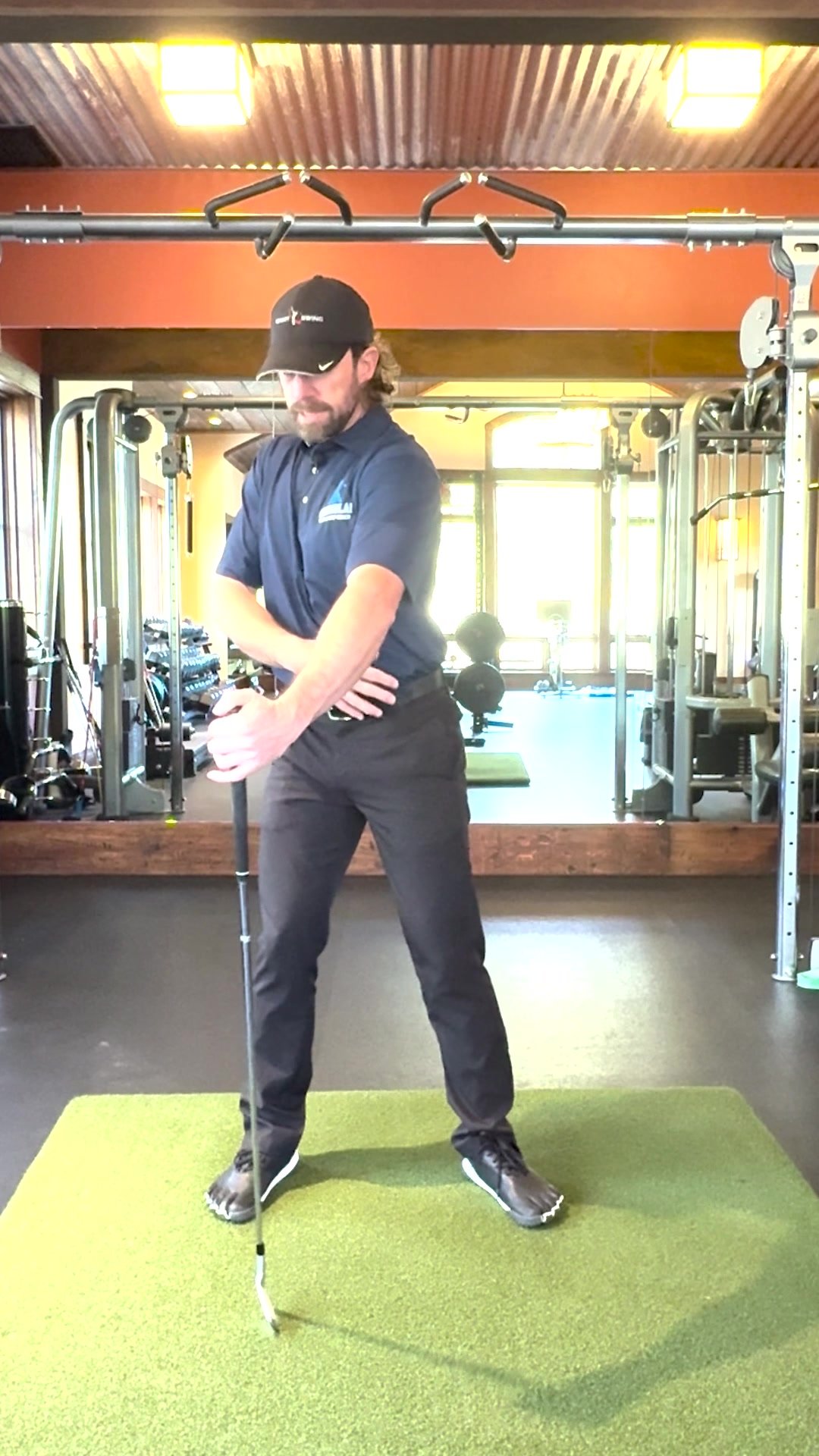
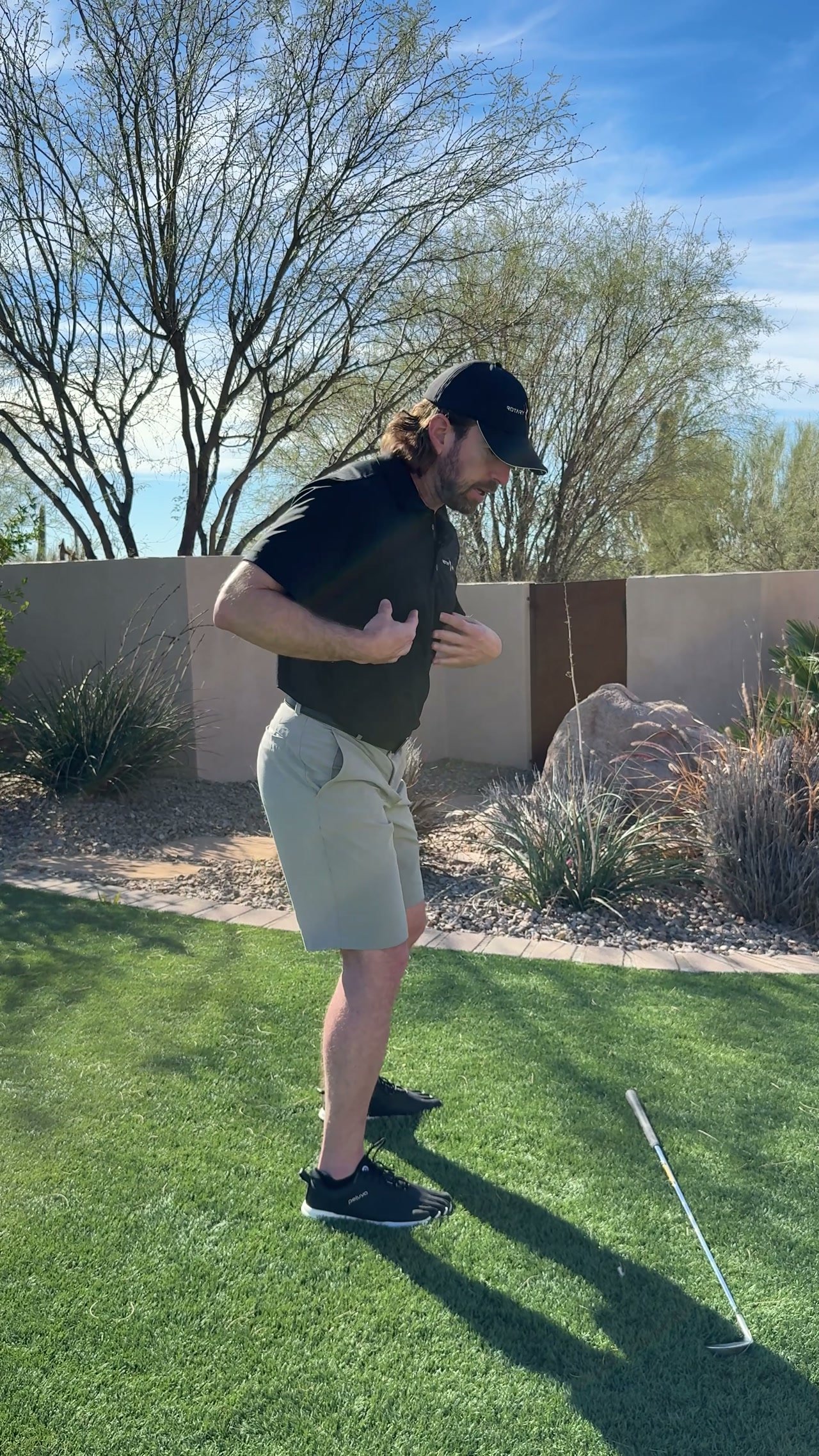
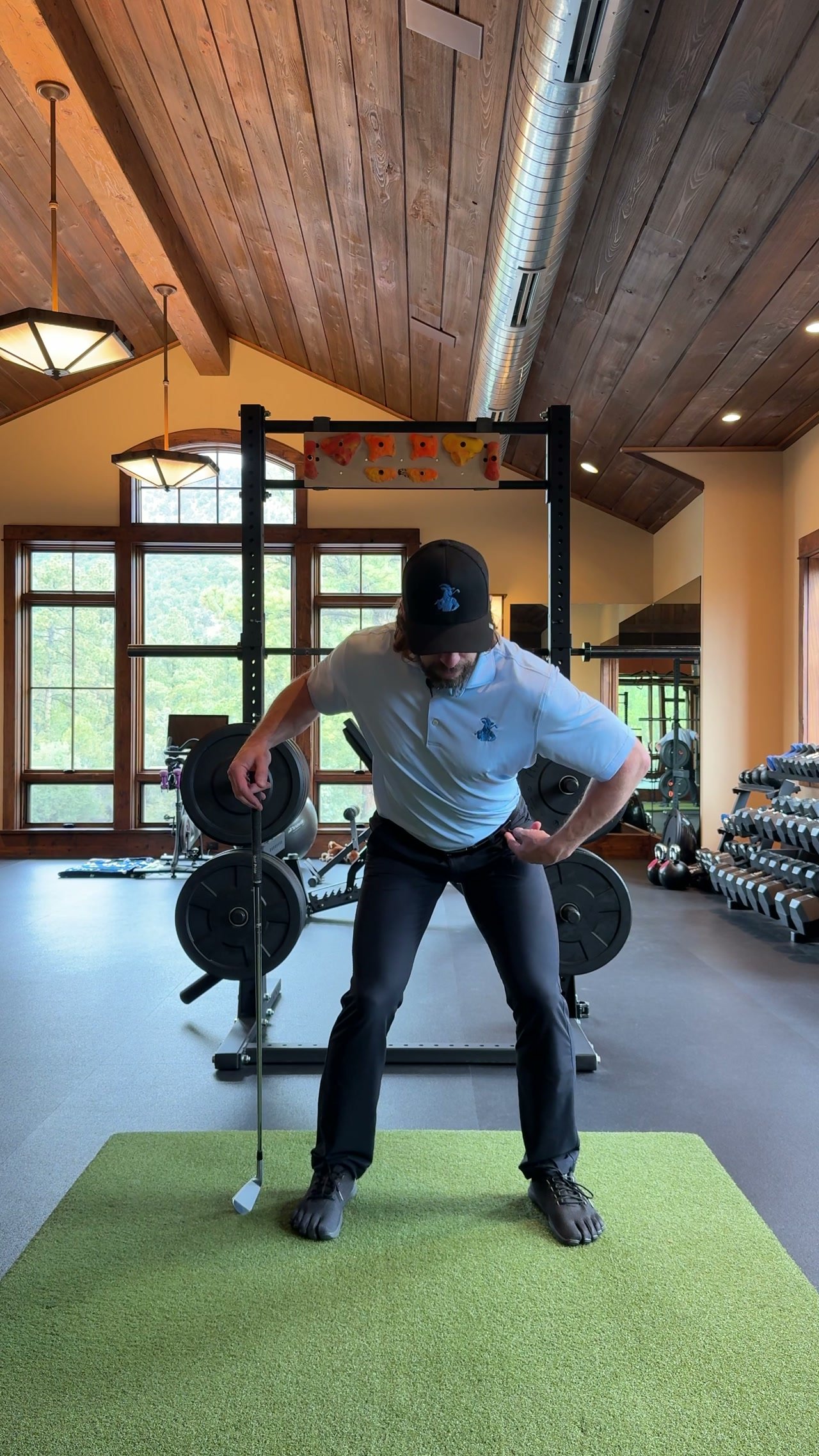
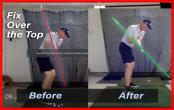
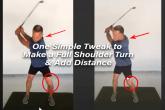
That's the issue most golfers struggle with — they overuse body rotation and under-use the trail arm. We want to limit excess body action and maximize trail arm extension through impact. Check your chest position to see how you're doing.
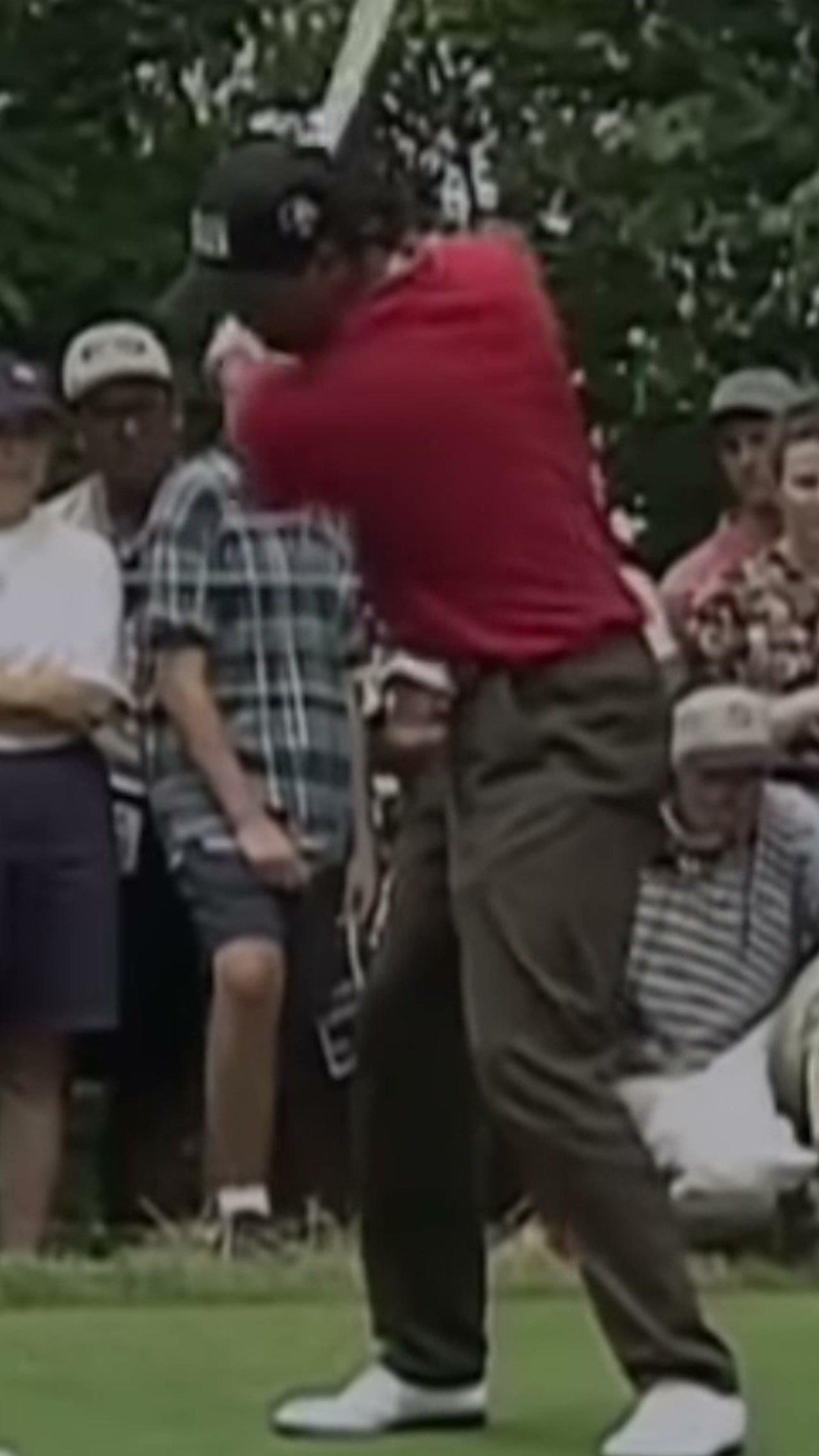
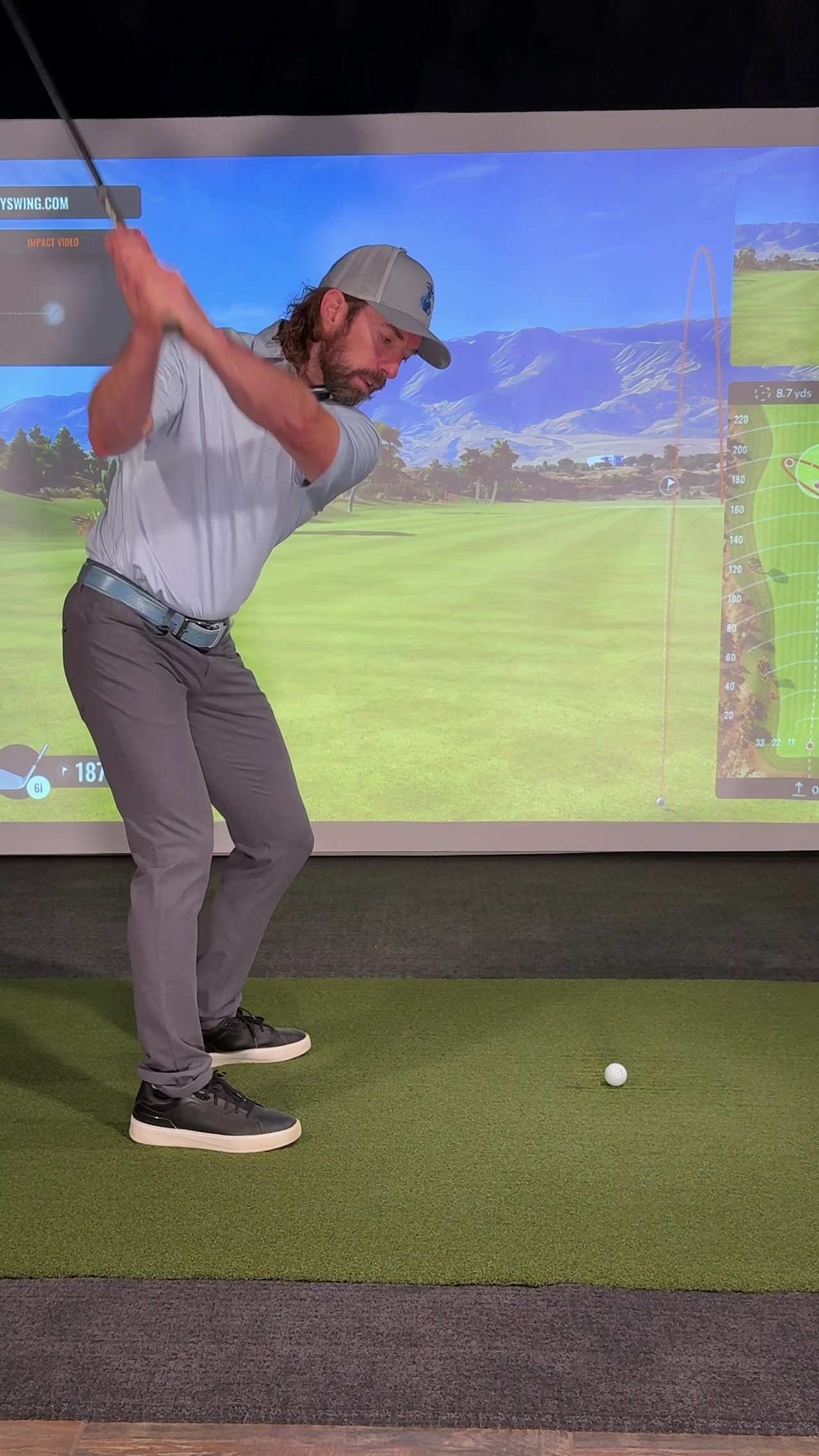
As you can see in the photo at right, Clay's chest is still facing the ball on the ground as he throws the one in his hand.
You should not be ripping your shoulders open as you come through. That will drag your arm behind your body and prevent you from maximizing swing speed through the hitting zone.
- Checkpoint 2: Keep your shoulders nice and level as you throw the ball.
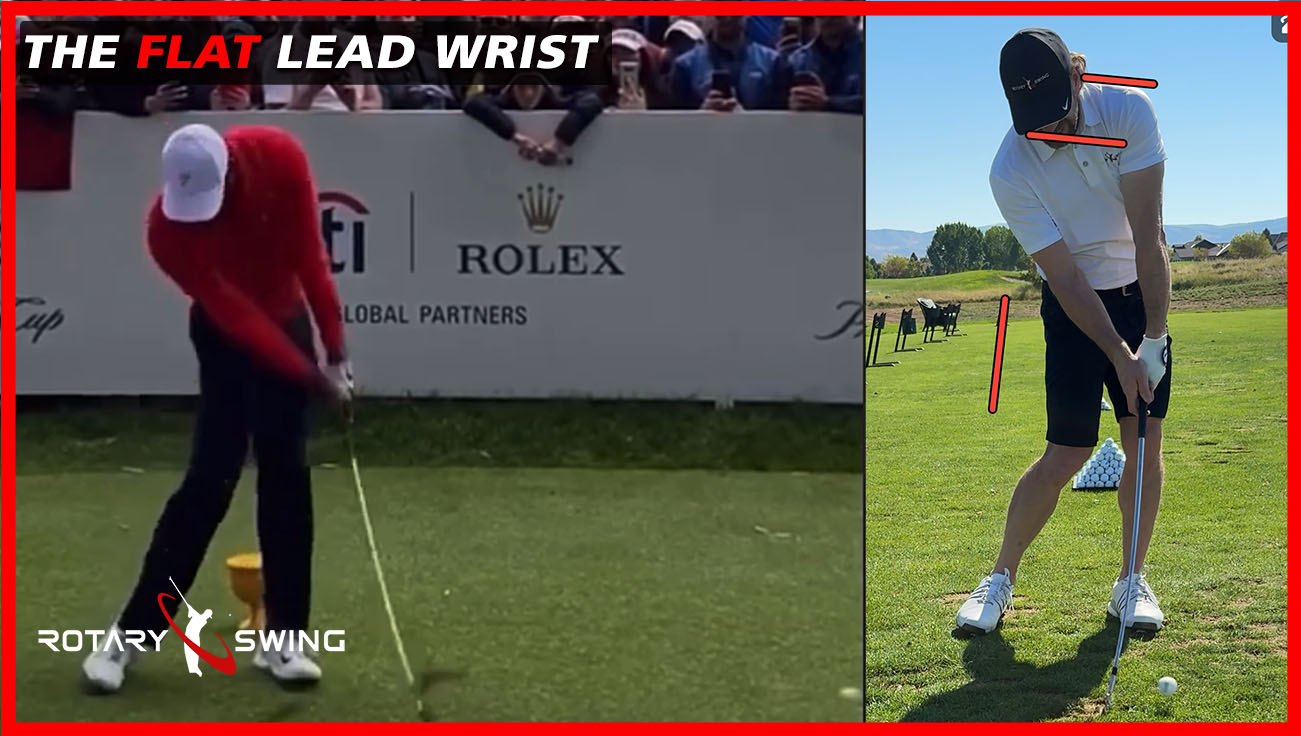
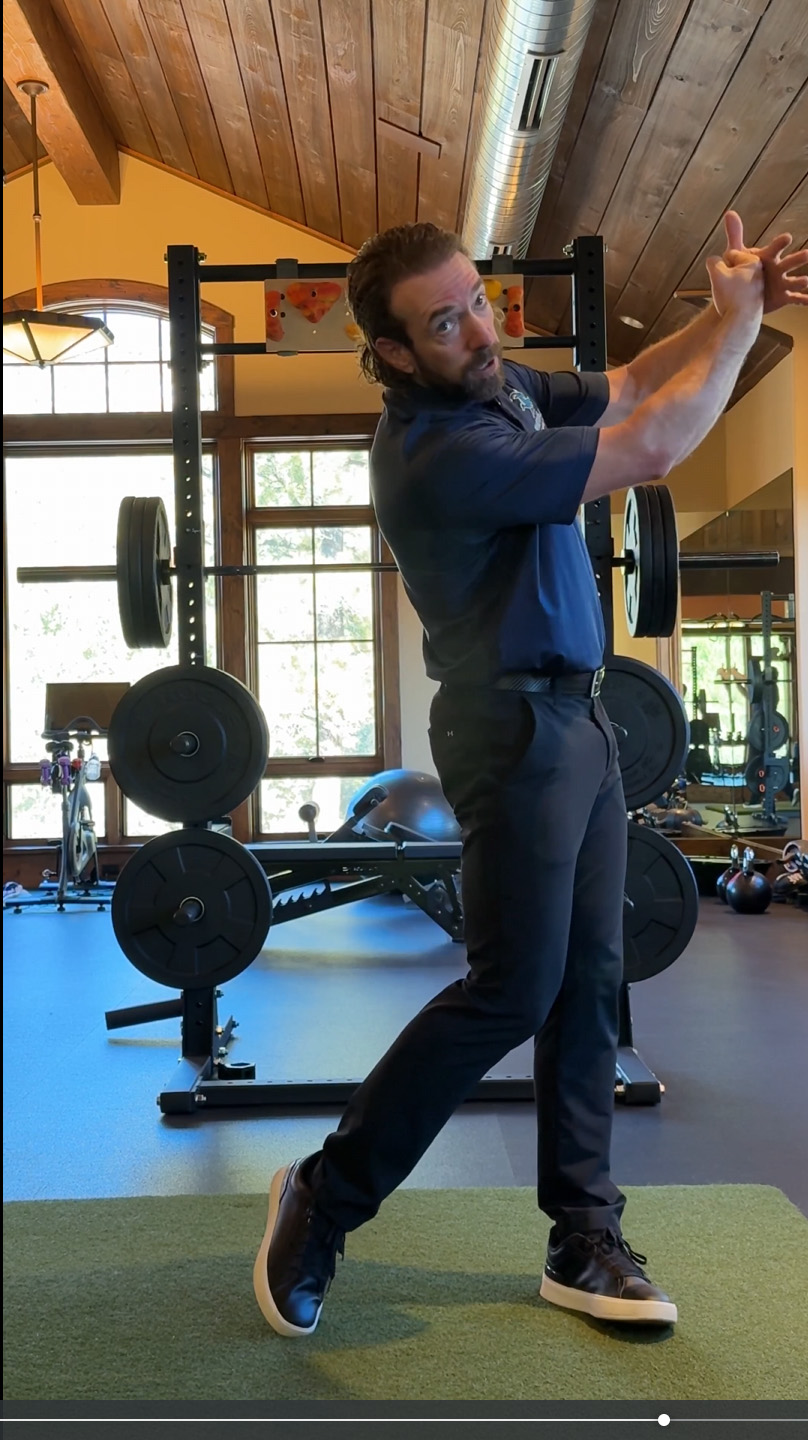
Another way golfers inadvertently drag the club with the body instead of using the trail arm is by letting the shoulders tilt excessively.
When the shoulders tilt, the trail arm gets stuck behind the body. It stays bent and you end up just pulling it along rather than throwing it.

Right arm bent, shoulders tilted: Avoid this position
Clay is demonstrating the incorrect position in the photo at left. Don't fall into that pattern.
You want to extend that trail arm fully. This will keep your shoulders much more level through the impact zone. If you're struggling with this, go back and review the Level Shoulders lesson for a deeper breakdown.
Really try to put some speed into these throws. You're trying to build explosive power in the golf swing, so go ahead and throw the ball hard — as long as you're using the correct technique.
If you start to rip your shoulders open or spin your hips out, dial back the effort and clean up the technique first. Then you can build speed again from there.
More Review: 9 to 3 Lag Building Drill
Now that you've started incorporating the trail arm and generating more speed with it, we can move on to discussing how to add lag.
If you haven't worked through the 9 to 3 Lag Building lesson, start there first. That lesson explains exactly how to create lag in the downswing by keeping your trail wrist soft as you begin your downswing — instead of tightening up and releasing early.
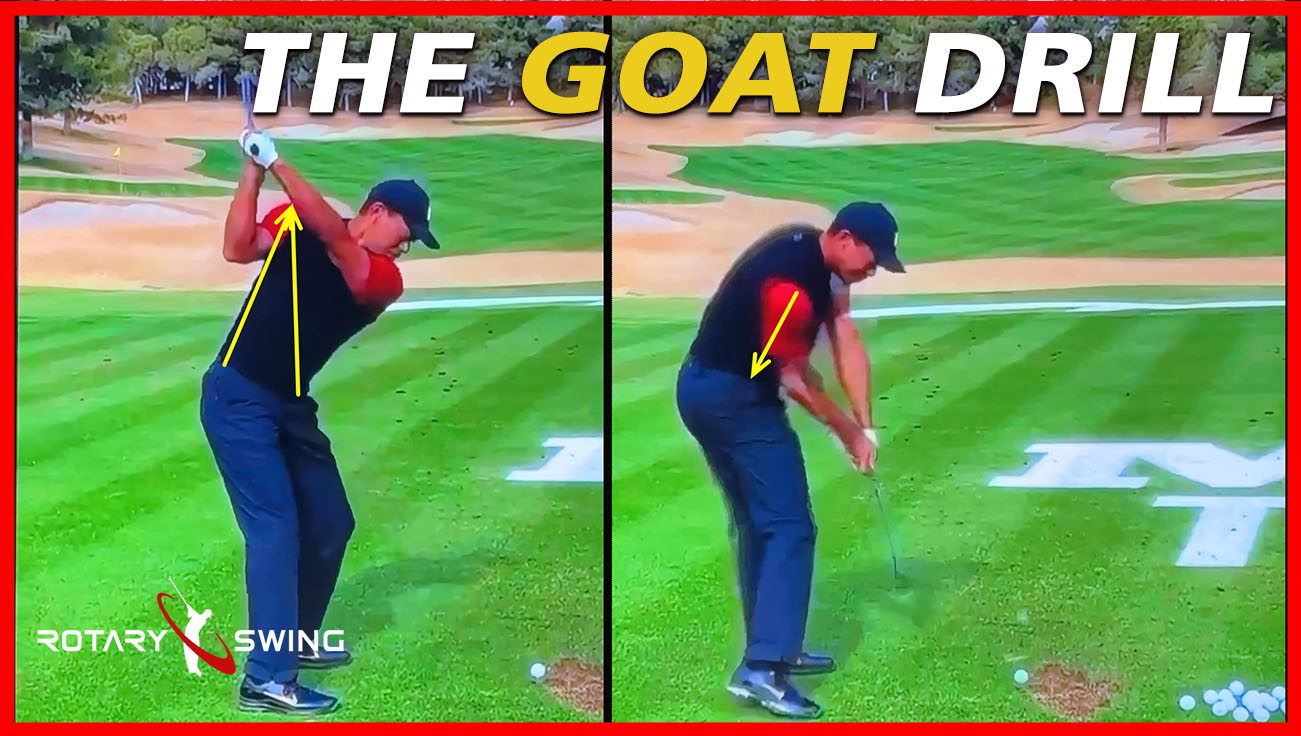
Learn how to get lag first, then come back here and learn how to incorporate it with the trail arm. The 9 to 3 lesson is step 1, and this is step 2: putting the trail arm and stored lag together for maximum distance. You can also watch the GOAT Drill video lesson for an integrated look at how these mechanics connect to your full swing development.
Now Put it All Together

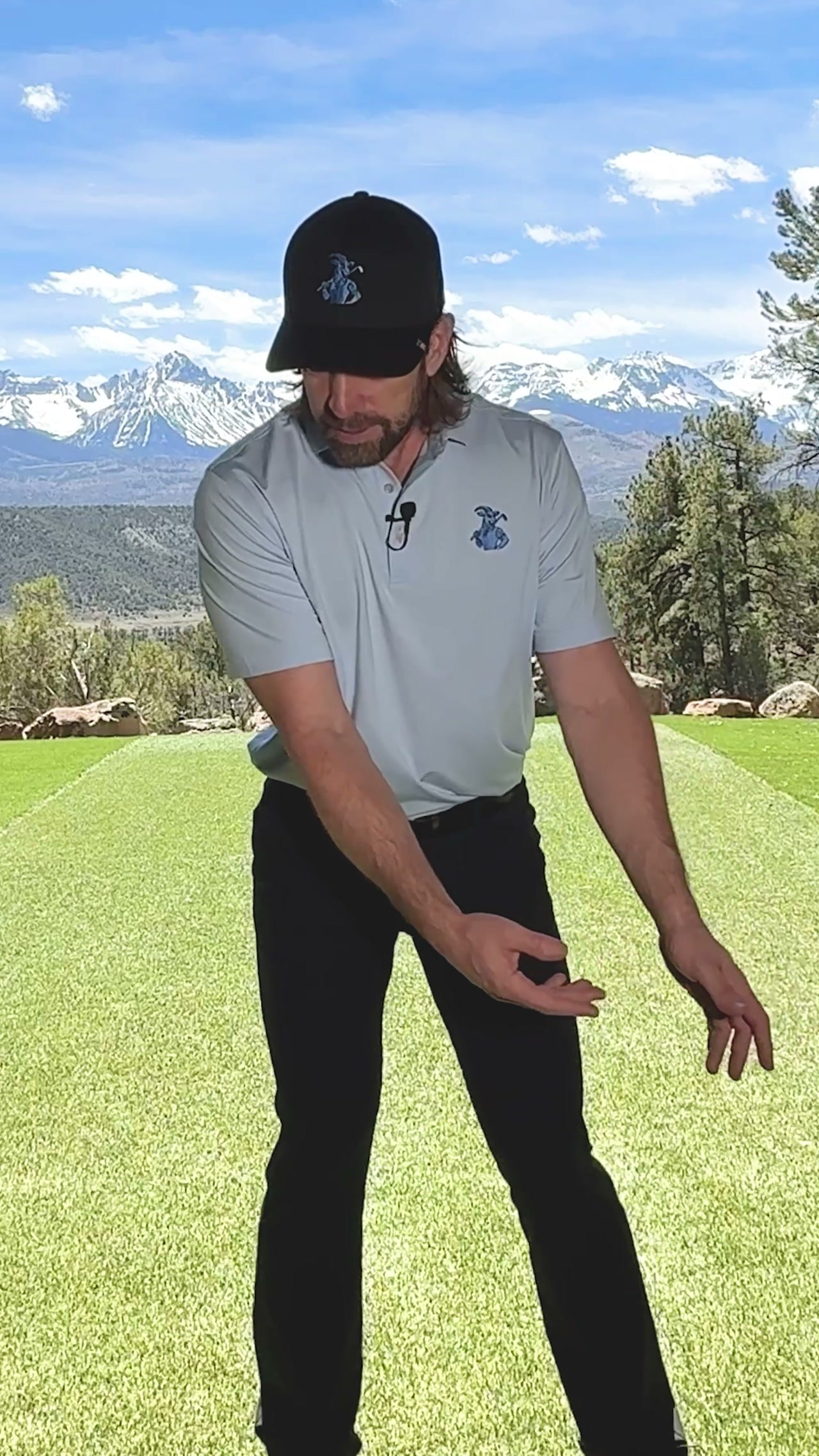
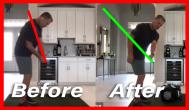
Throwing the right wrist kills lag
Start out by setting up an impact bag and making some mini swings into it.
Focus on keeping the trail wrist extremely soft. The trail forearm muscles stay relaxed as you throw your trail arm down toward impact, allowing the club to lag behind naturally.
Where most golfers go wrong is that, as they start to throw the trail arm, they tighten up and throw with the trail wrist instead.

Maintain lag
As Clay demonstrates in the photo above, throwing the wrist destroys all your lag and dramatically reduces clubhead speed at impact — because you're casting the club from the top of the swing.
That's the telltale sign you're throwing with the trail wrist instead of the trail arm.
If you throw your trail arm down and keep the trail wrist very soft and relaxed, the club head will naturally lag behind.
The head of the club is much heavier than the shaft, so when you change direction with your arm and begin pushing on the lighter shaft, the head will naturally want to stay back. It will only release when you apply wrist pressure — so by keeping the wrist passive, you protect your stored energy in the downswing all the way through impact.
Start Small & Build Up
Begin with trail-arm-only drills. Set up to an impact bag and swing the club back just a couple of feet. Focus on feeling like you're throwing the trail arm toward the impact bag while letting the trail wrist stay completely soft so the club head can lag behind.
Do 20-30 of these mini swings. Once you're comfortable with that, progress to more of a 9 to 3 swing.

9 to 3 Drill
Take the club back using the same checkpoints from the Lag Building lesson. You don't want excessive wrist cock or front-loaded lag in the backswing.
Stay nice and loose, wide in the backswing. From there, shift to your lead side and throw the trail arm. You should be able to generate a significant amount of lag and maximum club head speed even from this compact drill.
As you grow more comfortable and consistent, start making slightly bigger swings and gradually work your way up to a full swing. Building speed patiently this way makes the pattern stick far more reliably than jumping straight to full swings.
Watch part 2 now to see how you're moving your body in the opposite direction of the pros!

























































































































































 The chest is still facing the ball