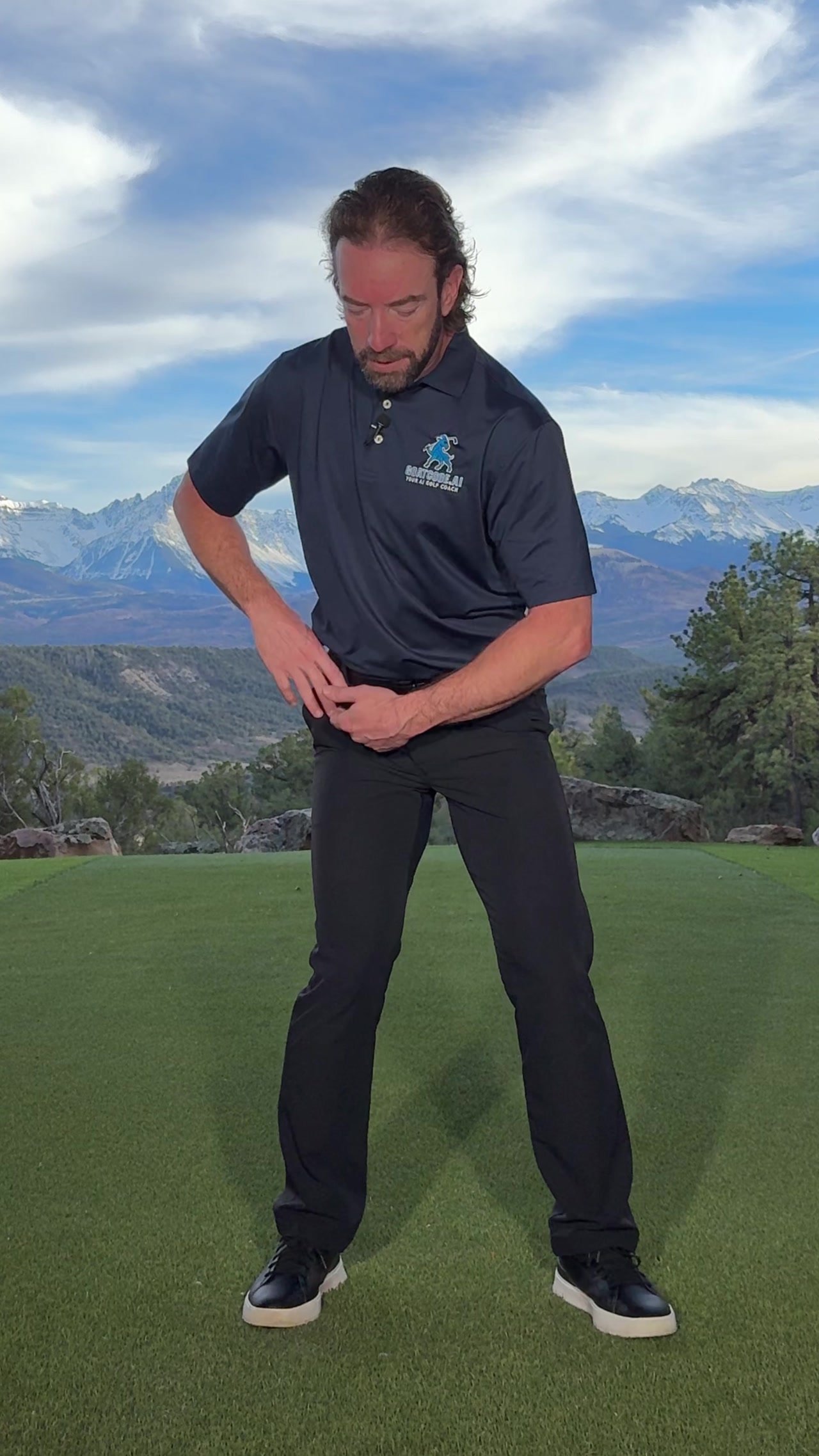
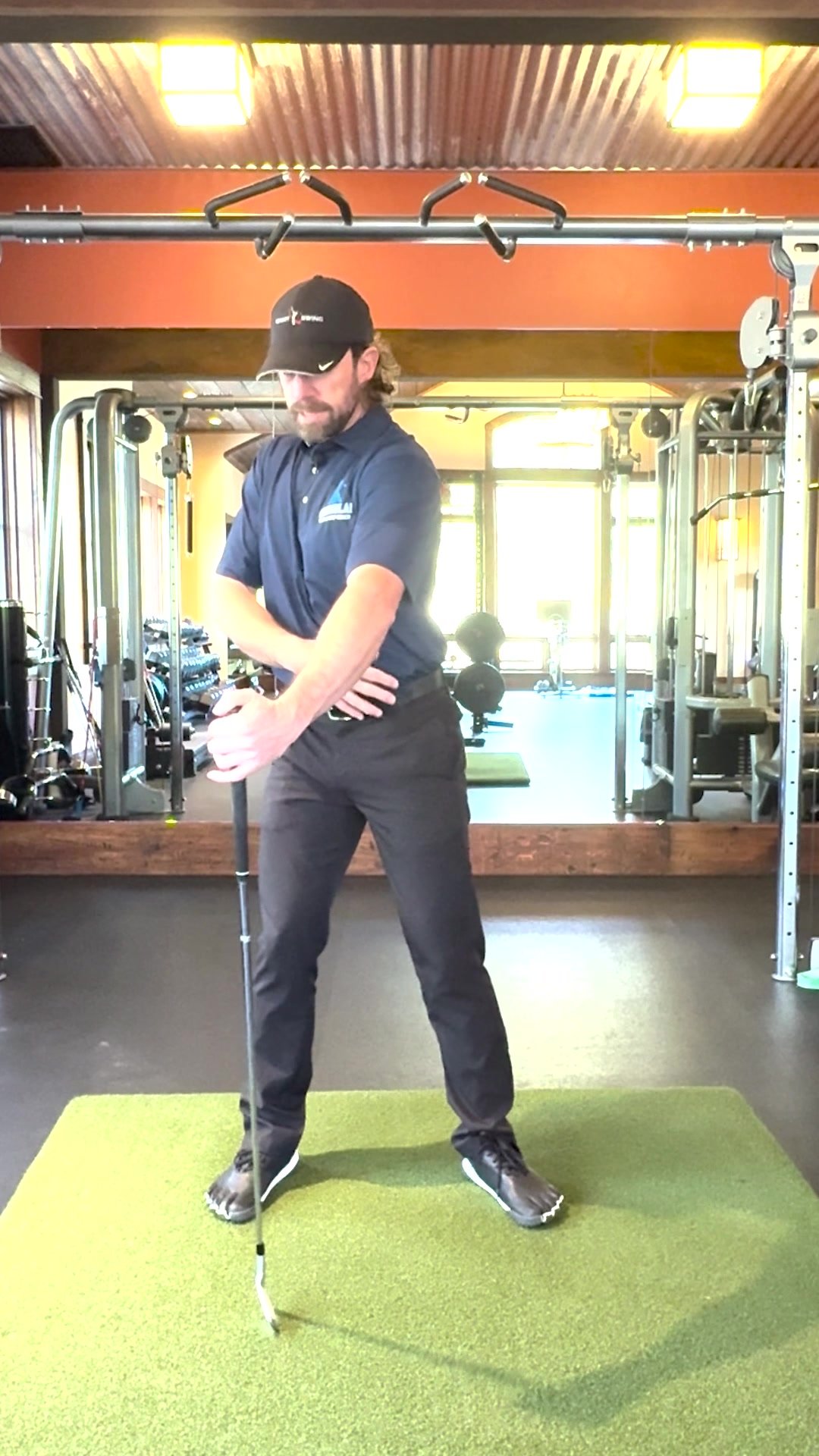
You probably do not consider a necktie to be standard golf gear, but it happens to be an excellent training aid if you struggle with and the transition in the golf swing, or if you keep getting into bad positions at the top.

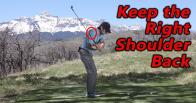
Don't rotate everything back as a unit. Over rotation will lead to a reverse pivot at the top of the backswing.
The necktie is a remarkably handy diagnostic tool that can reveal a great deal about your position at the top of the swing. If you set up a video camera and film yourself hitting a few balls while wearing a necktie, you can get a very clear picture of what is happening in your golf swing.
Is this the fault costing you strokes?
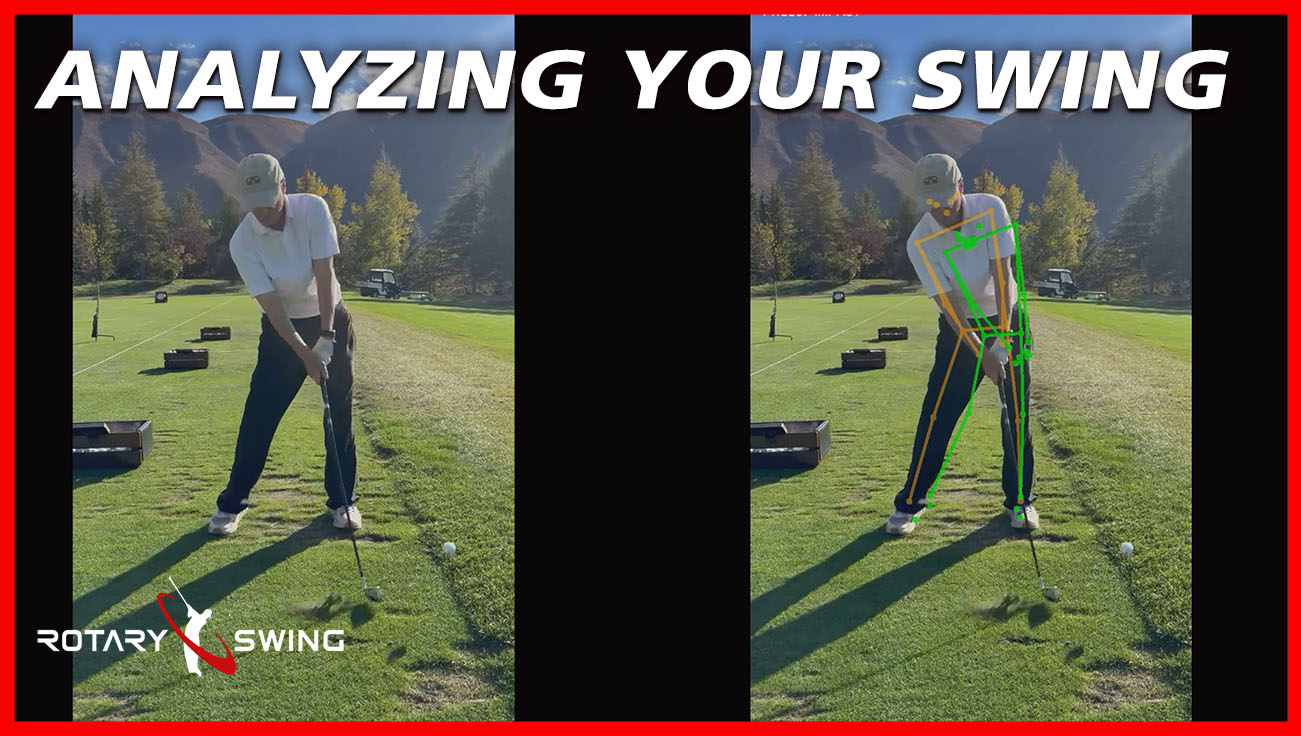
Film one swing on your phone. In about a minute GOATY measures it and names the single biggest thing costing you strokes — free, no card.
Analyze My Swing Free
Related: Golf swing shoulder turn — the AI-coached trail hip approach →
Android users: Download GOATY on Google Play — free AI golf coaching on your Android phone. →
Let us start by examining what you do not want to do in the golf swing. You do not want everything rotating together on the way back.
Stop reading about it — feel it in your swing today
GOATY watches your swing live and coaches you between every rep. Free. No signup.
Start Your FREE Live Lesson →When you lose the separation between the rotation of your shoulders, upper torso, rib cage, and hips, and just start moving them all back as a single unit, it becomes extremely difficult to sequence a dynamic and powerful golf downswing.
Everything must move in the correct sequence during the golf transition. The hips have to move first.
When you pull everything back as one piece, you get your muscles bound up so everything fires simultaneously. The shoulders fire, the arms fire, and everything is happening at once. Without the proper sequence, it requires enormous effort to generate sufficient power.
Go to the Top and Check the Tie

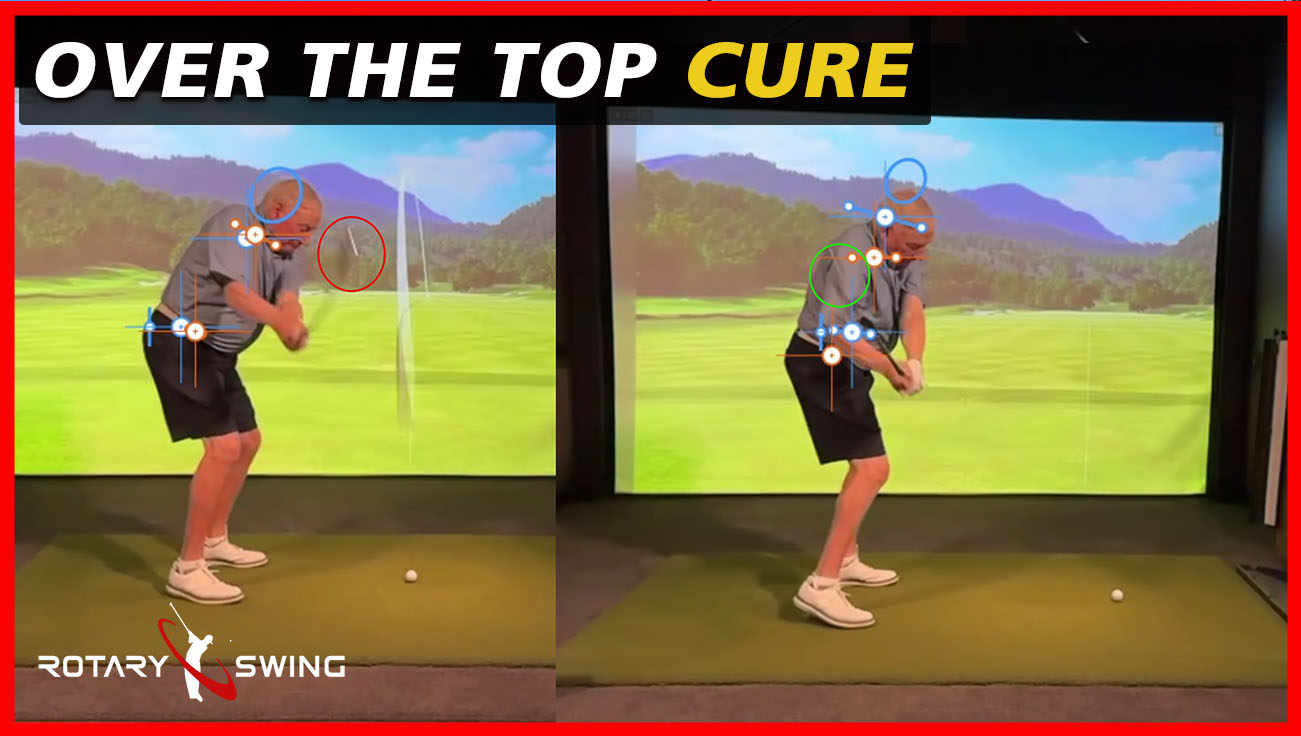
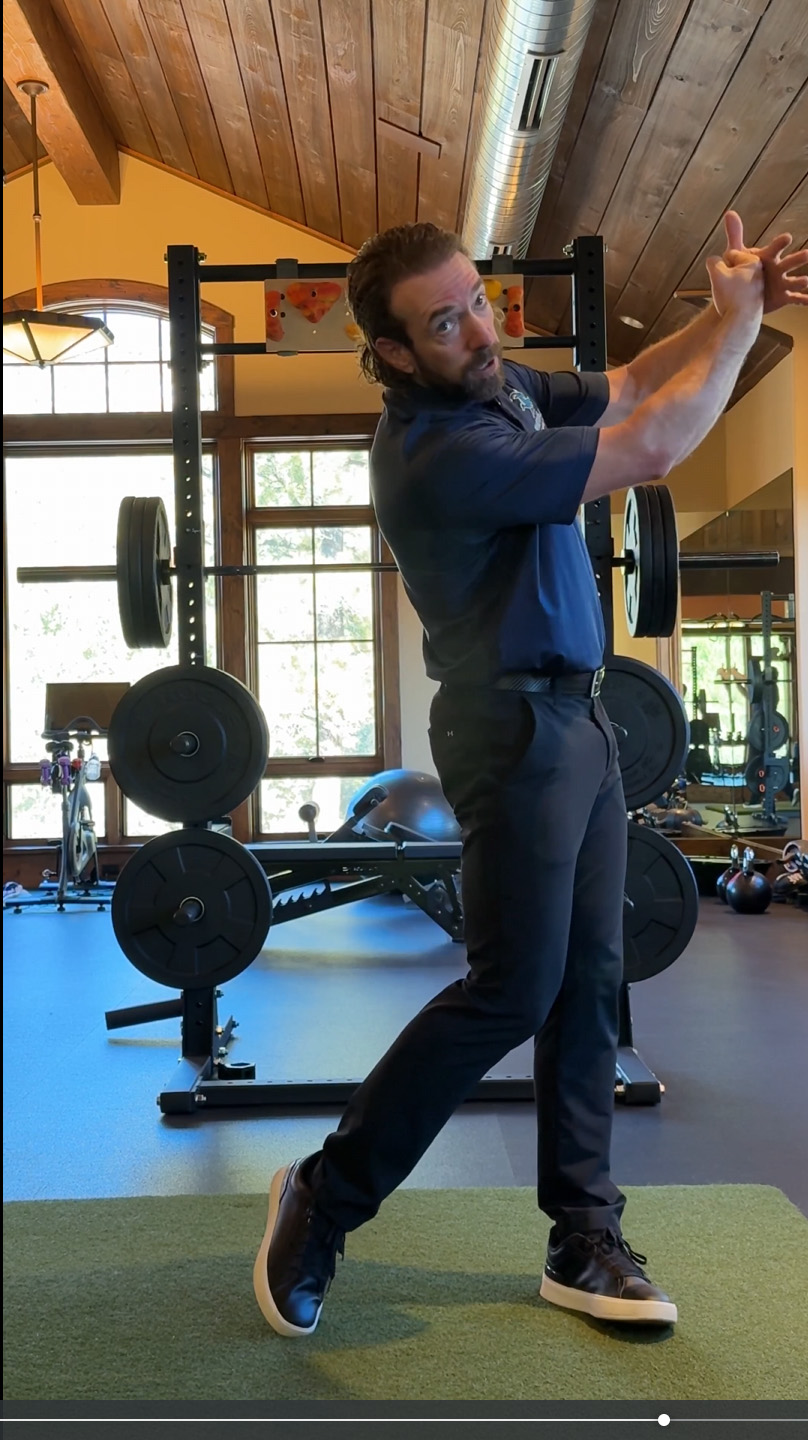
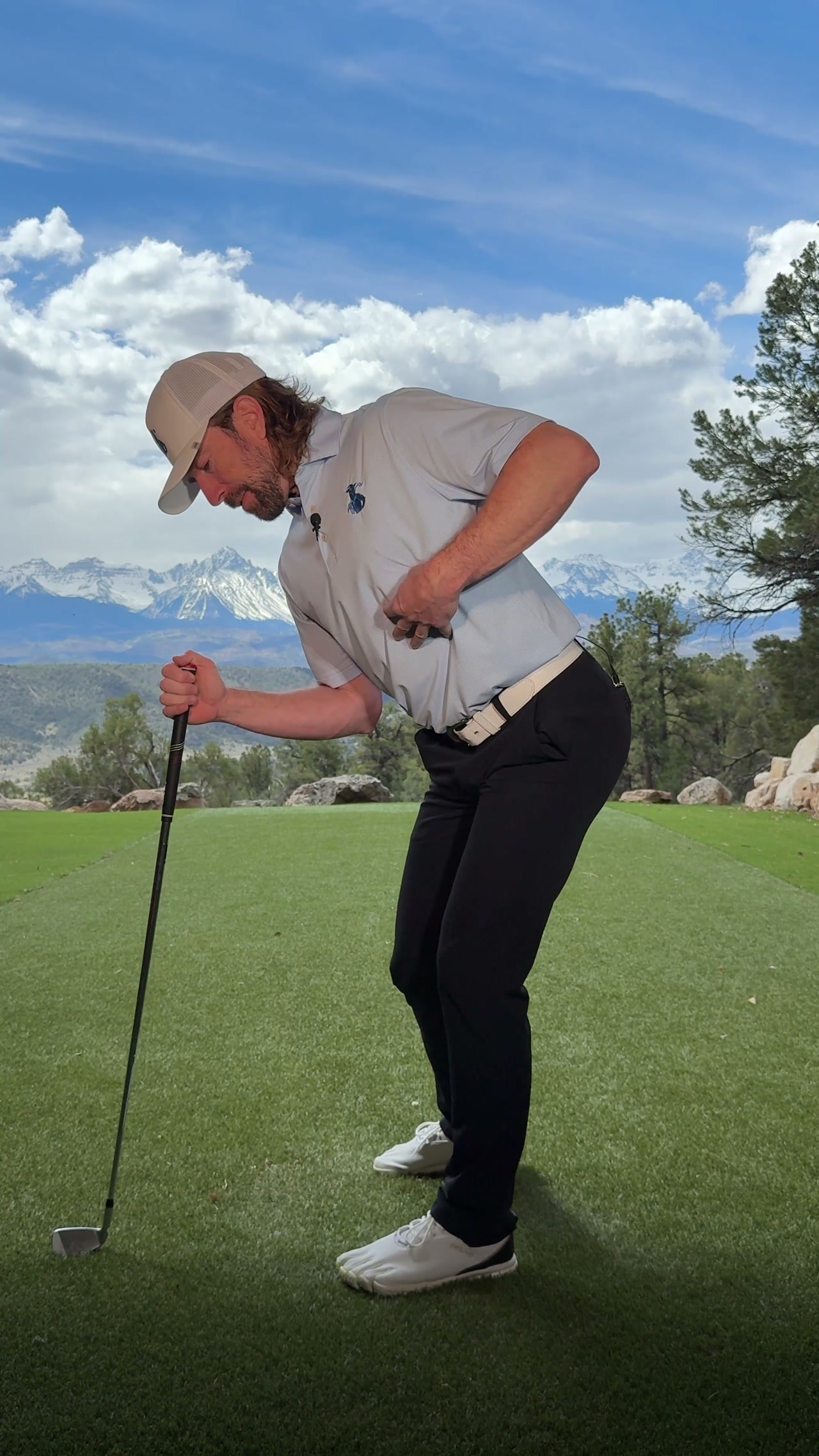
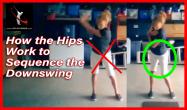
The reverse pivot, the necktie drapes over the chest.
With a necktie on, you can rotate back and pause to check your position at the top of the golf swing and determine whether or not you are in a strong position.
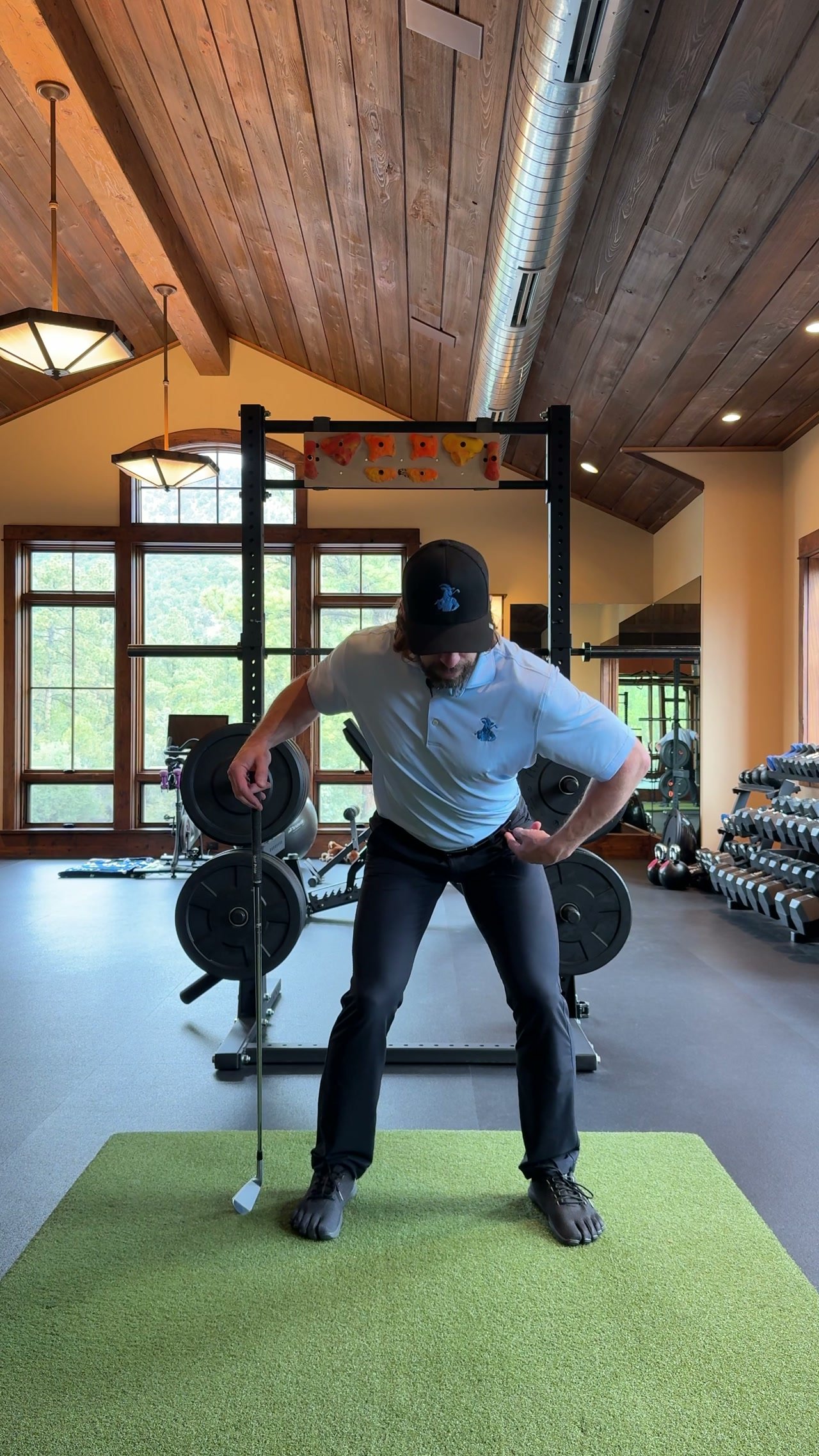
The drill is straightforward. Put on a necktie, rotate back, and pause to observe the position of the tie.
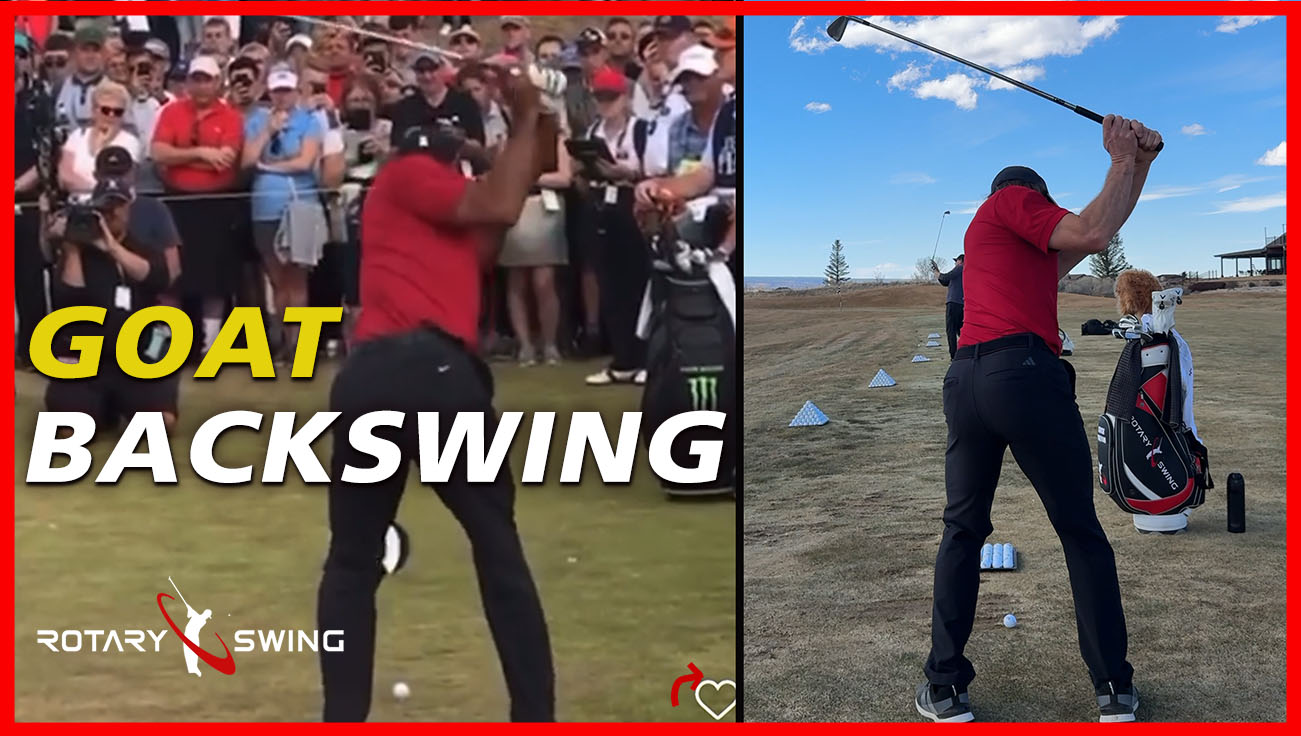
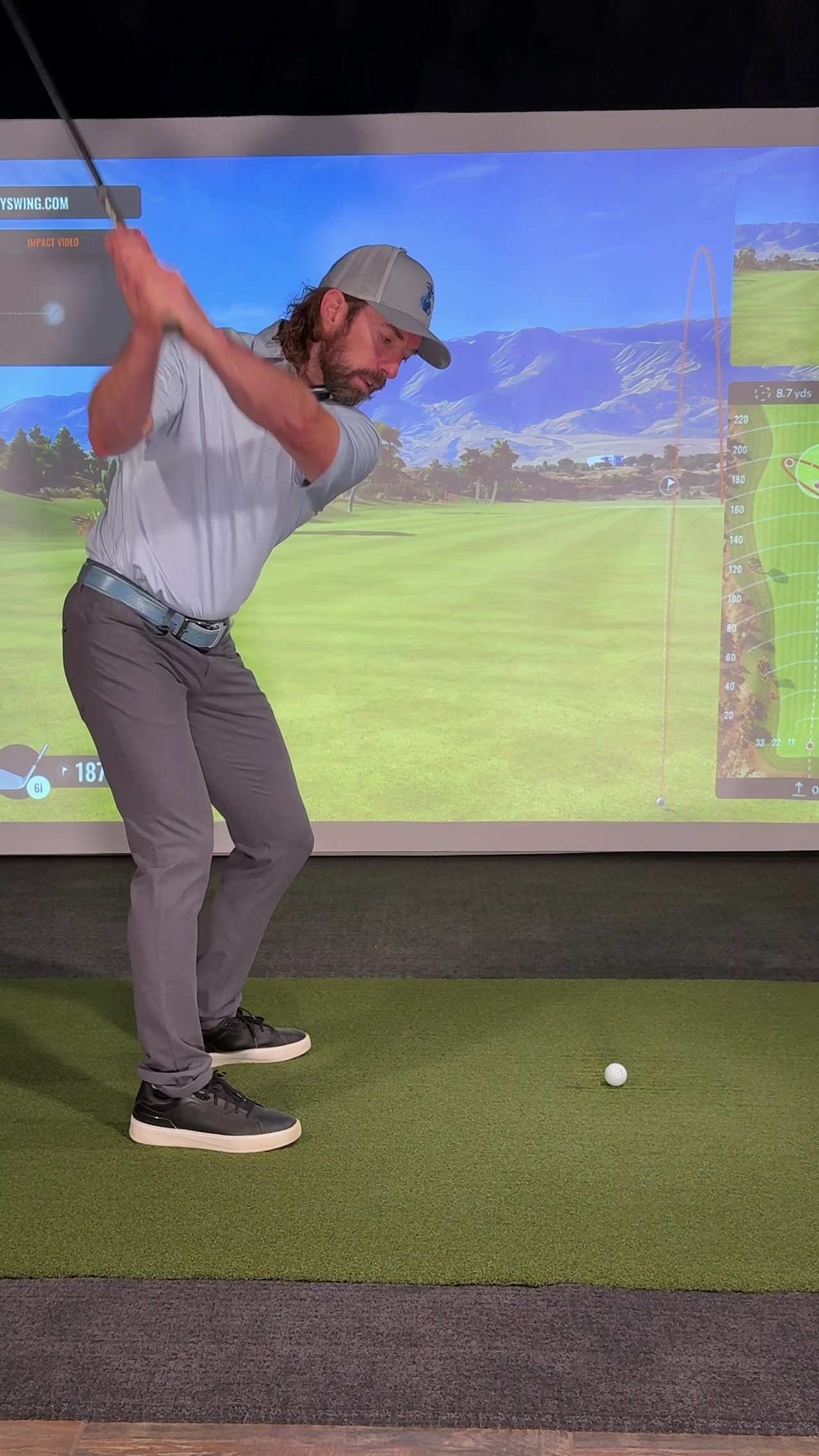
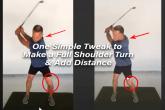
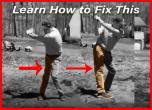
If you go back incorrectly, as shown in the photo, your spine leans toward the target, your head is tilted back, and your hips and everything have been pulled along with your body and rotated too far.
As you lean your upper body toward the target, your pelvis pushes out the opposite direction, leading to a reverse pivot. With your pelvis moving away from the target and your upper body moving toward it, the necktie drapes over your chest and belly.
What's Wrong With That?
You can imagine that it is extremely difficult to execute a dynamic transition from this position. It simply does not work — that is not how your body is designed to move.
Imagine getting into the position pictured above and then trying to throw a baseball. It makes no sense. If you were a pitcher loading back to throw, you would never lean your upper body or your head toward the catcher. You would lean away from the target. To see how your own position at the top and transition compare to elite standards, try a free AI swing analysis.

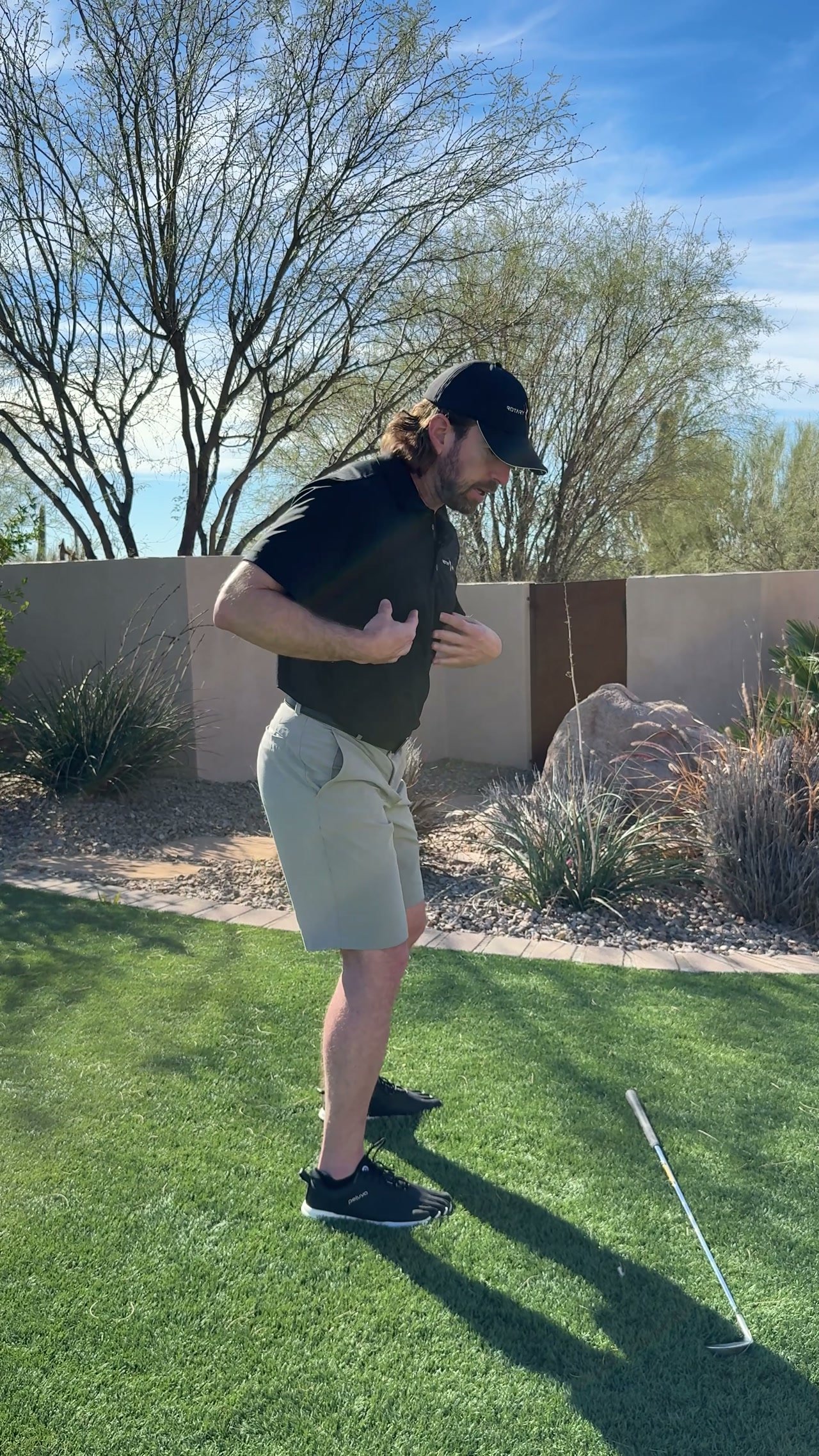
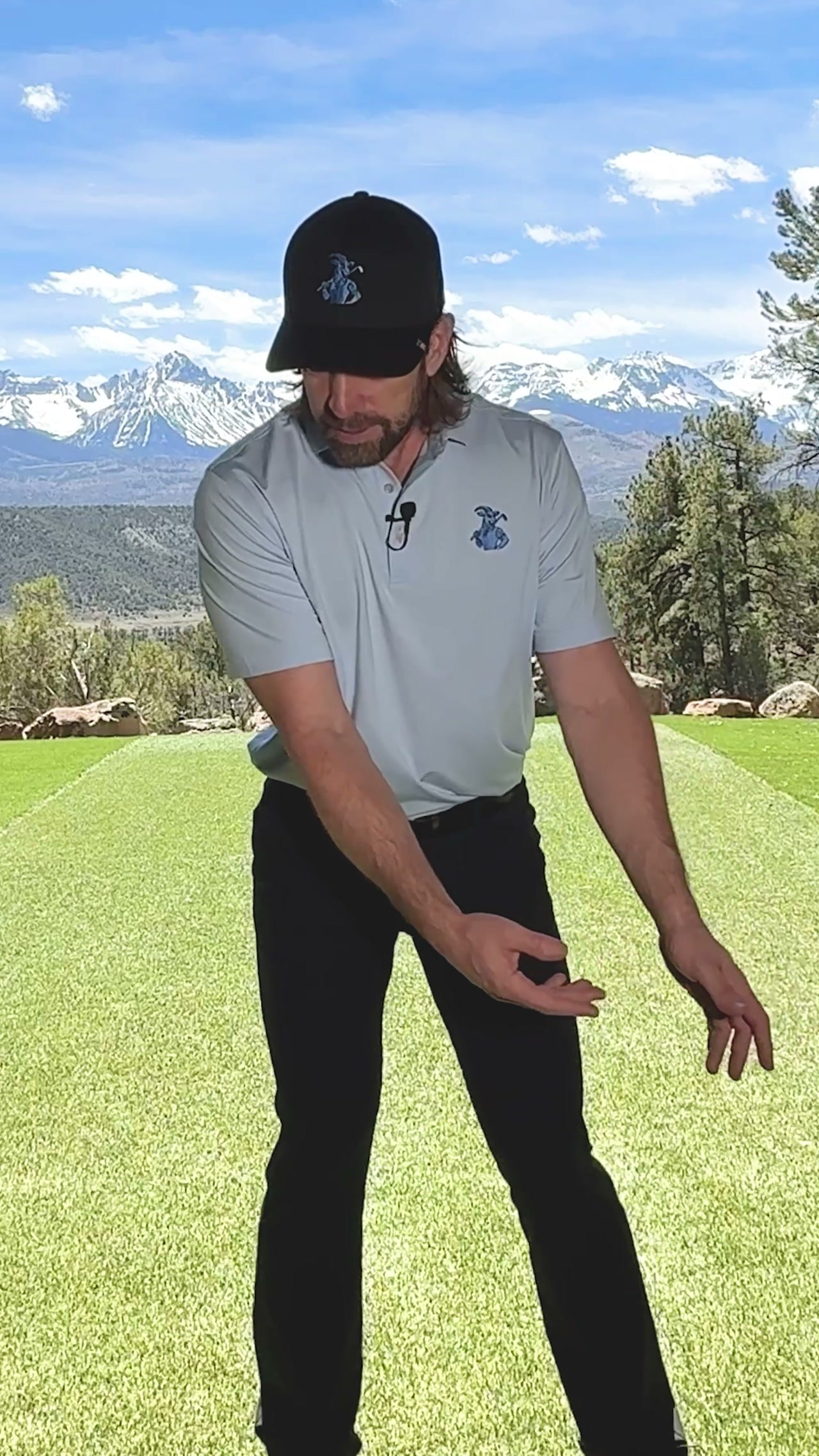
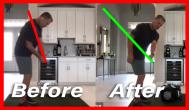
When you load your right side properly, the necktie hangs freely.
Now Do it Right
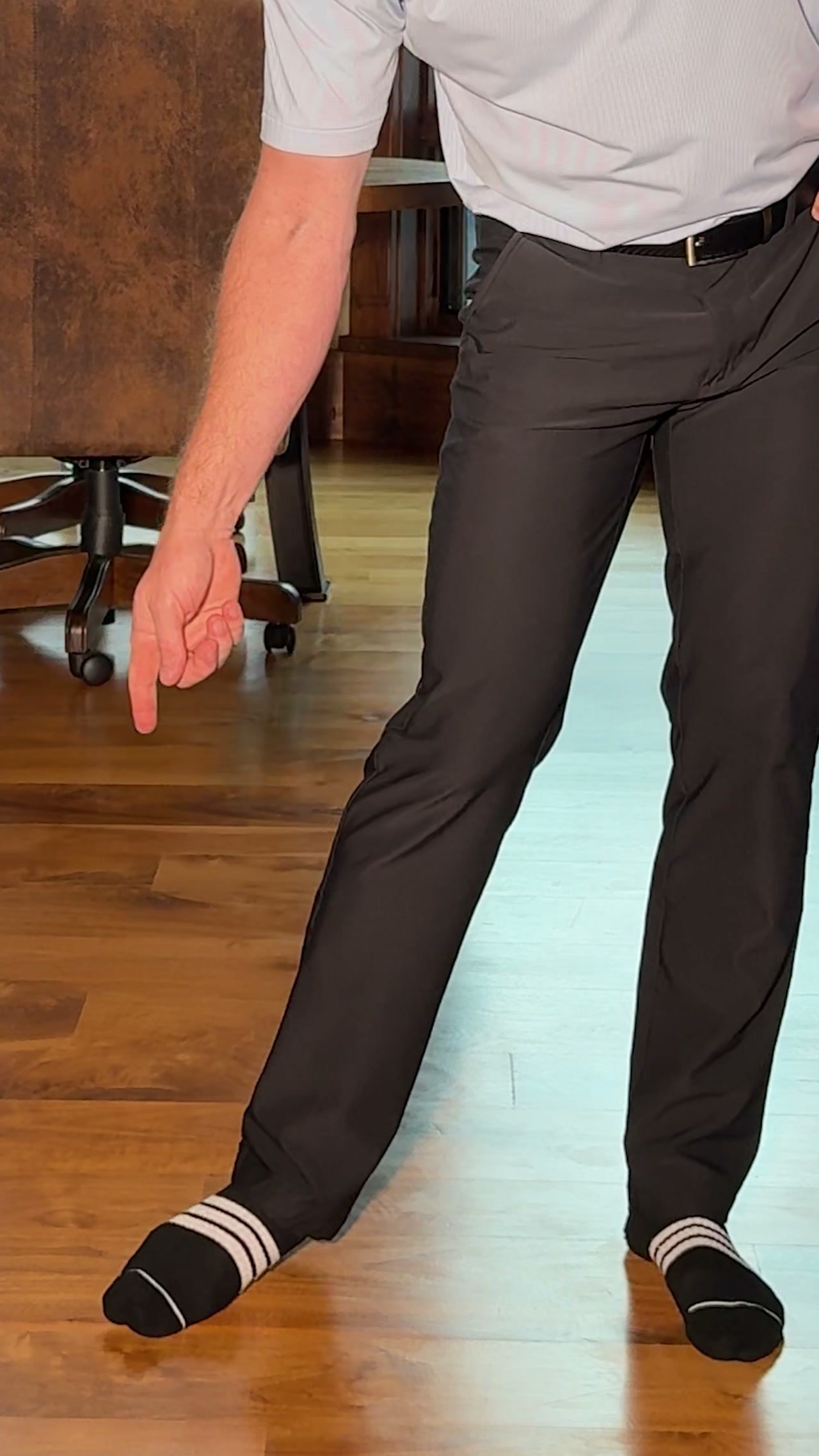
Look at the difference in the photo. As you can see, the necktie can swing freely. Now, as you turn back your spine leans away from the target and you can sequence the downswing, just as a pitcher would when throwing a baseball.
Even if you are not actually wearing a necktie, it is an excellent visualization to imagine one hanging right over the inside of your trail knee as a reminder not to lean toward the target.
If you find yourself getting into a reverse pivot at the top, if you struggle with the downswing sequencing and have trouble with the transition, this is the reason. Get a necktie, film yourself hitting some balls, and pay careful attention to your form at the top of the golf swing.
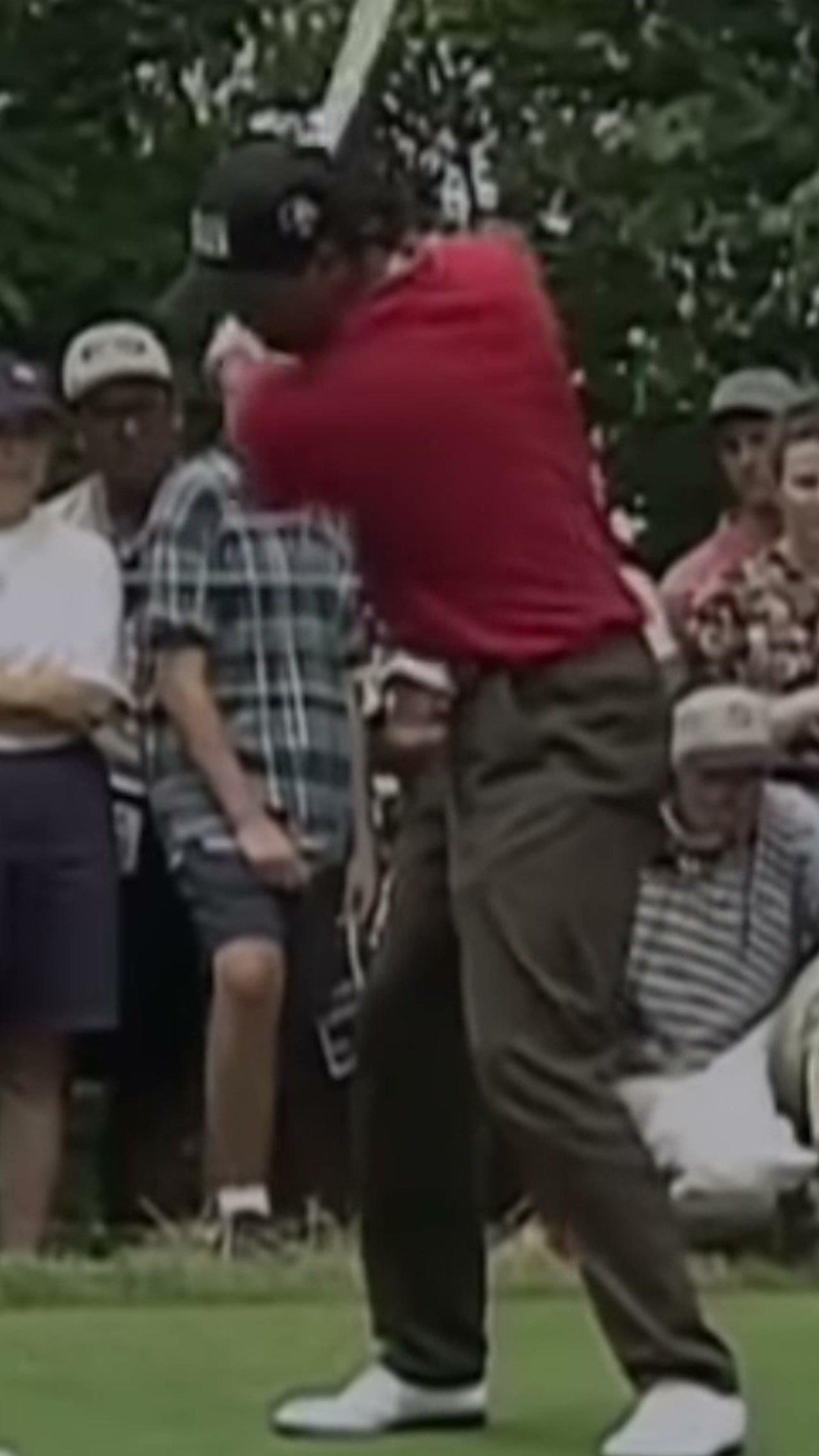
The incorrect position, at left in the photo below, is not a very athletic place to move from, versus the correct position on the right, where you are loaded up and have the stability of the trail glute.
That is why it is so important to be in a strong position at the top, and that is why we work on the golf swing the way we do. The downswing must be executed in the proper sequence, and you need to be able to move from a stable foundation.

Leaning away from the target (right) is a much more powerful, athletic position than a reverse pivot (left)
Give it a Try
If you are struggling with a reverse pivot at the top or your golf swing feels weak during the transition, grab a video camera, throw on a necktie, and start making some practice swings. Then review the footage to see whether your pelvis is moving away from the target so the tie drapes over your belly, or if you are in a strong position that allows the tie to hang straight down.
If you discover you are in a bad position and you correct it, your swing will feel completely different. You will feel significantly more powerful when you are properly loaded up with your spine leaning slightly away from the target. Additionally, you will be removing unnecessary strain from your back and your hip.
Take a necktie, throw it on, make sure it is hanging down freely at the top, and see if that does not improve your sequencing in the downswing. For real-time coaching on your transition and backswing positions, try a free AI golf lesson.
Frequently Asked Questions
What is a reverse pivot and why is it problematic in a golf swing?
A reverse pivot occurs when the upper body leans toward the target during the backswing, while the pelvis moves away. This position makes it difficult to transition into a powerful downswing, as it disrupts the natural sequence of movement necessary for generating power. Correcting this position is crucial for improving swing dynamics.
How can wearing a necktie help improve my golf swing?
Wearing a necktie serves as a diagnostic tool to identify your position at the top of the swing. By observing how the tie drapes over your body during the backswing, you can determine if you are leaning toward the target or maintaining a proper spine angle. This visual cue helps you make necessary adjustments for a more effective swing.
What should I focus on to avoid over-rotating during my backswing?
To prevent over-rotation, concentrate on separating the movements of your shoulders, upper torso, and hips during the backswing. Avoid pulling everything back as a single unit, as this can lead to a reverse pivot. Instead, allow your hips to initiate the movement, which will help you maintain proper sequencing for a powerful downswing.
When practicing with a necktie, what key positions should I check at the top of my swing?
At the top of your swing, ensure that your spine is leaning away from the target and that the necktie hangs freely over your chest. This indicates that you are in a strong position to initiate the downswing. If the tie drapes awkwardly or you feel unbalanced, it’s a sign that you need to adjust your posture to improve your swing mechanics.
Watch part 2 now to see how you're moving your body in the opposite direction of the pros!