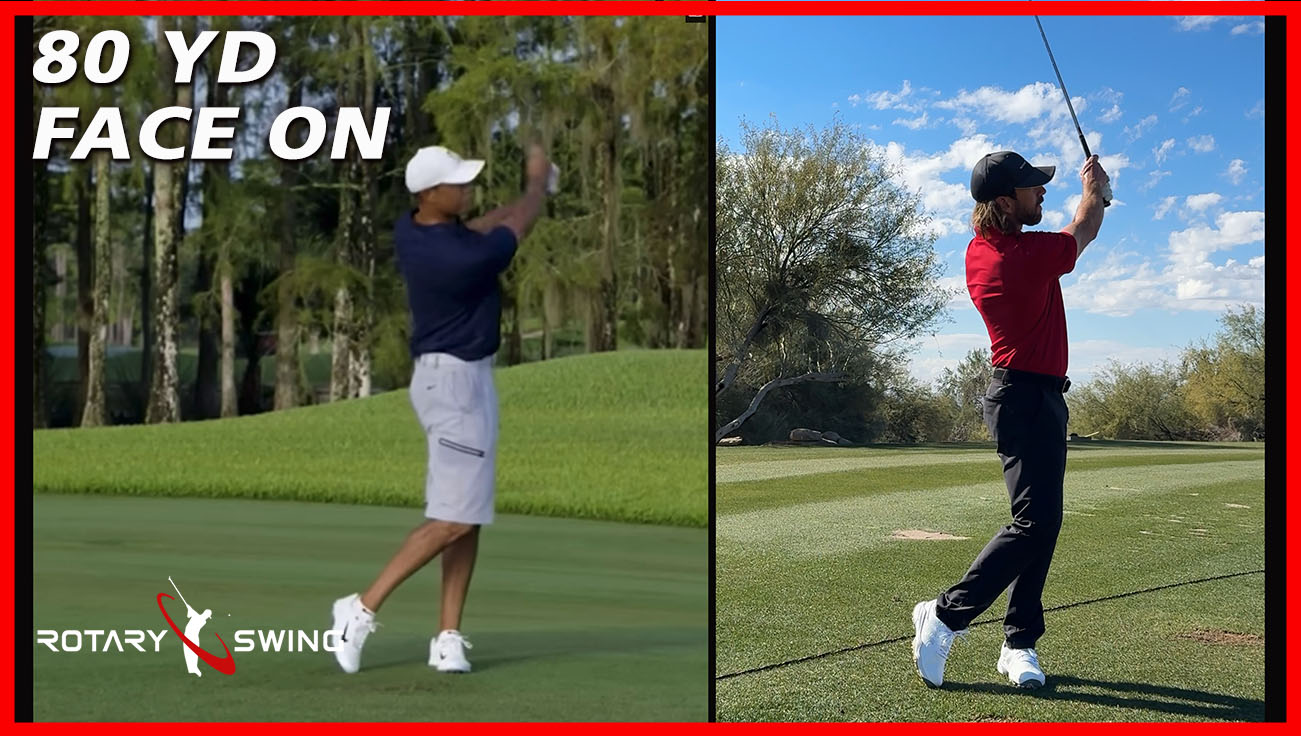
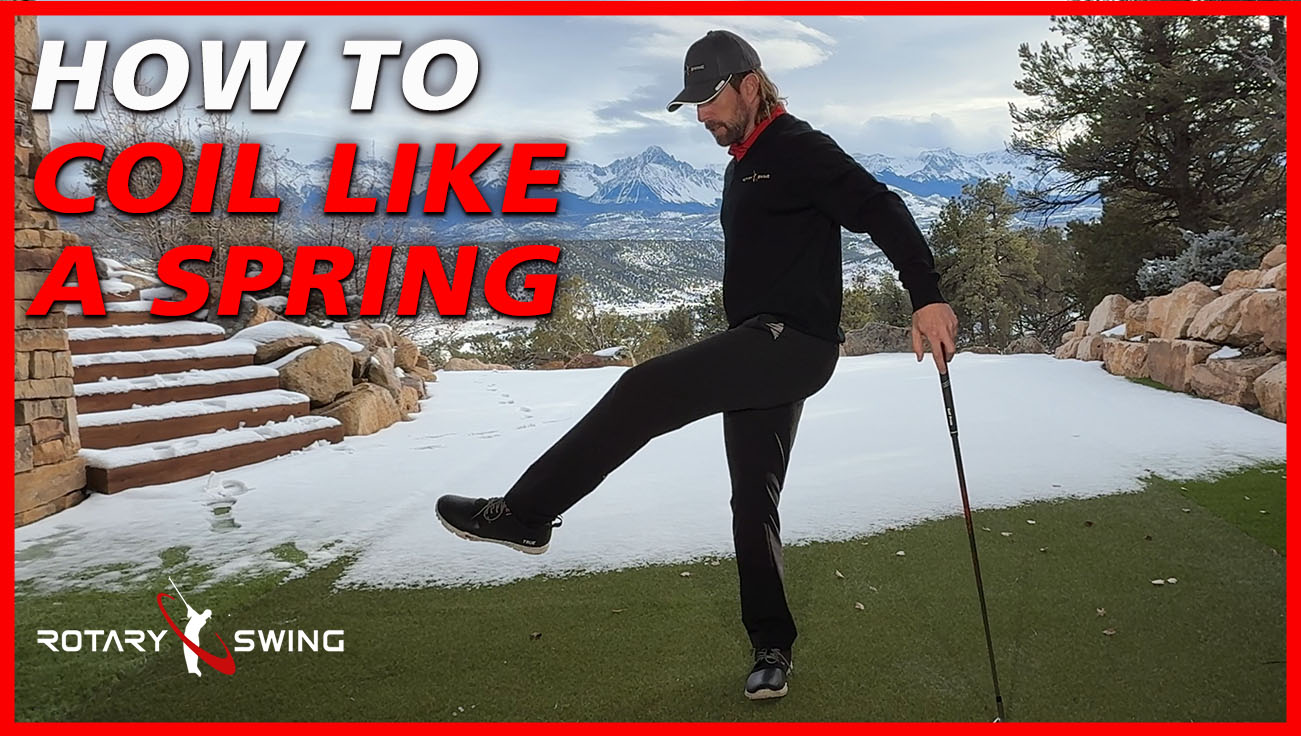
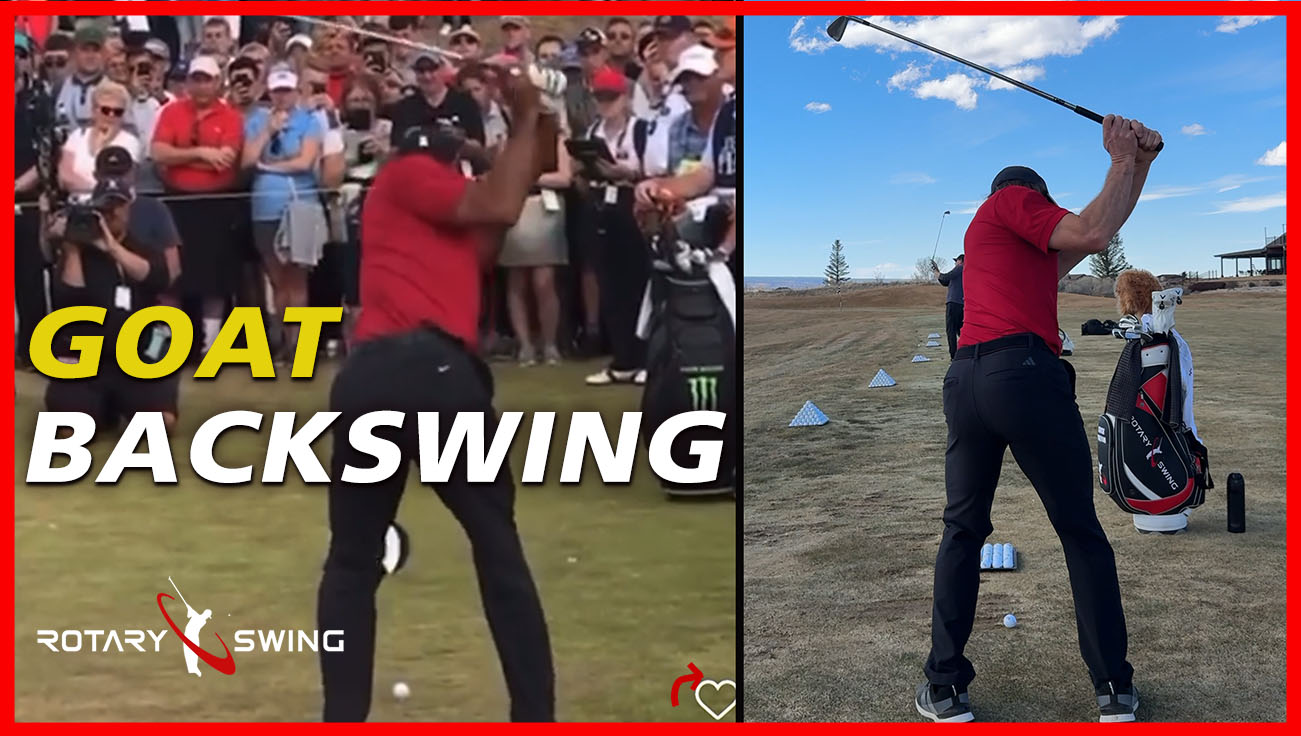
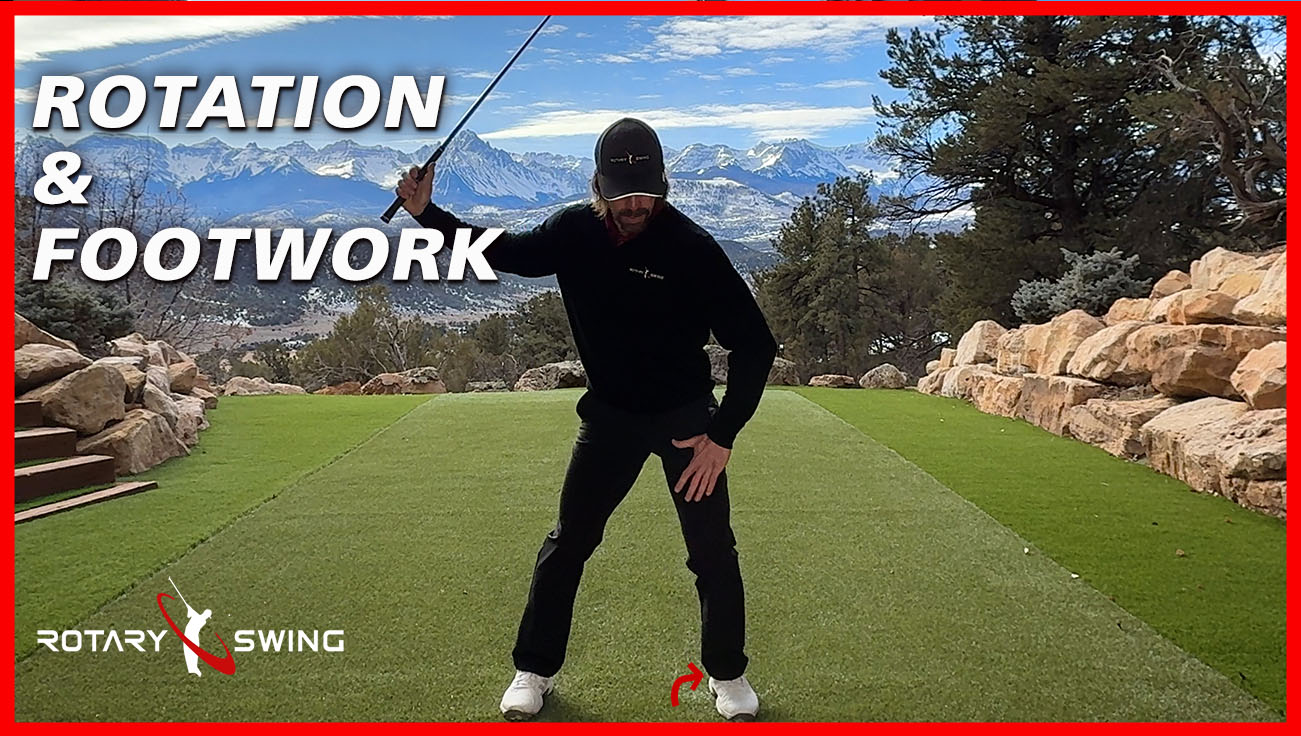
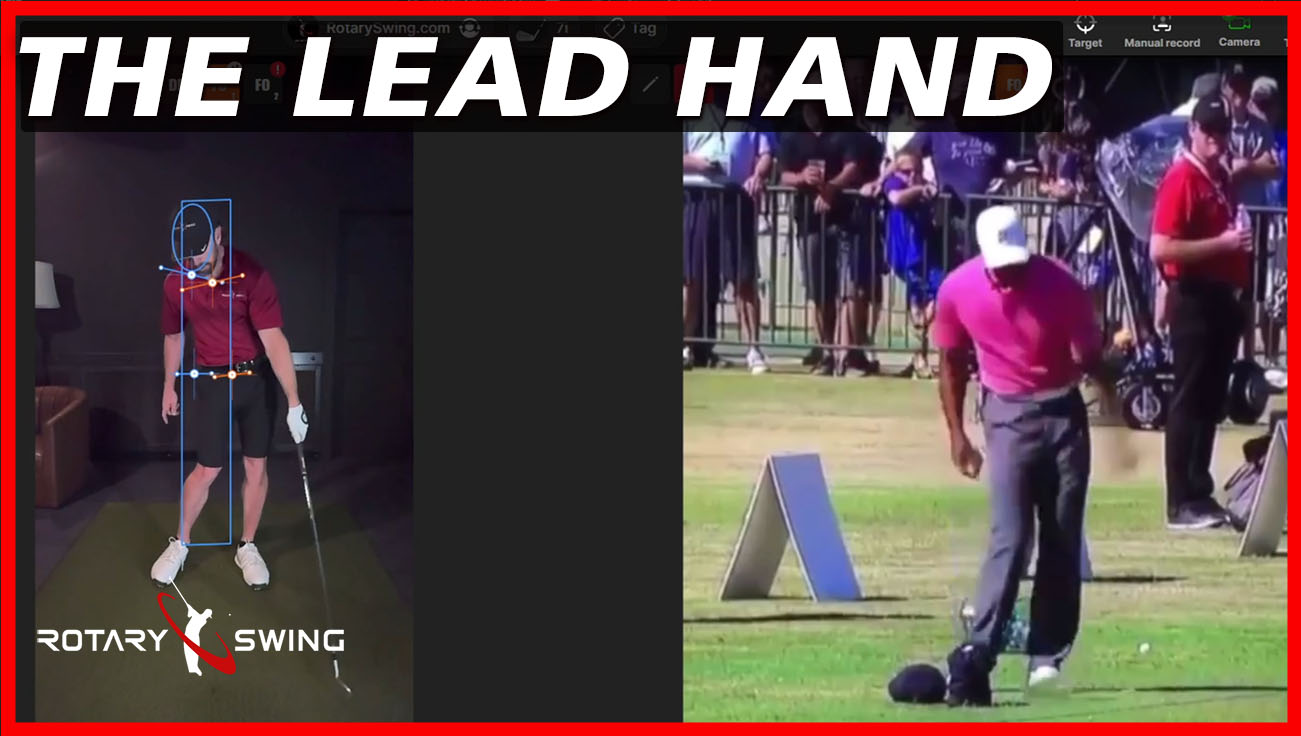
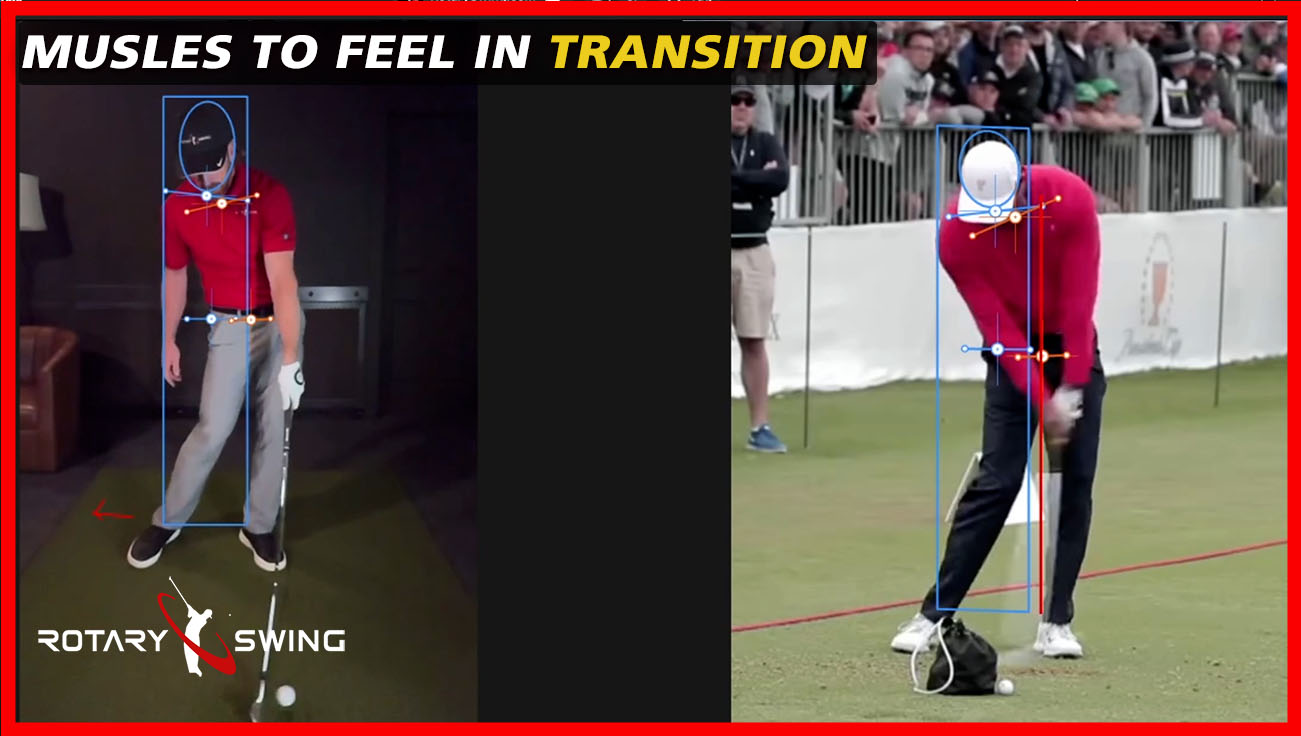
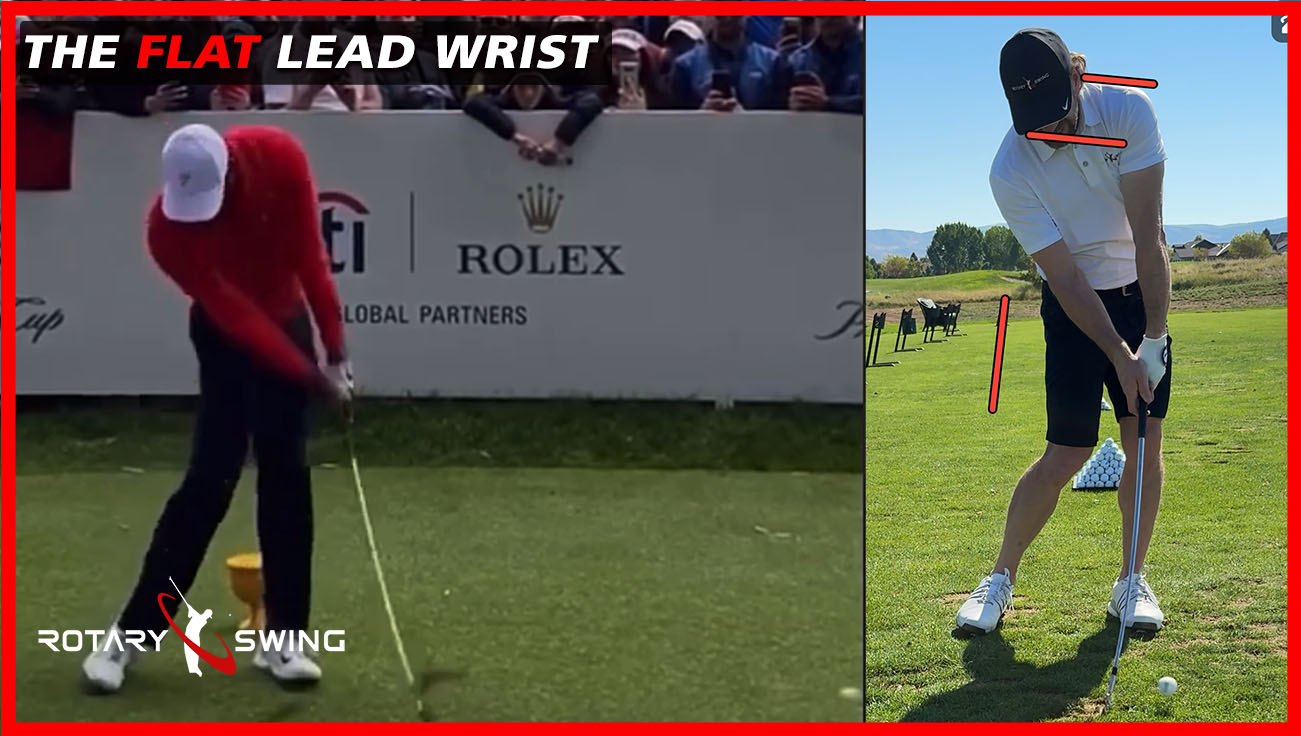
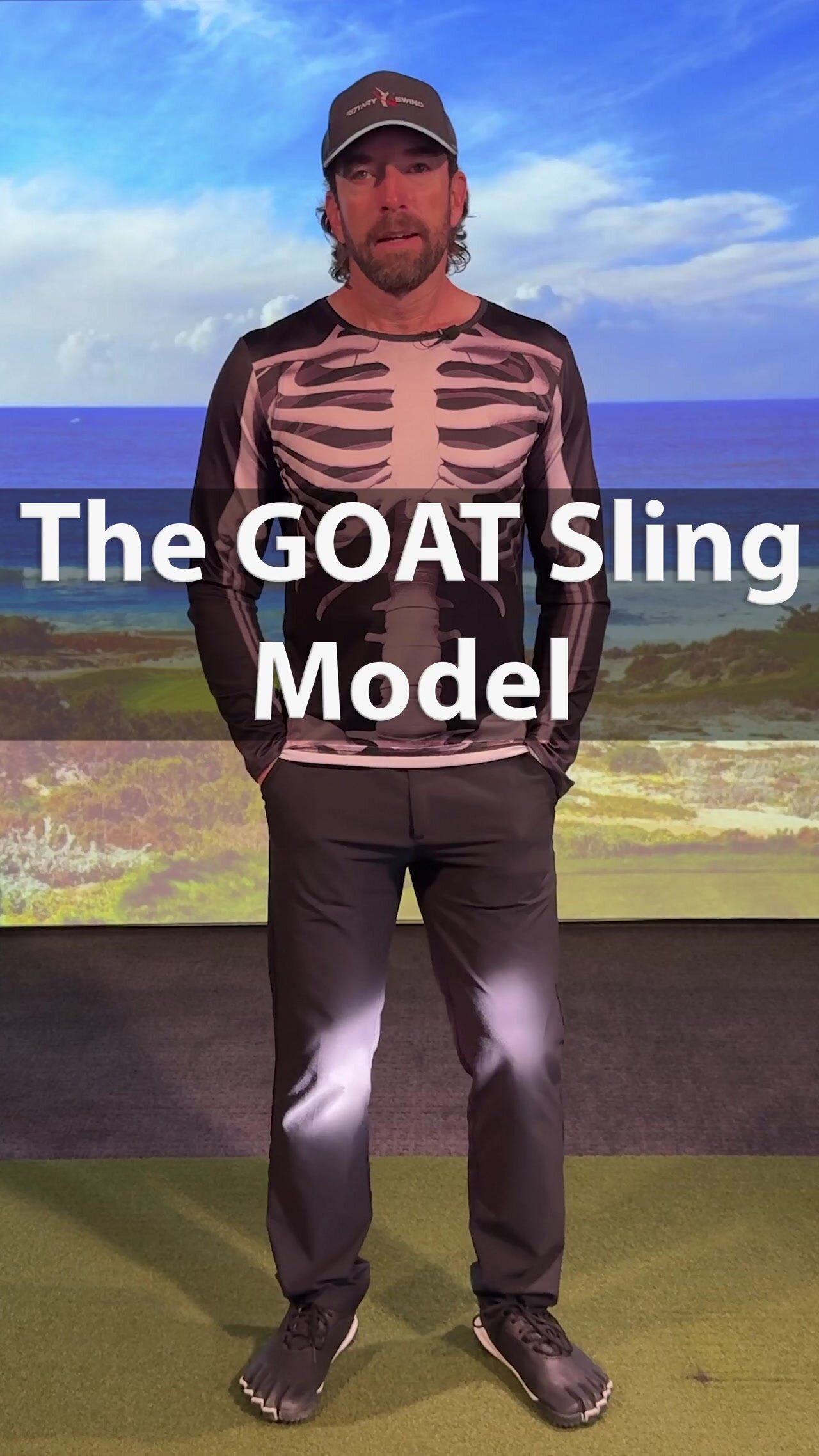
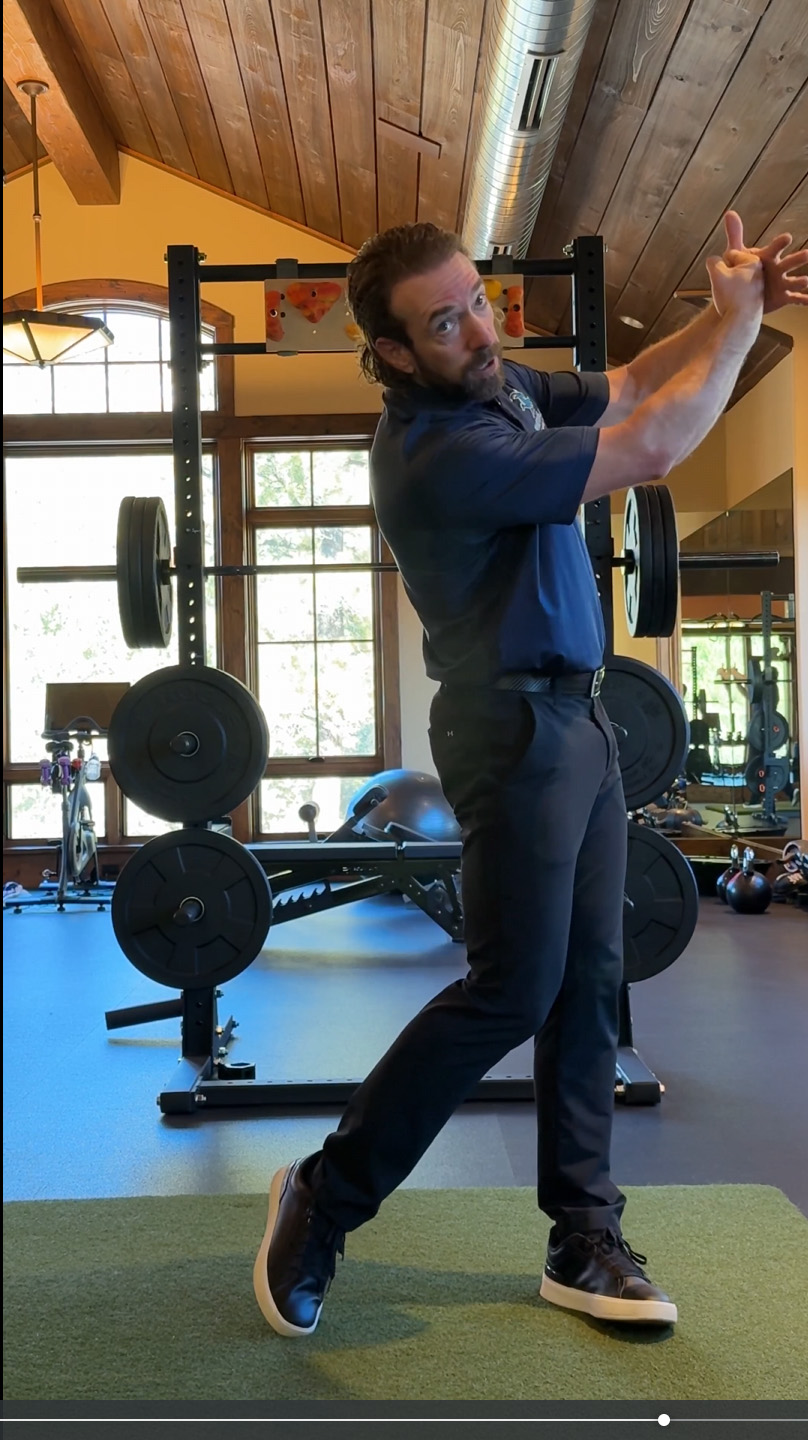
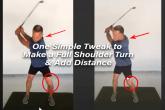
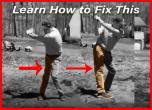
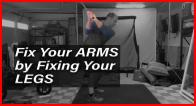
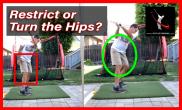
Weight shift in golf is essential for generating efficient power in your golf swing. The key is making that feel completely natural and effortless.

Weight shift in golf is fundamental
Previous lessons have taught you how to set up to the golf ball perfectly every time.
Is this the fault costing you strokes?
Film one swing on your phone. In about a minute GOATY measures it and names the single biggest thing costing you strokes — free, no card.
Analyze My Swing Free
Related: Golf swing weight transfer — the AI-coached approach →
Android users: Download GOATY on Google Play — free AI golf coaching on your Android phone. →
You have been putting in your reps, so the correct movement pattern is becoming the only way you know how to set up to the ball.
Stop reading about it — feel it in your swing today
GOATY watches your swing live and coaches you between every rep. Free. No signup.
Start Your FREE Live Lesson →We are building the perfect setup, teaching your brain exactly what it feels like to be positioned correctly at address.
Now we are going to add another drill to expand on what you have learned so far and challenge your neuromuscular awareness a little more.
If you are not ready for this, simply keep going through your regular setup routine.
Once you are genuinely comfortable and confident with the setup, come back and add the weight shift drill into the mix.
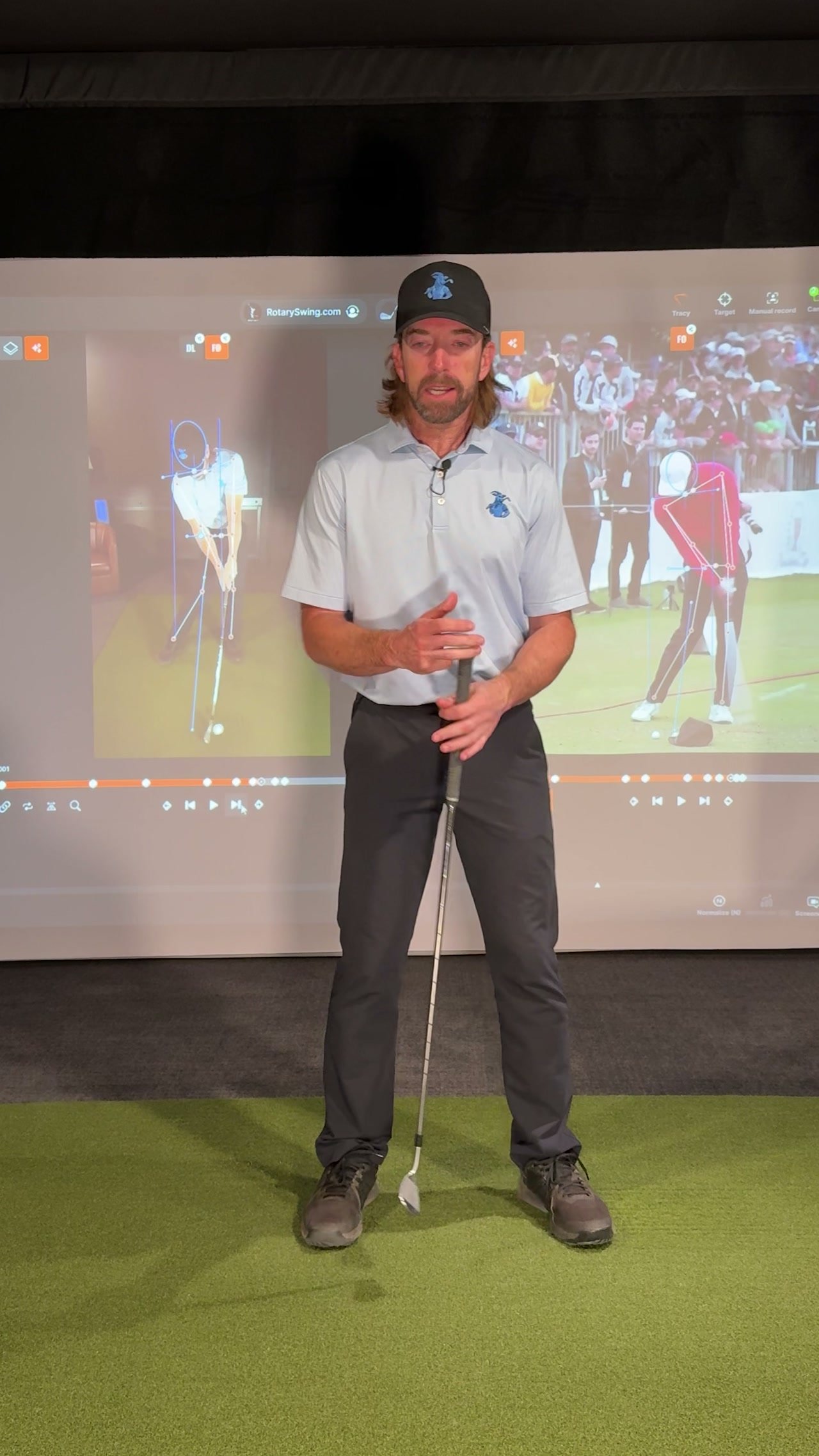
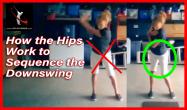
Weight shift in golf is fundamental. You will notice that we incorporate it into many of the other drills throughout the learning phase of the Rotary Swing Tour.
It is such a critical part of the golf swing — and so many golfers execute it incorrectly — that we want you to spend as much time mastering it as possible.
At least 90 percent of the golfers we see do not shift their weight properly in the golf swing.

Keep your weight on the inside of the right foot
Just an Inch
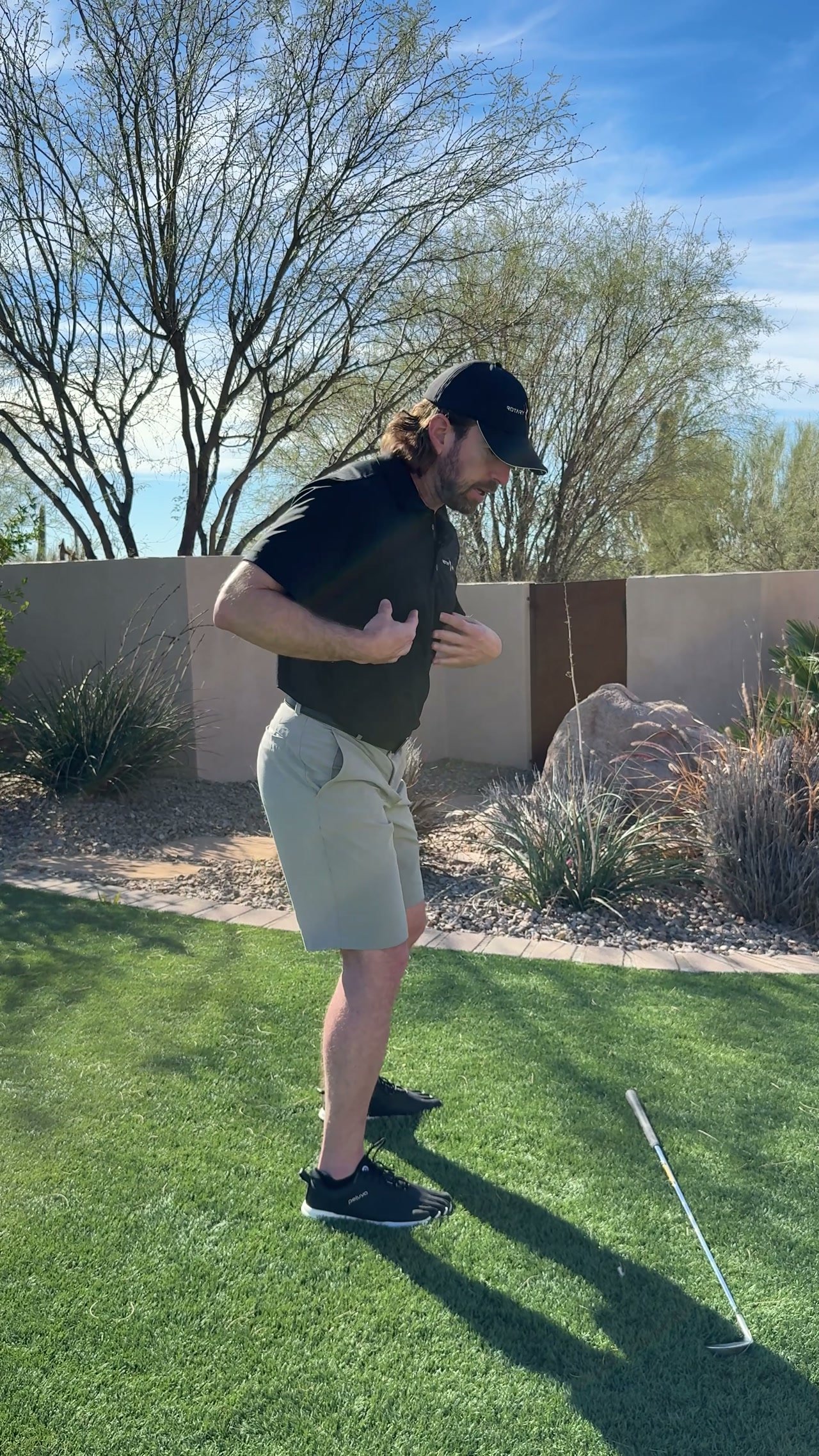
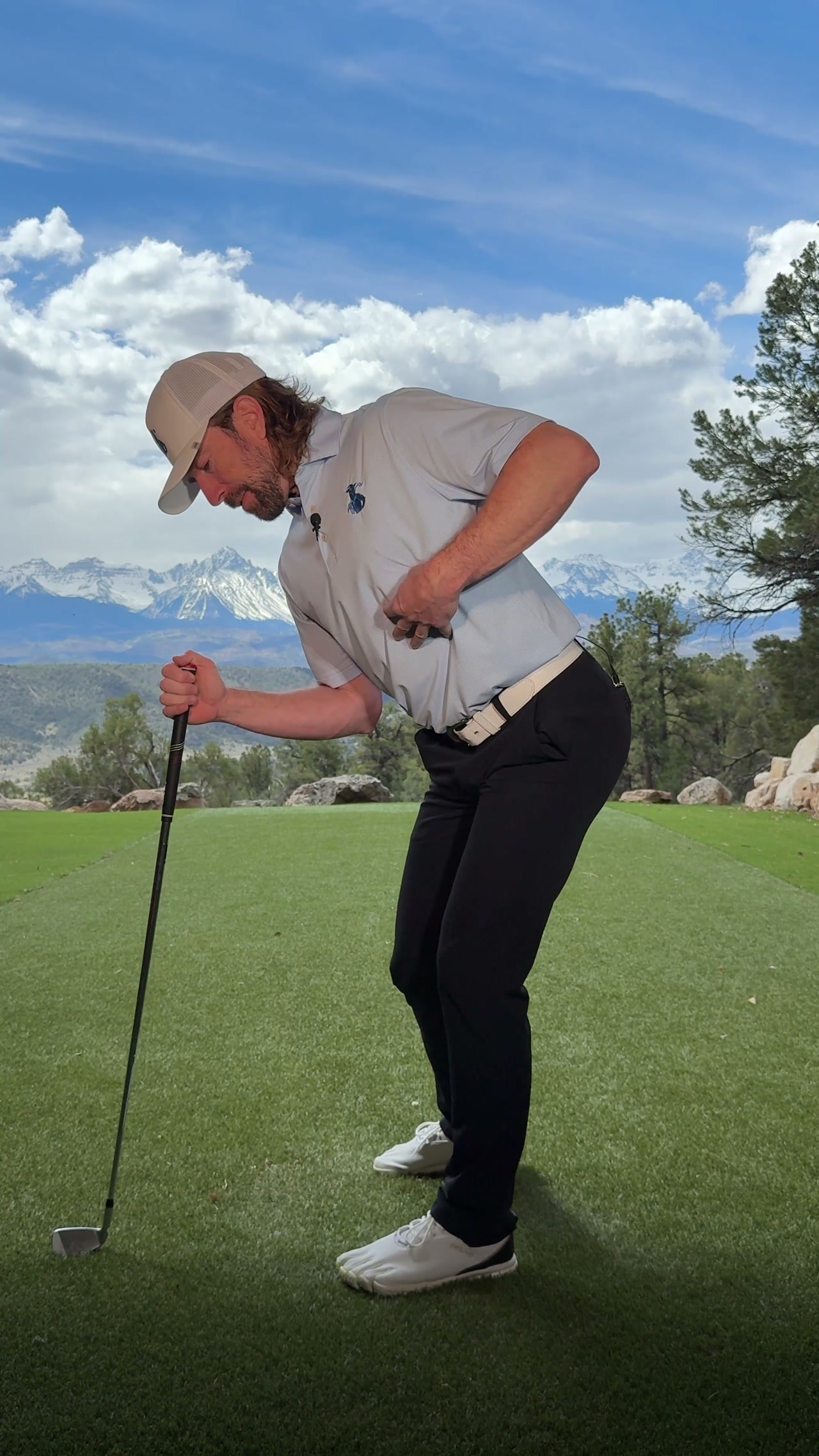
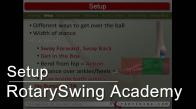
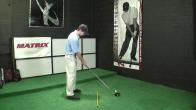
The first step is to get into your setup. You already know how to do this — it is your regular setup routine.
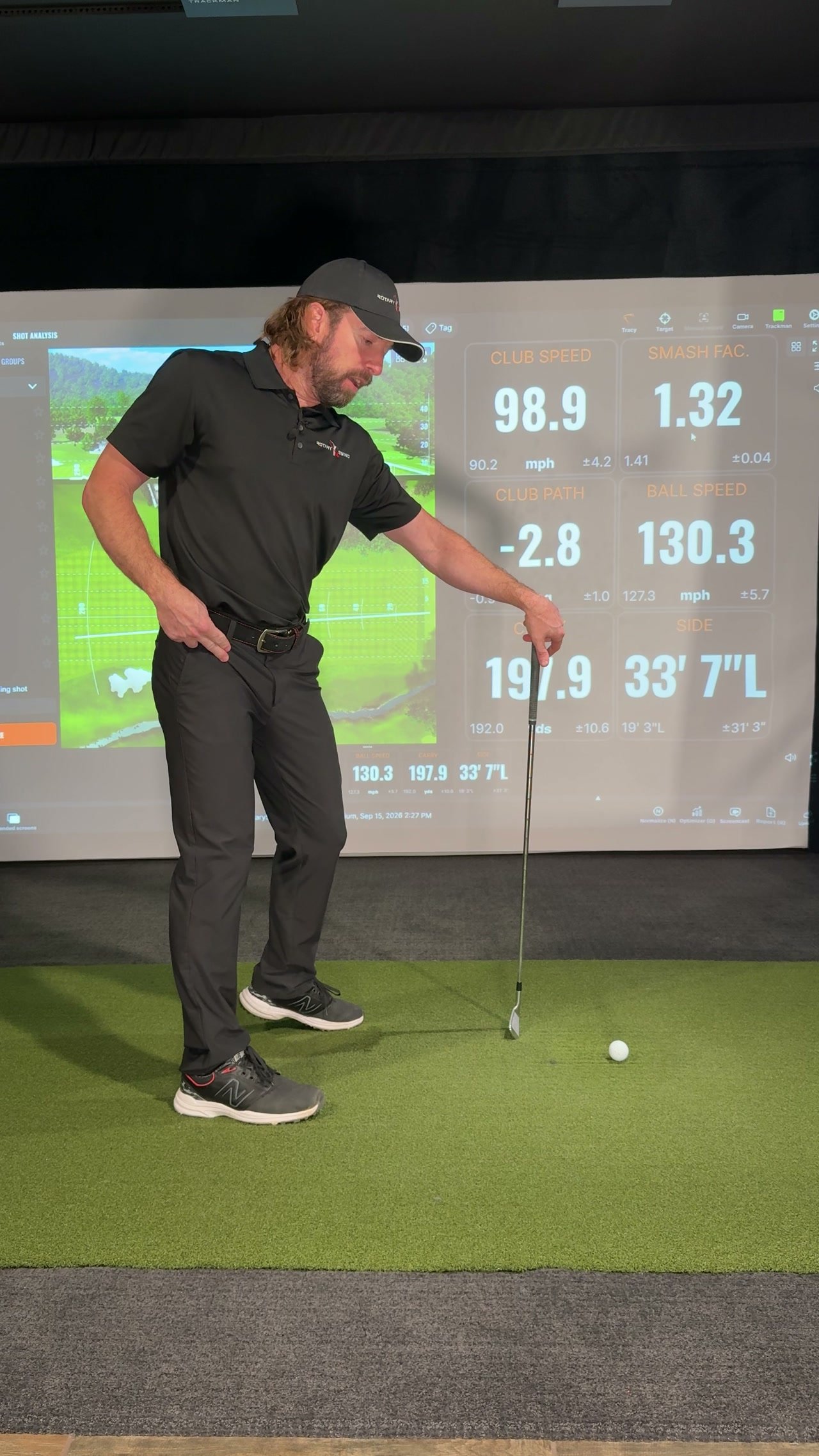
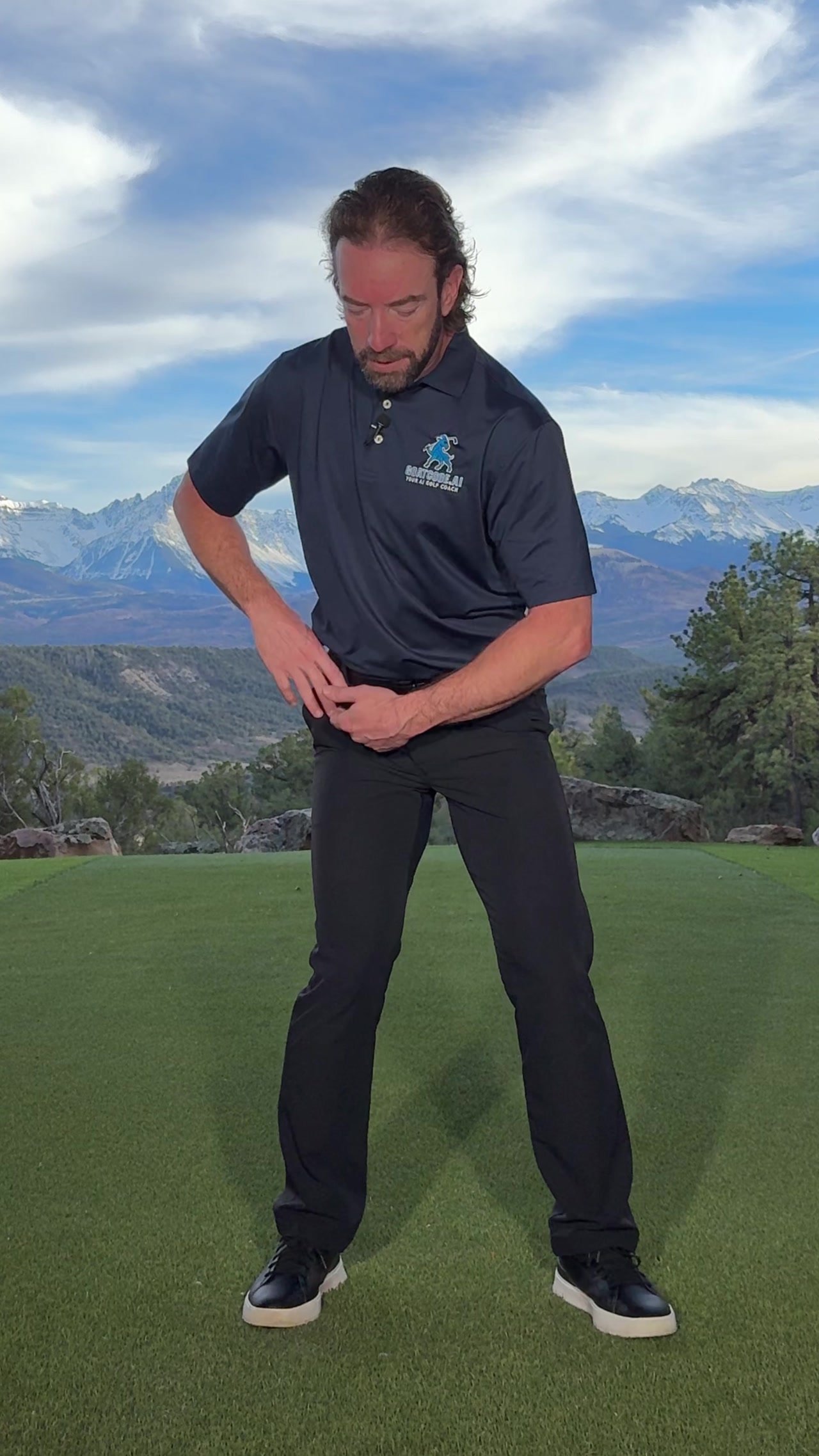
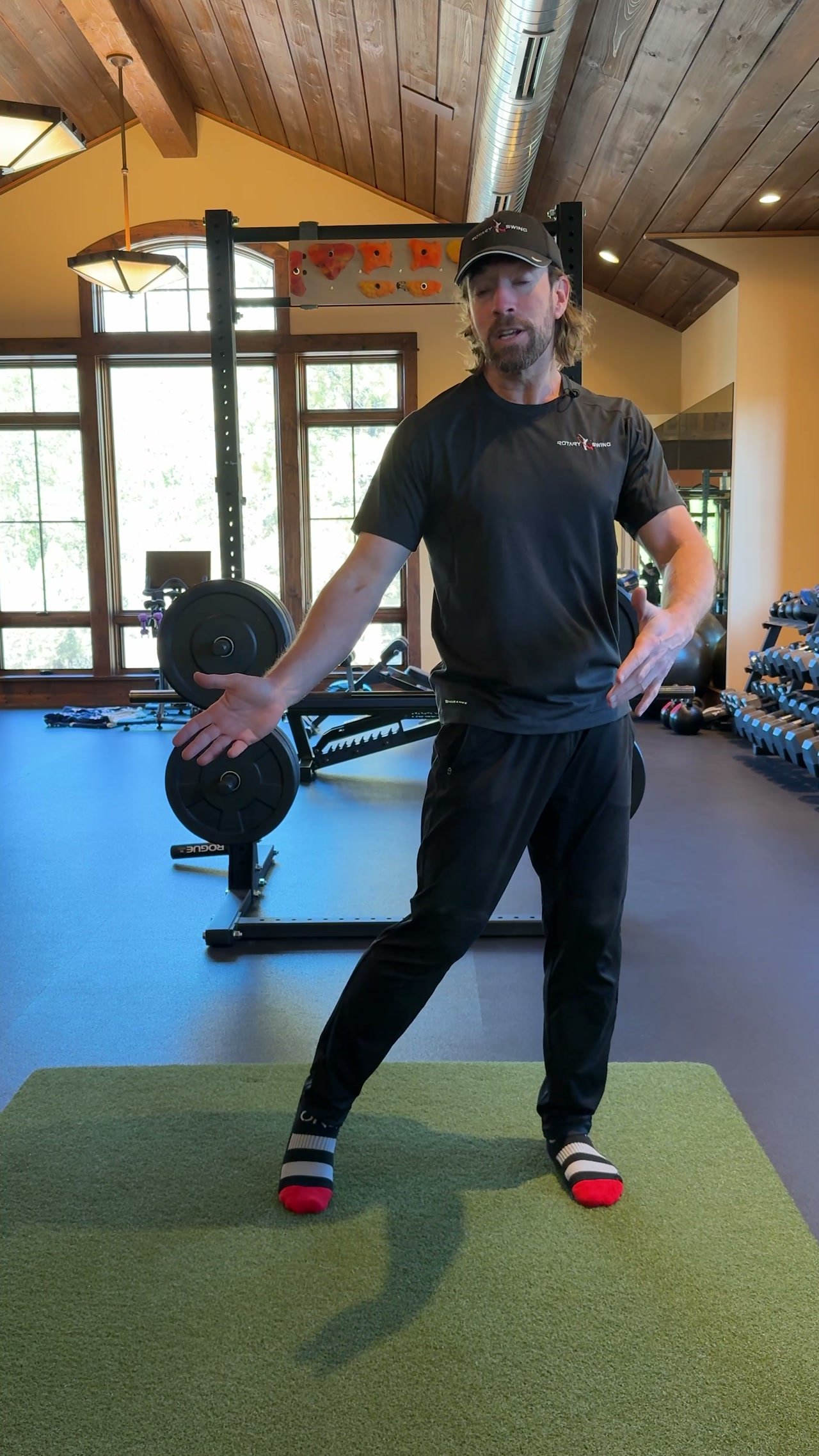
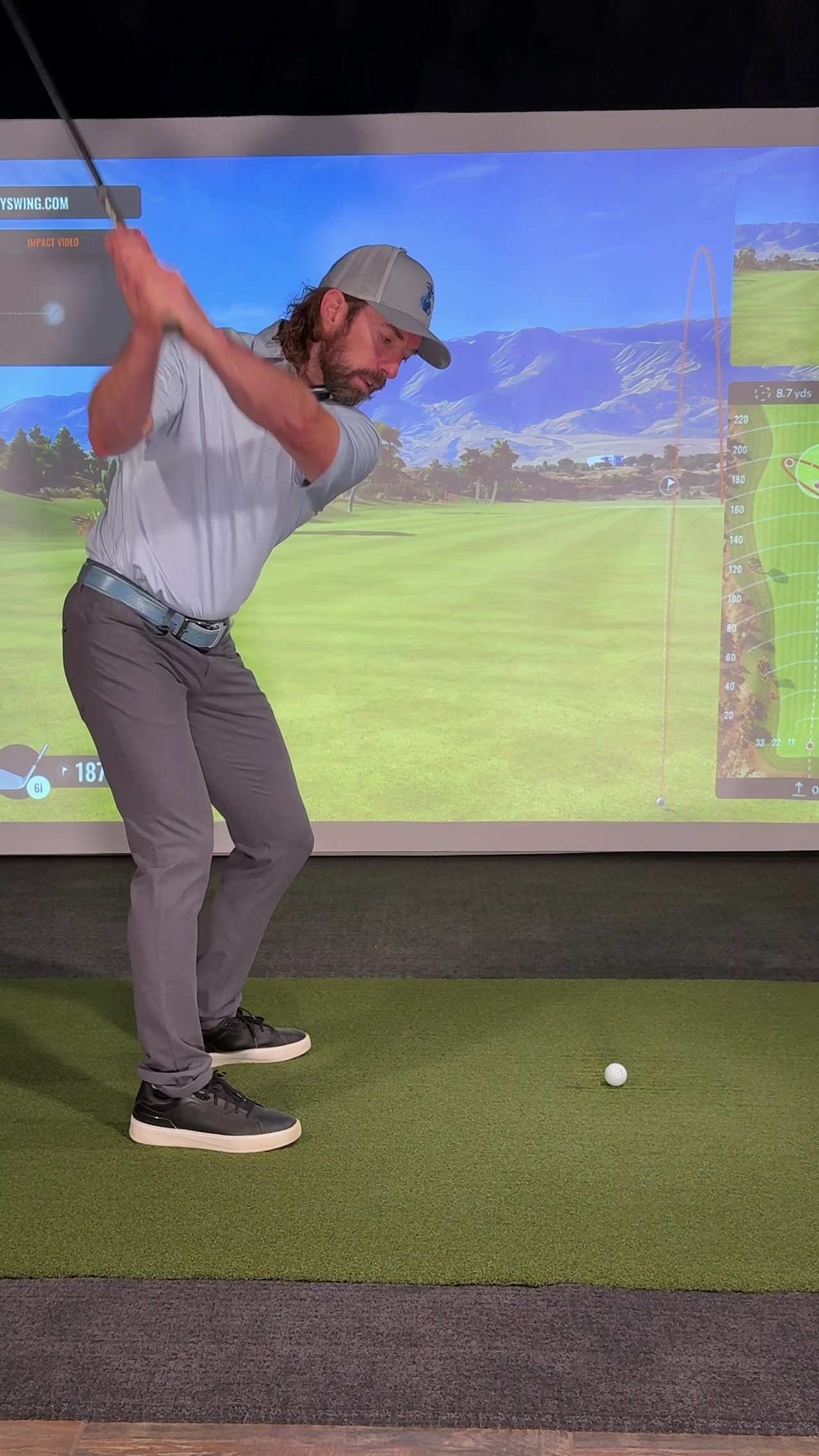
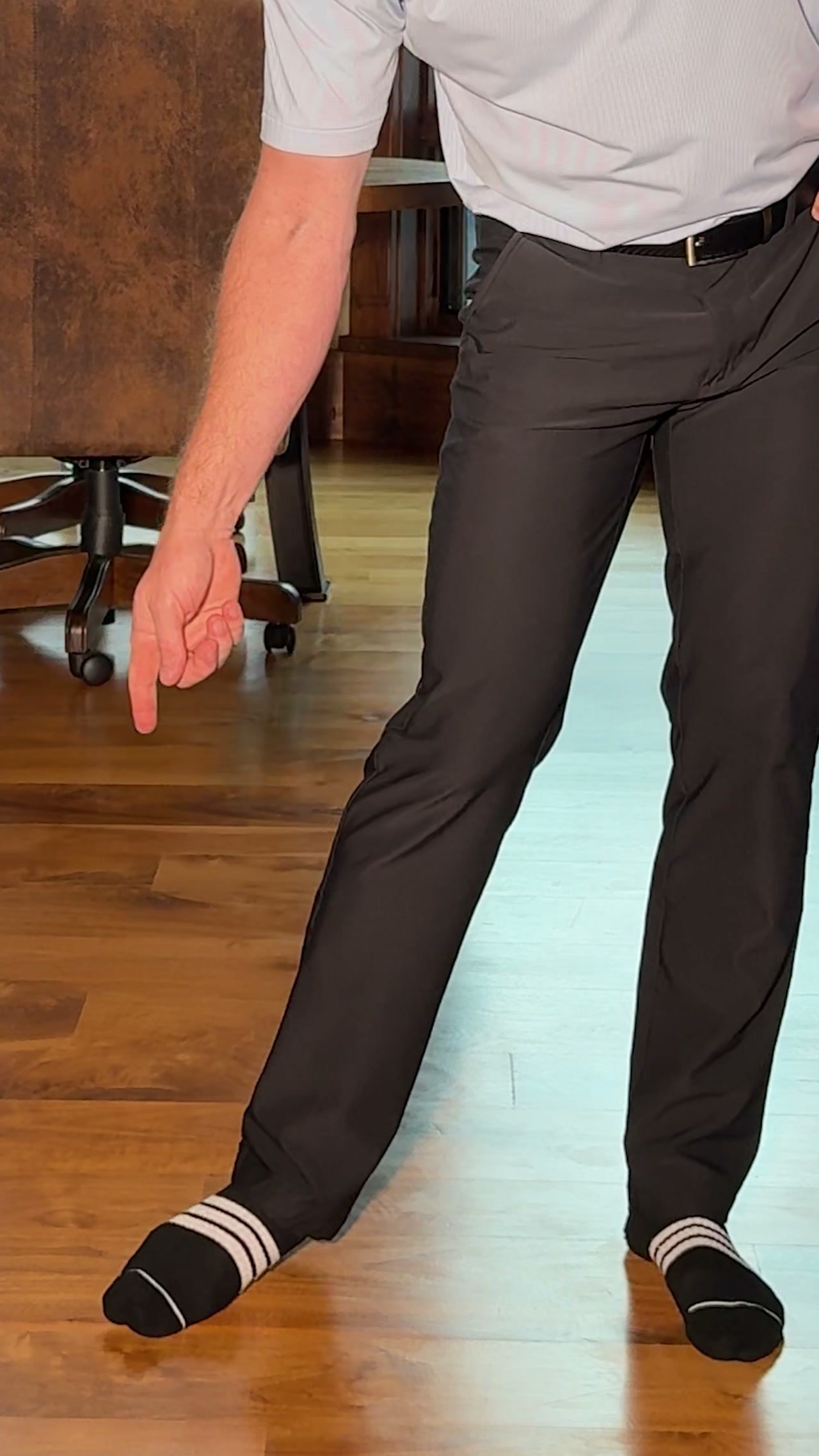
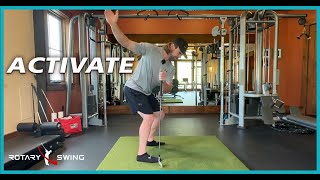
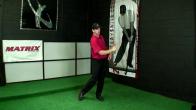
Now you are simply going to shift your weight slowly to the trail side. Do not move your hands, arms, or shoulders — just shift your weight approximately one inch to the trail side.
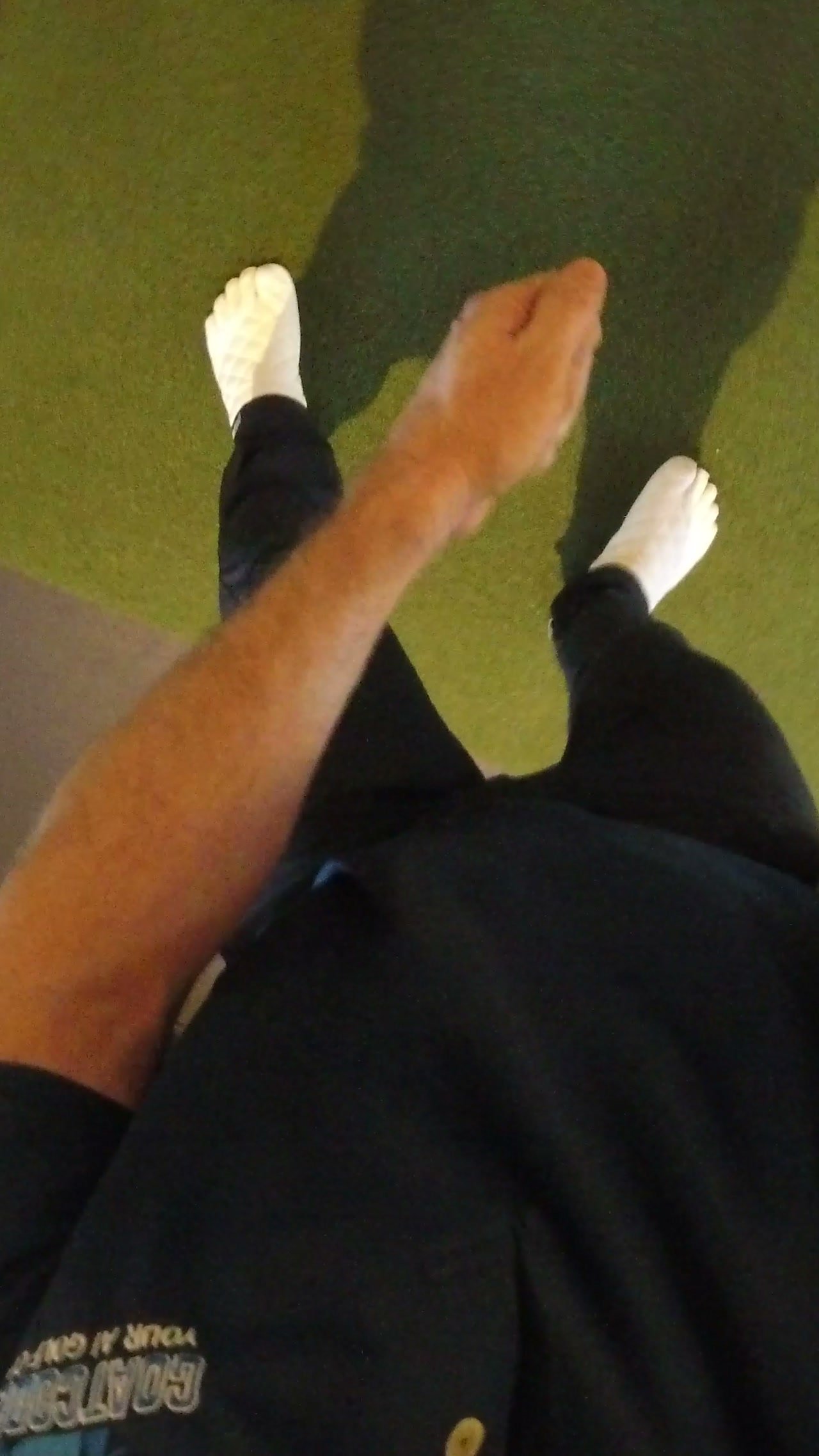
You want to feel that you are pressing into the inside of your trail foot, or slightly toward the middle, but never to the outside — that distinction is critical.
Shift your weight an inch to the trail side and feel the pressure increase on the inside of your trail foot.
If you shift more than an inch, you will end up on the outside of your foot, and then you will have to slide your hips a long way to get back over on the downswing.
You want just a tiny shift — it is important for power in the golf swing, but you do not need a large movement.
That is the first step — a small shift to the trail side. Now you need to get back over to the lead side.
Try a free live lesson with GOATY
GOATY, my AI golf coach, watches your swing through your phone camera and coaches every rep. Free, about 20 minutes, no credit card.
Back to Neutral

Shift to the left, back to neutral
We already know that the proper stance width is two inches outside neutral.
If you have shifted one inch to the trail side, now you are going to need to move approximately three inches back to the lead side to get the center of your lead hip socket over the center of your ankle.
When your hip is positioned over your ankle, that is neutral joint alignment. Being in neutral provides you the maximum freedom to pivot.
That is the essential point. Getting back into neutral is the crux of the golf swing that so many golfers execute incorrectly.
Most golfers swing exclusively from the rectangle — the upper body. They swing too forcefully from the top, and the lower body has to simply stop and brace for impact.
You are not going to do that. You are going to move your lower body into position so the large muscles can get to work and drive the golf swing.
As Always - Pull, Don't Push

Pushing from the right sends you well beyond neutral
When discussing weight shift in golf, a common question is "how do you get your weight back to the lead side in the downswing?"
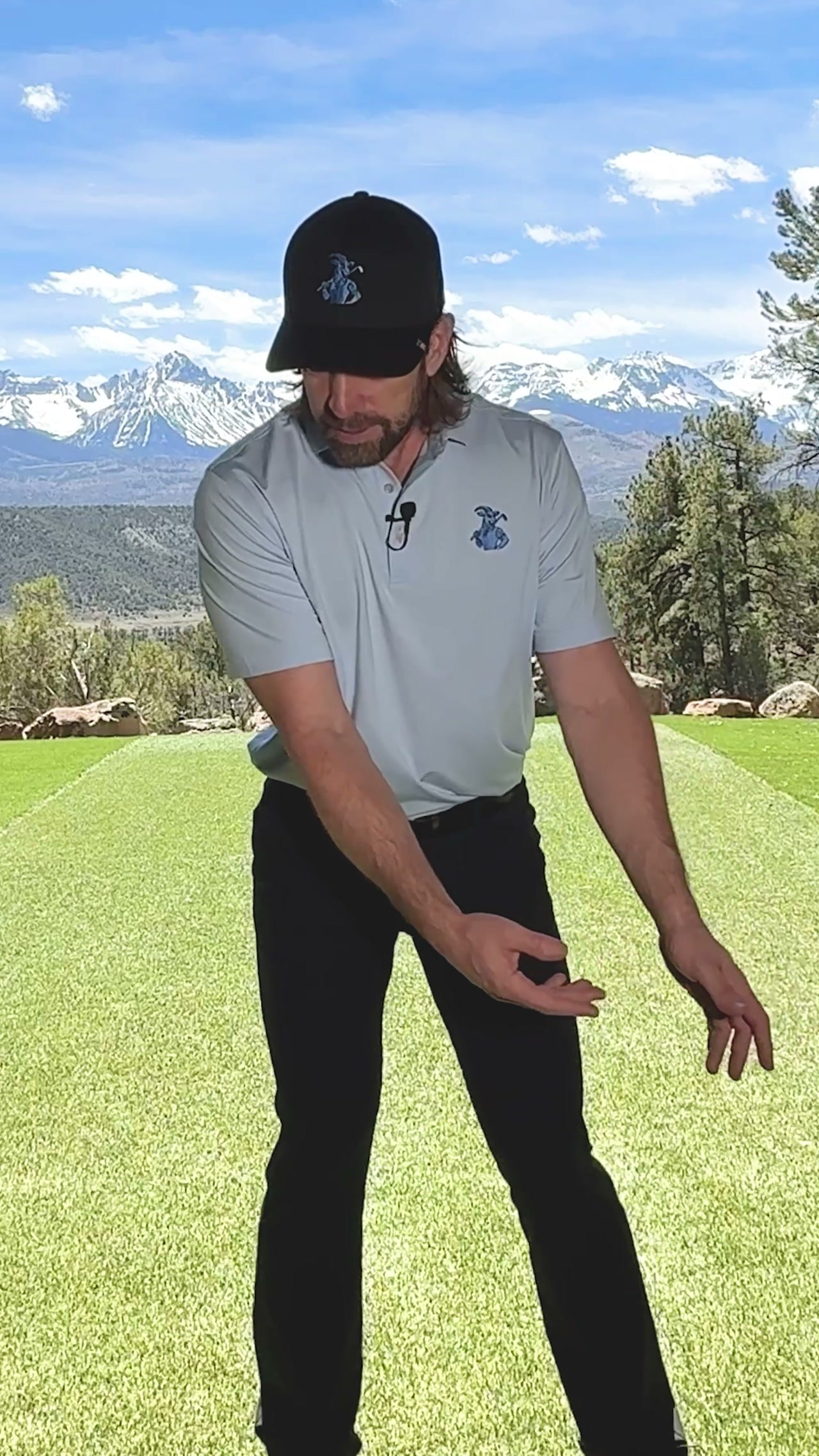
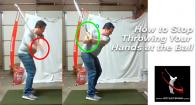
The key, like so many other aspects of the golf swing, is to pull from the lead side, rather than pushing from the trail side.
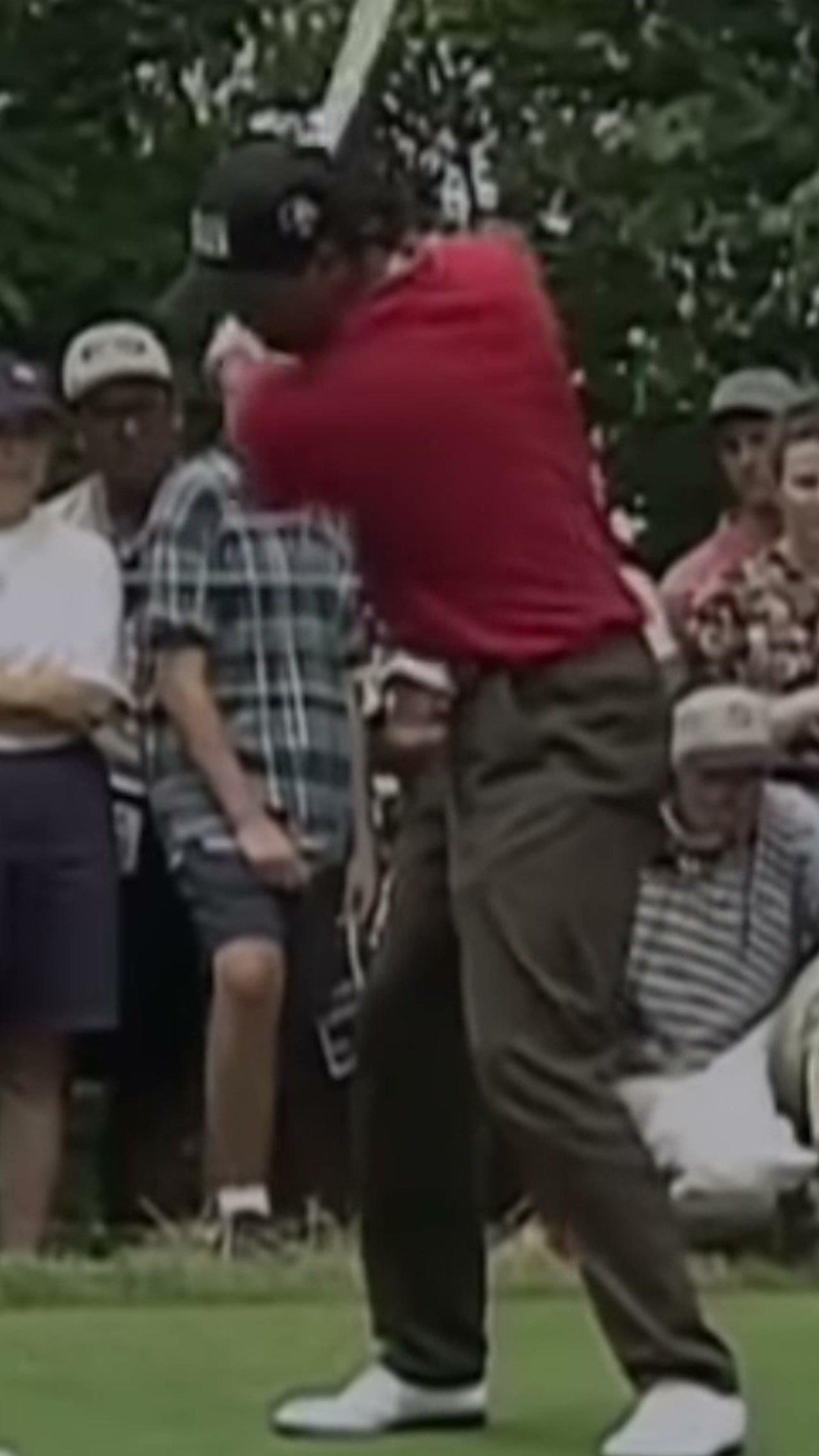
Most golfers tend to want to shove off with the trail foot, but if you do that you will push your hips well beyond neutral, preventing them from pivoting effectively in the swing.
If you push from the trail side and drive your hips too far to the lead side, you will lose your spine angle coming into impact, your hips will move into the ball — all the things we want to avoid.
You need to avoid pushing off the trail foot as much as possible.
That does not mean the trail side cannot assist in the movement, but the force needs to come predominantly from the lead side, and it is a pulling motion.
Both sides will work together, but the movement should feel like it is dominated by the lead side.
Most golfers do not use the lead side at all during this phase. They simply shove off the trail foot and end up sliding their hips or hanging back on the trail side. To see how your weight shift and downswing mechanics compare to elite standards, try a free AI swing analysis.
Pull From the Lead Side and Rotate Slightly
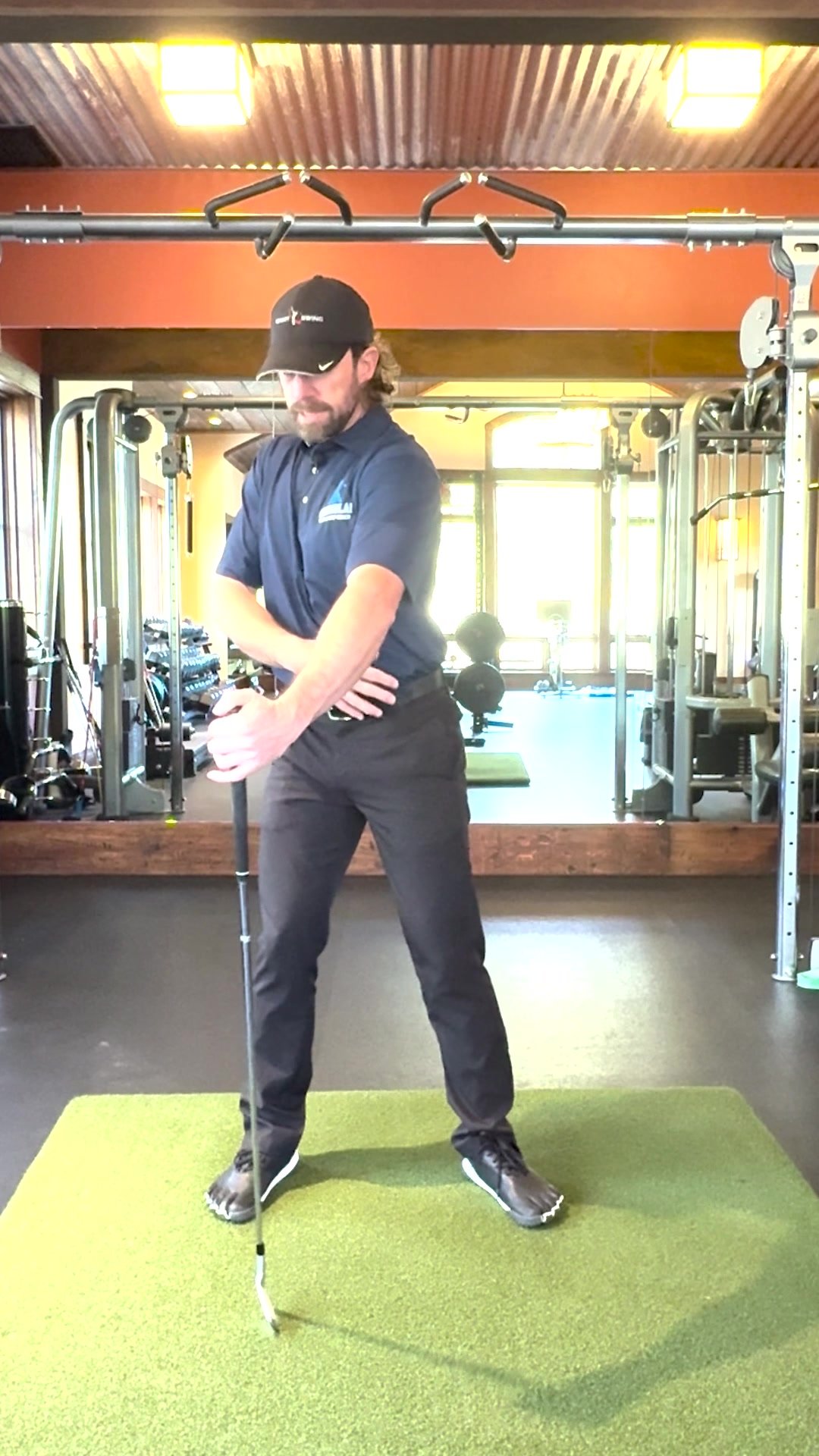
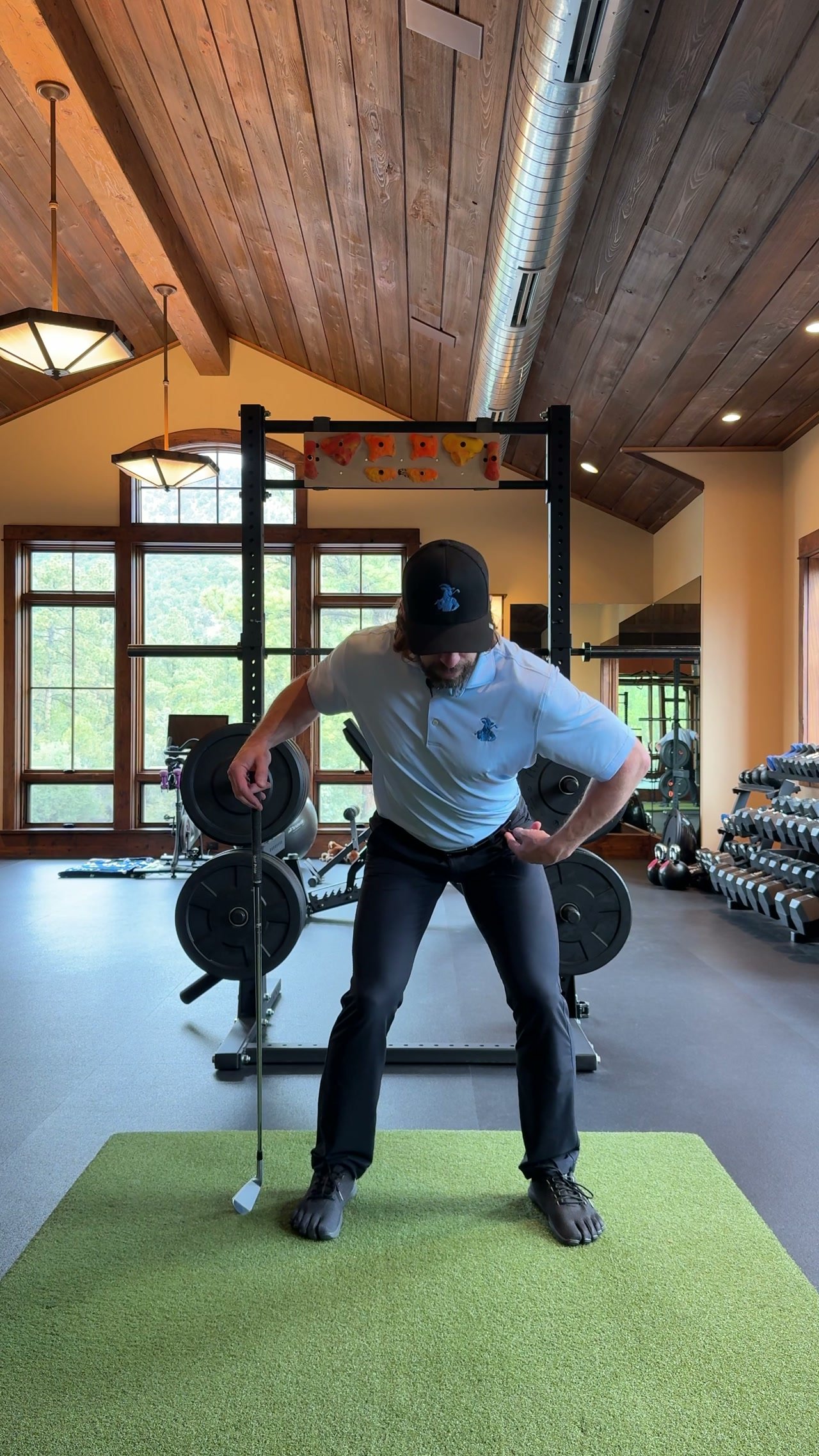
After you shift to the trail side, focus on taking your lead leg and pulling your weight back over.
You will feel it in your glutes and your inner leg. You will also rotate your lead thigh slightly. This rotation will move your lead knee over into neutral joint alignment, where you need it at impact.
As you perform these movements in slow motion, you will notice that your lead knee starts inside your ankle.
As you rotate it just slightly, you get a head start on the you are going to need later in the golf swing. That small amount of rotation helps shift your weight over your ankle.
For the purposes of the drill, you are going to add a small shift. You do not have to rotate yet — just make a slight shift back to the lead side.
If you are comfortable with it and want to add that small rotation, as long as you are in neutral, that is great.
You will get a head start on the downswing if you shift while staying square, and then rotate that leg to achieve neutral.
If you get your hips a little bit open, fantastic.

Pull from the left
Get Up and Do It!
Perform the weight shift drill five times with your eyes open, then five times with your eyes closed so you can focus entirely on the movements and sensations.
Pay close attention to the sensation of activating your glutes.
You should not be activating your quads — the front of your thighs — in this drill. If you feel your quads engaging, that means you have your weight out on your toes and you are trying to balance with your knees.
Your knee is not designed to rotate effectively. It is designed to hinge. There is very little rotational freedom in the knee, but your hip can pivot all day long.
When working on your weight shift in golf, it is imperative that you get your lead hip lined up into neutral so you can pivot safely and pain-free, protecting your knee from unnecessary stress.
If you have experienced hip, knee, or back problems, this is a hugely important piece that can significantly reduce pain. For real-time feedback on your weight shift mechanics, try a free AI golf lesson that evaluates your form.
50 Times a Day
Practice this drill frequently, starting from a perfect setup position. Do not worry about arm movement yet — just focus on the hip movements that produce proper weight shift.
Follow the schedule below to master the downswing, backswing, weight shift and weight transfer, all while maintaining perfect posture.
After you have mastered the setup, perform the weight shift drill from address posture:
- 50 reps per day
- 5 days per week
This schedule will give you 250 reps per week, so in one month you will have made a proper weight shift 1,000 times in the comfort of your home, and made more progress in your golf swing than if you had gone out and hit thousands of golf balls!
Watch part 2 now to see how you're moving your body in the opposite direction of the pros!