How many times have you heard that the putting stroke should work like a pendulum — and wondered what that actually means in practice?
In its simplest terms, the "pendulum" concept means that the radius of your stroke arc remains constant throughout the entire motion.
Is this the fault costing you strokes?
Film one swing on your phone. In about a minute GOATY measures it and names the single biggest thing costing you strokes — free, no card.
Analyze My Swing Free
Related: Golf swing lag — why AI coaching fixes it faster →
Android users: Download GOATY on Google Play — free AI golf coaching on your Android phone. →
In practical terms, the distance from your sternum to the sweet spot on the putter never changes — not during the backswing, not through impact, and not in the follow-through.
Stop reading about it — feel it in your swing today
GOATY watches your swing live and coaches you between every rep. Free. No signup.
Start Your FREE Live Lesson →Picture a grandfather clock with its pendulum swinging in a perfectly consistent arc. That's the visual you want. But more importantly, why do we want a pendulum-type stroke?
Putting demands extraordinary precision. Being off just one or two degrees from 10 feet can cause you to miss the hole entirely on a short putt. That level of accuracy requires eliminating every unnecessary moving part so your stroke can't break down and introduce inconsistencies.

One of the most damaging inconsistencies in putting is the quality of contact with the ball. If you catch the ball too much on the upstroke, you'll hit it "thin" and the putt comes up short. This typically stems from three different causes.
First, the golfer is incorrectly using their hands and their wrists break down during the stroke. This "flipping" motion shortens the radius, and the Pendulum Putting Rod gives you a gentle reminder jab in the chest whenever it happens. Problem solved.
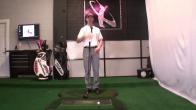
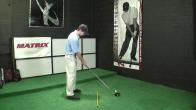
The second most common issue is inconsistent or putter alignment at address. Using the Putting Rod, you can verify that the putter shaft sits perfectly parallel to the rod — which is anchored to your sternum — as shown in the photo.
This fixes both problems simultaneously because the putter shaft will now occupy the same position at address every time, and the ball placement becomes consistent whenever you practice with the Putting Rod. These two corrections alone address the majority of putting problems that golfers encounter.
The third common issue involves the stroke path itself. Golfers who don't understand how to "swing" the putter properly often move it erratically without realizing it. A particularly common fault is pulling the putter head too far inside during the takeaway.
This produces pushed putts and poor contact. With the Putting Rod, if you drag the club too far inside, you'll feel increased pressure where it anchors to your chest — an immediate reminder to keep the radius consistent. This operates on the same principle as a belly putter, but allows you to use a conventional-length putter.
Once you've trained a proper backswing path, you need to bring the putter through on the correct path as well. Maintaining constant pressure between the Putting Rod and your sternum ensures you deliver the putter through impact the same way every time — and release the face the same way every time.
This straightforward device corrects numerous putting faults more effectively and affordably than most putting lessons — because it teaches you through feel exactly what great putters already do naturally.
Try a free live lesson with GOATY
GOATY, my AI golf coach, watches your swing through your phone camera and coaches every rep. Free, about 20 minutes, no credit card.
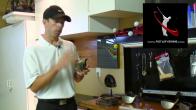
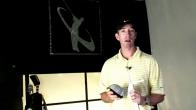
I've been using the Pendulum Putting Rod in my lessons for months and it has produced immediate improvements in how my students swing the putter. Watch the video to learn more about building a proper pendulum putting stroke.
Numerous PGA Tour professionals are already using the Pendulum Putting Rod, some of which have included Charles Howell III, Mike Weir and Masters Champion Trevor Immelman.
Video Transcription: Putting Pendulum

Putting Pendulum: The red cap sits behind the sweet spot
One of the most frequently discussed concepts in putting instruction is that the stroke should function like a pendulum.
For most golfers, the meaning remains vague. How do you actually create a pendulum-like stroke? Why is it beneficial? It's extremely difficult to develop the sensation of rocking your shoulders while maintaining a constant radius from your chest to the putter — unless you have a way to feel it directly.
The team at EyeLine Golf developed a beautifully simple putting training aid — the Pendulum Putting Rod — that lets you feel exactly what a pendulum stroke should feel like.
There are countless training aids available, but this one stands out because of its simplicity. It does precisely what it needs to do: teach you the correct motion of a pendulum putting stroke through direct physical feedback.

Rock the shoulders
It's nothing more than a lightweight aluminum rod with a small piece of red rubber on one end and a padded knob at the top that rests against your chest. Here's the concept: you take the red end cap and position it directly behind the sweet spot of your putter.
The cap sits right behind the logo on the putter, exactly where the ball would contact the face. The rod is adjustable — it telescopes up and down to accommodate different heights.
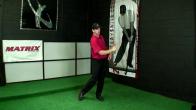
As you step into your setup, rest the padded top piece against your sternum — just as if you were using a belly putter. Now, when you rock your shoulders properly, the pressure where the Putting Pendulum contacts your chest stays completely constant — unless you do something incorrect.
If you yank the putter to the inside, the rod jabs you in the chest. If you get disconnected from your body, you lose the pressure entirely. Both sensations tell you instantly that you've changed the radius of your stroke — the distance from sternum to putter — which must remain constant throughout.

It falls out if you swing too far
Simply rock your shoulders back and through, and that radius stays perfectly constant every time.
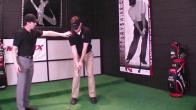
Now you can confirm that you're not pushing the putter too far away from your hands — a common fault. Looking down the line, if you shove the putter out too far from your body, the rod lifts away from your chest.
To keep the rod seated, the putter head must work back on a slight arc. If you use the Putting Plane alongside this device, you'd see the exact same arc. The putter head naturally tracks inside on the backswing — and the Putting Rod confirms this is happening correctly.
The pressure should remain constant, back and through. The putter must travel on an arc for that to happen.
This simple device answers the question every golfer has asked: "What does a real pendulum putting stroke actually feel like?" Tour professionals look so smooth because their stroke is incredibly simple — and this is exactly the sensation that produces it.

The putter is not aligned with the pendulum
On tour, this has become one of the most popular training aids in circulation. EyeLine Golf can barely keep them in stock for their tour rep because dozens of top professionals — including top-10 ranked players in the world — all use it.
They recognize that it's effective precisely because it's so simple. It does one thing, and it does it perfectly.
Another benefit: you can verify your putter alignment at address. The putter shaft should sit parallel to the Putting Rod throughout the stroke. If the alignment shifts — because your hands got active and changed the angle — you'll feel the rod press differently against your chest.
The goal is to keep that relationship constant, back and through. When the pressure stays even, you know your hands aren't interfering. You've achieved a pure, simple pendulum stroke.
This device is inexpensive, lightweight, and fits easily in your golf bag.
Combine the Putting Plane for proper stroke path and alignment, the Laser Line for precise face angle feedback, and the Pendulum Rod for constant radius — and you have everything you need to build an elite putting stroke.
Add in the fundamentals from our Performance Putting series — proper grip, setup, and mechanics — and you have a complete system of simple tools teaching simple movements that produce exceptional results.

Maintain alignment back and through
Putting doesn't need to feel like mystery or guesswork. Using these straightforward tools, you can develop the same smooth, confident stroke that tour players rely on under pressure.
The Putting Plane ensures proper stroke path and shoulder alignment. The Laser Line locks in your face angle. The Pendulum Rod maintains a consistent radius throughout the motion. Together, they create a stroke that simply rocks back and through with total consistency.
It doesn't get simpler than that.
Work through the Performance Putting series, apply these tools, and you'll start making more putts and shaving strokes off your game. For the same kind of precision feedback on your full swing, try a free AI swing analysis that breaks down your mechanics in detail. To practice with real-time coaching, check out a free AI golf lesson.
Watch part 2 now to see how you're moving your body in the opposite direction of the pros!