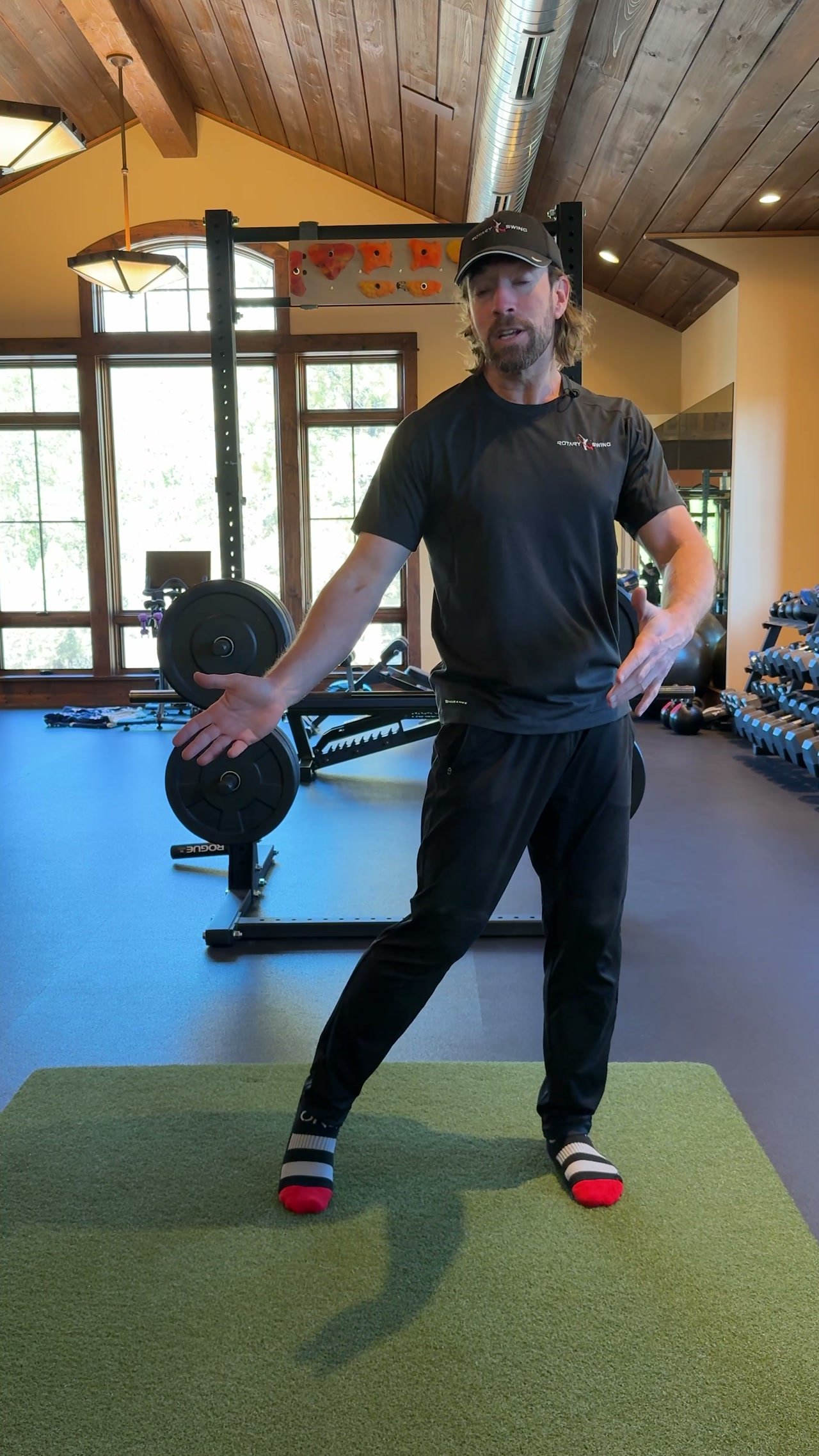
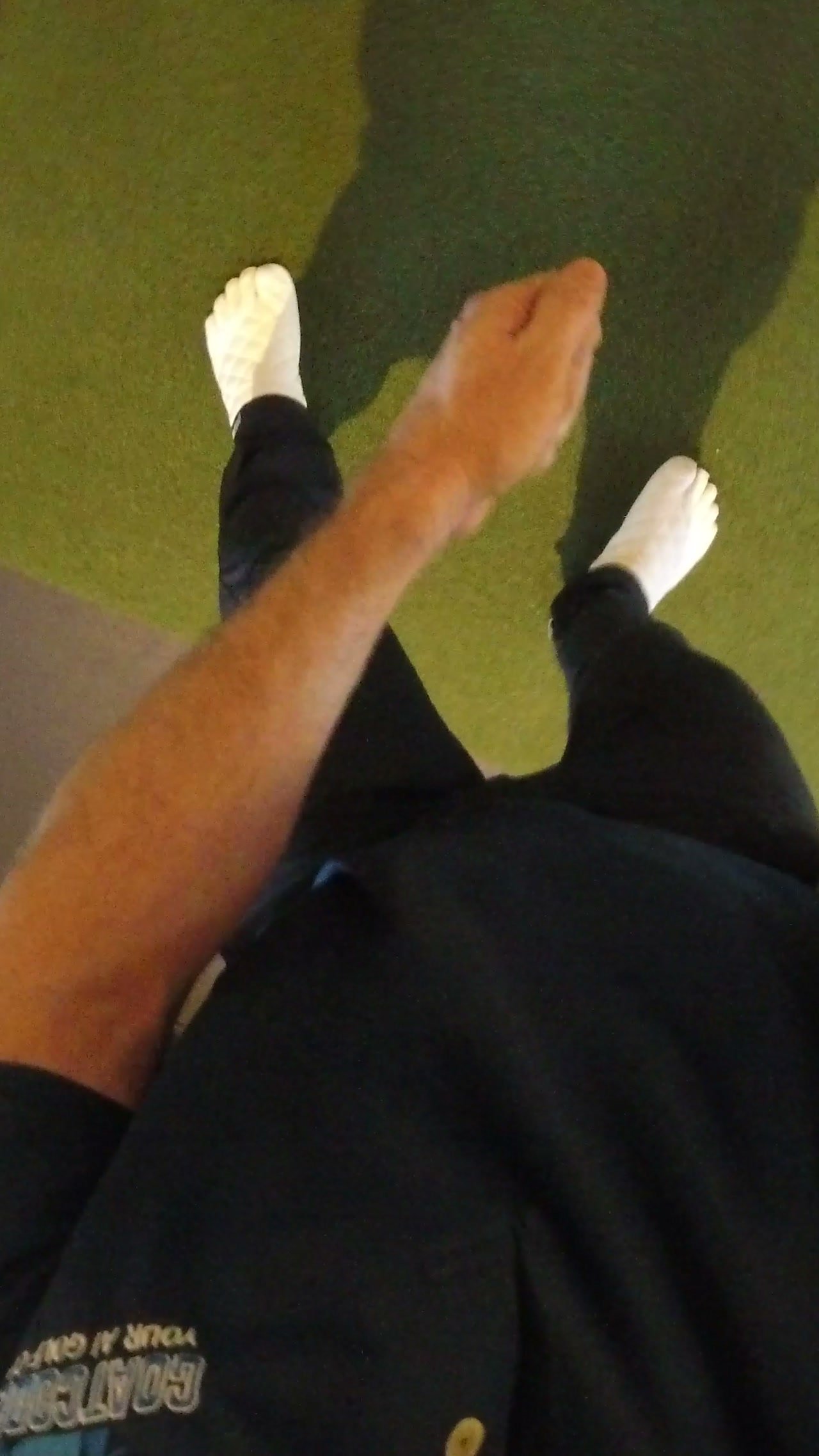
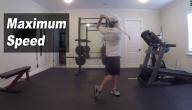
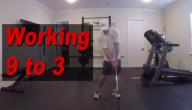
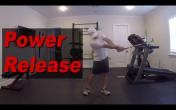
If you're already familiar with the RotaryConnect, you've likely been using it for both your legs and arms in the full swing. Today we're going to show you how to apply it to your chipping stroke as well.
If you don't own a RotaryConnect yet, we highly recommend picking one up. Unlike most training aids, it teaches you correct fundamentals rather than applying a Band-Aid fix to symptoms and creating over-exaggerated compensations.
Is this the fault costing you strokes?
Film one swing on your phone. In about a minute GOATY measures it and names the single biggest thing costing you strokes — free, no card.
Analyze My Swing Free
Related: Golf impact position — how AI scores yours →
Android users: Download GOATY on Google Play — free AI golf coaching on your Android phone. →
The Problem with Most Training Aids
Roughly 90% or more of training aids on the market are designed to offer a quick-fix solution for a specific problem.
Stop reading about it — feel it in your swing today
GOATY watches your swing live and coaches you between every rep. Free. No signup.
Start Your FREE Live Lesson →
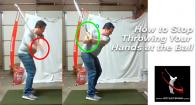
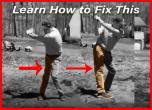
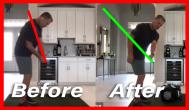
A common problem: The right arm bends too much
Say you've been battling a slice for months and you want to learn how to hit a draw. You purchase a training aid specifically designed to cure slicing.
For the first week or so, it genuinely works. The device over-exaggerates the correction for your specific problem, and you start achieving better impact positions and a more neutral swing path. Your shots improve noticeably.
The issue is that as you continue using it, the over-exaggeration compounds. Now you're coming too far from the inside, rolling the hands excessively, or whatever the device is designed to make you do — and you start hooking the ball.
The more you practice, the worse the hook becomes. In the end, you haven't solved anything — you've simply exchanged one ball flight problem for another.
That's fundamentally different from how the RotaryConnect works.
What Makes the RotaryConnect Different?
The RotaryConnect teaches you the proper fundamentals of movement. It shows you exactly what it feels like to execute the correct motion.
The more you practice with the RotaryConnect, the better your technique becomes. You genuinely cannot overuse it or create new problems in the process.
The RotaryConnect is primarily designed to help the arms work in unison with the torso — keeping the entire upper body connected throughout the swing.
Try a free live lesson with GOATY
GOATY, my AI golf coach, watches your swing through your phone camera and coaches every rep. Free, about 20 minutes, no credit card.
Common Chipping Problems It Solves
One of the most common faults we see in chipping is golfers who get excessively active with their arms during the stroke.
They use their arms to pull the club back aggressively, generating too much wrist hinge on the backswing. The trail arm bends excessively, creating a disconnected motion that pulls the club well off path.
This creates a timing problem because the trail arm now has to release through impact. If the timing isn't perfect, you'll hit it fat or skull it thin across the green.

Pushing and flipping the club are two common problems with the chip
The same issue appears at impact and follow-through. Golfers push the club or flip it through impact, then the lead arm chicken-wings. This adds loft inconsistently and makes repeatable contact nearly impossible.
How the RotaryConnect Fixes Your Chipping
The RotaryConnect forces your arms and body to work together as a unit, teaching you exactly what the correct connected motion feels like.

Backswing with the RotaryConnect
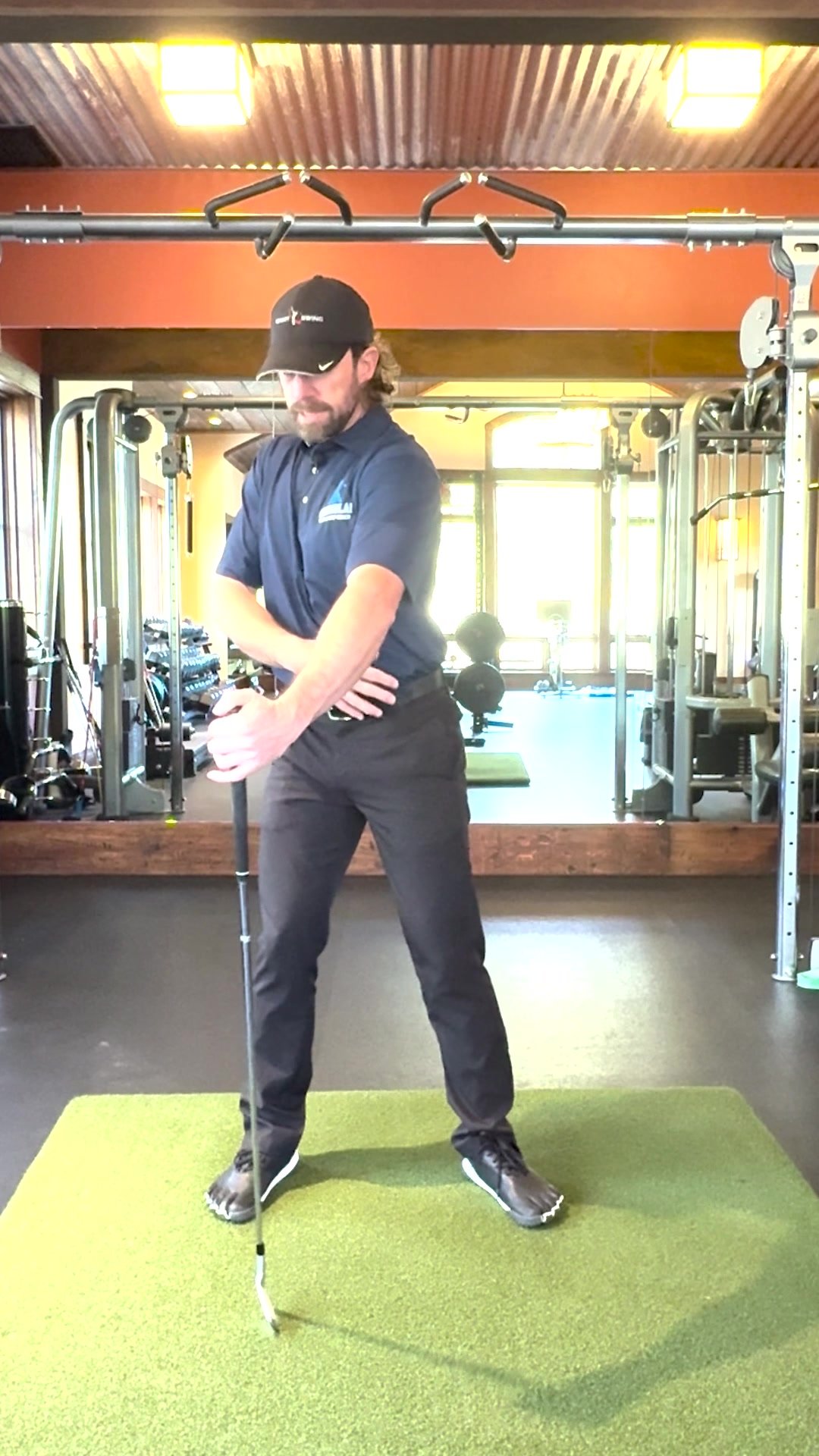
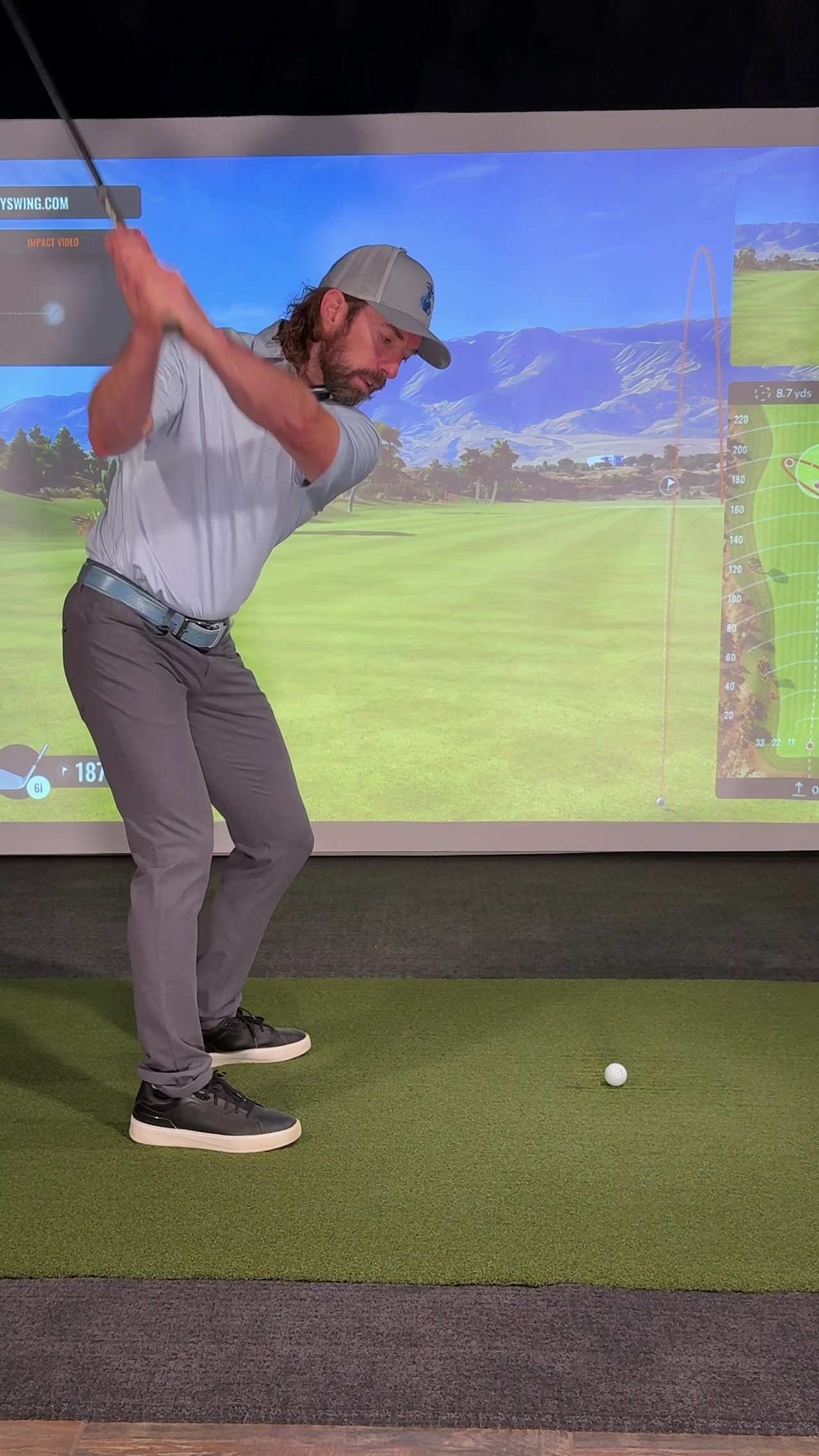
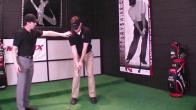
When you place the RotaryConnect on your arms and turn back and through, your arms stay properly extended. There's no over-bending or disconnection.
As long as you maintain gentle pressure on the inside of the cuffs, executing the correct chipping motion becomes almost automatic.
The device provides instant, real-time feedback. Swing back with light pressure on the inside of the cuffs and your arms maintain their proper position naturally.
Keep your arms very soft throughout. Don't try to lock them together or move rigidly — just stay loose and athletic.
Maintain that relaxed feel with gentle pressure on the inside of the cuffs throughout the entire stroke.

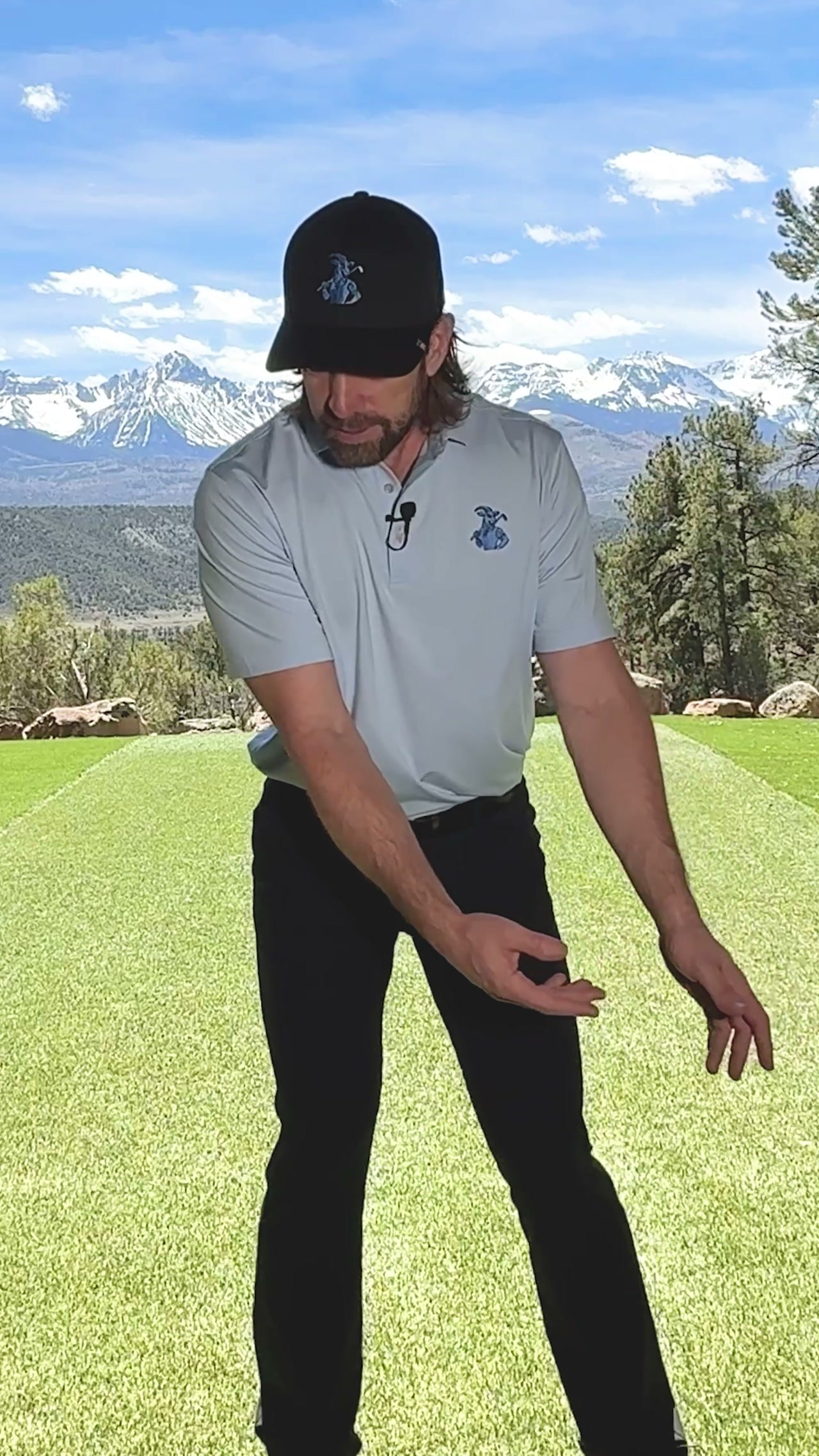
The left arm stays straight
The same feedback applies as you swing down and through impact.
If your lead arm tries to chicken-wing or fold up, it immediately begins pulling out of the RotaryConnect. You'll feel the device start to slip — giving you instant notification that something in your technique has broken down.
Maintaining consistent pressure on the inside of the cuffs ingrains the correct chipping motion. It trains the arms to work back and through together, in complete unison with the body.
Avoid This Common Mistake
It is possible to use the RotaryConnect incorrectly, so pay attention to your posture.
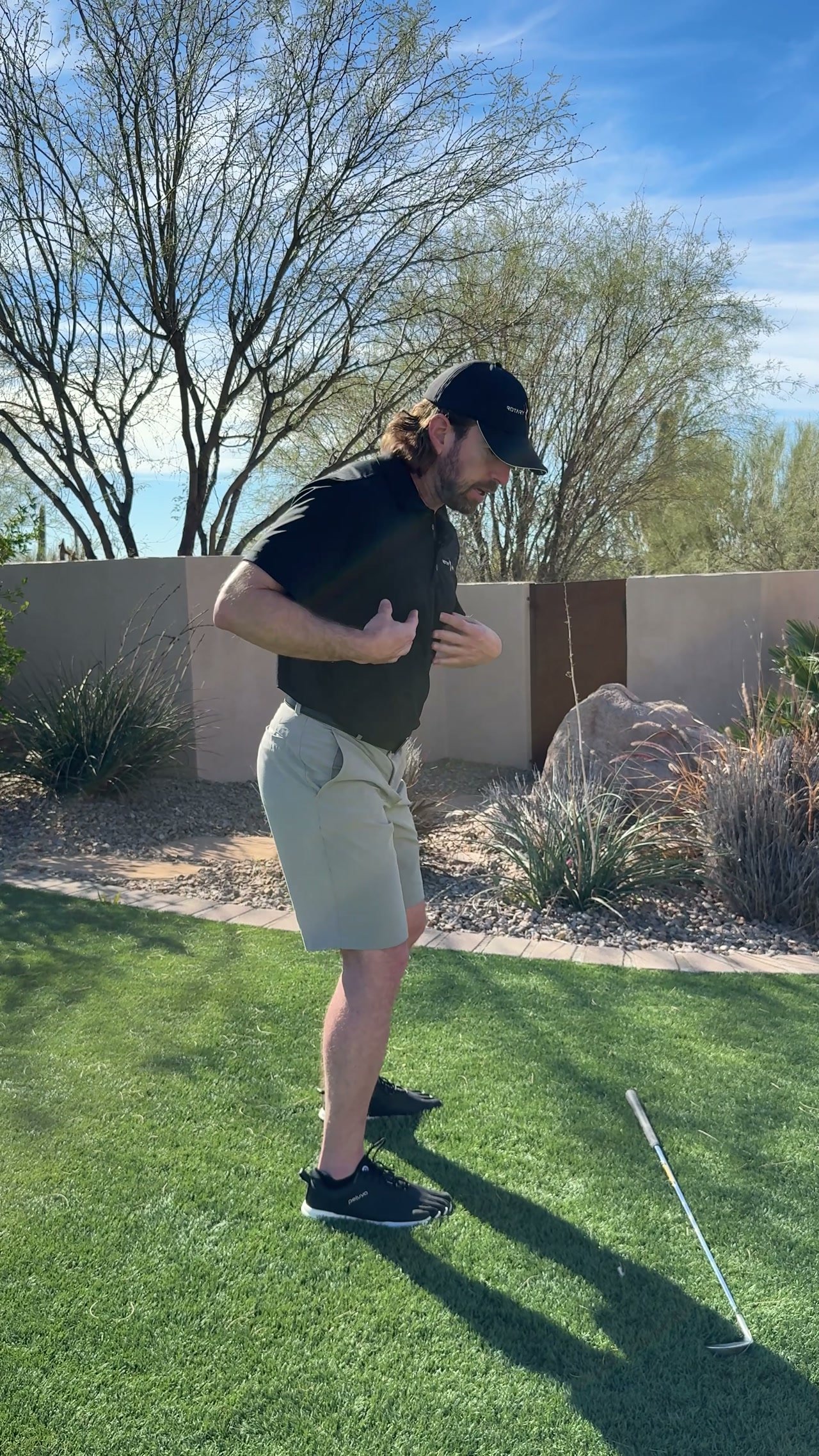
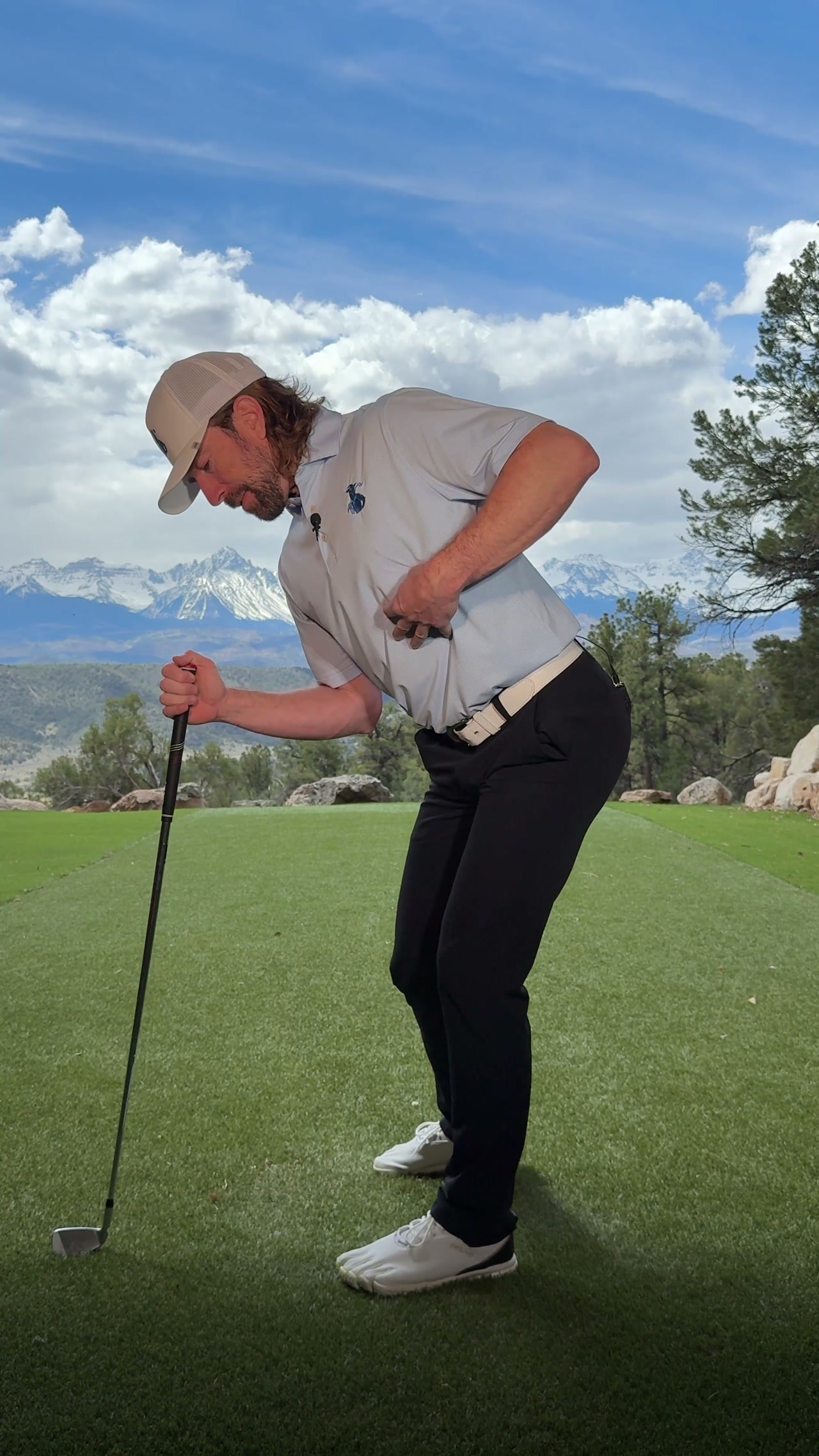
The most common misuse we see is golfers rounding their shoulders forward in an effort to squeeze their arms together and create pressure on the inside of the cuffs.

A rounded back is incorrect posture
If you try, you can certainly press your shoulders forward and bring your arms unnaturally close together — almost touching.
The problem is that this rounds your back. Your shoulders pull down and forward, your spine curves, and you end up in completely improper posture.
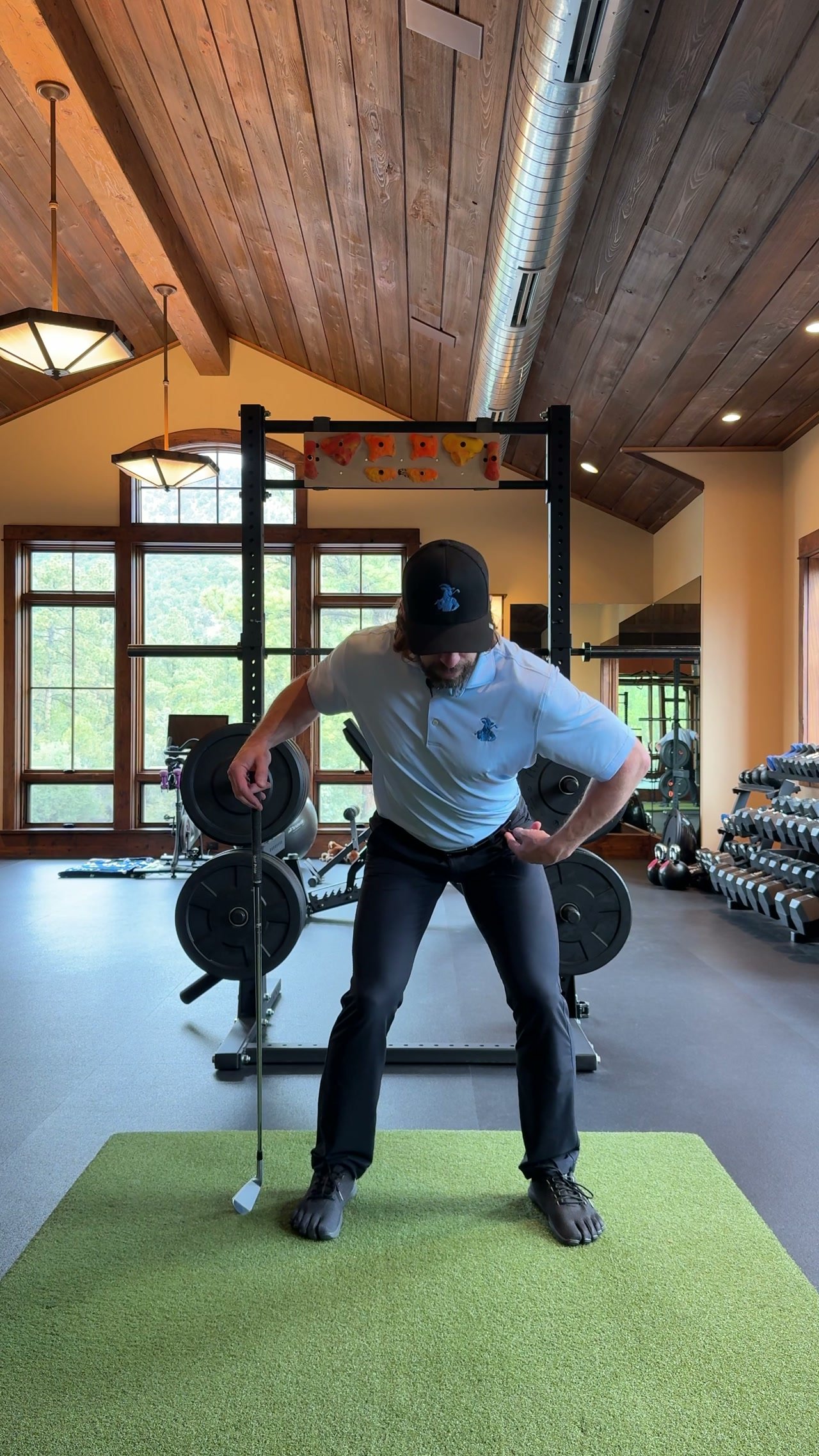
Instead, set up in proper posture and let your arms hang down naturally, exactly as you've been taught at address.
Keep your arms completely relaxed and simply bring your hands together. Then fit the device onto your natural setup position.
Adjust the RotaryConnect to fit your body — never adjust your body to fit the device!
The RotaryConnect offers several adjustment notches. The correct setting depends on your shoulder width, arm length, and overall frame size.
Get into proper address position first, then adjust the RotaryConnect to fit.
When set up correctly, your arms won't be pressed extremely close together and you won't be straining to squeeze them inward.
Simply let them hang naturally as you always do at address.

Proper setup
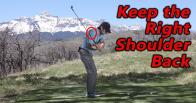
From down the line, your shoulders should be depressed down and back — not rounded forward. Using the RotaryConnect should never compromise your posture.
Now you can incorporate the RotaryConnect into your short game practice as well as your full swing, where it trains both arms and legs. It's the most versatile training aid we've come across. If you want to complement your practice with real-time feedback on your overall swing mechanics, try a free AI swing analysis to see how your positions compare to the elite model.
Watch part 2 now to see how you're moving your body in the opposite direction of the pros!