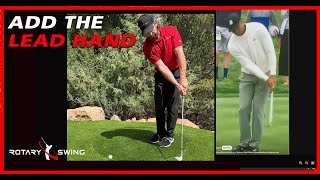
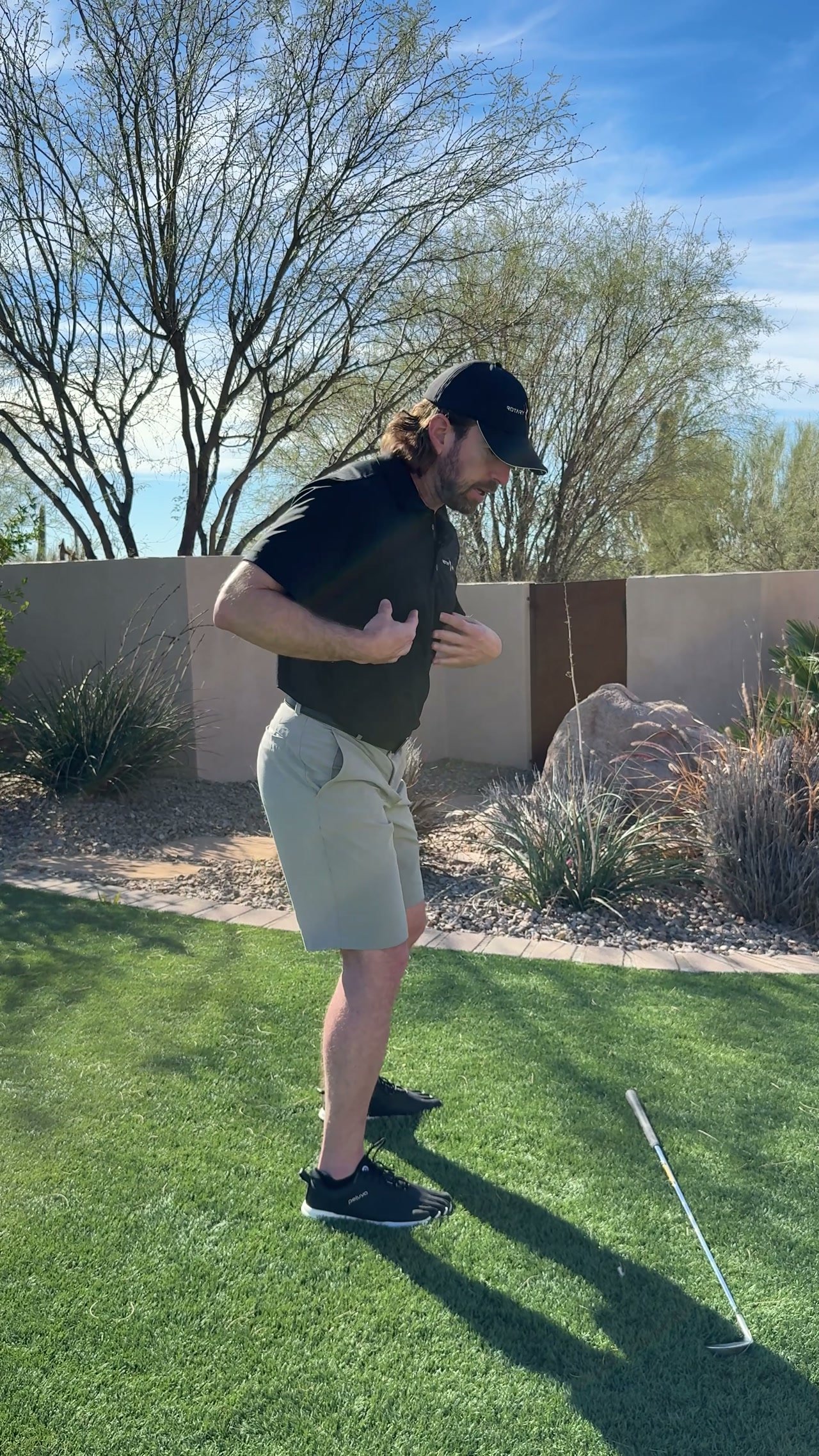
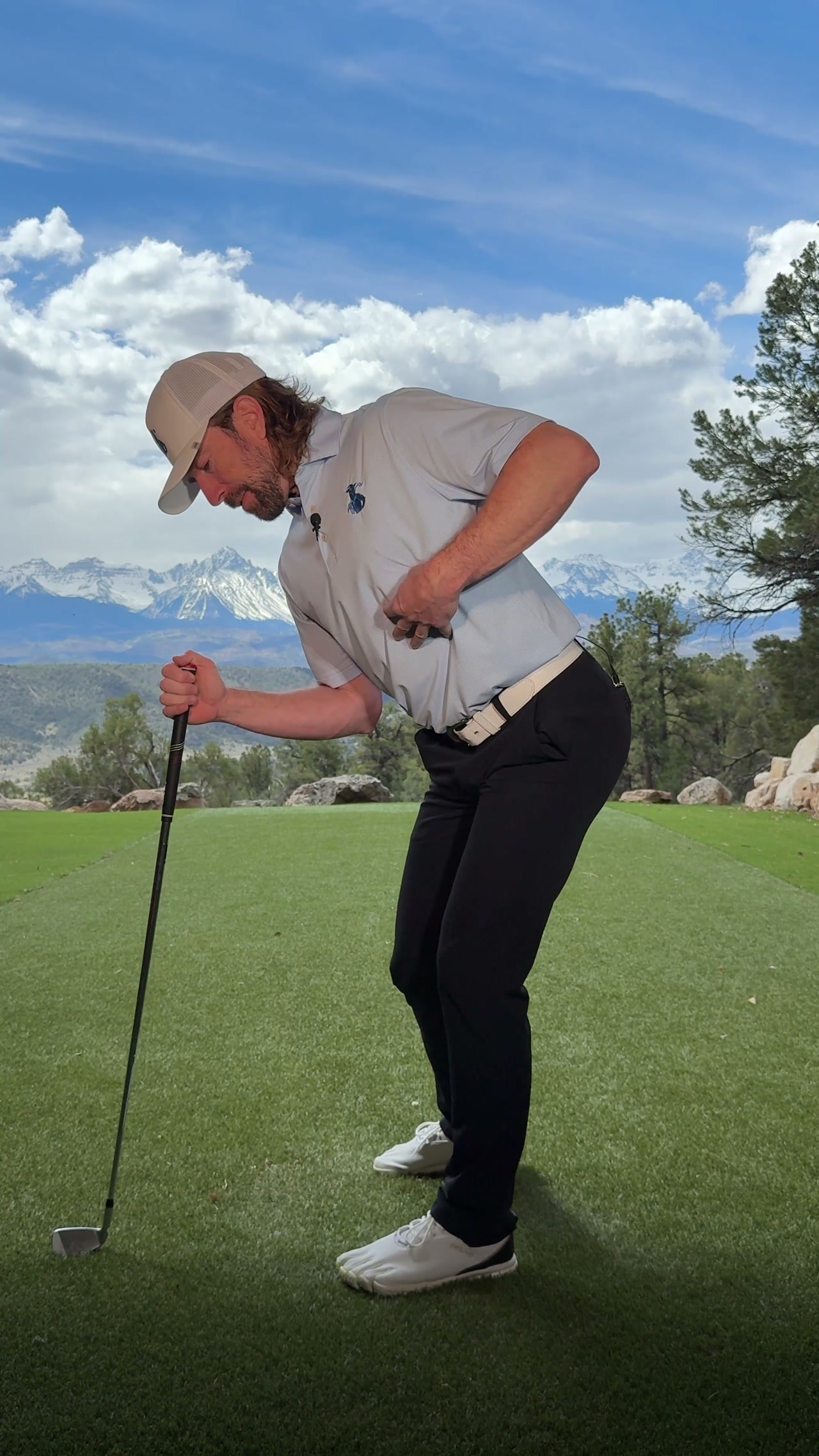
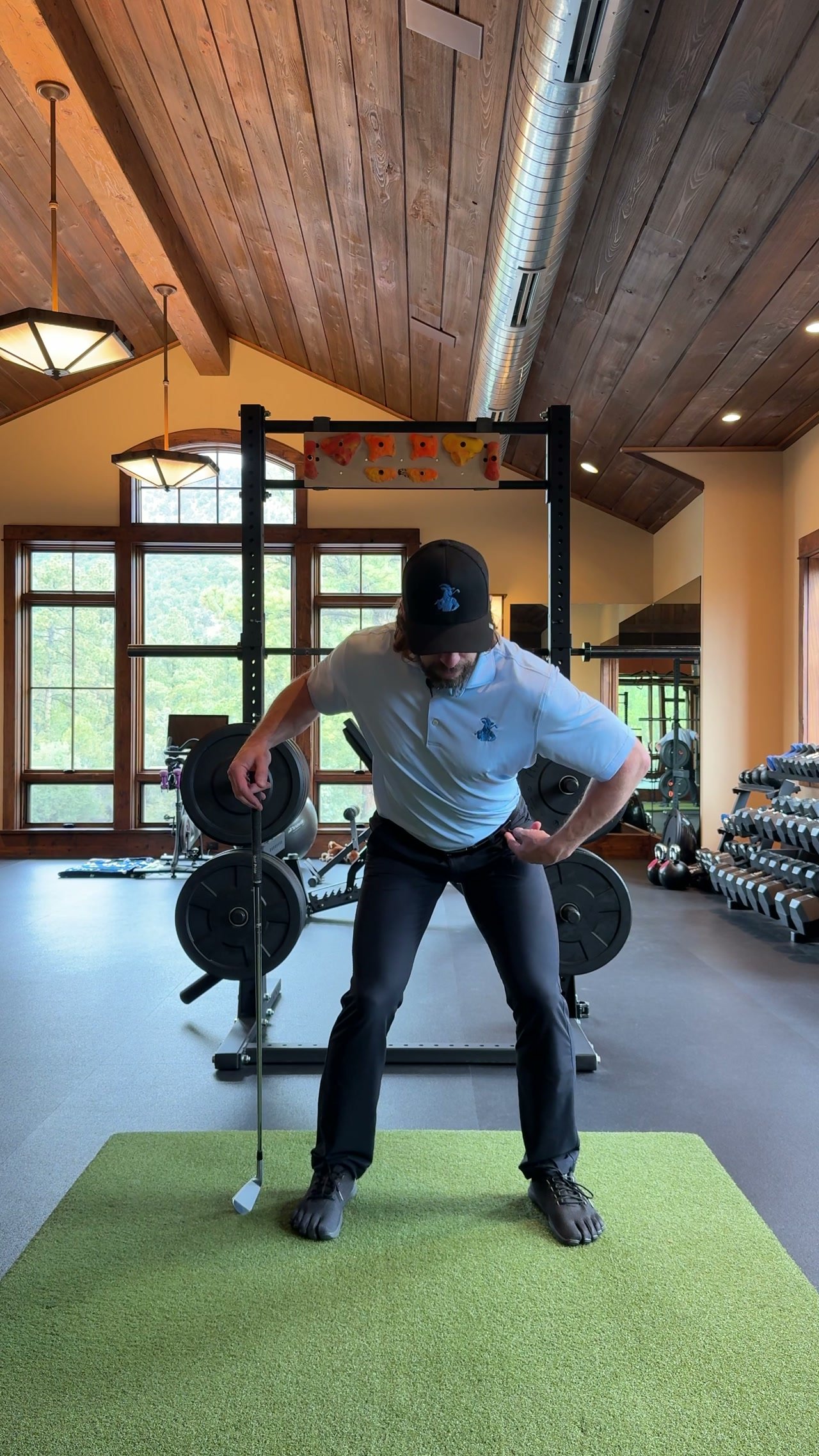
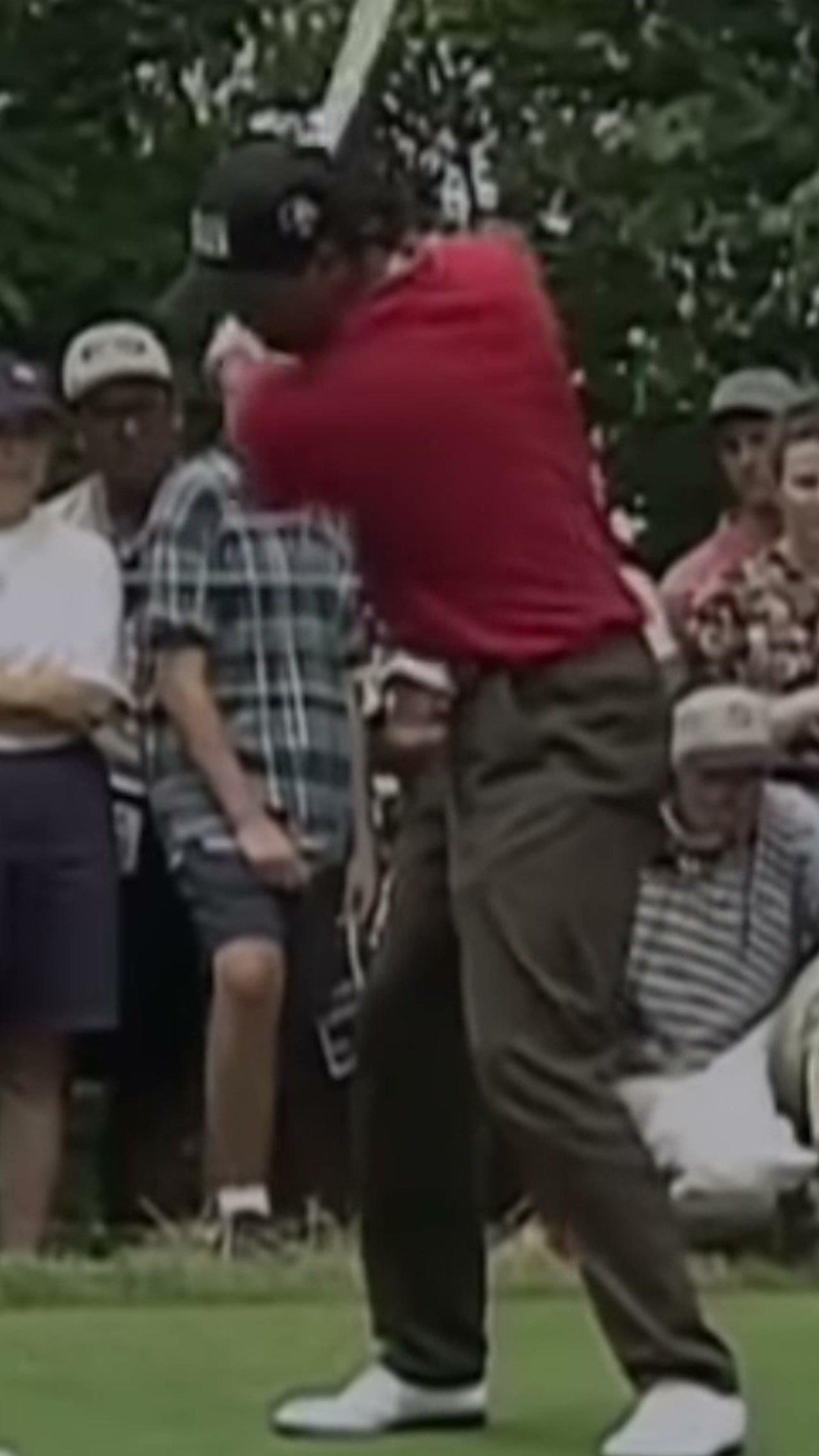
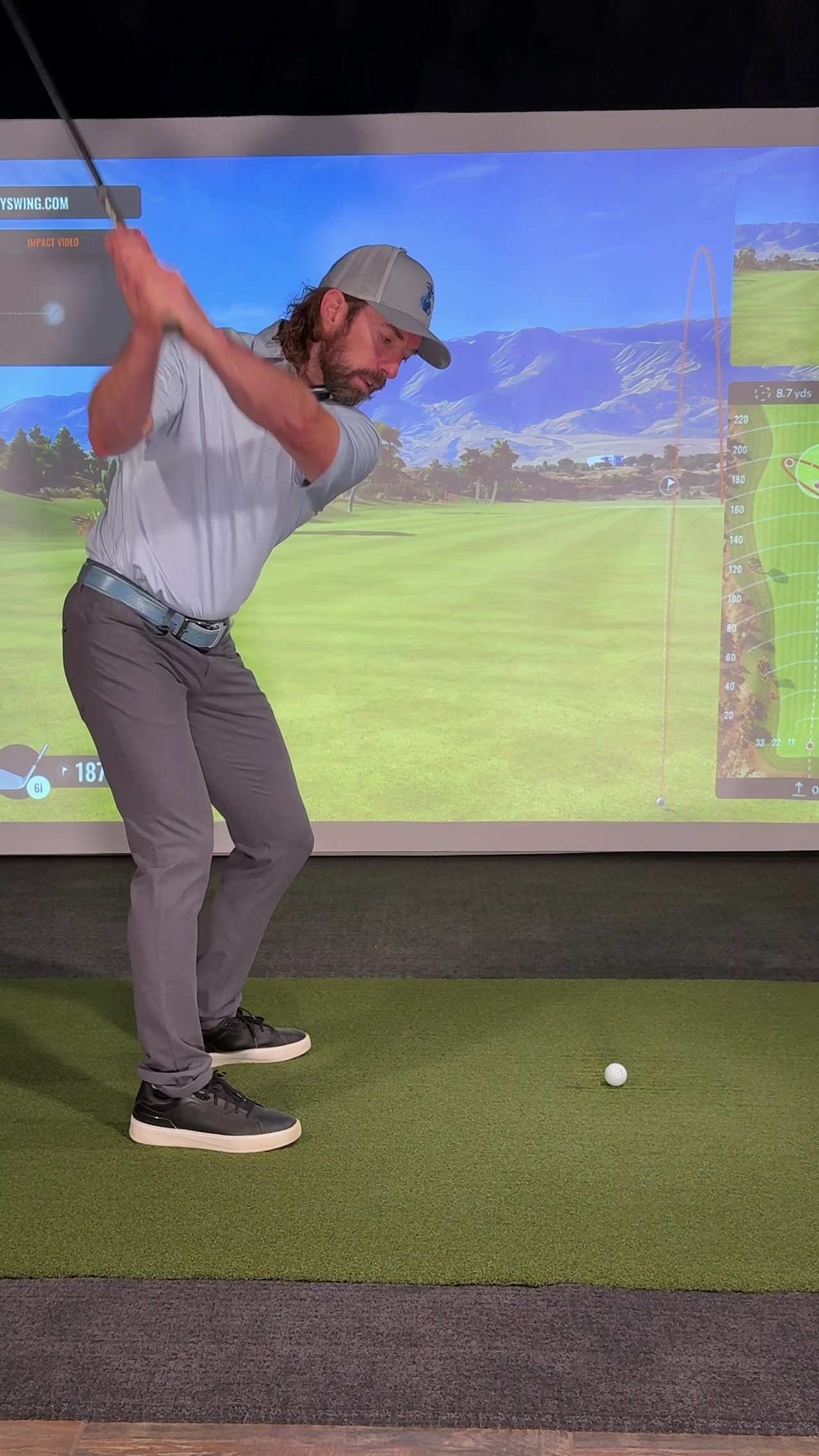
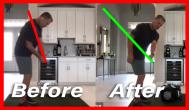
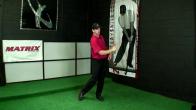
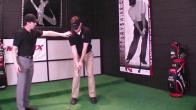
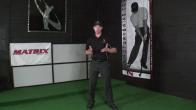
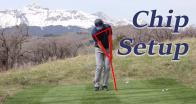
To hit a chip shot, you need to put the ball way back in your stance, shift your weight left, really lean the club shaft forward, and then try to pull the club through the ball.

Perfect chip shot setup, right? Wrong!
If this describes your current technique, you're always going to struggle with your chip shots.
Is this the fault costing you strokes?
Film one swing on your phone. In about a minute GOATY measures it and names the single biggest thing costing you strokes — free, no card.
Analyze My Swing Free
Related: Golf posture — how AI tracks setup through impact →
Android users: Download GOATY on Google Play — free AI golf coaching on your Android phone. →
You're going to hit them heavy. You're going to hit them thin. And you're always going to feel the nerves tighten up when there's that one crucial chip you need to get up and down — whether it's to beat your buddies or win the club tournament.
Stop reading about it — feel it in your swing today
GOATY watches your swing live and coaches you between every rep. Free. No signup.
Start Your FREE Live Lesson →Here's the reality: simply changing your setup can transform you into one of the best chippers in your group.
I'm going to show you exactly how to do that.
"This was the best chipping instruction I ever had. I thought I was a good chipper. Now I am very good. Two weeks ago I one putted all of my chips except one which was a six footer that I pushed. I even had a chip in for birdie for a good distance away. Thanks for the tip."
-Andre G. | Oct 30, 2012 | 9 HDCP
What Exactly Is a Chip Shot?
To become a genuinely great chipper, we first need to define exactly what a chip shot is and how it differs from a pitch shot in golf.
Many golfers use the two terms interchangeably, treating a chip and a pitch as the same thing.
But there's an important distinction — and understanding it will make you a better short game player.
It's not simply that "a chip shot lands on the front of the green and rolls back to the hole." That's the result, not the cause.
What truly matters is what you do with your body and how you use the club to produce consistent chip shots.
Here's the definition:
Any time you deloft the club and deliver a descending blow that contacts the ball first.
When you deloft the club, you're actually removing bounce. Bounce is what you use in a pitch shot so the club can glide through the turf without digging.

The flange on the bottom of your wedge creates the bounce.
The bounce is the angled piece of metal on the bottom of your wedge. This flange sits beneath the leading edge and helps the club slide through the turf cleanly.
With a pitch shot, you're using this flange to help everything pass through the grass smoothly while maintaining loft on the club and getting the ball up in the air.
Here's a helpful visualization: imagine your hand hovering above a big bucket of water. Tilt your hand back like the flange, which angles away from the leading edge of the face.
(Notice that the flange sits on the bottom of the club, angled in the opposite direction of the club face.)
If you skim your tilted hand across the surface of the water, what happens?
Your hand glides across the surface effortlessly because that flange angle helps keep it on the surface rather than digging in.
When you're chipping, you're taking that advantage away. You're delofting the club, which reduces the effectiveness of the bounce.
If you come down into the ball too steeply — as the traditional technique of ball way back, hands way forward demands — you remove almost all the loft and eliminate the bounce entirely.
What happens next?
Take that same bucket of water and turn your hand like the leading edge of the club face — because with the bounce gone, the sharp edge leads the way.
Your hand — or your club — digs straight down into the water, just like your club digs into the turf. That's exactly why so many golfers chunk their chip shots.
They position the ball too far back. The weight is too far forward. The hands press too far ahead. And there's simply no way to execute that consistently without compensations.
Try a free live lesson with GOATY
GOATY, my AI golf coach, watches your swing through your phone camera and coaches every rep. Free, about 20 minutes, no credit card.

The dreaded "hitch" can easily be avoided!
That's also where one of the most frustrating moves in golf originates — "the hitch." It's that little jerk or flinch golfers make at the bottom of their chipping stroke, similar to an involuntary twitch.
You're coming in too steep, your body senses it, and at the last instant it tries to abort the motion — raising the hands to prevent the club from burying into the ground and moving the ball a measly 2 feet.
We all know that's not what we want. The solution is setting up properly with the correct technique, and you'll never have to worry about that dreaded chunked chip shot again. You'll catch every one of them cleanly and solidly.
"Clay, Great video...Best site on the web for golf by far!"
-John B. | Dec 31, 2012 | 10 HDCP
Proper Chip Shot and
First, let's address ball position. As I mentioned, you don't want the ball way back behind the trail foot, but you do want it slightly back of center.
Position your feet approximately a club head width to a club head width and a half apart — anything in that range works well.
This narrow stance allows you to stay loose and relaxed through your body, which enables a smoother pivot motion (covered in detail in the chip shot technique video).
With your feet positioned close together, the ball position should be off the inside of your trail foot.

Your feet should be fairly close together for a chip shot.
Looking from directly face on, the ball sits back of center — but not dramatically so. As you swing down and through the shot, the bottom of your swing arc will naturally fall roughly a couple of inches in front of the ball.
Many golfers set up with a much wider stance for chipping and position the ball several inches behind the trail foot. However, the bottom of the swing arc still occurs up near the lead side.
In that wide stance, the ball can sit nearly 12 inches behind the swing arc's lowest point. You'll be coming in extremely steep into the ball unless you lift up or manipulate the club with your hands.
The key takeaway: get your stance narrow with your feet close together, then position the ball just off the inside of your trail foot.
Proper Chip Shot Weight Distribution
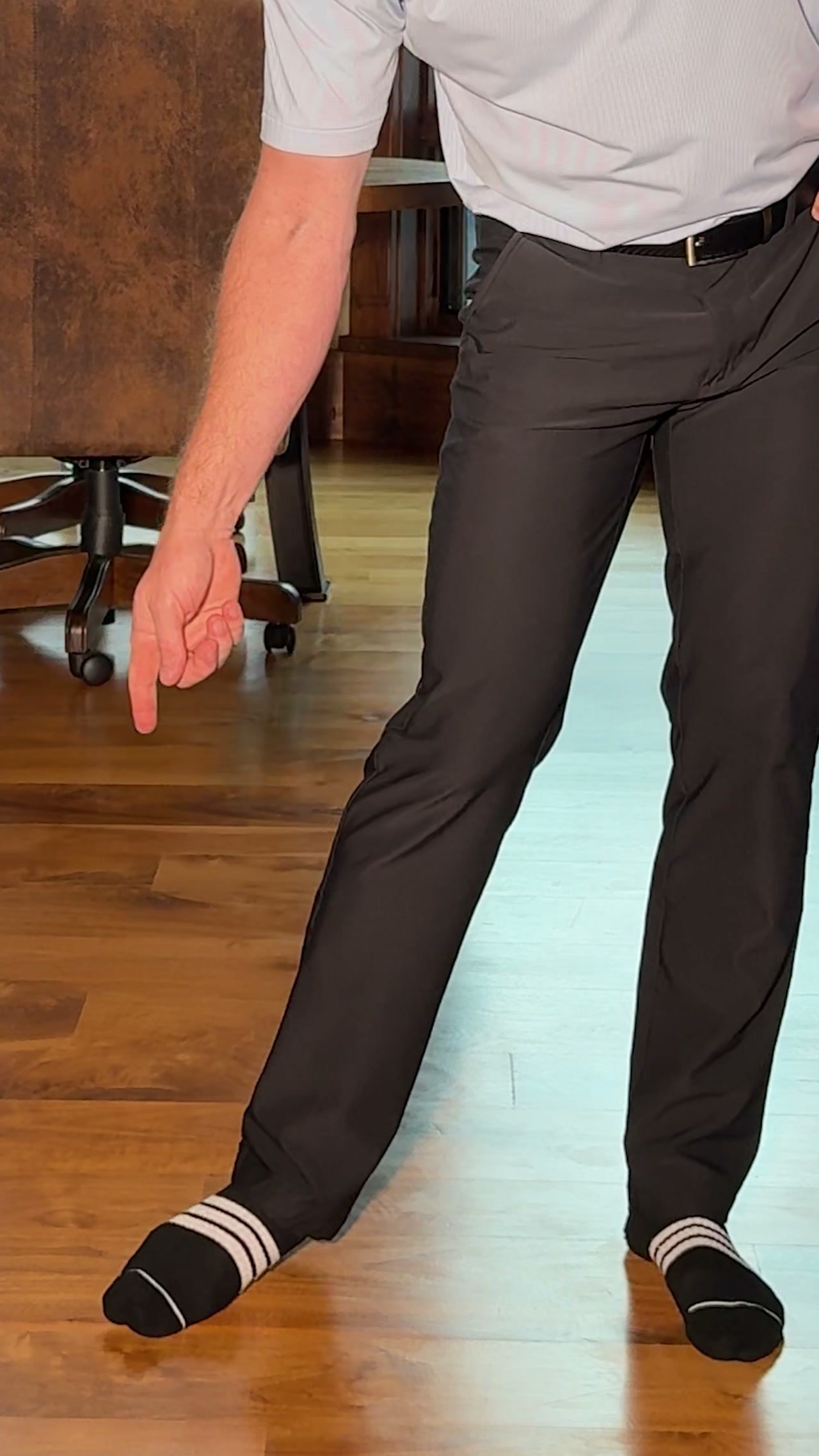
The next fundamental is weight distribution. You want your weight favoring your lead side — and that is absolutely correct.
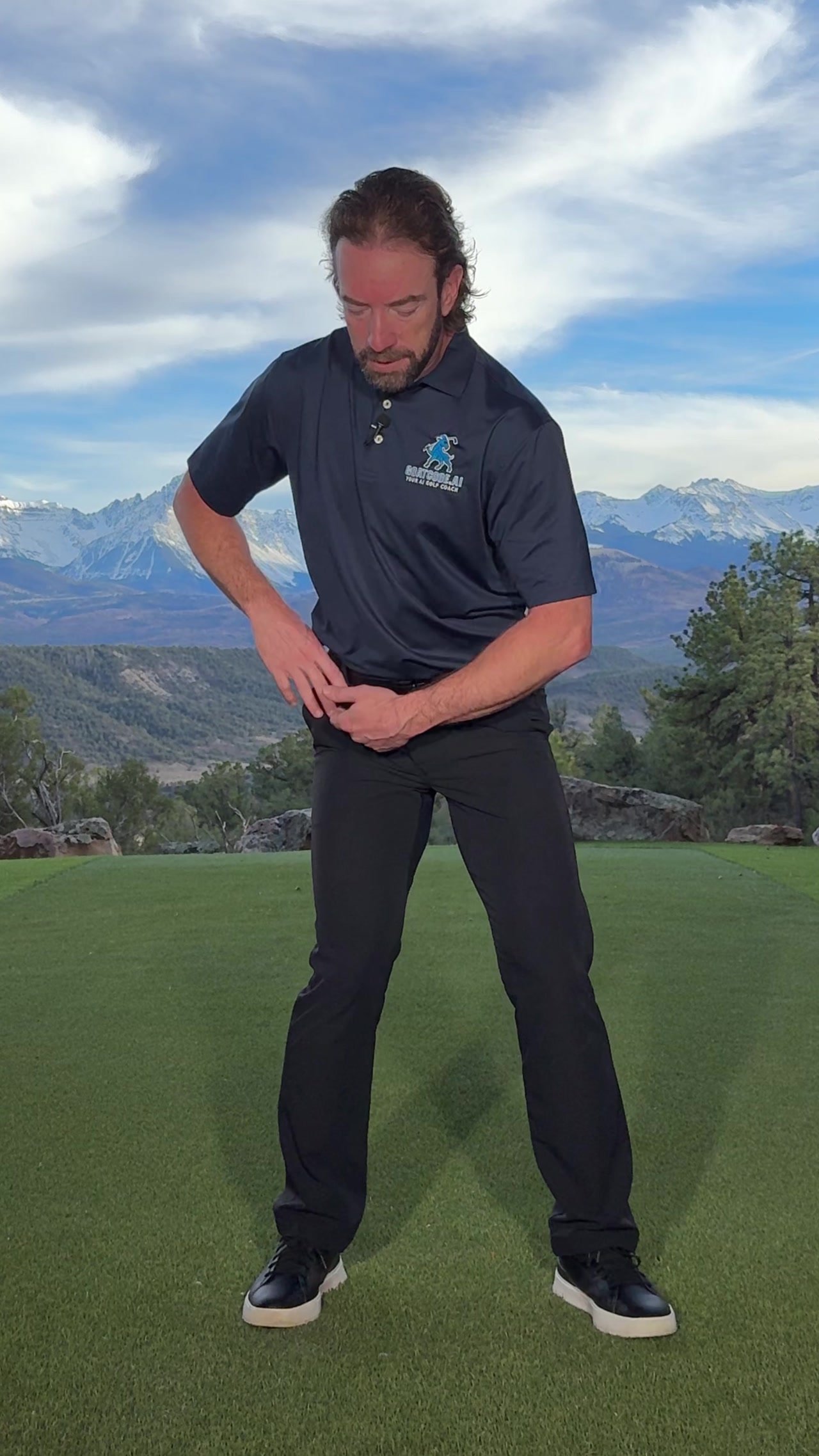
To visualize this, imagine standing in your normal anatomical position — what we call neutral joint alignment (NJA) — where your hip socket sits directly over your ankle.
For a chip shot, you're going to position yourself just slightly outside of NJA.
With your feet close together, bump your hips just barely past NJA toward the target.

You should be just outside of neutral joint alignment.
(Since you're not generating significant force in the chipping motion, this slight bump won't stress your hips at all. Proper weight shift in the full golf swing is an entirely different discussion.)
With feet close together and the ball on the trail side, you can see that the weight bump toward the target is very subtle.
Drawing a line down from the lead hip, it falls just in front of the lead ankle — barely ahead of NJA.
You'll have approximately 70% of your weight on your lead foot, and it stays there throughout the entire chipping stroke. Staying planted on the lead side is non-negotiable.
Proper Chip Shot Hand Position
The third element of the setup is hand position.

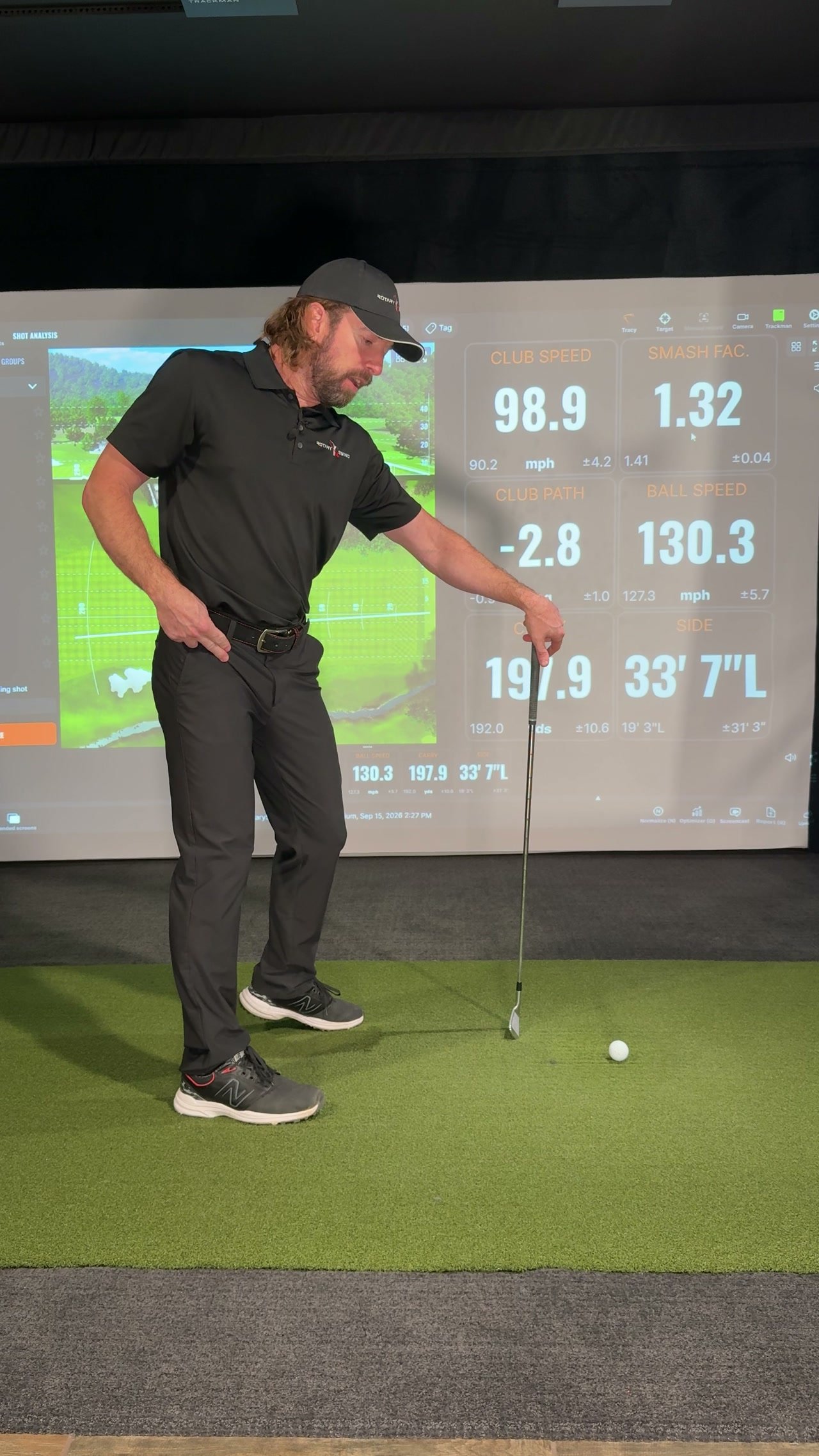
Put your hands just ahead of the ball.
Traditional instruction says to press the hands way forward and aggressively deloft the club. The problem is that extreme forward press removes so much loft that the leading edge becomes dangerously sharp — leading straight to chunks or, when you try to avoid the chunk, thin contact.
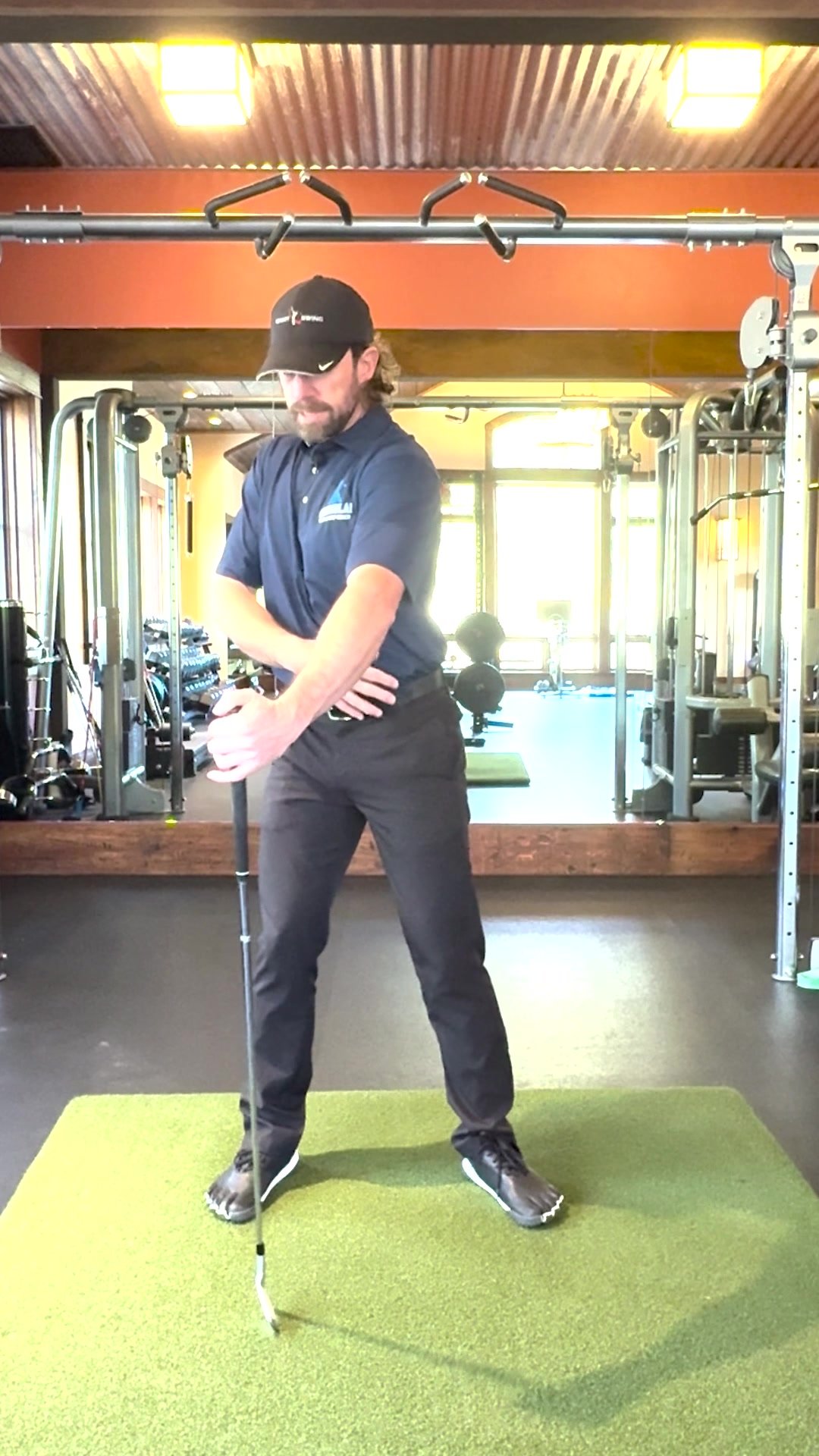
Instead, simply tilt the shaft forward approximately 10 degrees.
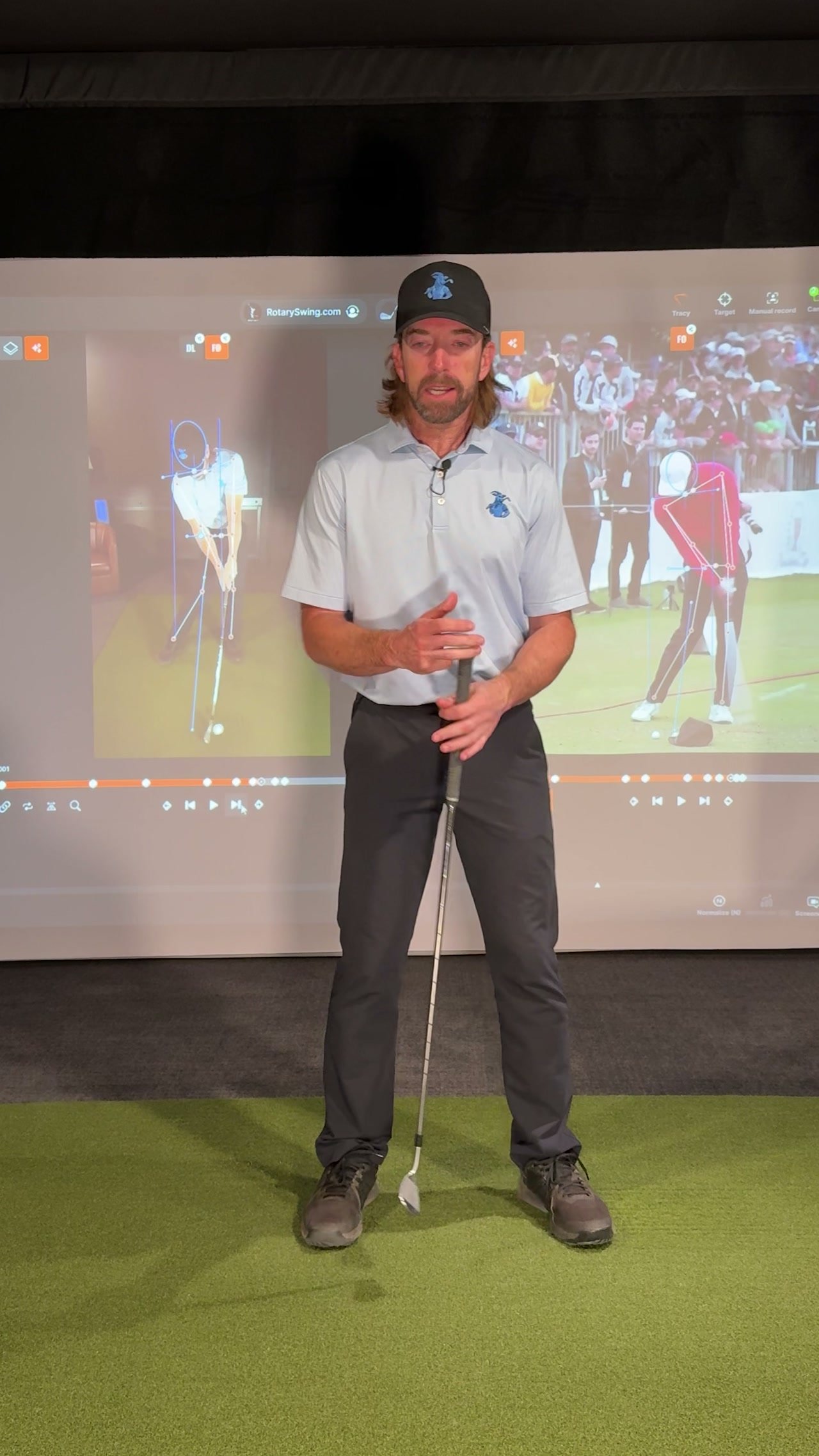
In the correct setup: your stance is narrow, the ball is off the inside of your trail foot, your weight sits about 70% on the lead side, and you've added just a touch of forward shaft lean.
Proper Chip Shot Posture
Looking at the setup from down the line, notice that the spine alignment is anatomically correct. You don't want to slouch your shoulders or crane your head forward.

No slouching when chipping!
Good posture is essential — it becomes critically important when executing proper technique, because correct posture allows you to pivot properly around your spine.
When your spine is in natural anatomical alignment, it becomes very easy to turn and pivot without compensations.
Perfect posture for chipping is identical to perfect posture in the full golf swing.
To achieve the correct position:
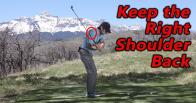
- Stand tall and depress your shoulders down and back.
- Tilt everything forward together from the hips, keeping your spine aligned.
- Allow your hips to shift slightly back as a counterbalance.
- Continue leaning forward until you can comfortably see the ball.
Notice that the shoulders and back aren't rounded — they're straight and in an anatomically correct position.
Proper Chip Shot Alignment
Over the years, drastically opening the stance for chipping has become almost standard advice.
You'll see golfers open their stance 20-30 degrees to the left with their hips partially open and shoulders pointing down the target line.

Now, there's no need to open your stance like this!
This open stance is an attempt to shallow out the . As I explained earlier, a poor setup with the ball way back, hands way forward, and weight left creates an extremely steep .
That steep approach forces you to find a way to shallow the stroke — otherwise, you'll drive the club straight into the ground. Opening the stance creates a shallowing effect.
With the stance open, you're effectively swinging more inside-out to the right, which helps the club approach the ground at a shallower angle.
That approach never made much sense to me. If you simply set up properly — so the club isn't coming in so steep to begin with — you don't need to open the stance at all.
By getting the rest of the setup correct, you can set your feet, hips, and shoulders parallel to the direction you want to start the ball.
And that's exactly where the ball will start, because in the chip shot your spine serves as the primary axis — you're simply rotating around it.
When you open your feet dramatically and have your shoulders pointing a different direction, you introduce compensations with the hands and club.
Those are too many variables. Hitting a chip shot 60 or 70 feet to within a few feet of the hole becomes extremely difficult with all those moving parts.
That kind of inconsistency demands far more practice than necessary. A proper setup with everything parallel to your target allows you to simply rotate around your spine — making it very easy to send the chip straight at the target without compensations.
Summary
Get your setup right first, then focus on technique.
The setup is the most important part of chipping. Once your setup is correct, it frees your body to move consistently and naturally.
Watch the video now for a complete demonstration of every point so you never chunk a chip shot again! If you want to see how your short game technique compares to the elite model, try a free AI swing analysis to identify exactly where your mechanics break down.
"Let me be the first to say that this piece is great! RST just keeps getting to be a better value every time one of these videos comes out. Since I became a member late June I haven't worked on my short game much but my short game has improved a ton, mostly putting. Your piece you did on Rory about a month ago really helped and Chuck's older video on putting really helped me nail down a putting set up that I feel is working for me. We all know where strokes are saved, and these simple little things like setup on a chip will pay huge dividends for me. I can't wait to see the rest of that check list. Great work...and thanks for all you guys do!!!"
-Robert H. | Oct 9, 2012 | 16 HDCP
Watch part 2 now to see how you're moving your body in the opposite direction of the pros!