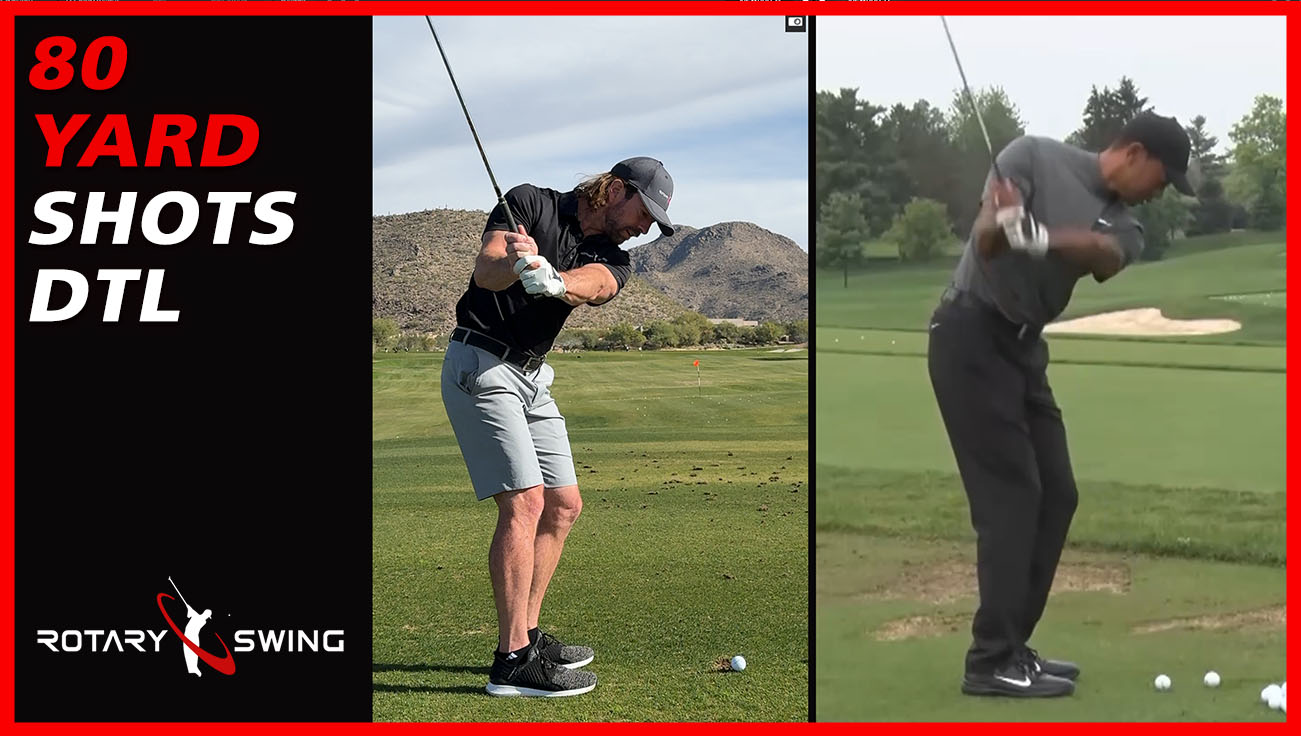
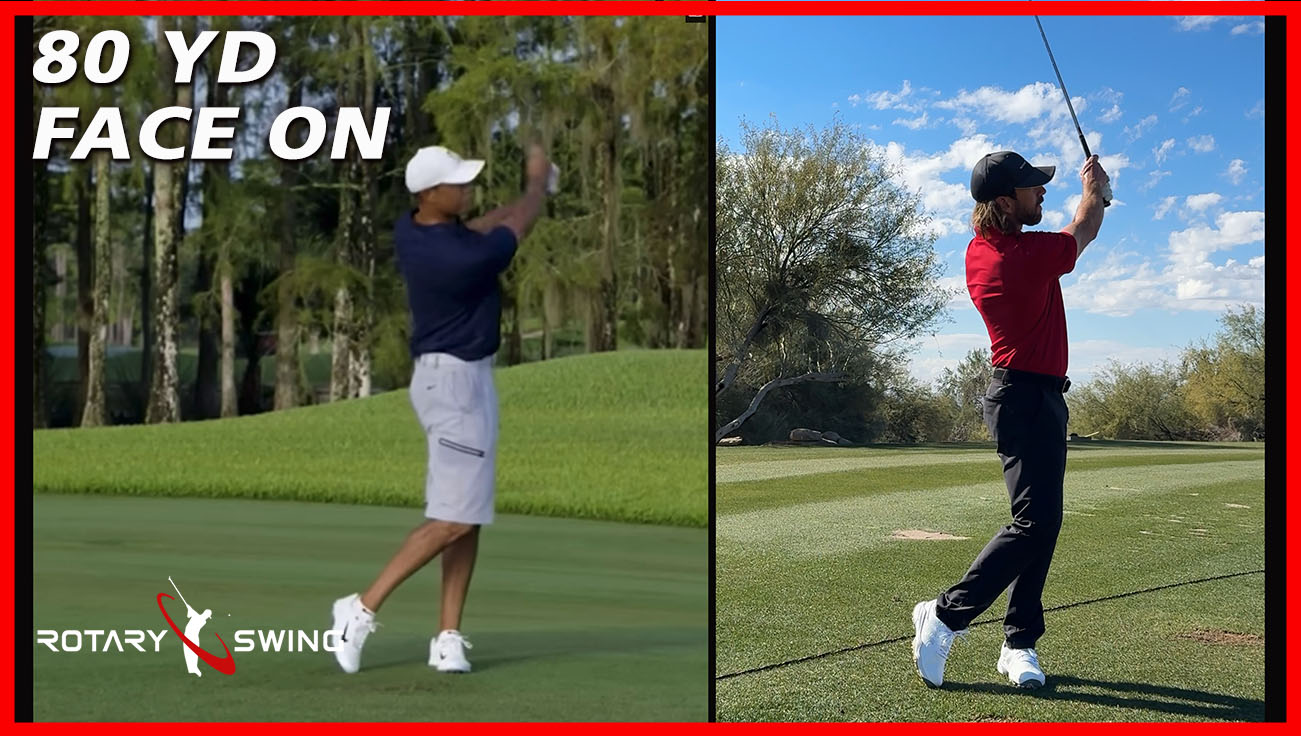
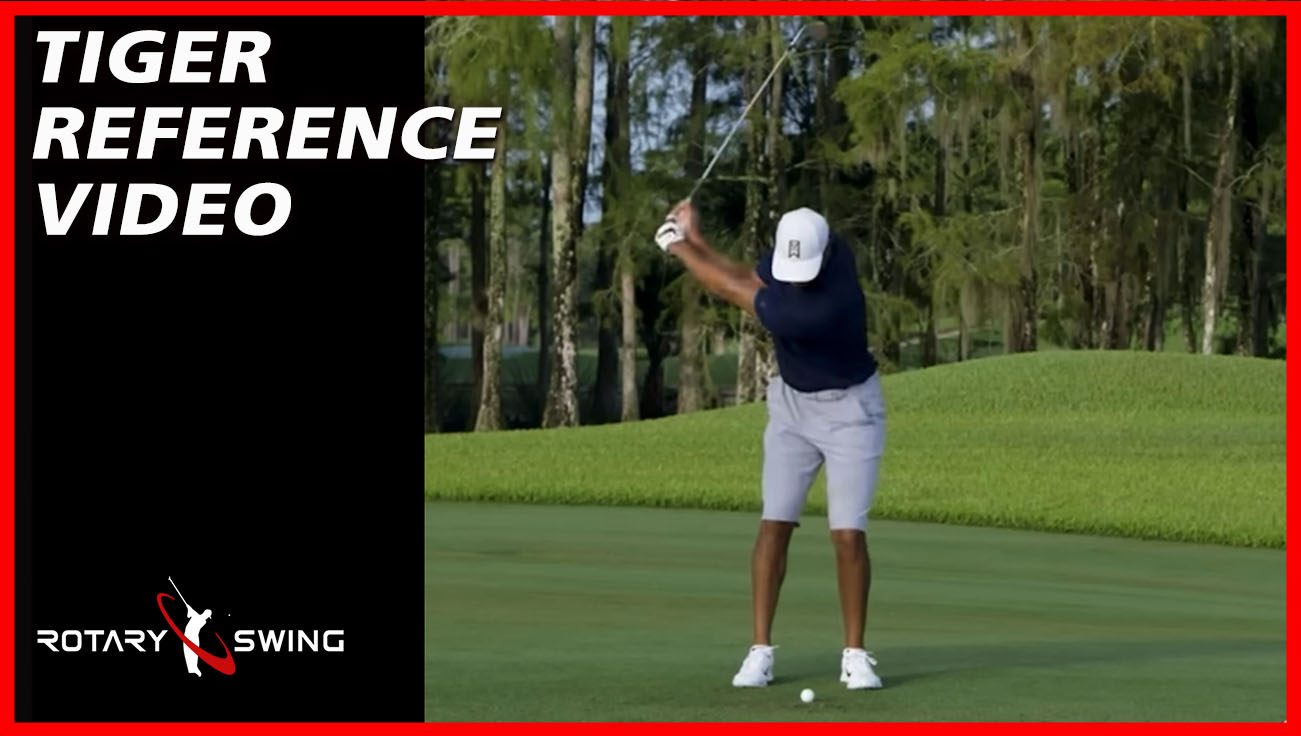
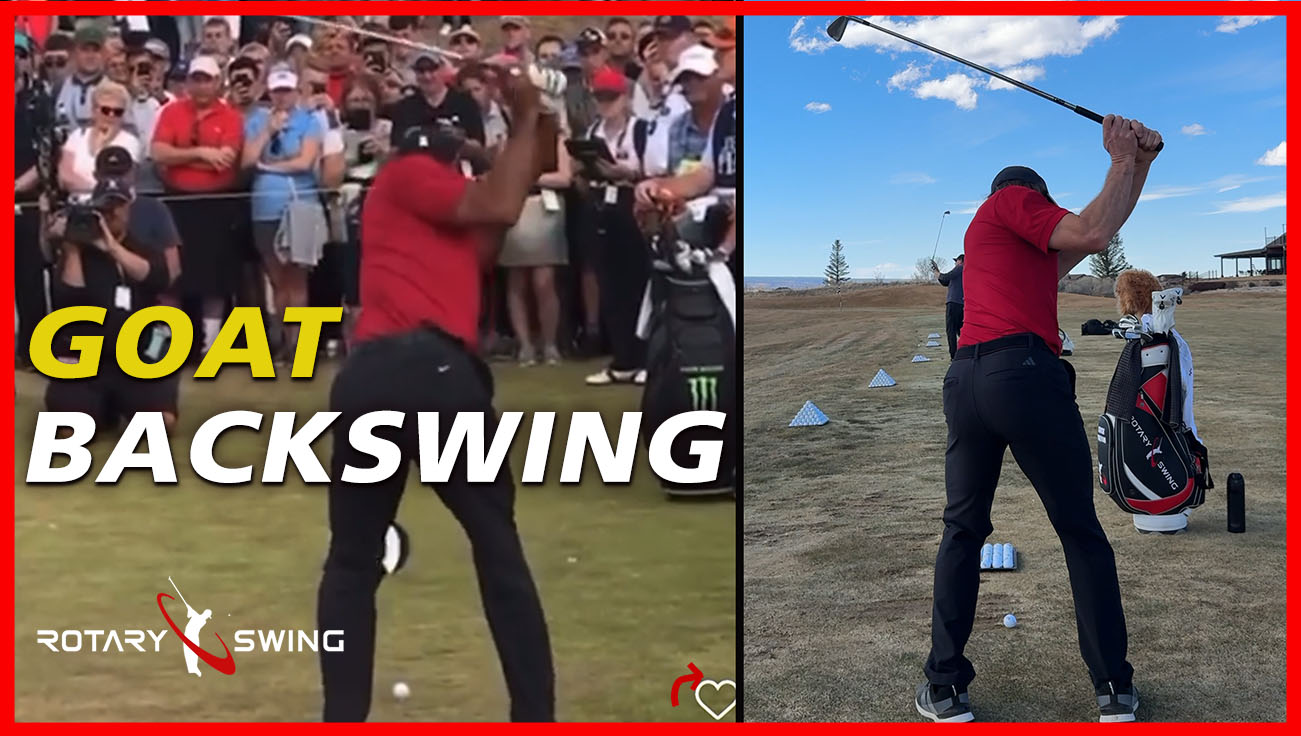
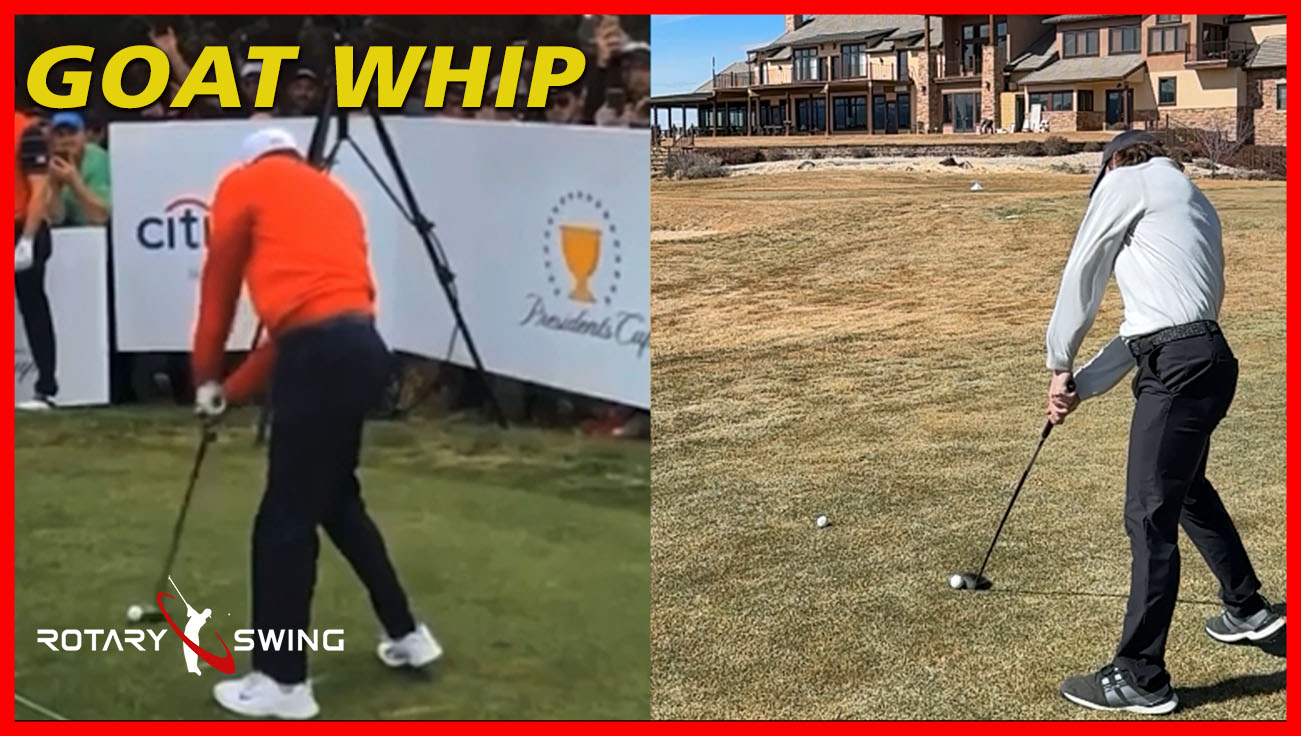
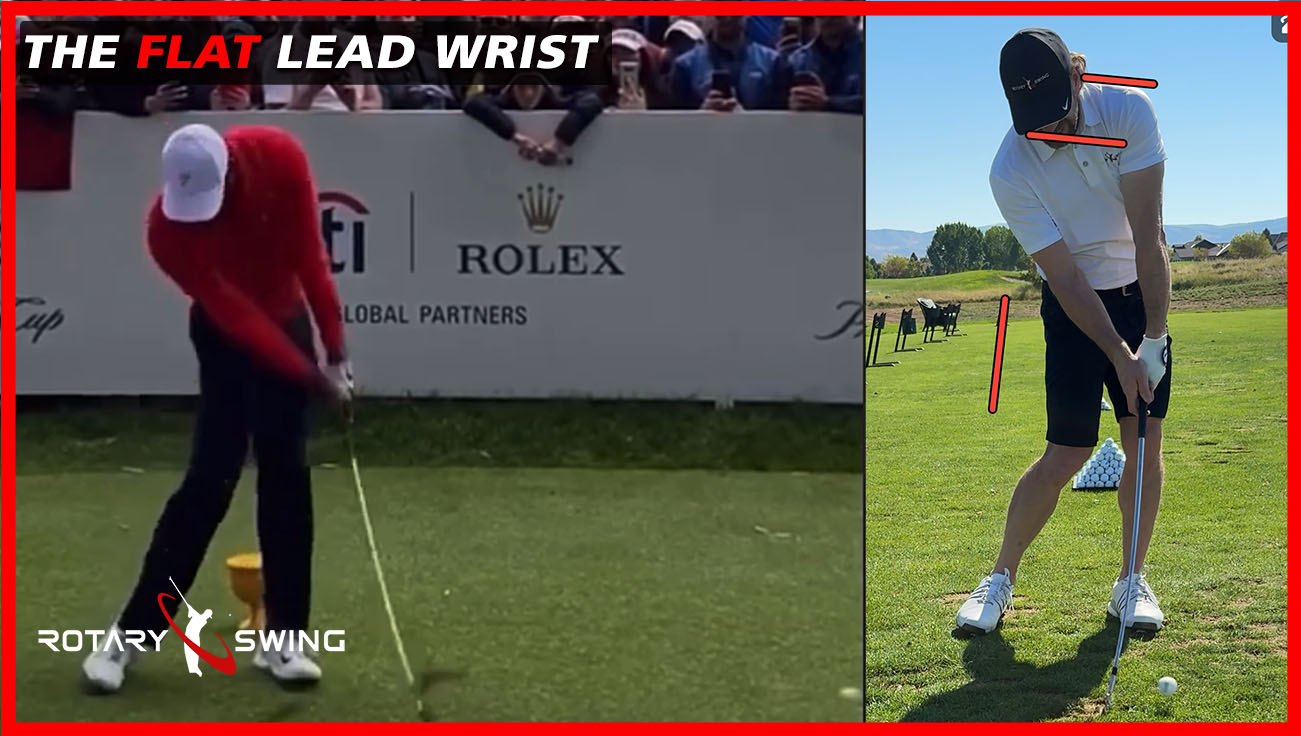
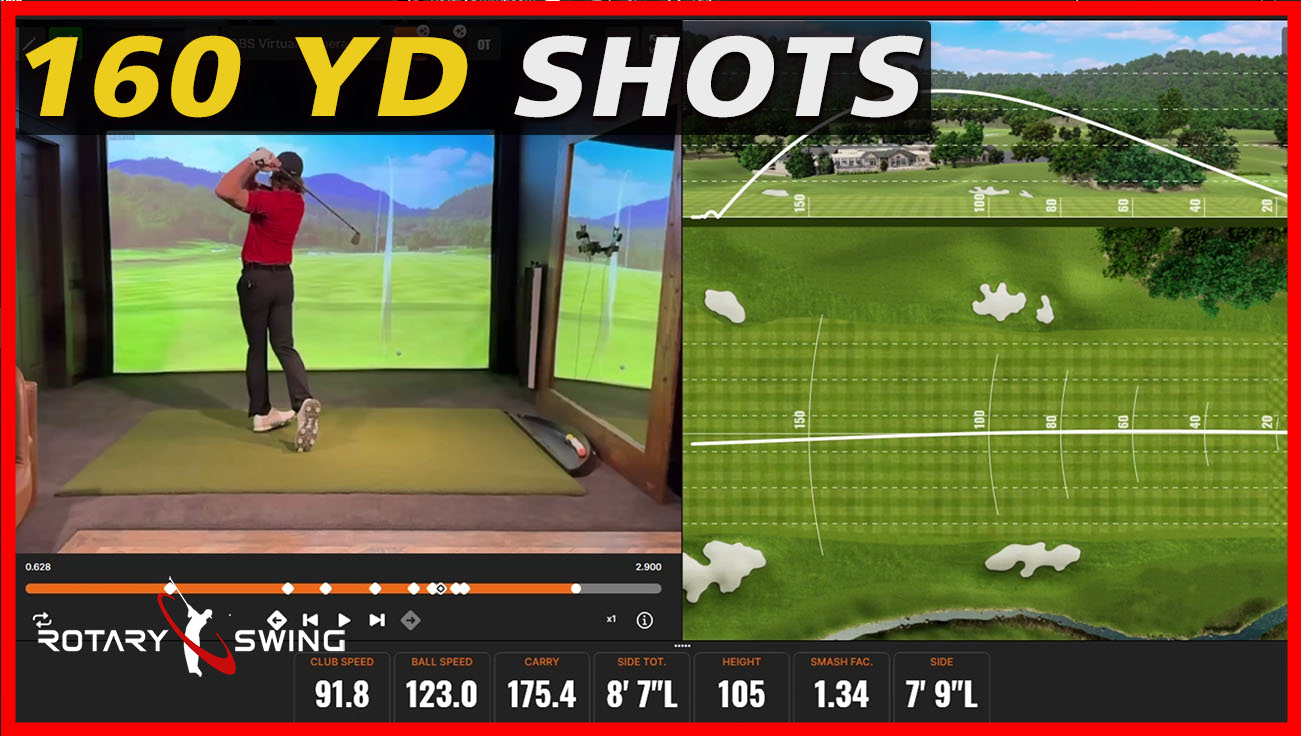
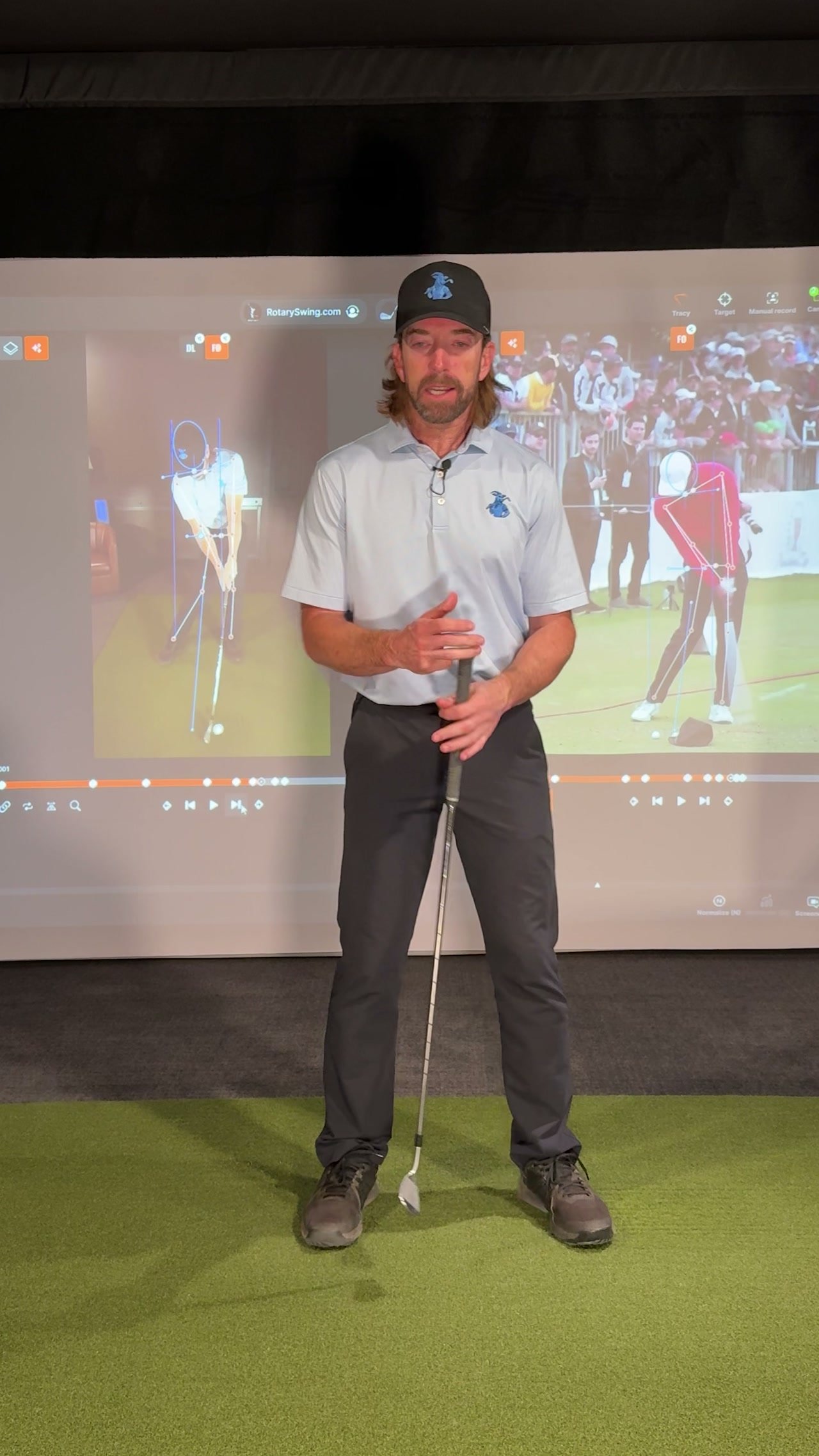
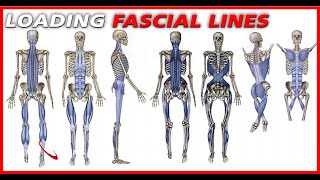
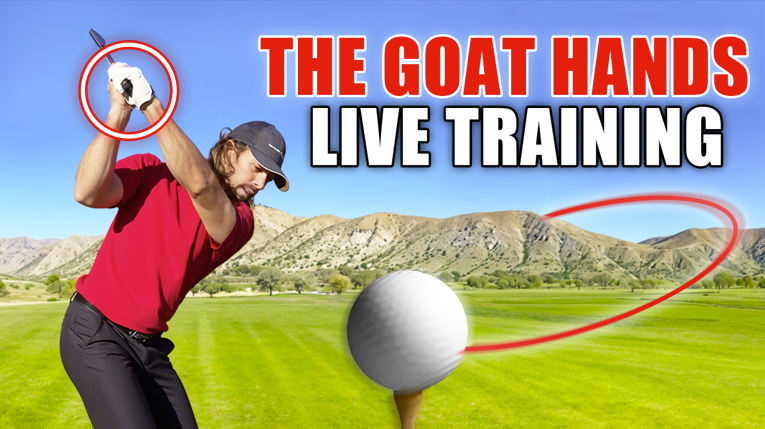
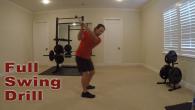
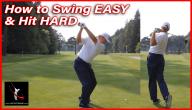
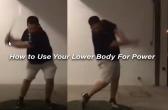
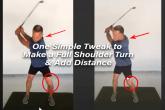
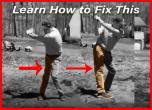
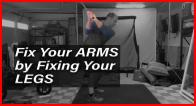
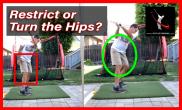
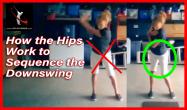
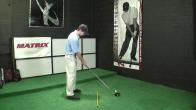
Hi! Chuck Quinton, founder of rotaryswing.com here. I want to talk about a really important concept that you've heard a million times but probably still to this day, no matter how hard you've tried, no matter what else you've done to try and drill this into your golf swing, you haven't been able to do it — and that is starting your downswing from the ground up.
How many times have you heard that? "Elite players start their downswing from the ground up. Use your legs for power." Yet nearly every amateur golfer I teach starts their swing from the top down. Why is that? It's a really simple, yet really important concept, and understanding it is going to help you finally make this change. So let's take a look at what causes you to start from the top down instead of the bottom up.
Is this the fault costing you strokes?
Film one swing on your phone. In about a minute GOATY measures it and names the single biggest thing costing you strokes — free, no card.
The reason is that your body uses muscle tension as its primary indicator of what muscles to fire and in what order — the sequence in the golf swing. Your body is really clever in that it listens to you when you tell it what you want it to do — we're just usually giving it the wrong information. That wrong information is tension typically in the upper body or the shoulders. That's the area we sometimes refer to as "the rectangle." You want to swing more from your core rotation from the top of the downswing, and you know that — but no matter what you try, you still can't do it. It's because you're giving your body the wrong signals.
Stop reading about it — feel it in your swing today
GOATY watches your swing live and coaches you between every rep. Free. No signup.
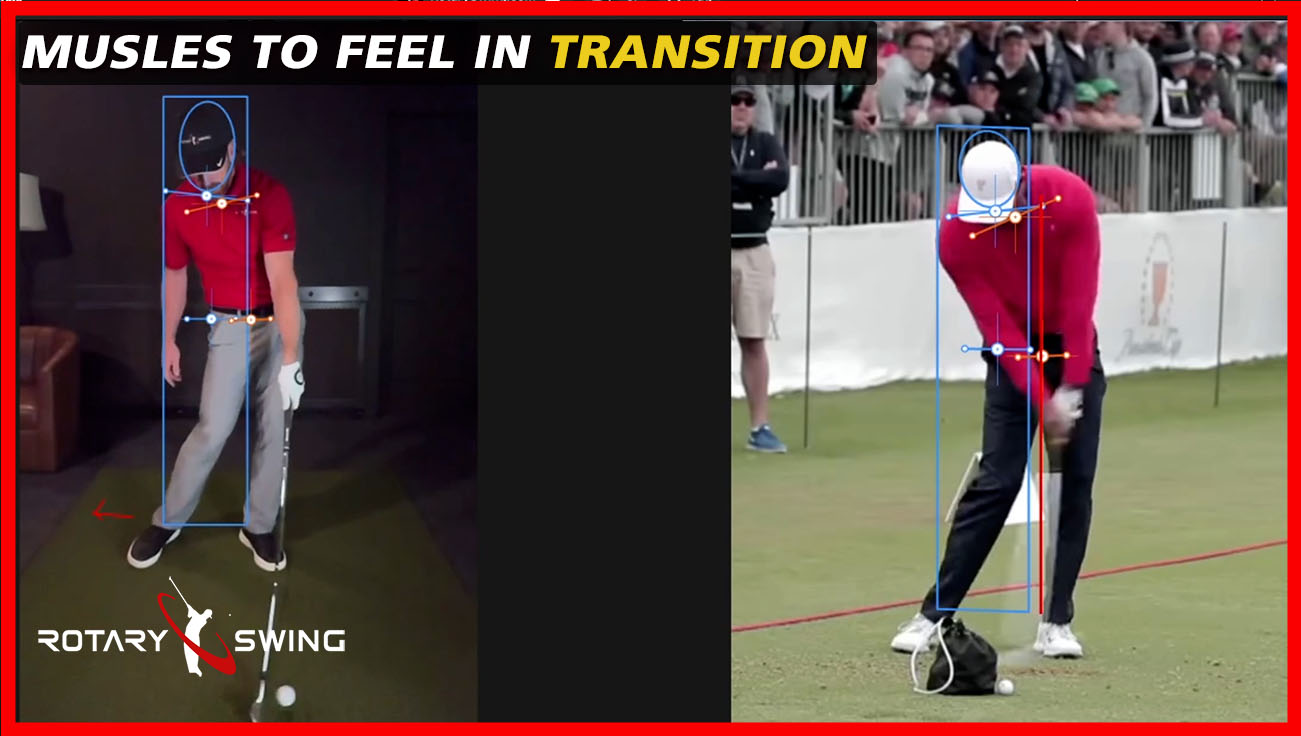
When you go to the top of your swing, stop and notice which muscles are tightest in your body. What you'll probably find, in most instances, is that it's going to be the muscles in your shoulders and arms. So of course, what you're telling your body is, "Hey, these muscles are really tight." What does a muscle want to do when it has a lot of tension in it? It wants to release the tension. So what you've got to do is start telling your body the right signals — but before we do that, let's look at what the wrong signals actually are.
Try a free live lesson with GOATY
GOATY, my AI golf coach, watches your swing through your phone camera and coaches every rep. Free, about 20 minutes, no credit card.
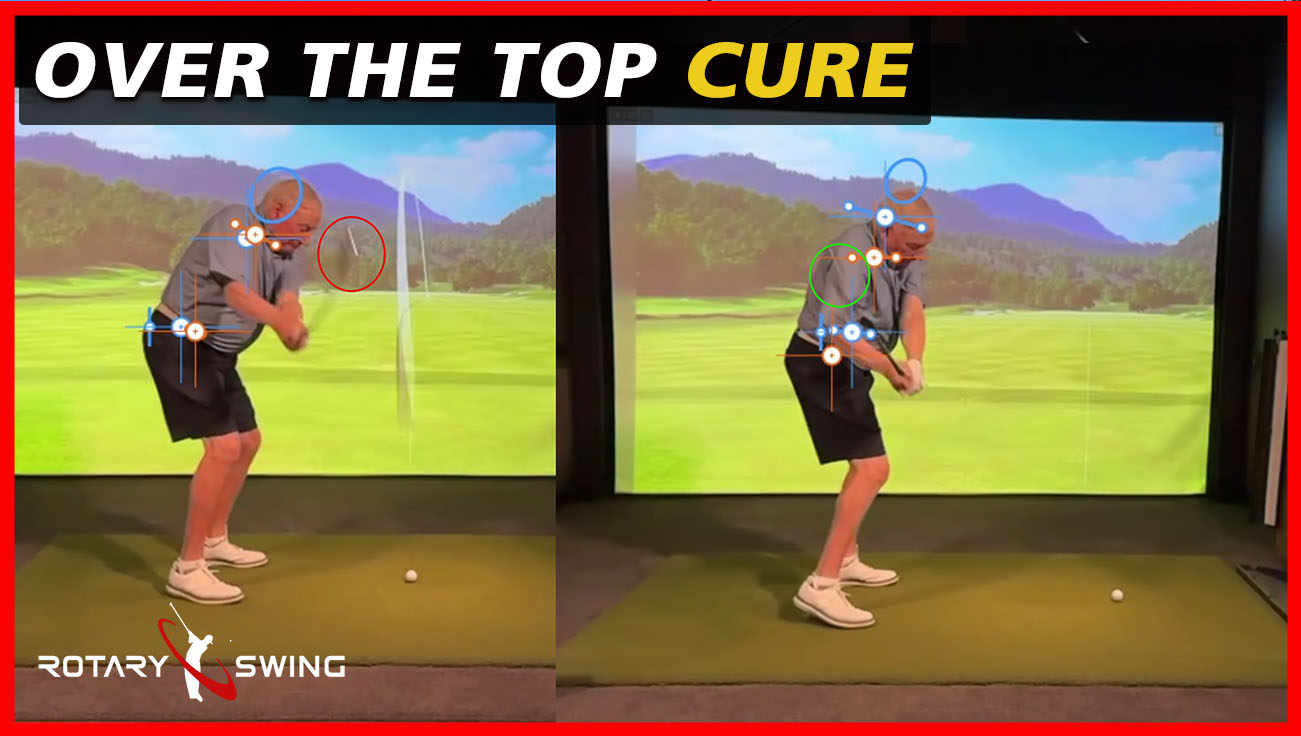
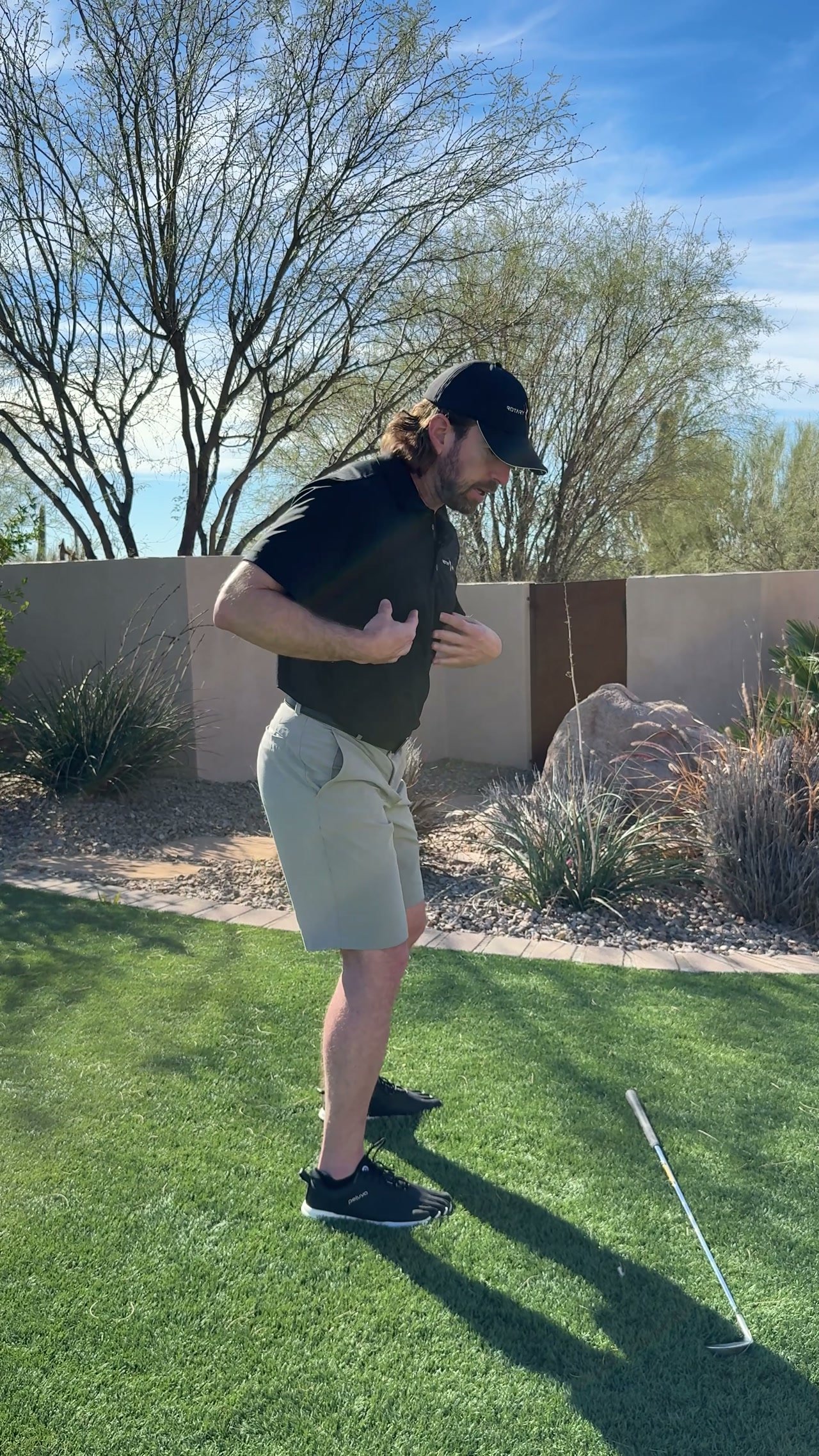
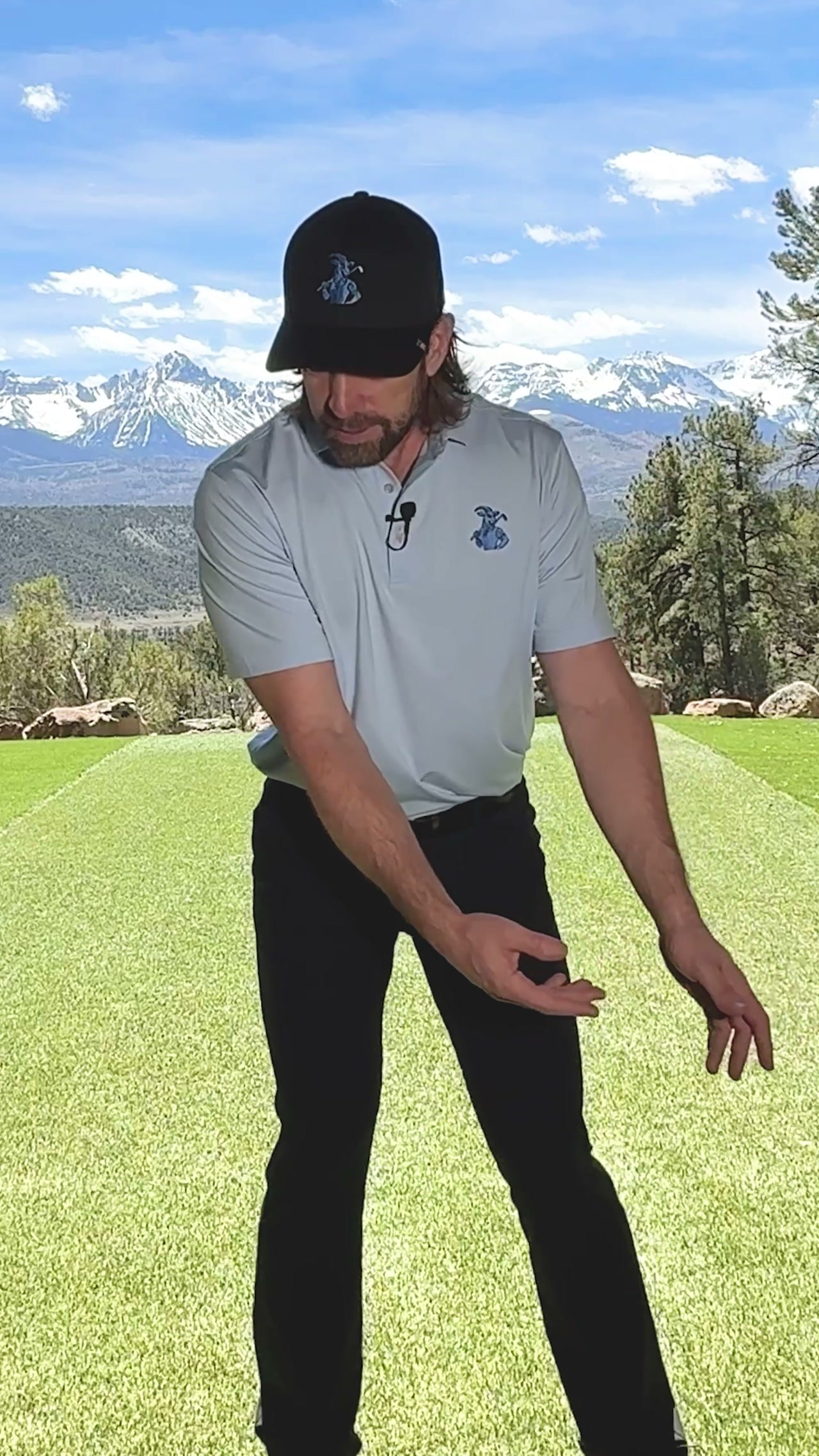
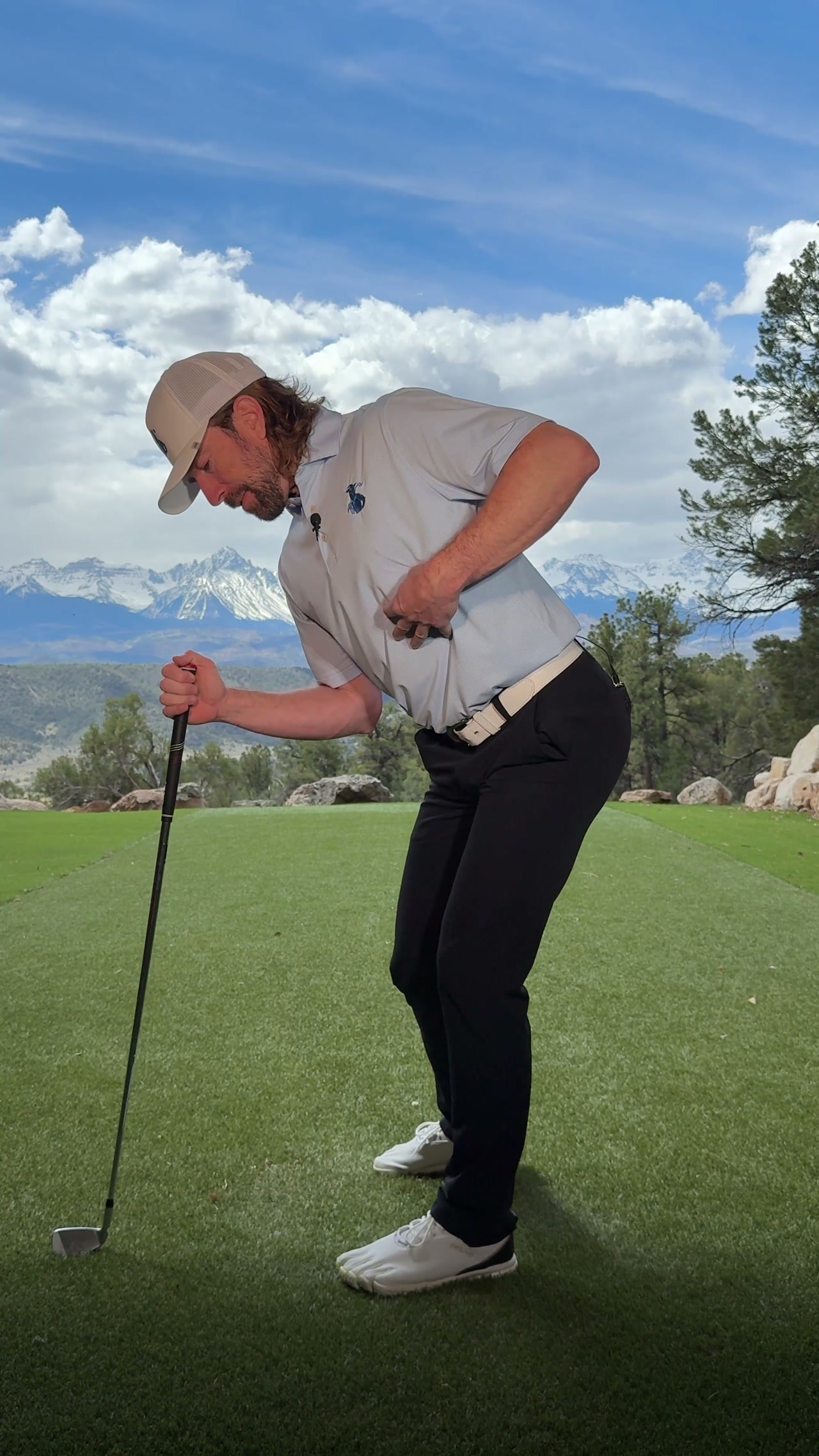
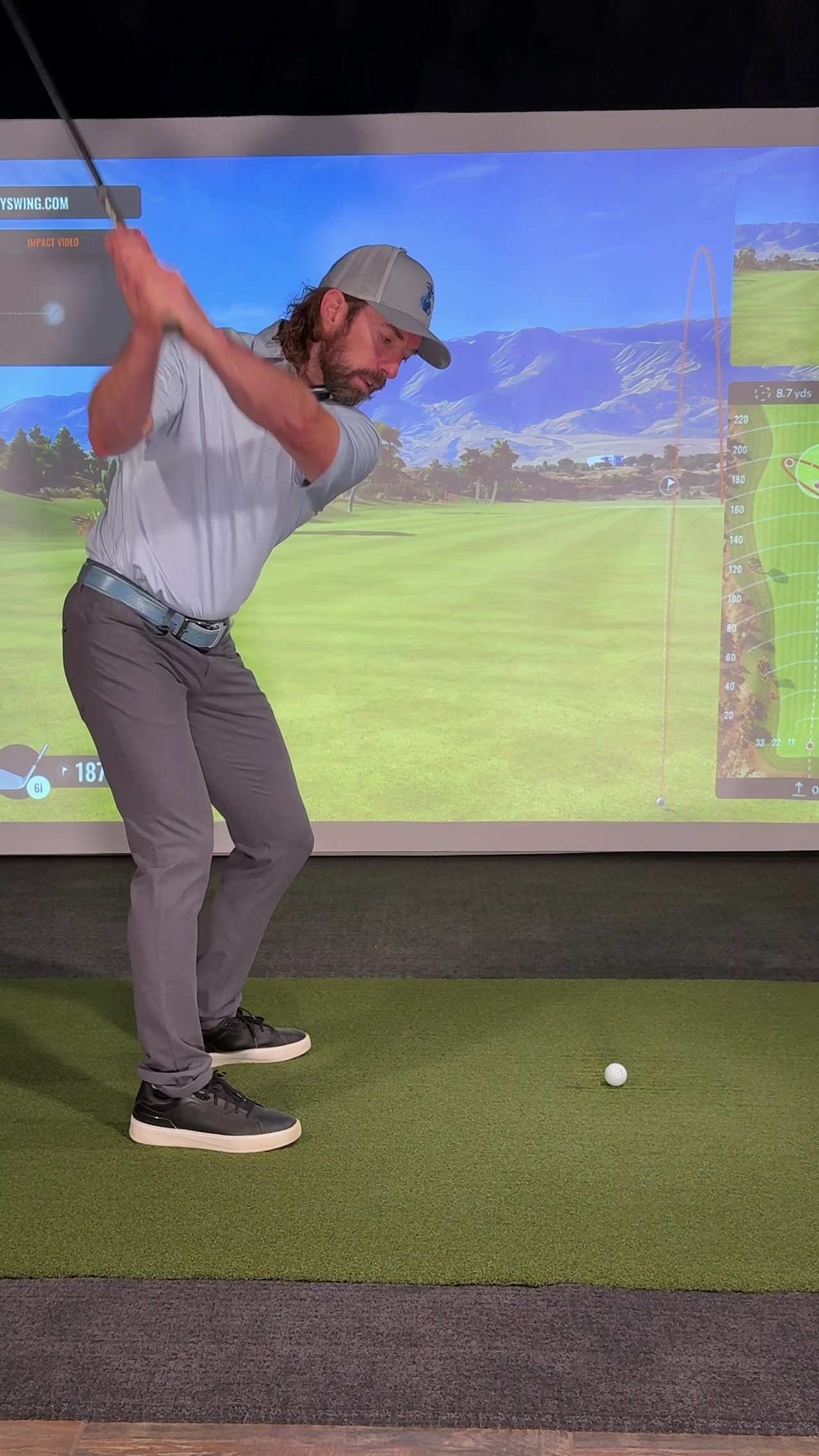
The wrong signal is when you first start the club going back and you take the lead arm — what we'll refer to as "pushing" — and you start pushing it across your body. Instantly you'll feel tension in the upper part of your back and the rear delts of your shoulders. By doing this, you've moved your arms and club a long way, but your body hasn't turned much; you haven't created any healthy tension or load in your trunk and core — the area we sometimes call "the box." Instead, you're loading up your shoulders, so by the time you reach the top, you're so tight that guess what your body wants to do? It has to get rid of this tension in your shoulders immediately.
So if you don't start using your body to load the big muscles before you turn, your shoulders are going to get loaded long before they should. By the time you reach the top, you have to fire from the top, and your body — instead of using your legs to shift your weight and initiate the downswing correctly — kind of freezes up trying to keep you from losing your balance. All of a sudden you've got a bad golf swing. So how do we fix it? The most important part of learning RST, or any efficient golf swing, is learning how to load your body first and use your body to swing from the inside out to move the club correctly.
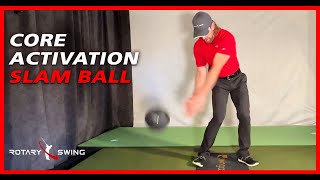
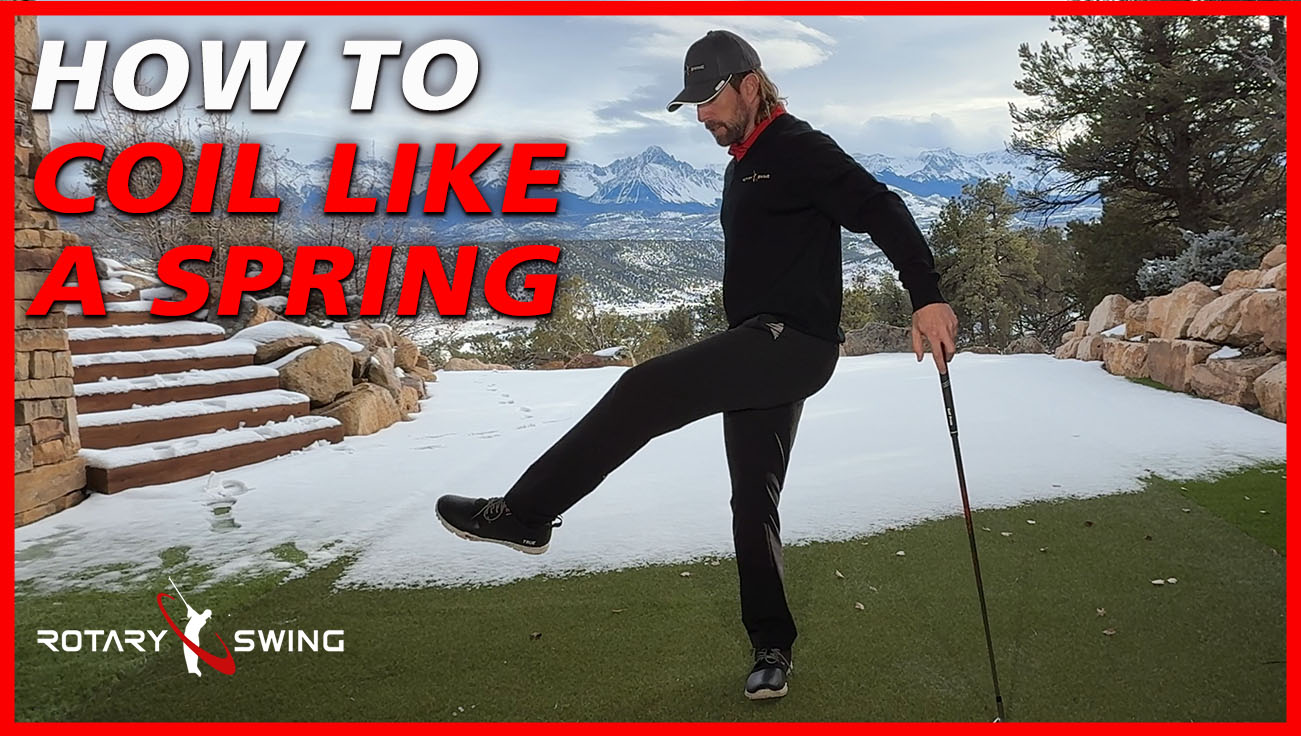
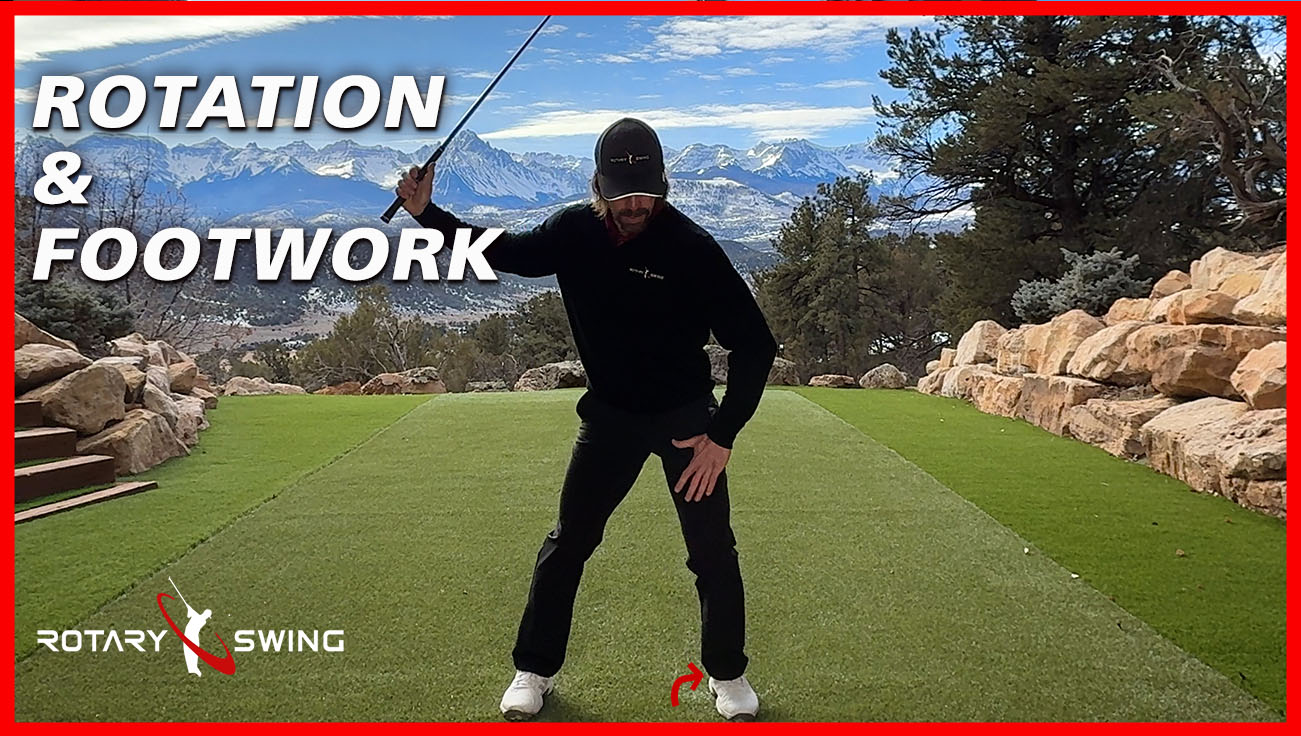
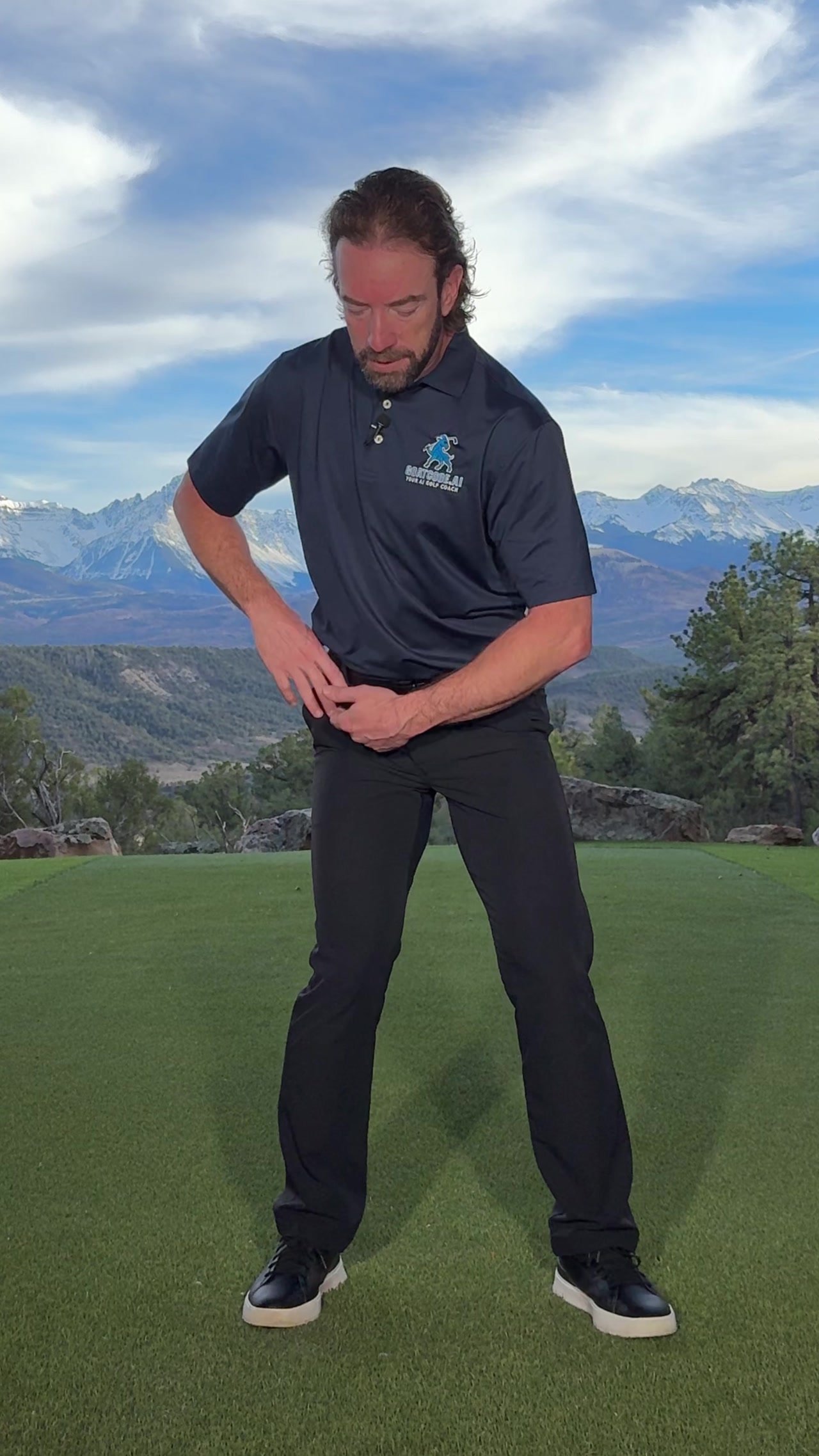
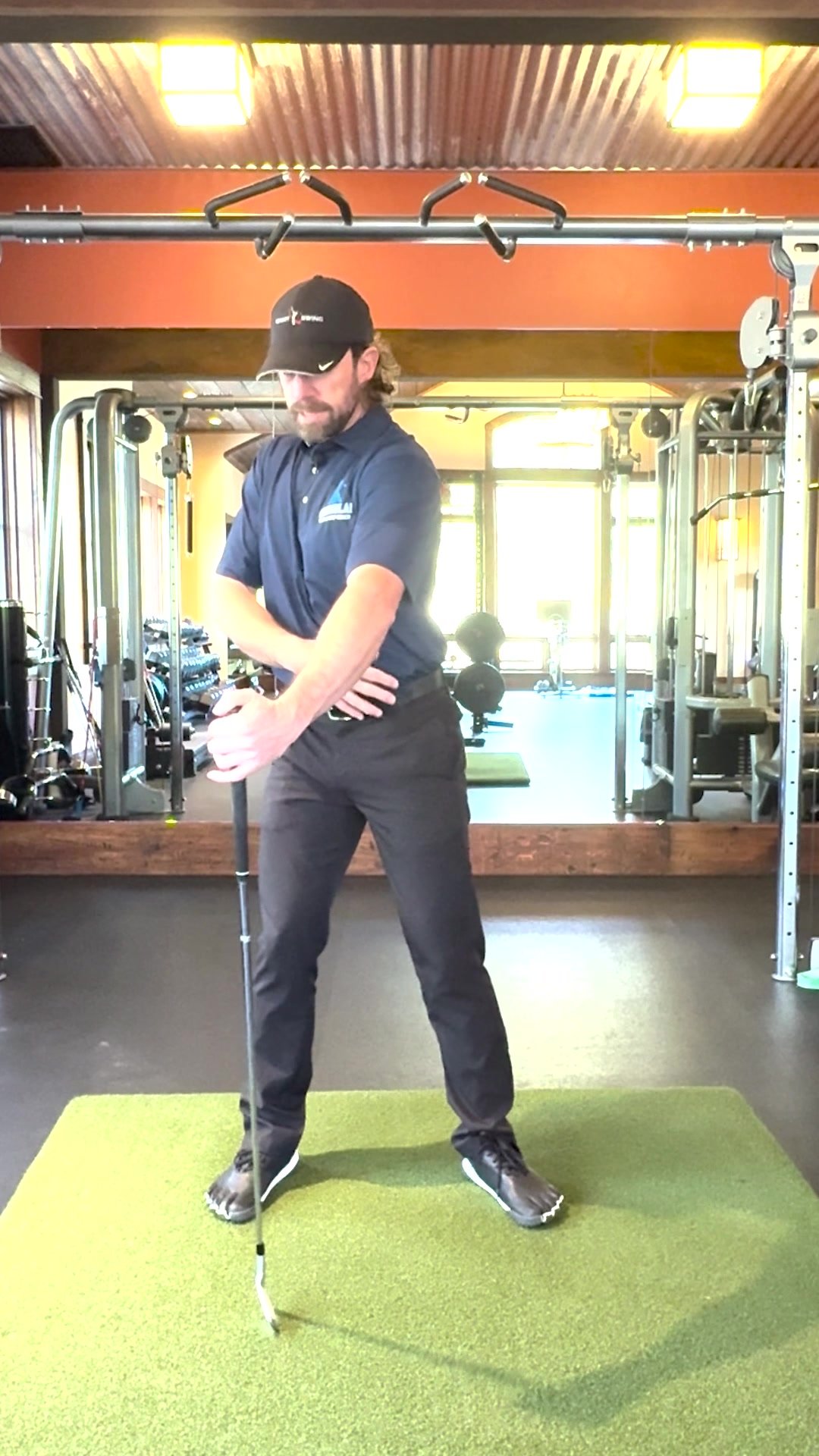
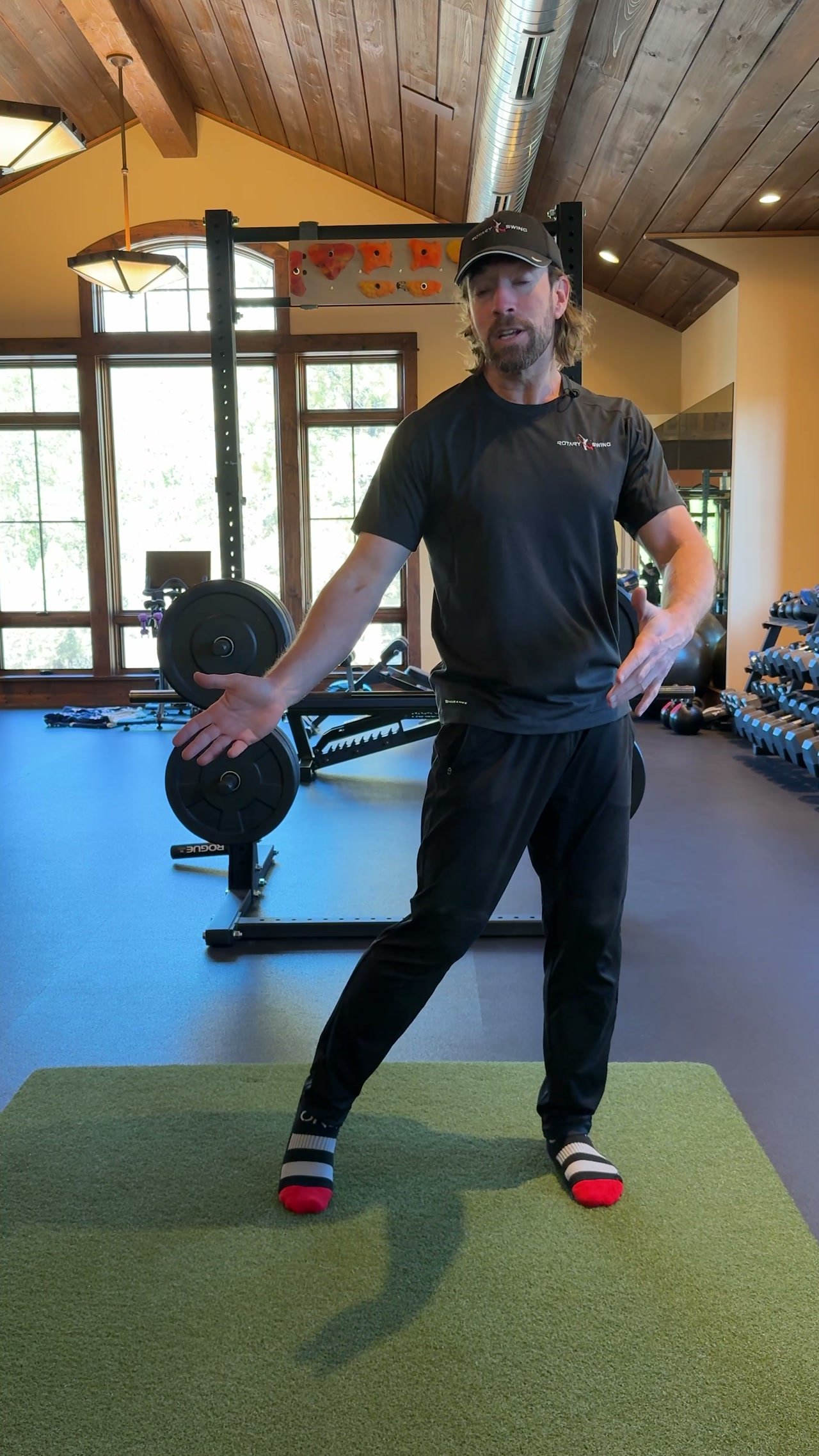
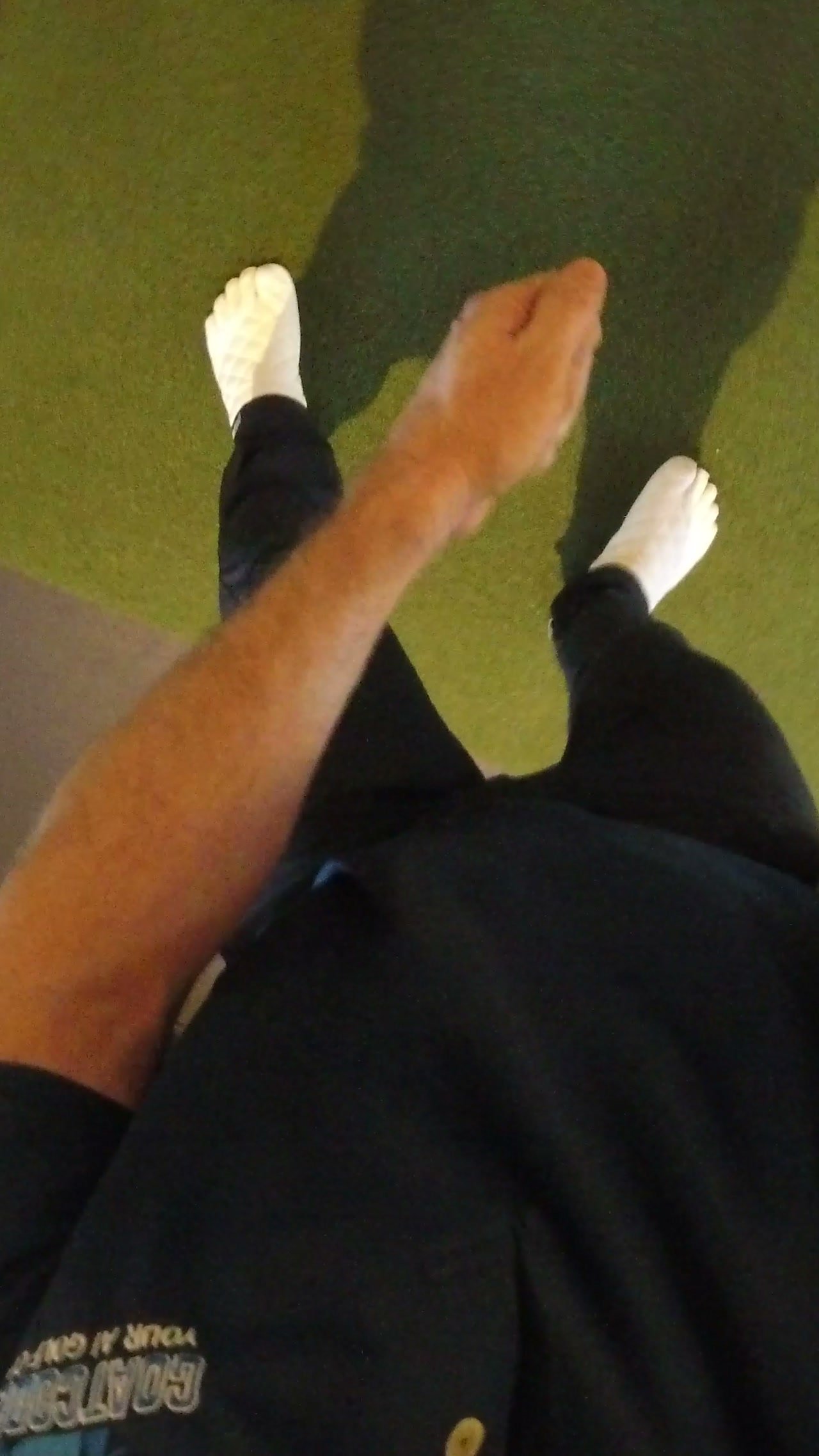
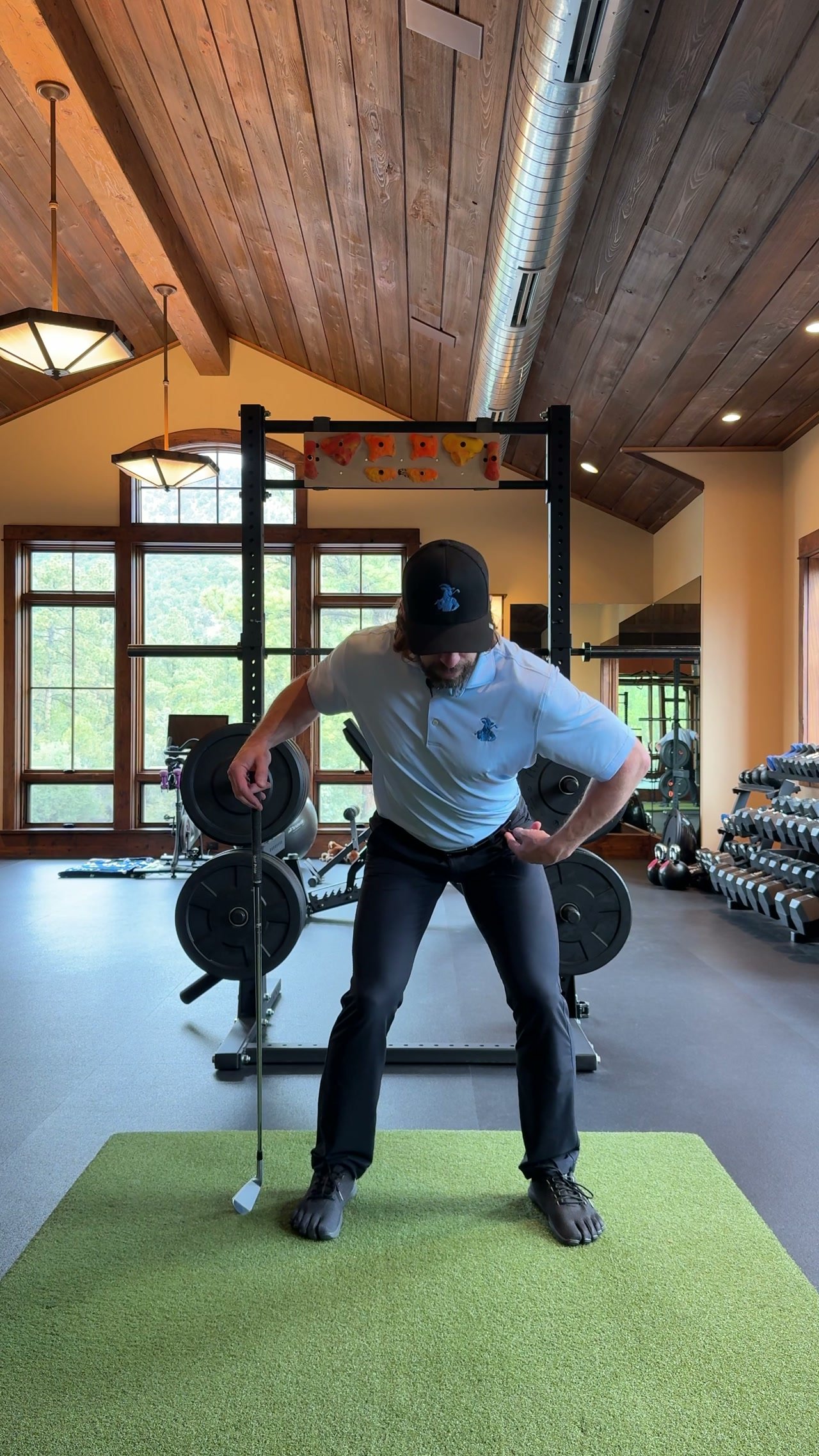
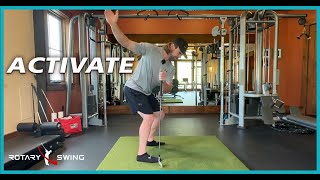
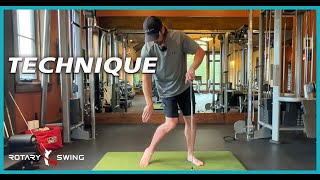
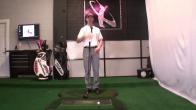
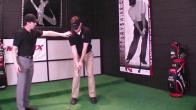
First, set the club down. You don't need it yet. You need to learn how to use your body first — this has nothing to do with the golf club. Take your arms across your shoulders and the first thing I want you to do is lift your trail heel up in the air and plant it on the ground. As you do that, push it into the ground and let your upper body turn and rotate on that hip. I want you to load and create tension. You should feel a lot of load in your quad, hamstring, and primarily your trail glute. As you do that, keep the flex in your knee — it's okay for it to straighten slightly, but what I see all the time is people swinging with their arms while their trail leg straightens out completely. So as you go back, lift your trail heel — the trail heel gives you something to focus on pushing into the ground, which gives you a mental cue to load that trail glute.
Lift it up, push it into the ground, and now all of a sudden you feel loaded and powerful, as if you could jump that direction! Now, we don't want to push that hard off the trail leg in an actual swing, but the primary thing we're trying to accomplish is getting load and stability in there so that we can have a powerful move coming down. Trail heel up, plant it in the ground, turn — now your shoulder is completely relaxed. It could hang out there all day, but you've still made a full shoulder turn. Your trail leg is loaded up, and importantly, your core is now really loaded up. So guess what's going to want to fire first? Not your shoulders, because they're relaxed. Your abs, your core, your obliques are loaded. Now the first thing you're going to do is — you already know this.
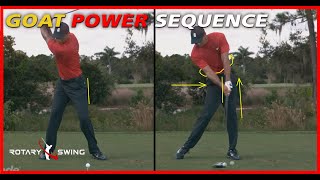
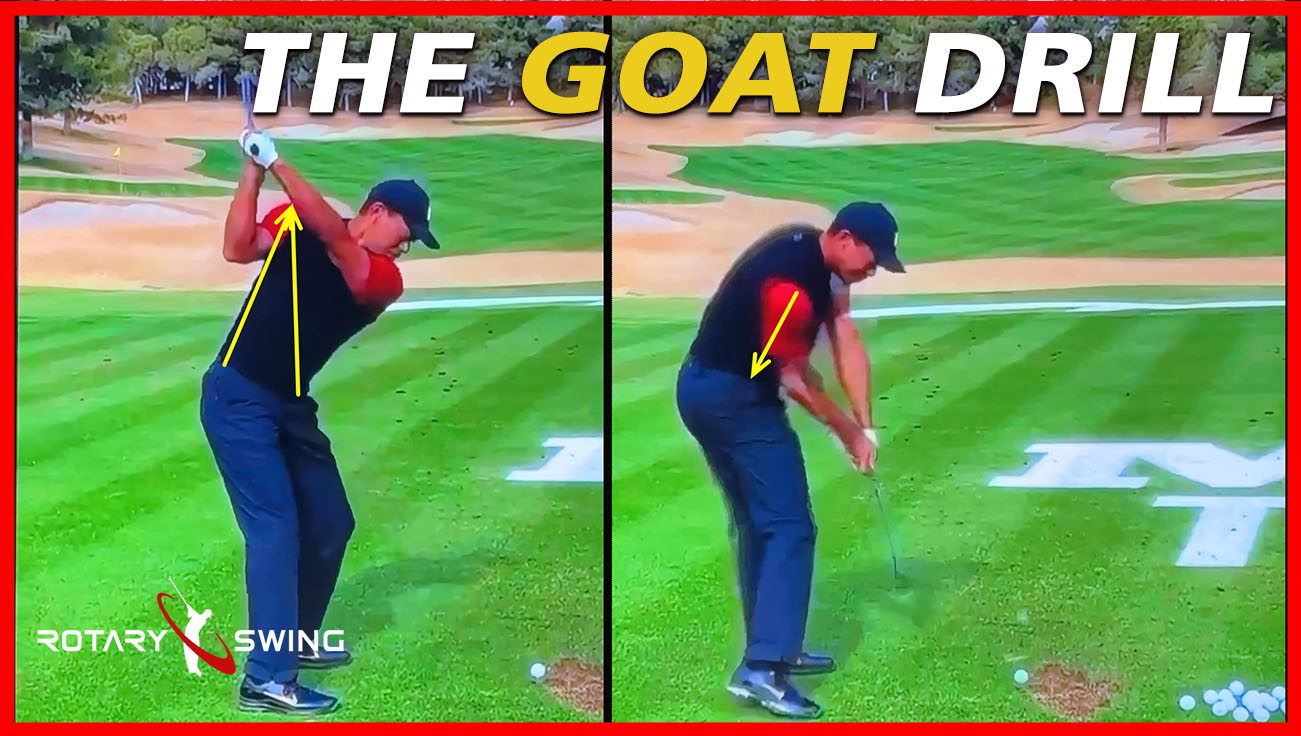
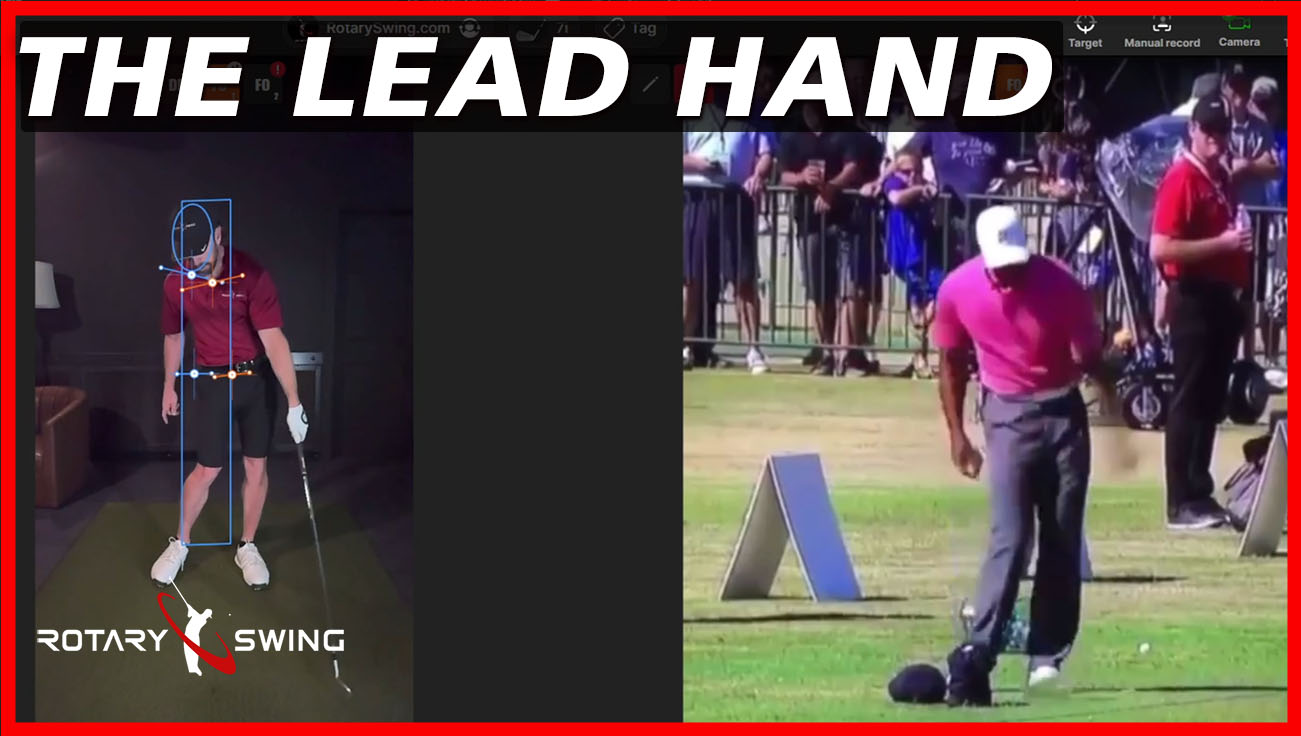
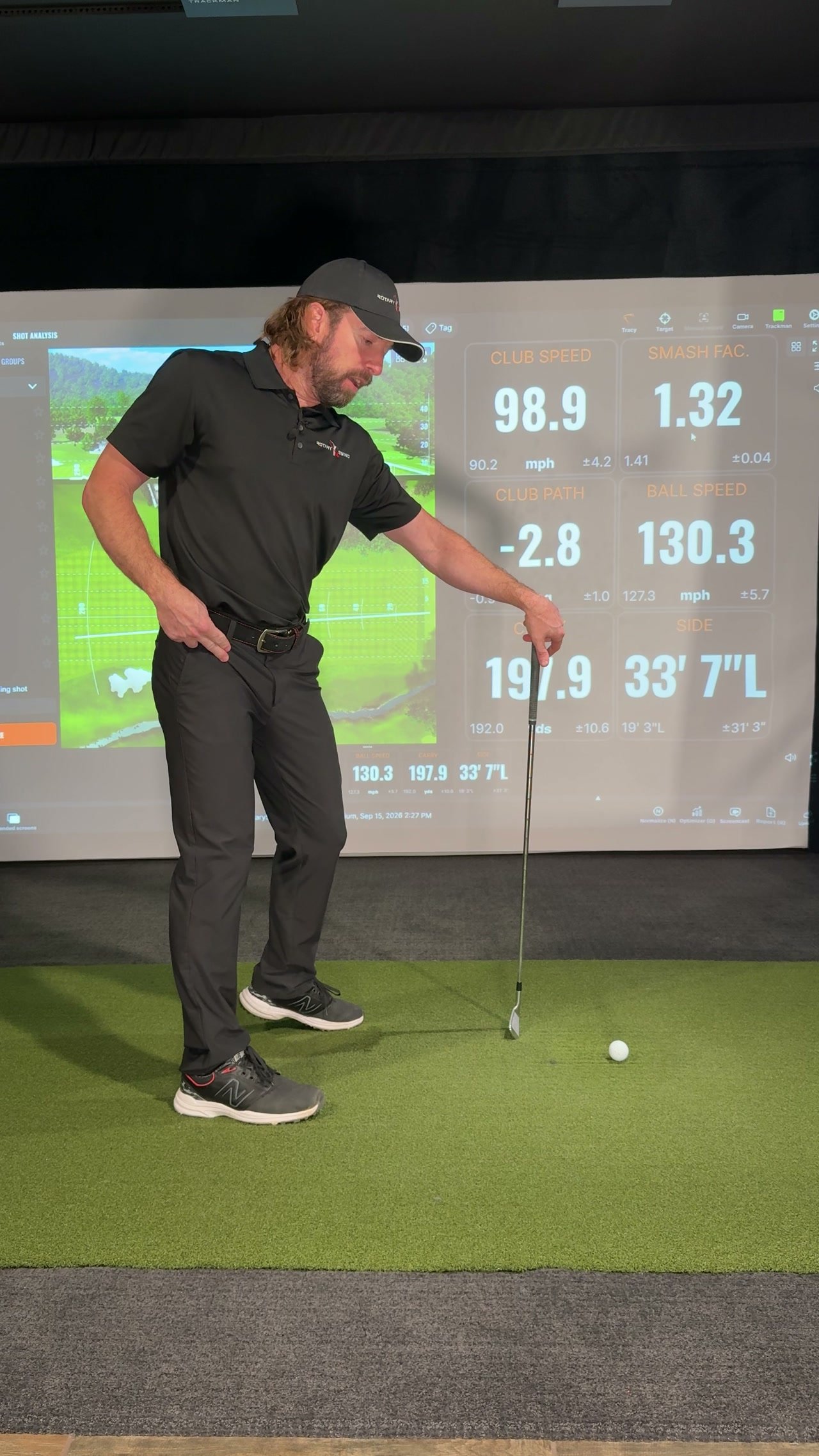
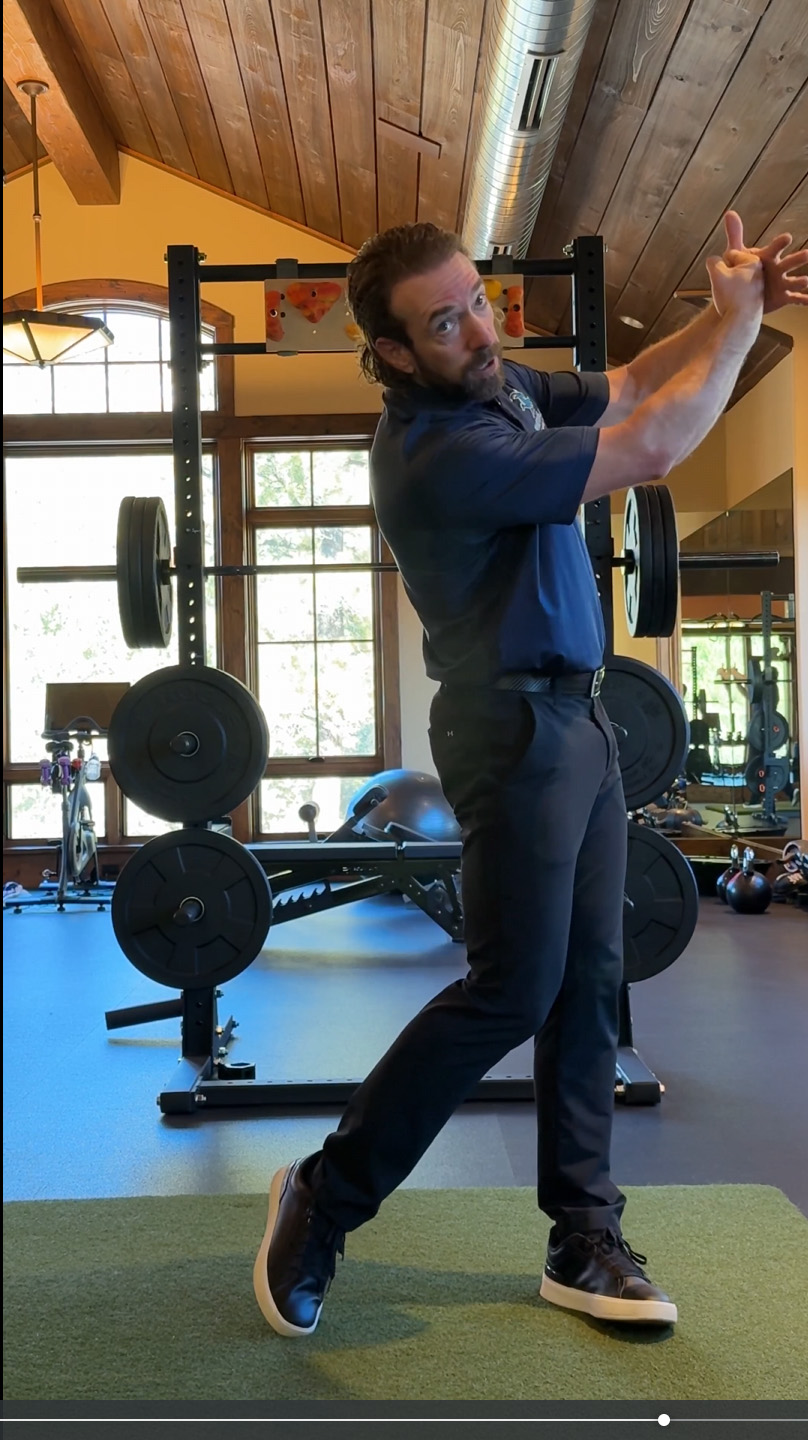
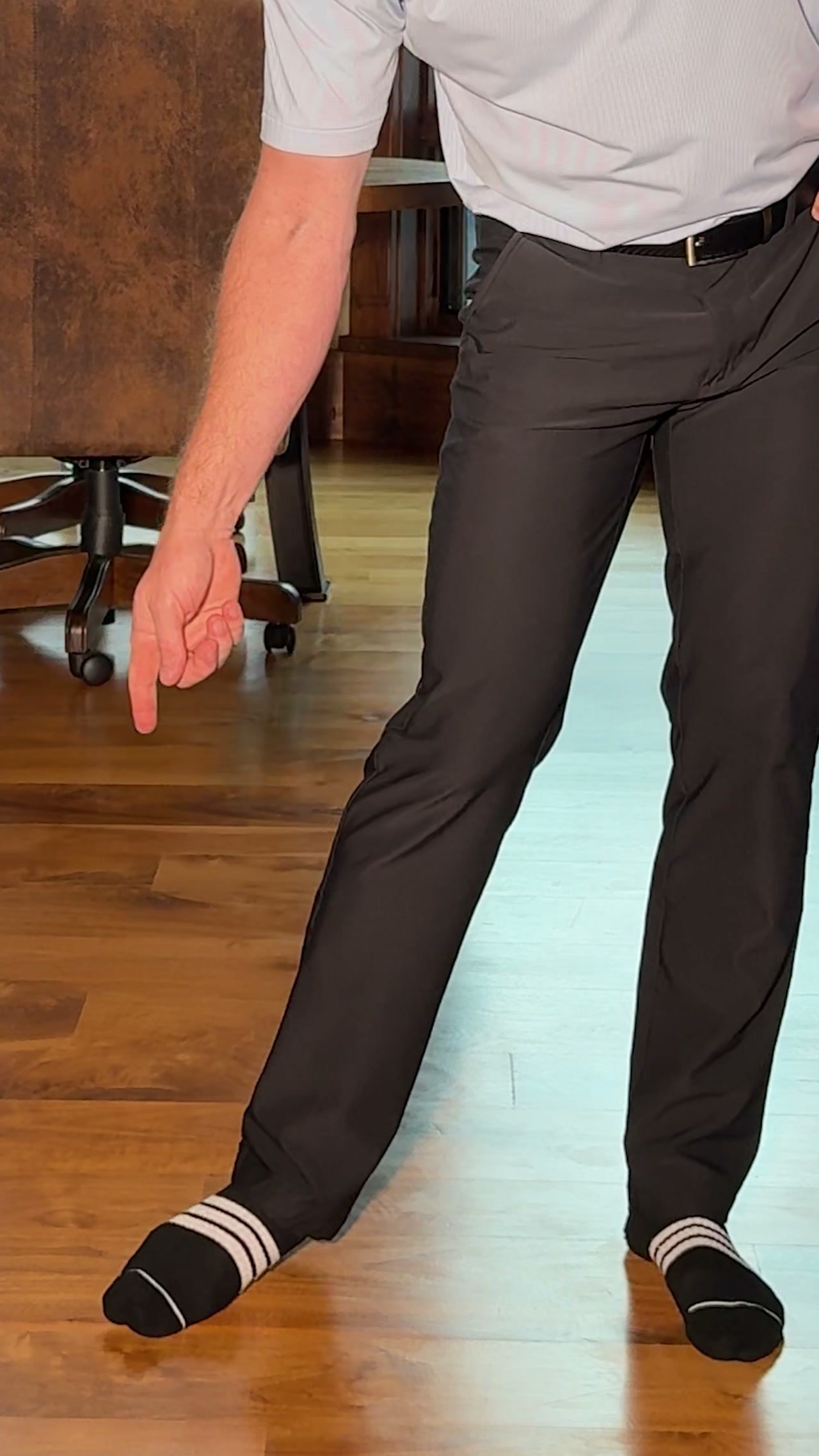
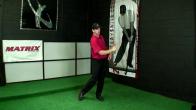
You need to shift your weight back to the lead side. How do you do that? Give yourself a little help — a little mental cue. Lift your lead foot up and stomp it into the ground. I want to hear it. Stomp it — because as soon as you do that, the muscles on the lead side that you need to post up on and drive your hip rotation are going to be activated. So lift the lead heel, stomp it into the ground. As you do that, you're also using your lead leg to push your hips out of the way to get your shoulders squared up at impact. Trail heel, stomp it, load it up — shoulders are relaxed — lead heel, stomp it, post up. And now you'll see your shoulders are at impact. The GOAT Drill system trains this exact ground-up loading pattern so you can build it into a reliable muscle memory.
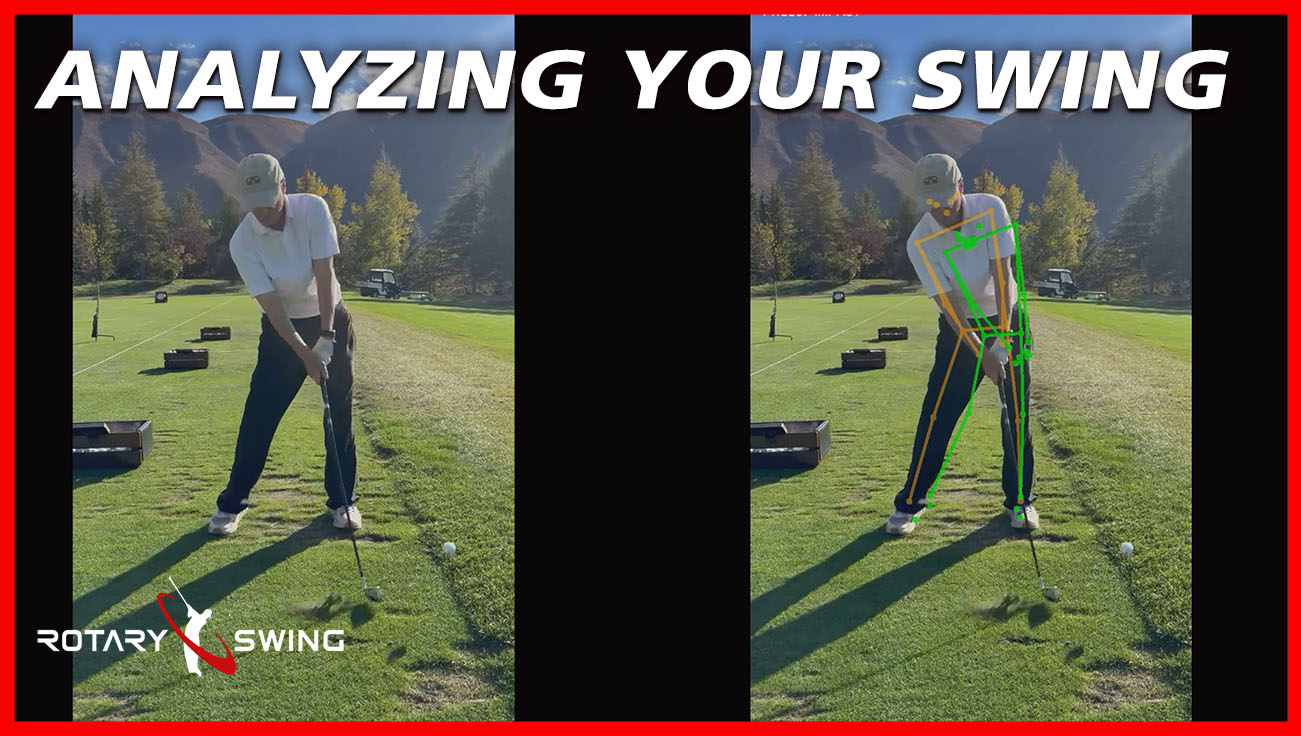
You didn't move your shoulders — in fact, your shoulders have been relaxed this entire time. Trail leg, lead leg. Now you're in a great impact position, and all those big, thick, dense muscles in your hips, core, quads, and hamstrings have done all the heavy lifting to move your arms and shoulders into impact without you having to use your arms and hands to get into the hitting zone. Once you understand how to build this ground-up sequencing, you can check your own motion with an AI swing analyzer to see exactly how well your body is loading and firing compared to elite movement patterns. Focus on getting your core rotation right first, then worry about what the club and arms are going to do in the swing.
All that ground-up sequencing has one goal: arriving at a powerful impact position in golf. Our analysis guide shows you what the correct position looks like and how to train your body to find it on every swing.
Frequently Asked Questions
What does it mean to start the golf downswing from the ground up?
Starting the golf downswing from the ground up means initiating the movement using your lower body, particularly your legs and core, rather than relying on your upper body. This approach allows for better weight transfer and power generation, leading to a more effective and balanced swing. Understanding this concept is crucial for any golfer looking to improve their performance.
Why do many amateur golfers start their downswing from the top down?
Many amateur golfers start their downswing from the top down due to muscle tension in the upper body, particularly the shoulders and arms. When these muscles are tight, the body instinctively tries to release that tension, leading to an improper sequence in the swing. Recognizing and addressing this tension is essential for making the transition to a ground-up downswing.
How can I identify the wrong signals my body is sending during my swing?
To identify the wrong signals, observe which muscles feel tight when you reach the top of your swing. Most golfers will notice tension in their shoulders and arms, which indicates that they are not loading their core and legs properly. By recognizing these signals, you can adjust your approach and start engaging the larger muscle groups for a more effective downswing.
What exercises can help me learn to load my body correctly for the downswing?
One effective exercise involves setting the club down and focusing on your body mechanics. Start by lifting your trail heel and planting it back into the ground while allowing your upper body to rotate on that hip. This movement helps create tension in your legs and glutes, ensuring that you load your body properly before initiating the downswing, ultimately leading to a more powerful and balanced swing.
Try a free live lesson with GOATY
GOATY, my AI golf coach, watches your swing through your phone camera and coaches every rep. Free, about 20 minutes, no credit card.
Learn the 3 Tour Pro Consistency Secrets You've NEVER Heard!
Watch part 2 now to see how you're moving your body in the opposite direction of the pros!
Get a Free AI Golf Lesson — 10 Minutes of Live CoachingJust prop up your phone, start swinging, and GOATY coaches you live with real-time voice feedback. No upload needed.
We're after one thing: Real Results - Real Fast.
And that's exactly what our members achieve.
And that's why they say the AXIOM is:
Mind-blowing. Game changing. Revolutionary.
RotarySwing was founded out of frustration with the current state of golf instruction. Quinton knew a better way had to exist to learn this game we all love.
The GOAT Code is finally ready after 3 decades of exhaustive work -
you can now learn how to play the game like Tiger and have incredible
control over the ball. This NEW program is truly a step-by-step process
that takes you from green to tee and will teach you the secrets of how
to play like the Greatest Of All Time. If you would like to switch over
to the new GOAT Code program, simply click the green button below.
Don't worry, you can easily switch back at any time and will see a new
button at the top of your screen to switch back whenever you like.
What are the main advantages of the new program?
It cuts down on the clutter - the videos you will see are all
you need to play your best golf ever - nothing more, nothing less
It is truly step-by-step - no more wondering what you should be
working on, the program guides you through every step of the way
Faster progress - you will see improvements in your scores incredibly
fast and this will immediately begin to spill over into your full swing,
even while working on just your putting!
There's a reason that Earl Woods taught Tiger how to play the game
from the green back.
I admit, at first, even I didn't think it was necessary. I thought I
could skip ahead and learn the full swing without building a solid
foundation in putting, chipping and pitching.
All this belief did was cost me MORE time than had I started
at the beginning just like The GOAT did. Over the past 20 years of
doing golf clinics, my observations of thousands of students was
always the same - those who started the slowest at the beginning
always got there the fasted in the end.
In other words, the students I observed being diligent with the
small things like grip, setup, posture and the basics of controlling
the clubface on day 1 were always WAY further ahead of those who
didn't on day 1.
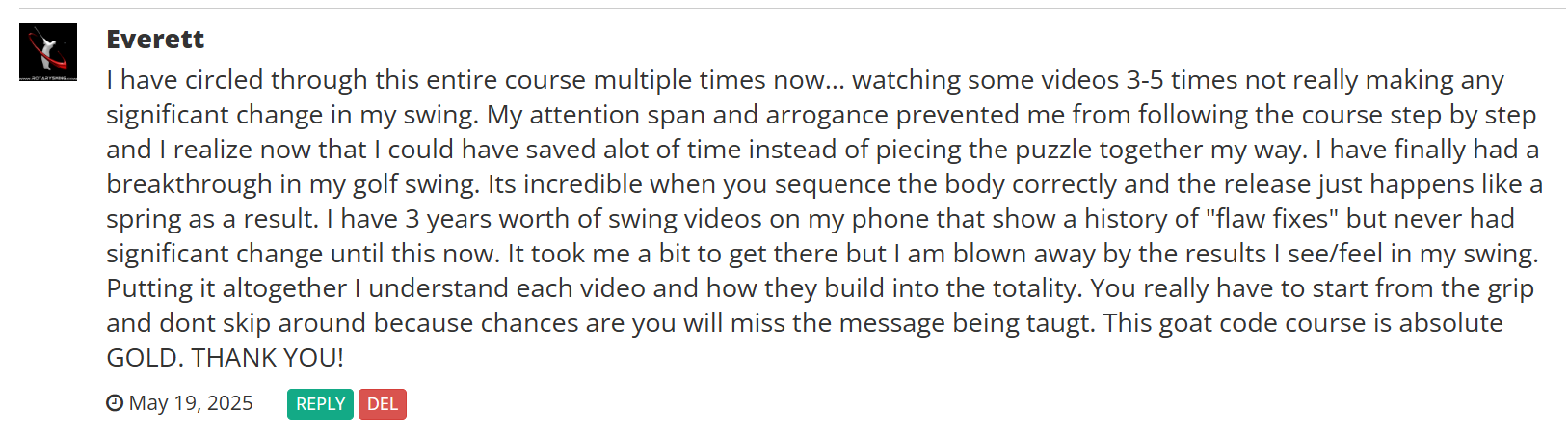
In the post above by member Everett, he said it all in a nutshell.
Go through the program exactly the way it is laid out and you
will have extraordinary results. Skip to the end and you'll end up
with the exact same swing you started with.
This is a system, not a grouping of random tips.
There is a method to my madness deeply rooted in learning psychology
and over 30 years of teaching hundreds of thousands of golfers
just like you how to hit a ball with a stick. Slow down and you'll
get there faster...