If you are confused about the correct golf stance width, you are certainly not alone.

A wide stance provides stability, but at what cost?
Determining the proper golf stance width is one of those areas in golf instruction where there is an overwhelming amount of conflicting information.
Is this the fault costing you strokes?
Film one swing on your phone. In about a minute GOATY measures it and names the single biggest thing costing you strokes — free, no card.
Analyze My Swing Free
Related: Golf swing weight transfer — the AI-coached approach →
Android users: Download GOATY on Google Play — free AI golf coaching on your Android phone. →
You have undoubtedly heard all of these recommendations from various golf instructors:
Stop reading about it — feel it in your swing today
GOATY watches your swing live and coaches you between every rep. Free. No signup.
Start Your FREE Live Lesson →
- Stand really wide so you can be really stable.
- Stand really narrow so you can rotate more freely.
- Stand with your feet shoulder width apart, just like you would in other sports.
All of these recommendations are misinformation, even though the intentions behind them may be perfectly good.
Your Anatomy Determines the Right Golf Stance for YOU
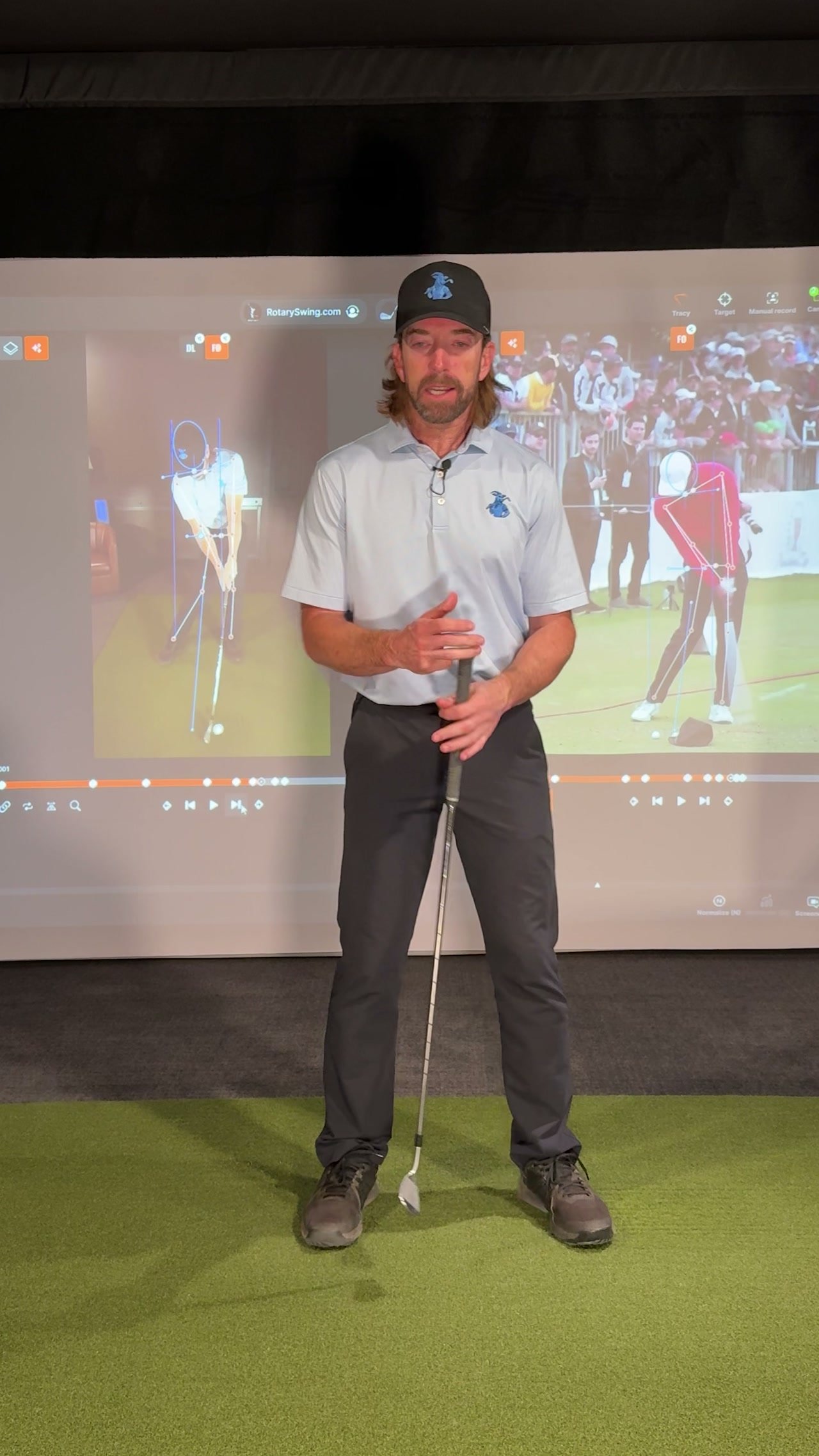
Your golf setup width should be determined by the fundamentals of your anatomy and the specific objectives you are trying to achieve in the golf swing.
Your shoulders have absolutely nothing to do with your golf stance width — unless your legs happen to be attached to your shoulders (and I will assume they are not).
That means your shoulder width has zero bearing on how wide your golf stance should be. None whatsoever.
Every golfer has a completely different shoulder width and hip width. Every golfer's ratio — how wide their hips are relative to how wide their shoulders are — is entirely unique.
You need to be looking at your hips, specifically the hip sockets where your legs attach, to determine your proper . So there is a clear anatomical basis for your golf stance width.
Get Stance Width Right for Stability and Safety

The first objective you are trying to achieve is stability. You cannot stand extremely narrow because you will have no stability and no solid foundation to rotate around.
Your second goal when determining proper golf stance width relates directly to impact. The most critical part of the golf swing is getting perfectly stacked on the lead side at impact so that you can rotate freely through the ball.
Try a free live lesson with GOATY
GOATY, my AI golf coach, watches your swing through your phone camera and coaches every rep. Free, about 20 minutes, no credit card.
This is where some of the highest forces in the golf swing are generated on your body, particularly on the lead side during the downswing and into impact. Consequently, this is where a significant number of golf swing injuries occur.
You rarely see injuries occurring during the golf backswing because there is not as much force and speed involved.

Your stance width needs to allow you to get on your left side at impact to rotate freely and avoid injuries.
However, the downswing can cause serious issues including back problems, hip problems, and knee problems. We can examine a player's stance width and the way their body is moving and immediately identify, "That stance is contributing to those injuries."
Having the proper golf stance width is imperative for reducing injury risk. So let us determine what the correct stance width is from an anatomical perspective and how you can find it for your body.
How to Find Your Correct Golf Stance Width
To be completely honest, it is difficult to get 100% perfect unless you have access to an x-ray machine, so you will need to use a bit of estimation to get very close.
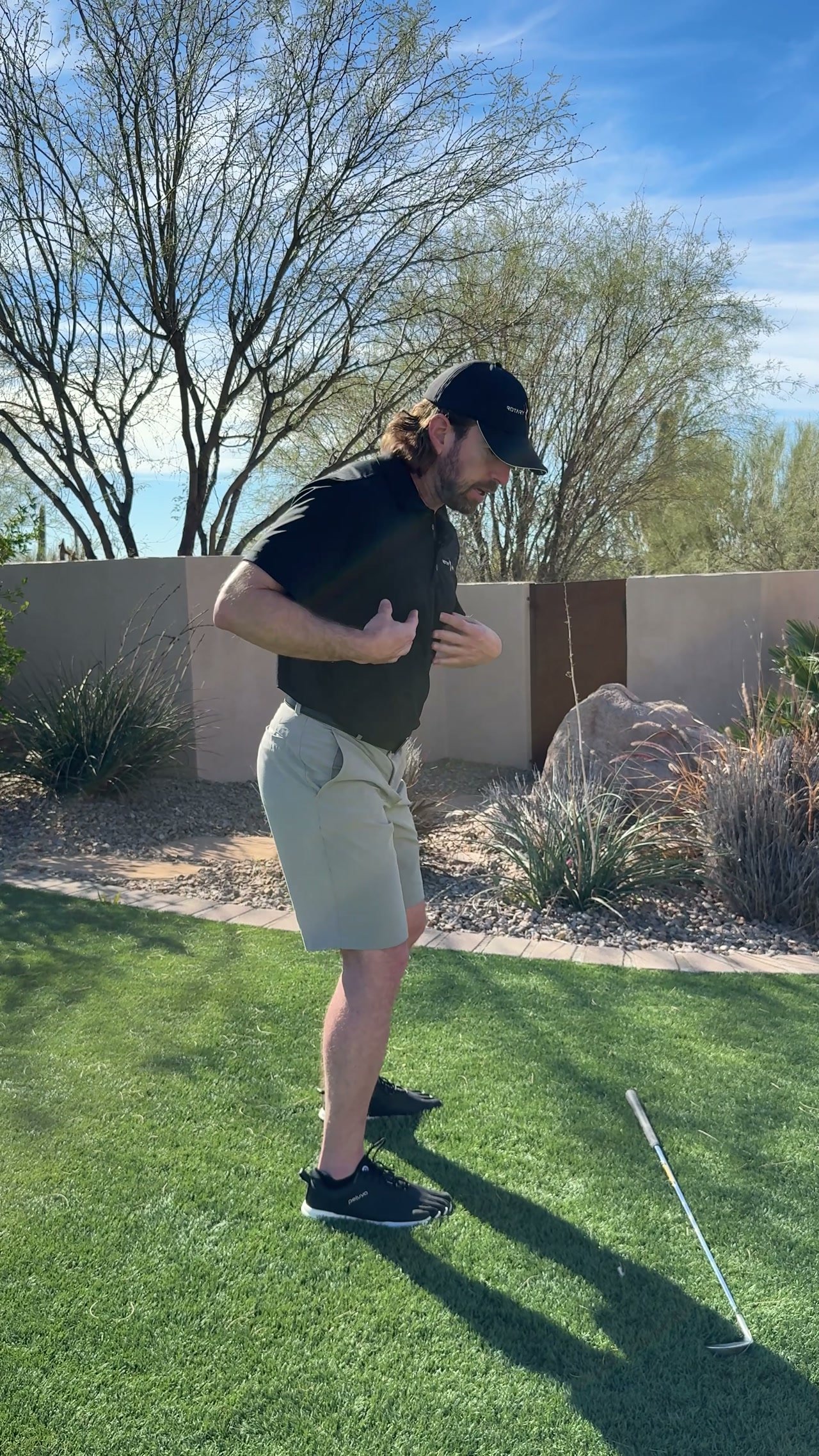
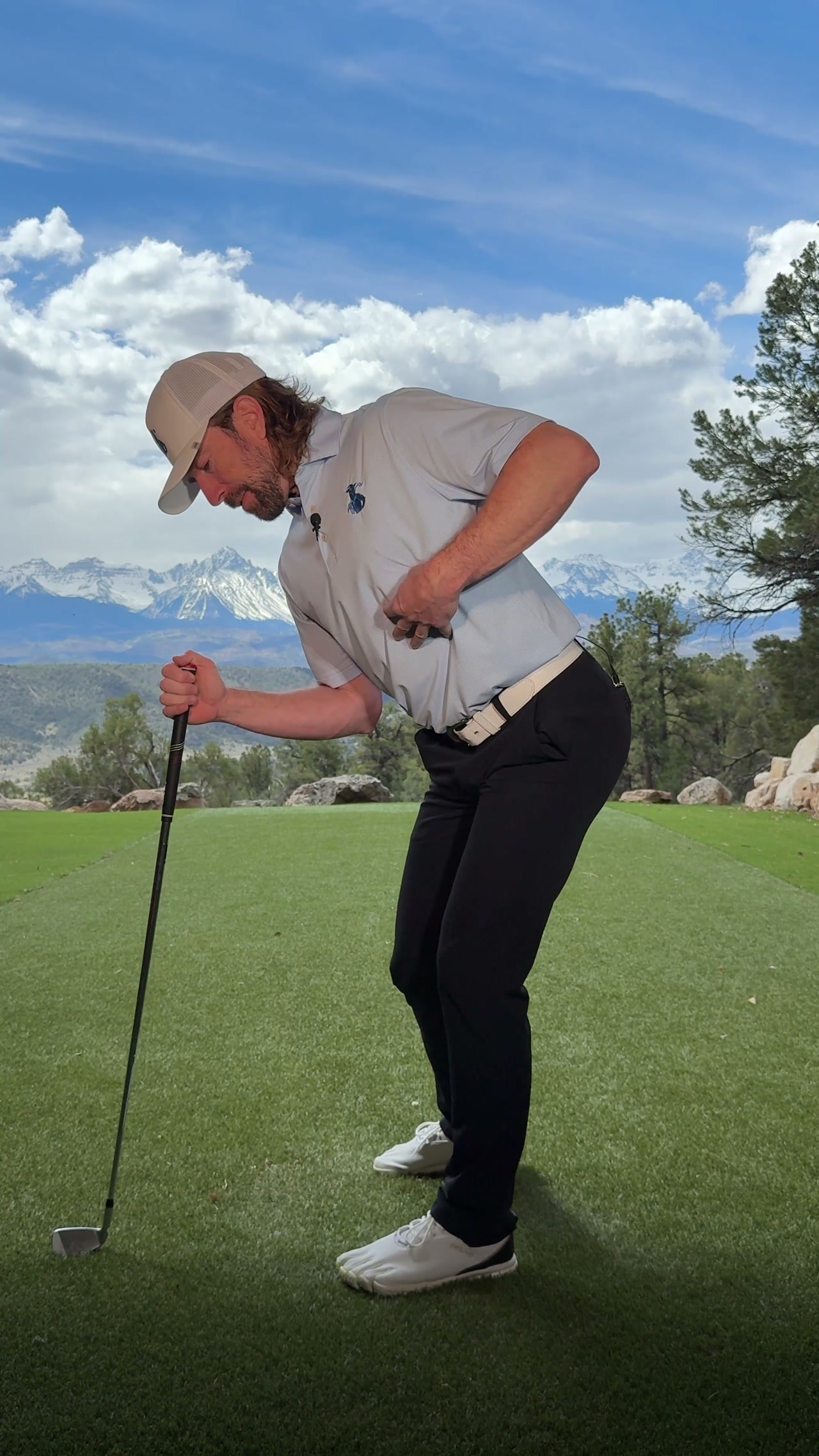
Essentially, what you need to do is find neutral joint alignment. In other words, find where the center of your ankles, center of your knees, and center of your hips all stack vertically over each other.
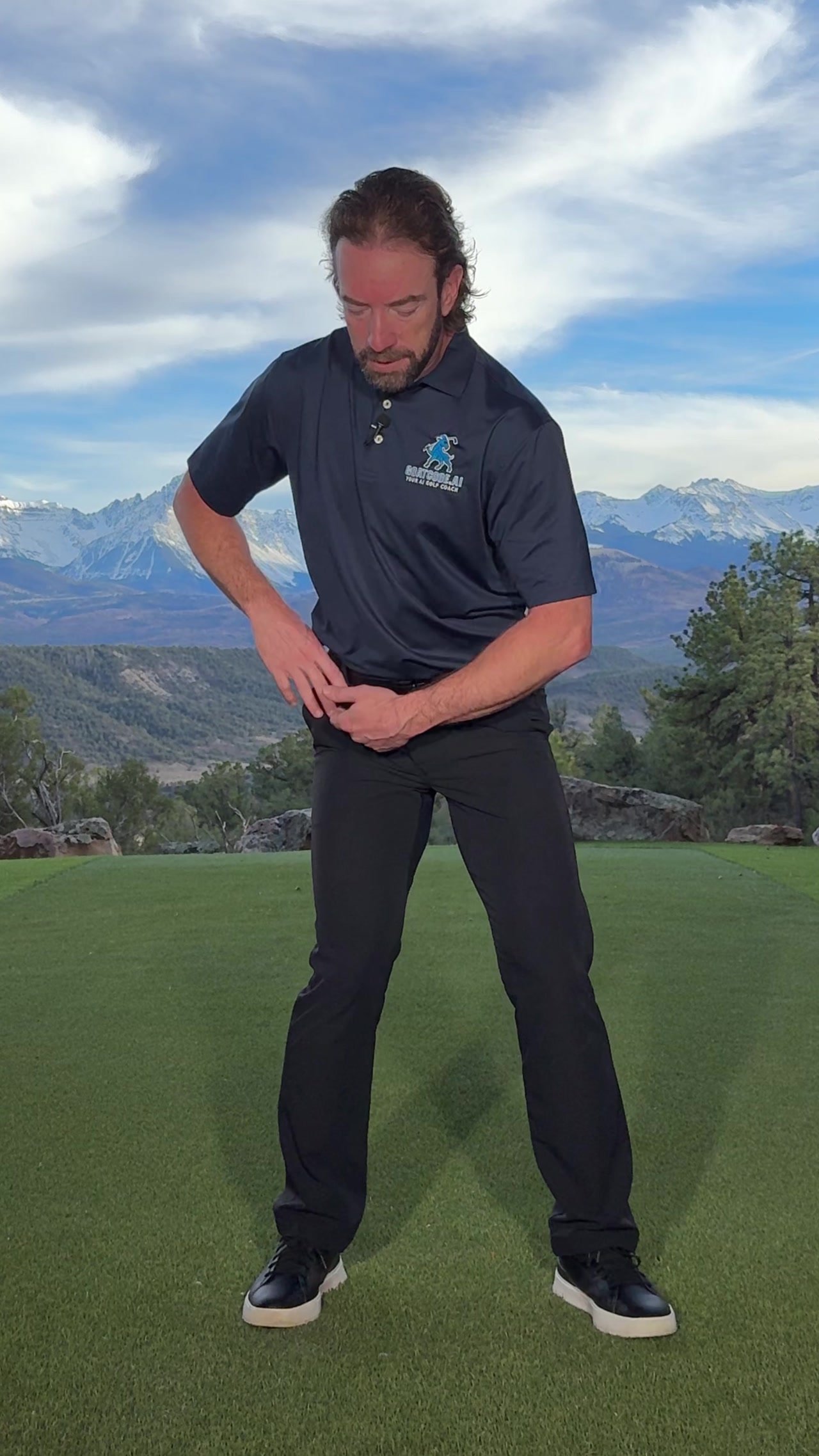
Obviously you cannot see the center of your hip sockets very easily. The knees are straightforward, but you can approximate where the center of your hips are by feeling your hip bones and moving roughly an inch and a half inward.
That is a rough estimate because some people's hip bones protrude further than others. This is simply intended to give you a general guide.
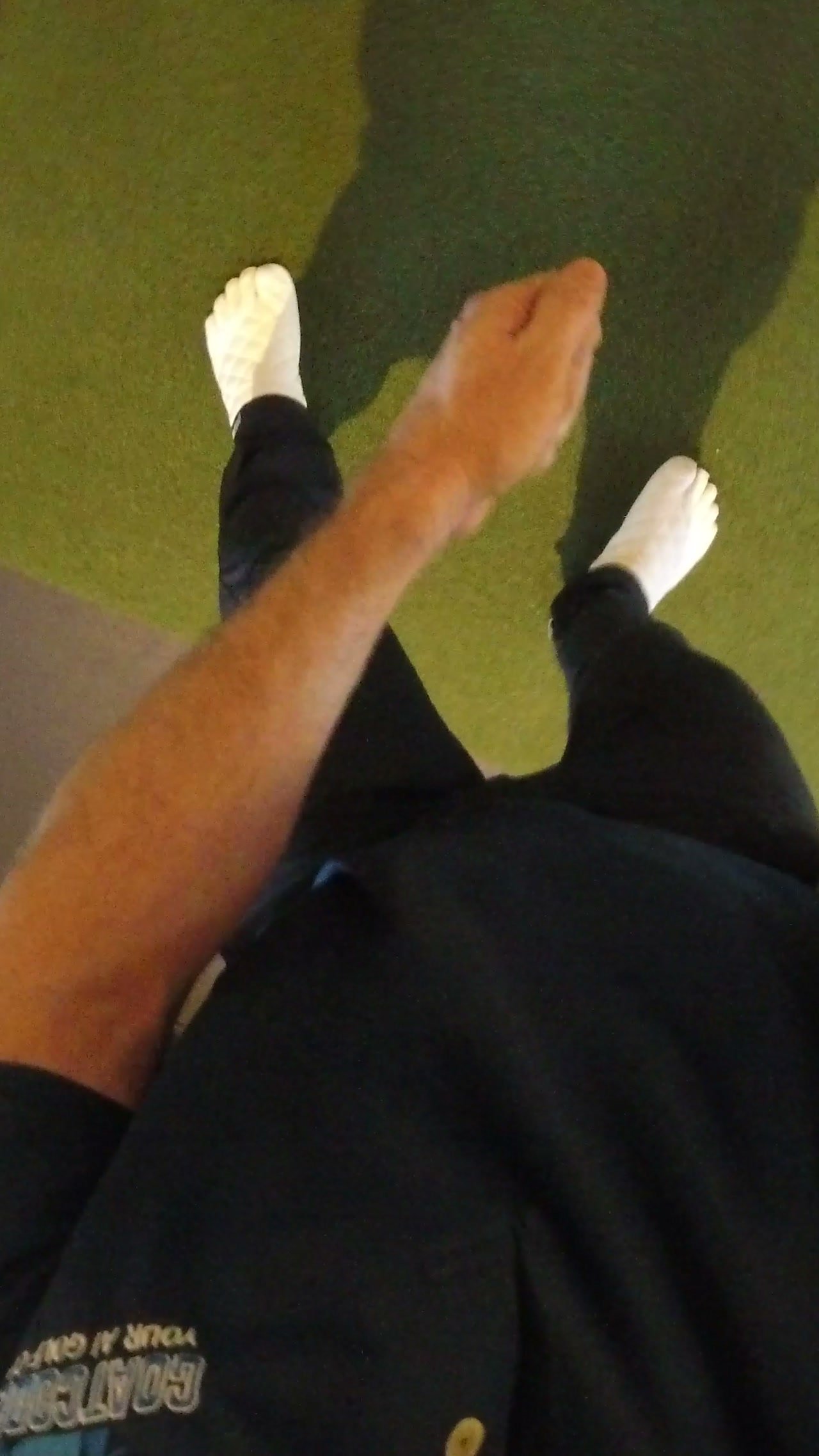
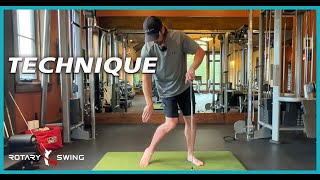
The more reliable method is to feel where neutral is for your body. Neutral for most golfers is when the legs are positioned essentially straight up and down, directly underneath the hips.

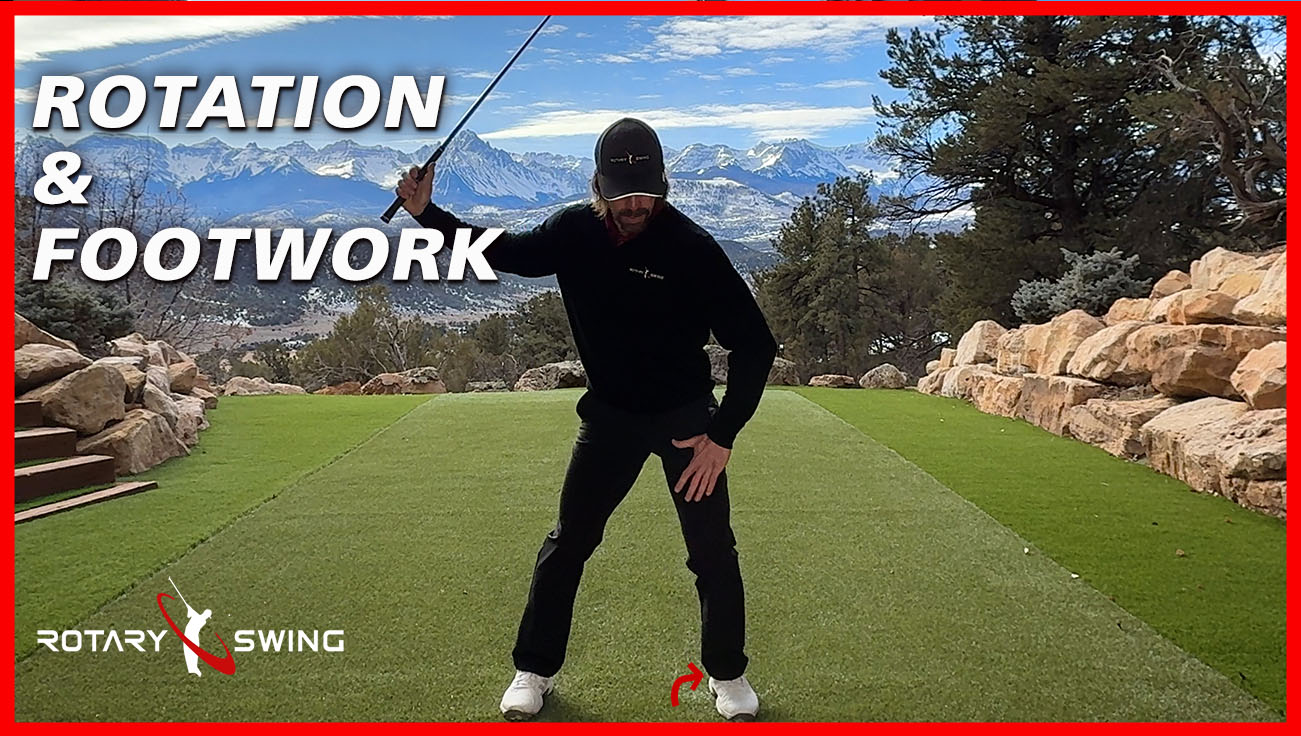
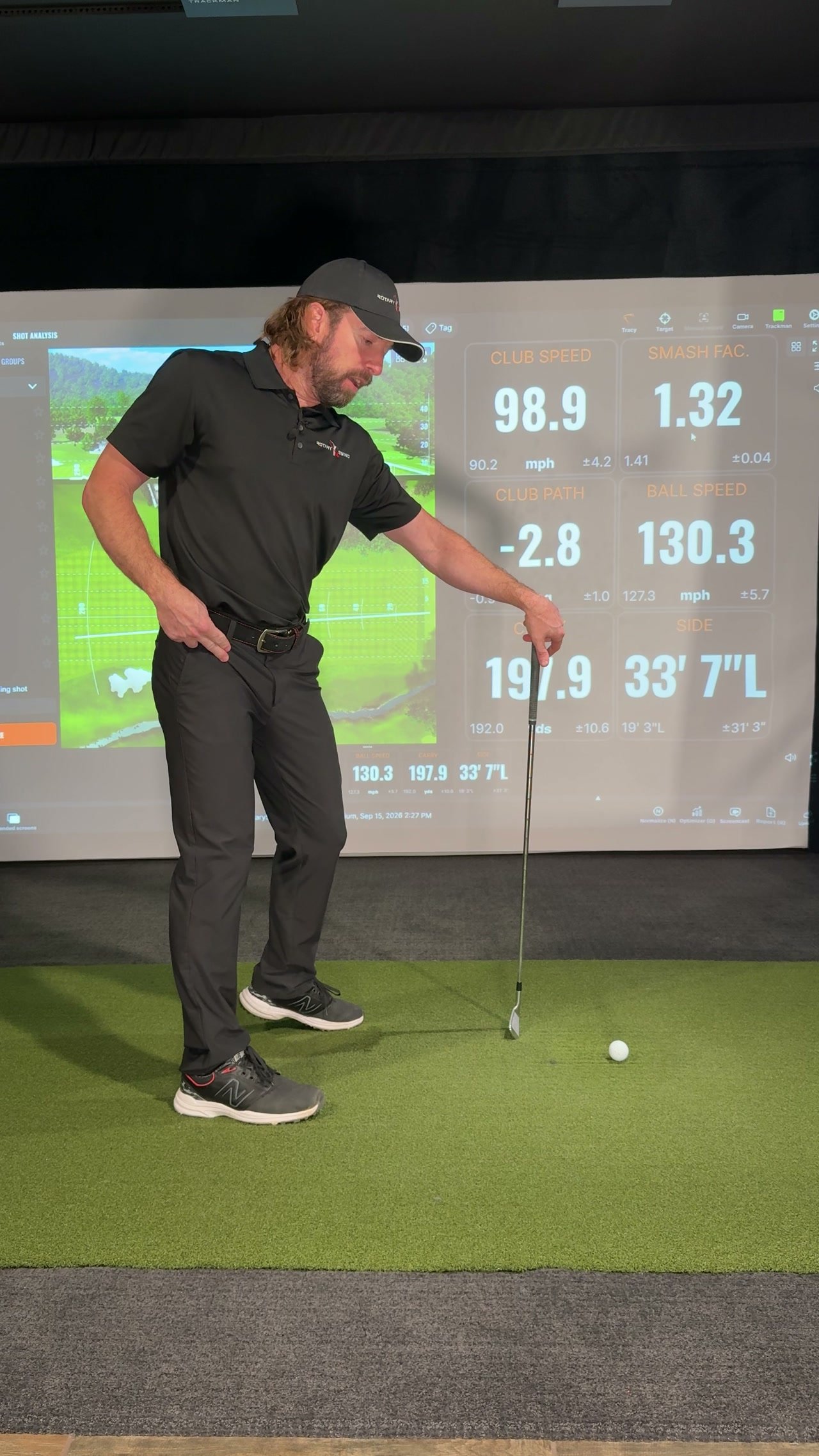
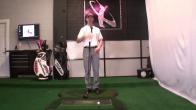
Here is neutral joint alignment for me.
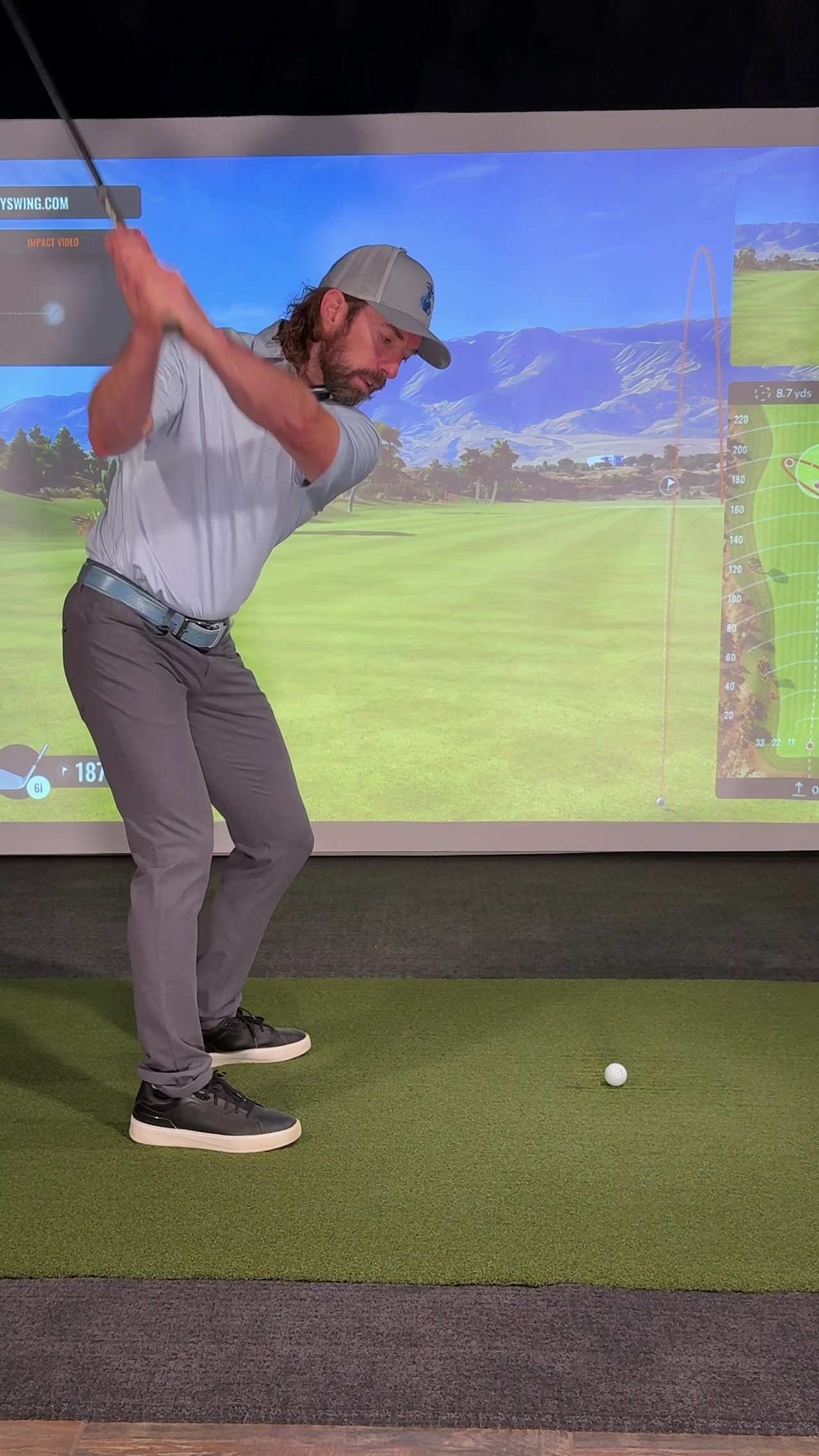
From there, you can move a couple of inches to either side of neutral, and this provides a stable enough base so that as you rotate back, you maintain stability throughout the backswing.
And as you rotate through, you will have stability in the downswing as well. This makes it significantly easier to get to your lead side in the downswing, and that is the most critical component of a powerful, consistent golf swing.
If you can shift onto your lead side during the downswing and pivot properly on your hip, then you have a stance that is going to produce consistent results. To see how your own stance and swing mechanics measure up against an elite benchmark, try a free AI swing analysis.
Why a Wide Golf Stance Width Will Fail You

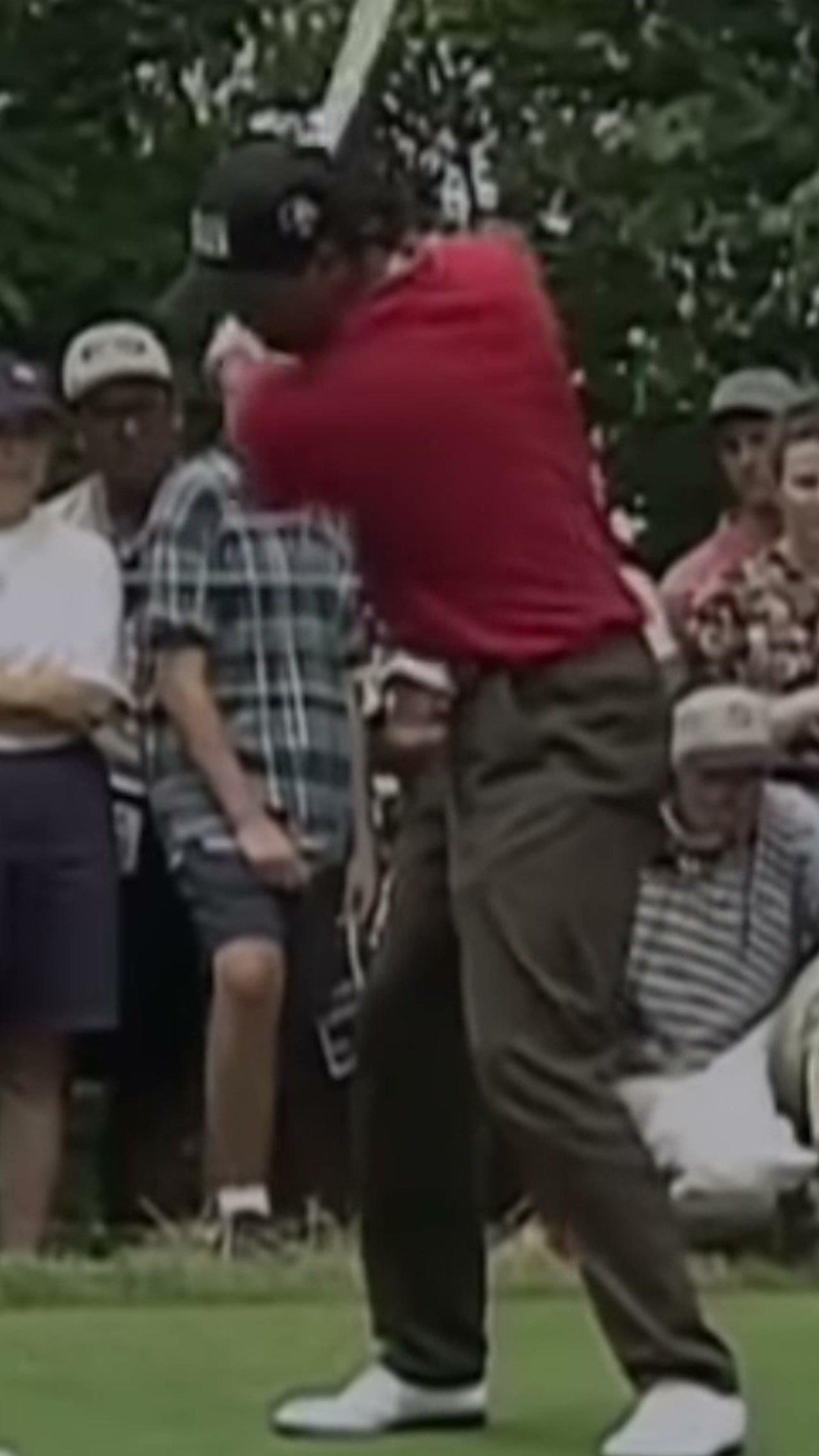
For comparison, if you stand really wide, in order to load up the trail side during the backswing, you are going to have to move your head off the ball. Since the goal is to rotate around your spine, that lateral head movement works directly against you.
If you stand really wide and deliberately keep your head still, then you never shift your weight, which means you are missing the additional power that comes from proper weight transfer.
Additionally, if your stance is too wide, you have to travel a much greater distance to get your hip back into neutral joint alignment. Since the downswing happens at tremendous speed, it becomes extremely difficult to make that transition in time.
Summary
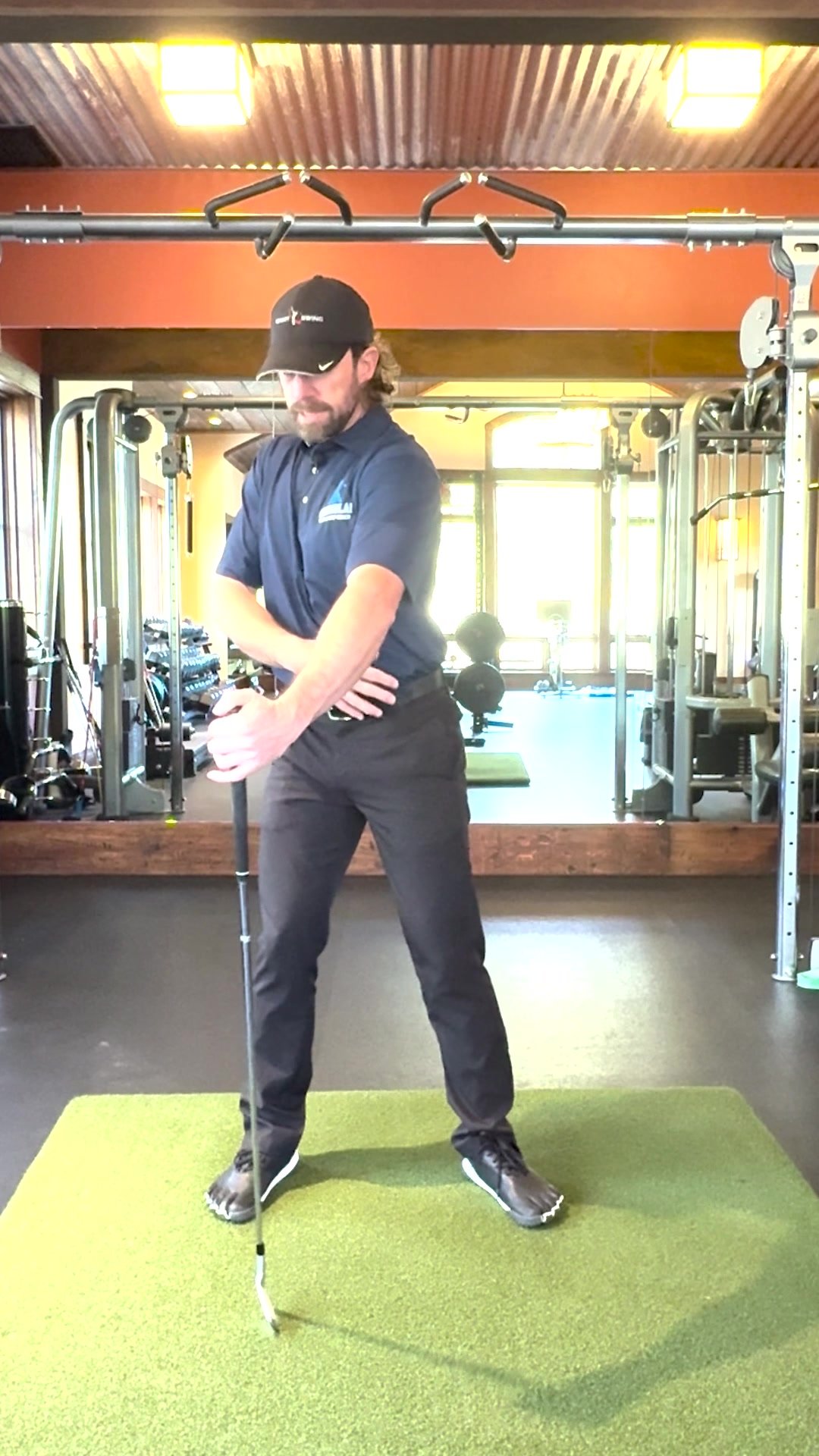
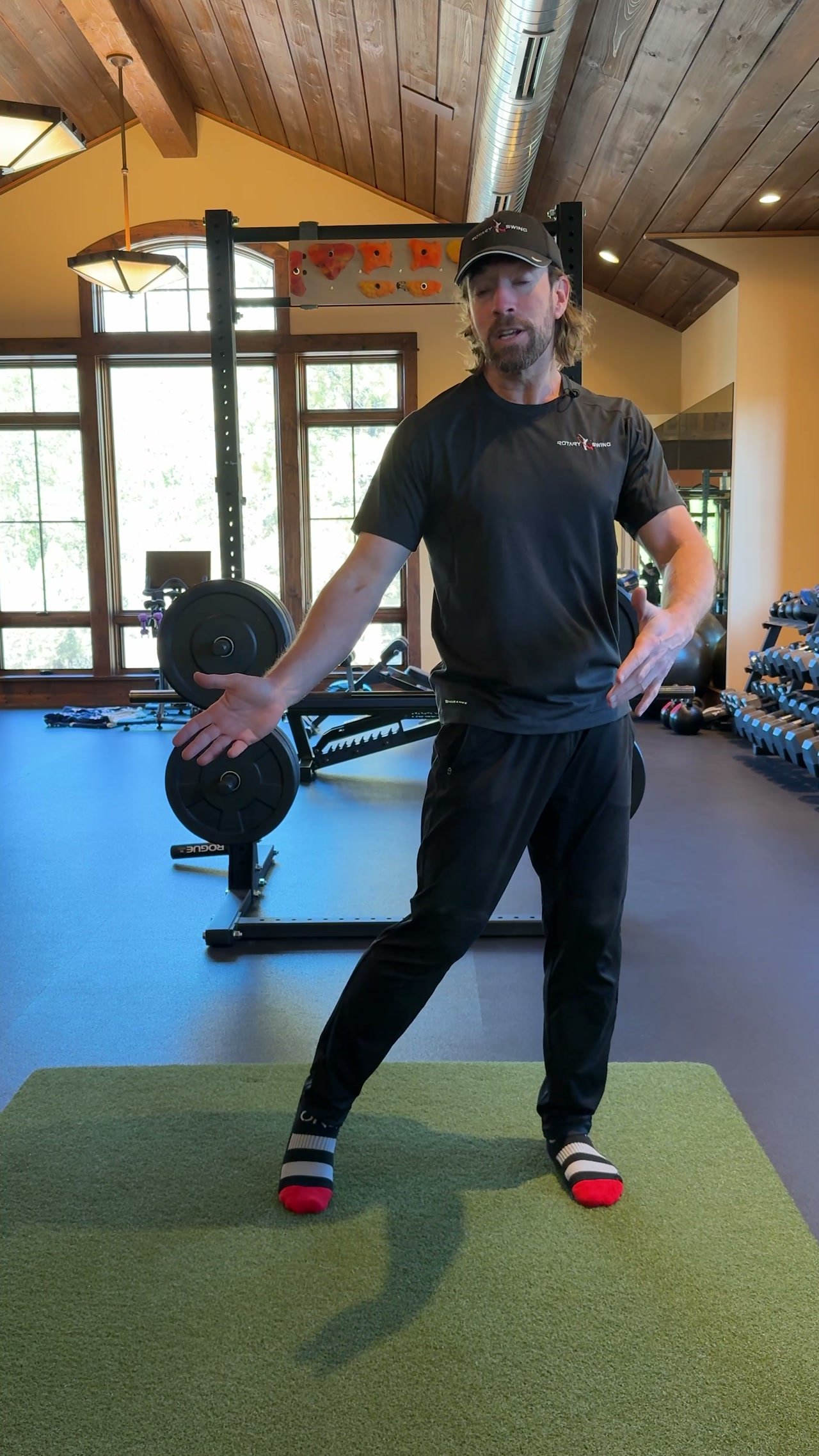
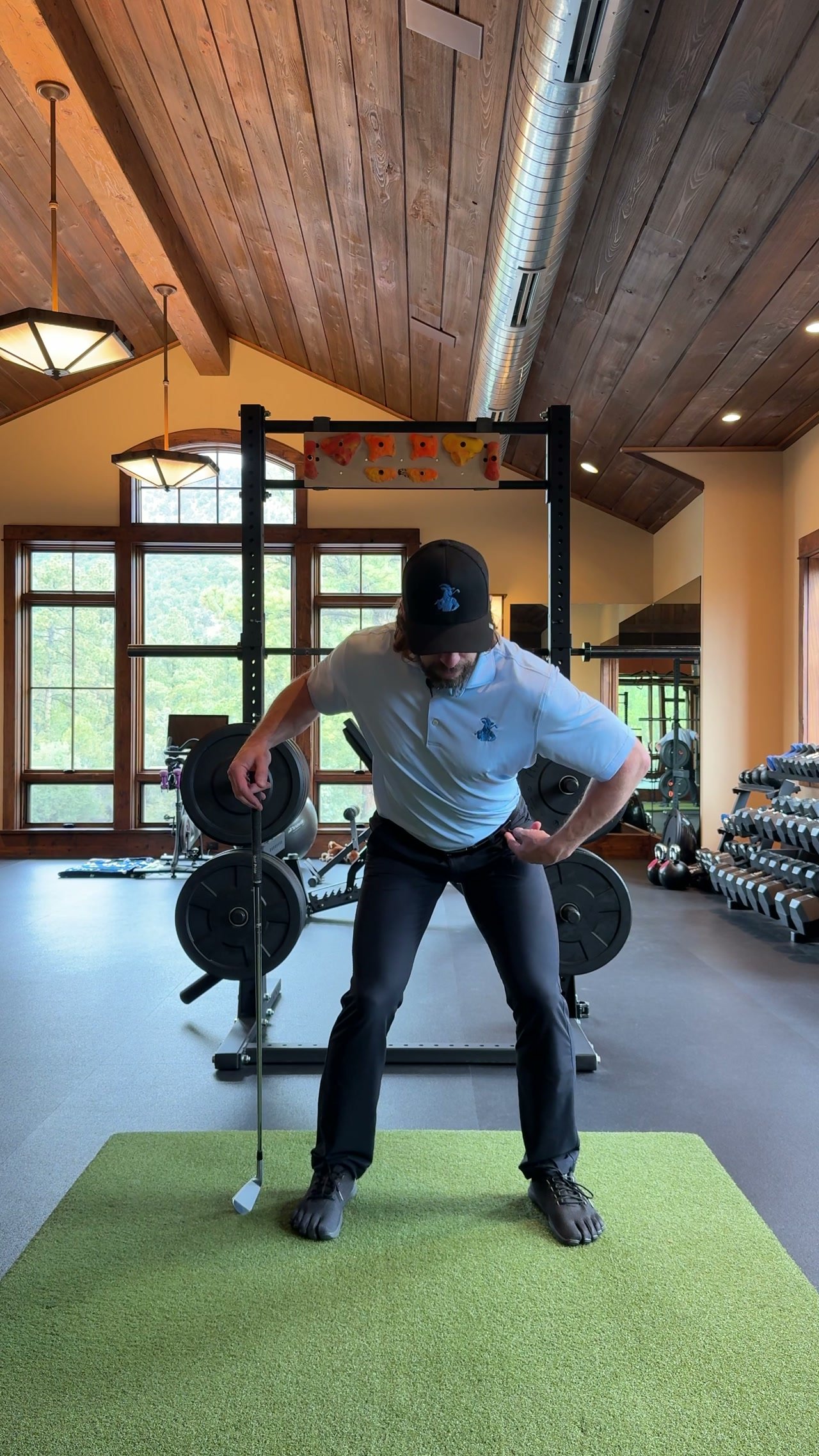
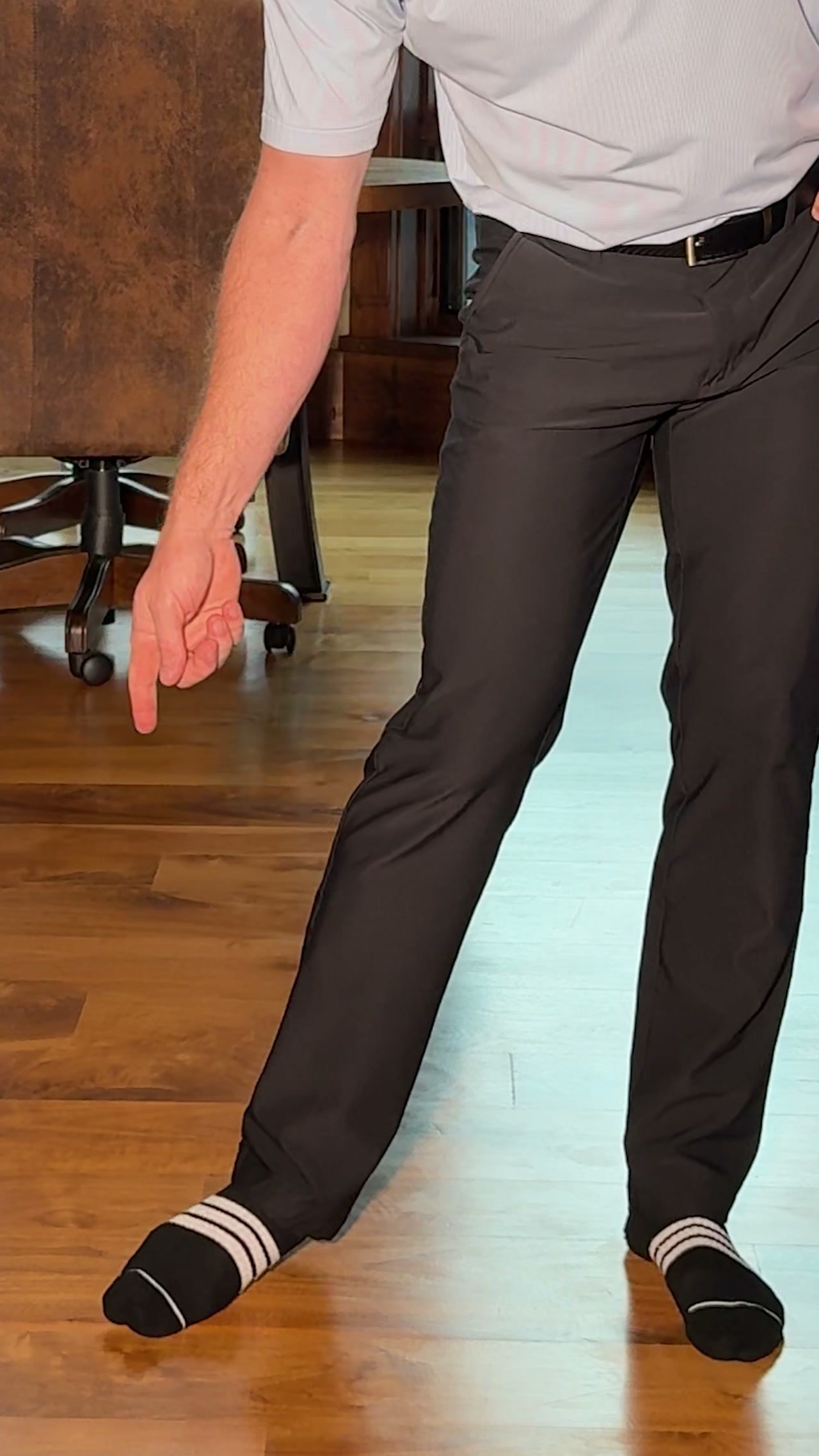
The ideal stance positions your ankles approximately two inches outside of neutral joint alignment.

Center of ankles 2" outside neutral.
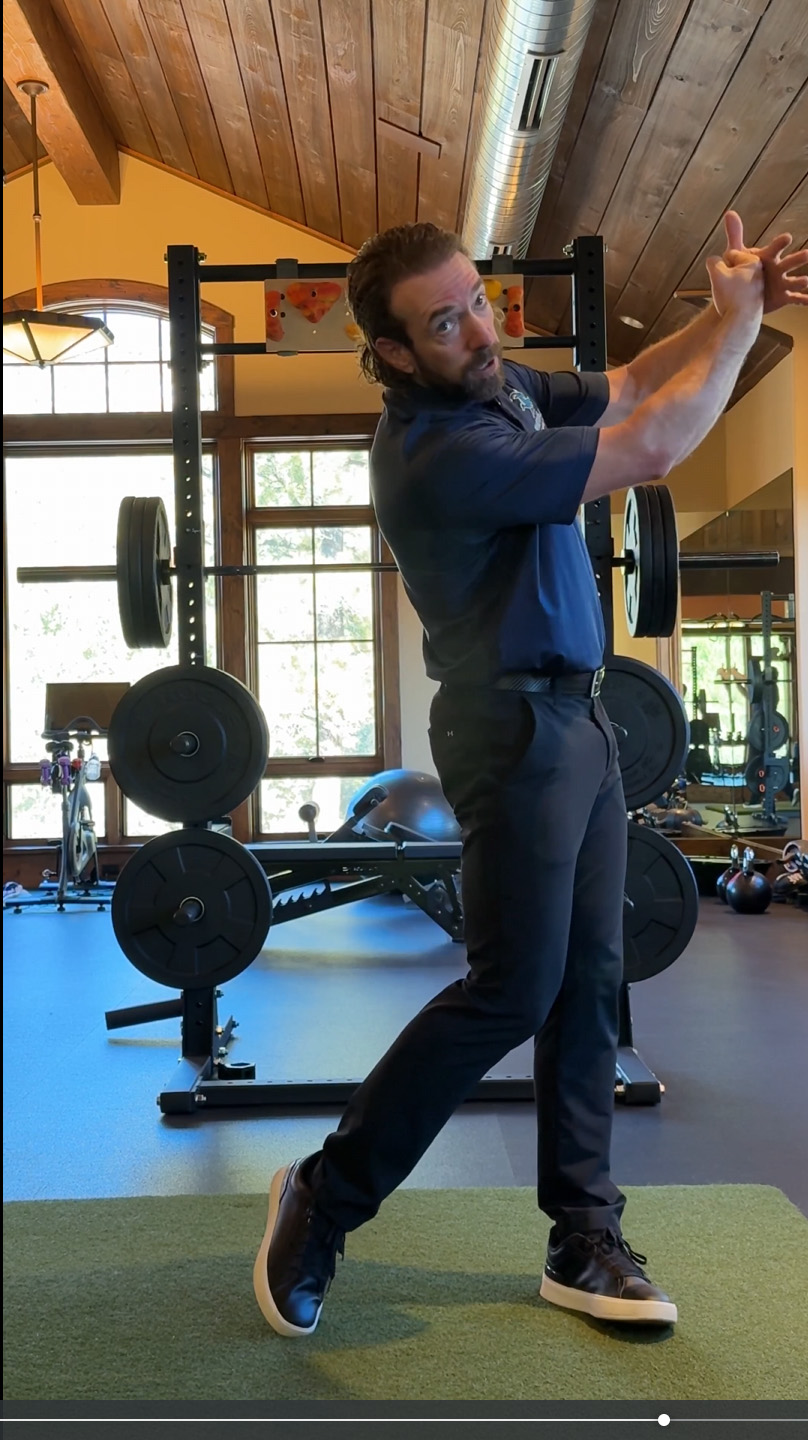
That width allows you to remain stable, shift your weight on the backswing, shift your weight efficiently on the downswing (returning to neutral), and rotate through to a balanced finish.
What we are trying to achieve is a stance narrow enough that we easily get back to the lead side in the downswing, and wide enough that we have the stability and power needed for consistent ball striking.
For the majority of golfers, positioning the ankles a couple of inches outside of neutral will allow you to execute a proper and get back to the lead side on the downswing. For real-time feedback on how your setup and mechanics compare to an elite standard, try a free AI golf lesson.
Now get up and try it for yourself!
Frequently Asked Questions
How does my anatomy influence the correct golf stance width?
Your anatomy plays a crucial role in determining the correct golf stance width. Specifically, you should focus on the width of your hips rather than your shoulders, as everyone's body is unique. By aligning your stance with the center of your ankles, knees, and hips, you can achieve optimal stability and performance in your swing.
What are the primary goals when determining my golf stance width?
The two primary goals for establishing your golf stance width are stability and injury prevention. A proper stance width provides a solid foundation for rotation during the swing, particularly at impact, where forces are highest. This alignment helps ensure that you can rotate freely while minimizing the risk of injury to your back, hips, and knees.
Why is a wide or narrow stance often recommended, and why is this misinformation?
Many instructors suggest a wide stance for stability or a narrow stance for freedom of rotation, but these recommendations can be misleading. The correct stance width should be based on your individual anatomy rather than generic advice. Misunderstanding the role of hip width versus shoulder width leads to conflicting information that doesn't cater to your specific needs.
How can I find my correct golf stance width without specialized equipment?
To find your correct golf stance width, focus on achieving neutral joint alignment. This involves stacking the centers of your ankles, knees, and hips vertically. While you can't directly see your hip sockets, you can approximate their position by feeling your hip bones and adjusting slightly inward. This method provides you with a reliable guide for establishing your stance width.
Watch part 2 now to see how you're moving your body in the opposite direction of the pros!