How to Find Success on the Greens with the Perfect Putting Stance
"Drive for show but putt for dough" is one of the oldest sayings in golf — and it endures because it's absolutely true.
Is this the fault costing you strokes?
Film one swing on your phone. In about a minute GOATY measures it and names the single biggest thing costing you strokes — free, no card.
Analyze My Swing Free
Related: Golf posture — how AI tracks setup through impact →
Android users: Download GOATY on Google Play — free AI golf coaching on your Android phone. →
Tour professionals understand that it's largely on the greens where tournaments are won and lost and prize money checks are earned.
Stop reading about it — feel it in your swing today
GOATY watches your swing live and coaches you between every rep. Free. No signup.
Start Your FREE Live Lesson →In the relentless pursuit of an infallible method for getting the ball in the cup, players have experimented with countless different styles, strokes, training devices, and putters.
[https://www.youtube.com/watch?v=qrhPDxHB1hs]
But the one common factor that all great putters share is a fundamentally sound putting stance.
Putting — The Game Within a Game That Anyone Can Master
The encouraging truth about putting — which accounts for roughly half of all strokes in a round — is that improvement is genuinely accessible to everyone.
Even with modern equipment, relatively few golfers possess the strength, flexibility, and coordination to consistently drive the ball 250 yards or more.
Many also struggle with the precise demands of long and mid-irons.
But virtually anyone willing to practice a few core fundamentals can become a confident, consistent putter.
The Key Elements of an Effective Putting Stance
There are many aspects of putting you can experiment with, but only three essential elements of a sound setup truly matter —
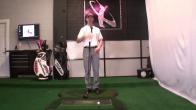
stand as upright and naturally as possible without crouching or leaning. For stability, position your feet slightly wider than neutral joint alignment with weight distributed evenly between left and right.
to ensure correct alignment of the putter face with your chosen target line, your head and especially your eyes should be positioned vertically above the target line. A simple, stationary turn of the head then allows you to track the ball after impact without any temptation to lift or dip.
Some instructors advocate positioning the ball forward in the golf putting stance to strike it with an ascending blow, theoretically imparting overspin for a truer roll. There may be merit to this concept. However, it's a higher-risk technique — particularly under pressure — and the vast majority of golfers achieve more consistent contact by positioning the ball in the center of their stance, at the natural low point of the stroke arc.
Try a free live lesson with GOATY
GOATY, my AI golf coach, watches your swing through your phone camera and coaches every rep. Free, about 20 minutes, no credit card.
The Single Most Important Principle of Golf Putting
If there is one overriding fundamental in putting, it's this: stand as naturally and comfortably as possible.
Forcing yourself into an unnatural position inevitably leads to involuntary head movement and muscular tension throughout the body, arms, and hands.
Either of these will make impossible the smooth, relaxed stroke that is essential for accuracy on the greens.
On that note, grip the putter as lightly as possible — using only enough pressure to keep the face square through impact.
FAQs
Where should I position the ball in my putting stance?
Position the ball directly in the center of your stance so you can strike the putt at the bottom of the putting arc for optimal roll.
Where should your feet be when putting?
Your feet should be aligned parallel to your target line — like railroad tracks — for maximum consistency and accuracy.
What is the best grip for putting?
The best putting grip is one that keeps your hands tension-free while allowing you to release the putter squarely down your target line.
Proper putting fundamentals begin with the stance. You want a stance that's wide enough for stability but narrow enough to feel natural and comfortable.
We recommend a stance approximately two inches wider than your neutral joint alignment. What does that mean?
Neutral joint alignment is your body's anatomically correct position — the posture your body is naturally designed to maintain.
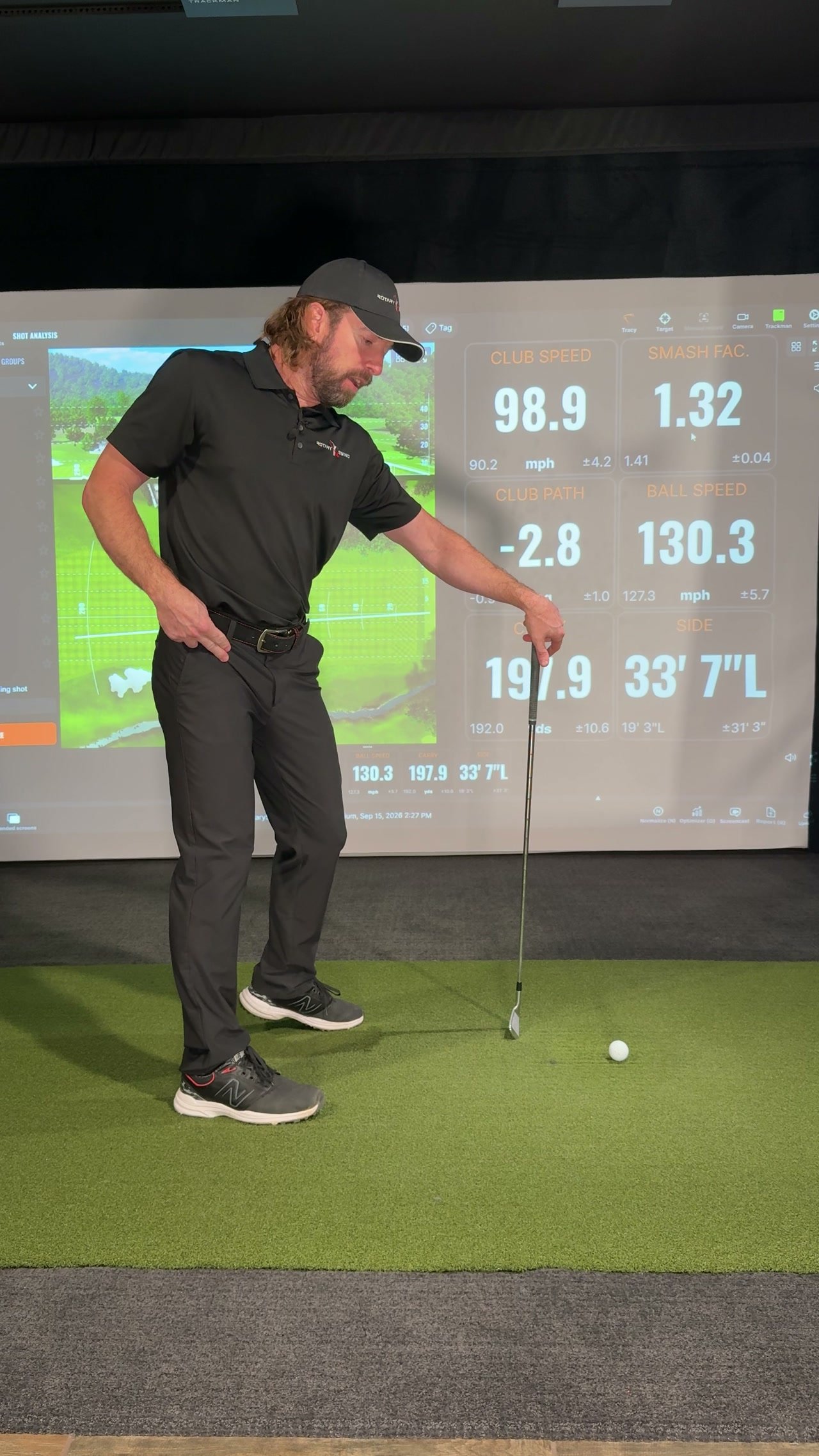
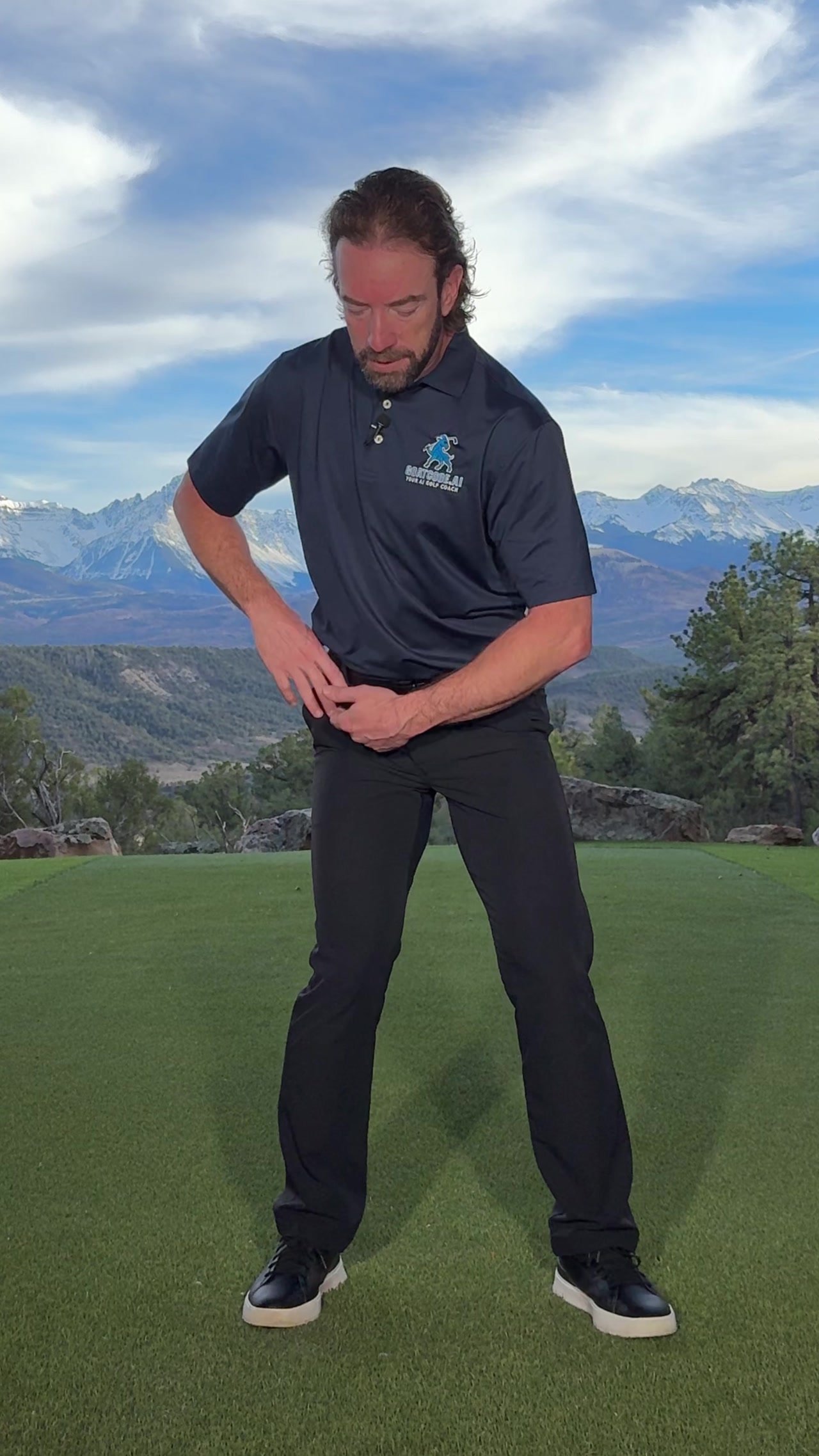
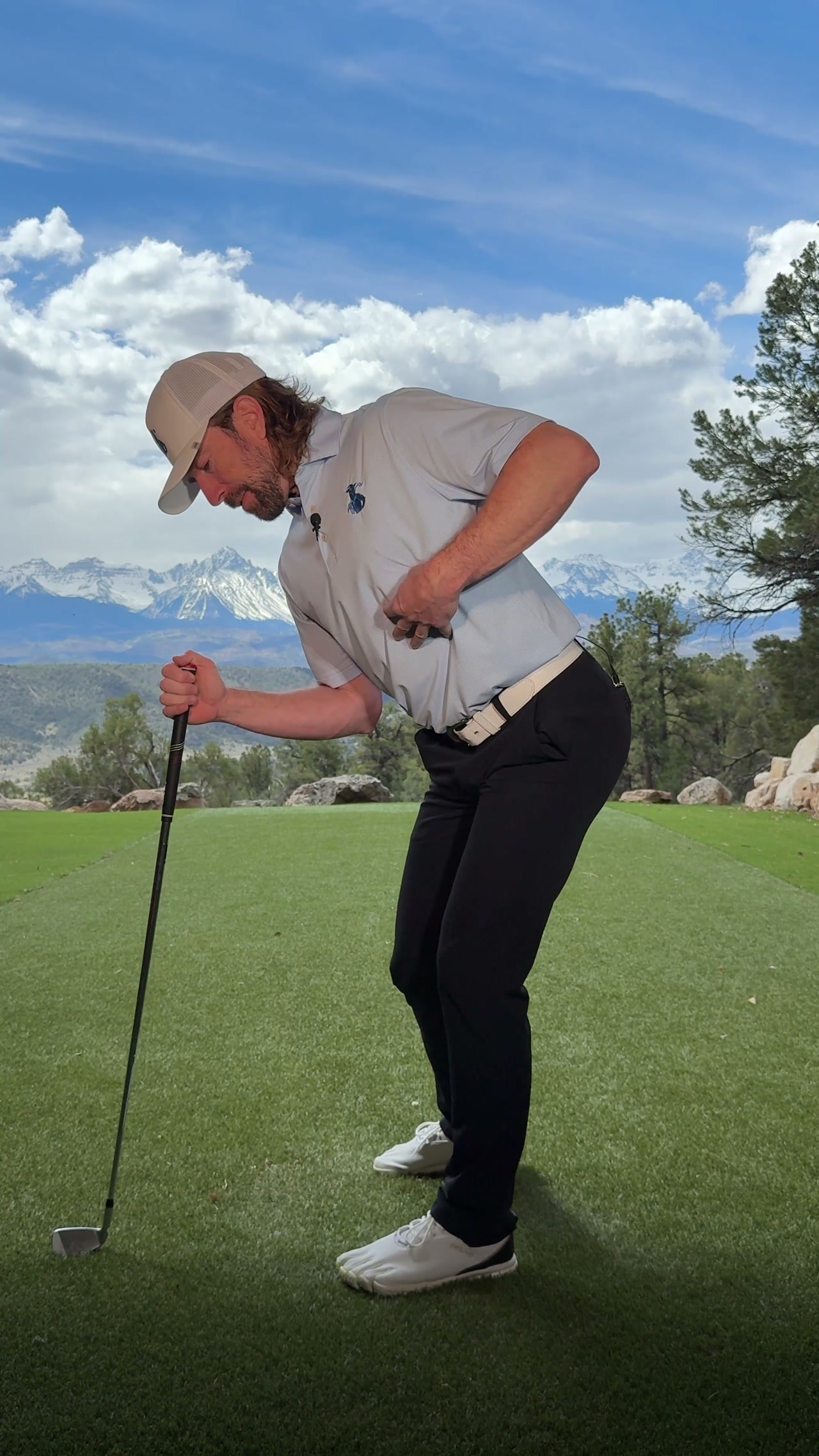
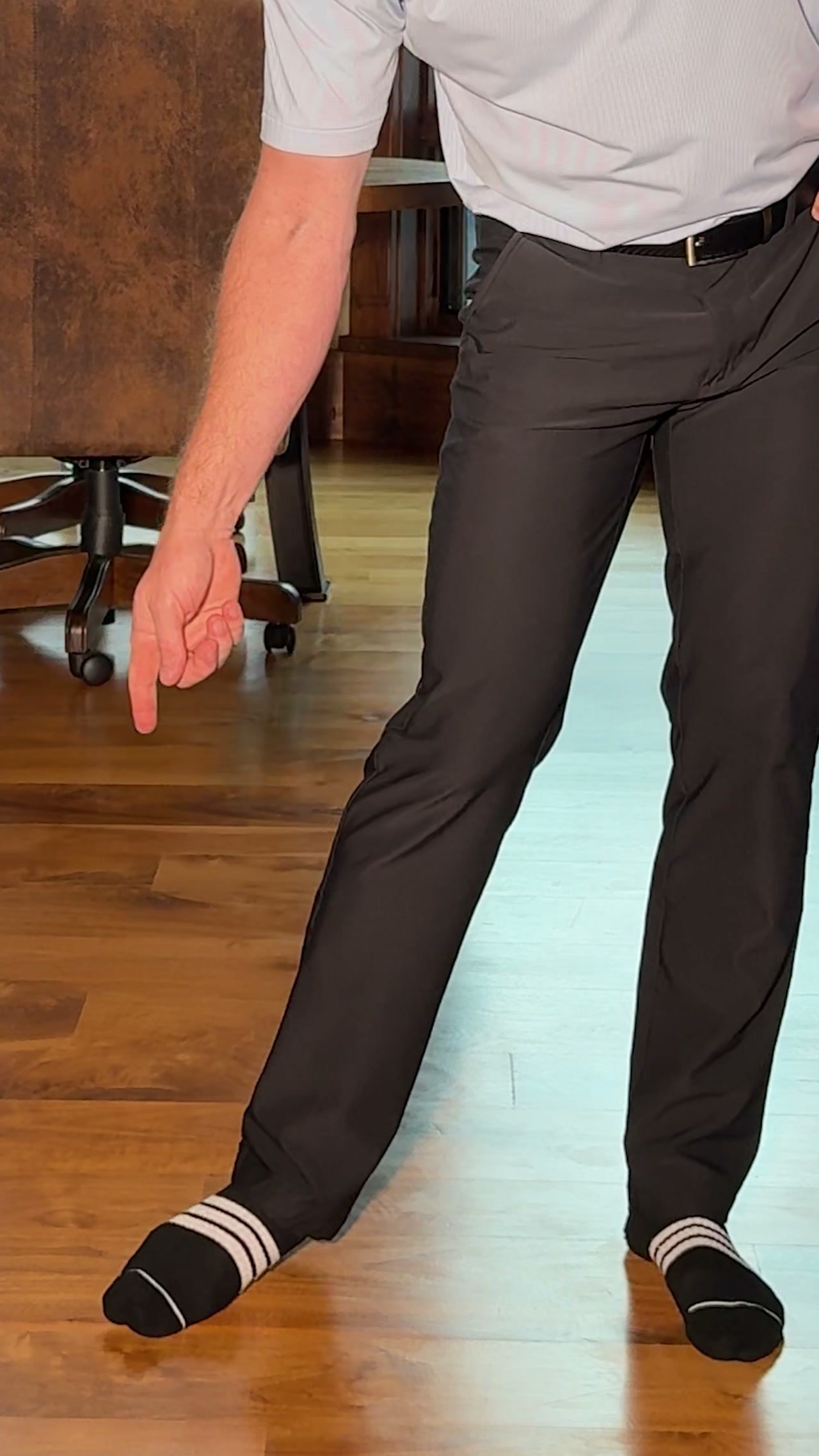
Your hip sockets are located roughly at the first belt loop on your pants, or slightly lower. In neutral joint alignment, each joint stacks directly above the one below — meaning your knees and ankles sit directly beneath your hip sockets.

The hip sockets are about at your front belt loops
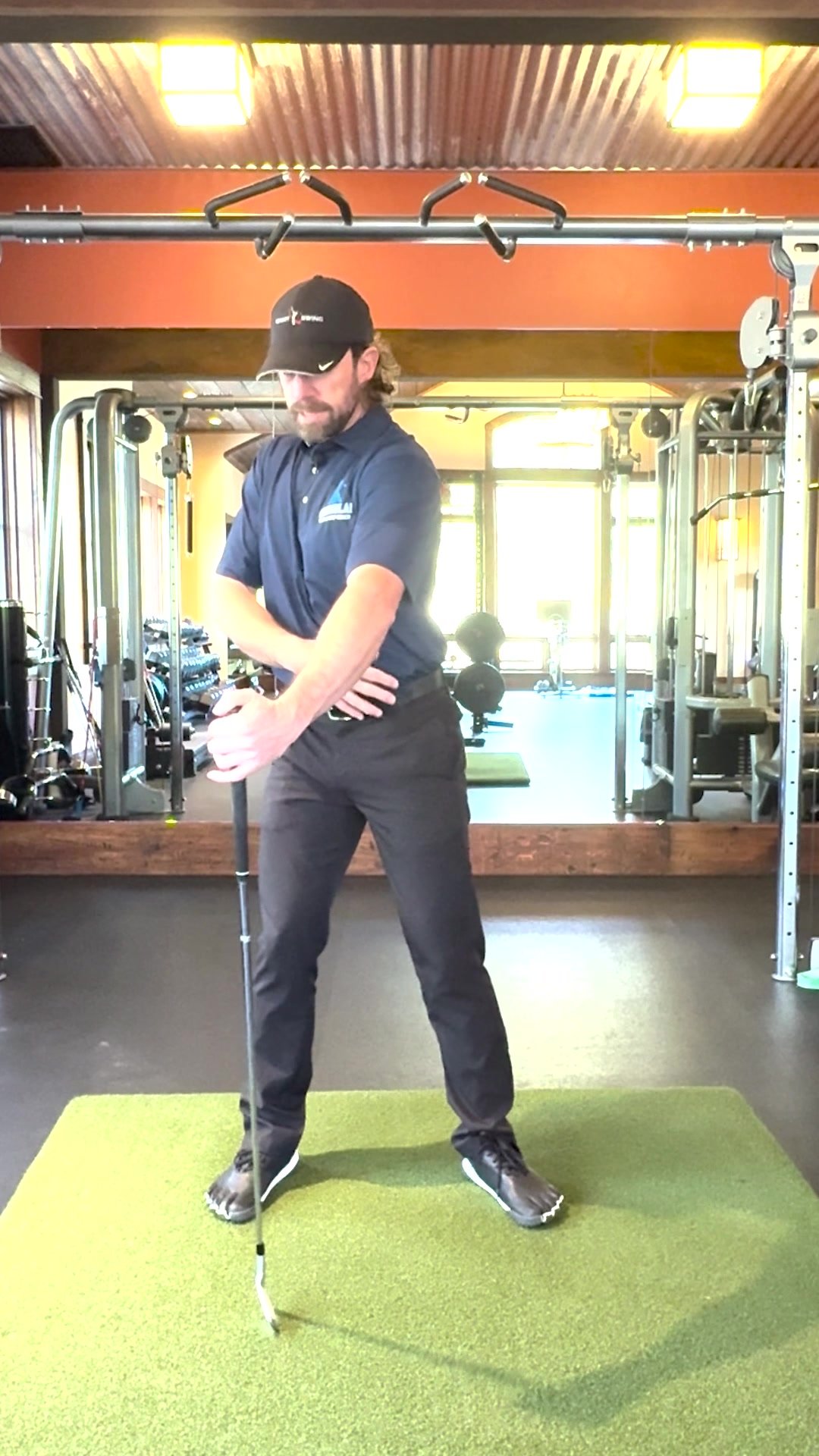
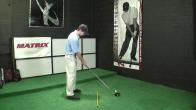
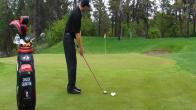
Hang a club straight down to visualize this alignment, as shown in the first photo of the series below.
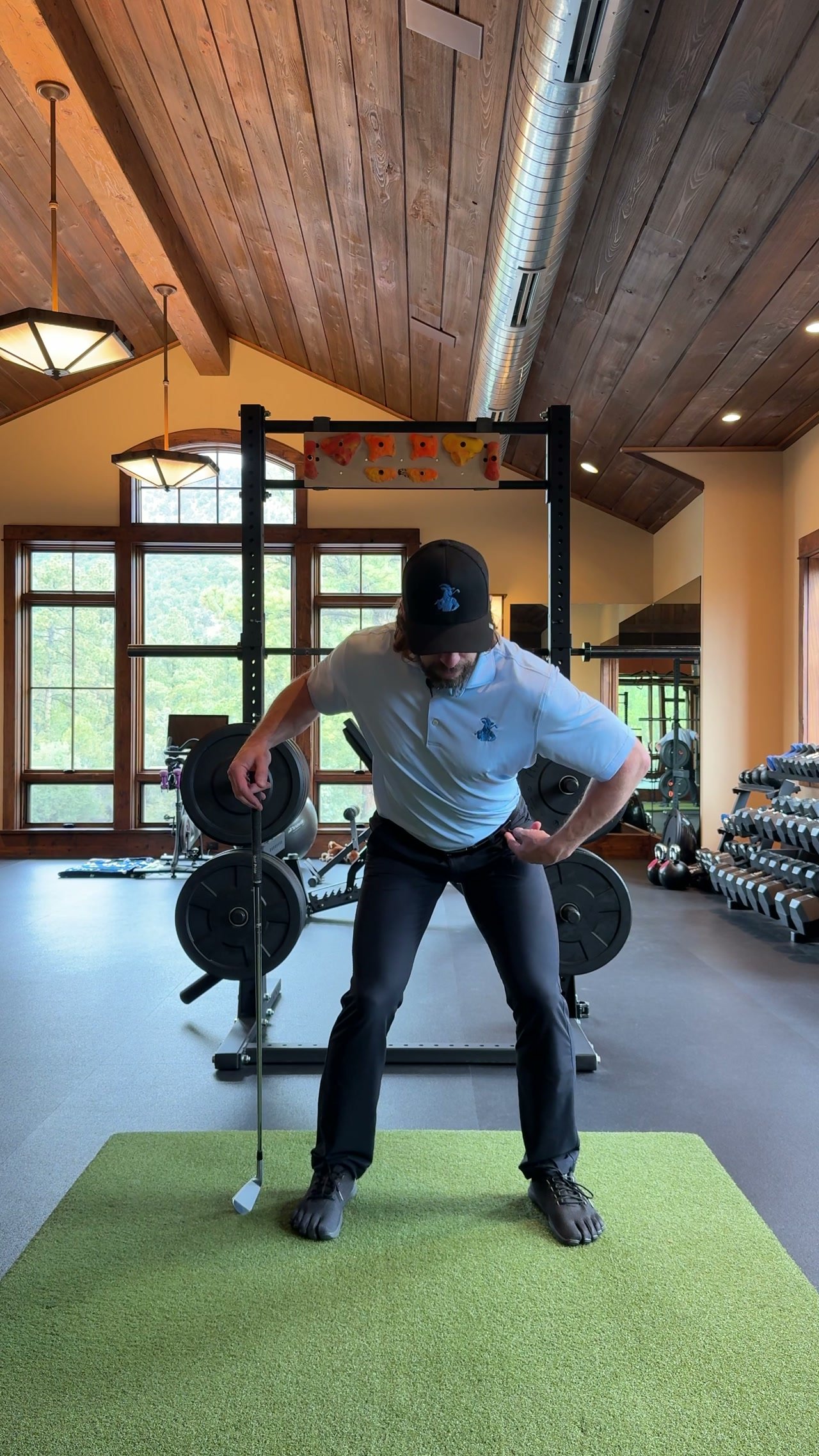
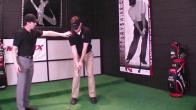
When we say two inches outside of neutral, we mean widening your stance by moving each foot two inches beyond the neutral point. The second photo below illustrates this position.
Two inches outside of neutral provides enough stability to stand firmly over the putt while remaining narrow enough to feel completely natural and comfortable.
If your stance gets too narrow — with feet just a few inches apart — maintaining balance becomes difficult in wind or on slopes. If your golf stance gets too wide, it simply won't feel natural or athletic.

in the Putting Stance
The next critical element of putting setup is ball position.
The ball actually settles slightly into the grass under its own weight. You want the natural loft of the putter to lift the ball just enough that it can roll smoothly on top of the grass.
Most putters have approximately 4-5 degrees of built-in loft that gets the ball up onto the surface and rolling immediately.

Stances: Neutral, two inches outside of neutral, too narrow, too wide
Like every other golf swing, the putting stroke follows an arc. As the putter swings back and through, it has a natural low point.
The low point of the arc is where the putter delivers its designed loft. Like any club, it delofts on the way back and gains loft as it swings forward.
You want to make contact at the very bottom of that swing arc. To do that, position the back of the ball in the center of your stance.

The putter arc delofts going back, has a low point, gains loft going through
Draw an imaginary line through the middle of your stance and position the back of the ball on that line.
Here's why this matters:
If the ball sits too far back, you'll deliver a descending blow that drives the ball down into the grass, causing it to hop and bounce unpredictably.

Put the back of the ball in the middle of your stance
If it's positioned too far forward, you'll catch it on an ascending blow that lofts the ball into the air — again creating bounce and inconsistency.
When you position the ball in the center of your stance, you contact it at the very bottom of the swing arc and use the putter's natural loft. The ball gets a pure, smooth roll immediately.
Weight Distribution for Putting
Weight distribution in the putting stance is straightforward. Keep your weight centered 50/50 between your feet and maintain that even balance throughout the entire stroke.
This keeps the bottom of the swing arc precisely in the center of your stance. If you lean in either direction, you shift where the arc bottoms out.
Take your normal address position and balance your weight evenly. When you swing the putter, you'll find that the arc naturally grounds out right in the middle.

When the ball is too far forward it is struck on an ascending blow
As your weight shifts toward the trail side, the bottom of the stroke moves back. Shift toward the lead side, and the reverse occurs.
Maintain a consistent 50/50 weight distribution between your feet throughout the entire putting stroke. That even balance, maintained from start to finish, is the foundation of consistent contact. If you want to see how your overall swing mechanics compare to the elite model, try a free AI swing analysis for a personalized GOAT Score breakdown.
Watch part 2 now to see how you're moving your body in the opposite direction of the pros!