- Perform your movement repetition,
- Guess at how well you accomplished your goal, and
- Use the feedback device to find out how you actually did.
Ideally, this entire cycle would be completed within about 10 seconds, but if all you have is a camera, do the best you can.
How to Practice Golf at the Driving Range - Focus
Second, you must be fully present when you are practicing golf swing movements. If you can't totally focus on the task at hand, you might as well be doing something else.
Even 10 minutes of laser-like focus is more productive than an hour of distracted, half-hearted repetitions. Unless you want to spend even more time on the range, get in the right frame of mind before your practice session begins.
Try a free live lesson with GOATY
GOATY, my AI golf coach, watches your swing through your phone camera and coaches every rep. Free, about 20 minutes, no credit card.
How to Practice Golf at the Driving Range - Chunking
Third, you need to chunk your full swing into smaller, more manageable pieces. This is a critical key when it comes to learning how to practice golf swing mechanics at home or at the driving range.
Even though most instructors tell you to beat balls at the range, you need to know that taking a bunch of full swings at the driving range is counterproductive. There is simply too much going on for the brain to properly focus on learning one specific movement.
We suggest breaking it up essentially the way we've sequenced the videos on the site: setup, , rotation, takeaway, to the top, transition, downswing, impact, and follow through.
And speaking of our videos—you MUST go through them in order because each preceding part of the swing directly affects the next. The setup impacts the takeaway, which impacts the backswing, which impacts the transition, and so on.
Skipping ahead ignores the fact that many problems are caused by earlier issues in your golf swing!
How to Practice Golf at the Driving Range - Isolation
The next point, Isolation, means that you need to eliminate distractions until you can solely focus on the specific movement at hand. This is another common mistake many golfers make when learning how to practice golf swing movements effectively.
That generally means that you start practicing without a ball, and even without a club. You'll be amazed at how differently you perform a movement depending on whether or not you have a club in your hand.
Video: 2 Minute Lesson Demonstrating Isolation
(Note: Click anywhere on the video below to play it)
How to Practice Golf at the Driving Range - Speed
The fifth point is speed. Your brain doesn't learn best at 100 mph. In part, this is because you can't monitor your movement enough to feel whether you are performing it correctly.
"I really like the training without the club and the incremental method of introducing parts of the swing. I'm a musician and I know that you can't learn anything at full speed."
-Nelson P. | July 8, 2012 | Virgin Islands
One of the most common themes we hear in our Golf Forum on how to practice golf at home or at the driving range is, "I can perform my takeaway (or backswing, transition, etc.) perfectly in slow motion, but as soon as I make a full swing, I go right back to my old habits. What else can you tell me?"
The answer is usually very simple: Stop doing it at full speed!
You obviously aren't ready for that yet. You likely haven't fully ingrained the movement in slow motion, and you need to continue performing repetitions at a speed that allows you to monitor your body while you move — slowly ramping up your speed as your mastery progresses.
Additionally, there are more than just the two speeds of slow motion and full speed. You MUST start in slow motion and incrementally build up to full speed, only increasing by a small amount when you're genuinely ready to progress, which brings us to our next point.
Progression
You can progress—whether that means increasing your speed, adding a club, adding a ball, or moving on to the next piece of the swing—whenever you can perform most of the repetitions correctly.

Here's a student practicing with the club upside down to avoid the club head's momentum.
It is crucial that you understand that when you add a club to many of your movements, you will have to consciously fight the momentum of the club head. In fact, I often recommend turning the club upside down when you first introduce it because that significantly reduces the momentum you need to manage.
When progressing, you need to push yourself enough that you start regularly making mistakes again. Once practice gets too easy, your learning rate slows dramatically.
And by the way, you need to start embracing your mistakes. Seriously. Identifying and correcting mistakes are among the most powerful learning experiences you can have.
When you can perform two consecutive pieces of the swing correctly most of the time while executing them individually, it's time for point 7, Stacking.
How to Practice Golf at the Driving Range - Stacking
Combine the two moves and understand that you may have to go all the way back to the beginning here, setting the club down and performing the two movements together in super slow motion.
How to Practice Golf at the Driving Range - Repetition

Last, there are two key numbers you need to memorize when it comes to repetitions and motor learning.
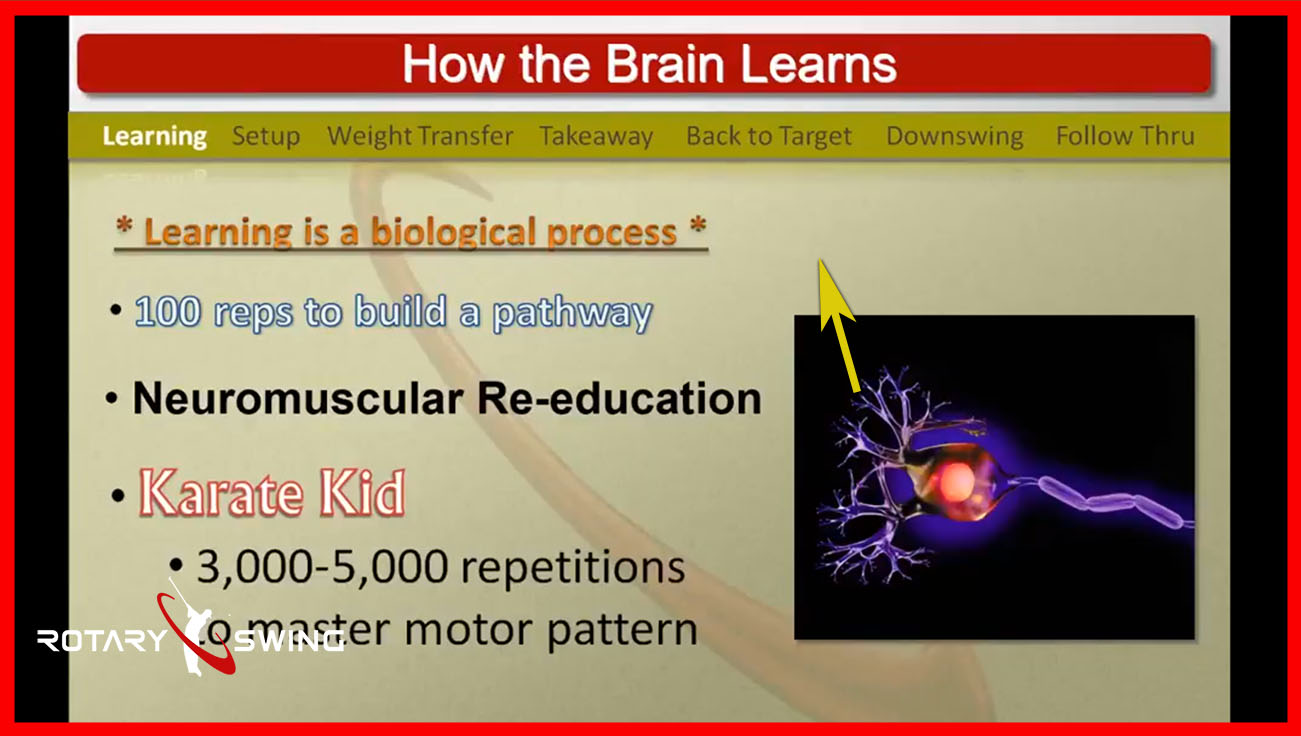
The first is 100. Any time you practice, you need to get in at least 100 reps.
This is crucial because your brain doesn't even register that you're attempting to learn something until you reach the neighborhood of 100 repetitions. You are essentially wasting your time if you perform, say, 20 takeaway reps and call it a day.
The second number is actually a range: 3,000 to 5,000. That's approximately the range of perfect repetitions you need to ingrain a new movement, like a swing change.
Those numbers are based on scientific research, so anyone who tells you that you can make lasting changes to your swing in a couple of buckets of balls — or even a couple of days — is simply selling you hype.
In fact, much of the learning that takes place in your brain happens after you've finished practicing, especially while you are sleeping.
You can certainly see some improvements quickly in your swing, as many of our students do when they finally learn how to move correctly. However, these changes will require conscious thought and be less consistently repeatable until you've put in 3,000–5,000 perfect reps to ingrain the motion. For structured repetition tracking with real-time AI coaching, try a free AI golf lesson that counts your reps and gives you instant feedback on every swing.
Summary
OK. So that was a tremendous amount of information. Be sure to re-read it if you need to because the importance of this golf lesson and the fundamentals of how to practice the golf swing cannot be overstated.

We all start by just swinging... and are still paying for it.
To help simplify the approach, I tell my students it's like learning to play the piano or another musical instrument. You don't just sit down and play Beethoven (or even "Mary Had a Little Lamb!"). You have to learn how to read music first, then learn where each key is, then learn chords, and so on.
In the end, golf's really no different.
Unfortunately, I don't know a single person who learned the swing this way. We all just picked up a club and started whacking at the ball, ingraining bad movements from our very first "whiff!"
Then you start scouring golf magazines, DVDs, TV shows, and the internet for that one quick tip that will fix everything.
Unfortunately, many of you are still searching for that silver bullet that simply doesn't exist.
But now that you fully understand how to practice golf at the driving range and how the brain actually learns, you should embrace that old cliché, "Perfect practice makes perfect," even if lasting improvement may not arrive as quickly as you'd like.
The good news is that you've found golf instruction that's already built to minimize the time it takes you to ingrain the swing of your dreams.
The learning techniques covered in this article, as applicable, are already included in the "5 Minutes per Day" series of videos available with our Premium Membership:
- 5 Minutes to the Perfect Golf Swing Setup
- 5 Minutes to the Perfect Setup Plus Golf Swing Weight Shift
- 5 Minutes to Master Golf Swing Rotation
- 5 Minutes to the Perfect Golf Swing Takeaway
- 5 Minutes to the Perfect Golf Backswing
- 5 Minutes to the Perfect Golf Downswing
- 5 Minutes to the Perfect Golf Release
So, if you have a Free Membership, once you've learned the basics of "how to move" in the RST with your free videos, consider signing up for a Premium Membership to learn even faster because I've already laid out—in a step-by-step fashion—how to practice each piece of the swing.
Video Transcription: Learning How to Learn

Before the lesson
All right, we're going to do something a little different for this next video. I'm going to take a student of mine that I worked with just yesterday, and show you what is really going on with the website and what you're truly trying to accomplish. Understanding this will put all the pieces of the puzzle together so you can see the real power of how we teach you to practice the golf swing.
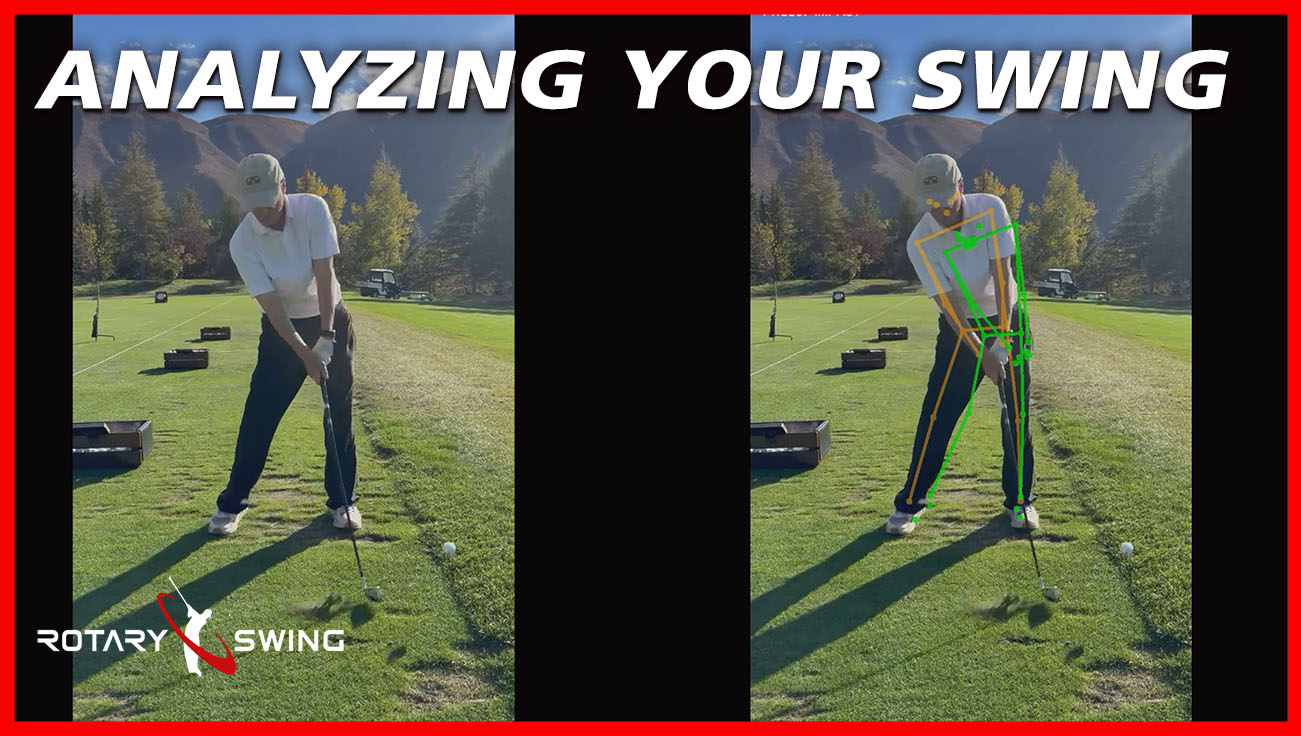
My student here, a golfer in his late 70s, is not a very accomplished player — roughly a 27 handicap. You can see right away, as you've learned through the RST system, there are probably some postural issues here, along with a number of other things going on. Once we dive into the golf swing itself, you're going to notice quite a bit.
The purpose of this video is not simply to diagnose this golfer's swing and point out things you might have in common. We do plenty of that in the other videos with cause-and-effect relationships and swing fault detection.
This video is going to show you how to actually improve your golf swing — how to practice golf. I'm showing you what I do every single day to produce the dramatic results and transformations that you see on the website with all of our students.
It's not that I'm a miracle worker, as I've mentioned before. I wish I were, but I'm not. What I'm doing is following the system that's laid out on the website — a system I spent considerable time creating based on how the brain learns new movement patterns.
I'm going to walk you through this so that you understand not only how to improve your golf swing, but how to get the most out of the website and how to practice golf at home.
Let's first take a quick look at my golfer's swing. We won't spend too long here, but you're going to see a lot of fairly basic problems. This was his first swing with a 7-iron that I recorded. He had just warmed up, and we were simply getting a couple on video to see what we needed to work on.
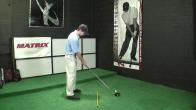
He wouldn't hit the ball unless it was teed up about an inch or an inch and a half off the ground — and you're about to see why. That obviously makes it pretty tough to play golf once you get off the tee.

Takeaway, before the lesson
Let's start the club going back. As the club goes back, during the takeaway, at the point where the club is roughly parallel to the ground, it's getting a little bit inside. Now it's going even more inside. Now we're in real trouble — problems are building.
You can see that the trail arm is really bent back early in the swing. The trail wrist is hinged, and the club is very, very deep behind him. Now you're going to start to understand why he wanted to tee the ball up all the time, because he never took a divot — or, as he put it, "never took a divot on purpose."
As he takes the golf club back, we see a couple of other issues. We could draw lines here all day. Obviously, he's going to stand up out of the shot a little bit. His lead arm is basically horizontal to the ground at the top.

Top of swing, before the lesson
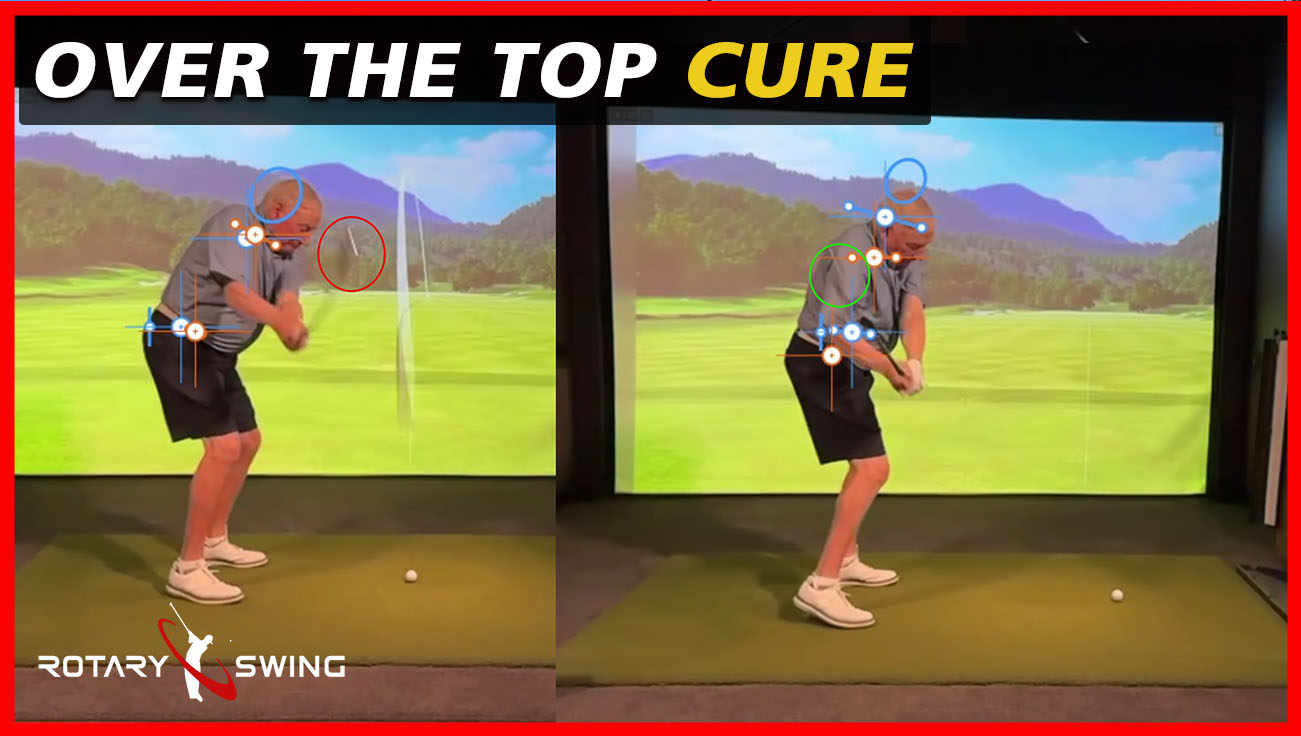
This is the top of his backswing. He's done — so obviously not the best position to be in for striking the ball solidly. Then, as he comes down, you'll notice the trail shoulder kind of heaves over to try and push from the trail side. This is that pushing motion that we talk about. He's trying to get the club, arms, and everything back out in front of him.
He's not executing it correctly, which is why you see that trail shoulder start to dive in, and then the club face is just wide open. We have no lag. The trail wrist is almost fully extended back out. There's no hinge, no lag at all.
Then, of course, comes the dreaded result — the dreaded top. That's why he wanted to tee the ball up, so naturally the ball didn't go very far. You can see that he hit it pretty much near the top of the ball. The ball hits the ground just in front of the tee, the tee doesn't come out of the ground, and it's no good.
You can't play golf like that. I wouldn't play golf like that. I would quit golf and start fishing, and I hate fishing. I know that's terrible for many of you who love fishing out there, but if I had to play golf like this — which I know so many of you do — I would definitely quit because it's just not fun.
Now let's see what's realistic in an hour-long golf lesson.
Here's the swing near the end of the lesson. He actually hit a couple of really solid shots where he pured the ball right out of the center of the face. I didn't get those on video because we were actively working on things, but we made some postural changes.
This is a one-hour golf lesson.
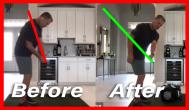
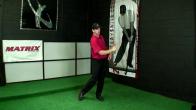
A few postural adjustments. Let's take the club back and look at the takeaway. Yeah, that's a little different. Let's compare to where he was earlier — about there, level with the hands. The camera angle is slightly off here, but you get the basic idea.
In a single hour golf lesson, we've moved the club about three feet. That's a dramatic change. The club is out in front of him, his trail arm is straight, the trail wrist is in a good position. Huge differences so far. He's turning — everything is significantly better.
Now the club's starting to go up, almost right through his forearm. Previously, it was going through his belt line. There's definitely a difference in these club positions. He stops turning here a little bit — nothing's perfect yet; this is an hour golf lesson, mind you. But there's the top of the swing now.
Now, a lot of you golfers out there say, "Oh, I'm not flexible enough to get into the right positions," or "I'm too old to learn something new." I don't ever want to hear you say that again.
That's a terrible excuse. I'm proving it here with somebody who's almost 80 years old — you can get into a dramatically better position in one hour. And you can do it without having to fly to Florida or Colorado to work with me, if you start to understand how to use the website correctly and how to practice golf. That's what this video is all about.
A substantially different position at the top, to say the least. The club face is in a much better position compared to where it was previously.
Now obviously he's still got some old habits showing up, but he doesn't have that big trail shoulder hunch from the top. Obviously, in an hour I can't fix everything.
He starts to come down, still losing some lag, but here's the critical difference — he actually took a divot on purpose, hit down on the ball, and look what happens. The ball's up in the air! We can play golf from there. You're not going to go out and shoot 65, but trust me, it's a lot more fun than topping it.

Takeaway, before and after
How did we produce these kinds of results? It starts like this. After those first couple of swings, I walked him through and said, "Look. Here's what's going on. We've got to diagnose the problem. Here's how we fix it. We've got to fix your takeaway first, and your setup, obviously."
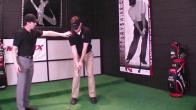
We focused on those two things, and for about 10 minutes this is all he did. For 10 minutes, we stayed right here and worked on the takeaway — without a golf club, without a golf ball, without any distractions. I just had him repeat the movement over and over while I constantly provided correction. "Get your hands here. Do this with your arms, this with your wrists."
All of this takeaway instruction is covered in detail on the website, so you have all the same information that I gave him. I simply sat there, watched him execute the movement, made him do it correctly, made him repeat it until it was right every single time.
Once I felt he had the takeaway reasonably mastered without any other variables in play — no golf club, no ball — the next step was to stack that with finishing the backswing. Another 10–15 minutes. Again, no golf club, no ball. Lots of reps, lots of focus, making him really pay attention to what he was feeling, but more importantly, we were stacking movements.
We started with just the takeaway. That was it. That was the entire motion. He would turn around, look back, make sure his hands were in the correct position, his arms were in the right position, his body had turned properly.
Then we stacked and said, "OK, now I'm going to see if you can juggle two things. Let's try to go all the way to the top," and he could. That's where we stopped, and we drilled that for about 15 minutes.
Then came the next progression — still no golf ball — and said, "OK, you're doing great there..." Laid a club on the ground as a guide for the takeaway. The result was dramatically different. Dramatically different positions, dramatically different swing path. That's how you practice golf and actually produce real improvement.
Is it absolutely perfect? No, but this man has been swinging this way and is obviously a very high handicap for a very long time. It's a dramatic improvement.
Then we worked on that for another 10–15 minutes. By this point in the hour-long lesson, I've spent approximately 45 minutes without him hitting a single golf ball, apart from the couple diagnostic swings at the start.
Then we began hitting golf balls. At first, not every swing was perfect. This clip is from somewhere in the middle. We were making adjustments — dialing in the takeaway a little better — but it was certainly an improvement over what he started with. Then we refined the top of the swing, and so on.
The point is this: anybody, no matter your flexibility, no matter your age, no matter what you've done or how long you've done it, can make radically different changes in less than an hour in their golf swing.

Takeaway drill
All the information I gave him — the same knowledge he paid $200 an hour for while we sweated in the Florida heat on the range — is the exact same content that's on the website. The difference is I forced him to do it in the correct sequence and go back to Step One.
Let's get the setup right. Once the setup is right, let's make sure the grip is right. Then let's make sure the takeaway is right, and so on. Once we stacked all of these components, we were able to produce these kinds of results — taking a divot on purpose, hitting down on the ball, getting the ball airborne. That's golf you can actually enjoy.
That's what you need to do with the website. You need to understand that everything is organized in sequence for a reason. When you log in and start watching those videos in order, don't just race through them all. That accomplishes nothing productive.
If you go out there and watch all 200 videos on the website, you've done absolutely nothing useful. You've gathered a lot of information, and that certainly has value, but as far as actually changing your golf swing, that's not where real change happens — not from passively watching videos.
This is where change happens. Don't go through Phase One and just say, "Oh, OK, I got it. Now let's go on to Phase Two... Oh, I got it. OK, Phase Three." That's not how it works. That's not how your brain learns new movement patterns.
Your brain learns through repetition and performing movements correctly, continuing to repeat and refine them until you're building genuine neural pathways. That's what produces real change as you're learning a new movement pattern — which is exactly what the golf swing is.
It's not about hitting balls or putting the club in positions. You've got to learn to move differently. Learn a new movement pattern, go through those videos step by step. If your setup is solid, start working on rotation. If your rotation is solid, start working on the takeaway videos, and so on, until you can reach a point like we demonstrated here.
Then you can see, in an hour, if you're following the process correctly, you can make dramatic changes.
The question I pose to you is: are you going through the videos and just watching them to absorb intellectual information, or are you going through the videos and working through them step by step, over time?
I have a lot of people come up to me and say, in the first week, they watched all the videos and ask, "OK, I got it. Now what do I do?"
My response is, "What are you talking about? You couldn't have possibly worked through those videos because..."
For him to truly own these movements and get everything dialed in and perfected — which he can do — is going to take months, which means Phase One alone, just getting the setup right, is going to take a couple of weeks for most people to own it. To where you can stand here and do it while telling me what you had for breakfast, and still execute it correctly without being distracted.
That's when you own a movement pattern. But if you just race through all the videos, it won't serve you.

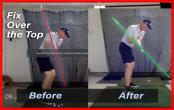
Top of swing, before and after
What I want to make sure of is that all of you understand this process. If you have questions about how to work through the videos, let us know. We'll continue to organize and refine the system so you can make golf swing improvements like these. But if you're just machine-gunning through the videos and watching them all right away, thinking "OK, I've got the Rotary Swing Tour down, this is a piece of cake" — trust me, you don't. Once you understand how to practice golf, you'll realize that approach simply doesn't work.
Go through the sequence, step by step. Learn the takeaway, then stack the rest of the swing on top, and so on. If you've had a chance to see what Bill is doing in the online learning groups, you'll see how disciplined he makes each student be — working through everything piece by piece.
He doesn't let you move on until you've got the current piece mastered, just as I didn't let my student move on until he could get his arms precisely where they needed to be, exactly as it's laid out in the takeaway video. That is how you produce real-world results like this, where you're actually hitting a golf ball with authority.
If you have any questions, let us know. But you need to make sure that you go through those videos in the right sequence, in the correct order, and then you can make real-world, lasting changes to your golf swing.
Watch part 2 now to see how you're moving your body in the opposite direction of the pros!




























































































 Dan Coyle's book is a MUST read for serious golfers.