







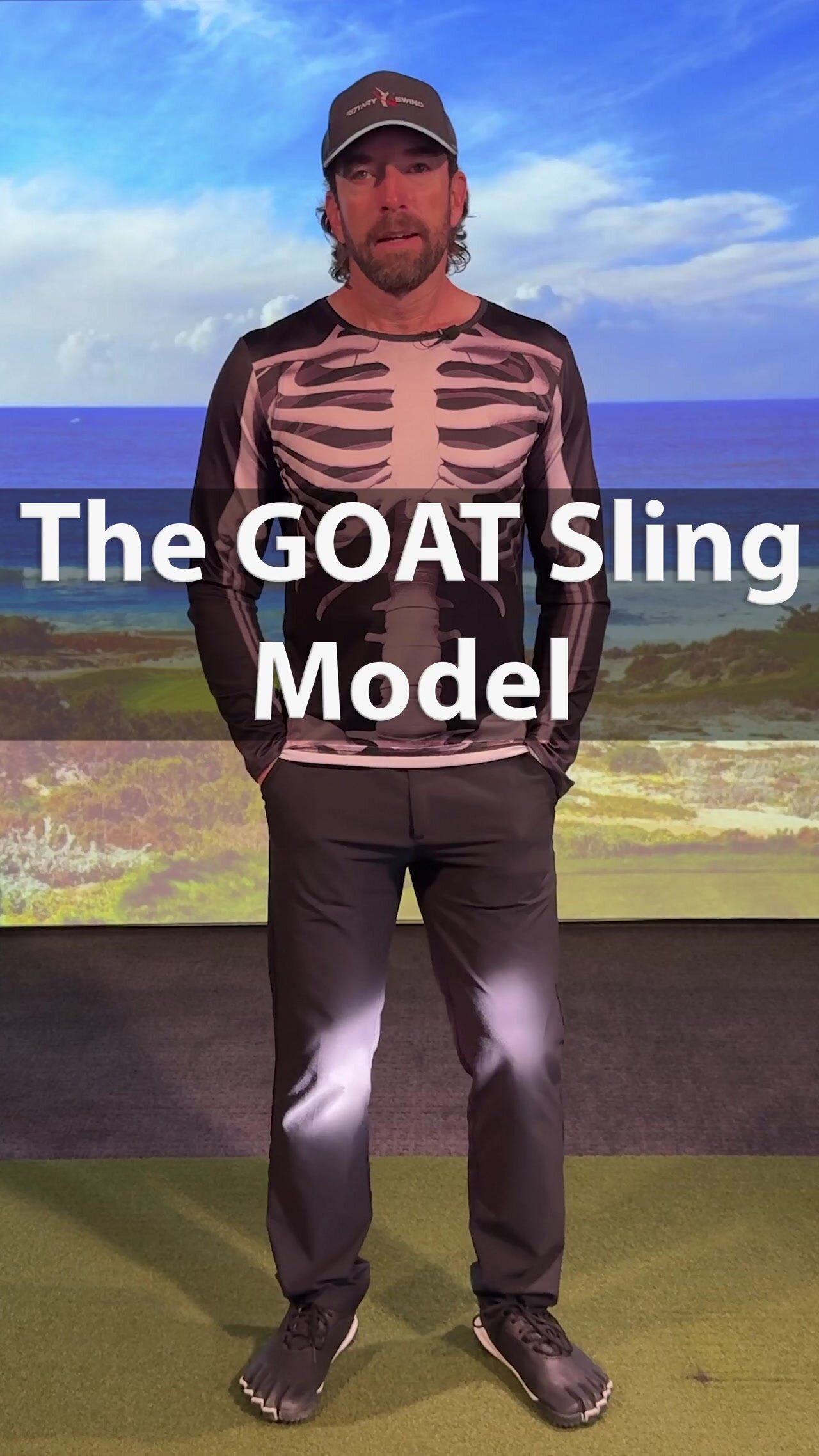


























Upper Cut Punch Drill
Sorry, you need to be a member to access this video. You Are Just Seconds Away!

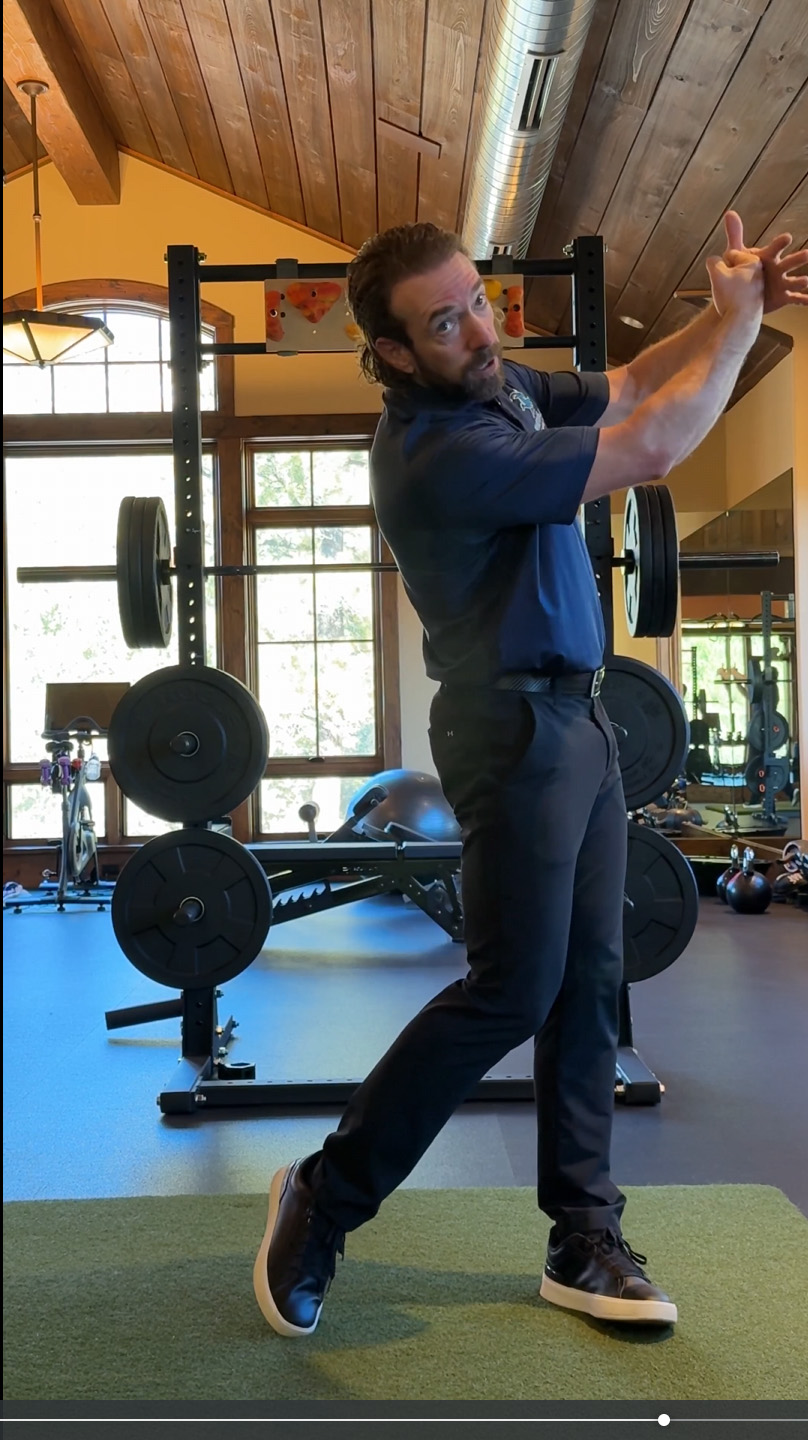
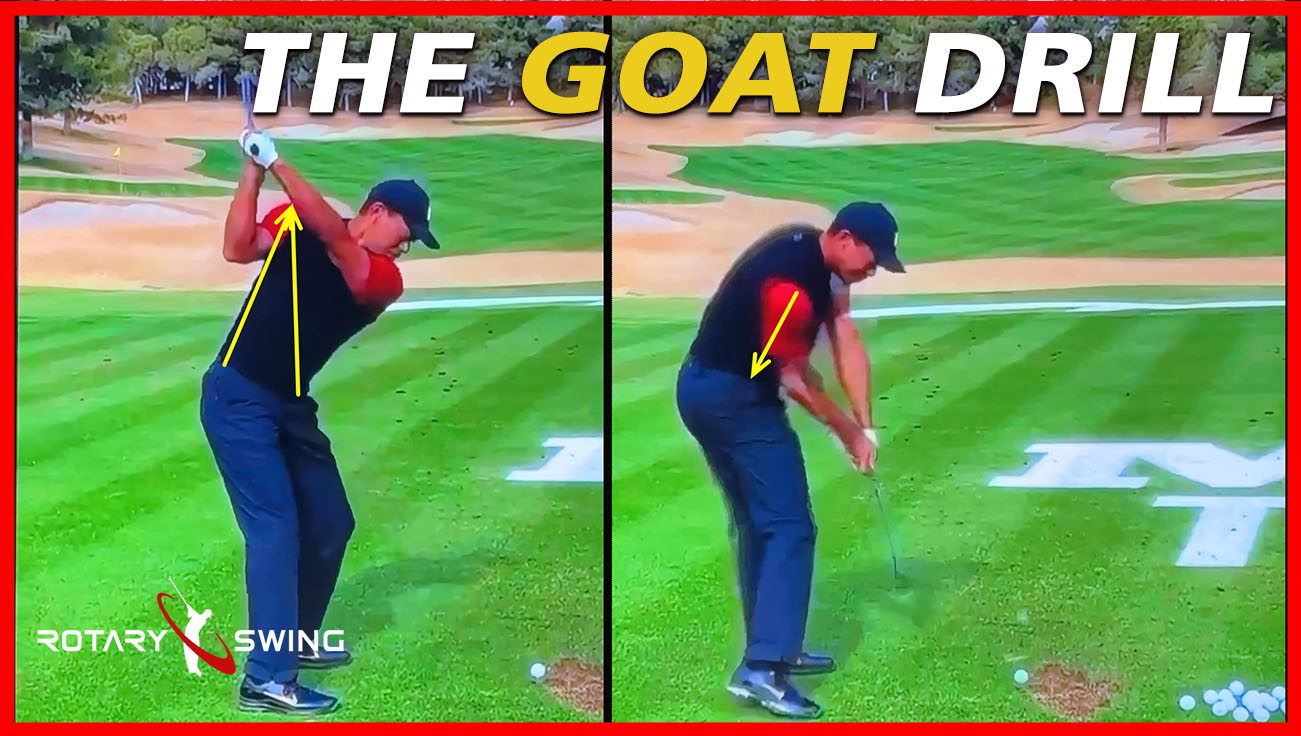
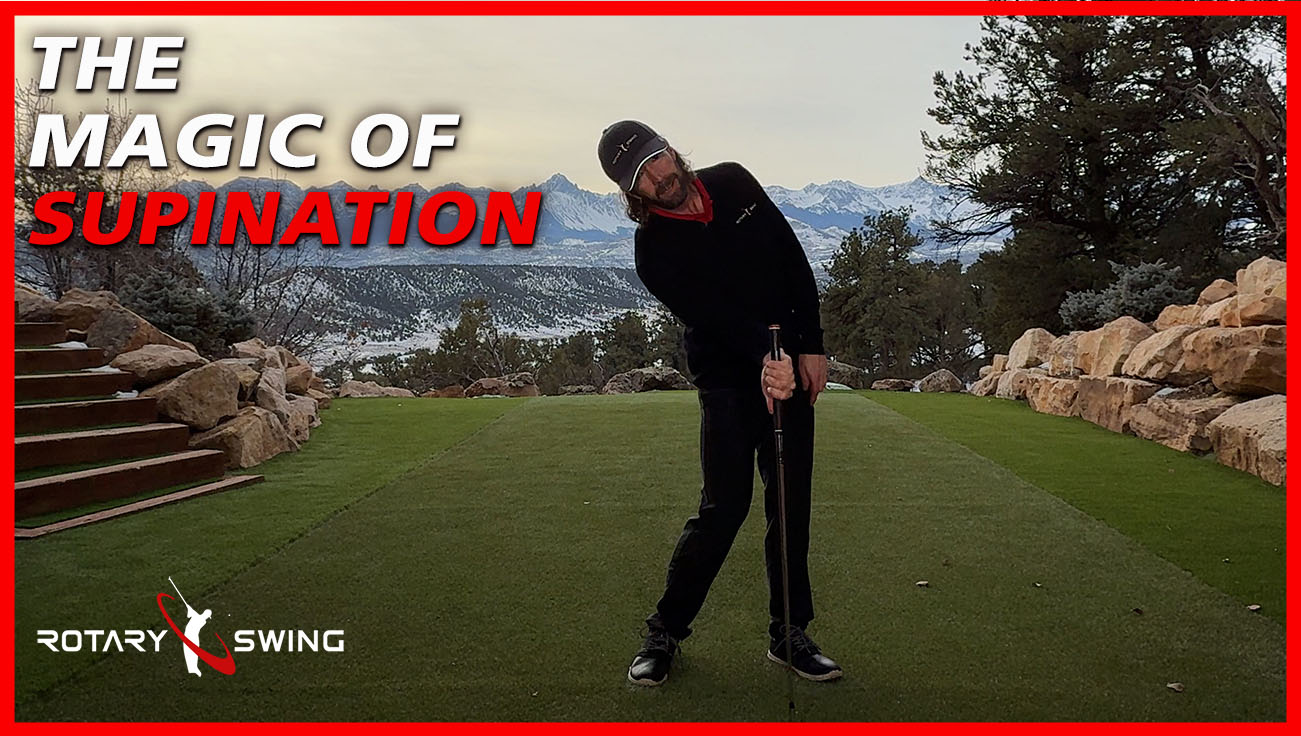
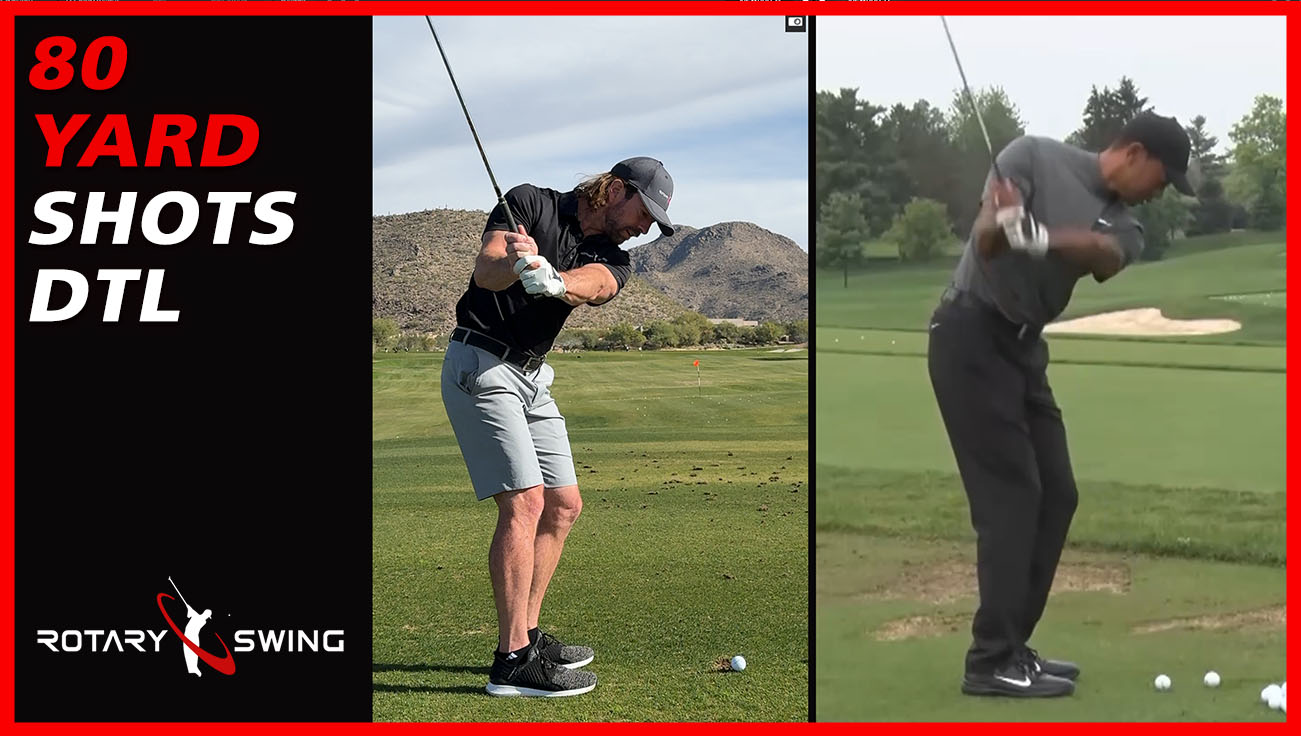
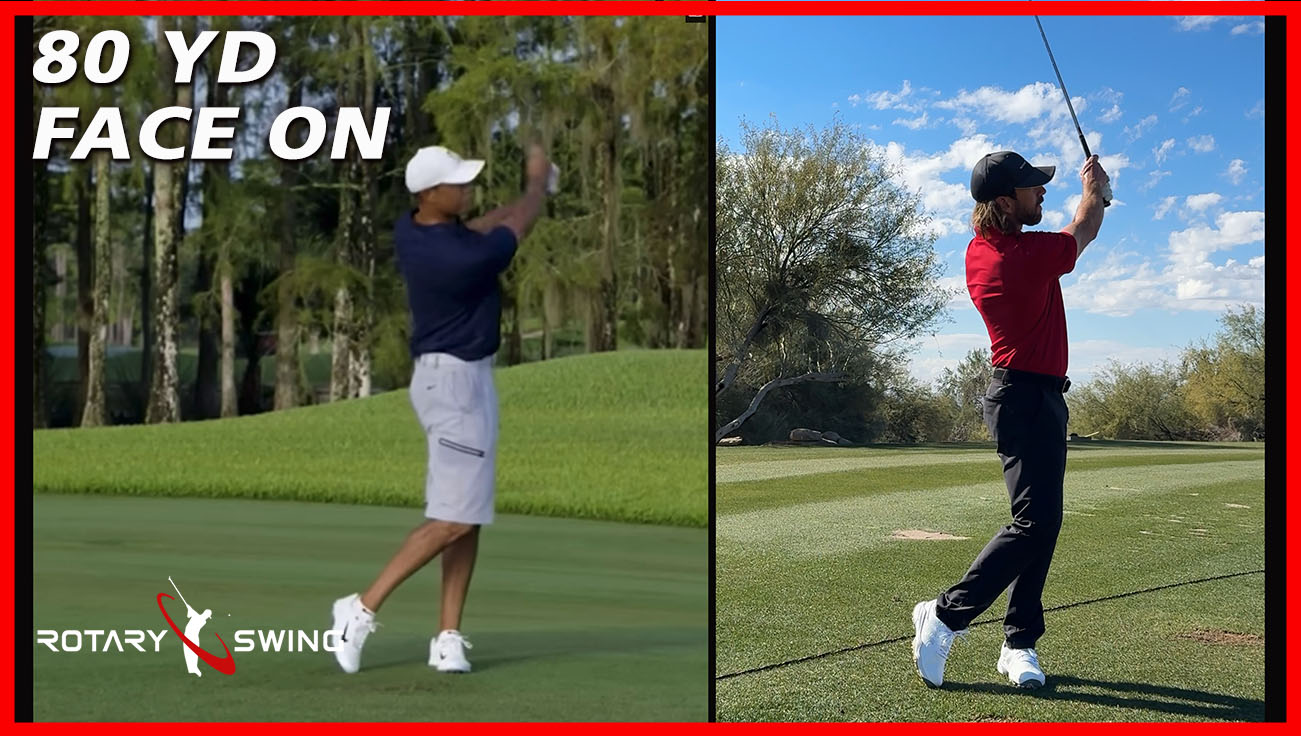
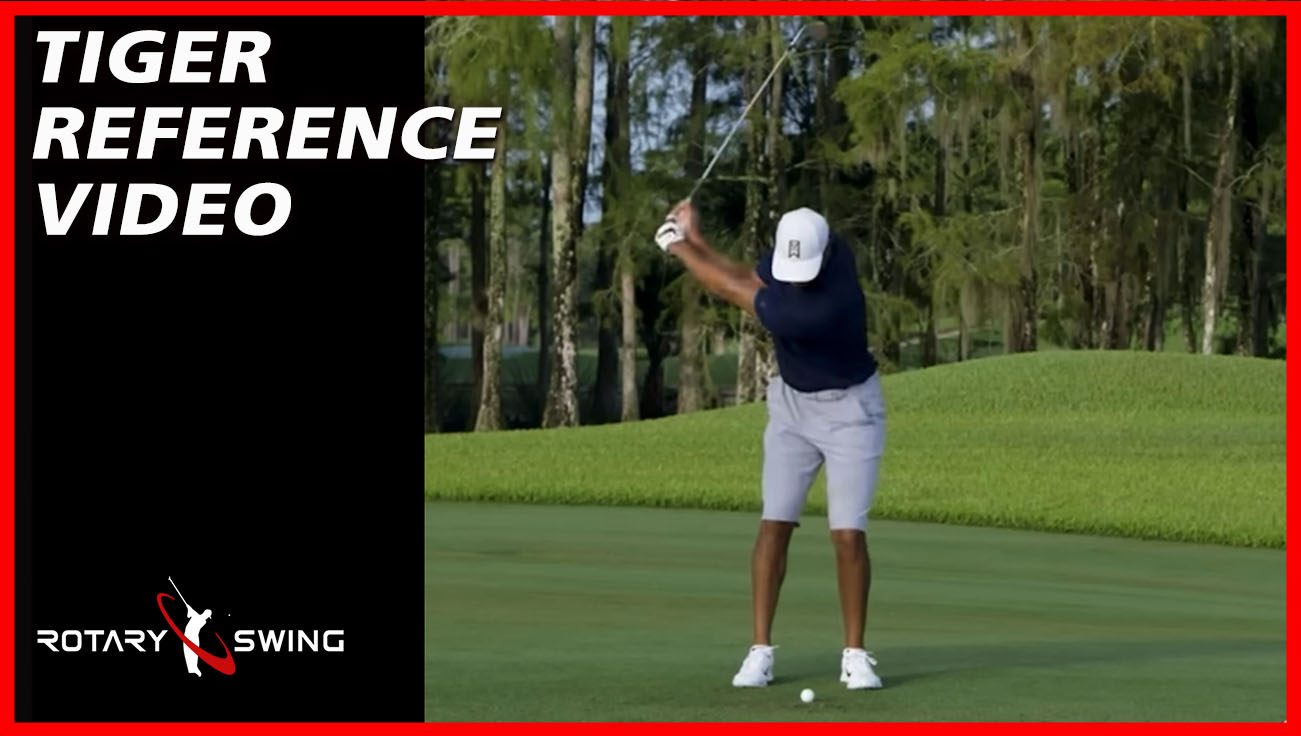
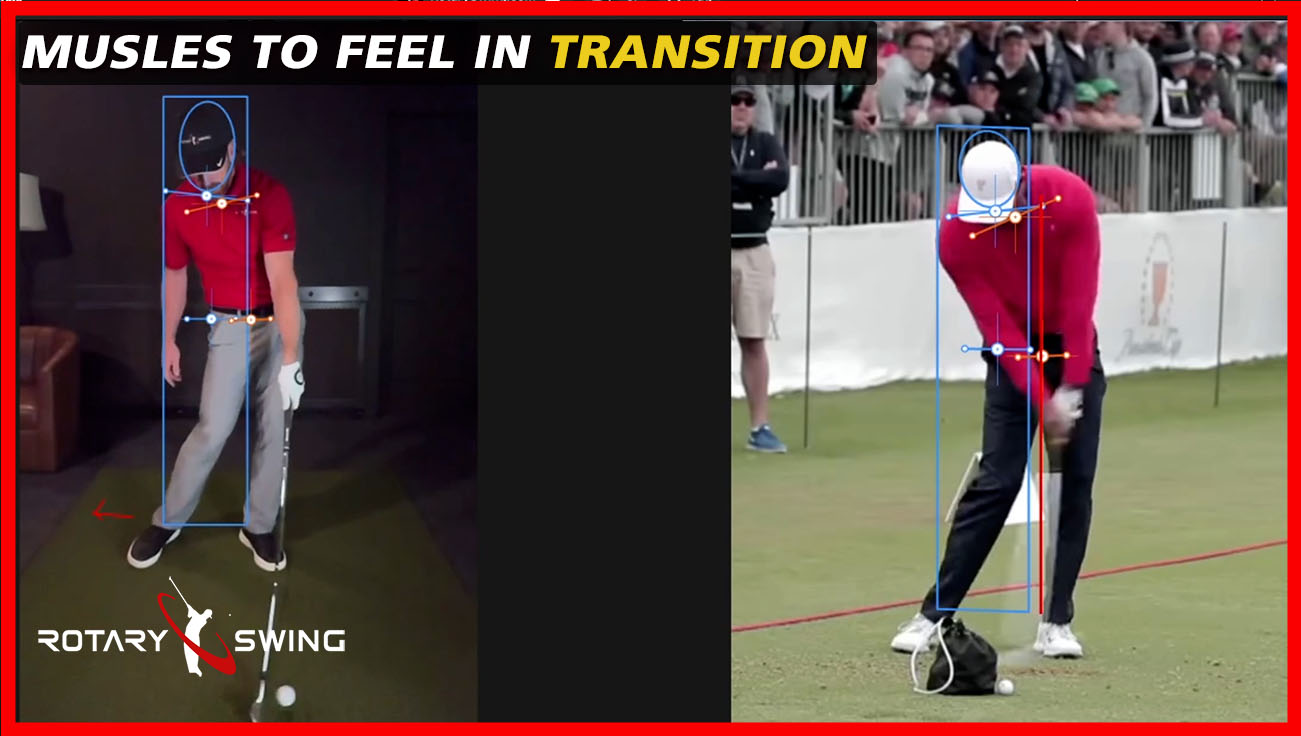
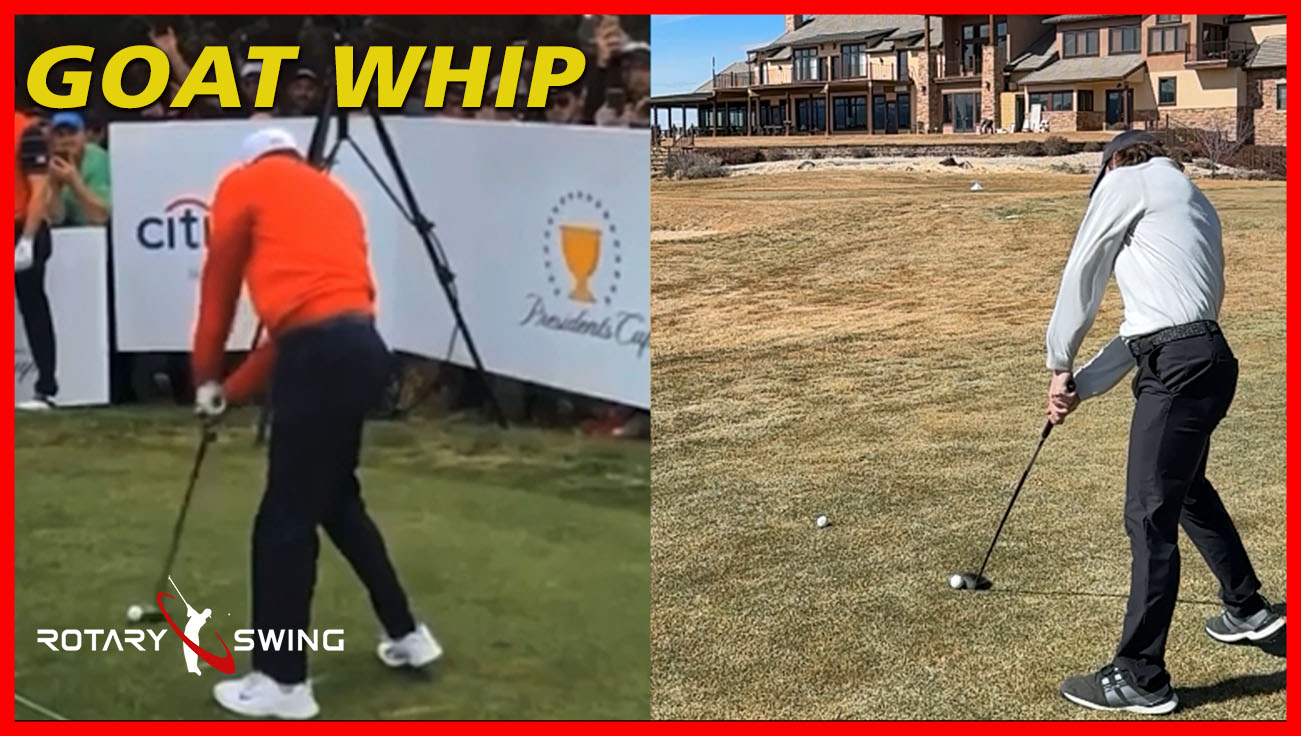
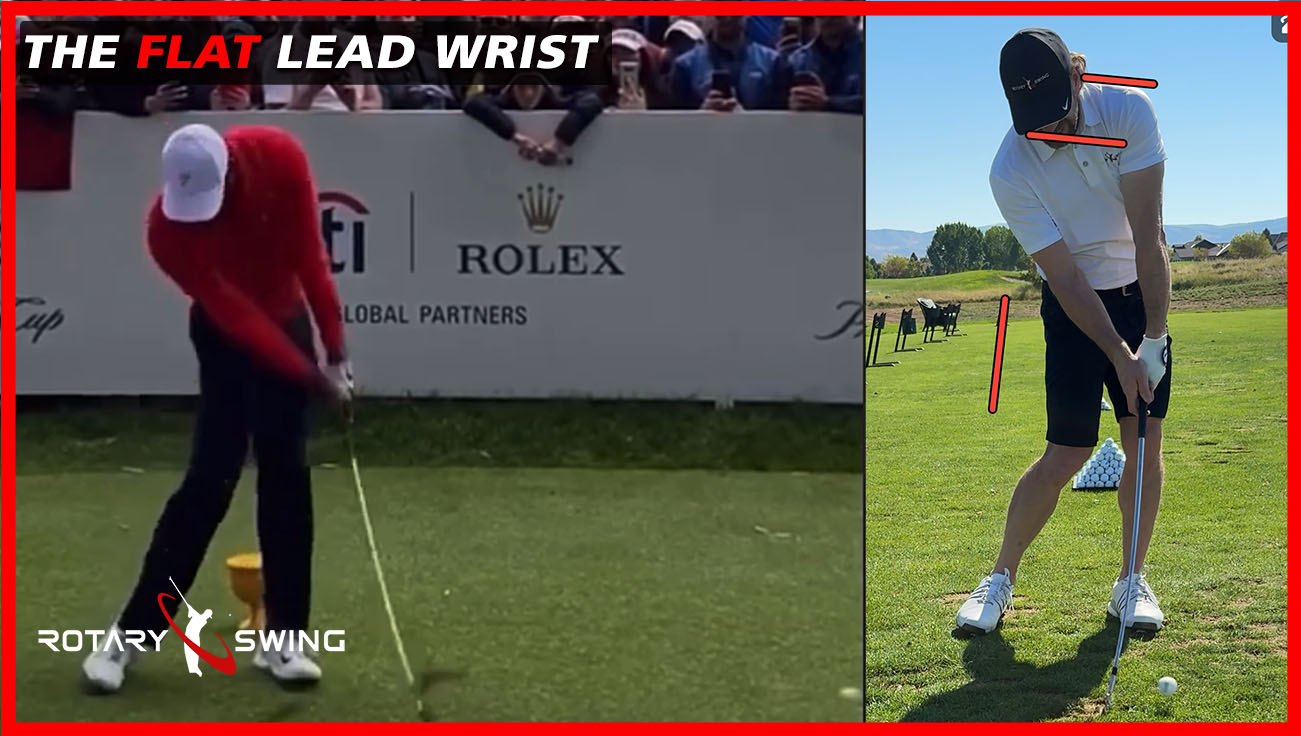
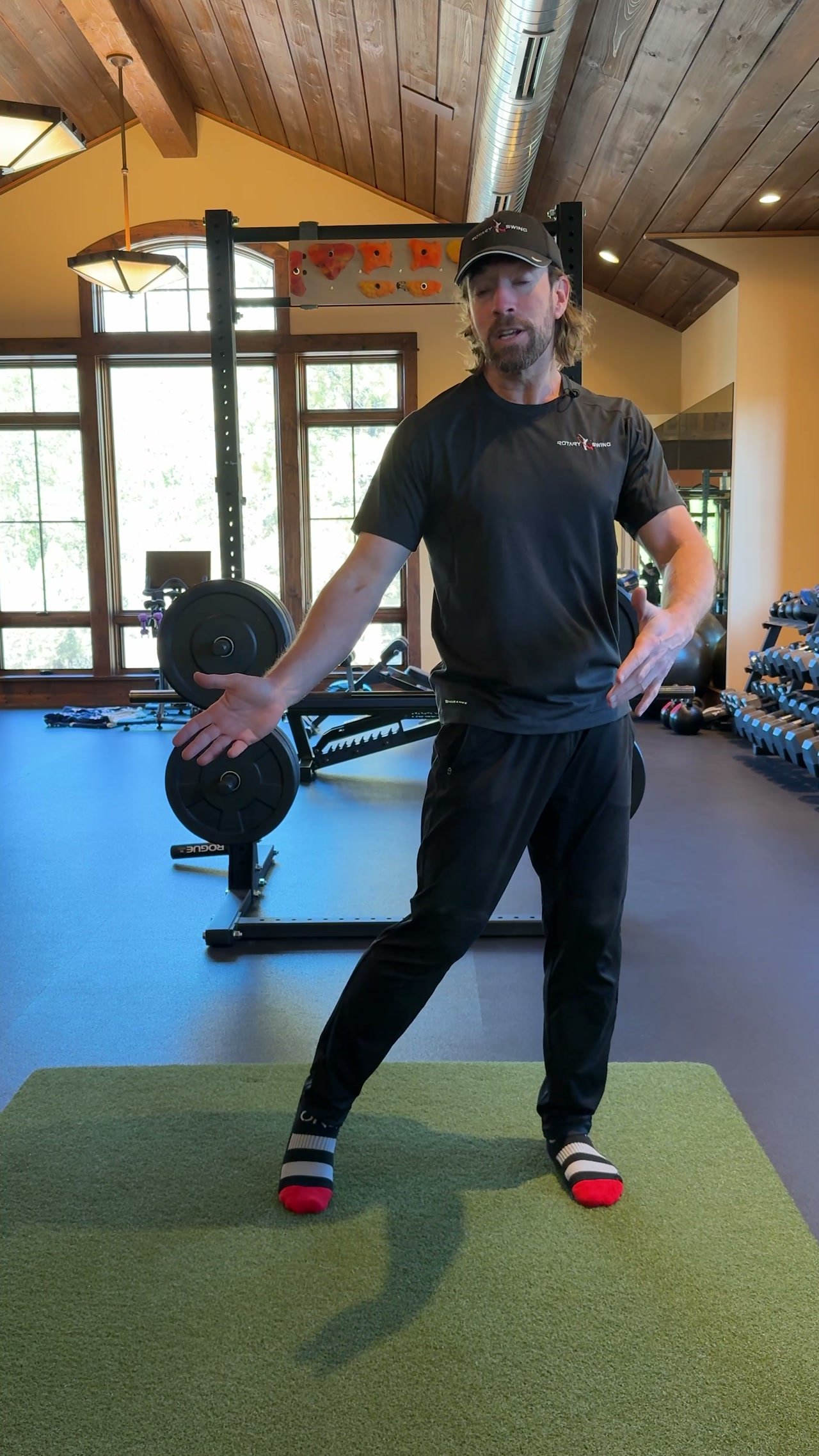
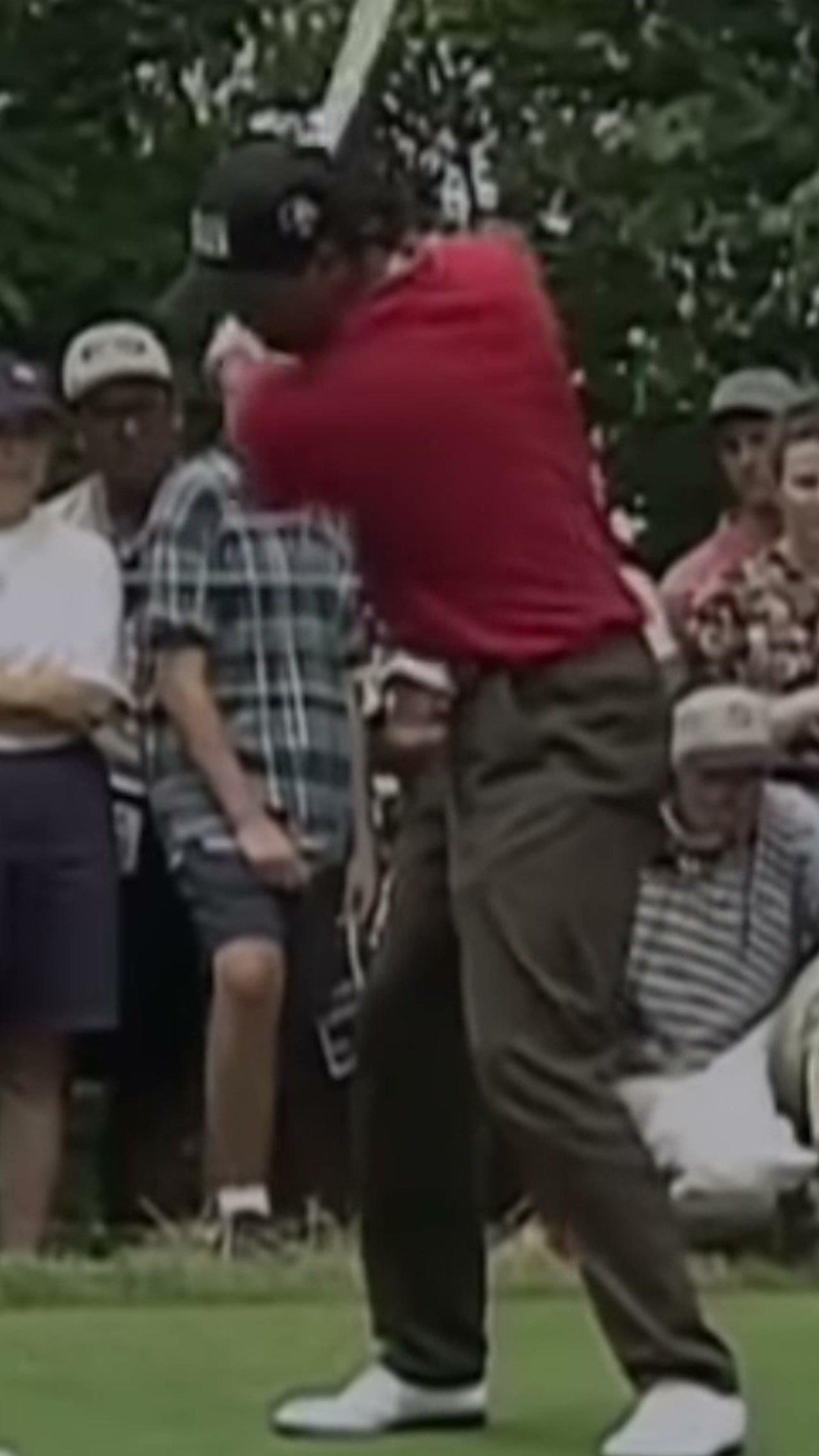
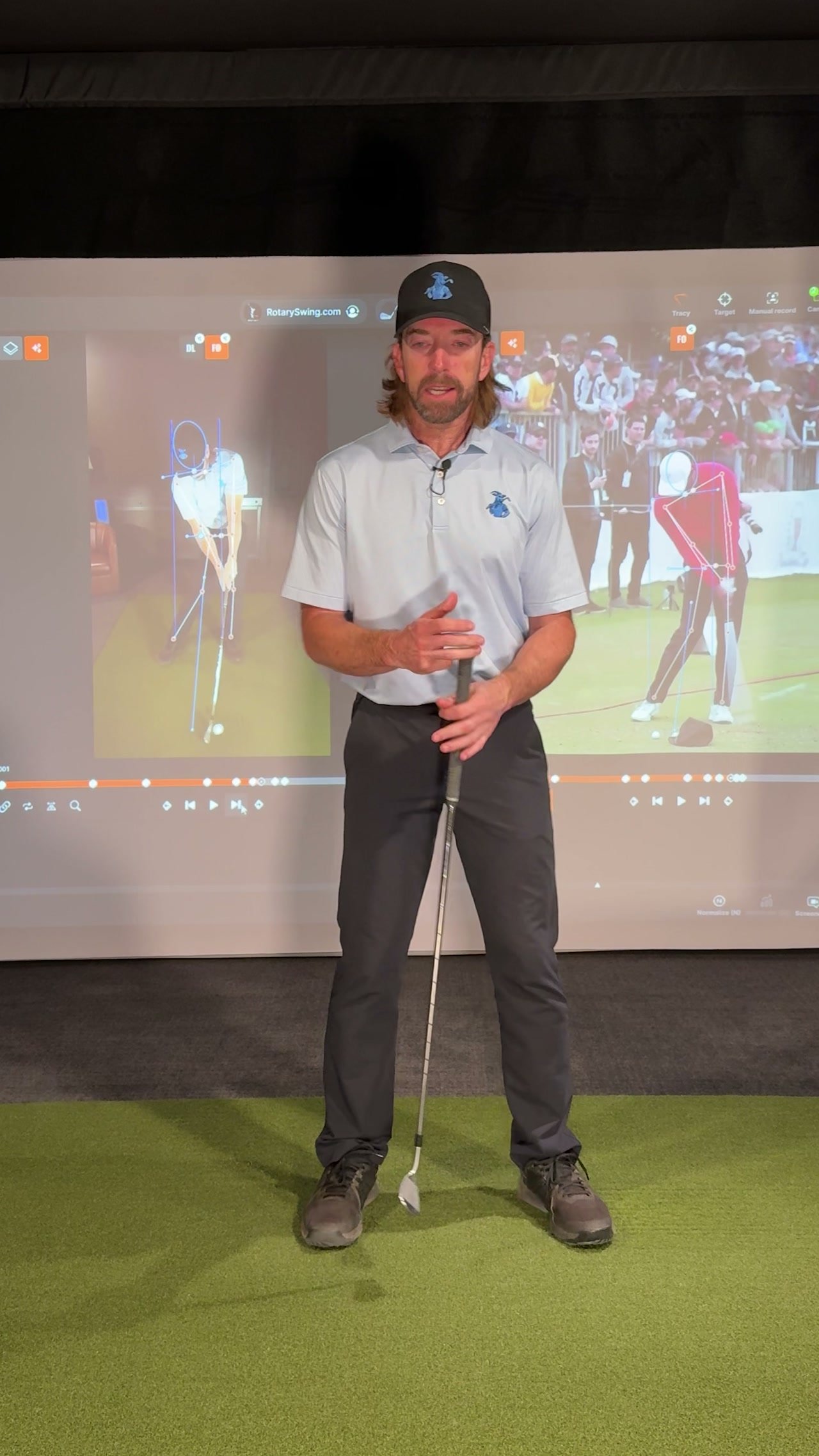
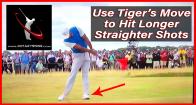
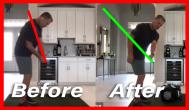
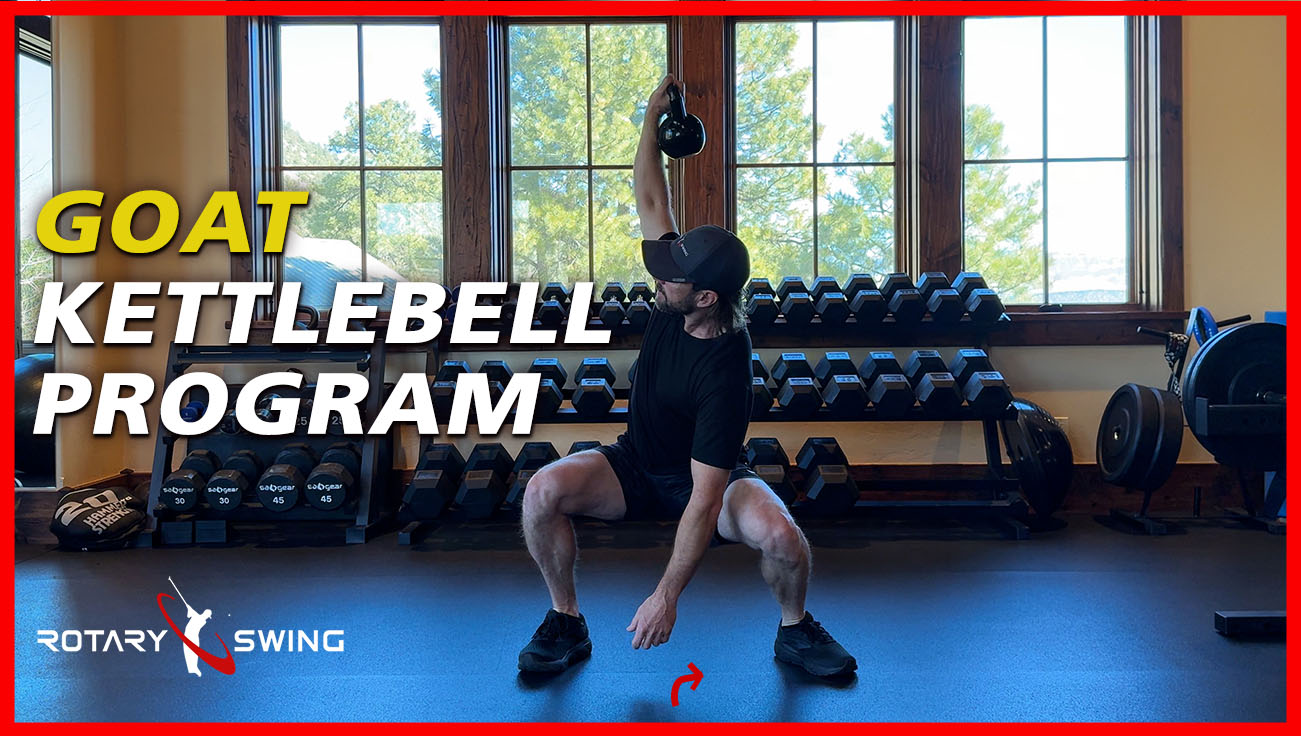
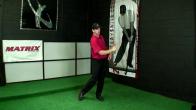
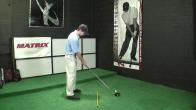
The Upper Cut Punch Drill will teach you what Tiger Woods means when he describes his swing as feeling like an upper cut punch. This will feel very strange to you if you are used to pulling with the lead side for speed and that is who this drill is most effective for.
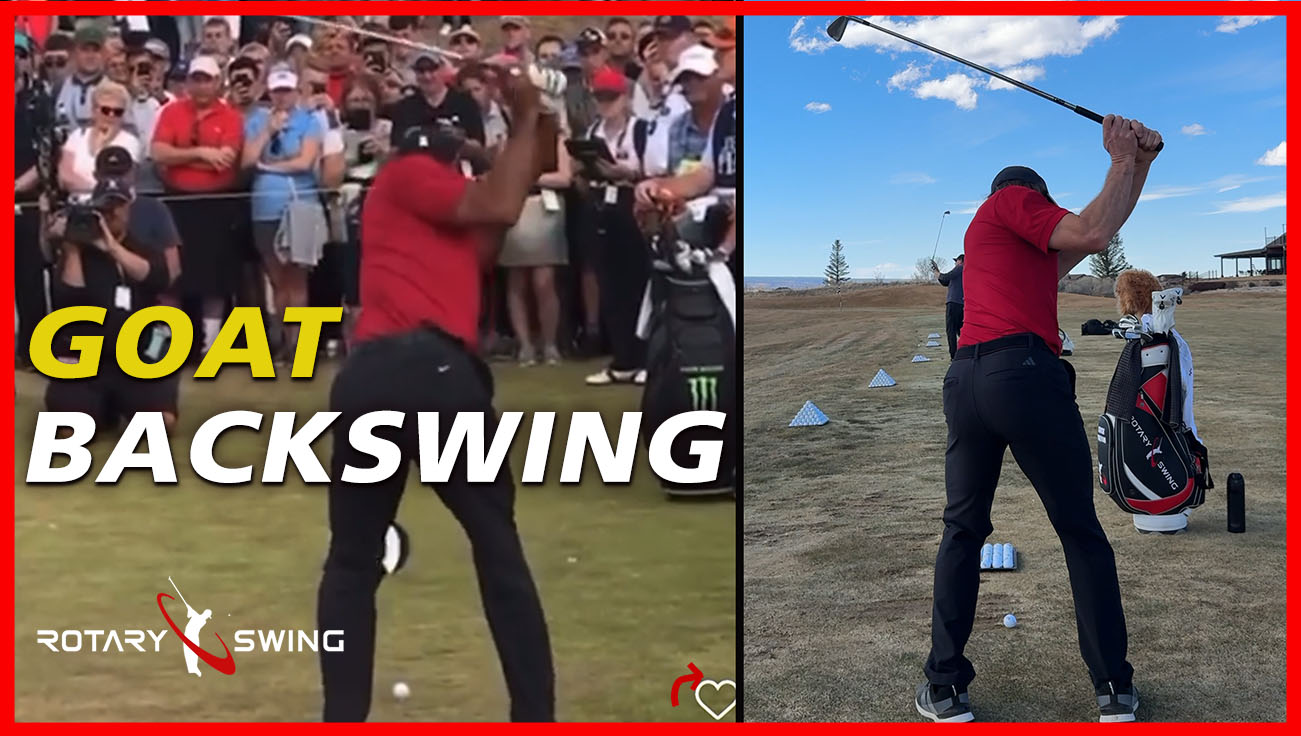
When Tiger Woods was asked about what his golf swing feels like to him, he described it as delivering an uppercut punch.
And that is exactly what the goat code feeling is in the golf swing.
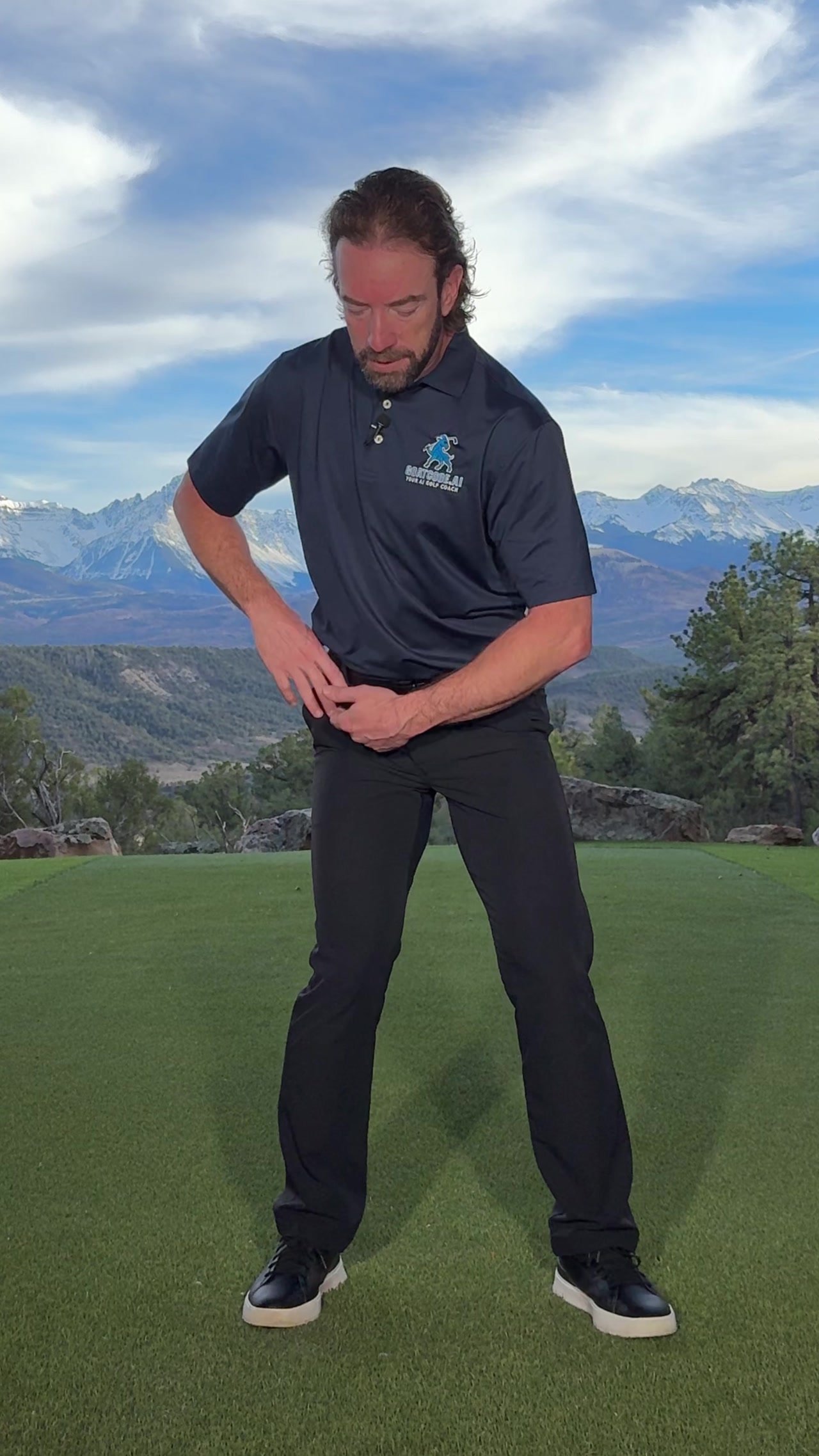
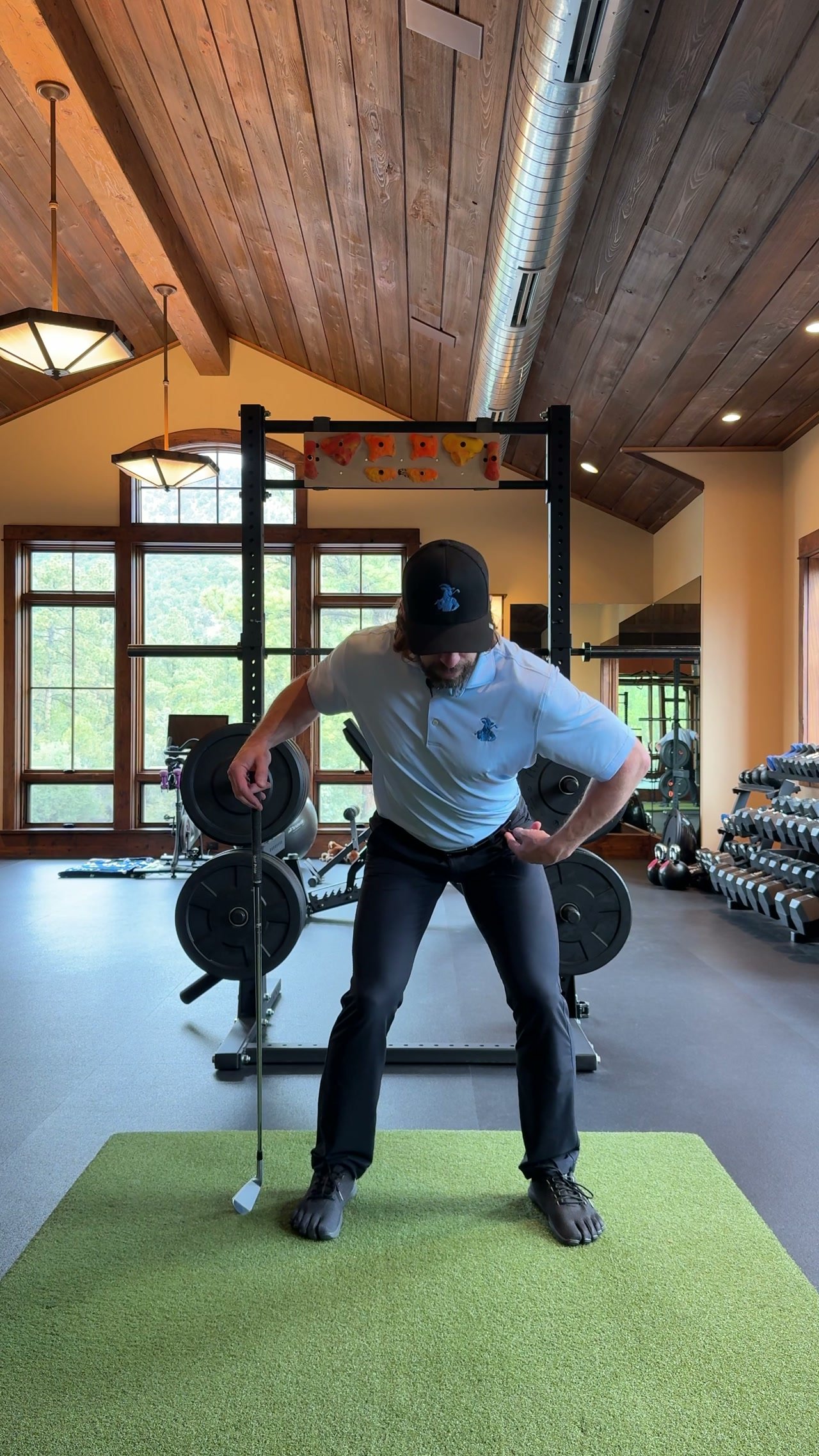
To feel this, what I want you to do is start with your golf setup at your trail arm only.
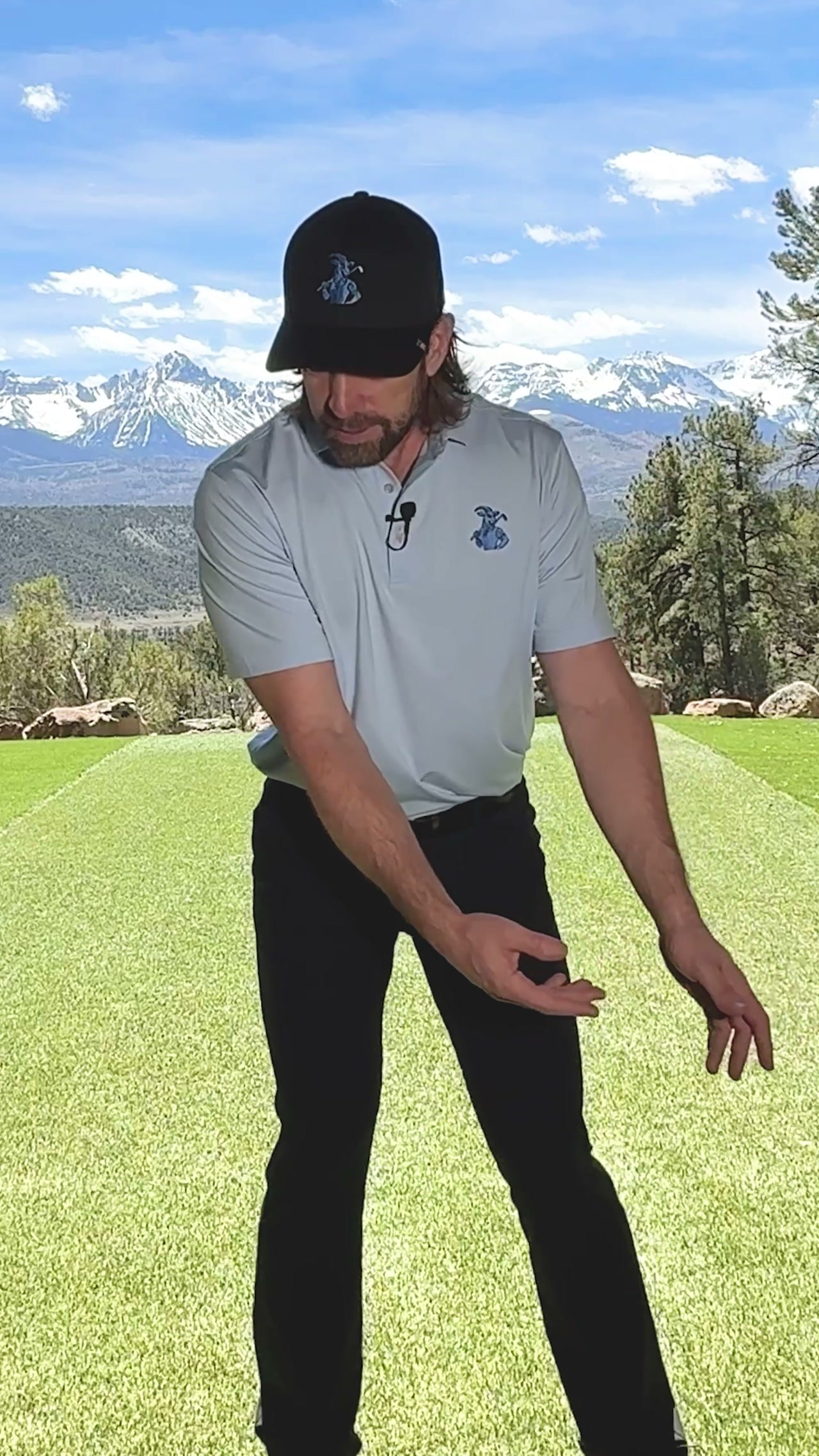
So for right-handed golfers, your right arm and rotate your arm so your elbow pit and wrist are out.
This is a goat arm position and connect that arm to your rib cage and feel your back muscles engage as well, so your arm is nice and connected to your body.
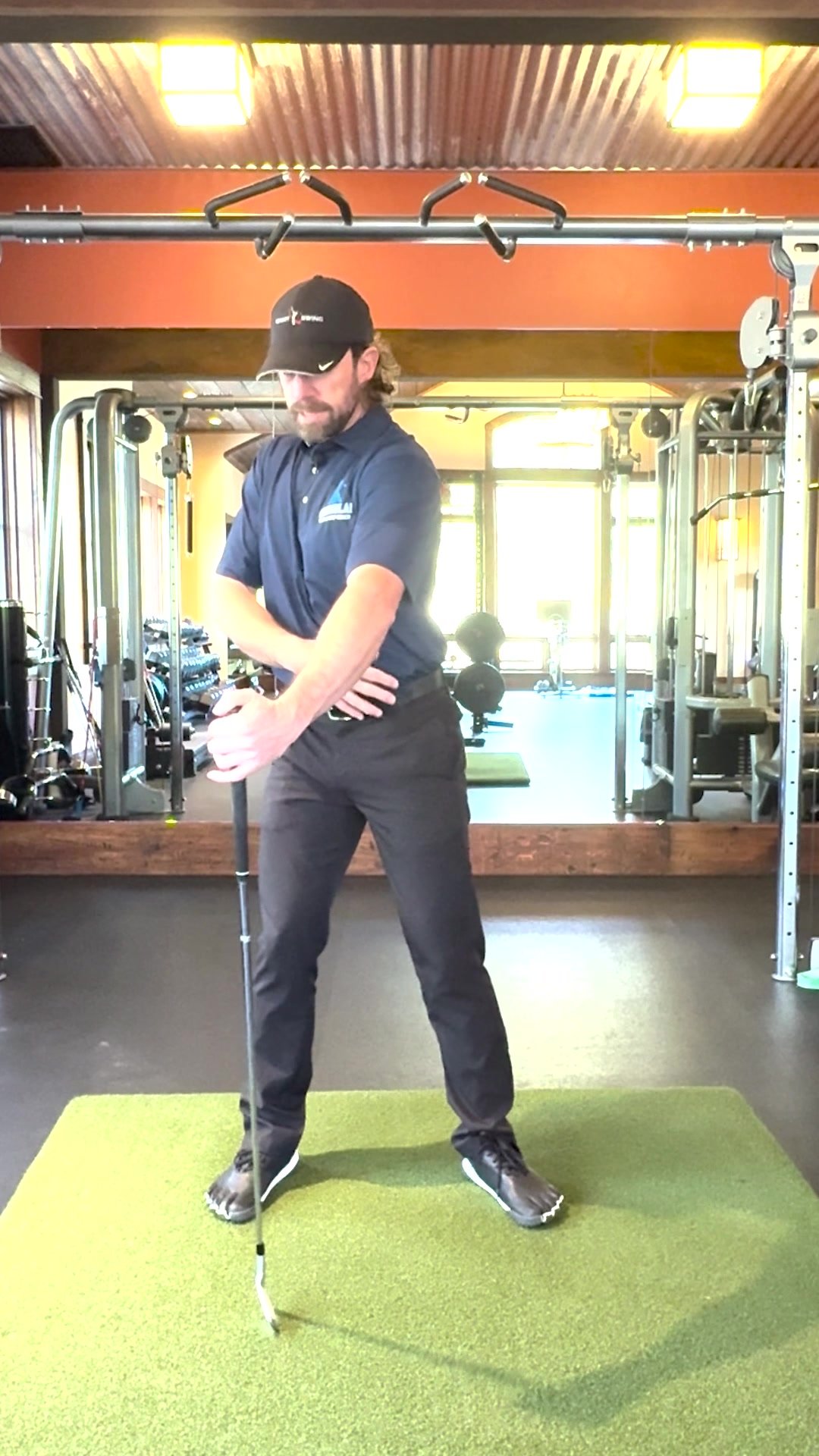
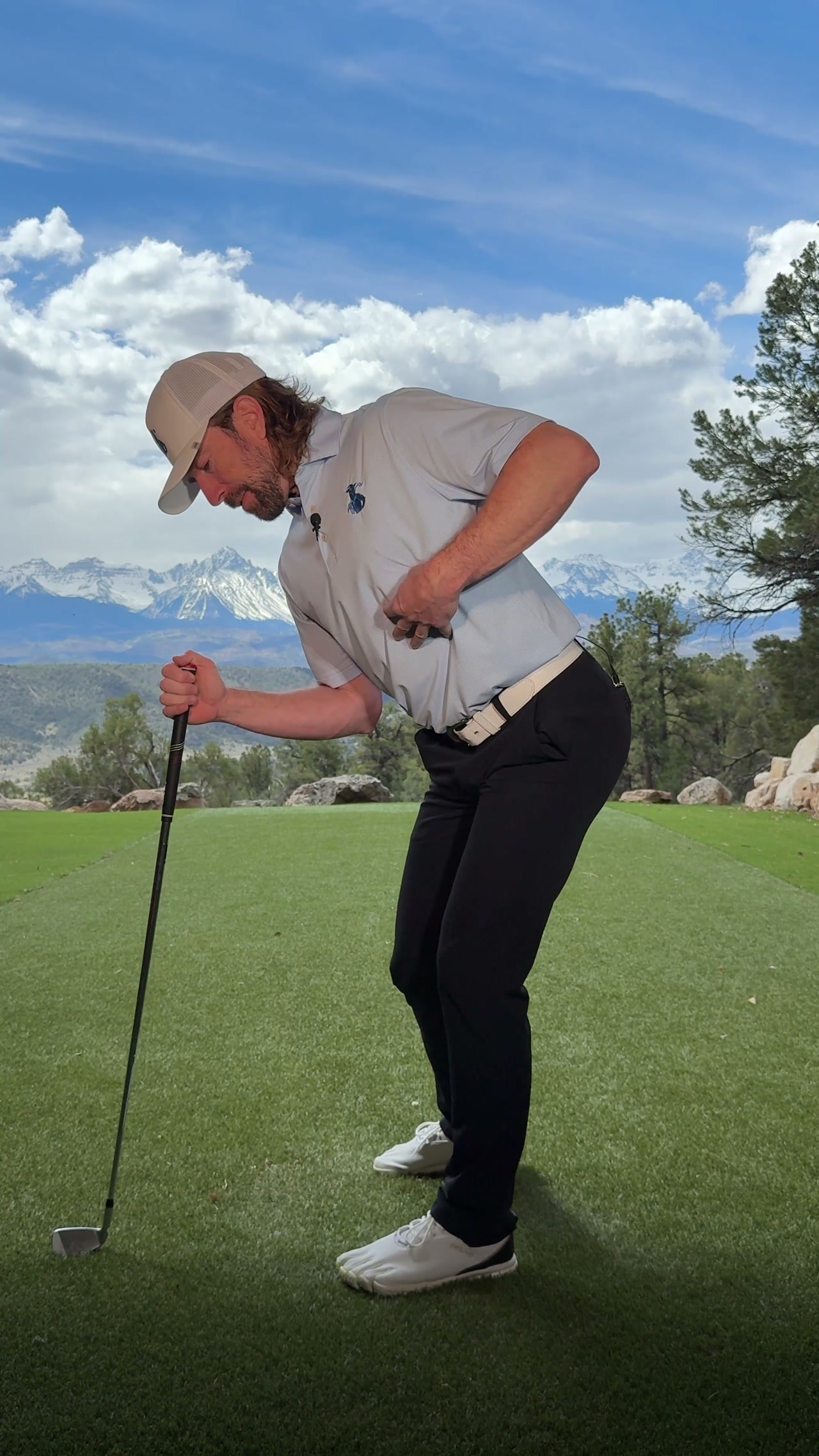
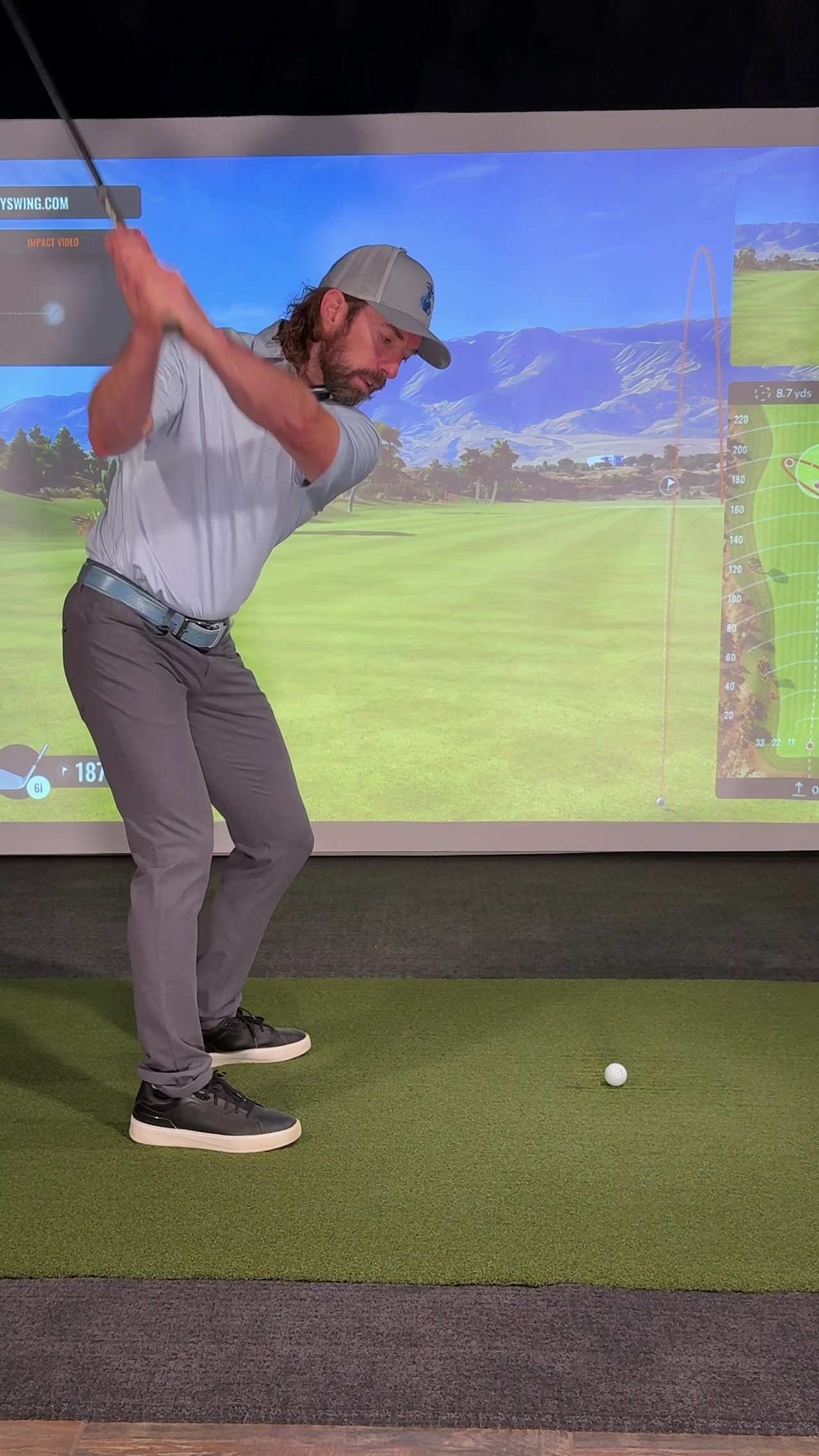
Now, from here, as you go back, take your lead arm and put it on your trail shoulder and push it down slightly.
So as you start rotating back, I want you to hold your shoulder down so you don't start lifting it up.
This is going to help you feel connected and it's also going to force you to stretch your core.
I want you to imagine a rubber band from your lead hip to your trail shoulder.
And as you go back, you're starting to pull these two apart, so you can imagine that this rubber band is stretching.
But you're not trying to lift, you're trying to rotate your rib cage and pull your chest and sternum away from this lead hip while keeping your arm down and connected, and hold it just like this the whole time, don't do anything else with your arm.
Now as I go back and I load into my trail side and I start to recenter, now, I'm back on my lead side.
Now.
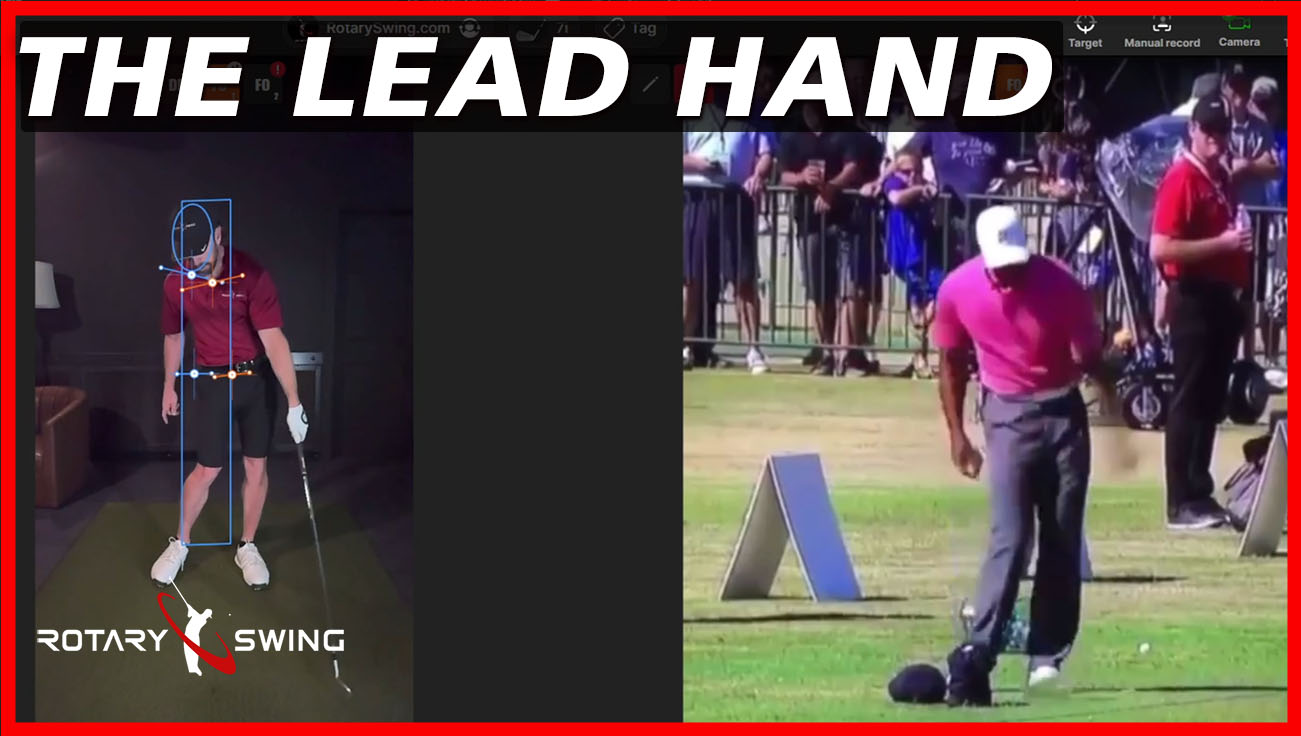
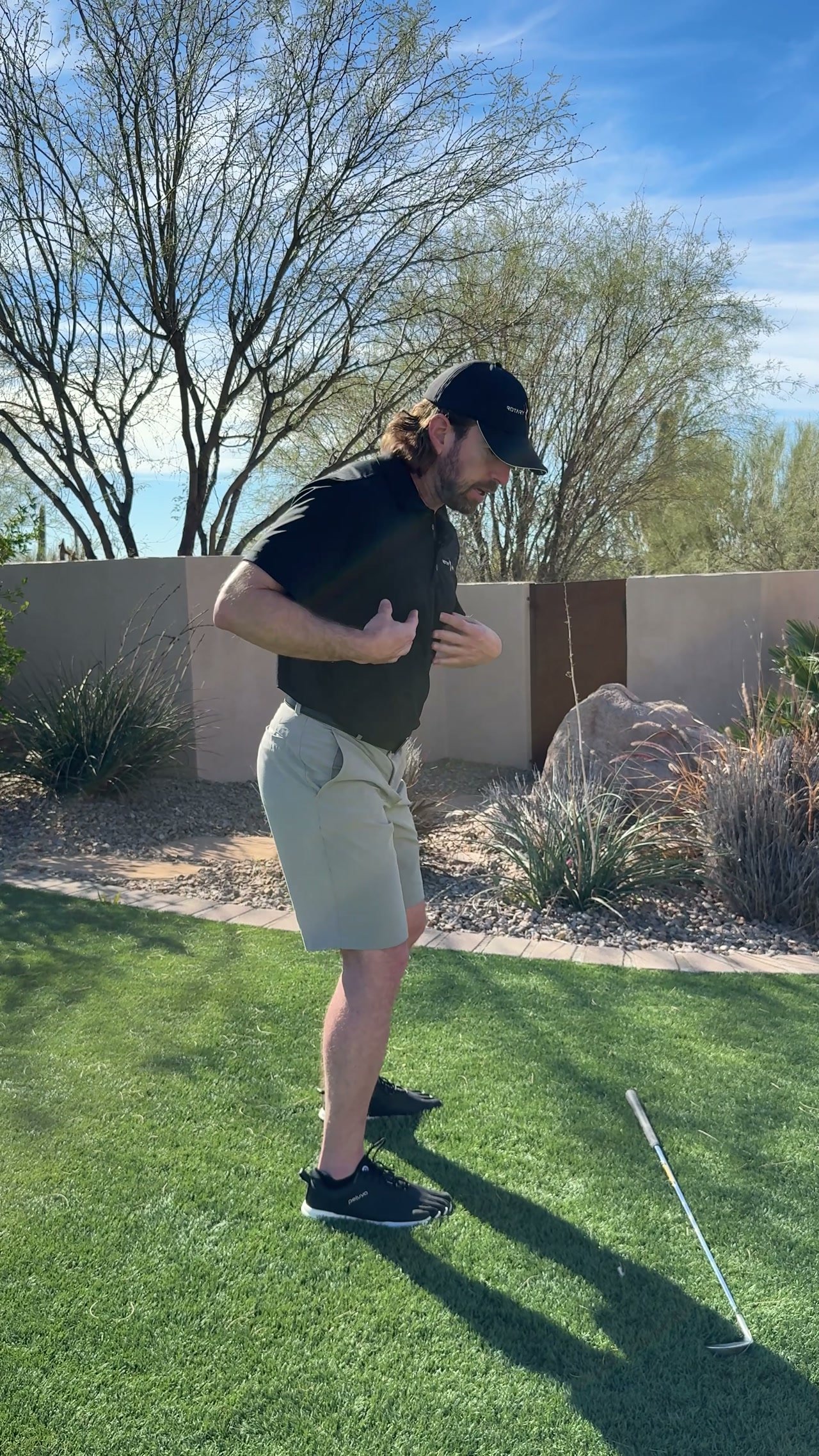
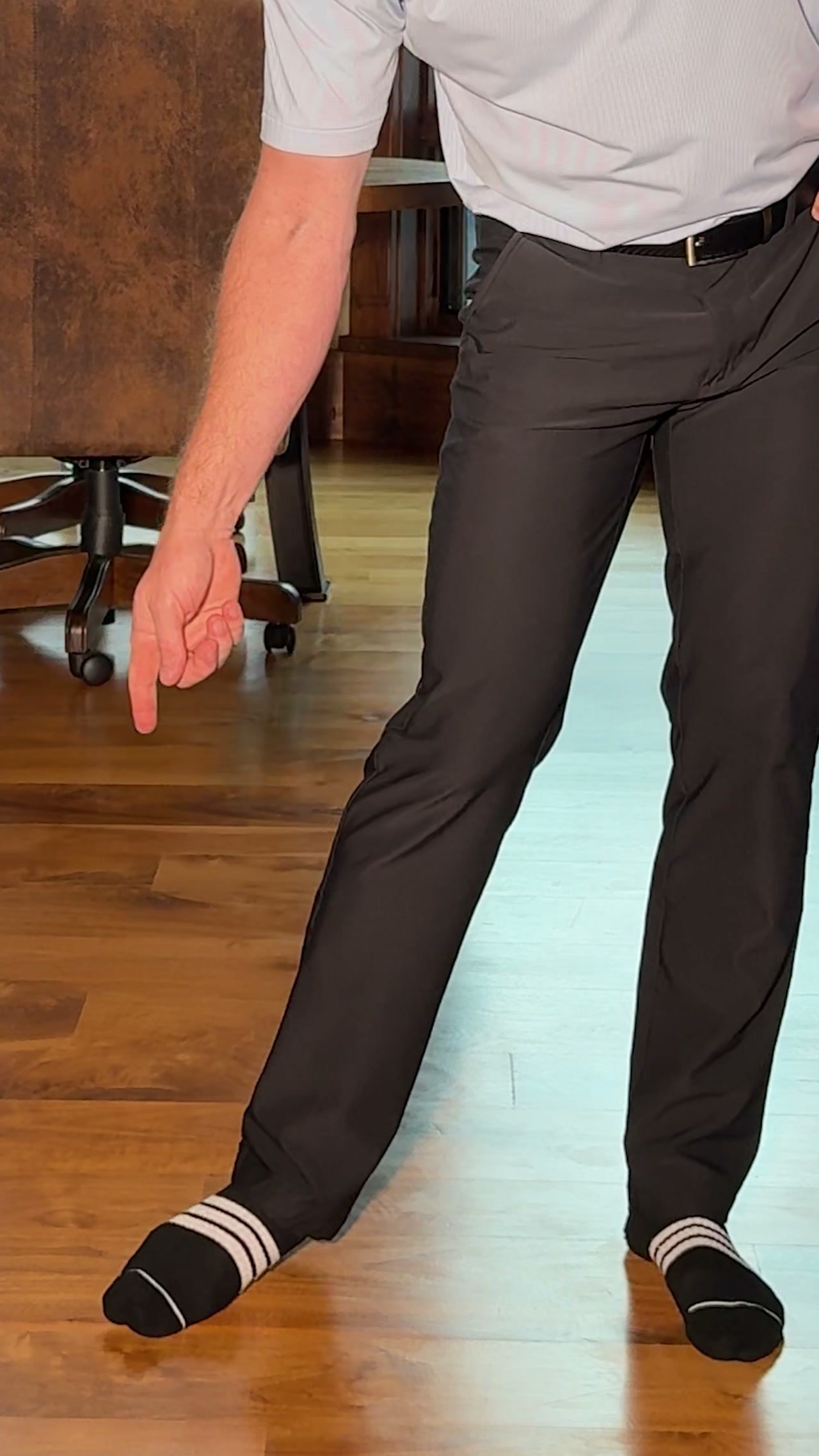
This is the key for understanding the uppercut punch all of your weight needs to get back over to your lead side.
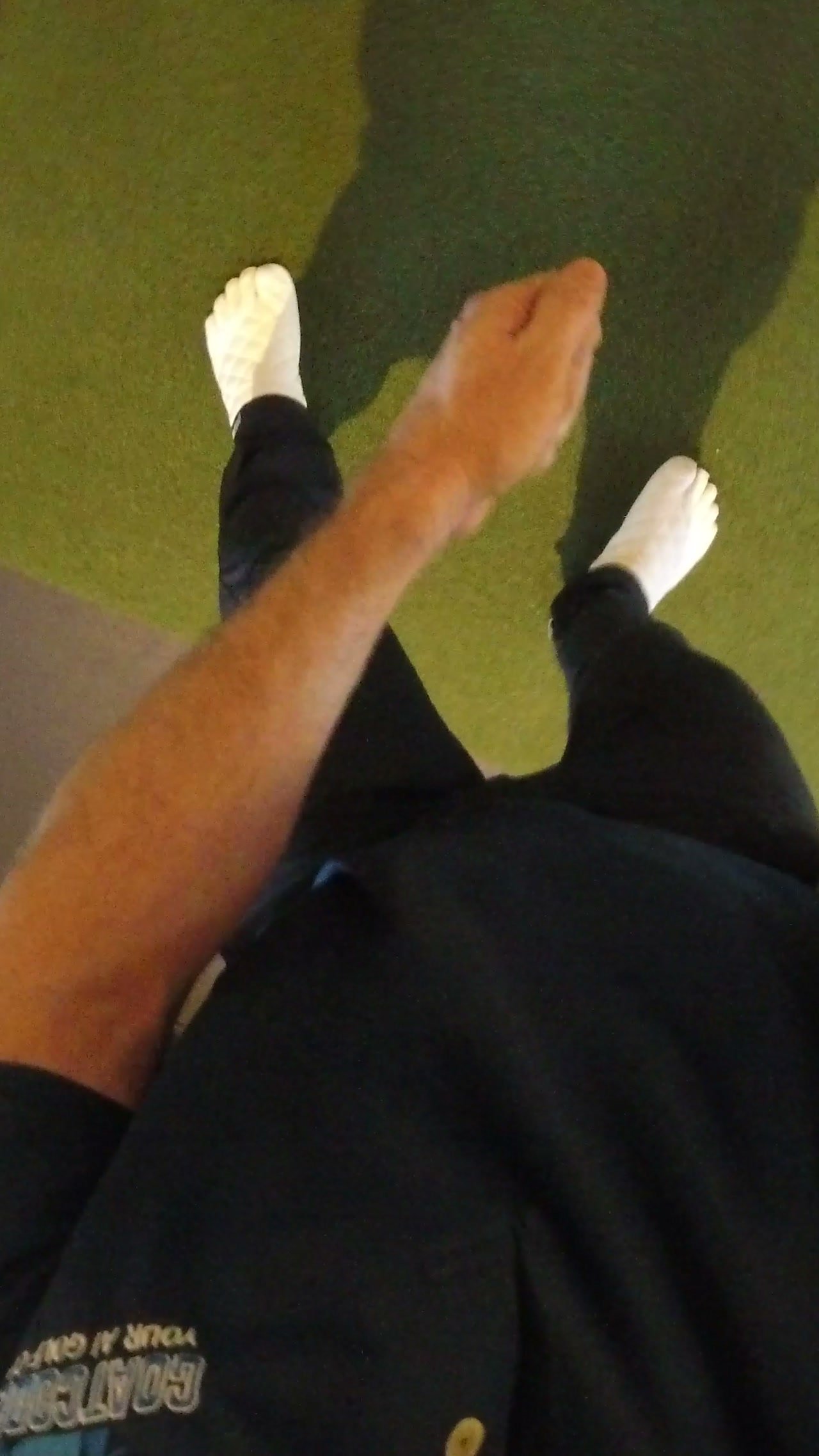
So you can see that my trail heel is kind of popped up here because my lead glute is now activated.
I'm pushing my heel down into the ground while keeping this arm connected.
And now here's the key.
What a lot of golfers try to do is try to turn their hips.
The only hip rotation you're going to have is really just this initial part when you're starting to get back over to lead side, your hips turn.
But now what you want to feel is that this hip is nice and anchored and braced.
So that that stretching that you created and even increased dynamically during the downswing as your lead hip moved further away from your trail shoulder.
Now that it's pulling you down, that is what is going to snap on the way down.
So you'll see that.
If I hold this shoulder down, keep this arm connected, don't let it rotate like this in the back, so you hold it just like this, go back, shift back over.
You'll see that my heel kind of pops up.
Now I've firmly planted on my lead side and I'm lowered down into the ground so that I can explode up.
So you'll see that my sternum is exploding up as my lead hip goes into extension.
We need that force from the leg to drive that arm in and you're not, again, spinning your hips.
Your hip's done turning and it's bracing, and then it's going to explode up.
Now, your hips will continue turning here, but you don't want to feel like you're turning to drag your arms through.
You are loading into the ground to punch.
Now, where does the uppercut punch feel?
At this point, I'm in the goat delivery position, but what I want to feel after this is that I would be continuing, the momentum would continue to pull my arm through, and that is where I deliver the punch.
So, I'm imagining there's somebody right here and as I come through, that is where all the speed is coming through.
In the uppercut punch feel.
Now, of course, we're delivering all that force down here as the club and wrists are releasing.
But there's so much energy coming through that you'll feel that you're gonna deliver an uppercut punch right here.
Now, when you grab a club, you can go through this exact same motion, so preset the club in that goat delivery position.
With your trail arm, go back, keep that shoulder down, don't lift it, keep it down.
So it forces you to stretch your core away from that lead hip, back into that lead hip.
And now, as you start to get ready to fire, you're going to feel all of that force, your whole body, delivering that force right into that trail.
Hand all the way into the ball.
So go back, load into it, and fire.
And the faster you get this extension from your leg and your chest popping up as your core is helping drive that arm through, the more speed you're going to generate.
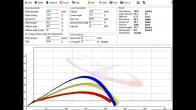
And when you look at your sternum graft, that's where you see that drop as we load into the lower, into the left side or lead side, and then explode up.
That's where you see that huge spike in vertical movement in your sternum graph and that's how you get it.
Now let's take a look at how to put this into practice in the real world and how you can drill this in a fun way.
Did you hear the difference in those two punches?
The first one had a snap and a pop to it, and the second one was kind of a thud.
And that's the difference between how most golfers hit the ball by trying to push off their trail side instead of getting into their lead side.
And being able to snap and use their core to fire their arm through the ball very rapidly.
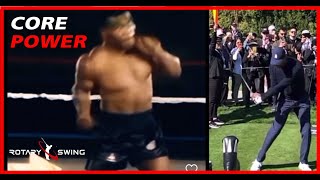
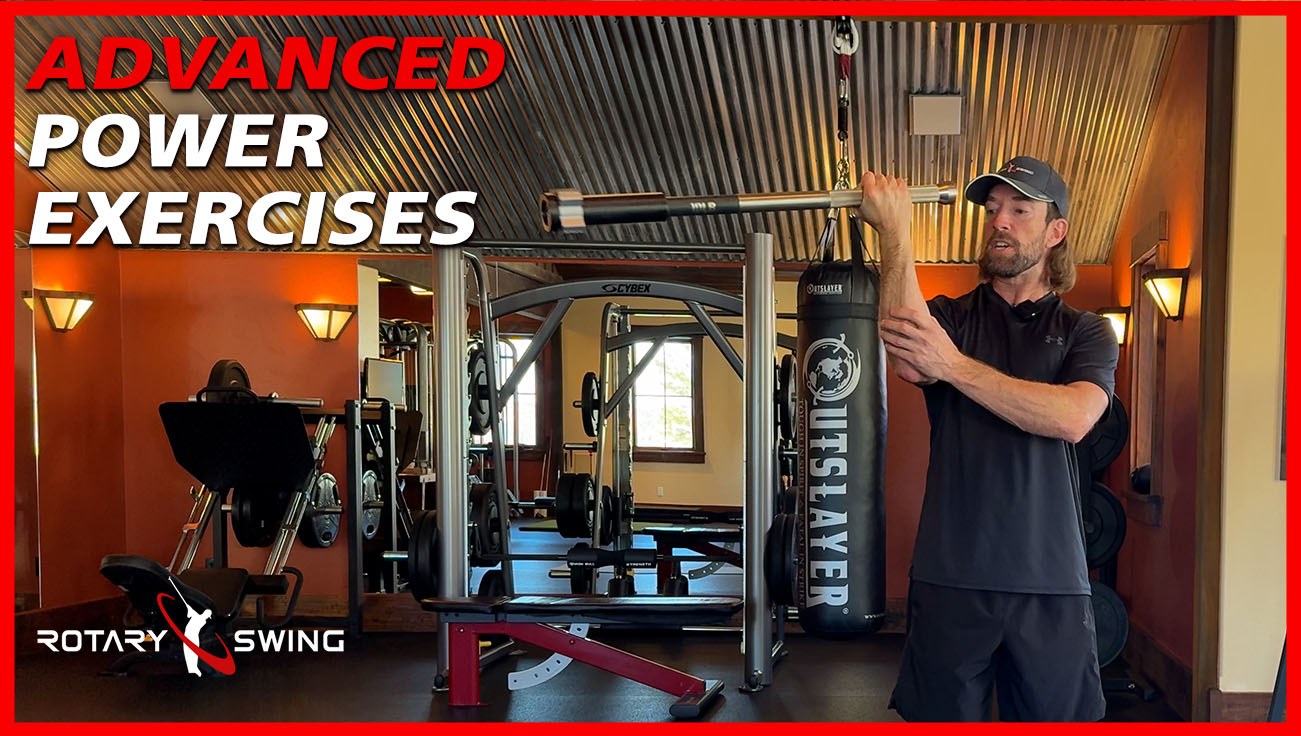
So a great way to practice the feeling of the golf swing is actually using a punching bag.
Now, of course, if you don't have a punching bag, you can just simulate this feeling that what you want to feel is not that you are continuing to drive and push off your trail foot forever.
that will lead to a push in your swing and your whip factor will go way down because your hands will keep being pushed through impact instead of stopping and snapping and releasing through the ball and a punch is exactly the same thing that's why tiger described his swing as an uppercut punch and an uppercut punch you don't keep pushing off your trail side you use that initially to get you over to the lead side and give you some momentum and some lateral force that then is converted into that snap that helps drive the sternum up and that's what you're driving through in the golf swing you're driving your body into that ball and then up and through it as the momentum continues to pull you through so if you if you ever want to practice this in a more practical and fun way find a heavy bag grab some gloves and start learning how to snap your punches instead of pushing your punches and it'll give you the same feeling that you're looking for in the golf swing
And that is exactly what the goat code feeling is in the golf swing.
To feel this, what I want you to do is start with your golf setup at your trail arm only.
So for right-handed golfers, your right arm and rotate your arm so your elbow pit and wrist are out.
This is a goat arm position and connect that arm to your rib cage and feel your back muscles engage as well, so your arm is nice and connected to your body.
Now, from here, as you go back, take your lead arm and put it on your trail shoulder and push it down slightly.
So as you start rotating back, I want you to hold your shoulder down so you don't start lifting it up.
This is going to help you feel connected and it's also going to force you to stretch your core.
I want you to imagine a rubber band from your lead hip to your trail shoulder.
And as you go back, you're starting to pull these two apart, so you can imagine that this rubber band is stretching.
But you're not trying to lift, you're trying to rotate your rib cage and pull your chest and sternum away from this lead hip while keeping your arm down and connected, and hold it just like this the whole time, don't do anything else with your arm.
Now as I go back and I load into my trail side and I start to recenter, now, I'm back on my lead side.
Now.
This is the key for understanding the uppercut punch all of your weight needs to get back over to your lead side.
So you can see that my trail heel is kind of popped up here because my lead glute is now activated.
I'm pushing my heel down into the ground while keeping this arm connected.
And now here's the key.
What a lot of golfers try to do is try to turn their hips.
The only hip rotation you're going to have is really just this initial part when you're starting to get back over to lead side, your hips turn.
But now what you want to feel is that this hip is nice and anchored and braced.
So that that stretching that you created and even increased dynamically during the downswing as your lead hip moved further away from your trail shoulder.
Now that it's pulling you down, that is what is going to snap on the way down.
So you'll see that.
If I hold this shoulder down, keep this arm connected, don't let it rotate like this in the back, so you hold it just like this, go back, shift back over.
You'll see that my heel kind of pops up.
Now I've firmly planted on my lead side and I'm lowered down into the ground so that I can explode up.
So you'll see that my sternum is exploding up as my lead hip goes into extension.
We need that force from the leg to drive that arm in and you're not, again, spinning your hips.
Your hip's done turning and it's bracing, and then it's going to explode up.
Now, your hips will continue turning here, but you don't want to feel like you're turning to drag your arms through.
You are loading into the ground to punch.
Now, where does the uppercut punch feel?
At this point, I'm in the goat delivery position, but what I want to feel after this is that I would be continuing, the momentum would continue to pull my arm through, and that is where I deliver the punch.
So, I'm imagining there's somebody right here and as I come through, that is where all the speed is coming through.
In the uppercut punch feel.
Now, of course, we're delivering all that force down here as the club and wrists are releasing.
But there's so much energy coming through that you'll feel that you're gonna deliver an uppercut punch right here.
Now, when you grab a club, you can go through this exact same motion, so preset the club in that goat delivery position.
With your trail arm, go back, keep that shoulder down, don't lift it, keep it down.
So it forces you to stretch your core away from that lead hip, back into that lead hip.
And now, as you start to get ready to fire, you're going to feel all of that force, your whole body, delivering that force right into that trail.
Hand all the way into the ball.
So go back, load into it, and fire.
And the faster you get this extension from your leg and your chest popping up as your core is helping drive that arm through, the more speed you're going to generate.
And when you look at your sternum graft, that's where you see that drop as we load into the lower, into the left side or lead side, and then explode up.
That's where you see that huge spike in vertical movement in your sternum graph and that's how you get it.
Now let's take a look at how to put this into practice in the real world and how you can drill this in a fun way.
Did you hear the difference in those two punches?
The first one had a snap and a pop to it, and the second one was kind of a thud.
And that's the difference between how most golfers hit the ball by trying to push off their trail side instead of getting into their lead side.
And being able to snap and use their core to fire their arm through the ball very rapidly.
So a great way to practice the feeling of the golf swing is actually using a punching bag.
Now, of course, if you don't have a punching bag, you can just simulate this feeling that what you want to feel is not that you are continuing to drive and push off your trail foot forever.
that will lead to a push in your swing and your whip factor will go way down because your hands will keep being pushed through impact instead of stopping and snapping and releasing through the ball and a punch is exactly the same thing that's why tiger described his swing as an uppercut punch and an uppercut punch you don't keep pushing off your trail side you use that initially to get you over to the lead side and give you some momentum and some lateral force that then is converted into that snap that helps drive the sternum up and that's what you're driving through in the golf swing you're driving your body into that ball and then up and through it as the momentum continues to pull you through so if you if you ever want to practice this in a more practical and fun way find a heavy bag grab some gloves and start learning how to snap your punches instead of pushing your punches and it'll give you the same feeling that you're looking for in the golf swing
Lorsqu'on a demandé à Tiger Woods ce que lui procurait son swing de golf, il l'a décrit comme l'envoi d'un uppercut.
Et c'est exactement ce que l'on ressent dans le swing de golf, grâce au code de la chèvre.
Pour ressentir cela, je vous demande de commencer par positionner votre club de golf uniquement au niveau de votre bras arrière.
Donc, pour les golfeurs droitiers, votre bras droit pivote de façon à ce que votre coude et votre poignet soient vers l'extérieur.
Il s'agit d'une position de bras en forme de chèvre ; connectez ce bras à votre cage thoracique et sentez vos muscles dorsaux s'engager également, de sorte que votre bras soit bien connecté à votre corps.
Maintenant, à partir de cette position, en reculant, prenez votre bras avant et placez-le sur votre épaule arrière, puis appuyez légèrement dessus vers le bas.
Donc, lorsque vous commencez à pivoter vers l'arrière, je veux que vous mainteniez votre épaule basse pour ne pas la relever.
Cela va vous aider à vous sentir connecté et cela va également vous obliger à étirer vos muscles abdominaux.
Imaginez un élastique reliant votre hanche avant à votre épaule arrière.
Et en revenant en arrière, vous commencez à séparer ces deux éléments, vous pouvez donc imaginer que cet élastique s'étire.
Mais vous n'essayez pas de soulever, vous essayez de faire pivoter votre cage thoracique et d'éloigner votre poitrine et votre sternum de cette hanche avant tout en gardant votre bras vers le bas et connecté, et maintenez-le comme ça tout le temps, ne faites rien d'autre avec votre bras.
Maintenant que je reviens en arrière, que je me place du côté opposé et que je commence à me recentrer, je suis de retour du côté de tête.
Maintenant.
C'est la clé pour comprendre le coup de poing uppercut : tout votre poids doit se reporter sur votre côté avant.
Vous pouvez donc constater que mon talon arrière est légèrement soulevé ici car mon fessier avant est maintenant activé.
Je pousse mon talon dans le sol tout en gardant ce bras connecté.
Et voici la clé.
Ce que beaucoup de golfeurs essaient de faire, c'est de faire pivoter leurs hanches.
La seule rotation de hanche que vous aurez se produira réellement lors de cette phase initiale, lorsque vous commencez à revenir du côté où vous êtes en tête ; vos hanches pivotent alors.
Mais ce que vous voulez ressentir maintenant, c'est que cette hanche est bien ancrée et soutenue.
Ainsi, cet étirement que vous avez créé et même augmenté de manière dynamique pendant la descente, à mesure que votre hanche avant s'éloignait de votre épaule arrière.
Maintenant que ça vous tire vers le bas, c'est ça qui va casser pendant la chute.
Vous verrez donc cela.
Si je maintiens cette épaule basse, gardez ce bras connecté, ne le laissez pas pivoter comme ça dans le dos, donc vous le tenez comme ça, reculez, déplacez-vous en arrière.
Vous verrez que mon talon se soulève légèrement.
Maintenant, je suis bien ancré sur mon côté droit et je suis descendu dans le sol pour pouvoir exploser vers le haut.
Vous verrez donc que mon sternum se soulève brusquement lorsque ma hanche avant se met en extension.
Nous avons besoin de cette force de la jambe pour propulser le bras vers l'intérieur et, encore une fois, vous ne faites pas pivoter vos hanches.
Votre hanche a fini de pivoter, elle se stabilise, puis elle va exploser vers le haut.
Vos hanches vont continuer à tourner ici, mais vous ne devez pas avoir l'impression de tourner pour faire passer vos bras.
Vous vous chargez dans le sol pour frapper.
Où ressent-on le coup de poing uppercut ?
À ce stade, je suis en position de lancer, mais ce que je veux ressentir ensuite, c'est que je continue, que l'élan continue à propulser mon bras, et c'est là que je porte le coup de poing.
J'imagine donc qu'il y a quelqu'un juste ici et, lorsque je passe, c'est de là que provient toute la vitesse.
Dans la sensation d'un uppercut.
Maintenant, bien sûr, nous transmettons toute cette force ici, au moment où le club et les poignets se relâchent.
Mais il y a tellement d'énergie qui se dégage que vous aurez l'impression d'être sur le point de décocher un uppercut juste ici.
Maintenant, lorsque vous prenez un club, vous pouvez effectuer exactement le même mouvement, alors prépositionnez le club dans cette position de lancer de chèvre.
Avec votre bras arrière, reculez, gardez l'épaule basse, ne la levez pas, gardez-la basse.
Cela vous oblige donc à étirer votre tronc en l'éloignant de la hanche avant, puis en le ramenant vers cette même hanche.
Et maintenant, au moment de vous préparer à tirer, vous allez sentir toute cette force, votre corps tout entier, la déversant directement dans la trajectoire de la balle.
La main complètement enfoncée dans la balle.
Alors retournez-y, chargez-vous et tirez.
Et plus vite vous obtiendrez cette extension de jambe et le soulèvement de votre poitrine, tandis que vos abdominaux contribuent à propulser le bras, plus vous générerez de vitesse.
Et lorsque vous regardez votre greffe sternale, c'est là que vous voyez cette chute lorsque nous chargeons dans la partie inférieure, du côté gauche ou du côté avant, puis que nous explosons vers le haut.
C'est là que vous observez ce pic important de mouvement vertical sur votre graphique sternal, et c'est comme ça que vous l'obtenez.
Voyons maintenant comment mettre cela en pratique dans le monde réel et comment vous pouvez vous entraîner de manière ludique.
Avez-vous entendu la différence entre ces deux coups de poing ?
Le premier a fait un bruit sec et sec, et le second plutôt un bruit sourd.
Et c'est là la différence entre la façon dont la plupart des golfeurs frappent la balle, en essayant de prendre appui sur leur côté arrière au lieu de se positionner sur leur côté avant.
Et être capables de donner un coup sec et d'utiliser leur tronc pour propulser leur bras à travers la balle très rapidement.
Un excellent moyen de s'entraîner à ressentir le swing de golf consiste donc à utiliser un sac de frappe.
Bien sûr, si vous n'avez pas de sac de frappe, vous pouvez simplement simuler cette sensation, car ce que vous voulez ressentir, ce n'est pas de continuer à pousser et à vous appuyer indéfiniment sur votre pied arrière.
Cela entraînera une poussée dans votre swing et votre facteur de fouet diminuera considérablement, car vos mains continueront à pousser à l'impact au lieu de s'arrêter, de claquer et de se relâcher à travers la balle. Un coup de poing, c'est exactement la même chose. C'est pourquoi Tiger Woods décrivait son swing comme un uppercut. Avec un uppercut, on ne pousse pas continuellement du côté arrière ; on utilise cette poussée initialement pour se déplacer vers l'avant et gagner en élan et en force latérale. Cette force est ensuite convertie en un claquement qui aide à relever le sternum. C'est ce que vous effectuez au golf : vous propulsez votre corps vers la balle, puis vers le haut et à travers elle, tandis que l'élan continue de vous entraîner. Si vous souhaitez vous entraîner de manière plus pratique et ludique, trouvez un sac de frappe, prenez des gants et commencez à apprendre à claquer vos coups de poing au lieu de les pousser. Vous obtiendrez ainsi la même sensation que celle recherchée au golf.
Et c'est exactement ce que l'on ressent dans le swing de golf, grâce au code de la chèvre.
Pour ressentir cela, je vous demande de commencer par positionner votre club de golf uniquement au niveau de votre bras arrière.
Donc, pour les golfeurs droitiers, votre bras droit pivote de façon à ce que votre coude et votre poignet soient vers l'extérieur.
Il s'agit d'une position de bras en forme de chèvre ; connectez ce bras à votre cage thoracique et sentez vos muscles dorsaux s'engager également, de sorte que votre bras soit bien connecté à votre corps.
Maintenant, à partir de cette position, en reculant, prenez votre bras avant et placez-le sur votre épaule arrière, puis appuyez légèrement dessus vers le bas.
Donc, lorsque vous commencez à pivoter vers l'arrière, je veux que vous mainteniez votre épaule basse pour ne pas la relever.
Cela va vous aider à vous sentir connecté et cela va également vous obliger à étirer vos muscles abdominaux.
Imaginez un élastique reliant votre hanche avant à votre épaule arrière.
Et en revenant en arrière, vous commencez à séparer ces deux éléments, vous pouvez donc imaginer que cet élastique s'étire.
Mais vous n'essayez pas de soulever, vous essayez de faire pivoter votre cage thoracique et d'éloigner votre poitrine et votre sternum de cette hanche avant tout en gardant votre bras vers le bas et connecté, et maintenez-le comme ça tout le temps, ne faites rien d'autre avec votre bras.
Maintenant que je reviens en arrière, que je me place du côté opposé et que je commence à me recentrer, je suis de retour du côté de tête.
Maintenant.
C'est la clé pour comprendre le coup de poing uppercut : tout votre poids doit se reporter sur votre côté avant.
Vous pouvez donc constater que mon talon arrière est légèrement soulevé ici car mon fessier avant est maintenant activé.
Je pousse mon talon dans le sol tout en gardant ce bras connecté.
Et voici la clé.
Ce que beaucoup de golfeurs essaient de faire, c'est de faire pivoter leurs hanches.
La seule rotation de hanche que vous aurez se produira réellement lors de cette phase initiale, lorsque vous commencez à revenir du côté où vous êtes en tête ; vos hanches pivotent alors.
Mais ce que vous voulez ressentir maintenant, c'est que cette hanche est bien ancrée et soutenue.
Ainsi, cet étirement que vous avez créé et même augmenté de manière dynamique pendant la descente, à mesure que votre hanche avant s'éloignait de votre épaule arrière.
Maintenant que ça vous tire vers le bas, c'est ça qui va casser pendant la chute.
Vous verrez donc cela.
Si je maintiens cette épaule basse, gardez ce bras connecté, ne le laissez pas pivoter comme ça dans le dos, donc vous le tenez comme ça, reculez, déplacez-vous en arrière.
Vous verrez que mon talon se soulève légèrement.
Maintenant, je suis bien ancré sur mon côté droit et je suis descendu dans le sol pour pouvoir exploser vers le haut.
Vous verrez donc que mon sternum se soulève brusquement lorsque ma hanche avant se met en extension.
Nous avons besoin de cette force de la jambe pour propulser le bras vers l'intérieur et, encore une fois, vous ne faites pas pivoter vos hanches.
Votre hanche a fini de pivoter, elle se stabilise, puis elle va exploser vers le haut.
Vos hanches vont continuer à tourner ici, mais vous ne devez pas avoir l'impression de tourner pour faire passer vos bras.
Vous vous chargez dans le sol pour frapper.
Où ressent-on le coup de poing uppercut ?
À ce stade, je suis en position de lancer, mais ce que je veux ressentir ensuite, c'est que je continue, que l'élan continue à propulser mon bras, et c'est là que je porte le coup de poing.
J'imagine donc qu'il y a quelqu'un juste ici et, lorsque je passe, c'est de là que provient toute la vitesse.
Dans la sensation d'un uppercut.
Maintenant, bien sûr, nous transmettons toute cette force ici, au moment où le club et les poignets se relâchent.
Mais il y a tellement d'énergie qui se dégage que vous aurez l'impression d'être sur le point de décocher un uppercut juste ici.
Maintenant, lorsque vous prenez un club, vous pouvez effectuer exactement le même mouvement, alors prépositionnez le club dans cette position de lancer de chèvre.
Avec votre bras arrière, reculez, gardez l'épaule basse, ne la levez pas, gardez-la basse.
Cela vous oblige donc à étirer votre tronc en l'éloignant de la hanche avant, puis en le ramenant vers cette même hanche.
Et maintenant, au moment de vous préparer à tirer, vous allez sentir toute cette force, votre corps tout entier, la déversant directement dans la trajectoire de la balle.
La main complètement enfoncée dans la balle.
Alors retournez-y, chargez-vous et tirez.
Et plus vite vous obtiendrez cette extension de jambe et le soulèvement de votre poitrine, tandis que vos abdominaux contribuent à propulser le bras, plus vous générerez de vitesse.
Et lorsque vous regardez votre greffe sternale, c'est là que vous voyez cette chute lorsque nous chargeons dans la partie inférieure, du côté gauche ou du côté avant, puis que nous explosons vers le haut.
C'est là que vous observez ce pic important de mouvement vertical sur votre graphique sternal, et c'est comme ça que vous l'obtenez.
Voyons maintenant comment mettre cela en pratique dans le monde réel et comment vous pouvez vous entraîner de manière ludique.
Avez-vous entendu la différence entre ces deux coups de poing ?
Le premier a fait un bruit sec et sec, et le second plutôt un bruit sourd.
Et c'est là la différence entre la façon dont la plupart des golfeurs frappent la balle, en essayant de prendre appui sur leur côté arrière au lieu de se positionner sur leur côté avant.
Et être capables de donner un coup sec et d'utiliser leur tronc pour propulser leur bras à travers la balle très rapidement.
Un excellent moyen de s'entraîner à ressentir le swing de golf consiste donc à utiliser un sac de frappe.
Bien sûr, si vous n'avez pas de sac de frappe, vous pouvez simplement simuler cette sensation, car ce que vous voulez ressentir, ce n'est pas de continuer à pousser et à vous appuyer indéfiniment sur votre pied arrière.
Cela entraînera une poussée dans votre swing et votre facteur de fouet diminuera considérablement, car vos mains continueront à pousser à l'impact au lieu de s'arrêter, de claquer et de se relâcher à travers la balle. Un coup de poing, c'est exactement la même chose. C'est pourquoi Tiger Woods décrivait son swing comme un uppercut. Avec un uppercut, on ne pousse pas continuellement du côté arrière ; on utilise cette poussée initialement pour se déplacer vers l'avant et gagner en élan et en force latérale. Cette force est ensuite convertie en un claquement qui aide à relever le sternum. C'est ce que vous effectuez au golf : vous propulsez votre corps vers la balle, puis vers le haut et à travers elle, tandis que l'élan continue de vous entraîner. Si vous souhaitez vous entraîner de manière plus pratique et ludique, trouvez un sac de frappe, prenez des gants et commencez à apprendre à claquer vos coups de poing au lieu de les pousser. Vous obtiendrez ainsi la même sensation que celle recherchée au golf.
Cuando le preguntaron a Tiger Woods cómo se siente al hacer su swing de golf, lo describió como si estuviera dando un golpe de uppercut.
Y eso es exactamente lo que el código de la cabra siente en el swing de golf.
Para sentir esto, lo que quiero que hagas es comenzar con tu configuración de golf únicamente en el brazo trasero.
Entonces, para los golfistas diestros, use el brazo derecho y gire el brazo de manera que el codo y la muñeca queden hacia afuera.
Esta es una posición de brazo de cabra: conecta ese brazo a tu caja torácica y siente cómo los músculos de tu espalda también se contraen, de modo que tu brazo esté bien conectado a tu cuerpo.
Ahora, desde aquí, mientras retrocedes, toma tu brazo principal y ponlo sobre tu hombro trasero y empújalo ligeramente hacia abajo.
Entonces, cuando comiences a girar hacia atrás, quiero que mantengas el hombro hacia abajo para que no comiences a levantarlo.
Esto te ayudará a sentirte conectado y también te obligará a estirar tu núcleo.
Quiero que imagines una banda elástica desde tu cadera delantera hasta tu hombro trasero.
Y a medida que retrocedes, comienzas a separar estos dos, por lo que puedes imaginar que esta banda elástica se está estirando.
Pero no estás tratando de levantar, estás tratando de rotar tu caja torácica y alejar tu pecho y esternón de esta cadera delantera mientras mantienes tu brazo abajo y conectado, y mantenlo así todo el tiempo, no hagas nada más con tu brazo.
Ahora, mientras vuelvo y cargo mi lado del sendero y comienzo a centrarme, ahora estoy nuevamente en mi lado principal.
Ahora.
Esta es la clave para entender el golpe uppercut: todo tu peso debe volver hacia tu lado adelantado.
Entonces puedes ver que mi talón trasero está un poco levantado aquí porque mi glúteo principal ahora está activado.
Estoy empujando mi talón hacia abajo en el suelo mientras mantengo este brazo conectado.
Y ahora aquí está la clave.
Lo que muchos golfistas intentan hacer es girar las caderas.
La única rotación de cadera que tendrás es realmente solo esta parte inicial cuando comienzas a regresar al lado delantero, tus caderas giran.
Pero ahora lo que quieres sentir es que esta cadera está bien anclada y reforzada.
De modo que ese estiramiento que creaste e incluso aumentaste dinámicamente durante el downswing a medida que tu cadera delantera se alejaba del hombro trasero.
Ahora que te está tirando hacia abajo, eso es lo que se va a romper en el camino hacia abajo.
Así que ya lo verás.
Si mantengo este hombro hacia abajo, mantengo este brazo conectado, no dejes que gire así en la parte de atrás, así que sostenlo así, vuelve, cambia de posición hacia atrás.
Verás que mi talón se levanta.
Ahora me he plantado firmemente en mi lado líder y estoy bajando al suelo para poder explotar.
Entonces verás que mi esternón explota mientras mi cadera delantera entra en extensión.
Necesitamos esa fuerza de la pierna para impulsar el brazo hacia adentro y no estás, nuevamente, girando las caderas.
Tu cadera ha terminado de girar y se está preparando, y luego va a explotar hacia arriba.
Ahora, tus caderas continuarán girando aquí, pero no quieres sentir que estás girando para arrastrar los brazos.
Estás cargando contra el suelo para golpear.
Ahora bien, ¿dónde se siente el golpe del uppercut?
En este punto, estoy en la posición de lanzamiento de cabra, pero lo que quiero sentir después de esto es que continuaría, que el impulso continuaría tirando de mi brazo, y ahí es donde lanzo el golpe.
Entonces, me imagino que hay alguien aquí y, mientras avanzo, ahí es donde llega toda la velocidad.
En la sensación de golpe de uppercut.
Ahora, por supuesto, estamos aplicando toda esa fuerza aquí abajo mientras el palo y las muñecas se relajan.
Pero hay tanta energía fluyendo que sentirás que vas a dar un golpe uppercut justo aquí.
Ahora, cuando agarras un palo, puedes realizar exactamente el mismo movimiento, así que coloca el palo en esa posición de lanzamiento de cabra.
Con el brazo de arrastre, ve hacia atrás, mantén el hombro abajo, no lo levantes, mantenlo abajo.
Por lo tanto, te obliga a estirar el centro del cuerpo desde la cadera delantera hacia atrás, hacia la cadera delantera.
Y ahora, cuando empieces a prepararte para disparar, vas a sentir toda esa fuerza, todo tu cuerpo, enviando esa fuerza directamente a ese camino.
Introduzca la mano hasta el fondo de la pelota.
Así que regresa, cárgalo y dispara.
Y cuanto más rápido logres esta extensión de tu pierna y eleves tu pecho mientras tu centro ayuda a impulsar ese brazo, más velocidad generarás.
Y cuando miras tu injerto de esternón, ahí es donde ves esa caída a medida que cargamos en la parte inferior, en el lado izquierdo o lado principal, y luego explota hacia arriba.
Ahí es donde se ve ese enorme aumento en el movimiento vertical en el gráfico del esternón y así es como lo obtienes.
Ahora veamos cómo poner esto en práctica en el mundo real y cómo puedes practicarlo de una manera divertida.
¿Escuchaste la diferencia entre esos dos golpes?
El primero tuvo un chasquido y un estallido, y el segundo fue una especie de golpe sordo.
Y esa es la diferencia entre cómo la mayoría de los golfistas golpean la pelota, intentando empujar hacia el lado de atrás en lugar de hacerlo hacia el lado de adelante.
Y poder chasquear los dedos y usar su centro para lanzar el brazo a través de la pelota muy rápidamente.
Una excelente manera de practicar la sensación del swing de golf es utilizar un saco de boxeo.
Ahora, por supuesto, si no tienes un saco de boxeo, puedes simplemente simular esta sensación de que lo que quieres sentir no es que estás continuando conduciendo y empujando tu pie de seguimiento para siempre.
Eso provocará un empujón en tu swing y tu factor de látigo disminuirá mucho porque tus manos seguirán siendo empujadas a través del impacto en lugar de detenerse, chasquear y soltar a través de la pelota y un puñetazo es exactamente lo mismo, por eso Tiger describió su swing como un puñetazo de uppercut y un puñetazo de uppercut no sigues empujando hacia tu lado de seguimiento, lo usas inicialmente para llegar al lado de avance y darte algo de impulso y algo de fuerza lateral que luego se convierte en ese chasquido que ayuda a impulsar el esternón hacia arriba y eso es lo que estás impulsando en el swing de golf estás impulsando tu cuerpo hacia esa pelota y luego hacia arriba y a través de ella a medida que el impulso continúa empujándote así que si alguna vez quieres practicar esto de una manera más práctica y divertida, busca un saco pesado, toma unos guantes y comienza a aprender a chasquear tus golpes en lugar de empujarlos y te dará la misma sensación que estás buscando en el swing de golf
Y eso es exactamente lo que el código de la cabra siente en el swing de golf.
Para sentir esto, lo que quiero que hagas es comenzar con tu configuración de golf únicamente en el brazo trasero.
Entonces, para los golfistas diestros, use el brazo derecho y gire el brazo de manera que el codo y la muñeca queden hacia afuera.
Esta es una posición de brazo de cabra: conecta ese brazo a tu caja torácica y siente cómo los músculos de tu espalda también se contraen, de modo que tu brazo esté bien conectado a tu cuerpo.
Ahora, desde aquí, mientras retrocedes, toma tu brazo principal y ponlo sobre tu hombro trasero y empújalo ligeramente hacia abajo.
Entonces, cuando comiences a girar hacia atrás, quiero que mantengas el hombro hacia abajo para que no comiences a levantarlo.
Esto te ayudará a sentirte conectado y también te obligará a estirar tu núcleo.
Quiero que imagines una banda elástica desde tu cadera delantera hasta tu hombro trasero.
Y a medida que retrocedes, comienzas a separar estos dos, por lo que puedes imaginar que esta banda elástica se está estirando.
Pero no estás tratando de levantar, estás tratando de rotar tu caja torácica y alejar tu pecho y esternón de esta cadera delantera mientras mantienes tu brazo abajo y conectado, y mantenlo así todo el tiempo, no hagas nada más con tu brazo.
Ahora, mientras vuelvo y cargo mi lado del sendero y comienzo a centrarme, ahora estoy nuevamente en mi lado principal.
Ahora.
Esta es la clave para entender el golpe uppercut: todo tu peso debe volver hacia tu lado adelantado.
Entonces puedes ver que mi talón trasero está un poco levantado aquí porque mi glúteo principal ahora está activado.
Estoy empujando mi talón hacia abajo en el suelo mientras mantengo este brazo conectado.
Y ahora aquí está la clave.
Lo que muchos golfistas intentan hacer es girar las caderas.
La única rotación de cadera que tendrás es realmente solo esta parte inicial cuando comienzas a regresar al lado delantero, tus caderas giran.
Pero ahora lo que quieres sentir es que esta cadera está bien anclada y reforzada.
De modo que ese estiramiento que creaste e incluso aumentaste dinámicamente durante el downswing a medida que tu cadera delantera se alejaba del hombro trasero.
Ahora que te está tirando hacia abajo, eso es lo que se va a romper en el camino hacia abajo.
Así que ya lo verás.
Si mantengo este hombro hacia abajo, mantengo este brazo conectado, no dejes que gire así en la parte de atrás, así que sostenlo así, vuelve, cambia de posición hacia atrás.
Verás que mi talón se levanta.
Ahora me he plantado firmemente en mi lado líder y estoy bajando al suelo para poder explotar.
Entonces verás que mi esternón explota mientras mi cadera delantera entra en extensión.
Necesitamos esa fuerza de la pierna para impulsar el brazo hacia adentro y no estás, nuevamente, girando las caderas.
Tu cadera ha terminado de girar y se está preparando, y luego va a explotar hacia arriba.
Ahora, tus caderas continuarán girando aquí, pero no quieres sentir que estás girando para arrastrar los brazos.
Estás cargando contra el suelo para golpear.
Ahora bien, ¿dónde se siente el golpe del uppercut?
En este punto, estoy en la posición de lanzamiento de cabra, pero lo que quiero sentir después de esto es que continuaría, que el impulso continuaría tirando de mi brazo, y ahí es donde lanzo el golpe.
Entonces, me imagino que hay alguien aquí y, mientras avanzo, ahí es donde llega toda la velocidad.
En la sensación de golpe de uppercut.
Ahora, por supuesto, estamos aplicando toda esa fuerza aquí abajo mientras el palo y las muñecas se relajan.
Pero hay tanta energía fluyendo que sentirás que vas a dar un golpe uppercut justo aquí.
Ahora, cuando agarras un palo, puedes realizar exactamente el mismo movimiento, así que coloca el palo en esa posición de lanzamiento de cabra.
Con el brazo de arrastre, ve hacia atrás, mantén el hombro abajo, no lo levantes, mantenlo abajo.
Por lo tanto, te obliga a estirar el centro del cuerpo desde la cadera delantera hacia atrás, hacia la cadera delantera.
Y ahora, cuando empieces a prepararte para disparar, vas a sentir toda esa fuerza, todo tu cuerpo, enviando esa fuerza directamente a ese camino.
Introduzca la mano hasta el fondo de la pelota.
Así que regresa, cárgalo y dispara.
Y cuanto más rápido logres esta extensión de tu pierna y eleves tu pecho mientras tu centro ayuda a impulsar ese brazo, más velocidad generarás.
Y cuando miras tu injerto de esternón, ahí es donde ves esa caída a medida que cargamos en la parte inferior, en el lado izquierdo o lado principal, y luego explota hacia arriba.
Ahí es donde se ve ese enorme aumento en el movimiento vertical en el gráfico del esternón y así es como lo obtienes.
Ahora veamos cómo poner esto en práctica en el mundo real y cómo puedes practicarlo de una manera divertida.
¿Escuchaste la diferencia entre esos dos golpes?
El primero tuvo un chasquido y un estallido, y el segundo fue una especie de golpe sordo.
Y esa es la diferencia entre cómo la mayoría de los golfistas golpean la pelota, intentando empujar hacia el lado de atrás en lugar de hacerlo hacia el lado de adelante.
Y poder chasquear los dedos y usar su centro para lanzar el brazo a través de la pelota muy rápidamente.
Una excelente manera de practicar la sensación del swing de golf es utilizar un saco de boxeo.
Ahora, por supuesto, si no tienes un saco de boxeo, puedes simplemente simular esta sensación de que lo que quieres sentir no es que estás continuando conduciendo y empujando tu pie de seguimiento para siempre.
Eso provocará un empujón en tu swing y tu factor de látigo disminuirá mucho porque tus manos seguirán siendo empujadas a través del impacto en lugar de detenerse, chasquear y soltar a través de la pelota y un puñetazo es exactamente lo mismo, por eso Tiger describió su swing como un puñetazo de uppercut y un puñetazo de uppercut no sigues empujando hacia tu lado de seguimiento, lo usas inicialmente para llegar al lado de avance y darte algo de impulso y algo de fuerza lateral que luego se convierte en ese chasquido que ayuda a impulsar el esternón hacia arriba y eso es lo que estás impulsando en el swing de golf estás impulsando tu cuerpo hacia esa pelota y luego hacia arriba y a través de ella a medida que el impulso continúa empujándote así que si alguna vez quieres practicar esto de una manera más práctica y divertida, busca un saco pesado, toma unos guantes y comienza a aprender a chasquear tus golpes en lugar de empujarlos y te dará la misma sensación que estás buscando en el swing de golf
Auf die Frage, wie sich sein Golfschwung für ihn anfühlt, beschrieb Tiger Woods ihn als einen Aufwärtshaken.
Und genau das ist das Gefühl, das man beim Golfschwung empfindet.
Um das zu spüren, möchte ich, dass Sie mit Ihrer Golf-Ausrüstung nur am hinteren Arm beginnen.
Für Rechtshänder im Golfsport gilt also: Drehen Sie Ihren rechten Arm so, dass Ihre Ellenbogenbeuge und Ihr Handgelenk nach außen zeigen.
Dies ist eine Ziegenarmposition. Verbinden Sie diesen Arm mit Ihrem Brustkorb und spüren Sie, wie sich auch Ihre Rückenmuskulatur anspannt, sodass Ihr Arm schön mit Ihrem Körper verbunden ist.
Wenn du nun von hier aus zurückgehst, nimm deinen vorderen Arm und lege ihn auf deine hintere Schulter und drücke ihn leicht nach unten.
Wenn du also anfängst, dich zurückzudrehen, möchte ich, dass du deine Schulter unten hältst, damit du sie nicht anhebst.
Das wird Ihnen helfen, sich verbunden zu fühlen, und es wird Sie auch dazu zwingen, Ihre Rumpfmuskulatur zu dehnen.
Stellen Sie sich ein Gummiband vor, das von Ihrer vorderen Hüfte zu Ihrer hinteren Schulter verläuft.
Und wenn Sie zurückgehen, beginnen Sie, diese beiden auseinanderzuziehen, man kann sich also vorstellen, dass sich dieses Gummiband dehnt.
Aber du versuchst nicht, etwas anzuheben, sondern deinen Brustkorb zu drehen und deine Brust und dein Brustbein von der vorderen Hüfte wegzuziehen, während du deinen Arm unten und verbunden hältst, und halte ihn die ganze Zeit genau so, mach nichts anderes mit deinem Arm.
Jetzt, wo ich zurückgehe, auf meine Führungsseite wechsle und mich wieder neu zentriere, bin ich wieder auf meiner Führungsseite.
Jetzt.
Das ist der Schlüssel zum Verständnis des Aufwärtshakens: Dein gesamtes Gewicht muss wieder auf deine Führungsseite verlagert werden.
Man kann also sehen, dass meine Ferse auf der linken Seite hier etwas nach oben zeigt, weil mein Gesäßmuskel auf der linken Seite jetzt aktiviert ist.
Ich drücke meine Ferse in den Boden, während ich diesen Arm verbunden halte.
Und hier ist der Schlüssel.
Was viele Golfer versuchen, ist, ihre Hüften zu drehen.
Die einzige Hüftrotation, die Sie dabei haben werden, ist eigentlich nur dieser anfängliche Teil, wenn Sie anfangen, wieder auf die Führungsseite zu wechseln, Ihre Hüften drehen sich.
Aber was Sie jetzt spüren möchten, ist, dass diese Hüfte schön fest und stabil ist.
So dass diese Dehnung, die Sie erzeugt haben, während des Abschwungs sogar noch dynamisch verstärkt wurde, als sich Ihre vordere Hüfte weiter von Ihrer hinteren Schulter entfernte.
Jetzt, wo es dich nach unten zieht, ist es das, was auf dem Weg nach unten brechen wird.
Das werden Sie also sehen.
Wenn ich diese Schulter unten halte, diesen Arm verbunden lasse und ihn nicht so nach hinten rotieren lasse, halte ich ihn genau so, gehe zurück und verlagere mein Gewicht wieder nach hinten.
Sie werden sehen, dass meine Ferse etwas hochspringt.
Jetzt stehe ich fest auf meiner Führungsseite und lasse mich in den Boden hinab, um dann explosionsartig nach oben zu schnellen.
Sie werden also sehen, dass sich mein Brustbein explosionsartig nach oben hebt, wenn meine vordere Hüfte in die Streckung geht.
Wir brauchen die Kraft aus dem Bein, um den Arm nach innen zu treiben, und du drehst dabei nicht deine Hüften.
Die Hüfte hat die Drehung abgeschlossen und ist in der Stabilisierungsphase, und dann wird sie explosionsartig nach oben schnellen.
Nun drehen sich Ihre Hüften hier weiter, aber Sie sollten nicht das Gefühl haben, sich zu drehen, um Ihre Arme nachzuziehen.
Du holst zum Schlag aus.
Und wo fühlt sich der Aufwärtshaken an?
An diesem Punkt befinde ich mich in der Position, in der der Ziegenbock den Schlag ausführt, aber was ich danach fühlen möchte, ist, dass ich weitermachen würde, die Dynamik meinen Arm weiter durchziehen würde und genau dort den Schlag lande.
Ich stelle mir also vor, dass genau hier jemand ist und dass die ganze Geschwindigkeit genau dort durchkommt, wo ich durchkomme.
Das Gefühl eines Aufwärtshakens.
Jetzt übertragen wir natürlich die gesamte Kraft nach unten, während sich Schläger und Handgelenke lösen.
Aber es strömt so viel Energie durch, dass man das Gefühl hat, man würde hier gleich einen Aufwärtshaken landen.
Wenn Sie nun einen Schläger zur Hand nehmen, können Sie genau dieselbe Bewegung ausführen. Bringen Sie den Schläger also in die Position, die für einen Ziegen-Schlag verwendet wird.
Mit dem hinteren Arm gehst du zurück, hältst die Schulter unten, hebst sie nicht an, halte sie unten.
Dadurch werden Sie gezwungen, Ihre Rumpfmuskulatur von der führenden Hüfte weg und wieder hin zur führenden Hüfte hin zu dehnen.
Und jetzt, wenn Sie sich zum Schuss bereit machen, werden Sie die ganze Kraft spüren, Ihr ganzer Körper wird diese Kraft direkt in die Spur übertragen.
Die Hand ganz in den Ball hineinführen.
Also geh zurück, lade es und feuer.
Und je schneller Sie diese Streckung aus Ihrem Bein und das Aufrichten Ihres Oberkörpers erreichen, während Ihre Rumpfmuskulatur hilft, den Arm durchzudrücken, desto mehr Geschwindigkeit werden Sie erzeugen.
Und wenn Sie sich Ihr Brustbeintransplantat ansehen, sehen Sie dort, wie es absinkt, wenn wir es unten, auf der linken Seite oder der Führungsseite, belasten und dann explosionsartig nach oben schnellen.
Genau dort sieht man diesen enormen Ausschlag in der vertikalen Bewegung im Brustbeindiagramm, und so kommt man dazu.
Schauen wir uns nun an, wie man das in der Praxis umsetzen kann und wie man das auf spielerische Weise üben kann.
Hast du den Unterschied zwischen den beiden Schlägen gehört?
Der erste Schuss machte ein Knacken und Ploppen, der zweite eher ein dumpfes Geräusch.
Und genau darin liegt der Unterschied zwischen der Art und Weise, wie die meisten Golfer den Ball schlagen, indem sie versuchen, sich mit der hinteren Seite abzustoßen, anstatt auf die vordere Seite zu kommen.
Und die Fähigkeit, blitzschnell zu reagieren und ihre Rumpfmuskulatur einzusetzen, um den Arm blitzschnell durch den Ball zu befördern.
Eine hervorragende Möglichkeit, das Gefühl für den Golfschwung zu üben, ist die Verwendung eines Boxsacks.
Wenn Sie natürlich keinen Boxsack zur Hand haben, können Sie einfach das Gefühl simulieren, dass Sie nicht das Gefühl haben wollen, ewig weiterzulaufen und sich mit dem hinteren Fuß abzustoßen.
Das führt zu einem Druck in deinem Schwung, und dein Peitscheneffekt nimmt deutlich ab, weil deine Hände beim Treffmoment weiter nach vorne gedrückt werden, anstatt zu stoppen, zu schnappen und den Ball durchzuschwingen. Ein Faustschlag funktioniert genau nach demselben Prinzip. Deshalb beschrieb Tiger seinen Schwung als Aufwärtshaken. Bei einem Aufwärtshaken drückt man sich nicht ständig von der hinteren Seite ab, sondern nutzt die Kraft zunächst, um auf die vordere Seite zu kommen und Schwung und seitliche Kraft zu erzeugen. Diese Kraft wird dann in den Schnappschlag umgewandelt, der das Brustbein nach oben drückt. Genau das ist es, was du beim Golfschwung bewirkst: Du drückst deinen Körper in den Ball hinein und dann nach oben und durch ihn hindurch, während dich der Schwung weiterzieht. Wenn du das also einmal praktischer und mit mehr Spaß üben möchtest, such dir einen Boxsack, schnapp dir Handschuhe und lerne, deine Schläge zu schnappen, anstatt sie zu drücken. Das gibt dir dasselbe Gefühl, das du beim Golfschwung anstrebst.
Und genau das ist das Gefühl, das man beim Golfschwung empfindet.
Um das zu spüren, möchte ich, dass Sie mit Ihrer Golf-Ausrüstung nur am hinteren Arm beginnen.
Für Rechtshänder im Golfsport gilt also: Drehen Sie Ihren rechten Arm so, dass Ihre Ellenbogenbeuge und Ihr Handgelenk nach außen zeigen.
Dies ist eine Ziegenarmposition. Verbinden Sie diesen Arm mit Ihrem Brustkorb und spüren Sie, wie sich auch Ihre Rückenmuskulatur anspannt, sodass Ihr Arm schön mit Ihrem Körper verbunden ist.
Wenn du nun von hier aus zurückgehst, nimm deinen vorderen Arm und lege ihn auf deine hintere Schulter und drücke ihn leicht nach unten.
Wenn du also anfängst, dich zurückzudrehen, möchte ich, dass du deine Schulter unten hältst, damit du sie nicht anhebst.
Das wird Ihnen helfen, sich verbunden zu fühlen, und es wird Sie auch dazu zwingen, Ihre Rumpfmuskulatur zu dehnen.
Stellen Sie sich ein Gummiband vor, das von Ihrer vorderen Hüfte zu Ihrer hinteren Schulter verläuft.
Und wenn Sie zurückgehen, beginnen Sie, diese beiden auseinanderzuziehen, man kann sich also vorstellen, dass sich dieses Gummiband dehnt.
Aber du versuchst nicht, etwas anzuheben, sondern deinen Brustkorb zu drehen und deine Brust und dein Brustbein von der vorderen Hüfte wegzuziehen, während du deinen Arm unten und verbunden hältst, und halte ihn die ganze Zeit genau so, mach nichts anderes mit deinem Arm.
Jetzt, wo ich zurückgehe, auf meine Führungsseite wechsle und mich wieder neu zentriere, bin ich wieder auf meiner Führungsseite.
Jetzt.
Das ist der Schlüssel zum Verständnis des Aufwärtshakens: Dein gesamtes Gewicht muss wieder auf deine Führungsseite verlagert werden.
Man kann also sehen, dass meine Ferse auf der linken Seite hier etwas nach oben zeigt, weil mein Gesäßmuskel auf der linken Seite jetzt aktiviert ist.
Ich drücke meine Ferse in den Boden, während ich diesen Arm verbunden halte.
Und hier ist der Schlüssel.
Was viele Golfer versuchen, ist, ihre Hüften zu drehen.
Die einzige Hüftrotation, die Sie dabei haben werden, ist eigentlich nur dieser anfängliche Teil, wenn Sie anfangen, wieder auf die Führungsseite zu wechseln, Ihre Hüften drehen sich.
Aber was Sie jetzt spüren möchten, ist, dass diese Hüfte schön fest und stabil ist.
So dass diese Dehnung, die Sie erzeugt haben, während des Abschwungs sogar noch dynamisch verstärkt wurde, als sich Ihre vordere Hüfte weiter von Ihrer hinteren Schulter entfernte.
Jetzt, wo es dich nach unten zieht, ist es das, was auf dem Weg nach unten brechen wird.
Das werden Sie also sehen.
Wenn ich diese Schulter unten halte, diesen Arm verbunden lasse und ihn nicht so nach hinten rotieren lasse, halte ich ihn genau so, gehe zurück und verlagere mein Gewicht wieder nach hinten.
Sie werden sehen, dass meine Ferse etwas hochspringt.
Jetzt stehe ich fest auf meiner Führungsseite und lasse mich in den Boden hinab, um dann explosionsartig nach oben zu schnellen.
Sie werden also sehen, dass sich mein Brustbein explosionsartig nach oben hebt, wenn meine vordere Hüfte in die Streckung geht.
Wir brauchen die Kraft aus dem Bein, um den Arm nach innen zu treiben, und du drehst dabei nicht deine Hüften.
Die Hüfte hat die Drehung abgeschlossen und ist in der Stabilisierungsphase, und dann wird sie explosionsartig nach oben schnellen.
Nun drehen sich Ihre Hüften hier weiter, aber Sie sollten nicht das Gefühl haben, sich zu drehen, um Ihre Arme nachzuziehen.
Du holst zum Schlag aus.
Und wo fühlt sich der Aufwärtshaken an?
An diesem Punkt befinde ich mich in der Position, in der der Ziegenbock den Schlag ausführt, aber was ich danach fühlen möchte, ist, dass ich weitermachen würde, die Dynamik meinen Arm weiter durchziehen würde und genau dort den Schlag lande.
Ich stelle mir also vor, dass genau hier jemand ist und dass die ganze Geschwindigkeit genau dort durchkommt, wo ich durchkomme.
Das Gefühl eines Aufwärtshakens.
Jetzt übertragen wir natürlich die gesamte Kraft nach unten, während sich Schläger und Handgelenke lösen.
Aber es strömt so viel Energie durch, dass man das Gefühl hat, man würde hier gleich einen Aufwärtshaken landen.
Wenn Sie nun einen Schläger zur Hand nehmen, können Sie genau dieselbe Bewegung ausführen. Bringen Sie den Schläger also in die Position, die für einen Ziegen-Schlag verwendet wird.
Mit dem hinteren Arm gehst du zurück, hältst die Schulter unten, hebst sie nicht an, halte sie unten.
Dadurch werden Sie gezwungen, Ihre Rumpfmuskulatur von der führenden Hüfte weg und wieder hin zur führenden Hüfte hin zu dehnen.
Und jetzt, wenn Sie sich zum Schuss bereit machen, werden Sie die ganze Kraft spüren, Ihr ganzer Körper wird diese Kraft direkt in die Spur übertragen.
Die Hand ganz in den Ball hineinführen.
Also geh zurück, lade es und feuer.
Und je schneller Sie diese Streckung aus Ihrem Bein und das Aufrichten Ihres Oberkörpers erreichen, während Ihre Rumpfmuskulatur hilft, den Arm durchzudrücken, desto mehr Geschwindigkeit werden Sie erzeugen.
Und wenn Sie sich Ihr Brustbeintransplantat ansehen, sehen Sie dort, wie es absinkt, wenn wir es unten, auf der linken Seite oder der Führungsseite, belasten und dann explosionsartig nach oben schnellen.
Genau dort sieht man diesen enormen Ausschlag in der vertikalen Bewegung im Brustbeindiagramm, und so kommt man dazu.
Schauen wir uns nun an, wie man das in der Praxis umsetzen kann und wie man das auf spielerische Weise üben kann.
Hast du den Unterschied zwischen den beiden Schlägen gehört?
Der erste Schuss machte ein Knacken und Ploppen, der zweite eher ein dumpfes Geräusch.
Und genau darin liegt der Unterschied zwischen der Art und Weise, wie die meisten Golfer den Ball schlagen, indem sie versuchen, sich mit der hinteren Seite abzustoßen, anstatt auf die vordere Seite zu kommen.
Und die Fähigkeit, blitzschnell zu reagieren und ihre Rumpfmuskulatur einzusetzen, um den Arm blitzschnell durch den Ball zu befördern.
Eine hervorragende Möglichkeit, das Gefühl für den Golfschwung zu üben, ist die Verwendung eines Boxsacks.
Wenn Sie natürlich keinen Boxsack zur Hand haben, können Sie einfach das Gefühl simulieren, dass Sie nicht das Gefühl haben wollen, ewig weiterzulaufen und sich mit dem hinteren Fuß abzustoßen.
Das führt zu einem Druck in deinem Schwung, und dein Peitscheneffekt nimmt deutlich ab, weil deine Hände beim Treffmoment weiter nach vorne gedrückt werden, anstatt zu stoppen, zu schnappen und den Ball durchzuschwingen. Ein Faustschlag funktioniert genau nach demselben Prinzip. Deshalb beschrieb Tiger seinen Schwung als Aufwärtshaken. Bei einem Aufwärtshaken drückt man sich nicht ständig von der hinteren Seite ab, sondern nutzt die Kraft zunächst, um auf die vordere Seite zu kommen und Schwung und seitliche Kraft zu erzeugen. Diese Kraft wird dann in den Schnappschlag umgewandelt, der das Brustbein nach oben drückt. Genau das ist es, was du beim Golfschwung bewirkst: Du drückst deinen Körper in den Ball hinein und dann nach oben und durch ihn hindurch, während dich der Schwung weiterzieht. Wenn du das also einmal praktischer und mit mehr Spaß üben möchtest, such dir einen Boxsack, schnapp dir Handschuhe und lerne, deine Schläge zu schnappen, anstatt sie zu drücken. Das gibt dir dasselbe Gefühl, das du beim Golfschwung anstrebst.


Jayden
Jayden
Craig (Certified RST Instructor)
Chris
Craig (Certified RST Instructor)
Benjamin
Craig (Certified RST Instructor)
Asle
Craig (Certified RST Instructor)
Asle
Chuck
Kendall
Chuck
Kendall