





























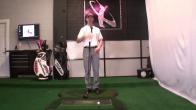
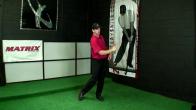
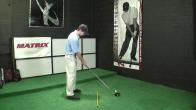








How the Hips Work Together in the Golf Swing
Sorry, you need to be a member to access this video. You Are Just Seconds Away!

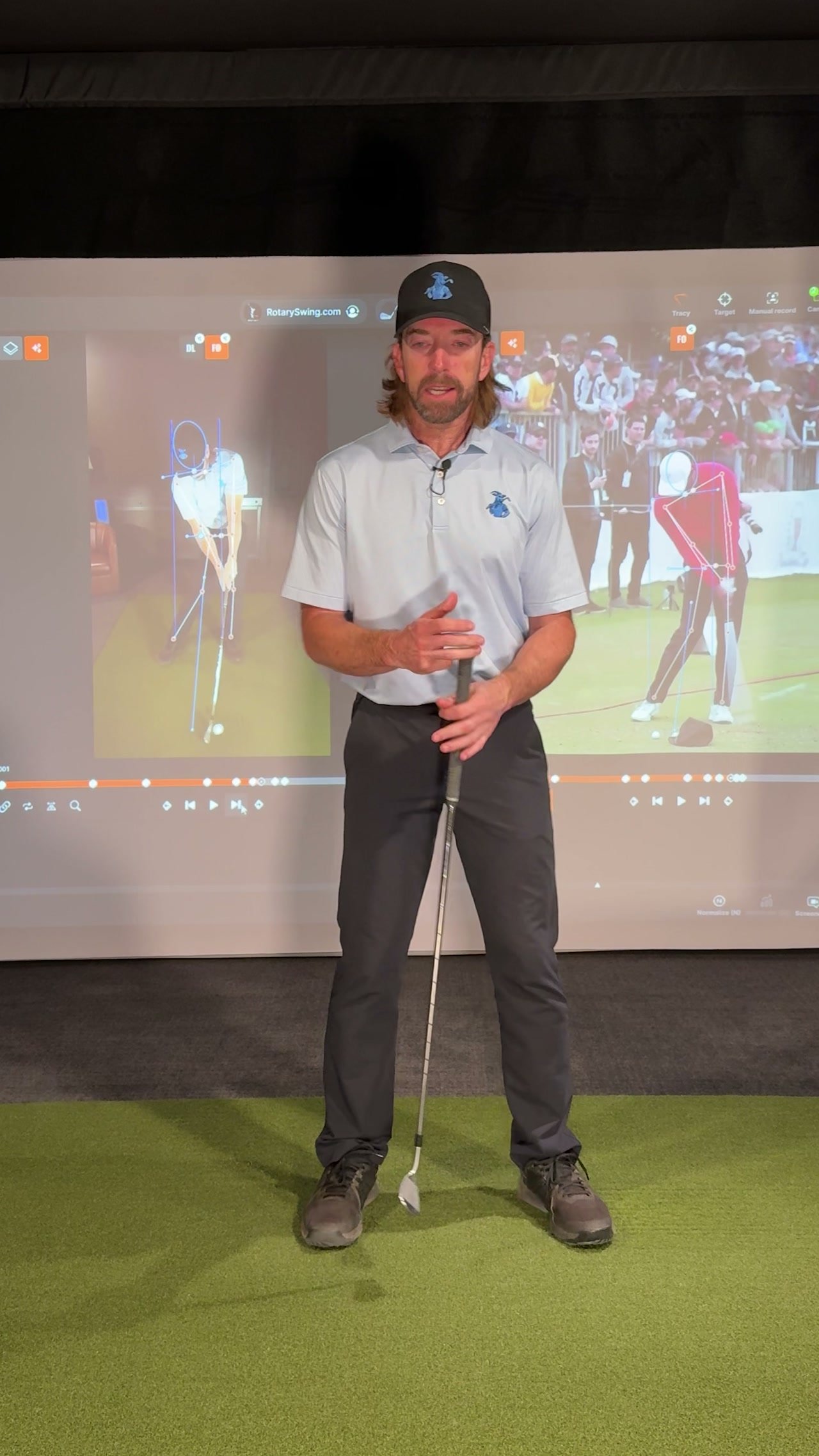
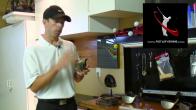
Both hips have to work in the golf swing, some golfers need to focus more on one vs the other, this video aims to reconcile both actions so you can learn to move them together rather than focusing on just one or the other.
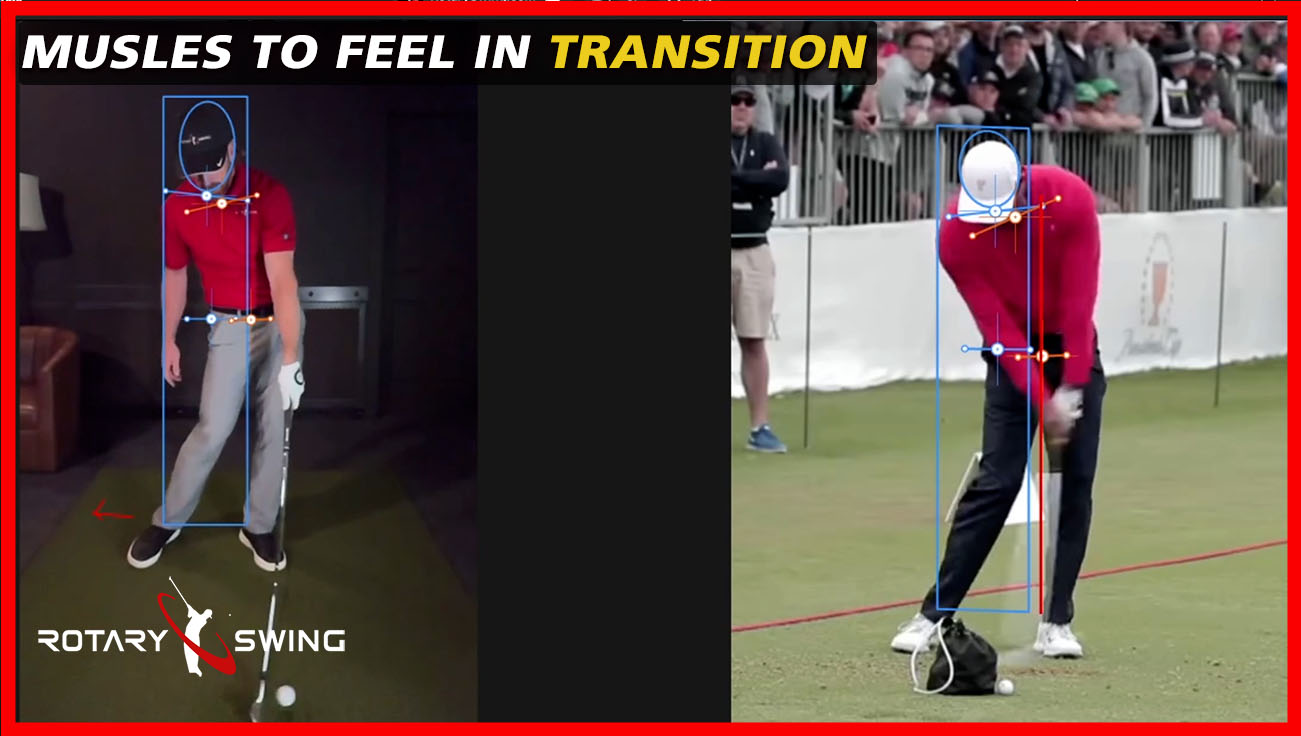
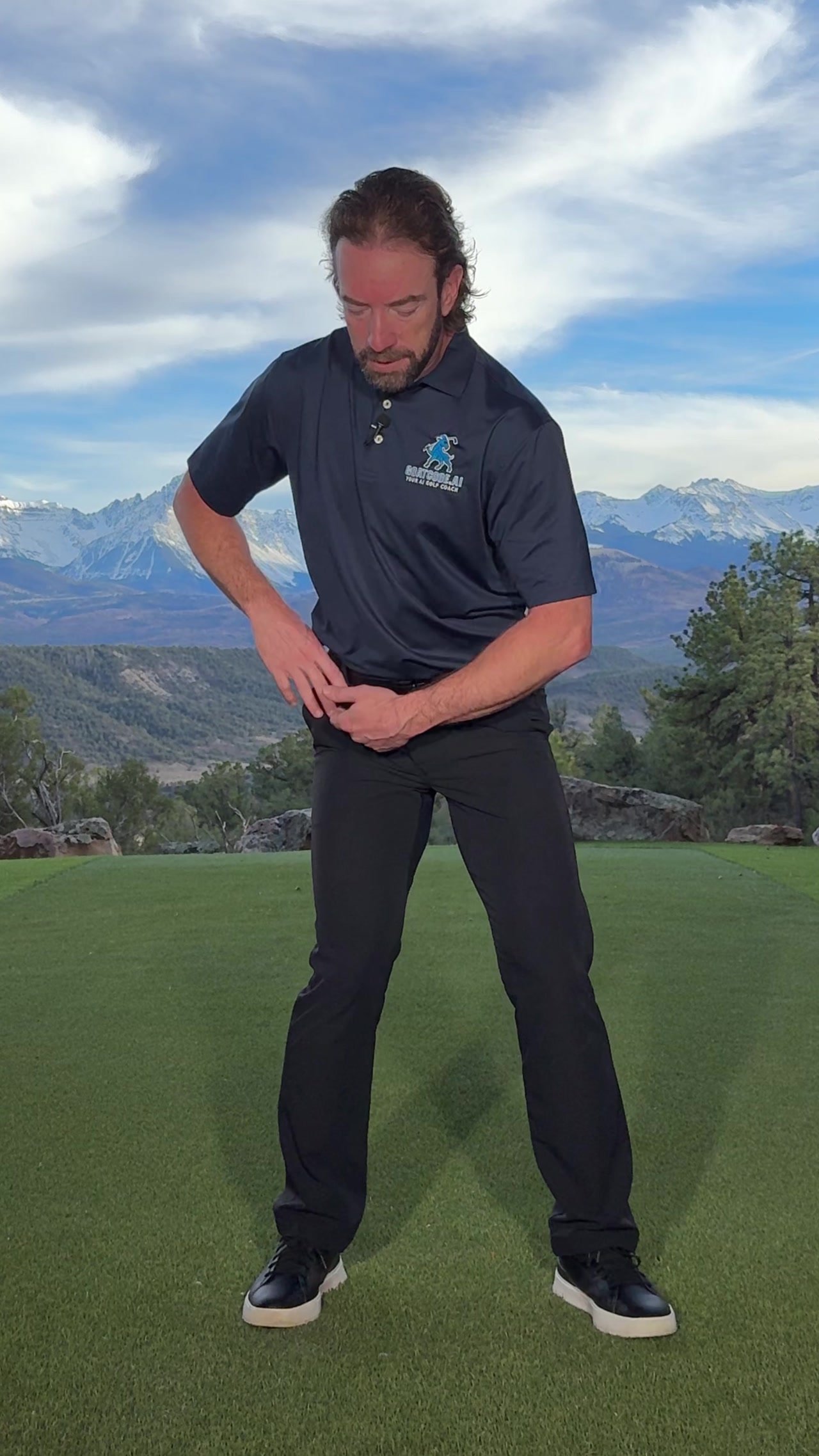
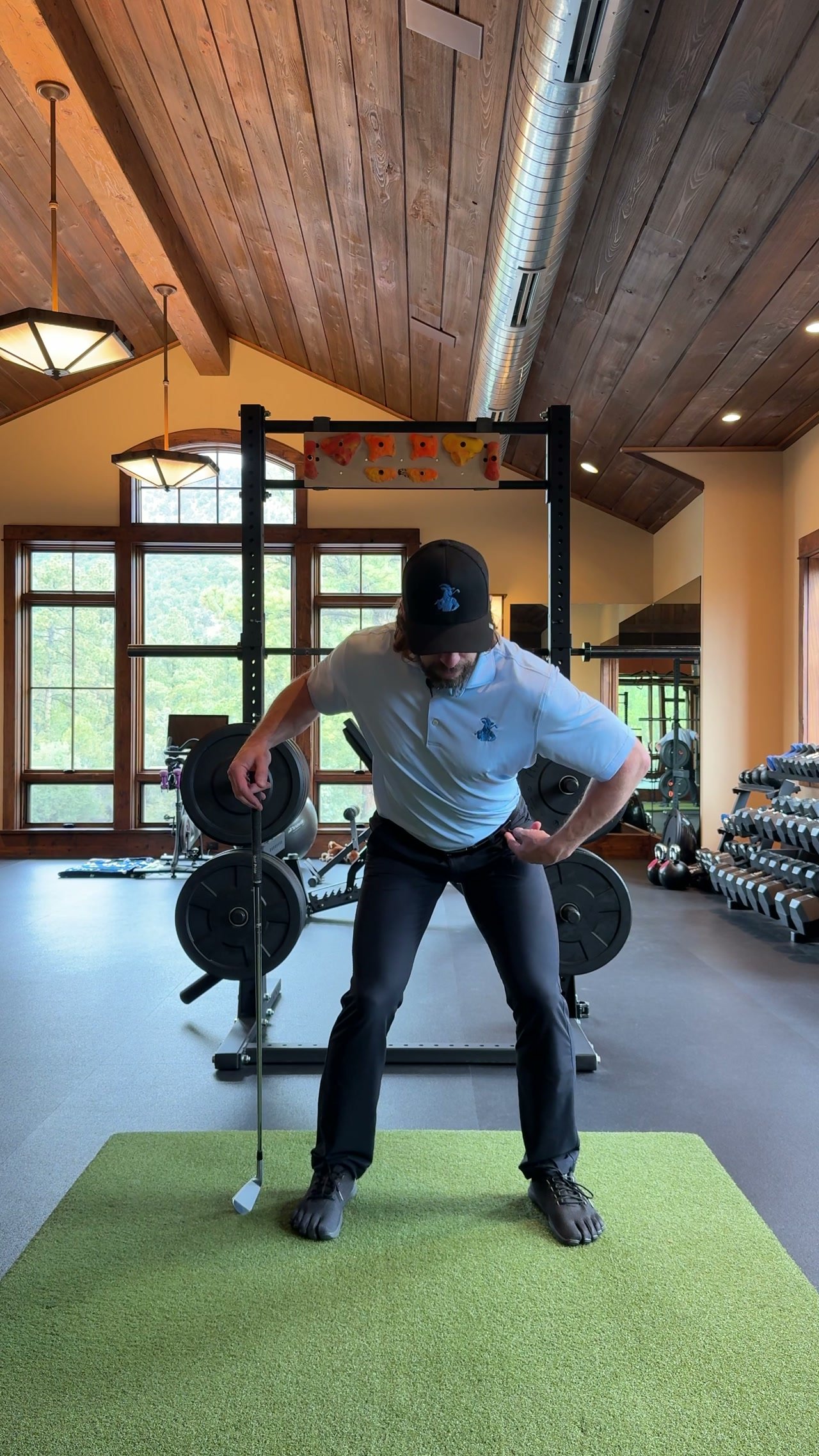
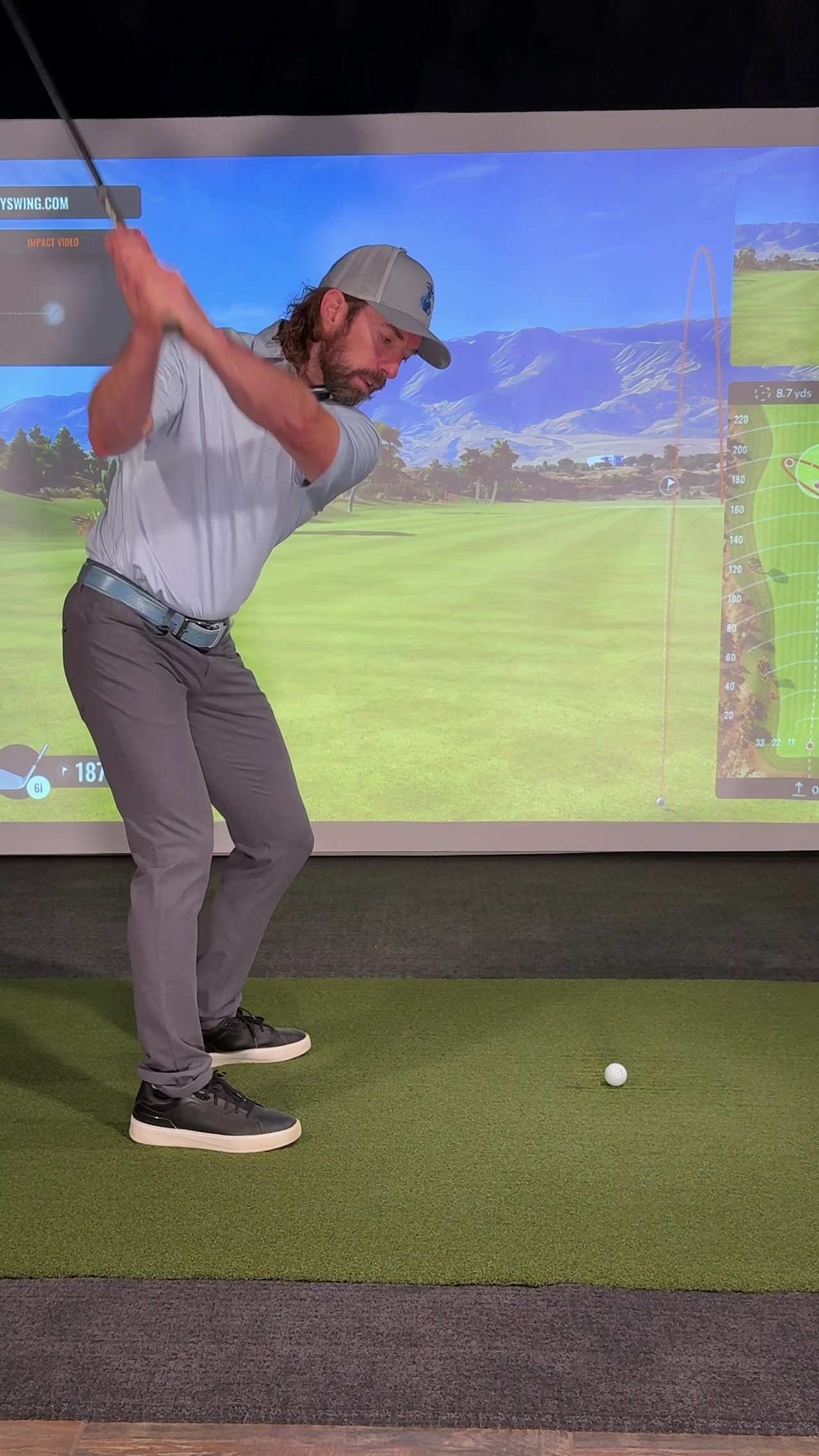
When you're losing your spine angle coming down into impact, it's usually because this trail hip is moving into the ball or your arms are firing down before your hips have had a chance to clear.
What does that mean exactly and how do we do that?
It's going to be very simple and very quick.
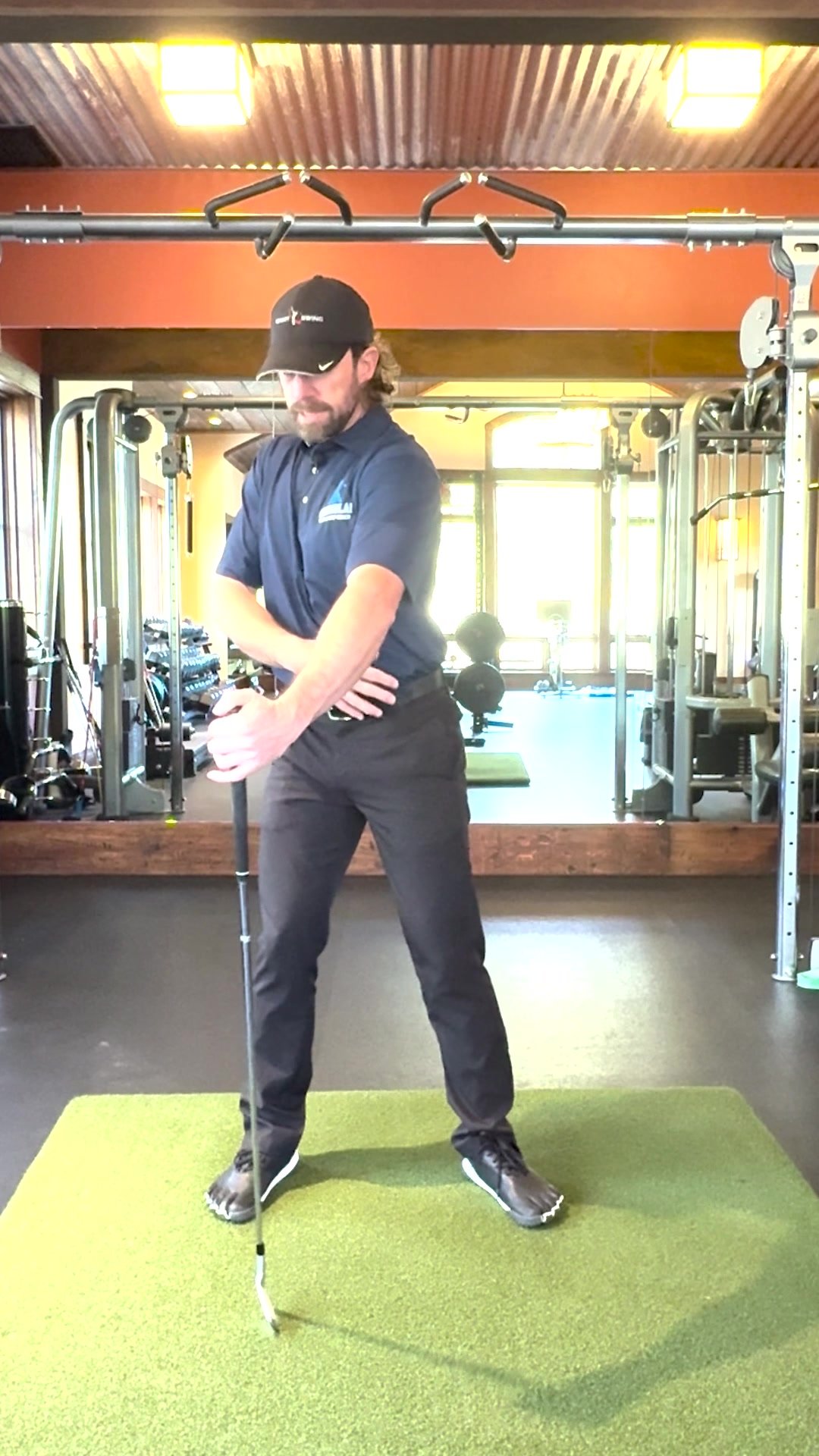
As you know, going back, the first thing you do is get into this trail side and it starts to act like a post, like a brace that you coil around.
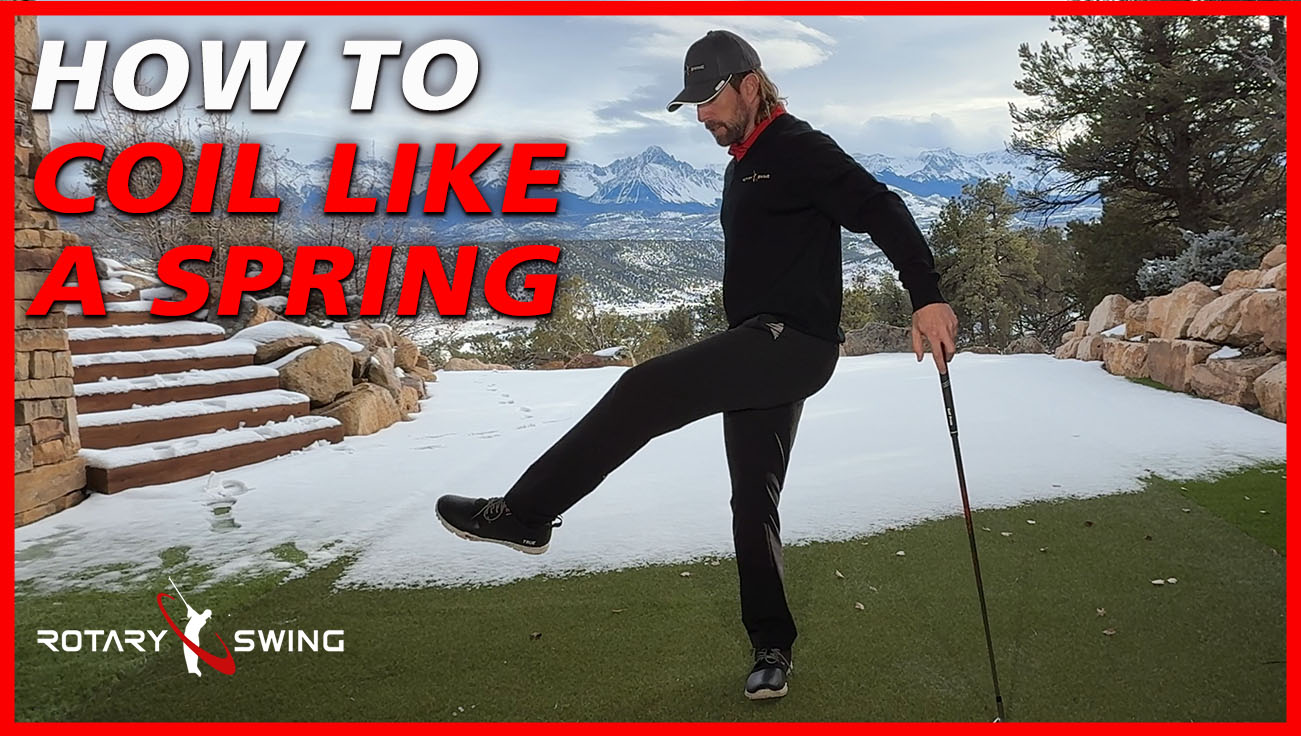
If you saw my other video with a TheraBand how to coil around this trail leg, that's the first thing that happens in the swing.
And as you keep coiling, you start falling back into this lead side, because, remember, your lead hip is going down.
It's very important that it goes down to start loading into the ground.
And you should feel stretching on the outside of your trail hip as this hip goes down because it's starting to lengthen these muscles.
And as this happens, as you start falling back into this lead side, because everything is starting to shift back over.
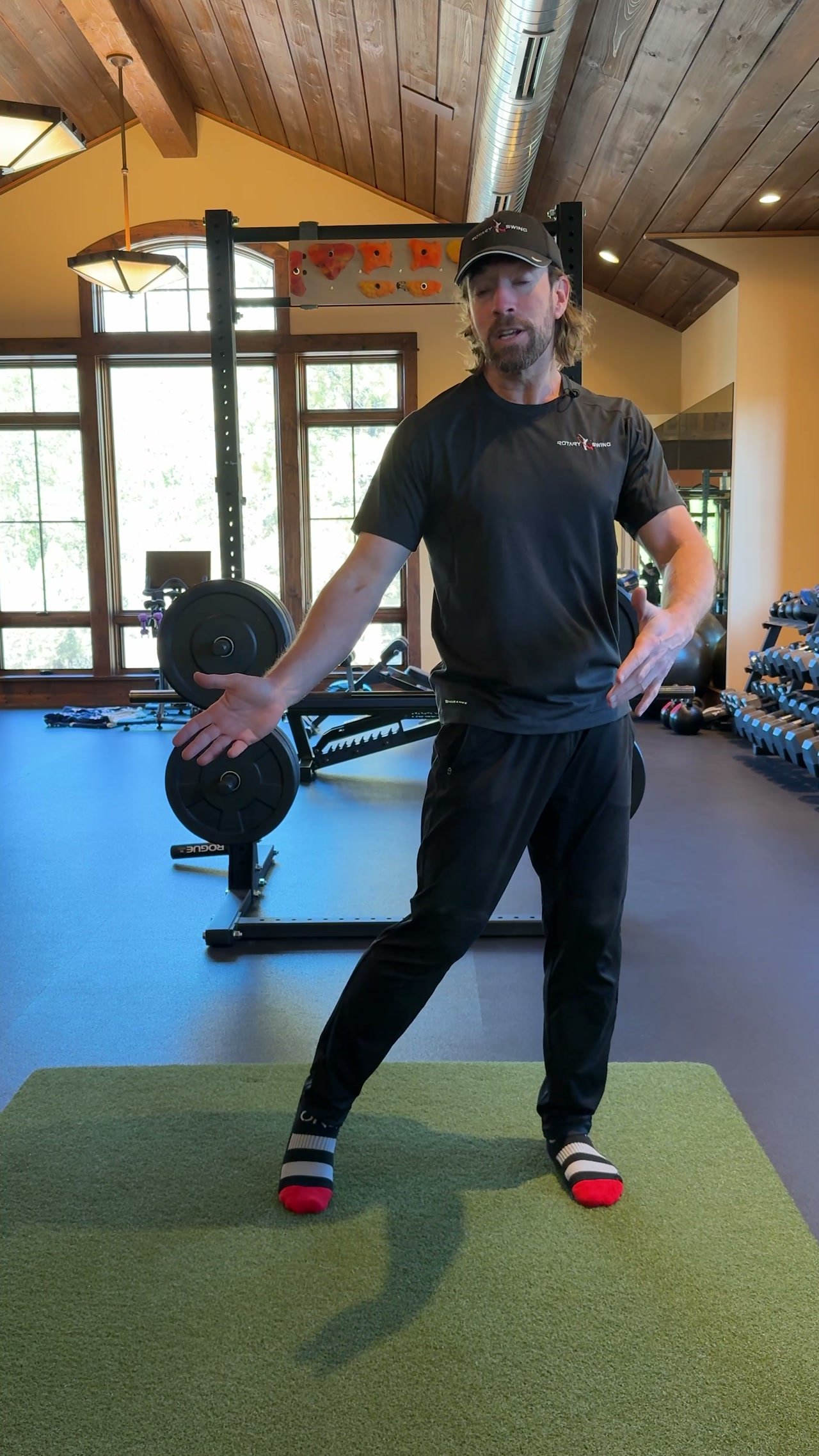
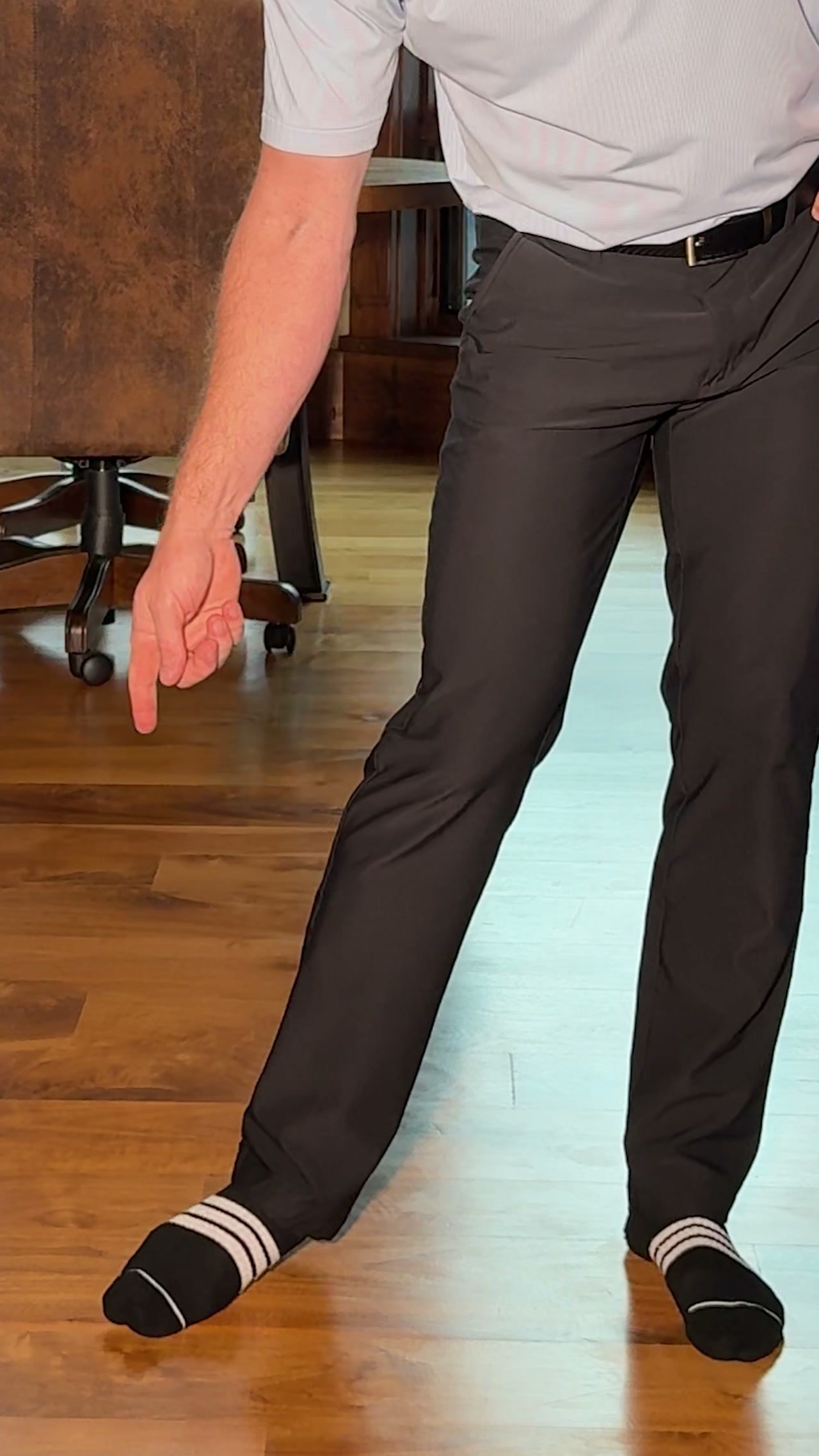
What happens is this foot starts to get light and I'm wearing socks with stripes on them for a second.
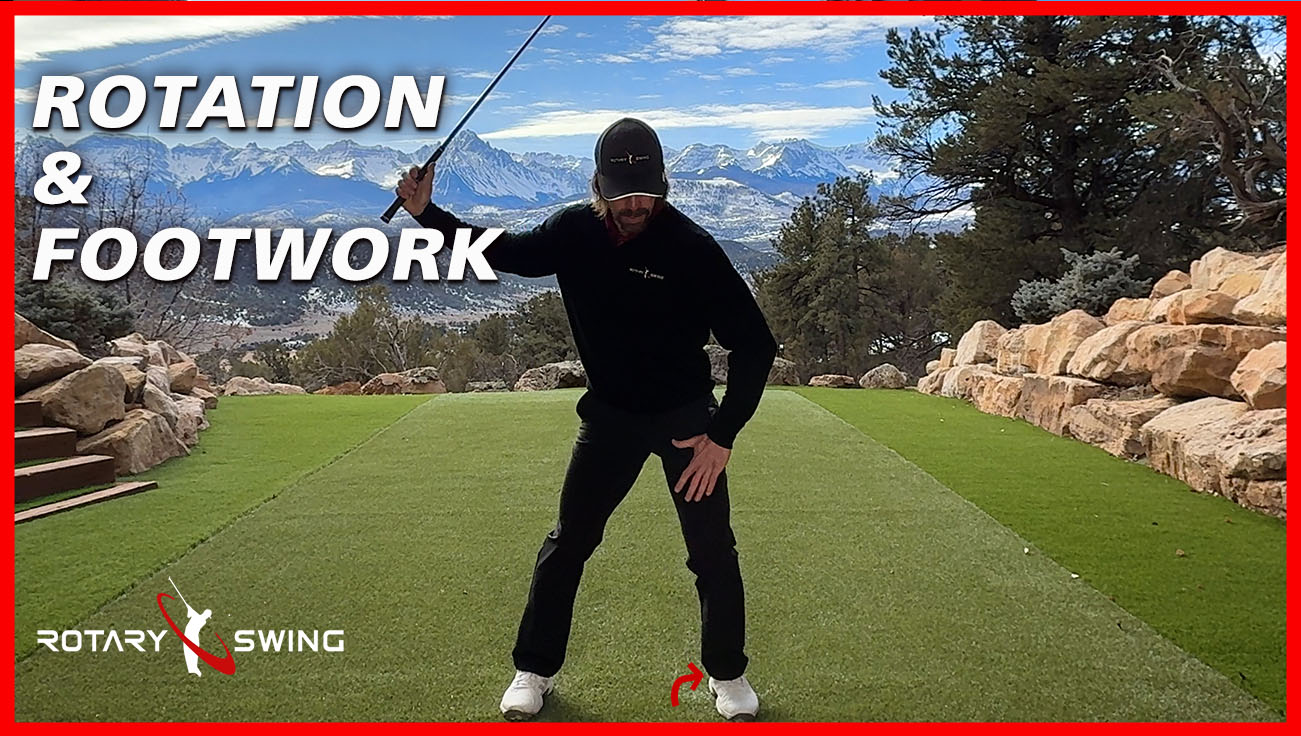
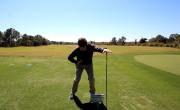
I'm going to show you I want you to practice this in your socks, on a smooth floor like this, where your feet can slide.
Because when you do this correctly, it's an instant tell if you're doing it right or not.
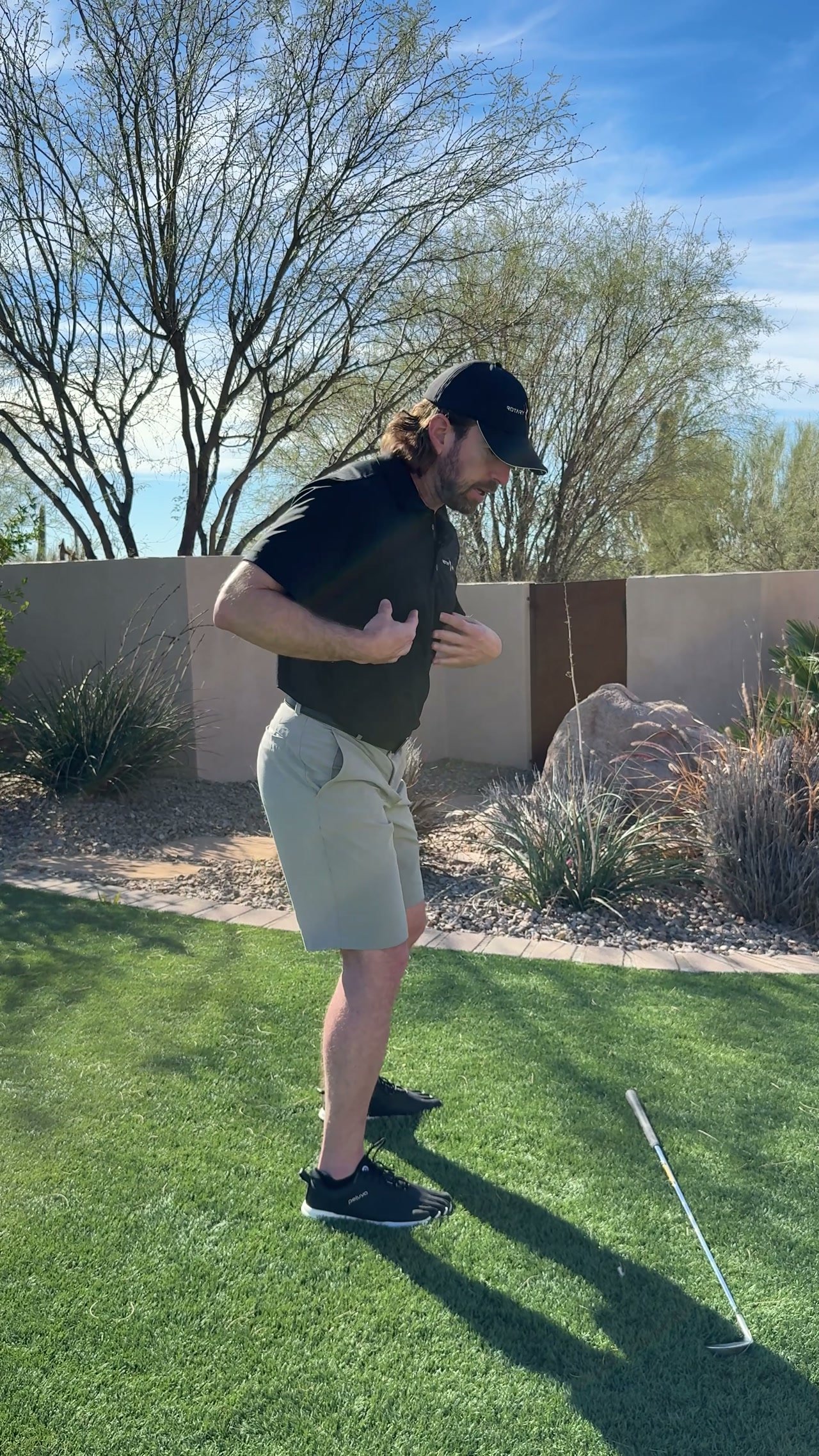
So what happens most of the time when people lose their postures, their feet does this, their right foot, your trail foot starts going like this, your hip goes into the ball, you stand up because you have to.
And what we want is the opposite.
So I get into my trail side.
And then as I'm getting back into my lead side, because again, my hip is lower.
So gravity is helping me get over here.
The rotation is helping me get over here.
And then once I'm here, I let my trail foot pop up because it's light.
It's unweighted as my trail hip begins to, you know, let myself transfer pressure back over to the lead side and starts to uncoil because we've coiled the whole body up around this trail leg.
This hip now has got all the weight.
And you know this from force plate studies that all the pressure moves over to the lead side very early.
So you're only on this trail side for just a tiny amount of time.
It's not that you shift over here and then shove off of it, you're here and then immediately getting off of it onto this lead side.
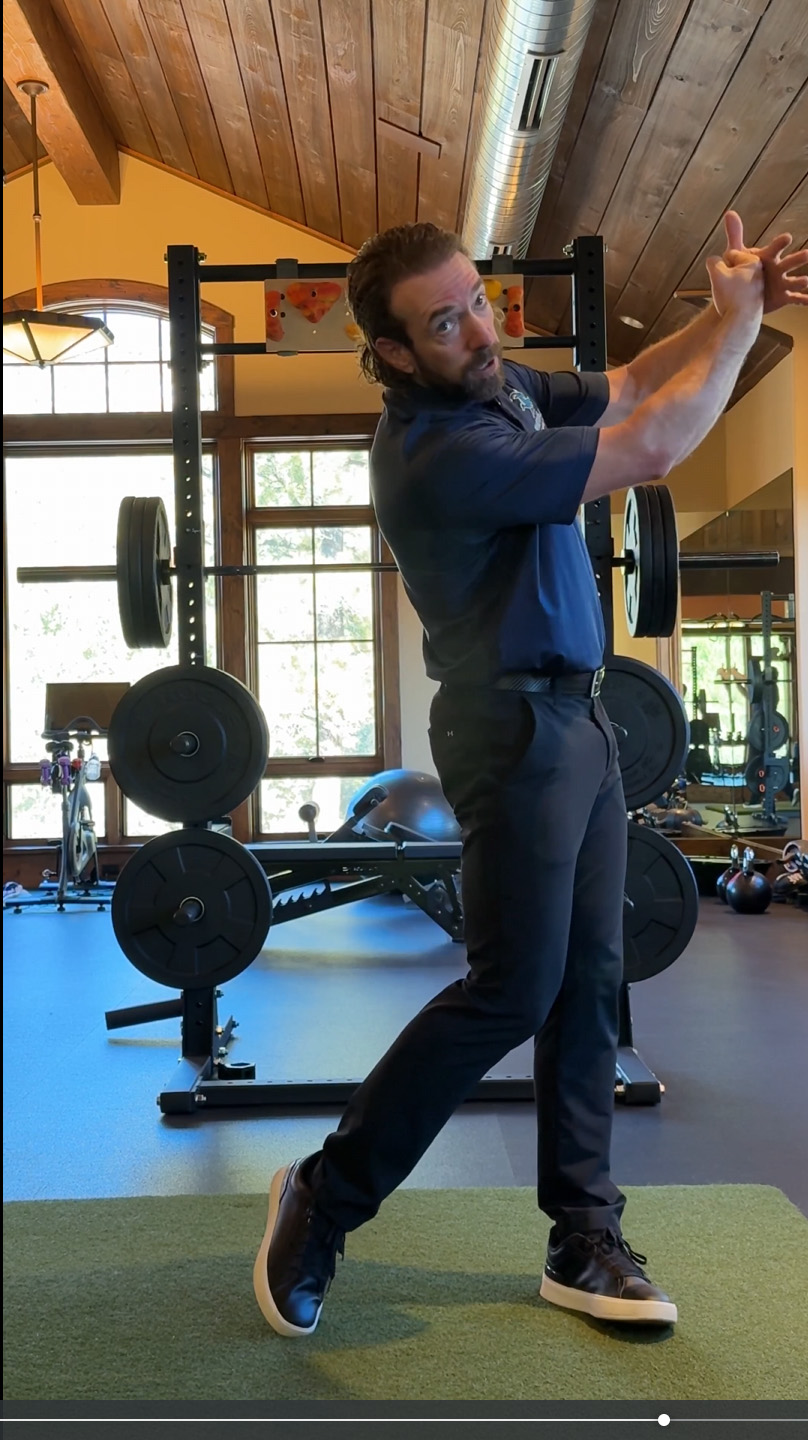
And then as both hips begin to work back, this is the key to maintaining posture, your lead hip has got to drive back.
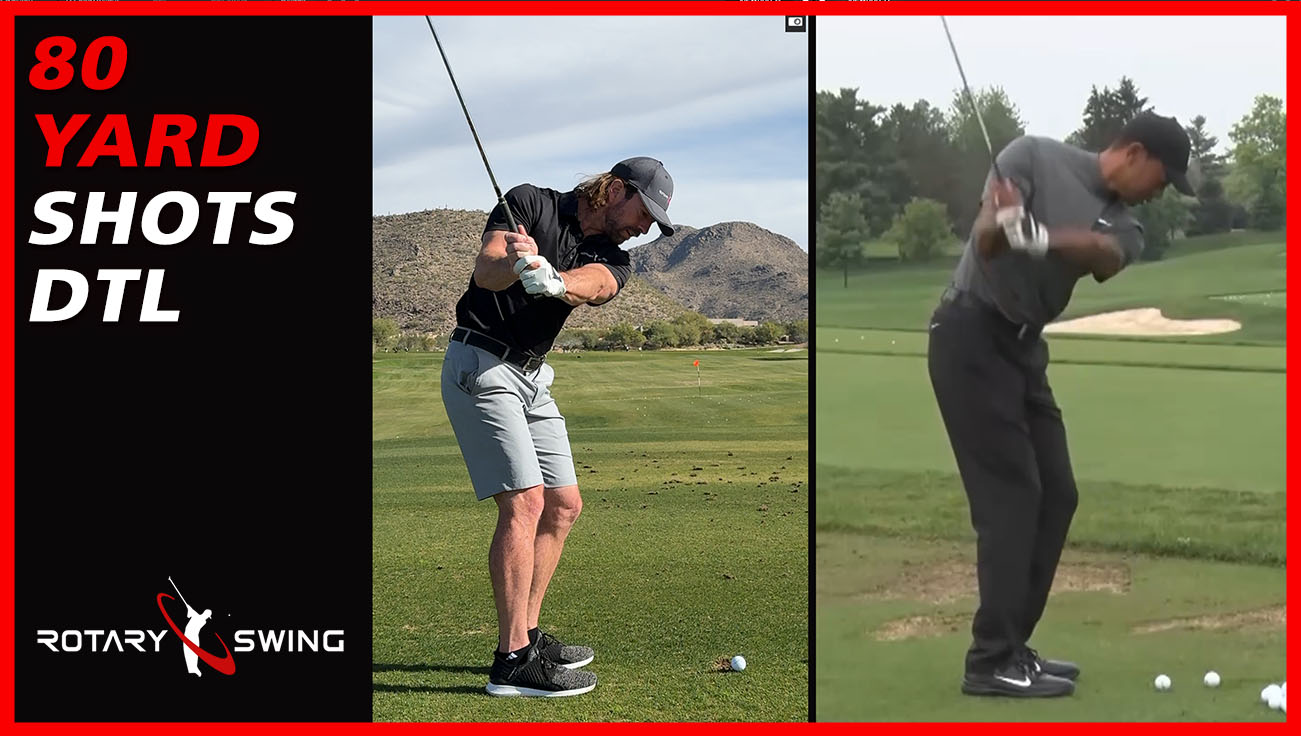
So from up the line, you're going to see this and you'll see that.
That makes room for my spine to stay down.
When you're doing the opposite, your spine's coming up and Goadie's telling you you keep losing your spine angle.
It's because this is not getting out of the way.
This is what makes room for my arms to come down so I can hit hard with my trail hand.
And so what you've got to feel is not just coiling into this trail side.
This is the first thing that happens.
And then as you're getting back over here and this side begins to unwind, this side begins to take over and drive it back.
So you've got to get over here first, you can't and you can't shove yourself over here because that changes the entire dynamics of the swing you're falling into this.
And that's why that lead hips got to go down.
And then as you get all your pressure over, you want to feel your right foot, your trail foot just come up onto the ball of your foot and your big toe.
It's not you're shoving off of it, that's going to get you standing up and losing your hip, your tush line again.
So as you're doing this, my foot's just basically unweighted and my hip is going back.
I'm out over my lead or over my lead foot with my hip.
Not way back here, I've got to get on it so I can pivot and move that hip back.
So now here's what you should see in your feet when you're practicing this.
As I go back, watch my lead foot.
And again, these are exaggerations.
And this happens super, super fast in the swing.
But if you go slow at first, you can start to feel the big picture movement.
So as I go back, this foot goes this way.
And I see all the time if you start firing with your upper body like this.
you'll see your lead heel go like this.
Your lead hill goes toward the target just slightly.
And again, these are very subtle, but this is a big picture exaggeration to get the feel.
And then as I start to take over with my lead hip as my trail hips uncoiled, now my trail foot gets pulled in this way.
So my heel is not going like this.
Once my lead hip begins to drive back and my pressure shifting over, it's pulling my heel, other heel in.
So both heels do this during the transition in first part of the downswing, not this.
If you do that, you're pushing and that's going to produce no power.
So let your foot settle.
This one pops up.
And again, you're not going to pop up like this onto your toes like this when you're hitting a wedge shot, but when you want power and when you're trying to learn the movement, it's perfectly fine.
And then as this heel goes back, then that makes room and this knee just moves straight down the line this way, and then your heel starts to come up.
But you don't want it going like this.
So if you practice on a smooth surface like this, you can get the feeling of as I coil, my heel naturally wants to go that way.
And then this one, you'll see it pops in just a little bit and then as the heel goes back.
The last big key.
When you start to get this right and you're really starting to add some forced to it.
Watch my right foot, watch it again.
Do you see how it's turning like this and then sliding back?
Because as the glutes begin to engage, as my trail hip begins to fire, it pulls my foot back as the lead hip is also driving back.
And that is the feeling, because then you've got some resistance to be able to throw and hit hard at the bottom with your trail hand.
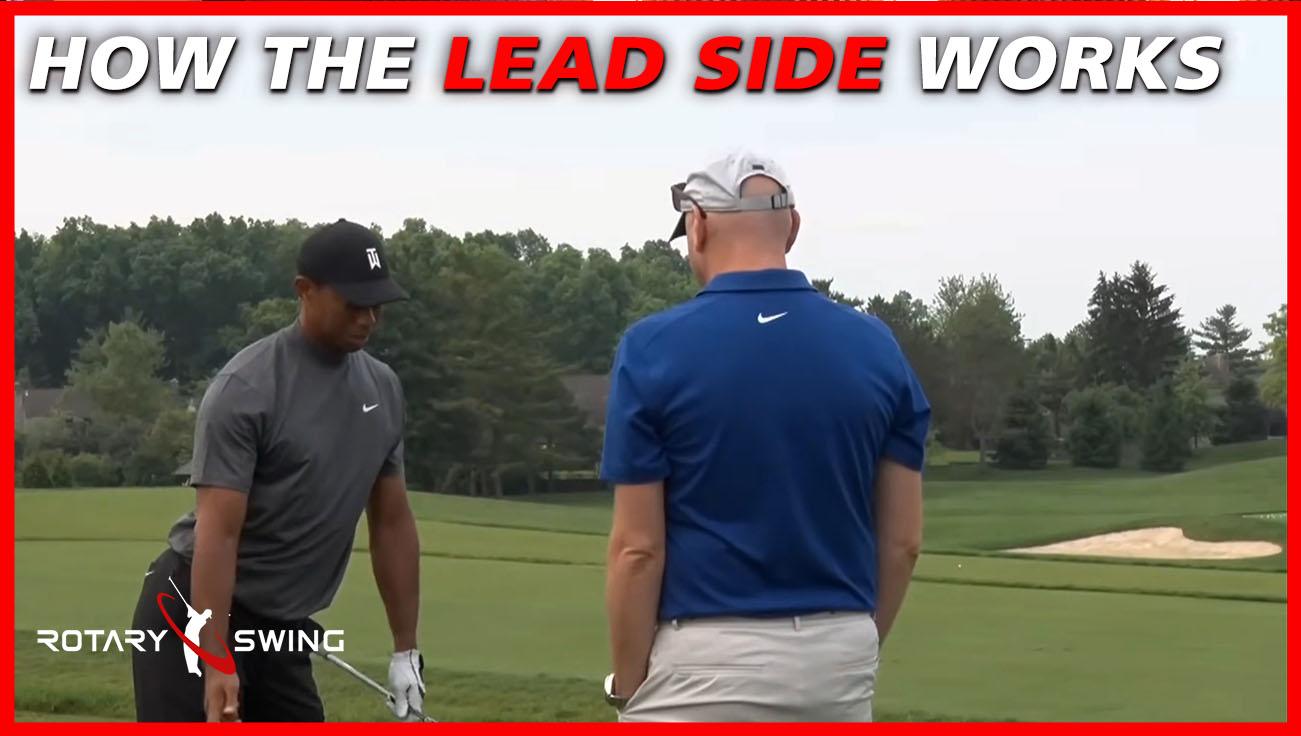
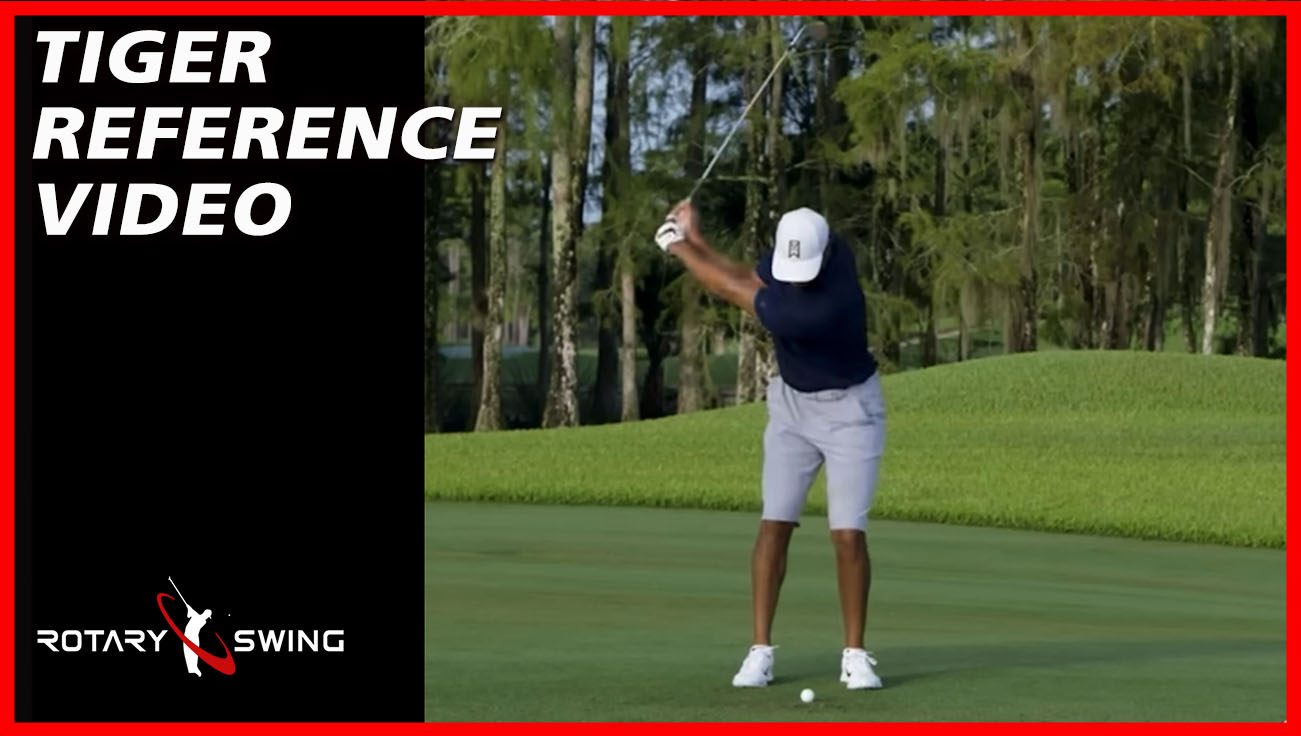
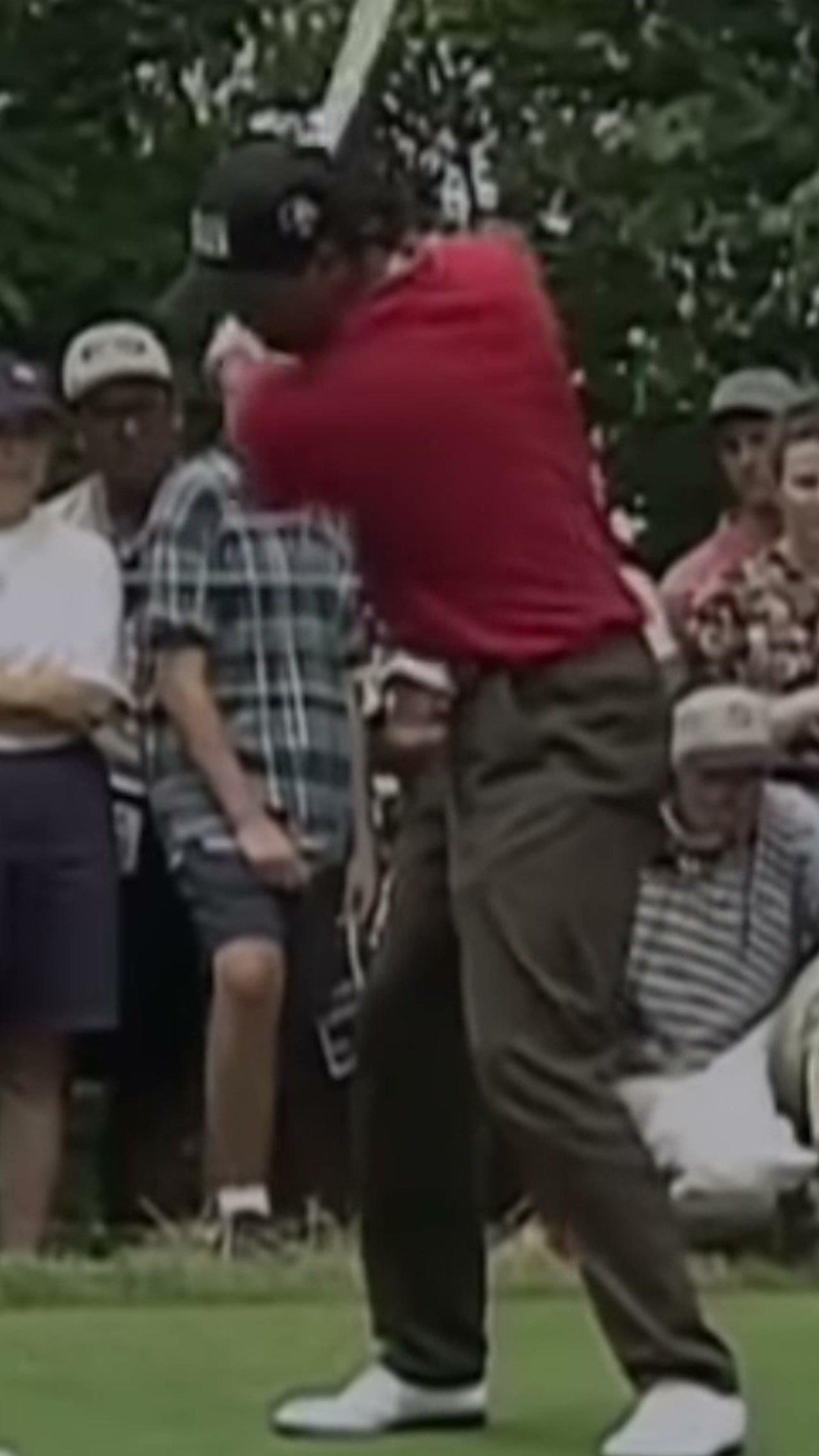
And here's a quick clip of Tiger talking about basically these exact same moves.
She could brace that right leg a little bit better on the way back, she can then drive the right knee more, more in towards the golf ball instead of kind of out, sort of more in for the target line instead of out.
Like she has it.
Use that right thigh, brace that right thigh, get into the right hip, but not let it roll outside, like, get into it, use it.
And then, as you push forward, make sure that your butt stays back.
Which gives you all the room in the world to swing left or down the line, or push out to the right, whatever shot pattern you want.
If that stays back, you get all the room in the world.
You don't have to use your hands at all.
Try and pull with that left hip, mm-hmm.
keep the right shoulder back for a little bit now.
In a previous video, I talked about how using the lead arm and spiraling around this trail leg gets the whole body loaded and stretched.
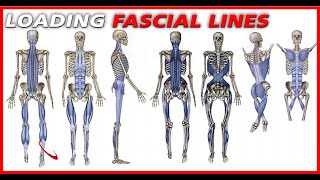
But there's fascial lines on both sides of the body, of course, and then the trails are in the lead hip side.
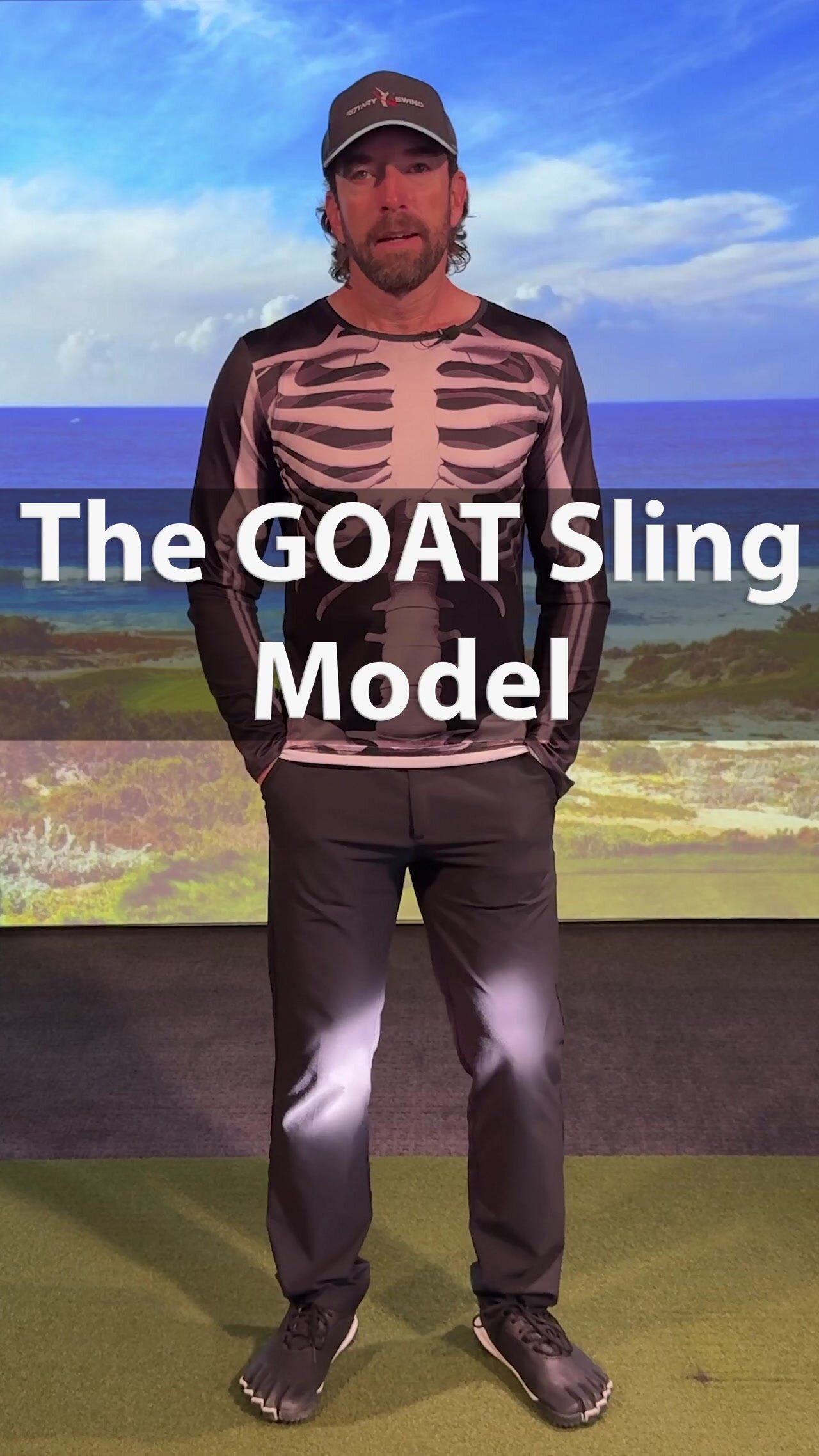
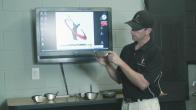
what we're focusing on is this lead hips going back, it's making room, but it's also stretching this fascial lines called an anterior oblique sling.
And so if you imagine this, I'll make a really simple, quick explanation.
And you can feel this at home.
If you're practicing with these guys, you just wrap it around.
Oops, I went the wrong way.
I usually go inside of my foot like that, like this.
And now imagine that you have this big rubber band attached to your pelvis, going up through your core, up to your trail shoulder and even to your trail hand.
As I'm clearing this lead hip and my hands are floating and waiting for just a second.
Because they've got to allow a stretch to build.
You don't want your arms coming down straight away.
Look what happens to the rubber band.
I lose all that elastic energy.
But if I go first with my hip as I'm shifting over and then this lead hip begins to drive back, this is staying stretched.
Do you see that?
It's not this.
I don't, it's why I don't want to push.
I'm not pushing with my trail leg.
I'm not pushing with my trail arm.
I'm letting this come around, pull me around.
And so now once I'm here, I feel stretched on the inside of my arm, all the way across my chest.
And when you're doing this fast, it really becomes exaggerated where these arms are hanging back and you feel like you've got so much load to be able to throw and hit hard at the bottom that's what you want to feel so if you imagine what you're trying to do it's not just one spiral fascia line it's the whole body working as one so that you can get your whole body into every shot
What does that mean exactly and how do we do that?
It's going to be very simple and very quick.
As you know, going back, the first thing you do is get into this trail side and it starts to act like a post, like a brace that you coil around.
If you saw my other video with a TheraBand how to coil around this trail leg, that's the first thing that happens in the swing.
And as you keep coiling, you start falling back into this lead side, because, remember, your lead hip is going down.
It's very important that it goes down to start loading into the ground.
And you should feel stretching on the outside of your trail hip as this hip goes down because it's starting to lengthen these muscles.
And as this happens, as you start falling back into this lead side, because everything is starting to shift back over.
What happens is this foot starts to get light and I'm wearing socks with stripes on them for a second.
I'm going to show you I want you to practice this in your socks, on a smooth floor like this, where your feet can slide.
Because when you do this correctly, it's an instant tell if you're doing it right or not.
So what happens most of the time when people lose their postures, their feet does this, their right foot, your trail foot starts going like this, your hip goes into the ball, you stand up because you have to.
And what we want is the opposite.
So I get into my trail side.
And then as I'm getting back into my lead side, because again, my hip is lower.
So gravity is helping me get over here.
The rotation is helping me get over here.
And then once I'm here, I let my trail foot pop up because it's light.
It's unweighted as my trail hip begins to, you know, let myself transfer pressure back over to the lead side and starts to uncoil because we've coiled the whole body up around this trail leg.
This hip now has got all the weight.
And you know this from force plate studies that all the pressure moves over to the lead side very early.
So you're only on this trail side for just a tiny amount of time.
It's not that you shift over here and then shove off of it, you're here and then immediately getting off of it onto this lead side.
And then as both hips begin to work back, this is the key to maintaining posture, your lead hip has got to drive back.
So from up the line, you're going to see this and you'll see that.
That makes room for my spine to stay down.
When you're doing the opposite, your spine's coming up and Goadie's telling you you keep losing your spine angle.
It's because this is not getting out of the way.
This is what makes room for my arms to come down so I can hit hard with my trail hand.
And so what you've got to feel is not just coiling into this trail side.
This is the first thing that happens.
And then as you're getting back over here and this side begins to unwind, this side begins to take over and drive it back.
So you've got to get over here first, you can't and you can't shove yourself over here because that changes the entire dynamics of the swing you're falling into this.
And that's why that lead hips got to go down.
And then as you get all your pressure over, you want to feel your right foot, your trail foot just come up onto the ball of your foot and your big toe.
It's not you're shoving off of it, that's going to get you standing up and losing your hip, your tush line again.
So as you're doing this, my foot's just basically unweighted and my hip is going back.
I'm out over my lead or over my lead foot with my hip.
Not way back here, I've got to get on it so I can pivot and move that hip back.
So now here's what you should see in your feet when you're practicing this.
As I go back, watch my lead foot.
And again, these are exaggerations.
And this happens super, super fast in the swing.
But if you go slow at first, you can start to feel the big picture movement.
So as I go back, this foot goes this way.
And I see all the time if you start firing with your upper body like this.
you'll see your lead heel go like this.
Your lead hill goes toward the target just slightly.
And again, these are very subtle, but this is a big picture exaggeration to get the feel.
And then as I start to take over with my lead hip as my trail hips uncoiled, now my trail foot gets pulled in this way.
So my heel is not going like this.
Once my lead hip begins to drive back and my pressure shifting over, it's pulling my heel, other heel in.
So both heels do this during the transition in first part of the downswing, not this.
If you do that, you're pushing and that's going to produce no power.
So let your foot settle.
This one pops up.
And again, you're not going to pop up like this onto your toes like this when you're hitting a wedge shot, but when you want power and when you're trying to learn the movement, it's perfectly fine.
And then as this heel goes back, then that makes room and this knee just moves straight down the line this way, and then your heel starts to come up.
But you don't want it going like this.
So if you practice on a smooth surface like this, you can get the feeling of as I coil, my heel naturally wants to go that way.
And then this one, you'll see it pops in just a little bit and then as the heel goes back.
The last big key.
When you start to get this right and you're really starting to add some forced to it.
Watch my right foot, watch it again.
Do you see how it's turning like this and then sliding back?
Because as the glutes begin to engage, as my trail hip begins to fire, it pulls my foot back as the lead hip is also driving back.
And that is the feeling, because then you've got some resistance to be able to throw and hit hard at the bottom with your trail hand.
And here's a quick clip of Tiger talking about basically these exact same moves.
She could brace that right leg a little bit better on the way back, she can then drive the right knee more, more in towards the golf ball instead of kind of out, sort of more in for the target line instead of out.
Like she has it.
Use that right thigh, brace that right thigh, get into the right hip, but not let it roll outside, like, get into it, use it.
And then, as you push forward, make sure that your butt stays back.
Which gives you all the room in the world to swing left or down the line, or push out to the right, whatever shot pattern you want.
If that stays back, you get all the room in the world.
You don't have to use your hands at all.
Try and pull with that left hip, mm-hmm.
keep the right shoulder back for a little bit now.
In a previous video, I talked about how using the lead arm and spiraling around this trail leg gets the whole body loaded and stretched.
But there's fascial lines on both sides of the body, of course, and then the trails are in the lead hip side.
what we're focusing on is this lead hips going back, it's making room, but it's also stretching this fascial lines called an anterior oblique sling.
And so if you imagine this, I'll make a really simple, quick explanation.
And you can feel this at home.
If you're practicing with these guys, you just wrap it around.
Oops, I went the wrong way.
I usually go inside of my foot like that, like this.
And now imagine that you have this big rubber band attached to your pelvis, going up through your core, up to your trail shoulder and even to your trail hand.
As I'm clearing this lead hip and my hands are floating and waiting for just a second.
Because they've got to allow a stretch to build.
You don't want your arms coming down straight away.
Look what happens to the rubber band.
I lose all that elastic energy.
But if I go first with my hip as I'm shifting over and then this lead hip begins to drive back, this is staying stretched.
Do you see that?
It's not this.
I don't, it's why I don't want to push.
I'm not pushing with my trail leg.
I'm not pushing with my trail arm.
I'm letting this come around, pull me around.
And so now once I'm here, I feel stretched on the inside of my arm, all the way across my chest.
And when you're doing this fast, it really becomes exaggerated where these arms are hanging back and you feel like you've got so much load to be able to throw and hit hard at the bottom that's what you want to feel so if you imagine what you're trying to do it's not just one spiral fascia line it's the whole body working as one so that you can get your whole body into every shot
Lorsque vous perdez l'angle de votre colonne vertébrale lors de l'impact, c'est généralement parce que la hanche arrière se déplace vers la balle ou que vos bras se projettent vers le bas avant que vos hanches n'aient eu le temps de se dégager.
Qu’est-ce que cela signifie exactement et comment procédons-nous ?
Ce sera très simple et très rapide.
Comme vous le savez, pour revenir en arrière, la première chose à faire est de s'engager sur ce côté du sentier, qui commence alors à faire office de poteau, de support autour duquel on s'enroule.
Si vous avez vu mon autre vidéo avec un TheraBand montrant comment l'enrouler autour de la jambe arrière, c'est la première chose qui se produit lors du swing.
Et à mesure que vous continuez à vous enrouler, vous commencez à retomber sur ce côté dominant, car, souvenez-vous, votre hanche dominante s'abaisse.
Il est très important qu'il descende pour commencer à s'infiltrer dans le sol.
Et vous devriez ressentir un étirement sur l'extérieur de votre hanche arrière lorsque celle-ci descend, car cela commence à allonger ces muscles.
Et à mesure que cela se produit, que vous commencez à retomber dans ce camp de tête, parce que tout commence à basculer à nouveau.
Ce qui se passe, c'est que mon pied commence à s'alléger et que je porte des chaussettes à rayures pendant une seconde.
Je vais vous montrer. Je veux que vous vous entraîniez à cela en chaussettes, sur un sol lisse comme celui-ci, où vos pieds peuvent glisser.
Car lorsque vous faites cela correctement, cela permet de savoir instantanément si vous le faites bien ou non.
Alors, que se passe-t-il la plupart du temps lorsque les gens perdent leur posture ? Leurs pieds font ceci : leur pied droit, votre pied d’appui, commence à aller comme ça, votre hanche se dirige vers l’avant, vous vous redressez parce que vous n’avez pas le choix.
Et ce que nous voulons, c'est le contraire.
Je me dirige donc vers mon sentier.
Et puis, alors que je reprends ma position dominante, car, encore une fois, ma hanche est plus basse.
C'est donc la gravité qui m'aide à arriver jusqu'ici.
La rotation des employés m'aide à en arriver là.
Et puis une fois arrivé ici, je laisse mon pied d'appui se soulever car il est léger.
Le poids se relâche lorsque ma hanche arrière commence à, vous savez, me permettre de transférer la pression sur le côté avant et commence à se dérouler parce que nous avons enroulé tout le corps autour de cette jambe arrière.
C'est maintenant cette hanche qui supporte tout le poids.
Et les études sur les plateformes de force montrent que toute la pression se déplace très tôt du côté avant.
Vous ne resterez donc que très peu de temps sur ce côté du sentier.
Il ne s'agit pas de se déplacer ici puis de se dégager brusquement, mais de se positionner ici puis de se déplacer immédiatement de ce côté en tête.
Et puis, lorsque les deux hanches commencent à reculer, c'est là la clé du maintien de la posture : la hanche avant doit pousser vers l'arrière.
Donc, en remontant la ligne, vous allez voir ceci et vous verrez cela.
Cela permet à ma colonne vertébrale de rester bien droite.
Lorsque vous faites le contraire, votre colonne vertébrale se redresse et Goadie vous explique que vous perdez constamment l'angle de votre colonne vertébrale.
C'est parce que cela ne disparaît pas.
C’est ce qui me permet de baisser les bras et de frapper fort avec ma main arrière.
Et donc, ce que vous devez ressentir, ce n'est pas seulement le fait de vous engager sur le bord de ce sentier.
Voici la première chose qui se produit.
Et puis, au fur et à mesure que vous revenez d'ici et que ce côté commence à se détendre, l'autre côté prend le dessus et le repousse.
Donc, vous devez d'abord arriver ici, vous ne pouvez pas vous pousser ici car cela change toute la dynamique de la balançoire dans laquelle vous tombez.
Et c'est pourquoi il faut que les hanches du leader s'abaissent.
Puis, une fois que vous avez relâché toute votre pression, vous devez sentir votre pied droit, votre pied d'appui, se poser sur la plante du pied et votre gros orteil.
Ce n'est pas en prenant appui dessus que vous allez vous relever et perdre à nouveau votre ligne de hanche et de fesses.
Pendant que vous faites cela, mon pied est en quelque sorte délesté et ma hanche recule.
Je suis en déséquilibre, soit par-dessus mon pied d'appui, soit par-dessus mon pied d'appui avec ma hanche.
Pas aussi loin en arrière, je dois m'y mettre pour pouvoir pivoter et reculer cette hanche.
Voici donc ce que vous devriez voir dans vos pieds lorsque vous pratiquez cet exercice.
En revenant, faites attention à votre pied avant.
Et encore une fois, ce sont des exagérations.
Et cela se produit extrêmement rapidement pendant le swing.
Mais si vous y allez doucement au début, vous pouvez commencer à percevoir le mouvement d'ensemble.
Donc, en revenant en arrière, ce pied va par là.
Et je vois tout le temps ça quand vous commencez à tirer avec le haut du corps comme ça.
Vous verrez votre talon d'attaque se comporter ainsi.
Votre colline d'avance se dirige légèrement vers la cible.
Et encore une fois, ce sont des détails très subtils, mais il s'agit d'une exagération à grande échelle pour donner une idée générale.
Et puis, au moment où je prends le relais avec ma hanche avant tandis que mes hanches arrière se détendent, mon pied arrière se retrouve tiré de cette façon.
Mon talon ne fonctionne pas comme ça.
Une fois que ma hanche avant commence à reculer et que ma pression se déplace, elle tire mon talon, l'autre talon vers l'intérieur.
Donc, les deux talons font ceci pendant la transition dans la première partie de la descente, et non ceci.
Si vous faites cela, vous forcez et cela ne produira aucune puissance.
Laissez donc votre pied se stabiliser.
Celui-ci apparaît.
Et encore une fois, vous n'allez pas vous mettre sur la pointe des pieds comme ça lorsque vous frappez un coup de wedge, mais lorsque vous recherchez la puissance et que vous essayez d'apprendre le mouvement, c'est parfaitement acceptable.
Puis, lorsque ce talon recule, cela crée de l'espace et ce genou se déplace tout droit dans cette direction, puis votre talon commence à se relever.
Mais vous ne voulez pas que ça se passe comme ça.
Donc, si vous vous entraînez sur une surface lisse comme celle-ci, vous pouvez ressentir que, lorsque je me détends, mon talon a naturellement tendance à aller dans cette direction.
Et puis celui-ci, vous verrez qu'il apparaît légèrement, puis que le talon revient en arrière.
La dernière grande clé.
Quand vous commencez à maîtriser cela et que vous commencez vraiment à y ajouter un peu de contrainte.
Regardez mon pied droit, regardez-le encore.
Vous voyez comment ça tourne comme ça puis ça revient en arrière ?
Car lorsque les fessiers commencent à se contracter, lorsque ma hanche arrière commence à s'activer, cela tire mon pied vers l'arrière tandis que la hanche avant pousse également vers l'arrière.
Et c'est cette sensation qui compte, car elle crée une certaine résistance qui permet de lancer et de frapper fort en bas avec la main arrière.
Voici un court extrait vidéo où Tiger parle précisément de ces mêmes mouvements.
Elle pourrait mieux caler sa jambe droite au retour, elle pourrait alors davantage fléchir le genou droit, plus vers l'intérieur, en direction de la balle de golf plutôt que vers l'extérieur, plus vers l'intérieur, en direction de la ligne de cible plutôt que vers l'extérieur.
Comme si elle l'avait.
Utilisez cette cuisse droite, stabilisez cette cuisse droite, engagez-la dans la hanche droite, mais ne la laissez pas rouler vers l'extérieur, genre, engagez-la, utilisez-la.
Et ensuite, en poussant vers l'avant, veillez à garder les fesses en arrière.
Ce qui vous donne toute la latitude du monde pour pivoter à gauche ou le long de la ligne, ou pour vous étirer vers la droite, quel que soit le schéma de tir que vous souhaitez.
Si cela reste en arrière, vous aurez tout l'espace du monde.
Vous n'avez pas besoin d'utiliser vos mains du tout.
Essayez de tirer avec la hanche gauche, mm-hmm.
Gardez l'épaule droite en arrière pendant un petit moment.
Dans une vidéo précédente, j'ai expliqué comment l'utilisation du bras avant et la rotation en spirale autour de cette jambe arrière permettent de solliciter et d'étirer tout le corps.
Mais il y a bien sûr des lignes fasciales des deux côtés du corps, et les sentiers se trouvent du côté de la hanche dominante.
Ce sur quoi nous nous concentrons, c'est le recul des hanches, qui crée de l'espace, mais aussi l'étirement de ces lignes fasciales appelées sangle oblique antérieure.
Alors, si vous imaginez ceci, je vais vous donner une explication très simple et rapide.
Et vous pouvez le ressentir chez vous.
Si vous vous entraînez avec ces gars-là, il vous suffit de l'enrouler.
Oups, je me suis trompé de chemin.
D'habitude, je rentre mon pied comme ça, comme ceci.
Imaginez maintenant que vous ayez un gros élastique attaché à votre bassin, qui remonte à travers votre tronc, jusqu'à votre épaule droite et même jusqu'à votre main droite.
Alors que je dégage cette hanche avant, mes mains flottent et attendent juste une seconde.
Parce qu'ils doivent laisser le temps à l'étirement de se développer.
Vous ne voulez pas que vos bras retombent immédiatement.
Regardez ce qui arrive à l'élastique.
Je perds toute cette énergie élastique.
Mais si je commence par fléchir la hanche en me décalant, puis que cette hanche avant commence à revenir en arrière, elle reste étirée.
Vous voyez ça ?
Ce n'est pas ça.
Non, c'est pourquoi je ne veux pas insister.
Je ne pousse pas avec ma jambe arrière.
Je ne pousse pas avec mon bras de suspension arrière.
Je laisse les choses se faire, me faire tourner.
Et maintenant que je suis ici, je ressens un étirement à l'intérieur de mon bras, qui s'étend sur toute ma poitrine.
Et quand on fait ça vite, l'effet est vraiment accentué : les bras sont en arrière et on a l'impression d'avoir une énorme charge à porter pour pouvoir lancer et frapper fort au point le plus bas. C'est exactement la sensation recherchée. Donc, si vous imaginez ce que vous essayez de faire, ce n'est pas juste une spirale de fascia, c'est tout le corps qui travaille comme un seul bloc pour que tout votre corps soit impliqué dans chaque impact.
Qu’est-ce que cela signifie exactement et comment procédons-nous ?
Ce sera très simple et très rapide.
Comme vous le savez, pour revenir en arrière, la première chose à faire est de s'engager sur ce côté du sentier, qui commence alors à faire office de poteau, de support autour duquel on s'enroule.
Si vous avez vu mon autre vidéo avec un TheraBand montrant comment l'enrouler autour de la jambe arrière, c'est la première chose qui se produit lors du swing.
Et à mesure que vous continuez à vous enrouler, vous commencez à retomber sur ce côté dominant, car, souvenez-vous, votre hanche dominante s'abaisse.
Il est très important qu'il descende pour commencer à s'infiltrer dans le sol.
Et vous devriez ressentir un étirement sur l'extérieur de votre hanche arrière lorsque celle-ci descend, car cela commence à allonger ces muscles.
Et à mesure que cela se produit, que vous commencez à retomber dans ce camp de tête, parce que tout commence à basculer à nouveau.
Ce qui se passe, c'est que mon pied commence à s'alléger et que je porte des chaussettes à rayures pendant une seconde.
Je vais vous montrer. Je veux que vous vous entraîniez à cela en chaussettes, sur un sol lisse comme celui-ci, où vos pieds peuvent glisser.
Car lorsque vous faites cela correctement, cela permet de savoir instantanément si vous le faites bien ou non.
Alors, que se passe-t-il la plupart du temps lorsque les gens perdent leur posture ? Leurs pieds font ceci : leur pied droit, votre pied d’appui, commence à aller comme ça, votre hanche se dirige vers l’avant, vous vous redressez parce que vous n’avez pas le choix.
Et ce que nous voulons, c'est le contraire.
Je me dirige donc vers mon sentier.
Et puis, alors que je reprends ma position dominante, car, encore une fois, ma hanche est plus basse.
C'est donc la gravité qui m'aide à arriver jusqu'ici.
La rotation des employés m'aide à en arriver là.
Et puis une fois arrivé ici, je laisse mon pied d'appui se soulever car il est léger.
Le poids se relâche lorsque ma hanche arrière commence à, vous savez, me permettre de transférer la pression sur le côté avant et commence à se dérouler parce que nous avons enroulé tout le corps autour de cette jambe arrière.
C'est maintenant cette hanche qui supporte tout le poids.
Et les études sur les plateformes de force montrent que toute la pression se déplace très tôt du côté avant.
Vous ne resterez donc que très peu de temps sur ce côté du sentier.
Il ne s'agit pas de se déplacer ici puis de se dégager brusquement, mais de se positionner ici puis de se déplacer immédiatement de ce côté en tête.
Et puis, lorsque les deux hanches commencent à reculer, c'est là la clé du maintien de la posture : la hanche avant doit pousser vers l'arrière.
Donc, en remontant la ligne, vous allez voir ceci et vous verrez cela.
Cela permet à ma colonne vertébrale de rester bien droite.
Lorsque vous faites le contraire, votre colonne vertébrale se redresse et Goadie vous explique que vous perdez constamment l'angle de votre colonne vertébrale.
C'est parce que cela ne disparaît pas.
C’est ce qui me permet de baisser les bras et de frapper fort avec ma main arrière.
Et donc, ce que vous devez ressentir, ce n'est pas seulement le fait de vous engager sur le bord de ce sentier.
Voici la première chose qui se produit.
Et puis, au fur et à mesure que vous revenez d'ici et que ce côté commence à se détendre, l'autre côté prend le dessus et le repousse.
Donc, vous devez d'abord arriver ici, vous ne pouvez pas vous pousser ici car cela change toute la dynamique de la balançoire dans laquelle vous tombez.
Et c'est pourquoi il faut que les hanches du leader s'abaissent.
Puis, une fois que vous avez relâché toute votre pression, vous devez sentir votre pied droit, votre pied d'appui, se poser sur la plante du pied et votre gros orteil.
Ce n'est pas en prenant appui dessus que vous allez vous relever et perdre à nouveau votre ligne de hanche et de fesses.
Pendant que vous faites cela, mon pied est en quelque sorte délesté et ma hanche recule.
Je suis en déséquilibre, soit par-dessus mon pied d'appui, soit par-dessus mon pied d'appui avec ma hanche.
Pas aussi loin en arrière, je dois m'y mettre pour pouvoir pivoter et reculer cette hanche.
Voici donc ce que vous devriez voir dans vos pieds lorsque vous pratiquez cet exercice.
En revenant, faites attention à votre pied avant.
Et encore une fois, ce sont des exagérations.
Et cela se produit extrêmement rapidement pendant le swing.
Mais si vous y allez doucement au début, vous pouvez commencer à percevoir le mouvement d'ensemble.
Donc, en revenant en arrière, ce pied va par là.
Et je vois tout le temps ça quand vous commencez à tirer avec le haut du corps comme ça.
Vous verrez votre talon d'attaque se comporter ainsi.
Votre colline d'avance se dirige légèrement vers la cible.
Et encore une fois, ce sont des détails très subtils, mais il s'agit d'une exagération à grande échelle pour donner une idée générale.
Et puis, au moment où je prends le relais avec ma hanche avant tandis que mes hanches arrière se détendent, mon pied arrière se retrouve tiré de cette façon.
Mon talon ne fonctionne pas comme ça.
Une fois que ma hanche avant commence à reculer et que ma pression se déplace, elle tire mon talon, l'autre talon vers l'intérieur.
Donc, les deux talons font ceci pendant la transition dans la première partie de la descente, et non ceci.
Si vous faites cela, vous forcez et cela ne produira aucune puissance.
Laissez donc votre pied se stabiliser.
Celui-ci apparaît.
Et encore une fois, vous n'allez pas vous mettre sur la pointe des pieds comme ça lorsque vous frappez un coup de wedge, mais lorsque vous recherchez la puissance et que vous essayez d'apprendre le mouvement, c'est parfaitement acceptable.
Puis, lorsque ce talon recule, cela crée de l'espace et ce genou se déplace tout droit dans cette direction, puis votre talon commence à se relever.
Mais vous ne voulez pas que ça se passe comme ça.
Donc, si vous vous entraînez sur une surface lisse comme celle-ci, vous pouvez ressentir que, lorsque je me détends, mon talon a naturellement tendance à aller dans cette direction.
Et puis celui-ci, vous verrez qu'il apparaît légèrement, puis que le talon revient en arrière.
La dernière grande clé.
Quand vous commencez à maîtriser cela et que vous commencez vraiment à y ajouter un peu de contrainte.
Regardez mon pied droit, regardez-le encore.
Vous voyez comment ça tourne comme ça puis ça revient en arrière ?
Car lorsque les fessiers commencent à se contracter, lorsque ma hanche arrière commence à s'activer, cela tire mon pied vers l'arrière tandis que la hanche avant pousse également vers l'arrière.
Et c'est cette sensation qui compte, car elle crée une certaine résistance qui permet de lancer et de frapper fort en bas avec la main arrière.
Voici un court extrait vidéo où Tiger parle précisément de ces mêmes mouvements.
Elle pourrait mieux caler sa jambe droite au retour, elle pourrait alors davantage fléchir le genou droit, plus vers l'intérieur, en direction de la balle de golf plutôt que vers l'extérieur, plus vers l'intérieur, en direction de la ligne de cible plutôt que vers l'extérieur.
Comme si elle l'avait.
Utilisez cette cuisse droite, stabilisez cette cuisse droite, engagez-la dans la hanche droite, mais ne la laissez pas rouler vers l'extérieur, genre, engagez-la, utilisez-la.
Et ensuite, en poussant vers l'avant, veillez à garder les fesses en arrière.
Ce qui vous donne toute la latitude du monde pour pivoter à gauche ou le long de la ligne, ou pour vous étirer vers la droite, quel que soit le schéma de tir que vous souhaitez.
Si cela reste en arrière, vous aurez tout l'espace du monde.
Vous n'avez pas besoin d'utiliser vos mains du tout.
Essayez de tirer avec la hanche gauche, mm-hmm.
Gardez l'épaule droite en arrière pendant un petit moment.
Dans une vidéo précédente, j'ai expliqué comment l'utilisation du bras avant et la rotation en spirale autour de cette jambe arrière permettent de solliciter et d'étirer tout le corps.
Mais il y a bien sûr des lignes fasciales des deux côtés du corps, et les sentiers se trouvent du côté de la hanche dominante.
Ce sur quoi nous nous concentrons, c'est le recul des hanches, qui crée de l'espace, mais aussi l'étirement de ces lignes fasciales appelées sangle oblique antérieure.
Alors, si vous imaginez ceci, je vais vous donner une explication très simple et rapide.
Et vous pouvez le ressentir chez vous.
Si vous vous entraînez avec ces gars-là, il vous suffit de l'enrouler.
Oups, je me suis trompé de chemin.
D'habitude, je rentre mon pied comme ça, comme ceci.
Imaginez maintenant que vous ayez un gros élastique attaché à votre bassin, qui remonte à travers votre tronc, jusqu'à votre épaule droite et même jusqu'à votre main droite.
Alors que je dégage cette hanche avant, mes mains flottent et attendent juste une seconde.
Parce qu'ils doivent laisser le temps à l'étirement de se développer.
Vous ne voulez pas que vos bras retombent immédiatement.
Regardez ce qui arrive à l'élastique.
Je perds toute cette énergie élastique.
Mais si je commence par fléchir la hanche en me décalant, puis que cette hanche avant commence à revenir en arrière, elle reste étirée.
Vous voyez ça ?
Ce n'est pas ça.
Non, c'est pourquoi je ne veux pas insister.
Je ne pousse pas avec ma jambe arrière.
Je ne pousse pas avec mon bras de suspension arrière.
Je laisse les choses se faire, me faire tourner.
Et maintenant que je suis ici, je ressens un étirement à l'intérieur de mon bras, qui s'étend sur toute ma poitrine.
Et quand on fait ça vite, l'effet est vraiment accentué : les bras sont en arrière et on a l'impression d'avoir une énorme charge à porter pour pouvoir lancer et frapper fort au point le plus bas. C'est exactement la sensation recherchée. Donc, si vous imaginez ce que vous essayez de faire, ce n'est pas juste une spirale de fascia, c'est tout le corps qui travaille comme un seul bloc pour que tout votre corps soit impliqué dans chaque impact.
Cuando pierdes el ángulo de la columna vertebral al bajar hacia el impacto, suele ser porque la cadera que está detrás se mueve hacia la pelota o porque los brazos se extienden hacia abajo antes de que las caderas hayan tenido la oportunidad de despejarse.
¿Qué significa eso exactamente y cómo lo hacemos?
Va a ser muy sencillo y muy rápido.
Como ya sabes, al regresar, lo primero que haces es meterte en este lado del sendero y empieza a actuar como un poste, como un soporte alrededor del cual te enrollas.
Si viste mi otro video con una TheraBand sobre cómo enrollarla alrededor de la pierna de apoyo, eso es lo primero que sucede en el balanceo.
Y a medida que sigues girando, empiezas a caer hacia atrás en este lado delantero, porque, recuerda, tu cadera delantera está bajando.
Es muy importante que baje para empezar a hundirse en el suelo.
Y deberías sentir un estiramiento en la parte exterior de la cadera trasera a medida que esta baja, porque está empezando a alargar estos músculos.
Y a medida que esto sucede, a medida que empiezas a retroceder hacia este lado de liderazgo, porque todo está empezando a cambiar de nuevo.
Lo que sucede es que este pie empieza a sentirse ligero y por un segundo llevo puestos unos calcetines con rayas.
Voy a mostrarte que quiero que practiques esto con calcetines, en un suelo liso como este, donde tus pies puedan deslizarse.
Porque cuando lo haces correctamente, es una forma instantánea de saber si lo estás haciendo bien o no.
Entonces, lo que sucede la mayoría de las veces cuando las personas pierden su postura, sus pies hacen esto, su pie derecho, su pie trasero comienza a ir así, su cadera se va hacia la punta, se levanta porque tiene que hacerlo.
Y lo que queremos es lo contrario.
Así que me adentro en mi sendero.
Y luego, cuando vuelvo a mi lado dominante, porque de nuevo, mi cadera está más baja.
Así que la gravedad me está ayudando a llegar hasta aquí.
La rotación me está ayudando a llegar hasta aquí.
Y una vez aquí, dejo que mi pie de apoyo se eleve porque es ligero.
Se libera de peso a medida que mi cadera trasera comienza a, ya sabes, permitirme transferir la presión de vuelta al lado delantero y comienza a desenrollarse porque hemos enrollado todo el cuerpo alrededor de esta pierna trasera.
Ahora esta cadera soporta todo el peso.
Y esto se sabe gracias a estudios con plataformas de fuerza, que toda la presión se desplaza hacia el lado de ataque muy pronto.
Así que solo estarás en este lado del sendero durante un breve periodo de tiempo.
No es que te muevas hacia aquí y luego te impulses, sino que estás aquí e inmediatamente te bajas hacia este lado delantero.
Y luego, a medida que ambas caderas comienzan a moverse hacia atrás, esta es la clave para mantener la postura, la cadera que va delante tiene que impulsarse hacia atrás.
Así que, desde más adelante, verás esto y verás aquello.
Eso deja espacio para que mi columna vertebral se mantenga en su sitio.
Cuando haces lo contrario, tu columna se eleva y Goadie te dice que estás perdiendo el ángulo de tu columna.
Es porque esto no se está quitando de en medio.
Esto es lo que deja espacio para que mis brazos bajen y pueda golpear con fuerza con mi mano trasera.
Y entonces lo que tienes que sentir no es solo enroscarte en este lado del sendero.
Esto es lo primero que sucede.
Y luego, cuando vuelves hacia aquí y este lado comienza a relajarse, este otro lado comienza a tomar el control y a hacerlo retroceder.
Así que primero tienes que llegar aquí, no puedes y no puedes empujarte hasta aquí porque eso cambia toda la dinámica del columpio en el que estás cayendo.
Y por eso esas caderas de plomo tienen que bajar.
Y luego, cuando hayas aplicado toda la presión, debes sentir cómo tu pie derecho, tu pie trasero, se apoya sobre la punta del pie y el dedo gordo.
No es que te estés empujando, eso hará que te pongas de pie y pierdas la cadera, la línea de tus glúteos otra vez.
Mientras haces esto, mi pie básicamente no soporta peso y mi cadera va hacia atrás.
Estoy sobre mi pie de apoyo o sobre mi pie de apoyo con la cadera.
No aquí atrás, tengo que ponerme en marcha para poder pivotar y mover la cadera hacia atrás.
Ahora bien, esto es lo que deberías ver en tus pies cuando practiques esto.
Al regresar, ten cuidado con mi pie pesado.
Y repito, estas son exageraciones.
Y esto sucede súper, súper rápido en el swing.
Pero si empiezas despacio, podrás empezar a percibir el panorama general.
Entonces, al retroceder, este pie va en esta dirección.
Y veo todo el tiempo si empiezas a disparar con la parte superior del cuerpo de esta manera.
Verás que tu talón delantero se mueve así.
Tu colina de entrada se dirige ligeramente hacia el objetivo.
Y de nuevo, son detalles muy sutiles, pero se trata de una exageración general para captar la idea.
Y entonces, cuando empiezo a tomar el control con mi cadera delantera mientras mis caderas traseras se desenrollan, ahora mi pie trasero es tirado de esta manera.
Así que mi talón no va así.
Una vez que mi cadera delantera comienza a impulsarse hacia atrás y mi presión se desplaza, está tirando de mi talón, y luego del otro talón hacia adentro.
Entonces ambos talones hacen esto durante la transición en la primera parte del descenso, no esto.
Si haces eso, estarás empujando y eso no va a producir potencia.
Así que deja que tu pie se asiente.
Aparece este.
Y repito, no vas a ponerte de puntillas así cuando estés golpeando con un wedge, pero cuando quieras potencia y estés intentando aprender el movimiento, está perfectamente bien.
Y luego, cuando este talón va hacia atrás, se crea espacio y esta rodilla se mueve directamente hacia abajo en esta dirección, y entonces el talón comienza a subir.
Pero no quieres que las cosas vayan así.
Así que si practicas sobre una superficie lisa como esta, puedes sentir que, al girar, mi talón tiende a ir naturalmente en esa dirección.
Y luego este, verás que se mueve un poquito y luego, cuando el talón vuelve hacia atrás.
La última gran llave.
Cuando empiezas a hacerlo bien y realmente empiezas a añadirle algo de fuerza.
Mira mi pie derecho, míralo otra vez.
¿Ves cómo gira así y luego vuelve a deslizarse hacia atrás?
Porque a medida que los glúteos comienzan a activarse, a medida que mi cadera trasera comienza a dispararse, tira de mi pie hacia atrás mientras la cadera delantera también impulsa hacia atrás.
Y esa es la sensación, porque entonces tienes cierta resistencia para poder lanzar y golpear con fuerza en la parte inferior con tu mano trasera.
Y aquí tenéis un breve vídeo de Tiger hablando básicamente de estos mismos movimientos.
Podría estabilizar un poco mejor la pierna derecha al regresar, así podría impulsar la rodilla derecha más hacia adentro, hacia la pelota de golf en lugar de hacia afuera, más hacia adentro, hacia la línea de tiro en lugar de hacia afuera.
Como si ella lo tuviera.
Usa ese muslo derecho, apoya ese muslo derecho, métete en la cadera derecha, pero no dejes que se gire hacia afuera, como, métete en ella, úsala.
Y luego, mientras avanzas, asegúrate de que tu trasero se quede hacia atrás.
Lo cual te da todo el espacio del mundo para golpear hacia la izquierda o en línea recta, o desviarte hacia la derecha, cualquier patrón de golpe que desees.
Si eso se queda atrás, tendrás todo el espacio del mundo.
No tienes que usar las manos para nada.
Intenta tirar con esa cadera izquierda, mm-hmm.
Mantén el hombro derecho hacia atrás un poco más.
En un vídeo anterior, hablé de cómo usar el brazo delantero y girar en espiral alrededor de la pierna trasera permite cargar y estirar todo el cuerpo.
Pero, por supuesto, hay líneas fasciales a ambos lados del cuerpo, y luego los senderos están en el lado de la cadera principal.
En lo que nos estamos centrando es en que las caderas se mueven hacia atrás, creando espacio, pero también estirando estas líneas fasciales llamadas cadena oblicua anterior.
Así que, si te imaginas esto, te daré una explicación muy sencilla y rápida.
Y puedes sentirlo en casa.
Si estás practicando con estos chicos, simplemente lo envuelves.
¡Uy! Me equivoqué de camino.
Normalmente me meto la mano por dentro del pie así, así.
Ahora imagina que tienes una gran goma elástica sujeta a tu pelvis, que sube por tu torso, hasta tu hombro trasero e incluso hasta tu mano trasera.
Mientras estoy despejando esta cadera de plomo y mis manos flotan y esperan solo un segundo.
Porque tienen que permitir que se desarrolle un estiramiento.
No querrás que tus brazos bajen inmediatamente.
Mira lo que le pasa a la goma elástica.
Pierdo toda esa energía elástica.
Pero si primero muevo la cadera al desplazarme y luego esta cadera delantera comienza a empujar hacia atrás, esto se mantiene estirado.
¿Lo ves?
No es esto.
No, por eso no quiero presionar.
No estoy empujando con mi pierna de apoyo.
No estoy empujando con mi brazo de apoyo.
Estoy dejando que esto vuelva, que me arrastre.
Y ahora que estoy aquí, siento una tensión en la parte interior del brazo, que se extiende por todo el pecho.
Y cuando haces esto rápido, se exagera mucho cuando los brazos se quedan hacia atrás y sientes que tienes mucha carga para poder lanzar y golpear fuerte en la parte inferior, eso es lo que quieres sentir, así que si imaginas lo que estás tratando de hacer, no es solo una línea fascial espiral, es todo el cuerpo trabajando como uno solo para que puedas involucrar todo tu cuerpo en cada golpe.
¿Qué significa eso exactamente y cómo lo hacemos?
Va a ser muy sencillo y muy rápido.
Como ya sabes, al regresar, lo primero que haces es meterte en este lado del sendero y empieza a actuar como un poste, como un soporte alrededor del cual te enrollas.
Si viste mi otro video con una TheraBand sobre cómo enrollarla alrededor de la pierna de apoyo, eso es lo primero que sucede en el balanceo.
Y a medida que sigues girando, empiezas a caer hacia atrás en este lado delantero, porque, recuerda, tu cadera delantera está bajando.
Es muy importante que baje para empezar a hundirse en el suelo.
Y deberías sentir un estiramiento en la parte exterior de la cadera trasera a medida que esta baja, porque está empezando a alargar estos músculos.
Y a medida que esto sucede, a medida que empiezas a retroceder hacia este lado de liderazgo, porque todo está empezando a cambiar de nuevo.
Lo que sucede es que este pie empieza a sentirse ligero y por un segundo llevo puestos unos calcetines con rayas.
Voy a mostrarte que quiero que practiques esto con calcetines, en un suelo liso como este, donde tus pies puedan deslizarse.
Porque cuando lo haces correctamente, es una forma instantánea de saber si lo estás haciendo bien o no.
Entonces, lo que sucede la mayoría de las veces cuando las personas pierden su postura, sus pies hacen esto, su pie derecho, su pie trasero comienza a ir así, su cadera se va hacia la punta, se levanta porque tiene que hacerlo.
Y lo que queremos es lo contrario.
Así que me adentro en mi sendero.
Y luego, cuando vuelvo a mi lado dominante, porque de nuevo, mi cadera está más baja.
Así que la gravedad me está ayudando a llegar hasta aquí.
La rotación me está ayudando a llegar hasta aquí.
Y una vez aquí, dejo que mi pie de apoyo se eleve porque es ligero.
Se libera de peso a medida que mi cadera trasera comienza a, ya sabes, permitirme transferir la presión de vuelta al lado delantero y comienza a desenrollarse porque hemos enrollado todo el cuerpo alrededor de esta pierna trasera.
Ahora esta cadera soporta todo el peso.
Y esto se sabe gracias a estudios con plataformas de fuerza, que toda la presión se desplaza hacia el lado de ataque muy pronto.
Así que solo estarás en este lado del sendero durante un breve periodo de tiempo.
No es que te muevas hacia aquí y luego te impulses, sino que estás aquí e inmediatamente te bajas hacia este lado delantero.
Y luego, a medida que ambas caderas comienzan a moverse hacia atrás, esta es la clave para mantener la postura, la cadera que va delante tiene que impulsarse hacia atrás.
Así que, desde más adelante, verás esto y verás aquello.
Eso deja espacio para que mi columna vertebral se mantenga en su sitio.
Cuando haces lo contrario, tu columna se eleva y Goadie te dice que estás perdiendo el ángulo de tu columna.
Es porque esto no se está quitando de en medio.
Esto es lo que deja espacio para que mis brazos bajen y pueda golpear con fuerza con mi mano trasera.
Y entonces lo que tienes que sentir no es solo enroscarte en este lado del sendero.
Esto es lo primero que sucede.
Y luego, cuando vuelves hacia aquí y este lado comienza a relajarse, este otro lado comienza a tomar el control y a hacerlo retroceder.
Así que primero tienes que llegar aquí, no puedes y no puedes empujarte hasta aquí porque eso cambia toda la dinámica del columpio en el que estás cayendo.
Y por eso esas caderas de plomo tienen que bajar.
Y luego, cuando hayas aplicado toda la presión, debes sentir cómo tu pie derecho, tu pie trasero, se apoya sobre la punta del pie y el dedo gordo.
No es que te estés empujando, eso hará que te pongas de pie y pierdas la cadera, la línea de tus glúteos otra vez.
Mientras haces esto, mi pie básicamente no soporta peso y mi cadera va hacia atrás.
Estoy sobre mi pie de apoyo o sobre mi pie de apoyo con la cadera.
No aquí atrás, tengo que ponerme en marcha para poder pivotar y mover la cadera hacia atrás.
Ahora bien, esto es lo que deberías ver en tus pies cuando practiques esto.
Al regresar, ten cuidado con mi pie pesado.
Y repito, estas son exageraciones.
Y esto sucede súper, súper rápido en el swing.
Pero si empiezas despacio, podrás empezar a percibir el panorama general.
Entonces, al retroceder, este pie va en esta dirección.
Y veo todo el tiempo si empiezas a disparar con la parte superior del cuerpo de esta manera.
Verás que tu talón delantero se mueve así.
Tu colina de entrada se dirige ligeramente hacia el objetivo.
Y de nuevo, son detalles muy sutiles, pero se trata de una exageración general para captar la idea.
Y entonces, cuando empiezo a tomar el control con mi cadera delantera mientras mis caderas traseras se desenrollan, ahora mi pie trasero es tirado de esta manera.
Así que mi talón no va así.
Una vez que mi cadera delantera comienza a impulsarse hacia atrás y mi presión se desplaza, está tirando de mi talón, y luego del otro talón hacia adentro.
Entonces ambos talones hacen esto durante la transición en la primera parte del descenso, no esto.
Si haces eso, estarás empujando y eso no va a producir potencia.
Así que deja que tu pie se asiente.
Aparece este.
Y repito, no vas a ponerte de puntillas así cuando estés golpeando con un wedge, pero cuando quieras potencia y estés intentando aprender el movimiento, está perfectamente bien.
Y luego, cuando este talón va hacia atrás, se crea espacio y esta rodilla se mueve directamente hacia abajo en esta dirección, y entonces el talón comienza a subir.
Pero no quieres que las cosas vayan así.
Así que si practicas sobre una superficie lisa como esta, puedes sentir que, al girar, mi talón tiende a ir naturalmente en esa dirección.
Y luego este, verás que se mueve un poquito y luego, cuando el talón vuelve hacia atrás.
La última gran llave.
Cuando empiezas a hacerlo bien y realmente empiezas a añadirle algo de fuerza.
Mira mi pie derecho, míralo otra vez.
¿Ves cómo gira así y luego vuelve a deslizarse hacia atrás?
Porque a medida que los glúteos comienzan a activarse, a medida que mi cadera trasera comienza a dispararse, tira de mi pie hacia atrás mientras la cadera delantera también impulsa hacia atrás.
Y esa es la sensación, porque entonces tienes cierta resistencia para poder lanzar y golpear con fuerza en la parte inferior con tu mano trasera.
Y aquí tenéis un breve vídeo de Tiger hablando básicamente de estos mismos movimientos.
Podría estabilizar un poco mejor la pierna derecha al regresar, así podría impulsar la rodilla derecha más hacia adentro, hacia la pelota de golf en lugar de hacia afuera, más hacia adentro, hacia la línea de tiro en lugar de hacia afuera.
Como si ella lo tuviera.
Usa ese muslo derecho, apoya ese muslo derecho, métete en la cadera derecha, pero no dejes que se gire hacia afuera, como, métete en ella, úsala.
Y luego, mientras avanzas, asegúrate de que tu trasero se quede hacia atrás.
Lo cual te da todo el espacio del mundo para golpear hacia la izquierda o en línea recta, o desviarte hacia la derecha, cualquier patrón de golpe que desees.
Si eso se queda atrás, tendrás todo el espacio del mundo.
No tienes que usar las manos para nada.
Intenta tirar con esa cadera izquierda, mm-hmm.
Mantén el hombro derecho hacia atrás un poco más.
En un vídeo anterior, hablé de cómo usar el brazo delantero y girar en espiral alrededor de la pierna trasera permite cargar y estirar todo el cuerpo.
Pero, por supuesto, hay líneas fasciales a ambos lados del cuerpo, y luego los senderos están en el lado de la cadera principal.
En lo que nos estamos centrando es en que las caderas se mueven hacia atrás, creando espacio, pero también estirando estas líneas fasciales llamadas cadena oblicua anterior.
Así que, si te imaginas esto, te daré una explicación muy sencilla y rápida.
Y puedes sentirlo en casa.
Si estás practicando con estos chicos, simplemente lo envuelves.
¡Uy! Me equivoqué de camino.
Normalmente me meto la mano por dentro del pie así, así.
Ahora imagina que tienes una gran goma elástica sujeta a tu pelvis, que sube por tu torso, hasta tu hombro trasero e incluso hasta tu mano trasera.
Mientras estoy despejando esta cadera de plomo y mis manos flotan y esperan solo un segundo.
Porque tienen que permitir que se desarrolle un estiramiento.
No querrás que tus brazos bajen inmediatamente.
Mira lo que le pasa a la goma elástica.
Pierdo toda esa energía elástica.
Pero si primero muevo la cadera al desplazarme y luego esta cadera delantera comienza a empujar hacia atrás, esto se mantiene estirado.
¿Lo ves?
No es esto.
No, por eso no quiero presionar.
No estoy empujando con mi pierna de apoyo.
No estoy empujando con mi brazo de apoyo.
Estoy dejando que esto vuelva, que me arrastre.
Y ahora que estoy aquí, siento una tensión en la parte interior del brazo, que se extiende por todo el pecho.
Y cuando haces esto rápido, se exagera mucho cuando los brazos se quedan hacia atrás y sientes que tienes mucha carga para poder lanzar y golpear fuerte en la parte inferior, eso es lo que quieres sentir, así que si imaginas lo que estás tratando de hacer, no es solo una línea fascial espiral, es todo el cuerpo trabajando como uno solo para que puedas involucrar todo tu cuerpo en cada golpe.
Wenn du beim Aufprall den Winkel deiner Wirbelsäule verlierst, liegt das normalerweise daran, dass sich die hintere Hüfte in Richtung Ball bewegt oder deine Arme nach unten schnellen, bevor deine Hüfte die Möglichkeit hatte, sich zu bewegen.
Was genau bedeutet das und wie setzen wir das um?
Es wird ganz einfach und sehr schnell gehen.
Wie Sie wissen, ist das Erste, was man auf dem Rückweg macht, dass man sich an diese Wegseite begibt, und diese beginnt sich wie ein Pfosten zu verhalten, wie eine Stütze, um die man sich windet.
Wenn Sie mein anderes Video mit dem TheraBand gesehen haben, in dem gezeigt wird, wie man es um das hintere Bein wickelt, dann ist das das Erste, was beim Schwingen passiert.
Und während du dich weiter aufrollst, beginnst du, auf diese führende Seite zurückzufallen, denn denk daran, deine führende Hüfte geht nach unten.
Es ist sehr wichtig, dass es nach unten fährt, um mit dem Verdichten im Boden zu beginnen.
Und Sie sollten ein Dehnungsgefühl an der Außenseite Ihrer hinteren Hüfte spüren, wenn diese Hüfte nach unten geht, weil dadurch diese Muskeln gedehnt werden.
Und währenddessen, wenn man wieder auf die Führungsseite zurückfällt, weil sich alles wieder in diese Richtung verschiebt.
Was passiert, ist, dass dieser Fuß plötzlich leicht wird und ich für einen Moment Socken mit Streifen trage.
Ich werde es euch zeigen. Ich möchte, dass ihr das in Socken auf einem glatten Boden wie diesem übt, wo eure Füße gleiten können.
Denn wenn man es richtig macht, sieht man sofort, ob man es richtig macht oder nicht.
Was also meistens passiert, wenn Menschen ihre Körperhaltung verlieren, ist Folgendes: Ihre Füße machen dies, ihr rechter Fuß, Ihr hinterer Fuß, fängt an, sich so zu bewegen, Ihre Hüfte geht nach vorne, Sie stehen auf, weil Sie müssen.
Und wir wollen genau das Gegenteil.
Also steige ich auf meinen Wanderweg ein.
Und dann, wenn ich wieder auf meine Führungsseite zurückkehre, weil meine Hüfte wieder tiefer liegt.
Die Schwerkraft hilft mir also dabei, hierher zu gelangen.
Die Rotation hilft mir dabei, hierher zu kommen.
Und sobald ich hier bin, lasse ich meinen Fuß vom Trail hochschnellen, weil er leichter ist.
Es ist unbelastet, da meine hintere Hüfte beginnt, den Druck wieder auf die vordere Seite zu verlagern und sich zu entspannen, weil wir den ganzen Körper um dieses hintere Bein herum aufgewickelt haben.
Diese Hüfte trägt nun das gesamte Gewicht.
Und das wissen Sie aus Kraftplattenuntersuchungen: Der gesamte Druck verlagert sich sehr früh auf die Führungsseite.
Sie befinden sich also nur für einen winzigen Augenblick auf dieser Seite des Wanderwegs.
Es ist nicht so, dass man hierhin rutscht und sich dann abstößt, sondern man ist hier und steigt dann sofort auf diese Führungsseite ab.
Und wenn dann beide Hüften wieder nach hinten arbeiten – und das ist der Schlüssel zur Aufrechterhaltung der Körperhaltung –, muss die führende Hüfte nach hinten drücken.
Von oben betrachtet sieht man also dies und das.
Dadurch kann meine Wirbelsäule unten bleiben.
Wenn du das Gegenteil tust, richtet sich deine Wirbelsäule auf und Goadie sagt dir, dass du deinen Wirbelsäulenwinkel immer weiter verlierst.
Das liegt daran, dass das nicht aus dem Weg geräumt wird.
Dadurch entsteht Platz für meine Arme, sodass ich mit meiner hinteren Hand kräftig zuschlagen kann.
Und so müssen Sie nicht nur spüren, wie sich der Pfad an den Rand schmiegt.
Das ist das Erste, was passiert.
Und wenn man dann wieder hierher zurückkehrt und diese Seite sich zu entspannen beginnt, übernimmt diese Seite die Kontrolle und treibt es zurück.
Du musst also zuerst hierherkommen, du kannst dich nicht einfach hierher drängen, denn das verändert die gesamte Dynamik der Schaukel, in die du hineinfällst.
Und deshalb muss die Hüfte des Führenden nach unten.
Und wenn Sie dann den ganzen Druck aufgebaut haben, sollten Sie spüren, wie Ihr rechter Fuß, also Ihr hinterer Fuß, sich auf den Ballen und den großen Zeh hebt.
Es geht nicht darum, dass du dich davon abstößt, denn dadurch wirst du wieder aufstehen und deine Hüfte und deine Gesäßlinie verlieren.
Während du das machst, ist mein Fuß quasi unbelastet und meine Hüfte geht nach hinten.
Ich bin mit der Hüfte über meinem Führungsfuß oder über meinem Führungsfuß.
Nicht so weit hinten, ich muss erst mal drauf, damit ich mich drehen und die Hüfte nach hinten bewegen kann.
Und so solltet ihr an euren Füßen sehen, wenn ihr das übt.
Wenn ich zurückfahre, pass auf meinen Bleifuß auf.
Und noch einmal: Das sind Übertreibungen.
Und das passiert während des Schwungs blitzschnell.
Aber wenn man es anfangs langsam angeht, kann man beginnen, die übergeordneten Zusammenhänge zu erkennen.
Wenn ich also zurückgehe, geht dieser Fuß in diese Richtung.
Und ich sehe das immer wieder, wenn man anfängt, mit dem Oberkörper so zu trainieren.
Du wirst sehen, wie sich deine vordere Ferse so bewegt.
Ihr Führungshügel neigt sich nur minimal in Richtung Ziel.
Und nochmal, das sind sehr subtile Details, aber das hier ist eine stark übertriebene Darstellung, um ein Gefühl dafür zu vermitteln.
Und wenn ich dann mit meiner Führungshüfte die Führung übernehme, während sich meine Nachlaufhüfte entwirrt, wird mein Nachlauffuß nun auf diese Weise herangezogen.
Meine Ferse steht also nicht so.
Sobald meine vordere Hüfte beginnt, nach hinten zu drücken und sich mein Druck verlagert, zieht sie meine Ferse und die andere Ferse nach innen.
Das machen also beide Fersen während des Übergangs im ersten Teil des Abschwungs, nicht das.
Wenn du das tust, schiebst du nur, und das wird keine Leistung erzeugen.
Lass deinen Fuß also zur Ruhe kommen.
Dieses hier taucht auf.
Und nochmal, so werden Sie beim Wedgeschlag nicht auf die Zehenspitzen springen, aber wenn Sie Kraft wollen und die Bewegung lernen möchten, ist das völlig in Ordnung.
Und wenn dann die Ferse nach hinten geht, schafft das Platz, und das Knie bewegt sich einfach geradeaus in diese Richtung, und dann beginnt die Ferse sich wieder anzuheben.
Aber so soll es nicht laufen.
Wenn man also auf einer glatten Oberfläche wie dieser übt, kann man das Gefühl bekommen, dass beim Einrollen die Ferse ganz natürlich in diese Richtung will.
Und dann dieses hier, da sieht man, wie es ein kleines bisschen einrastet und dann, wenn die Ferse zurückgeht.
Der letzte große Schlüssel.
Wenn man das erst einmal richtig hinbekommt und wirklich anfängt, etwas mehr Druck auszuüben.
Schau dir meinen rechten Fuß an, schau ihn dir nochmal an.
Siehst du, wie es sich so dreht und dann zurückgleitet?
Denn sobald die Gesäßmuskulatur aktiviert wird und meine hintere Hüfte zu arbeiten beginnt, zieht sie meinen Fuß nach hinten, während die vordere Hüfte ebenfalls nach hinten drückt.
Und genau das ist das Gefühl, denn dann spürt man einen gewissen Widerstand, um mit der hinteren Hand hart werfen und unten kräftig zuschlagen zu können.
Und hier ist ein kurzer Clip, in dem Tiger über genau diese Bewegungen spricht.
Wenn sie ihr rechtes Bein auf dem Rückweg etwas besser abstützen könnte, könnte sie das rechte Knie dann mehr, mehr in Richtung Golfball bewegen, anstatt eher nach außen, eher auf die Ziellinie zu, anstatt nach außen.
Als ob sie es hätte.
Nutze den rechten Oberschenkel, spanne den rechten Oberschenkel an, drücke die rechte Hüfte ein, aber lass sie nicht nach außen kippen, also, drücke sie ein, nutze sie.
Und achte beim Vorwärtsdrängen darauf, dass dein Gesäß hinten bleibt.
Damit haben Sie alle Freiheiten, nach links oder die Linie entlang zu schlagen oder nach rechts auszuweichen – ganz gleich, welches Schlagmuster Sie bevorzugen.
Wenn das so bleibt, steht Ihnen der ganze Raum der Welt zur Verfügung.
Sie müssen Ihre Hände überhaupt nicht benutzen.
Versuch mal, mit der linken Hüfte zu ziehen, mm-hmm.
Halten Sie die rechte Schulter jetzt ein wenig zurück.
In einem früheren Video habe ich darüber gesprochen, wie durch die Verwendung des Führungsarms und das spiralförmige Drehen um das hintere Bein der gesamte Körper belastet und gedehnt wird.
Aber es gibt natürlich Faszienlinien auf beiden Seiten des Körpers, und die Verläufe befinden sich auf der Seite der führenden Hüfte.
Worauf wir uns konzentrieren, ist, dass die Hüfte nach hinten geht, wodurch Platz geschaffen wird, aber gleichzeitig werden auch die Faszienlinien gedehnt, die als vordere schräge Schlinge bezeichnet werden.
Wenn Sie sich das also vorstellen, gebe ich Ihnen eine ganz einfache und kurze Erklärung.
Und das können Sie auch zu Hause spüren.
Wenn du mit diesen Jungs trainierst, wickelst du den Ball einfach drumherum.
Ups, ich bin falsch abgebogen.
Ich gehe normalerweise so in meinen Fuß hinein, so wie hier.
Stellen Sie sich nun vor, dass dieses große Gummiband an Ihrem Becken befestigt ist, durch Ihren Rumpf verläuft, bis zu Ihrer hinteren Schulter und sogar bis zu Ihrer hinteren Hand.
Während ich diese Führungshüfte überwinde, schweben meine Hände und warten einen Moment.
Weil sie eine gewisse Dehnungszeit einplanen müssen.
Du willst nicht, dass deine Arme sofort wieder herunterkommen.
Schau, was mit dem Gummiband passiert.
Ich verliere meine gesamte elastische Energie.
Wenn ich aber beim Verlagern des Gewichts zuerst mit der Hüfte vorgehe und diese führende Hüfte dann beginnt, nach hinten zu drücken, bleibt diese Dehnung erhalten.
Siehst du das?
Das ist es nicht.
Nein, deshalb will ich auch nicht drängen.
Ich drücke nicht mit dem hinteren Bein.
Ich drücke nicht mit meinem hinteren Arm.
Ich lasse das auf mich zukommen, lasse mich von dem herumziehen.
Und jetzt, wo ich hier bin, spüre ich eine Dehnung an der Innenseite meines Arms, die sich über meine gesamte Brust erstreckt.
Und wenn du das schnell machst, wird es besonders deutlich, wie die Arme nach hinten hängen und wie viel Kraft du aufbringen musst, um den Ball kraftvoll zu werfen und unten hart zu treffen. Genau dieses Gefühl willst du erreichen. Stell dir vor, was du erreichen willst: Es geht nicht nur um eine einzelne Faszienlinie, sondern um den ganzen Körper, der als Einheit arbeitet, damit du bei jedem Schlag dein ganzes Körpergewicht einsetzen kannst.
Was genau bedeutet das und wie setzen wir das um?
Es wird ganz einfach und sehr schnell gehen.
Wie Sie wissen, ist das Erste, was man auf dem Rückweg macht, dass man sich an diese Wegseite begibt, und diese beginnt sich wie ein Pfosten zu verhalten, wie eine Stütze, um die man sich windet.
Wenn Sie mein anderes Video mit dem TheraBand gesehen haben, in dem gezeigt wird, wie man es um das hintere Bein wickelt, dann ist das das Erste, was beim Schwingen passiert.
Und während du dich weiter aufrollst, beginnst du, auf diese führende Seite zurückzufallen, denn denk daran, deine führende Hüfte geht nach unten.
Es ist sehr wichtig, dass es nach unten fährt, um mit dem Verdichten im Boden zu beginnen.
Und Sie sollten ein Dehnungsgefühl an der Außenseite Ihrer hinteren Hüfte spüren, wenn diese Hüfte nach unten geht, weil dadurch diese Muskeln gedehnt werden.
Und währenddessen, wenn man wieder auf die Führungsseite zurückfällt, weil sich alles wieder in diese Richtung verschiebt.
Was passiert, ist, dass dieser Fuß plötzlich leicht wird und ich für einen Moment Socken mit Streifen trage.
Ich werde es euch zeigen. Ich möchte, dass ihr das in Socken auf einem glatten Boden wie diesem übt, wo eure Füße gleiten können.
Denn wenn man es richtig macht, sieht man sofort, ob man es richtig macht oder nicht.
Was also meistens passiert, wenn Menschen ihre Körperhaltung verlieren, ist Folgendes: Ihre Füße machen dies, ihr rechter Fuß, Ihr hinterer Fuß, fängt an, sich so zu bewegen, Ihre Hüfte geht nach vorne, Sie stehen auf, weil Sie müssen.
Und wir wollen genau das Gegenteil.
Also steige ich auf meinen Wanderweg ein.
Und dann, wenn ich wieder auf meine Führungsseite zurückkehre, weil meine Hüfte wieder tiefer liegt.
Die Schwerkraft hilft mir also dabei, hierher zu gelangen.
Die Rotation hilft mir dabei, hierher zu kommen.
Und sobald ich hier bin, lasse ich meinen Fuß vom Trail hochschnellen, weil er leichter ist.
Es ist unbelastet, da meine hintere Hüfte beginnt, den Druck wieder auf die vordere Seite zu verlagern und sich zu entspannen, weil wir den ganzen Körper um dieses hintere Bein herum aufgewickelt haben.
Diese Hüfte trägt nun das gesamte Gewicht.
Und das wissen Sie aus Kraftplattenuntersuchungen: Der gesamte Druck verlagert sich sehr früh auf die Führungsseite.
Sie befinden sich also nur für einen winzigen Augenblick auf dieser Seite des Wanderwegs.
Es ist nicht so, dass man hierhin rutscht und sich dann abstößt, sondern man ist hier und steigt dann sofort auf diese Führungsseite ab.
Und wenn dann beide Hüften wieder nach hinten arbeiten – und das ist der Schlüssel zur Aufrechterhaltung der Körperhaltung –, muss die führende Hüfte nach hinten drücken.
Von oben betrachtet sieht man also dies und das.
Dadurch kann meine Wirbelsäule unten bleiben.
Wenn du das Gegenteil tust, richtet sich deine Wirbelsäule auf und Goadie sagt dir, dass du deinen Wirbelsäulenwinkel immer weiter verlierst.
Das liegt daran, dass das nicht aus dem Weg geräumt wird.
Dadurch entsteht Platz für meine Arme, sodass ich mit meiner hinteren Hand kräftig zuschlagen kann.
Und so müssen Sie nicht nur spüren, wie sich der Pfad an den Rand schmiegt.
Das ist das Erste, was passiert.
Und wenn man dann wieder hierher zurückkehrt und diese Seite sich zu entspannen beginnt, übernimmt diese Seite die Kontrolle und treibt es zurück.
Du musst also zuerst hierherkommen, du kannst dich nicht einfach hierher drängen, denn das verändert die gesamte Dynamik der Schaukel, in die du hineinfällst.
Und deshalb muss die Hüfte des Führenden nach unten.
Und wenn Sie dann den ganzen Druck aufgebaut haben, sollten Sie spüren, wie Ihr rechter Fuß, also Ihr hinterer Fuß, sich auf den Ballen und den großen Zeh hebt.
Es geht nicht darum, dass du dich davon abstößt, denn dadurch wirst du wieder aufstehen und deine Hüfte und deine Gesäßlinie verlieren.
Während du das machst, ist mein Fuß quasi unbelastet und meine Hüfte geht nach hinten.
Ich bin mit der Hüfte über meinem Führungsfuß oder über meinem Führungsfuß.
Nicht so weit hinten, ich muss erst mal drauf, damit ich mich drehen und die Hüfte nach hinten bewegen kann.
Und so solltet ihr an euren Füßen sehen, wenn ihr das übt.
Wenn ich zurückfahre, pass auf meinen Bleifuß auf.
Und noch einmal: Das sind Übertreibungen.
Und das passiert während des Schwungs blitzschnell.
Aber wenn man es anfangs langsam angeht, kann man beginnen, die übergeordneten Zusammenhänge zu erkennen.
Wenn ich also zurückgehe, geht dieser Fuß in diese Richtung.
Und ich sehe das immer wieder, wenn man anfängt, mit dem Oberkörper so zu trainieren.
Du wirst sehen, wie sich deine vordere Ferse so bewegt.
Ihr Führungshügel neigt sich nur minimal in Richtung Ziel.
Und nochmal, das sind sehr subtile Details, aber das hier ist eine stark übertriebene Darstellung, um ein Gefühl dafür zu vermitteln.
Und wenn ich dann mit meiner Führungshüfte die Führung übernehme, während sich meine Nachlaufhüfte entwirrt, wird mein Nachlauffuß nun auf diese Weise herangezogen.
Meine Ferse steht also nicht so.
Sobald meine vordere Hüfte beginnt, nach hinten zu drücken und sich mein Druck verlagert, zieht sie meine Ferse und die andere Ferse nach innen.
Das machen also beide Fersen während des Übergangs im ersten Teil des Abschwungs, nicht das.
Wenn du das tust, schiebst du nur, und das wird keine Leistung erzeugen.
Lass deinen Fuß also zur Ruhe kommen.
Dieses hier taucht auf.
Und nochmal, so werden Sie beim Wedgeschlag nicht auf die Zehenspitzen springen, aber wenn Sie Kraft wollen und die Bewegung lernen möchten, ist das völlig in Ordnung.
Und wenn dann die Ferse nach hinten geht, schafft das Platz, und das Knie bewegt sich einfach geradeaus in diese Richtung, und dann beginnt die Ferse sich wieder anzuheben.
Aber so soll es nicht laufen.
Wenn man also auf einer glatten Oberfläche wie dieser übt, kann man das Gefühl bekommen, dass beim Einrollen die Ferse ganz natürlich in diese Richtung will.
Und dann dieses hier, da sieht man, wie es ein kleines bisschen einrastet und dann, wenn die Ferse zurückgeht.
Der letzte große Schlüssel.
Wenn man das erst einmal richtig hinbekommt und wirklich anfängt, etwas mehr Druck auszuüben.
Schau dir meinen rechten Fuß an, schau ihn dir nochmal an.
Siehst du, wie es sich so dreht und dann zurückgleitet?
Denn sobald die Gesäßmuskulatur aktiviert wird und meine hintere Hüfte zu arbeiten beginnt, zieht sie meinen Fuß nach hinten, während die vordere Hüfte ebenfalls nach hinten drückt.
Und genau das ist das Gefühl, denn dann spürt man einen gewissen Widerstand, um mit der hinteren Hand hart werfen und unten kräftig zuschlagen zu können.
Und hier ist ein kurzer Clip, in dem Tiger über genau diese Bewegungen spricht.
Wenn sie ihr rechtes Bein auf dem Rückweg etwas besser abstützen könnte, könnte sie das rechte Knie dann mehr, mehr in Richtung Golfball bewegen, anstatt eher nach außen, eher auf die Ziellinie zu, anstatt nach außen.
Als ob sie es hätte.
Nutze den rechten Oberschenkel, spanne den rechten Oberschenkel an, drücke die rechte Hüfte ein, aber lass sie nicht nach außen kippen, also, drücke sie ein, nutze sie.
Und achte beim Vorwärtsdrängen darauf, dass dein Gesäß hinten bleibt.
Damit haben Sie alle Freiheiten, nach links oder die Linie entlang zu schlagen oder nach rechts auszuweichen – ganz gleich, welches Schlagmuster Sie bevorzugen.
Wenn das so bleibt, steht Ihnen der ganze Raum der Welt zur Verfügung.
Sie müssen Ihre Hände überhaupt nicht benutzen.
Versuch mal, mit der linken Hüfte zu ziehen, mm-hmm.
Halten Sie die rechte Schulter jetzt ein wenig zurück.
In einem früheren Video habe ich darüber gesprochen, wie durch die Verwendung des Führungsarms und das spiralförmige Drehen um das hintere Bein der gesamte Körper belastet und gedehnt wird.
Aber es gibt natürlich Faszienlinien auf beiden Seiten des Körpers, und die Verläufe befinden sich auf der Seite der führenden Hüfte.
Worauf wir uns konzentrieren, ist, dass die Hüfte nach hinten geht, wodurch Platz geschaffen wird, aber gleichzeitig werden auch die Faszienlinien gedehnt, die als vordere schräge Schlinge bezeichnet werden.
Wenn Sie sich das also vorstellen, gebe ich Ihnen eine ganz einfache und kurze Erklärung.
Und das können Sie auch zu Hause spüren.
Wenn du mit diesen Jungs trainierst, wickelst du den Ball einfach drumherum.
Ups, ich bin falsch abgebogen.
Ich gehe normalerweise so in meinen Fuß hinein, so wie hier.
Stellen Sie sich nun vor, dass dieses große Gummiband an Ihrem Becken befestigt ist, durch Ihren Rumpf verläuft, bis zu Ihrer hinteren Schulter und sogar bis zu Ihrer hinteren Hand.
Während ich diese Führungshüfte überwinde, schweben meine Hände und warten einen Moment.
Weil sie eine gewisse Dehnungszeit einplanen müssen.
Du willst nicht, dass deine Arme sofort wieder herunterkommen.
Schau, was mit dem Gummiband passiert.
Ich verliere meine gesamte elastische Energie.
Wenn ich aber beim Verlagern des Gewichts zuerst mit der Hüfte vorgehe und diese führende Hüfte dann beginnt, nach hinten zu drücken, bleibt diese Dehnung erhalten.
Siehst du das?
Das ist es nicht.
Nein, deshalb will ich auch nicht drängen.
Ich drücke nicht mit dem hinteren Bein.
Ich drücke nicht mit meinem hinteren Arm.
Ich lasse das auf mich zukommen, lasse mich von dem herumziehen.
Und jetzt, wo ich hier bin, spüre ich eine Dehnung an der Innenseite meines Arms, die sich über meine gesamte Brust erstreckt.
Und wenn du das schnell machst, wird es besonders deutlich, wie die Arme nach hinten hängen und wie viel Kraft du aufbringen musst, um den Ball kraftvoll zu werfen und unten hart zu treffen. Genau dieses Gefühl willst du erreichen. Stell dir vor, was du erreichen willst: Es geht nicht nur um eine einzelne Faszienlinie, sondern um den ganzen Körper, der als Einheit arbeitet, damit du bei jedem Schlag dein ganzes Körpergewicht einsetzen kannst.


KALEB
Craig (Certified RST Instructor)
Ken
GOATY