


























How the GOATs Use their Glutes
Sorry, you need to be a member to access this video. You Are Just Seconds Away!

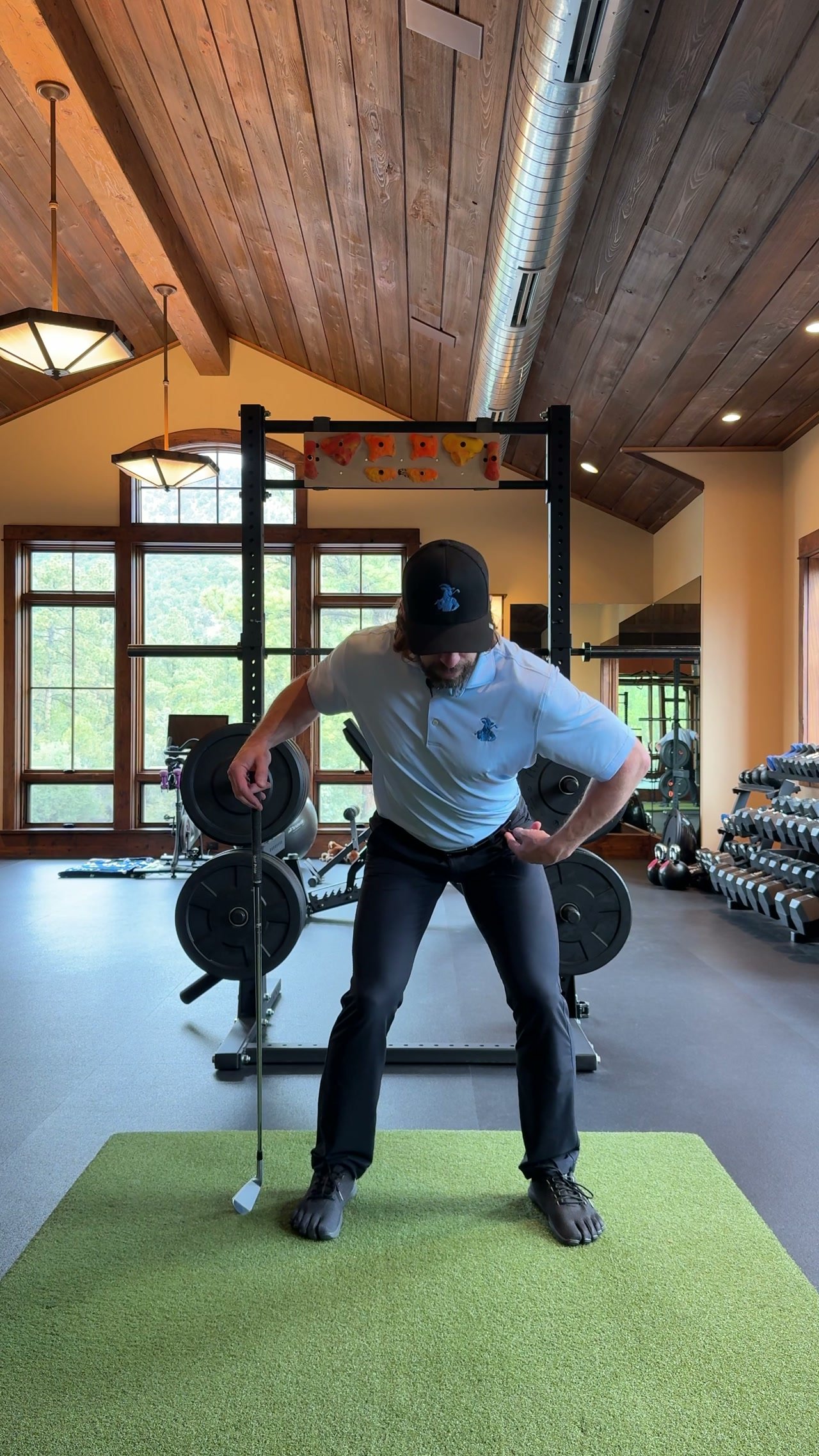
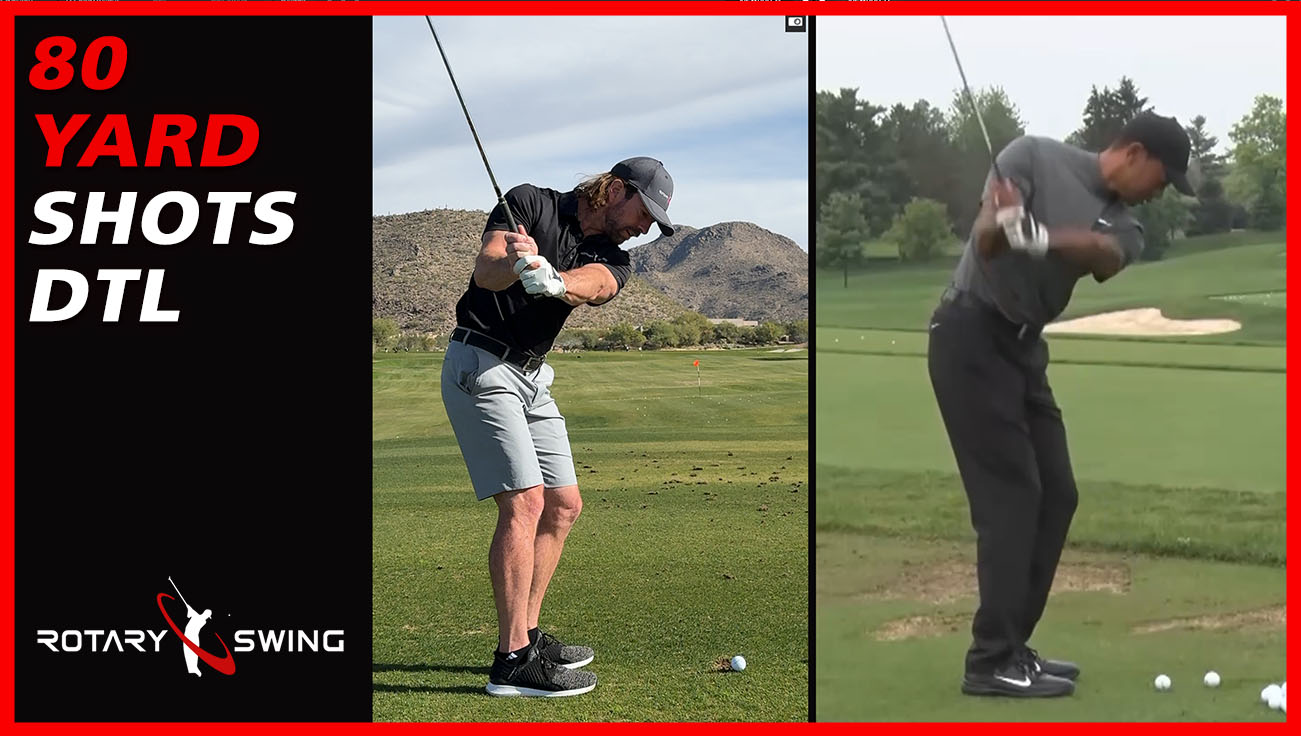
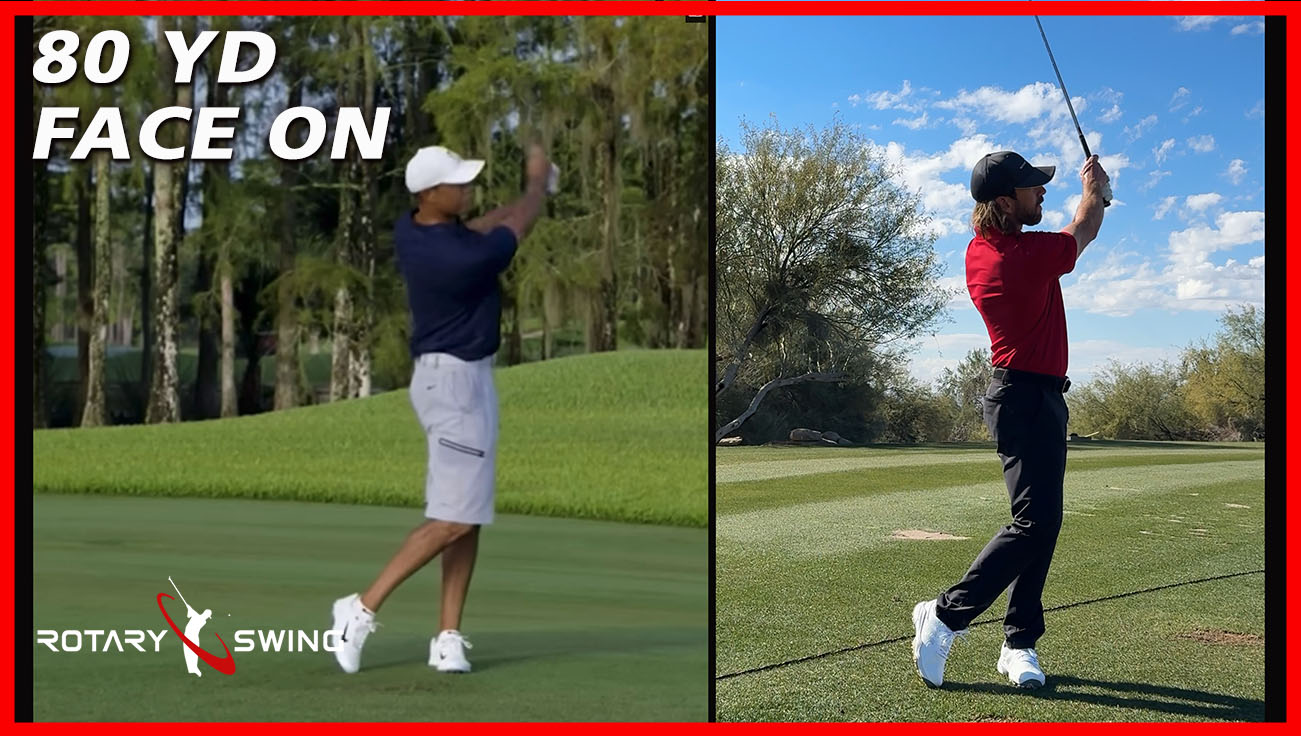
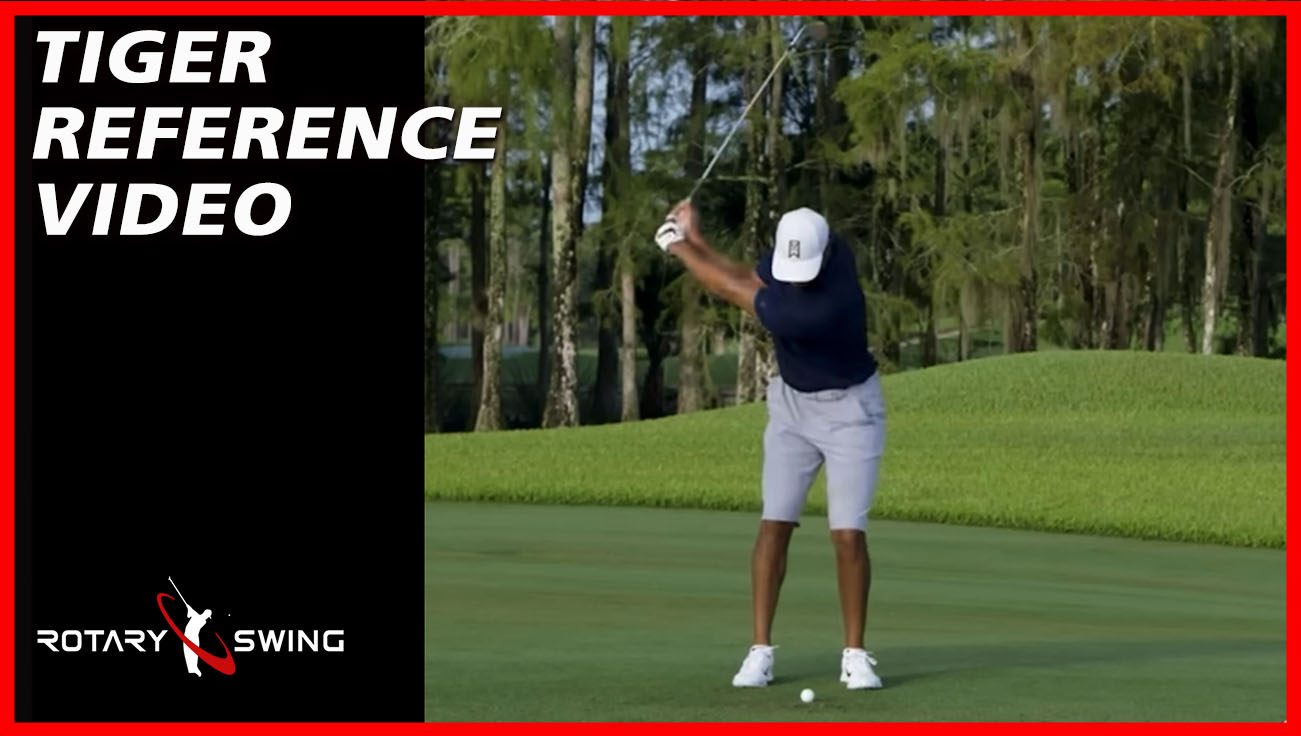
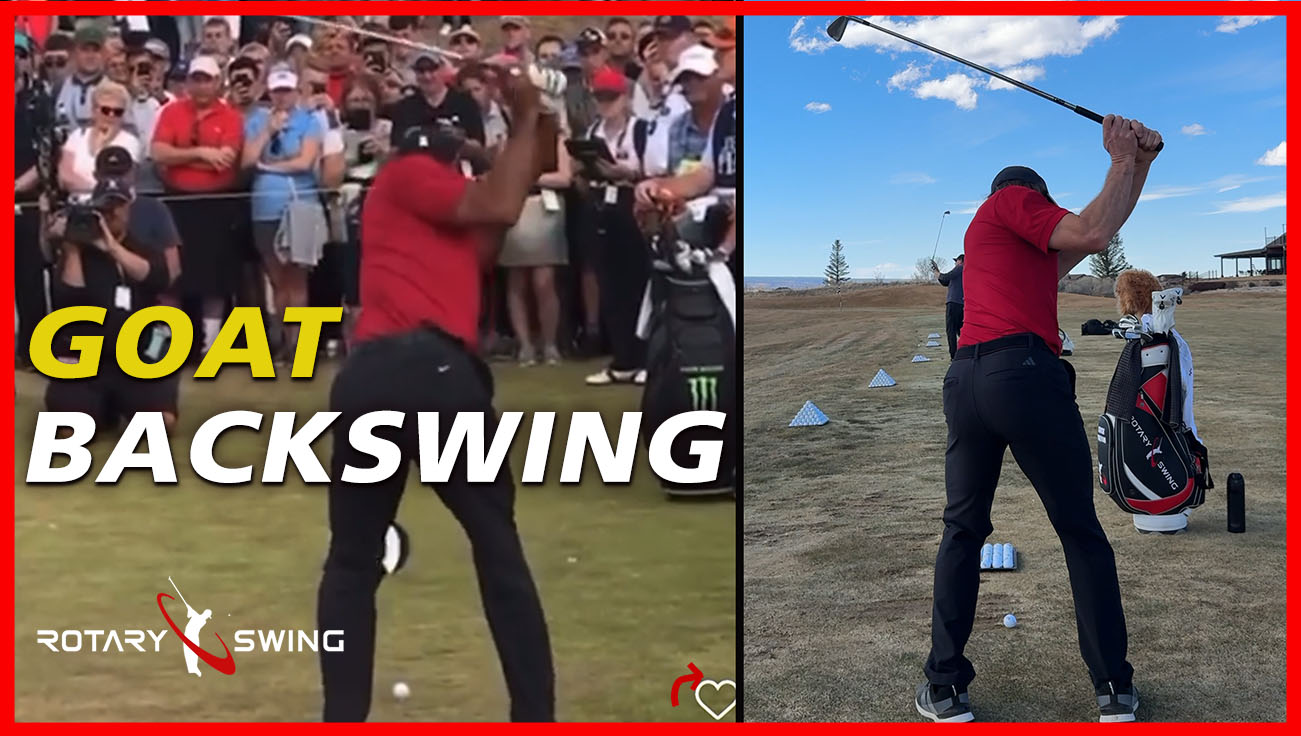
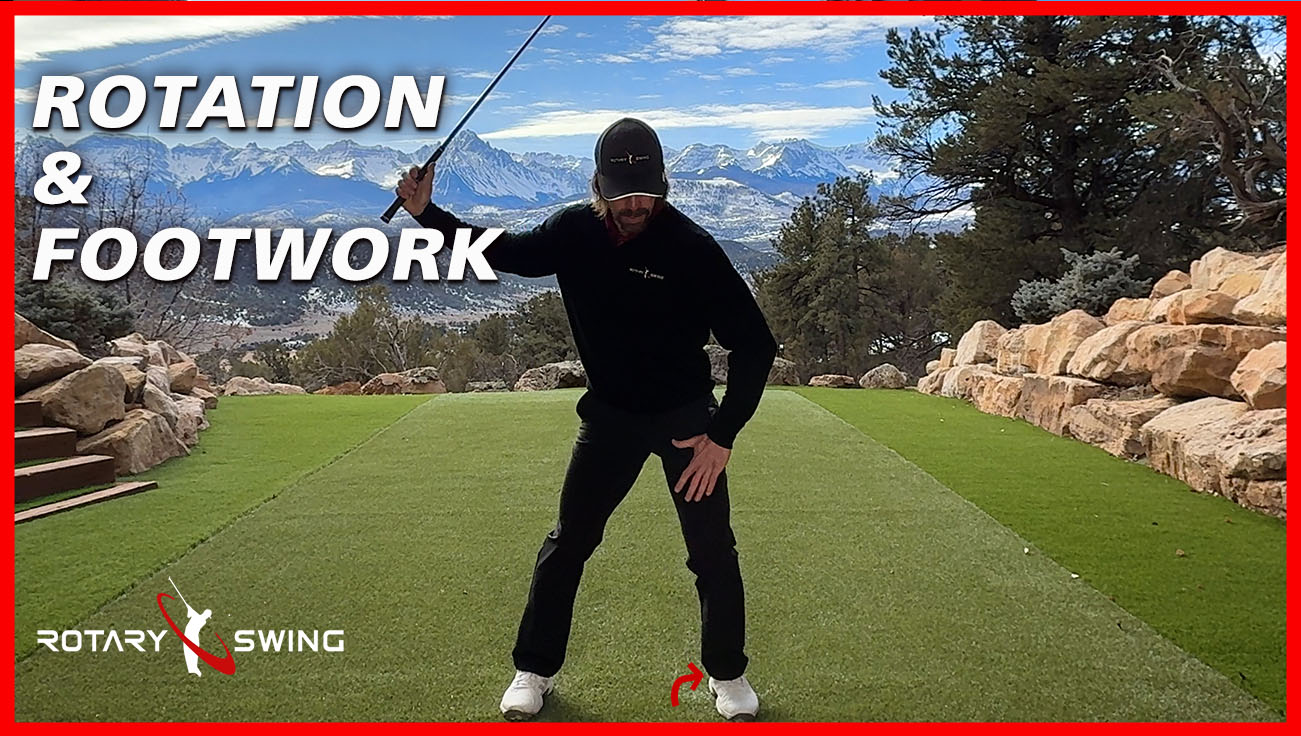
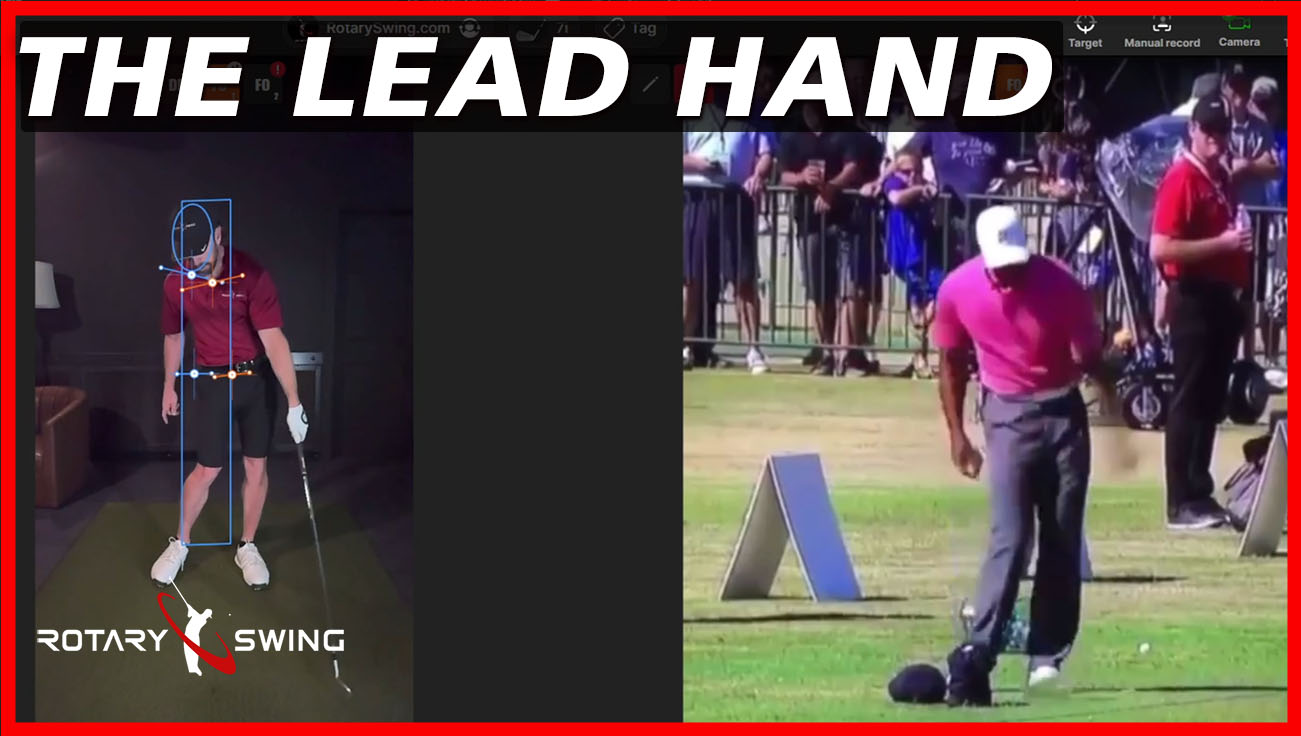
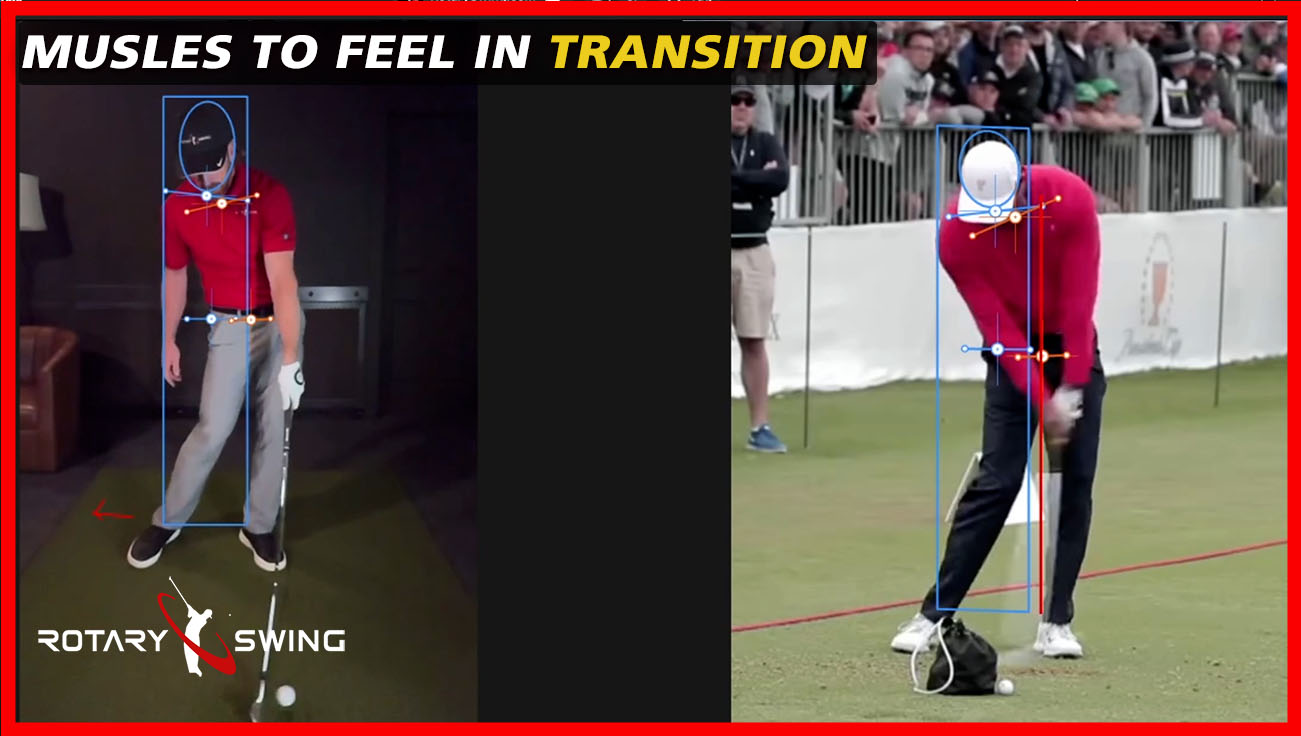
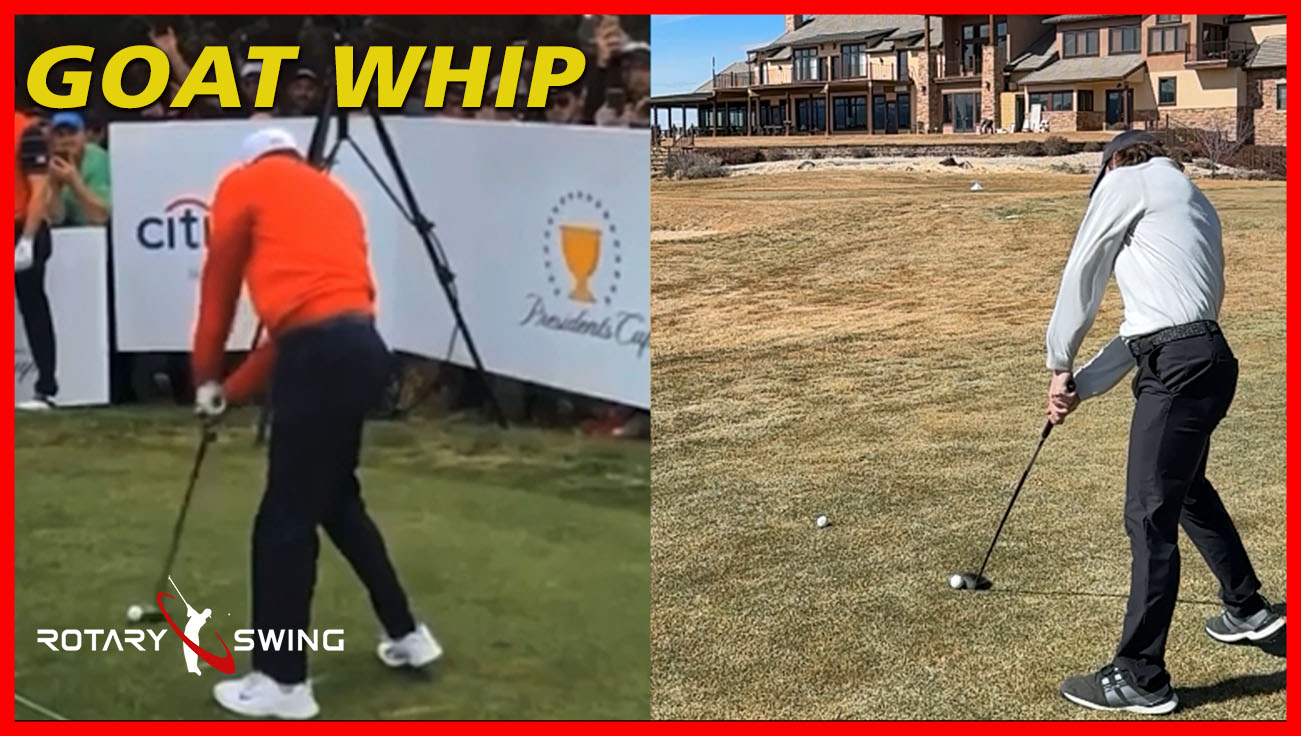
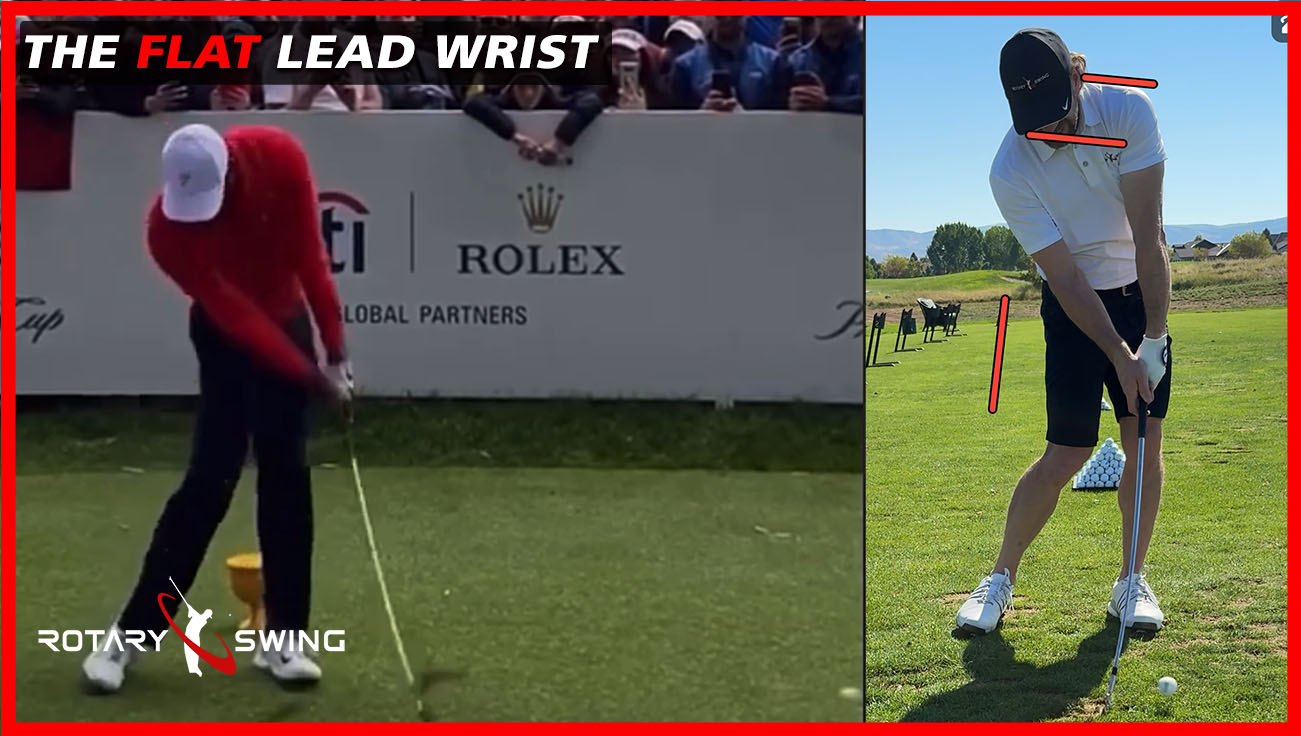
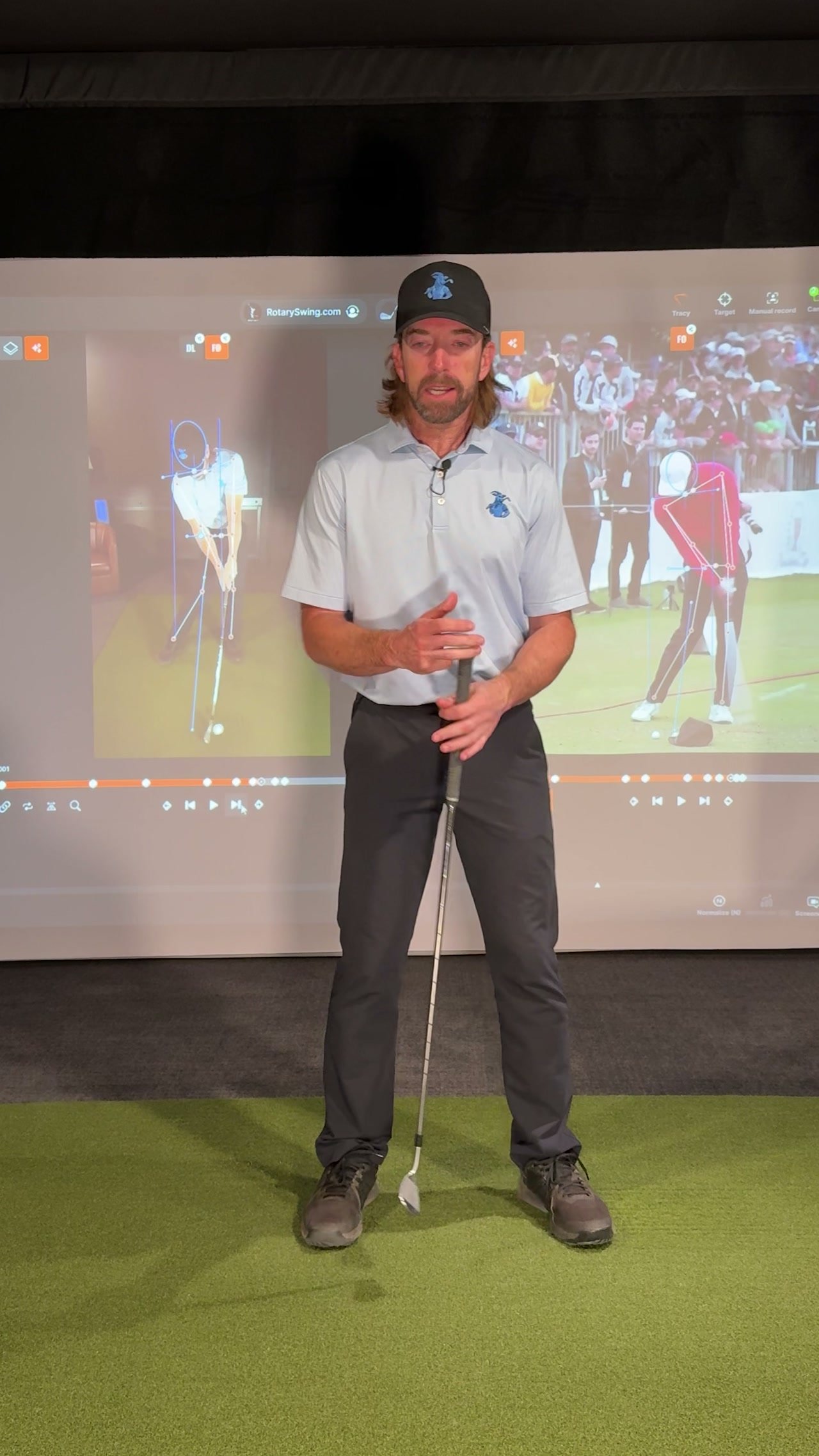
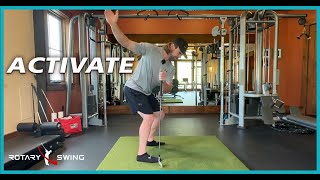
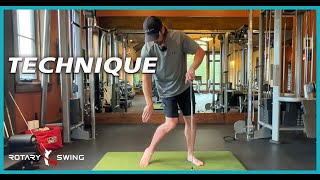
How to use your glutes in the golf swing like the GOATs. This video covers the exact sequence of movement and what you should feel to begin using your most powerful muscles in the golf swing - your glutes.
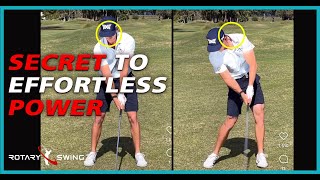
Do you want to know the secret to swinging like that?
It's all in your glutes.
Believe it or not, the golf swing is really centered around the center of your body, your core and your butt.
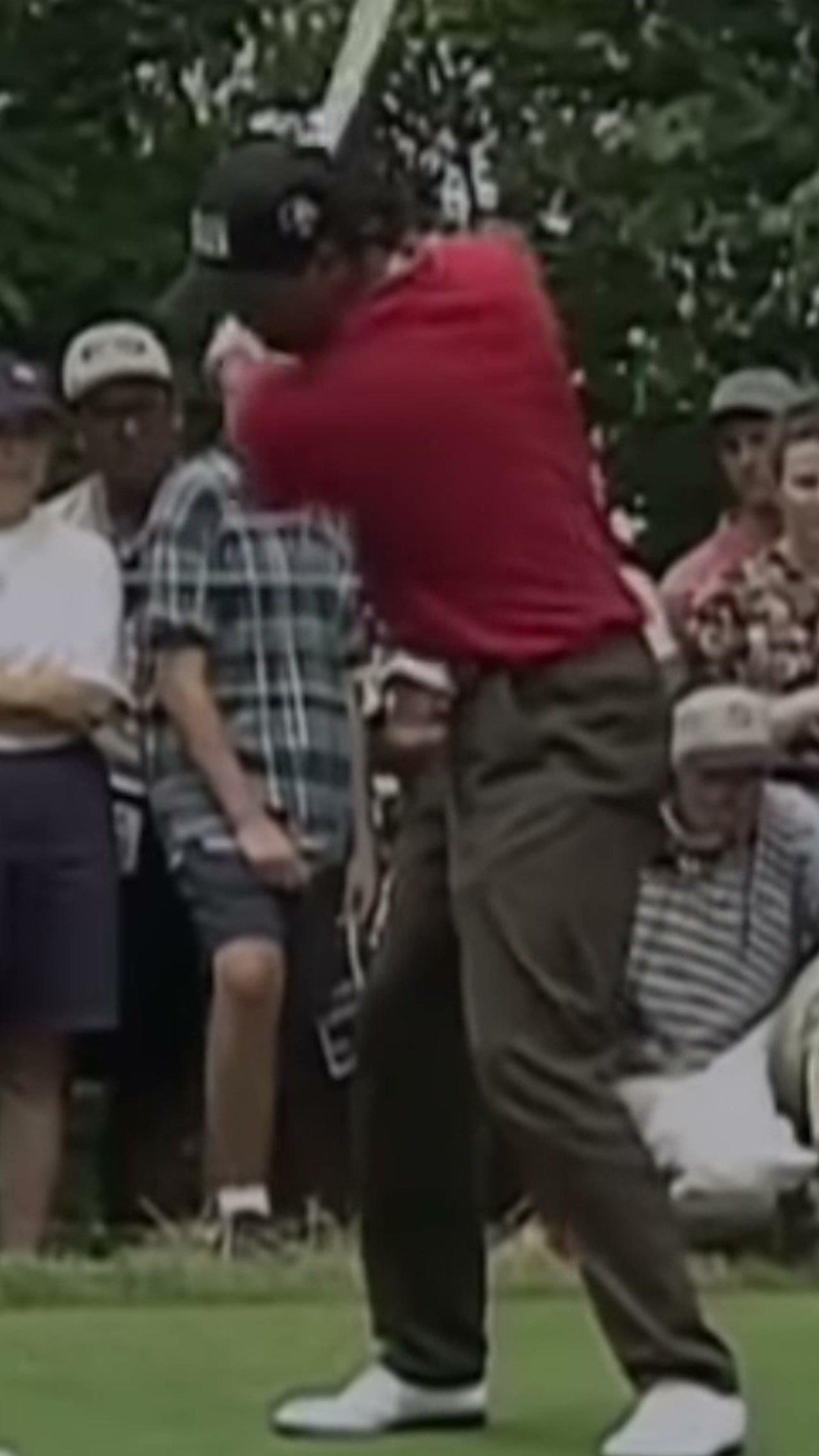
And Tiger's actually talked about this.
In fact, I think in 2015, he actually withdrew from a tournament citing that he couldn't engage his glutes.
What does that mean?
In this video, I'm going to explain to you not only how critical this is, but exactly how to do it exactly like the goat.
because if you can't engage your glutes, you're going to likely hurt your lower back.
And that's actually what Tiger was citing when he couldn't get his glutes to fire.
All the swing pressures were going into his lower back.
And this is extremely common.
I see this in injuries all the time.
And when Goaty is talking about you not getting enough trail hip depth, this is exactly what he's talking about in trying to prevent you from getting injured, but also how to sequence the swing properly.
It all starts at the very beginning of the swing.
If you do not get this trail hip deep early enough, everything else will fall apart.
In fact, if you were to get one thing right in your entire golf swing, this would be it during the start of the swing.
Now, why is this so important?
Let me explain.
I'm going to break down the entire swing in just a few seconds.
To show you exactly how simple the entire thing really is when you have it unified through your fascial system.
If you're trying to group together a bunch of bucket of parts and positions and mechanics, that stuff doesn't work.
You have to think of the swing as one holistic movement, everything in your body working together synergistically.
If you don't have your glutes engaged, you're missing the most important building block of the swing.
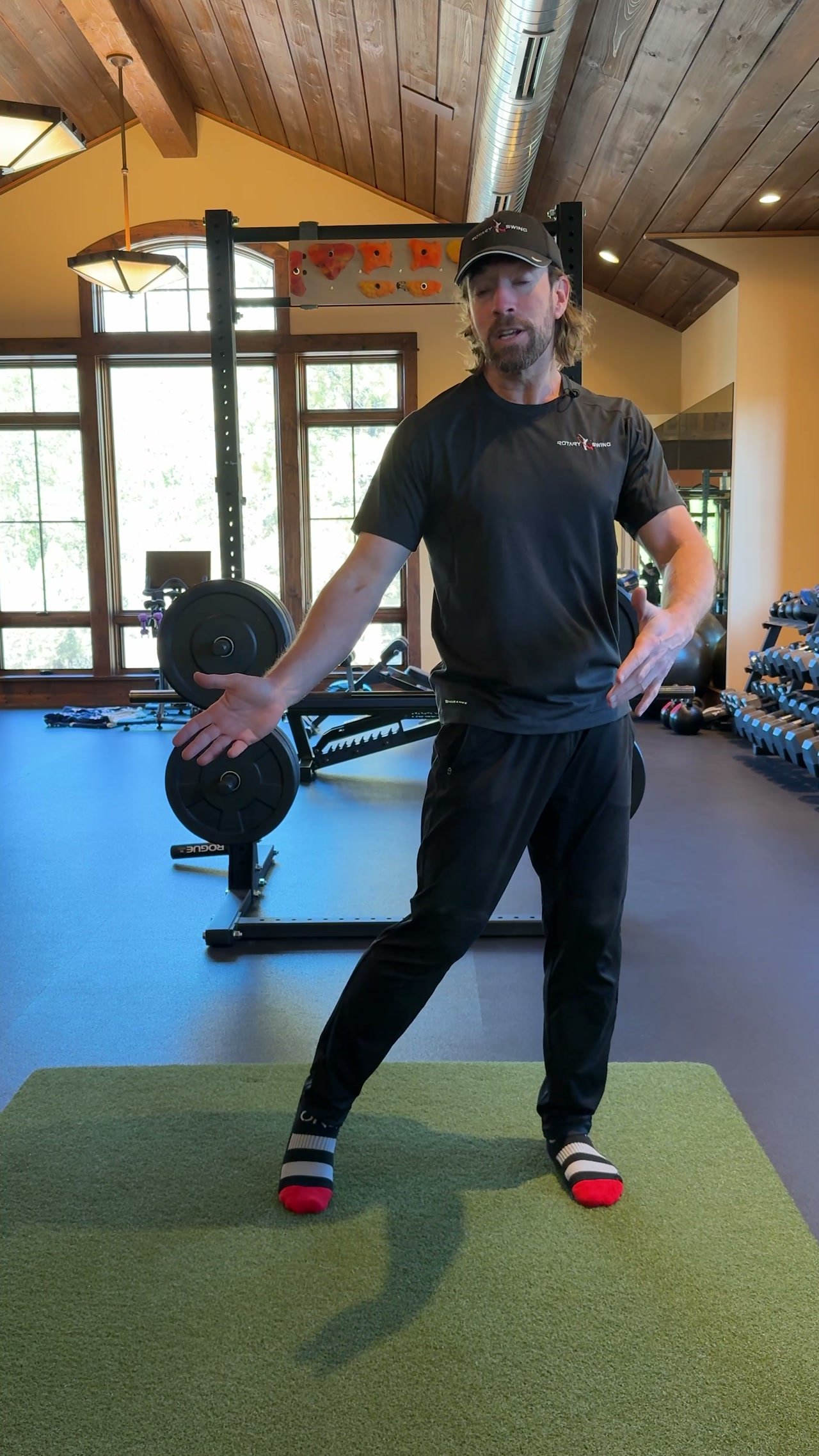
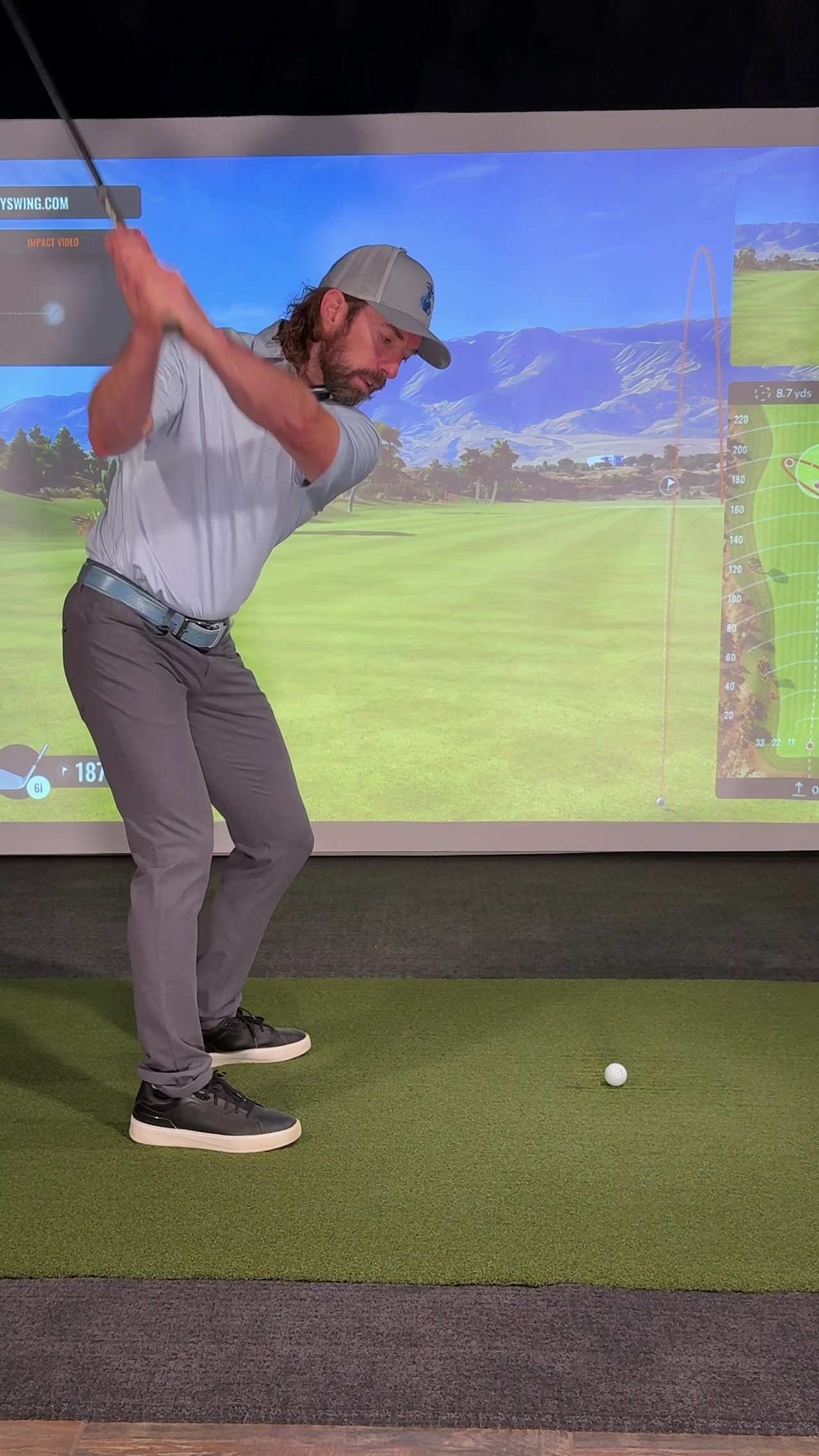
So the first thing that you've got to start to feel is that as you start to load, what you're trying to do is get your trail hip to move away from that ball.
Now, A lot of times, people don't really think about what their trail hip is doing at all because they're so fixed on the arms or the shoulders.
Or what have you.
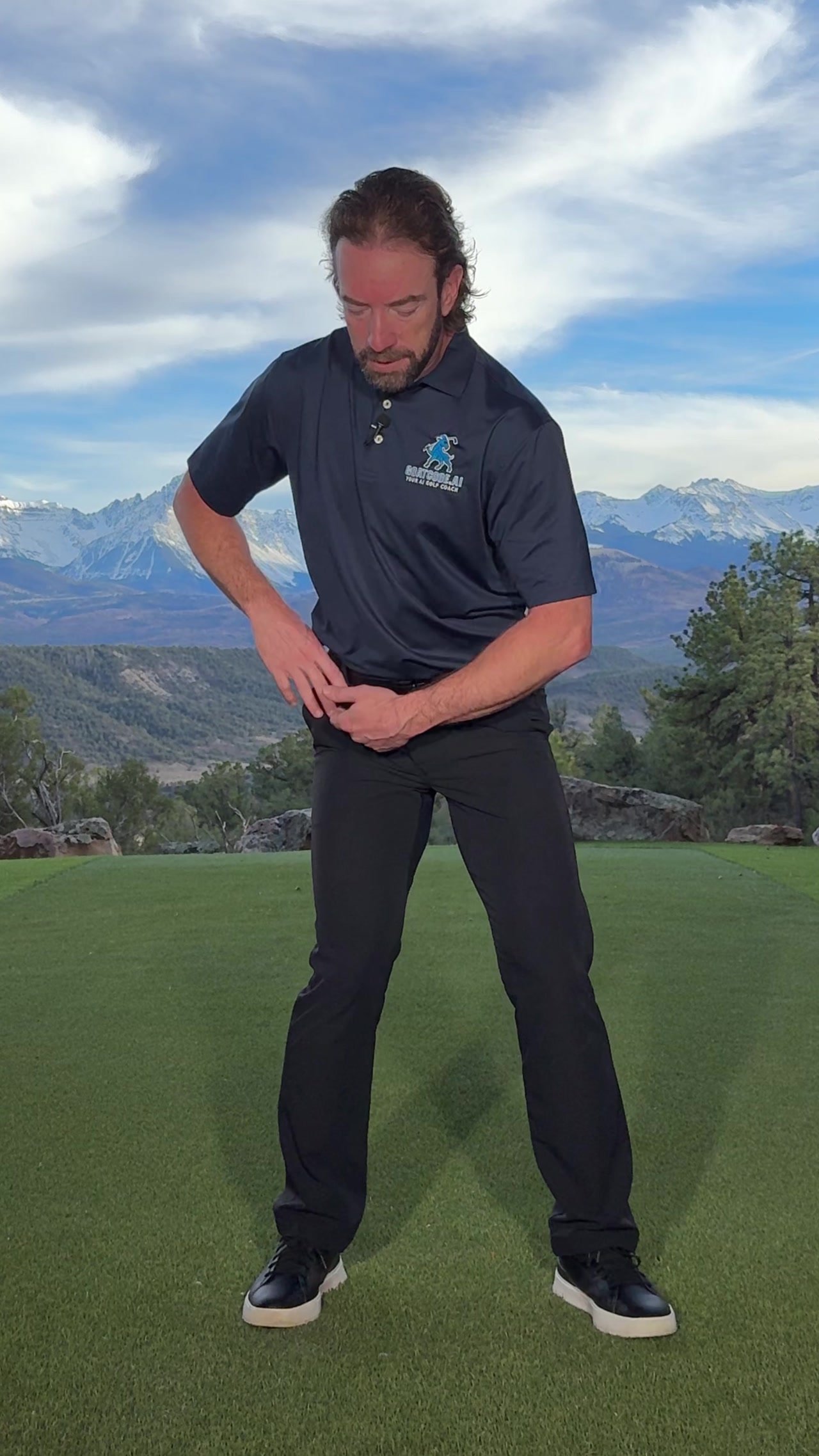
But what I want you to focus on is take your normal grip and then just focus on shifting slightly into your trail hip, just so you can feel a little bit of pressure.
I want you to feel it engage back here.
Feel it tighten up and then feel it go back away.
So you're going to feel that your pelvis is going to tilt on an angle.
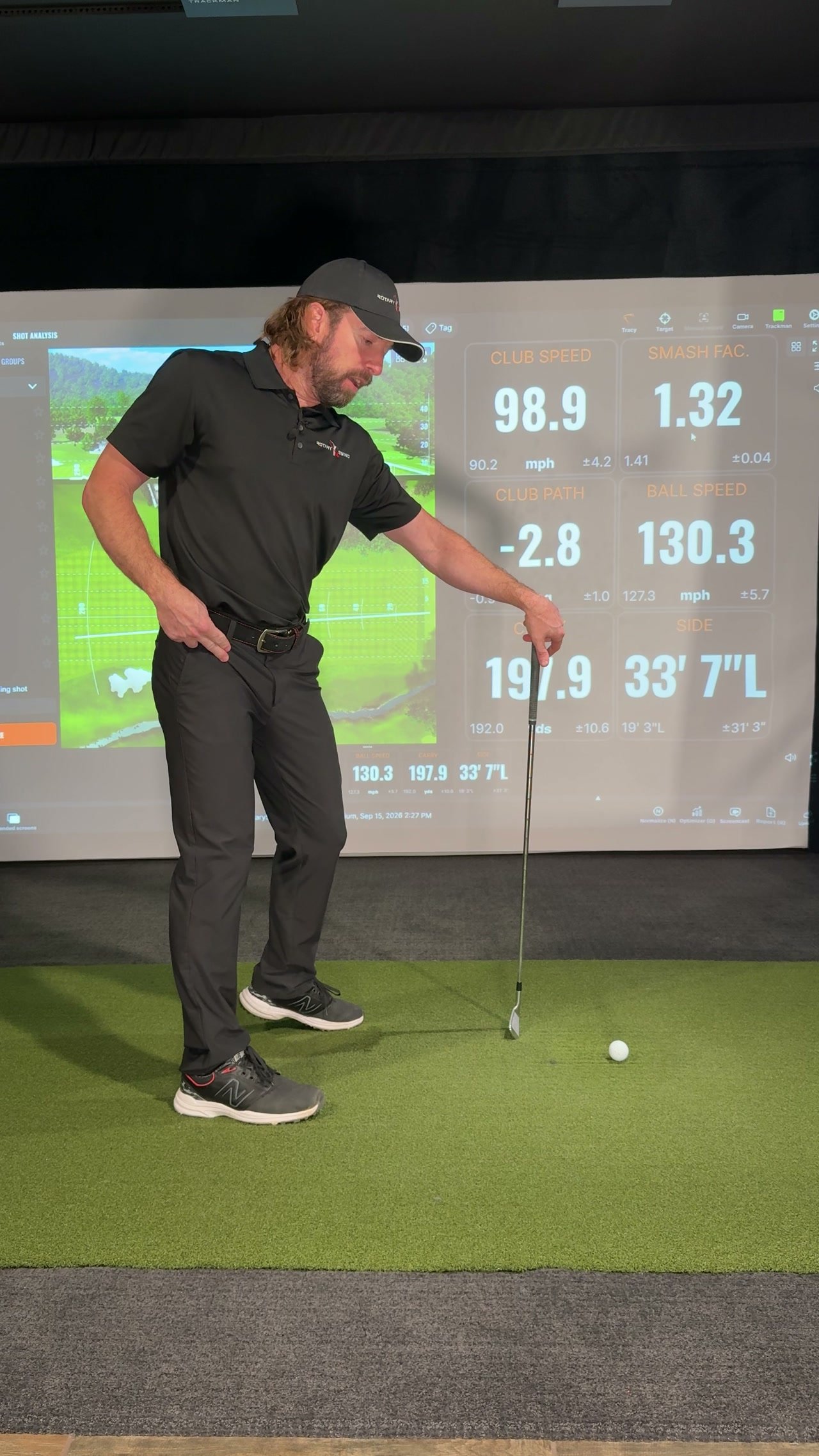
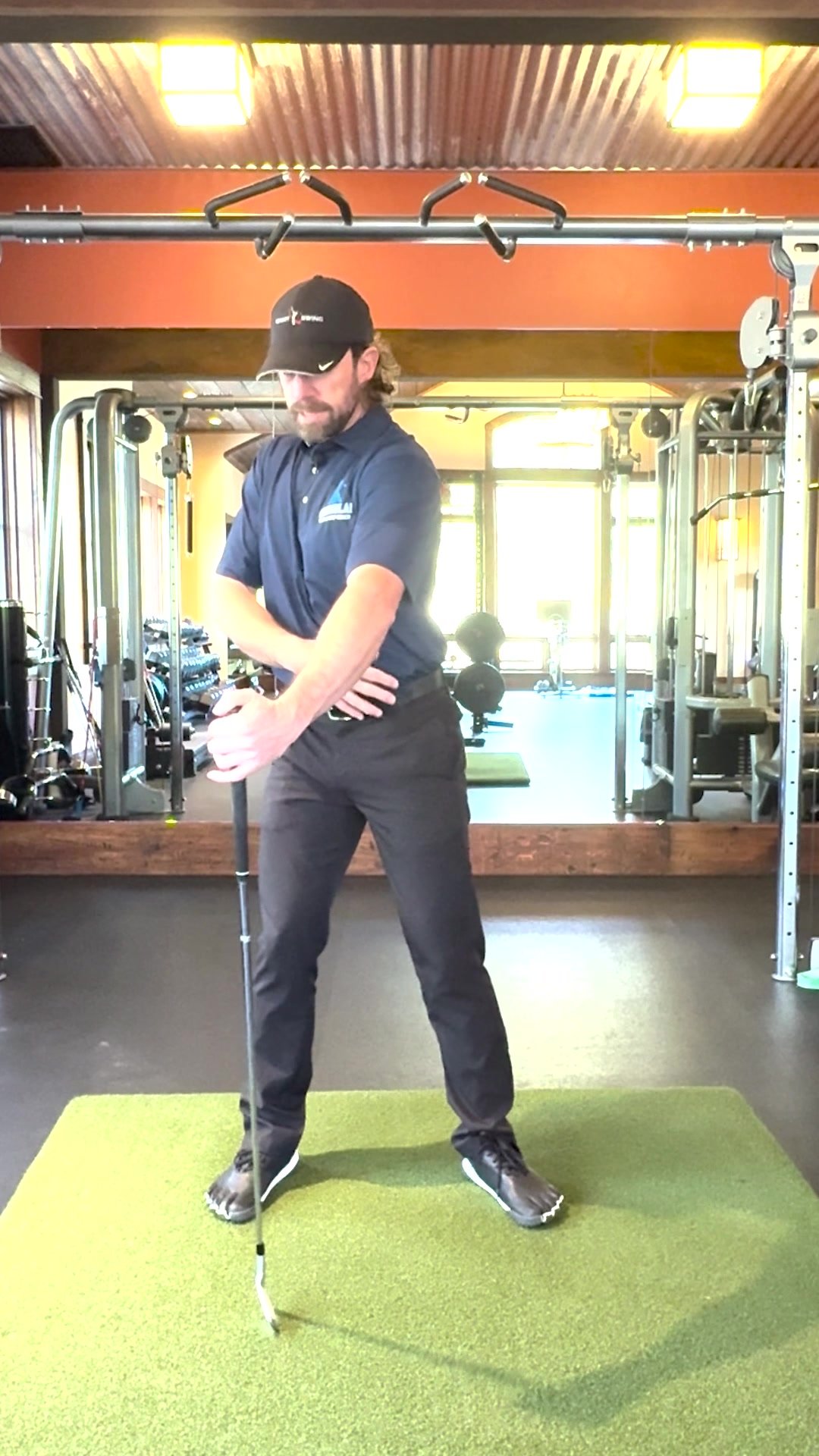
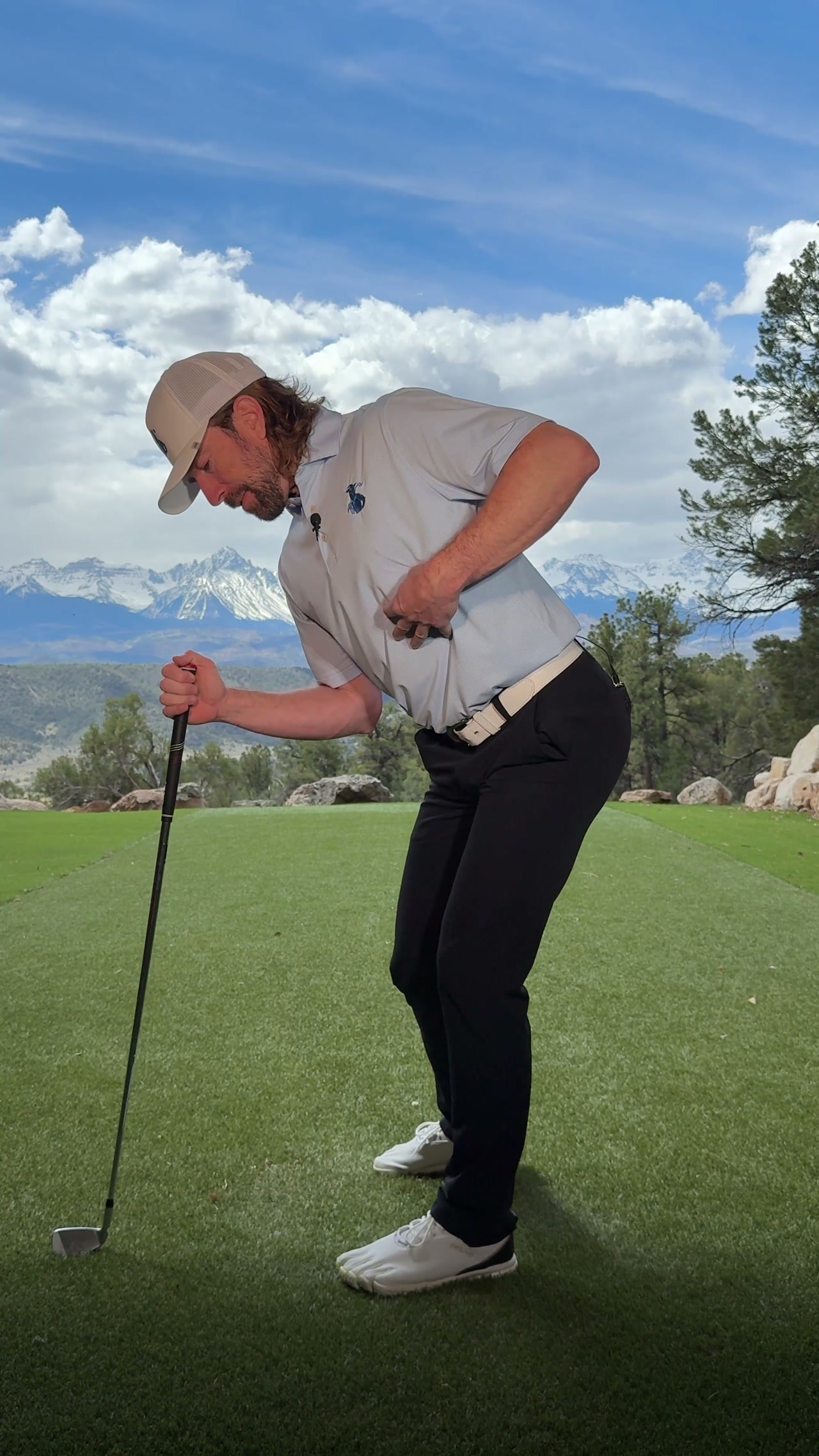
So if I put this club on here right on top of my belt and I start moving my hip back, it looks like my pelvis is tilted very steeply toward the ground.
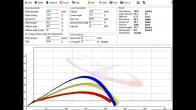
This is something that Goaty specifically measures.
He's measuring how much your lead hip drops and how much your trail hip moves away.
This is what all the greats do.
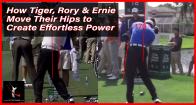
You look at John Daly, Jack Nicklaus, Tiger Woods.
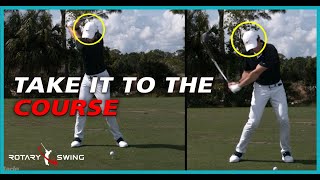
They got their hips moved deep and loaded powerfully in the backswing.
And most amateurs do the exact opposite because they're so fixated on moving your arms.
You have to load this properly.
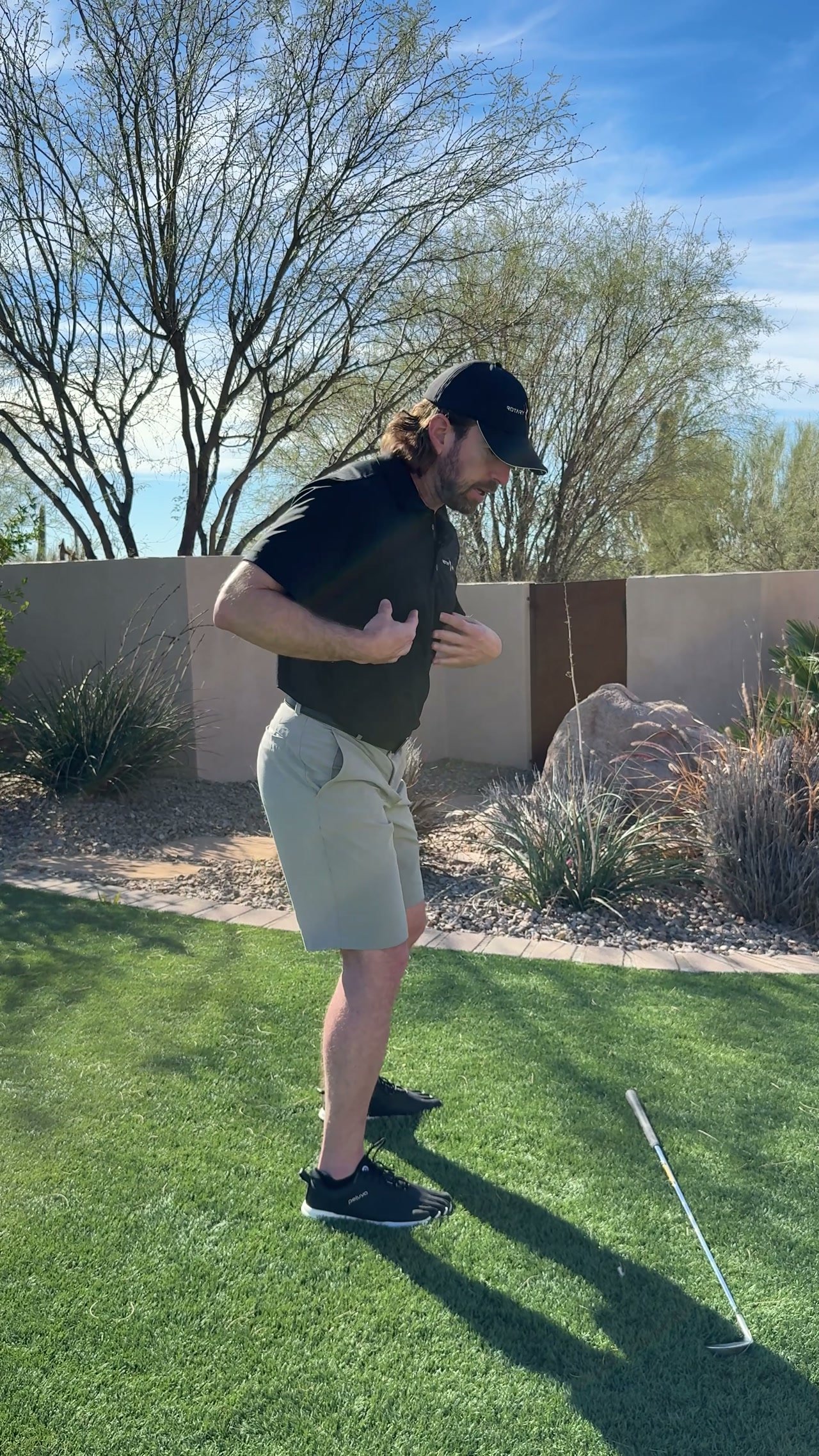
So, take that trail hip, feel it going back away, and start feeling like you're sitting down, but not bending your knee to sit.
What I want you to feel is that you're sitting and your upper body is inclining slightly more.
We're going to exaggerate these things so they're easy to see, but as you're going back, I'm getting my hip deep and feeling it lengthen, and I'm coiling around it.
So now I feel this thing loaded, but my leg is not bent down like this.
I've maintained a little bit of flexion, but what I'm trying to do is get this hip deep.
You can see it moving further away from the ball and that moves my spine slightly further down.
This movement is what's starting to move the arms and club.
I'm not trying to move the arms and club with my.
With my arms and hands and shoulders, I'm moving my hip.
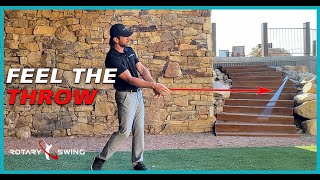
That's moving the club and giving some momentum.
And then as I go back, what want to do is keep this thing exactly where it is.
But at this point, if you don't feel a lot of tension inside this hip, on the hip socket, inside your glute, the glute itself, everything kind of wound up, then you don't have this feeling.
And so what I want you to do is try and feel.
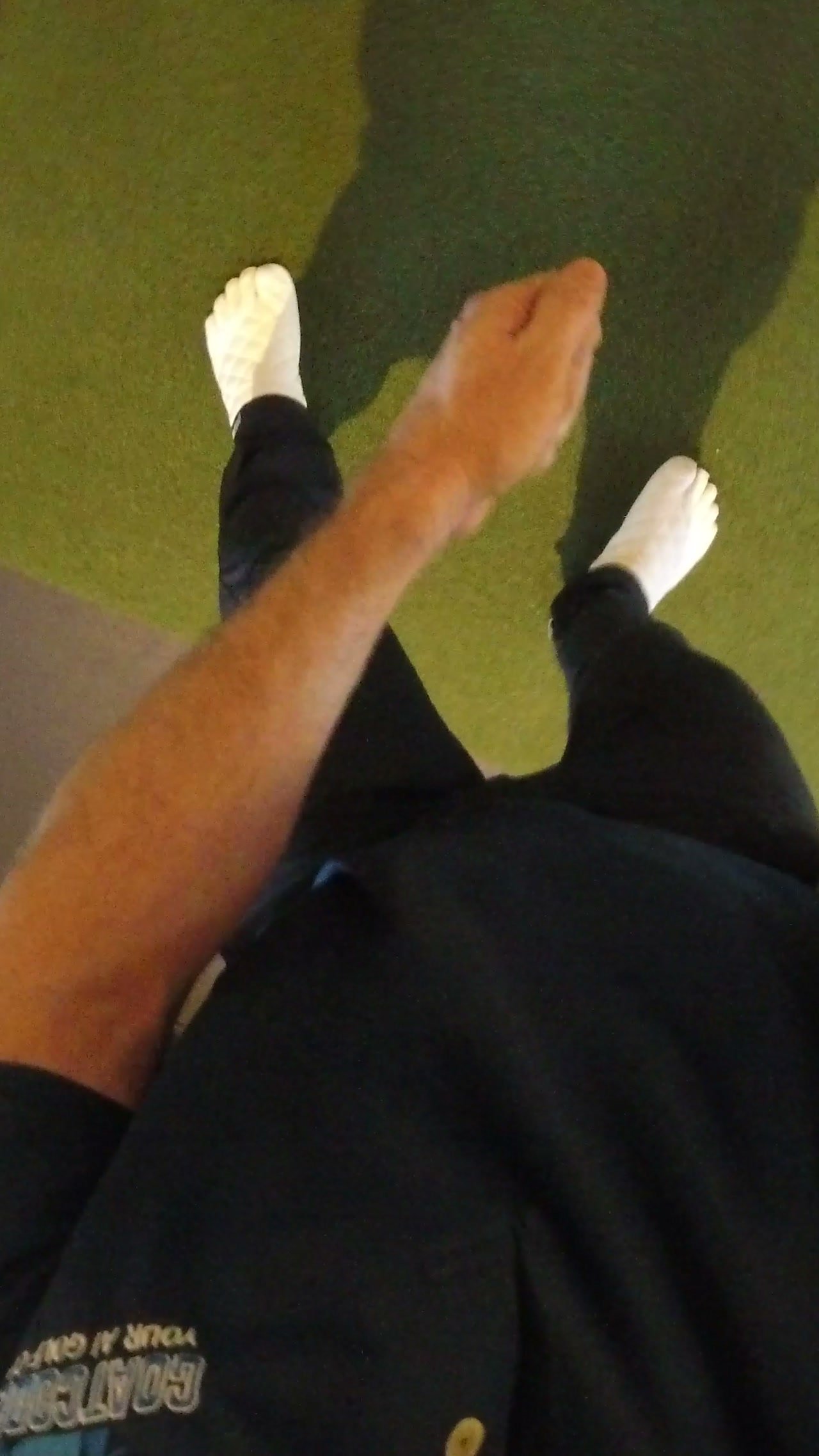
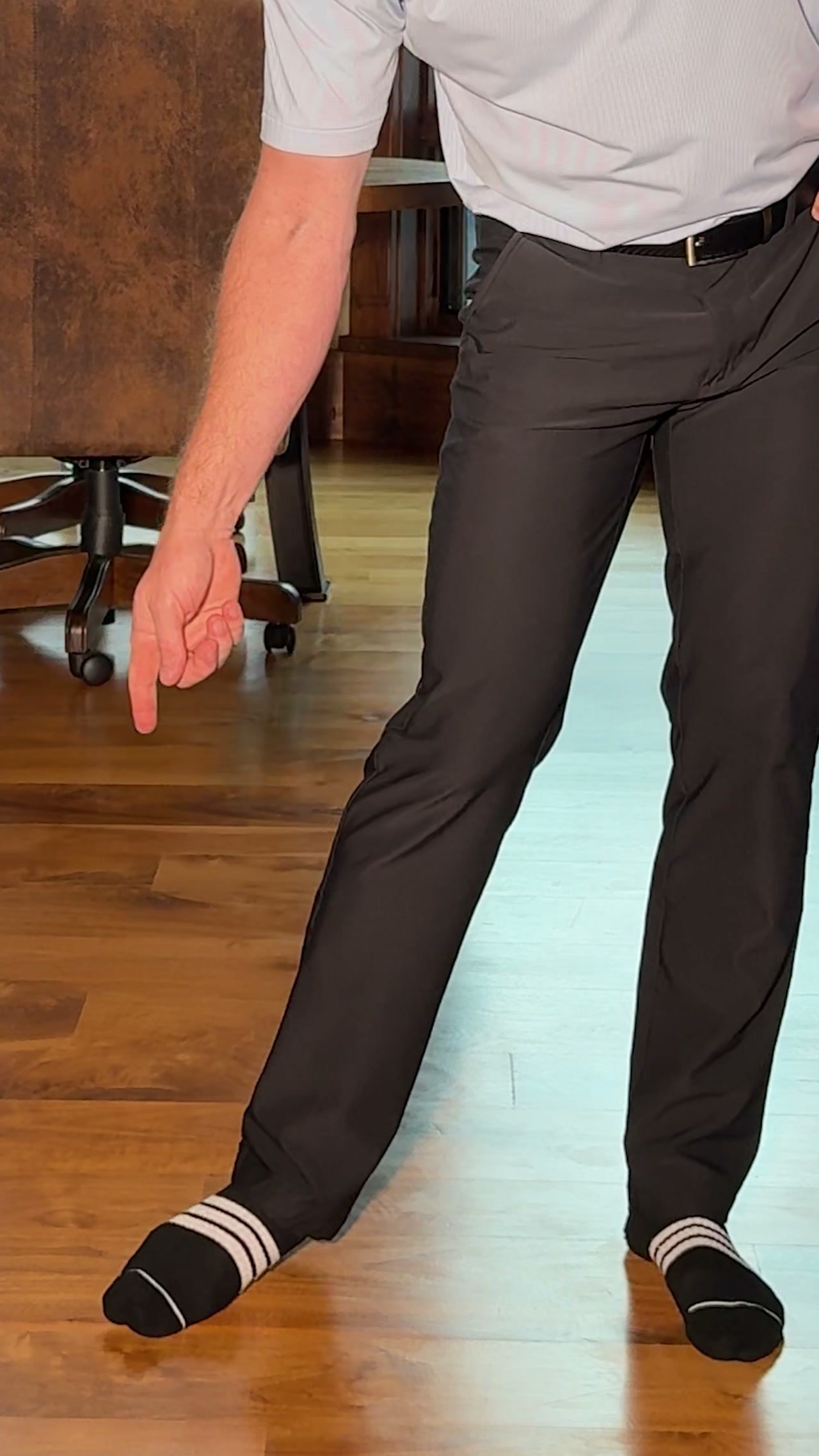
Pushing your big toe into the ground pretty aggressively while also driving this hip back.
This will help you start to feel the connection from the ground and from your feet and from your big toe to your glute, and feel this thing engage.
Now from here, all I'm gonna do is keep this wound for a second.
Now one of the things Goaty measures when you're doing a live lesson is containment.
And what he's really looking at is, do your arms fire first, or does your body have a chance to start to sequence first?
The trick to sequencing is not pushing off your trail side to shift laterally.
That's gonna happen completely automatically.
You should never try and shove off of your trail foot.
Watch what's going to happen.
If I coil into this trail hips, I'm moving it deep, and this is going to tilt.
Because it keeps coiling, keeps coiling, keeps getting deeper, it looks like my hips are shifting over here.
But I'm not pushing off of here.
I'm coiling.
And so now as I'm coiled up, pushing my big toe into the ground, my heel into the ground, glute feels really loaded.
It feels really tight.
Now I'm going to keep it back there and I'm going to stay contained, which means don't start opening up.
If you start pushing off your trail side, you're going to goat hump.
You're going to start early extending and then everything else is out of sequence.
Wait just a second and let that lead hip, lead big toe plant.
Feel your big toe.
This is why I use these Paluva shoes because they allow you to feel your big toe and glute connection, which is very important for all athletic sports.
And you want to feel that big toe push into the ground for just a second because it's resisting.
So that you're really coiled up and not trying to unwind too early.
So push that big toe into the ground so your glutes start to engage on the lead side and drive it back.
So now you should feel like you went like this.
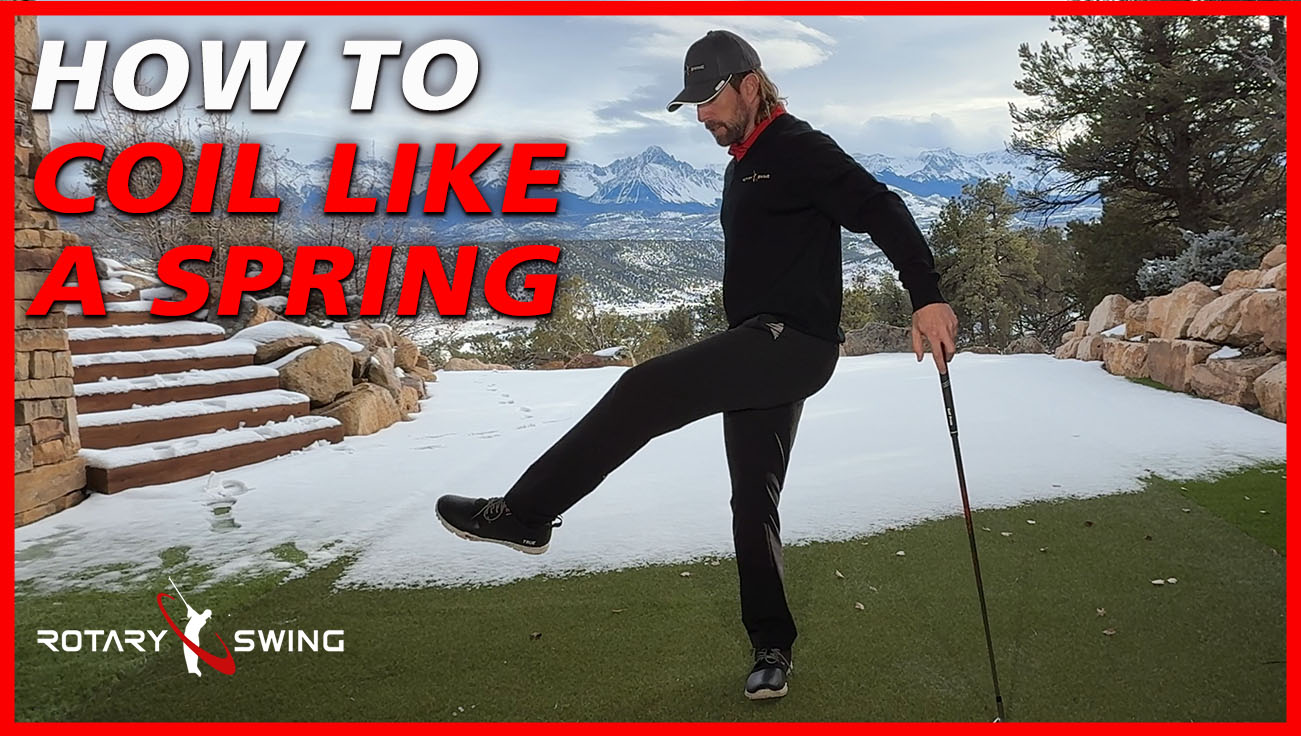
That's going to feel really strange at first, but you've seen Tiger doing these goofy looking drills all the time because he's trying to get his glutes to coil, to load, to lengthen, to stretch, to then be able to fire.
If you don't have that, it's all going to come from up here.
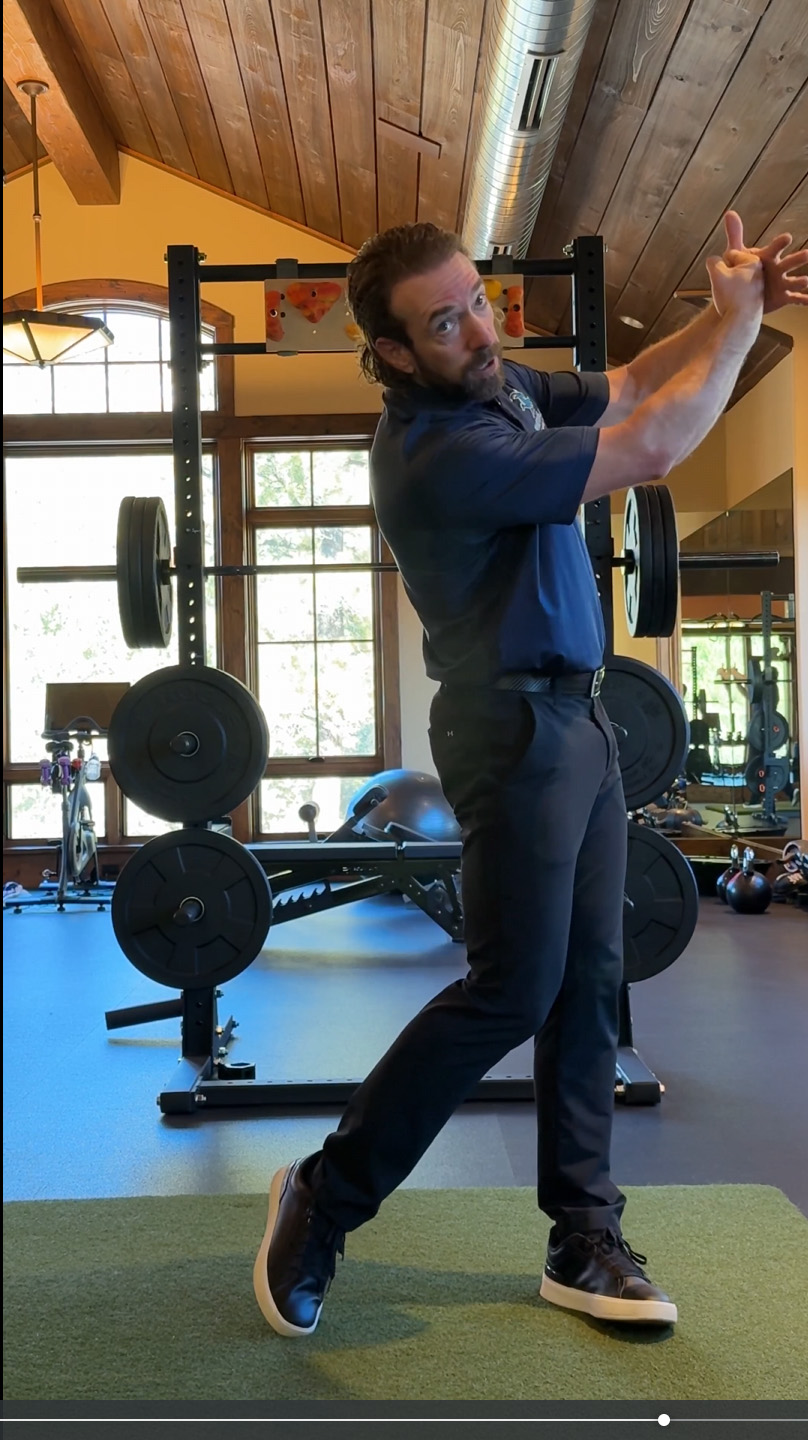
If you look like this at impact, your glutes are not firing, you're not loading them.
So trail hip back, loaded, lead big toe, lead hip, and now both hips are squatted.
And so that's now my whole body feels like it is tilted forward.
My upper body is tilted forward because my hips are staying back.
And this is something Tiger's talked about a lot.
He's trying to keep the right hip back, trail hip back, and then the lead hip to go back and stay there.
And then from here, as this all begins to, now you've given it permission to unwind, this leg is going to resist and push up and back, and that's going to move the whole thing, everything.
Watch, let me show you.
So I'm going to go really slow at first.
So I'm going to just a little bump.
You see, I kind of rock back into it.
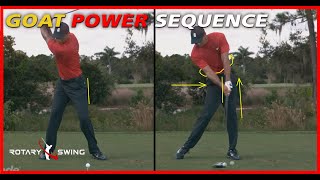
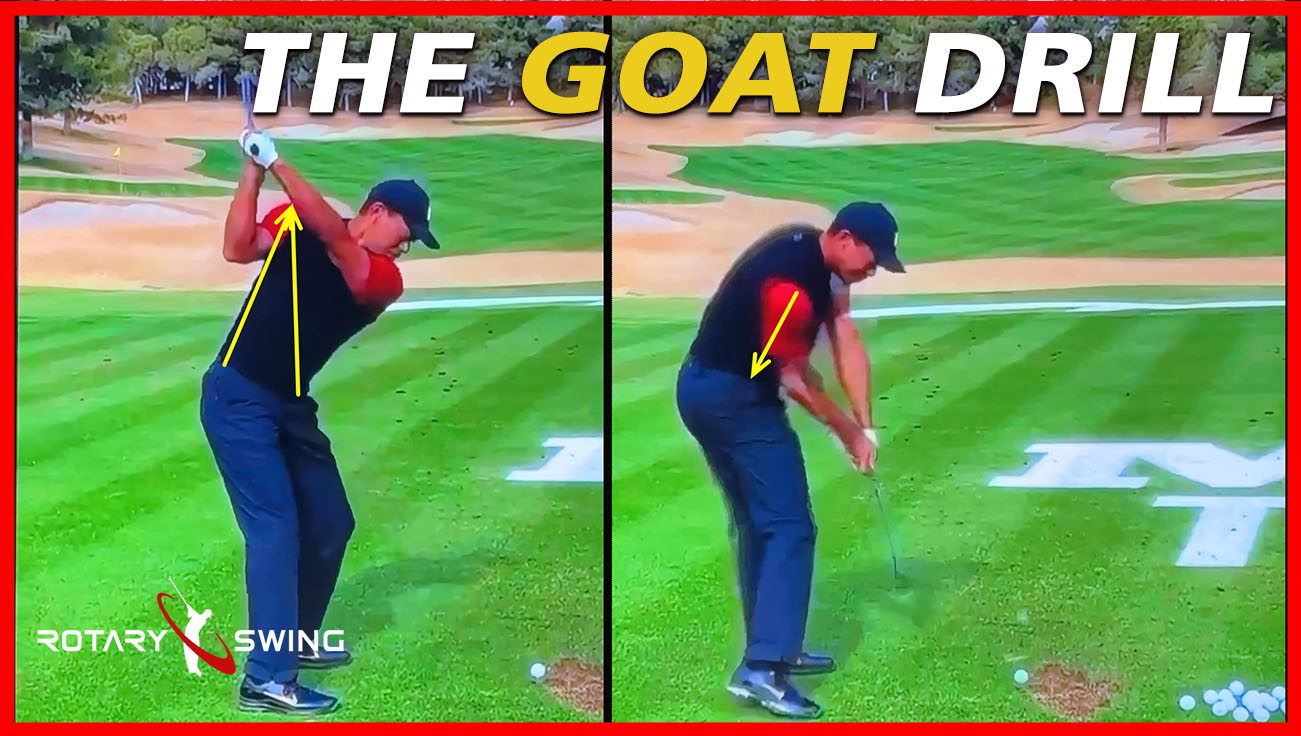
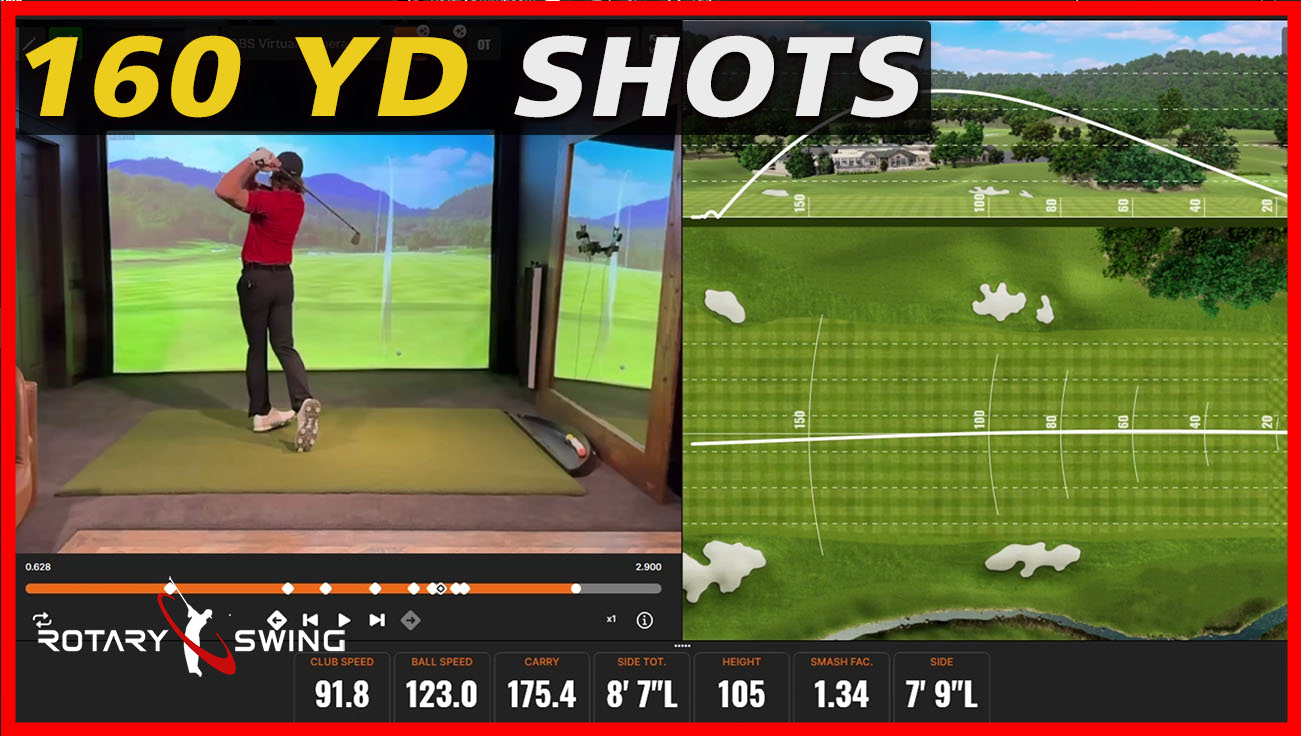
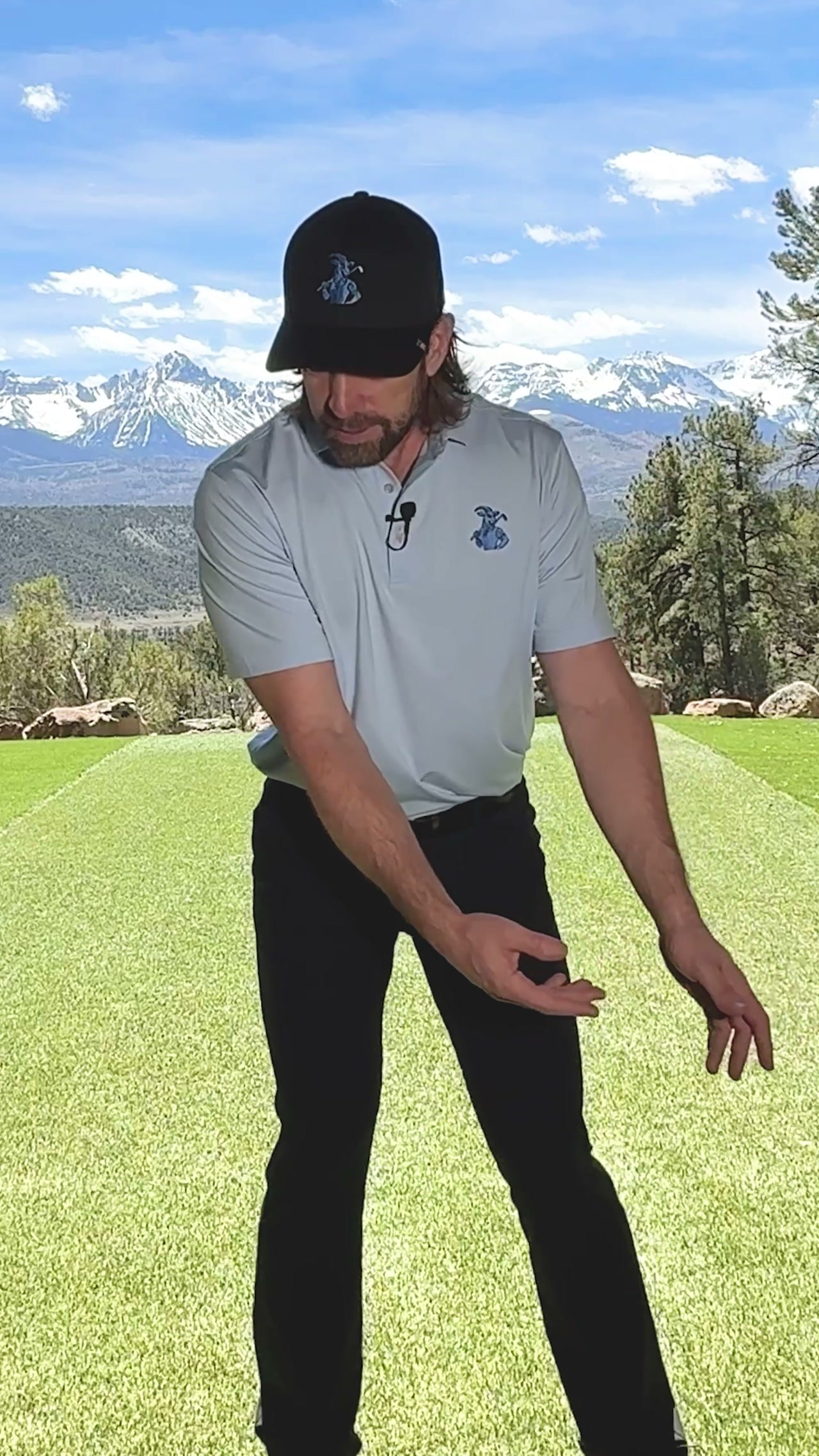
I don't want to sway to the outside but i'm just getting myself to where this glute starts to get loaded coiling now this my big left big toe heel and outside of foot glutes now engage on the lead side driving it back and now look where my arms are my arms got moved here really just by focusing on what my two glutes are doing what my two hips are doing and if you start putting this together you'll see that you naturally end up in the proper impact position without trying to do anything with the club arms hands no shallowing none of that stuff i'm never trying to go up here manipulate the club i'm literally focused on glute movement engage coil loaded now my lead hip's going to fire everything's coming down that's the whole swing in a nutshell and all you need to do when you're working with goatee is make sure you start loading that right away then the lead hip does the same thing you can see as the lead hip goes back my head and sternum drop and then start adding speed to that and letting your arms be whipped through this is key you do not turn your shoulders from the top you not turn your upper body from the top you do not fire your arms from the top you let your glutes do all the work and then you'll start finding that as you start putting this together you can start putting real speed into it but my arms and hands are just along for the ride
It's all in your glutes.
Believe it or not, the golf swing is really centered around the center of your body, your core and your butt.
And Tiger's actually talked about this.
In fact, I think in 2015, he actually withdrew from a tournament citing that he couldn't engage his glutes.
What does that mean?
In this video, I'm going to explain to you not only how critical this is, but exactly how to do it exactly like the goat.
because if you can't engage your glutes, you're going to likely hurt your lower back.
And that's actually what Tiger was citing when he couldn't get his glutes to fire.
All the swing pressures were going into his lower back.
And this is extremely common.
I see this in injuries all the time.
And when Goaty is talking about you not getting enough trail hip depth, this is exactly what he's talking about in trying to prevent you from getting injured, but also how to sequence the swing properly.
It all starts at the very beginning of the swing.
If you do not get this trail hip deep early enough, everything else will fall apart.
In fact, if you were to get one thing right in your entire golf swing, this would be it during the start of the swing.
Now, why is this so important?
Let me explain.
I'm going to break down the entire swing in just a few seconds.
To show you exactly how simple the entire thing really is when you have it unified through your fascial system.
If you're trying to group together a bunch of bucket of parts and positions and mechanics, that stuff doesn't work.
You have to think of the swing as one holistic movement, everything in your body working together synergistically.
If you don't have your glutes engaged, you're missing the most important building block of the swing.
So the first thing that you've got to start to feel is that as you start to load, what you're trying to do is get your trail hip to move away from that ball.
Now, A lot of times, people don't really think about what their trail hip is doing at all because they're so fixed on the arms or the shoulders.
Or what have you.
But what I want you to focus on is take your normal grip and then just focus on shifting slightly into your trail hip, just so you can feel a little bit of pressure.
I want you to feel it engage back here.
Feel it tighten up and then feel it go back away.
So you're going to feel that your pelvis is going to tilt on an angle.
So if I put this club on here right on top of my belt and I start moving my hip back, it looks like my pelvis is tilted very steeply toward the ground.
This is something that Goaty specifically measures.
He's measuring how much your lead hip drops and how much your trail hip moves away.
This is what all the greats do.
You look at John Daly, Jack Nicklaus, Tiger Woods.
They got their hips moved deep and loaded powerfully in the backswing.
And most amateurs do the exact opposite because they're so fixated on moving your arms.
You have to load this properly.
So, take that trail hip, feel it going back away, and start feeling like you're sitting down, but not bending your knee to sit.
What I want you to feel is that you're sitting and your upper body is inclining slightly more.
We're going to exaggerate these things so they're easy to see, but as you're going back, I'm getting my hip deep and feeling it lengthen, and I'm coiling around it.
So now I feel this thing loaded, but my leg is not bent down like this.
I've maintained a little bit of flexion, but what I'm trying to do is get this hip deep.
You can see it moving further away from the ball and that moves my spine slightly further down.
This movement is what's starting to move the arms and club.
I'm not trying to move the arms and club with my.
With my arms and hands and shoulders, I'm moving my hip.
That's moving the club and giving some momentum.
And then as I go back, what want to do is keep this thing exactly where it is.
But at this point, if you don't feel a lot of tension inside this hip, on the hip socket, inside your glute, the glute itself, everything kind of wound up, then you don't have this feeling.
And so what I want you to do is try and feel.
Pushing your big toe into the ground pretty aggressively while also driving this hip back.
This will help you start to feel the connection from the ground and from your feet and from your big toe to your glute, and feel this thing engage.
Now from here, all I'm gonna do is keep this wound for a second.
Now one of the things Goaty measures when you're doing a live lesson is containment.
And what he's really looking at is, do your arms fire first, or does your body have a chance to start to sequence first?
The trick to sequencing is not pushing off your trail side to shift laterally.
That's gonna happen completely automatically.
You should never try and shove off of your trail foot.
Watch what's going to happen.
If I coil into this trail hips, I'm moving it deep, and this is going to tilt.
Because it keeps coiling, keeps coiling, keeps getting deeper, it looks like my hips are shifting over here.
But I'm not pushing off of here.
I'm coiling.
And so now as I'm coiled up, pushing my big toe into the ground, my heel into the ground, glute feels really loaded.
It feels really tight.
Now I'm going to keep it back there and I'm going to stay contained, which means don't start opening up.
If you start pushing off your trail side, you're going to goat hump.
You're going to start early extending and then everything else is out of sequence.
Wait just a second and let that lead hip, lead big toe plant.
Feel your big toe.
This is why I use these Paluva shoes because they allow you to feel your big toe and glute connection, which is very important for all athletic sports.
And you want to feel that big toe push into the ground for just a second because it's resisting.
So that you're really coiled up and not trying to unwind too early.
So push that big toe into the ground so your glutes start to engage on the lead side and drive it back.
So now you should feel like you went like this.
That's going to feel really strange at first, but you've seen Tiger doing these goofy looking drills all the time because he's trying to get his glutes to coil, to load, to lengthen, to stretch, to then be able to fire.
If you don't have that, it's all going to come from up here.
If you look like this at impact, your glutes are not firing, you're not loading them.
So trail hip back, loaded, lead big toe, lead hip, and now both hips are squatted.
And so that's now my whole body feels like it is tilted forward.
My upper body is tilted forward because my hips are staying back.
And this is something Tiger's talked about a lot.
He's trying to keep the right hip back, trail hip back, and then the lead hip to go back and stay there.
And then from here, as this all begins to, now you've given it permission to unwind, this leg is going to resist and push up and back, and that's going to move the whole thing, everything.
Watch, let me show you.
So I'm going to go really slow at first.
So I'm going to just a little bump.
You see, I kind of rock back into it.
I don't want to sway to the outside but i'm just getting myself to where this glute starts to get loaded coiling now this my big left big toe heel and outside of foot glutes now engage on the lead side driving it back and now look where my arms are my arms got moved here really just by focusing on what my two glutes are doing what my two hips are doing and if you start putting this together you'll see that you naturally end up in the proper impact position without trying to do anything with the club arms hands no shallowing none of that stuff i'm never trying to go up here manipulate the club i'm literally focused on glute movement engage coil loaded now my lead hip's going to fire everything's coming down that's the whole swing in a nutshell and all you need to do when you're working with goatee is make sure you start loading that right away then the lead hip does the same thing you can see as the lead hip goes back my head and sternum drop and then start adding speed to that and letting your arms be whipped through this is key you do not turn your shoulders from the top you not turn your upper body from the top you do not fire your arms from the top you let your glutes do all the work and then you'll start finding that as you start putting this together you can start putting real speed into it but my arms and hands are just along for the ride
Tu veux connaître le secret pour se balancer comme ça ?
Tout se joue au niveau des fessiers.
Croyez-le ou non, le swing de golf est en réalité centré sur le centre de votre corps, vos abdominaux et vos fessiers.
Et Tiger en a effectivement parlé.
En fait, je crois qu'en 2015, il s'est retiré d'un tournoi en prétextant qu'il ne pouvait pas solliciter ses fessiers.
Qu'est-ce que cela signifie?
Dans cette vidéo, je vais vous expliquer non seulement à quel point c'est crucial, mais aussi comment le faire exactement comme la chèvre.
Car si vous ne parvenez pas à solliciter vos fessiers, vous risquez fort de vous blesser au bas du dos.
Et c'est précisément ce que Tiger évoquait lorsqu'il n'arrivait pas à faire travailler ses fessiers.
Toute la pression exercée par le swing se concentrait sur le bas de son dos.
Et c'est extrêmement courant.
Je vois ça tout le temps dans les blessures.
Et lorsque Goaty parle d'un manque de profondeur de hanche à l'arrière, c'est exactement de cela qu'il parle pour éviter les blessures, mais aussi pour bien séquencer le swing.
Tout commence dès le début du swing.
Si vous ne vous engagez pas suffisamment tôt sur ce sentier jusqu'aux hanches, tout le reste s'effondrera.
En fait, s'il ne fallait réussir qu'une seule chose dans votre swing de golf, ce serait bien le début du mouvement.
Pourquoi est-ce si important ?
Permettez-moi de vous expliquer.
Je vais décomposer tout le swing en quelques secondes.
Pour vous montrer à quel point tout cela est simple une fois unifié par votre système fascial.
Si vous essayez de regrouper un tas de pièces, de positions et de mécanismes disparates, ça ne marche pas.
Il faut considérer le balancement comme un mouvement holistique, où tout dans le corps fonctionne en synergie.
Si vous ne contractez pas vos fessiers, vous passez à côté de l'élément fondamental du swing.
Donc, la première chose que vous devez commencer à ressentir, c'est que lorsque vous commencez à charger, ce que vous essayez de faire, c'est d'éloigner votre hanche arrière de la balle.
Or, bien souvent, les gens ne réfléchissent pas du tout à ce que fait leur hanche arrière car ils sont tellement concentrés sur leurs bras ou leurs épaules.
Ou quoi que ce soit d'autre.
Mais ce sur quoi je veux que vous vous concentriez, c'est de prendre votre prise habituelle et de vous concentrer ensuite sur un léger déplacement de la hanche arrière, juste pour ressentir une légère pression.
Je veux que vous ressentiez cet engagement ici.
Sentez-le se contracter puis se relâcher.
Vous allez donc sentir que votre bassin va basculer.
Donc si je place ce club juste au-dessus de ma ceinture et que je commence à reculer la hanche, on dirait que mon bassin est incliné très fortement vers le sol.
C'est quelque chose que Goaty mesure précisément.
Il mesure de combien votre hanche avant s'abaisse et de combien votre hanche arrière s'éloigne.
C'est ce que font tous les grands champions.
Regardez John Daly, Jack Nicklaus, Tiger Woods.
Leurs hanches se sont déplacées profondément et ont chargé puissamment lors de la montée.
Et la plupart des amateurs font exactement le contraire car ils sont tellement obsédés par le mouvement des bras.
Vous devez le charger correctement.
Alors, prenez cette hanche qui s'enfonce, sentez-la reculer et commencez à avoir la sensation de vous asseoir, mais sans plier le genou.
Ce que je veux que vous ressentiez, c'est que vous êtes assis et que le haut de votre corps est légèrement plus incliné.
Nous allons exagérer ces choses pour qu'elles soient faciles à voir, mais lorsque vous revenez en arrière, je fais descendre ma hanche profondément et je la sens s'allonger, et je m'enroule autour.
Du coup, je sens que cette chose est lourde, mais ma jambe n'est pas pliée comme ça.
J'ai conservé une légère flexion, mais ce que j'essaie de faire, c'est d'amener cette hanche en profondeur.
On peut voir que le ballon s'éloigne et que ma colonne vertébrale s'abaisse légèrement.
C'est ce mouvement qui commence à faire bouger les bras et le club.
Je n'essaie pas de bouger les bras et de frapper avec mon.
Avec mes bras, mes mains et mes épaules, je bouge ma hanche.
Cela fait avancer le club et lui donne un nouvel élan.
Et puis, en y retournant, ce que je veux, c'est laisser cette chose exactement là où elle est.
Mais à ce stade, si vous ne ressentez pas beaucoup de tension à l'intérieur de cette hanche, au niveau de l'articulation de la hanche, à l'intérieur de votre fessier, dans le fessier lui-même, tout étant en quelque sorte contracté, alors vous n'avez pas cette sensation.
Alors ce que je veux que vous fassiez, c'est essayer de ressentir.
Enfonçant votre gros orteil dans le sol de manière assez agressive tout en poussant votre hanche vers l'arrière.
Cela vous aidera à commencer à ressentir la connexion avec le sol, vos pieds, votre gros orteil jusqu'à votre fesse, et à sentir ce muscle s'activer.
À partir de maintenant, je vais simplement maintenir cette plaie fermée pendant une seconde.
L'un des paramètres mesurés par Goaty lors d'un cours en direct est le confinement.
Et ce qu'il observe réellement, c'est si vos bras se mettent à réagir en premier, ou si votre corps a la possibilité de commencer à séquencer les mouvements en premier ?
Le secret d'un bon enchaînement est de ne pas se décaler latéralement pour se déplacer latéralement.
Cela se fera de manière complètement automatique.
Il ne faut jamais essayer de prendre appui sur son pied d'appui.
Regardez ce qui va se passer.
Si je me cambre dans cette position, je vais enfoncer le bassin profondément, et ça va basculer.
Parce que ça s'enroule sans cesse, que ça s'enroule encore, que ça devient de plus en plus profond, on dirait que mes hanches se déplacent par ici.
Mais je ne vais pas partir d'ici.
Je m'enroule.
Et maintenant, alors que je suis recroquevillée, enfonçant mon gros orteil et mon talon dans le sol, je sens mes fessiers vraiment sollicités.
C'est vraiment serré.
Maintenant, je vais le garder là où il est et rester contenu, ce qui signifie ne pas commencer à m'ouvrir.
Si vous commencez à pousser hors du sentier, vous allez faire une bosse de chèvre.
Vous allez commencer à étendre la capacité prématurément et tout le reste sera désorganisé.
Attendez une seconde et laissez votre hanche avant, votre gros orteil avant, se poser au sol.
Touchez votre gros orteil.
C’est pourquoi j’utilise ces chaussures Paluva, car elles permettent de ressentir la connexion entre le gros orteil et le fessier, ce qui est très important pour tous les sports athlétiques.
Et vous voulez sentir ce gros orteil s'enfoncer dans le sol pendant une seconde seulement, parce qu'il résiste.
Pour que vous soyez vraiment tendu et que vous n'essayiez pas de vous détendre trop tôt.
Poussez donc votre gros orteil dans le sol pour que vos fessiers commencent à s'engager du côté avant et le propulsent vers l'arrière.
Vous devriez donc avoir l'impression d'avoir procédé ainsi.
Ça va paraître vraiment bizarre au début, mais vous avez tout le temps vu Tiger faire ces exercices qui ont l'air ridicules parce qu'il essaie de faire enrouler ses fessiers, de les charger, de les allonger, de les étirer, pour ensuite pouvoir les contracter.
Si vous n'avez pas ça, tout viendra d'ici.
Si votre posture à l'impact est celle-ci, vos fessiers ne sont pas sollicités, vous ne les mettez pas en charge.
Donc, hanche arrière en arrière, charge, gros orteil en avant, hanche en avant, et maintenant les deux hanches sont accroupies.
Et maintenant, j'ai l'impression que tout mon corps est incliné vers l'avant.
Le haut de mon corps est incliné vers l'avant car mes hanches restent en arrière.
Et c'est un sujet dont Tiger a beaucoup parlé.
Il essaie de garder la hanche droite en arrière, la hanche arrière en arrière, puis la hanche avant en arrière et de rester dans cette position.
Et puis à partir de là, maintenant que vous lui avez donné la permission de se détendre, cette jambe va résister et pousser vers le haut et vers l'arrière, et cela va déplacer tout le système, absolument tout.
Regardez, laissez-moi vous montrer.
Je vais donc y aller très doucement au début.
Je vais donc faire juste une petite petite démonstration.
Vous voyez, je m'y remets en quelque sorte.
Je ne veux pas dévier vers l'extérieur, mais je me concentre sur le moment où mon fessier commence à se charger en effectuant une rotation. Maintenant, mon gros orteil gauche, mon talon et l'extérieur de mon pied s'engagent du côté avant, propulsant le corps vers l'arrière. Regardez où sont mes bras : ils se sont déplacés ici simplement en me concentrant sur le mouvement de mes fessiers et de mes hanches. Si vous assemblez ces mouvements, vous verrez que vous vous retrouvez naturellement dans la bonne position d'impact, sans essayer de faire quoi que ce soit avec le club, les bras, les mains, sans aplatir le swing, rien de tout ça. Je n'essaie jamais de monter ici, de manipuler le club. Je me concentre littéralement sur le mouvement des fessiers : engagement, rotation, chargement. Maintenant, ma hanche avant va se déclencher, tout descend. Voilà le swing en résumé. Lorsque vous travaillez avec une barbiche, il vous suffit de vous assurer de commencer à charger le corps immédiatement. Ensuite, la hanche avant fait la même chose. Vous pouvez le voir : lorsque la hanche avant recule, ma tête et mon sternum s'abaissent. Ensuite, commencez à ajouter de la vitesse et laissez vos bras fouetter le mouvement. C'est essentiel : vous ne devez pas tourner vos épaules. En haut, ne pivotez pas le haut du corps, ne tendez pas les bras, laissez vos fessiers faire tout le travail. Vous constaterez qu'en enchaînant les mouvements, vous pourrez commencer à gagner en vitesse, tandis que vos bras et vos mains suivront le mouvement.
Tout se joue au niveau des fessiers.
Croyez-le ou non, le swing de golf est en réalité centré sur le centre de votre corps, vos abdominaux et vos fessiers.
Et Tiger en a effectivement parlé.
En fait, je crois qu'en 2015, il s'est retiré d'un tournoi en prétextant qu'il ne pouvait pas solliciter ses fessiers.
Qu'est-ce que cela signifie?
Dans cette vidéo, je vais vous expliquer non seulement à quel point c'est crucial, mais aussi comment le faire exactement comme la chèvre.
Car si vous ne parvenez pas à solliciter vos fessiers, vous risquez fort de vous blesser au bas du dos.
Et c'est précisément ce que Tiger évoquait lorsqu'il n'arrivait pas à faire travailler ses fessiers.
Toute la pression exercée par le swing se concentrait sur le bas de son dos.
Et c'est extrêmement courant.
Je vois ça tout le temps dans les blessures.
Et lorsque Goaty parle d'un manque de profondeur de hanche à l'arrière, c'est exactement de cela qu'il parle pour éviter les blessures, mais aussi pour bien séquencer le swing.
Tout commence dès le début du swing.
Si vous ne vous engagez pas suffisamment tôt sur ce sentier jusqu'aux hanches, tout le reste s'effondrera.
En fait, s'il ne fallait réussir qu'une seule chose dans votre swing de golf, ce serait bien le début du mouvement.
Pourquoi est-ce si important ?
Permettez-moi de vous expliquer.
Je vais décomposer tout le swing en quelques secondes.
Pour vous montrer à quel point tout cela est simple une fois unifié par votre système fascial.
Si vous essayez de regrouper un tas de pièces, de positions et de mécanismes disparates, ça ne marche pas.
Il faut considérer le balancement comme un mouvement holistique, où tout dans le corps fonctionne en synergie.
Si vous ne contractez pas vos fessiers, vous passez à côté de l'élément fondamental du swing.
Donc, la première chose que vous devez commencer à ressentir, c'est que lorsque vous commencez à charger, ce que vous essayez de faire, c'est d'éloigner votre hanche arrière de la balle.
Or, bien souvent, les gens ne réfléchissent pas du tout à ce que fait leur hanche arrière car ils sont tellement concentrés sur leurs bras ou leurs épaules.
Ou quoi que ce soit d'autre.
Mais ce sur quoi je veux que vous vous concentriez, c'est de prendre votre prise habituelle et de vous concentrer ensuite sur un léger déplacement de la hanche arrière, juste pour ressentir une légère pression.
Je veux que vous ressentiez cet engagement ici.
Sentez-le se contracter puis se relâcher.
Vous allez donc sentir que votre bassin va basculer.
Donc si je place ce club juste au-dessus de ma ceinture et que je commence à reculer la hanche, on dirait que mon bassin est incliné très fortement vers le sol.
C'est quelque chose que Goaty mesure précisément.
Il mesure de combien votre hanche avant s'abaisse et de combien votre hanche arrière s'éloigne.
C'est ce que font tous les grands champions.
Regardez John Daly, Jack Nicklaus, Tiger Woods.
Leurs hanches se sont déplacées profondément et ont chargé puissamment lors de la montée.
Et la plupart des amateurs font exactement le contraire car ils sont tellement obsédés par le mouvement des bras.
Vous devez le charger correctement.
Alors, prenez cette hanche qui s'enfonce, sentez-la reculer et commencez à avoir la sensation de vous asseoir, mais sans plier le genou.
Ce que je veux que vous ressentiez, c'est que vous êtes assis et que le haut de votre corps est légèrement plus incliné.
Nous allons exagérer ces choses pour qu'elles soient faciles à voir, mais lorsque vous revenez en arrière, je fais descendre ma hanche profondément et je la sens s'allonger, et je m'enroule autour.
Du coup, je sens que cette chose est lourde, mais ma jambe n'est pas pliée comme ça.
J'ai conservé une légère flexion, mais ce que j'essaie de faire, c'est d'amener cette hanche en profondeur.
On peut voir que le ballon s'éloigne et que ma colonne vertébrale s'abaisse légèrement.
C'est ce mouvement qui commence à faire bouger les bras et le club.
Je n'essaie pas de bouger les bras et de frapper avec mon.
Avec mes bras, mes mains et mes épaules, je bouge ma hanche.
Cela fait avancer le club et lui donne un nouvel élan.
Et puis, en y retournant, ce que je veux, c'est laisser cette chose exactement là où elle est.
Mais à ce stade, si vous ne ressentez pas beaucoup de tension à l'intérieur de cette hanche, au niveau de l'articulation de la hanche, à l'intérieur de votre fessier, dans le fessier lui-même, tout étant en quelque sorte contracté, alors vous n'avez pas cette sensation.
Alors ce que je veux que vous fassiez, c'est essayer de ressentir.
Enfonçant votre gros orteil dans le sol de manière assez agressive tout en poussant votre hanche vers l'arrière.
Cela vous aidera à commencer à ressentir la connexion avec le sol, vos pieds, votre gros orteil jusqu'à votre fesse, et à sentir ce muscle s'activer.
À partir de maintenant, je vais simplement maintenir cette plaie fermée pendant une seconde.
L'un des paramètres mesurés par Goaty lors d'un cours en direct est le confinement.
Et ce qu'il observe réellement, c'est si vos bras se mettent à réagir en premier, ou si votre corps a la possibilité de commencer à séquencer les mouvements en premier ?
Le secret d'un bon enchaînement est de ne pas se décaler latéralement pour se déplacer latéralement.
Cela se fera de manière complètement automatique.
Il ne faut jamais essayer de prendre appui sur son pied d'appui.
Regardez ce qui va se passer.
Si je me cambre dans cette position, je vais enfoncer le bassin profondément, et ça va basculer.
Parce que ça s'enroule sans cesse, que ça s'enroule encore, que ça devient de plus en plus profond, on dirait que mes hanches se déplacent par ici.
Mais je ne vais pas partir d'ici.
Je m'enroule.
Et maintenant, alors que je suis recroquevillée, enfonçant mon gros orteil et mon talon dans le sol, je sens mes fessiers vraiment sollicités.
C'est vraiment serré.
Maintenant, je vais le garder là où il est et rester contenu, ce qui signifie ne pas commencer à m'ouvrir.
Si vous commencez à pousser hors du sentier, vous allez faire une bosse de chèvre.
Vous allez commencer à étendre la capacité prématurément et tout le reste sera désorganisé.
Attendez une seconde et laissez votre hanche avant, votre gros orteil avant, se poser au sol.
Touchez votre gros orteil.
C’est pourquoi j’utilise ces chaussures Paluva, car elles permettent de ressentir la connexion entre le gros orteil et le fessier, ce qui est très important pour tous les sports athlétiques.
Et vous voulez sentir ce gros orteil s'enfoncer dans le sol pendant une seconde seulement, parce qu'il résiste.
Pour que vous soyez vraiment tendu et que vous n'essayiez pas de vous détendre trop tôt.
Poussez donc votre gros orteil dans le sol pour que vos fessiers commencent à s'engager du côté avant et le propulsent vers l'arrière.
Vous devriez donc avoir l'impression d'avoir procédé ainsi.
Ça va paraître vraiment bizarre au début, mais vous avez tout le temps vu Tiger faire ces exercices qui ont l'air ridicules parce qu'il essaie de faire enrouler ses fessiers, de les charger, de les allonger, de les étirer, pour ensuite pouvoir les contracter.
Si vous n'avez pas ça, tout viendra d'ici.
Si votre posture à l'impact est celle-ci, vos fessiers ne sont pas sollicités, vous ne les mettez pas en charge.
Donc, hanche arrière en arrière, charge, gros orteil en avant, hanche en avant, et maintenant les deux hanches sont accroupies.
Et maintenant, j'ai l'impression que tout mon corps est incliné vers l'avant.
Le haut de mon corps est incliné vers l'avant car mes hanches restent en arrière.
Et c'est un sujet dont Tiger a beaucoup parlé.
Il essaie de garder la hanche droite en arrière, la hanche arrière en arrière, puis la hanche avant en arrière et de rester dans cette position.
Et puis à partir de là, maintenant que vous lui avez donné la permission de se détendre, cette jambe va résister et pousser vers le haut et vers l'arrière, et cela va déplacer tout le système, absolument tout.
Regardez, laissez-moi vous montrer.
Je vais donc y aller très doucement au début.
Je vais donc faire juste une petite petite démonstration.
Vous voyez, je m'y remets en quelque sorte.
Je ne veux pas dévier vers l'extérieur, mais je me concentre sur le moment où mon fessier commence à se charger en effectuant une rotation. Maintenant, mon gros orteil gauche, mon talon et l'extérieur de mon pied s'engagent du côté avant, propulsant le corps vers l'arrière. Regardez où sont mes bras : ils se sont déplacés ici simplement en me concentrant sur le mouvement de mes fessiers et de mes hanches. Si vous assemblez ces mouvements, vous verrez que vous vous retrouvez naturellement dans la bonne position d'impact, sans essayer de faire quoi que ce soit avec le club, les bras, les mains, sans aplatir le swing, rien de tout ça. Je n'essaie jamais de monter ici, de manipuler le club. Je me concentre littéralement sur le mouvement des fessiers : engagement, rotation, chargement. Maintenant, ma hanche avant va se déclencher, tout descend. Voilà le swing en résumé. Lorsque vous travaillez avec une barbiche, il vous suffit de vous assurer de commencer à charger le corps immédiatement. Ensuite, la hanche avant fait la même chose. Vous pouvez le voir : lorsque la hanche avant recule, ma tête et mon sternum s'abaissent. Ensuite, commencez à ajouter de la vitesse et laissez vos bras fouetter le mouvement. C'est essentiel : vous ne devez pas tourner vos épaules. En haut, ne pivotez pas le haut du corps, ne tendez pas les bras, laissez vos fessiers faire tout le travail. Vous constaterez qu'en enchaînant les mouvements, vous pourrez commencer à gagner en vitesse, tandis que vos bras et vos mains suivront le mouvement.
¿Quieres saber el secreto para balancearte así?
Todo está en tus glúteos.
Aunque parezca mentira, el swing de golf se centra realmente en el centro del cuerpo, en el abdomen y en los glúteos.
Y Tiger ha hablado de esto.
De hecho, creo que en 2015 se retiró de un torneo alegando que no podía activar los glúteos.
¿Qué significa eso?
En este video, les voy a explicar no solo lo importante que es esto, sino también cómo hacerlo exactamente como lo hace la cabra.
Porque si no puedes contraer los glúteos, es probable que te lesiones la zona lumbar.
Y eso es precisamente lo que Tiger mencionaba cuando decía que no podía activar los glúteos.
Toda la presión del swing se dirigía a su zona lumbar.
Y esto es extremadamente común.
Lo veo en las lesiones todo el tiempo.
Y cuando Goaty habla de que no estás consiguiendo suficiente profundidad de cadera en el movimiento de arrastre, se refiere precisamente a esto para intentar evitar lesiones, pero también para explicar cómo secuenciar correctamente el swing.
Todo comienza al inicio del swing.
Si no te adentras en este sendero lo suficientemente pronto, todo lo demás se vendrá abajo.
De hecho, si tuvieras que hacer una sola cosa bien en todo tu swing de golf, sería esta, durante el inicio del mismo.
Ahora bien, ¿por qué es esto tan importante?
Permítanme explicarles.
Voy a explicar todo el swing en tan solo unos segundos.
Para mostrarte lo sencillo que resulta todo esto cuando lo tienes unificado a través de tu sistema fascial.
Si intentas agrupar un montón de piezas, posiciones y mecanismos, eso no funciona.
Debes concebir el balanceo como un movimiento integral, donde todo tu cuerpo trabaja en sinergia.
Si no tienes los glúteos activados, te estás perdiendo el elemento fundamental del swing.
Lo primero que debes empezar a sentir es que, al comenzar a cargar el peso, lo que intentas hacer es alejar la cadera del lado opuesto de la pelota.
Muchas veces, la gente no piensa en absoluto en lo que está haciendo su cadera de apoyo porque están demasiado concentrados en los brazos o los hombros.
O lo que sea.
Pero en lo que quiero que te concentres es en tomar tu agarre normal y luego concentrarte en desplazar ligeramente la cadera trasera, solo para que puedas sentir un poco de presión.
Quiero que sientas cómo se conecta aquí.
Siente cómo se tensa y luego cómo se relaja.
Entonces, sentirás que tu pelvis se inclina en un ángulo.
Si me pongo este palo justo encima del cinturón y empiezo a mover la cadera hacia atrás, parece que mi pelvis está muy inclinada hacia el suelo.
Esto es algo que Goaty mide específicamente.
Está midiendo cuánto baja tu cadera delantera y cuánto se aleja tu cadera trasera.
Esto es lo que hacen todos los grandes.
Fíjate en John Daly, Jack Nicklaus, Tiger Woods.
Lograron mover las caderas profundamente y cargarlas con fuerza en el backswing.
Y la mayoría de los aficionados hacen exactamente lo contrario porque están demasiado obsesionados con mover los brazos.
Tienes que cargarlo correctamente.
Entonces, toma esa cadera que está detrás, siente cómo se aleja hacia atrás y comienza a sentir como si te estuvieras sentando, pero sin doblar la rodilla para sentarte.
Lo que quiero que sientas es que estás sentado y que la parte superior de tu cuerpo está ligeramente más inclinada.
Vamos a exagerar estas cosas para que sean fáciles de ver, pero mientras retrocedes, voy metiendo la cadera hasta el fondo y sintiendo cómo se alarga, y me enrosco a su alrededor.
Ahora siento que esto está cargado, pero mi pierna no está doblada hacia abajo de esta manera.
He mantenido un poco de flexión, pero lo que estoy tratando de hacer es llegar hasta la cadera.
Puedes ver cómo se aleja más de la pelota y eso hace que mi columna vertebral se desplace ligeramente hacia abajo.
Este movimiento es lo que está empezando a movilizar a los brazos y al club.
No estoy tratando de mover los brazos y el palo con mi.
Con mis brazos, manos y hombros, estoy moviendo la cadera.
Eso está impulsando al club y dándole cierto dinamismo.
Y luego, al volver atrás, lo que quiero hacer es mantener esto exactamente donde está.
Pero en este punto, si no sientes mucha tensión dentro de esta cadera, en la cavidad de la cadera, dentro de tu glúteo, el glúteo mismo, todo como tenso, entonces no tienes esta sensación.
Y lo que quiero que hagas es intentar sentir.
Presionar el dedo gordo del pie contra el suelo con bastante fuerza mientras se impulsa la cadera hacia atrás.
Esto te ayudará a empezar a sentir la conexión desde el suelo, desde tus pies, desde el dedo gordo del pie hasta el glúteo, y a sentir cómo se activa esta parte del cuerpo.
Ahora, desde aquí, lo único que voy a hacer es mantener esta herida un segundo.
Una de las cosas que Goaty mide durante una clase en directo es el control de la situación.
Y lo que realmente está observando es si tus brazos se activan primero o si tu cuerpo tiene la oportunidad de comenzar a secuenciar los movimientos primero.
El truco para la secuenciación consiste en no impulsarse hacia el lado de la retaguardia para cambiar lateralmente.
Eso sucederá de forma completamente automática.
Nunca debes intentar impulsarte con el pie que te sigue.
Mira lo que va a pasar.
Si me enrosco en este sendero con las caderas, lo estoy moviendo profundamente y esto se va a inclinar.
Como sigue enroscándose, sigue enroscándose, sigue haciéndose más profundo, parece que mis caderas se están moviendo hacia aquí.
Pero no me voy de aquí.
Me estoy enrollando.
Y ahora, mientras estoy encorvado, empujando mi dedo gordo del pie contra el suelo, mi talón contra el suelo, siento el glúteo realmente cargado.
Se siente muy ajustado.
Ahora voy a mantenerlo ahí atrás y voy a permanecer bajo control, lo que significa que no voy a empezar a abrirme.
Si empiezas a empujar hacia el lado del sendero, vas a jorobar como una cabra.
Vas a empezar a extenderte pronto y luego todo lo demás estará fuera de secuencia.
Espera un segundo y deja que la cadera delantera, el dedo gordo del pie delantero se asienten.
Tócate el dedo gordo del pie.
Por eso utilizo estas zapatillas Paluva, porque permiten sentir la conexión entre el dedo gordo del pie y el glúteo, lo cual es muy importante para todos los deportes atléticos.
Y quieres sentir cómo el dedo gordo del pie presiona contra el suelo durante un segundo, porque está ofreciendo resistencia.
Para que estés bien tenso y no intentes relajarte demasiado pronto.
Así que presiona el dedo gordo del pie contra el suelo para que tus glúteos comiencen a activarse en el lado delantero y lo impulsen hacia atrás.
Así que ahora deberías sentir que fuiste así.
Al principio te resultará muy extraño, pero has visto a Tiger haciendo estos ejercicios de aspecto ridículo todo el tiempo porque está intentando que sus glúteos se contraigan, se carguen, se alarguen, se estiren, para luego poder disparar.
Si no tienes eso, todo va a venir de aquí arriba.
Si te ves así al momento del impacto, tus glúteos no se están activando, no los estás cargando.
Entonces, lleva la cadera hacia atrás, carga, adelanta el dedo gordo del pie, adelanta la cadera, y ahora ambas caderas están en cuclillas.
Y ahora siento que todo mi cuerpo está inclinado hacia adelante.
Mi torso está inclinado hacia adelante porque mis caderas se quedan hacia atrás.
Y esto es algo de lo que Tiger ha hablado mucho.
Está tratando de mantener la cadera derecha hacia atrás, la cadera trasera hacia atrás, y luego la cadera delantera para que vuelva hacia atrás y se quede ahí.
Y luego, a partir de aquí, cuando todo esto empieza a desenrollarse, ahora que le has dado permiso para hacerlo, esta pierna va a resistir y empujar hacia arriba y hacia atrás, y eso va a mover todo el conjunto, todo.
Mira, te lo voy a enseñar.
Así que voy a ir muy despacio al principio.
Así que voy a hacer un pequeño empujón.
Verás, vuelvo a meterme de lleno en ello.
No quiero balancearme hacia afuera, pero me estoy preparando para que este glúteo comience a cargarse, enrollando ahora mi gran dedo gordo izquierdo, talón y exterior del pie, los glúteos ahora se activan en el lado delantero, empujándolo hacia atrás y ahora mira dónde están mis brazos, mis brazos se movieron aquí realmente solo concentrándome en lo que hacen mis dos glúteos, lo que hacen mis dos caderas y si empiezas a juntar esto verás que naturalmente terminas en la posición de impacto correcta sin intentar hacer nada con el palo, brazos, manos, sin aplanar nada de eso, nunca intento subir aquí, manipular el palo, literalmente estoy enfocado en el movimiento del glúteo, activar, enrollar, cargado, ahora mi cadera delantera se va a disparar, todo está bajando, ese es todo el swing en pocas palabras y todo lo que necesitas hacer cuando trabajas con la perilla es asegurarte de empezar a cargar eso de inmediato, luego la cadera delantera hace lo mismo, puedes ver que a medida que la cadera delantera va hacia atrás, mi cabeza y esternón caen y luego empieza a añadir velocidad a eso y deja que tus brazos se muevan como un látigo, esto es clave, no gires los hombros desde arriba. No gires la parte superior del cuerpo desde arriba, no actives los brazos desde arriba, deja que los glúteos hagan todo el trabajo y luego empezarás a descubrir que, a medida que vayas combinando esto, podrás empezar a imprimirle verdadera velocidad, pero mis brazos y manos simplemente acompañan el movimiento.
Todo está en tus glúteos.
Aunque parezca mentira, el swing de golf se centra realmente en el centro del cuerpo, en el abdomen y en los glúteos.
Y Tiger ha hablado de esto.
De hecho, creo que en 2015 se retiró de un torneo alegando que no podía activar los glúteos.
¿Qué significa eso?
En este video, les voy a explicar no solo lo importante que es esto, sino también cómo hacerlo exactamente como lo hace la cabra.
Porque si no puedes contraer los glúteos, es probable que te lesiones la zona lumbar.
Y eso es precisamente lo que Tiger mencionaba cuando decía que no podía activar los glúteos.
Toda la presión del swing se dirigía a su zona lumbar.
Y esto es extremadamente común.
Lo veo en las lesiones todo el tiempo.
Y cuando Goaty habla de que no estás consiguiendo suficiente profundidad de cadera en el movimiento de arrastre, se refiere precisamente a esto para intentar evitar lesiones, pero también para explicar cómo secuenciar correctamente el swing.
Todo comienza al inicio del swing.
Si no te adentras en este sendero lo suficientemente pronto, todo lo demás se vendrá abajo.
De hecho, si tuvieras que hacer una sola cosa bien en todo tu swing de golf, sería esta, durante el inicio del mismo.
Ahora bien, ¿por qué es esto tan importante?
Permítanme explicarles.
Voy a explicar todo el swing en tan solo unos segundos.
Para mostrarte lo sencillo que resulta todo esto cuando lo tienes unificado a través de tu sistema fascial.
Si intentas agrupar un montón de piezas, posiciones y mecanismos, eso no funciona.
Debes concebir el balanceo como un movimiento integral, donde todo tu cuerpo trabaja en sinergia.
Si no tienes los glúteos activados, te estás perdiendo el elemento fundamental del swing.
Lo primero que debes empezar a sentir es que, al comenzar a cargar el peso, lo que intentas hacer es alejar la cadera del lado opuesto de la pelota.
Muchas veces, la gente no piensa en absoluto en lo que está haciendo su cadera de apoyo porque están demasiado concentrados en los brazos o los hombros.
O lo que sea.
Pero en lo que quiero que te concentres es en tomar tu agarre normal y luego concentrarte en desplazar ligeramente la cadera trasera, solo para que puedas sentir un poco de presión.
Quiero que sientas cómo se conecta aquí.
Siente cómo se tensa y luego cómo se relaja.
Entonces, sentirás que tu pelvis se inclina en un ángulo.
Si me pongo este palo justo encima del cinturón y empiezo a mover la cadera hacia atrás, parece que mi pelvis está muy inclinada hacia el suelo.
Esto es algo que Goaty mide específicamente.
Está midiendo cuánto baja tu cadera delantera y cuánto se aleja tu cadera trasera.
Esto es lo que hacen todos los grandes.
Fíjate en John Daly, Jack Nicklaus, Tiger Woods.
Lograron mover las caderas profundamente y cargarlas con fuerza en el backswing.
Y la mayoría de los aficionados hacen exactamente lo contrario porque están demasiado obsesionados con mover los brazos.
Tienes que cargarlo correctamente.
Entonces, toma esa cadera que está detrás, siente cómo se aleja hacia atrás y comienza a sentir como si te estuvieras sentando, pero sin doblar la rodilla para sentarte.
Lo que quiero que sientas es que estás sentado y que la parte superior de tu cuerpo está ligeramente más inclinada.
Vamos a exagerar estas cosas para que sean fáciles de ver, pero mientras retrocedes, voy metiendo la cadera hasta el fondo y sintiendo cómo se alarga, y me enrosco a su alrededor.
Ahora siento que esto está cargado, pero mi pierna no está doblada hacia abajo de esta manera.
He mantenido un poco de flexión, pero lo que estoy tratando de hacer es llegar hasta la cadera.
Puedes ver cómo se aleja más de la pelota y eso hace que mi columna vertebral se desplace ligeramente hacia abajo.
Este movimiento es lo que está empezando a movilizar a los brazos y al club.
No estoy tratando de mover los brazos y el palo con mi.
Con mis brazos, manos y hombros, estoy moviendo la cadera.
Eso está impulsando al club y dándole cierto dinamismo.
Y luego, al volver atrás, lo que quiero hacer es mantener esto exactamente donde está.
Pero en este punto, si no sientes mucha tensión dentro de esta cadera, en la cavidad de la cadera, dentro de tu glúteo, el glúteo mismo, todo como tenso, entonces no tienes esta sensación.
Y lo que quiero que hagas es intentar sentir.
Presionar el dedo gordo del pie contra el suelo con bastante fuerza mientras se impulsa la cadera hacia atrás.
Esto te ayudará a empezar a sentir la conexión desde el suelo, desde tus pies, desde el dedo gordo del pie hasta el glúteo, y a sentir cómo se activa esta parte del cuerpo.
Ahora, desde aquí, lo único que voy a hacer es mantener esta herida un segundo.
Una de las cosas que Goaty mide durante una clase en directo es el control de la situación.
Y lo que realmente está observando es si tus brazos se activan primero o si tu cuerpo tiene la oportunidad de comenzar a secuenciar los movimientos primero.
El truco para la secuenciación consiste en no impulsarse hacia el lado de la retaguardia para cambiar lateralmente.
Eso sucederá de forma completamente automática.
Nunca debes intentar impulsarte con el pie que te sigue.
Mira lo que va a pasar.
Si me enrosco en este sendero con las caderas, lo estoy moviendo profundamente y esto se va a inclinar.
Como sigue enroscándose, sigue enroscándose, sigue haciéndose más profundo, parece que mis caderas se están moviendo hacia aquí.
Pero no me voy de aquí.
Me estoy enrollando.
Y ahora, mientras estoy encorvado, empujando mi dedo gordo del pie contra el suelo, mi talón contra el suelo, siento el glúteo realmente cargado.
Se siente muy ajustado.
Ahora voy a mantenerlo ahí atrás y voy a permanecer bajo control, lo que significa que no voy a empezar a abrirme.
Si empiezas a empujar hacia el lado del sendero, vas a jorobar como una cabra.
Vas a empezar a extenderte pronto y luego todo lo demás estará fuera de secuencia.
Espera un segundo y deja que la cadera delantera, el dedo gordo del pie delantero se asienten.
Tócate el dedo gordo del pie.
Por eso utilizo estas zapatillas Paluva, porque permiten sentir la conexión entre el dedo gordo del pie y el glúteo, lo cual es muy importante para todos los deportes atléticos.
Y quieres sentir cómo el dedo gordo del pie presiona contra el suelo durante un segundo, porque está ofreciendo resistencia.
Para que estés bien tenso y no intentes relajarte demasiado pronto.
Así que presiona el dedo gordo del pie contra el suelo para que tus glúteos comiencen a activarse en el lado delantero y lo impulsen hacia atrás.
Así que ahora deberías sentir que fuiste así.
Al principio te resultará muy extraño, pero has visto a Tiger haciendo estos ejercicios de aspecto ridículo todo el tiempo porque está intentando que sus glúteos se contraigan, se carguen, se alarguen, se estiren, para luego poder disparar.
Si no tienes eso, todo va a venir de aquí arriba.
Si te ves así al momento del impacto, tus glúteos no se están activando, no los estás cargando.
Entonces, lleva la cadera hacia atrás, carga, adelanta el dedo gordo del pie, adelanta la cadera, y ahora ambas caderas están en cuclillas.
Y ahora siento que todo mi cuerpo está inclinado hacia adelante.
Mi torso está inclinado hacia adelante porque mis caderas se quedan hacia atrás.
Y esto es algo de lo que Tiger ha hablado mucho.
Está tratando de mantener la cadera derecha hacia atrás, la cadera trasera hacia atrás, y luego la cadera delantera para que vuelva hacia atrás y se quede ahí.
Y luego, a partir de aquí, cuando todo esto empieza a desenrollarse, ahora que le has dado permiso para hacerlo, esta pierna va a resistir y empujar hacia arriba y hacia atrás, y eso va a mover todo el conjunto, todo.
Mira, te lo voy a enseñar.
Así que voy a ir muy despacio al principio.
Así que voy a hacer un pequeño empujón.
Verás, vuelvo a meterme de lleno en ello.
No quiero balancearme hacia afuera, pero me estoy preparando para que este glúteo comience a cargarse, enrollando ahora mi gran dedo gordo izquierdo, talón y exterior del pie, los glúteos ahora se activan en el lado delantero, empujándolo hacia atrás y ahora mira dónde están mis brazos, mis brazos se movieron aquí realmente solo concentrándome en lo que hacen mis dos glúteos, lo que hacen mis dos caderas y si empiezas a juntar esto verás que naturalmente terminas en la posición de impacto correcta sin intentar hacer nada con el palo, brazos, manos, sin aplanar nada de eso, nunca intento subir aquí, manipular el palo, literalmente estoy enfocado en el movimiento del glúteo, activar, enrollar, cargado, ahora mi cadera delantera se va a disparar, todo está bajando, ese es todo el swing en pocas palabras y todo lo que necesitas hacer cuando trabajas con la perilla es asegurarte de empezar a cargar eso de inmediato, luego la cadera delantera hace lo mismo, puedes ver que a medida que la cadera delantera va hacia atrás, mi cabeza y esternón caen y luego empieza a añadir velocidad a eso y deja que tus brazos se muevan como un látigo, esto es clave, no gires los hombros desde arriba. No gires la parte superior del cuerpo desde arriba, no actives los brazos desde arriba, deja que los glúteos hagan todo el trabajo y luego empezarás a descubrir que, a medida que vayas combinando esto, podrás empezar a imprimirle verdadera velocidad, pero mis brazos y manos simplemente acompañan el movimiento.
Möchtest du das Geheimnis erfahren, wie man so schwingt?
Alles hängt von deiner Gesäßmuskulatur ab.
Ob Sie es glauben oder nicht, beim Golfschwung kommt es tatsächlich auf die Körpermitte, den Rumpf und das Gesäß an.
Und Tiger hat tatsächlich darüber gesprochen.
Tatsächlich habe ich im Jahr 2015 gesagt, dass er von einem Turnier zurückgetreten ist, weil er seine Gesäßmuskulatur nicht anspannen konnte.
Was bedeutet das?
In diesem Video erkläre ich Ihnen nicht nur, wie wichtig das ist, sondern auch, wie man es genau wie die Ziege macht.
Denn wenn Sie Ihre Gesäßmuskeln nicht anspannen können, werden Sie sich höchstwahrscheinlich im unteren Rückenbereich verletzen.
Und genau das war es, was Tiger als Grund anführte, als er seine Gesäßmuskeln nicht anspannen konnte.
Der gesamte Druck beim Schwung wirkte sich auf seinen unteren Rücken aus.
Und das kommt äußerst häufig vor.
Ich sehe das ständig bei Verletzungen.
Und wenn Goaty davon spricht, dass du nicht genügend Hüfttiefe beim Trailrunning erreichst, dann meint er genau das: die Vermeidung von Verletzungen und gleichzeitig die richtige Ausführung des Schwungs.
Alles beginnt ganz am Anfang des Schwungs.
Wenn man diesen Pfad nicht früh genug bis zur Hüfte durchquert, wird alles andere zusammenbrechen.
Tatsächlich wäre der einzige Aspekt, den Sie bei Ihrem gesamten Golfschwung richtig machen könnten, dieser: der Beginn des Schwungs.
Warum ist das nun so wichtig?
Lassen Sie mich das erklären.
Ich werde den gesamten Schwung in wenigen Sekunden aufschlüsseln.
Um Ihnen genau zu zeigen, wie einfach das Ganze tatsächlich ist, wenn Sie es durch Ihr Fasziensystem vereint haben.
Wenn man versucht, eine Menge Teile, Positionen und Mechanismen in eine Gruppe zusammenzufassen, funktioniert das nicht.
Man muss das Schaukeln als eine ganzheitliche Bewegung betrachten, bei der alles im Körper synergistisch zusammenwirkt.
Wenn Ihre Gesäßmuskeln nicht angespannt sind, fehlt Ihnen der wichtigste Baustein des Schwungs.
Als Erstes müssen Sie spüren, dass Sie beim Belasten versuchen, Ihre hintere Hüfte vom Ball wegzubewegen.
Oftmals achten die Leute überhaupt nicht darauf, was ihre Hüfte auf der Rückseite des Arms macht, weil sie sich so sehr auf die Arme oder die Schultern konzentrieren.
Oder was auch immer.
Aber worauf ich Sie konzentrieren möchte, ist Folgendes: Nehmen Sie Ihren normalen Griff bei und verlagern Sie Ihr Gewicht dann leicht in Richtung Ihrer hinteren Hüfte, sodass Sie einen kleinen Druck spüren können.
Ich möchte, dass du spürst, wie es hier zurückwirkt.
Spüre, wie es sich anspannt und dann wieder nachlässt.
Sie werden also spüren, wie sich Ihr Becken schräg neigt.
Wenn ich also diesen Knüppel hier direkt über meinem Gürtel platziere und anfange, meine Hüfte nach hinten zu bewegen, sieht es so aus, als ob mein Becken sehr steil zum Boden geneigt wäre.
Das ist etwas, was Goaty speziell misst.
Er misst, wie weit sich Ihre vordere Hüfte senkt und wie weit sich Ihre hintere Hüfte wegbewegt.
Das ist es, was alle Großen tun.
Schau dir John Daly, Jack Nicklaus, Tiger Woods an.
Sie brachten ihre Hüften tief in die Bewegung und holten im Rückschwung kraftvoll aus.
Und die meisten Amateure machen genau das Gegenteil, weil sie so sehr darauf fixiert sind, die Arme zu bewegen.
Das muss ordnungsgemäß geladen werden.
Also, nimm diese Hüfte, spüre, wie sie nach hinten geht, und beginne, das Gefühl zu haben, dich hinzusetzen, ohne dabei das Knie zu beugen.
Ich möchte, dass Sie das Gefühl haben, zu sitzen und Ihr Oberkörper neigt sich dabei etwas stärker.
Wir werden diese Dinge übertreiben, damit sie leichter zu erkennen sind, aber während du zurückgehst, gehe ich mit der Hüfte tiefer hinein und spüre, wie sie sich verlängert, und ich winde mich darum.
Ich spüre also, dass das Ding jetzt belastet ist, aber mein Bein ist nicht so angewinkelt.
Ich habe die Beugung noch etwas beibehalten, aber ich versuche, die Hüfte tief in die Hocke zu bekommen.
Man kann sehen, wie es sich weiter vom Ball entfernt, und das bewegt meine Wirbelsäule ein wenig weiter nach unten.
Diese Bewegung ist es, die die Arme und den Knüppel in Bewegung setzt.
Ich versuche nicht, die Arme und den Schläger mit meinem zu bewegen.
Mit meinen Armen, Händen und Schultern bewege ich meine Hüfte.
Das bringt den Verein in Bewegung und verleiht ihm neuen Schwung.
Und wenn ich dann zurückkomme, möchte ich, dass die Sache genau dort bleibt, wo sie ist.
Aber wenn Sie an diesem Punkt nicht viel Spannung in der Hüfte, im Hüftgelenk, im Gesäßmuskel, im Gesäßmuskel selbst spüren, wenn alles irgendwie verspannt ist, dann haben Sie dieses Gefühl nicht.
Und deshalb möchte ich, dass Sie versuchen, zu fühlen.
Drücke deinen großen Zeh ziemlich energisch in den Boden und schiebe gleichzeitig deine Hüfte nach hinten.
Das wird Ihnen helfen, die Verbindung vom Boden und von Ihren Füßen bis hin zu Ihrem großen Zeh und Ihrem Gesäß zu spüren und zu fühlen, wie sich diese Muskeln aktivieren.
Jetzt werde ich diese Wunde erst einmal einen Moment lang so lassen.
Eines der Dinge, die Goaty bei einer Live-Unterrichtsstunde misst, ist die Eindämmung.
Und worauf er eigentlich achtet, ist: Reagieren zuerst die Arme oder hat der Körper die Möglichkeit, zuerst die Bewegungsabläufe einzuleiten?
Der Trick bei der richtigen Sequenzierung besteht darin, sich nicht von der Fahrspur abzustoßen, um seitlich auszuweichen.
Das wird völlig automatisch geschehen.
Man sollte niemals versuchen, sich mit dem Fuß vom Trail abzustoßen.
Beobachten Sie, was passieren wird.
Wenn ich mich in diese Richtung drehe, gehe ich tief in die Hüfte, und das wird sich neigen.
Weil es sich immer weiter windet, immer weiter windet, immer tiefer wird, sieht es so aus, als würden sich meine Hüften hierhin verschieben.
Aber ich stoße mich von hier nicht ab.
Ich wickle mich auf.
Und so, während ich mich jetzt zusammenkauere und meinen großen Zeh und meine Ferse fest in den Boden drücke, fühlt sich mein Gesäßmuskel richtig angespannt an.
Es fühlt sich sehr eng an.
Jetzt werde ich alles dort behalten und mich zurückhalten, das heißt, ich werde nicht anfangen, es zu öffnen.
Wenn du anfängst, dich vom Weg abzustoßen, wirst du einen Ziegenbuckel bekommen.
Du fängst zu früh mit der Verlängerung an, und dann gerät alles andere durcheinander.
Warte einen Moment und lass die vordere Hüfte, den vorderen großen Zeh, aufsetzen.
Fühle deinen großen Zeh.
Deshalb benutze ich diese Paluva-Schuhe, weil sie einem ermöglichen, die Verbindung zwischen großem Zeh und Gesäßmuskulatur zu spüren, was für alle Sportarten sehr wichtig ist.
Und du willst spüren, wie sich dein großer Zeh für einen kurzen Moment in den Boden drückt, weil er Widerstand leistet.
Damit du richtig angespannt bist und nicht zu früh versuchst, dich zu entspannen.
Drücke also den großen Zeh fest in den Boden, sodass die Gesäßmuskulatur auf der Führungsseite aktiviert wird, und drücke ihn dann nach hinten.
Jetzt solltest du das Gefühl haben, dass es so abgelaufen ist.
Das wird sich anfangs wirklich seltsam anfühlen, aber du hast Tiger ja schon ständig bei solchen komisch aussehenden Übungen beobachtet, weil er versucht, seine Gesäßmuskulatur zum Spannen, Vorspannen, Verlängern und Dehnen zu bringen, damit sie dann zünden kann.
Wenn du das nicht hast, muss alles von hier oben kommen.
Wenn du beim Aufprall so aussiehst, werden deine Gesäßmuskeln nicht aktiviert, du spannst sie nicht an.
Also, Hüfte nach hinten schieben, Gewicht verteilen, großen Zeh führen, Hüfte führen, und jetzt sind beide Hüften in der Hocke.
Und jetzt fühlt es sich an, als ob mein ganzer Körper nach vorne geneigt wäre.
Mein Oberkörper ist nach vorne geneigt, weil meine Hüfte hinten bleibt.
Und das ist etwas, worüber Tiger schon oft gesprochen hat.
Er versucht, die rechte Hüfte hinten zu halten, die hintere Hüfte ebenfalls hinten, und dann die vordere Hüfte nach hinten zu bewegen und dort zu bleiben.
Und dann, wenn das alles anfängt, sich zu entspannen, wird dieses Bein Widerstand leisten und nach oben und hinten drücken, und das wird das Ganze, einfach alles, in Bewegung setzen.
Schau zu, ich zeig's dir.
Deshalb werde ich es anfangs ganz langsam angehen.
Ich werde also nur eine kleine Erhöhung vornehmen.
Sehen Sie, ich finde da irgendwie wieder rein.
Ich will nicht nach außen ausweichen, sondern bringe mich in die Position, in der sich mein Gesäßmuskel anspannt und aufspannt. Jetzt spannt sich mein linker großer Zeh, meine Ferse und die Gesäßmuskeln an der Fußaußenseite an und treiben den Fuß nach hinten. Schau dir meine Arme an – sie haben sich hier bewegt, einfach indem ich mich darauf konzentriert habe, was meine beiden Gesäßmuskeln und meine Hüften machen. Wenn du das alles zusammenführst, wirst du sehen, dass du ganz natürlich in der richtigen Treffposition landest, ohne etwas mit dem Schläger, den Armen oder den Händen zu machen. Kein Abflachen, nichts dergleichen. Ich versuche nie, den Schläger zu manipulieren, ich konzentriere mich ausschließlich auf die Gesäßmuskelbewegung, spanne mich an und spanne mich auf. Jetzt wird meine vordere Hüfte nach vorne schnellen, alles kommt nach unten. Das ist der ganze Schwung in Kürze. Und alles, was du beim Goatee-Schwung tun musst, ist sicherzustellen, dass du ihn sofort anspannst. Dann macht die vordere Hüfte dasselbe. Du kannst sehen, wie sich mein Kopf und mein Brustbein senken, während die vordere Hüfte nach hinten geht. Dann beginnst du, Geschwindigkeit hinzuzufügen und deine Arme durchzuschwingen. Das ist der Schlüssel: Du darfst deine Schultern nicht vom Schwung wegdrehen. Drehe deinen Oberkörper nicht von oben, setze deine Arme nicht von oben ein, lass deine Gesäßmuskulatur die ganze Arbeit machen. Dann wirst du merken, dass du, sobald du die Übungen richtig beherrschst, richtig Tempo machen kannst, während deine Arme und Hände nur passiv mitmachen.
Alles hängt von deiner Gesäßmuskulatur ab.
Ob Sie es glauben oder nicht, beim Golfschwung kommt es tatsächlich auf die Körpermitte, den Rumpf und das Gesäß an.
Und Tiger hat tatsächlich darüber gesprochen.
Tatsächlich habe ich im Jahr 2015 gesagt, dass er von einem Turnier zurückgetreten ist, weil er seine Gesäßmuskulatur nicht anspannen konnte.
Was bedeutet das?
In diesem Video erkläre ich Ihnen nicht nur, wie wichtig das ist, sondern auch, wie man es genau wie die Ziege macht.
Denn wenn Sie Ihre Gesäßmuskeln nicht anspannen können, werden Sie sich höchstwahrscheinlich im unteren Rückenbereich verletzen.
Und genau das war es, was Tiger als Grund anführte, als er seine Gesäßmuskeln nicht anspannen konnte.
Der gesamte Druck beim Schwung wirkte sich auf seinen unteren Rücken aus.
Und das kommt äußerst häufig vor.
Ich sehe das ständig bei Verletzungen.
Und wenn Goaty davon spricht, dass du nicht genügend Hüfttiefe beim Trailrunning erreichst, dann meint er genau das: die Vermeidung von Verletzungen und gleichzeitig die richtige Ausführung des Schwungs.
Alles beginnt ganz am Anfang des Schwungs.
Wenn man diesen Pfad nicht früh genug bis zur Hüfte durchquert, wird alles andere zusammenbrechen.
Tatsächlich wäre der einzige Aspekt, den Sie bei Ihrem gesamten Golfschwung richtig machen könnten, dieser: der Beginn des Schwungs.
Warum ist das nun so wichtig?
Lassen Sie mich das erklären.
Ich werde den gesamten Schwung in wenigen Sekunden aufschlüsseln.
Um Ihnen genau zu zeigen, wie einfach das Ganze tatsächlich ist, wenn Sie es durch Ihr Fasziensystem vereint haben.
Wenn man versucht, eine Menge Teile, Positionen und Mechanismen in eine Gruppe zusammenzufassen, funktioniert das nicht.
Man muss das Schaukeln als eine ganzheitliche Bewegung betrachten, bei der alles im Körper synergistisch zusammenwirkt.
Wenn Ihre Gesäßmuskeln nicht angespannt sind, fehlt Ihnen der wichtigste Baustein des Schwungs.
Als Erstes müssen Sie spüren, dass Sie beim Belasten versuchen, Ihre hintere Hüfte vom Ball wegzubewegen.
Oftmals achten die Leute überhaupt nicht darauf, was ihre Hüfte auf der Rückseite des Arms macht, weil sie sich so sehr auf die Arme oder die Schultern konzentrieren.
Oder was auch immer.
Aber worauf ich Sie konzentrieren möchte, ist Folgendes: Nehmen Sie Ihren normalen Griff bei und verlagern Sie Ihr Gewicht dann leicht in Richtung Ihrer hinteren Hüfte, sodass Sie einen kleinen Druck spüren können.
Ich möchte, dass du spürst, wie es hier zurückwirkt.
Spüre, wie es sich anspannt und dann wieder nachlässt.
Sie werden also spüren, wie sich Ihr Becken schräg neigt.
Wenn ich also diesen Knüppel hier direkt über meinem Gürtel platziere und anfange, meine Hüfte nach hinten zu bewegen, sieht es so aus, als ob mein Becken sehr steil zum Boden geneigt wäre.
Das ist etwas, was Goaty speziell misst.
Er misst, wie weit sich Ihre vordere Hüfte senkt und wie weit sich Ihre hintere Hüfte wegbewegt.
Das ist es, was alle Großen tun.
Schau dir John Daly, Jack Nicklaus, Tiger Woods an.
Sie brachten ihre Hüften tief in die Bewegung und holten im Rückschwung kraftvoll aus.
Und die meisten Amateure machen genau das Gegenteil, weil sie so sehr darauf fixiert sind, die Arme zu bewegen.
Das muss ordnungsgemäß geladen werden.
Also, nimm diese Hüfte, spüre, wie sie nach hinten geht, und beginne, das Gefühl zu haben, dich hinzusetzen, ohne dabei das Knie zu beugen.
Ich möchte, dass Sie das Gefühl haben, zu sitzen und Ihr Oberkörper neigt sich dabei etwas stärker.
Wir werden diese Dinge übertreiben, damit sie leichter zu erkennen sind, aber während du zurückgehst, gehe ich mit der Hüfte tiefer hinein und spüre, wie sie sich verlängert, und ich winde mich darum.
Ich spüre also, dass das Ding jetzt belastet ist, aber mein Bein ist nicht so angewinkelt.
Ich habe die Beugung noch etwas beibehalten, aber ich versuche, die Hüfte tief in die Hocke zu bekommen.
Man kann sehen, wie es sich weiter vom Ball entfernt, und das bewegt meine Wirbelsäule ein wenig weiter nach unten.
Diese Bewegung ist es, die die Arme und den Knüppel in Bewegung setzt.
Ich versuche nicht, die Arme und den Schläger mit meinem zu bewegen.
Mit meinen Armen, Händen und Schultern bewege ich meine Hüfte.
Das bringt den Verein in Bewegung und verleiht ihm neuen Schwung.
Und wenn ich dann zurückkomme, möchte ich, dass die Sache genau dort bleibt, wo sie ist.
Aber wenn Sie an diesem Punkt nicht viel Spannung in der Hüfte, im Hüftgelenk, im Gesäßmuskel, im Gesäßmuskel selbst spüren, wenn alles irgendwie verspannt ist, dann haben Sie dieses Gefühl nicht.
Und deshalb möchte ich, dass Sie versuchen, zu fühlen.
Drücke deinen großen Zeh ziemlich energisch in den Boden und schiebe gleichzeitig deine Hüfte nach hinten.
Das wird Ihnen helfen, die Verbindung vom Boden und von Ihren Füßen bis hin zu Ihrem großen Zeh und Ihrem Gesäß zu spüren und zu fühlen, wie sich diese Muskeln aktivieren.
Jetzt werde ich diese Wunde erst einmal einen Moment lang so lassen.
Eines der Dinge, die Goaty bei einer Live-Unterrichtsstunde misst, ist die Eindämmung.
Und worauf er eigentlich achtet, ist: Reagieren zuerst die Arme oder hat der Körper die Möglichkeit, zuerst die Bewegungsabläufe einzuleiten?
Der Trick bei der richtigen Sequenzierung besteht darin, sich nicht von der Fahrspur abzustoßen, um seitlich auszuweichen.
Das wird völlig automatisch geschehen.
Man sollte niemals versuchen, sich mit dem Fuß vom Trail abzustoßen.
Beobachten Sie, was passieren wird.
Wenn ich mich in diese Richtung drehe, gehe ich tief in die Hüfte, und das wird sich neigen.
Weil es sich immer weiter windet, immer weiter windet, immer tiefer wird, sieht es so aus, als würden sich meine Hüften hierhin verschieben.
Aber ich stoße mich von hier nicht ab.
Ich wickle mich auf.
Und so, während ich mich jetzt zusammenkauere und meinen großen Zeh und meine Ferse fest in den Boden drücke, fühlt sich mein Gesäßmuskel richtig angespannt an.
Es fühlt sich sehr eng an.
Jetzt werde ich alles dort behalten und mich zurückhalten, das heißt, ich werde nicht anfangen, es zu öffnen.
Wenn du anfängst, dich vom Weg abzustoßen, wirst du einen Ziegenbuckel bekommen.
Du fängst zu früh mit der Verlängerung an, und dann gerät alles andere durcheinander.
Warte einen Moment und lass die vordere Hüfte, den vorderen großen Zeh, aufsetzen.
Fühle deinen großen Zeh.
Deshalb benutze ich diese Paluva-Schuhe, weil sie einem ermöglichen, die Verbindung zwischen großem Zeh und Gesäßmuskulatur zu spüren, was für alle Sportarten sehr wichtig ist.
Und du willst spüren, wie sich dein großer Zeh für einen kurzen Moment in den Boden drückt, weil er Widerstand leistet.
Damit du richtig angespannt bist und nicht zu früh versuchst, dich zu entspannen.
Drücke also den großen Zeh fest in den Boden, sodass die Gesäßmuskulatur auf der Führungsseite aktiviert wird, und drücke ihn dann nach hinten.
Jetzt solltest du das Gefühl haben, dass es so abgelaufen ist.
Das wird sich anfangs wirklich seltsam anfühlen, aber du hast Tiger ja schon ständig bei solchen komisch aussehenden Übungen beobachtet, weil er versucht, seine Gesäßmuskulatur zum Spannen, Vorspannen, Verlängern und Dehnen zu bringen, damit sie dann zünden kann.
Wenn du das nicht hast, muss alles von hier oben kommen.
Wenn du beim Aufprall so aussiehst, werden deine Gesäßmuskeln nicht aktiviert, du spannst sie nicht an.
Also, Hüfte nach hinten schieben, Gewicht verteilen, großen Zeh führen, Hüfte führen, und jetzt sind beide Hüften in der Hocke.
Und jetzt fühlt es sich an, als ob mein ganzer Körper nach vorne geneigt wäre.
Mein Oberkörper ist nach vorne geneigt, weil meine Hüfte hinten bleibt.
Und das ist etwas, worüber Tiger schon oft gesprochen hat.
Er versucht, die rechte Hüfte hinten zu halten, die hintere Hüfte ebenfalls hinten, und dann die vordere Hüfte nach hinten zu bewegen und dort zu bleiben.
Und dann, wenn das alles anfängt, sich zu entspannen, wird dieses Bein Widerstand leisten und nach oben und hinten drücken, und das wird das Ganze, einfach alles, in Bewegung setzen.
Schau zu, ich zeig's dir.
Deshalb werde ich es anfangs ganz langsam angehen.
Ich werde also nur eine kleine Erhöhung vornehmen.
Sehen Sie, ich finde da irgendwie wieder rein.
Ich will nicht nach außen ausweichen, sondern bringe mich in die Position, in der sich mein Gesäßmuskel anspannt und aufspannt. Jetzt spannt sich mein linker großer Zeh, meine Ferse und die Gesäßmuskeln an der Fußaußenseite an und treiben den Fuß nach hinten. Schau dir meine Arme an – sie haben sich hier bewegt, einfach indem ich mich darauf konzentriert habe, was meine beiden Gesäßmuskeln und meine Hüften machen. Wenn du das alles zusammenführst, wirst du sehen, dass du ganz natürlich in der richtigen Treffposition landest, ohne etwas mit dem Schläger, den Armen oder den Händen zu machen. Kein Abflachen, nichts dergleichen. Ich versuche nie, den Schläger zu manipulieren, ich konzentriere mich ausschließlich auf die Gesäßmuskelbewegung, spanne mich an und spanne mich auf. Jetzt wird meine vordere Hüfte nach vorne schnellen, alles kommt nach unten. Das ist der ganze Schwung in Kürze. Und alles, was du beim Goatee-Schwung tun musst, ist sicherzustellen, dass du ihn sofort anspannst. Dann macht die vordere Hüfte dasselbe. Du kannst sehen, wie sich mein Kopf und mein Brustbein senken, während die vordere Hüfte nach hinten geht. Dann beginnst du, Geschwindigkeit hinzuzufügen und deine Arme durchzuschwingen. Das ist der Schlüssel: Du darfst deine Schultern nicht vom Schwung wegdrehen. Drehe deinen Oberkörper nicht von oben, setze deine Arme nicht von oben ein, lass deine Gesäßmuskulatur die ganze Arbeit machen. Dann wirst du merken, dass du, sobald du die Übungen richtig beherrschst, richtig Tempo machen kannst, während deine Arme und Hände nur passiv mitmachen.



Michael
Craig (Certified RST Instructor)
Anthony
Craig (Certified RST Instructor)
KALEB
GOATY
Anthony