

































GOAT Peak Acceleration Drill
Sorry, you need to be a member to access this video. You Are Just Seconds Away!

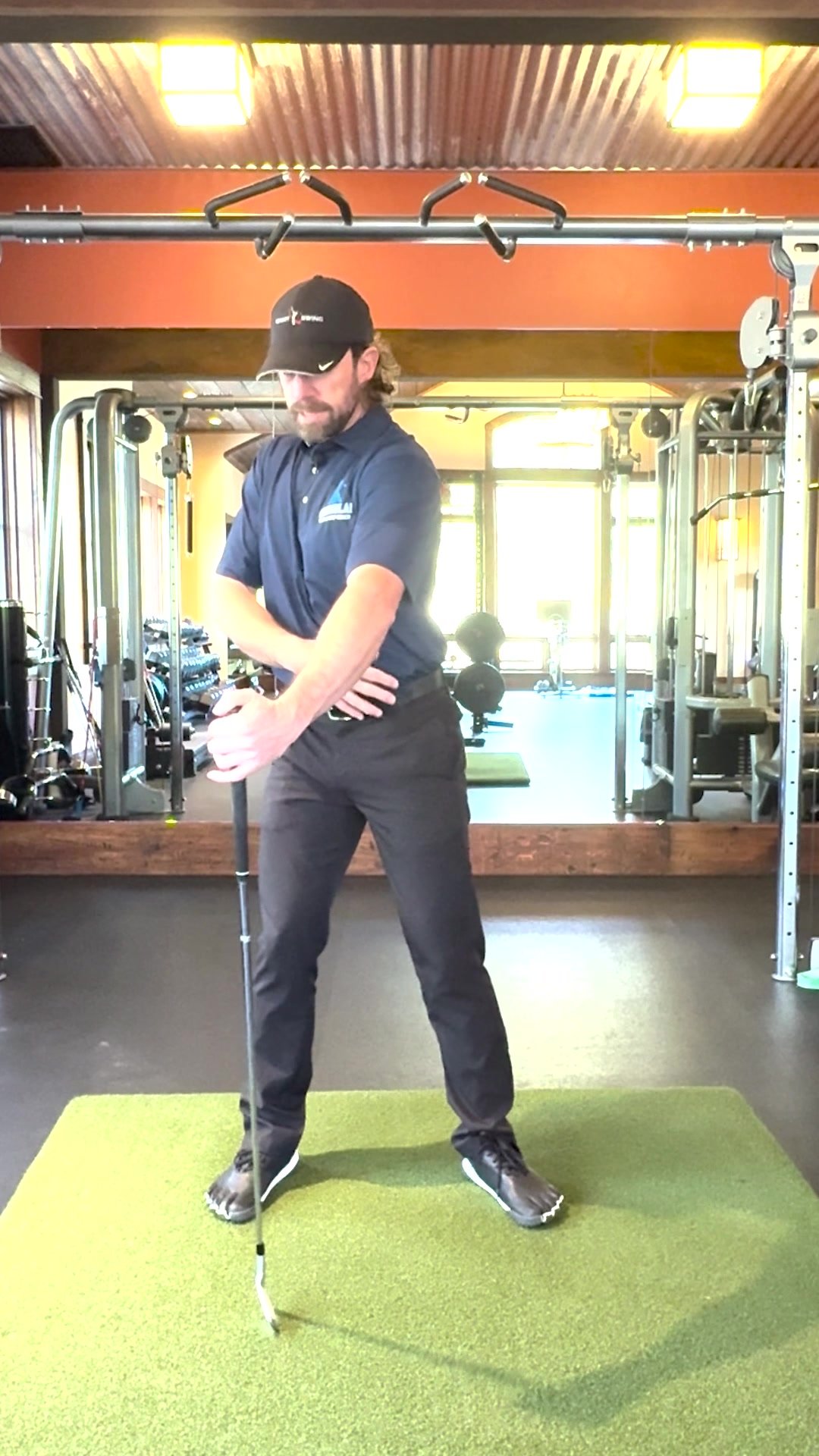
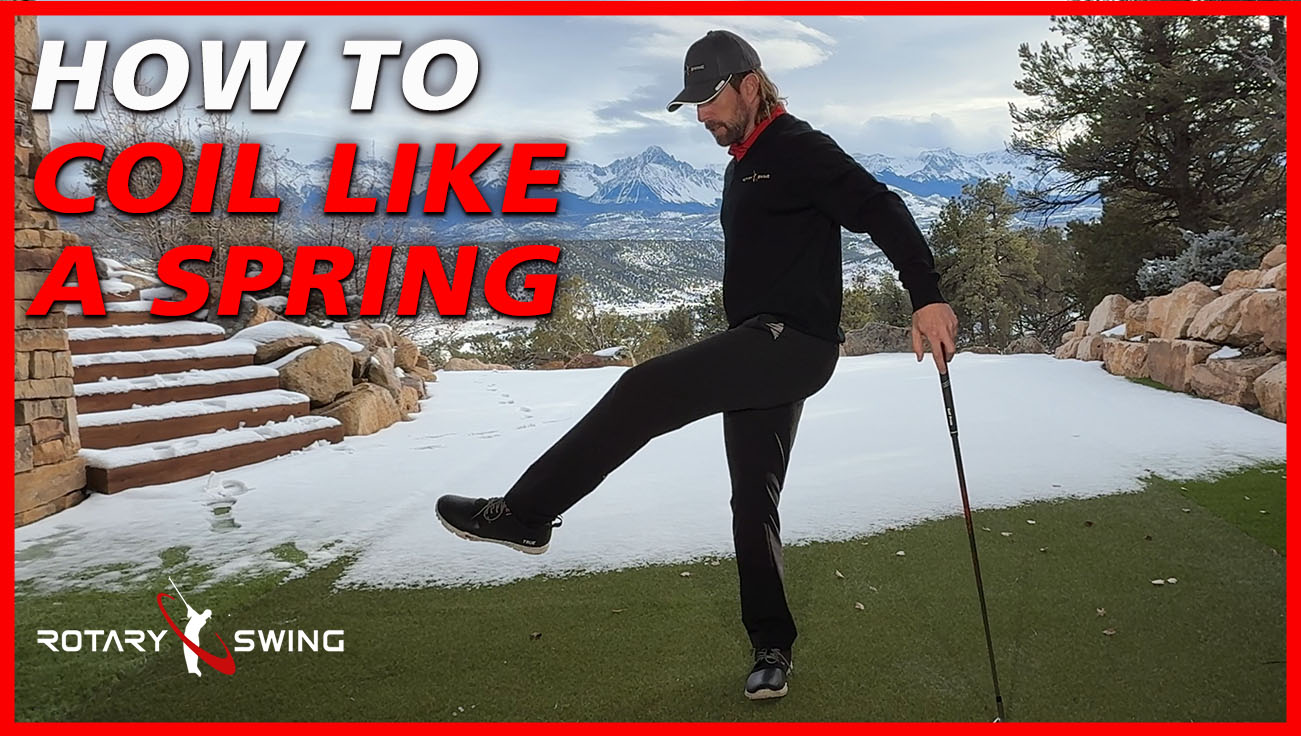
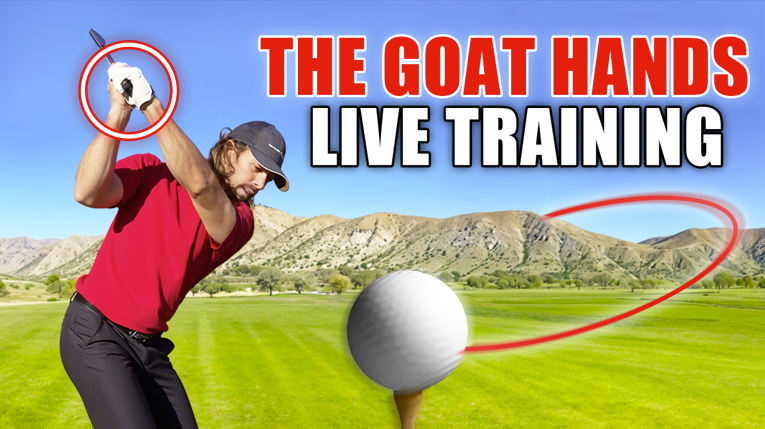
This drill is a result of GOATY and I working together to come up with a drill to get the biggest GOATScore improvement in the shortest amount of time. By analyzing nearly 300,000,000 datapoints in student's swings, we could see where we needed to get the biggest return and swing improvement and I hope you enjoy learning this movement and the effortless feel it creates as much as I do!
The GOATs made it look easy because they aren't working as hard as the rest of us!
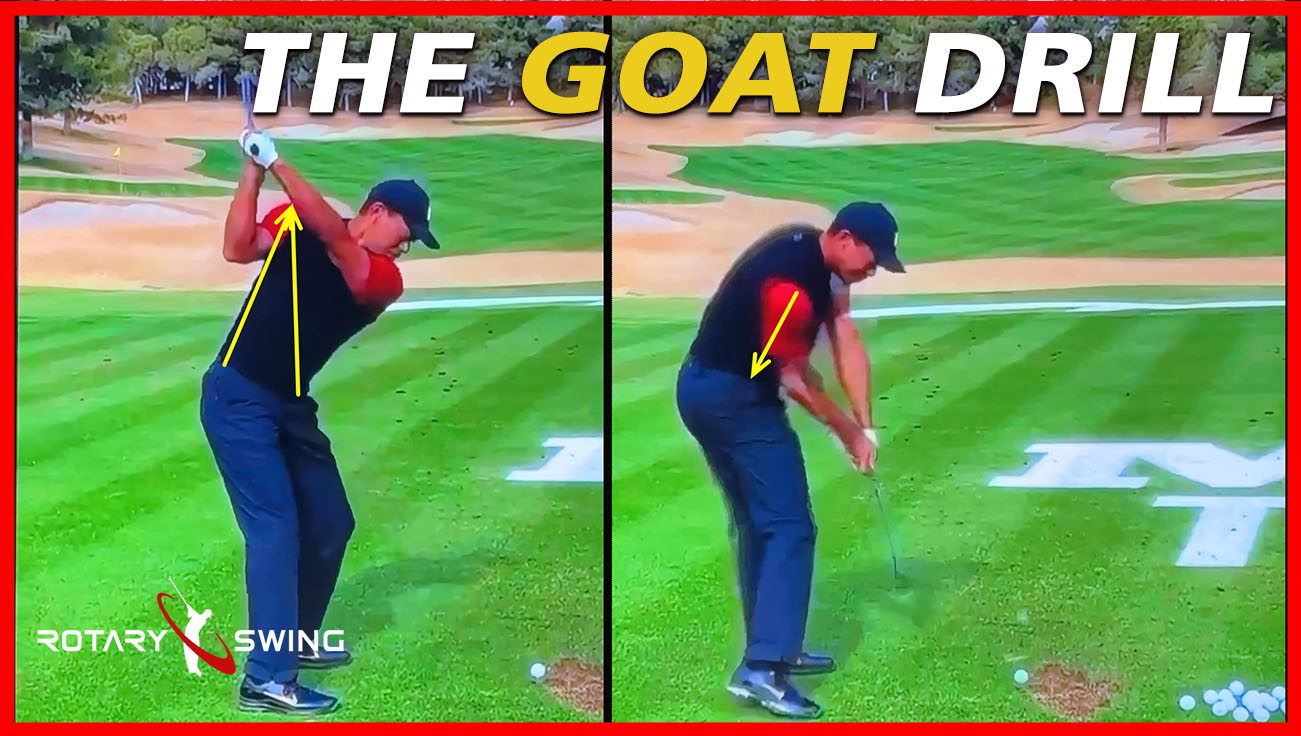
So when you want to produce that Delta V pattern in your sternum like you're going to see here, I'm going to show you the secret to this.
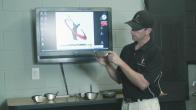
Now in the live lesson session on our iPhone, it's only at 30 frames per second compared to the model, which is 120 frames per second.
So it's not going to get every single frame perfect, but you're going to see the big picture here.
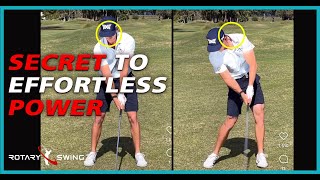
Notice here that as I go down, you see this steep drop in my sternum where it goes way down and then goes back vertical in a steep spike like this.
Again, it's not going to match exactly because of the frame rate.
That's just a limitation on iPhone.
Thanks Apple.
But you'll see that big drop there.
And this is paramount.
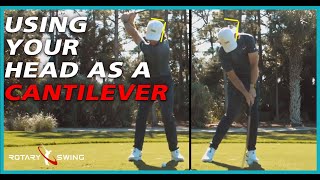
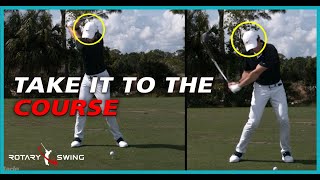
If you look at the top of my hat and the start of this swing, my video, my head is actually kind of chopped off at the top.
And then as I go down, you'll see a big drop.
And that is what we're looking for.
This is showing that we're starting to understand how to use the ground for leverage and then we see that big vertical peak.
Let me show you how we do this in the swing.
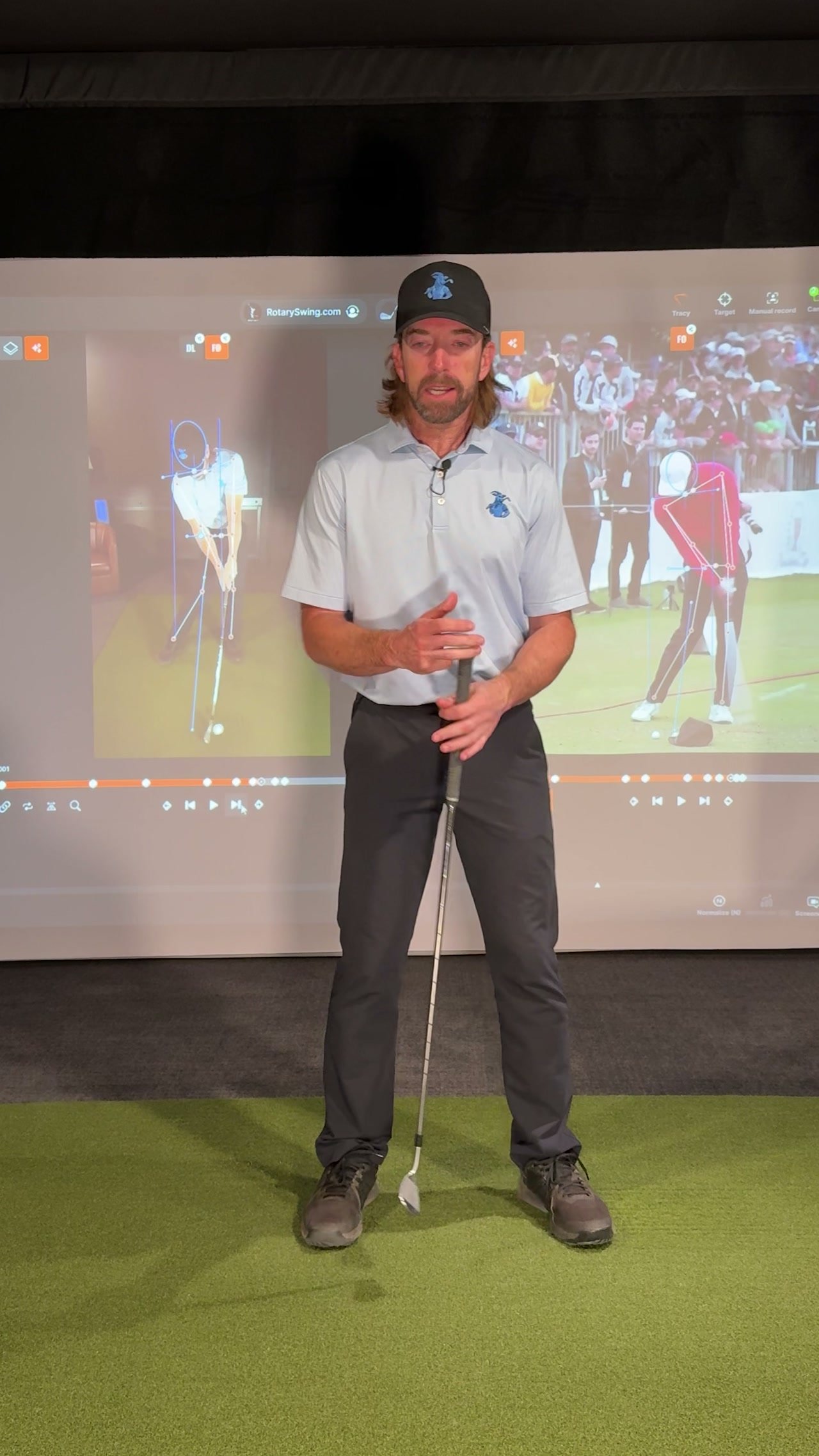
When you're using the sternum and hip tracer in the live lesson with Goaty, what he's really looking for is efficiency in your swing and how you produce power.
Now, one of the most important keys is understanding actually when to stop accelerating in the downswing.
Most golfers have been taught to go to the top nice and smooth and slow, and then start down really smooth and slow.
Don't rush it from the top, and then go and accelerate through the ball.
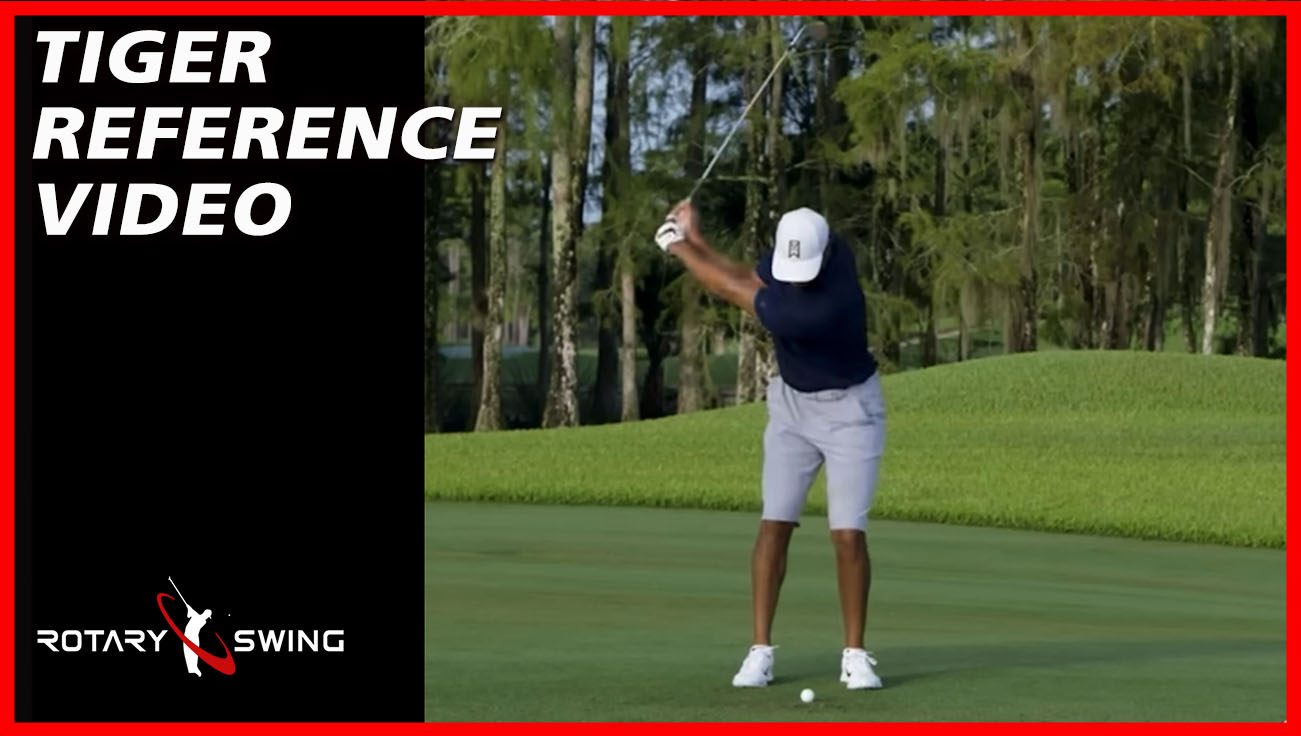
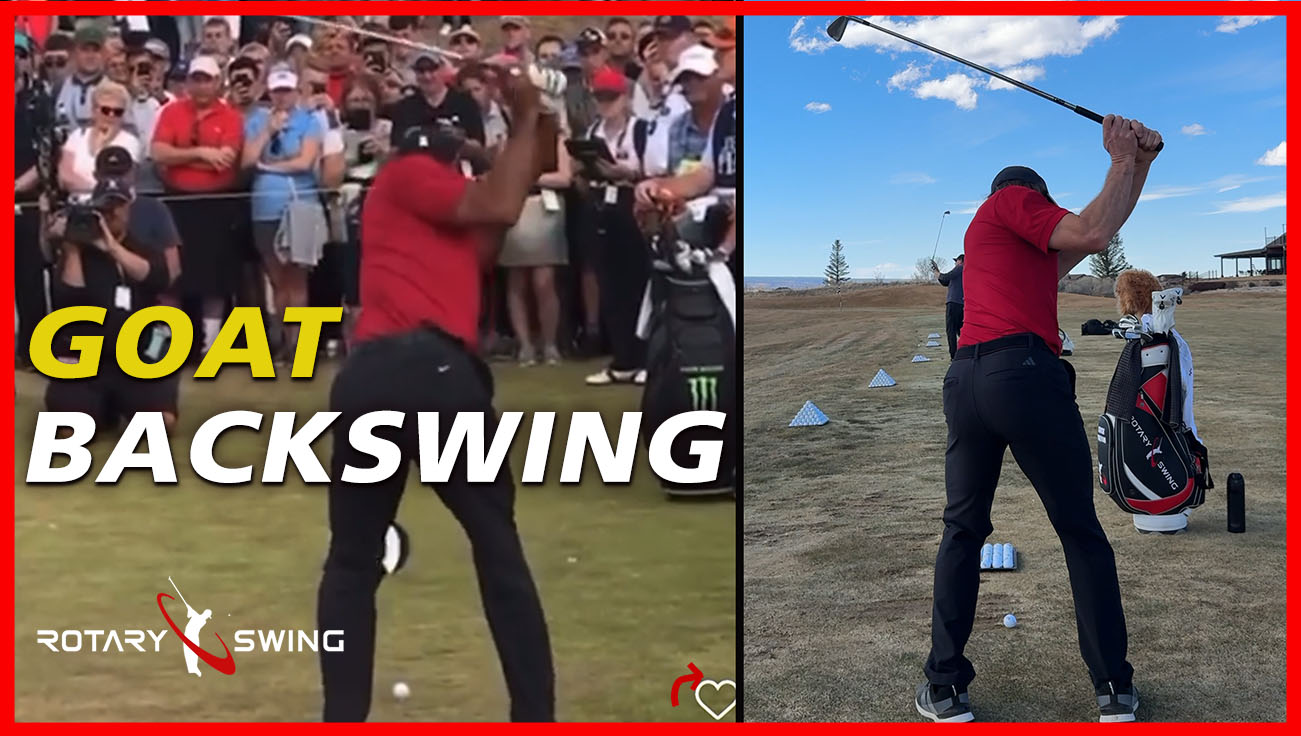
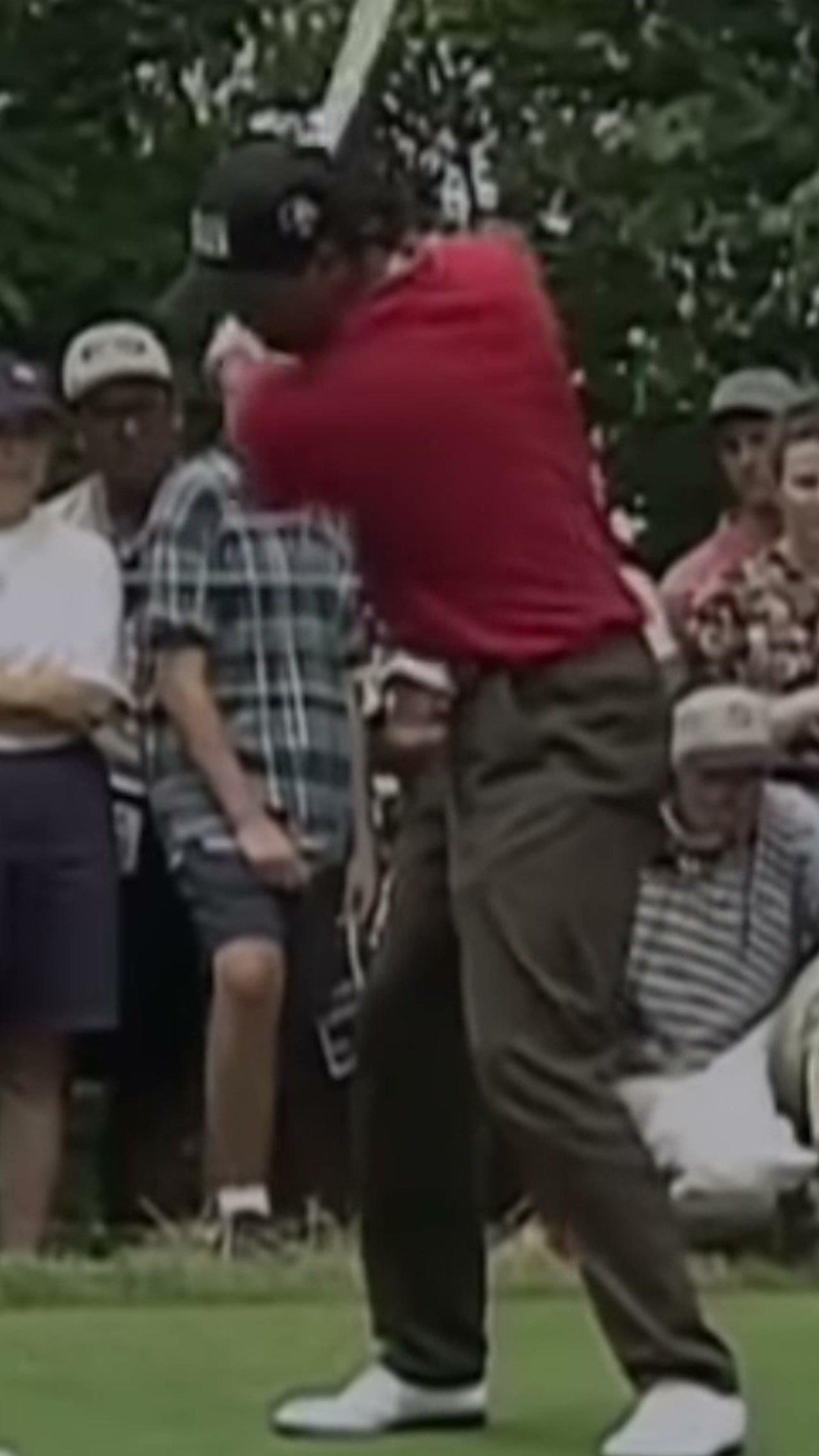
The goats do the exact opposite, and especially Tiger.
When he was at his peak, he did the complete opposite of what everybody's ever taught about the golf swing.
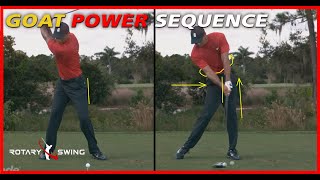
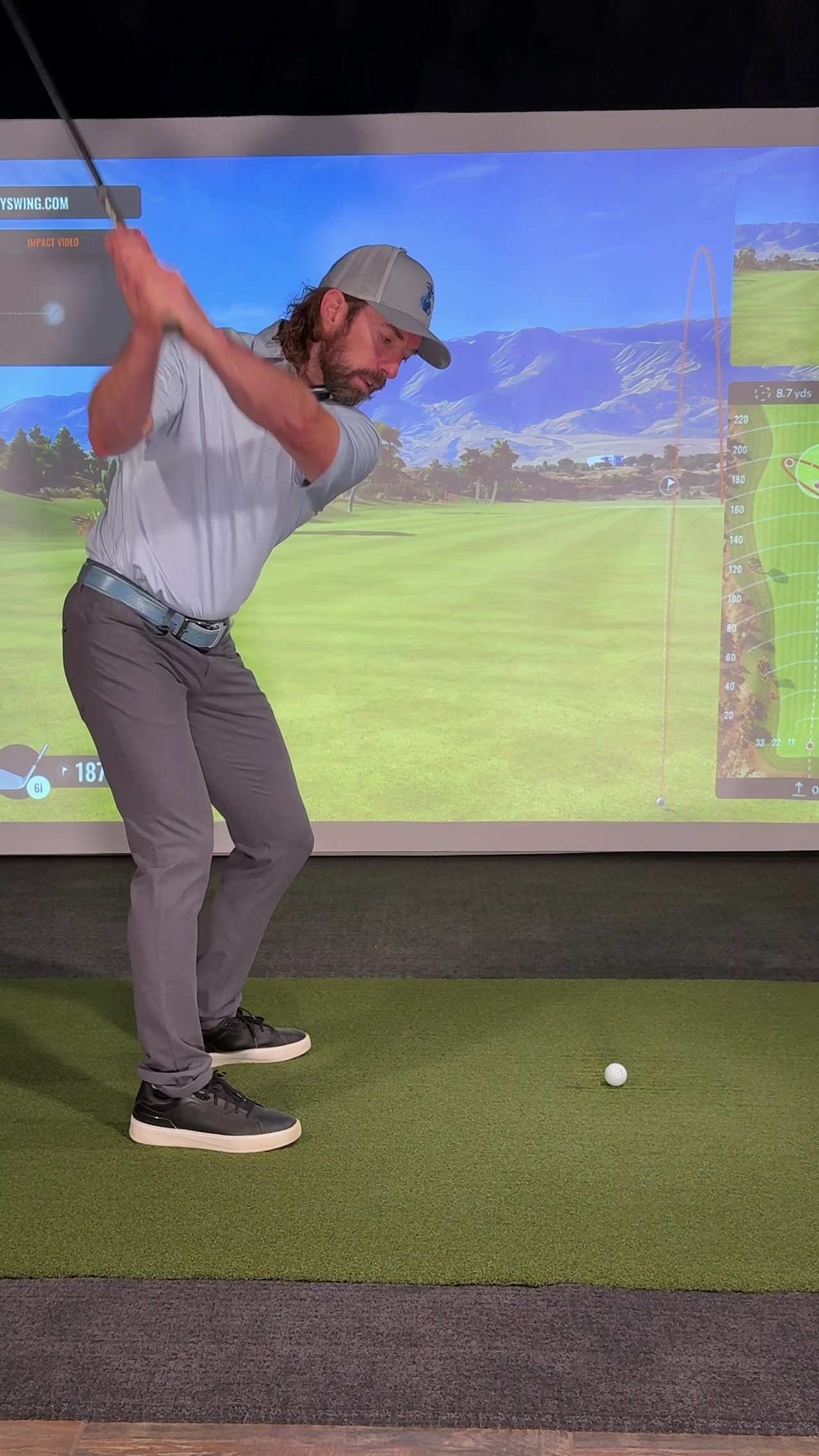
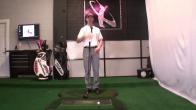
What he did is go back extremely fast, be very fast during the transition, accelerate very hard from the top, but right here he was done adding rotation to the swing, done adding rotational speed, and that is the key, And so when you look at this Delta sternum move, where you see this upside down triangle, where his sternum basically goes straight back during the back swing, down, and then up, And so if we go here, I've got my live Sternum tracer here.
So if I go back and then down and then up, that's what's happening in the Goat swing.
And this is just showing ground, force, leverage.
And using the fascial slings of the body to produce speed for you, rather than you trying to put muscular effort into your swing.
So if you find that your whip score is very low and you're not understanding how to speed that up and get that snap, you've never felt that effortless release.
It's likely because you are pushing or pulling the club through impact, because you're trying to accelerate too long, too late, and you're too slow and smooth from the top.
When you look at the GOAT's data, what you actually see is a very abrupt, steep, massive change of direction and speed very, very early, immediately from the top.
Tiger doesn't go to the top and hang out.
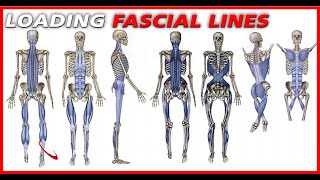
He's already gone by the time that you have time to think, and that's because his fascial slings that you think about.
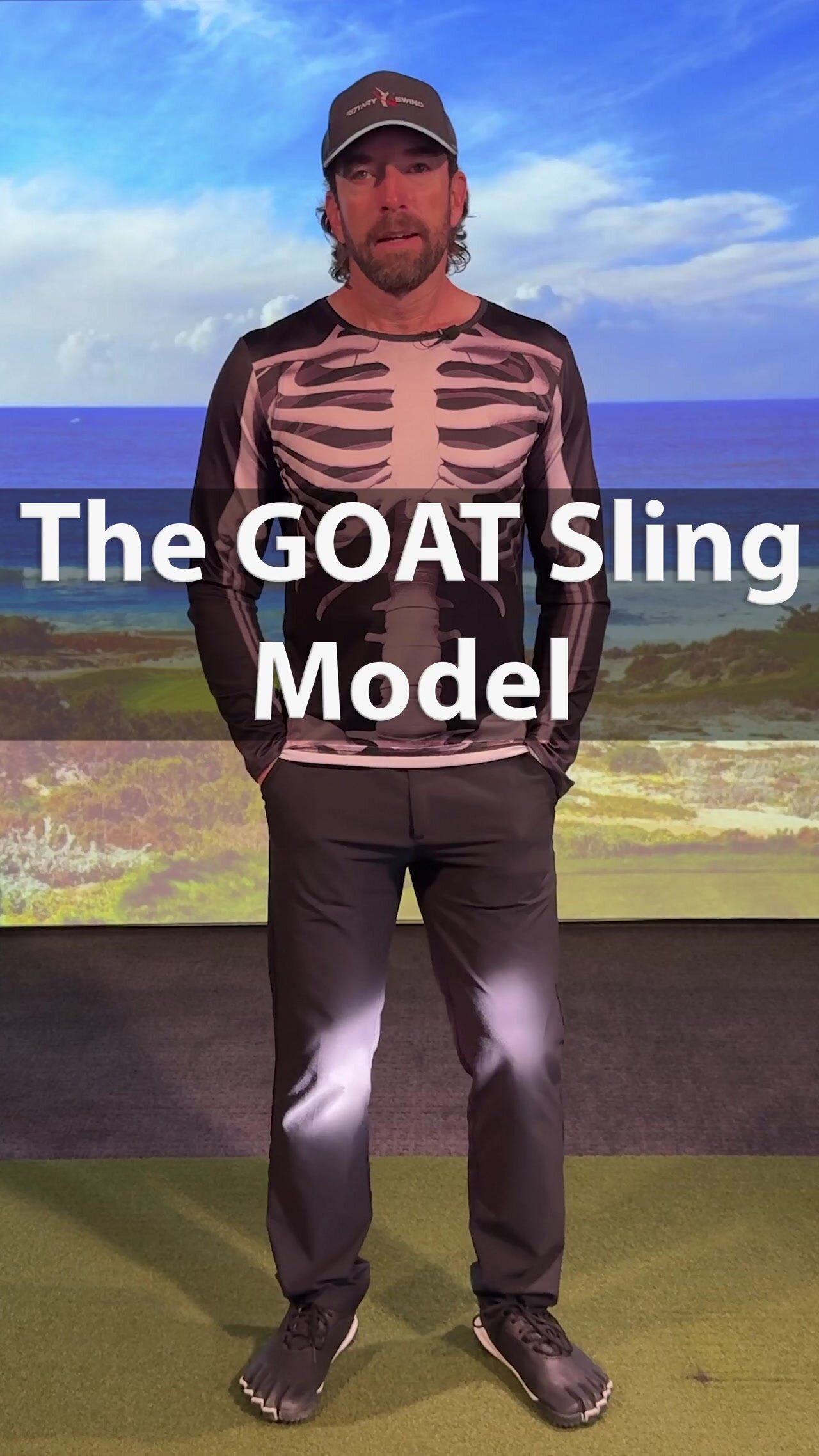
Just two X's going across your body front and back is a simple way to think about it.
He's stretching this as he goes back, so he's loading this, getting the sternum moving away from this lead hip, and then that pulls him back and it snaps him back.
That's all the acceleration that you need to add to the swing, this is the whole trick to it, you do not need to add rotation.
Past this point, in fact, let me walk you through Tiger Swing specifically in depth and show you exactly when he starts and stops accelerating.
Alright, I'm gonna play this swing of Tigers real quick and I want you to watch a couple things.
I want you to watch the graphs on the right and how they move and sync with his body, and I want you to pay close attention to when you see the graphs go red.
Ready?
Right there.
Now, let's walk back and see when this happened and start to understand what it really means.
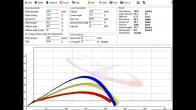
Right there, you can see where the graph The Sternum graph on the top shows two things one, it shows the position of the Sternum throughout the swing.
It shows is it moving down, is it moving up, is it moving lateral?
And this graph below it is showing actual rotational velocity.
So speed in degrees per second or frames per second.
That's what we're looking at here now.
What you'll see right here is it looks like Tiger's still kind of at the top of his backswing, right?
He's barely started his downswing.
That is the last moment that Tiger is adding acceleration speed from his torso.
Now, I know that might seem mind-blowing, and it's not that that's the fastest point in his swing.
This is actually through impact, as the club is ripping his body around, because the club is moving incredibly fast at that point.
That is his peak rotational velocity, but at that point, you have no control over that.
You're just letting the club and the arms go, and they're ripping your body around.
But what you'll see here, if we walk back to the beginning, so right here is where Tiger starts to transition back into the downswing, and so you'll see that you're going to see a huge drop in velocity right here.
This is like a race car diagram.
We want to see massive braking and then instantly back on acceleration.
You don't want to see these big, long, U -shaped curves.
You want to see V-shaped curves, and that's what you see in Tiger.
He goes from going in the backswing to immediately back to the downswing.
And there's very, very little time in directional change.
He goes immediately.
So in other words, he's not gradually starting to rotate back toward the target.
It's happening super fast and immediately and very early.
Now, what we see next is that he starts to rotate.
And so I'm looking at the bottom graph here.
this is showing rotational speed.
And so now as we get through to right here, at that point, that is the peak before his first drop.
Now you can see this little drop right here.
And this is happening after about 60% of the downswing has completed.
At this point, the arms and hands and club have already taken over the body.
And that's why this doesn't really matter at this point, because here the club and arms are starting to really go.
But he has stopped trying to rotate faster, in other words, his fascial slings have started to pull him back at this point.
And right there, only about 50, so 40 something percent, 50 something percent of the way through the swing, through the downswing, he's already done, he's no longer trying to add speed.
And that's what's really crazy about this when you look at it here, as his sternum is still starting to drop.
He is no longer trying to add speed with his body rotating.
So he's actually going to decel.
And that's what you see the red bar here showing that he's starting to decelerate.
And on the sternum graph up above, his body, his rotational speed has already slowed down.
This is crazy because so many golfers think, and myself included, I used to rotate really fast.
And the first time I put my swing on this, my swing graph stayed green all the way to impact.
I never decelerated.
In fact, I kept speeding up.
And then I realized, why does my back hurt?
Because I'm trying to rotate my body so fast through the ball, the goats stopped rotating right there.
And now they're just going to let everything happen from there.
They're going to let their arms release.
They're going to let the club go.
They're going to let it rotate around this middle finger that you're going to learn in just a moment.
And that is what makes the goat's swing look so efficient.
Tiger's not trying to add muscular power to his swing.
He's not trying to rotate his chest to the ball, he's letting himself snap the club and that's why he has such an efficient and effortless golf swing.
Now, what you just saw in Tiger Swing probably is different than anything you've ever heard.
But the cool thing is with Goatee, he doesn't look at does your swing look pretty or not?
He cares about efficiency and velocity.
He's looking at, am I moving fast at the right time from the right place in my body.
And as you just saw in tiger swing, he stops adding rotation.
Now it's important to understand that it's not actively decelerating.
You stop adding acceleration is what you're looking for.
And because this happens so early, the brain actually can't process the feeling of acceleration.
This is a crazy thing to think about, but it takes over a quarter of a second or about a quarter of a second for your brain to react to a stimulus, but the whole downswing is done in that same amount of time.
So what you realize is that acceleration phase, when Tiger's going from change of direction, going back, where his chest is still rotating to then starting down, and that acceleration phase is over about 40% of the time into the swing, into the downswing, your brain literally doesn't have time to process that.
But what it can process is the feeling of deceleration, or excuse me, the feeling of not adding acceleration.
You are starting to decelerate as you saw on the graph.
But I don't want you to sit here and try to go to the top and stop.
Not really what you're trying to do.
You're trying to load yourself and stretch these fascial slings so that they pull you back to neutral.
And then you let everything happen from there.
And in the second part of the video, I'm going to talk to you about how the hands work.
But as you're doing this, it's not going here and trying to stop.
But that is what I'm going to have.
You drill at first to get the feeling of not trying to keep rotating and adding acceleration late into the downswing.
When you look at your swing, you'll probably see that green bar going for a long time, perhaps all the way into impact, because you don't decelerate or stop adding acceleration early enough.
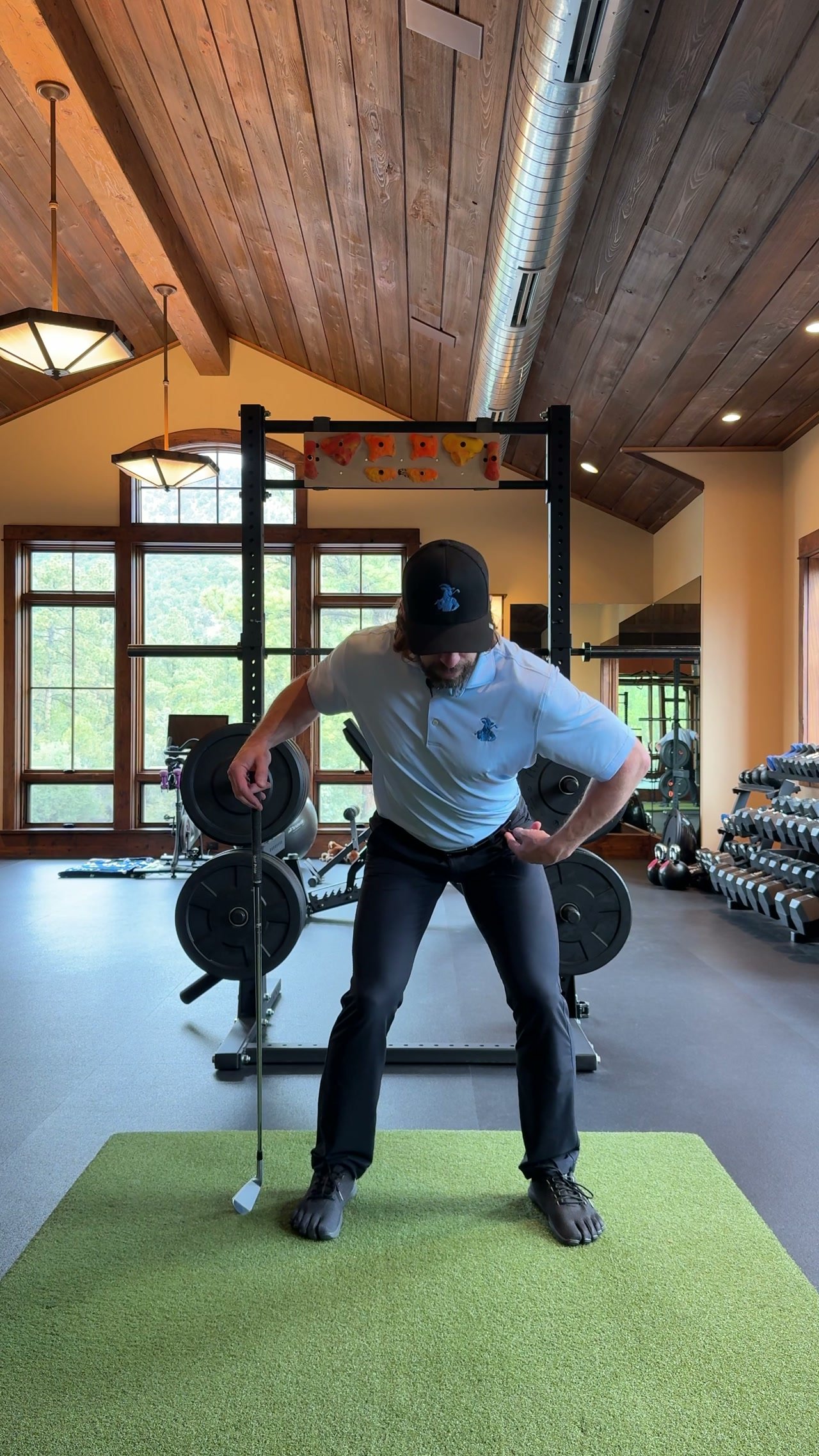
So the best way to get this feeling, I believe, is to use a weight.
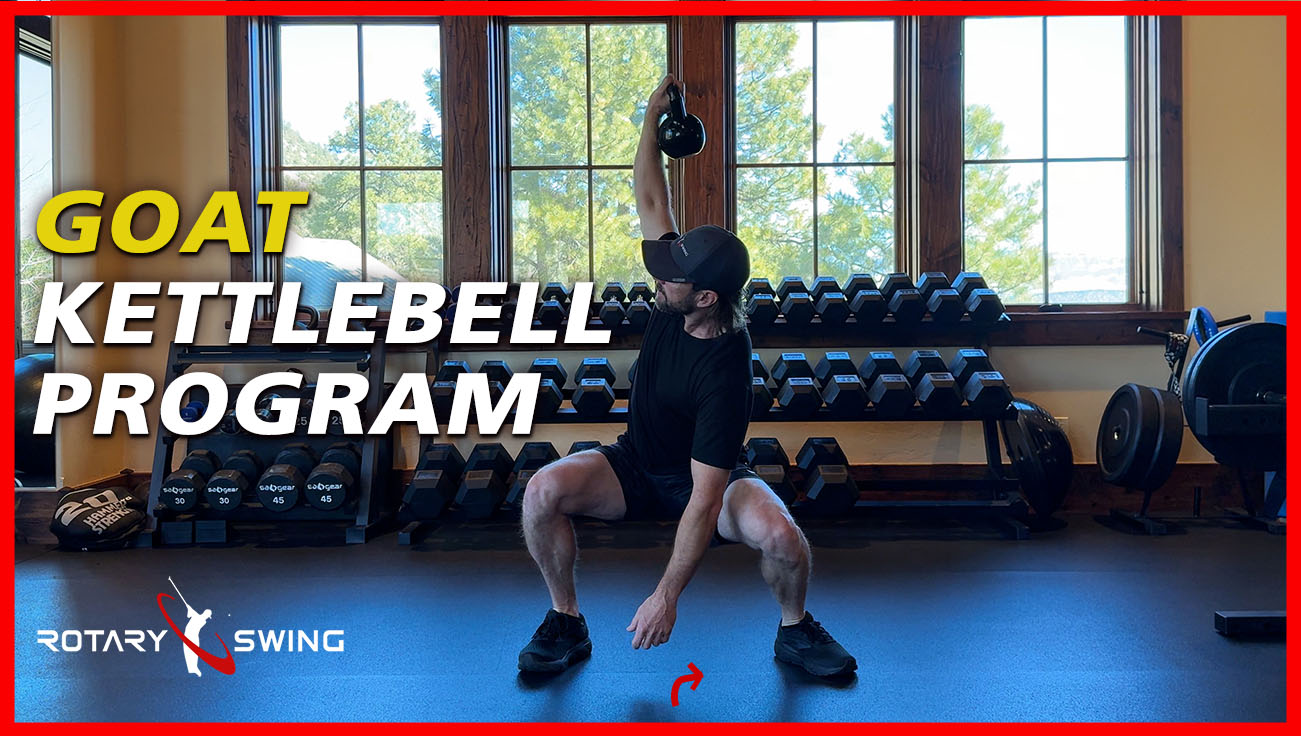
Now, I've got a kettlebell here.
You can use anything.
You can use a can of soup.
You just need something to help get you the feeling, but you can do this without weight too.
But the feeling of having mass that you're trying to actively accelerate and then let it go is the right feeling.
And this will actually be an exaggeration to teach you how to actively decelerate, which is again, not what you're trying to do in the swing, But this will help you start to feel the muscles and how the hips and glute have to work in order to create this natural acceleration of your arms and hands and club whipping past your body.
And that is what you're going to feel in the second half.
But the first half of this video, we have to feel how do we use our whole body to move correctly.
So take a kettlebell and kind of get your arms and your chest rotating back with it.
So just get this feeling of turning back and the mass you're going to feel is going to want to pull you around on, you know, deeper into your backswing.
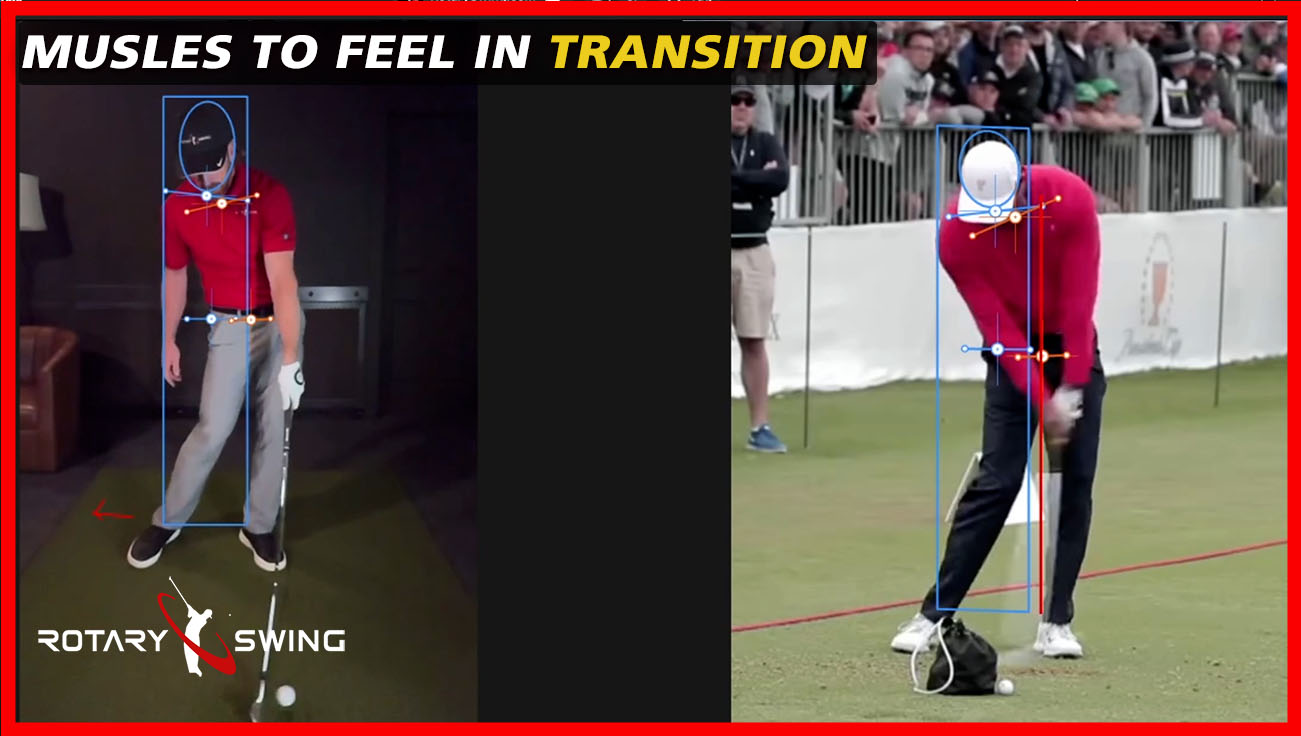
And you're going to feel as long as your hips are staying relatively quiet and you're using the lead side, oblique muscles, lead side on your torso to start rotating you back, you're going to feel a big stretch across the lead side of your belly.
That's what you want to feel.
So this is going to pull you back.
And what you're going to do is let that stretching feeling that you had pull you back.
Now it's going to be a quick snap.
It's not going to be this slow and methodical move back.
It's you're feeling this stretch and then you let it come back.
Let it pull you back to neutral.
So back.
Now what I want you to do, once you get this feeling of these lead side of your abdominal wall and your obliques being stretched and starting to want to come back to neutral, which is how you let the fascial sling start to pull you back, I want you to actively brace.
Now again, this is an exaggeration of what happens in the swing because we don't have the momentum of the club and the arms right now.
But what I want you to feel next is once you get this stretch.
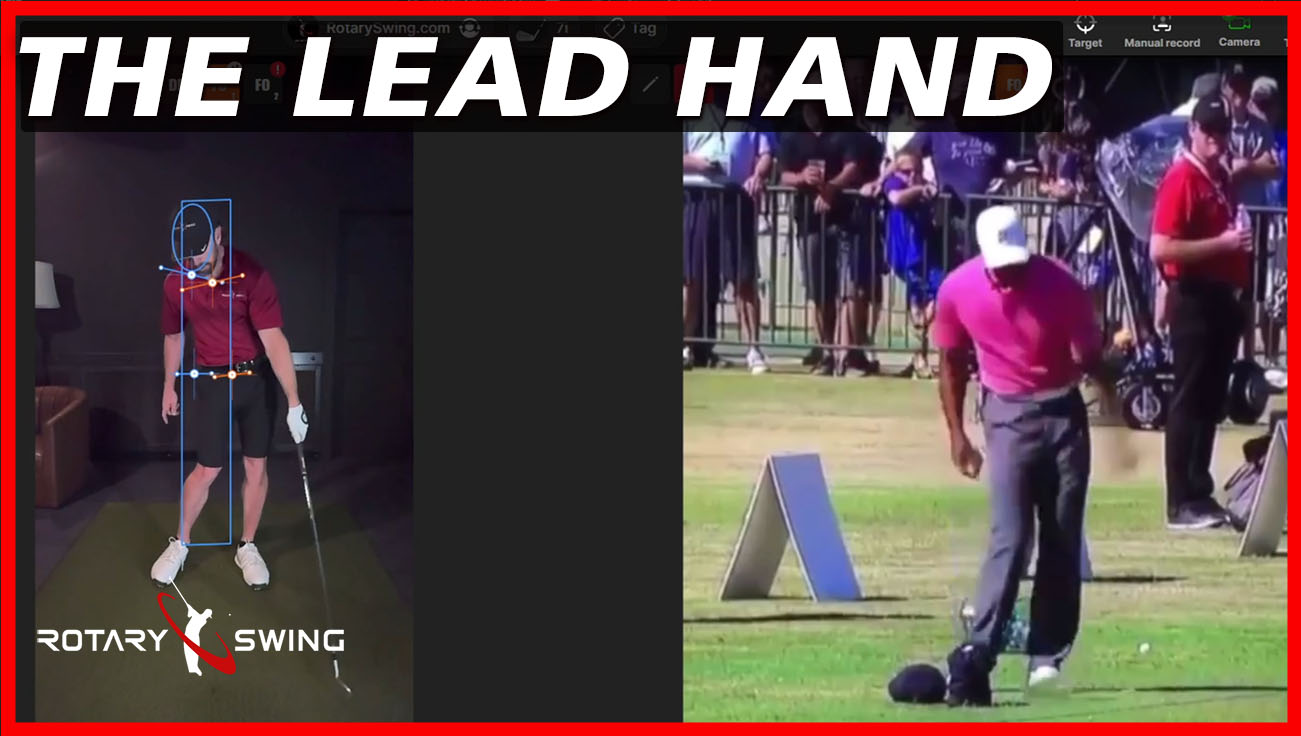
I want you to brace into your lead hip, your lead heel, and drive both of them into the ground.
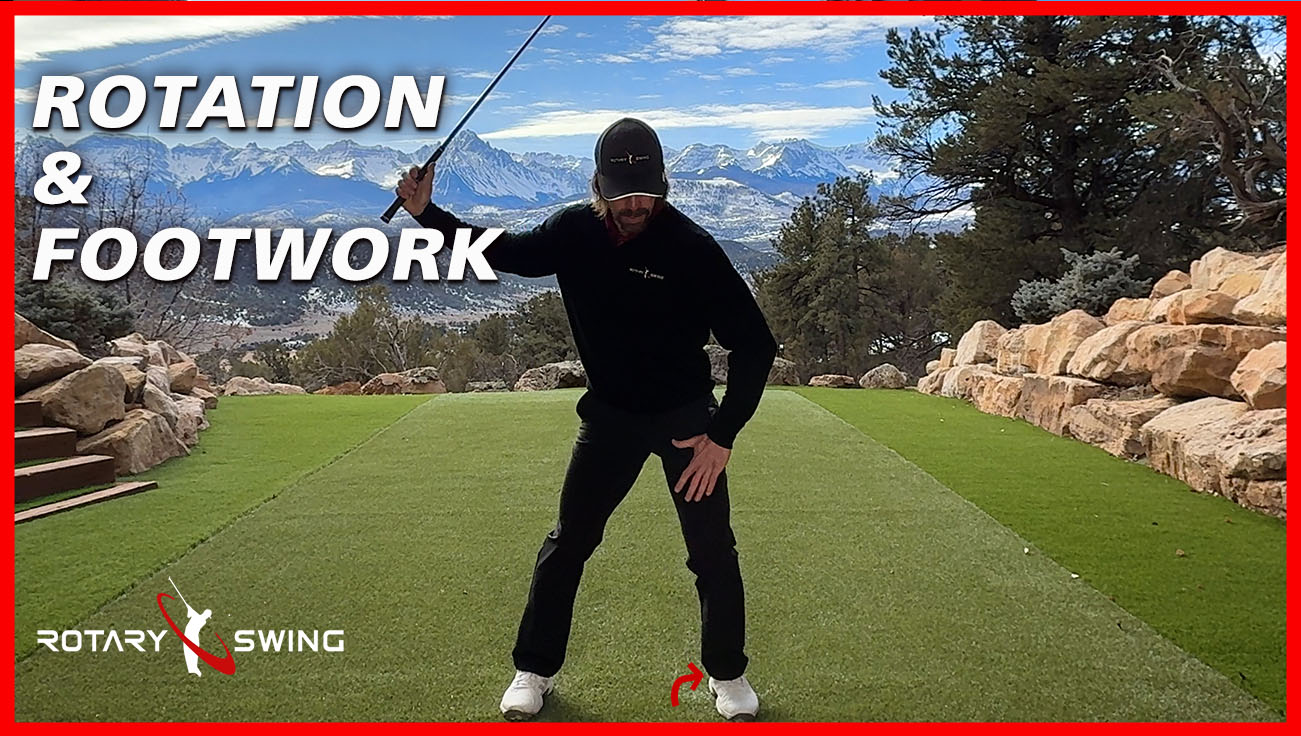
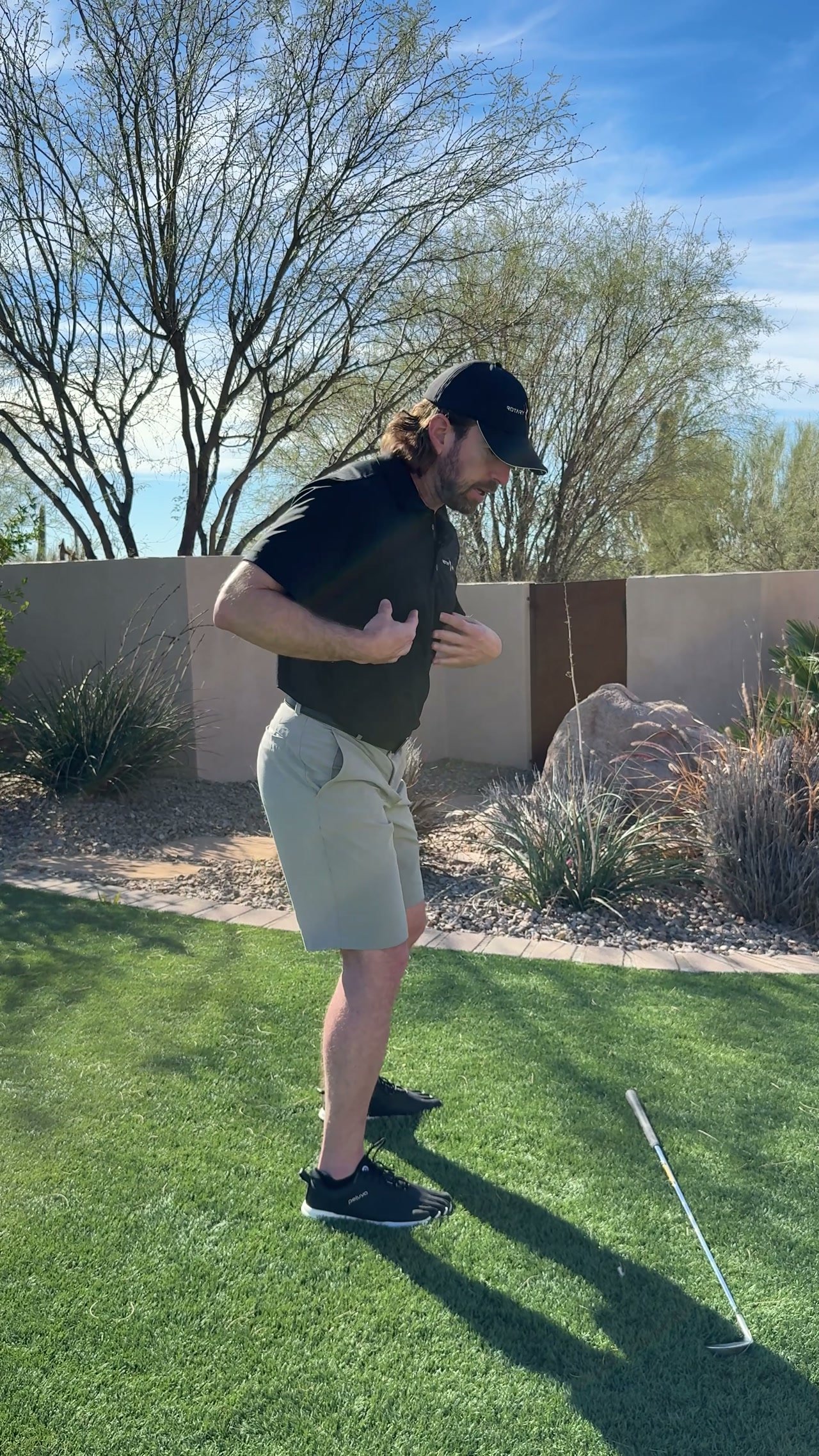
And watch my feet as I do this, my lead foot is actually twisting into the ground.
For me, as a right-handed golfer, my left foot is turning clockwise.
What most golfers do is they try to spin out and try to add a lot of rotational speed for long time in the swing.
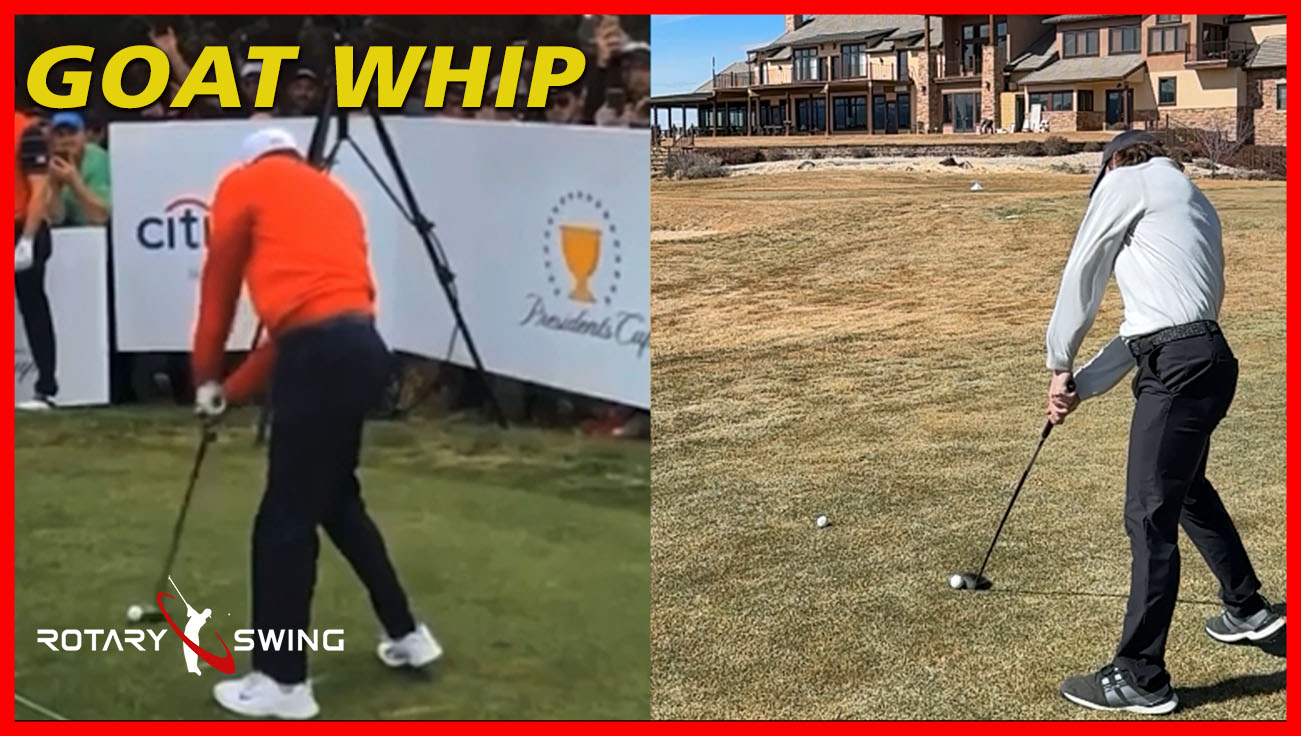
You won't have any whip, you actually have to decel, just like a whip.
If you think about it, when you're cracking a whip, your handle has to stop and actually even yank it back a little bit, and that transfers all that energy out.
In the golf swing, your the handle of the whip is your body.
And so as you're rotating, if you keep rotating, your arms and hands and club just get dragged through the shot, there's no snap.
Instead, I go back and I'm slamming on the brakes, pushing into the ground with my heel, twisting my lead foot clockwise for a right-handed golfer and feeling my lead hip brace.
And that is the whip effect starting to take shape because as my body begins to stop adding acceleration, my arms and hands are then going to catch up and take over my body.
And that's why elite ball strikers always look really effortless when they're hitting the of all.
And you see amateurs really spinning out and struggling, trying to add a lot of speed.
The secret of the pros is they're done adding speed way back here and then their arms and club are doing.
What we're going to talk about in the second half of the video, which is orbiting around this trail middle finger.
First, let's get back to feeling this deceleration profile, where you're going back and then bracing and resisting.
And you'll feel because you're trying to stop the momentum of this heavy weight, you'll feel the muscles that have to activate in your core and your hips to stop letting this weight pull you forward.
This is again, what you feel in the swing just as an exaggeration.
So that will get you the feeling of going down.
So your sternum starts to drop in the downswing.
if you're going arms first, your arms don't do, Jack in the golf swing.
I've said that a million times, it's never more true than understanding how the goats really move.
Your arms.
Do not add speed actively, they are purely being moved by your body, and so as you're going back, if you find that, your sternum trace.
If we go back over here and I get into position here and I start to lift, now, you see, my sternum goes up.
And then if I fire my arms, I go up even further.
Or even if I stay back halfway, decent going back, and then I want to then throw my arms.
My body has to come up out of this in order to avoid sticking the club in the ground.
So that's what you're trying to learn is that as you're going back, I'm loading, letting my fascial slings pull me back, but I'm done and you'll see my sternum trace.
Watch the yellow dot drops.
And I'm breathing out, purposely exhaling, because my core, my abdominals and my whole core is bracing to allow the arms to whip past my body.
And that's what we're going to talk about next is how do we blend this into the arm movement.
Now for the magic.
Once you start to understand that you do not keep rotating your body, your body does keep rotating.
Absolutely.
In fact, it actually picks up speed through impact, but that's not from you actively trying to rotate.
The goats do the opposite, they stop way up here and let the arms and hands take over.
But for that to happen, your arms must be relaxed.
You must not be trying to push or pull the club through.
That's going to drag the handle through and kill your whip score.
When you start to understand that your arms must be flung past your body, then it makes sense that you don't keep adding rotational velocity to your ribcage, to your sternum.
If you keep turning, your arms are going to get trapped behind your body.
You're going to drag the club.
You're going to leave the face open.
You're going to block it off the planet.
What you're doing is rotating, only adding rotational speed in the blink of an eye.
It should feel like it happens immediately, from the top, as fast as possible and as brief as possible.
But that is all handled by your fascia.
You don't have to do that.
What you have to do is stretch that fascia quickly during the backswing and feel this big stretch.
And let that start to pull you back.
And then you're done.
Now all you have to do is get the feeling of the club.
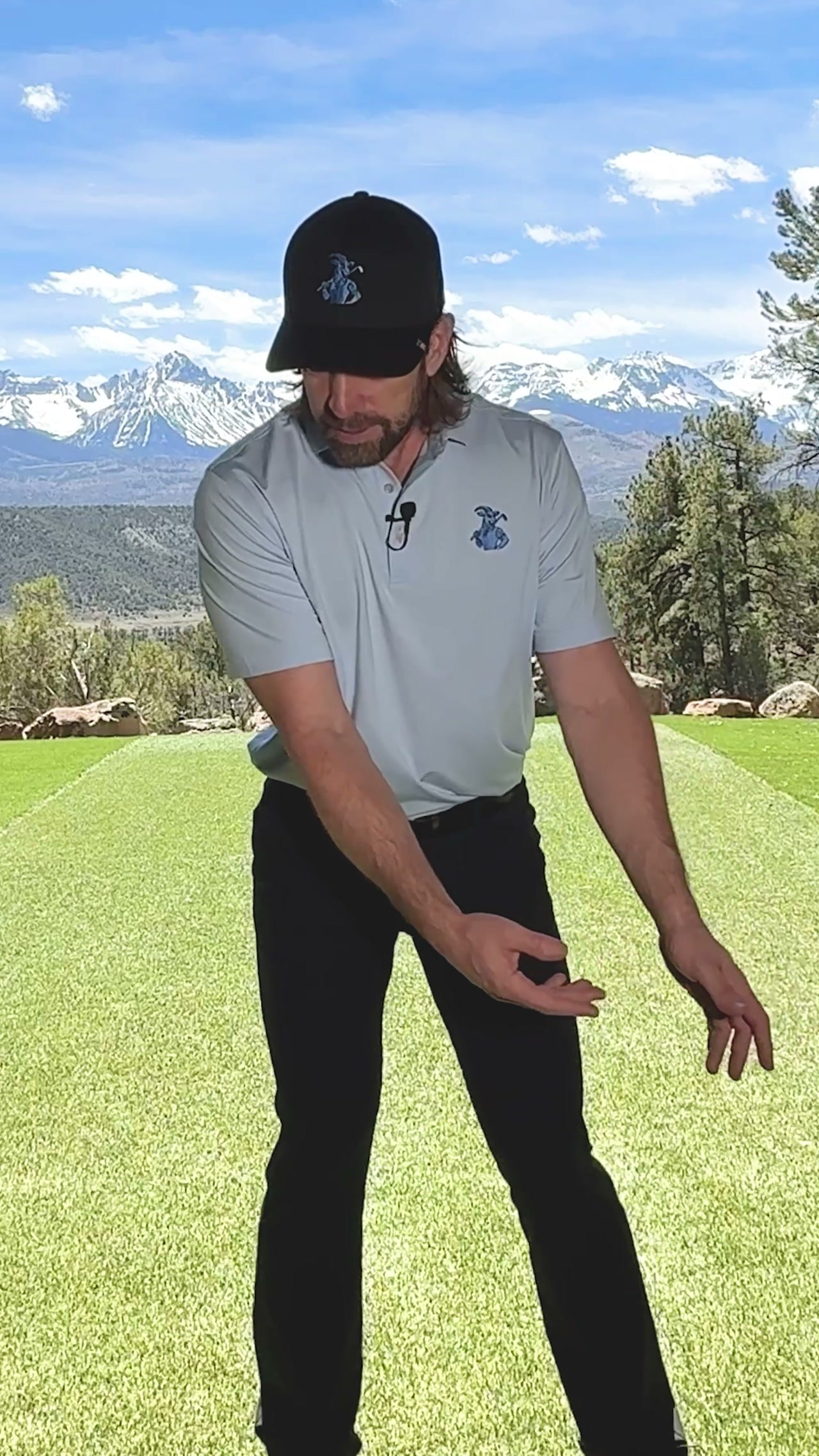
Orbiting around your middle finger, the first joint or the first pad in your middle finger, this is why you see Tiger always having this finger, this joint taped up.
In a swing, the motion of the swing is like that, it's just orbiting.
And again, for a right-handed golfer.
If I'm looking at a clock on the wall from your perspective, it's going to be counterclockwise.
From my perspective, it's clockwise, so that is the motion.
In order for this to happen with any velocity, your body has to move correctly and has to move powerfully and explosively and quick.
And that's what we just worked on is getting that feeling of having something heavy and then firing that core.
And that's why you see Tiger a lot of times when he's hitting a driver, you see his cheeks all pursed out.
Because his abdominals are firing.
In order to stop adding acceleration and start allowing the club to whip past.
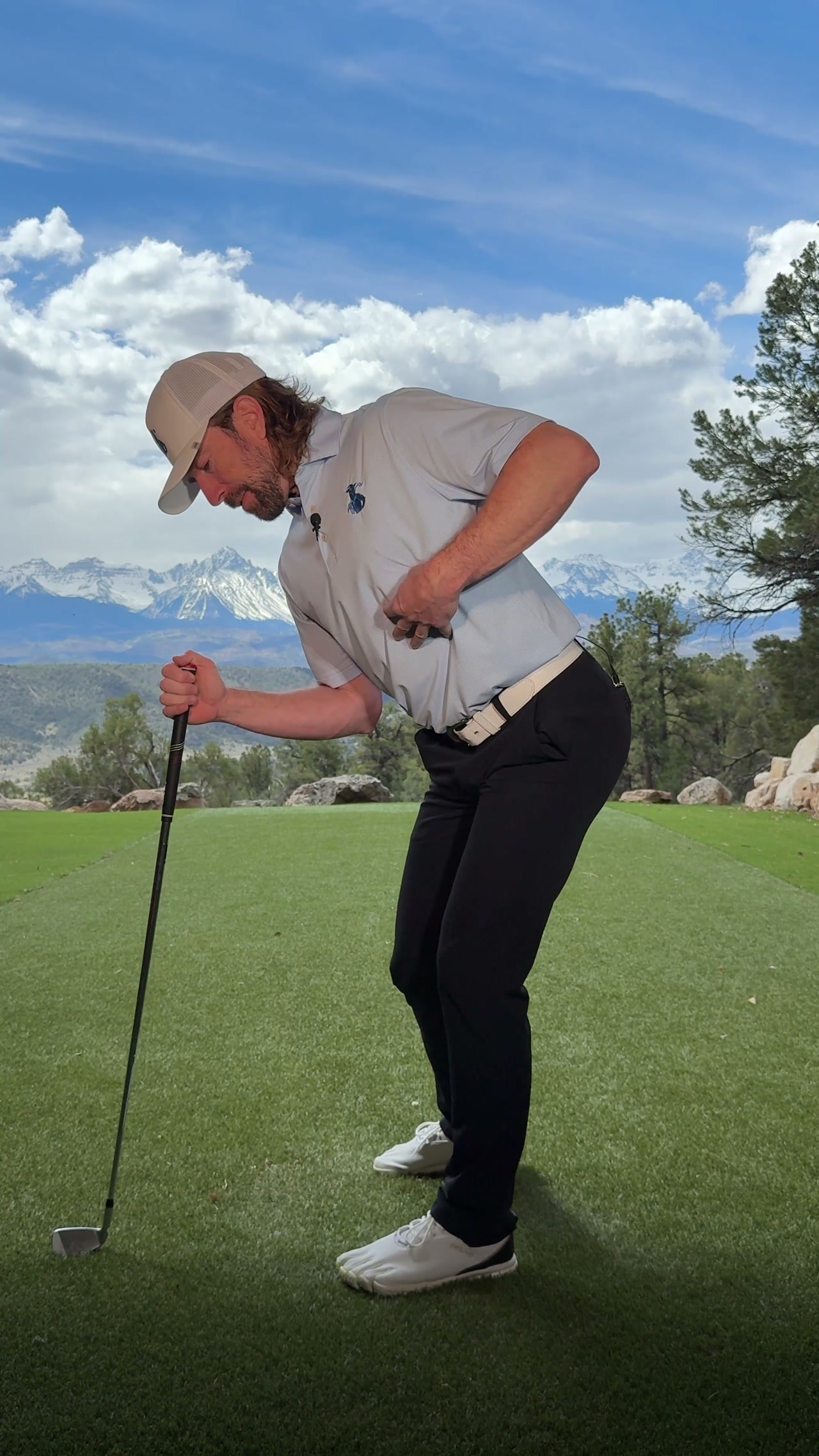
Now, how to feel this at first is very simple.
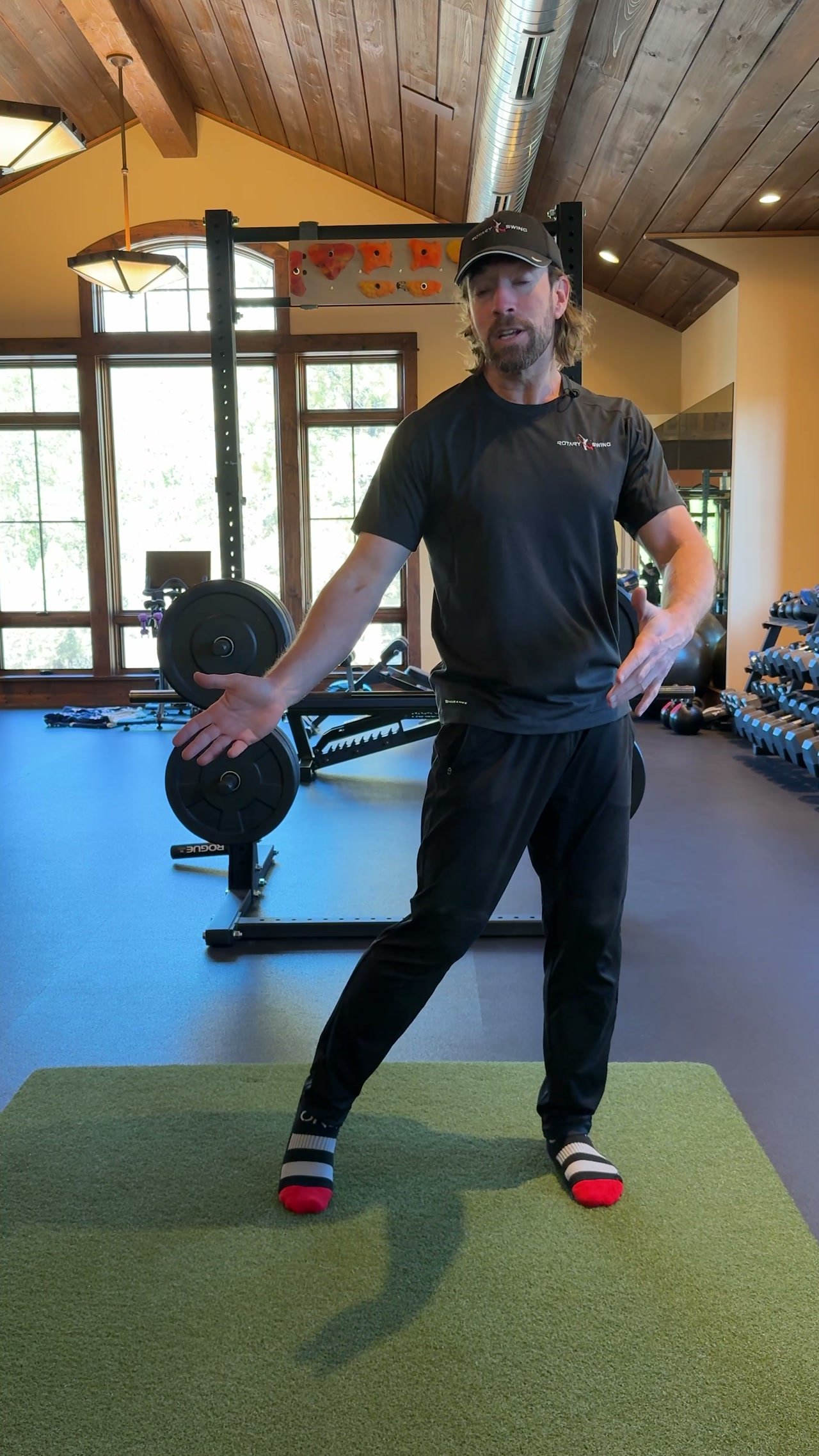
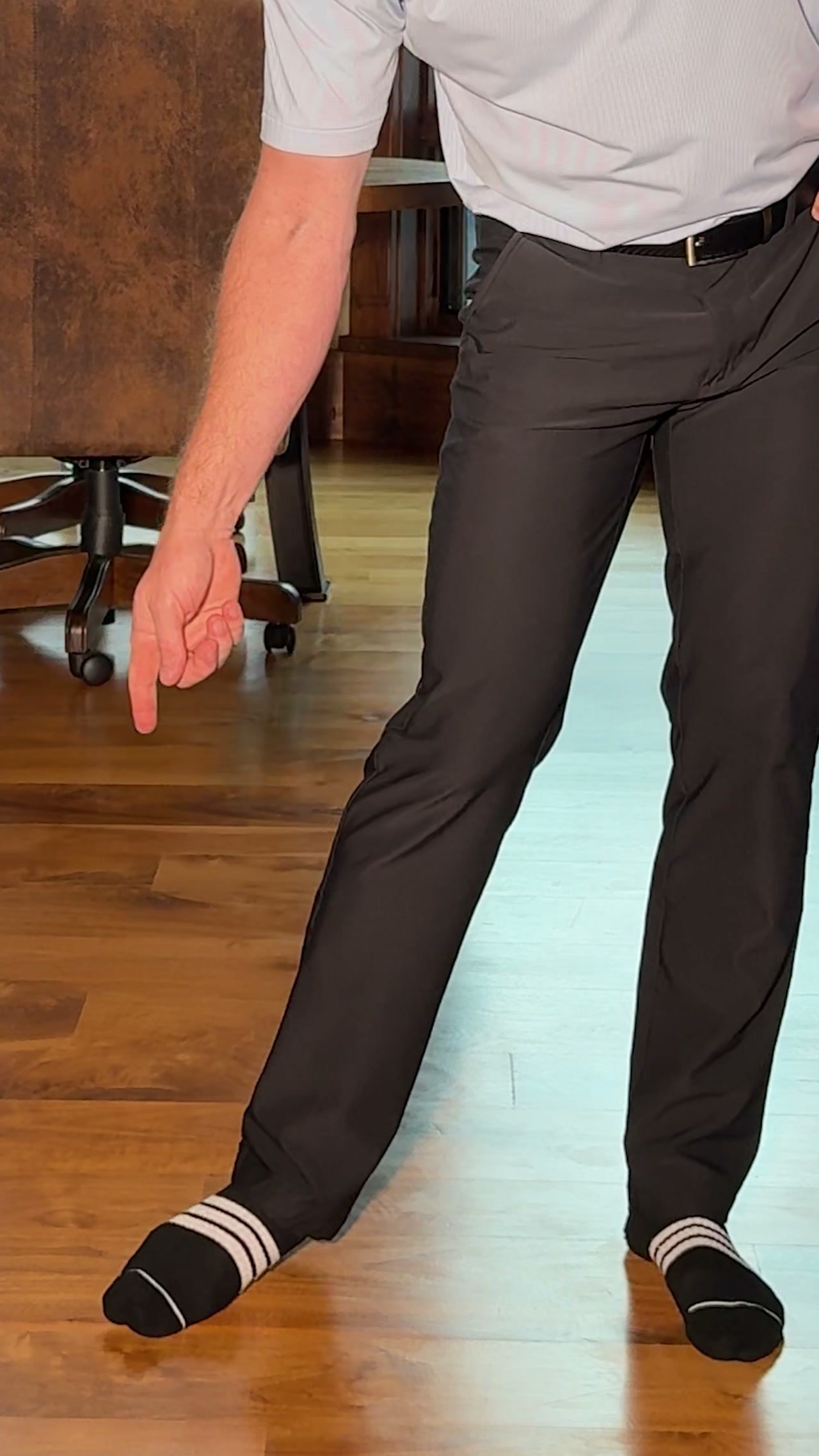
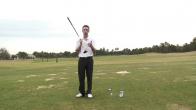
I want you to stand with a very narrow stance, you know about hip width, because I don't want you trying to muscle this.
You should find balance naturally and effortlessly when you do this correctly.
Now, take the club and hold it with your middle finger, and you'll see that.
As I let the club drop, it's going to kind of roll to the more side of my finger.
That's what we want as we're setting up and then my index finger is going to hook to balance that.
So you can see this finger's off the club.
This finger's off the club.
My middle finger, it's orbiting or it's bracing in that pad.
And now I put my index finger in there to help stabilize it and my thumb to help stabilize it.
Now I can wrap my ring finger back around a little bit, but the middle finger is where I feel the pressure.
And of course my index finger balancing it out as well, but that is the feeling of the grip and the pinky doesn't really do a whole heck of a lot.
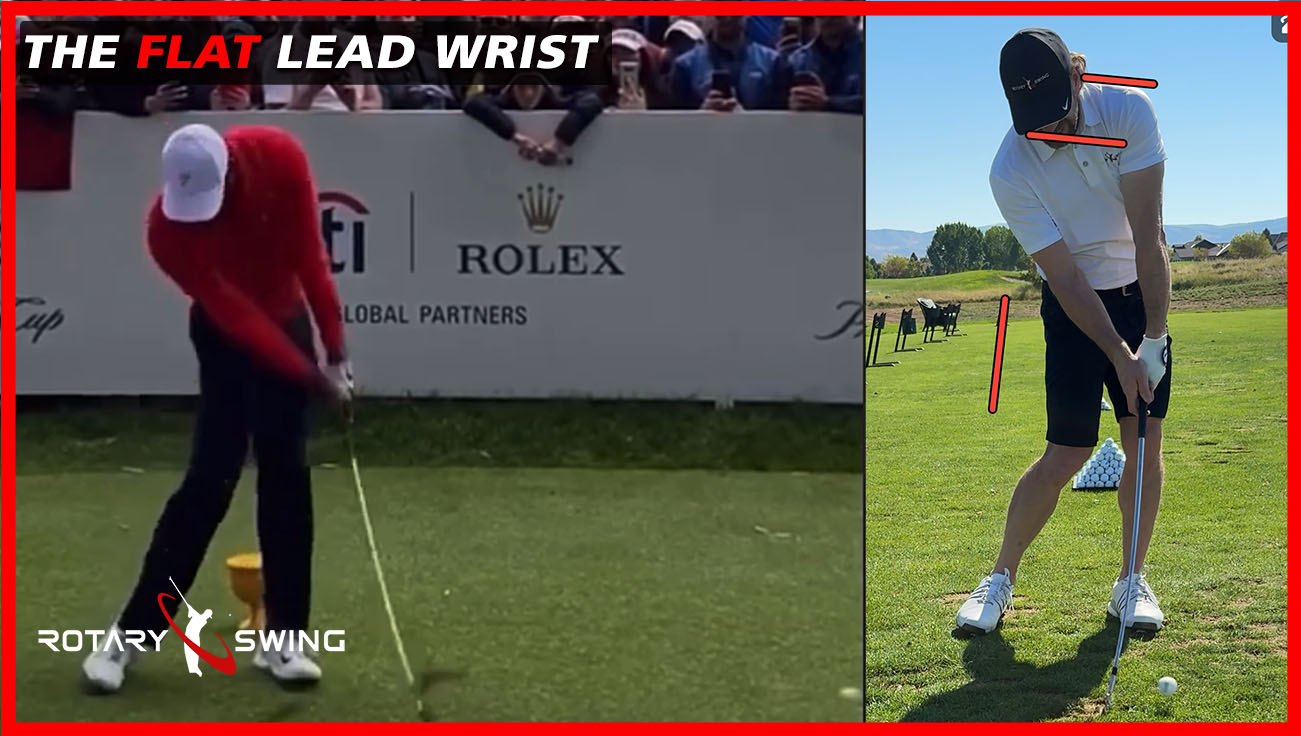
Now, get your arm supinated, just like you've learned in the GoAt code, and rotate back and do not pick up the club.
Don't do anything with the club.
Let your arms and hands and club be moved by your lead side, pushing that sternum away, stretching that oblique sling.
And as you do this, your arm's still going to be pretty connected to your body.
From down the line, you're going to see that the club's just going to stay right there with my body.
All I'm trying to do is set up that initial little pulse of the downswing.
So if I stretch this oblique sling again, this diagonal band of fascia going across my body to where my trail shoulder?
All I'm trying to do in the backswing is load that up.
Where most golfers go wrong is they start moving their arms and you kill your fascial stretch.
There is not going to be any, you're going to load up your arms, you're going to fire your arms.
First.
Your sternum will never drop, and you'll see it rising during the backswing as well.
But if I just load, going back, stretching that now as I start to unwind, the club should fall back into my middle finger.
And it's falling backwards now, as you're doing this at speed, it's not going to fall backwards.
Nearly this much, of course.
But the feeling that you're trying to get at first is that the club is waiting and falling.
And it's being dragged through by your body rotation now, as your body begins that deceleration phase, or, more appropriate, you're no longer adding acceleration to it.
That's when the club starts to catch up and starts to accelerate and go really quick.
What you're going to find is that this feeling is going to be right about here.
When your hands are roughly somewhere around waist height, the club is going to take over your hands.
If you don't feel that, it means that you are pushing the club through or pulling the club through.
Now, if we put both hands on here, we can start to get the feeling for this.
So as I go back, I'm winding my sternum up away from my lead hip to get that stretch.
And now, as I pulse, I feel the club falling back into my middle finger.
In fact, when I do this slow, I actually feel the club trying to get pulled out of my fingers.
Because the club's still going back this way a little bit and my chest is starting to go back the other way as that's happening, I feel the club in my middle finger.
On that pad start to get pulled away from my hands a little bit, and then as it drops, I feel the club head pulling further away from my hand.
This is the key to speed without effort.
If you feel that club beginning to be pulled out of your finger, and this is why Tiger tapes it, because as you start adding a ton of speed at the bottom, the club literally wants to pull out of your fingers.
That's the centrifugal force that's acting on the club that you must allow to happen, And you're creating it with that initial rotational velocity of your sternum.
So now as I go back and I start to go, I feel the club wanting to throw this way.
I want the feeling of the club trying to escape my hands.
So keep your hands and your arms and your shoulders very, very soft as you work on this next part of the drill.
So I'm going to stand very narrow.
I feel the club, I kind of it with my trail hand.
Only first get that feeling of the club trying to roll around, and this is what I mean by the club.
Orbiting around the middle finger, the feeling is like this, it's not this, you never push the club.
I'm wanting it to rotate like a rock on a sling, I want it to go around in a circle, that's where speed comes from.
So now very, very soft arms, narrow stance, feeling the club in middle finger, and I'm going to load up my sternum and just release it now.
I had a little whoosh sound there and I barely moved and there was nothing coming from my arms or hands.
What I did was rotate back and through, but the through part is only to there.
And then the club does this, so let's get that feeling.
Because this is the key to understanding how you let the club release and let the club and arms past your body, instead of you trying to push the club past the body.
So I go back.
I'm letting my sternum basically drag the club and arms and hands back right now.
And then as I start down, I feel this.
I don't want to feel my hands continuing to move forward.
And if you continue to add acceleration of your chest rotating through, that's exactly what you're going to feel.
You're not going to feel this.
The club should be releasing back here, you have to give it time to release.
And if I start letting it release back here, it's going to roll or orbit around that joint on my middle finger, that pad.
And that's what I'm trying to feel.
So if I go back and through all I have to feel, you hear that little woof.
All that is is letting the club start to release back here from the energy from my sternum, and then as I stop adding acceleration, the club wants to get thrown out that way.
That's exactly what I want.
Now notice that I can end up in perfect balance but with a ton of speed, but no effort from my arms or hands.
I felt the club literally go like this around my fingers.
It's almost like the club is trying to escape my palm or my fingers as it goes out away from me, and i just let it release there is no pushing there is no pulling the swing is as simple as load this fascial sling getting your sternum back let it start to let the fascial sling snap and pull you back and let the club release like this that's it so when you start feeling this if you swing kind of like 70 effort at first go really soft hands really soft arms so you can really exaggerate the feeling of this and start getting the feeling of going back quicker and your body moving quicker not your arms and hands your arms and hands are purely passive and they are being released by the body motion and the pulling action of the club pulling on your arms and hands your arms your hands do nothing so again we're going to go back nice and easy relax that's how simple the goat's swing is load very brief acceleration let the club start to release and you'll find that you've been working way too hard in your golf swing for way too long
Now in the live lesson session on our iPhone, it's only at 30 frames per second compared to the model, which is 120 frames per second.
So it's not going to get every single frame perfect, but you're going to see the big picture here.
Notice here that as I go down, you see this steep drop in my sternum where it goes way down and then goes back vertical in a steep spike like this.
Again, it's not going to match exactly because of the frame rate.
That's just a limitation on iPhone.
Thanks Apple.
But you'll see that big drop there.
And this is paramount.
If you look at the top of my hat and the start of this swing, my video, my head is actually kind of chopped off at the top.
And then as I go down, you'll see a big drop.
And that is what we're looking for.
This is showing that we're starting to understand how to use the ground for leverage and then we see that big vertical peak.
Let me show you how we do this in the swing.
When you're using the sternum and hip tracer in the live lesson with Goaty, what he's really looking for is efficiency in your swing and how you produce power.
Now, one of the most important keys is understanding actually when to stop accelerating in the downswing.
Most golfers have been taught to go to the top nice and smooth and slow, and then start down really smooth and slow.
Don't rush it from the top, and then go and accelerate through the ball.
The goats do the exact opposite, and especially Tiger.
When he was at his peak, he did the complete opposite of what everybody's ever taught about the golf swing.
What he did is go back extremely fast, be very fast during the transition, accelerate very hard from the top, but right here he was done adding rotation to the swing, done adding rotational speed, and that is the key, And so when you look at this Delta sternum move, where you see this upside down triangle, where his sternum basically goes straight back during the back swing, down, and then up, And so if we go here, I've got my live Sternum tracer here.
So if I go back and then down and then up, that's what's happening in the Goat swing.
And this is just showing ground, force, leverage.
And using the fascial slings of the body to produce speed for you, rather than you trying to put muscular effort into your swing.
So if you find that your whip score is very low and you're not understanding how to speed that up and get that snap, you've never felt that effortless release.
It's likely because you are pushing or pulling the club through impact, because you're trying to accelerate too long, too late, and you're too slow and smooth from the top.
When you look at the GOAT's data, what you actually see is a very abrupt, steep, massive change of direction and speed very, very early, immediately from the top.
Tiger doesn't go to the top and hang out.
He's already gone by the time that you have time to think, and that's because his fascial slings that you think about.
Just two X's going across your body front and back is a simple way to think about it.
He's stretching this as he goes back, so he's loading this, getting the sternum moving away from this lead hip, and then that pulls him back and it snaps him back.
That's all the acceleration that you need to add to the swing, this is the whole trick to it, you do not need to add rotation.
Past this point, in fact, let me walk you through Tiger Swing specifically in depth and show you exactly when he starts and stops accelerating.
Alright, I'm gonna play this swing of Tigers real quick and I want you to watch a couple things.
I want you to watch the graphs on the right and how they move and sync with his body, and I want you to pay close attention to when you see the graphs go red.
Ready?
Right there.
Now, let's walk back and see when this happened and start to understand what it really means.
Right there, you can see where the graph The Sternum graph on the top shows two things one, it shows the position of the Sternum throughout the swing.
It shows is it moving down, is it moving up, is it moving lateral?
And this graph below it is showing actual rotational velocity.
So speed in degrees per second or frames per second.
That's what we're looking at here now.
What you'll see right here is it looks like Tiger's still kind of at the top of his backswing, right?
He's barely started his downswing.
That is the last moment that Tiger is adding acceleration speed from his torso.
Now, I know that might seem mind-blowing, and it's not that that's the fastest point in his swing.
This is actually through impact, as the club is ripping his body around, because the club is moving incredibly fast at that point.
That is his peak rotational velocity, but at that point, you have no control over that.
You're just letting the club and the arms go, and they're ripping your body around.
But what you'll see here, if we walk back to the beginning, so right here is where Tiger starts to transition back into the downswing, and so you'll see that you're going to see a huge drop in velocity right here.
This is like a race car diagram.
We want to see massive braking and then instantly back on acceleration.
You don't want to see these big, long, U -shaped curves.
You want to see V-shaped curves, and that's what you see in Tiger.
He goes from going in the backswing to immediately back to the downswing.
And there's very, very little time in directional change.
He goes immediately.
So in other words, he's not gradually starting to rotate back toward the target.
It's happening super fast and immediately and very early.
Now, what we see next is that he starts to rotate.
And so I'm looking at the bottom graph here.
this is showing rotational speed.
And so now as we get through to right here, at that point, that is the peak before his first drop.
Now you can see this little drop right here.
And this is happening after about 60% of the downswing has completed.
At this point, the arms and hands and club have already taken over the body.
And that's why this doesn't really matter at this point, because here the club and arms are starting to really go.
But he has stopped trying to rotate faster, in other words, his fascial slings have started to pull him back at this point.
And right there, only about 50, so 40 something percent, 50 something percent of the way through the swing, through the downswing, he's already done, he's no longer trying to add speed.
And that's what's really crazy about this when you look at it here, as his sternum is still starting to drop.
He is no longer trying to add speed with his body rotating.
So he's actually going to decel.
And that's what you see the red bar here showing that he's starting to decelerate.
And on the sternum graph up above, his body, his rotational speed has already slowed down.
This is crazy because so many golfers think, and myself included, I used to rotate really fast.
And the first time I put my swing on this, my swing graph stayed green all the way to impact.
I never decelerated.
In fact, I kept speeding up.
And then I realized, why does my back hurt?
Because I'm trying to rotate my body so fast through the ball, the goats stopped rotating right there.
And now they're just going to let everything happen from there.
They're going to let their arms release.
They're going to let the club go.
They're going to let it rotate around this middle finger that you're going to learn in just a moment.
And that is what makes the goat's swing look so efficient.
Tiger's not trying to add muscular power to his swing.
He's not trying to rotate his chest to the ball, he's letting himself snap the club and that's why he has such an efficient and effortless golf swing.
Now, what you just saw in Tiger Swing probably is different than anything you've ever heard.
But the cool thing is with Goatee, he doesn't look at does your swing look pretty or not?
He cares about efficiency and velocity.
He's looking at, am I moving fast at the right time from the right place in my body.
And as you just saw in tiger swing, he stops adding rotation.
Now it's important to understand that it's not actively decelerating.
You stop adding acceleration is what you're looking for.
And because this happens so early, the brain actually can't process the feeling of acceleration.
This is a crazy thing to think about, but it takes over a quarter of a second or about a quarter of a second for your brain to react to a stimulus, but the whole downswing is done in that same amount of time.
So what you realize is that acceleration phase, when Tiger's going from change of direction, going back, where his chest is still rotating to then starting down, and that acceleration phase is over about 40% of the time into the swing, into the downswing, your brain literally doesn't have time to process that.
But what it can process is the feeling of deceleration, or excuse me, the feeling of not adding acceleration.
You are starting to decelerate as you saw on the graph.
But I don't want you to sit here and try to go to the top and stop.
Not really what you're trying to do.
You're trying to load yourself and stretch these fascial slings so that they pull you back to neutral.
And then you let everything happen from there.
And in the second part of the video, I'm going to talk to you about how the hands work.
But as you're doing this, it's not going here and trying to stop.
But that is what I'm going to have.
You drill at first to get the feeling of not trying to keep rotating and adding acceleration late into the downswing.
When you look at your swing, you'll probably see that green bar going for a long time, perhaps all the way into impact, because you don't decelerate or stop adding acceleration early enough.
So the best way to get this feeling, I believe, is to use a weight.
Now, I've got a kettlebell here.
You can use anything.
You can use a can of soup.
You just need something to help get you the feeling, but you can do this without weight too.
But the feeling of having mass that you're trying to actively accelerate and then let it go is the right feeling.
And this will actually be an exaggeration to teach you how to actively decelerate, which is again, not what you're trying to do in the swing, But this will help you start to feel the muscles and how the hips and glute have to work in order to create this natural acceleration of your arms and hands and club whipping past your body.
And that is what you're going to feel in the second half.
But the first half of this video, we have to feel how do we use our whole body to move correctly.
So take a kettlebell and kind of get your arms and your chest rotating back with it.
So just get this feeling of turning back and the mass you're going to feel is going to want to pull you around on, you know, deeper into your backswing.
And you're going to feel as long as your hips are staying relatively quiet and you're using the lead side, oblique muscles, lead side on your torso to start rotating you back, you're going to feel a big stretch across the lead side of your belly.
That's what you want to feel.
So this is going to pull you back.
And what you're going to do is let that stretching feeling that you had pull you back.
Now it's going to be a quick snap.
It's not going to be this slow and methodical move back.
It's you're feeling this stretch and then you let it come back.
Let it pull you back to neutral.
So back.
Now what I want you to do, once you get this feeling of these lead side of your abdominal wall and your obliques being stretched and starting to want to come back to neutral, which is how you let the fascial sling start to pull you back, I want you to actively brace.
Now again, this is an exaggeration of what happens in the swing because we don't have the momentum of the club and the arms right now.
But what I want you to feel next is once you get this stretch.
I want you to brace into your lead hip, your lead heel, and drive both of them into the ground.
And watch my feet as I do this, my lead foot is actually twisting into the ground.
For me, as a right-handed golfer, my left foot is turning clockwise.
What most golfers do is they try to spin out and try to add a lot of rotational speed for long time in the swing.
You won't have any whip, you actually have to decel, just like a whip.
If you think about it, when you're cracking a whip, your handle has to stop and actually even yank it back a little bit, and that transfers all that energy out.
In the golf swing, your the handle of the whip is your body.
And so as you're rotating, if you keep rotating, your arms and hands and club just get dragged through the shot, there's no snap.
Instead, I go back and I'm slamming on the brakes, pushing into the ground with my heel, twisting my lead foot clockwise for a right-handed golfer and feeling my lead hip brace.
And that is the whip effect starting to take shape because as my body begins to stop adding acceleration, my arms and hands are then going to catch up and take over my body.
And that's why elite ball strikers always look really effortless when they're hitting the of all.
And you see amateurs really spinning out and struggling, trying to add a lot of speed.
The secret of the pros is they're done adding speed way back here and then their arms and club are doing.
What we're going to talk about in the second half of the video, which is orbiting around this trail middle finger.
First, let's get back to feeling this deceleration profile, where you're going back and then bracing and resisting.
And you'll feel because you're trying to stop the momentum of this heavy weight, you'll feel the muscles that have to activate in your core and your hips to stop letting this weight pull you forward.
This is again, what you feel in the swing just as an exaggeration.
So that will get you the feeling of going down.
So your sternum starts to drop in the downswing.
if you're going arms first, your arms don't do, Jack in the golf swing.
I've said that a million times, it's never more true than understanding how the goats really move.
Your arms.
Do not add speed actively, they are purely being moved by your body, and so as you're going back, if you find that, your sternum trace.
If we go back over here and I get into position here and I start to lift, now, you see, my sternum goes up.
And then if I fire my arms, I go up even further.
Or even if I stay back halfway, decent going back, and then I want to then throw my arms.
My body has to come up out of this in order to avoid sticking the club in the ground.
So that's what you're trying to learn is that as you're going back, I'm loading, letting my fascial slings pull me back, but I'm done and you'll see my sternum trace.
Watch the yellow dot drops.
And I'm breathing out, purposely exhaling, because my core, my abdominals and my whole core is bracing to allow the arms to whip past my body.
And that's what we're going to talk about next is how do we blend this into the arm movement.
Now for the magic.
Once you start to understand that you do not keep rotating your body, your body does keep rotating.
Absolutely.
In fact, it actually picks up speed through impact, but that's not from you actively trying to rotate.
The goats do the opposite, they stop way up here and let the arms and hands take over.
But for that to happen, your arms must be relaxed.
You must not be trying to push or pull the club through.
That's going to drag the handle through and kill your whip score.
When you start to understand that your arms must be flung past your body, then it makes sense that you don't keep adding rotational velocity to your ribcage, to your sternum.
If you keep turning, your arms are going to get trapped behind your body.
You're going to drag the club.
You're going to leave the face open.
You're going to block it off the planet.
What you're doing is rotating, only adding rotational speed in the blink of an eye.
It should feel like it happens immediately, from the top, as fast as possible and as brief as possible.
But that is all handled by your fascia.
You don't have to do that.
What you have to do is stretch that fascia quickly during the backswing and feel this big stretch.
And let that start to pull you back.
And then you're done.
Now all you have to do is get the feeling of the club.
Orbiting around your middle finger, the first joint or the first pad in your middle finger, this is why you see Tiger always having this finger, this joint taped up.
In a swing, the motion of the swing is like that, it's just orbiting.
And again, for a right-handed golfer.
If I'm looking at a clock on the wall from your perspective, it's going to be counterclockwise.
From my perspective, it's clockwise, so that is the motion.
In order for this to happen with any velocity, your body has to move correctly and has to move powerfully and explosively and quick.
And that's what we just worked on is getting that feeling of having something heavy and then firing that core.
And that's why you see Tiger a lot of times when he's hitting a driver, you see his cheeks all pursed out.
Because his abdominals are firing.
In order to stop adding acceleration and start allowing the club to whip past.
Now, how to feel this at first is very simple.
I want you to stand with a very narrow stance, you know about hip width, because I don't want you trying to muscle this.
You should find balance naturally and effortlessly when you do this correctly.
Now, take the club and hold it with your middle finger, and you'll see that.
As I let the club drop, it's going to kind of roll to the more side of my finger.
That's what we want as we're setting up and then my index finger is going to hook to balance that.
So you can see this finger's off the club.
This finger's off the club.
My middle finger, it's orbiting or it's bracing in that pad.
And now I put my index finger in there to help stabilize it and my thumb to help stabilize it.
Now I can wrap my ring finger back around a little bit, but the middle finger is where I feel the pressure.
And of course my index finger balancing it out as well, but that is the feeling of the grip and the pinky doesn't really do a whole heck of a lot.
Now, get your arm supinated, just like you've learned in the GoAt code, and rotate back and do not pick up the club.
Don't do anything with the club.
Let your arms and hands and club be moved by your lead side, pushing that sternum away, stretching that oblique sling.
And as you do this, your arm's still going to be pretty connected to your body.
From down the line, you're going to see that the club's just going to stay right there with my body.
All I'm trying to do is set up that initial little pulse of the downswing.
So if I stretch this oblique sling again, this diagonal band of fascia going across my body to where my trail shoulder?
All I'm trying to do in the backswing is load that up.
Where most golfers go wrong is they start moving their arms and you kill your fascial stretch.
There is not going to be any, you're going to load up your arms, you're going to fire your arms.
First.
Your sternum will never drop, and you'll see it rising during the backswing as well.
But if I just load, going back, stretching that now as I start to unwind, the club should fall back into my middle finger.
And it's falling backwards now, as you're doing this at speed, it's not going to fall backwards.
Nearly this much, of course.
But the feeling that you're trying to get at first is that the club is waiting and falling.
And it's being dragged through by your body rotation now, as your body begins that deceleration phase, or, more appropriate, you're no longer adding acceleration to it.
That's when the club starts to catch up and starts to accelerate and go really quick.
What you're going to find is that this feeling is going to be right about here.
When your hands are roughly somewhere around waist height, the club is going to take over your hands.
If you don't feel that, it means that you are pushing the club through or pulling the club through.
Now, if we put both hands on here, we can start to get the feeling for this.
So as I go back, I'm winding my sternum up away from my lead hip to get that stretch.
And now, as I pulse, I feel the club falling back into my middle finger.
In fact, when I do this slow, I actually feel the club trying to get pulled out of my fingers.
Because the club's still going back this way a little bit and my chest is starting to go back the other way as that's happening, I feel the club in my middle finger.
On that pad start to get pulled away from my hands a little bit, and then as it drops, I feel the club head pulling further away from my hand.
This is the key to speed without effort.
If you feel that club beginning to be pulled out of your finger, and this is why Tiger tapes it, because as you start adding a ton of speed at the bottom, the club literally wants to pull out of your fingers.
That's the centrifugal force that's acting on the club that you must allow to happen, And you're creating it with that initial rotational velocity of your sternum.
So now as I go back and I start to go, I feel the club wanting to throw this way.
I want the feeling of the club trying to escape my hands.
So keep your hands and your arms and your shoulders very, very soft as you work on this next part of the drill.
So I'm going to stand very narrow.
I feel the club, I kind of it with my trail hand.
Only first get that feeling of the club trying to roll around, and this is what I mean by the club.
Orbiting around the middle finger, the feeling is like this, it's not this, you never push the club.
I'm wanting it to rotate like a rock on a sling, I want it to go around in a circle, that's where speed comes from.
So now very, very soft arms, narrow stance, feeling the club in middle finger, and I'm going to load up my sternum and just release it now.
I had a little whoosh sound there and I barely moved and there was nothing coming from my arms or hands.
What I did was rotate back and through, but the through part is only to there.
And then the club does this, so let's get that feeling.
Because this is the key to understanding how you let the club release and let the club and arms past your body, instead of you trying to push the club past the body.
So I go back.
I'm letting my sternum basically drag the club and arms and hands back right now.
And then as I start down, I feel this.
I don't want to feel my hands continuing to move forward.
And if you continue to add acceleration of your chest rotating through, that's exactly what you're going to feel.
You're not going to feel this.
The club should be releasing back here, you have to give it time to release.
And if I start letting it release back here, it's going to roll or orbit around that joint on my middle finger, that pad.
And that's what I'm trying to feel.
So if I go back and through all I have to feel, you hear that little woof.
All that is is letting the club start to release back here from the energy from my sternum, and then as I stop adding acceleration, the club wants to get thrown out that way.
That's exactly what I want.
Now notice that I can end up in perfect balance but with a ton of speed, but no effort from my arms or hands.
I felt the club literally go like this around my fingers.
It's almost like the club is trying to escape my palm or my fingers as it goes out away from me, and i just let it release there is no pushing there is no pulling the swing is as simple as load this fascial sling getting your sternum back let it start to let the fascial sling snap and pull you back and let the club release like this that's it so when you start feeling this if you swing kind of like 70 effort at first go really soft hands really soft arms so you can really exaggerate the feeling of this and start getting the feeling of going back quicker and your body moving quicker not your arms and hands your arms and hands are purely passive and they are being released by the body motion and the pulling action of the club pulling on your arms and hands your arms your hands do nothing so again we're going to go back nice and easy relax that's how simple the goat's swing is load very brief acceleration let the club start to release and you'll find that you've been working way too hard in your golf swing for way too long
Donc, si vous voulez obtenir ce motif en forme de Delta V au niveau du sternum, comme vous allez le voir ici, je vais vous en révéler le secret.
Lors de la session de cours en direct sur notre iPhone, le nombre d'images par seconde n'est que de 30, contre 120 pour le modèle.
Donc, chaque image ne sera pas parfaite, mais vous aurez une vue d'ensemble.
Remarquez ici que, lorsque je descends, vous voyez cette chute abrupte au niveau de mon sternum, qui descend très bas puis remonte à la verticale en une pointe abrupte comme ceci.
Là encore, la correspondance ne sera pas exacte en raison de la fréquence d'images.
C'est une limitation propre à l'iPhone.
Merci Apple.
Mais vous verrez cette forte baisse à ce moment-là.
Et c'est primordial.
Si vous regardez le haut de mon chapeau et le début de ce mouvement, dans ma vidéo, ma tête est en fait comme coupée en haut.
Et puis, en descendant, vous verrez une grande chute.
Et c'est ce que nous recherchons.
Cela montre que nous commençons à comprendre comment utiliser le sol comme point d'appui, et ensuite nous voyons ce grand pic vertical.
Laissez-moi vous montrer comment nous procédons sur la balançoire.
Lorsque vous utilisez le traçage du sternum et des hanches pendant le cours en direct avec Goaty, ce qu'il recherche vraiment, c'est l'efficacité de votre swing et la façon dont vous produisez de la puissance.
L'une des clés les plus importantes est maintenant de comprendre précisément à quel moment il faut arrêter d'accélérer lors de la phase descendante.
La plupart des golfeurs ont appris à monter en flèche de manière fluide et lente, puis à redescendre tout aussi lentement et en douceur.
Ne précipitez pas le mouvement depuis le haut, puis accélérez progressivement au niveau du ballon.
Les chèvres font exactement le contraire, et surtout Tiger.
À son apogée, il faisait exactement le contraire de tout ce que l'on a toujours appris sur le swing de golf.
Ce qu'il a fait, c'est reculer extrêmement vite, être très rapide pendant la transition, accélérer très fort depuis le sommet, mais à ce moment précis, il avait fini d'ajouter de la rotation au swing, fini d'ajouter de la vitesse de rotation, et c'est la clé. Et donc, lorsque vous regardez ce mouvement du sternum Delta, où vous voyez ce triangle inversé, où son sternum va essentiellement tout droit vers l'arrière pendant le backswing, vers le bas, puis vers le haut, et donc si nous allons ici, j'ai mon traceur de sternum en direct ici.
Donc si je recule, puis je descends, puis je remonte, c'est ce qui se passe dans le mouvement de la chèvre.
Et ceci ne fait que démontrer la notion de terrain, de force et d'effet de levier.
Et utiliser les chaînes musculaires du corps pour générer de la vitesse, plutôt que de devoir fournir un effort musculaire excessif lors de votre swing.
Donc si vous constatez que votre score de fouet est très bas et que vous ne comprenez pas comment l'accélérer et obtenir ce claquement, c'est que vous n'avez jamais ressenti ce relâchement sans effort.
C'est probablement parce que vous poussez ou tirez le club à l'impact, parce que vous essayez d'accélérer trop longtemps, trop tard, et que votre mouvement est trop lent et trop fluide depuis le sommet.
Lorsque vous examinez les données du GOAT, vous constatez en réalité un changement de direction et de vitesse très brutal, soudain et massif, très tôt, immédiatement après le sommet.
Tiger ne monte pas au sommet pour y traîner.
Il est déjà parti quand vous avez le temps de réfléchir, et c'est à cause de ses liens fasciaux auxquels vous pensez.
Deux croix qui traversent votre corps, devant et derrière, constituent une manière simple de se le représenter.
Il étire ce muscle en reculant, ce qui le met en tension, éloignant le sternum de sa hanche avant, ce qui le tire en arrière et le fait basculer brusquement.
Voilà toute l'accélération dont vous avez besoin pour le swing, c'est tout le secret, vous n'avez pas besoin d'ajouter de rotation.
À partir de ce point, laissez-moi vous expliquer en détail le Tiger Swing et vous montrer précisément quand il commence et arrête d'accélérer.
Très bien, je vais vous montrer rapidement le swing des Tigers et je veux que vous observiez deux ou trois choses.
Je veux que vous observiez les graphiques à droite et comment ils évoluent et se synchronisent avec son corps, et je veux que vous soyez très attentifs au moment où vous voyez les graphiques devenir rouges.
Prêt?
Juste là.
Revenons maintenant en arrière pour voir quand cela s'est produit et commençons à comprendre ce que cela signifie réellement.
Vous pouvez voir ici, sur le graphique du sternum en haut, deux choses : premièrement, il montre la position du sternum tout au long du mouvement.
Cela indique si le mouvement est descendant, ascendant ou latéral.
Et le graphique ci-dessous illustre la vitesse de rotation réelle.
Donc la vitesse en degrés par seconde ou en images par seconde.
C'est ce que nous observons ici.
Ce que vous voyez ici, c'est que Tiger semble encore être au sommet de son élan arrière, n'est-ce pas ?
Il a à peine entamé sa descente.
C'est le dernier moment où Tiger ajoute de la vitesse d'accélération à partir de son torse.
Je sais que cela peut paraître incroyable, et ce n'est pas le point le plus rapide de son swing.
Cela se produit en fait par impact, car le club déchire son corps, étant donné la vitesse incroyablement élevée du club à ce moment-là.
Il s'agit de sa vitesse de rotation maximale, mais à ce stade, vous n'avez aucun contrôle sur celle-ci.
Tu laisses simplement le club et les bras se déchaîner, et ils te déchirent le corps.
Mais ce que vous verrez ici, si nous revenons au début, c'est que Tiger commence à amorcer sa descente, et vous constaterez donc une chute brutale de la vitesse à cet endroit précis.
C'est comme le schéma d'une voiture de course.
Nous voulons voir un freinage puissant suivi d'une accélération immédiate.
Vous ne voulez pas voir ces grandes et longues courbes en forme de U.
Vous voulez voir des courbes en V, et c'est ce que vous voyez chez Tiger.
Il passe de la phase de montée à la phase de descente immédiatement.
Et le temps disponible pour changer de direction est très, très court.
Il part immédiatement.
Autrement dit, il ne commence pas progressivement à pivoter pour revenir vers la cible.
Cela se produit très rapidement, immédiatement et très tôt.
Maintenant, ce que nous voyons ensuite, c'est qu'il commence à pivoter.
Je regarde donc le graphique du bas.
Ceci indique la vitesse de rotation.
Et donc, maintenant que nous en sommes arrivés là, à ce point précis, c'est le sommet avant sa première chute.
Vous pouvez maintenant voir cette petite goutte juste ici.
Et cela se produit alors qu'environ 60 % de la phase de baisse est terminée.
À ce stade, les bras, les mains et la massue ont déjà pris le contrôle du corps.
Et c'est pourquoi cela n'a plus vraiment d'importance à ce stade, car ici, le club et les bras commencent vraiment à s'activer.
Mais il a cessé d'essayer d'accélérer sa rotation, autrement dit, ses fascias ont commencé à le retenir à ce stade.
Et là, à environ 50 %, donc à 40 % ou 50 % de la descente, il a déjà terminé, il n'essaie plus d'ajouter de la vitesse.
Et c'est ça qui est vraiment dingue quand on regarde ça ici, car son sternum commence encore à s'affaisser.
Il ne cherche plus à gagner en vitesse par la rotation de son corps.
Il va donc en fait ralentir.
Et c'est ce que vous voyez ici, la barre rouge indiquant qu'il commence à ralentir.
Et sur le graphique du sternum ci-dessus, son corps, sa vitesse de rotation, a déjà ralenti.
C'est dingue, parce que beaucoup de golfeurs pensent, moi y compris, que j'avais l'habitude de tourner très vite.
Et la première fois que j'ai testé cette technique, mon graphique de swing est resté vert jusqu'à l'impact.
Je n'ai jamais ralenti.
En fait, j'ai continué à accélérer.
Et puis j'ai réalisé : pourquoi j'ai mal au dos ?
Parce que j'essayais de faire pivoter mon corps très rapidement à travers la balle, les chèvres se sont arrêtées de tourner net.
Et maintenant, ils vont simplement laisser les choses se dérouler.
Ils vont relâcher leurs bras.
Ils vont laisser partir le club.
Ils vont le faire tourner autour de ce majeur que vous allez apprendre dans un instant.
Et c'est ce qui rend le balancement de la chèvre si efficace.
Tiger ne cherche pas à ajouter de la puissance musculaire à son swing.
Il ne cherche pas à faire pivoter sa poitrine vers la balle, il se laisse simplement frapper le club, et c'est pourquoi son swing de golf est si efficace et sans effort.
Ce que vous venez de voir dans Tiger Swing est probablement différent de tout ce que vous avez pu entendre jusqu'ici.
Mais le plus cool avec Goatee, c'est qu'il ne regarde pas si ton swing est joli ou pas.
Il se soucie de l'efficacité et de la rapidité.
Il cherche à savoir si je bouge vite, au bon moment et depuis le bon endroit de mon corps.
Et comme vous venez de le voir dans l'exemple du swing du tigre, il cesse d'ajouter de la rotation.
Il est important de comprendre qu'il ne décélère pas activement.
Ce que vous recherchez, c'est d'arrêter d'accélérer.
Et comme cela se produit très tôt, le cerveau est incapable de traiter la sensation d'accélération.
C'est incroyable d'y penser, mais il faut environ un quart de seconde à votre cerveau pour réagir à un stimulus, alors que toute la phase de descente se déroule dans le même laps de temps.
Vous vous rendez compte que pendant la phase d'accélération, lorsque Tiger passe d'un changement de direction, en reculant, alors que sa poitrine est encore en rotation, à la descente, et que cette phase d'accélération dure environ 40 % du temps du swing, pendant la descente, votre cerveau n'a littéralement pas le temps de traiter cela.
Mais ce qu'il peut traiter, c'est la sensation de décélération, ou excusez-moi, la sensation de ne pas accélérer.
Vous commencez à décélérer, comme vous l'avez constaté sur le graphique.
Mais je ne veux pas que vous restiez assis ici à essayer d'atteindre le sommet et à vous arrêter.
Ce n'est pas vraiment ce que vous essayez de faire.
Vous essayez de vous mettre en charge et d'étirer ces chaînes fasciales pour qu'elles vous ramènent à une position neutre.
Et ensuite, vous laissez les choses se dérouler.
Et dans la deuxième partie de la vidéo, je vais vous expliquer comment fonctionnent les mains.
Mais pendant que vous faites cela, il ne va pas ici et n'essaie pas de s'arrêter.
Mais c'est ce que je vais prendre.
Au début, on s'entraîne à ne pas chercher à maintenir la rotation et à ajouter de l'accélération tard dans la descente.
Lorsque vous observez votre swing, vous constaterez probablement que la barre verte persiste longtemps, peut-être même jusqu'à l'impact, car vous ne décélérez pas ou n'arrêtez pas d'accélérer suffisamment tôt.
Je crois donc que le meilleur moyen d'obtenir cette sensation est d'utiliser un poids.
J'ai une kettlebell ici.
Vous pouvez utiliser n'importe quoi.
Vous pouvez utiliser une boîte de soupe.
Il vous faut juste quelque chose pour vous aider à ressentir cette sensation, mais vous pouvez aussi le faire sans poids.
Mais la sensation d'avoir une masse que l'on essaie activement d'accélérer puis de relâcher est la bonne sensation.
Et il s'agira en fait d'une exagération pour vous apprendre à décélérer activement, ce qui, encore une fois, n'est pas ce que vous essayez de faire dans le swing. Mais cela vous aidera à commencer à ressentir les muscles et la façon dont les hanches et les fessiers doivent travailler afin de créer cette accélération naturelle de vos bras et de vos mains, et du club qui fouette votre corps.
Et c'est ce que vous allez ressentir en seconde partie.
Mais dans la première partie de cette vidéo, nous devons ressentir comment utiliser tout notre corps pour bouger correctement.
Prenez donc une kettlebell et faites pivoter vos bras et votre poitrine en même temps que le mouvement.
Il suffit donc de ressentir cette sensation de retournement, et la masse que vous allez ressentir va vouloir vous entraîner plus profondément dans votre élan arrière.
Et tant que vos hanches resteront relativement immobiles et que vous utiliserez les muscles obliques du côté dominant de votre torse pour commencer à vous faire pivoter vers l'arrière, vous ressentirez un grand étirement du côté dominant de votre ventre.
C'est ce que vous voulez ressentir.
Cela va donc vous faire reculer.
Et ce que vous allez faire, c'est laisser cette sensation d'étirement que vous avez ressentie vous ramener en arrière.
Ça va être une photo rapide.
Le retour ne se fera pas de manière aussi lente et méthodique.
C'est ressentir cet étirement, puis le laisser revenir.
Laissez-le vous ramener au point mort.
Donc retour.
Maintenant, ce que je veux que vous fassiez, une fois que vous ressentez cette sensation de l'étirement de ces muscles obliques du côté antérieur de votre paroi abdominale et qu'ils commencent à vouloir revenir à la position neutre, c'est ainsi que vous laissez la sangle fasciale commencer à vous tirer en arrière, je veux que vous contractiez activement.
Encore une fois, il s'agit d'une exagération de ce qui se passe lors du swing, car nous n'avons pas l'élan du club et des bras en ce moment.
Mais ce que je veux que vous ressentiez ensuite, c'est une fois que vous aurez atteint cet étirement.
Je veux que vous preniez appui sur votre hanche avant, votre talon avant, et que vous les enfonciez tous les deux dans le sol.
Et regardez mes pieds pendant que je fais cela, mon pied avant se tord en fait dans le sol.
Pour moi, golfeur droitier, mon pied gauche tourne dans le sens des aiguilles d'une montre.
La plupart des golfeurs essaient de générer un effet de rotation important et d'ajouter beaucoup de vitesse de rotation pendant une longue période lors du swing.
Vous n'aurez pas d'effet fouet, vous devrez en fait ralentir, comme avec un fouet.
Si on y réfléchit, quand on fait claquer un fouet, le manche doit s'arrêter et même être légèrement tiré en arrière, ce qui permet de transférer toute cette énergie.
Au golf, le manche du fouet, c'est votre corps.
Et donc, pendant la rotation, si vous continuez à tourner, vos bras, vos mains et le club sont simplement traînés pendant le coup, il n'y a pas de claquement.
Au lieu de cela, je recule et je freine brusquement, en poussant dans le sol avec mon talon, en tournant mon pied avant dans le sens des aiguilles d'une montre pour un golfeur droitier et en sentant mon appui-hanche avant.
Et c'est là que l'effet fouet commence à se manifester, car lorsque mon corps cesse d'accélérer, mes bras et mes mains vont rattraper leur retard et prendre le relais.
Et c'est pourquoi les meilleurs frappeurs de balle semblent toujours si à l'aise lorsqu'ils frappent le ballon.
Et on voit des amateurs qui patinent et peinent, essayant d'ajouter un maximum de vitesse.
Le secret des pros, c'est qu'ils ont fini d'ajouter de la vitesse très tôt, et ensuite ce sont leurs bras et leur club qui font le reste.
Ce dont nous allons parler dans la seconde moitié de la vidéo, c'est de ce doigt d'honneur tracé sur le sentier.
Tout d'abord, revenons à la sensation de ce profil de décélération, où vous reculez puis vous vous stabilisez et résistez.
Et vous sentirez, parce que vous essayez de freiner l'élan de ce poids lourd, les muscles qui doivent s'activer dans votre tronc et vos hanches pour empêcher ce poids de vous tirer vers l'avant.
Il s'agit encore une fois d'une exagération de ce que vous ressentez dans la balançoire.
Cela vous donnera la sensation de descendre.
Votre sternum commence donc à s'abaisser lors de la descente.
Si vous attaquez le swing avec les bras en premier, vos bras ne feront rien, Jack.
Je l'ai dit un million de fois, et cela n'a jamais été aussi vrai que lorsqu'il s'agit de comprendre comment les chèvres se déplacent réellement.
Vos bras.
N'augmentez pas activement la vitesse, ces mouvements sont purement induits par votre corps, et donc, lorsque vous revenez en arrière, si vous trouvez cela, la trace de votre sternum.
Si on retourne ici et que je me mets en position et que je commence à soulever, vous voyez, mon sternum se soulève.
Et ensuite, si je fais feu avec mes armes, je monte encore plus haut.
Ou même si je reste à mi-chemin, c'est bien de reculer, et ensuite j'ai envie de lever les bras.
Mon corps doit se redresser pour éviter de planter le club dans le sol.
Donc, ce que vous essayez d'apprendre, c'est que pendant que vous revenez en arrière, je me charge, je laisse mes fascias me tirer vers l'arrière, mais une fois que j'ai terminé, vous verrez la trace de mon sternum.
Observez la chute du point jaune.
Et j'expire, volontairement, car mes muscles abdominaux et toute ma sangle abdominale se contractent pour permettre à mes bras de passer devant mon corps.
Et c'est ce dont nous allons parler ensuite : comment intégrer cela au mouvement du bras.
Place à la magie !
Une fois que vous commencez à comprendre que vous ne faites pas constamment tourner votre corps, c'est votre corps qui continue de tourner.
Absolument.
En fait, elle prend effectivement de la vitesse grâce à l'impact, mais cela ne provient pas d'une tentative active de rotation de votre part.
Les chèvres font le contraire, elles s'arrêtent tout en haut et laissent les bras et les mains prendre le relais.
Mais pour que cela se produise, vos bras doivent être détendus.
Vous ne devez pas essayer de pousser ou de tirer le club.
Ça va faire glisser la poignée et ruiner votre score de fouet.
Quand on commence à comprendre que les bras doivent être projetés au-delà du corps, il devient logique de ne pas continuer à ajouter de la vitesse de rotation à la cage thoracique, au sternum.
Si vous continuez à tourner, vos bras vont se retrouver coincés derrière votre corps.
Tu vas traîner le club.
Vous allez laisser le visage ouvert.
Vous allez l'empêcher d'atteindre la planète.
Ce que vous faites, c'est une rotation, mais en ajoutant de la vitesse de rotation en un clin d'œil.
L'impression doit être immédiate, venant d'en haut, aussi vite et aussi brièvement que possible.
Mais tout cela est géré par votre fascia.
Vous n'êtes pas obligé de faire ça.
Ce que vous devez faire, c'est étirer rapidement ce fascia pendant la phase d'élan arrière et ressentir cet étirement important.
Et laissez cela commencer à vous retenir.
Et voilà, c'est terminé.
Il ne vous reste plus qu'à vous imprégner de l'ambiance du club.
En tournant autour de votre majeur, de la première articulation ou du premier coussinet de votre majeur, c'est pourquoi vous voyez Tiger avoir toujours ce doigt, cette articulation, bandé.
Le mouvement d'une balançoire est ainsi, il s'agit simplement d'une orbite.
Et encore une fois, pour un golfeur droitier.
Si je regarde une horloge murale de votre point de vue, elle tournera dans le sens inverse des aiguilles d'une montre.
De mon point de vue, c'est dans le sens des aiguilles d'une montre, donc c'est le mouvement.
Pour que cela se produise à une certaine vitesse, votre corps doit bouger correctement, avec puissance, de manière explosive et rapidement.
Et c'est précisément ce sur quoi nous avons travaillé : obtenir cette sensation d'avoir quelque chose de lourd, puis activer ce noyau.
Et c'est pourquoi, quand on voit Tiger frapper la balle avec le driver, on voit souvent ses joues se contracter.
Parce que ses abdominaux se contractent.
Afin de cesser d'accélérer et de laisser le club passer en un éclair.
La première façon de ressentir cela est très simple.
Je veux que vous vous teniez debout, les pieds très étroits, vous savez, à la largeur des hanches, parce que je ne veux pas que vous essayiez de forcer.
Vous devriez trouver l'équilibre naturellement et sans effort en procédant correctement.
Maintenant, prenez le club et tenez-le avec votre majeur, et vous verrez ça.
Lorsque je laisserai tomber le club, il va en quelque sorte rouler sur le côté opposé de mon doigt.
C'est ce que nous voulons lors de la mise en place, et ensuite mon index va s'accrocher pour équilibrer le tout.
Vous pouvez donc constater que ce doigt est hors du club.
Ce doigt est retiré du club.
Mon majeur, il est en train de tourner ou de se caler dans ce coussinet.
Et maintenant, j'y ai mis mon index et mon pouce pour aider à le stabiliser.
Maintenant, je peux replier un peu mon annulaire, mais c'est au niveau du majeur que je ressens la pression.
Et bien sûr, mon index assure aussi l'équilibre, mais c'est la sensation de la prise en main, et l'auriculaire ne sert pas vraiment à grand-chose.
Maintenant, mettez votre bras en supination, comme vous l'avez appris dans le code GoAt, puis effectuez une rotation vers l'arrière et ne ramassez pas le club.
Ne faites rien avec ce club.
Laissez vos bras, vos mains et votre club se mouvoir du côté dominant, en repoussant le sternum et en étirant les muscles obliques.
Et pendant que vous faites cela, votre bras restera relativement connecté à votre corps.
Vu de loin, vous allez voir que le club va rester juste là, près de mon corps.
Tout ce que j'essaie de faire, c'est de provoquer cette petite impulsion initiale lors de la descente.
Donc si j'étire à nouveau cette bande oblique, cette bande diagonale de fascia qui traverse mon corps jusqu'à mon épaule arrière ?
Tout ce que j'essaie de faire lors de la montée, c'est de charger le swing.
L'erreur la plus fréquente chez les golfeurs est de commencer à bouger les bras, ce qui compromet l'étirement des fascias.
Il n'y en aura pas, vous allez charger vos armes, vous allez faire feu.
D'abord.
Votre sternum ne s'abaissera jamais, et vous le verrez également se soulever pendant la phase d'armement arrière.
Mais si je me contente de charger, en reculant, en étirant cela maintenant que je commence à me détendre, le club devrait retomber dans mon majeur.
Et maintenant, il ne va pas retomber en arrière, car vous faites cela à grande vitesse.
Presque autant, bien sûr.
Mais l'impression que vous cherchez à obtenir au départ, c'est celle du club qui attend et qui s'effondre.
Et cette rotation est maintenant entraînée par celle de votre corps, qui entame sa phase de décélération, ou, plus précisément, vous cessez d'y ajouter de l'accélération.
C'est à ce moment-là que le club commence à rattraper son retard, à accélérer et à aller vraiment très vite.
Vous allez constater que cette sensation se situe précisément ici.
Lorsque vos mains se trouvent à peu près à hauteur de la taille, le club va prendre le contrôle de vos mains.
Si vous ne ressentez pas cela, cela signifie que vous poussez ou tirez le club.
Maintenant, si nous posons nos deux mains ici, nous pouvons commencer à avoir une idée de cela.
Donc, en revenant en arrière, je remonte mon sternum en l'éloignant de ma hanche avant pour obtenir cet étirement.
Et maintenant, au rythme de mes pulsations, je sens le club retomber dans mon majeur.
En fait, quand je fais ça lentement, j'ai vraiment l'impression que le club essaie de m'échapper des doigts.
Parce que le club continue de reculer un peu dans cette direction et que ma poitrine commence à reculer dans l'autre sens en même temps, je sens le club dans mon majeur.
Sur ce tapis, je sens qu'il commence à s'éloigner un peu de mes mains, puis, lorsqu'il retombe, je sens la tête du club s'éloigner encore plus de ma main.
Voici la clé de la vitesse sans effort.
Si vous sentez que le club commence à vous échapper des doigts, et c'est pourquoi Tiger le bande, parce que lorsque vous commencez à ajouter beaucoup de vitesse en bas, le club a littéralement tendance à vous échapper des doigts.
C'est la force centrifuge qui agit sur le club et que vous devez laisser se produire, et vous la créez grâce à la vitesse de rotation initiale de votre sternum.
Alors maintenant, alors que je recule et que je commence à avancer, je sens que le club a envie de lancer dans cette direction.
Je veux avoir la sensation que le club tente de m'échapper des mains.
Gardez donc vos mains, vos bras et vos épaules très, très souples pendant que vous effectuez cette prochaine partie de l'exercice.
Je vais donc me tenir très étroit.
Je sens le club, je le touche du bout des doigts.
Il faut d'abord ressentir cette sensation du club qui essaie de se retourner, et c'est ce que j'entends par club.
En tournant autour du majeur, la sensation est celle-ci, ce n'est pas ça, on ne pousse jamais le club.
Je veux qu'elle tourne comme une pierre au bout d'une fronde, je veux qu'elle décrive un cercle, c'est de là que vient la vitesse.
Donc maintenant, bras très, très souples, position étroite, je sens le club dans le majeur, et je vais engager mon sternum et le relâcher maintenant.
J'ai entendu un petit sifflement, j'ai à peine bougé et rien ne sortait de mes bras ou de mes mains.
J'ai effectué une rotation en arrière puis en avant, mais la partie avant ne concerne que ce point.
Et puis le club fait ça, alors essayons de recréer cette ambiance.
Car c'est là la clé pour comprendre comment laisser le club se relâcher et comment laisser le club et les bras dépasser le corps, au lieu d'essayer de pousser le club au-delà du corps.
Alors je retourne en arrière.
En ce moment, je laisse mon sternum tirer le club, mes bras et mes mains vers l'arrière.
Et puis, au moment de descendre, je ressens ceci.
Je ne veux plus sentir mes mains continuer à avancer.
Et si vous continuez à accélérer la rotation de votre poitrine, c'est exactement ce que vous allez ressentir.
Vous ne sentirez rien.
Le club devrait bientôt sortir des titres, il faut lui laisser le temps.
Et si je commence à le laisser se relâcher ici, il va rouler ou orbiter autour de cette articulation de mon majeur, cette pulpe.
Et c'est ce que j'essaie de ressentir.
Alors si je repense à tout ce que j'ai à ressentir, vous entendrez ce petit aboiement.
Il s'agit simplement de laisser le club commencer à se libérer ici grâce à l'énergie provenant de mon sternum, puis, lorsque j'arrête d'accélérer, le club a tendance à être projeté de cette façon.
C'est exactement ce que je veux.
Remarquez maintenant que je peux me retrouver en parfait équilibre, mais avec une vitesse incroyable, sans aucun effort de la part de mes bras ou de mes mains.
J'ai senti le club se glisser littéralement autour de mes doigts comme ça.
C'est presque comme si le club cherchait à s'échapper de ma paume ou de mes doigts lorsqu'il s'éloigne de moi. Je le laisse simplement se libérer. Il n'y a ni poussée ni traction. Le swing est aussi simple que de charger cette sangle fasciale, de ramener votre sternum vers l'arrière, de laisser la sangle se détendre, de la laisser claquer et vous tirer vers l'arrière, puis de laisser le club se libérer. Voilà. Donc, lorsque vous commencez à ressentir cela, si vous effectuez un swing d'environ 70 degrés, avec un effort initial très léger, les mains et les bras très souples, vous pouvez vraiment exagérer cette sensation et commencer à avoir l'impression de reculer plus rapidement, votre corps bougeant plus vite, pas vos bras ni vos mains. Vos bras et vos mains sont purement passifs et sont relâchés par le mouvement du corps et l'action de traction du club. Vos bras et vos mains ne font rien. Donc, encore une fois, nous allons reculer doucement et facilement, détendez-vous. C'est aussi simple que cela : charger une accélération très brève, laisser le club commencer à se libérer et vous constaterez que vous avez forcé beaucoup trop sur votre swing de golf pendant beaucoup trop longtemps.
Lors de la session de cours en direct sur notre iPhone, le nombre d'images par seconde n'est que de 30, contre 120 pour le modèle.
Donc, chaque image ne sera pas parfaite, mais vous aurez une vue d'ensemble.
Remarquez ici que, lorsque je descends, vous voyez cette chute abrupte au niveau de mon sternum, qui descend très bas puis remonte à la verticale en une pointe abrupte comme ceci.
Là encore, la correspondance ne sera pas exacte en raison de la fréquence d'images.
C'est une limitation propre à l'iPhone.
Merci Apple.
Mais vous verrez cette forte baisse à ce moment-là.
Et c'est primordial.
Si vous regardez le haut de mon chapeau et le début de ce mouvement, dans ma vidéo, ma tête est en fait comme coupée en haut.
Et puis, en descendant, vous verrez une grande chute.
Et c'est ce que nous recherchons.
Cela montre que nous commençons à comprendre comment utiliser le sol comme point d'appui, et ensuite nous voyons ce grand pic vertical.
Laissez-moi vous montrer comment nous procédons sur la balançoire.
Lorsque vous utilisez le traçage du sternum et des hanches pendant le cours en direct avec Goaty, ce qu'il recherche vraiment, c'est l'efficacité de votre swing et la façon dont vous produisez de la puissance.
L'une des clés les plus importantes est maintenant de comprendre précisément à quel moment il faut arrêter d'accélérer lors de la phase descendante.
La plupart des golfeurs ont appris à monter en flèche de manière fluide et lente, puis à redescendre tout aussi lentement et en douceur.
Ne précipitez pas le mouvement depuis le haut, puis accélérez progressivement au niveau du ballon.
Les chèvres font exactement le contraire, et surtout Tiger.
À son apogée, il faisait exactement le contraire de tout ce que l'on a toujours appris sur le swing de golf.
Ce qu'il a fait, c'est reculer extrêmement vite, être très rapide pendant la transition, accélérer très fort depuis le sommet, mais à ce moment précis, il avait fini d'ajouter de la rotation au swing, fini d'ajouter de la vitesse de rotation, et c'est la clé. Et donc, lorsque vous regardez ce mouvement du sternum Delta, où vous voyez ce triangle inversé, où son sternum va essentiellement tout droit vers l'arrière pendant le backswing, vers le bas, puis vers le haut, et donc si nous allons ici, j'ai mon traceur de sternum en direct ici.
Donc si je recule, puis je descends, puis je remonte, c'est ce qui se passe dans le mouvement de la chèvre.
Et ceci ne fait que démontrer la notion de terrain, de force et d'effet de levier.
Et utiliser les chaînes musculaires du corps pour générer de la vitesse, plutôt que de devoir fournir un effort musculaire excessif lors de votre swing.
Donc si vous constatez que votre score de fouet est très bas et que vous ne comprenez pas comment l'accélérer et obtenir ce claquement, c'est que vous n'avez jamais ressenti ce relâchement sans effort.
C'est probablement parce que vous poussez ou tirez le club à l'impact, parce que vous essayez d'accélérer trop longtemps, trop tard, et que votre mouvement est trop lent et trop fluide depuis le sommet.
Lorsque vous examinez les données du GOAT, vous constatez en réalité un changement de direction et de vitesse très brutal, soudain et massif, très tôt, immédiatement après le sommet.
Tiger ne monte pas au sommet pour y traîner.
Il est déjà parti quand vous avez le temps de réfléchir, et c'est à cause de ses liens fasciaux auxquels vous pensez.
Deux croix qui traversent votre corps, devant et derrière, constituent une manière simple de se le représenter.
Il étire ce muscle en reculant, ce qui le met en tension, éloignant le sternum de sa hanche avant, ce qui le tire en arrière et le fait basculer brusquement.
Voilà toute l'accélération dont vous avez besoin pour le swing, c'est tout le secret, vous n'avez pas besoin d'ajouter de rotation.
À partir de ce point, laissez-moi vous expliquer en détail le Tiger Swing et vous montrer précisément quand il commence et arrête d'accélérer.
Très bien, je vais vous montrer rapidement le swing des Tigers et je veux que vous observiez deux ou trois choses.
Je veux que vous observiez les graphiques à droite et comment ils évoluent et se synchronisent avec son corps, et je veux que vous soyez très attentifs au moment où vous voyez les graphiques devenir rouges.
Prêt?
Juste là.
Revenons maintenant en arrière pour voir quand cela s'est produit et commençons à comprendre ce que cela signifie réellement.
Vous pouvez voir ici, sur le graphique du sternum en haut, deux choses : premièrement, il montre la position du sternum tout au long du mouvement.
Cela indique si le mouvement est descendant, ascendant ou latéral.
Et le graphique ci-dessous illustre la vitesse de rotation réelle.
Donc la vitesse en degrés par seconde ou en images par seconde.
C'est ce que nous observons ici.
Ce que vous voyez ici, c'est que Tiger semble encore être au sommet de son élan arrière, n'est-ce pas ?
Il a à peine entamé sa descente.
C'est le dernier moment où Tiger ajoute de la vitesse d'accélération à partir de son torse.
Je sais que cela peut paraître incroyable, et ce n'est pas le point le plus rapide de son swing.
Cela se produit en fait par impact, car le club déchire son corps, étant donné la vitesse incroyablement élevée du club à ce moment-là.
Il s'agit de sa vitesse de rotation maximale, mais à ce stade, vous n'avez aucun contrôle sur celle-ci.
Tu laisses simplement le club et les bras se déchaîner, et ils te déchirent le corps.
Mais ce que vous verrez ici, si nous revenons au début, c'est que Tiger commence à amorcer sa descente, et vous constaterez donc une chute brutale de la vitesse à cet endroit précis.
C'est comme le schéma d'une voiture de course.
Nous voulons voir un freinage puissant suivi d'une accélération immédiate.
Vous ne voulez pas voir ces grandes et longues courbes en forme de U.
Vous voulez voir des courbes en V, et c'est ce que vous voyez chez Tiger.
Il passe de la phase de montée à la phase de descente immédiatement.
Et le temps disponible pour changer de direction est très, très court.
Il part immédiatement.
Autrement dit, il ne commence pas progressivement à pivoter pour revenir vers la cible.
Cela se produit très rapidement, immédiatement et très tôt.
Maintenant, ce que nous voyons ensuite, c'est qu'il commence à pivoter.
Je regarde donc le graphique du bas.
Ceci indique la vitesse de rotation.
Et donc, maintenant que nous en sommes arrivés là, à ce point précis, c'est le sommet avant sa première chute.
Vous pouvez maintenant voir cette petite goutte juste ici.
Et cela se produit alors qu'environ 60 % de la phase de baisse est terminée.
À ce stade, les bras, les mains et la massue ont déjà pris le contrôle du corps.
Et c'est pourquoi cela n'a plus vraiment d'importance à ce stade, car ici, le club et les bras commencent vraiment à s'activer.
Mais il a cessé d'essayer d'accélérer sa rotation, autrement dit, ses fascias ont commencé à le retenir à ce stade.
Et là, à environ 50 %, donc à 40 % ou 50 % de la descente, il a déjà terminé, il n'essaie plus d'ajouter de la vitesse.
Et c'est ça qui est vraiment dingue quand on regarde ça ici, car son sternum commence encore à s'affaisser.
Il ne cherche plus à gagner en vitesse par la rotation de son corps.
Il va donc en fait ralentir.
Et c'est ce que vous voyez ici, la barre rouge indiquant qu'il commence à ralentir.
Et sur le graphique du sternum ci-dessus, son corps, sa vitesse de rotation, a déjà ralenti.
C'est dingue, parce que beaucoup de golfeurs pensent, moi y compris, que j'avais l'habitude de tourner très vite.
Et la première fois que j'ai testé cette technique, mon graphique de swing est resté vert jusqu'à l'impact.
Je n'ai jamais ralenti.
En fait, j'ai continué à accélérer.
Et puis j'ai réalisé : pourquoi j'ai mal au dos ?
Parce que j'essayais de faire pivoter mon corps très rapidement à travers la balle, les chèvres se sont arrêtées de tourner net.
Et maintenant, ils vont simplement laisser les choses se dérouler.
Ils vont relâcher leurs bras.
Ils vont laisser partir le club.
Ils vont le faire tourner autour de ce majeur que vous allez apprendre dans un instant.
Et c'est ce qui rend le balancement de la chèvre si efficace.
Tiger ne cherche pas à ajouter de la puissance musculaire à son swing.
Il ne cherche pas à faire pivoter sa poitrine vers la balle, il se laisse simplement frapper le club, et c'est pourquoi son swing de golf est si efficace et sans effort.
Ce que vous venez de voir dans Tiger Swing est probablement différent de tout ce que vous avez pu entendre jusqu'ici.
Mais le plus cool avec Goatee, c'est qu'il ne regarde pas si ton swing est joli ou pas.
Il se soucie de l'efficacité et de la rapidité.
Il cherche à savoir si je bouge vite, au bon moment et depuis le bon endroit de mon corps.
Et comme vous venez de le voir dans l'exemple du swing du tigre, il cesse d'ajouter de la rotation.
Il est important de comprendre qu'il ne décélère pas activement.
Ce que vous recherchez, c'est d'arrêter d'accélérer.
Et comme cela se produit très tôt, le cerveau est incapable de traiter la sensation d'accélération.
C'est incroyable d'y penser, mais il faut environ un quart de seconde à votre cerveau pour réagir à un stimulus, alors que toute la phase de descente se déroule dans le même laps de temps.
Vous vous rendez compte que pendant la phase d'accélération, lorsque Tiger passe d'un changement de direction, en reculant, alors que sa poitrine est encore en rotation, à la descente, et que cette phase d'accélération dure environ 40 % du temps du swing, pendant la descente, votre cerveau n'a littéralement pas le temps de traiter cela.
Mais ce qu'il peut traiter, c'est la sensation de décélération, ou excusez-moi, la sensation de ne pas accélérer.
Vous commencez à décélérer, comme vous l'avez constaté sur le graphique.
Mais je ne veux pas que vous restiez assis ici à essayer d'atteindre le sommet et à vous arrêter.
Ce n'est pas vraiment ce que vous essayez de faire.
Vous essayez de vous mettre en charge et d'étirer ces chaînes fasciales pour qu'elles vous ramènent à une position neutre.
Et ensuite, vous laissez les choses se dérouler.
Et dans la deuxième partie de la vidéo, je vais vous expliquer comment fonctionnent les mains.
Mais pendant que vous faites cela, il ne va pas ici et n'essaie pas de s'arrêter.
Mais c'est ce que je vais prendre.
Au début, on s'entraîne à ne pas chercher à maintenir la rotation et à ajouter de l'accélération tard dans la descente.
Lorsque vous observez votre swing, vous constaterez probablement que la barre verte persiste longtemps, peut-être même jusqu'à l'impact, car vous ne décélérez pas ou n'arrêtez pas d'accélérer suffisamment tôt.
Je crois donc que le meilleur moyen d'obtenir cette sensation est d'utiliser un poids.
J'ai une kettlebell ici.
Vous pouvez utiliser n'importe quoi.
Vous pouvez utiliser une boîte de soupe.
Il vous faut juste quelque chose pour vous aider à ressentir cette sensation, mais vous pouvez aussi le faire sans poids.
Mais la sensation d'avoir une masse que l'on essaie activement d'accélérer puis de relâcher est la bonne sensation.
Et il s'agira en fait d'une exagération pour vous apprendre à décélérer activement, ce qui, encore une fois, n'est pas ce que vous essayez de faire dans le swing. Mais cela vous aidera à commencer à ressentir les muscles et la façon dont les hanches et les fessiers doivent travailler afin de créer cette accélération naturelle de vos bras et de vos mains, et du club qui fouette votre corps.
Et c'est ce que vous allez ressentir en seconde partie.
Mais dans la première partie de cette vidéo, nous devons ressentir comment utiliser tout notre corps pour bouger correctement.
Prenez donc une kettlebell et faites pivoter vos bras et votre poitrine en même temps que le mouvement.
Il suffit donc de ressentir cette sensation de retournement, et la masse que vous allez ressentir va vouloir vous entraîner plus profondément dans votre élan arrière.
Et tant que vos hanches resteront relativement immobiles et que vous utiliserez les muscles obliques du côté dominant de votre torse pour commencer à vous faire pivoter vers l'arrière, vous ressentirez un grand étirement du côté dominant de votre ventre.
C'est ce que vous voulez ressentir.
Cela va donc vous faire reculer.
Et ce que vous allez faire, c'est laisser cette sensation d'étirement que vous avez ressentie vous ramener en arrière.
Ça va être une photo rapide.
Le retour ne se fera pas de manière aussi lente et méthodique.
C'est ressentir cet étirement, puis le laisser revenir.
Laissez-le vous ramener au point mort.
Donc retour.
Maintenant, ce que je veux que vous fassiez, une fois que vous ressentez cette sensation de l'étirement de ces muscles obliques du côté antérieur de votre paroi abdominale et qu'ils commencent à vouloir revenir à la position neutre, c'est ainsi que vous laissez la sangle fasciale commencer à vous tirer en arrière, je veux que vous contractiez activement.
Encore une fois, il s'agit d'une exagération de ce qui se passe lors du swing, car nous n'avons pas l'élan du club et des bras en ce moment.
Mais ce que je veux que vous ressentiez ensuite, c'est une fois que vous aurez atteint cet étirement.
Je veux que vous preniez appui sur votre hanche avant, votre talon avant, et que vous les enfonciez tous les deux dans le sol.
Et regardez mes pieds pendant que je fais cela, mon pied avant se tord en fait dans le sol.
Pour moi, golfeur droitier, mon pied gauche tourne dans le sens des aiguilles d'une montre.
La plupart des golfeurs essaient de générer un effet de rotation important et d'ajouter beaucoup de vitesse de rotation pendant une longue période lors du swing.
Vous n'aurez pas d'effet fouet, vous devrez en fait ralentir, comme avec un fouet.
Si on y réfléchit, quand on fait claquer un fouet, le manche doit s'arrêter et même être légèrement tiré en arrière, ce qui permet de transférer toute cette énergie.
Au golf, le manche du fouet, c'est votre corps.
Et donc, pendant la rotation, si vous continuez à tourner, vos bras, vos mains et le club sont simplement traînés pendant le coup, il n'y a pas de claquement.
Au lieu de cela, je recule et je freine brusquement, en poussant dans le sol avec mon talon, en tournant mon pied avant dans le sens des aiguilles d'une montre pour un golfeur droitier et en sentant mon appui-hanche avant.
Et c'est là que l'effet fouet commence à se manifester, car lorsque mon corps cesse d'accélérer, mes bras et mes mains vont rattraper leur retard et prendre le relais.
Et c'est pourquoi les meilleurs frappeurs de balle semblent toujours si à l'aise lorsqu'ils frappent le ballon.
Et on voit des amateurs qui patinent et peinent, essayant d'ajouter un maximum de vitesse.
Le secret des pros, c'est qu'ils ont fini d'ajouter de la vitesse très tôt, et ensuite ce sont leurs bras et leur club qui font le reste.
Ce dont nous allons parler dans la seconde moitié de la vidéo, c'est de ce doigt d'honneur tracé sur le sentier.
Tout d'abord, revenons à la sensation de ce profil de décélération, où vous reculez puis vous vous stabilisez et résistez.
Et vous sentirez, parce que vous essayez de freiner l'élan de ce poids lourd, les muscles qui doivent s'activer dans votre tronc et vos hanches pour empêcher ce poids de vous tirer vers l'avant.
Il s'agit encore une fois d'une exagération de ce que vous ressentez dans la balançoire.
Cela vous donnera la sensation de descendre.
Votre sternum commence donc à s'abaisser lors de la descente.
Si vous attaquez le swing avec les bras en premier, vos bras ne feront rien, Jack.
Je l'ai dit un million de fois, et cela n'a jamais été aussi vrai que lorsqu'il s'agit de comprendre comment les chèvres se déplacent réellement.
Vos bras.
N'augmentez pas activement la vitesse, ces mouvements sont purement induits par votre corps, et donc, lorsque vous revenez en arrière, si vous trouvez cela, la trace de votre sternum.
Si on retourne ici et que je me mets en position et que je commence à soulever, vous voyez, mon sternum se soulève.
Et ensuite, si je fais feu avec mes armes, je monte encore plus haut.
Ou même si je reste à mi-chemin, c'est bien de reculer, et ensuite j'ai envie de lever les bras.
Mon corps doit se redresser pour éviter de planter le club dans le sol.
Donc, ce que vous essayez d'apprendre, c'est que pendant que vous revenez en arrière, je me charge, je laisse mes fascias me tirer vers l'arrière, mais une fois que j'ai terminé, vous verrez la trace de mon sternum.
Observez la chute du point jaune.
Et j'expire, volontairement, car mes muscles abdominaux et toute ma sangle abdominale se contractent pour permettre à mes bras de passer devant mon corps.
Et c'est ce dont nous allons parler ensuite : comment intégrer cela au mouvement du bras.
Place à la magie !
Une fois que vous commencez à comprendre que vous ne faites pas constamment tourner votre corps, c'est votre corps qui continue de tourner.
Absolument.
En fait, elle prend effectivement de la vitesse grâce à l'impact, mais cela ne provient pas d'une tentative active de rotation de votre part.
Les chèvres font le contraire, elles s'arrêtent tout en haut et laissent les bras et les mains prendre le relais.
Mais pour que cela se produise, vos bras doivent être détendus.
Vous ne devez pas essayer de pousser ou de tirer le club.
Ça va faire glisser la poignée et ruiner votre score de fouet.
Quand on commence à comprendre que les bras doivent être projetés au-delà du corps, il devient logique de ne pas continuer à ajouter de la vitesse de rotation à la cage thoracique, au sternum.
Si vous continuez à tourner, vos bras vont se retrouver coincés derrière votre corps.
Tu vas traîner le club.
Vous allez laisser le visage ouvert.
Vous allez l'empêcher d'atteindre la planète.
Ce que vous faites, c'est une rotation, mais en ajoutant de la vitesse de rotation en un clin d'œil.
L'impression doit être immédiate, venant d'en haut, aussi vite et aussi brièvement que possible.
Mais tout cela est géré par votre fascia.
Vous n'êtes pas obligé de faire ça.
Ce que vous devez faire, c'est étirer rapidement ce fascia pendant la phase d'élan arrière et ressentir cet étirement important.
Et laissez cela commencer à vous retenir.
Et voilà, c'est terminé.
Il ne vous reste plus qu'à vous imprégner de l'ambiance du club.
En tournant autour de votre majeur, de la première articulation ou du premier coussinet de votre majeur, c'est pourquoi vous voyez Tiger avoir toujours ce doigt, cette articulation, bandé.
Le mouvement d'une balançoire est ainsi, il s'agit simplement d'une orbite.
Et encore une fois, pour un golfeur droitier.
Si je regarde une horloge murale de votre point de vue, elle tournera dans le sens inverse des aiguilles d'une montre.
De mon point de vue, c'est dans le sens des aiguilles d'une montre, donc c'est le mouvement.
Pour que cela se produise à une certaine vitesse, votre corps doit bouger correctement, avec puissance, de manière explosive et rapidement.
Et c'est précisément ce sur quoi nous avons travaillé : obtenir cette sensation d'avoir quelque chose de lourd, puis activer ce noyau.
Et c'est pourquoi, quand on voit Tiger frapper la balle avec le driver, on voit souvent ses joues se contracter.
Parce que ses abdominaux se contractent.
Afin de cesser d'accélérer et de laisser le club passer en un éclair.
La première façon de ressentir cela est très simple.
Je veux que vous vous teniez debout, les pieds très étroits, vous savez, à la largeur des hanches, parce que je ne veux pas que vous essayiez de forcer.
Vous devriez trouver l'équilibre naturellement et sans effort en procédant correctement.
Maintenant, prenez le club et tenez-le avec votre majeur, et vous verrez ça.
Lorsque je laisserai tomber le club, il va en quelque sorte rouler sur le côté opposé de mon doigt.
C'est ce que nous voulons lors de la mise en place, et ensuite mon index va s'accrocher pour équilibrer le tout.
Vous pouvez donc constater que ce doigt est hors du club.
Ce doigt est retiré du club.
Mon majeur, il est en train de tourner ou de se caler dans ce coussinet.
Et maintenant, j'y ai mis mon index et mon pouce pour aider à le stabiliser.
Maintenant, je peux replier un peu mon annulaire, mais c'est au niveau du majeur que je ressens la pression.
Et bien sûr, mon index assure aussi l'équilibre, mais c'est la sensation de la prise en main, et l'auriculaire ne sert pas vraiment à grand-chose.
Maintenant, mettez votre bras en supination, comme vous l'avez appris dans le code GoAt, puis effectuez une rotation vers l'arrière et ne ramassez pas le club.
Ne faites rien avec ce club.
Laissez vos bras, vos mains et votre club se mouvoir du côté dominant, en repoussant le sternum et en étirant les muscles obliques.
Et pendant que vous faites cela, votre bras restera relativement connecté à votre corps.
Vu de loin, vous allez voir que le club va rester juste là, près de mon corps.
Tout ce que j'essaie de faire, c'est de provoquer cette petite impulsion initiale lors de la descente.
Donc si j'étire à nouveau cette bande oblique, cette bande diagonale de fascia qui traverse mon corps jusqu'à mon épaule arrière ?
Tout ce que j'essaie de faire lors de la montée, c'est de charger le swing.
L'erreur la plus fréquente chez les golfeurs est de commencer à bouger les bras, ce qui compromet l'étirement des fascias.
Il n'y en aura pas, vous allez charger vos armes, vous allez faire feu.
D'abord.
Votre sternum ne s'abaissera jamais, et vous le verrez également se soulever pendant la phase d'armement arrière.
Mais si je me contente de charger, en reculant, en étirant cela maintenant que je commence à me détendre, le club devrait retomber dans mon majeur.
Et maintenant, il ne va pas retomber en arrière, car vous faites cela à grande vitesse.
Presque autant, bien sûr.
Mais l'impression que vous cherchez à obtenir au départ, c'est celle du club qui attend et qui s'effondre.
Et cette rotation est maintenant entraînée par celle de votre corps, qui entame sa phase de décélération, ou, plus précisément, vous cessez d'y ajouter de l'accélération.
C'est à ce moment-là que le club commence à rattraper son retard, à accélérer et à aller vraiment très vite.
Vous allez constater que cette sensation se situe précisément ici.
Lorsque vos mains se trouvent à peu près à hauteur de la taille, le club va prendre le contrôle de vos mains.
Si vous ne ressentez pas cela, cela signifie que vous poussez ou tirez le club.
Maintenant, si nous posons nos deux mains ici, nous pouvons commencer à avoir une idée de cela.
Donc, en revenant en arrière, je remonte mon sternum en l'éloignant de ma hanche avant pour obtenir cet étirement.
Et maintenant, au rythme de mes pulsations, je sens le club retomber dans mon majeur.
En fait, quand je fais ça lentement, j'ai vraiment l'impression que le club essaie de m'échapper des doigts.
Parce que le club continue de reculer un peu dans cette direction et que ma poitrine commence à reculer dans l'autre sens en même temps, je sens le club dans mon majeur.
Sur ce tapis, je sens qu'il commence à s'éloigner un peu de mes mains, puis, lorsqu'il retombe, je sens la tête du club s'éloigner encore plus de ma main.
Voici la clé de la vitesse sans effort.
Si vous sentez que le club commence à vous échapper des doigts, et c'est pourquoi Tiger le bande, parce que lorsque vous commencez à ajouter beaucoup de vitesse en bas, le club a littéralement tendance à vous échapper des doigts.
C'est la force centrifuge qui agit sur le club et que vous devez laisser se produire, et vous la créez grâce à la vitesse de rotation initiale de votre sternum.
Alors maintenant, alors que je recule et que je commence à avancer, je sens que le club a envie de lancer dans cette direction.
Je veux avoir la sensation que le club tente de m'échapper des mains.
Gardez donc vos mains, vos bras et vos épaules très, très souples pendant que vous effectuez cette prochaine partie de l'exercice.
Je vais donc me tenir très étroit.
Je sens le club, je le touche du bout des doigts.
Il faut d'abord ressentir cette sensation du club qui essaie de se retourner, et c'est ce que j'entends par club.
En tournant autour du majeur, la sensation est celle-ci, ce n'est pas ça, on ne pousse jamais le club.
Je veux qu'elle tourne comme une pierre au bout d'une fronde, je veux qu'elle décrive un cercle, c'est de là que vient la vitesse.
Donc maintenant, bras très, très souples, position étroite, je sens le club dans le majeur, et je vais engager mon sternum et le relâcher maintenant.
J'ai entendu un petit sifflement, j'ai à peine bougé et rien ne sortait de mes bras ou de mes mains.
J'ai effectué une rotation en arrière puis en avant, mais la partie avant ne concerne que ce point.
Et puis le club fait ça, alors essayons de recréer cette ambiance.
Car c'est là la clé pour comprendre comment laisser le club se relâcher et comment laisser le club et les bras dépasser le corps, au lieu d'essayer de pousser le club au-delà du corps.
Alors je retourne en arrière.
En ce moment, je laisse mon sternum tirer le club, mes bras et mes mains vers l'arrière.
Et puis, au moment de descendre, je ressens ceci.
Je ne veux plus sentir mes mains continuer à avancer.
Et si vous continuez à accélérer la rotation de votre poitrine, c'est exactement ce que vous allez ressentir.
Vous ne sentirez rien.
Le club devrait bientôt sortir des titres, il faut lui laisser le temps.
Et si je commence à le laisser se relâcher ici, il va rouler ou orbiter autour de cette articulation de mon majeur, cette pulpe.
Et c'est ce que j'essaie de ressentir.
Alors si je repense à tout ce que j'ai à ressentir, vous entendrez ce petit aboiement.
Il s'agit simplement de laisser le club commencer à se libérer ici grâce à l'énergie provenant de mon sternum, puis, lorsque j'arrête d'accélérer, le club a tendance à être projeté de cette façon.
C'est exactement ce que je veux.
Remarquez maintenant que je peux me retrouver en parfait équilibre, mais avec une vitesse incroyable, sans aucun effort de la part de mes bras ou de mes mains.
J'ai senti le club se glisser littéralement autour de mes doigts comme ça.
C'est presque comme si le club cherchait à s'échapper de ma paume ou de mes doigts lorsqu'il s'éloigne de moi. Je le laisse simplement se libérer. Il n'y a ni poussée ni traction. Le swing est aussi simple que de charger cette sangle fasciale, de ramener votre sternum vers l'arrière, de laisser la sangle se détendre, de la laisser claquer et vous tirer vers l'arrière, puis de laisser le club se libérer. Voilà. Donc, lorsque vous commencez à ressentir cela, si vous effectuez un swing d'environ 70 degrés, avec un effort initial très léger, les mains et les bras très souples, vous pouvez vraiment exagérer cette sensation et commencer à avoir l'impression de reculer plus rapidement, votre corps bougeant plus vite, pas vos bras ni vos mains. Vos bras et vos mains sont purement passifs et sont relâchés par le mouvement du corps et l'action de traction du club. Vos bras et vos mains ne font rien. Donc, encore une fois, nous allons reculer doucement et facilement, détendez-vous. C'est aussi simple que cela : charger une accélération très brève, laisser le club commencer à se libérer et vous constaterez que vous avez forcé beaucoup trop sur votre swing de golf pendant beaucoup trop longtemps.
Entonces, cuando quieras producir ese patrón Delta V en tu esternón como verás aquí, te mostraré el secreto para hacerlo.
Ahora, en la sesión de lección en vivo en nuestro iPhone, solo tiene 30 cuadros por segundo en comparación con el modelo, que es de 120 cuadros por segundo.
Así que no conseguirás que cada fotograma sea perfecto, pero podrás ver el panorama general aquí.
Observe aquí que a medida que desciendo, se ve esta caída pronunciada en mi esternón, que baja mucho y luego vuelve a la vertical en un pico pronunciado como este.
Nuevamente, no coincidirá exactamente debido a la velocidad de cuadros.
Esta es solo una limitación del iPhone.
Gracias Apple.
Pero verás esa gran caída allí.
Y esto es de suma importancia.
Si miras la parte superior de mi sombrero y el comienzo de este swing, mi video, en realidad mi cabeza está como cortada en la parte superior.
Y luego, a medida que baje, verás una gran caída.
Y eso es lo que estamos buscando.
Esto demuestra que estamos empezando a entender cómo usar el suelo como palanca y luego vemos ese gran pico vertical.
Déjame mostrarte cómo hacemos esto en el columpio.
Cuando usas el trazador de esternón y cadera en la lección en vivo con Goaty, lo que realmente busca es eficiencia en tu swing y cómo produces potencia.
Ahora bien, una de las claves más importantes es entender realmente cuándo dejar de acelerar en la fase descendente.
A la mayoría de los golfistas se les ha enseñado a llegar a la cima de forma suave, lenta y uniforme, y luego comenzar a bajar de forma también suave y lenta.
No te apresures desde el principio y luego ve y acelera a través de la pelota.
Las cabras hacen exactamente lo contrario, y especialmente Tigre.
Cuando estaba en su mejor momento, hizo exactamente lo contrario de lo que todo el mundo había enseñado sobre el swing de golf.
Lo que hizo es retroceder extremadamente rápido, ser muy rápido durante la transición, acelerar muy fuerte desde arriba, pero justo aquí terminó de agregar rotación al swing, terminó de agregar velocidad de rotación, y esa es la clave, y entonces, cuando miras este movimiento delta del esternón, donde ves este triángulo invertido, donde su esternón básicamente va directo hacia atrás durante el back swing, hacia abajo y luego hacia arriba, y entonces, si vamos aquí, tengo mi trazador de esternón vivo aquí.
Entonces, si voy hacia atrás y luego hacia abajo y luego hacia arriba, eso es lo que sucede en el swing de la Cabra.
Y esto sólo muestra terreno, fuerza y apalancamiento.
Y usar las bandas fasciales del cuerpo para producir velocidad para usted, en lugar de intentar poner esfuerzo muscular en su swing.
Entonces, si descubres que tu puntuación de látigo es muy baja y no entiendes cómo acelerarlo y obtener ese chasquido, nunca has sentido esa liberación sin esfuerzo.
Probablemente se deba a que estás empujando o tirando del palo durante el impacto, porque intentas acelerar demasiado tiempo, demasiado tarde y eres demasiado lento y suave desde arriba.
Cuando miras los datos de GOAT, lo que en realidad ves es un cambio de dirección y velocidad muy abrupto, pronunciado y masivo muy, muy temprano, inmediatamente desde la cima.
El tigre no sube a la cima y se queda ahí.
Él ya se ha ido cuando tienes tiempo de pensar, y eso es gracias a sus cabestrillos fasciales en los que piensas.
Una forma sencilla de pensarlo es simplemente tener dos X cruzando tu cuerpo por delante y por detrás.
Está estirando esto mientras va hacia atrás, por lo que está cargando esto, alejando el esternón de esta cadera delantera, y luego eso lo tira hacia atrás y lo hace retroceder.
Esa es toda la aceleración que necesitas agregar al swing, este es el truco, no necesitas agregar rotación.
Más allá de este punto, de hecho, permíteme guiarte a través de Tiger Swing específicamente en profundidad y mostrarte exactamente cuándo comienza y deja de acelerar.
Muy bien, voy a reproducir este swing de Tigers muy rápido y quiero que vean un par de cosas.
Quiero que observes los gráficos de la derecha y cómo se mueven y se sincronizan con su cuerpo, y quiero que prestes mucha atención a cuándo ves que los gráficos se vuelven rojos.
¿Listo?
Justo ahí.
Ahora, retrocedamos un poco y veamos cuándo sucedió esto y comencemos a entender lo que realmente significa.
Allí mismo, puedes ver dónde está el gráfico. El gráfico del esternón en la parte superior muestra dos cosas: uno, muestra la posición del esternón a lo largo del swing.
¿Muestra si se mueve hacia abajo, hacia arriba o lateralmente?
Y este gráfico a continuación muestra la velocidad de rotación real.
Entonces, la velocidad en grados por segundo o cuadros por segundo.
Esto es lo que estamos viendo aquí ahora.
Lo que verán aquí es que parece que Tiger todavía está en la parte superior de su backswing, ¿verdad?
Apenas ha comenzado su descenso.
Ese es el último momento en el que Tiger añade velocidad de aceleración desde su torso.
Ahora, sé que esto puede parecer alucinante, y no es que ese sea el punto más rápido de su swing.
En realidad, esto sucede a través del impacto, ya que el palo está desgarrando su cuerpo, porque el palo se está moviendo increíblemente rápido en ese momento.
Esa es su velocidad de rotación máxima, pero en ese punto, no tienes control sobre eso.
Simplemente estás soltando el palo y los brazos, y ellos están destrozando tu cuerpo.
Pero lo que verán aquí, si regresamos al principio, es aquí donde Tiger comienza a hacer la transición hacia el downswing, y verán que habrá una gran caída en la velocidad aquí.
Esto es como un diagrama de un coche de carreras.
Queremos ver un frenado masivo y luego una aceleración instantánea.
No quieres ver estas curvas grandes y largas en forma de U.
Quieres ver curvas en forma de V, y eso es lo que ves en Tiger.
Pasa de estar en el backswing a regresar inmediatamente al downswing.
Y hay muy, muy poco tiempo para cambiar de dirección.
Él se va inmediatamente.
Así que, en otras palabras, no está empezando a girar gradualmente hacia el objetivo.
Está sucediendo súper rápido, de inmediato y muy temprano.
Ahora lo que vemos a continuación es que comienza a girar.
Y entonces estoy mirando el gráfico inferior aquí.
Esto muestra la velocidad de rotación.
Y ahora que llegamos hasta aquí, en ese punto, ese es el pico antes de su primera caída.
Ahora puedes ver esta pequeña gota aquí.
Y esto sucede después de que se ha completado aproximadamente el 60% de la caída.
En este punto, los brazos, las manos y el garrote ya han tomado posesión del cuerpo.
Y es por eso que esto realmente no importa en este punto, porque aquí el palo y los brazos están empezando a moverse realmente.
Pero ha dejado de intentar girar más rápido, en otras palabras, sus eslingas fasciales han comenzado a tirarlo hacia atrás en este punto.
Y justo ahí, sólo alrededor del 50, o sea, 40 y algo por ciento, 50 y algo por ciento del camino a través del swing, a través del downswing, ya ha terminado, ya no está tratando de agregar velocidad.
Y eso es lo realmente loco de esto cuando lo miras aquí, cuando su esternón todavía está empezando a caer.
Ya no intenta ganar velocidad girando su cuerpo.
Así que realmente va a desacelerar.
Y eso es lo que se ve aquí: la barra roja muestra que está empezando a desacelerar.
Y en el gráfico del esternón de arriba, su cuerpo, su velocidad de rotación ya se ha reducido.
Esto es una locura porque muchos golfistas piensan (yo incluido) que solían girar muy rápido.
Y la primera vez que hice mi swing, mi gráfico de swing se mantuvo verde hasta el impacto.
Nunca desaceleré.
De hecho, seguí acelerando.
Y entonces me di cuenta ¿por qué me duele la espalda?
Debido a que intenté girar mi cuerpo tan rápido a través de la pelota, las cabras dejaron de girar en ese mismo momento.
Y ahora van a dejar que todo suceda a partir de ahí.
Dejarán que sus brazos se suelten.
Van a dejar ir al club.
Lo dejarán girar alrededor de este dedo medio que aprenderás en un momento.
Y eso es lo que hace que el columpio de la cabra parezca tan eficiente.
Tiger no está intentando añadir potencia muscular a su swing.
No intenta girar el pecho hacia la pelota, se deja golpear el palo con el chasquido y es por eso que tiene un swing de golf tan eficiente y sin esfuerzo.
Ahora bien, lo que acabas de ver en Tiger Swing probablemente sea diferente a todo lo que hayas escuchado antes.
Pero lo bueno es que con Goatee no se fija en si su swing se ve bonito o no.
Le importa la eficiencia y la velocidad.
Él está mirando, ¿me estoy moviendo rápido en el momento correcto desde el lugar correcto en mi cuerpo?
Y como acabas de ver en el tiger swing, deja de agregar rotación.
Ahora es importante entender que no se está desacelerando activamente.
Dejas de añadir aceleración es lo que estás buscando.
Y como esto sucede tan temprano, el cerebro en realidad no puede procesar la sensación de aceleración.
Es una locura pensar en esto, pero a tu cerebro le toma más de un cuarto de segundo o aproximadamente un cuarto de segundo reaccionar a un estímulo, pero todo el descenso se realiza en ese mismo lapso de tiempo.
Entonces, lo que te das cuenta es que la fase de aceleración, cuando Tiger pasa de un cambio de dirección, regresa, donde su pecho todavía está girando, hasta luego comienza a descender, y esa fase de aceleración termina aproximadamente el 40 % del tiempo en el swing, en el downswing, tu cerebro literalmente no tiene tiempo para procesar eso.
Pero lo que sí puede procesar es la sensación de desaceleración, o perdón, la sensación de no añadir aceleración.
Estás empezando a desacelerar como viste en el gráfico.
Pero no quiero que te sientes aquí e intentes llegar a la cima y te detengas.
No es realmente lo que estás intentando hacer.
Estás intentando cargarte y estirar estas eslingas fasciales para que te lleven de nuevo a la posición neutral.
Y luego dejas que todo suceda a partir de ahí.
Y en la segunda parte del vídeo os voy a hablar de cómo funcionan las manos.
Pero mientras haces esto, no vas hacia aquí y tratas de detenerte.
Pero eso es lo que voy a tener.
Primero practica para tener la sensación de no intentar seguir girando y de agregar aceleración más adelante en el downswing.
Cuando miras tu swing, probablemente verás esa barra verde encendida por un largo tiempo, quizás hasta el momento del impacto, porque no desaceleras o no dejas de agregar aceleración lo suficientemente temprano.
Creo que la mejor manera de conseguir esta sensación es utilizar una pesa.
Ahora tengo una pesa rusa aquí.
Puedes usar cualquier cosa.
Puedes utilizar una lata de sopa.
Solo necesitas algo que te ayude a conseguir la sensación, pero también puedes hacerlo sin peso.
Pero la sensación de tener una masa que estás intentando acelerar activamente y luego dejarla ir es la sensación correcta.
Y esto en realidad será una exageración para enseñarte cómo desacelerar activamente, que nuevamente, no es lo que estás tratando de hacer en el swing, pero esto te ayudará a comenzar a sentir los músculos y cómo las caderas y los glúteos tienen que trabajar para crear esta aceleración natural de tus brazos, manos y el palo que pasa junto a tu cuerpo.
Y eso es lo que vas a sentir en la segunda mitad.
Pero la primera mitad de este vídeo, tenemos que sentir cómo usamos todo nuestro cuerpo para movernos correctamente.
Entonces toma una pesa rusa y haz que tus brazos y tu pecho roten hacia atrás con ella.
Entonces simplemente obtenga esta sensación de girar hacia atrás y la masa que va a sentir va a querer tirarlo hacia lo más profundo de su backswing.
Y vas a sentir que mientras tus caderas permanecen relativamente quietas y estás usando el lado delantero, los músculos oblicuos, el lado delantero de tu torso para comenzar a girar hacia atrás, vas a sentir un gran estiramiento en el lado delantero de tu vientre.
Eso es lo que quieres sentir.
Así que esto te va a hacer retroceder.
Y lo que vas a hacer es dejar que esa sensación de estiramiento que tenías te lleve hacia atrás.
Ahora será una foto rápida.
No será un retroceso lento y metódico.
Estás sintiendo este estiramiento y luego lo dejas volver.
Deja que te lleve de nuevo a la posición neutral.
Así que de vuelta.
Ahora lo que quiero que hagas, una vez que tengas esta sensación de que el lado principal de tu pared abdominal y tus oblicuos se estiran y comienzan a querer volver a la posición neutral, que es como dejas que el cabestrillo fascial comience a tirarte hacia atrás, quiero que te prepares activamente.
Nuevamente, esto es una exageración de lo que sucede en el swing porque no tenemos el impulso del palo y de los brazos en este momento.
Pero lo que quiero que sientas a continuación es una vez que consigas este estiramiento.
Quiero que te apoyes en la cadera delantera y el talón delantero y los empujes ambos hacia el suelo.
Y mira mis pies mientras hago esto, mi pie delantero en realidad está girando hacia el suelo.
Para mí, como golfista diestro, mi pie izquierdo gira en el sentido de las agujas del reloj.
Lo que hacen la mayoría de los golfistas es intentar girar y agregar mucha velocidad de rotación durante un tiempo prolongado en el swing.
No tendrás ningún látigo, de hecho tendrás que desacelerar, como un látigo.
Si lo piensas, cuando estás haciendo chasquear un látigo, el mango tiene que detenerse e incluso tirar de él un poco hacia atrás, y eso transfiere toda esa energía hacia afuera.
En el swing de golf, el mango del látigo es tu cuerpo.
Y entonces, mientras estás girando, si sigues girando, tus brazos, manos y palo simplemente serán arrastrados a través del tiro, no hay chasquido.
En lugar de eso, retrocedo y aprieto el freno, empujando el suelo con el talón, girando el pie adelantado en el sentido de las agujas del reloj para un golfista diestro y sintiendo la tensión en la cadera adelantada.
Y ese es el efecto látigo que comienza a tomar forma porque a medida que mi cuerpo comienza a dejar de agregar aceleración, mis brazos y manos lo alcanzarán y tomarán el control de mi cuerpo.
Y es por eso que los bateadores de élite siempre parecen realmente esforzados cuando golpean la pelota.
Y ves a los aficionados realmente dando vueltas y luchando, intentando ganar mucha velocidad.
El secreto de los profesionales es que han terminado de ganar velocidad aquí y luego sus brazos y su palo siguen funcionando.
De lo que vamos a hablar en la segunda mitad del vídeo, que gira en torno a este rastro del dedo medio.
Primero, volvamos a sentir este perfil de desaceleración, donde estás retrocediendo y luego preparándote y resistiendo.
Y sentirás que, mientras intentas detener el impulso de este peso pesado, sientes los músculos que tienen que activarse en tu centro y tus caderas para dejar de dejar que este peso te tire hacia adelante.
Esto es nuevamente lo que sientes en el swing, solo que es una exageración.
Así tendrás la sensación de estar bajando.
Entonces, el esternón comienza a descender durante el movimiento descendente.
Si vas con los brazos primero, tus brazos no hacen lo mismo que Jack en el swing de golf.
Lo he dicho un millón de veces, pero nunca es más cierto que entender cómo se mueven realmente las cabras.
Tus brazos.
No agregues velocidad de forma activa, simplemente están siendo movidos por tu cuerpo, y así como estás retrocediendo, si encuentras eso, tu rastro del esternón.
Si volvemos aquí y me pongo en posición aquí y empiezo a levantar, ahora, verás, mi esternón sube.
Y luego, si disparo mis brazos, subo aún más.
O incluso si me quedo a mitad de camino, decente volviendo, y luego quiero lanzar mis brazos.
Mi cuerpo tiene que salir de ahí para evitar clavar el palo en el suelo.
Entonces, eso es lo que estás tratando de aprender, que a medida que retrocedo, estoy cargando, dejando que mis eslingas fasciales me lleven hacia atrás, pero ya terminé y verás el rastro de mi esternón.
Mira cómo cae el punto amarillo.
Y estoy exhalando, exhalando deliberadamente, porque mi centro, mis abdominales y todo mi centro se están preparando para permitir que los brazos pasen rápidamente junto a mi cuerpo.
Y eso es de lo que vamos a hablar a continuación: cómo combinamos esto con el movimiento del brazo.
Ahora viene la magia.
Una vez que empiezas a entender que no sigues girando tu cuerpo, tu cuerpo sigue girando.
Absolutamente.
De hecho, gana velocidad a través del impacto, pero eso no se debe a que intentes girar activamente.
Las cabras hacen lo contrario, se detienen aquí arriba y dejan que los brazos y las manos tomen el control.
Pero para que eso suceda, tus brazos deben estar relajados.
No debes intentar empujar ni tirar del palo.
Eso va a arrastrar el mango y matará tu puntuación de látigo.
Cuando empiezas a entender que tus brazos deben ser lanzados más allá de tu cuerpo, entonces tiene sentido que no sigas añadiendo velocidad de rotación a tu caja torácica, a tu esternón.
Si sigues girando, tus brazos quedarán atrapados detrás de tu cuerpo.
Vas a arrastrar el club.
Vas a dejar la cara abierta.
Vas a bloquearlo del planeta.
Lo que estás haciendo es rotar, solo agregando velocidad de rotación en un abrir y cerrar de ojos.
Debería sentirse como si ocurriera inmediatamente, desde arriba, lo más rápido posible y lo más breve posible.
Pero todo eso lo maneja tu fascia.
No tienes que hacer eso.
Lo que tienes que hacer es estirar esa fascia rápidamente durante el backswing y sentir este gran estiramiento.
Y deja que eso empiece a hacerte retroceder.
Y ya está.
Ahora ya sólo queda experimentar el ambiente del club.
Orbitando alrededor de tu dedo medio, la primera articulación o la primera yema de tu dedo medio, es por eso que ves que Tiger siempre tiene este dedo, esta articulación vendada.
En un columpio, el movimiento del columpio es así, simplemente está orbitando.
Y de nuevo, para un golfista diestro.
Si miro un reloj en la pared desde tu perspectiva, estará girando en sentido contrario a las agujas del reloj.
Desde mi perspectiva, es en el sentido de las agujas del reloj, así que ese es el movimiento.
Para que esto suceda a cualquier velocidad, tu cuerpo tiene que moverse correctamente y debe moverse con potencia, explosividad y rapidez.
Y eso es en lo que trabajamos, en conseguir esa sensación de tener algo pesado y luego activar ese núcleo.
Y es por eso que muchas veces ves a Tiger cuando está pegando un driver, ves sus mejillas fruncidas.
Porque sus abdominales están disparando.
Para dejar de añadir aceleración y comenzar a permitir que el palo pase rápidamente.
Ahora bien, cómo sentir esto al principio es muy sencillo.
Quiero que te pares con una postura muy estrecha, ya sabes, el ancho de las caderas, porque no quiero que intentes forzar esto.
Deberías encontrar el equilibrio de forma natural y sin esfuerzo cuando haces esto correctamente.
Ahora, toma el palo y sujétalo con tu dedo medio y verás eso.
A medida que dejo caer el palo, éste va a rodar hacia el lado más ancho de mi dedo.
Eso es lo que queremos mientras nos preparamos y luego mi dedo índice se enganchará para equilibrar eso.
Así que puedes ver que este dedo está fuera del palo.
Este dedo está fuera del palo.
Mi dedo medio está orbitando o apoyándose en esa almohadilla.
Y ahora pongo mi dedo índice allí para ayudar a estabilizarlo y mi pulgar para ayudar a estabilizarlo.
Ahora puedo envolver mi dedo anular un poco hacia atrás, pero es en el dedo medio donde siento la presión.
Y por supuesto mi dedo índice también equilibra, pero esa es la sensación del agarre y el meñique realmente no hace gran cosa.
Ahora, coloca el brazo en supinación, tal como aprendiste en el código GoAt, y gira hacia atrás y no levantes el palo.
No hagas nada con el club.
Deja que tus brazos, tus manos y tu palo se muevan hacia tu lado delantero, empujando ese esternón hacia afuera, estirando esa honda oblicua.
Y mientras haces esto, tu brazo seguirá bastante conectado a tu cuerpo.
Desde más abajo, verás que el palo simplemente se quedará ahí con mi cuerpo.
Todo lo que estoy tratando de hacer es establecer ese pequeño pulso inicial del downswing.
Entonces, si estiro nuevamente esta eslinga oblicua, ¿esta banda diagonal de fascia que cruza mi cuerpo hasta donde está mi hombro trasero?
Todo lo que estoy tratando de hacer en el backswing es cargarlo.
El error que cometen la mayoría de los golfistas es que empiezan a mover los brazos y acaban con el estiramiento fascial.
No va a haber ninguna, vas a cargar tus armas, vas a disparar tus armas.
Primero.
Tu esternón nunca caerá y también lo verás elevarse durante el backswing.
Pero si simplemente cargo, volviendo atrás, estirando eso ahora mientras comienzo a relajarme, el palo debería volver a caer en mi dedo medio.
Y ahora está cayendo hacia atrás, mientras lo haces a velocidad, no va a caer hacia atrás.
Casi lo mismo, por supuesto.
Pero la sensación que estás intentando conseguir al principio es que el club está esperando y cayendo.
Y ahora está siendo arrastrado por la rotación de tu cuerpo, a medida que tu cuerpo comienza esa fase de desaceleración o, más apropiadamente, ya no le estás agregando aceleración.
Ahí es cuando el club empieza a ponerse al día y empieza a acelerar e ir muy rápido.
Lo que vas a encontrar es que ese sentimiento estará justo aquí.
Cuando tus manos estén aproximadamente a la altura de la cintura, el palo tomará posesión de tus manos.
Si no sientes eso, significa que estás empujando el palo o tirando del palo.
Ahora, si ponemos ambas manos aquí, podemos empezar a tener una idea de esto.
Entonces, a medida que retrocedo, voy levantando el esternón alejándolo de la cadera delantera para lograr ese estiramiento.
Y ahora, mientras pulso, siento que el palo vuelve a caer en mi dedo medio.
De hecho, cuando hago esto lentamente, siento como si el palo intentara salir de mis dedos.
Debido a que el palo todavía se mueve un poco hacia atrás en esta dirección y mi pecho comienza a moverse hacia el otro lado mientras eso sucede, siento el palo en mi dedo medio.
En ese momento la almohadilla comienza a alejarse un poco de mis manos y luego, cuando cae, siento que la cabeza del palo se aleja aún más de mi mano.
Ésta es la clave para alcanzar la velocidad sin esfuerzo.
Si sientes que el palo empieza a salirse de tu dedo, y es por eso que Tiger lo venda, porque a medida que comienzas a agregar mucha velocidad en la parte inferior, el palo literalmente quiere salirse de tus dedos.
Esa es la fuerza centrífuga que actúa sobre el palo y que debes permitir que se produzca, y la estás creando con esa velocidad de rotación inicial de tu esternón.
Así que ahora, cuando retrocedo y empiezo a ir, siento que el palo quiere lanzar hacia este lado.
Quiero la sensación del palo intentando escapar de mis manos.
Así que mantén tus manos, tus brazos y tus hombros muy, muy suaves mientras trabajas en esta siguiente parte del ejercicio.
Así que voy a mantenerme muy estrecho.
Siento el palo, lo toco con mi mano trasera.
Sólo primero ten esa sensación del club tratando de rodar, y esto es a lo que me refiero con el club.
Orbitando alrededor del dedo medio, la sensación es así, no es así, nunca empujas el palo.
Quiero que gire como una piedra en una honda, quiero que dé vueltas en círculo, de ahí viene la velocidad.
Así que ahora, brazos muy, muy suaves, postura estrecha, sintiendo el palo en el dedo medio, y voy a cargar mi esternón y simplemente liberarlo ahora.
Escuché un pequeño silbido allí y apenas me moví y no salió nada de mis brazos o manos.
Lo que hice fue girar hacia atrás y atravesar, pero la parte de atravesar solo llega hasta allí.
Y luego el club hace esto, así que tengamos esa sensación.
Porque esta es la clave para entender cómo dejas que el palo se suelte y permites que el palo y los brazos pasen tu cuerpo, en lugar de que tú intentes empujar el palo más allá del cuerpo.
Así que vuelvo.
En este momento, básicamente estoy dejando que mi esternón arrastre el palo, los brazos y las manos hacia atrás.
Y luego cuando empiezo a bajar, siento esto.
No quiero sentir mis manos continuar avanzando.
Y si continúas agregando aceleración a la rotación de tu pecho, eso es exactamente lo que vas a sentir.
No vas a sentir esto.
El club debería estar soltándose aquí, hay que darle tiempo para que se suelte.
Y si empiezo a dejarlo soltar aquí atrás, va a rodar u orbitar alrededor de esa articulación en mi dedo medio, esa yema.
Y eso es lo que intento sentir.
Así que si vuelvo atrás y reviso todo lo que tengo que sentir, se oye ese pequeño ladrido.
Lo único que hago es dejar que el palo comience a liberar aquí atrás la energía de mi esternón, y luego, cuando dejo de agregar aceleración, el palo quiere ser expulsado de esa manera.
Eso es exactamente lo que quiero.
Ahora note que puedo terminar en perfecto equilibrio pero con mucha velocidad, pero sin ningún esfuerzo de mis brazos o manos.
Sentí literalmente que el palo se movía así alrededor de mis dedos.
Es casi como si el palo intentara escapar de mi palma o de mis dedos mientras se aleja de mí, y simplemente lo dejo soltar, no hay empuje, no hay tirón, el swing es tan simple como cargar este cabestrillo fascial llevando el esternón hacia atrás, deja que comience a dejar que el cabestrillo fascial se rompa y te tire hacia atrás y deja que el palo se suelte así, así es, así que cuando comiences a sentir esto, si haces un swing con un esfuerzo de 70 al principio, ve con manos muy suaves, brazos muy suaves para que puedas exagerar la sensación de esto y comenzar a tener la sensación de volver más rápido y tu cuerpo se mueve más rápido, no tus brazos y manos, tus brazos y manos son puramente pasivos y se liberan por el movimiento del cuerpo y la acción de tirar del palo tirando de tus brazos y manos, tus brazos, tus manos no hacen nada, así que de nuevo vamos a volver con calma, relájate, así de simple es el swing de la cabra, carga, aceleración muy breve, deja que el palo comience a soltarse y descubrirás que has estado trabajando demasiado duro en tu swing de golf durante demasiado tiempo
Ahora, en la sesión de lección en vivo en nuestro iPhone, solo tiene 30 cuadros por segundo en comparación con el modelo, que es de 120 cuadros por segundo.
Así que no conseguirás que cada fotograma sea perfecto, pero podrás ver el panorama general aquí.
Observe aquí que a medida que desciendo, se ve esta caída pronunciada en mi esternón, que baja mucho y luego vuelve a la vertical en un pico pronunciado como este.
Nuevamente, no coincidirá exactamente debido a la velocidad de cuadros.
Esta es solo una limitación del iPhone.
Gracias Apple.
Pero verás esa gran caída allí.
Y esto es de suma importancia.
Si miras la parte superior de mi sombrero y el comienzo de este swing, mi video, en realidad mi cabeza está como cortada en la parte superior.
Y luego, a medida que baje, verás una gran caída.
Y eso es lo que estamos buscando.
Esto demuestra que estamos empezando a entender cómo usar el suelo como palanca y luego vemos ese gran pico vertical.
Déjame mostrarte cómo hacemos esto en el columpio.
Cuando usas el trazador de esternón y cadera en la lección en vivo con Goaty, lo que realmente busca es eficiencia en tu swing y cómo produces potencia.
Ahora bien, una de las claves más importantes es entender realmente cuándo dejar de acelerar en la fase descendente.
A la mayoría de los golfistas se les ha enseñado a llegar a la cima de forma suave, lenta y uniforme, y luego comenzar a bajar de forma también suave y lenta.
No te apresures desde el principio y luego ve y acelera a través de la pelota.
Las cabras hacen exactamente lo contrario, y especialmente Tigre.
Cuando estaba en su mejor momento, hizo exactamente lo contrario de lo que todo el mundo había enseñado sobre el swing de golf.
Lo que hizo es retroceder extremadamente rápido, ser muy rápido durante la transición, acelerar muy fuerte desde arriba, pero justo aquí terminó de agregar rotación al swing, terminó de agregar velocidad de rotación, y esa es la clave, y entonces, cuando miras este movimiento delta del esternón, donde ves este triángulo invertido, donde su esternón básicamente va directo hacia atrás durante el back swing, hacia abajo y luego hacia arriba, y entonces, si vamos aquí, tengo mi trazador de esternón vivo aquí.
Entonces, si voy hacia atrás y luego hacia abajo y luego hacia arriba, eso es lo que sucede en el swing de la Cabra.
Y esto sólo muestra terreno, fuerza y apalancamiento.
Y usar las bandas fasciales del cuerpo para producir velocidad para usted, en lugar de intentar poner esfuerzo muscular en su swing.
Entonces, si descubres que tu puntuación de látigo es muy baja y no entiendes cómo acelerarlo y obtener ese chasquido, nunca has sentido esa liberación sin esfuerzo.
Probablemente se deba a que estás empujando o tirando del palo durante el impacto, porque intentas acelerar demasiado tiempo, demasiado tarde y eres demasiado lento y suave desde arriba.
Cuando miras los datos de GOAT, lo que en realidad ves es un cambio de dirección y velocidad muy abrupto, pronunciado y masivo muy, muy temprano, inmediatamente desde la cima.
El tigre no sube a la cima y se queda ahí.
Él ya se ha ido cuando tienes tiempo de pensar, y eso es gracias a sus cabestrillos fasciales en los que piensas.
Una forma sencilla de pensarlo es simplemente tener dos X cruzando tu cuerpo por delante y por detrás.
Está estirando esto mientras va hacia atrás, por lo que está cargando esto, alejando el esternón de esta cadera delantera, y luego eso lo tira hacia atrás y lo hace retroceder.
Esa es toda la aceleración que necesitas agregar al swing, este es el truco, no necesitas agregar rotación.
Más allá de este punto, de hecho, permíteme guiarte a través de Tiger Swing específicamente en profundidad y mostrarte exactamente cuándo comienza y deja de acelerar.
Muy bien, voy a reproducir este swing de Tigers muy rápido y quiero que vean un par de cosas.
Quiero que observes los gráficos de la derecha y cómo se mueven y se sincronizan con su cuerpo, y quiero que prestes mucha atención a cuándo ves que los gráficos se vuelven rojos.
¿Listo?
Justo ahí.
Ahora, retrocedamos un poco y veamos cuándo sucedió esto y comencemos a entender lo que realmente significa.
Allí mismo, puedes ver dónde está el gráfico. El gráfico del esternón en la parte superior muestra dos cosas: uno, muestra la posición del esternón a lo largo del swing.
¿Muestra si se mueve hacia abajo, hacia arriba o lateralmente?
Y este gráfico a continuación muestra la velocidad de rotación real.
Entonces, la velocidad en grados por segundo o cuadros por segundo.
Esto es lo que estamos viendo aquí ahora.
Lo que verán aquí es que parece que Tiger todavía está en la parte superior de su backswing, ¿verdad?
Apenas ha comenzado su descenso.
Ese es el último momento en el que Tiger añade velocidad de aceleración desde su torso.
Ahora, sé que esto puede parecer alucinante, y no es que ese sea el punto más rápido de su swing.
En realidad, esto sucede a través del impacto, ya que el palo está desgarrando su cuerpo, porque el palo se está moviendo increíblemente rápido en ese momento.
Esa es su velocidad de rotación máxima, pero en ese punto, no tienes control sobre eso.
Simplemente estás soltando el palo y los brazos, y ellos están destrozando tu cuerpo.
Pero lo que verán aquí, si regresamos al principio, es aquí donde Tiger comienza a hacer la transición hacia el downswing, y verán que habrá una gran caída en la velocidad aquí.
Esto es como un diagrama de un coche de carreras.
Queremos ver un frenado masivo y luego una aceleración instantánea.
No quieres ver estas curvas grandes y largas en forma de U.
Quieres ver curvas en forma de V, y eso es lo que ves en Tiger.
Pasa de estar en el backswing a regresar inmediatamente al downswing.
Y hay muy, muy poco tiempo para cambiar de dirección.
Él se va inmediatamente.
Así que, en otras palabras, no está empezando a girar gradualmente hacia el objetivo.
Está sucediendo súper rápido, de inmediato y muy temprano.
Ahora lo que vemos a continuación es que comienza a girar.
Y entonces estoy mirando el gráfico inferior aquí.
Esto muestra la velocidad de rotación.
Y ahora que llegamos hasta aquí, en ese punto, ese es el pico antes de su primera caída.
Ahora puedes ver esta pequeña gota aquí.
Y esto sucede después de que se ha completado aproximadamente el 60% de la caída.
En este punto, los brazos, las manos y el garrote ya han tomado posesión del cuerpo.
Y es por eso que esto realmente no importa en este punto, porque aquí el palo y los brazos están empezando a moverse realmente.
Pero ha dejado de intentar girar más rápido, en otras palabras, sus eslingas fasciales han comenzado a tirarlo hacia atrás en este punto.
Y justo ahí, sólo alrededor del 50, o sea, 40 y algo por ciento, 50 y algo por ciento del camino a través del swing, a través del downswing, ya ha terminado, ya no está tratando de agregar velocidad.
Y eso es lo realmente loco de esto cuando lo miras aquí, cuando su esternón todavía está empezando a caer.
Ya no intenta ganar velocidad girando su cuerpo.
Así que realmente va a desacelerar.
Y eso es lo que se ve aquí: la barra roja muestra que está empezando a desacelerar.
Y en el gráfico del esternón de arriba, su cuerpo, su velocidad de rotación ya se ha reducido.
Esto es una locura porque muchos golfistas piensan (yo incluido) que solían girar muy rápido.
Y la primera vez que hice mi swing, mi gráfico de swing se mantuvo verde hasta el impacto.
Nunca desaceleré.
De hecho, seguí acelerando.
Y entonces me di cuenta ¿por qué me duele la espalda?
Debido a que intenté girar mi cuerpo tan rápido a través de la pelota, las cabras dejaron de girar en ese mismo momento.
Y ahora van a dejar que todo suceda a partir de ahí.
Dejarán que sus brazos se suelten.
Van a dejar ir al club.
Lo dejarán girar alrededor de este dedo medio que aprenderás en un momento.
Y eso es lo que hace que el columpio de la cabra parezca tan eficiente.
Tiger no está intentando añadir potencia muscular a su swing.
No intenta girar el pecho hacia la pelota, se deja golpear el palo con el chasquido y es por eso que tiene un swing de golf tan eficiente y sin esfuerzo.
Ahora bien, lo que acabas de ver en Tiger Swing probablemente sea diferente a todo lo que hayas escuchado antes.
Pero lo bueno es que con Goatee no se fija en si su swing se ve bonito o no.
Le importa la eficiencia y la velocidad.
Él está mirando, ¿me estoy moviendo rápido en el momento correcto desde el lugar correcto en mi cuerpo?
Y como acabas de ver en el tiger swing, deja de agregar rotación.
Ahora es importante entender que no se está desacelerando activamente.
Dejas de añadir aceleración es lo que estás buscando.
Y como esto sucede tan temprano, el cerebro en realidad no puede procesar la sensación de aceleración.
Es una locura pensar en esto, pero a tu cerebro le toma más de un cuarto de segundo o aproximadamente un cuarto de segundo reaccionar a un estímulo, pero todo el descenso se realiza en ese mismo lapso de tiempo.
Entonces, lo que te das cuenta es que la fase de aceleración, cuando Tiger pasa de un cambio de dirección, regresa, donde su pecho todavía está girando, hasta luego comienza a descender, y esa fase de aceleración termina aproximadamente el 40 % del tiempo en el swing, en el downswing, tu cerebro literalmente no tiene tiempo para procesar eso.
Pero lo que sí puede procesar es la sensación de desaceleración, o perdón, la sensación de no añadir aceleración.
Estás empezando a desacelerar como viste en el gráfico.
Pero no quiero que te sientes aquí e intentes llegar a la cima y te detengas.
No es realmente lo que estás intentando hacer.
Estás intentando cargarte y estirar estas eslingas fasciales para que te lleven de nuevo a la posición neutral.
Y luego dejas que todo suceda a partir de ahí.
Y en la segunda parte del vídeo os voy a hablar de cómo funcionan las manos.
Pero mientras haces esto, no vas hacia aquí y tratas de detenerte.
Pero eso es lo que voy a tener.
Primero practica para tener la sensación de no intentar seguir girando y de agregar aceleración más adelante en el downswing.
Cuando miras tu swing, probablemente verás esa barra verde encendida por un largo tiempo, quizás hasta el momento del impacto, porque no desaceleras o no dejas de agregar aceleración lo suficientemente temprano.
Creo que la mejor manera de conseguir esta sensación es utilizar una pesa.
Ahora tengo una pesa rusa aquí.
Puedes usar cualquier cosa.
Puedes utilizar una lata de sopa.
Solo necesitas algo que te ayude a conseguir la sensación, pero también puedes hacerlo sin peso.
Pero la sensación de tener una masa que estás intentando acelerar activamente y luego dejarla ir es la sensación correcta.
Y esto en realidad será una exageración para enseñarte cómo desacelerar activamente, que nuevamente, no es lo que estás tratando de hacer en el swing, pero esto te ayudará a comenzar a sentir los músculos y cómo las caderas y los glúteos tienen que trabajar para crear esta aceleración natural de tus brazos, manos y el palo que pasa junto a tu cuerpo.
Y eso es lo que vas a sentir en la segunda mitad.
Pero la primera mitad de este vídeo, tenemos que sentir cómo usamos todo nuestro cuerpo para movernos correctamente.
Entonces toma una pesa rusa y haz que tus brazos y tu pecho roten hacia atrás con ella.
Entonces simplemente obtenga esta sensación de girar hacia atrás y la masa que va a sentir va a querer tirarlo hacia lo más profundo de su backswing.
Y vas a sentir que mientras tus caderas permanecen relativamente quietas y estás usando el lado delantero, los músculos oblicuos, el lado delantero de tu torso para comenzar a girar hacia atrás, vas a sentir un gran estiramiento en el lado delantero de tu vientre.
Eso es lo que quieres sentir.
Así que esto te va a hacer retroceder.
Y lo que vas a hacer es dejar que esa sensación de estiramiento que tenías te lleve hacia atrás.
Ahora será una foto rápida.
No será un retroceso lento y metódico.
Estás sintiendo este estiramiento y luego lo dejas volver.
Deja que te lleve de nuevo a la posición neutral.
Así que de vuelta.
Ahora lo que quiero que hagas, una vez que tengas esta sensación de que el lado principal de tu pared abdominal y tus oblicuos se estiran y comienzan a querer volver a la posición neutral, que es como dejas que el cabestrillo fascial comience a tirarte hacia atrás, quiero que te prepares activamente.
Nuevamente, esto es una exageración de lo que sucede en el swing porque no tenemos el impulso del palo y de los brazos en este momento.
Pero lo que quiero que sientas a continuación es una vez que consigas este estiramiento.
Quiero que te apoyes en la cadera delantera y el talón delantero y los empujes ambos hacia el suelo.
Y mira mis pies mientras hago esto, mi pie delantero en realidad está girando hacia el suelo.
Para mí, como golfista diestro, mi pie izquierdo gira en el sentido de las agujas del reloj.
Lo que hacen la mayoría de los golfistas es intentar girar y agregar mucha velocidad de rotación durante un tiempo prolongado en el swing.
No tendrás ningún látigo, de hecho tendrás que desacelerar, como un látigo.
Si lo piensas, cuando estás haciendo chasquear un látigo, el mango tiene que detenerse e incluso tirar de él un poco hacia atrás, y eso transfiere toda esa energía hacia afuera.
En el swing de golf, el mango del látigo es tu cuerpo.
Y entonces, mientras estás girando, si sigues girando, tus brazos, manos y palo simplemente serán arrastrados a través del tiro, no hay chasquido.
En lugar de eso, retrocedo y aprieto el freno, empujando el suelo con el talón, girando el pie adelantado en el sentido de las agujas del reloj para un golfista diestro y sintiendo la tensión en la cadera adelantada.
Y ese es el efecto látigo que comienza a tomar forma porque a medida que mi cuerpo comienza a dejar de agregar aceleración, mis brazos y manos lo alcanzarán y tomarán el control de mi cuerpo.
Y es por eso que los bateadores de élite siempre parecen realmente esforzados cuando golpean la pelota.
Y ves a los aficionados realmente dando vueltas y luchando, intentando ganar mucha velocidad.
El secreto de los profesionales es que han terminado de ganar velocidad aquí y luego sus brazos y su palo siguen funcionando.
De lo que vamos a hablar en la segunda mitad del vídeo, que gira en torno a este rastro del dedo medio.
Primero, volvamos a sentir este perfil de desaceleración, donde estás retrocediendo y luego preparándote y resistiendo.
Y sentirás que, mientras intentas detener el impulso de este peso pesado, sientes los músculos que tienen que activarse en tu centro y tus caderas para dejar de dejar que este peso te tire hacia adelante.
Esto es nuevamente lo que sientes en el swing, solo que es una exageración.
Así tendrás la sensación de estar bajando.
Entonces, el esternón comienza a descender durante el movimiento descendente.
Si vas con los brazos primero, tus brazos no hacen lo mismo que Jack en el swing de golf.
Lo he dicho un millón de veces, pero nunca es más cierto que entender cómo se mueven realmente las cabras.
Tus brazos.
No agregues velocidad de forma activa, simplemente están siendo movidos por tu cuerpo, y así como estás retrocediendo, si encuentras eso, tu rastro del esternón.
Si volvemos aquí y me pongo en posición aquí y empiezo a levantar, ahora, verás, mi esternón sube.
Y luego, si disparo mis brazos, subo aún más.
O incluso si me quedo a mitad de camino, decente volviendo, y luego quiero lanzar mis brazos.
Mi cuerpo tiene que salir de ahí para evitar clavar el palo en el suelo.
Entonces, eso es lo que estás tratando de aprender, que a medida que retrocedo, estoy cargando, dejando que mis eslingas fasciales me lleven hacia atrás, pero ya terminé y verás el rastro de mi esternón.
Mira cómo cae el punto amarillo.
Y estoy exhalando, exhalando deliberadamente, porque mi centro, mis abdominales y todo mi centro se están preparando para permitir que los brazos pasen rápidamente junto a mi cuerpo.
Y eso es de lo que vamos a hablar a continuación: cómo combinamos esto con el movimiento del brazo.
Ahora viene la magia.
Una vez que empiezas a entender que no sigues girando tu cuerpo, tu cuerpo sigue girando.
Absolutamente.
De hecho, gana velocidad a través del impacto, pero eso no se debe a que intentes girar activamente.
Las cabras hacen lo contrario, se detienen aquí arriba y dejan que los brazos y las manos tomen el control.
Pero para que eso suceda, tus brazos deben estar relajados.
No debes intentar empujar ni tirar del palo.
Eso va a arrastrar el mango y matará tu puntuación de látigo.
Cuando empiezas a entender que tus brazos deben ser lanzados más allá de tu cuerpo, entonces tiene sentido que no sigas añadiendo velocidad de rotación a tu caja torácica, a tu esternón.
Si sigues girando, tus brazos quedarán atrapados detrás de tu cuerpo.
Vas a arrastrar el club.
Vas a dejar la cara abierta.
Vas a bloquearlo del planeta.
Lo que estás haciendo es rotar, solo agregando velocidad de rotación en un abrir y cerrar de ojos.
Debería sentirse como si ocurriera inmediatamente, desde arriba, lo más rápido posible y lo más breve posible.
Pero todo eso lo maneja tu fascia.
No tienes que hacer eso.
Lo que tienes que hacer es estirar esa fascia rápidamente durante el backswing y sentir este gran estiramiento.
Y deja que eso empiece a hacerte retroceder.
Y ya está.
Ahora ya sólo queda experimentar el ambiente del club.
Orbitando alrededor de tu dedo medio, la primera articulación o la primera yema de tu dedo medio, es por eso que ves que Tiger siempre tiene este dedo, esta articulación vendada.
En un columpio, el movimiento del columpio es así, simplemente está orbitando.
Y de nuevo, para un golfista diestro.
Si miro un reloj en la pared desde tu perspectiva, estará girando en sentido contrario a las agujas del reloj.
Desde mi perspectiva, es en el sentido de las agujas del reloj, así que ese es el movimiento.
Para que esto suceda a cualquier velocidad, tu cuerpo tiene que moverse correctamente y debe moverse con potencia, explosividad y rapidez.
Y eso es en lo que trabajamos, en conseguir esa sensación de tener algo pesado y luego activar ese núcleo.
Y es por eso que muchas veces ves a Tiger cuando está pegando un driver, ves sus mejillas fruncidas.
Porque sus abdominales están disparando.
Para dejar de añadir aceleración y comenzar a permitir que el palo pase rápidamente.
Ahora bien, cómo sentir esto al principio es muy sencillo.
Quiero que te pares con una postura muy estrecha, ya sabes, el ancho de las caderas, porque no quiero que intentes forzar esto.
Deberías encontrar el equilibrio de forma natural y sin esfuerzo cuando haces esto correctamente.
Ahora, toma el palo y sujétalo con tu dedo medio y verás eso.
A medida que dejo caer el palo, éste va a rodar hacia el lado más ancho de mi dedo.
Eso es lo que queremos mientras nos preparamos y luego mi dedo índice se enganchará para equilibrar eso.
Así que puedes ver que este dedo está fuera del palo.
Este dedo está fuera del palo.
Mi dedo medio está orbitando o apoyándose en esa almohadilla.
Y ahora pongo mi dedo índice allí para ayudar a estabilizarlo y mi pulgar para ayudar a estabilizarlo.
Ahora puedo envolver mi dedo anular un poco hacia atrás, pero es en el dedo medio donde siento la presión.
Y por supuesto mi dedo índice también equilibra, pero esa es la sensación del agarre y el meñique realmente no hace gran cosa.
Ahora, coloca el brazo en supinación, tal como aprendiste en el código GoAt, y gira hacia atrás y no levantes el palo.
No hagas nada con el club.
Deja que tus brazos, tus manos y tu palo se muevan hacia tu lado delantero, empujando ese esternón hacia afuera, estirando esa honda oblicua.
Y mientras haces esto, tu brazo seguirá bastante conectado a tu cuerpo.
Desde más abajo, verás que el palo simplemente se quedará ahí con mi cuerpo.
Todo lo que estoy tratando de hacer es establecer ese pequeño pulso inicial del downswing.
Entonces, si estiro nuevamente esta eslinga oblicua, ¿esta banda diagonal de fascia que cruza mi cuerpo hasta donde está mi hombro trasero?
Todo lo que estoy tratando de hacer en el backswing es cargarlo.
El error que cometen la mayoría de los golfistas es que empiezan a mover los brazos y acaban con el estiramiento fascial.
No va a haber ninguna, vas a cargar tus armas, vas a disparar tus armas.
Primero.
Tu esternón nunca caerá y también lo verás elevarse durante el backswing.
Pero si simplemente cargo, volviendo atrás, estirando eso ahora mientras comienzo a relajarme, el palo debería volver a caer en mi dedo medio.
Y ahora está cayendo hacia atrás, mientras lo haces a velocidad, no va a caer hacia atrás.
Casi lo mismo, por supuesto.
Pero la sensación que estás intentando conseguir al principio es que el club está esperando y cayendo.
Y ahora está siendo arrastrado por la rotación de tu cuerpo, a medida que tu cuerpo comienza esa fase de desaceleración o, más apropiadamente, ya no le estás agregando aceleración.
Ahí es cuando el club empieza a ponerse al día y empieza a acelerar e ir muy rápido.
Lo que vas a encontrar es que ese sentimiento estará justo aquí.
Cuando tus manos estén aproximadamente a la altura de la cintura, el palo tomará posesión de tus manos.
Si no sientes eso, significa que estás empujando el palo o tirando del palo.
Ahora, si ponemos ambas manos aquí, podemos empezar a tener una idea de esto.
Entonces, a medida que retrocedo, voy levantando el esternón alejándolo de la cadera delantera para lograr ese estiramiento.
Y ahora, mientras pulso, siento que el palo vuelve a caer en mi dedo medio.
De hecho, cuando hago esto lentamente, siento como si el palo intentara salir de mis dedos.
Debido a que el palo todavía se mueve un poco hacia atrás en esta dirección y mi pecho comienza a moverse hacia el otro lado mientras eso sucede, siento el palo en mi dedo medio.
En ese momento la almohadilla comienza a alejarse un poco de mis manos y luego, cuando cae, siento que la cabeza del palo se aleja aún más de mi mano.
Ésta es la clave para alcanzar la velocidad sin esfuerzo.
Si sientes que el palo empieza a salirse de tu dedo, y es por eso que Tiger lo venda, porque a medida que comienzas a agregar mucha velocidad en la parte inferior, el palo literalmente quiere salirse de tus dedos.
Esa es la fuerza centrífuga que actúa sobre el palo y que debes permitir que se produzca, y la estás creando con esa velocidad de rotación inicial de tu esternón.
Así que ahora, cuando retrocedo y empiezo a ir, siento que el palo quiere lanzar hacia este lado.
Quiero la sensación del palo intentando escapar de mis manos.
Así que mantén tus manos, tus brazos y tus hombros muy, muy suaves mientras trabajas en esta siguiente parte del ejercicio.
Así que voy a mantenerme muy estrecho.
Siento el palo, lo toco con mi mano trasera.
Sólo primero ten esa sensación del club tratando de rodar, y esto es a lo que me refiero con el club.
Orbitando alrededor del dedo medio, la sensación es así, no es así, nunca empujas el palo.
Quiero que gire como una piedra en una honda, quiero que dé vueltas en círculo, de ahí viene la velocidad.
Así que ahora, brazos muy, muy suaves, postura estrecha, sintiendo el palo en el dedo medio, y voy a cargar mi esternón y simplemente liberarlo ahora.
Escuché un pequeño silbido allí y apenas me moví y no salió nada de mis brazos o manos.
Lo que hice fue girar hacia atrás y atravesar, pero la parte de atravesar solo llega hasta allí.
Y luego el club hace esto, así que tengamos esa sensación.
Porque esta es la clave para entender cómo dejas que el palo se suelte y permites que el palo y los brazos pasen tu cuerpo, en lugar de que tú intentes empujar el palo más allá del cuerpo.
Así que vuelvo.
En este momento, básicamente estoy dejando que mi esternón arrastre el palo, los brazos y las manos hacia atrás.
Y luego cuando empiezo a bajar, siento esto.
No quiero sentir mis manos continuar avanzando.
Y si continúas agregando aceleración a la rotación de tu pecho, eso es exactamente lo que vas a sentir.
No vas a sentir esto.
El club debería estar soltándose aquí, hay que darle tiempo para que se suelte.
Y si empiezo a dejarlo soltar aquí atrás, va a rodar u orbitar alrededor de esa articulación en mi dedo medio, esa yema.
Y eso es lo que intento sentir.
Así que si vuelvo atrás y reviso todo lo que tengo que sentir, se oye ese pequeño ladrido.
Lo único que hago es dejar que el palo comience a liberar aquí atrás la energía de mi esternón, y luego, cuando dejo de agregar aceleración, el palo quiere ser expulsado de esa manera.
Eso es exactamente lo que quiero.
Ahora note que puedo terminar en perfecto equilibrio pero con mucha velocidad, pero sin ningún esfuerzo de mis brazos o manos.
Sentí literalmente que el palo se movía así alrededor de mis dedos.
Es casi como si el palo intentara escapar de mi palma o de mis dedos mientras se aleja de mí, y simplemente lo dejo soltar, no hay empuje, no hay tirón, el swing es tan simple como cargar este cabestrillo fascial llevando el esternón hacia atrás, deja que comience a dejar que el cabestrillo fascial se rompa y te tire hacia atrás y deja que el palo se suelte así, así es, así que cuando comiences a sentir esto, si haces un swing con un esfuerzo de 70 al principio, ve con manos muy suaves, brazos muy suaves para que puedas exagerar la sensación de esto y comenzar a tener la sensación de volver más rápido y tu cuerpo se mueve más rápido, no tus brazos y manos, tus brazos y manos son puramente pasivos y se liberan por el movimiento del cuerpo y la acción de tirar del palo tirando de tus brazos y manos, tus brazos, tus manos no hacen nada, así que de nuevo vamos a volver con calma, relájate, así de simple es el swing de la cabra, carga, aceleración muy breve, deja que el palo comience a soltarse y descubrirás que has estado trabajando demasiado duro en tu swing de golf durante demasiado tiempo
Wenn Sie also dieses Delta-V-Muster in Ihrem Brustbein erzeugen möchten, wie Sie es hier sehen werden, zeige ich Ihnen jetzt das Geheimnis dazu.
In der Live-Unterrichtsstunde auf unserem iPhone werden nur 30 Bilder pro Sekunde angezeigt, im Vergleich zum Modell mit 120 Bildern pro Sekunde.
Es wird also nicht jedes einzelne Bild perfekt erfassen, aber Sie werden hier das Gesamtbild sehen.
Beachten Sie hier, dass beim Abstieg ein steiler Abfall in meinem Brustbein zu sehen ist, wo es weit nach unten abfällt und dann in einem steilen Bogen wieder senkrecht nach oben geht.
Auch hier gilt: Aufgrund der Bildrate wird es nicht exakt übereinstimmen.
Das ist einfach eine Einschränkung des iPhones.
Danke Apple.
Aber dort werden Sie diesen großen Einbruch sehen.
Und das ist von größter Bedeutung.
Wenn man sich die Oberseite meines Hutes und den Beginn dieses Schwungs in meinem Video ansieht, ist mein Kopf oben tatsächlich quasi abgeschnitten.
Und wenn ich dann nach unten gehe, wirst du einen großen Abfall sehen.
Und genau das suchen wir.
Das zeigt, dass wir anfangen zu verstehen, wie wir den Boden als Hebel nutzen können, und dann sehen wir diesen großen vertikalen Gipfel.
Ich zeige euch mal, wie wir das auf der Schaukel machen.
Wenn du im Live-Unterricht mit Goaty den Brustbein- und Hüfttracer verwendest, achtet er eigentlich auf die Effizienz deines Schwungs und darauf, wie du Kraft erzeugst.
Einer der wichtigsten Schlüssel besteht nun darin, zu verstehen, wann man im Abschwung aufhören sollte zu beschleunigen.
Den meisten Golfern wurde beigebracht, den Ball sanft und langsam nach oben zu spielen und dann genauso sanft und langsam wieder herunterzukommen.
Geh es von Anfang an langsam an und beschleunige dann durch den Ball hindurch.
Die Ziegen machen genau das Gegenteil, und vor allem Tiger.
Als er auf dem Höhepunkt seiner Karriere war, tat er genau das Gegenteil von dem, was man jemals über den Golfschwung gelehrt hat.
Was er tat, war, extrem schnell zurückzugehen, während des Übergangs sehr schnell zu sein, vom höchsten Punkt aus sehr stark zu beschleunigen, aber genau hier hatte er die Rotation zum Schwung hinzugefügt, die Rotationsgeschwindigkeit erhöht, und das ist der Schlüssel. Wenn man sich also diese Delta-Brustbeinbewegung ansieht, wo man dieses umgekehrte Dreieck sieht, wo sein Brustbein während des Rückschwungs im Grunde gerade nach hinten, nach unten und dann nach oben geht, und wenn wir hierher gehen, habe ich hier meinen Live-Brustbein-Tracer.
Wenn ich also zurückgehe, dann nach unten und dann wieder nach oben, dann entspricht das der Bewegung beim Ziegen-Schwung.
Und das ist nur die Veranschaulichung von Bodenhaftung, Kraft und Hebelwirkung.
Und indem Sie die Faszienschlingen des Körpers nutzen, um Geschwindigkeit zu erzeugen, anstatt selbst Muskelkraft in Ihren Schwung einzubringen.
Wenn Sie also feststellen, dass Ihr Whip-Score sehr niedrig ist und Sie nicht verstehen, wie Sie ihn beschleunigen und diesen Schnappeffekt erzielen können, haben Sie noch nie diese mühelose Freigabe gespürt.
Das liegt wahrscheinlich daran, dass Sie den Schläger beim Treffmoment drücken oder ziehen, dass Sie zu lange und zu spät beschleunigen und dass Ihre Bewegung vom höchsten Punkt des Schwungs zu langsam und gleichmäßig ist.
Wenn man sich die Daten des GOAT ansieht, erkennt man tatsächlich einen sehr abrupten, steilen und massiven Richtungs- und Geschwindigkeitswechsel sehr, sehr früh, unmittelbar nach dem Start.
Tiger steigen nicht an die Spitze und lungern dort herum.
Bis du Zeit zum Nachdenken hast, ist er schon weg, und das liegt an den Faszienschlingen, über die du nachdenkst.
Eine einfache Möglichkeit, sich das vorzustellen, ist, sich zwei X vorzustellen, die vorne und hinten über den Körper verlaufen.
Beim Zurückgehen dehnt er diese Seite, belastet sie also, wodurch sich das Brustbein von der vorderen Hüfte wegbewegt, und das zieht ihn dann zurück und schnappt ihn zurück.
Das ist die gesamte Beschleunigung, die Sie der Schaukel hinzufügen müssen, das ist der ganze Trick dabei, Sie müssen keine Rotation hinzufügen.
Ab diesem Punkt möchte ich Ihnen Tiger Swing genauer erklären und Ihnen zeigen, wann er beginnt und aufhört zu beschleunigen.
Okay, ich spiele euch jetzt ganz kurz diesen Tigers-Schwung vor und ich möchte, dass ihr auf ein paar Dinge achtet.
Ich möchte, dass Sie die Diagramme auf der rechten Seite beobachten und darauf achten, wie sie sich mit seinen Körperbewegungen synchronisieren, und ich möchte, dass Sie genau darauf achten, wann die Diagramme rot werden.
Bereit?
Genau dort.
Nun lasst uns einen Schritt zurückgehen und sehen, wann das geschah, um zu verstehen, was es wirklich bedeutet.
Genau dort können Sie sehen, wo das Sternum-Diagramm oben zwei Dinge zeigt: Erstens zeigt es die Position des Sternums während des gesamten Schwungs.
Es zeigt an, ob es sich nach unten, nach oben oder seitwärts bewegt.
Und die darunter stehende Grafik zeigt die tatsächliche Rotationsgeschwindigkeit.
Die Geschwindigkeit wird also in Grad pro Sekunde oder Bildern pro Sekunde angegeben.
Genau das sehen wir uns hier gerade an.
Was Sie hier sehen, ist, dass Tiger sich anscheinend noch am höchsten Punkt seines Rückschwungs befindet, richtig?
Sein Abwärtstrend hat gerade erst begonnen.
Das ist der letzte Moment, in dem Tiger aus dem Oberkörper heraus beschleunigt.
Ich weiß, das mag jetzt unglaublich klingen, und es ist nicht so, dass das der schnellste Punkt in seinem Schwung wäre.
Dies geschieht tatsächlich durch den Aufprall, da der Schläger seinen Körper herumreißt, weil sich der Schläger in diesem Moment unglaublich schnell bewegt.
Das ist seine maximale Rotationsgeschwindigkeit, aber zu diesem Zeitpunkt haben Sie keine Kontrolle mehr darüber.
Du lässt einfach den Schläger und die Arme los, und sie zerren an deinem Körper herum.
Aber wenn wir zum Anfang zurückgehen, sehen Sie hier, wo Tiger wieder in den Abschwung übergeht, und Sie werden sehen, dass die Geschwindigkeit hier enorm abnimmt.
Das ist wie ein Rennwagendiagramm.
Wir wollen eine massive Bremsung und dann sofort wieder eine Beschleunigung sehen.
Diese großen, langen, U-förmigen Kurven möchte man nicht sehen.
Sie wollen V-förmige Kurven sehen, und genau das sehen Sie bei Tiger.
Er geht vom Rückschwung direkt wieder in den Abschwung über.
Und für Richtungsänderungen bleibt nur sehr, sehr wenig Zeit.
Er geht sofort.
Mit anderen Worten, er beginnt nicht allmählich, sich wieder in Richtung Ziel zu drehen.
Es geschieht wahnsinnig schnell, unmittelbar und sehr früh.
Als Nächstes sehen wir, dass er sich zu drehen beginnt.
Ich schaue mir also das untere Diagramm hier an.
Dies zeigt die Rotationsgeschwindigkeit an.
Und wenn wir nun an diesem Punkt angelangt sind, befindet sich dort der Höhepunkt vor seinem ersten Einbruch.
Jetzt können Sie diesen kleinen Tropfen genau hier sehen.
Und das geschieht, nachdem etwa 60 % des Abwärtstrends bereits abgeschlossen sind.
In diesem Moment haben Arme, Hände und Keule bereits die Kontrolle über den Körper übernommen.
Und deshalb spielt das an diesem Punkt keine Rolle mehr, denn jetzt geht es mit dem Club und den Armen erst richtig los.
Aber er versucht nicht mehr, sich schneller zu drehen, mit anderen Worten, seine Faszienschlingen ziehen ihn an diesem Punkt zurück.
Und genau da, erst bei etwa 50 Prozent, also etwa 40 Prozent, etwa 50 Prozent des Weges durch den Schwung, durch den Abschwung, ist er schon fertig, er versucht nicht mehr, Geschwindigkeit hinzuzufügen.
Und das ist das wirklich Verrückte daran, wenn man sich das hier ansieht, denn sein Brustbein beginnt immer noch abzusinken.
Er versucht nicht länger, durch Körperdrehungen Geschwindigkeit aufzubauen.
Er wird also tatsächlich abbremsen.
Und genau das sieht man hier am roten Balken: Er zeigt an, dass er anfängt, langsamer zu werden.
Und auf dem darüber stehenden Diagramm des Brustbeins ist zu sehen, dass sich die Rotationsgeschwindigkeit seines Körpers bereits verringert hat.
Das ist verrückt, denn so viele Golfer denken, und ich selbst eingeschlossen, dass ich früher sehr schnell gedreht habe.
Und als ich das erste Mal meinen Schwung damit ausprobiert habe, blieb mein Schwungdiagramm bis zum Treffmoment durchgehend grün.
Ich habe nie abgebremst.
Tatsächlich beschleunigte ich immer weiter.
Und dann wurde mir klar: Warum habe ich Rückenschmerzen?
Weil ich versuche, meinen Körper so schnell durch den Ball zu drehen, haben die Ziegen genau an dieser Stelle aufgehört, sich zu drehen.
Und jetzt lassen sie einfach alles seinen Lauf nehmen.
Sie werden ihre Arme loslassen.
Sie werden den Verein aufgeben.
Sie werden es um diesen Mittelfinger drehen lassen, den du gleich lernen wirst.
Und genau das lässt den Schwung der Ziege so effizient aussehen.
Tiger versucht nicht, seinem Schwung mehr Muskelkraft zu verleihen.
Er versucht nicht, seinen Oberkörper zum Ball zu drehen, sondern lässt den Schläger einfach schnappen, und deshalb hat er einen so effizienten und mühelosen Golfschwung.
Was Sie gerade in Tiger Swing gesehen haben, ist wahrscheinlich anders als alles, was Sie je gehört haben.
Aber das Tolle an Goatee ist, dass er nicht darauf achtet, ob dein Schwung schön aussieht oder nicht.
Ihm geht es um Effizienz und Geschwindigkeit.
Er achtet darauf, ob ich mich schnell genug zum richtigen Zeitpunkt vom richtigen Punkt in meinem Körper aus bewege.
Und wie Sie gerade beim Tiger Swing gesehen haben, hört er auf, Rotation hinzuzufügen.
Wichtig ist nun zu verstehen, dass es sich nicht um eine aktive Verlangsamung handelt.
Das ist es, wonach Sie suchen: Sie hören auf, Beschleunigung hinzuzufügen.
Und weil dies so früh geschieht, kann das Gehirn das Gefühl der Beschleunigung gar nicht verarbeiten.
Das klingt verrückt, aber es dauert etwas mehr als eine Viertelsekunde oder ungefähr eine Viertelsekunde, bis das Gehirn auf einen Reiz reagiert, aber der gesamte Abwärtsschwung ist in der gleichen Zeitspanne abgeschlossen.
Man erkennt also, dass in der Beschleunigungsphase, wenn Tiger vom Richtungswechsel zurückgeht, sich sein Oberkörper noch dreht und er dann mit dem Abschwung beginnt, und diese Beschleunigungsphase etwa 40 % der Zeit des Schwungs, also im Abschwung, dauert, das Gehirn buchstäblich keine Zeit hat, das zu verarbeiten.
Was es aber verarbeiten kann, ist das Gefühl der Verlangsamung, oder entschuldigen Sie, das Gefühl, keine Beschleunigung hinzuzufügen.
Wie Sie im Diagramm sehen konnten, beginnt Ihre Geschwindigkeit zu sinken.
Aber ich möchte nicht, dass du hier sitzt und versuchst, ganz nach oben zu kommen und dann aufhörst.
Das ist nicht wirklich das, was Sie beabsichtigen.
Du versuchst, dich selbst zu belasten und diese Faszienschlingen zu dehnen, damit sie dich wieder in die neutrale Position zurückziehen.
Und dann lässt man alles seinen Lauf nehmen.
Und im zweiten Teil des Videos werde ich Ihnen erklären, wie die Hände funktionieren.
Aber während Sie das tun, fährt es nicht hierher und versucht anzuhalten.
Aber genau das werde ich haben.
Zunächst übt man, das Gefühl zu entwickeln, nicht mehr zu versuchen, die Rotation aufrechtzuerhalten und erst spät im Abschwung zu beschleunigen.
Wenn Sie Ihren Schwung analysieren, werden Sie wahrscheinlich sehen, dass der grüne Balken lange läuft, vielleicht sogar bis zum Treffmoment, weil Sie nicht früh genug abbremsen oder die Beschleunigung nicht rechtzeitig stoppen.
Ich glaube, der beste Weg, dieses Gefühl zu erreichen, ist die Verwendung eines Gewichts.
Ich habe hier eine Kettlebell.
Du kannst alles Mögliche verwenden.
Man kann eine Dose Suppe verwenden.
Du brauchst nur etwas, das dir hilft, dieses Gefühl zu bekommen, aber das geht auch ohne Gewicht.
Aber das Gefühl, eine Masse zu haben, die man aktiv zu beschleunigen versucht und sie dann loszulassen, ist das richtige Gefühl.
Und das ist eigentlich eine Übertreibung, um Ihnen beizubringen, wie man aktiv abbremst, was ja nicht das ist, was Sie beim Schwung versuchen. Aber es wird Ihnen helfen, die Muskeln zu spüren und wie Hüfte und Gesäßmuskulatur arbeiten müssen, um diese natürliche Beschleunigung Ihrer Arme und Hände und des Schlägers, der an Ihrem Körper vorbeipeitscht, zu erzeugen.
Und genau das werden Sie in der zweiten Hälfte spüren.
In der ersten Hälfte dieses Videos müssen wir jedoch spüren, wie wir unseren ganzen Körper einsetzen, um uns richtig zu bewegen.
Nimm also eine Kettlebell und führe eine kreisende Bewegung deiner Arme und deines Oberkörpers nach hinten aus.
Versuchen Sie einfach, das Gefühl des Zurückdrehens zu entwickeln, und die Masse, die Sie spüren werden, wird Sie mitreißen wollen, noch tiefer in Ihren Rückschwung hinein.
Und solange Ihre Hüften relativ ruhig bleiben und Sie die schrägen Bauchmuskeln der Führungsseite Ihres Oberkörpers benutzen, um sich nach hinten zu drehen, werden Sie eine starke Dehnung auf der Führungsseite Ihres Bauches spüren.
Genau dieses Gefühl willst du haben.
Das wird dich also zurückwerfen.
Und was du tun wirst, ist, dich von diesem Dehnungsgefühl, das du hattest, zurückziehen zu lassen.
Jetzt geht das ganz schnell.
Es wird kein langsamer und methodischer Rückschritt sein.
Man spürt diese Dehnung und lässt sie dann wieder los.
Lass dich davon wieder in die neutrale Position zurückführen.
Also zurück.
Und jetzt möchte ich, dass Sie, sobald Sie dieses Gefühl haben, dass die vordere Seite Ihrer Bauchwand und Ihre schrägen Bauchmuskeln gedehnt werden und anfangen, in die neutrale Position zurückzukehren, wodurch die Faszienschlinge Sie zurückzieht, aktiv anspannen.
Auch hier handelt es sich um eine Übertreibung dessen, was beim Schwung tatsächlich passiert, da wir momentan nicht die Schwungmasse des Schlägers und der Arme zur Verfügung haben.
Aber was ich als Nächstes von Ihnen möchte, ist Folgendes: Sobald Sie diese Dehnung spüren.
Ich möchte, dass du dich mit der vorderen Hüfte und der vorderen Ferse abstützt und beide fest in den Boden drückst.
Und schau dir dabei meine Füße an, mein vorderer Fuß verdreht sich tatsächlich im Boden.
Für mich als Rechtshänder beim Golfen dreht sich mein linker Fuß im Uhrzeigersinn.
Die meisten Golfer versuchen, den Ball mit viel Spin zu treffen und die Rotationsgeschwindigkeit im Schwung über einen längeren Zeitraum aufrechtzuerhalten.
Du wirst keine Peitsche haben, du musst tatsächlich abbremsen, genau wie bei einer Peitsche.
Wenn man mal darüber nachdenkt: Beim Peitschenknallen muss der Griff anhalten und sogar ein Stück weit zurückgezogen werden, wodurch die ganze Energie freigesetzt wird.
Beim Golfschwung ist Ihr Körper der Griff der Peitsche.
Und während Sie sich drehen, wenn Sie die Drehung fortsetzen, werden Ihre Arme, Hände und der Schläger einfach durch den Schlag mitgezogen, es gibt keinen Schnappeffekt.
Stattdessen gehe ich zurück und trete voll auf die Bremse, drücke mich mit der Ferse in den Boden, drehe meinen Führungsfuß im Uhrzeigersinn (für einen Rechtshänder-Golfer) und spüre, wie meine Hüfte am Führungsfuß abstützt.
Und genau hier setzt der Peitscheneffekt ein, denn sobald mein Körper aufhört, Beschleunigungen zu erzeugen, holen meine Arme und Hände auf und übernehmen die Kontrolle über meinen Körper.
Und genau deshalb sieht es bei Elite-Ballschlägern immer so mühelos aus, wenn sie den Ball am Boden treffen.
Und man sieht Amateure, die sich richtig verausgaben und kämpfen, weil sie versuchen, viel Geschwindigkeit aufzubauen.
Das Geheimnis der Profis ist, dass sie schon weit hinten mit dem Geschwindigkeitsaufbau fertig sind und dann erst ihre Arme und der Schläger die nötige Bewegung machen.
Worüber wir in der zweiten Hälfte des Videos sprechen werden, dreht sich alles um diesen Mittelfinger-Trail.
Zunächst sollten wir uns wieder darauf konzentrieren, dieses Verzögerungsprofil zu spüren, bei dem man zurückweicht und sich dann abstützt und Widerstand leistet.
Und Sie werden spüren, wie Sie versuchen, die Dynamik dieses schweren Gewichts zu stoppen; Sie werden die Muskeln in Ihrem Rumpf und Ihrer Hüfte spüren, die aktiviert werden müssen, um zu verhindern, dass dieses Gewicht Sie nach vorne zieht.
Das ist wiederum nur eine übertriebene Darstellung dessen, was man beim Schaukeln spürt.
Das vermittelt Ihnen das Gefühl, nach unten zu gehen.
Beim Abschwung beginnt sich Ihr Brustbein abzusenken.
Wenn du zuerst die Arme einsetzt, bringen deine Arme beim Golfschwung nichts, Jack.
Ich habe es schon tausendmal gesagt, aber nirgends ist es so wahr wie beim Verständnis dafür, wie sich Ziegen wirklich bewegen.
Deine Arme.
Erhöhen Sie die Geschwindigkeit nicht aktiv, sie wird ausschließlich durch Ihren Körper bewegt, und wenn Sie dabei zurückgehen, stellen Sie fest, dass Ihre Brustbeinspur.
Wenn wir jetzt hierher zurückgehen und ich diese Position einnehme und anfange zu heben, sehen Sie, wie sich mein Brustbein hebt.
Und wenn ich dann meine Waffen abfeuere, steige ich noch weiter auf.
Oder selbst wenn ich mich auf halbem Weg zurückhalte, einen anständigen Rückzug hinlege und dann meine Arme ausschwinge.
Mein Körper muss sich da rausbewegen, damit der Schläger nicht im Boden stecken bleibt.
Das heißt also, was Sie lernen wollen: Wenn Sie zurückgehen, spanne ich mich an, lasse meine Faszienschlingen mich nach hinten ziehen, aber wenn ich fertig bin, können Sie die Kontur meines Brustbeins sehen.
Beobachten Sie, wie der gelbe Punkt sinkt.
Und ich atme aus, ganz bewusst, weil sich meine Körpermitte, meine Bauchmuskeln und meine gesamte Körpermitte anspannen, damit die Arme an meinem Körper vorbeisausen können.
Und genau darüber werden wir als nächstes sprechen: Wie integrieren wir das in die Armbewegung?
Und nun zum Zauber.
Sobald man begreift, dass man seinen Körper nicht ständig dreht, dreht sich der Körper doch ständig.
Absolut.
Tatsächlich beschleunigt es beim Aufprall sogar, aber das liegt nicht daran, dass Sie aktiv versuchen, es zu drehen.
Die Ziegen machen das Gegenteil, sie halten schon von hier oben inne und lassen die Arme und Hände die Arbeit übernehmen.
Damit das passieren kann, müssen Ihre Arme entspannt sein.
Sie dürfen nicht versuchen, den Schläger durchzuschieben oder zu ziehen.
Das wird den Griff durchziehen und deine Peitschenwertung zunichtemachen.
Wenn man erst einmal verstanden hat, dass die Arme über den Körper hinausgeschleudert werden müssen, dann macht es Sinn, dass man nicht ständig zusätzliche Rotationsgeschwindigkeit auf den Brustkorb und das Brustbein ausübt.
Wenn du dich ständig drehst, werden deine Arme hinter deinem Körper eingeklemmt.
Du wirst den Verein mit reinziehen.
Du lässt das Gesicht offen.
Du wirst es vom Planeten abschneiden.
Was du tust, ist, dich zu drehen, nur dass du die Rotationsgeschwindigkeit im Bruchteil einer Sekunde erhöhst.
Es sollte sich so anfühlen, als ob es sofort passiert, von ganz oben, so schnell wie möglich und so kurz wie möglich.
Das alles wird aber von Ihrer Faszie gesteuert.
Das musst du nicht tun.
Man muss die Faszie während des Rückschwungs schnell dehnen und diese intensive Dehnung spüren.
Und lass dich davon zurückziehen.
Und dann ist es geschafft.
Jetzt musst du nur noch das Gefühl für den Club auf dich wirken lassen.
Es kreist um Ihren Mittelfinger, das erste Gelenk oder den ersten Fingerballen Ihres Mittelfingers. Deshalb sieht man Tiger immer, dass dieser Finger, dieses Gelenk, taped ist.
Bei einer Schaukel ist die Bewegung der Schaukel so, sie kreist einfach.
Und nochmals für einen Rechtshänder-Golfer.
Wenn ich aus Ihrer Perspektive auf eine Uhr an der Wand schaue, dreht sie sich gegen den Uhrzeigersinn.
Aus meiner Sicht dreht es sich im Uhrzeigersinn, das ist also die Bewegung.
Damit dies bei irgendeiner Geschwindigkeit geschehen kann, muss sich Ihr Körper richtig bewegen und zwar kraftvoll, explosiv und schnell.
Und genau daran haben wir gerade gearbeitet: dieses Gefühl zu bekommen, etwas Schweres zu haben und dann diesen Kern zu zünden.
Und deshalb sieht man bei Tiger oft, wenn er den Driver schlägt, dass seine Wangen ganz zusammengezogen sind.
Weil seine Bauchmuskeln arbeiten.
Um die Beschleunigung zu stoppen und den Schläger vorbeisausen zu lassen.
Wie man das zunächst empfindet, ist ganz einfach.
Ich möchte, dass du mit sehr schmalem Stand stehst, ungefähr hüftbreit, denn ich möchte nicht, dass du versuchst, das mit Muskelkraft zu erzwingen.
Wenn Sie dies richtig machen, sollten Sie ganz natürlich und mühelos das Gleichgewicht finden.
Nimm nun den Knüppel und halte ihn mit deinem Mittelfinger fest, dann wirst du es sehen.
Wenn ich den Schläger fallen lasse, rollt er eher zur Seite meines Fingers.
Genau das wollen wir beim Aufbau erreichen, und dann hakt sich mein Zeigefinger ein, um das Gleichgewicht zu halten.
Man kann also sehen, dass dieser Finger vom Schläger abgenommen ist.
Dieser Finger ist vom Schläger weg.
Mein Mittelfinger kreist um das Fingerkissen oder stützt sich darauf ab.
Und jetzt stecke ich meinen Zeigefinger und meinen Daumen hinein, um es zu stabilisieren.
Jetzt kann ich meinen Ringfinger wieder ein Stück weit zurückwickeln, aber den Druck spüre ich am Mittelfinger.
Und natürlich sorgt auch mein Zeigefinger für das Gleichgewicht, aber das ist das Gefühl des Griffs, und der kleine Finger leistet nicht wirklich viel.
Jetzt supinieren Sie Ihren Arm, genau wie Sie es im GoAt-Code gelernt haben, und drehen Sie ihn nach hinten, ohne den Schläger aufzuheben.
Tu nichts mit dem Club.
Lassen Sie Ihre Arme, Hände und den Schläger von Ihrer Führungsseite bewegen, drücken Sie das Brustbein weg und dehnen Sie die schräge Bauchmuskulatur.
Und während Sie das tun, bleibt Ihr Arm weiterhin ziemlich eng mit Ihrem Körper verbunden.
Weiter unten werden Sie sehen, dass der Club einfach genau da bleibt, wo mein Körper ist.
Ich versuche lediglich, diesen ersten kleinen Impuls des Abschwungs zu erzeugen.
Wenn ich also diese schräge Muskelschlinge erneut dehne, dieses diagonale Faszienband, das quer durch meinen Körper bis zu meiner hinteren Schulter verläuft?
Beim Rückschwung geht es mir lediglich darum, Schwung zu holen.
Der häufigste Fehler von Golfern ist, dass sie anfangen, ihre Arme zu bewegen, und dadurch die Fasziendehnung zunichtemachen.
Es wird keine geben, ihr werdet eure Waffen laden, ihr werdet eure Waffen abfeuern.
Erste.
Ihr Brustbein wird niemals absinken, und Sie werden sehen, wie es sich während des Rückschwungs ebenfalls hebt.
Aber wenn ich einfach lade, zurückgehe und das jetzt dehne, während ich anfange, mich zu entspannen, sollte der Schläger wieder in meinen Mittelfinger zurückrutschen.
Und wenn es jetzt nach hinten kippt, da Sie das mit hoher Geschwindigkeit tun, wird es nicht nach hinten kippen.
Nahezu so viel, natürlich.
Aber das Gefühl, das man zunächst vermitteln möchte, ist, dass der Club wartet und fällt.
Und es wird nun durch Ihre Körperrotation mitgezogen, da Ihr Körper in die Verzögerungsphase eintritt, oder, genauer gesagt, Sie keine Beschleunigung mehr hinzufügen.
Dann beginnt der Club aufzuholen, beschleunigt und fährt richtig schnell.
Sie werden feststellen, dass dieses Gefühl ungefähr hier liegt.
Wenn Ihre Hände ungefähr auf Hüfthöhe sind, wird der Schläger Ihre Hände vollständig kontrollieren.
Wenn Sie das nicht spüren, bedeutet das, dass Sie den Schläger entweder schieben oder ziehen.
Wenn wir nun beide Hände hierhin legen, können wir ein Gefühl dafür entwickeln.
Wenn ich also zurückgehe, drehe ich mein Brustbein weg von meiner vorderen Hüfte, um diese Dehnung zu erreichen.
Und jetzt, während ich pulsiere, spüre ich, wie der Knüppel in meinen Mittelfinger zurückgleitet.
Wenn ich das langsam mache, habe ich tatsächlich das Gefühl, als würde mir der Schläger aus den Fingern gezogen werden wollen.
Weil der Schläger immer noch ein Stück in diese Richtung zurückschwingt und sich gleichzeitig meine Brust in die andere Richtung bewegt, spüre ich den Schläger in meinem Mittelfinger.
Auf dem Pad beginnt sich der Schlägerkopf ein wenig von meinen Händen zu lösen, und als er dann herunterfällt, spüre ich, wie er sich noch weiter von meiner Hand entfernt.
Das ist der Schlüssel zu müheloser Geschwindigkeit.
Wenn Sie das Gefühl haben, dass der Schläger aus Ihrem Finger zu rutschen droht – und genau deshalb klebt Tiger ihn ab –, denn wenn Sie am tiefsten Punkt des Schwungs viel Geschwindigkeit hinzufügen, will der Schläger buchstäblich aus Ihren Fingern herausgezogen werden.
Das ist die Zentrifugalkraft, die auf den Schläger wirkt und die Sie zulassen müssen. Und Sie erzeugen sie mit der anfänglichen Rotationsgeschwindigkeit Ihres Brustbeins.
Und jetzt, wo ich zurückgehe und loslege, spüre ich, wie der Schläger den Ball in diese Richtung werfen will.
Ich will das Gefühl haben, wie der Schläger versucht, mir aus den Händen zu entkommen.
Halten Sie Ihre Hände, Arme und Schultern daher ganz, ganz locker, während Sie diesen nächsten Teil der Übung durchführen.
Ich werde also sehr eng beieinander stehen.
Ich spüre den Schläger, ich führe ihn mit meiner hinteren Hand.
Man bekommt zunächst nur das Gefühl, dass der Schläger versucht, herumzurollen, und genau das meine ich mit dem Schläger.
Kreist um den Mittelfinger, fühlt es sich so an, so ist es nicht, man drückt den Schläger nie.
Ich möchte, dass es sich wie ein Stein in einer Schleuder dreht, ich möchte, dass es sich im Kreis bewegt, daher kommt die Geschwindigkeit.
So, jetzt ganz, ganz lockere Arme, schmale Standposition, den Schläger im Mittelfinger spüren, und ich werde mein Brustbein belasten und ihn jetzt einfach loslassen.
Ich hörte ein leises Rauschen, ich bewegte mich kaum und aus meinen Armen und Händen kam nichts.
Ich habe eine Drehung hin und her gemacht, wobei der Durchgang nur bis dorthin geht.
Und dann macht der Verein das, also lasst uns dieses Gefühl wiedererlangen.
Denn dies ist der Schlüssel zum Verständnis, wie man den Schläger loslässt und Schläger und Arme am Körper vorbeigleiten lässt, anstatt zu versuchen, den Schläger am Körper vorbeizudrücken.
Also gehe ich zurück.
Im Moment lasse ich im Grunde mein Brustbein den Schläger, meine Arme und Hände nach hinten ziehen.
Und dann, wenn ich wieder runtergehe, spüre ich das.
Ich möchte nicht spüren, wie sich meine Hände weiter nach vorne bewegen.
Und wenn Sie die Rotation Ihres Brustkorbs weiter beschleunigen, werden Sie genau das spüren.
Das wirst du nicht spüren.
Der Verein sollte die Freigabe hier bald wieder freigeben, man muss ihm Zeit zum Freigeben geben.
Und wenn ich es hier hinten loslasse, wird es um dieses Gelenk an meinem Mittelfinger, um dieses Ballen, rollen oder kreisen.
Und genau das versuche ich zu fühlen.
Wenn ich also zurückblicke und all meine Gefühle durchgehe, hört man dieses kleine Wuff.
Es geht lediglich darum, den Schläger durch die Energie meines Brustbeins wieder nach hinten gleiten zu lassen, und wenn ich dann aufhöre, zu beschleunigen, will der Schläger auf diese Weise nach außen geschleudert werden.
Das ist genau das, was ich will.
Man beachte nun, dass ich am Ende ein perfektes Gleichgewicht erreichen kann, und zwar mit enormer Geschwindigkeit, ohne dabei meine Arme oder Hände anzustrengen.
Ich spürte, wie sich der Schläger buchstäblich um meine Finger drehte.
Es ist fast so, als ob der Schläger meiner Handfläche oder meinen Fingern entgleiten will, während er sich von mir wegbewegt. Ich lasse ihn einfach los. Es gibt kein Drücken, kein Ziehen. Der Schwung ist so einfach wie: Spannen Sie diese Faszienschlinge an, ziehen Sie Ihr Brustbein zurück und lassen Sie sie los. Lassen Sie die Faszienschlinge schnappen und Sie zurückziehen, und lassen Sie den Schläger so los. Das ist alles. Wenn Sie das spüren, schwingen Sie anfangs mit etwa 70 % Kraft, dann ganz locker mit den Händen und Armen. So können Sie dieses Gefühl verstärken und das Gefühl entwickeln, schneller zurückzugehen und Ihren Körper schneller zu bewegen – nicht Ihre Arme und Hände. Ihre Arme und Hände sind rein passiv und werden durch die Körperbewegung und die Zugkraft des Schlägers gelöst. Ihre Arme und Hände tun nichts. Also gehen wir wieder ganz locker zurück, entspannen Sie sich. So einfach ist der Ziegenschwung: Spannen Sie kurz an, beschleunigen Sie, lassen Sie den Schläger los. Sie werden feststellen, dass Sie viel zu lange viel zu hart für Ihren Golfschwung gearbeitet haben.
In der Live-Unterrichtsstunde auf unserem iPhone werden nur 30 Bilder pro Sekunde angezeigt, im Vergleich zum Modell mit 120 Bildern pro Sekunde.
Es wird also nicht jedes einzelne Bild perfekt erfassen, aber Sie werden hier das Gesamtbild sehen.
Beachten Sie hier, dass beim Abstieg ein steiler Abfall in meinem Brustbein zu sehen ist, wo es weit nach unten abfällt und dann in einem steilen Bogen wieder senkrecht nach oben geht.
Auch hier gilt: Aufgrund der Bildrate wird es nicht exakt übereinstimmen.
Das ist einfach eine Einschränkung des iPhones.
Danke Apple.
Aber dort werden Sie diesen großen Einbruch sehen.
Und das ist von größter Bedeutung.
Wenn man sich die Oberseite meines Hutes und den Beginn dieses Schwungs in meinem Video ansieht, ist mein Kopf oben tatsächlich quasi abgeschnitten.
Und wenn ich dann nach unten gehe, wirst du einen großen Abfall sehen.
Und genau das suchen wir.
Das zeigt, dass wir anfangen zu verstehen, wie wir den Boden als Hebel nutzen können, und dann sehen wir diesen großen vertikalen Gipfel.
Ich zeige euch mal, wie wir das auf der Schaukel machen.
Wenn du im Live-Unterricht mit Goaty den Brustbein- und Hüfttracer verwendest, achtet er eigentlich auf die Effizienz deines Schwungs und darauf, wie du Kraft erzeugst.
Einer der wichtigsten Schlüssel besteht nun darin, zu verstehen, wann man im Abschwung aufhören sollte zu beschleunigen.
Den meisten Golfern wurde beigebracht, den Ball sanft und langsam nach oben zu spielen und dann genauso sanft und langsam wieder herunterzukommen.
Geh es von Anfang an langsam an und beschleunige dann durch den Ball hindurch.
Die Ziegen machen genau das Gegenteil, und vor allem Tiger.
Als er auf dem Höhepunkt seiner Karriere war, tat er genau das Gegenteil von dem, was man jemals über den Golfschwung gelehrt hat.
Was er tat, war, extrem schnell zurückzugehen, während des Übergangs sehr schnell zu sein, vom höchsten Punkt aus sehr stark zu beschleunigen, aber genau hier hatte er die Rotation zum Schwung hinzugefügt, die Rotationsgeschwindigkeit erhöht, und das ist der Schlüssel. Wenn man sich also diese Delta-Brustbeinbewegung ansieht, wo man dieses umgekehrte Dreieck sieht, wo sein Brustbein während des Rückschwungs im Grunde gerade nach hinten, nach unten und dann nach oben geht, und wenn wir hierher gehen, habe ich hier meinen Live-Brustbein-Tracer.
Wenn ich also zurückgehe, dann nach unten und dann wieder nach oben, dann entspricht das der Bewegung beim Ziegen-Schwung.
Und das ist nur die Veranschaulichung von Bodenhaftung, Kraft und Hebelwirkung.
Und indem Sie die Faszienschlingen des Körpers nutzen, um Geschwindigkeit zu erzeugen, anstatt selbst Muskelkraft in Ihren Schwung einzubringen.
Wenn Sie also feststellen, dass Ihr Whip-Score sehr niedrig ist und Sie nicht verstehen, wie Sie ihn beschleunigen und diesen Schnappeffekt erzielen können, haben Sie noch nie diese mühelose Freigabe gespürt.
Das liegt wahrscheinlich daran, dass Sie den Schläger beim Treffmoment drücken oder ziehen, dass Sie zu lange und zu spät beschleunigen und dass Ihre Bewegung vom höchsten Punkt des Schwungs zu langsam und gleichmäßig ist.
Wenn man sich die Daten des GOAT ansieht, erkennt man tatsächlich einen sehr abrupten, steilen und massiven Richtungs- und Geschwindigkeitswechsel sehr, sehr früh, unmittelbar nach dem Start.
Tiger steigen nicht an die Spitze und lungern dort herum.
Bis du Zeit zum Nachdenken hast, ist er schon weg, und das liegt an den Faszienschlingen, über die du nachdenkst.
Eine einfache Möglichkeit, sich das vorzustellen, ist, sich zwei X vorzustellen, die vorne und hinten über den Körper verlaufen.
Beim Zurückgehen dehnt er diese Seite, belastet sie also, wodurch sich das Brustbein von der vorderen Hüfte wegbewegt, und das zieht ihn dann zurück und schnappt ihn zurück.
Das ist die gesamte Beschleunigung, die Sie der Schaukel hinzufügen müssen, das ist der ganze Trick dabei, Sie müssen keine Rotation hinzufügen.
Ab diesem Punkt möchte ich Ihnen Tiger Swing genauer erklären und Ihnen zeigen, wann er beginnt und aufhört zu beschleunigen.
Okay, ich spiele euch jetzt ganz kurz diesen Tigers-Schwung vor und ich möchte, dass ihr auf ein paar Dinge achtet.
Ich möchte, dass Sie die Diagramme auf der rechten Seite beobachten und darauf achten, wie sie sich mit seinen Körperbewegungen synchronisieren, und ich möchte, dass Sie genau darauf achten, wann die Diagramme rot werden.
Bereit?
Genau dort.
Nun lasst uns einen Schritt zurückgehen und sehen, wann das geschah, um zu verstehen, was es wirklich bedeutet.
Genau dort können Sie sehen, wo das Sternum-Diagramm oben zwei Dinge zeigt: Erstens zeigt es die Position des Sternums während des gesamten Schwungs.
Es zeigt an, ob es sich nach unten, nach oben oder seitwärts bewegt.
Und die darunter stehende Grafik zeigt die tatsächliche Rotationsgeschwindigkeit.
Die Geschwindigkeit wird also in Grad pro Sekunde oder Bildern pro Sekunde angegeben.
Genau das sehen wir uns hier gerade an.
Was Sie hier sehen, ist, dass Tiger sich anscheinend noch am höchsten Punkt seines Rückschwungs befindet, richtig?
Sein Abwärtstrend hat gerade erst begonnen.
Das ist der letzte Moment, in dem Tiger aus dem Oberkörper heraus beschleunigt.
Ich weiß, das mag jetzt unglaublich klingen, und es ist nicht so, dass das der schnellste Punkt in seinem Schwung wäre.
Dies geschieht tatsächlich durch den Aufprall, da der Schläger seinen Körper herumreißt, weil sich der Schläger in diesem Moment unglaublich schnell bewegt.
Das ist seine maximale Rotationsgeschwindigkeit, aber zu diesem Zeitpunkt haben Sie keine Kontrolle mehr darüber.
Du lässt einfach den Schläger und die Arme los, und sie zerren an deinem Körper herum.
Aber wenn wir zum Anfang zurückgehen, sehen Sie hier, wo Tiger wieder in den Abschwung übergeht, und Sie werden sehen, dass die Geschwindigkeit hier enorm abnimmt.
Das ist wie ein Rennwagendiagramm.
Wir wollen eine massive Bremsung und dann sofort wieder eine Beschleunigung sehen.
Diese großen, langen, U-förmigen Kurven möchte man nicht sehen.
Sie wollen V-förmige Kurven sehen, und genau das sehen Sie bei Tiger.
Er geht vom Rückschwung direkt wieder in den Abschwung über.
Und für Richtungsänderungen bleibt nur sehr, sehr wenig Zeit.
Er geht sofort.
Mit anderen Worten, er beginnt nicht allmählich, sich wieder in Richtung Ziel zu drehen.
Es geschieht wahnsinnig schnell, unmittelbar und sehr früh.
Als Nächstes sehen wir, dass er sich zu drehen beginnt.
Ich schaue mir also das untere Diagramm hier an.
Dies zeigt die Rotationsgeschwindigkeit an.
Und wenn wir nun an diesem Punkt angelangt sind, befindet sich dort der Höhepunkt vor seinem ersten Einbruch.
Jetzt können Sie diesen kleinen Tropfen genau hier sehen.
Und das geschieht, nachdem etwa 60 % des Abwärtstrends bereits abgeschlossen sind.
In diesem Moment haben Arme, Hände und Keule bereits die Kontrolle über den Körper übernommen.
Und deshalb spielt das an diesem Punkt keine Rolle mehr, denn jetzt geht es mit dem Club und den Armen erst richtig los.
Aber er versucht nicht mehr, sich schneller zu drehen, mit anderen Worten, seine Faszienschlingen ziehen ihn an diesem Punkt zurück.
Und genau da, erst bei etwa 50 Prozent, also etwa 40 Prozent, etwa 50 Prozent des Weges durch den Schwung, durch den Abschwung, ist er schon fertig, er versucht nicht mehr, Geschwindigkeit hinzuzufügen.
Und das ist das wirklich Verrückte daran, wenn man sich das hier ansieht, denn sein Brustbein beginnt immer noch abzusinken.
Er versucht nicht länger, durch Körperdrehungen Geschwindigkeit aufzubauen.
Er wird also tatsächlich abbremsen.
Und genau das sieht man hier am roten Balken: Er zeigt an, dass er anfängt, langsamer zu werden.
Und auf dem darüber stehenden Diagramm des Brustbeins ist zu sehen, dass sich die Rotationsgeschwindigkeit seines Körpers bereits verringert hat.
Das ist verrückt, denn so viele Golfer denken, und ich selbst eingeschlossen, dass ich früher sehr schnell gedreht habe.
Und als ich das erste Mal meinen Schwung damit ausprobiert habe, blieb mein Schwungdiagramm bis zum Treffmoment durchgehend grün.
Ich habe nie abgebremst.
Tatsächlich beschleunigte ich immer weiter.
Und dann wurde mir klar: Warum habe ich Rückenschmerzen?
Weil ich versuche, meinen Körper so schnell durch den Ball zu drehen, haben die Ziegen genau an dieser Stelle aufgehört, sich zu drehen.
Und jetzt lassen sie einfach alles seinen Lauf nehmen.
Sie werden ihre Arme loslassen.
Sie werden den Verein aufgeben.
Sie werden es um diesen Mittelfinger drehen lassen, den du gleich lernen wirst.
Und genau das lässt den Schwung der Ziege so effizient aussehen.
Tiger versucht nicht, seinem Schwung mehr Muskelkraft zu verleihen.
Er versucht nicht, seinen Oberkörper zum Ball zu drehen, sondern lässt den Schläger einfach schnappen, und deshalb hat er einen so effizienten und mühelosen Golfschwung.
Was Sie gerade in Tiger Swing gesehen haben, ist wahrscheinlich anders als alles, was Sie je gehört haben.
Aber das Tolle an Goatee ist, dass er nicht darauf achtet, ob dein Schwung schön aussieht oder nicht.
Ihm geht es um Effizienz und Geschwindigkeit.
Er achtet darauf, ob ich mich schnell genug zum richtigen Zeitpunkt vom richtigen Punkt in meinem Körper aus bewege.
Und wie Sie gerade beim Tiger Swing gesehen haben, hört er auf, Rotation hinzuzufügen.
Wichtig ist nun zu verstehen, dass es sich nicht um eine aktive Verlangsamung handelt.
Das ist es, wonach Sie suchen: Sie hören auf, Beschleunigung hinzuzufügen.
Und weil dies so früh geschieht, kann das Gehirn das Gefühl der Beschleunigung gar nicht verarbeiten.
Das klingt verrückt, aber es dauert etwas mehr als eine Viertelsekunde oder ungefähr eine Viertelsekunde, bis das Gehirn auf einen Reiz reagiert, aber der gesamte Abwärtsschwung ist in der gleichen Zeitspanne abgeschlossen.
Man erkennt also, dass in der Beschleunigungsphase, wenn Tiger vom Richtungswechsel zurückgeht, sich sein Oberkörper noch dreht und er dann mit dem Abschwung beginnt, und diese Beschleunigungsphase etwa 40 % der Zeit des Schwungs, also im Abschwung, dauert, das Gehirn buchstäblich keine Zeit hat, das zu verarbeiten.
Was es aber verarbeiten kann, ist das Gefühl der Verlangsamung, oder entschuldigen Sie, das Gefühl, keine Beschleunigung hinzuzufügen.
Wie Sie im Diagramm sehen konnten, beginnt Ihre Geschwindigkeit zu sinken.
Aber ich möchte nicht, dass du hier sitzt und versuchst, ganz nach oben zu kommen und dann aufhörst.
Das ist nicht wirklich das, was Sie beabsichtigen.
Du versuchst, dich selbst zu belasten und diese Faszienschlingen zu dehnen, damit sie dich wieder in die neutrale Position zurückziehen.
Und dann lässt man alles seinen Lauf nehmen.
Und im zweiten Teil des Videos werde ich Ihnen erklären, wie die Hände funktionieren.
Aber während Sie das tun, fährt es nicht hierher und versucht anzuhalten.
Aber genau das werde ich haben.
Zunächst übt man, das Gefühl zu entwickeln, nicht mehr zu versuchen, die Rotation aufrechtzuerhalten und erst spät im Abschwung zu beschleunigen.
Wenn Sie Ihren Schwung analysieren, werden Sie wahrscheinlich sehen, dass der grüne Balken lange läuft, vielleicht sogar bis zum Treffmoment, weil Sie nicht früh genug abbremsen oder die Beschleunigung nicht rechtzeitig stoppen.
Ich glaube, der beste Weg, dieses Gefühl zu erreichen, ist die Verwendung eines Gewichts.
Ich habe hier eine Kettlebell.
Du kannst alles Mögliche verwenden.
Man kann eine Dose Suppe verwenden.
Du brauchst nur etwas, das dir hilft, dieses Gefühl zu bekommen, aber das geht auch ohne Gewicht.
Aber das Gefühl, eine Masse zu haben, die man aktiv zu beschleunigen versucht und sie dann loszulassen, ist das richtige Gefühl.
Und das ist eigentlich eine Übertreibung, um Ihnen beizubringen, wie man aktiv abbremst, was ja nicht das ist, was Sie beim Schwung versuchen. Aber es wird Ihnen helfen, die Muskeln zu spüren und wie Hüfte und Gesäßmuskulatur arbeiten müssen, um diese natürliche Beschleunigung Ihrer Arme und Hände und des Schlägers, der an Ihrem Körper vorbeipeitscht, zu erzeugen.
Und genau das werden Sie in der zweiten Hälfte spüren.
In der ersten Hälfte dieses Videos müssen wir jedoch spüren, wie wir unseren ganzen Körper einsetzen, um uns richtig zu bewegen.
Nimm also eine Kettlebell und führe eine kreisende Bewegung deiner Arme und deines Oberkörpers nach hinten aus.
Versuchen Sie einfach, das Gefühl des Zurückdrehens zu entwickeln, und die Masse, die Sie spüren werden, wird Sie mitreißen wollen, noch tiefer in Ihren Rückschwung hinein.
Und solange Ihre Hüften relativ ruhig bleiben und Sie die schrägen Bauchmuskeln der Führungsseite Ihres Oberkörpers benutzen, um sich nach hinten zu drehen, werden Sie eine starke Dehnung auf der Führungsseite Ihres Bauches spüren.
Genau dieses Gefühl willst du haben.
Das wird dich also zurückwerfen.
Und was du tun wirst, ist, dich von diesem Dehnungsgefühl, das du hattest, zurückziehen zu lassen.
Jetzt geht das ganz schnell.
Es wird kein langsamer und methodischer Rückschritt sein.
Man spürt diese Dehnung und lässt sie dann wieder los.
Lass dich davon wieder in die neutrale Position zurückführen.
Also zurück.
Und jetzt möchte ich, dass Sie, sobald Sie dieses Gefühl haben, dass die vordere Seite Ihrer Bauchwand und Ihre schrägen Bauchmuskeln gedehnt werden und anfangen, in die neutrale Position zurückzukehren, wodurch die Faszienschlinge Sie zurückzieht, aktiv anspannen.
Auch hier handelt es sich um eine Übertreibung dessen, was beim Schwung tatsächlich passiert, da wir momentan nicht die Schwungmasse des Schlägers und der Arme zur Verfügung haben.
Aber was ich als Nächstes von Ihnen möchte, ist Folgendes: Sobald Sie diese Dehnung spüren.
Ich möchte, dass du dich mit der vorderen Hüfte und der vorderen Ferse abstützt und beide fest in den Boden drückst.
Und schau dir dabei meine Füße an, mein vorderer Fuß verdreht sich tatsächlich im Boden.
Für mich als Rechtshänder beim Golfen dreht sich mein linker Fuß im Uhrzeigersinn.
Die meisten Golfer versuchen, den Ball mit viel Spin zu treffen und die Rotationsgeschwindigkeit im Schwung über einen längeren Zeitraum aufrechtzuerhalten.
Du wirst keine Peitsche haben, du musst tatsächlich abbremsen, genau wie bei einer Peitsche.
Wenn man mal darüber nachdenkt: Beim Peitschenknallen muss der Griff anhalten und sogar ein Stück weit zurückgezogen werden, wodurch die ganze Energie freigesetzt wird.
Beim Golfschwung ist Ihr Körper der Griff der Peitsche.
Und während Sie sich drehen, wenn Sie die Drehung fortsetzen, werden Ihre Arme, Hände und der Schläger einfach durch den Schlag mitgezogen, es gibt keinen Schnappeffekt.
Stattdessen gehe ich zurück und trete voll auf die Bremse, drücke mich mit der Ferse in den Boden, drehe meinen Führungsfuß im Uhrzeigersinn (für einen Rechtshänder-Golfer) und spüre, wie meine Hüfte am Führungsfuß abstützt.
Und genau hier setzt der Peitscheneffekt ein, denn sobald mein Körper aufhört, Beschleunigungen zu erzeugen, holen meine Arme und Hände auf und übernehmen die Kontrolle über meinen Körper.
Und genau deshalb sieht es bei Elite-Ballschlägern immer so mühelos aus, wenn sie den Ball am Boden treffen.
Und man sieht Amateure, die sich richtig verausgaben und kämpfen, weil sie versuchen, viel Geschwindigkeit aufzubauen.
Das Geheimnis der Profis ist, dass sie schon weit hinten mit dem Geschwindigkeitsaufbau fertig sind und dann erst ihre Arme und der Schläger die nötige Bewegung machen.
Worüber wir in der zweiten Hälfte des Videos sprechen werden, dreht sich alles um diesen Mittelfinger-Trail.
Zunächst sollten wir uns wieder darauf konzentrieren, dieses Verzögerungsprofil zu spüren, bei dem man zurückweicht und sich dann abstützt und Widerstand leistet.
Und Sie werden spüren, wie Sie versuchen, die Dynamik dieses schweren Gewichts zu stoppen; Sie werden die Muskeln in Ihrem Rumpf und Ihrer Hüfte spüren, die aktiviert werden müssen, um zu verhindern, dass dieses Gewicht Sie nach vorne zieht.
Das ist wiederum nur eine übertriebene Darstellung dessen, was man beim Schaukeln spürt.
Das vermittelt Ihnen das Gefühl, nach unten zu gehen.
Beim Abschwung beginnt sich Ihr Brustbein abzusenken.
Wenn du zuerst die Arme einsetzt, bringen deine Arme beim Golfschwung nichts, Jack.
Ich habe es schon tausendmal gesagt, aber nirgends ist es so wahr wie beim Verständnis dafür, wie sich Ziegen wirklich bewegen.
Deine Arme.
Erhöhen Sie die Geschwindigkeit nicht aktiv, sie wird ausschließlich durch Ihren Körper bewegt, und wenn Sie dabei zurückgehen, stellen Sie fest, dass Ihre Brustbeinspur.
Wenn wir jetzt hierher zurückgehen und ich diese Position einnehme und anfange zu heben, sehen Sie, wie sich mein Brustbein hebt.
Und wenn ich dann meine Waffen abfeuere, steige ich noch weiter auf.
Oder selbst wenn ich mich auf halbem Weg zurückhalte, einen anständigen Rückzug hinlege und dann meine Arme ausschwinge.
Mein Körper muss sich da rausbewegen, damit der Schläger nicht im Boden stecken bleibt.
Das heißt also, was Sie lernen wollen: Wenn Sie zurückgehen, spanne ich mich an, lasse meine Faszienschlingen mich nach hinten ziehen, aber wenn ich fertig bin, können Sie die Kontur meines Brustbeins sehen.
Beobachten Sie, wie der gelbe Punkt sinkt.
Und ich atme aus, ganz bewusst, weil sich meine Körpermitte, meine Bauchmuskeln und meine gesamte Körpermitte anspannen, damit die Arme an meinem Körper vorbeisausen können.
Und genau darüber werden wir als nächstes sprechen: Wie integrieren wir das in die Armbewegung?
Und nun zum Zauber.
Sobald man begreift, dass man seinen Körper nicht ständig dreht, dreht sich der Körper doch ständig.
Absolut.
Tatsächlich beschleunigt es beim Aufprall sogar, aber das liegt nicht daran, dass Sie aktiv versuchen, es zu drehen.
Die Ziegen machen das Gegenteil, sie halten schon von hier oben inne und lassen die Arme und Hände die Arbeit übernehmen.
Damit das passieren kann, müssen Ihre Arme entspannt sein.
Sie dürfen nicht versuchen, den Schläger durchzuschieben oder zu ziehen.
Das wird den Griff durchziehen und deine Peitschenwertung zunichtemachen.
Wenn man erst einmal verstanden hat, dass die Arme über den Körper hinausgeschleudert werden müssen, dann macht es Sinn, dass man nicht ständig zusätzliche Rotationsgeschwindigkeit auf den Brustkorb und das Brustbein ausübt.
Wenn du dich ständig drehst, werden deine Arme hinter deinem Körper eingeklemmt.
Du wirst den Verein mit reinziehen.
Du lässt das Gesicht offen.
Du wirst es vom Planeten abschneiden.
Was du tust, ist, dich zu drehen, nur dass du die Rotationsgeschwindigkeit im Bruchteil einer Sekunde erhöhst.
Es sollte sich so anfühlen, als ob es sofort passiert, von ganz oben, so schnell wie möglich und so kurz wie möglich.
Das alles wird aber von Ihrer Faszie gesteuert.
Das musst du nicht tun.
Man muss die Faszie während des Rückschwungs schnell dehnen und diese intensive Dehnung spüren.
Und lass dich davon zurückziehen.
Und dann ist es geschafft.
Jetzt musst du nur noch das Gefühl für den Club auf dich wirken lassen.
Es kreist um Ihren Mittelfinger, das erste Gelenk oder den ersten Fingerballen Ihres Mittelfingers. Deshalb sieht man Tiger immer, dass dieser Finger, dieses Gelenk, taped ist.
Bei einer Schaukel ist die Bewegung der Schaukel so, sie kreist einfach.
Und nochmals für einen Rechtshänder-Golfer.
Wenn ich aus Ihrer Perspektive auf eine Uhr an der Wand schaue, dreht sie sich gegen den Uhrzeigersinn.
Aus meiner Sicht dreht es sich im Uhrzeigersinn, das ist also die Bewegung.
Damit dies bei irgendeiner Geschwindigkeit geschehen kann, muss sich Ihr Körper richtig bewegen und zwar kraftvoll, explosiv und schnell.
Und genau daran haben wir gerade gearbeitet: dieses Gefühl zu bekommen, etwas Schweres zu haben und dann diesen Kern zu zünden.
Und deshalb sieht man bei Tiger oft, wenn er den Driver schlägt, dass seine Wangen ganz zusammengezogen sind.
Weil seine Bauchmuskeln arbeiten.
Um die Beschleunigung zu stoppen und den Schläger vorbeisausen zu lassen.
Wie man das zunächst empfindet, ist ganz einfach.
Ich möchte, dass du mit sehr schmalem Stand stehst, ungefähr hüftbreit, denn ich möchte nicht, dass du versuchst, das mit Muskelkraft zu erzwingen.
Wenn Sie dies richtig machen, sollten Sie ganz natürlich und mühelos das Gleichgewicht finden.
Nimm nun den Knüppel und halte ihn mit deinem Mittelfinger fest, dann wirst du es sehen.
Wenn ich den Schläger fallen lasse, rollt er eher zur Seite meines Fingers.
Genau das wollen wir beim Aufbau erreichen, und dann hakt sich mein Zeigefinger ein, um das Gleichgewicht zu halten.
Man kann also sehen, dass dieser Finger vom Schläger abgenommen ist.
Dieser Finger ist vom Schläger weg.
Mein Mittelfinger kreist um das Fingerkissen oder stützt sich darauf ab.
Und jetzt stecke ich meinen Zeigefinger und meinen Daumen hinein, um es zu stabilisieren.
Jetzt kann ich meinen Ringfinger wieder ein Stück weit zurückwickeln, aber den Druck spüre ich am Mittelfinger.
Und natürlich sorgt auch mein Zeigefinger für das Gleichgewicht, aber das ist das Gefühl des Griffs, und der kleine Finger leistet nicht wirklich viel.
Jetzt supinieren Sie Ihren Arm, genau wie Sie es im GoAt-Code gelernt haben, und drehen Sie ihn nach hinten, ohne den Schläger aufzuheben.
Tu nichts mit dem Club.
Lassen Sie Ihre Arme, Hände und den Schläger von Ihrer Führungsseite bewegen, drücken Sie das Brustbein weg und dehnen Sie die schräge Bauchmuskulatur.
Und während Sie das tun, bleibt Ihr Arm weiterhin ziemlich eng mit Ihrem Körper verbunden.
Weiter unten werden Sie sehen, dass der Club einfach genau da bleibt, wo mein Körper ist.
Ich versuche lediglich, diesen ersten kleinen Impuls des Abschwungs zu erzeugen.
Wenn ich also diese schräge Muskelschlinge erneut dehne, dieses diagonale Faszienband, das quer durch meinen Körper bis zu meiner hinteren Schulter verläuft?
Beim Rückschwung geht es mir lediglich darum, Schwung zu holen.
Der häufigste Fehler von Golfern ist, dass sie anfangen, ihre Arme zu bewegen, und dadurch die Fasziendehnung zunichtemachen.
Es wird keine geben, ihr werdet eure Waffen laden, ihr werdet eure Waffen abfeuern.
Erste.
Ihr Brustbein wird niemals absinken, und Sie werden sehen, wie es sich während des Rückschwungs ebenfalls hebt.
Aber wenn ich einfach lade, zurückgehe und das jetzt dehne, während ich anfange, mich zu entspannen, sollte der Schläger wieder in meinen Mittelfinger zurückrutschen.
Und wenn es jetzt nach hinten kippt, da Sie das mit hoher Geschwindigkeit tun, wird es nicht nach hinten kippen.
Nahezu so viel, natürlich.
Aber das Gefühl, das man zunächst vermitteln möchte, ist, dass der Club wartet und fällt.
Und es wird nun durch Ihre Körperrotation mitgezogen, da Ihr Körper in die Verzögerungsphase eintritt, oder, genauer gesagt, Sie keine Beschleunigung mehr hinzufügen.
Dann beginnt der Club aufzuholen, beschleunigt und fährt richtig schnell.
Sie werden feststellen, dass dieses Gefühl ungefähr hier liegt.
Wenn Ihre Hände ungefähr auf Hüfthöhe sind, wird der Schläger Ihre Hände vollständig kontrollieren.
Wenn Sie das nicht spüren, bedeutet das, dass Sie den Schläger entweder schieben oder ziehen.
Wenn wir nun beide Hände hierhin legen, können wir ein Gefühl dafür entwickeln.
Wenn ich also zurückgehe, drehe ich mein Brustbein weg von meiner vorderen Hüfte, um diese Dehnung zu erreichen.
Und jetzt, während ich pulsiere, spüre ich, wie der Knüppel in meinen Mittelfinger zurückgleitet.
Wenn ich das langsam mache, habe ich tatsächlich das Gefühl, als würde mir der Schläger aus den Fingern gezogen werden wollen.
Weil der Schläger immer noch ein Stück in diese Richtung zurückschwingt und sich gleichzeitig meine Brust in die andere Richtung bewegt, spüre ich den Schläger in meinem Mittelfinger.
Auf dem Pad beginnt sich der Schlägerkopf ein wenig von meinen Händen zu lösen, und als er dann herunterfällt, spüre ich, wie er sich noch weiter von meiner Hand entfernt.
Das ist der Schlüssel zu müheloser Geschwindigkeit.
Wenn Sie das Gefühl haben, dass der Schläger aus Ihrem Finger zu rutschen droht – und genau deshalb klebt Tiger ihn ab –, denn wenn Sie am tiefsten Punkt des Schwungs viel Geschwindigkeit hinzufügen, will der Schläger buchstäblich aus Ihren Fingern herausgezogen werden.
Das ist die Zentrifugalkraft, die auf den Schläger wirkt und die Sie zulassen müssen. Und Sie erzeugen sie mit der anfänglichen Rotationsgeschwindigkeit Ihres Brustbeins.
Und jetzt, wo ich zurückgehe und loslege, spüre ich, wie der Schläger den Ball in diese Richtung werfen will.
Ich will das Gefühl haben, wie der Schläger versucht, mir aus den Händen zu entkommen.
Halten Sie Ihre Hände, Arme und Schultern daher ganz, ganz locker, während Sie diesen nächsten Teil der Übung durchführen.
Ich werde also sehr eng beieinander stehen.
Ich spüre den Schläger, ich führe ihn mit meiner hinteren Hand.
Man bekommt zunächst nur das Gefühl, dass der Schläger versucht, herumzurollen, und genau das meine ich mit dem Schläger.
Kreist um den Mittelfinger, fühlt es sich so an, so ist es nicht, man drückt den Schläger nie.
Ich möchte, dass es sich wie ein Stein in einer Schleuder dreht, ich möchte, dass es sich im Kreis bewegt, daher kommt die Geschwindigkeit.
So, jetzt ganz, ganz lockere Arme, schmale Standposition, den Schläger im Mittelfinger spüren, und ich werde mein Brustbein belasten und ihn jetzt einfach loslassen.
Ich hörte ein leises Rauschen, ich bewegte mich kaum und aus meinen Armen und Händen kam nichts.
Ich habe eine Drehung hin und her gemacht, wobei der Durchgang nur bis dorthin geht.
Und dann macht der Verein das, also lasst uns dieses Gefühl wiedererlangen.
Denn dies ist der Schlüssel zum Verständnis, wie man den Schläger loslässt und Schläger und Arme am Körper vorbeigleiten lässt, anstatt zu versuchen, den Schläger am Körper vorbeizudrücken.
Also gehe ich zurück.
Im Moment lasse ich im Grunde mein Brustbein den Schläger, meine Arme und Hände nach hinten ziehen.
Und dann, wenn ich wieder runtergehe, spüre ich das.
Ich möchte nicht spüren, wie sich meine Hände weiter nach vorne bewegen.
Und wenn Sie die Rotation Ihres Brustkorbs weiter beschleunigen, werden Sie genau das spüren.
Das wirst du nicht spüren.
Der Verein sollte die Freigabe hier bald wieder freigeben, man muss ihm Zeit zum Freigeben geben.
Und wenn ich es hier hinten loslasse, wird es um dieses Gelenk an meinem Mittelfinger, um dieses Ballen, rollen oder kreisen.
Und genau das versuche ich zu fühlen.
Wenn ich also zurückblicke und all meine Gefühle durchgehe, hört man dieses kleine Wuff.
Es geht lediglich darum, den Schläger durch die Energie meines Brustbeins wieder nach hinten gleiten zu lassen, und wenn ich dann aufhöre, zu beschleunigen, will der Schläger auf diese Weise nach außen geschleudert werden.
Das ist genau das, was ich will.
Man beachte nun, dass ich am Ende ein perfektes Gleichgewicht erreichen kann, und zwar mit enormer Geschwindigkeit, ohne dabei meine Arme oder Hände anzustrengen.
Ich spürte, wie sich der Schläger buchstäblich um meine Finger drehte.
Es ist fast so, als ob der Schläger meiner Handfläche oder meinen Fingern entgleiten will, während er sich von mir wegbewegt. Ich lasse ihn einfach los. Es gibt kein Drücken, kein Ziehen. Der Schwung ist so einfach wie: Spannen Sie diese Faszienschlinge an, ziehen Sie Ihr Brustbein zurück und lassen Sie sie los. Lassen Sie die Faszienschlinge schnappen und Sie zurückziehen, und lassen Sie den Schläger so los. Das ist alles. Wenn Sie das spüren, schwingen Sie anfangs mit etwa 70 % Kraft, dann ganz locker mit den Händen und Armen. So können Sie dieses Gefühl verstärken und das Gefühl entwickeln, schneller zurückzugehen und Ihren Körper schneller zu bewegen – nicht Ihre Arme und Hände. Ihre Arme und Hände sind rein passiv und werden durch die Körperbewegung und die Zugkraft des Schlägers gelöst. Ihre Arme und Hände tun nichts. Also gehen wir wieder ganz locker zurück, entspannen Sie sich. So einfach ist der Ziegenschwung: Spannen Sie kurz an, beschleunigen Sie, lassen Sie den Schläger los. Sie werden feststellen, dass Sie viel zu lange viel zu hart für Ihren Golfschwung gearbeitet haben.


David
Craig (Certified RST Instructor)
David
Craig (Certified RST Instructor)
user57900
Craig (Certified RST Instructor)
Cameron Wolff
Craig (Certified RST Instructor)
Kevin
Craig (Certified RST Instructor)
Kevin
Craig (Certified RST Instructor)
Kevin
Craig (Certified RST Instructor)
Mark
Craig (Certified RST Instructor)
Mark
Craig (Certified RST Instructor)
Alex Francis Ver
Craig (Certified RST Instructor)
David
Atle
Craig (Certified RST Instructor)
Atle
Craig (Certified RST Instructor)
Ewan
Craig (Certified RST Instructor)
Ewan
Craig (Certified RST Instructor)
Juan Jose
Chuck
Dennis
Chuck
Dennis
Chuck
Alan
Chuck
Richard
Richard
Craig (Certified RST Instructor)
Richard