















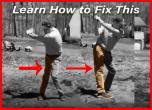
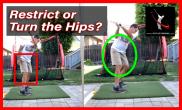

















Torque to Trigger the Golf Swing
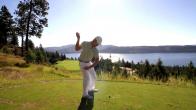
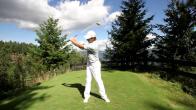
Ever wondered how great ball strikers trigger their golf swing? It's not what you think!
If you're struggling with trail arm lift, your upper body leading too early, your lower body being out of sequence, or just overall not understanding how to start the swing, this simple micro drill will help you understand how to create not just power and efficiency in your swing, but how to trigger everything from the ground up.
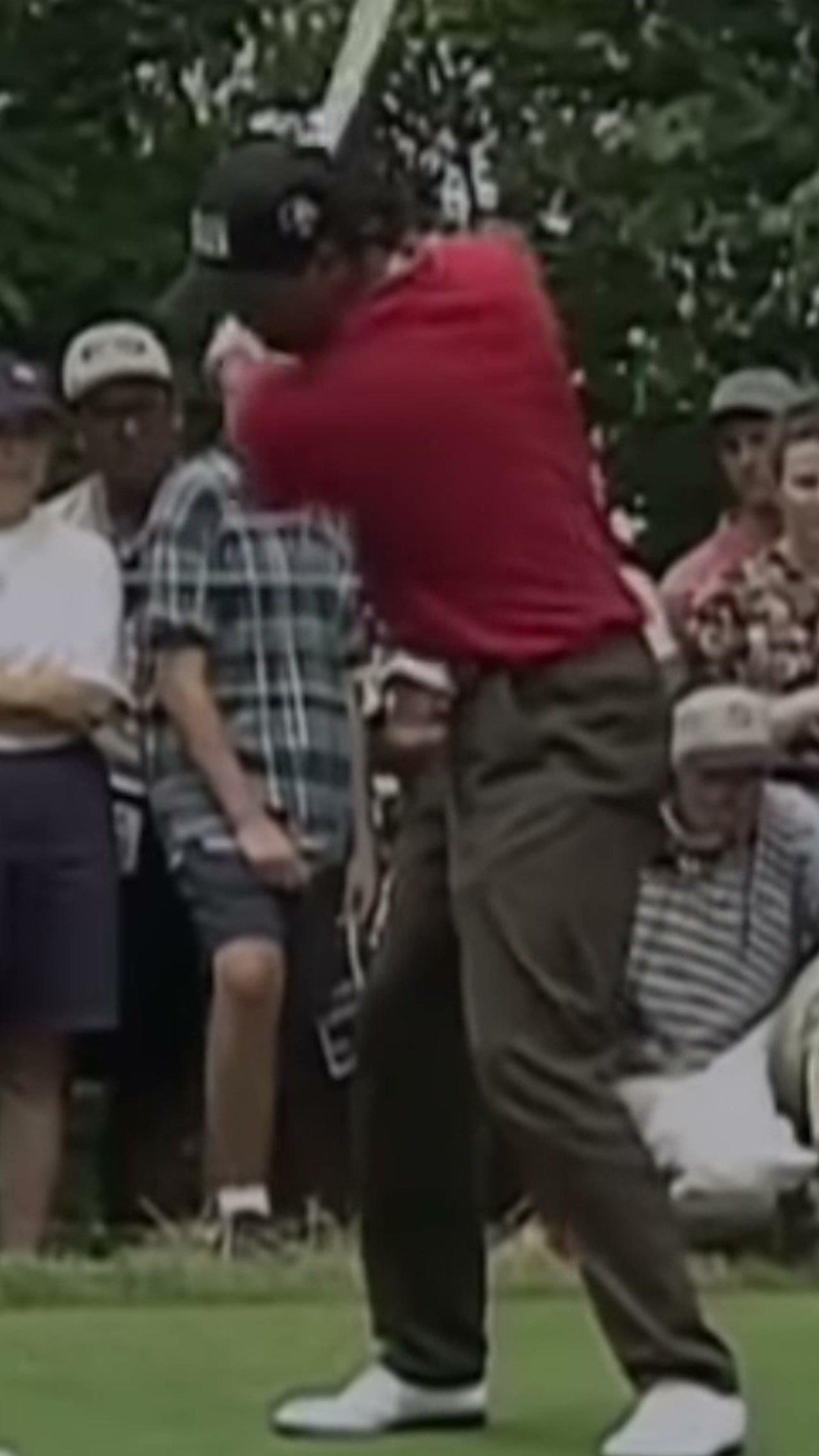
You've heard from Jack Nicklaus and every other great ball striker that the swing starts from the ground up, but most golfers don't really know what that means, and that's because it's completely counterintuitive.
But what you're going to learn right now, it's a very simple feeling, but you have to understand what it feels like.
In order to get the proper load and to get everything to start to happen correctly, naturally after this.
So the trick is how you load your trail leg, so for right -handed golfers, your right leg is your trail leg.
And the whole key to this is starting with torque.
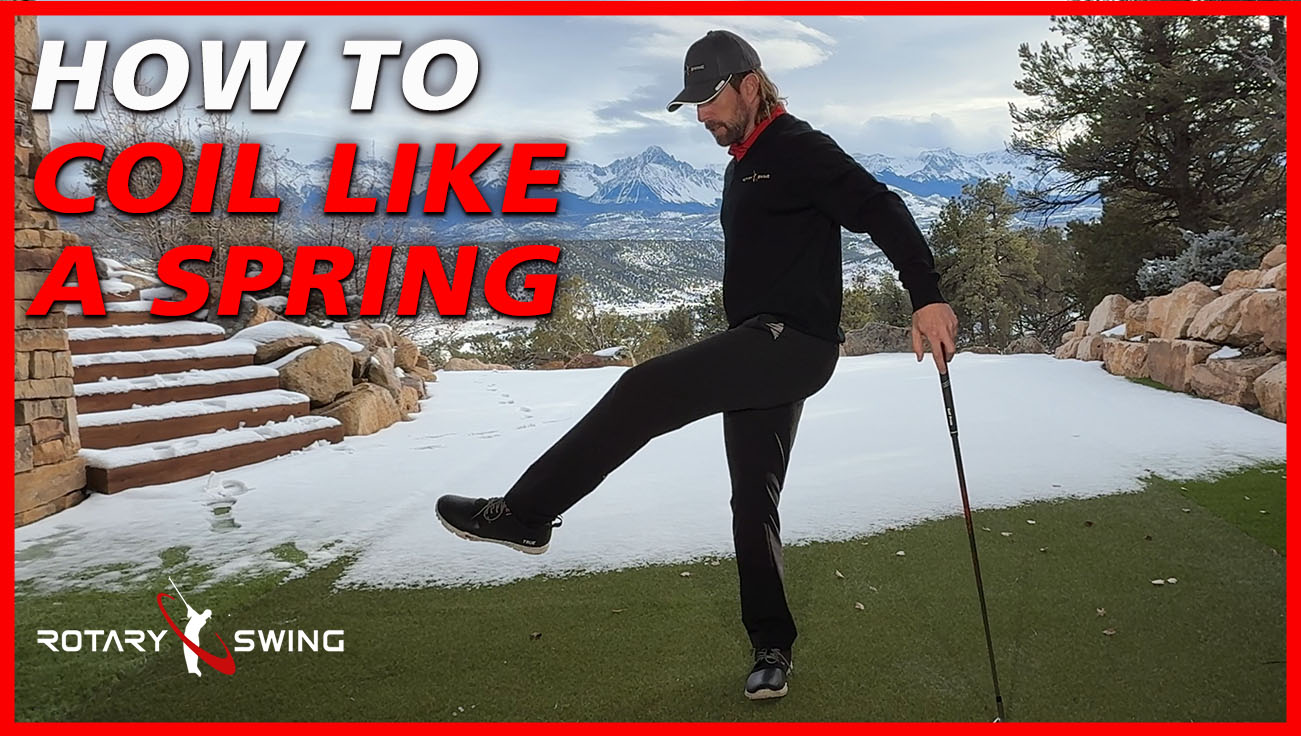
The golf swing is rotational in nature, and rotation requires torque in order to generate power, and so the the whole trick to this is taking your trail foot.
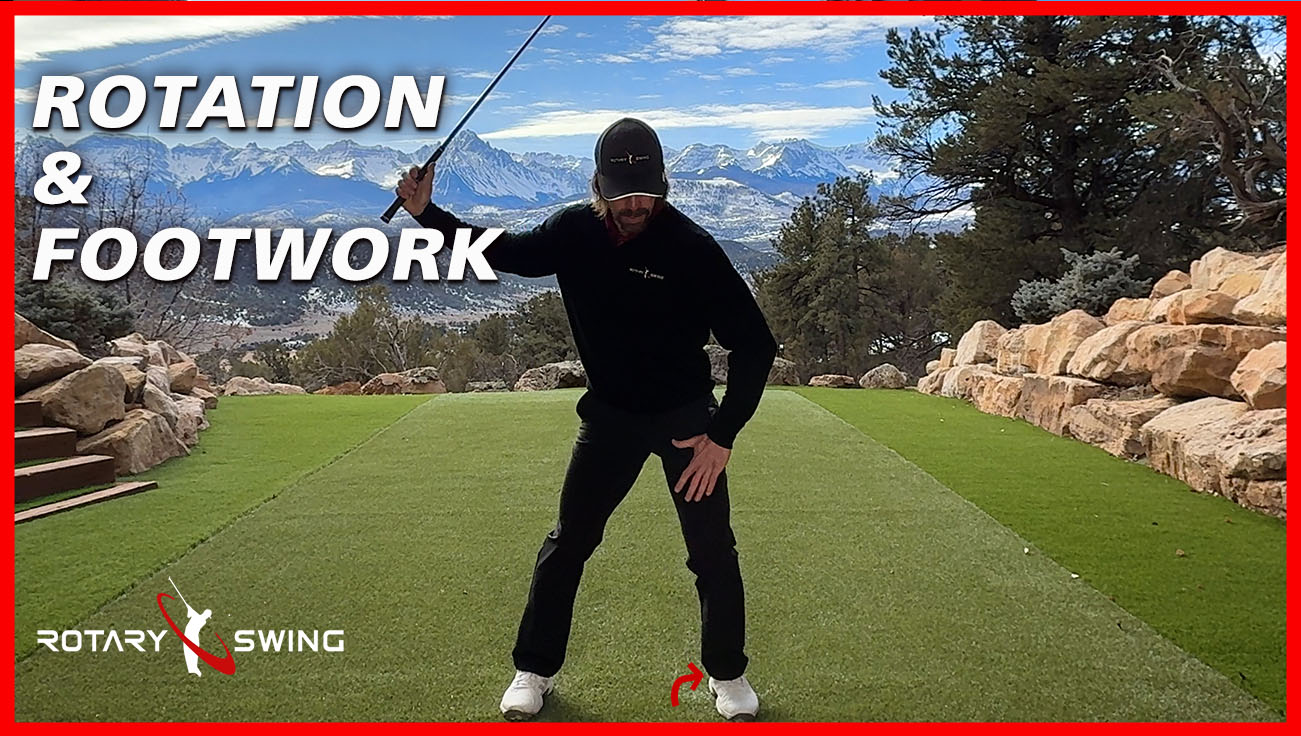
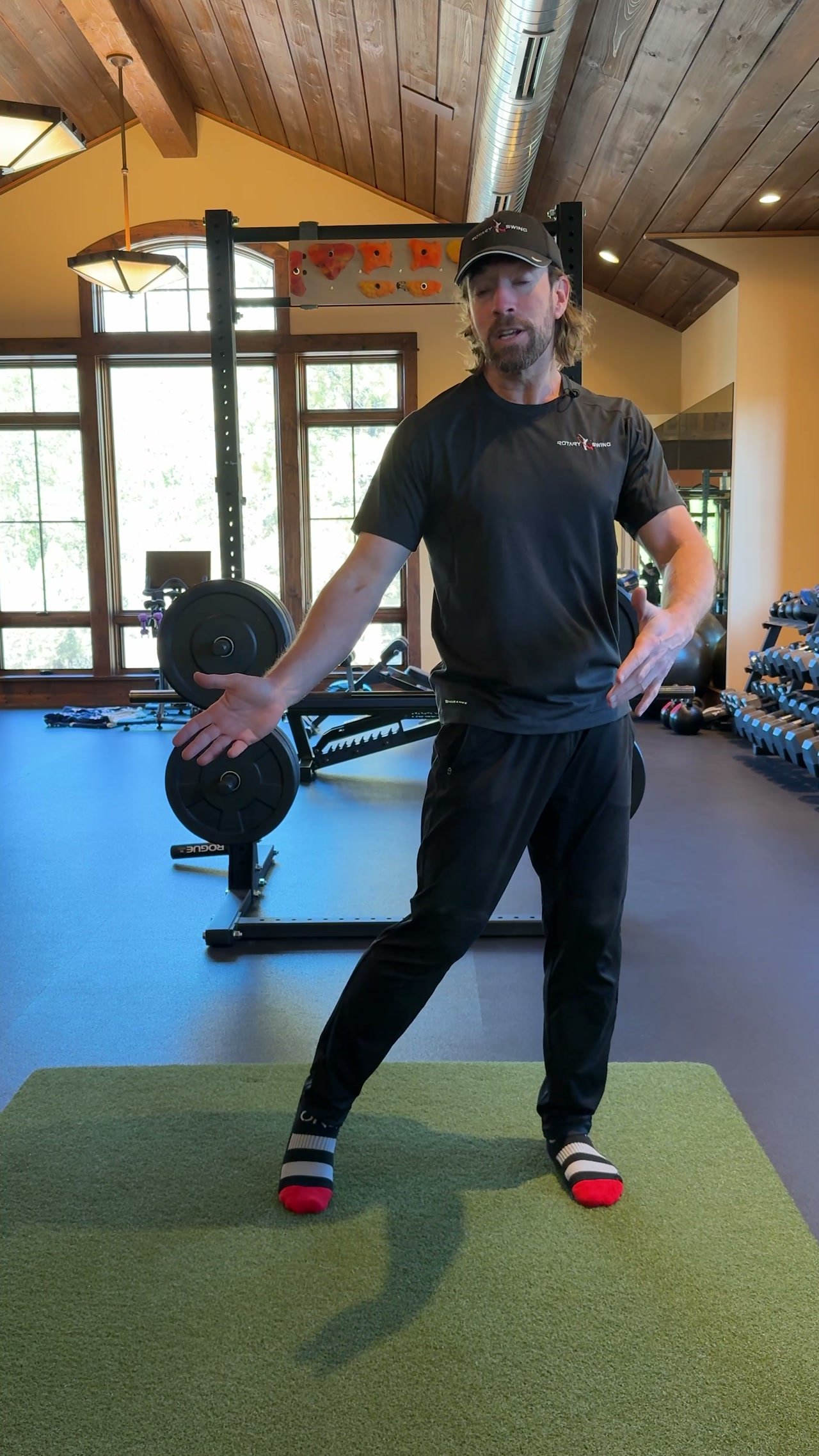
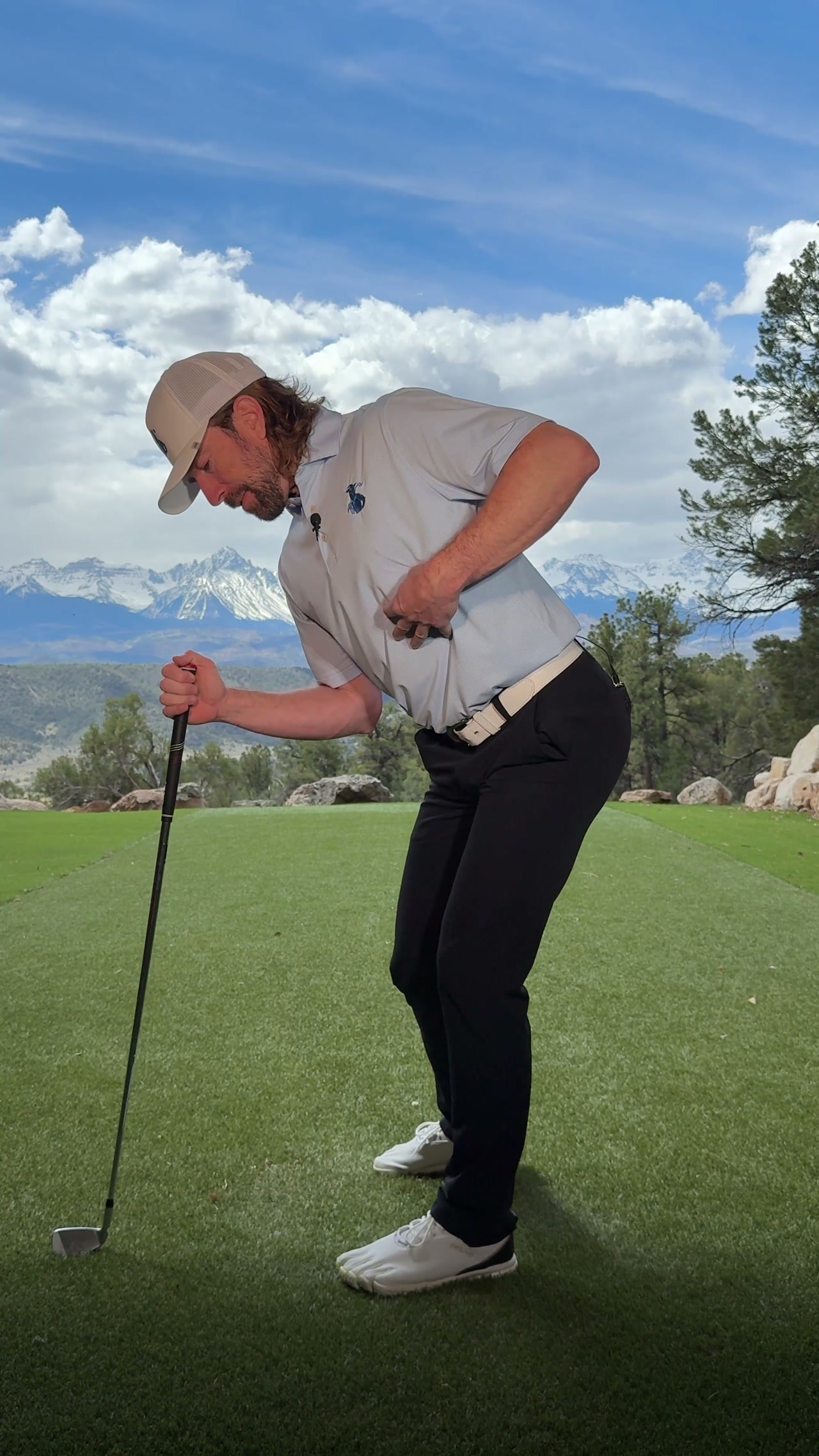
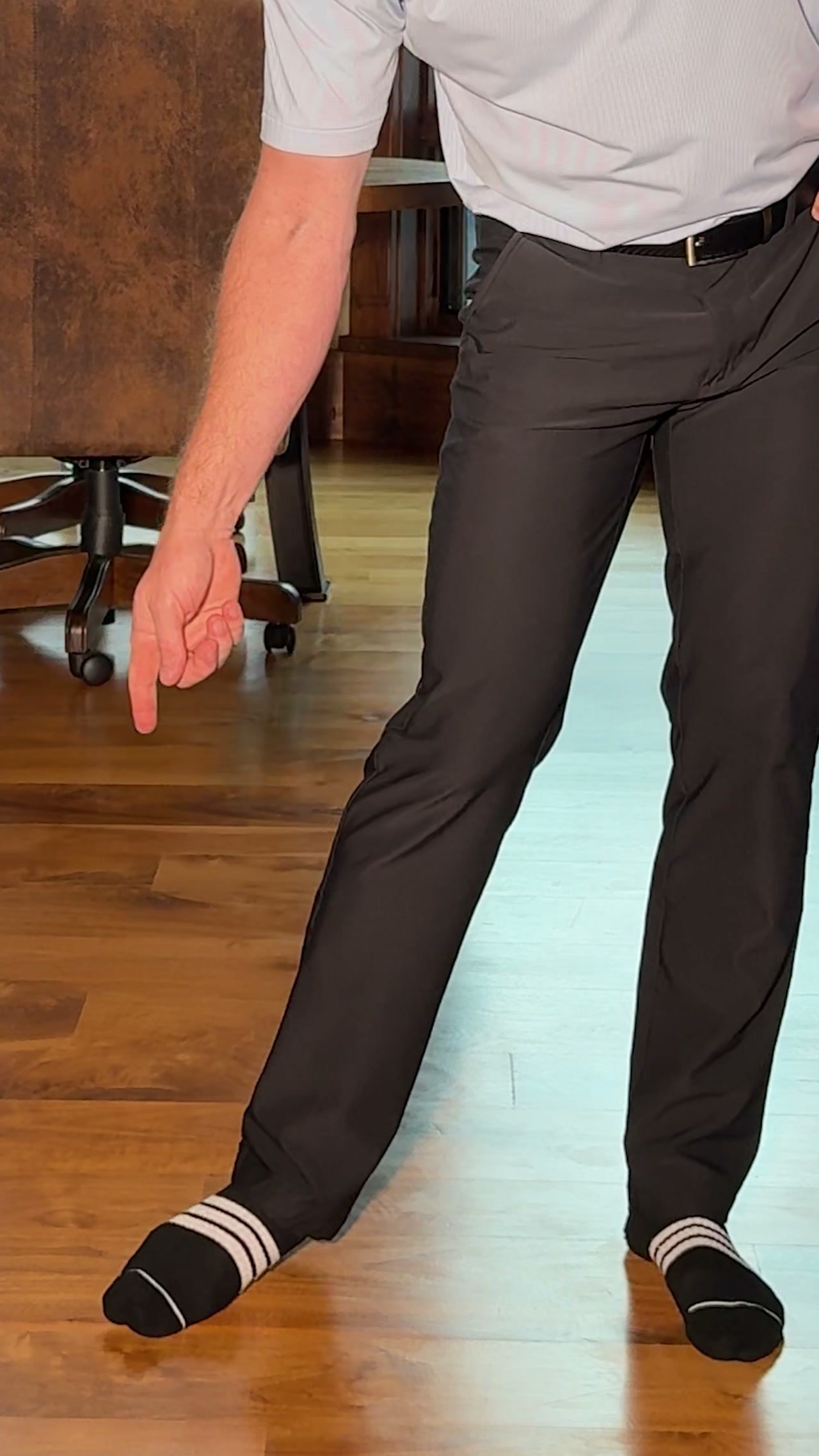
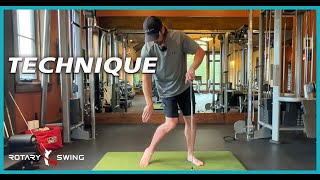
So for a right -handed golfer, you're going to feel like you're generating torque or a twisting motion into the ground counterclockwise.
So that will be toward the target that you're trying to twist your foot like this.
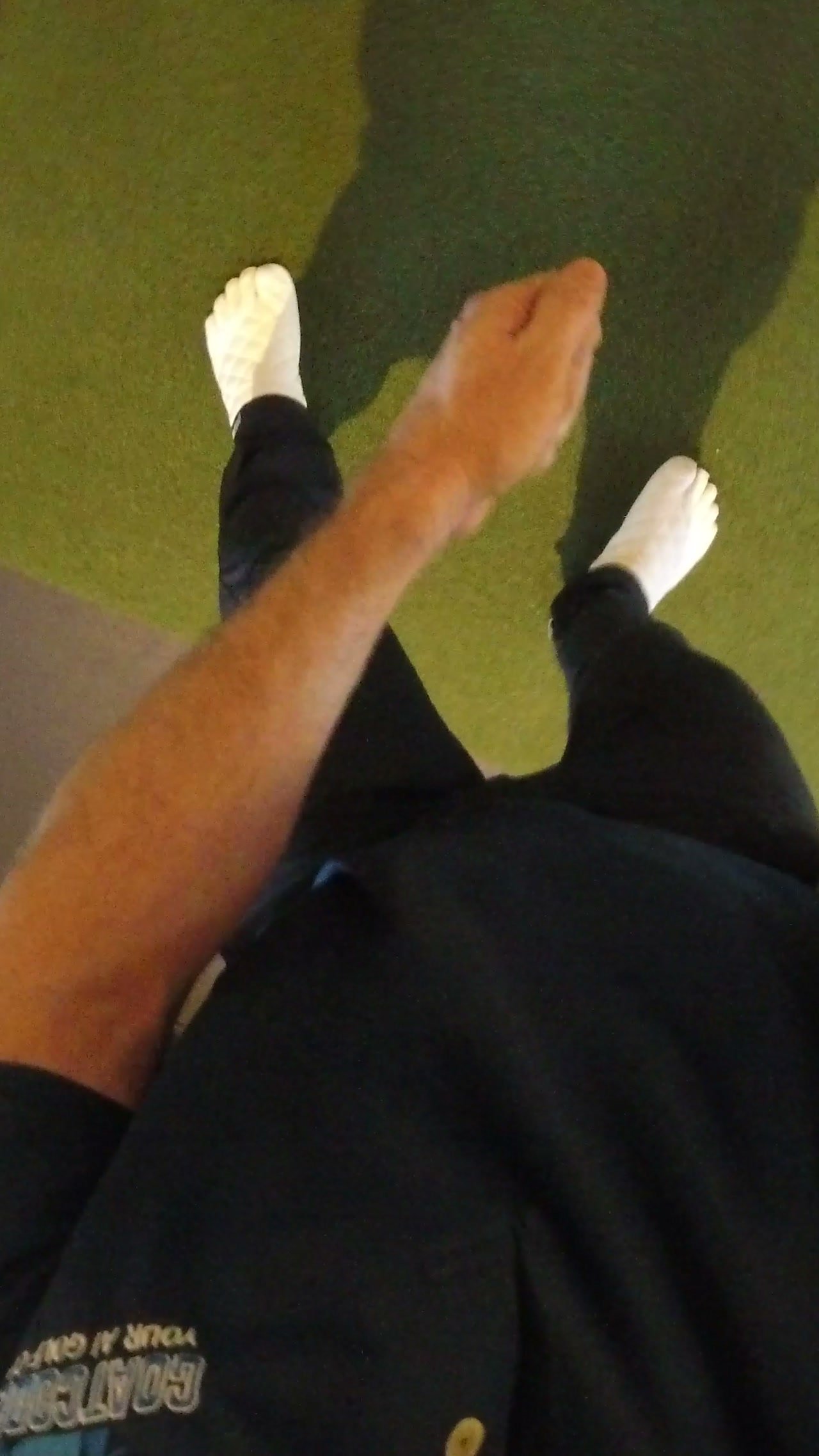
If I was on ice, my foot would slide like this, but because I have grip, my foot's not going to move.
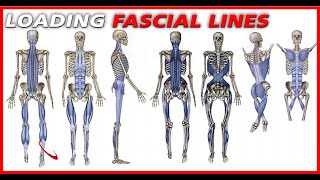
But the feeling when you do this correctly starts to create a spiraling motion, Loading the fascia literally from your feet all the way up through your body.
And it will turn your rib cage and chest for you, which will move your arms and hands and club for you.
And that's how you keep your arms passive instead of feeling like you're muscling the swing.
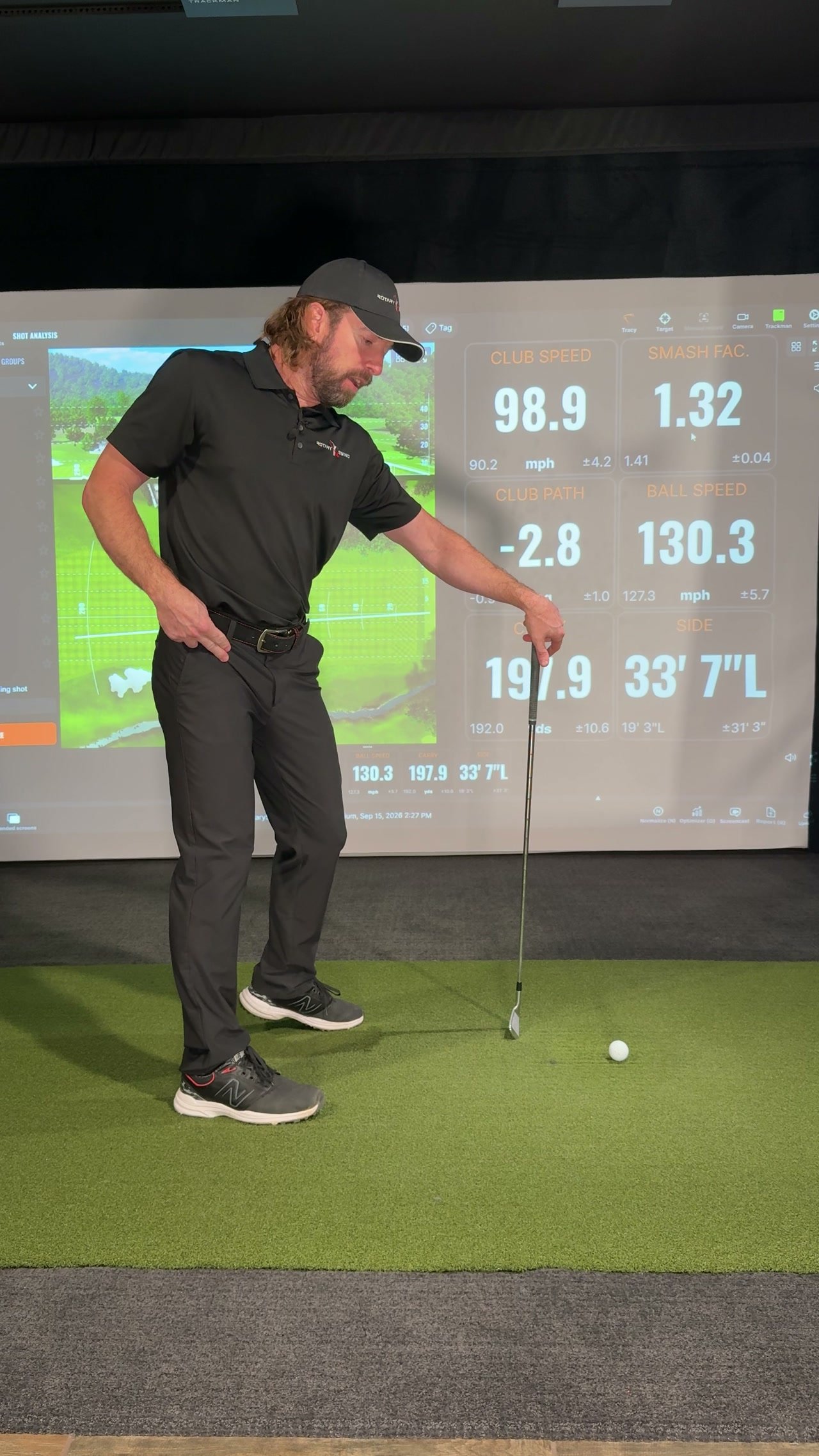
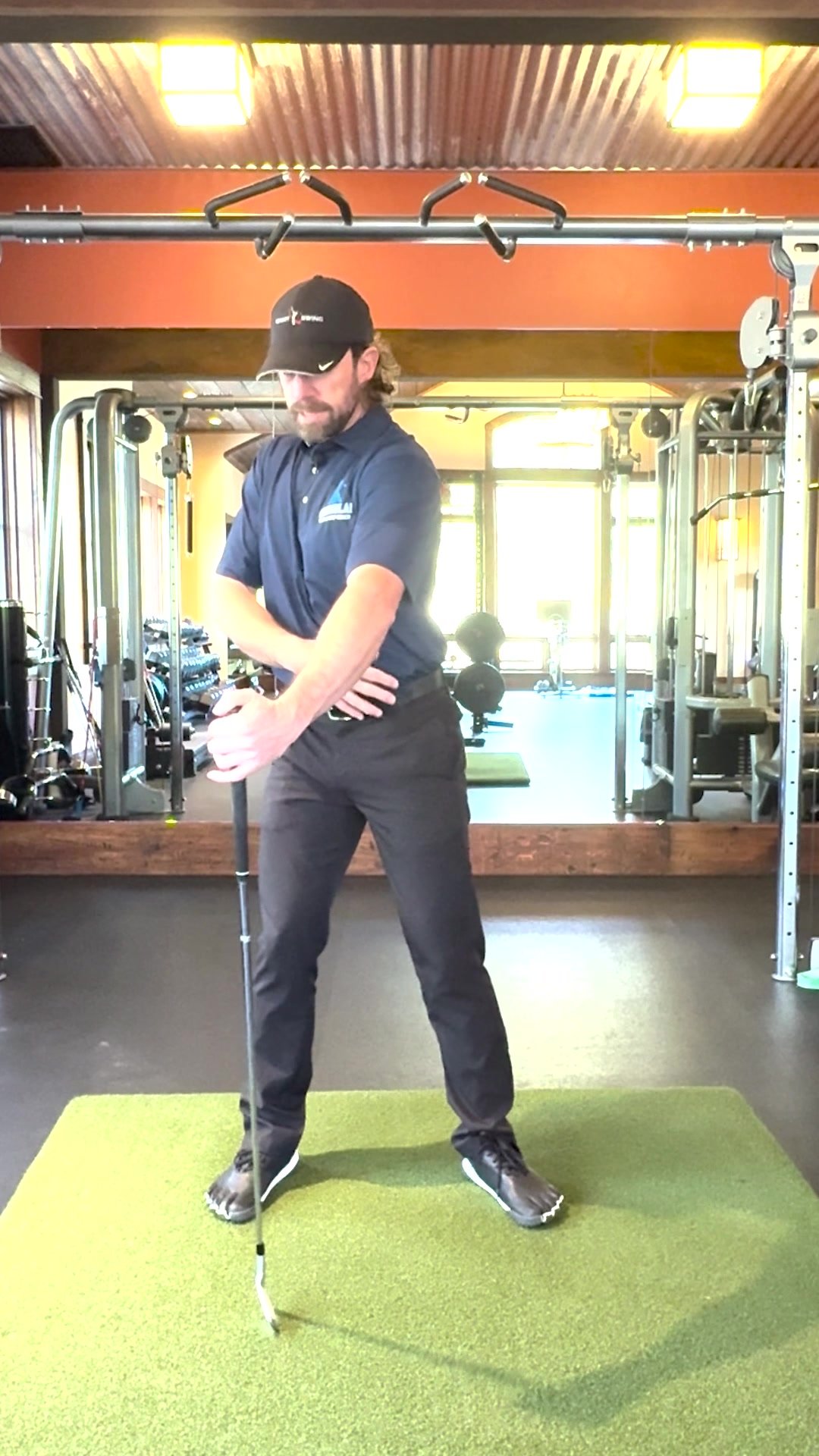
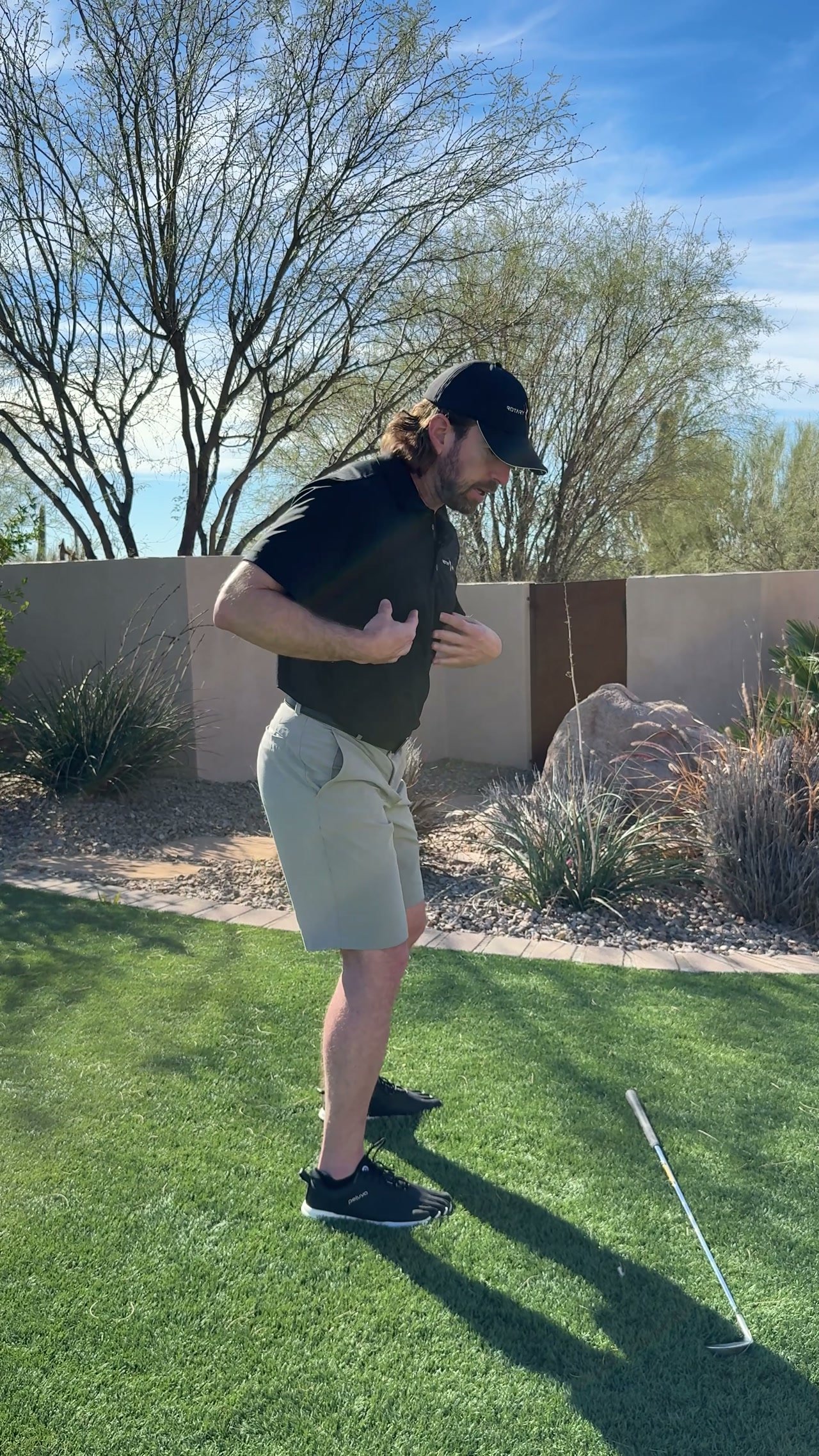
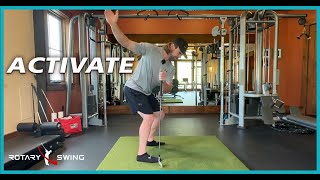
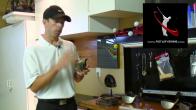
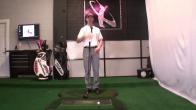
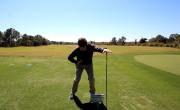
So the first thing I want you to do without a club, just kind of put your arms across your chest and feel yourself twist your foot into the ground.
Now you can see, as I'm doing this, that my foot's just moving a little bit right now.
Now.
This, in the real swing, happens very, very fast.
But when you're going slow, I want you to concentrate on twisting your foot into the ground and letting your body respond to that motion.
You can see, watch what happens.
If I just stand here and I twist my foot into the ground, I get myself over my trail foot just a little, so I have more pressure on there so I can push down into the ground to grip.
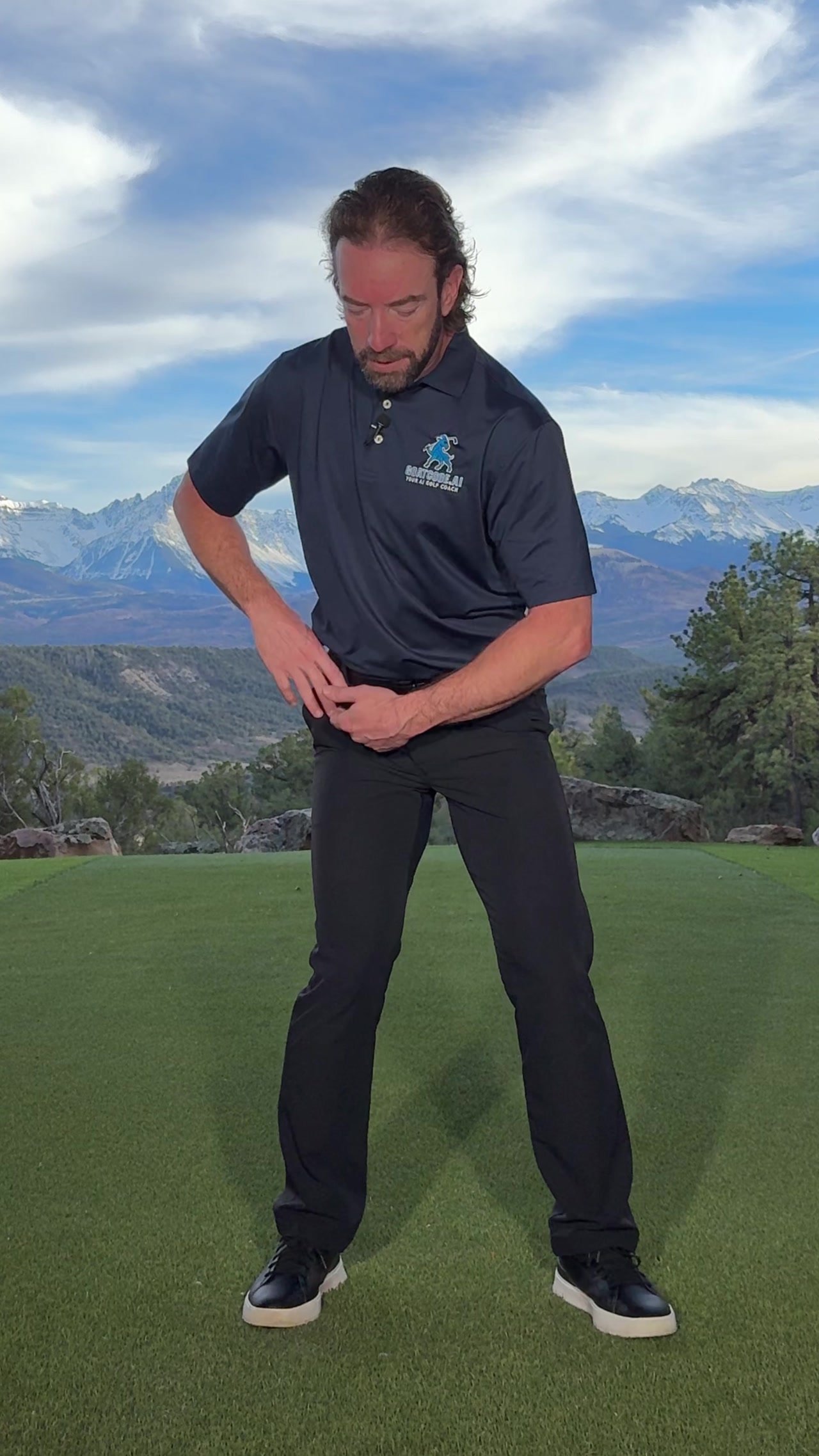
And now you'll see that my leg and my pelvis are moving so that my pelvis is loading into my trail hip and watch what happens to my chest.
I'm literally not turning my chest at all.
I'm twisting my trail foot into the ground, and that is what's moving my chest.
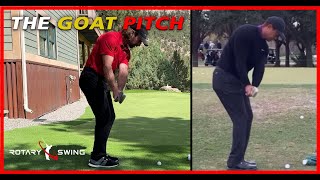
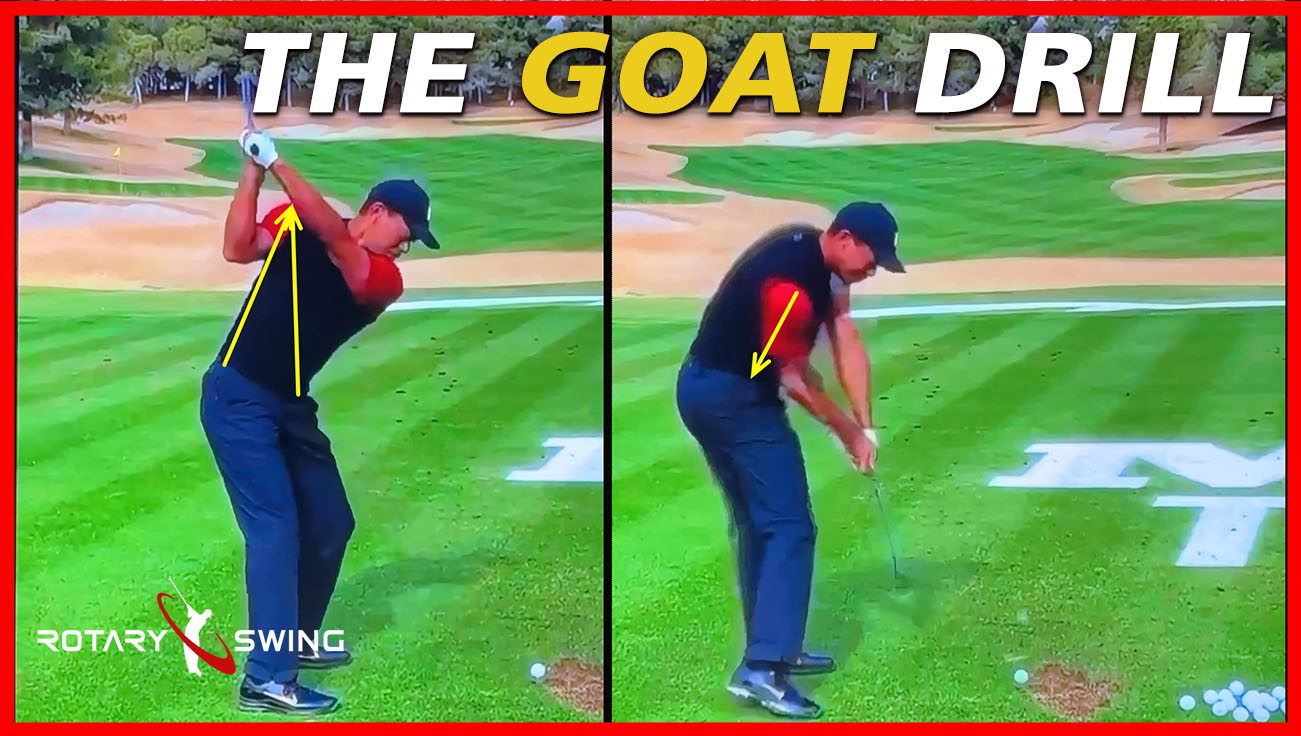
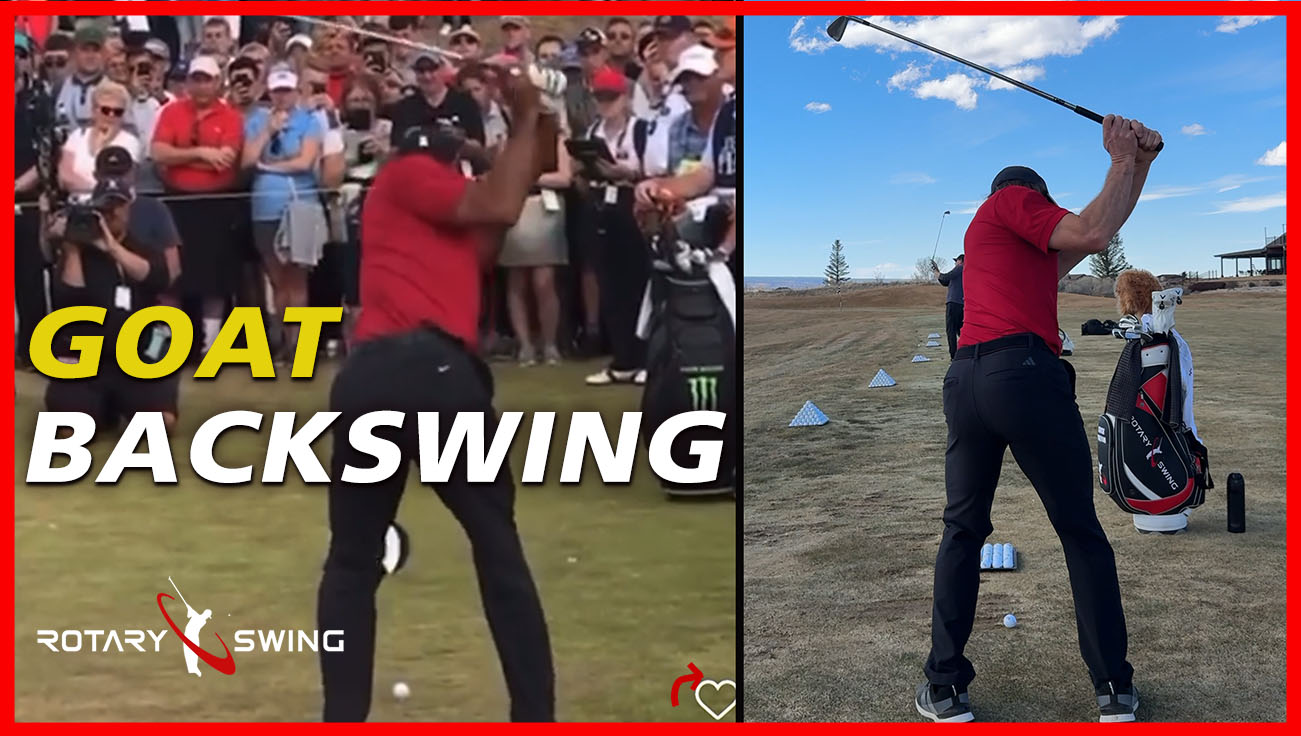
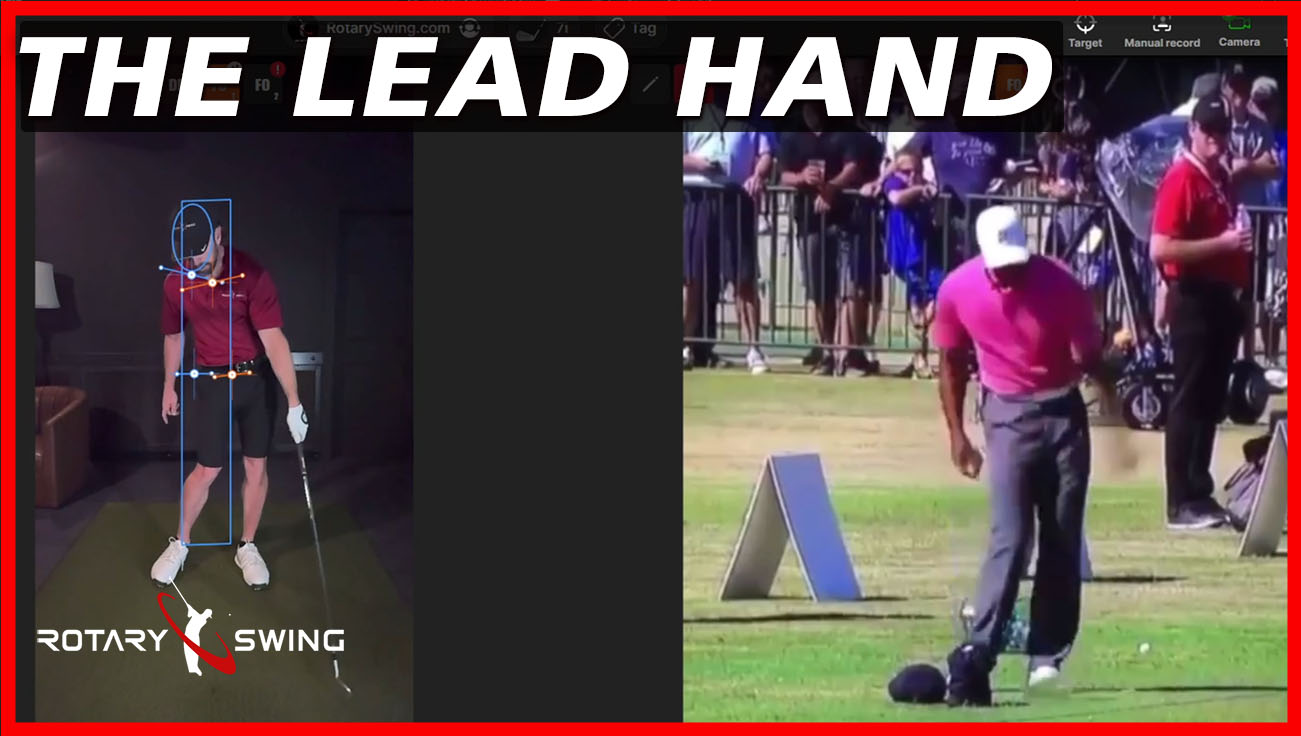
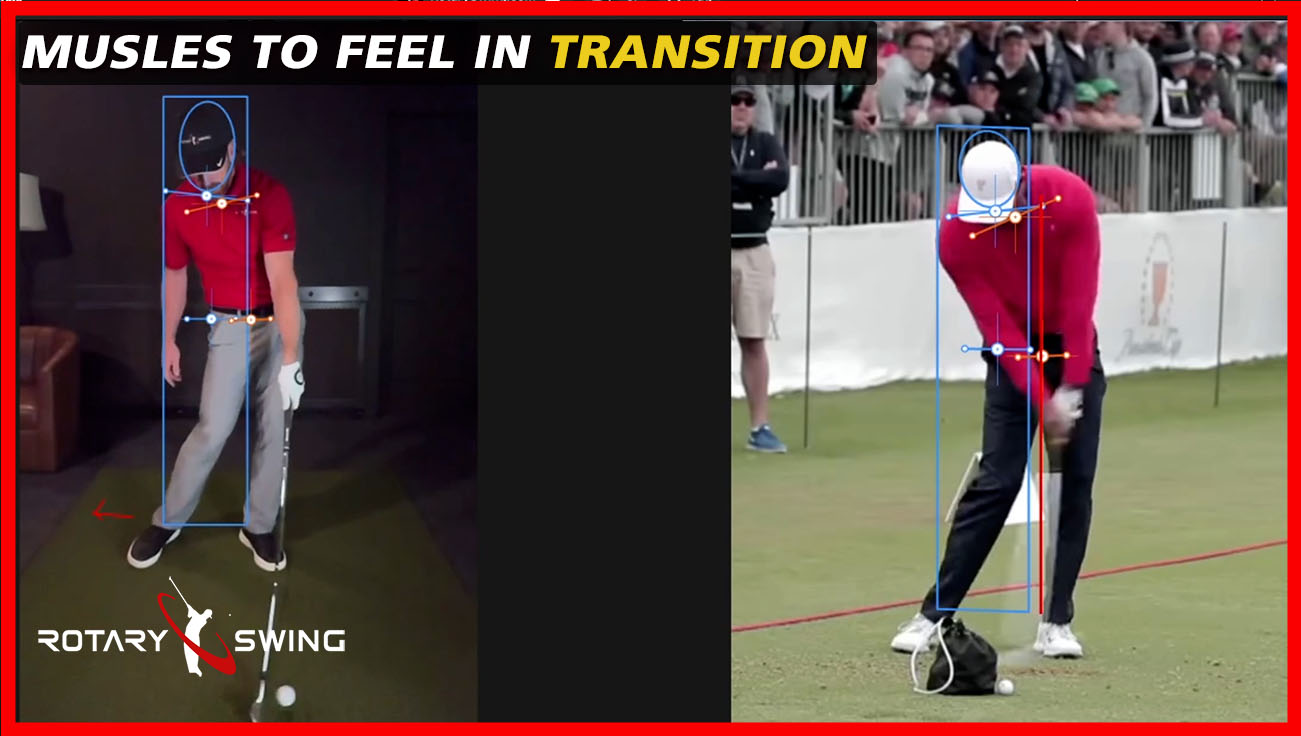
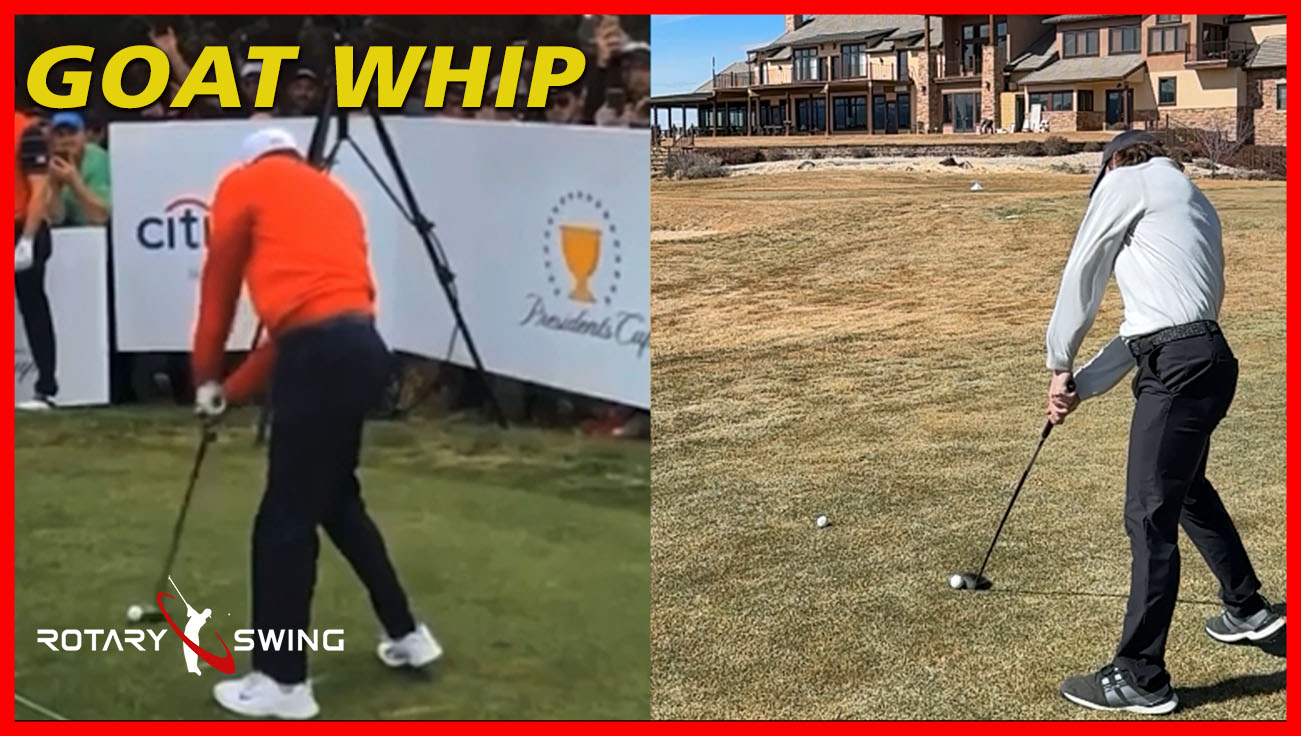
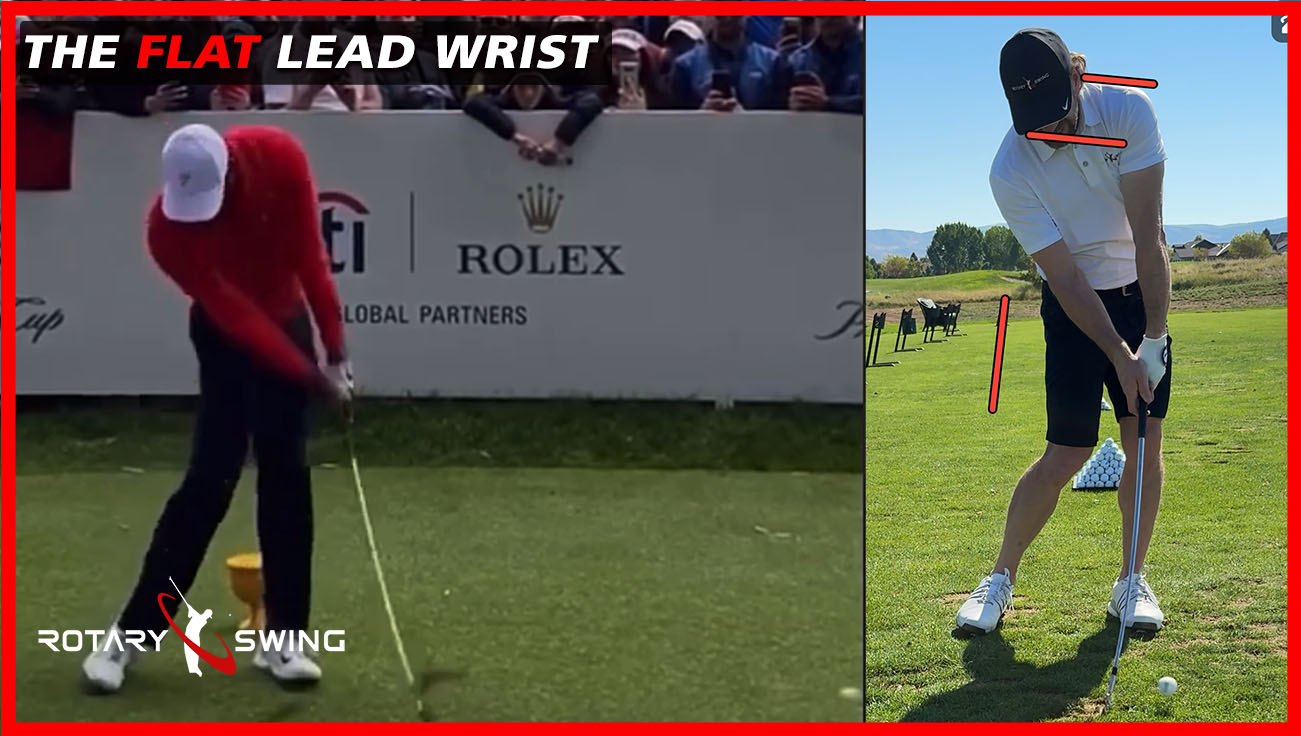
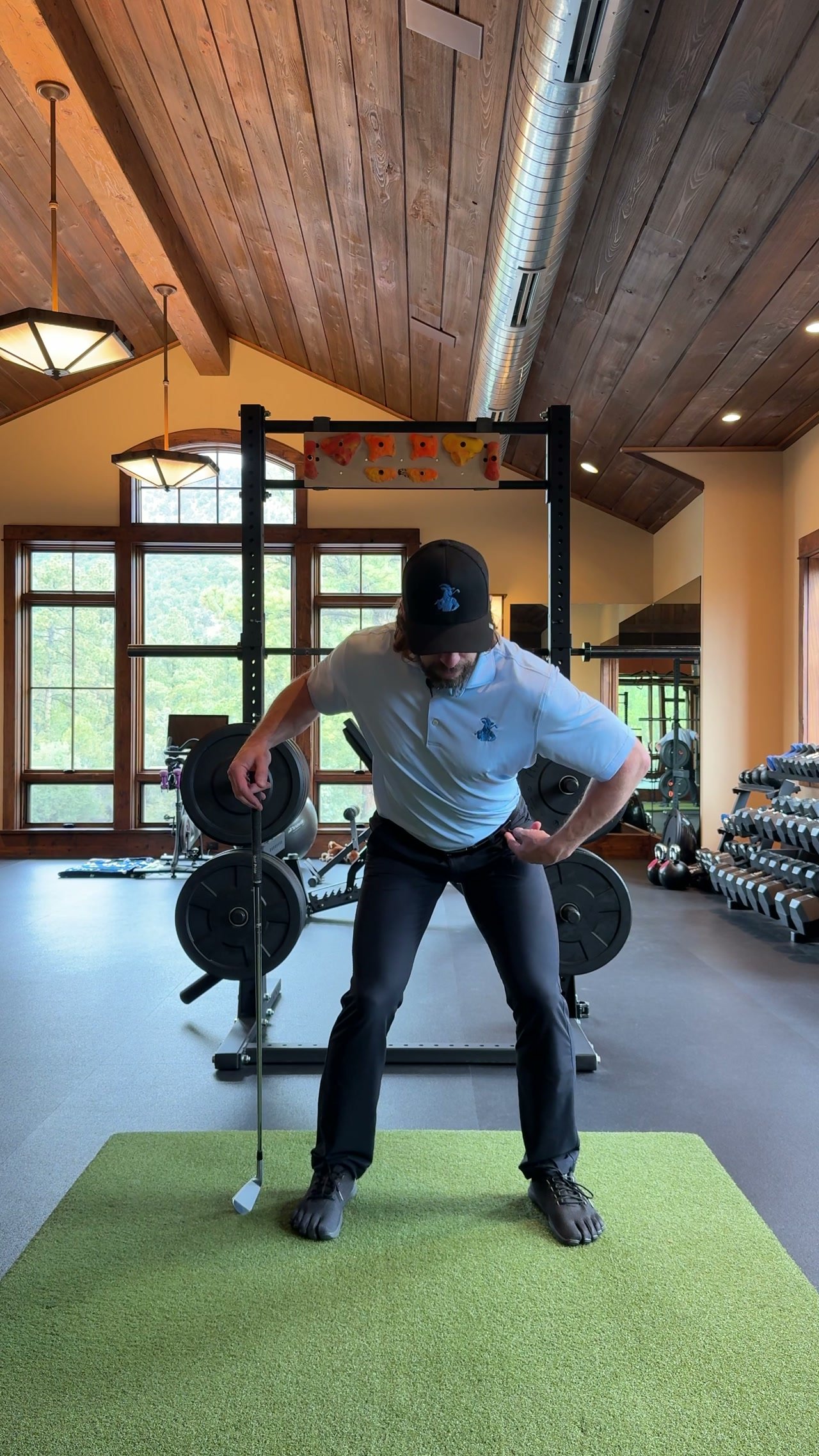
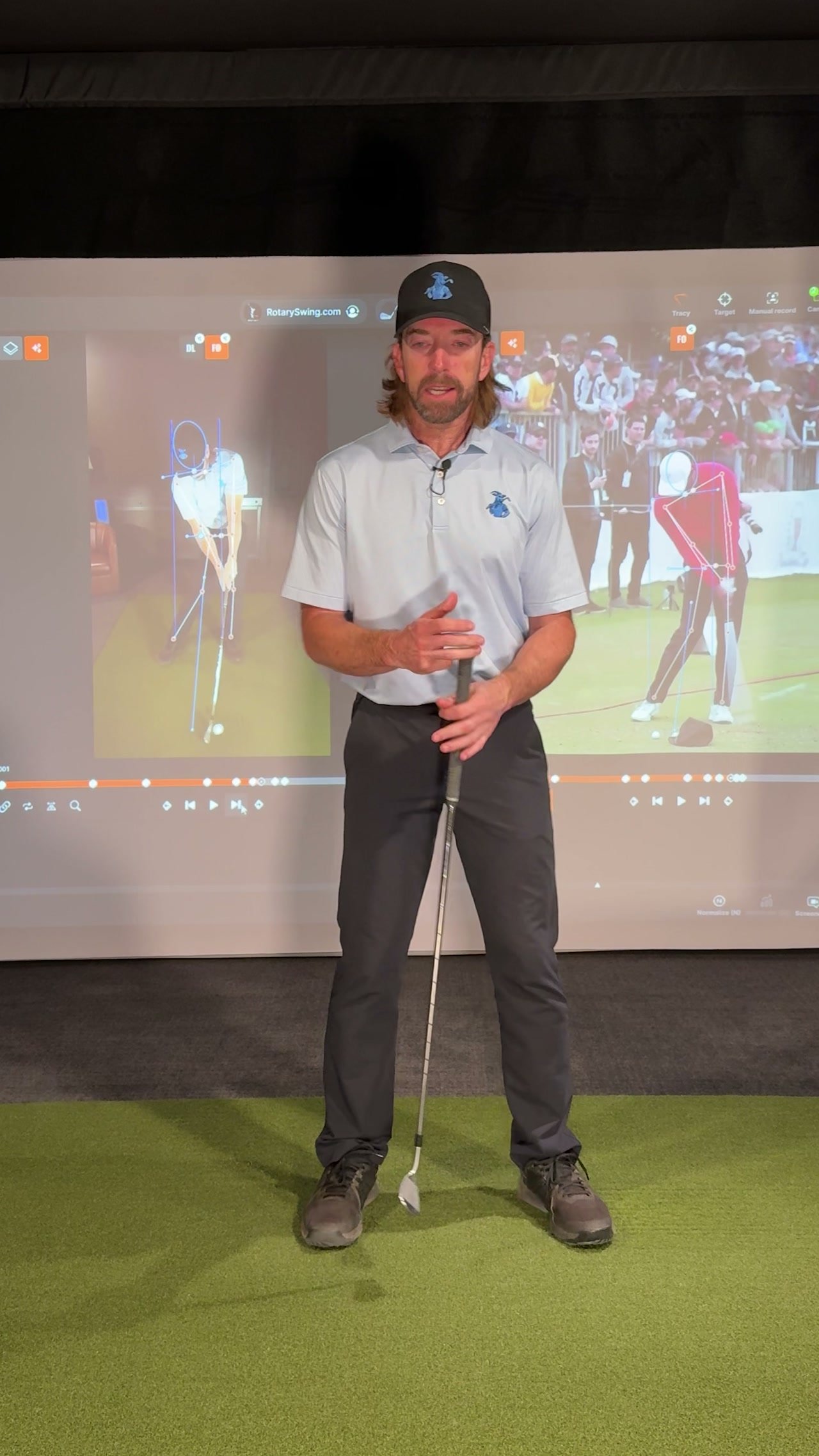
So what you'll find is that most of the time when you start to trail arm lift and goatee's telling you that you're lifting, you're shrugging your shoulder, picking the club with your wrist, watch what happens to my pelvis from down the line as I start to lift the club up.
And this is where Goatee's seeing that you're starting to early extend and your hips actually moving forward into the ball.
But watch what happens when I twist my trail foot into the ground, where did my hip go?
It went back like all elite players do.
That is not because I'm just trying to stick my rear out, it's literally because I'm creating torque.
And as the body begins to spiral and wind up from the ground from my feet, that is what's allowing my hip to move deep.
So when Goatee's telling you you're not getting enough depth, you're not getting into this trail hip enough because you've got to get weight over here, pressure over here.
And then as you begin to twist from the ground, that drives the hip back and it makes tons of room for your chest.
But you'll see if I started to lift, my hips naturally start to move forward closer to the ball.
And that's a death move in the swing.
So what you want to feel is that you're twisting that foot into the ground.
You're going to feel your groin, inner thigh start to engage.
Your your leg, your pelvis is going to kind of crease, like you're going to crease your pant leg and into your trail thigh.
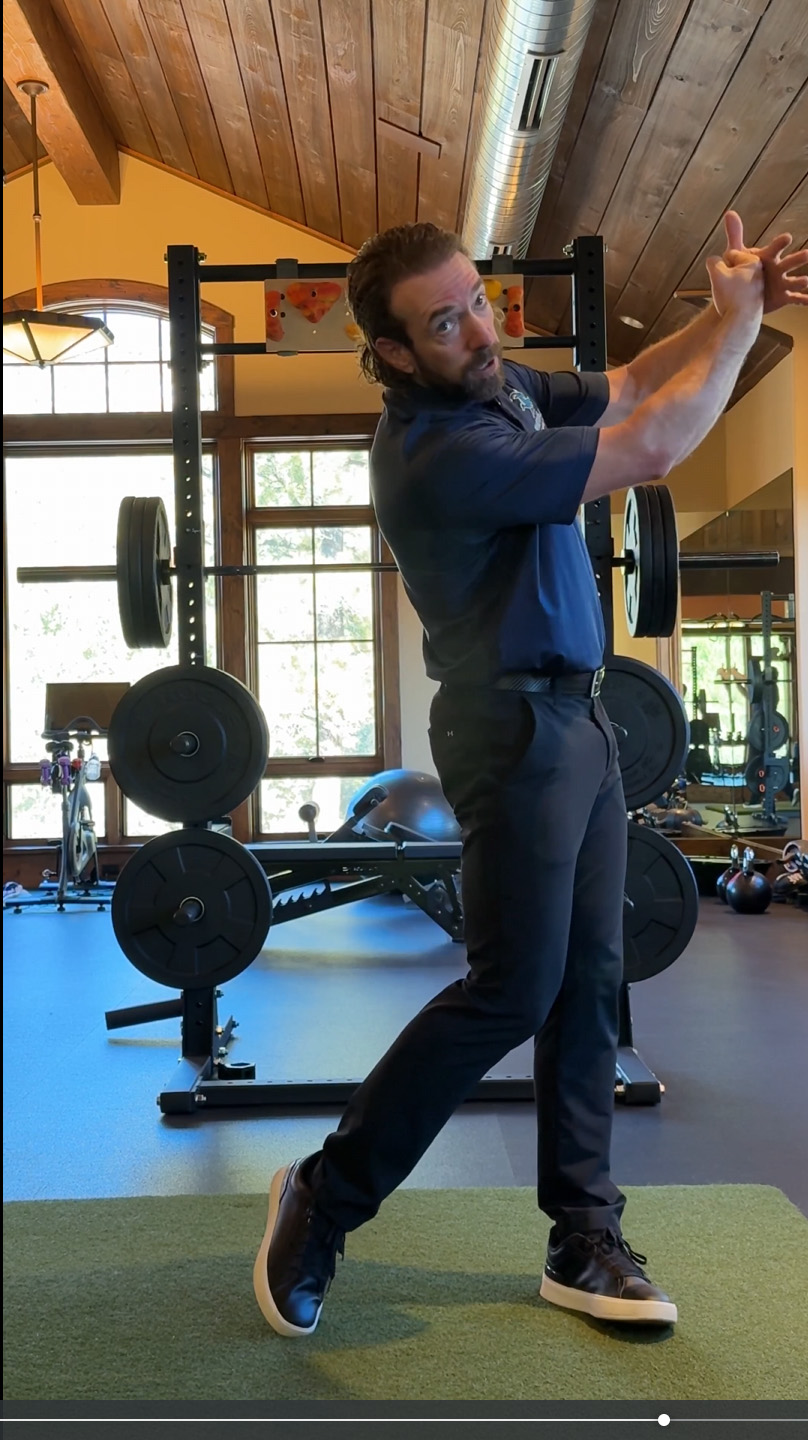
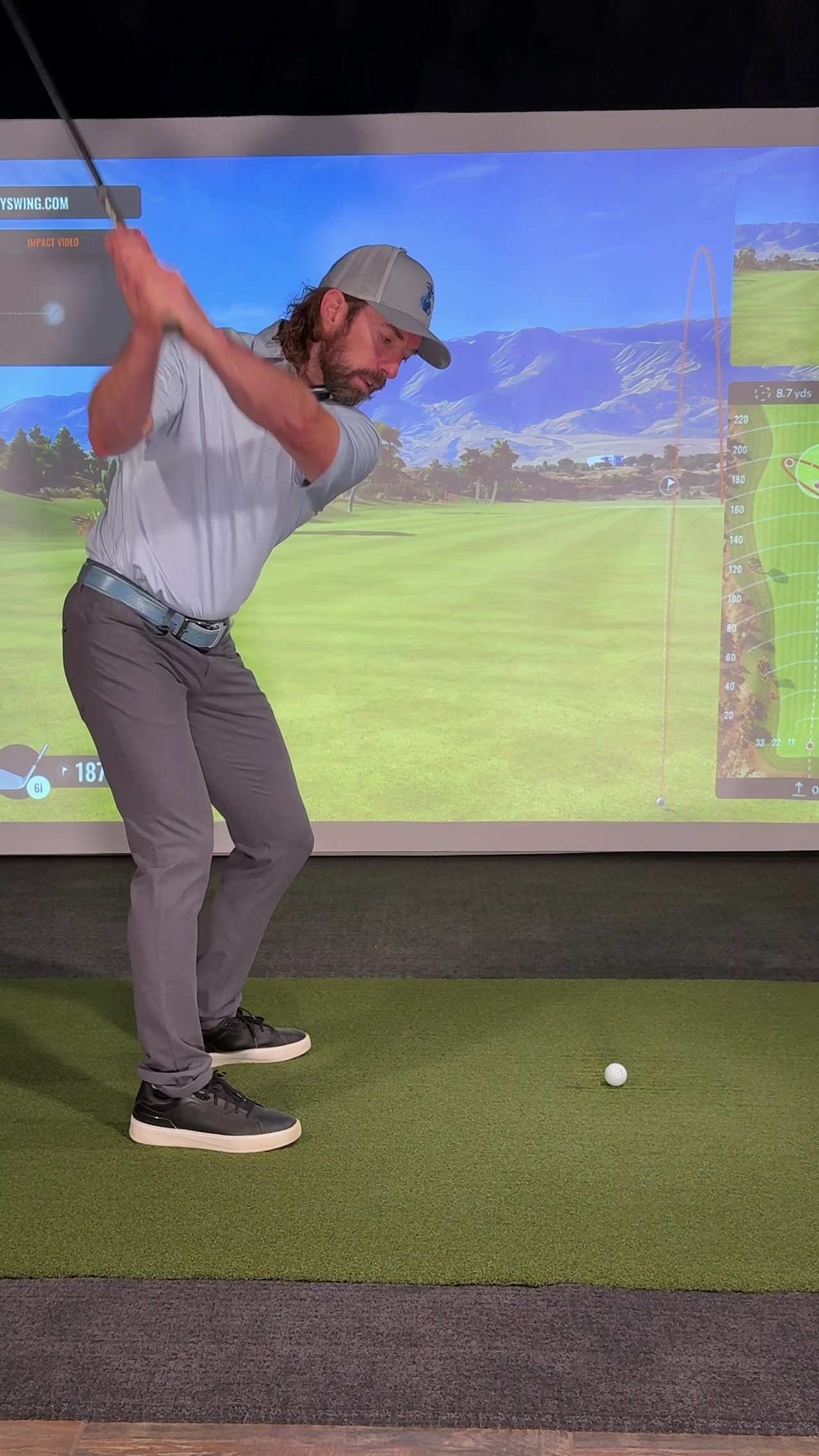
And then now what you'll see is that my chest is deep.
It's turned.
I've maintained my posture.
My hips gotten deep and I'm starting to feel coil and pressure and load around this trail leg.
Now, as you start doing this faster, this motion is not something that you're just going to keep continuing to twist that trail foot into the ground.
This is more of a burst because at speed, what happens is as I start doing this, I've got to start preparing to unload the other way, which we'll talk about in just a second.
But at first going slow will help you get the feeling of the hip going deep, my pressure going further back into my heel as I twist that foot into the ground, helping me maintain my posture.
And now I feel a lot of load in my hip now, as you get comfortable with this going slow and this hip feeling deep.
You're creasing your pant leg, your knees extending, going back, you're feeling a lot more load in your trail hip, probably than you ever have before.
Especially if you're used to picking up the club or starting with your arms and shoulders, all of these things cause the exact opposite motion in your foot.
So, for example, if I was just to start my swing with my just my chest and not start from the ground up.
You can actually see my foot wanting to kind of roll to the outside, and it's actually rotating clockwise for me.
And so now, instead of creating torque and torsional resistance between my upper and lower halves, what I have is everything's just kind of sloppy and loose.
And then I have to push to try to push any power into the swing, we never want to push in the swing.
So instead, as I'm loading up this way, that's turning me, and now, from here, as I start to go the other way.
That's where you see this start to snap, and your foot does switch from this counterclockwise motion to then clockwise, but this happens very, very fast in the real swing, but the key is first starting to learn to initiate that swing with that counterclockwise motion for right-handed golfers.
Get loaded up into it.
And then as you start feeling really comfortable, start feeling how.
That's going to snap up onto your toes and drive that knee forward, and this will get your swing started off on the right foot.
You've heard from Jack Nicklaus and every other great ball striker that the swing starts from the ground up, but most golfers don't really know what that means, and that's because it's completely counterintuitive.
But what you're going to learn right now, it's a very simple feeling, but you have to understand what it feels like.
In order to get the proper load and to get everything to start to happen correctly, naturally after this.
So the trick is how you load your trail leg, so for right -handed golfers, your right leg is your trail leg.
And the whole key to this is starting with torque.
The golf swing is rotational in nature, and rotation requires torque in order to generate power, and so the the whole trick to this is taking your trail foot.
So for a right -handed golfer, you're going to feel like you're generating torque or a twisting motion into the ground counterclockwise.
So that will be toward the target that you're trying to twist your foot like this.
If I was on ice, my foot would slide like this, but because I have grip, my foot's not going to move.
But the feeling when you do this correctly starts to create a spiraling motion, Loading the fascia literally from your feet all the way up through your body.
And it will turn your rib cage and chest for you, which will move your arms and hands and club for you.
And that's how you keep your arms passive instead of feeling like you're muscling the swing.
So the first thing I want you to do without a club, just kind of put your arms across your chest and feel yourself twist your foot into the ground.
Now you can see, as I'm doing this, that my foot's just moving a little bit right now.
Now.
This, in the real swing, happens very, very fast.
But when you're going slow, I want you to concentrate on twisting your foot into the ground and letting your body respond to that motion.
You can see, watch what happens.
If I just stand here and I twist my foot into the ground, I get myself over my trail foot just a little, so I have more pressure on there so I can push down into the ground to grip.
And now you'll see that my leg and my pelvis are moving so that my pelvis is loading into my trail hip and watch what happens to my chest.
I'm literally not turning my chest at all.
I'm twisting my trail foot into the ground, and that is what's moving my chest.
So what you'll find is that most of the time when you start to trail arm lift and goatee's telling you that you're lifting, you're shrugging your shoulder, picking the club with your wrist, watch what happens to my pelvis from down the line as I start to lift the club up.
And this is where Goatee's seeing that you're starting to early extend and your hips actually moving forward into the ball.
But watch what happens when I twist my trail foot into the ground, where did my hip go?
It went back like all elite players do.
That is not because I'm just trying to stick my rear out, it's literally because I'm creating torque.
And as the body begins to spiral and wind up from the ground from my feet, that is what's allowing my hip to move deep.
So when Goatee's telling you you're not getting enough depth, you're not getting into this trail hip enough because you've got to get weight over here, pressure over here.
And then as you begin to twist from the ground, that drives the hip back and it makes tons of room for your chest.
But you'll see if I started to lift, my hips naturally start to move forward closer to the ball.
And that's a death move in the swing.
So what you want to feel is that you're twisting that foot into the ground.
You're going to feel your groin, inner thigh start to engage.
Your your leg, your pelvis is going to kind of crease, like you're going to crease your pant leg and into your trail thigh.
And then now what you'll see is that my chest is deep.
It's turned.
I've maintained my posture.
My hips gotten deep and I'm starting to feel coil and pressure and load around this trail leg.
Now, as you start doing this faster, this motion is not something that you're just going to keep continuing to twist that trail foot into the ground.
This is more of a burst because at speed, what happens is as I start doing this, I've got to start preparing to unload the other way, which we'll talk about in just a second.
But at first going slow will help you get the feeling of the hip going deep, my pressure going further back into my heel as I twist that foot into the ground, helping me maintain my posture.
And now I feel a lot of load in my hip now, as you get comfortable with this going slow and this hip feeling deep.
You're creasing your pant leg, your knees extending, going back, you're feeling a lot more load in your trail hip, probably than you ever have before.
Especially if you're used to picking up the club or starting with your arms and shoulders, all of these things cause the exact opposite motion in your foot.
So, for example, if I was just to start my swing with my just my chest and not start from the ground up.
You can actually see my foot wanting to kind of roll to the outside, and it's actually rotating clockwise for me.
And so now, instead of creating torque and torsional resistance between my upper and lower halves, what I have is everything's just kind of sloppy and loose.
And then I have to push to try to push any power into the swing, we never want to push in the swing.
So instead, as I'm loading up this way, that's turning me, and now, from here, as I start to go the other way.
That's where you see this start to snap, and your foot does switch from this counterclockwise motion to then clockwise, but this happens very, very fast in the real swing, but the key is first starting to learn to initiate that swing with that counterclockwise motion for right-handed golfers.
Get loaded up into it.
And then as you start feeling really comfortable, start feeling how.
That's going to snap up onto your toes and drive that knee forward, and this will get your swing started off on the right foot.
Si vous avez des difficultés avec le mouvement du bras arrière, si le haut de votre corps se met en marche trop tôt, si le bas de votre corps est mal aligné, ou si vous ne comprenez tout simplement pas comment démarrer le swing, ce micro-exercice simple vous aidera à comprendre comment créer non seulement de la puissance et de l'efficacité dans votre swing, mais aussi comment tout déclencher à partir du sol.
Vous avez sans doute entendu Jack Nicklaus et tous les autres grands frappeurs de balle dire que le swing commence du sol vers le haut, mais la plupart des golfeurs ne savent pas vraiment ce que cela signifie, et c'est parce que c'est totalement contre-intuitif.
Mais ce que vous allez apprendre maintenant, c'est une sensation très simple, mais vous devez comprendre ce que cela fait.
Afin d'obtenir la charge adéquate et de faire en sorte que tout se déroule correctement, naturellement après cela.
L'astuce consiste donc à bien charger sa jambe arrière ; pour les golfeurs droitiers, la jambe droite est la jambe arrière.
Et la clé de tout cela réside dans le couple.
Le swing de golf est de nature rotationnelle, et la rotation nécessite un couple pour générer de la puissance ; le secret réside donc dans le déplacement du pied arrière.
Ainsi, pour un golfeur droitier, vous aurez l'impression de générer un couple ou un mouvement de torsion dans le sol dans le sens antihoraire.
Cela vous permettra donc d'atteindre la cible en tournant votre pied comme ceci.
Si j'étais sur la glace, mon pied glisserait comme ça, mais comme j'ai une bonne adhérence, mon pied ne va pas bouger.
Mais la sensation que l'on éprouve en faisant cela correctement commence à créer un mouvement en spirale, sollicitant littéralement le fascia depuis les pieds jusqu'en haut du corps.
Et cela fera tourner votre cage thoracique et votre poitrine, ce qui fera bouger vos bras et vos mains, et votre massue pour vous.
Et c'est ainsi que vous gardez vos bras passifs au lieu d'avoir l'impression de forcer sur la balançoire.
La première chose que je veux que vous fassiez, sans club, c'est de croiser les bras sur votre poitrine et de sentir votre pied pivoter dans le sol.
Vous pouvez voir, pendant que je fais cela, que mon pied bouge tout juste un petit peu.
Maintenant.
Dans le swing réel, cela se produit très, très vite.
Mais lorsque vous allez lentement, je veux que vous vous concentriez sur la rotation de votre pied dans le sol et que vous laissiez votre corps réagir à ce mouvement.
Vous pouvez voir, observez ce qui se passe.
Si je reste simplement là et que je pivote mon pied dans le sol, je me déplace légèrement au-dessus de mon pied d'appui, ce qui me permet d'exercer plus de pression et de mieux m'appuyer sur le sol pour une meilleure adhérence.
Vous allez maintenant voir que ma jambe et mon bassin bougent de sorte que mon bassin se charge sur ma hanche arrière, et observez ce qui arrive à ma poitrine.
Je ne tourne absolument pas la poitrine.
Je plante mon pied d'appui dans le sol, et c'est ce qui fait bouger ma poitrine.
Vous constaterez donc que la plupart du temps, lorsque vous commencez à lever le bras et que votre bouc vous indique que vous soulevez, vous haussez les épaules, vous prenez le club avec votre poignet ; observez ce qui arrive à mon bassin vu de l'avant lorsque je commence à lever le club.
Et c'est là que Goatee remarque que vous commencez à étendre vos bras prématurément et que vos hanches se déplacent effectivement vers l'avant, en direction du ballon.
Mais regardez ce qui se passe quand je plante mon pied arrière dans le sol, où est passée ma hanche ?
Il est revenu comme tous les joueurs d'élite.
Ce n'est pas parce que j'essaie juste de me mettre en valeur, c'est littéralement parce que je crée du couple.
Et lorsque mon corps commence à s'enrouler en spirale depuis le sol à partir de mes pieds, c'est ce qui permet à ma hanche de bouger profondément.
Donc, quand Goatee vous dit que vous n'allez pas assez loin, que vous n'engagez pas suffisamment votre hanche dans le sentier, parce que vous devez transférer votre poids ici, votre pression ici.
Puis, lorsque vous commencez à pivoter à partir du sol, cela repousse la hanche vers l'arrière et crée énormément d'espace pour votre poitrine.
Mais vous verrez que si je commence à soulever la balle, mes hanches se déplacent naturellement vers l'avant, plus près de celle-ci.
Et ça, c'est un coup fatal dans le swing.
Vous devez donc ressentir la sensation de bien ancrer votre pied dans le sol.
Vous allez sentir vos adducteurs et l'intérieur de vos cuisses commencer à se contracter.
Votre jambe, votre bassin vont se plier en quelque sorte, comme si vous pliiez le bas de votre pantalon et l'arrière de votre cuisse.
Et maintenant, vous allez voir que ma poitrine est profonde.
C'est parti.
J'ai conservé ma posture.
Mes hanches se sont enfoncées et je commence à ressentir une tension, une pression et une charge autour de cette jambe d'appui.
Maintenant, lorsque vous accélérez le mouvement, il ne s'agit plus simplement de continuer à tordre le pied arrière dans le sol.
Il s'agit plutôt d'une rafale, car à grande vitesse, ce qui se passe, c'est que lorsque je commence à faire cela, je dois commencer à me préparer à décharger dans l'autre sens, ce dont nous parlerons dans un instant.
Mais au début, y aller doucement vous aidera à ressentir la profondeur du mouvement de la hanche, ma pression se déplaçant plus loin vers l'arrière dans mon talon tandis que je pivote ce pied dans le sol, ce qui m'aide à maintenir ma posture.
Et maintenant, je ressens une forte pression dans ma hanche, à mesure que l'on s'habitue à ce mouvement lent et à cette sensation de hanche bien enfoncée.
Vous pliez le bas de votre pantalon, vos genoux s'étendent, vous reculez, vous ressentez une charge beaucoup plus importante dans votre hanche arrière, probablement plus que jamais auparavant.
Surtout si vous avez l'habitude de soulever le club ou de commencer par les bras et les épaules, tous ces mouvements provoquent exactement le mouvement inverse au niveau du pied.
Par exemple, si je commençais mon swing uniquement avec ma poitrine, sans partir du sol…
On voit clairement que mon pied a tendance à rouler vers l'extérieur, et en fait, il tourne dans le sens des aiguilles d'une montre.
Du coup, au lieu de créer un couple et une résistance à la torsion entre le haut et le bas de mon corps, j'ai maintenant quelque chose de flou et de lâche.
Et ensuite, je dois forcer pour essayer de transmettre de la puissance au swing, or on ne veut jamais forcer pendant le swing.
Alors, au lieu de cela, pendant que je charge de cette façon, cela me fait tourner, et maintenant, à partir d'ici, alors que je commence à aller dans l'autre sens.
C’est à ce moment-là que vous voyez le déclic se produire, et votre pied passe d’un mouvement antihoraire à un mouvement horaire, mais cela se produit très, très rapidement dans le swing réel. L’essentiel est d’apprendre d’abord à initier ce swing avec ce mouvement antihoraire pour les golfeurs droitiers.
Impliquez-vous à fond.
Et puis, lorsque vous commencerez à vous sentir vraiment à l'aise, commencez à ressentir comment.
Cela va vous permettre de vous redresser sur la pointe des pieds et de propulser votre genou vers l'avant, ce qui vous permettra de démarrer votre swing du bon pied.
Vous avez sans doute entendu Jack Nicklaus et tous les autres grands frappeurs de balle dire que le swing commence du sol vers le haut, mais la plupart des golfeurs ne savent pas vraiment ce que cela signifie, et c'est parce que c'est totalement contre-intuitif.
Mais ce que vous allez apprendre maintenant, c'est une sensation très simple, mais vous devez comprendre ce que cela fait.
Afin d'obtenir la charge adéquate et de faire en sorte que tout se déroule correctement, naturellement après cela.
L'astuce consiste donc à bien charger sa jambe arrière ; pour les golfeurs droitiers, la jambe droite est la jambe arrière.
Et la clé de tout cela réside dans le couple.
Le swing de golf est de nature rotationnelle, et la rotation nécessite un couple pour générer de la puissance ; le secret réside donc dans le déplacement du pied arrière.
Ainsi, pour un golfeur droitier, vous aurez l'impression de générer un couple ou un mouvement de torsion dans le sol dans le sens antihoraire.
Cela vous permettra donc d'atteindre la cible en tournant votre pied comme ceci.
Si j'étais sur la glace, mon pied glisserait comme ça, mais comme j'ai une bonne adhérence, mon pied ne va pas bouger.
Mais la sensation que l'on éprouve en faisant cela correctement commence à créer un mouvement en spirale, sollicitant littéralement le fascia depuis les pieds jusqu'en haut du corps.
Et cela fera tourner votre cage thoracique et votre poitrine, ce qui fera bouger vos bras et vos mains, et votre massue pour vous.
Et c'est ainsi que vous gardez vos bras passifs au lieu d'avoir l'impression de forcer sur la balançoire.
La première chose que je veux que vous fassiez, sans club, c'est de croiser les bras sur votre poitrine et de sentir votre pied pivoter dans le sol.
Vous pouvez voir, pendant que je fais cela, que mon pied bouge tout juste un petit peu.
Maintenant.
Dans le swing réel, cela se produit très, très vite.
Mais lorsque vous allez lentement, je veux que vous vous concentriez sur la rotation de votre pied dans le sol et que vous laissiez votre corps réagir à ce mouvement.
Vous pouvez voir, observez ce qui se passe.
Si je reste simplement là et que je pivote mon pied dans le sol, je me déplace légèrement au-dessus de mon pied d'appui, ce qui me permet d'exercer plus de pression et de mieux m'appuyer sur le sol pour une meilleure adhérence.
Vous allez maintenant voir que ma jambe et mon bassin bougent de sorte que mon bassin se charge sur ma hanche arrière, et observez ce qui arrive à ma poitrine.
Je ne tourne absolument pas la poitrine.
Je plante mon pied d'appui dans le sol, et c'est ce qui fait bouger ma poitrine.
Vous constaterez donc que la plupart du temps, lorsque vous commencez à lever le bras et que votre bouc vous indique que vous soulevez, vous haussez les épaules, vous prenez le club avec votre poignet ; observez ce qui arrive à mon bassin vu de l'avant lorsque je commence à lever le club.
Et c'est là que Goatee remarque que vous commencez à étendre vos bras prématurément et que vos hanches se déplacent effectivement vers l'avant, en direction du ballon.
Mais regardez ce qui se passe quand je plante mon pied arrière dans le sol, où est passée ma hanche ?
Il est revenu comme tous les joueurs d'élite.
Ce n'est pas parce que j'essaie juste de me mettre en valeur, c'est littéralement parce que je crée du couple.
Et lorsque mon corps commence à s'enrouler en spirale depuis le sol à partir de mes pieds, c'est ce qui permet à ma hanche de bouger profondément.
Donc, quand Goatee vous dit que vous n'allez pas assez loin, que vous n'engagez pas suffisamment votre hanche dans le sentier, parce que vous devez transférer votre poids ici, votre pression ici.
Puis, lorsque vous commencez à pivoter à partir du sol, cela repousse la hanche vers l'arrière et crée énormément d'espace pour votre poitrine.
Mais vous verrez que si je commence à soulever la balle, mes hanches se déplacent naturellement vers l'avant, plus près de celle-ci.
Et ça, c'est un coup fatal dans le swing.
Vous devez donc ressentir la sensation de bien ancrer votre pied dans le sol.
Vous allez sentir vos adducteurs et l'intérieur de vos cuisses commencer à se contracter.
Votre jambe, votre bassin vont se plier en quelque sorte, comme si vous pliiez le bas de votre pantalon et l'arrière de votre cuisse.
Et maintenant, vous allez voir que ma poitrine est profonde.
C'est parti.
J'ai conservé ma posture.
Mes hanches se sont enfoncées et je commence à ressentir une tension, une pression et une charge autour de cette jambe d'appui.
Maintenant, lorsque vous accélérez le mouvement, il ne s'agit plus simplement de continuer à tordre le pied arrière dans le sol.
Il s'agit plutôt d'une rafale, car à grande vitesse, ce qui se passe, c'est que lorsque je commence à faire cela, je dois commencer à me préparer à décharger dans l'autre sens, ce dont nous parlerons dans un instant.
Mais au début, y aller doucement vous aidera à ressentir la profondeur du mouvement de la hanche, ma pression se déplaçant plus loin vers l'arrière dans mon talon tandis que je pivote ce pied dans le sol, ce qui m'aide à maintenir ma posture.
Et maintenant, je ressens une forte pression dans ma hanche, à mesure que l'on s'habitue à ce mouvement lent et à cette sensation de hanche bien enfoncée.
Vous pliez le bas de votre pantalon, vos genoux s'étendent, vous reculez, vous ressentez une charge beaucoup plus importante dans votre hanche arrière, probablement plus que jamais auparavant.
Surtout si vous avez l'habitude de soulever le club ou de commencer par les bras et les épaules, tous ces mouvements provoquent exactement le mouvement inverse au niveau du pied.
Par exemple, si je commençais mon swing uniquement avec ma poitrine, sans partir du sol…
On voit clairement que mon pied a tendance à rouler vers l'extérieur, et en fait, il tourne dans le sens des aiguilles d'une montre.
Du coup, au lieu de créer un couple et une résistance à la torsion entre le haut et le bas de mon corps, j'ai maintenant quelque chose de flou et de lâche.
Et ensuite, je dois forcer pour essayer de transmettre de la puissance au swing, or on ne veut jamais forcer pendant le swing.
Alors, au lieu de cela, pendant que je charge de cette façon, cela me fait tourner, et maintenant, à partir d'ici, alors que je commence à aller dans l'autre sens.
C’est à ce moment-là que vous voyez le déclic se produire, et votre pied passe d’un mouvement antihoraire à un mouvement horaire, mais cela se produit très, très rapidement dans le swing réel. L’essentiel est d’apprendre d’abord à initier ce swing avec ce mouvement antihoraire pour les golfeurs droitiers.
Impliquez-vous à fond.
Et puis, lorsque vous commencerez à vous sentir vraiment à l'aise, commencez à ressentir comment.
Cela va vous permettre de vous redresser sur la pointe des pieds et de propulser votre genou vers l'avant, ce qui vous permettra de démarrer votre swing du bon pied.
Si tienes dificultades para levantar el brazo de seguimiento, si la parte superior de tu cuerpo se adelanta demasiado pronto, la parte inferior del cuerpo está fuera de secuencia o simplemente no entiendes cómo iniciar el swing, este microejercicio simple te ayudará a entender cómo crear no solo potencia y eficiencia en tu swing, sino cómo activar todo desde cero.
Has escuchado de Jack Nicklaus y de muchos otros grandes golfistas que el swing comienza desde abajo, pero la mayoría de los golfistas no saben realmente qué significa eso, y es porque es completamente contraintuitivo.
Pero lo que vas a aprender ahora es un sentimiento muy simple, pero tienes que entender cómo se siente.
Para conseguir la carga adecuada y que todo empiece a suceder correctamente, de forma natural después de esto.
Entonces, el truco está en cómo cargas tu pierna trasera, así que para los golfistas diestros, tu pierna derecha es tu pierna trasera.
Y la clave para esto es empezar con el torque.
El swing de golf es de naturaleza rotacional, y la rotación requiere torque para generar potencia, por lo que el truco para esto es mantener el pie trasero.
Entonces, para un golfista diestro, sentirás como si estuvieras generando torsión o un movimiento de torsión en el suelo en sentido antihorario.
Así que ese será el objetivo hacia el que estás intentando girar el pie de esta manera.
Si estuviera sobre hielo, mi pie se deslizaría así, pero como tengo agarre, mi pie no se moverá.
Pero la sensación cuando haces esto correctamente comienza a crear un movimiento en espiral, cargando la fascia literalmente desde tus pies y atravesando todo tu cuerpo.
Y girará tu caja torácica y tu pecho por ti, lo que moverá tus brazos, tus manos y tu palo por ti.
Y así es como mantienes tus brazos pasivos en lugar de sentir como si estuvieras forzando el swing.
Entonces, lo primero que quiero que hagas sin un palo es simplemente poner los brazos sobre el pecho y sentir cómo giras el pie hacia el suelo.
Ahora puedes ver que, mientras hago esto, mi pie se mueve un poquito en este momento.
Ahora.
Esto, en el swing real, sucede muy, muy rápido.
Pero cuando vayas lento, quiero que te concentres en girar el pie en el suelo y dejar que tu cuerpo responda a ese movimiento.
Puedes ver, observar lo que pasa.
Si me paro aquí y giro mi pie hacia el suelo, me coloco un poco sobre mi pie de apoyo, por lo que tengo más presión allí para poder empujar hacia el suelo y agarrar.
Y ahora verás que mi pierna y mi pelvis se mueven de manera que mi pelvis se carga en mi cadera trasera y observa lo que le pasa a mi pecho.
Literalmente no estoy girando mi pecho en absoluto.
Estoy girando mi pie de apoyo en el suelo, y eso es lo que mueve mi pecho.
Entonces, lo que encontrarás es que la mayoría de las veces cuando comienzas a levantar el brazo y la perilla te dice que estás levantando, encoges los hombros, tomas el palo con la muñeca, mira lo que le sucede a mi pelvis desde abajo mientras comienzo a levantar el palo.
Y aquí es donde Goatee ve que estás comenzando a extenderte temprano y que tus caderas realmente se mueven hacia adelante dentro de la pelota.
Pero mira lo que pasa cuando giro mi pie de apoyo en el suelo, ¿dónde se fue mi cadera?
Regresó como lo hacen todos los jugadores de élite.
Eso no es simplemente porque estoy tratando de sacar el trasero hacia adelante, es literalmente porque estoy creando torque.
Y a medida que el cuerpo comienza a girar y a levantarse desde el suelo desde mis pies, eso es lo que permite que mi cadera se mueva profundamente.
Entonces, cuando Goatee te dice que no estás obteniendo suficiente profundidad, no estás entrando en esta cadera lo suficiente porque tienes que poner peso aquí, presión aquí.
Y luego, cuando comienzas a girar desde el suelo, eso impulsa la cadera hacia atrás y crea mucho espacio para el pecho.
Pero verás que si empiezo a levantar, mis caderas naturalmente empiezan a moverse hacia adelante, más cerca de la pelota.
Y ese es un movimiento mortal en el swing.
Entonces lo que quieres sentir es que estás girando ese pie hacia el suelo.
Sentirás que tu ingle y la parte interna del muslo comienzan a contraerse.
Tu pierna, tu pelvis se va a doblar como si fueras a doblar la pierna de tu pantalón hacia el muslo trasero.
Y ahora lo que veréis es que mi pecho es profundo.
Se ha girado.
He mantenido mi postura.
Mis caderas se han hundido y estoy empezando a sentir tensión, presión y carga alrededor de esta pierna del sendero.
Ahora, a medida que comiences a hacer esto más rápido, este movimiento no es algo que simplemente vayas a seguir girando el pie trasero hacia el suelo.
Esto es más bien una explosión porque a velocidad, lo que pasa es que cuando empiezo a hacer esto, tengo que empezar a prepararme para descargar en la otra dirección, de lo que hablaremos en un segundo.
Pero al principio ir despacio te ayudará a tener la sensación de que la cadera se hunde y que mi presión va más allá, hacia el talón, mientras giro el pie hacia el suelo, lo que me ayuda a mantener la postura.
Y ahora siento mucha carga en mi cadera, a medida que me siento cómodo con este movimiento lento y esta sensación de cadera profunda.
Estás arrugando la pierna del pantalón, tus rodillas se extienden, yendo hacia atrás, estás sintiendo mucha más carga en la cadera trasera, probablemente de lo que nunca antes has sentido.
Especialmente si estás acostumbrado a levantar el palo o comenzar con los brazos y los hombros, todas estas cosas provocan el movimiento exactamente opuesto en tu pie.
Entonces, por ejemplo, si solo comenzara mi swing con el pecho y no comenzara desde el suelo hacia arriba.
En realidad puedes ver mi pie queriendo rodar hacia afuera y, de hecho, está girando en el sentido de las agujas del reloj.
Y ahora, en lugar de crear torsión y resistencia torsional entre mis mitades superior e inferior, lo que tengo es que todo está un poco descuidado y suelto.
Y luego tengo que empujar para intentar introducir algo de potencia en el swing, nunca queremos empujar en el swing.
Entonces, en lugar de eso, mientras voy cargando de esta manera, eso me hace girar, y ahora, desde aquí, mientras empiezo a ir en la otra dirección.
Ahí es donde ves que esto comienza a romperse, y tu pie cambia de este movimiento en sentido antihorario a luego en el sentido de las agujas del reloj, pero esto sucede muy, muy rápido en el swing real, pero la clave es primero comenzar a aprender a iniciar ese swing con ese movimiento en sentido antihorario para golfistas diestros.
Déjate llevar por ello.
Y luego, a medida que empieces a sentirte realmente cómodo, empieza a sentir cómo.
Eso hará que te apoyes en los dedos de los pies y empujes esa rodilla hacia adelante, y esto hará que tu swing comience con el pie derecho.
Has escuchado de Jack Nicklaus y de muchos otros grandes golfistas que el swing comienza desde abajo, pero la mayoría de los golfistas no saben realmente qué significa eso, y es porque es completamente contraintuitivo.
Pero lo que vas a aprender ahora es un sentimiento muy simple, pero tienes que entender cómo se siente.
Para conseguir la carga adecuada y que todo empiece a suceder correctamente, de forma natural después de esto.
Entonces, el truco está en cómo cargas tu pierna trasera, así que para los golfistas diestros, tu pierna derecha es tu pierna trasera.
Y la clave para esto es empezar con el torque.
El swing de golf es de naturaleza rotacional, y la rotación requiere torque para generar potencia, por lo que el truco para esto es mantener el pie trasero.
Entonces, para un golfista diestro, sentirás como si estuvieras generando torsión o un movimiento de torsión en el suelo en sentido antihorario.
Así que ese será el objetivo hacia el que estás intentando girar el pie de esta manera.
Si estuviera sobre hielo, mi pie se deslizaría así, pero como tengo agarre, mi pie no se moverá.
Pero la sensación cuando haces esto correctamente comienza a crear un movimiento en espiral, cargando la fascia literalmente desde tus pies y atravesando todo tu cuerpo.
Y girará tu caja torácica y tu pecho por ti, lo que moverá tus brazos, tus manos y tu palo por ti.
Y así es como mantienes tus brazos pasivos en lugar de sentir como si estuvieras forzando el swing.
Entonces, lo primero que quiero que hagas sin un palo es simplemente poner los brazos sobre el pecho y sentir cómo giras el pie hacia el suelo.
Ahora puedes ver que, mientras hago esto, mi pie se mueve un poquito en este momento.
Ahora.
Esto, en el swing real, sucede muy, muy rápido.
Pero cuando vayas lento, quiero que te concentres en girar el pie en el suelo y dejar que tu cuerpo responda a ese movimiento.
Puedes ver, observar lo que pasa.
Si me paro aquí y giro mi pie hacia el suelo, me coloco un poco sobre mi pie de apoyo, por lo que tengo más presión allí para poder empujar hacia el suelo y agarrar.
Y ahora verás que mi pierna y mi pelvis se mueven de manera que mi pelvis se carga en mi cadera trasera y observa lo que le pasa a mi pecho.
Literalmente no estoy girando mi pecho en absoluto.
Estoy girando mi pie de apoyo en el suelo, y eso es lo que mueve mi pecho.
Entonces, lo que encontrarás es que la mayoría de las veces cuando comienzas a levantar el brazo y la perilla te dice que estás levantando, encoges los hombros, tomas el palo con la muñeca, mira lo que le sucede a mi pelvis desde abajo mientras comienzo a levantar el palo.
Y aquí es donde Goatee ve que estás comenzando a extenderte temprano y que tus caderas realmente se mueven hacia adelante dentro de la pelota.
Pero mira lo que pasa cuando giro mi pie de apoyo en el suelo, ¿dónde se fue mi cadera?
Regresó como lo hacen todos los jugadores de élite.
Eso no es simplemente porque estoy tratando de sacar el trasero hacia adelante, es literalmente porque estoy creando torque.
Y a medida que el cuerpo comienza a girar y a levantarse desde el suelo desde mis pies, eso es lo que permite que mi cadera se mueva profundamente.
Entonces, cuando Goatee te dice que no estás obteniendo suficiente profundidad, no estás entrando en esta cadera lo suficiente porque tienes que poner peso aquí, presión aquí.
Y luego, cuando comienzas a girar desde el suelo, eso impulsa la cadera hacia atrás y crea mucho espacio para el pecho.
Pero verás que si empiezo a levantar, mis caderas naturalmente empiezan a moverse hacia adelante, más cerca de la pelota.
Y ese es un movimiento mortal en el swing.
Entonces lo que quieres sentir es que estás girando ese pie hacia el suelo.
Sentirás que tu ingle y la parte interna del muslo comienzan a contraerse.
Tu pierna, tu pelvis se va a doblar como si fueras a doblar la pierna de tu pantalón hacia el muslo trasero.
Y ahora lo que veréis es que mi pecho es profundo.
Se ha girado.
He mantenido mi postura.
Mis caderas se han hundido y estoy empezando a sentir tensión, presión y carga alrededor de esta pierna del sendero.
Ahora, a medida que comiences a hacer esto más rápido, este movimiento no es algo que simplemente vayas a seguir girando el pie trasero hacia el suelo.
Esto es más bien una explosión porque a velocidad, lo que pasa es que cuando empiezo a hacer esto, tengo que empezar a prepararme para descargar en la otra dirección, de lo que hablaremos en un segundo.
Pero al principio ir despacio te ayudará a tener la sensación de que la cadera se hunde y que mi presión va más allá, hacia el talón, mientras giro el pie hacia el suelo, lo que me ayuda a mantener la postura.
Y ahora siento mucha carga en mi cadera, a medida que me siento cómodo con este movimiento lento y esta sensación de cadera profunda.
Estás arrugando la pierna del pantalón, tus rodillas se extienden, yendo hacia atrás, estás sintiendo mucha más carga en la cadera trasera, probablemente de lo que nunca antes has sentido.
Especialmente si estás acostumbrado a levantar el palo o comenzar con los brazos y los hombros, todas estas cosas provocan el movimiento exactamente opuesto en tu pie.
Entonces, por ejemplo, si solo comenzara mi swing con el pecho y no comenzara desde el suelo hacia arriba.
En realidad puedes ver mi pie queriendo rodar hacia afuera y, de hecho, está girando en el sentido de las agujas del reloj.
Y ahora, en lugar de crear torsión y resistencia torsional entre mis mitades superior e inferior, lo que tengo es que todo está un poco descuidado y suelto.
Y luego tengo que empujar para intentar introducir algo de potencia en el swing, nunca queremos empujar en el swing.
Entonces, en lugar de eso, mientras voy cargando de esta manera, eso me hace girar, y ahora, desde aquí, mientras empiezo a ir en la otra dirección.
Ahí es donde ves que esto comienza a romperse, y tu pie cambia de este movimiento en sentido antihorario a luego en el sentido de las agujas del reloj, pero esto sucede muy, muy rápido en el swing real, pero la clave es primero comenzar a aprender a iniciar ese swing con ese movimiento en sentido antihorario para golfistas diestros.
Déjate llevar por ello.
Y luego, a medida que empieces a sentirte realmente cómodo, empieza a sentir cómo.
Eso hará que te apoyes en los dedos de los pies y empujes esa rodilla hacia adelante, y esto hará que tu swing comience con el pie derecho.
Wenn Sie Probleme mit dem Anheben des hinteren Arms haben, Ihr Oberkörper zu früh vorangeht, Ihr Unterkörper nicht in der richtigen Reihenfolge ist oder Sie einfach generell nicht verstehen, wie Sie den Schwung beginnen sollen, wird Ihnen diese einfache Mikroübung helfen zu verstehen, wie Sie nicht nur Kraft und Effizienz in Ihren Schwung bringen, sondern wie Sie alles von unten nach oben auslösen können.
Sie haben es von Jack Nicklaus und allen anderen großartigen Ballschlägern gehört: Der Schwung beginnt von unten nach oben. Die meisten Golfer wissen aber nicht wirklich, was das bedeutet, und das liegt daran, dass es völlig kontraintuitiv ist.
Aber was Sie jetzt lernen werden, ist ein ganz einfaches Gefühl, aber Sie müssen verstehen, wie es sich anfühlt.
Um die richtige Last zu erreichen und damit alles korrekt abläuft, ist dies natürlich im Anschluss erforderlich.
Der Trick besteht also darin, wie man das hintere Bein belastet. Für Rechtshänder ist das rechte Bein das hintere Bein.
Und der Schlüssel dazu ist das Drehmoment.
Der Golfschwung ist von Natur aus eine Rotationsbewegung, und Rotation erfordert Drehmoment, um Kraft zu erzeugen. Der ganze Trick dabei besteht also darin, den hinteren Fuß richtig zu positionieren.
Für einen Rechtshänder im Golfsport fühlt es sich also so an, als würde er ein Drehmoment oder eine Drehbewegung gegen den Uhrzeigersinn in den Boden erzeugen.
Das wird also in Richtung des Ziels gehen, zu dem Sie versuchen, Ihren Fuß so zu drehen.
Wenn ich auf Eis wäre, würde mein Fuß so ausrutschen, aber weil ich Halt habe, bewegt sich mein Fuß nicht.
Wenn man dies richtig macht, entsteht jedoch ein Gefühl, das eine spiralförmige Bewegung erzeugt und die Faszien buchstäblich von den Füßen bis hinauf zum Körper belastet.
Und es wird Ihren Brustkorb und Ihre Brust drehen, wodurch sich Ihre Arme, Hände und der Schläger bewegen werden.
Und so bleiben Ihre Arme passiv, anstatt dass Sie das Gefühl haben, den Schwung mit Kraft zu erzwingen.
Als Erstes möchte ich, dass Sie ohne einen Knüppel die Arme über die Brust legen und spüren, wie sich Ihr Fuß in den Boden dreht.
Sie können jetzt sehen, während ich das mache, dass sich mein Fuß gerade ein bisschen bewegt.
Jetzt.
Bei einer echten Schaukelbewegung geschieht dies sehr, sehr schnell.
Aber wenn du langsam gehst, möchte ich, dass du dich darauf konzentrierst, deinen Fuß fest in den Boden zu drehen und deinen Körper auf diese Bewegung reagieren zu lassen.
Sie können ja sehen, was passiert.
Wenn ich einfach hier stehe und meinen Fuß in den Boden drehe, verlagere ich mein Gewicht etwas über den hinteren Fuß, sodass ich mehr Druck darauf ausüben kann und mich besser in den Boden drücken kann, um Halt zu finden.
Und jetzt werden Sie sehen, wie sich mein Bein und mein Becken bewegen, sodass mein Becken in meine hintere Hüfte drückt, und beobachten Sie, was mit meinem Brustkorb passiert.
Ich drehe meinen Oberkörper buchstäblich überhaupt nicht.
Ich drehe meinen hinteren Fuß in den Boden, und das ist es, was meinen Brustkorb bewegt.
Sie werden also feststellen, dass Sie meistens, wenn Sie mit dem Anheben des Schlägers beginnen und Ihr Kinn Ihnen signalisiert, dass Sie ihn anheben, mit den Schultern zucken, den Schläger mit dem Handgelenk aufheben und beobachten, was mit Ihrem Becken von unten passiert, wenn Sie beginnen, den Schläger anzuheben.
Und genau hier sieht Goatee, dass du zu früh anfängst, dich zu strecken, und deine Hüfte sich tatsächlich nach vorne in Richtung Ball bewegt.
Aber seht mal, was passiert, wenn ich meinen hinteren Fuß in den Boden drehe, wo ist meine Hüfte hin?
Es ging zurück, wie es alle Spitzenspieler tun.
Das liegt nicht daran, dass ich einfach nur mein Hinterteil rausstrecken will, sondern ganz wörtlich daran, dass ich ein Drehmoment erzeuge.
Und während sich der Körper spiralförmig vom Boden, von meinen Füßen her, nach oben windet, ermöglicht das meiner Hüfte, sich tief zu bewegen.
Wenn Goatee dir also sagt, dass du nicht tief genug in die Pedale gehst, kommst du nicht tief genug in die Hüfte des Trails, weil du hier Gewicht und hier Druck verlagern musst.
Und wenn Sie sich dann vom Boden abheben und die Drehung ausführen, wird die Hüfte nach hinten gedrückt, wodurch viel Platz für Ihren Brustkorb entsteht.
Aber Sie werden sehen, wenn ich anfange, das Gewicht zu heben, bewegen sich meine Hüften ganz natürlich nach vorne, näher zum Ball.
Und das ist ein fataler Fehler beim Schwung.
Man sollte also das Gefühl haben, den Fuß fest in den Boden zu drehen.
Sie werden spüren, wie sich Ihre Leistengegend und die Innenseite Ihrer Oberschenkel anspannen.
Dein Bein, dein Becken, wird sich so einrollen, ähnlich wie du dein Hosenbein in den hinteren Oberschenkel faltest.
Und jetzt werden Sie sehen, dass meine Brust tief ist.
Es ist umgedreht.
Ich habe meine Haltung beibehalten.
Meine Hüften sind tief eingesunken und ich spüre zunehmend Druck und Belastung um dieses hintere Bein herum.
Wenn Sie diese Bewegung nun schneller ausführen, geht es nicht mehr darum, den hinteren Fuß einfach immer weiter in den Boden zu drehen.
Das ist eher ein kurzer Stoß, denn bei hoher Geschwindigkeit ist es so, dass ich, sobald ich damit anfange, mich darauf vorbereiten muss, in die andere Richtung zu entladen, worüber wir gleich sprechen werden.
Aber anfangs hilft es, langsam zu machen, um ein Gefühl dafür zu bekommen, wie die Hüfte tief eindringt, wie sich der Druck weiter nach hinten in die Ferse verlagert, während ich den Fuß in den Boden drehe, was mir hilft, meine Haltung zu bewahren.
Und jetzt spüre ich eine starke Belastung in meiner Hüfte, wenn man sich daran gewöhnt hat, langsam zu gehen und dieses tiefe Gefühl in der Hüfte wahrzunehmen.
Du knitterst dein Hosenbein, deine Knie strecken sich, du gehst nach hinten, du spürst eine viel größere Belastung in deiner Hüfte, wahrscheinlich als je zuvor.
Vor allem wenn man es gewohnt ist, den Schläger anzuheben oder mit Armen und Schultern zu beginnen, bewirken all diese Dinge genau die entgegengesetzte Bewegung im Fuß.
Wenn ich beispielsweise meinen Schwung nur mit der Brust beginnen würde und nicht von unten nach oben starten würde.
Man kann richtig sehen, wie mein Fuß dazu neigt, nach außen zu rollen, und dabei dreht er sich bei mir tatsächlich im Uhrzeigersinn.
Und so ist jetzt, anstatt dass zwischen meinem Ober- und Unterkörper ein Drehmoment und ein Torsionswiderstand erzeugt werden, alles irgendwie schlaff und locker.
Und dann muss ich drücken, um überhaupt Kraft in den Schwung zu bringen; wir wollen beim Schwung niemals drücken.
Stattdessen fahre ich so vor, dass ich mich drehe, und jetzt, von hier aus, wo ich in die andere Richtung fahre.
An dieser Stelle sieht man, wie der Schwung beginnt und der Fuß von einer Bewegung gegen den Uhrzeigersinn zu einer Bewegung im Uhrzeigersinn wechselt. Dies geschieht jedoch im eigentlichen Schwung sehr, sehr schnell. Der Schlüssel liegt aber darin, als Rechtshänder zunächst zu lernen, den Schwung mit einer Bewegung gegen den Uhrzeigersinn einzuleiten.
Steig voll ein.
Und wenn Sie sich dann richtig wohlfühlen, beginnen Sie zu spüren, wie.
Das wird dazu führen, dass du auf den Zehenspitzen aufstehst und das Knie nach vorne drückst, und so startest du deinen Schwung auf dem richtigen Fuß.
Sie haben es von Jack Nicklaus und allen anderen großartigen Ballschlägern gehört: Der Schwung beginnt von unten nach oben. Die meisten Golfer wissen aber nicht wirklich, was das bedeutet, und das liegt daran, dass es völlig kontraintuitiv ist.
Aber was Sie jetzt lernen werden, ist ein ganz einfaches Gefühl, aber Sie müssen verstehen, wie es sich anfühlt.
Um die richtige Last zu erreichen und damit alles korrekt abläuft, ist dies natürlich im Anschluss erforderlich.
Der Trick besteht also darin, wie man das hintere Bein belastet. Für Rechtshänder ist das rechte Bein das hintere Bein.
Und der Schlüssel dazu ist das Drehmoment.
Der Golfschwung ist von Natur aus eine Rotationsbewegung, und Rotation erfordert Drehmoment, um Kraft zu erzeugen. Der ganze Trick dabei besteht also darin, den hinteren Fuß richtig zu positionieren.
Für einen Rechtshänder im Golfsport fühlt es sich also so an, als würde er ein Drehmoment oder eine Drehbewegung gegen den Uhrzeigersinn in den Boden erzeugen.
Das wird also in Richtung des Ziels gehen, zu dem Sie versuchen, Ihren Fuß so zu drehen.
Wenn ich auf Eis wäre, würde mein Fuß so ausrutschen, aber weil ich Halt habe, bewegt sich mein Fuß nicht.
Wenn man dies richtig macht, entsteht jedoch ein Gefühl, das eine spiralförmige Bewegung erzeugt und die Faszien buchstäblich von den Füßen bis hinauf zum Körper belastet.
Und es wird Ihren Brustkorb und Ihre Brust drehen, wodurch sich Ihre Arme, Hände und der Schläger bewegen werden.
Und so bleiben Ihre Arme passiv, anstatt dass Sie das Gefühl haben, den Schwung mit Kraft zu erzwingen.
Als Erstes möchte ich, dass Sie ohne einen Knüppel die Arme über die Brust legen und spüren, wie sich Ihr Fuß in den Boden dreht.
Sie können jetzt sehen, während ich das mache, dass sich mein Fuß gerade ein bisschen bewegt.
Jetzt.
Bei einer echten Schaukelbewegung geschieht dies sehr, sehr schnell.
Aber wenn du langsam gehst, möchte ich, dass du dich darauf konzentrierst, deinen Fuß fest in den Boden zu drehen und deinen Körper auf diese Bewegung reagieren zu lassen.
Sie können ja sehen, was passiert.
Wenn ich einfach hier stehe und meinen Fuß in den Boden drehe, verlagere ich mein Gewicht etwas über den hinteren Fuß, sodass ich mehr Druck darauf ausüben kann und mich besser in den Boden drücken kann, um Halt zu finden.
Und jetzt werden Sie sehen, wie sich mein Bein und mein Becken bewegen, sodass mein Becken in meine hintere Hüfte drückt, und beobachten Sie, was mit meinem Brustkorb passiert.
Ich drehe meinen Oberkörper buchstäblich überhaupt nicht.
Ich drehe meinen hinteren Fuß in den Boden, und das ist es, was meinen Brustkorb bewegt.
Sie werden also feststellen, dass Sie meistens, wenn Sie mit dem Anheben des Schlägers beginnen und Ihr Kinn Ihnen signalisiert, dass Sie ihn anheben, mit den Schultern zucken, den Schläger mit dem Handgelenk aufheben und beobachten, was mit Ihrem Becken von unten passiert, wenn Sie beginnen, den Schläger anzuheben.
Und genau hier sieht Goatee, dass du zu früh anfängst, dich zu strecken, und deine Hüfte sich tatsächlich nach vorne in Richtung Ball bewegt.
Aber seht mal, was passiert, wenn ich meinen hinteren Fuß in den Boden drehe, wo ist meine Hüfte hin?
Es ging zurück, wie es alle Spitzenspieler tun.
Das liegt nicht daran, dass ich einfach nur mein Hinterteil rausstrecken will, sondern ganz wörtlich daran, dass ich ein Drehmoment erzeuge.
Und während sich der Körper spiralförmig vom Boden, von meinen Füßen her, nach oben windet, ermöglicht das meiner Hüfte, sich tief zu bewegen.
Wenn Goatee dir also sagt, dass du nicht tief genug in die Pedale gehst, kommst du nicht tief genug in die Hüfte des Trails, weil du hier Gewicht und hier Druck verlagern musst.
Und wenn Sie sich dann vom Boden abheben und die Drehung ausführen, wird die Hüfte nach hinten gedrückt, wodurch viel Platz für Ihren Brustkorb entsteht.
Aber Sie werden sehen, wenn ich anfange, das Gewicht zu heben, bewegen sich meine Hüften ganz natürlich nach vorne, näher zum Ball.
Und das ist ein fataler Fehler beim Schwung.
Man sollte also das Gefühl haben, den Fuß fest in den Boden zu drehen.
Sie werden spüren, wie sich Ihre Leistengegend und die Innenseite Ihrer Oberschenkel anspannen.
Dein Bein, dein Becken, wird sich so einrollen, ähnlich wie du dein Hosenbein in den hinteren Oberschenkel faltest.
Und jetzt werden Sie sehen, dass meine Brust tief ist.
Es ist umgedreht.
Ich habe meine Haltung beibehalten.
Meine Hüften sind tief eingesunken und ich spüre zunehmend Druck und Belastung um dieses hintere Bein herum.
Wenn Sie diese Bewegung nun schneller ausführen, geht es nicht mehr darum, den hinteren Fuß einfach immer weiter in den Boden zu drehen.
Das ist eher ein kurzer Stoß, denn bei hoher Geschwindigkeit ist es so, dass ich, sobald ich damit anfange, mich darauf vorbereiten muss, in die andere Richtung zu entladen, worüber wir gleich sprechen werden.
Aber anfangs hilft es, langsam zu machen, um ein Gefühl dafür zu bekommen, wie die Hüfte tief eindringt, wie sich der Druck weiter nach hinten in die Ferse verlagert, während ich den Fuß in den Boden drehe, was mir hilft, meine Haltung zu bewahren.
Und jetzt spüre ich eine starke Belastung in meiner Hüfte, wenn man sich daran gewöhnt hat, langsam zu gehen und dieses tiefe Gefühl in der Hüfte wahrzunehmen.
Du knitterst dein Hosenbein, deine Knie strecken sich, du gehst nach hinten, du spürst eine viel größere Belastung in deiner Hüfte, wahrscheinlich als je zuvor.
Vor allem wenn man es gewohnt ist, den Schläger anzuheben oder mit Armen und Schultern zu beginnen, bewirken all diese Dinge genau die entgegengesetzte Bewegung im Fuß.
Wenn ich beispielsweise meinen Schwung nur mit der Brust beginnen würde und nicht von unten nach oben starten würde.
Man kann richtig sehen, wie mein Fuß dazu neigt, nach außen zu rollen, und dabei dreht er sich bei mir tatsächlich im Uhrzeigersinn.
Und so ist jetzt, anstatt dass zwischen meinem Ober- und Unterkörper ein Drehmoment und ein Torsionswiderstand erzeugt werden, alles irgendwie schlaff und locker.
Und dann muss ich drücken, um überhaupt Kraft in den Schwung zu bringen; wir wollen beim Schwung niemals drücken.
Stattdessen fahre ich so vor, dass ich mich drehe, und jetzt, von hier aus, wo ich in die andere Richtung fahre.
An dieser Stelle sieht man, wie der Schwung beginnt und der Fuß von einer Bewegung gegen den Uhrzeigersinn zu einer Bewegung im Uhrzeigersinn wechselt. Dies geschieht jedoch im eigentlichen Schwung sehr, sehr schnell. Der Schlüssel liegt aber darin, als Rechtshänder zunächst zu lernen, den Schwung mit einer Bewegung gegen den Uhrzeigersinn einzuleiten.
Steig voll ein.
Und wenn Sie sich dann richtig wohlfühlen, beginnen Sie zu spüren, wie.
Das wird dazu führen, dass du auf den Zehenspitzen aufstehst und das Knie nach vorne drückst, und so startest du deinen Schwung auf dem richtigen Fuß.




Aaron
Craig (Certified RST Instructor)
Jayden
Craig (Certified RST Instructor)
Cameron Wolff
Craig (Certified RST Instructor)
GOATY
THOMAS J
Craig (Certified RST Instructor)
THOMAS J
Craig (Certified RST Instructor)
Michael
Craig (Certified RST Instructor)
Alex Francis Ver
Craig (Certified RST Instructor)
THOMAS J
Craig (Certified RST Instructor)
THOMAS J
Craig (Certified RST Instructor)
Alex
Chuck
Kip
Chuck