
















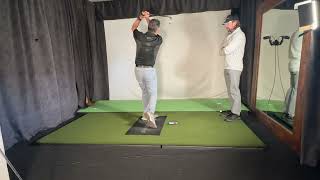
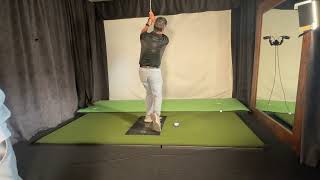




















































































































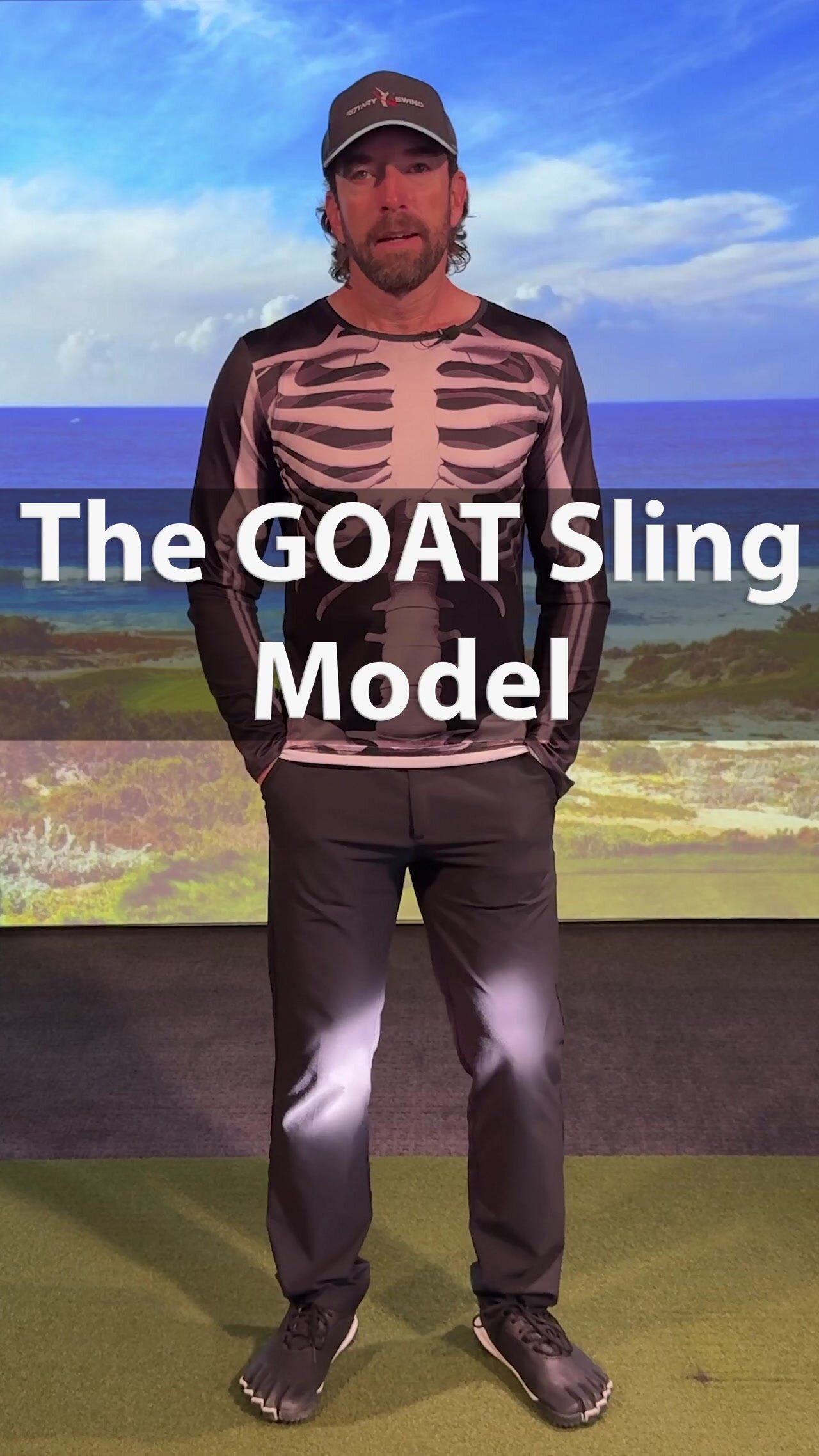
The GOAT Sling Model
Sorry, you need to be a member to access this video.
You Are Just Seconds Away - Become a member here!
Already a member? Log in now

Try a free live lesson with GOATY
GOATY, my AI golf coach, watches your swing through your phone camera and coaches every rep. Free, about 20 minutes, no credit card.
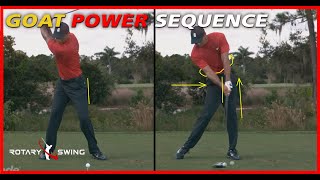
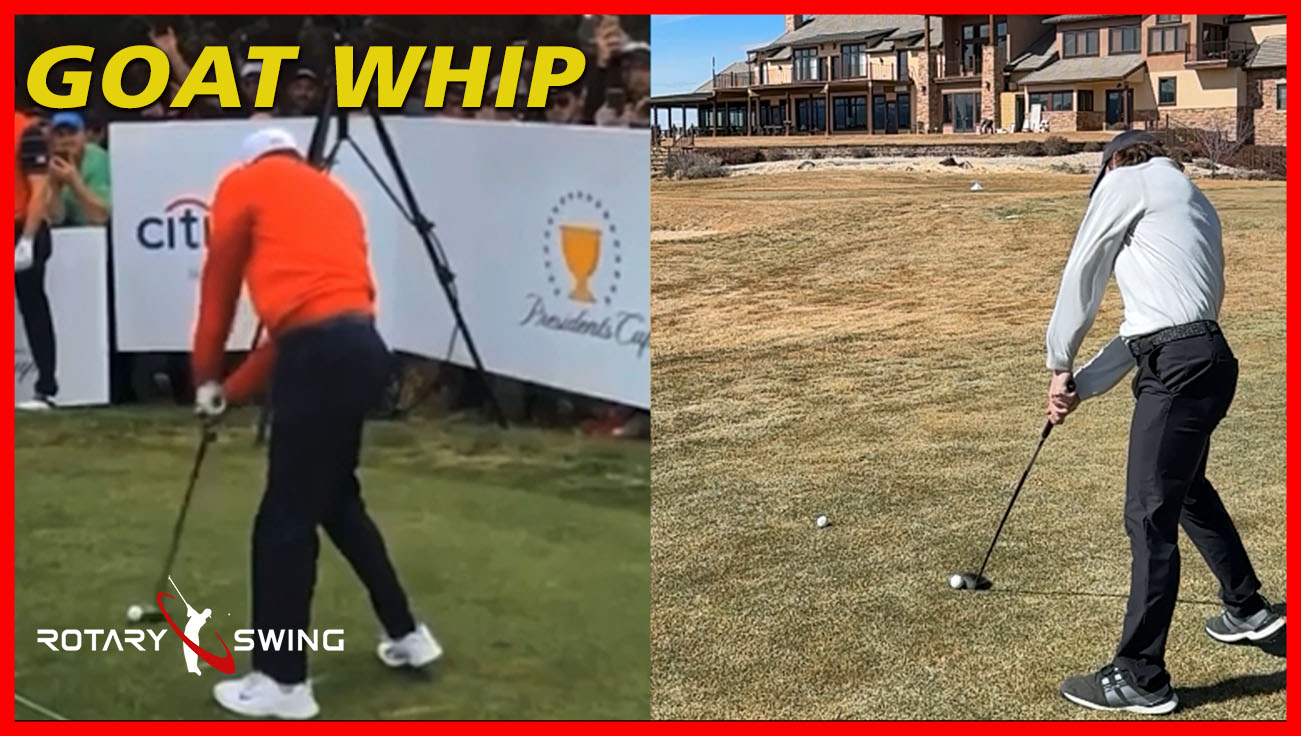
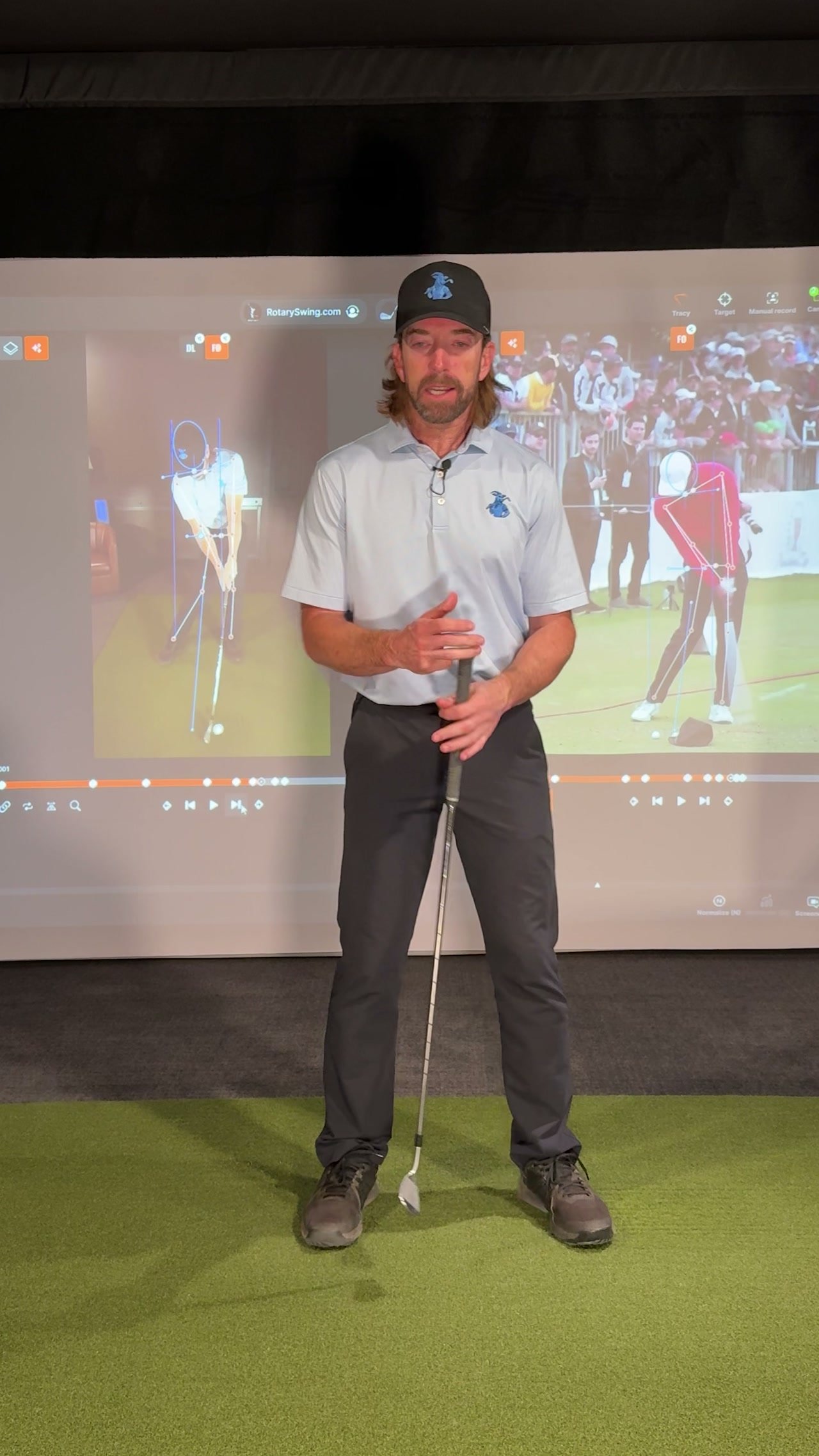
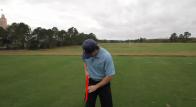
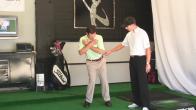
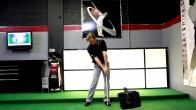
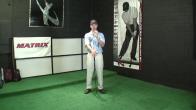
The GOAT Sling Model teaches you how to load your oblique fascial slings in the golf swing for effortless and explosive power just like the GOATs
Let me start with a simple truth that changes everything about how you're going to understand the golf swing from this point forward.
If your core loads correctly, the swing unwinds itself faster than your arms can interfere.
That's not a metaphor.
It's not a philosophy.
It's biomechanics, elasticity, and geometry doing their job.
And if your core does not start to swing, Something else has to, and that's why most all golfers are stuck forcing speed with their arms.
Now, before I explain the Goat Sling model any further, I need to be very clear about what this is not, because most golfers will accidentally map this into the wrong ideas.
The Goat Sling model is not about rotating your shoulders against your hips, it's not about X-factor stretch, it's not about pushing into the ground.
It's not about firing your hips.
It's not about squatting, jumping, or driving with your legs.
If you try to rotate your core, you actually tighten it.
Tight cores don't stretch and nothing elastic happens without stretch.
The goat sling model is not about doing more.
It's about allowing the body to load and rebound elastically for you.
Let me explain to you a fundamental truth about all elite high-level sports.
The movement emanates from the core, the belly and the lower spine, not the hands, not the shoulders, not the hips.
You may feel those things, but movement emanates.
It starts from right here.
If the core doesn't start the motion, your arms will because something has to move that club and your brain's not going to just let it sit there.
And that's the first breakdown for most golfers is you don't have a sense of what this does and how to use it in the golf swing.
So what was the secret to the goat's effortless power?
Power does not come from contracting muscles like how you work in the gym.
In fact, it's the exact opposite.
Muscles contract, but slings, think of like a slingshot or a bow and arrow, load and then snap.
They return back to their natural state and that's why the goats look so effortless in their golf swings.
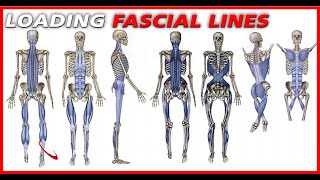
The golf swing is truly powered by diagonal fascial slings that run from your hip to your opposite shoulder, front and back, and there's more fascial lines throughout the body, but these are the primary ones you're going to focus on and they run across the abdomen and rib cage.
These slings must be lengthened during the backswing, not flexed.
So what this really means for you is that the spine must extend slightly, the belly must stay long and open.
So when you hear Goatee talking about opening your belly, this is opening it, this is closing it, and the body must move away from the club during the backswing.
If you tighten your abs, turn your shoulders, push into the ground, lift the club with your arms, you shut off this system before it ever has a chance to load.
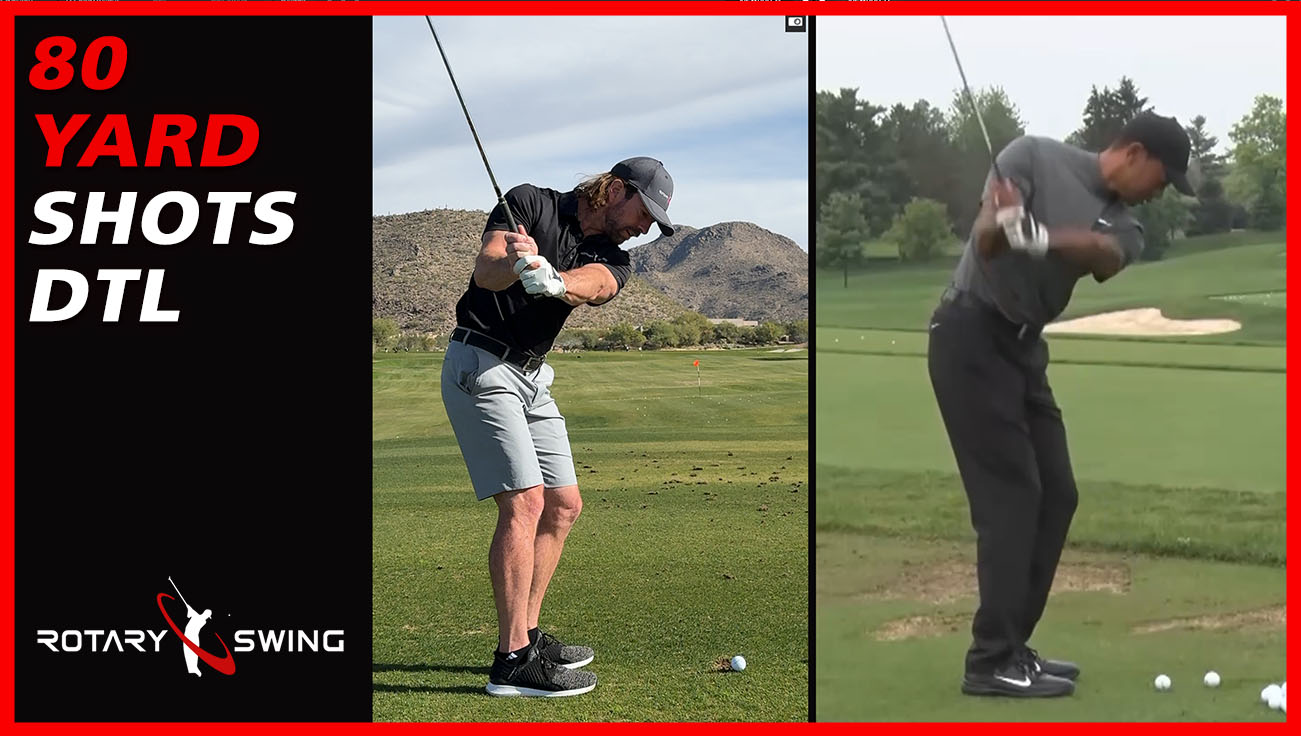
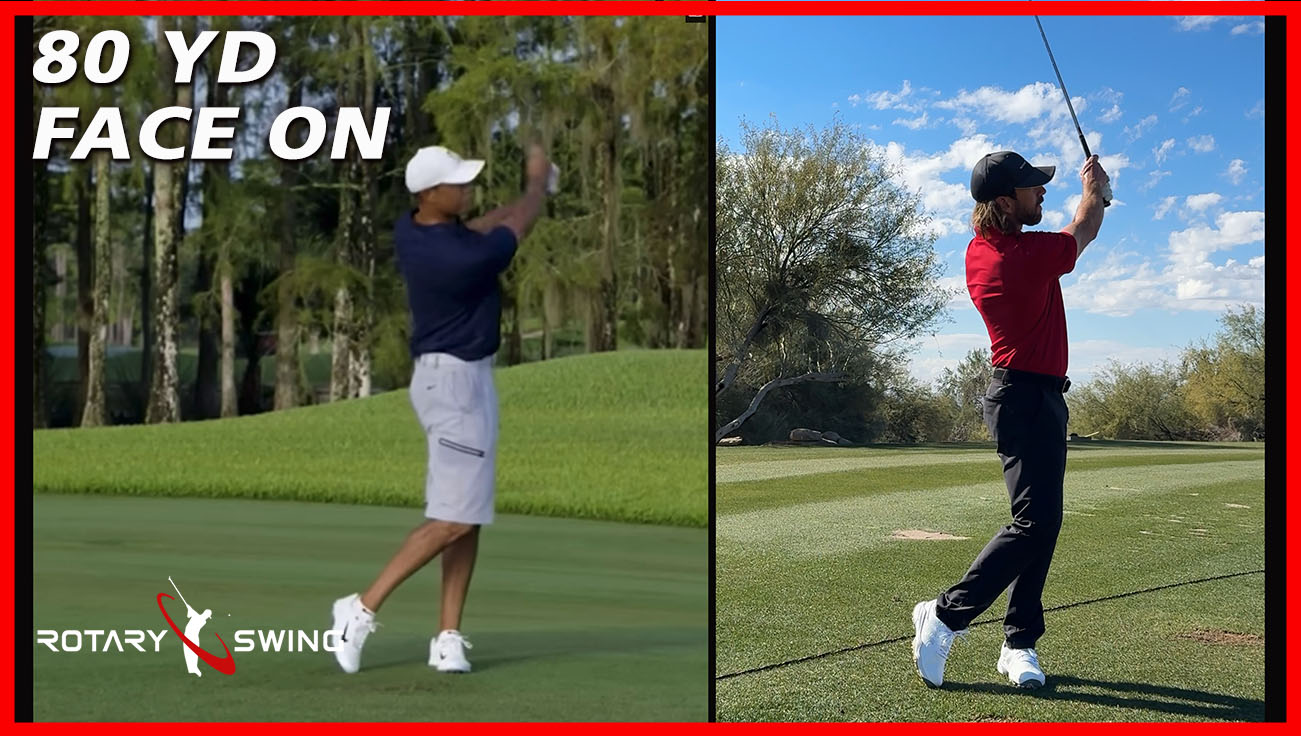
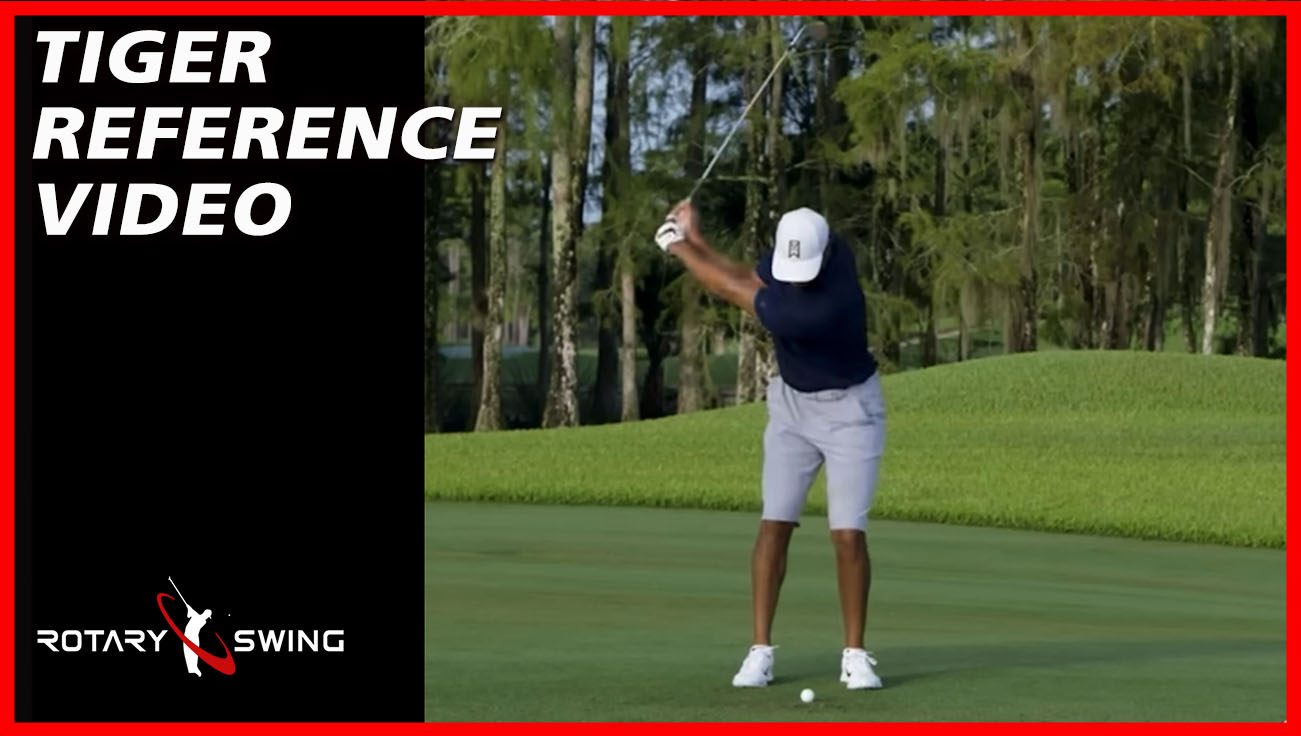
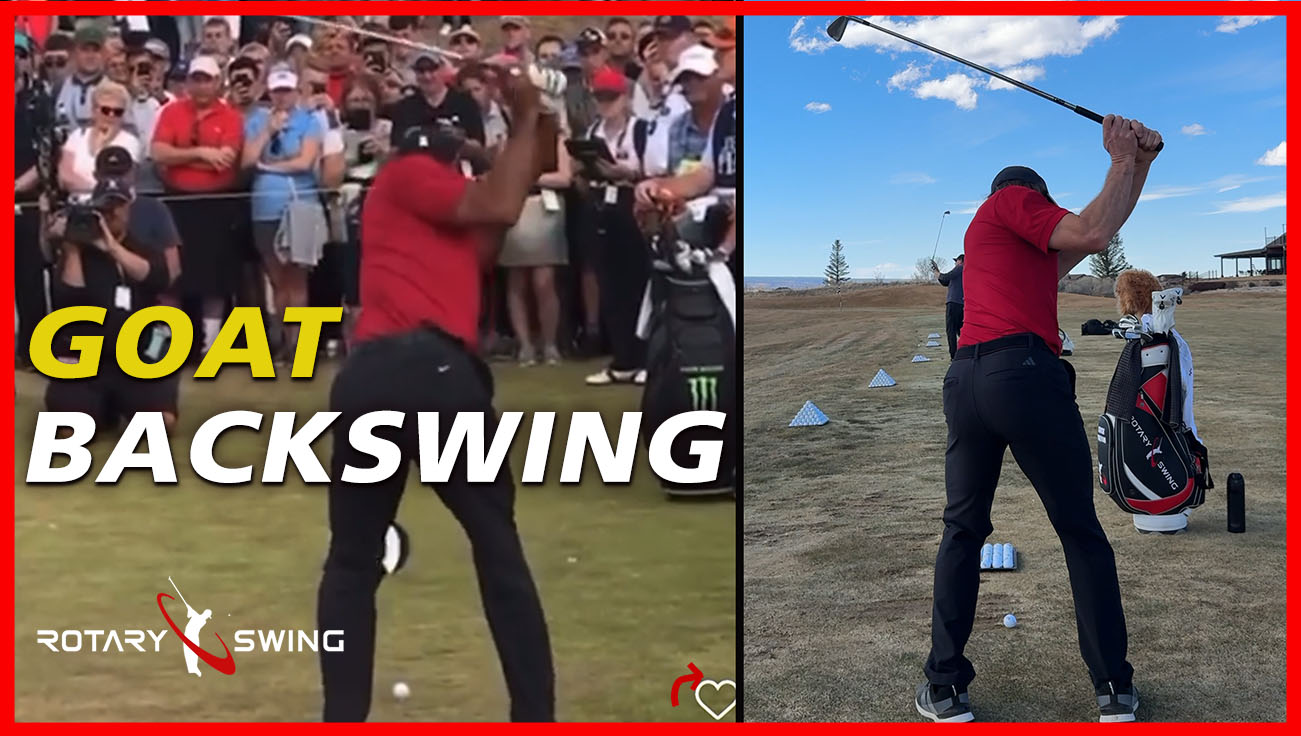
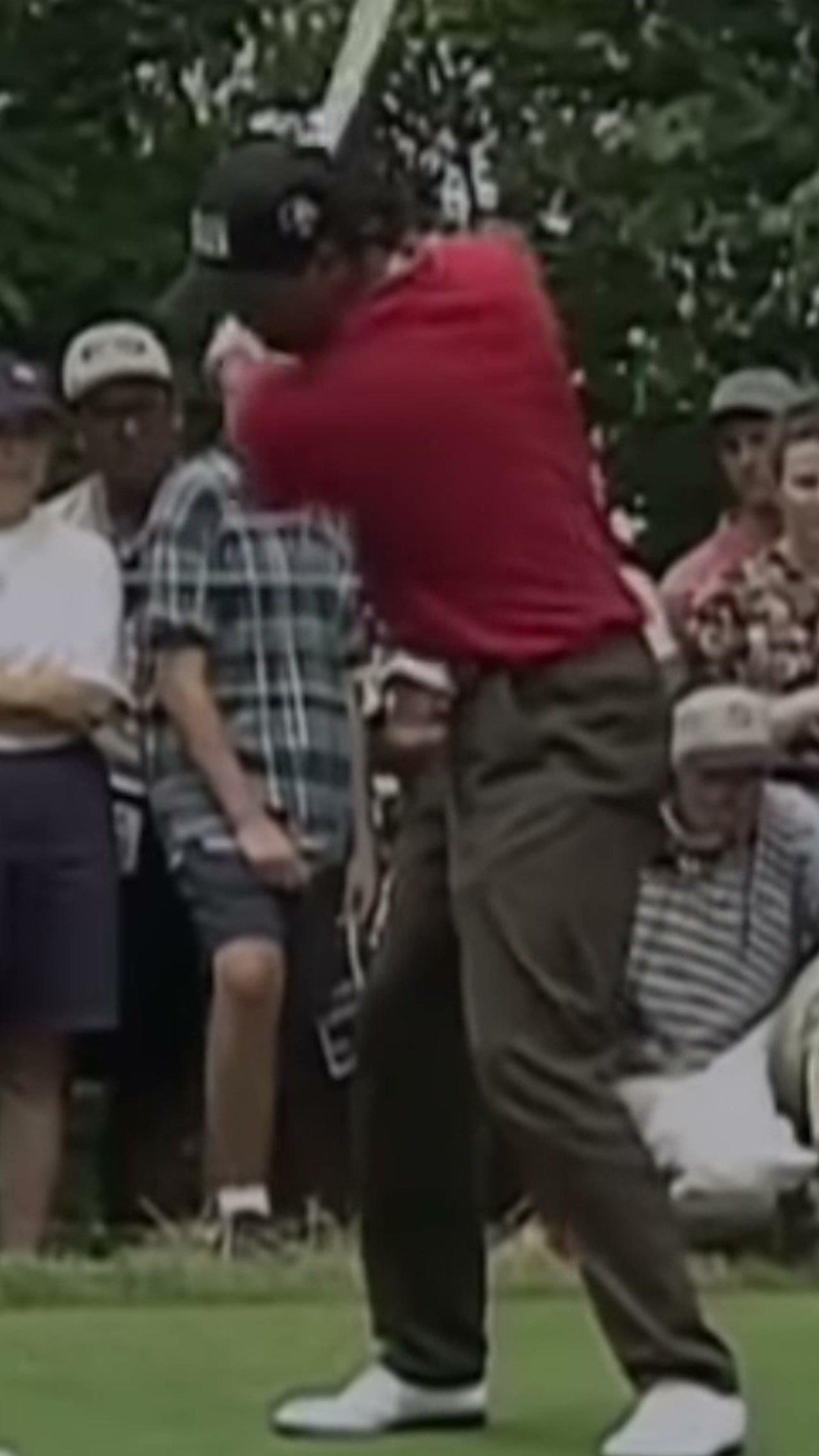
There's a great clip of Tiger Woods talking about what he feels starts his swing.
He says, the swing starts with your hands.
And that's certainly true as to what he feels.
But of course, it's not true at all in terms of what his body's actually doing, which is very clear when you look at it on a high-speed video.
The backswing does not start with your hands.
And for most golfers, it does.
It starts with a small diagonal translation of the core.
Here's the image I want you to use.
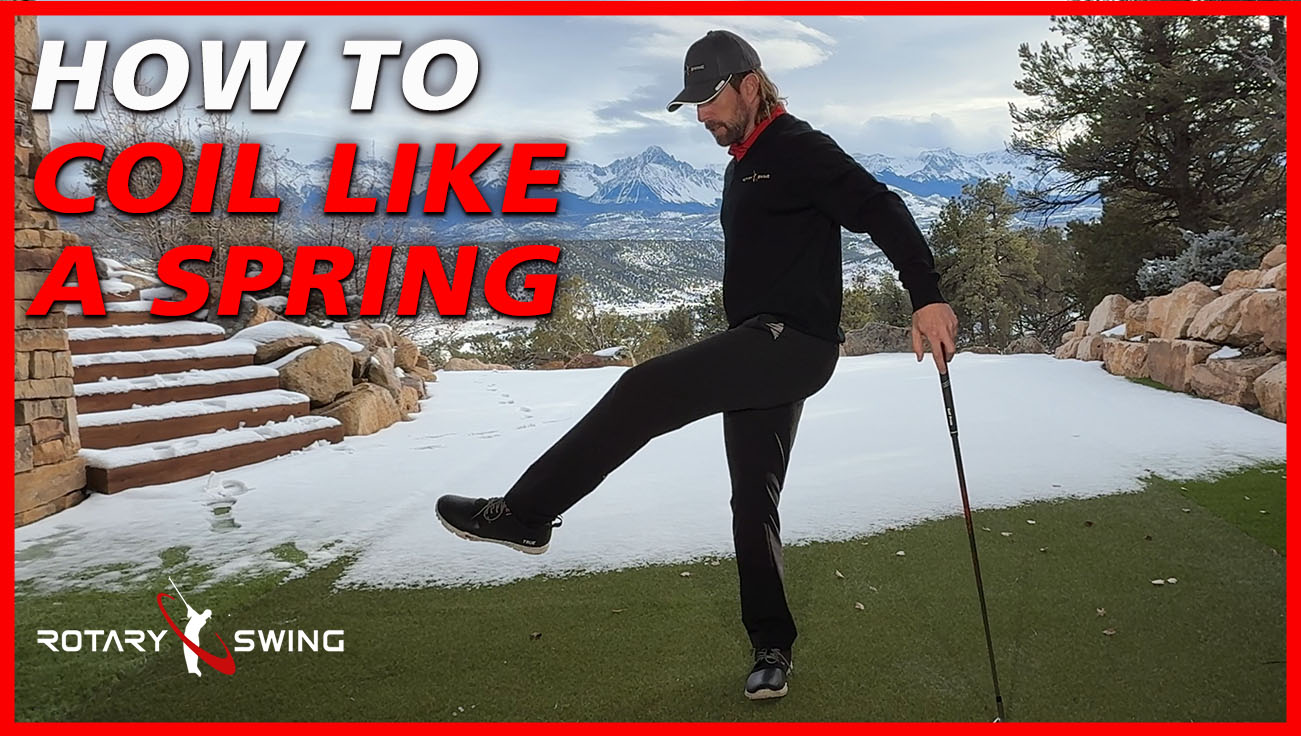
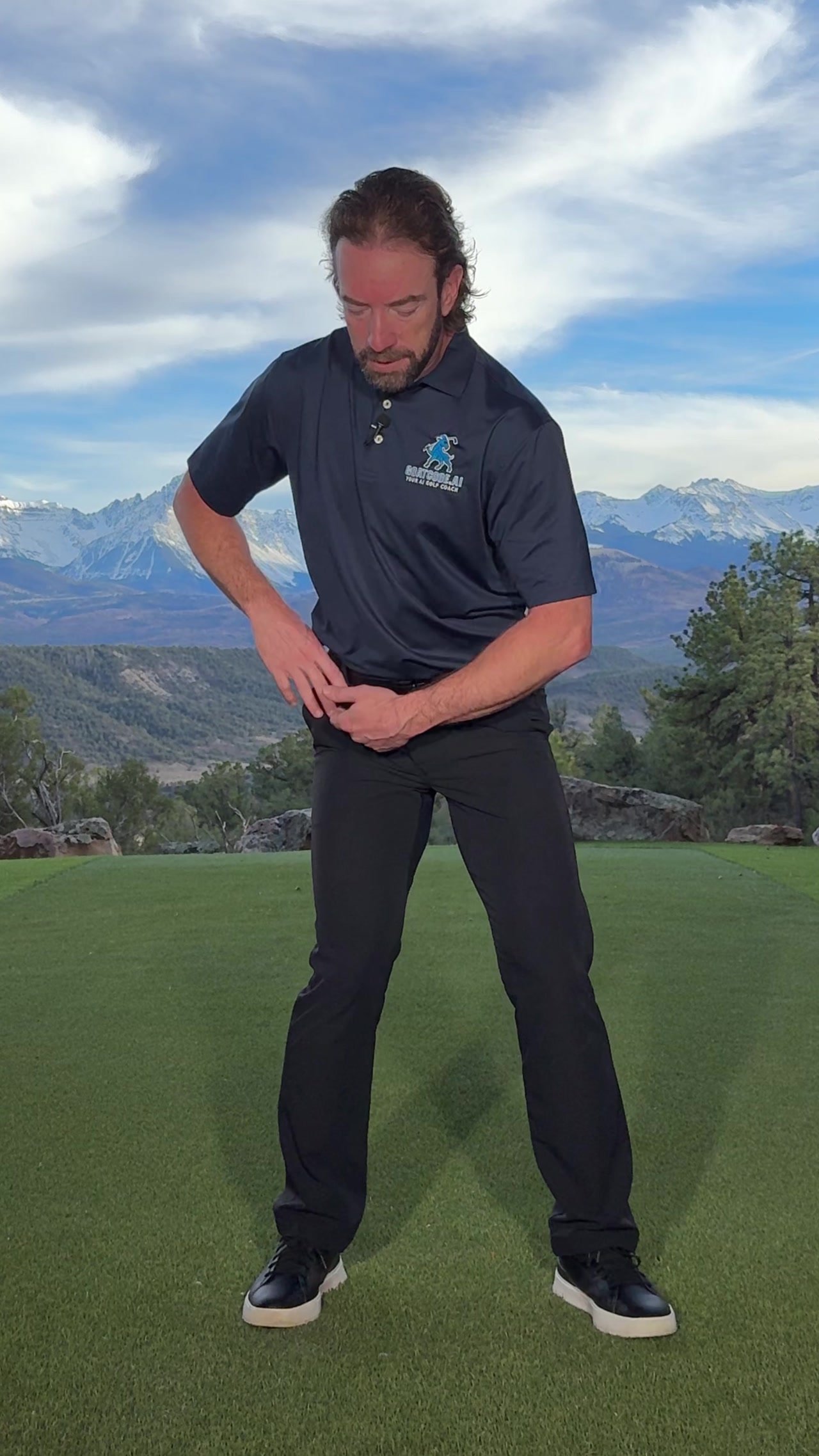
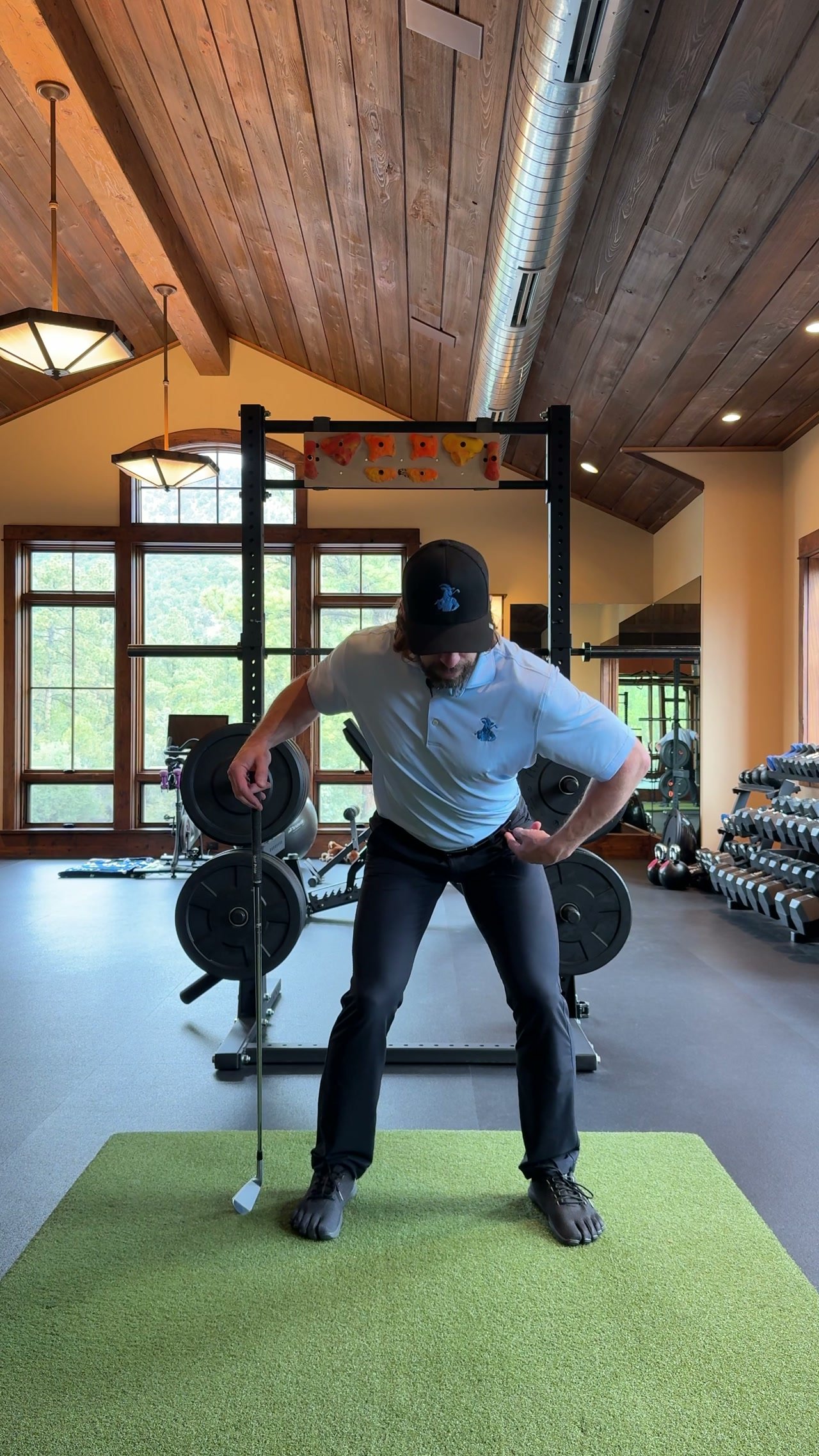
Imagine holding a baby on your hip.
That's how my wife likes to explain this move to me.
Women are naturals for this.
Men, not so much.
And that's why golf turns into an upper body, arms-dominated motion for most men.
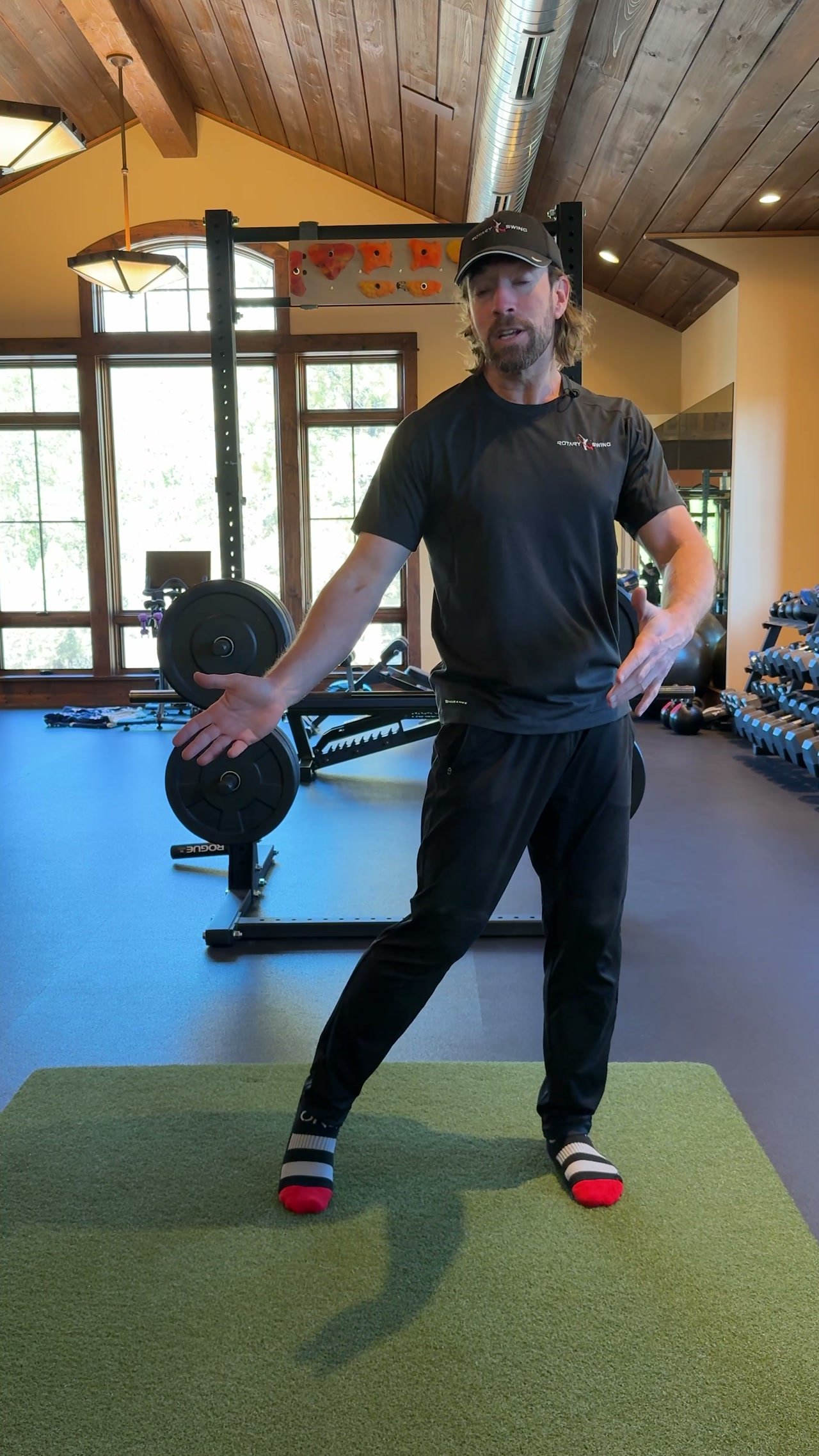
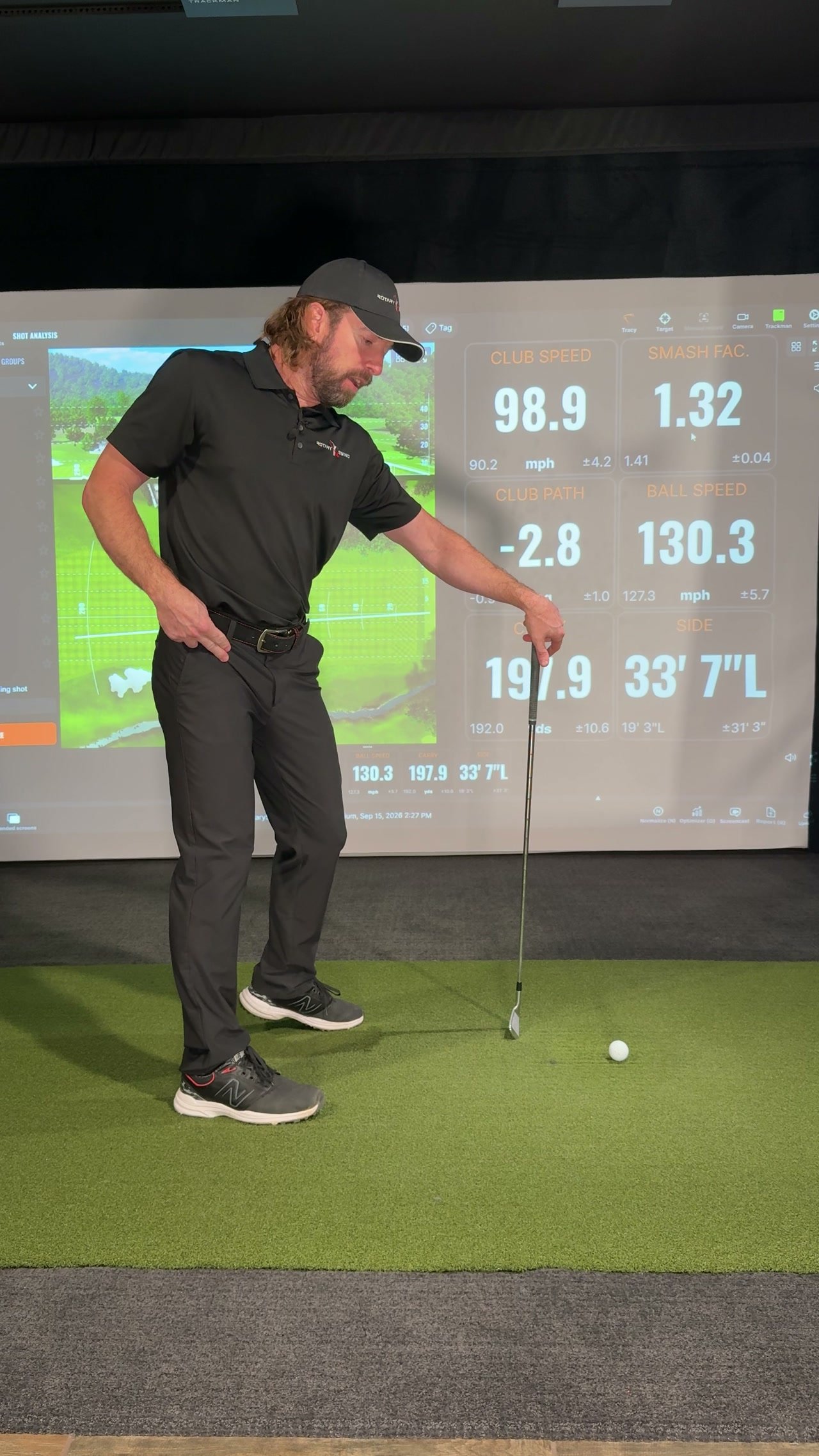
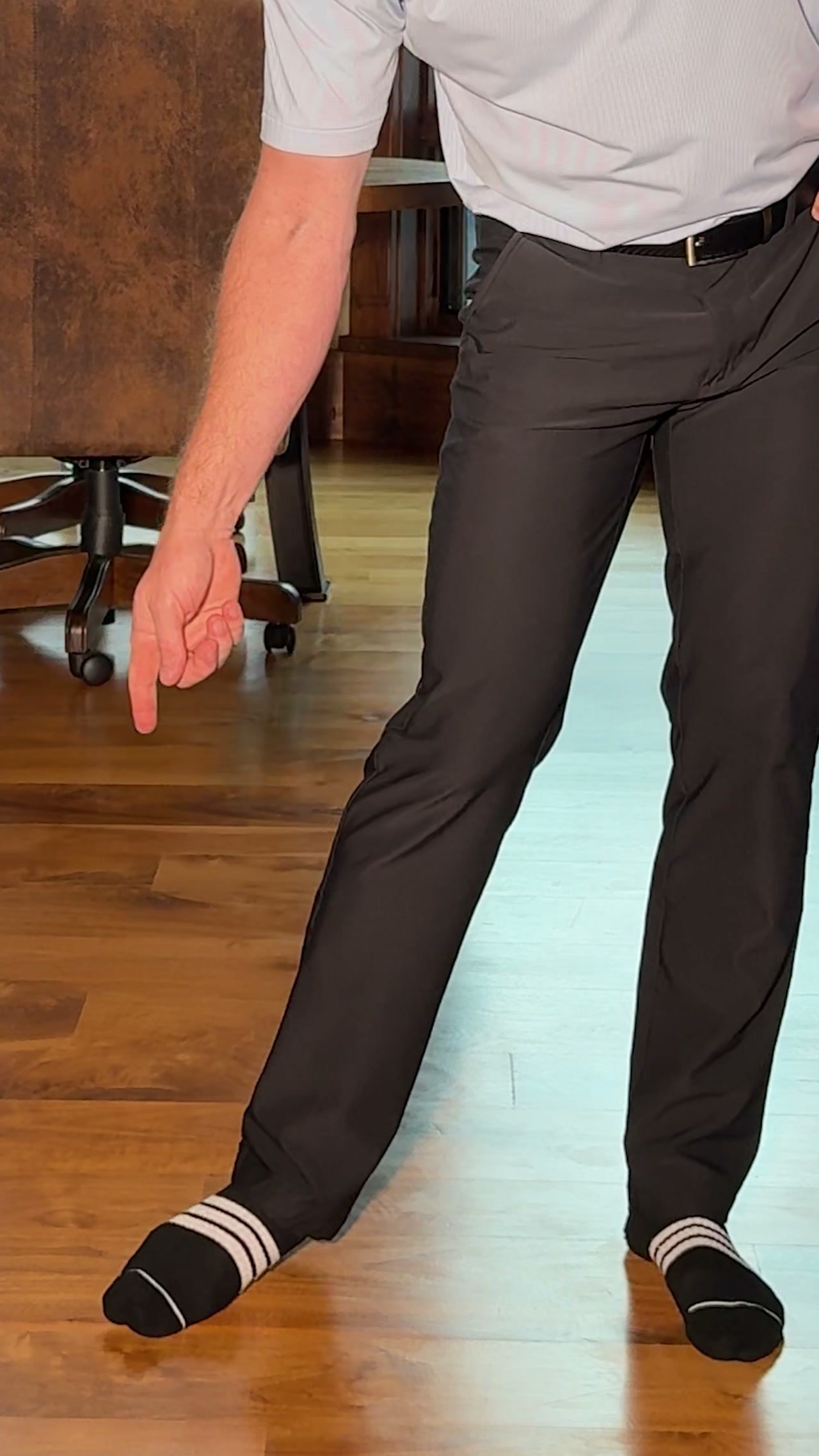
But if you were to hold a child on your hip, you would kick it out to the side like this.
This is lateral translation.
And that movement, while you see it in my pelvis and my hips, Is coming from right here, it's coming from my core, my lower back, my lumbar, spine and my belly.
So if I was to hold a baby on my hip?
This is the initial idea of how you're going to start to feel your swing.
Your pelvis is going to shift slightly, your spine is going to extend.
Your belly moves, not rotates away from the target.
the hips move because the belly moved.
You see it here, but the movement started here.
The shoulders tilt because the pelvis moved underneath them, and the arms move because the body repositioned beneath them and the geometry of the body changed.
That's what moves the arms in the swing.
So it's very important you understand you are not pushing your hip with your legs or your glutes.
You are not turning your shoulders.
You are repositioning the core over the pelvis and everything else responds to that.
And it makes it incredibly simple when you understand the golf swing and learn to move this way, because there are literally no other moving parts.
The arms, body, pelvis, shoulders, everything else reacts to what is happening right here.
Now, an important thing that I want you to understand, because this feel is everything for you to start to understand how to truly have real effortless power for the rest of your life from your golf swing.
And you're going to hear Goaty talk about this a lot.
He's going to talk about keeping your belly open, lengthening this.
What does that mean?
What does it mean when I say keep your belly open?
I do not mean opening it or closing it in relationship to the target.
I mean this.
Your abdomen stays long, not crunched.
You don't go back like this is what happens when people try to turn their shoulders.
Your ribs don't collapse towards your hips.
Your lower back stays slightly arched instead of flattened.
If your abs feel tight, you've already lost the stretch.
Open means lengthened, not rotated.
And open is what you're looking for during the backswing that sets the stage for the downswing to happen automatically.
The true magic of the goat sling pattern is that everything else gets moved on its own.
Once the core moves correctly, the body organizes itself automatically.
The pelvis tilts because of the bone geometry.
The spine stacks because of gravity.
The shoulders tilt because the spine tilted.
Your arms are carried, not commanded.
Your body already knows how to do this.
Your job is just to stop interfering and learn to move from your core correctly.
In order for this to happen, there are three constraints.
I call the fundamental foundation that starts from setup and is maintained throughout the entire swing into impact.
And I want you to burn this into your brain because it gives your body the structure you need to stretch the fascial slings.
The first S is a stiff lead arm.
Now when I stay stiff, I mean, structurally stiff, I don't mean try to hold it as tight and locked out as you can.
It must be stiff.
Because if it bends, it absorbs force, and when your body parts of the whole system begin to absorb force, you reduce the stretching of the sling.
If you think about a slingshot as you start to pull it back, if the post that the sling is attached to started to bend, they would absorb force.
You wouldn't be able to stretch the band as much.
Think of your lead arm as the same way.
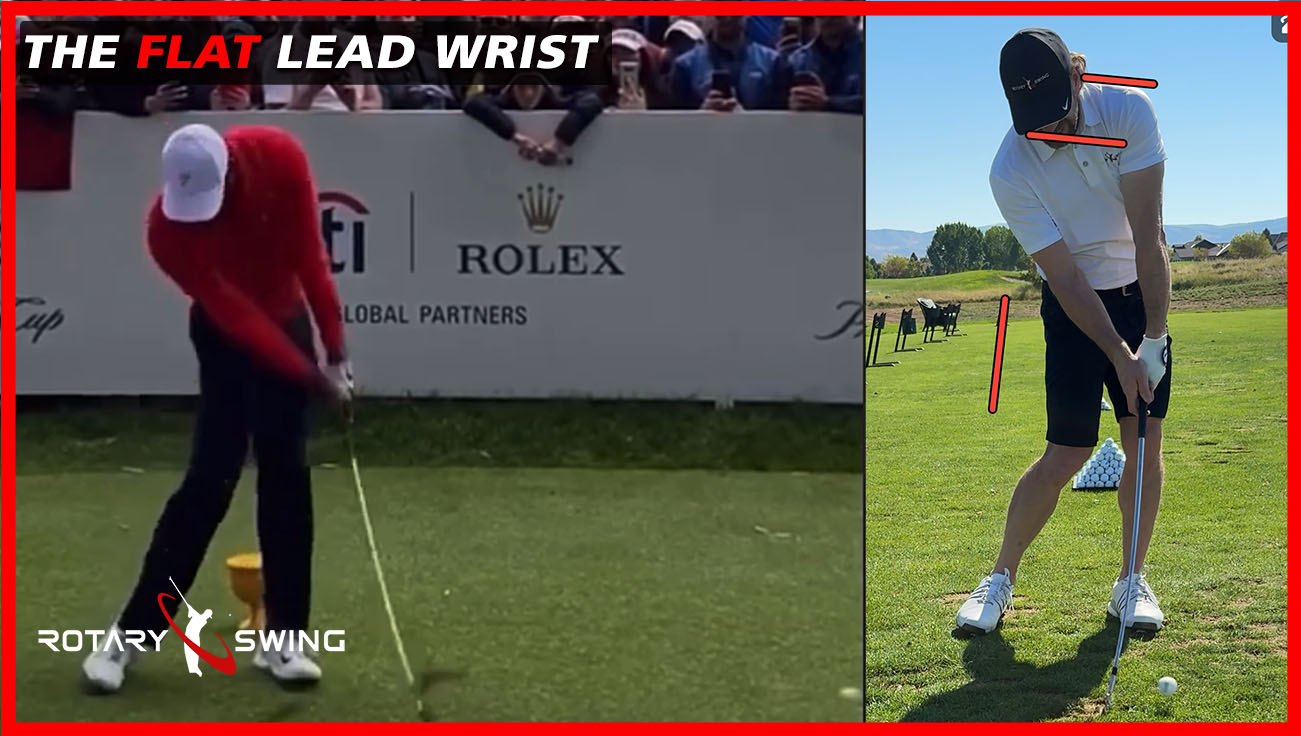
This lead arm is going to start stiff with a firm grip in the last three fingers of the lead hand.
And you are going to keep it stiff all the way throughout the entire swing until the ball is gone.
That's the first S.
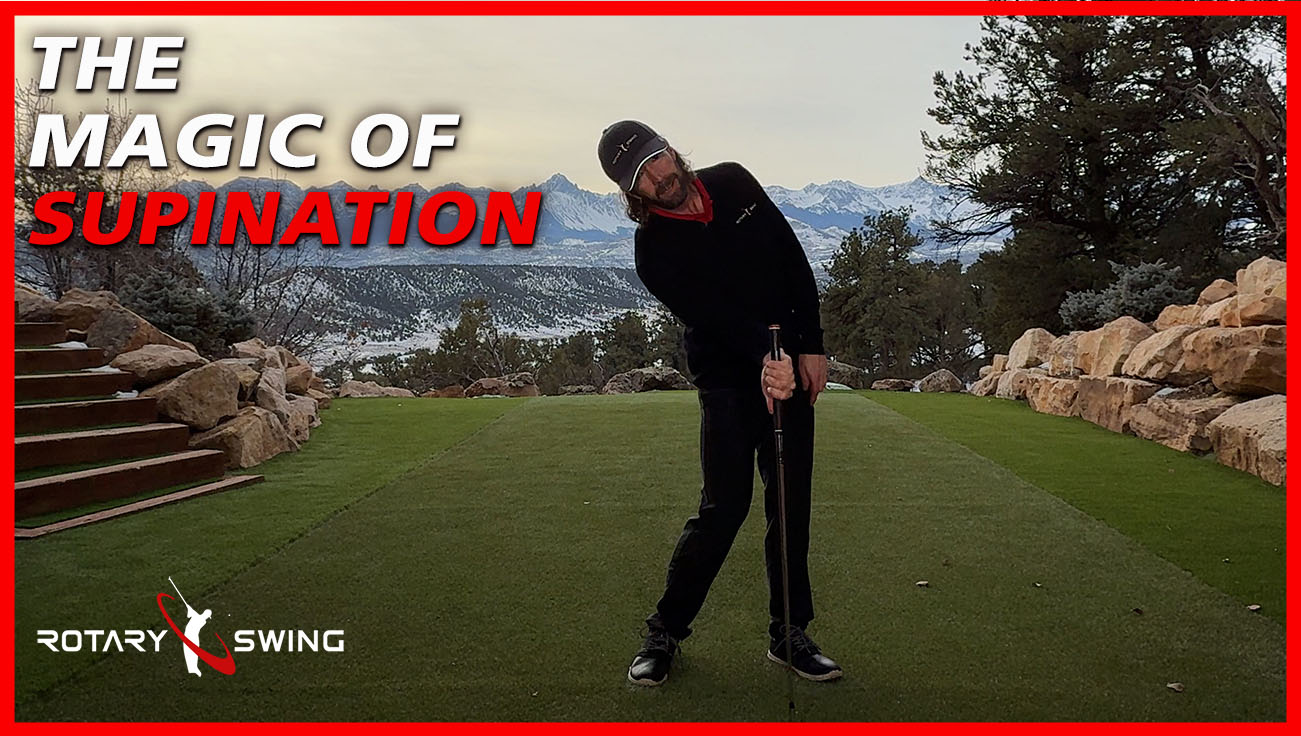
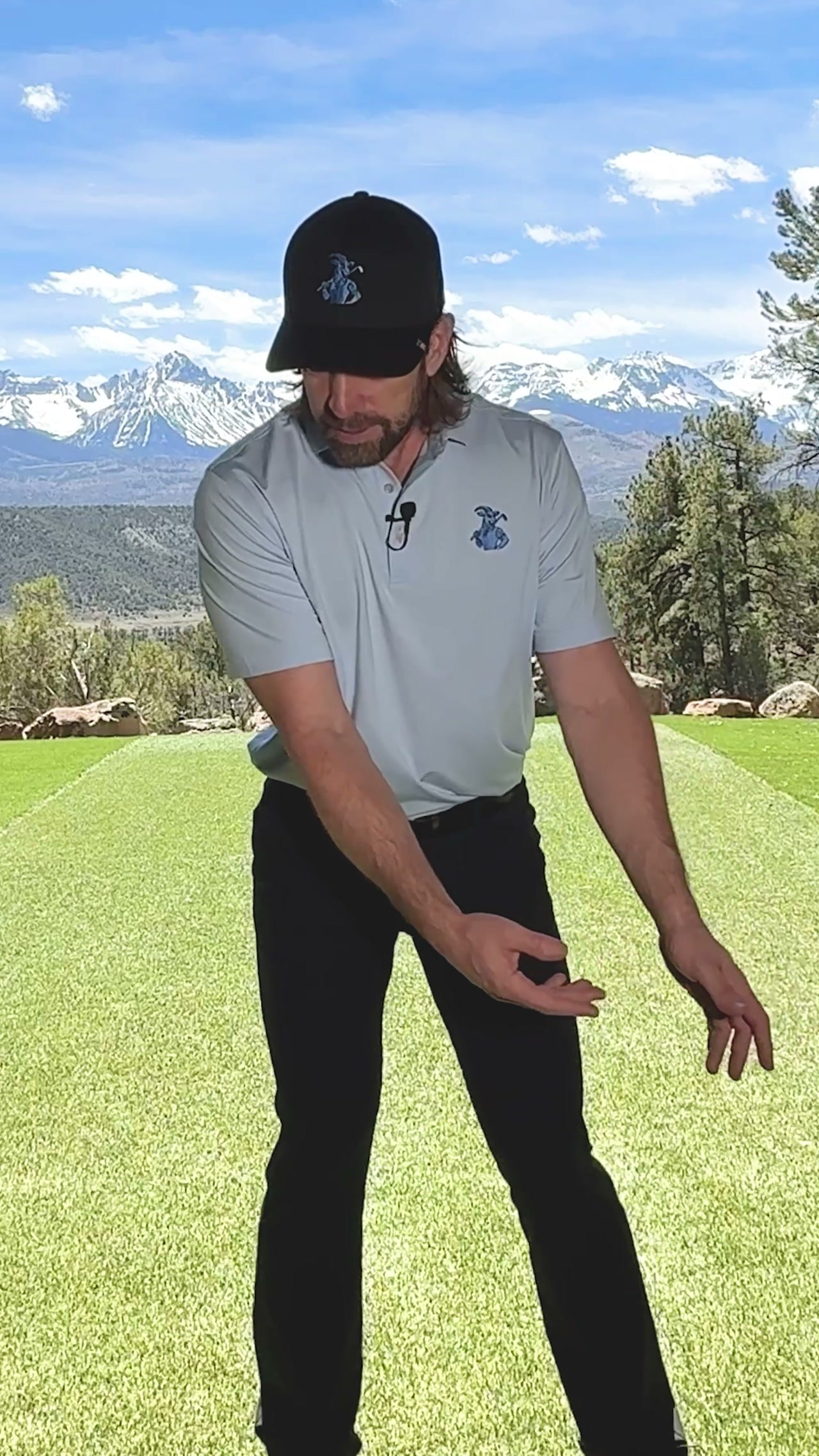
The second S is a supinated trail arm.
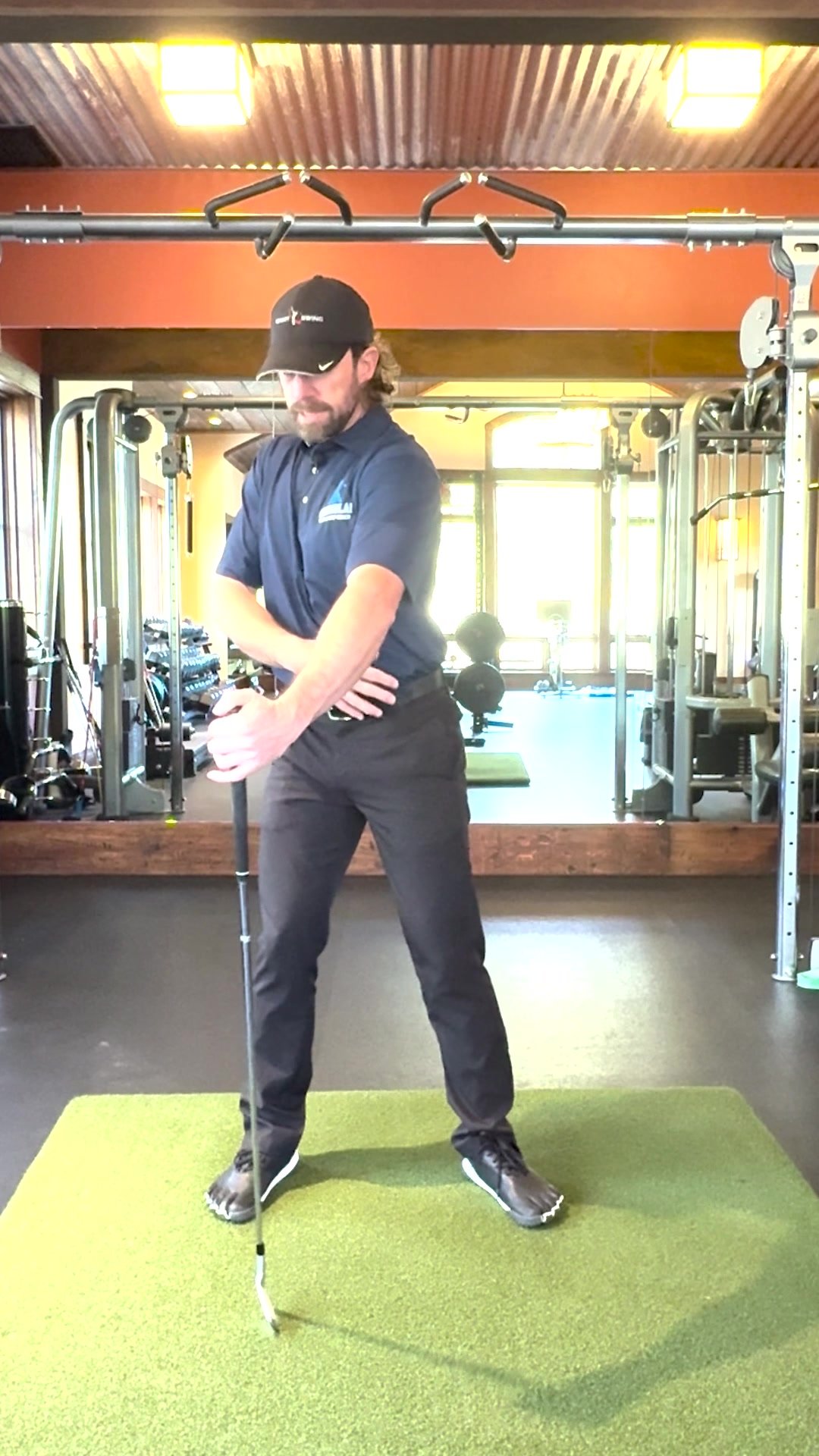
Take your arm and externally rotate it until your bicep comes in to touch your chest and the side of your rib cage.
Feel that that is connected to your body.
And even supinate your trail wrist.
You get your forearm to face the sky with a stiff lead arm, firm grip of the lead, three fingers, the last three fingers, a supinated trail arm.
And you maintain this not just from setup, but all the way into the ball.
So as you start back, as your arm begins to internally rotate, that's going to absorb force.
You're no longer going to be able to stretch these fascial lines in the slings.
So supinated arm, stiff lead arm.
Starts at address, maintained all the way until the bell is gone.
The final S is about stretching.
And these two are prerequisites for that.
The moment that you let these bend, you no longer stretch these fascial slings.
And again, if you think about diagonal bands of rubber bands running across your body front and back from hip to shoulder, That will give you the right picture of what you're trying to do with your swing.
And in order for you to stretch these fascial bands, these oblique fascial slings, what they're called.
Your arms must stay straight, this must stay stupinated, this must stay stiff.
And that as you start to go back, as you'll learn in a moment, that is what's going to stretch, and that is what runs.
The entire downswing is the simple rebound of these stretched bands, going back to their natural state.
When golfers begin to feel this motion of stretching and lengthening, opening up their body during the backswing, they start to overdo things.
And so one thing I want to caution you on right now is what actually stops the backswing and initiates the transition.
The backswing doesn't stop because you decide to stop.
It stops because your arms and club resist further lengthening and they've stretched these bands as far as they can go until they want to snap back.
So the downswing should be automatic.
It shouldn't be something that you have to think about.
It should not be something you initiate.
If you do, you've missed the point entirely.
So as I walk you through how to load in just a moment, I want you to understand that if you feel like you could keep stretching and stretching and stretching forever, you're not loading elastically.
You're forcing yourself muscularly.
You're contracting muscles to get yourself into these positions.
That's not what we want.
We want to feel pulling it back and letting it go.
That's how the goats swung the club.
And that's why they never looked like they had a position at the top of the backswing.
In my mind, the golf swing, the position, the only position we have is set up.
After that, there are no positions.
It's simply stretching and loading the system and letting it unload, and it's all one dynamic piece.
You don't go back, stop, and then go.
That kills the entire stretch, and it doesn't work with how the way that the stretch system works with the actual cells themselves and your nervous system.
The transition, there isn't one.
It happens automatically.
It is loading, and as you let everything go, it happens too fast for you to even think about if you've loaded correctly.
If the sling is loaded correctly, the lengthening finishes.
There is no place else to go.
You can't move any further.
The recoil begins immediately.
There is no weight.
The sternum drops naturally as the slings pull the sternum down.
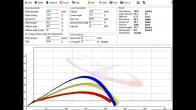
So when you're looking at your sternum graph, understand that that big drop you see in that big vertical rise is not something that you try and manufacture.
It's not possible.
It is purely a byproduct of letting these slings rebound on their own.
And then as I mentioned, as it rises, as the recoil releases, you cannot push into the ground to create this move.
You'll never get your sternum grafts to match what the goats do.
If you don't see a natural drop, it means the slings were never stretched properly in the first place.
And the cool thing is with the goat sling model, that's all you have to do.
Remember the three S's, stiff, supinated, stretched.
Maintain that all the way to the top, let your core unwind, and that's it.
That's all you have to do for to swing like the goats.
Now in just a moment, I'm going to walk you through what's going to feel very strange.
And many of you are going to struggle to feel this at all at first, which is why I'm going to give you specific things to focus on in order to get this to happen.
But I want to give you a couple caveats first to understand why you're going to struggle at first and why this is going to feel so weird.
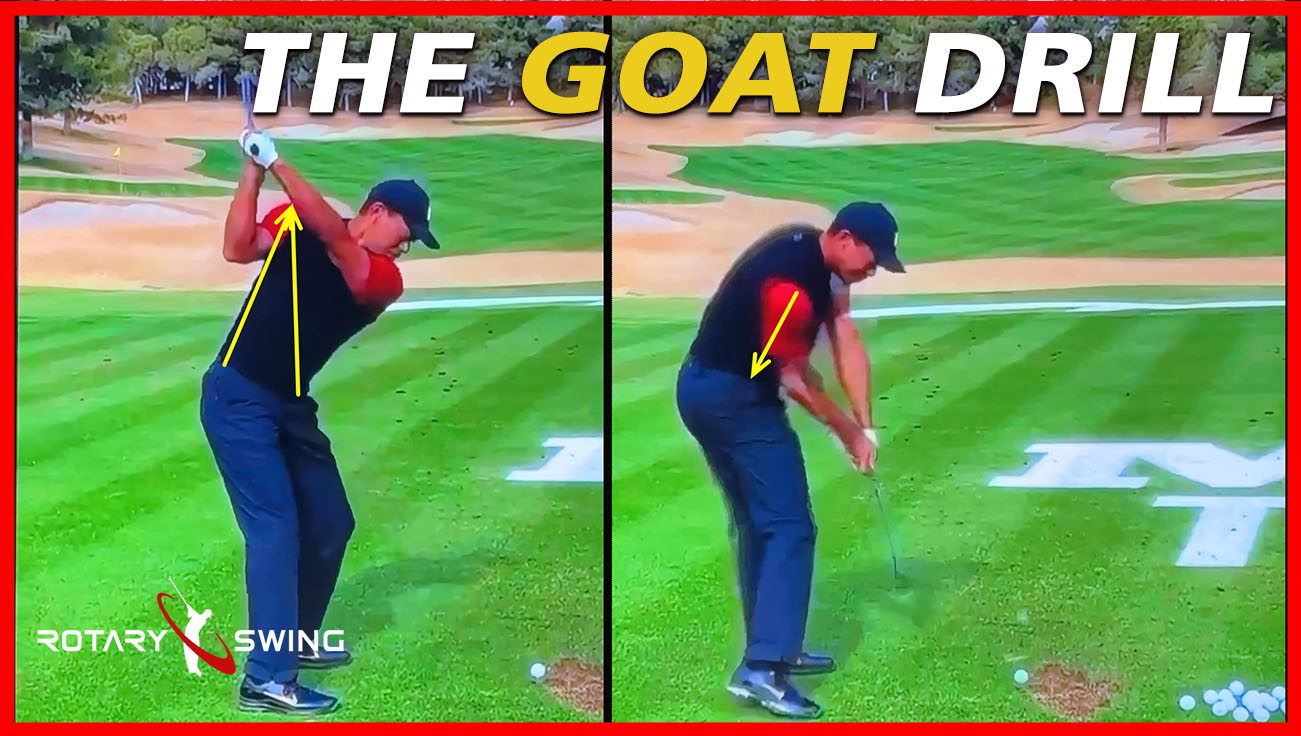
And I'm going to show you a drill of Tiger doing this exact same thing in just a moment and it's going to look weird.
So don't feel bad when you start doing this.
It is a strange sensation.
The reason is that most golfers start their swings with their arms.
They lift, they extend, they rotate, pronate, et cetera.
And as soon as you do that, you'll see in just a moment that it literally pulls your core and pelvis out of position.
You cannot start the swing with your arms quite literally.
If you turn your shoulders early, everybody's been taught to turn your shoulders perpendicular to your spine.
I've said that a million times.
It's not true.
Your shoulders don't really turn at all.
As you see in just a moment, the way that your shoulders actually move is they actually tilt in response to your core moving.
And it's the geometry of your pelvis and femur and spine that make it look like a shoulder turn.
But do not try and turn your shoulders.
Do not try to tighten your abs.
That's the exact opposite.
We want lengthening because all of these things will pull your pelvis out of position.
You'll never load your core properly and that's why you will struggle with the golf swing forever and that's why the goats made it look so easy.
They're moving something what is relatively very small movements and it's very difficult to see even on video or with 3D motion capture.
You have to be able to feel it to understand it, experience it, and be able to do it.
This movement is going to feel very foreign because it's fluid, it's grounded, and it's three-dimensional.
You can't think of the golf swing as just face on or down the line, as I'll show you in just a moment when we look at some other samples of clips.
You're going to see what's really happening and how you need to look at this.
It's not a mechanical move.
It's not positions.
It is an athletic stretch.
And finally, before we get into these strange, bizarre movements I'm about to teach you, you'll know you're wrong if you feel tired after doing this instead of springy.
I want you to move fast and dynamic and athletic.
You're going to move slow at first, but the goal is to stretch and let it go, not hold yourself or force yourself into positions.
If your abdominals feel tight instead of long, that's wrong.
If your arms and shoulders feel powerful instead of braced and structured, or if the downswing feels like something you have to trigger, all of those things are major red flags.
So put those in your mind.
You'll know you're right if the load feels calm, if the transition feels inevitable, and the arms feel like a lid, not a motor, their structure, and the release surprises you.
If you feel those four things, you're on the right track.
Now, Let me show you how to start getting a sensation of what these movements are and how they really work, and how amazing it is.
How much simpler your golf swing is going to be as you start to do these moves.
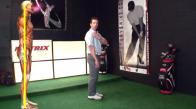
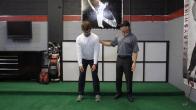
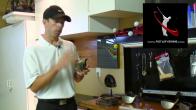
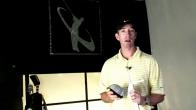
To take baby steps into this and start to feel your core, perhaps for the first time ever, I want you to pay attention to my shirt here and the skeletal structure that's on.
Obviously, it's not anatomically correct, but it's going to get you a picture of what's happening and what it's going to feel like.
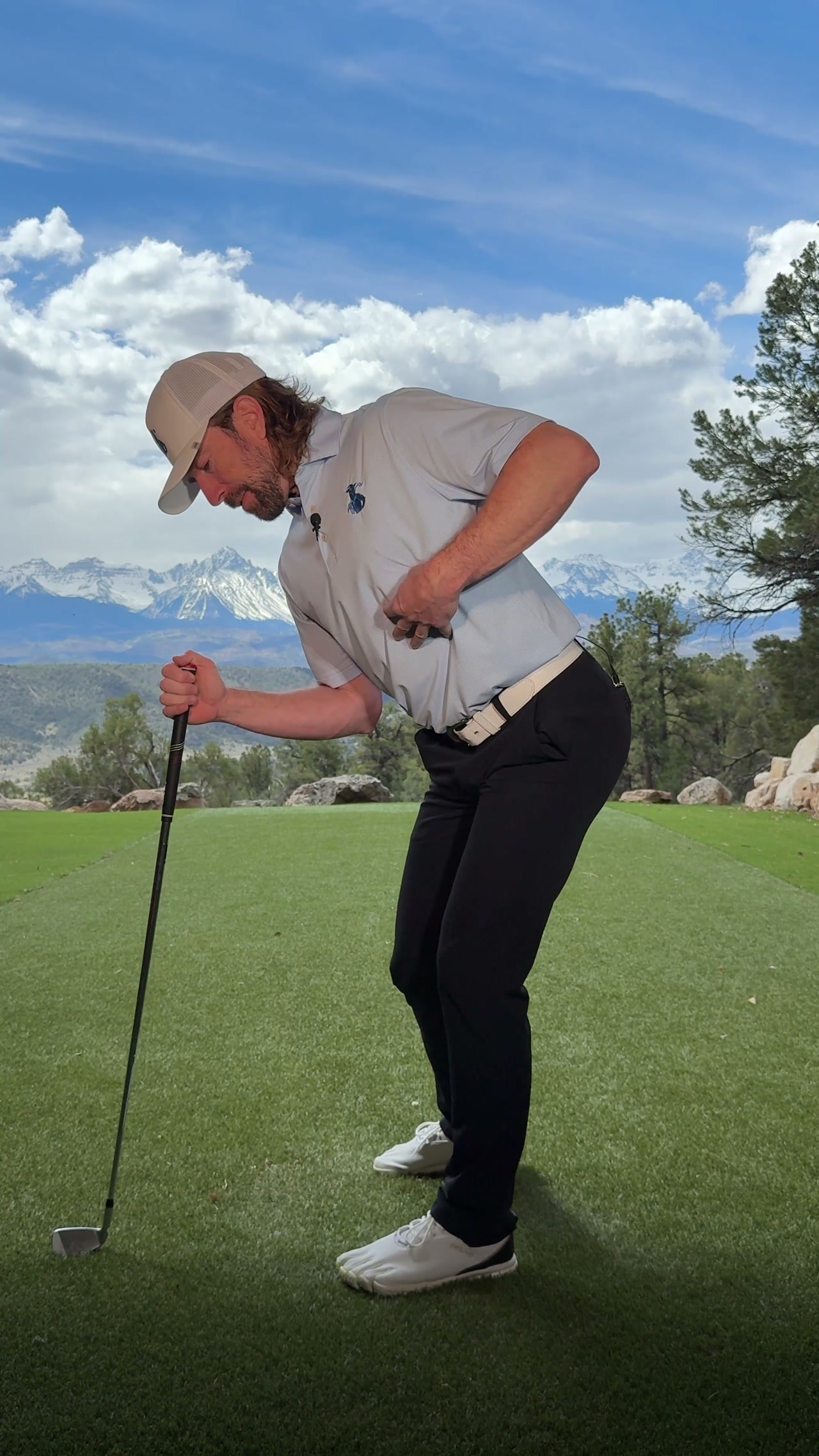
So put your hand over your belly button.
So I've got my middle finger and my belly button here, and I want you at first just to watch the translation of my belly button.
Now, what I'm doing here is moving what I feel is primarily from my lower back, my lumbar.
Now, obviously, that's the bone structure.
It's the only bone structure I have in this part of my body.
But there are a lot of different muscles that are involved in this motion.
But if you focus on feeling it in your lower back and try and translate it.
So you can see my belly is kind of bending.
So my spine's straight.
and then as I move it over, just lateral, like I'm holding a baby or something, my puppy on my hip, that is the feeling.
If you try and push into the ground, you will get over here and then you will immediately need to rebound out of that and it'll put a lot of force in your back.
All you need to feel is just your pelvis, excuse me, your core moving your pelvis to the side.
This movement is actually most of the backswing.
If you can learn to do this, it solves 90 of the problems in the golf swing.
Now, the golf swing, as I mentioned, is of course a 3D motion.
So it's not just lateral translation, so a better way of thinking about it is a diagonal translation.
So before I just went in a straight line, but as I turn down the line when I do this, here's just pure lateral translation.
Where I'm moving from my lumbar, my lower back, and letting my core move that motion.
But what's really going to happen as I hinge forward into my posture, I want to feel that it's more diagonal.
So now my hip is going back this way.
So you'll see my hip both moving laterally and back away from the target.
And when you put that in three dimensions, it's kind of a diagonal motion.
My pelvis motion is still the same.
Now, as I'm doing this, I feel my belly lengthening.
It's getting longer.
I'm not contracting it and turning like this.
Of course, that's going to make me shift my headway off the ball.
From face on, as I move back, my belly button's moving back.
So I feel like I'm just kind of curving the bottom of my spine into like a little J.
That's what it feels like in order to get my hip deep enough.
And by deep enough, I don't mean deep enough laterally.
I mean deep enough diagonally.
It's going back to the corner of the room.
This, as I move my belly and my lumbar spine is going to kick my hip out to the side, kind of like I was talking about holding a baby on your hip and begin to give my hip and anchor in which to stretch these diagonal fascial slings.
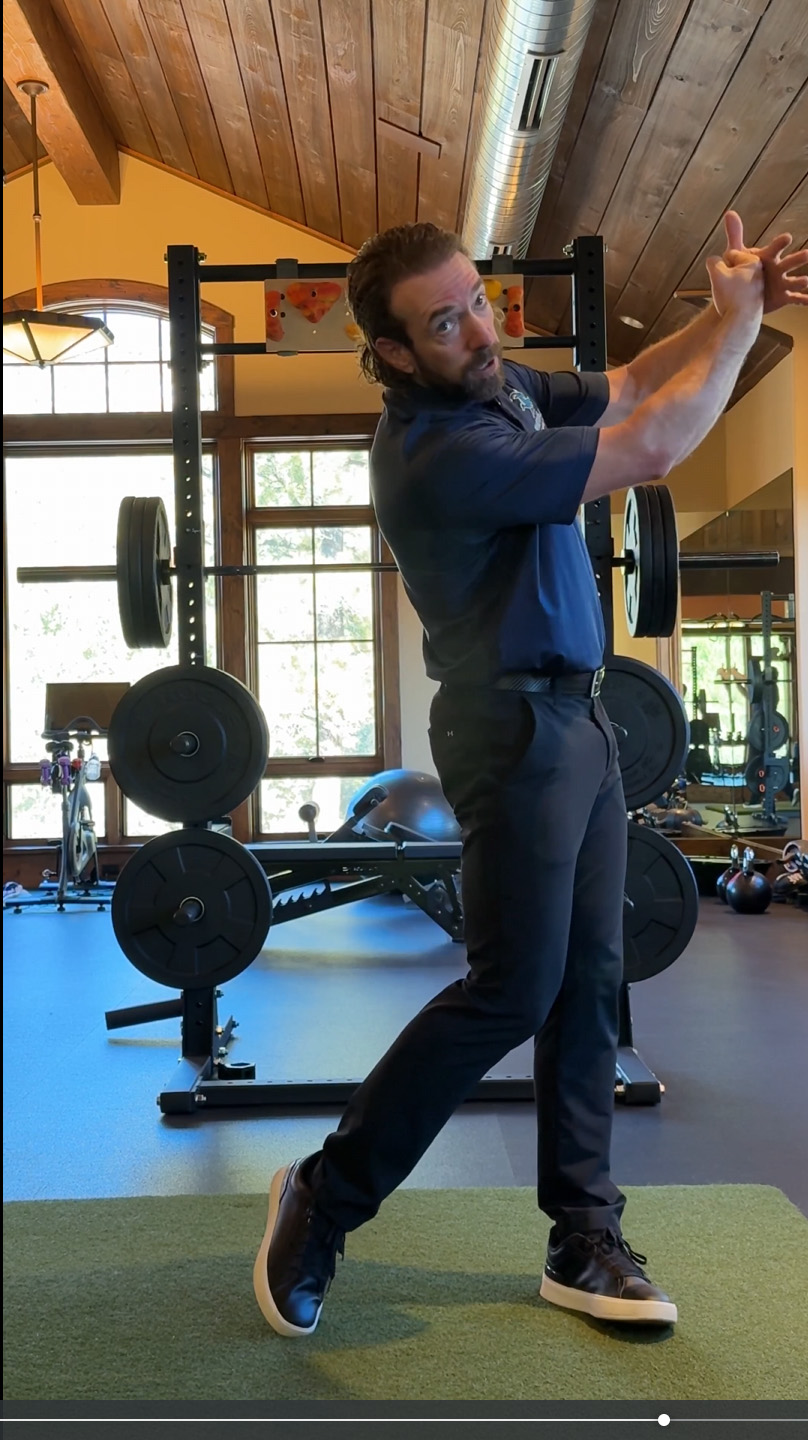
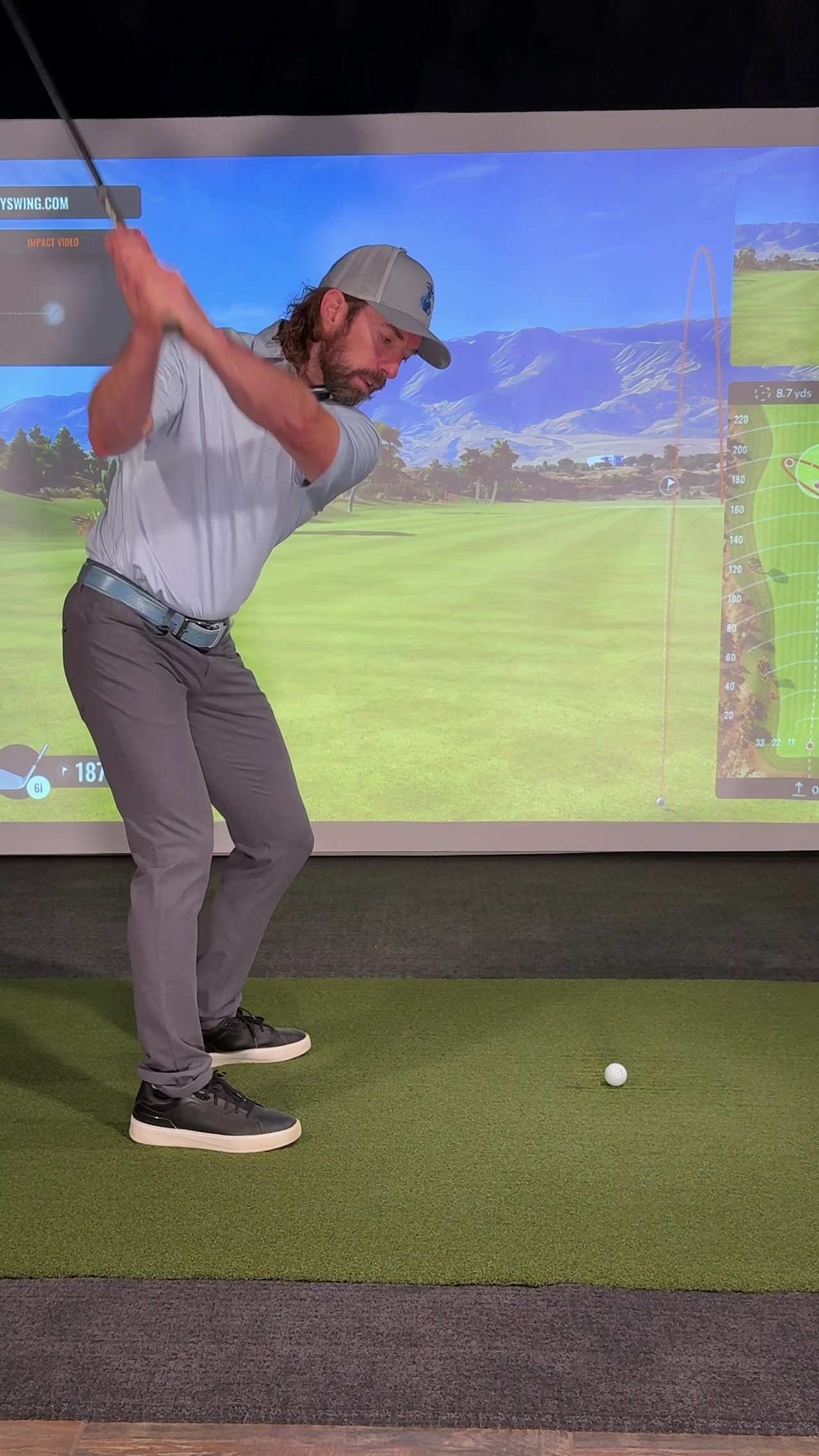
So now as I open up and I let my belly kind of arch, my lumbar kind of arch just slightly as I begin to do this motion, it's going to extend significantly as I continue to the top.
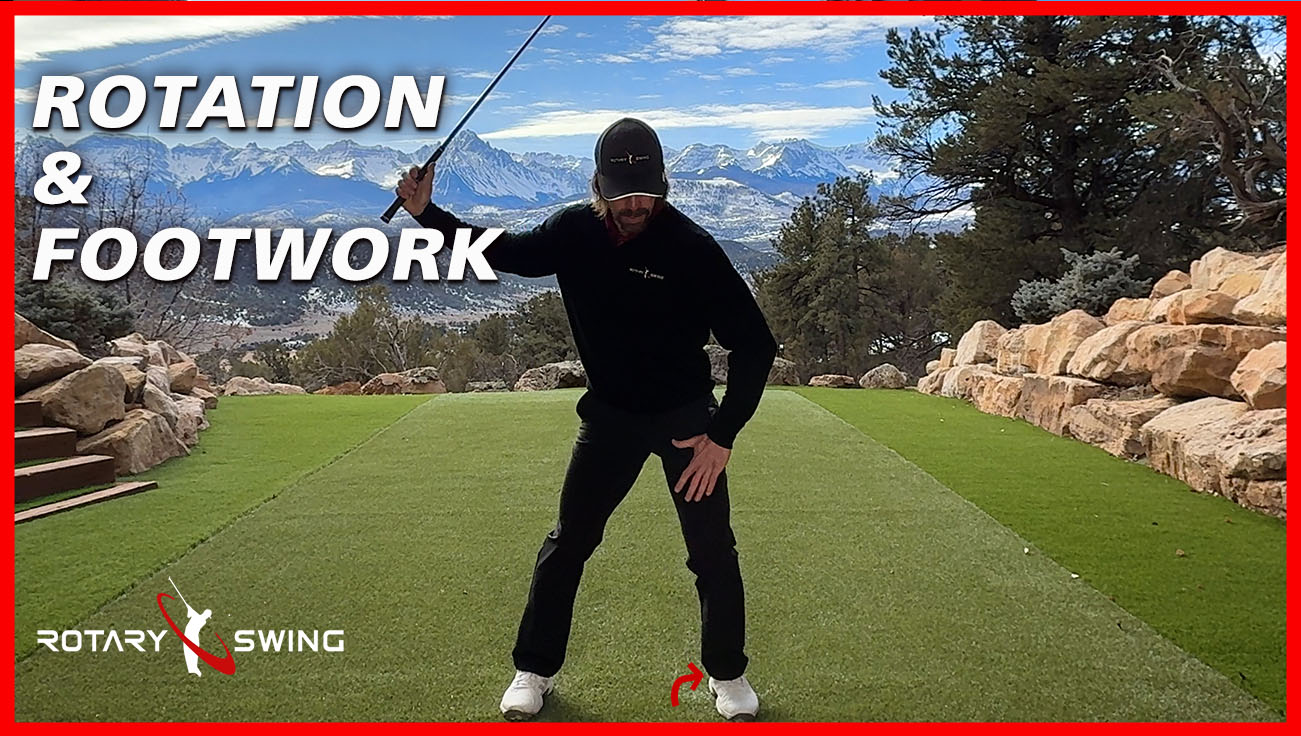
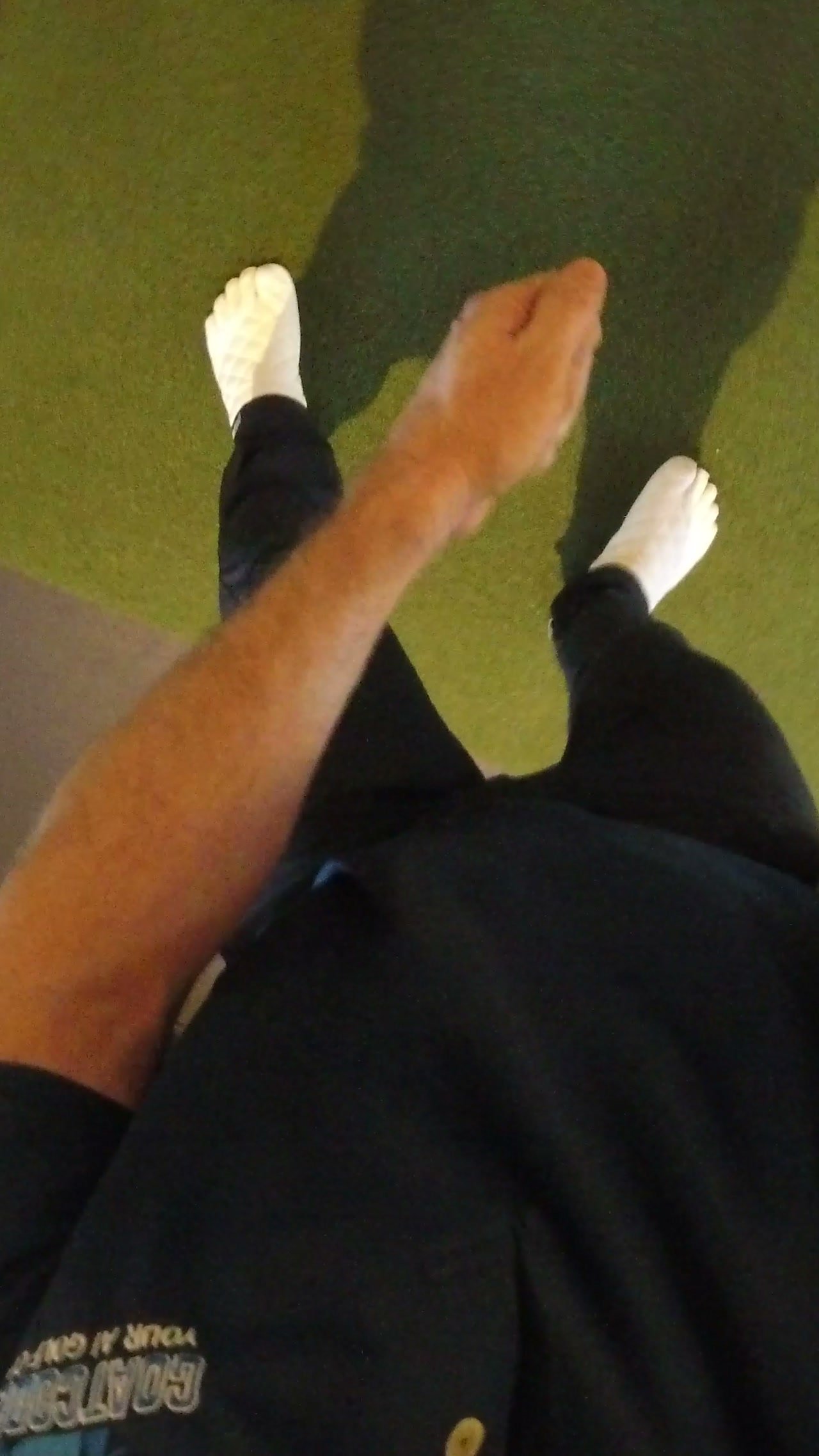
But as I do this and I feel my hip kind of go back deep, my trail leg has got to lengthen.
If I keep it flexed, you'll feel instantly a loss of stretch.
So let me give you this feeling, and I want you to practice this and watch yourself in front of a mirror, like I'm going to here, and start to feel how as this hip goes deep, you're going to feel a stretch on the outside of your hip.
This is a fascial band.
We want to load this hip, and we want to feel as the hip goes back, my trail hip goes away from my lead shoulder, this line diagonally just got lengthened.
So at address, if I had a rubber band here, you could see, you know, as I start to move it back, that rubber band is getting stretched.
And this is a literal essential rubber band in your body.
You're, you have a fascial sling that runs across and through your abdominal and through your chest cavity and abdominal cavity.
And as you move this trail hip back, it begins to stretch that.
And so you should feel stretching on the outside of your hip and stretching across the lower part of your belly up into your shoulder and chest.
And as you start to do, if you don't feel that, start to extend your spine more open your belly more.
Gody's going to keep paying.
Keep saying this, that if you're not moving correctly, you're not loading correctly, you're not extending enough.
So as I continue to translate diagonally to get this hip back, this leg straighten, my pressure goes back into my heel, my hamstring engages.
What's really happening is that you can see.
I haven't yet to turn my shoulders, but look how far my shoulders have, quote-unquote turned already.
Just by translating my hips, my lower back and my core, and letting this hip get deep.
But all the movements emanating from here look how much my shoulders have turned.
And now, as I continue this and I go into extension, I have now made basically a full shoulder turn, but I never turned my shoulders.
It is radically different to take the idea of turning your shoulders against your hips.
And many people have taken that x-factor idea and interpreted it that way.
And completely wrecked their golf swings and their bodies.
What I'm doing is essentially moving my spine to the safest spot, which is extension.
And because this is happening in 3D, I'm imagining a 3D spiral.
So as my hip goes back and my spine goes into extension, I get this feeling like this, not this that's turning, I'm translating diagonally, letting my hip get deep.
Make sure you're not trying to push off of this, you want these glutes to stretch, you're not trying to load them to push off of them, that is vital.
I'm lengthening everything and this, my core, moving this back, is getting everything.
So now I can easily make a full shoulder turn.
And you guys know, I've got a fused neck and scoliosis and all this other stuff, but I never once turned.
That is the entire loading mechanism of the golf swing, and as I add the arms and club.
In just a moment, you're going to see that they literally do nothing as I move like this, like Mike Austin, like to talk about kind of a pendulum action of your hips.
He was describing much the same thing.
Just not getting into the fascial slings, because we didn't even know about fascia.
When he was an elite ball striker, The fascia didn't really start to be understood until relatively recent times.
So now that we understand this, we know that we're trying to stretch and lengthen everything, move into extension, open.
I feel like my belly is kind of like a beer belly.
I feel like it's popping out as I move into extension.
To load these slings and that last bit of lengthening and extension of my spine kind of pulls my hip up and back.
That's why you'll see a lot of times somebody like Tiger is a really elite loader who's very efficient.
You'll see, right, just in the last couple frames, his trail leg will snap straight for just a second and then it goes.
And you might interpret that wrong as he's doing that with his legs.
It's happening as a reaction to lengthening, opening, extending, and now that's pulling my leg straight.
Now, everything is stretched, both in extension and diagonally, so you can see that.
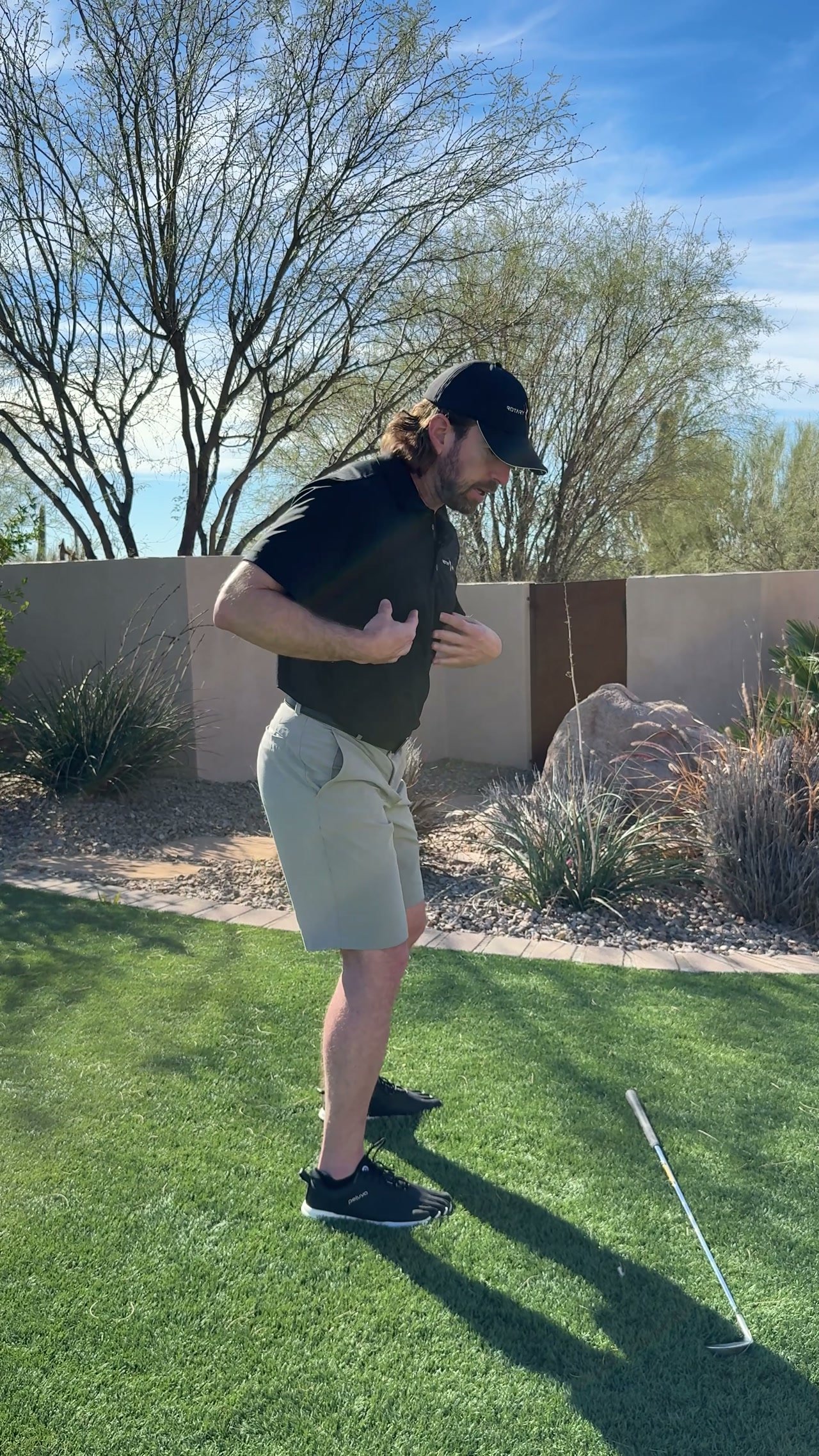
My whole body, if I anchor my shirt down, is getting longer, and I've now stretched this shirt across my body.
And this is the feeling that you're looking for, because from here, if you feel the stretch, you're going to feel how all of that wants to fire you down.
That's literally all that happens in the downswing is all of this pulling you back the other way.
You will see that in the backswing.
You can literally visualize the stretch in somebody like Tiger by watching his shirt.
You can see how the shirt stretches, and you see the wrinkles in his shirt begin to change as he moves and stretches and lengthens and opens everything.
And then everything just fires automatically.
That's the beauty and that's why they looked so simple.
The greats made it look easy because they were never contracting muscles.
They weren't trying to load up muscles, they were trying to lengthen the fascial bands and let them rebound for them.
Now, what is generally the most complex part of the golf swing to understand becomes the most simple.
If you remember the three s's stiff, supinated, stretched, and if you want to throw a fourth in this s in there.
Strong grip, this firm.
Because you're gonna need this leverage and strength to stretch the fascial bands, because, again, it's not just on the front.
You have the same diagonal fascial slings on the back of your body.
And we want to stretch those as well and use those in the downswing to create that final burst of speed that pops and happens effortlessly.
So key one, stiff.
I'm going to grab the crumb firm with my last three fingers.
The idea of having your arms soft and all of that stuff kills effortless power because if they're soft, you will not be able to stretch the fascial slings efficiently.
You'll have to muscle the swing.
So stiff, supinated, and exaggerate this at first.
Take this arm, take your thumb, and rotate it this way.
Get this thing into your body so you can see that my forearm bones are facing the camera.
Now, this is key, and I'll show you in just a moment.
You keep this supinated all the way into impact.
If anything, you try to supinate it more rather than ever letting it pronate.
What I mean by that is, so I've got this stiff, got this supinated.
Now I've got to stretch the core.
So now here's the key where you're going to want to go wrong.
You're going to want to do this.
Your arms are not involved because if you do, you'll stretch the fascial slings too much at the wrong time.
It'll happen too early and the whole sequence will fall apart.
But the simple truth is you just literally have to do nothing.
Let me show you.
Stiff, supinated, going to stretch.
So now I'm moving from my core, I'm going to translate diagonally, I'm going to get into my trail side.
I don't want to hang on this lead side at all.
You'll feel that that completely ruins the stretch.
So as I get into it, my leg's going to straighten, my hips going to go back toward the wall and open diagonally back behind me.
And as I do that, I've literally not moved my arms and I've gotten half of the swing done.
I'm literally exactly where I started.
Now, what you're going to probably find is you're either going to want to do this, and I encourage you to practice doing this incorrectly right now.
Take your arm and internally rotate it or pronate it as you go back and feel how you lose the connection that you should feel as you supinate it.
You should feel kind of right around your armpit area.
This is your lat and other muscles that tie into the back and the scapula.
You want to lock those puppies in.
now, I say, lock.
This is an exaggeration, but it's better to exaggerate.
Being too stiff right now with your arms and keeping everything connected to your rib cage so you learn to feel the stretch.
And as you get more comfortable with this, you'll find that nice balance point where your arms are structurally stiff, but not rigid and muscular tight, muscularly tight.
So now as I go back, I feel that I'm always trying to keep this elbow pit facing the sky.
I'm trying to keep it up away from me, never pointing toward the ground as I do that.
And I keep moving my belly, moving my lower back, letting my hips and feet and legs and everything else, and my upper torso respond to that.
As I move back.
Now, from here, I'm done.
Momentum would carry my arms a little bit further, but I don't even want to practice that right now, I want to practice translation.
So I'm focusing on my lower back and my belly.
I started to pronate there myself.
Supinated, stiff.
And this is, as you're doing this, this happens incredibly fast in the swing because the fascial system, it stores energy for only a split second.
It's kind of like taffy.
If you pull it apart and real slow, it doesn't want to pull back.
But if you pull it back fast, it wants to rebound.
If you think of your muscles the same way or your fascial system, That's perfect.
So as you're going slow, it's going to be a little bit different, but you need to go slow to start.
To feel your core, your lower back, initiating, your hip, going deep and then moving into extension, that's the whole back swing.
I literally didn't move my arms, I tried to keep it stiff.
This one is also supinated, it's going to internally rotate a little bit, for sure, but if you feel that it tries to stay in the same relationship.
And you feel that your left shoulder, your lead shoulder and your shoulder blade are kind of connected, keeping your arm connected to your rib cage.
It is going to move, but most people do this right away and they don't realize it and then the stretch is gone.
What you want to have happen is that this?
My lat right here underneath my arm, in my armpit area just behind.
It feels tight at the top because as my core begins to unwind, it's going to pull everything down.
So if you feel that you've kind of done this and you've let this all disconnect and your shoulders raised and internally rotated, you'll lose this connection.
but I want you to feel this, keep this arm down and connected, and then you'll feel that you can stretch these fascial slings even more.
And so as I go back, supinated at the top, I feel like this and I want you to practice this.
It's gonna feel weird, it's not gonna feel right to you at first because you're.
This is a very weak position for your arm to be able to push it, but that's the whole point.
You don't want to ever push the club with your hands, ever.
Because as soon as you push, the tension that you've built up in the slings begins to release.
But watch what happens when I keep that arm supinated.
Now, as I come down, everything is still connected.
I can feel the line of tension across my back because my arms are not doing anything.
They're truly being moved by my core.
And as my arm stays supinated, all of this stays loaded.
But the moment I begin to pronate, where's that club going?
You can obviously see that I'm beginning to lose lag.
I'm getting to lose leverage on the club.
But if I keep it supinated all the way and let my core bring it down, as I get down an impact, I've still got all of these angles to be maintained as long as I want.
But the bigger thing is, I don't want you to think about this mechanically.
I want you to feel it, I want you to feel.
As you go back now, take your lead shoulder and do this, and you're going to feel that.
The tension that you've built in these slings has changed.
Go to the top and internally rotate your arm.
You'll feel a massive, instant disconnection between your lat, your big muscle on your back and your arm.
These need to be transported together, but more importantly, they need to stretch and you need to feel as you're getting near the top of your swing, your belly is opening now, of course, your pelvis is not going to move forward, right?
It's going back, and that's the important thing for you to understand is that if you watch my hip, if you watch somebody like Tiger, his hip goes very, very deep during the backswing and doesn't ever look like he's ever going to goat hump.
Or, you know, move into the ball, but if I move with my arms first, that's exactly what happens.
It pulls my body out of position.
So as you're going back, very important to feel that your pressure goes back to your lead heel.
But again, what you're really trying to feel is making space for these slings to lengthen.
You're trying to get this hip as far away from that shoulder as humanly possible, both front and back and both sides.
So as you go back, That's it if I feel that last bit of lengthening, where that trail leg straightens and my, you'll see a little bit of chest rise in the sternum trace of the model right at the very end.
And then I feel a huge stretch right here on the lead side of my, but just so below my belly button, into the lead side of it.
And I feel the same stretch on my right side.
And then all I got to do is let that go.
And you'll see that by just moving from there, it's very easy to get my hips fully open and impact.
And this is something that I personally struggled with for many years as I was working on trying to understand what the goat really did.
If I added just a little bit of trail arm at all, trying to help it, trying to muscle it, well, your hips will never get open.
But when move from my belly, my core, my lumbar, my fascial slings well, it's very easy to get open.
Because I'm not using my arms, my arms are truly being transported by this.
When you understand how to move this, and it's so simple.
Diagonal translation extension.
Let it spiral in 3D.
The geometry of your femur and your pelvis will tilt your pelvis.
That's one thing Goatee is looking for is for this lead hip to drop and feel this as this hip drops.
What do you feel on the outside of your hip?
You should feel more tension there, that's how you start to spike that tension.
Right at the last second is that your pelvis has got to drop, but you don't try and drop your pelvis.
This is automatically handed, handled for you by the geometry of your pelvis and your femur.
So as I'm just laterally translating, diagonally, back, moving into extension, a little bit of side bend.
My spine is going to tilt, or my rib cage is going to tilt, and that's going to keep.
Create even more tension.
So as my spine and upper body starts to fall forward, that forces the hip back even deeper, creates even more stretch.
I gotta let this leg straighten in order for that to happen, but I'm not trying to straighten my leg.
I don't care about my leg, I don't think about it.
I'm moving my pelvis to stretch these fascial slings as much as I can.
Then as I come down, these are what are going to move my body.
You're going to see that as I do this, the trail pocket is kind of going to go up and forward, but I'm not doing that.
That's happening from my core beginning to unwind, and then I just pop up onto my trail toe.
This is the old squish, the bug motion, but all of that motion is happening very quickly, solely driven by my core, my lumbar, spine and the fascial lines of the body.
So now I'm up on my toe and that's going to make me be able to pivot very quickly.
And that's what I want you to begin to move into is that all of this is happening fast.
At first, I want you to feel slow and stretch and really get in your mind the stretching across here, the stretching you feel across your back and your upper body, and while your arms are just staying in position.
You never move them.
Stiff, supinated, strong, stretched.
The golf swing is simply about loading the fascial slings and a core driven motion.
The three S's, they don't create power for you.
They prevent your arms from ruining it.
Structure creates length.
If I let my arm fold early, I'm not going to lengthen my fascial slings.
Length creates recoil and it happens automatically for you.
And Recoil creates truly effortless speed because your fascial slings can move back to their natural state way faster than you could ever contract a muscle.
And this is the whole irony of golf, if you will.
The reality is truly elite players don't feel any muscular contraction on the way down.
They just stretch and rebound.
And that's why they look so darn efficient.
And that's what makes golf so fun.
On those shots that you've hit where you've just popped out of nowhere, you've launched this ball twice as far as you ever have.
And it felt effortless because you somehow accidentally loaded your fascial slings, but now you know just how simple it really is to load the fascial slings.
And to let power happen for you instead of trying to make it happen.
And that is the Goat Sling model.
So now I'm going to make a couple quick swings for you that are just going to help you start to understand what you should feel.
Because I'm going to talk you through what's happening.
And these are the things I want you to feel when you're working with Goatee, starting to understand how your body's supposed to move.
So first of all, be very careful about getting a lot of pressure on this lead side.
It's always been taught to really kind of sit heavy in the lead side.
Personally, I think that's really bad advice.
I'm not saying that you don't have pressure there.
Of course you do.
But people who tend to think about getting set up on that lead side tend to have their upper body, their mass.
Over here, the reality is you've got to actually feel more the upper body is hanging back over your trail side.
Because if you don't, you're going to run out of real estate really quick.
For how deep you can get this hip, and you're only going to go back that far.
That's why guys who do that tend to make really short, looking back swings.
All power athletes get into this trail side because it's going to help you lengthen these, these slings even more.
So, let me walk you through.
I'm going to make really simple short swings.
I'm going to show you how to start to ramp up speed.
And just for reference here, I haven't swung a club at all today.
So I'm very, very stiff.
This is why I want to walk you through this before I've had a chance to warm up because you're going to see what I feel in my swing.
And I'm going to walk you through mistakes as I'm starting to wake my body up and all of that stuff.
So the first thing I try to, the first thing I do when I'm practicing and starting to warm up, first of all, I would hit shorter clubs than a five iron here, but you get the idea, is that I focus on the three S's.
I just put that in my head, stiff, supinated.
And you'll see, as I try to supinate my arm, my trail shoulder's got to drop.
If you're like this and your shoulders are really flat and really open, you're going to see that you're protracted.
That's no bueno.
So I try to get this arm supinated, get it into my rib cage.
I feel a little connection here in my chest and the side of my ribs.
And then I get this guy stiff.
My shoulder is going to elevate a little bit so that I can feel really strong and connected with my lead shoulder to my rib cage.
Then my trail hand gets on the club.
My arm's supinated.
Now, all I got to do is start, and I'll do this a little bit when I'm warming up, just start translating and feeling.
I personally try to feel it in my lower back.
My lumbar spine is where I feel the motion happening because that's the actual joints that are moving.
You can feel lots of different things in your core.
There's a lot of things involved, but I personally personally focus on feeling my lower back going back like this and moving into extension.
Very early in the swing.
So I'll do a quick little swing, little baby swing.
Starting to feel what I was think about, what I was feeling there.
Make a couple more little pushy, but not bad now, one more.
So what happened there?
All I did, my entire movement, was trying to keep this supineering, this stiff and this structure without ever changing it, ever.
That's my feeling, and I try to keep this puppy supinated in this awkward feeling all the way to the top.
Now, from there, because I can't move this, I have to move this.
And so as I moved it, I started to feel my hip get deeper, my belly translate over pressure going on to the right side.
I could basically pick my left foot up and then I can actually hang out here and check it, so now I can check.
My trail arm is supinated, so I'm pulling that back in.
I want to keep this puppy straight, these fingers strong.
I'm gripping the club firm.
I want control because I want this to move with this.
If I soften up on the way down, watch what happens, there's no energy being translated to the club.
Now.
My arms have got a push, so I'm trying to keep all of this tight and lengthen.
I want this arm to stay straight.
The moment it bends, you're going to feel a loss of stretch here.
So from here, all I have to do is let my belly unwind.
Now, on the other side, it does the exact opposite, basically.
So I'm deep, diagonally back, belly's moved, moved from my lumbar, extended.
Now watch what happens as I go the other way.
It's the exact same thing.
So now I can almost look like a left -handed golfer.
I'm in extension.
My belly's moved.
My lumbar is an extension.
I'm spiraling up from the ground and then my hips open, but I never tried to open my hips.
I simply let this do the other, the exact opposite on the other side.
It's loading and unwinding.
And I kind of feel like a pendulum in that sense.
This is the feeling of the swing.
And if you get this, you can see I'm going to move into extension on the other side.
That is all I'm trying to do.
All of it happens from here.
The rest of the body is truly just listening.
And that's how my swing is so simple like this.
Get into it.
That's your move.
It's no more complicated than that.
So I'm going to talk you through it so you can see it.
Obviously, as I go slow, it's going to look a little funky, but you'll get the idea.
Supinated, stiff, moving from my low back and my core.
I feel all my weight pressure onto my trail side.
I feel my glutes starting to activate hamstring, my legs starting to straighten.
Now, as this motion continues, I start to feel this, this arching and moving into extension.
Again, it's not that significant, but that's the feeling.
I tried to supinate my arm there.
That's it.
All I did was move, translate, keep everything the same, extend my whole backswing, downswing.
body's starting to wake up a little bit that's it this does nothing this tells everything else what to do it's the command center do that that and you can feel what it feels like to effortlessly have power in your golf swing like the goats
Try a free live lesson with GOATY
GOATY, my AI golf coach, watches your swing through your phone camera and coaches every rep. Free, about 20 minutes, no credit card.



Michael
Craig (Certified RST Instructor)
GOATY
Ricky
Anthony (Certified RST Instructor)
Jack
Jack
Anthony (Certified RST Instructor)
David
Craig (Certified RST Instructor)
Rob
Craig (Certified RST Instructor)
Jack
Craig (Certified RST Instructor)
Jack
Craig (Certified RST Instructor)
Thomas
Craig (Certified RST Instructor)
Thomas
Craig (Certified RST Instructor)
Thomas
Craig (Certified RST Instructor)
jay
Craig (Certified RST Instructor)
Michael
Craig (Certified RST Instructor)
Gareth
Craig (Certified RST Instructor)
Alex Francis Ver
Craig (Certified RST Instructor)
Mark
Ben
Mark
Craig (Certified RST Instructor)
Juan Jose
Craig (Certified RST Instructor)
Griffen
Craig (Certified RST Instructor)
Carver
Craig (Certified RST Instructor)
Ewan
Craig (Certified RST Instructor)
Hugues
Craig (Certified RST Instructor)
Frank
Chuck
Andreas
Chuck
Jonathan
Chuck
charles
Chuck
John
Chuck
John
Chuck
mark
mark
Chuck
Rick
Chuck
Thomas
Chuck
Kade
Kade
Chuck
Petteri
Chuck
Richard
Ernie
Chuck
Hugues
Chuck
Mark
Chuck
Mark
Chuck
Michael
Chuck
Ronald
Chuck
Clifford
Chuck
George
Chuck
Paul
Chuck
Petteri
Chuck