




































































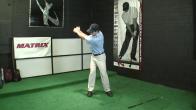



































































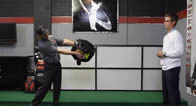






























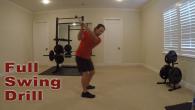
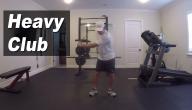
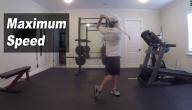
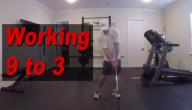





































C4 Bootcamp 3, Mar 18 2023, Session 2
Sorry, you need to be a RotarySwing Academy member to access this video.

Session 2 of 4
Good morning.
How are we all doing today?
As usual, let me know if you can see me.
Let me know if you can hear me.
Two most important things.
Next to doing proper drilling.
All right.
Hello.
Hey, Brad.
How are we doing today?
Alfred all good?
All right.
Good.
Feeling better?
Thank you, Joel.
I appreciate it.
My father called in some of the big guns.
So I'm on the opposite side of it, not over it yet.
Thank you, Charles.
I appreciate about the audio and video.
Hello, Dana.
Thanks, Joel.
Robert, good on both.
All right.
Fred, all good.
Fantastic.
Fantastic.
Well, welcome to day two.
of boot camp number three, but day two.
I will be your humble swing guide today.
RST instructor Craig Morrow and Anthony, RST instructor, will be in the chat.
He'll be kind of in and out.
He's traveling a little bit today, so his service may be a little spotty, but he should be hanging out, helping answer some questions.
Craig, I thought I missed it.
Yeah, the way that they were.
labeled was really weird, but this is number two.
It's just session number three.
Craig, I'm not going to be able to stay long.
How can I watch it later?
Okay.
So for replays, all right, usually within 24 hours, they will be posted.
Log into your account, go to the menu, member tools, my purchases.
Okay.
You can watch the replays and you can join these sessions from there.
Okay, Anthony, I got my seat belt fastened.
Now you're not having any fun, then gotta live a little, Anthony.
So what I want to do today?
While I watch this ticker and everybody file in?
Uh, I want to leave the beginning of this for some questions for what we've done up to this point, okay?
If you have any questions about what we did the other day and what's going on, you know, this first kind of, you know, five, 10 minutes, if you want to fire away, I will be happy to answer before we get going.
I'll also do the Q&A at the end to make sure that we're all on the same page.
I know that.
You know, I had a lot of questions, you know, what should I do with this, that and the other.
So I will be happy to answer now.
I know I got a lot of feedback on people's opinions on the golf ball.
Craig, never met a Craig I didn't like.
Awesome name.
Thank you, my friend.
Thank you.
I agree.
And we're a rare breed.
There's not too many of us out there.
Not too many of us out there in the world.
All right.
Oh, let's see Raven.
Okay, have some questions relating to the release which are confusing, which would appreciate some clarification.
Okay, is it left hand driven?
Depends if you're a lead side release or trail side releaser.
Now, as we'll talk about today, both hands have a role in the swing.
Okay, but the left hand, if you want to think about it, is going to be more your control.
Okay.
Trail hand is going to be more where speed comes from, but I will deal with more of that release topic today.
Do the hands actively cross over near the lead leg or does it happen on its own?
The crossover and the release is passive.
So as you start to work into the lead thigh, this crossover is passive.
You're allowing for the club to rotate.
You're allowing.
For that to happen, you should not be trying to get here and then manually making that club rotate.
Now, there are different things when training your lead wrist positions or trail wrist positions, but the goal is it is a passive release.
Is there any extension of the body?
On the post up hips move closer to the target in a standard stock golf shot, You're going to see the left hip move behind you, maintaining the tush, and the right hip's going to follow, so it's going to have to come off.
As you kind of squeeze the cheeks and extend on through the shot, in a stock shot, you really shouldn't see a ton of that extra extension towards it.
If you're working on long driving and you're trying to go out for the re-max, you'll probably see some body extension, but it's nothing that you need to force or try to create unless you're trying to get 200 plus one hour ball speed.
Let's see.
Keith, one lesson, a little practice, then some golf and my wife's first ace.
Nice.
Awesome, Keith.
Hopefully it wasn't too expensive.
Charles, on the downswing, when opening up the hips, should the torso resist the turning with the hips?
Anthony, the hips should get some separation from the torso.
It fires in sequence from the ground up.
Correct So, when opening up the hips, should the torso resist turning?
Of the hips?
The hips are what's kind of pulling the torso along, and the torso is what's open up the hips.
So I don't like telling anybody, and I think this is just a simple way to phrase it.
I don't like telling anybody to overly lock things.
So as you start to move down and I start to post my posting and clearing of the hips is bringing this along.
I don't.
You shouldn't try unless you have a big issue of an unibody turn, and I'm meaning everything turning at once.
You really shouldn't try to be like, Okay, I'm gonna get 90 degrees of separation between my hips and my shoulders because that, that's just not.
That's not healthy, it's not healthy.
Sequencing, you know, put pain on your back if you're going from the ground up correctly and your shoulders are relaxed, so to speak, all this stuff will come with the movements of your legs.
You don't want to overly do anything.
Brad, I now understand the cupping was caused by my hands stopping the force in my wrist to cup.
Exactly.
Remember, you're decelerating into it, letting the club release.
If you completely come to a dead stop, you're going to float.
Upside here at our club that everyone buys drinks, St.
Paddy's things.
That's the upside, Keith.
I will tell you, I have some horror stories from a few of mine that Anthony and I were talking, this was months and months ago.
I said, I'm good on hole-in-ones.
I'm good.
They are not worth it to me anymore.
They put me back about two paychecks.
So having a hard time with my release, my hands are even with the ball, not the head.
Or like when I was doing the compression, my hands are even with the ball and not the head.
Oh, not a head of like I was doing with the compression drill.
Today will probably help.
Today will probably help.
Because we're going to work on, I'm going to revisit a little bit of what we did and then, you know, talk about speed and all that fun stuff.
So today will help.
If you're not getting there, it could be you're stalling out your hips too soon.
It could be the trail hand taking over.
It could be pushing on the club.
But more than likely, what I'm thinking is going on is that your legs aren't doing enough and you're trying to do it more with your hands.
And when you start doing that, the club's starting to pass too soon.
But today's drills, I think, will really help.
All right, we'll go just a couple more minutes.
Any other questions?
I'm not posting up.
Yeah, that's a huge one.
All right.
Anthony can attest in the comments.
It's very simple.
If you do not post correctly, it will be impossible to have a correct release.
And that's going to be part of what we talk about today.
When we start adding speed and trying to hit these positions, if you're not using your legs, they're not leading the way.
And you're not getting that motion of clearing the hip, you won't have the space if you're not using your legs.
What are you going to use?
Preview of coming attractions, Jack, Should we be concerned in all drills about face control?
Well, define what you mean about face control.
Because you want the club squaring up itself, you want the club doing the work for you.
But if you started in phase one, you should have worked on impact square face, okay?
So you should have worked on the face control there.
Phase two, when we started adding the release to it, it's the feeling of impact and allowing the club to release.
So you should have some face awareness of what's going on.
The faster and faster you're going, the better and better you get at this.
I mean, all this stuff happens a little bit more as a byproduct.
The ball's just kind of getting in the way of your motion.
But that's what I like with the bonus challenges and all that when we talk about trajectory control and moving the ball.
That gives you a little bit more awareness.
But I would say more often than not that players get overly controlling of the face, and that's the issue.
I mean, I'm really never thinking about it that much because I know if I'm swinging through these positions.
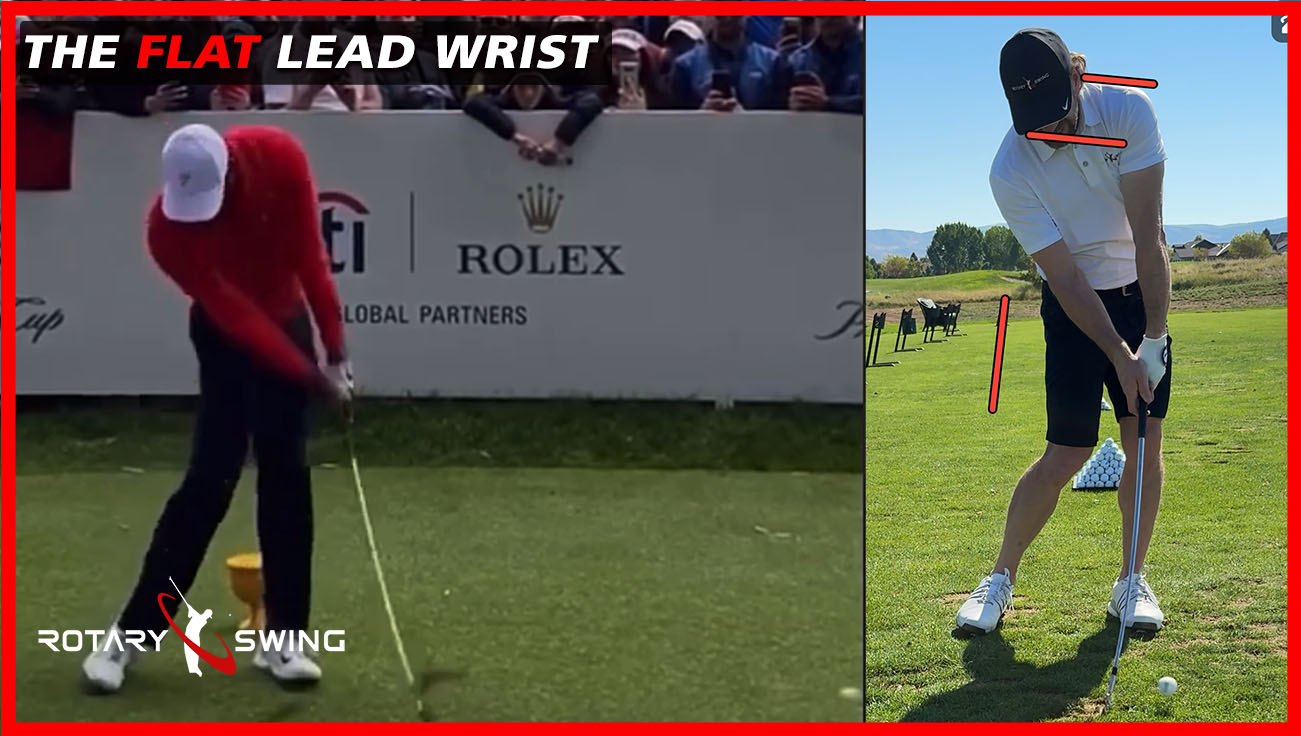
And I get my lead arm here at impact with a flat lead wrist.
Because I have a decent grip, my club face is going to be square.
But that's why those smaller impact drills and those smaller nine to three drills are really important because they do give you a little bit of face awareness.
Okay, but there's only a few players I've ever met in my entire life that, you know.
Let's say I put them on a track man or a GC quad or something.
That can actually tell me what their face is doing and match what that is telling me.
Most of the time, everybody's a little bit off, but that's why it's.
It's a feel with that lead risk and having the proper impact position.
Diane This session explained everything I was doing wrong with C4 last summer.
Well, good Diane, I appreciate it.
It'll get better today.
So having a difficult time not sliding hip forward and passing neutral.
Perfect, Charles.
We're going to talk about that one today.
We don't want to get past NJA.
I would say for the vast majority of people, the slide this way is because you're pushing too much off your trail foot.
Okay?
That's going to be the tip, the number one reason.
Because you end up pushing too hard off this.
and lack posting here.
If you're posting, if you shift weight to the lead side and you get these muscles and you're using the lead side leg muscles, especially the adductors, they won't allow you to get outside of neutral.
And as you start to post, you shouldn't have any more lateral motion.
That part's already done.
Jinx, Craig.
It happens.
Great minds think alike, Anthony.
That's what I'm going to go with.
Oh, let me do this real quick and we'll get started.
Let's see.
So on the handout section at the top, I just put the PDF bootcamp.
I just put the video list.
And I also, you might see at the bottom, not really sure where this thing pops up.
But you should see.
A discounted lesson from me.
So during this bootcamp, 20% off.
I'm a terrible salesman.
20% off if you want to do a live lesson during this bootcamp.
And if you purchase it during this bootcamp, it doesn't mean you have to use it now.
If you purchase a live lesson from Anthony or myself or Chuck, they're good for life.
So take advantage of that if you want some more personal yelling.
I will have you know that I'm a big fan of yelling and negative reinforcement.
When people join my unlimited group, I usually tell them, you signed up for this.
I didn't twist your arm or anything.
You signed up for this.
So this torture and punishment, this one's on you.
All right.
Let me get the chat back.
Do you offer in-person lessons?
Yes, Mike, I do.
I do.
I'm in the great state of Georgia.
If you go to the menu, live golf instruction, worldwide golf instructor list, you'll see all the instructors.
You'll see myself, Anthony, everybody, kind of like state related.
And you can get in contact with me from there.
All right.
I think we are tapped out on people.
So let's get started.
Hope nobody's a little under the weather today from yesterday's festivities.
Because today we're going to be a little bit more active.
All right.
And by active, I mean, we're going to be moving.
Okay.
Hey, Larry, you made it.
Today is going to be talking all about speed, all right?
And when it comes to working on speed, there's two things that I like to bring up or there's two things that I want you to kind of think about, all right?
Number one, speed is being athletic, okay?
It can't compromise or it can't.
be built up of a lot of thought.
It's going to be very hard to do something fast if you're thinking a lot about it.
And I use this in my lessons.
I use this in the last boot camp.
I use this all the time.
Think about like when you're learning a movement pattern or you're learning something new.
Okay.
And let's just say, for instance, snapping.
All right.
So when you first learn to snap, you're like, okay, you're pushing your fingers together and you're doing everything that you can.
to try to make a snap and then you finally get one.
Okay.
You finally get a snap.
All right.
Then you do it again.
And then you keep doing it and you can do it faster.
And now I can sit here and have a conversation.
I can look around the room.
I'm not even thinking about it and I'm still able to snap my fingers with some pace.
That's kind of what it's like with speed.
When you're thinking about a lot of components, you're going through this checklist of going here, here, here, here, here.
It's really hard to get some speed.
But the more you keep doing the same thing and the same thing over and over again, it's easier to increase the pace, do it faster, and be able to do it without thinking about it.
So at first, if you're lacking a little bit of speed and you might be hitting some good positions and stuff, don't fret, all right?
There's a learning curve to this.
The more you do the same thing over and over again, the faster and faster you'll be able to do it, okay?
And that's kind of the whole goal.
Be very.
Consistent isn't the word, but you need to be consistent or diligent.
Do the same thing over and over and over again.
It will get faster because when you start looking at the brain, you'll start them, you start creating these neural pathways and then you'll start to myelinate these neural pathways.
And then those pathways will be able to transfer faster because you insulate them.
We can get all that other stuff, which is important, but that's why.
The second thing is when you're working on your golf swing, There's a cyclical cycle to it.
All right.
You're always going to be going between mechanics and feel.
All right.
So you're going to start out with mechanics.
Okay.
And I always kind of give it the demonstration like this.
You're going to start out with mechanics.
You're going to try to perfect the mechanics.
I need to hit these positions and do all that.
And then the more and more you do mechanics, you're going to start to round down to feel.
You're not thinking about these things anymore, but you feel what weight shift is, you feel what posting up is, you feel what release is.
And then as you get that down and you're in the field component, you start stacking other things on your swing, and then you start rounding back to mechanical.
I got to start thinking about my shoulder plane, or I've got to start thinking about, you know, my secondary axis tilt, or whatever topic it is.
But you start, you, you go in this cycle, You go in this cycle, you go mechanics, it turns into feel, it starts to speed up, it becomes easier, you stack a new thing in a mechanic, and you just kind of go around and around and around.
Well, the first session, we were very mechanical.
First session, we were talking about getting in the proper setup, moving of the weight, release of the club, using of the hips, takeaway, on and on and on down this list.
Flat lead wrist, toe up, having a little bit toe down.
You know, you're thinking a lot, and you're probably still thinking a lot at this point, which is it's okay.
But today, what we're going to try to do is we're going to try to put the speed and athleticism back in it.
To take care of some of the stuff that we've already started to work on, okay, and this is how you work on a golf swing, you work on mechanically.
You pick up the pace a little bit, you try to make it a little bit fluid, it breaks down a little bit.
Then you go back to the mechanics until you're ready to add some a little bit more pace and feel to it.
Make sense, hopefully.
So the first thing that we really need to kind of grasp is we understand how to control the club a little bit and we understand how to release it.
And so today, with speed, you need to understand that power does not come from brute force, and power does not come from your arms.
Everybody's kind of tapped out, all right, the, you know, the when we talk about Driver next weekend, you know.
Most players are tapped out in the mid 90s, and they're tapped out in the mid 90s because they're just using their arms, all right, doesn't matter what equipment's done in the last 50 plus years.
How come speed has not changed in all the amateurs pros?
they're taking the advantage of it?
But how come speeds haven't changed in all amateurs?
And that's just because they're powering with their arms.
The arms only have so much juice in them.
If you watch one of the old videos, the five minutes of mastering rotation back in the late 2000s, before the teens, it takes 32 pounds of muscle to create 100 mile an hour club head speed.
And you just don't have that in your arms.
Players are tapped out because they're just using their arms, you can only get so much.
They don't get the correlation, they don't get the kinematic sequence from their body of how to generate speed.
Okay, and that's what we're going to try to do today is we're going to try to link all this stuff together.
So I tell players in the last camp, when you aren't getting speed, just think about you're probably using your arms.
That's it.
Doesn't mean it's a lack of skill or a lack of talent, but you're using your weakest power source.
You're gonna have your arms, which are gonna be really weak.
And then what players tend to do is they use their arms and they're like, okay, well, I need to use my body.
I keep hearing on the tour and all this that it's body, body, body, body, body.
And so they start using their arms.
And then they start trying to use their body, but they do everything all at once together.
So now they're using their arms, which aren't very powerful, and now they're using a ton of body rotation.
Which is going to be the weakest of your three power sources?
Okay, let's see.
Okay, so that's going to be the issue, that's going to be the weakest of the power sources.
And so you keep going through this cycle of speeding up the body, and I'm meaning the whole shebang, or overworking the arms.
And you can't figure out why you can't get the speed.
So what we're going to try to do today is we're going to try to get the body involved.
We're going to try to put some feel into it, and we're going to try to put some athleticism into it.
We had a video out a long, long, long time ago.
This is the first portion of Rotary Swing where we had to throw the ball drill when RST first came out.
We went from RS1 to RST.
This was one of the original videos was the throw the ball drill.
The reason that we had that video was for players when they were working on getting stuck, but it was also to start comprehending.
how to sequence the body to transfer speed, okay?
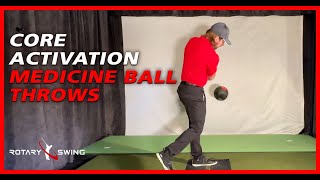
So if you have room at home or you have the ability, pick up a ball.
Pick up a foam ball like I have here.
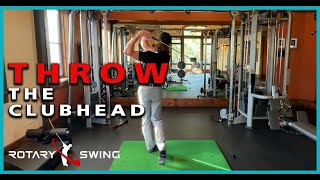
And I want to start to do some throw the ball drills, okay?
Because this is the easiest way to start training the proper kinematic sequence.
And we're going to work this from this throwing the ball.
All the way into the swing, okay, I found out the hard way when I first started teaching this not everybody knows how to throw a ball.
I relegate a lot of or use metaphors, and It syncs things to things that I know in life.
We all do that.
So I watch and I'm a fan of all sports.
Growing up in the U .
S.
, baseball, I grew up in Atlanta.
And baseball back in the early 90s was a heck of a lot of fun.
And I played baseball up until my freshman year of high school.
But a lot of players from other countries, that was never really taught to them, the sequencing of.
How to throw a ball, how to pitch, make those motions.
So with this, it's very important that you follow it this step by step, because this is how you would really learn a throwing motion.
If you're trying to teach somebody to throw a ball and actually have something on it, okay.
So this is what I want you to do.
First.
First thing I want you to do is I want you to take this foam ball, real ball potato, whatever you have.
And if you don't have one, just air do it.
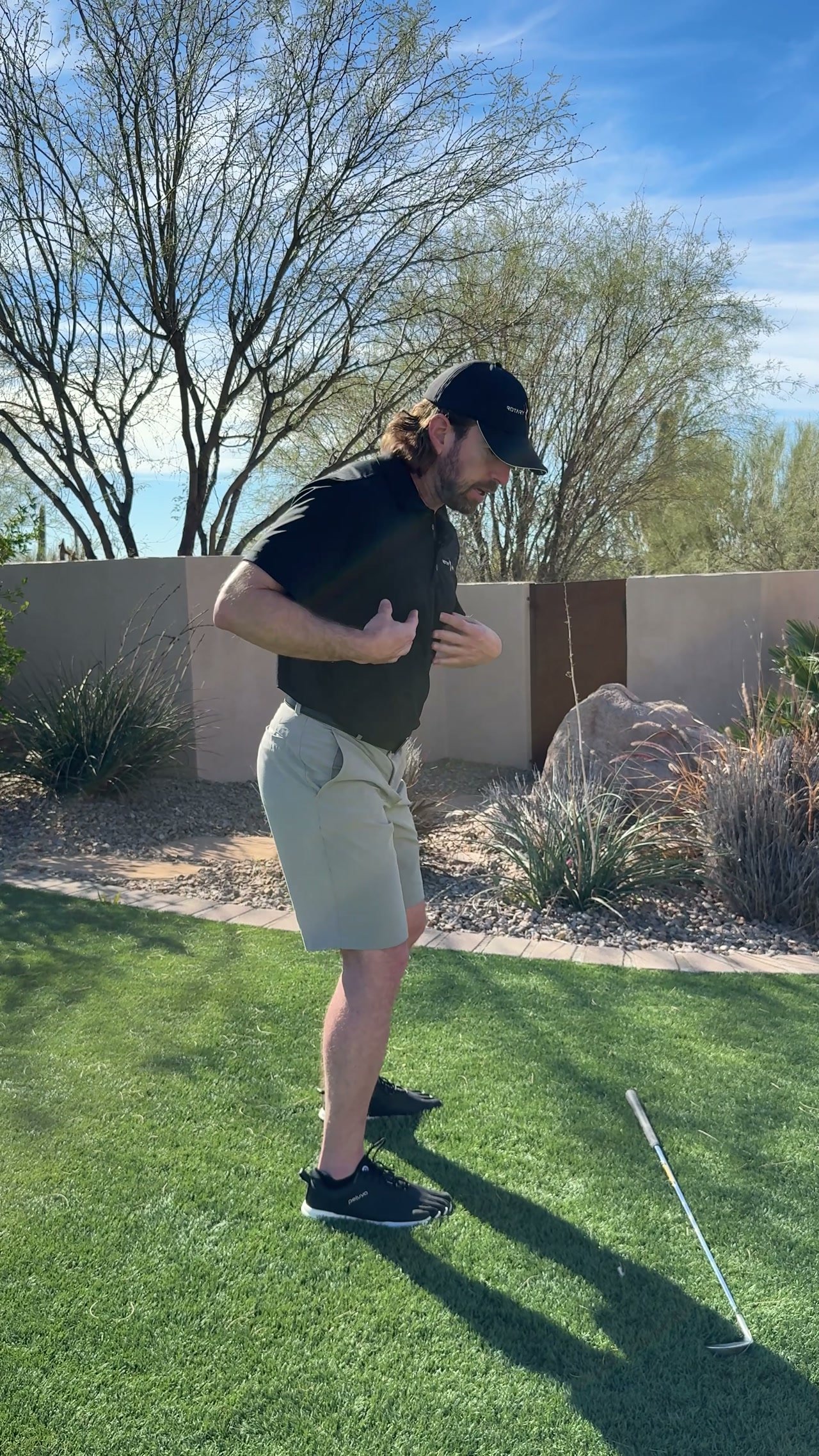
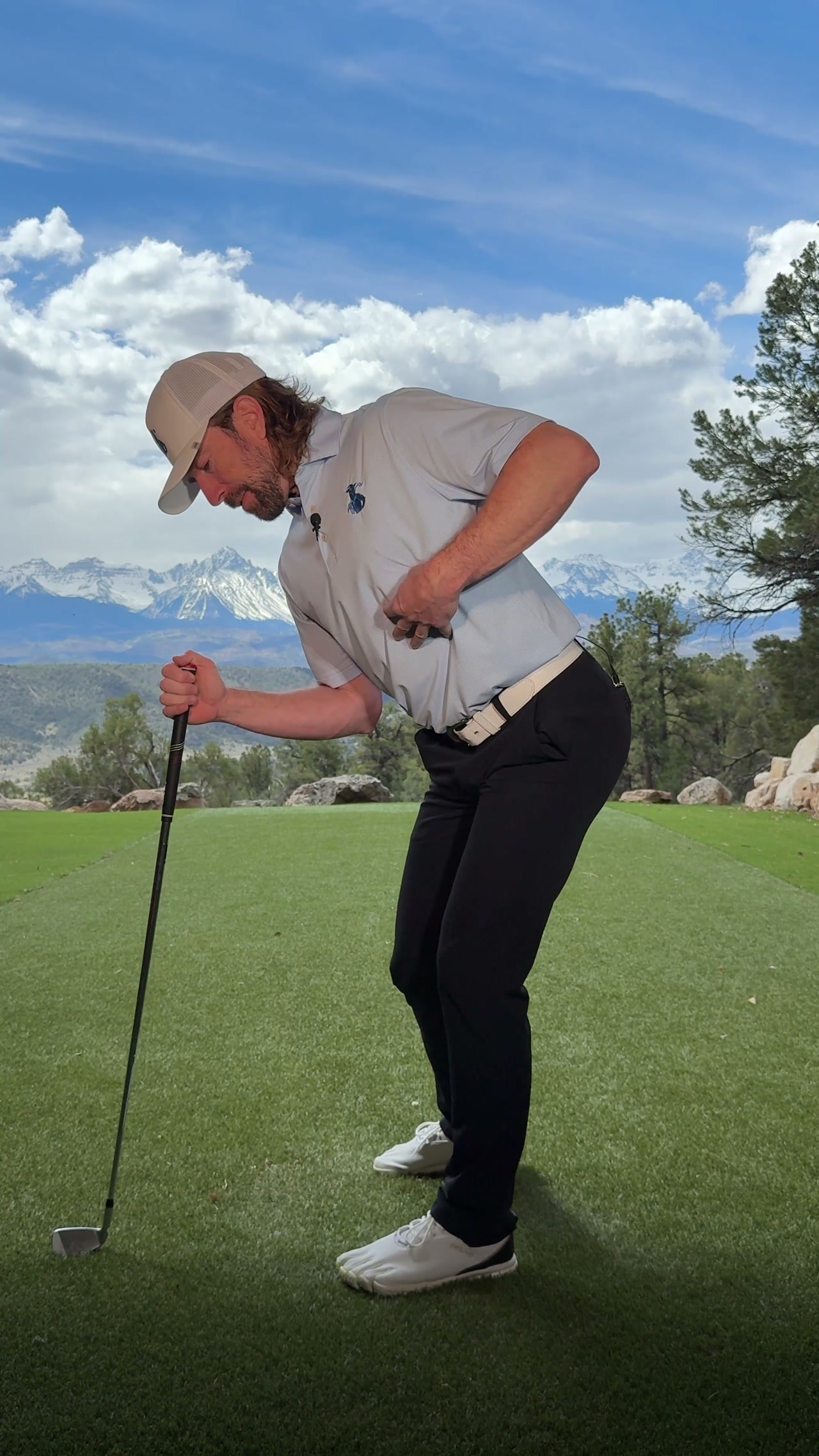
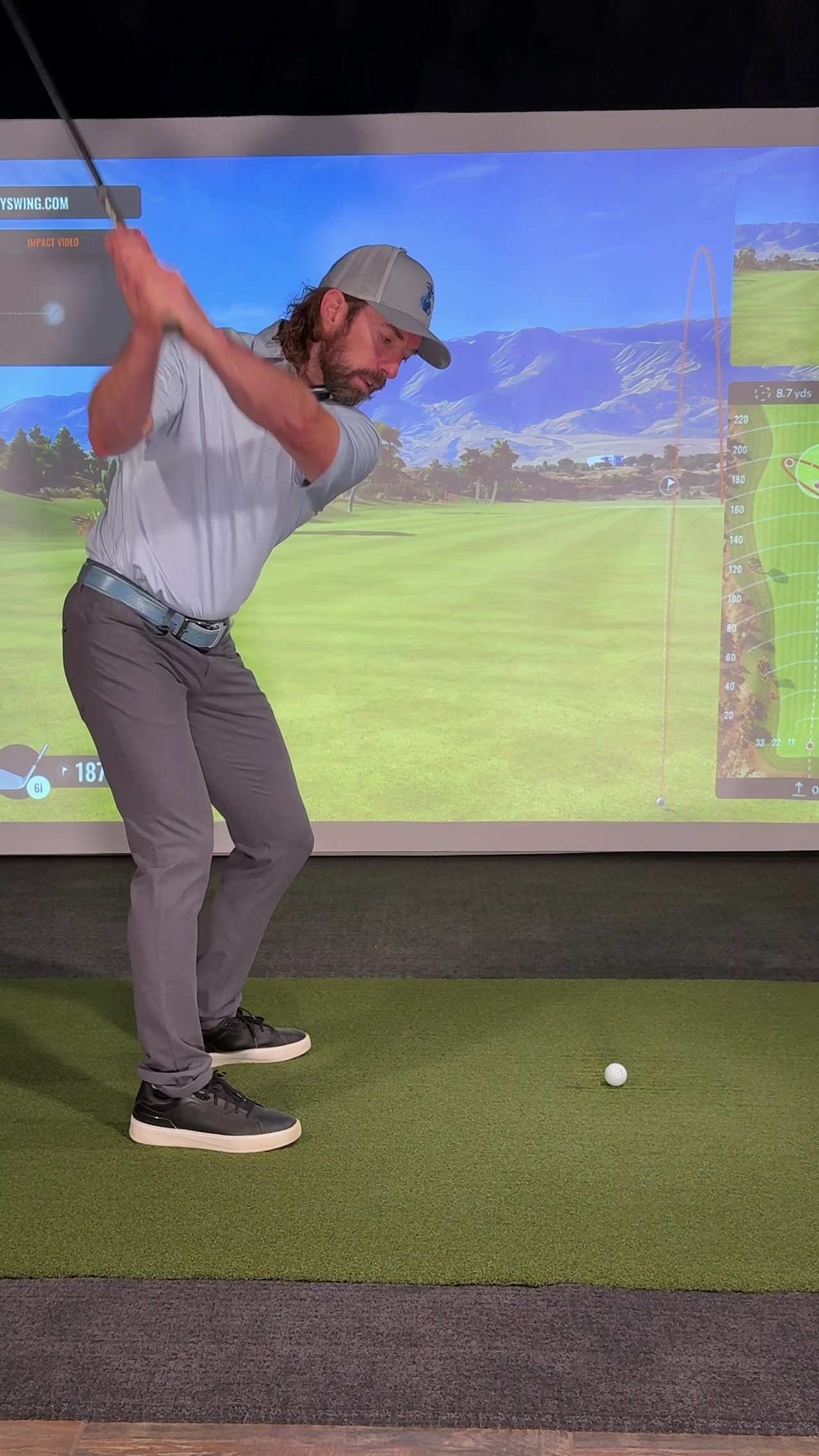
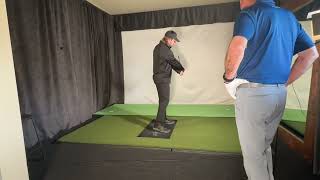
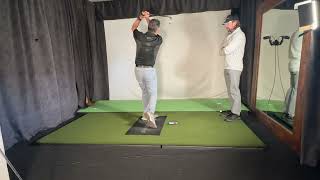
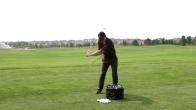
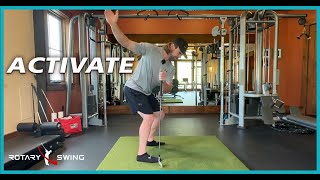
And what we're going to do is we're going to stand right here and we're going to elevate our trail arm in front of us.
And we're going to add just a little bit of flexion, no more than 90 degrees.
You can see right there, no more than 90 degrees.
And when we're in this position, the first thing that I want you to do is I want you to make sure that your arm's still in front of you.
All right.
You don't rear this back this way.
I want you to make it still in front of you.
And we're going to start to allow our left foot to come up and we're going to rotate our shoulders back.
OK, so we're going to elevate this in front of us and we're going to rotate back and get all of our weight pressure on our trail leg, maintaining the same width.
OK, and then what we're going to do is we're going to step, pivot and throw.
My mantra is shift, post and release.
OK, what we're going to do first is we're going to step.
So you're going to plant the weight on your lead leg towards the balls of your feet.
Not towards the heel, towards the balls of the feet.
You're going to plant the lead leg, then you're going to post, and then you're going to throw.
When you get here and you plant and post, what's going to happen is the weight or the pressure is going to move from the ball of the foot towards the heel of the foot.
Which is going to allow you to straighten your lead leg, it's going to allow you to clear your hip.
And then from this position, we're going to throw the ball now, the key is is where we're throwing this golf ball.
So if you'll see, I got a blue ball right there and I got this other blue one in my hand.
And what we're going to do is we're going to get here.
We're going to preset it.
And we're going to try to do this in one fluid motion where we step, pivot, throw.
Okay, So if I were right here like this, this is what it would look like.
Missed it by that much.
One of these boot camps, I'm going to get it.
But you can see where I threw the golf ball, okay?
If I add my arm, load, rotate to here, step, pivot, throw, okay?
This is starting to teach you the sequence of the downswing.
the kinematic sequence that you need to move in.
You hear we talk about from the ground up all the time, okay?
This is teaching you to be a little bit athletic.
I'm here, throwing the ball.
Now, it's crucial that we do this correctly for a lot of different reasons, okay?
The first thing that I want you to notice, as I.
step and pivot.
And where's my arm and hand right now?
Where's my trail arm and hand?
My trail arm and hand's in the delivery position.
What is the only thing I have to do now?
Technically, all I got to do is let the ball throw.
All I've got to do is just let it release.
This is where players mess up when it comes down to the speed thing.
And I'll show you the two most common ones that I see.
Players will get to hear, and when they start to step, pivot and throw, this is the first one that I see.
Okay, they step, they pivot.
Where's my arm right now?
My, I'd never let my arm come down.
I didn't let my arm react to what my arm or my legs and what my body was doing.
When I step, that's going to bring my arm down to here.
when I post and pivot, that's going to bring my arm to here.
Now I'm not making that happen.
I'm allowing my arm to work with the sequencing of my body, okay?
So I'm getting here and I'm allowing my arm to work with the sequencing of the body.
I'm not restricting it for dear life.
This goes back to a comment a second ago about torso separation, hips, da-da-da -da.
I don't like overly restricting things.
Now, it's a case-by-case basis.
Don't get me wrong.
There are some players, Where I need to say, Hey, don't even feel like you're moving anything.
But that's not everybody, okay, so you have to think about it a little bit for yourself.
That's the first one.
As I see, players don't allow the arm to move all right and because of that what happens?
Well, now you've got this entire window where you're having to power the ball with your arm, OK.
And this is where timing starts to come into it.
Now I've got from here.
To try to hit this blue ball.
Well, think about when I do it my way and I step pivot.
Oh, now I only have this little window where I've got to try to be accurate.
So it's the first thing that comes up with timing and club going all over the place.
Now, for the reason that most players don't have speed.
Is because they get to here like this, and when they step, they don't step enough weight and they go like this, and then they post and finish their move.
They power with their arm, you can kind of catch.
There's a theme going on with this.
You do not power throwing a ball with your arm, you do not power the golf swing with your arm.
The power in the golf swing transfers passively through this arm, okay?
We spend a lot of time building your takeaway and building your backswing, getting you to load and rotate, you know, to recruit muscle fibers so you can have short stretch cycles and, you know, a lot of fun stuff.
But as you're doing this, okay, what does your shoulder, or more specifically, what does your trail shoulder do?
When I set my arm like this, keeping it in front of me and rotate my shoulders, or I make a golf swing to this position, what does my trail shoulder do?
Well, my trail shoulder moves down and in, okay?
It glides across my body, my back, okay?
Across the back of my ribcage right there.
And what that does is that starts to create a link, okay?
So now my shoulder blade moves down and across.
Creates a link with my spine.
Well, what do you think happens if I go from here and throw my arm?
Well, now I lose that link?
So all my power is just in my arm?
Or what do you think happens when I go to here and I step pivot and I just leave this here?
And I never let anything come down.
Well.
Now I have, all I have is powering my arm, I start to lose this kind of connection.
Power is transferred passively in the swing through the trail arm.
And how it's transferred passively is because when I shift my weight in post, I'm letting my legs and my body bring my arm down.
Well, when I get to this position, my scapula is still down and in the box.
It's still connected.
So now when I use my legs and use my core and use my shoulder, everything down into this position, now that power chain can be delivered.
into that thrower, into that ball.
It's transferred passively.
You're not actively trying to create speed with this.
A good way to think about this is think about pitching.
If you're going to throw a hundred mile an hour fastball, okay, would you throw a hundred mile an hour fastball like this?
You'd never get to a hundred miles an hour.
Okay, and also your accuracy would be all over the place.
All right, they call you wild thing.
If you wanted power, you would have to use everything with your body, you would step, pivot, throw, and the last possible thing would be release.
But you would be powering it with your engine, and it'd be powering transferring through the trail arm passively.
I can't create 100 miles an hour like this.
all right, I can't do it, but I can create 100 miles an hour like that.
Because that's going all through my body.
Okay, I'm going up the chain through this.
It's not actively trying to push.
I'm not actively trying to push this ball out there.
I'm trying to get the speed to transfer and let go of it.
Okay, so let's set up here.
Step, pivot, throw.
Get the feeling of using your legs, letting the sequencing work the arms.
All right?
You don't have to work the arms so much, you do it that way.
Okay?
I'm going to do one more.
Set it in a position.
Step, pivot.
Throw.
Okay?
This teaches you how to sequence.
That's all the golf swing is.
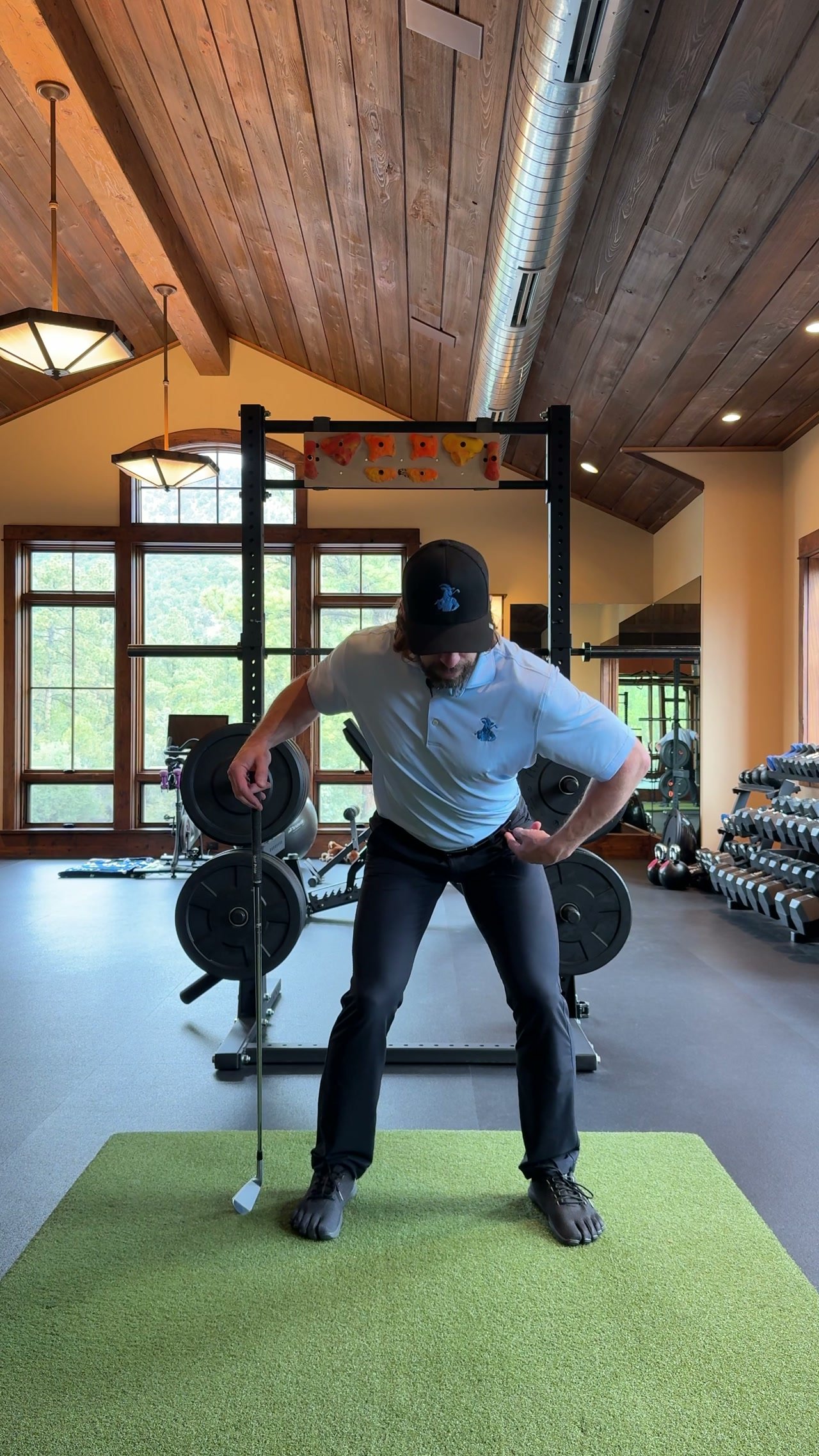
Now, if you can do that, what I'd like for you to try is to do this with a club.
Let's do the same thing.
Let's take our setup.
We get here.
We're going to preset our arm in the same position in front of And we're going to rotate to the top.
Okay?
Now, when you do this, one of the most common things that I see people do is they go like this.
No.
Arm stays in front of the chest.
Okay, remember, we got to keep that connection in this upper bicep, upper pectoral.
That'll help us keep our shoulder in the box and our position to be able to transfer speed.
So we're going to set up right here, step to here, and I want you to do the same sequencing where you're in this position step pivot, throw, step pivot throw.
Okay, Now, remember, as I talked about, we're allowing this club to release.
I don't want you to get to here, and then when you step and pivot, you're.
No, no, no.
Just like with the ball, you're letting it go.
You're just not letting go of your club because you don't want to go through your wall, but you're letting the club release.
Still just letting the club release.
Setting up, step, pivot, throw.
Okay?
and this should start to get you to sequence a little bit.
Once you can do a little bit of the throwing with the ball presetting it, then I want you to attempt it from the ground.
So you're going to start from here, and you're going to do the same thing.
Load and rotate.
Get the lead arm.
It's about parallel to the, or the trail arm, about parallel to the ground, no more than 90 degrees.
Get everything on this side.
And the same thing.
Step, pivot, throw.
And remember, your target is still this golf ball down here.
Your target is still the golf ball.
But I need you to start feeling how this arm and club are being brought down by your legs.
That's of the utmost importance, how you're allowing it to react to your sequencing.
For players that struggle with transition, for players that struggle with weight, players that struggle with.
The kind of core of the golf swing, which is to load and rotate, you know, load and rotate, technically shift and rotate, but this is how you naturally start to do it.
This is how you start to get a little bit out of your own way.
You were thinking a lot during these phases of just doing this motion, but this is starting to make it a little bit athletic.
All right.
Starting to make it a little bit more of a movement positions you're swinging through.
Okay.
Once you can accomplish that mission.
My suggestion.
Okay.
Is don't go straight to keeping the feet on the ground.
It's a, if you watched any of my, you know, C4 journey, I think session five and my phase two.
I, this is a drill that I use not.
this one in particular, but lifting of the feet is something that I use often just to get moving.
My legs get tired, they get lazy.
So sometimes when I'm hitting balls, I just start lifting the feet just to awaken my legs so my arms and chest don't start taking over.
So if you're able to get that motion, okay, what I want you to do is now let's start this from the ground, going to the same position.
And as you do this, just let your.
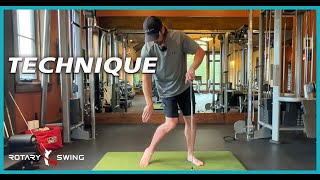
Lead foot pick up a little bit.
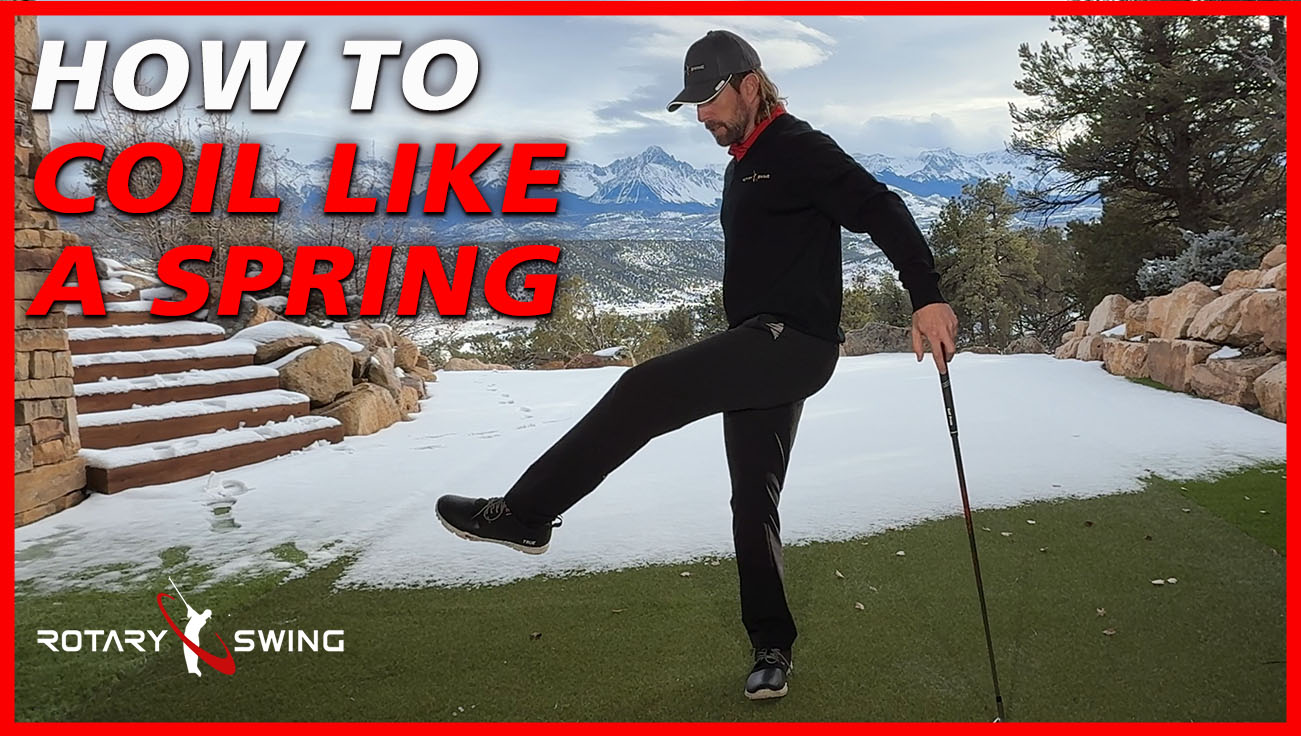
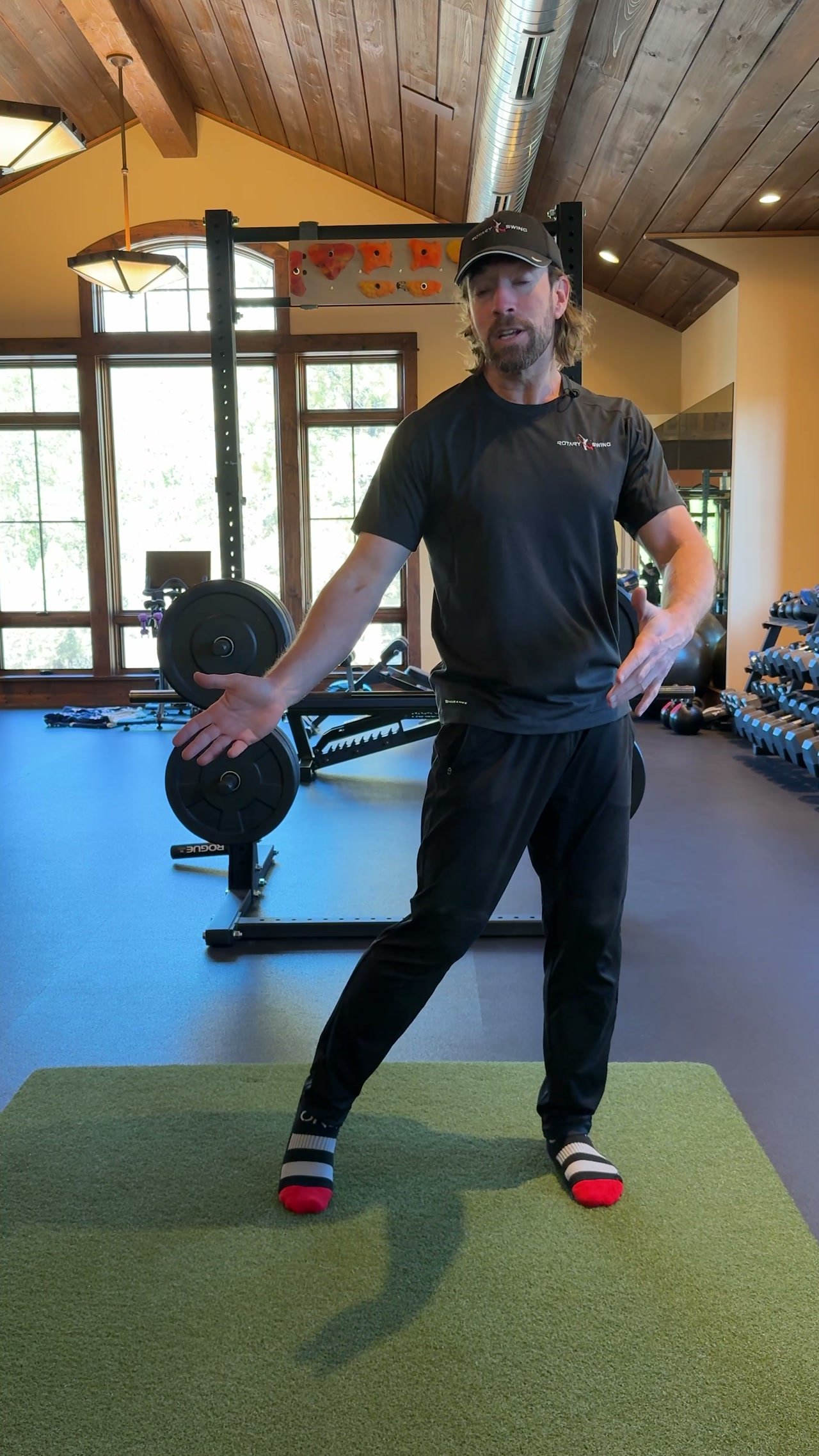
You don't have to leave the ground or anything.
Just let the heel pick up a little bit so you're out towards your toes, kind of like a Nicholas move, all right?
Because what this will do is this will help you still keep it in your feet, still keep it in your legs.
So you allow the foot to pick up to here, and then you plant the foot post and let it release, okay?
That'll make sure that you keep it in the legs.
And then you keep dialing it down.
You keep dialing it down.
You work on getting to this point to where now we can just kind of do it without picking up the feet.
And we can go weight, rotation, shift post, let it release.
Or step pivot, let it release.
But what this should do is still keep you thinking about your legs, not really worrying too much about the arm.
All the arm has to do is stay in front of you.
And it should be fairly relaxed so that you can get that speed transfer.
But what this feeling is starting to feel legs and whip.
Starting to feel legs and whip.
But this will help you with weight shift, moving the transition, a lot of good stuff.
Just in case, I'll do a couple of these from down the line.
I don't need that many years of bad luck.
So we're going to go right here.
My trail foot's a little bit below my lead, so if I chunk it a little bit, that's because I'll need.
Seven years of bad luck.
So if we start from here, we're up to this position, shift post, let it release, up to this position, shift post, let it release.
Okay, but still keeping the thought in the legs.
You're allowing the arm, hand and club to react to what your legs are doing.
And what this is teaching you is to be athletic, to not think about This is going to help you.
If you haven't graduated beyond phase two yet, and you're still doing those drills, fantastic.
You need to stay there.
Okay.
Remember the circle that I talked about earlier.
This will put a little bit of feel into it for you to be like, okay, this is how I work the legs and how I get moving.
But when I do it at this size, at this pace, this speed, it breaks down.
So I'm not quite ready for this unleashing speed, you know, lead arm parallel position.
I need to go back to my nine to three phase two.
But this understanding how the leg works when you get back to your phase two will help you put a little bit of feel.
To start getting over the mechanics of what we did in day one.
So if if you're not ready to graduate, still try a few of these drills.
Still, try the one arm drill where you're moving your legs, because it'll start to make your legs waken up.
Be a little bit alive and move through positions.
Okay, this isn't training you to be a trail side releaser.
Okay, I repeat, this is not training you to be a trail side releaser.
What this is doing is training you sequencing and how you generate power.
In this point.
Okay, I am a lead side releaser.
And all that means is that when I come down on the golf swing, I control everything with my lead hand.
All right.
I mean, literally everything's being controlled by my lead hand.
Same thing that we trained on phase two.
Most players are overly trail side dominant.
So we spend a lot of time working on controlling it with the lead hand or getting the lead hand under control.
But both arms have a job in the swing.
Lead arm has a job.
The trail arm has a job, okay, all this is doing is teaching how the power is being transferred through your trail arm.
Okay, so to plug it into what we did the other day so that we can have some balance.
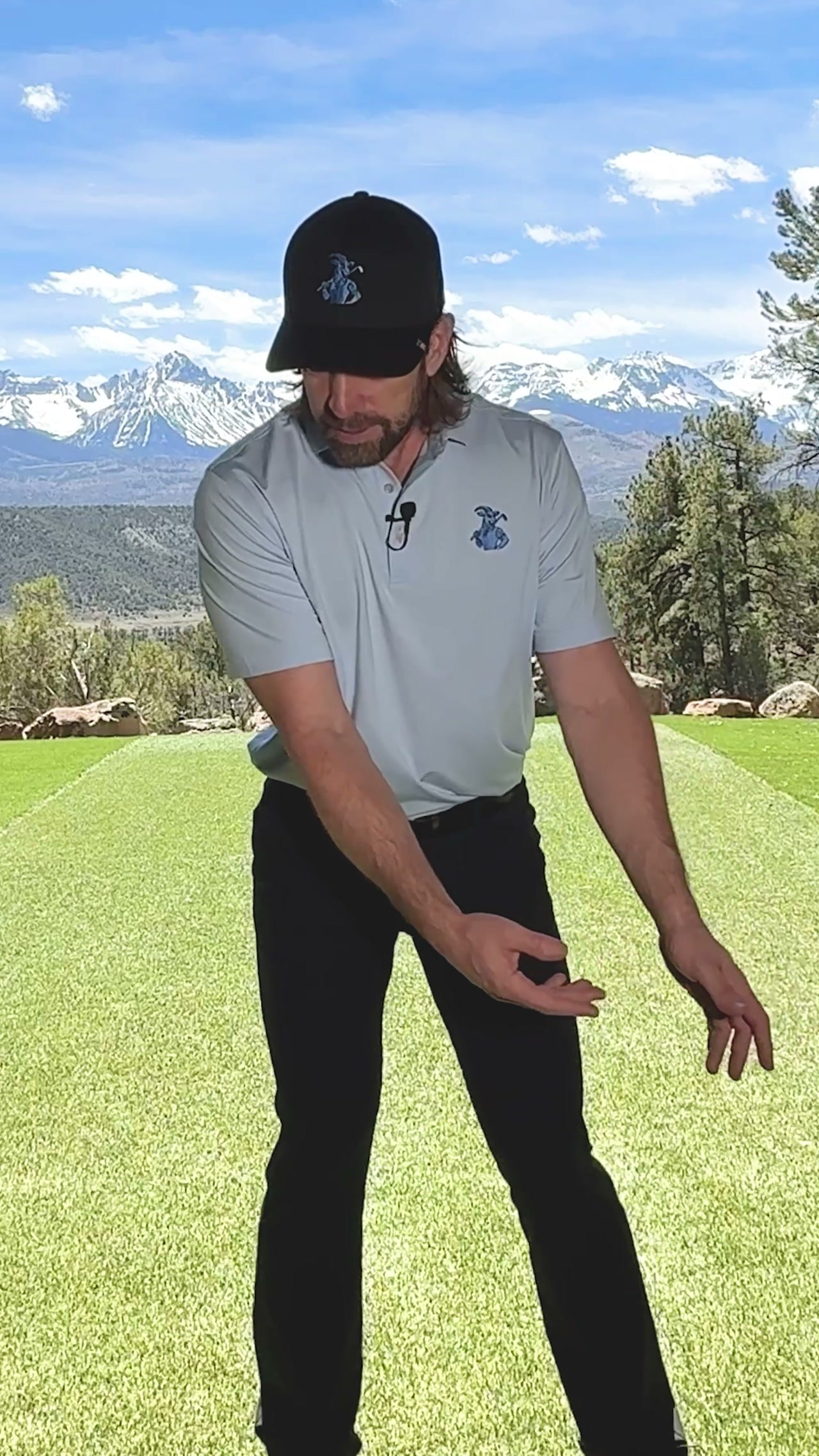
Think about this hand as your control hand, and think about this hand as your power hand.
All right, the glove hand is controlling everything, this guy's powering everything.
Okay, if you're able to get where you're here and you can sequence and you can hit all your checkpoints.
That when you work down here, it's like, Okay, I'm posted up, I'm stacked, I'm hitting it and my head's staying down, the club's releasing.
What I want you to work into is doing this with a little bit of let go, because this will start to help you really understand passive power transfer.
So take your setup, and our goal is to get to an L to L size swing, the same place that we were doing the drill, okay?
And all I want you to do is make your swing to here, all right?
Now.
Compared to what we did the other day, all we're doing is just rotating a little bit more.
We'll work on refinement of mechanics of it on Tuesday.
All we want to do is just make a little bit bigger swing.
So we're going to get to here, but as you shift post, I want you to let go of your trail hand, okay?
So it will look like this.
I'm up to this position.
I let it go.
And you see where my trail arm and hand are still in front of me, not way out here, way back here.
But you'll start to feel how, oh, okay.
I'm not actively pushing on the club with this.
I'm having it on there because the connection is going to give me that speed transfer.
Step pivot, let it release.
I'm not powering it with my arm.
I'm not yanking my lead arm.
I'm doing nothing different than I was doing with my right hand drill.
I'm now just having my left hand on the club and kind of doing the reverse.
But when I do the reverse and I let go of it, I can now start to feel how the power is transferred.
It's not transferred actively, it's passively.
Think about, I'm sure, I would imagine some people are watching this sport right now.
Think about basketball, okay?
I'm using my legs.
to get leverage from the ground.
And as I do that, as I push off the ground, I'm getting the transfer from my legs through my core to my arm and hand, and then I release.
Okay?
Think about the difference in a free throw and a three-pointer.
Free throw line.
I'm going to use a little bit of legs.
Release.
Now, when I get back to the three-point line, do I do the same thing with my legs and then.
Do my arm and hand like that to get the extra distance out of it?
No.
The only thing I do when I get back to the three-point line, I make the legs just a little bit.
I get a little bit more knee bend.
I leave the ground a little bit more, so I get that power transfer.
But my release and my delivery is still the same.
It's still relaxed, loose, so it can have some snap in it.
It's still.
Nice and relaxed.
I'm transferring the power through.
I'm allowing this zap of energy to go through my arms and hands.
Okay.
So I'm working from here.
I let go of it.
Still thinking the same things that I was previously.
Okay.
From there, the goal would be.
can you work it into an L to L, leaving everything on, which would be going from here.
And I'm going to take my setup.
I'm going to go L, shift post, L.
And I'm going to hold it.
And when I get here, I'm going to go through the same checkpoints that I've been going through.
My post it up and my stack, my trail foot behaving.
When you get to an L, it's going to leave the ground a little bit, but it shouldn't be like this.
Because our goal right now is only 150 yards with a 7-iron in a 10-yard window.
You don't need that much push.
I promise you.
Okay?
I got a message.
To be lead on release, does a lead hand need to hold the club harder or stronger?
I'll get you in just a second, John.
As you go from here to here, this will create 150 yards doing it properly.
Okay.
And you don't need all this crazy push to do that.
Because we've already started with impact where we're hitting 10, 15 yard shots.
You've added release and a little nine to three body motion, which should be 40, 50 yards because you just have the club.
And now think about what we've done with this pitching motion and sequencing.
If I'm here throwing a ball like this, and now all of a sudden I give you the tools to be able to use your leg, sequence, use all this muscle fiber and power, that's going to be a big jump in speed.
Okay?
That's going to be a big jump in speed.
So we should be able to hit our marks without adding all these other variables that we don't need in the swing, like excessive push and all that, not to get those numbers.
Yes, I know there's genetics and age and all these little things.
That will add up into it, but we should be able to get some speed into it.
And that's why we set this section as 150 10 yard dispersion.
Left or right.
You get a little bit more room, but not that much.
Okay to be able to get this down now.
An answer to John's question about lead hand release, grip pressure in the swing.
Okay, starts at about a two at address and works to about an eight at impact.
Now that scale is all relative.
A two to me may be a four to you.
An eight to me may be a five to you.
Grip pressure is going to naturally increase throughout the swing, whether you like it or not.
All right.
You're doing things at pace.
You're doing things with speed.
There's literally nothing you can do about it.
Grip pressure is going to increase.
Being in a lead side release though, Yeah, most of your pressure is going to be in these last three fingers, all right?
You're going to have a lot of it in the last two, but the last three lead fingers is going to be where a lot of your pressure is, okay?
You don't need a death grip, ever.
You don't need a death grip, all right?
You start out at about a two, and as you start to use your legs, your grip pressure is going to naturally increase so you can maintain the club and still feel the release.
But there's no need to put any death grip on it.
If you go to death grip side, what do you do?
You're adding tension in the wrong place too much.
And you're not going to allow for the face rotation, so now you're going to lose the face rotation speed.
So when you're working on this and you're going through these drills, okay, this drill helps take care of a lot of different fundamentals that we already tackled in the first session.
Okay, now.
We talked about weight shift, we talked about, you know, Tush Line, we talked about a lot of things.
But this drill is going to start to kind of help some of those ailments.
So, you know, even in the little boot Camp PDF handout, you know, I have that little section, you know, faults and fixes.
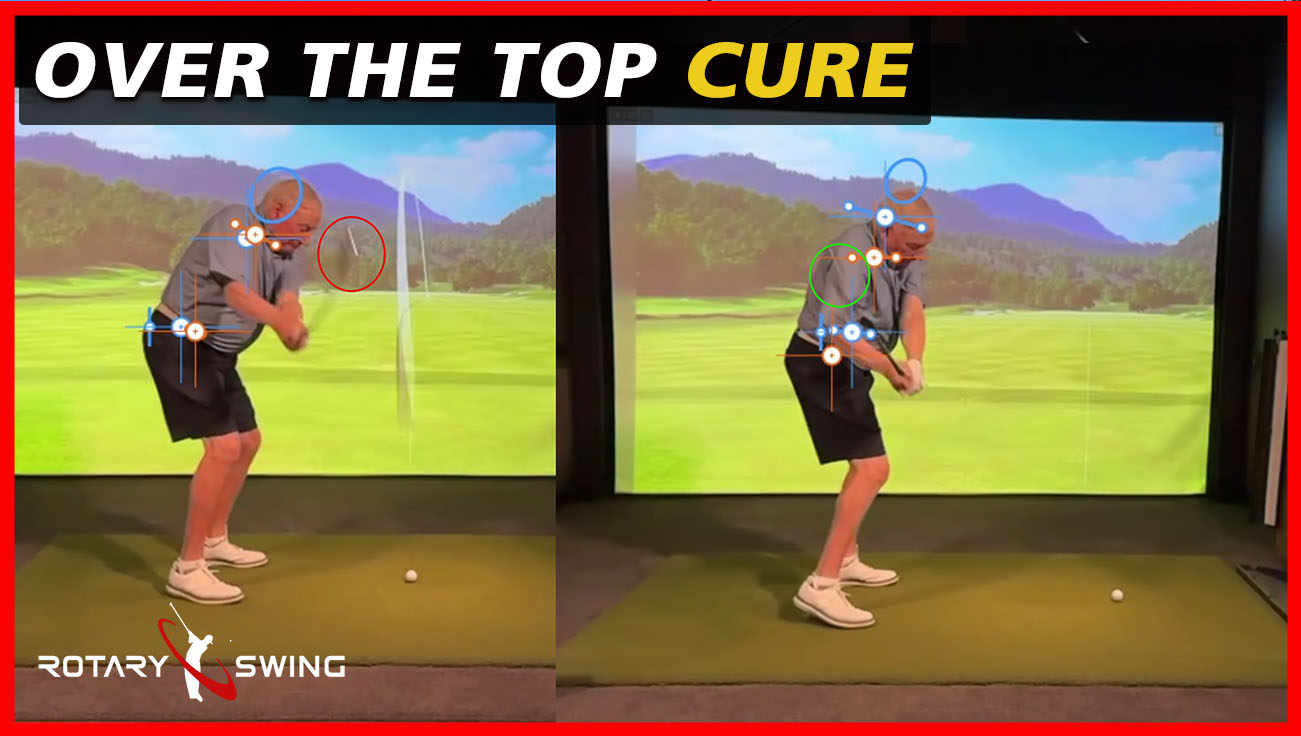
Well, this drill is going to help you with over the top.
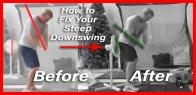
If you're getting steep in your phase two, or you're getting steep in your real life, as you work from here into this position, okay, this arm in front of you.
Rotated.
I'm not as rotated as I should be because I'm trying to look at the camera.
But as you're rotating here and the arms in front of you, when you step, what should your arm be doing?
Your arm should be reacting and going down.
The legs are leading the way.
This is helping you start to shallow out the club because you're starting it from the ground up.
Now, what is over the top?
That's going to be taking the trail shoulder, taking the trail arm, and pushing it out that way.
Well, remember, I told you the first rule is you do not power it with your arm.
Okay.
So if you're not powering it with your arm and your first move is to shift your weight, this club is going to start to shallow out automatically.
I didn't say use your shoulders.
I didn't say do anything.
I literally said load and rotate to here and shift your weight.
And if you do that, this club is going to start to shallow.
The only way you're going to come over the top is if you don't shift your weight and you try to power it and speed it up.
That way.
So the shoulders and arm and hand take off.
Casting.
Your first move from here isn't to push your arm and hand.
Okay?
You're not powering it with your arm and hand.
As you get to here and you shift, watch what happens.
I go from my right foot to my left foot.
All right?
This is how you start generating lag.
It's the change of direction.
I'm going this way, and as I start to step this way, because Marm and Hannah relax, and I'm not firing them, I can start to create a little bit of a down cock.
I can start to create some angle.
That's how it's naturally created.
Tush line.
Well, most people lose their tush line because they don't use their hips correctly.
Well, what does this teach you?
If you struggle with that, go to the lifting your feet version.
All right, I'm going to get to here.
I'll just do it with both hands right here.
I'm going to get to here, okay?
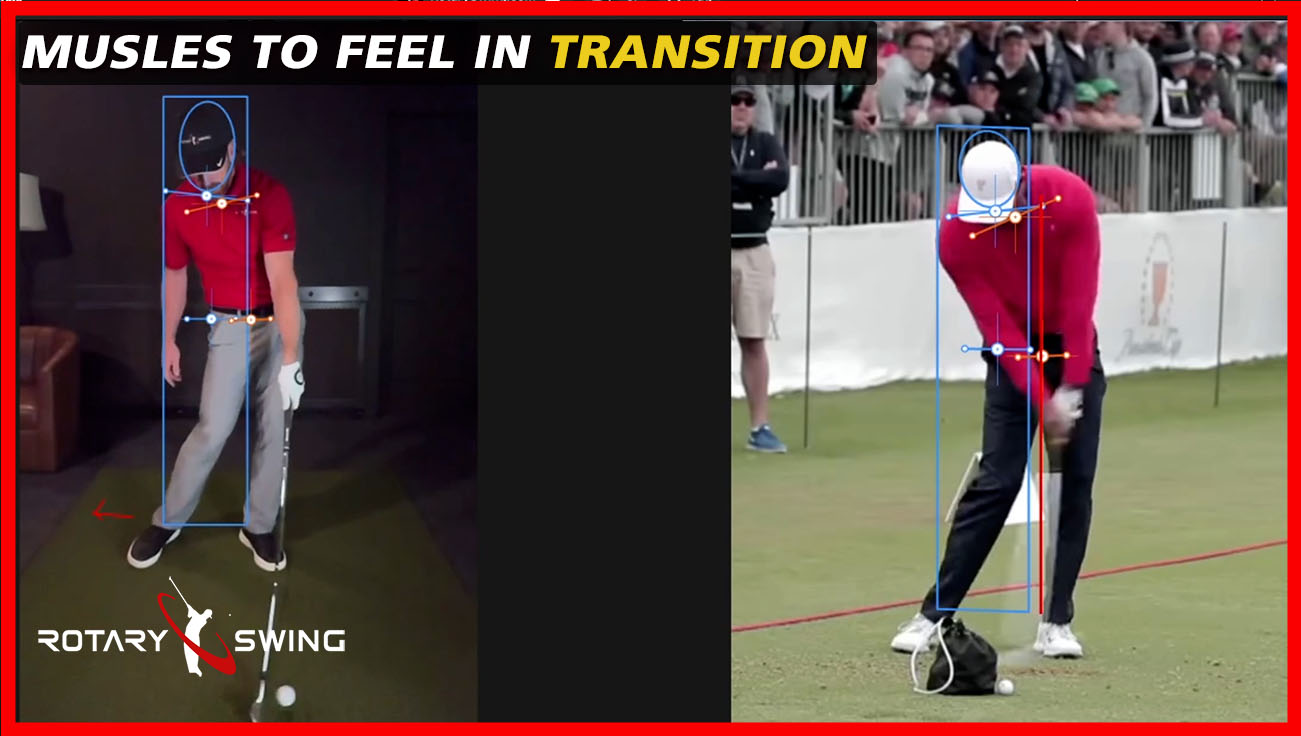
I'm going to let my lead foot pick up.
Well, when my lead foot picks up and goes out towards my toe, and I told y'all to load into your trail side, well, my weight starts to move towards my heel.
Now my hip's going this way.
My weight's on this side well now, my right butt cheeks maintain well.
Now when I plant, both of them are maintained.
And now as I work on planting and posting, where's my left hip going?
My left hip's going this way.
Okay, it's going behind me.
So it starts to teach you how to use your legs and maintain tush, because you're now rotating and pivoting correctly.
If you get to here and you start using your arms, well, we know you're not going to maintain tush.
But if you get to here and your first move when you plant is pick up foot, it looks really funky, but you get to here and your first move is plant, pick up foot.
That's what most people do in their swing, you don't have to have a show of hands or anything.
How many people in their transition right here has gotten a review from myself or Anthony, or looked at it on film?
And as you start to come down, your first move is this?
your first move?
is this right heel or trail heel?
Start lifting well.
If I'm doing this, throw the ball drill with one hand, two hands, lifting up my feet.
I'm not going to plant this foot and lift this one at the same time.
Okay, you plant it first.
Well, now this is taking care of that first early push, And then you're working on, okay, now I'm planted and I can clear my hip behind me.
So it'll help you out with your tush long.
Reverse pivot.
This one should be a no-brainer.
If you struggle, your hip going this way and your upper half going this way, well, I'm going like this.
I don't think I can do that.
In fact, I can't even have a breath doing that right now.
So this will help you pivot and rotate, start getting rid of reverse pivot and having the legs.
Lead the way.
Okay?
This starts to get you to use your legs and feel what your legs need to do.
So our goal in this drill is going to be 100 reps.
Okay?
You need to start where you need to start.
But I want you to mix in throwing the ball in L to L.
If you can't do the throw of the ball, you can't hit these positions or that just feels you need to spend your whole time doing it.
But the goal is going to be 100 reps.
And what I would say, if you can make somewhat of that motion, I would split it, Do about 20 of these to get that feeling with the club and then get both hands on there.
And spend the rest of your reps either letting go or leaving the hand on if you're able.
to do it.
But this is where this accountability thing comes in.
I can't see what you're doing.
I can only see what I'm doing because I got a camera right there.
You need to film yourself.
You need to look in a mirror.
You need to ask your wife, ask your brother, ask your dog, get a swing review, post on the community, get a live lesson, all these things that you can do and figure out, okay, where do I really need to be if you don't know?
Okay.
But you need to get some feedback and be like, okay, you know what?
I'm just not ready for two hands yet.
Because when I go L to L, I start doing the thing that Craig just talked about, I start doing this over the top.
Mover.
I start trying to power my arm and shoulder.
So for me right now, I need to maybe stick with the one arm, or I need to let go with the trail arm.
Until I can kind of start to get the power transfer passively and I don't need to power it with this.
Okay, you may need that, but you need to film and you need to look at it to see where you need to be.
What I would say is that most people just need a blend.
They need to do some of the one arms, getting the body motion, doing the throw, the ball motion, single arm.
Okay, they may need to do 50 and 50, may need to be 80 and 20, but the goal is 100.
You may need to do just 100 of them.
That's fine, but I want to.
I'm looking for 100 in between now and the next session.
Okay.
But this is how you really kind of master the first three phases of the swing.
Bootcamp's a lot of information, a lot of material in a short amount of time.
But my goal for this camp isn't for day one, you're this golfer, and then next Saturday, you're a plus five handicap.
My goal is to give you a guideline of what you need to do to get your game to the next level.
What you need to do first to get this impact position, what you need to do to release the club, what you need to do to start adding some speed.
And at this point, this is a lot of the tools that only everybody needs, to be honest with you.
I look at a lot of swings, all right?
I think we're up to 116,000 swing reviews at this point.
And that doesn't include human lessons, clinics, you name This is kind of the cycle where the better players really are.
They focus on having this impact position and good control, doing the basic small shot well.
Then they focus on, okay, from the kind of belt high to belt high, I can have that basic control and impact and have some release.
So I can have some speed, some effortless speed, and still in a tight marginal window.
But if I want to make the swing a little bit bigger, And I want to add some pace to it.
I can, but I can still keep it within the same margin of errors that I put myself in.
The first two, the impact and the kind of nine to three length.
Okay, I want you to still test this stuff out with me during this boot camp, but remember, go back and look at this stuff, okay?
But if you're struggling with any of those things in what we did in phase two, the little foot drill help.
Doing some of these may help out with your phase two.
Because you're like, okay, I got my legs working.
All right, so I did my throw, the ball drill feels good.
Now I'm going to go back to my phase two for the other day.
Okay.
Oh, okay.
Now I feel how my legs work me into impact.
That makes sense now.
Okay.
And then you stay there, get your reps in, and then you can go up to adding more speed with it.
But if I can leave you with one thing today.
When you go to the range or you're at home or you're on your simulator, wherever you're doing, if you're at this phase and you go out to the driving range and you do your impact and it's good, you do your phase two and you're nine to three with your release and it's good, but you start getting to this L to L and you're like, okay, well, I can do my 50 yard seven iron here to here.
But when I go L to L, Craig's telling me I can hit this thing 150 yards.
I know there's some parameters.
McCray's telling me I can hit this 150 yards and it's only going 70.
It might be going straight, it might be flush, but it's only going 70.
What are you using then?
What is the difference between you and the pro?
The pro does not have more talent.
And I can guarantee you, the pro rarely has more brain.
And it's kind of on the opposite spectrum.
So it's not the intelligence.
It's not the talent.
It's the sequencing.
It's the overworking of the arms and the underworking of the body.
Okay.
If you're not getting the juice out of it, you're just doing what most amateurs get stuck doing, which is trying to power it with their arm.
And they're forgetting about what's the engine, what's really generating.
What the sequence, the kinematic sequence.
That really generates a lot of force in the swing, how you pull the leverage out of the ground, how you use these short stretch cycles, okay to get good speed.
So if all of a sudden you see like, I'm not going there.
Take the left hand off and start doing some throw the ball drills and get those legs alive and start feeling that kind of passive transfer, then get the hand back on it.
And then when you start trying to hit the ball, just kind of forget about the ball for a second.
And be like, I'm just going to get my legs and get get some things being snappy, but not from these.
Then you'll start to see the speed's gonna increase because you're not limiting yourself to only one power source, which is going to be your weakest, which is trying to use these things.
I would never throw a punch like this, all right?
I'd throw a punch like that.
I'm gonna get the force from here, okay?
That's gonna be how I get a lot of speed out of these things, okay?
With that said, I appreciate it.
Thank you for stepping by on this Saturday morning.
I know everybody's got a lot of stuff to do.
Life, family, golf.
So I appreciate you giving me an opportunity this morning.
I will stay around.
I will get to get some Q&A in for any questions that we have.
Hopefully everybody understands what's going on.
But I know we've done a lot of stuff in a short amount of time.
If you have questions, I'm here.
I want to make sure that we're all on the same page.
All right.
If you need any of the handouts, they're in the handout section.
Replays will be.
I know I said at the beginning, I'm saying at the end as well.
Replays will be.
Login, menu tree, member tools, my purchases.
You will find the replays there.
I can't tell you exactly when they're going to be there because they're not up to me, but I will try to get it posted as fast as I can.
It usually is about a 24-hour window.
All right.
So I'm going to go over here to the notes.
And I don't know where we are in the questions, and it's a little bit impossible for me to scroll back through.
So I'm going to start with Craig.
Craig, I can already feel the difference.
Great.
Love it.
Hopefully you're starting to understand what is that.
Diane, 150 total.
I saw that up at the top.
Now, like I said, there's still going to be genetic factors, age, what have you.
But if you're doing a seven iron, you know, we should be able to get you to that 135, 150.
I mean, there's, don't get me wrong, but we should be able to get some pop into this.
Your seven iron doing this L to L shouldn't be 75 yards.
James, is there a desired range for angle attack with a seven iron?
Uh, I mean, you're gonna look at.
Your standard is going to be between like a four and a seven downward angle, but that's all player dependent.
I mean, there's so many factors that go into.
You know what perfect angle it is for you?
Because it depends on how fast you're swinging the club.
But four to seven down is typically going to be the average.
All right, John, during the passive release, when will the hand rotation start?
Right before hitting the ball, when hitting the ball, or right after hitting the ball?
John, the club is always rotating.
Now it rotates at different rates throughout the swing.
Okay.
Rotates at different rates.
But the release, as you shift and post, starts to begin as this club gets into the trail thighs where the vast majority.
Of this release takes place as you start to get into this trail, Thigh is getting the last three feet of the swing.
This is going to be where, um, that's really going to happen.
Uh, it's always rotating, okay, but that's going to be the vast majority of where that lead side release happens or release happens at all.
CRAIG I'm loving this crash course.
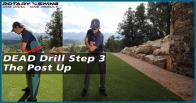
Thank you Bud, I appreciate it, Charles when doing the dead drill, I remember, Chuck says at the top of the backswing, shift weight to the left, squat to square, post up.
When I'm doing the L to L, I shift weight to the right, then shift weight to the left leg and post up without feeling squat to square.
Is the squat to square occurring passively as I'm posting up or should it be sure to squat to square?
Squat to square happens so fast as the position you hit and move through it.
Great answer to it, Anthony.
Think about what's happening right here, Charles.
When I'm in this position doing this drill, okay, what happens when I plant?
What happens when I shift my weight right here?
Do my hips stay like this?
When I plant, my hips square.
And what also happens?
I shift.
Look at my legs.
I'm going from here.
I'm getting into a squat, okay?
So squat the square is happening without you even knowing it.
It's what's happening when you're shifting right here.
The squat to square is a position you move through, and it happens when you shift your weight.
They're the two byproducts of shifting the weight correctly.
Guy, any other drills to help with the pushing right hip out at the start of the downswing?
Struggle to do it without out to in at impact.
Lifting the left foot seems to help.
Yeah, I would like for you to lift the left foot.
Work on your foot pressure work or your foot movement right here.
First thing is, this will.
That'll help, okay, because it's going to be really awkward to go to here and go like that.
Okay, that'll help.
The second thing is now if if your first move is to really push off that and get a lot of that early extension, I'm gonna I get this is for you guys, not everybody else.
When you get to this position and you start shifting, all right.
I want you to think about kind of the magic box, getting your knees right here in alignment and you're shifting.
Okay, so you're going to see my knee flexion is increasing a little bit, but making sure I get into this magic box right here.
If you're doing that, what you'll usually see is this where this knee starts to get way out ahead of this.
Technically, there is a tiny bit of closed hip slide in the golf swing.
But if you work on getting into the magic box in your shift, and you can actually type in magic box in the search box on the site, that'll help out.
That looks like one of your dance moves, Craig.
Anthony, we all know I am not allowed on a dance floor.
They do not allow me on a dance floor.
It's pretty scary.
So we don't allow for that.
No other questions?
There's no way that I didn't create any other problems in anybody's brain.
Nothing?
All the way up until this point.
Everybody understands setup.
impact, 9 to 3 phase 2 with release, and adding some speed with an L to L.
There are no dumb questions.
If you're just even on the fence.
You got me here for this time.
Anthony and I are at your disposal.
It's like having a 24-7 coach.
No, I will not pick out the rest of your March Madness bracket.
I know a lot of people already busted because of Arizona.
Okay.
Anthony, what is Tuesday's session going to be on?
Tuesday's session is going to be on full swing.
How do we put all this stuff together in a full motion?
Charles, I tend to hit the ball thin but straight.
Where on the contact, Charles?
Toe thin, bottom of the club thin?
If you tend to hit it thin but straight, what I'm thinking is that you're getting a good timing in your hands, so you're getting a lot of face rotation.
And so when you start to create a lot of face rotation manually, if you're.
You know, practice a lot.
You can get that timing to hit it straight, but when you get excessive rotation like that, you start getting that kind of clicky shot that thin.
Another thing would be, as you start to work down, you start hitting it thin, getting really high.
With this lead shoulder, changing that fulcrum point too much.
Uh, let's see My general question, are there clinics available?
Yes, there will be clinics this time, or there will be clinics this year, Mike.
We should have some dates for you in the next few weeks.
But there will be some clinics this year.
We are finally over this whole COVID bug thing now.
Should be able to get those clinics back rocking and rolling.
On the backswing, is it all upper body rotation?
I mean, it's weight shift.
It's rotating your abdominals, your obliques, pulling your lats, a little bit of long road, a little bit of rhomboid.
Brian, how long is your line?
Less than 30 minutes.
I can tell you that I probably never finished one on time, though.
Because I want to make sure you get all the work in.
Go F to you.
Bernie, understanding.
Yes, execution, another issue.
Thanks again for this.
No problem, Bernie.
I appreciate it.
While watching your swing been concentrating on your left shoulder, how do you keep from opening that shoulder too much?
User 1351598.
I had to practice the Dickens out of it.
Two things to think about with that.
So I'm going from here, all right?
Well, my left shoulder is still below my right, right?
So as I start to shift weight, why would.
I need my left shoulder.
Typically, that's going to happen because players are pushing so much this way.
They start to change their tilt, change their shoulder.
But I had to work on a ton.
I used to be a big trail side hitter.
Now, then I switched to lead side.
So as I did like with the dead drill and did a lot of these lead arm onlys, see how I'm just kind of letting my arm work down?
Because I'm not trying to power with my arm or my shoulders.
To keep that shoulder down, you can feel.
like this shoulder stays almost down below a shelf and you don't want it to pop up.
It will eventually, but you can feel like this shoulder, like if you had a shelf right here, you don't want to break that shelf.
But doing a lot of lead arm and letting go of that trail will really get that arm working down so you won't power it with your shoulders.
Excuse me.
Remember, I'm still on my deathbed.
Bottom of the club slightly on the heel.
That's probably pushing on the right side, Charles.
You're probably getting a little bit of early extension.
You're probably going like this, all right?
So you're pushing the heel of the club out towards the ball, and this shoulder's opening.
It's typically what that thin heel comes from.
My practice, it started very well, flushing shots.
It was great.
Then I started pulling and then shanking.
I felt more right side was getting involved.
The drills in the session today seem to help.
Yeah, this will help you, Fred, because this will help you to start to really get the legs more involved.
And really understand the passive power transfer from the trail side.
What to do if my shoulders tend to open up too early?
Uh, there's a lot of different things to that if your shoulders tend to open up too early.
Like we have the trail shoulder back when you're starting to shift, okay, feel like you're back staying towards the target, or feel like your trail shoulder is literally maintaining its position when you shift?
All right.
You may need to feel just a little bit of your backstand towards the target.
When adding the right hand for power, I have the tendency to shank.
Why would you have the tendency to shank when adding the right hand or right arm for power?
It's because when you're getting here, shifting, posting, and letting it release, you're powering it.
You're pushing the arm out.
So where do you think the heel's going?
Is there a feeling of balance and lead and trail hand risk?
Right now, I feel there's a fight between face control, lead hand, and throwing by trail hand.
James, the lead hand is your control hand.
Remember this one, passive passenger, just allowing for speed transfer.
All right.
So the glove hand should be the control.
There is a big fight.
That's why people struggle so much is because their trail arm wants to do everything.
Okay.
That's why we start and do a lot of lead side work because usually the trail hand is too dominant.
Let's see.
Can I purchase a live session and use it later?
Yeah.
Discount will be applied at checkout if you use the one on the screen right there.
If you purchase it, you have it for life.
So you can use it next week.
You can use it in 2025.
It's funny because I still have some students from years ago, like 2018, 2019 boot camps, that still have live lessons.
They haven't used it yet.
Some of them I've messaged.
They're like, oh, no, I'm not ready yet.
Like, I want to get this part down before I use that lesson.
And on my end, I'm like, Well, why wouldn't we do the lesson so that you can get that part down?
Spending less time working on the swing, more time on the course.
It's kind of the opposite of what I do.
All right.
Stay on about two more minutes, and then I will continue on with life.
Any other question?
How much is it?
Everything has a cost.
How much is what?
The live lessons?
Human lesson?
Live lesson, I don't even know what it is to be honest with you.
It's 20% off though.
I think mine is 125, so it should be I think 100 flat.
I think it's 100 flat.
Well, if we don't have anything, everybody knows what they're doing, then I guess I'll continue about my day.
I got to get back to hitting balls at some point in time, too.
Brad, awesome session.
Thanks so much.
Thank you.
All right.
No, if we don't have any more, I think I'm going to use Brad as my send -off.
Brad I appreciate it.
If we don't have any more questions, then we will fire away.
Thanks Craig.
No problem James.
no problem.
My pleasure John.
That was amazing.
Thank you.
thank you Lewis.
How does the live lesson work?
All you need is a iPad, iPhone, Android, some type of webcam.
You can be at home, driving range, backyard.
I do live lessons with people just in their office, just to talk about the swing and work on motion.
Some that have foam balls, some that don't, so It's kind of up to discretion in what you have.
Fred, thank you.
David, thanks, Craig.
I feel better every lesson.
You're not the quarterback, are you?
I'm sure you've gotten that before.
Alfred, thank you, Alfred.
Now I'm interested in the quarterback part.
I teach a lot of quarterbacks.
You'd be surprised.
A lot of quarterbacks.
This motion, what I'm doing right here, should be second nature.
It's not, though.
It's odd.
Once you get that golf club in somebody's hand, it's like everything that they've ever done goes out the window.
Give them a baseball bat.
Give them a golf club.
It's like, what happened?
Raymond, thanks, Craig.
No problem.
My pleasure.
All right.
So with that being said, I hope everybody has a lovely Saturday.
Get some work in this weekend.
And we will see you Tuesday next week, 6 p.
m.
Eastern time.
All right.
If you can't find the replay, menu, log in, menu.
remember tools my purchases you can watch the replay and join from there this replay will probably take about 24 hours though just saying y'all have a good one i appreciate it all right