















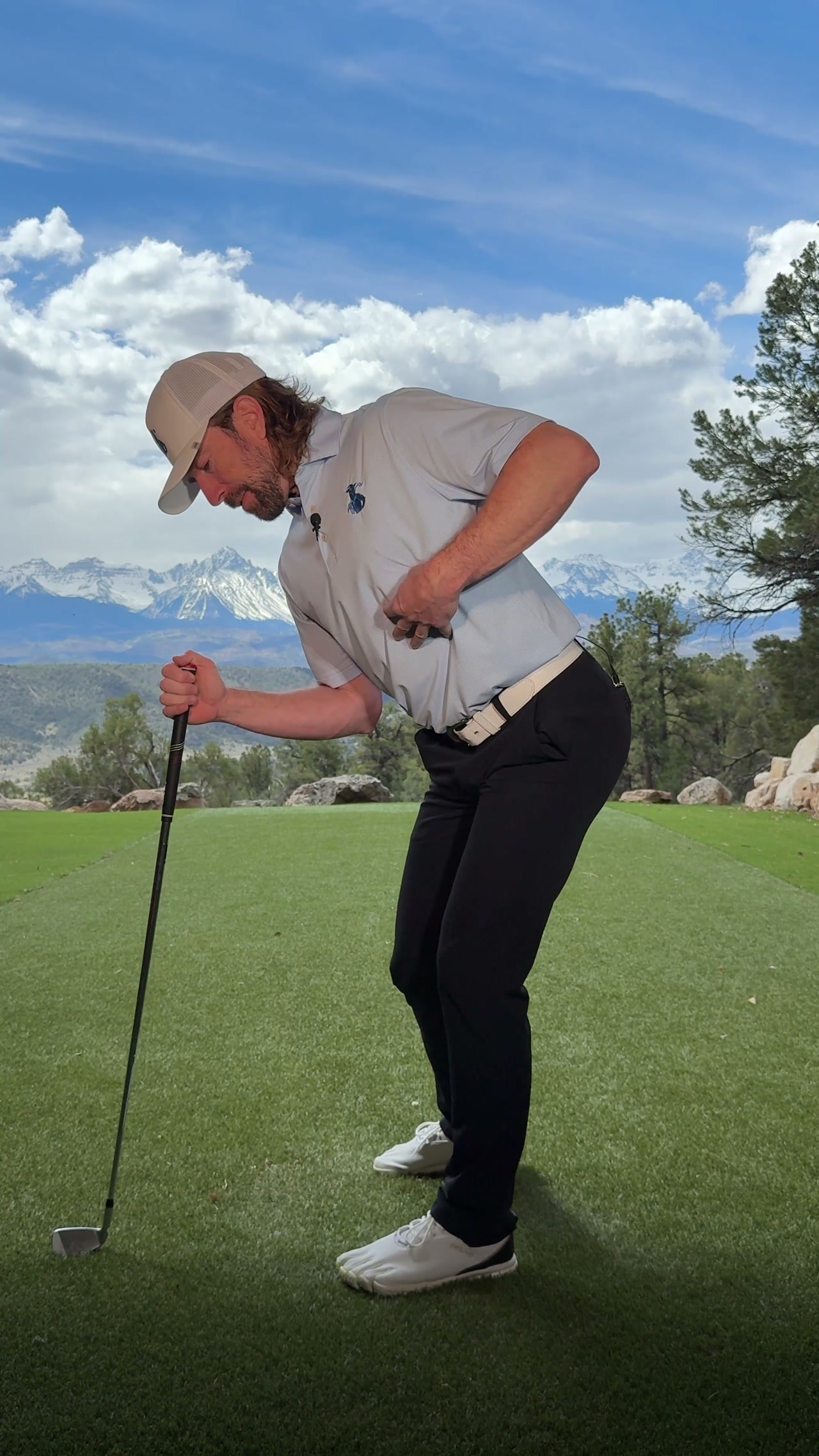
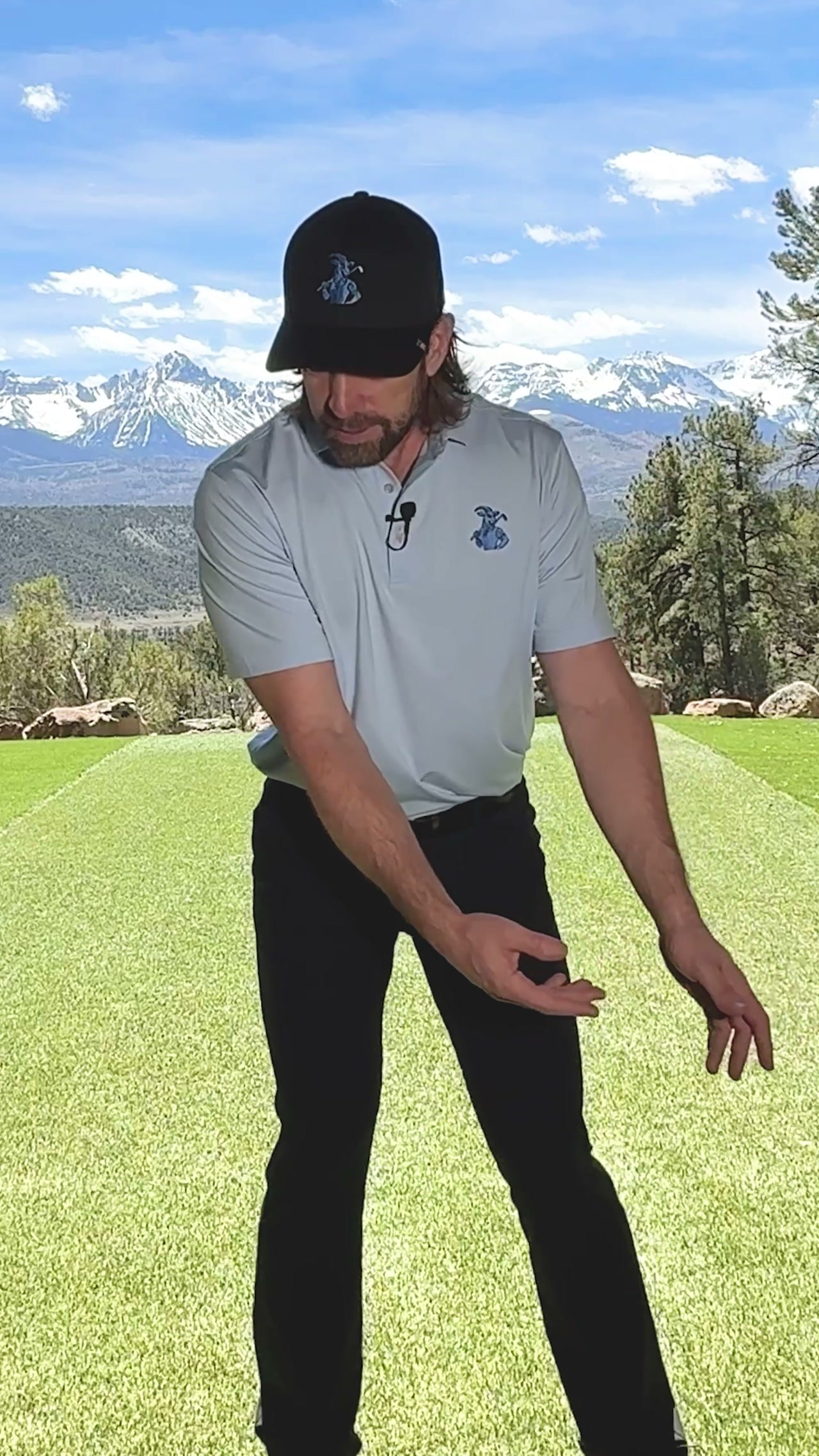
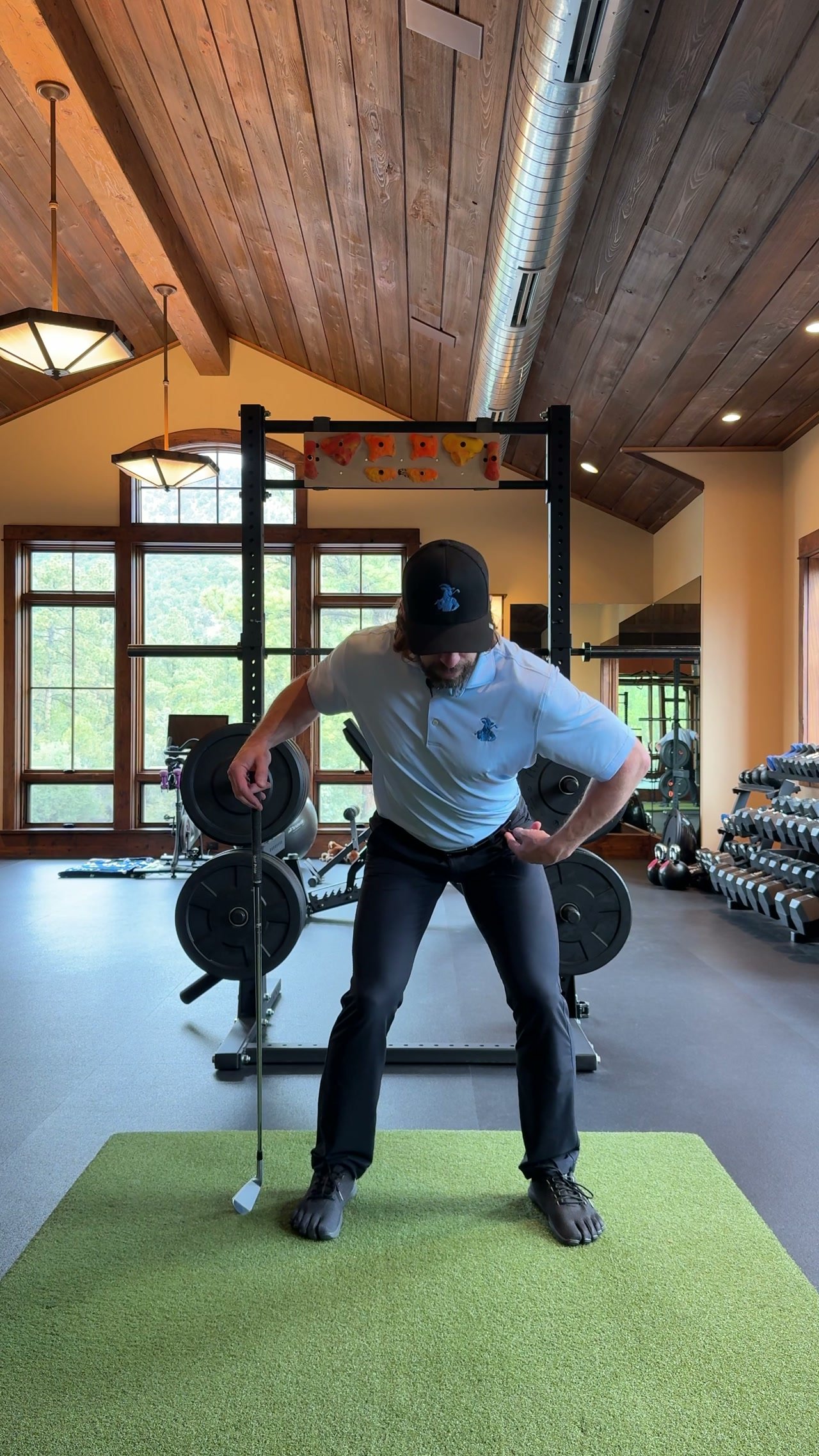

































































































































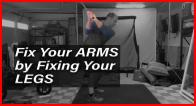

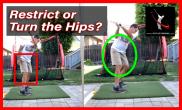
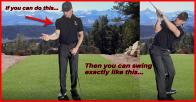

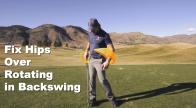























































































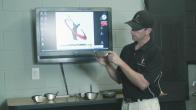


























Q-n-A Webinar 16: Feb 11
Sorry, you need to be a member to access this video.
You Are Just Seconds Away - Become a member here!
Already a member? Log in now


Try a free live lesson with GOATY
GOATY, my AI golf coach, watches your swing through your phone camera and coaches every rep. Free, about 20 minutes, no credit card.
Q-n-A with Craig Morrow, sixteenth webinar, February 11th 2026
All right.
Where's Mark?
I was waiting on you, but you got to tell me if you can hear me.
Great.
All right.
Hello, Scott.
Perfect.
Perfect.
All right.
Well, good evening, everyone.
I got something popping up on my screen.
I don't know what that is.
I hate it when they do updates and you don't know what it is and or makes it worse.
Mark, you're coming out of the gates early.
Woo! That's a toughie.
Before I get started on that, go ahead and get my introduction.
Just in case for you newcomers, I am RST instructor Craig Morrow.
I will be your humble leader in tonight's Q&A as my microphone is stuck.
And that's about it.
Welcome to, this is the 16th Q&A webinar.
So hopefully you'll learn something tonight.
Hopefully I'll learn something tonight and you find this helpful.
And as usual, I'm going to let the crowd settle in.
It takes people sometimes to get on the internet, get going.
And while they're doing that, I will answer questions and talk about life, whatever you want to talk about.
Should live players be allowed back on the PGA Tour?
I think they should.
Everybody but Brooks.
That's my feeling.
The way I look at it is the PGA is a business, and other than your few percentage at the top, knowing a lot about the business, pardon my language, they screw everybody else.
I have no problem with them coming back.
Just everybody but Brooks.
Why not Brooks?
Because I can't stand him.
I don't care that he's found love because his kid plays and all this stuff.
There's no redemption for Brooks for me.
I have no love for.
Certain things that he has said and done in the past.
I understand everybody grows and everybody changes.
I have no problem with that.
And he's got an immense amount of talent.
But he wasn't playing golf because he loved golf.
And that kind of bothers me.
Yes, golf is my job and was my job and all that stuff.
I'm not getting into it too deep.
It's just he has said some things that would really piss off the common pro.
How's that?
My friends and I call him meathead.
Yeah, I call him.
You got the head part right.
I substitute the word meat for something else.
And I'll give you a hint what that word is.
My father is a urologist.
If you get the joke.
David, what are your thoughts on Goaty?
Don't ask me what my thoughts on Goaty.
So here are my thoughts on Goaty.
I went to public high school just outside of Atlanta.
I've lived in Baltimore.
I've practiced and built my swing on Long Island.
I've been and lived lots of places.
And some of the stuff you guys are saying to Goaty make that look like I was in the nicest country in the world.
man, y'all are being mean to Godey.
He's there to help you.
Man, I've seen some stuff.
Y'all are talking bad about Godey.
Or talking badly to him.
Will he be talking about Godey?
Will I be?
No, John.
I won't be talking about Godey.
I won't release anything that Godey is teaching you until.
My boss has given me any green light, and I know I don't have any green light on that one.
Unfortunately, that comes from up above.
I'm middle management.
I've got to wait for upper management to make the call.
My thoughts on Goaty?
My thoughts on Goaty.
Well, I mean, he's trying to take my job, so I can't.
speak so eloquently up here as you want me to about them.
Goatee, in my opinion, I think does the one thing that I can't do, especially teaching.
Obviously, the points and stuff that Goatee sees and how fast certain metrics, I can't see that from the naked eye.
There's no way I can see it from the naked eye.
But what Goatee does better than any instructor is He tells you your problem, and he's going to tell it to you 17 times, whether you want to hear it or not.
Now, in human form, that's kind of tough on an instructor to do that.
But Goatee keeps you accountable.
I think that players get lost in the wording.
So I think that the wording, as the wording continues to improve, I think it'll be very helpful because.
If I take five students and they get all the same information back from Goaty.
So let's say you could take five students and they're doing the exact same problem.
And Goaty says, this is what you're doing.
This is what you need to work on.
Two of them are going to be doing the drill correctly.
The other two are going to be taking Goaty's words and only hyper fixating on this portion of what Goaty said.
And the fifth one, I got no idea what he's doing.
I'm like, did you switch to a different instructor?
So I think it's all about.
How the messaging is, and that's why that's going to continue to improve.
But the the thing that I, you know, that I, you know like about it for students is it?
It just doesn't, you know, cuts out some of the Bs.
If you're sitting here doing something wrong, it's going to say, Hey, I don't care how you feel, it's still wrong.
So I, I do like that aspect.
Hey, how's?
how's your surgery?
Did you already get the surgery?
you feeling better?
He always is available for a session, even though he's brutal to me.
Yeah, and that's the big thing, especially like on my end, is he's always there to practice with.
Like if you have 10 minutes of downtime, like you can get some work done.
And I don't know about y'all, but I literally have zero time for anything.
Life, work.
So if I have 10 minutes, I want to work on my swing, even though I'm not using GoTo to work on my swing, as in I just never work on my golf swing.
All done recovering.
Great, Ray.
Great.
I'm glad that you're the right Ray because that could have been weird being if that was a different Ray.
David, I think it's impressive.
Yeah, and it's only going to get better.
I mean, that's the thing.
It's kind of like, I mean, if you give chat GPT bad information, he's going to repeat bad information.
But Goaty's only going to get smarter.
and more refined and more.
So, you know, obviously for the people that use it in beta and the people that are kind of growing up with Goaty right now, I mean, you're, I don't know how old everybody is in this group, but I'm, I'm old.
I keep telling everybody that's my number one advice as an instructor is don't get old.
But just think about the first iPhone.
I mean, the first iPhone was clunky and, and think of where it is now.
I mean, Goaty is going to leap.
How long it took the iPhone to go from one to whatever it is now?
What, 17?
I've never had one, but I think you get what I'm saying.
Hey, Michael.
John, is there a movement to begin the downswing?
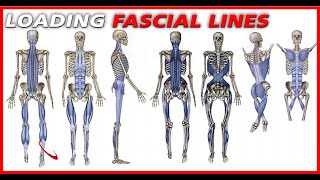
According to Chuck's goat fascial slings video, it happens automatically.
According to step three, your hips have to lead the downswing.
Well, your hips still have to lead when you're unwinding your fascial slings.
But essentially, as you're starting down from the top right here, what starts to happen is your pressure goes this way.
As you start to squeeze your adductors and load into your lead, glute to start to sequence the transition.
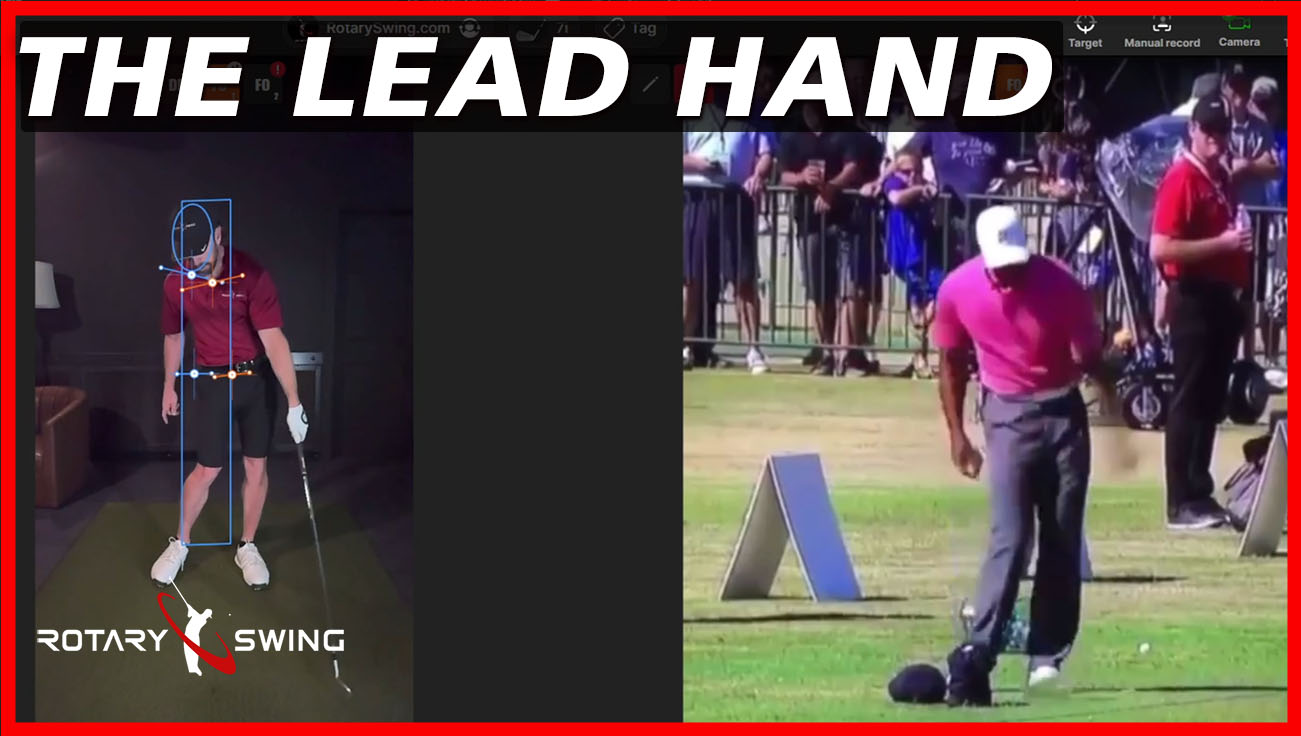
When I load this fascial sling, yes, this wants to unload right here, but if you think about what's going on with the legs as this fascial swing starts to unload, the glute.
And the adductors are really starting to do a lot of heavy lifting for you right here, that's why you, I mean, think about, I mean, if you follow us on social media, Chuck was talking about like, hey, you can't spin your chest from the top.
Well, I can't do anything with that from the top.
It's got to be in this.
All right.
I need a secret to get on my lead heel better.
All right.
I'll answer this one, then I'll get to the questions.
Paul, I need a secret to get on my lead heel better.
Are you meaning during post -up, as in like during the downswing, or that start that Chuck was talking about starting from the heel and going back?
I need to work on my golf swing.
I'll tell you that.
But.
Once you understand how to release it, you can get away with a lot of stuff.
Downswing.
I need a secret.
A secret?
Just cheat.
I mean, the biggest thing, I've said this in a lot of webinars and I'll continue to say this because I say it in my reviews all the time and I say it in my lessons all the time.
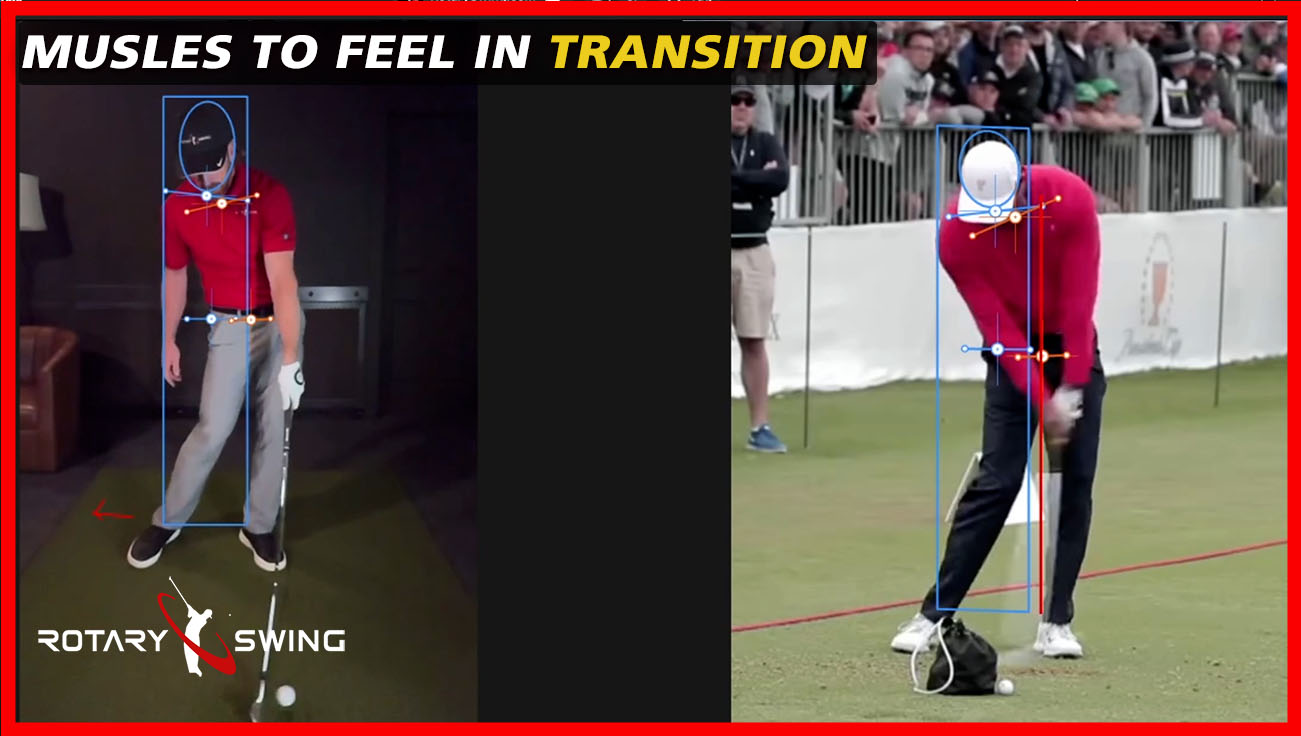
I can tell you all the information, but if you don't feel it, it doesn't matter.
Like just like telling you which muscles you need to fire right there.
If you don't feel it, it doesn't matter.
Cheat it first.
I mean, literally, I mean, I did this in my C4 journey.
I've done this in other webinars.
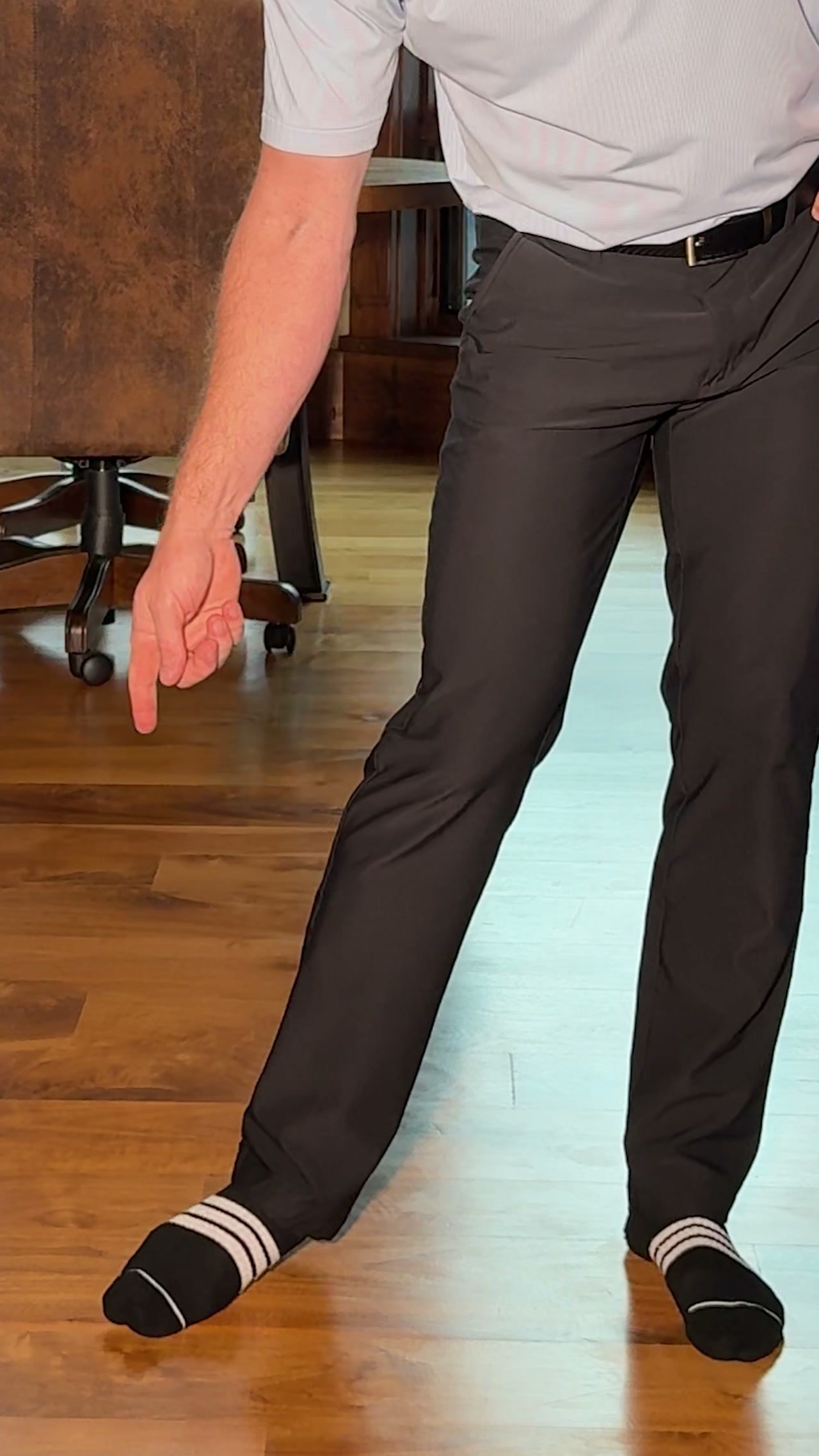
Like literally just let your foot pick up, like get out here on the toe right here and start training yourself to pivot.
Start training yourself to get this and get the feel of it.
Start making that emphatic.
make your swing ugly for a second.
But if you look at my legs right now, look at how my legs are working.
I mean, I don't know about you guys, but I would take this leg work and my swing and literally all I'm doing is just making my foot stop dynamic right here, which is getting this to fire.
I might just start doing that faster more often because I'm really liking how my legs are looking.
Always seemed.
Yeah, but the reason that you're up on your toes, and then I'm going to get to the question.
The reason that you're up on your toes is because when you get back here and you start loading, what's the only way I'm going to go to my toes?
Like, think about it.
If I'm starting down from here, what's the only thing that can move me toward my toes?
I'm pushing with something.
I mean, if I'm right here, like this.
And I go in my backswing.
Now, let's say right now I start driving on my right side and pulling my left side back.
I'm never going to lose tush line.
I'm never going to get.
The only way to do it is if this is pushing towards the ball or this is pushing towards the ball or this is pushing towards the ball.
So if you're out on your toes, you're trying.
You're trying to hit it with this side.
Now, as you start to go from here.
It's got to be more like this.
And how that happens is because the core is driving this way and I'm posting this way.
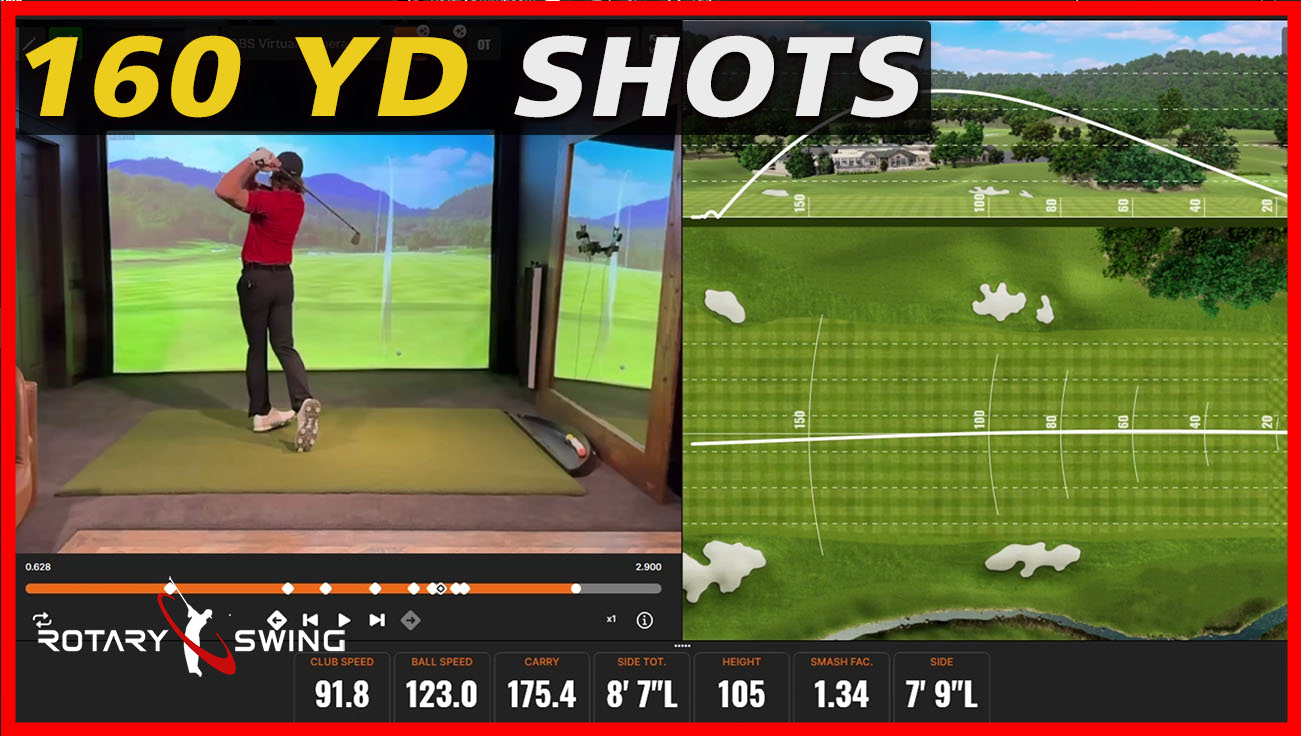
That's why the 160 swing speed sequence, I give that to a lot of students on swing reviews because when you get up here, if you can get the feeling of planting into this correctly, then you feel like you can drive all day long.
But if you get up here, And instead of planting into this side, you just start pushing.
That just pushes me right out towards my toes.
All right, okay, so, with that being said, I'm out of Mount Do.
That's a very sad story.
And let's find the questions, let's get rolling.
I really should have read these because I really should have read them.
I have no idea where I left off because I remember jumping to a shorter question in the last one.
So for those of you in the group, if I already said this one, send me a red flag and I'll go to the next one.
I know it's one of these two because I remember I just jumped to a shorter one.
I've seen two recommendations on the site.
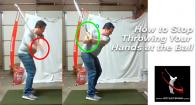
Throw the club from the top or near the top.
versus throwing the club at GDP.
Which is it?
Well, if I start waiting to throw the club right here, I'm never going to get it released.
Now, the release is very small down here.
But remember, as soon as I start pivoting back and I get my maximum hand speed, which happens early right here, and I'm done with active rotation, the throw starts from the top or I'm never going to get it.
If I wait and wait and wait and wait and wait and wait and wait, I'm never going to have time to do it.
That's why.
Like even when you think of the supination, the supination, as you start to kind of, I call it the helicopter, as you start to helicopter, that's part of the throwing motion.
All right.
So that's all part of that.
So that starts up there.
The word throw implies active arm motion versus passive arm motion driven by the core.
Okay.
Which is a bit confusing.
Your arms aren't dead.
If you think of, you know, the homoculus model, like where you're getting the maximum amount of sensitivity and pressure and feedback from, you know, you get a lot from these puppies.
So the arms aren't dead.
If my arms are jello, I can use my core as much as I want, and they're still not going to do what I want them to do with my golf.
And I think that's what players kind of mess up is they think like, oh, OK, well, my arms are dead in this swing.
Just move my core.
It doesn't work that way.
That's why when Chuck was talking about the goat sling, like having to have structure, they do need to provide some structure, okay?
So they're not completely passive.
They can't be.
They can't just be dead to the world, all right?
So, and in talking about that, all right, you know, the active feeling.
Well, what's the active feeling combined with correctly shifting your weight?
The active feeling combined with correctly shifting?
Yeah.
If I'm shifting my weight, moving laterally, this is an active motion.
It's not a passive motion.
I'm guessing that's what you're meaning by that.
But it's.
I'm going to probably get in trouble, but.
I get back to my lead side as my throw starts to begin.
So I'm not trying to get here and cast, okay?
Think about like if I was actually throwing something, what would happen?
I would start to step, and as my pressure and as my weight started to get over here, I would actively be throwing it this way, all right?
So you see how I would.
So it starts, as I start sequencing down, that's as I.
When I start to throw, but I don't, I don't stay on this foot.
I think this is what I'm hoping.
This is what this guy means.
I don't stay on this foot.
Start actively throwing and then try to sequence my body.
And going back to Paul and John's question.
I have to start moving this way before I throw, as Jack said, I can throw as hard as I want from the top, as long as I'm moving laterally.
Well, I've got to get back going this way before I start doing that, so I'm hoping that's what The person met by that question.
Okay.
How does GOAT code deal with loading the shoulder?
With other instructors like Pete Cowan, how is this done to what significance?
Watch the slam ball.
So for those of you got to remember, I don't even watch golf.
Loading the shoulder, Pete Cowan talks about how as you get up here towards the top, you start to have this kind of scapular raise.
And then when you start moving down in the downswing, the lats, and it's the lower fibers of the lats, start to pull hard.
So you start to load.
You probably see.
He's not doing it for this reason, but you've probably seen like Rory do the split hand drill, or you've seen players get here and kind of pump down.
And what that is, the loading the shoulder concept is getting the shoulders up here and getting those fibers to fire right there.
So you really get those lats and you really get your shoulder connected to the spine as you start to go through.
Instead of like throwing a ball like this, you're getting here and you're.
Like you're doing like a big lat pull or something, or you're pulling like a big band from something.
Yeah, that does happen.
All right.
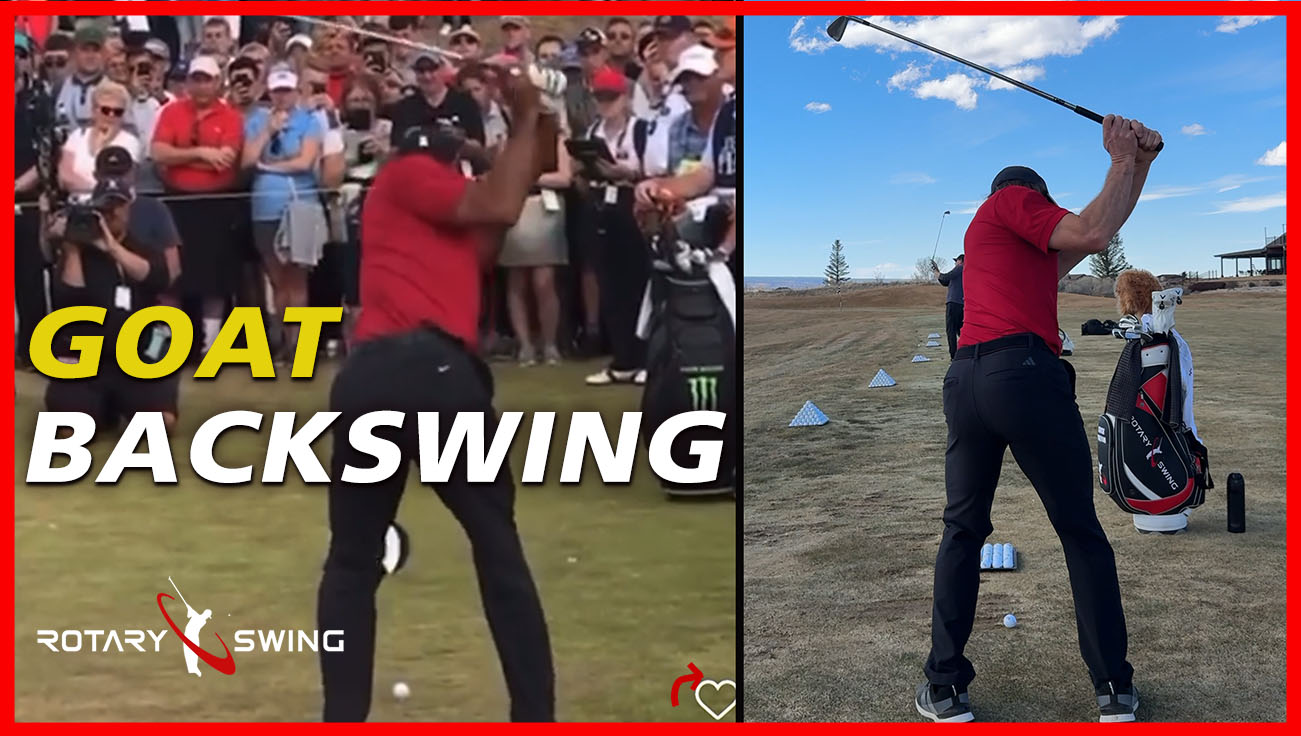
I mean, that's why if you take goat backswing, remember, and goat backswing, Chuck talks about as you get up here and you're on the shoulder plane, this scap and the arm kind of raises a little bit.
Then as you start to transfer and you get into this transition, as the arm starts to supinate, what happens?
That scapula drops.
And that's a very dynamic motion right there.
And that's why I said, Take a look at the slam ball, because that's essentially what you're doing, you're taking that medicine ball and you're getting here and you're.
And if I could just get people to do that in their swings, I'd be just straight down, just getting the feeling of.
And that's what that loading the shoulder concept is.
So we do that, I mean, that's, that's in our program, I mean, that's, it's the same thing that we don't really teach it, as Make the magic happen like that, but it happens.
Could you do a review on how to turn into the right side?
In my case, without tilting.
Turn into the right side without tilting.
How do you keep from picking up the club with.
arms overactive.
Is there any lateral movement or do the hips just go deep?
Well, this one, I mean, that's the fascial sling video.
Why does the backswing get flat?
Is it turning the spine the wrong way?
Is there a conscious effort of the left shoulder to go low?
Okay.
So the hip goes diagonal when loading.
Okay.
Hold on a second.
Yeah, well, that's the thing.
So to his question on that throwing, yeah, Chuck feels like he's throwing this way as he's going this way.
But that's that throwing action supination motion.
That's the same thing.
It starts as you start to go that way.
So turning to the right side, overactive, swing gets flat.
So as Chuck said, And now here, this is something that I think everybody took wrong from goatee, okay?
Is as you're starting to try to load this fascial sling, you're not trying to rotate your hip to 45 degrees this way.
I saw that a lot, all right?
Where players were getting external, they're trying to rotate to that 45 degree position.
That's not loading.
It's the core that's moving the pelvis.
So if I'm imagining this 45-degree line, like I'm going back at Ben Hogan over here, this right here, this going back, it's because my core is doing this.
See how, if I'm fat, so it works, if you watch my belly right here, and I start to move my belly like this, it starts to push my hip back because I'm.
That's why Chuck said, think about like with your sacrum or your lower spine right there.
As I'm doing this, it's my core that's getting it back there.
Now I can start to feel the structure out here starting to get tight.
I can feel me starting to move into extension right here.
I'm not tilting this way or tilting that way.
I'm taking my core.
And that's why I think you have to do that in front of a mirror.
It's just this.
It's not trying to rotate your hip and to try to get it back to the target this way.
It's not just a lateral slide this way.
It's easier with a weight.
If you had a weight and you're just like, okay, I'm going to get my core and you'll feel how like, oh, I want to get this loaded this way and support that weight to the top.
So more than likely you're trying to turn instead of using your core to do it.
And that's what gets the arms overactive.
Now, is there a conscious effort for the left shoulder to be low?
For some players, yeah.
Ideally, in an ideal world, you would do nothing and say, okay, well, Greg told me to take my core, get my hip deep, and go this way.
All right?
At the top of my backswing.
I'm happy as a clam.
Because when I do that, my left shoulder stays low, my right shoulder.
I'm rotating around my spine.
But some players have too much push, have too much pull, have too much everything like that.
So some players have to feel this lead shoulder staying low right here.
You can see the logo on my chest right here because they're so used to doing this.
So when players get flat in the backswing, it's because this is pushing this way.
And when you push this way, you're never going to recover from this.
So as you go from here, Like, I'll do this in like a, you know, lesson, all right is like, I'll have, I'll have somebody like, hang out right here and kind of get their arm kind of soft and their shoulders soft right here.
It's not how you do it in the swing.
Remember?
I'm trying to get people feels, especially people that go like this, and I'll have them get their arm kind of hanging down like this.
And as I get them to feel their core moving their hip, I'll be like, just feel this, like, just feel it kind of dead.
Right now, I know we've got to get the three S's and get the stretch, but you're so used to immediately going like this.
And when you do that, this disengages and you start to get flat right here and there's no way of loading your sling.
And I'll have them kind of feel just dead weight right here where they're getting that core feeling.
And then as they do that, now start to combine getting that arm up.
And if you watch as I'm doing that, look at my shoulders because I'm just dead weight down here.
And that feeling of not using, that's how you can kind of get not using your arms.
Now, once you get that going, you just kind of have that float up to the top.
I always tell people it's, you know, when you're finishing your backswing kind of in that transition, it's just this kind of floaty feeling.
Even though you're keeping the arms straight or maintaining structure, if it feels like a chore to get up there, then you probably pushed at some point in time.
But you've got to think about momentum.
You've got to think about what aids in getting that up there.
That's why it's the proper grip.
It's the set, and that's what helps this swing up here, going back to loading the shoulder so that this goes up and now can come back down right here.
So hopefully that answers that.
I don't know.
I've originally learned that more wrist cock in the backswing will lead to higher ball speed.
Shoot anybody that told you that.
The more ulnar deviation of the wrist, the more wrist cock is possible.
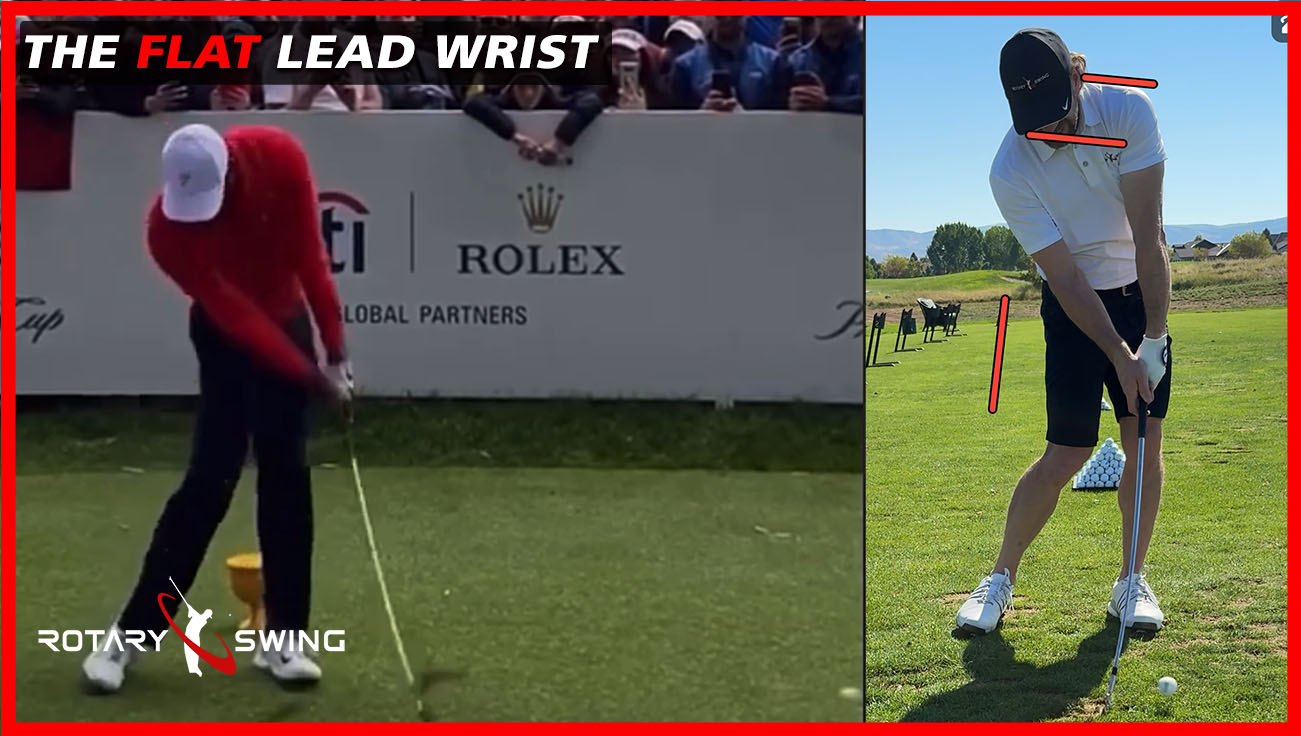
Well, ulnar deviation is getting rid of the wrist.
That would be radial deviation.
With a straight wrist, however, a change in wrist cock is almost not possible.
Okay, so I went to a lead better at some point.
And that was one of my big things is as soon as I started adding overactive wrist early, my ball speed went.
Because at some point in time, it's a law of diminishing returns, right?
Even think of Nick Faldo, right?
We used to talk about this in the clinics all the time.
Nick Faldo, I mean, his head probably touches my ceiling right here.
Yet, I hit my forearm as far as his driver.
because he is very pronounced on getting that early wrist set, loading the wrist.
But when you start to load the wrist early, there's no way you're going to be able to maintain that amount of angle or be able to fire that angle correctly if you do maintain it, because all you're doing is creating tension.
You've got three sources of power in the swing.
You've got rotation, leverage, and width.
Obviously, we know where rotation comes from.
Rotation of the club face, rotation of the body, all that stuff.
And then we have leverage and width.
We've got leverage from our wrist.
Then we have the width.
Now for me, I've always prioritized width because width is free speed.
Does wrist cock and all of that help with speed?
Absolutely.
But why would you want to do it all in the backswing?
If I were to get to here and immediately set all my wrist right now, now I've got to maintain this from here.
To here, to here, to here, to here.
Now I can let this go, it's not going to happen.
It's going to be a lot easier for me to have width and let my change of direction increase my wrist.
For me to now get the pop, it's a and I hope my dog has earmuffs on right now.
So if I'm going from here and I take my wrist and I load my wrist now, I've got to take all of this to here, to here, and then let it Versus if I'm staying fluid and I'm staying wide because width is a free source of speed, I want to have a balance of width and leverage for my wrist.
To where now if I'm wide, now I can get popped.
But if I load my wrist, there's no way I'm going to be able to time that.
I'm going to typically release it a little bit more of my body.
And it can be very accurate because people hate takeaways.
Because they get rid of their takeaway.
It makes the swing a whole lot simpler.
Man, if he could do that, go back to the A swing or something like that.
It makes the swing very simple.
But the problem is it's a distance game.
And if you tend to load the wrist, you're A, going to tend to either cast too soon, or B, you're going to realize, I don't want to cast, so I'm going to hold on to this.
And you're going to start to get into more of a body release, which you can hit it straight.
But to get any power, you're going to have to blow out your spine.
So what you want, I think about everything in the golf swing is the same way in life.
You want balance.
You want yin and yang.
You want moderation with everything.
Don't go into extremes.
I want some load.
I want some width.
I do want some wrist, but I want to be able to use kind of all of them.
I want to balance and everything.
I don't want to just have an all-wristy swing or an all -body swing.
For my height, width, I've got very long arms for my height.
And big feet, I'm kind of I'm just weird.
So I've got really good anchor points to use with my feet and I've got very long arms.
So I take advantage of the fact that I can get my legs working very efficiently with a stable base.
I just looked at my swing just a second ago.
For me at nine years old, and it's crazy.
I'm looking at myself at nine year old.
And I'm down here.
And through the release, I'm like, this, like, I'm, I'm dragging this foot.
Just like, you know, a Scottier dropping the anchor right here that I didn't even know what that was back then.
But it's because I have a good anchor down there and I like to take advantage of width because of my build.
Loading the wrist early is the worst thing you can do, all right, it's the worst thing you can do now.
If you don't care about distance, it can make your swing pretty simple.
But the problem is, which drives me that crazy, is it's all about distance now.
All right.
Where am I?
Should I increase owner deviation or not?
Owner deviation is a byproduct.
Now, yes, you can snap it harder, but you should never be trying to get down here and.
If you start messing with that, you're going to be in a world of hurt for some timing.
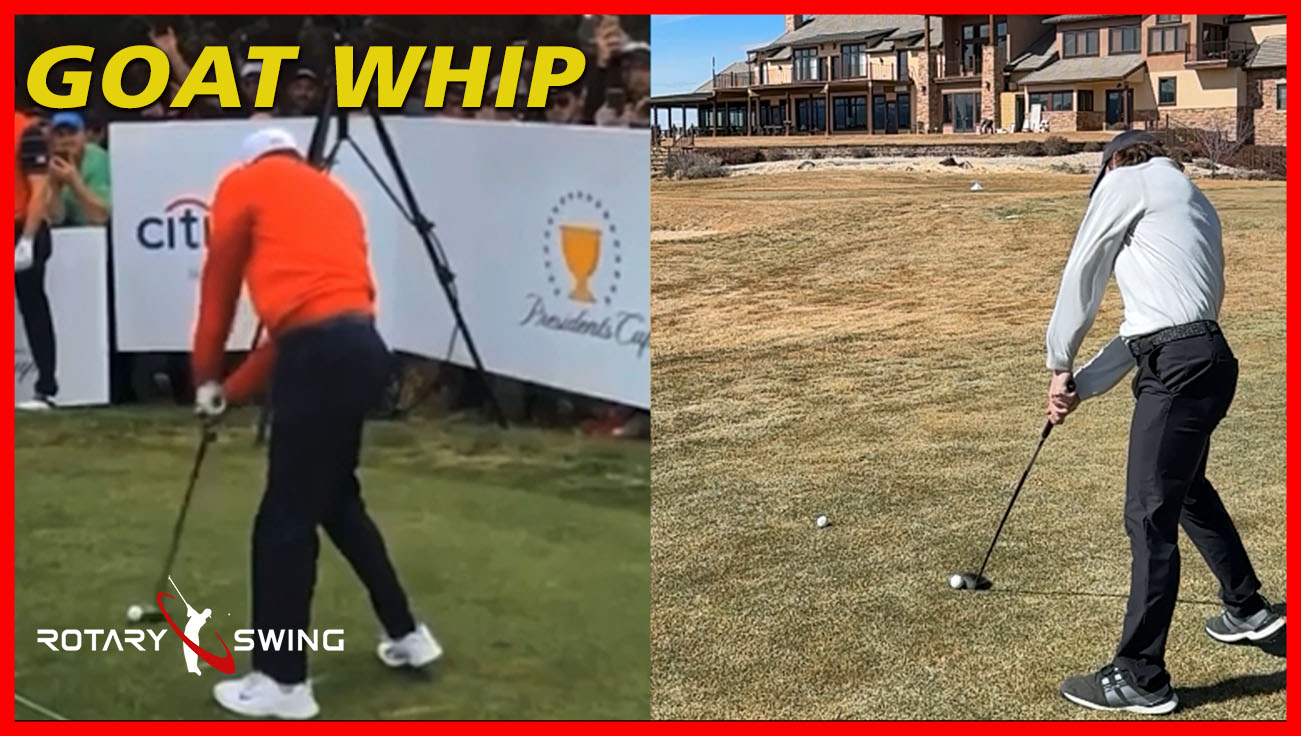
When swinging back fast, it is impossible for me to start the downswing without whipping the club at the top due to centrifugal forces.
This results in an unwanted increase in owner deviation.
Is this good, or should I stop the backswing before starting down?
It's one movement.
You've got Tiger drills where you get up there and stop at the top, or you see a Shigeki or something.
There's something to be said about giving yourself a transition, but it's still one movement.
If you're swinging back so fast that you can't keep the club from whipping, and it's messing with your wrist positions, then you're doing it with your arms.
You're not able to make, you're trying to swing the club fast.
Even if you take like J release, I'm going right here and I'm making J release.
I don't get too much of my wrist right here.
But if my wrists are literally collapsing because I'm taking it back so fast, you're not moving from the right places.
You're not loading anything.
You're just moving quickly.
Moving quickly without a purpose is kind of pointless.
So I would actually go back and focus on your body movements, get your arms a little bit more out of it, and just let your wrist right here just kind of be a byproduct of the motion.
If they're whipping like crazy at the top due to the centrifugal force, when the club's out of control, some part of you is out of control.
You just don't all of a sudden just not have any control.
The release, you've got to.
Lose control to cane control, not top of the backswing.
Is that on the next page?
Oh, it's a continuation.
When starting downswing fast, the club, due to.
Remember, I'm around Burgundy up here.
Due to the moment of inertia, decreases the angle between the forearm and club dramatically.
while the wrist goes into owner deviation.
It's very difficult to not allow owner deviation of lead wrist.
Owner deviation sure facilitates creating lag.
No, radial deviation creates lag and distance, but the guys on tour do not do that, especially Scheffler, and they still generate lots of lag.
Is it so wrong to start the downswing fast?
Depends on what you mean by fast.
What do you mean by fast?
The downswing, you know, the typical Tor Pro is about a 3 to 1 ratio, right, of tempo going from back, coming back down.
It's about a 3 to 1.
I think Rory's is like 2.
4 to 1.
But I do want the downswing fast.
But there's a difference between being fast and being powerful.
Because how I'm reading that is that you're trying to apply power in your transition.
You're trying to apply power in your downswing.
I say this all the time.
I don't need you moving fast.
I need the club moving fast.
I don't care about Craig's speed.
I care about club head speed.
So what do I need to do to get that club head speed to be faster?
I need to dynamically load and stretch, and I need this to unwind.
But I've got to take that.
unwinding, snapping back, rebound, fascial sling, unwind.
And I've got to turn it into club head speed because getting here, getting here and saying, okay, well, I'm going to load and I'm going to get into extension.
I'm going to do all these things right here.
And then that does this absolutely no good.
That's not going to turn into club head speed.
That turns into Craig's speed.
So I want my lateral, lateral, Rotational and vertical to be done.
Pretty snappy because now I can turn that into whipping speed.
I.
And I think that's why it's such a fine line, where people kind of struggle with it is.
As I start going down, I need a transition because I got to start getting my arms down and I got to start getting my pressure back to this side.
But at some point in time, I've got to quit, at some point in time, I've got to turn everything that Craig's doing in this club head speed, okay?
So I do want things to be fast because I want to be able to get my lateral and my rotational stuff done swiftly.
So then it looks like I'm literally doing nothing, delivering my arms down here.
If it looks like I'm having to power my arms or having to do something like that, then my down swing probably isn't unwinding quickly enough.
So just remember you're trying to create speed, not power.
Now, Scotty's up here at the top like this, and he's back like this, and he actually has like a little bit of a reverse pivot look right here.
And as he starts down, his arms go this way.
He still has angle right here.
I think that's where players kind of get lag wrong.
I don't need to hit my shoulder.
I don't want to hit my shoulder.
I'm never going to get that clubface square.
I had one of the coaches I was working with at one time.
He made me put a towel on the end of my club head.
And so as I was going from here, I'd have to swing it back.
And then when I transitioned, the towel, the weight of the towel would rip my wrist down like this to where I'd almost look like Sergio.
And he's like, you got to increase your lag.
You don't have enough lag.
Well, what do you think started happening to me?
A, I started hitting it shorter.
B, I started hitting it right.
Because now I had so much angle in my wrist, I didn't have time to get rid of it.
So kind of what was the point of having all that?
Still goes back to the balance comment.
I want some width.
I want some angle.
And I want to be able to deploy both.
But the club is still lagging behind me right now just because my wrist isn't like this.
I mean, look, I haven't been able to do it that much.
So even Scott is like this.
And he doesn't have that much.
But it's still lagging behind him.
This forearm angle there's just, I know everybody for a while there.
Not me thought lag was the cat's pajamas, um, but it, um, all that stuff's byproducts, all right?
What is getting into the slot?
I have no idea.
Every single teacher teaches it differently, and I don't know what this magical thing is.
How is it done?
Is it related to getting into GDP?
Is getting in the slot and into GDP belonging together?
Yes.
The GOAT code, there is a lot of talk about GDP and hardly anything about the slot.
It's because.
People spend so much time trying to shallow the club that by the time they do shallow it, they're already down at the golf ball.
And that window of time of going from here, I'm shallow.
I'm not trying to keep dropping it under.
Yes, it's still supinating, but I'm not trying to manually keep dropping it under because I don't want to have a club path that's 25 degrees in to out.
That probably means GDP is more important.
GDP is the important stuff.
If you're going to be a couple degrees this way or a couple degrees that way and get GDP, I'd rather you be that way versus.
But getting into the slot will also be fine.
But getting into the slot doesn't guarantee you'll get the GDP.
So the slot terminology is that when you're here.
It's getting into the position that as I start to transition right here, that this club is on plane or slightly under plane as you start to come down because players want to miss this way.
Now, ideally, I actually like getting a little steeper.
Don't tell anybody.
But as I get here, this is the slot position.
Now, how do I get into the slot position?
Did I get here and yank my arms down?
This is that kind of floaty gray area.
As I load and rotate up to here, and I start to transition as I transition, and I start to get my sternum drop.
Because I'm lowering right here, I'm not actively spinning my chest, not doing anything with my upper half, my arms feel like they're going straight down.
Some players feel just like Chuck, feel a lot more supination right here, I feel more supination.
I'm, I'm like this, but that's why I used to talk about it or just tell people.
When you get up here towards the top and transition, just feel like your arms are going down an elevator shaft.
Feel like your hands are just going straight down an elevator shaft.
That's all.
It's just going straight down an elevator shaft like that.
Because remember, the arms are always in front.
Arms are always in front of the body.
They don't go side to side.
So if my arms are only going up in the backswing, then to get to the slot, what do they do?
They only got to come down.
They're only going vertical.
They're only going this way.
So they go up, down.
If they go down right here, as I move back to this side, I'm going to always be in the slot.
And now as I continue to let my arms go down as my core is moving right here, that's what gets me into GDP every single time.
So it's the feeling of the arms never pushing, pulling.
Here, they're never going this way, this way.
Think about it, my arms only go this way, and they only have to come this way.
So if my core, my body are rotated this way, now, all my arms have to do is just go.
GDP.
Yeah, that's pretty simple.
Finish the golf swing, so think about it more.
As in, you're never going left right, you're always just going up down.
All right, there's not, there's not any that'll get you into the slot and that'll get you into GDP.
I know Chuck has a long video on this, but I think it'd be helpful to have your take on the goat sling.
What do you want to know?
I think I'll do this one shortly, like a Cliff Notes version, because I don't want to get crazy into this.
That's for that guy.
That's for Chuck.
That's for Master Sensei.
The thing is with the goat sling model and the loading of the fascial obliques and all that, like I was showing you earlier about turning the hip, I think players, because we show drills, to get you to feel things.
Like I've told you about coming over the top.
Like, look.
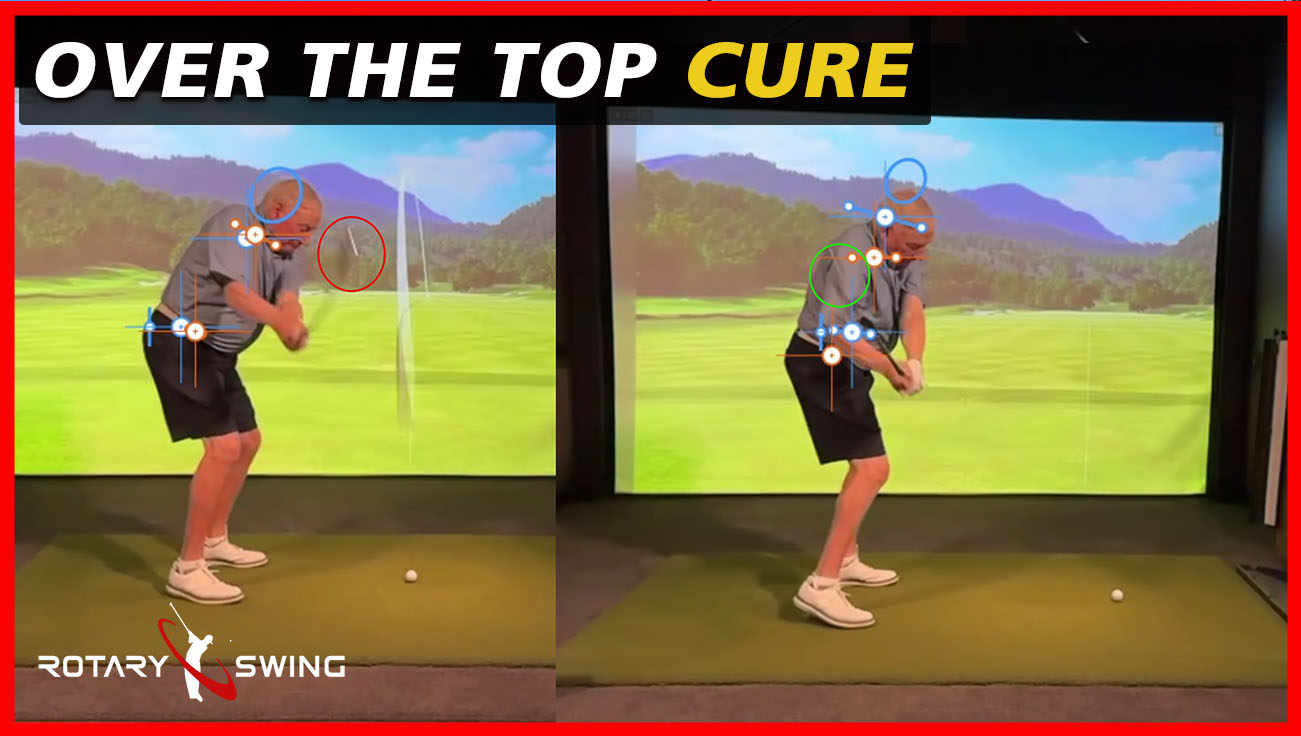
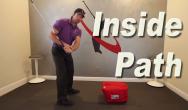
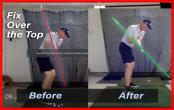
Live a little bit inside because you've been steep for so long.
Live a little bit under plane.
Start hitting some toe draw hooks out there because you're so used to steepening it and pushing it with your arms.
Well, the same thing with the sling model.
Everything that I saw from players that were trying to get this and the ones that got it versus the ones, they're like, oh, okay.
Well, Chuck said I got to get my hip 45 degrees.
All right.
Now Chuck says I got to get into extension.
That's a way to feel it because I'm exaggerating these two things.
But look at, I always try to think of things, I want to make them as precise as possible.
I exaggerate to get the feeling.
I put the drywall up.
Then I do the sanding and painting.
So I might exaggerate it a little.
Okay, that's what Chuck's talking about.
That's extension.
And that's my hip getting deep right here.
Okay, well now let me try to make it as precise as possible so I can really feel that stretch.
Does it really look like I'm working hard right here?
I mean, I don't think I'm working that hard up here.
If I get my hip going this way, I'm feeling my core move my pelvis and then move into extension.
Hey, I got 45, 90 degrees of shoulder turn now.
I haven't done anything yet.
So to me, that's just the biggie.
I think players get the exaggeration to try to get the feel, and then the two things that I saw from it.
Well, players were either rotating this way trying to get it, or they were literally just reverse pivoting because all they put in was extension of their spine.
That's why I like, for anybody that's ever taken a human lesson with me or anything like that, I kind of go off the rails from golf.
Because if you don't think about golf for a second, you'll get it.
That's kind of like watching kids.
Like kids pick, swing up, and do all these things right without.
Why is my screen being fuzzy?
Get all these things without even thinking about it.
All right.
So I try to introduce, like stop trying to get the club somewhere.
So like I'll have players like with an impact bag or with a kettlebell or something or the two -handed medicine ball.
And I'll say, I'll even film them.
Or I show them, okay, make a kettle ball swing to the top.
And they go like this.
And then I'll snapshot it.
And I'll be like, what position are you in?
Well, I got internal femur rotation right here.
My trail hip's deep.
I'm in extension and I'm on plane.
Well, how come you weren't like this?
Like you're showing me in your swing or showing me in your drill.
Well, Craig, if I swung the weight like that, I would have fallen over.
That's all this is.
This is just a weight.
It just has this piece of rubber on the end of it.
Might be designed a little differently.
So I think with the goat sling model and that things of that nature, people either take it way too exaggerated to extremes and they forget to start, they forget to sand the wall before painting.
I know some people like to have some texture in there, but you guys sand before painting.
If you're working hard to get it, then you're losing the force to the trees.
And think about like a weight.
Here, I want to be quick and dynamic.
I don't want my swing to be slow and clunky and chunky.
I want to be able to, if I'm skipping the stone, I want to be able to skip it.
If I want to turn two, I want my golf swing to be like that.
Dynamic, unload.
That's not a whole lot of work.
These guys make it look so simple.
All right.
To make the LA as straight as possible, maybe extensor action, Homer Kelly TGM could be some help.
Could You know, if you're into TGM is the golfing machine for people that don't know.
It can be.
Call me, well, that's Homer Kelly and TGM is more old school than me.
But call me old school.
I've always been a fan of, if I'm making my backswing, like I said, this is me.
I'm not saying this is for you.
Just think about it for a second.
I'm making my backswing and I load and rotate to here and I extend my arms out.
I'm not stressed out.
Both my arms are straight.
I'm not like.
It's not because I'm special.
It's because if I put myself in a certain position, I kind of don't have any choice.
If my right arm's straight right here.
Go look at Rory's swing, it's it's absolutely crazy how long he keeps his right arm straight.
If my right arm's straight right here, what else is going to be straight?
My right arm bends?
Where's my left arm go?
my right arm stays straight, this arm stays straight.
I'm not stressing out to do that, but if I move correctly.
Where it's easy for me to get this turn right here and I stick my arms out, they're perfectly dead straight right here.
Now.
Yes, I can get some protraction right here, you know, you might see from, you know, the AMG guys, or, you know, even Chuck talks about it sometimes.
Where you're going to get some more left arm, left shoulder protraction right here.
And you might even get some kind of retraction right here of your trail, where you're kind of guiding your shoulder blades.
But I don't, I move me, here are my arms.
I've got all that stuff that they're talking about.
So to get over the hump, could you do that a little bit?
Yeah.
But what I would look for is why is your arm bending?
When I'm doing a lesson or anything like that, why is this person or why is this swing doing this said movement?
I don't like not having the answer why.
It drives me nuts.
All right.
Even my wife is like, hey, why are you reading the instruction manual for the 15th time?
Because this part doesn't make sense.
And it's driving me crazy.
And then I have that really figure it out.
And like, because this should be here, that shouldn't be that way.
Then I call the manufacturer and say, hey, your manual's messed up.
No, I'm not that bad.
But.
I always want to look at why.
Why is my arm bending?
My arm's straight.
I just started right here with my arm straight, right?
My left arm's straight, right?
So why did it start bending?
Okay, well, if I move, it has no need to bend.
Yeah, I've got a little tension to keep some structure, but I mean, you can still shake somebody's hand right here, no problem.
So that's the way I would look at that.
If you're really having to force something, then there's a reason you're having to force it.
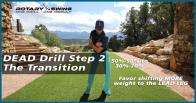
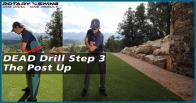
Is the dead drill still in use for my students or not so much after the goat coat appeared?
Yeah.
I mean, it's still the principles of the dead drill.
There's some obviously subtle tweaks in the core and kind of how you generate movement.
But, you know.
Obviously, Chuck reworked his swing under gut code and other players and all that.
But what laid the foundation for all that?
He already had the dead drill.
And that kind of made it a little bit easier.
How's that?
And then I still have lead side players.
I mean, I don't try to box people in to lead or trail.
I think both sides have a role in all that.
But I still have people that swing lead side.
They're like, using my right side doesn't work for me.
Or if you talk to Greg Rose, some people, especially like with putting, that are right eye and right side dominant will tend to have certain ball placements because of the way that they move.
But some people are right eye dominant, and some people are multi-side dominant with their body.
So I don't try to box people in.
But let's think about, I mean, what, I don't need to really go over it, but what really is the dead drill?
Get here, shift your weight and rotate, get it back, post.
Now, there might be some different drivers, difference of sequencing, but if you just do the basic, if you just did the dead drill, you're not going to screw up anything.
I can tell you that.
Why is it called the dead drill?
Drill to end all drills.
I think.
At least that's what it was when we were sitting there putting it together.
That was a long weekend, I'll tell you that.
Let's see.
What time is it?
Am I losing my way?
Okay, I'll do this last one.
I'll do some questions.
This is a long one.
So this will be.
Let's do it.
Looking at Rory's iron swing from the front.
His head is very low and bent forward.
Neck is bent.
Chin is almost on the sternal.
I got told to keep my head in line with my spine.
Why does Rory do that and do you recommend it for us?
Looking at Rory's iron swing from the front.
His head is very low and bent forward.
Neck is bent.
Chin is almost on the sternal.
I got told to keep my head in line with my spine.
I don't know why Rory does that.
From the front on, I've never seen that.
That's kind of hard to see from the front But there is a thing to being like this.
I don't want you like that.
I'm more like this.
I like a little bit of balance.
I've always told people to get your neck and chin in line.
If I'm on the horizon right here.
And I start to hinge forward.
I hinge until I can see the golf ball.
Then I relax right here.
And you can see I've got a nice neutral neck and spine.
If I'm having to go like this, or if I'm like this and I'm like this, don't want to do that.
I'm nice neutral spine right now.
I hinge forward, keeping my eyes on the horizon until I can see the golf ball.
Now I relax my knees, get my weight balance.
Easy peasy, lemon squeezy.
Looking at Roy's iron swing at impact from the front, his right eye is directly in line with the right knee, which is slightly bent towards the target.
This is only possible if the chest is bowed quite much towards the target.
To achieve this, a mere hip shift is not sufficient, I think anyway.
In order to get the position, I have to throw my upper chest towards the target.
Followed by the hip.
If you're having to move your upper chest, or side note, throw, you're doing something wrong.
There should be no throwing of the chest, if that's how I'm reading it.
Watching the uppercut video, it looks like as if Chuck's upper chest is the initiator of the downswing.
No, the body is, the legs.
And not the hip.
But he does not explain it this way.
The sternum drop, uppercut, I'm not getting here and then making my sternum drop and then going this way because what am I doing?
That's me just using my spine and upper half.
I'm getting here and because, you can think old clamshell or tush line or anything like that, me leveraging the ground.
That's what's getting this to do it.
If you watch my spine, like, you can see, my spine is reacting to my body movements.
All right.
It's reacting to the fact that I'm loaded.
And now I get this long, long stretch, and now now I fire it.
That's why it's that kind of I'm taking it, I'm taking this expansion.
So I'm not trying to make my spine go this way and then go that way.
As much as it looks like Chuck isn't doing that, one thing is Chuck's neck is fused, so he doesn't look always exactly like the average bear.
But two, people that have taken swing reviews with me before, I've got a lot of shirts like this.
Because I always tell people, like, this shirt right here is pretty simple.
If you swing in the blue area, the light blue area versus the dark blue area, it's going to be just fine.
All this stuff is what's, this is the engine of the swing.
All this stuff up here, don't worry about any of that stuff.
But the sternum drop isn't me making that.
Because if I were to make my sternum drop, where would my head go?
My head, if anything, as I start to get my sternum dropped, starts to do what?
It not only starts to go down, it starts to go away.
It's going down and away.
I can't make my upper half.
How could I?
I can't do it that way.
So remember, sternum is a byproduct.
What you're doing with your core and your legs, not making it happen.
So if you're having to throw your upper chest, Let's do a swing review.
I'll have to look at that Roy thing from front on.
I've never seen that.
But other than that, without further ado, hopefully this made a little bit more sense today on what we're talking about, what we're doing.
I don't know.
I don't even know if I'm making sense.
I just kind of come up here and black out for about an hour.
So thank you for stopping by.
this Q&A.
Remember, if you want your question, put it on the community.
I will do it.
If you put it on paper, I will say it.
I will read it.
All right?
I don't even care what the question is.
Just put it in the community and say, Craig, answer this in the webinar.
No problem.
I don't even care if I've done it before or anything like that.
So thank you for stopping by, giving me a chance.
With that being said, as always, I'm going to come to the TV, and I'm going to answer about five, ten minutes of live questions.
Whatever you throw on there, I will try to answer to give you some little bit more help if I didn't cover the topic correctly.
But hopefully you learned something.
I learn something every time.
I need to get in shape versus being a shape right now.
So I hope you learned something.
I hope this is good.
I don't know how y'all's weather is, but I mean.
And weather down here in Georgia, I mean, it has been shorts on the weekend.
So hopefully you're able to get out there and play a little golf in this abnormally warm weather.
Paul, thank you.
I appreciate that.
John, thank you.
Thank you.
Charles, Glenn, Mary, thank you.
All right.
I much appreciate that.
Hopefully it made some sense.
So I'm going to scroll back and see if I can find.
If I don't answer something, it's because I can't get it back on my counter, so just repost it.
So we're going to start back here.
Manny, can you address the distance between my hands and body at address?
Can you address the distance?
So ideally, Manny, what you're looking for when you hinge forward into position, what you want is your shoulder joint and your elbow joint in line.
Together right here, with your chin just on the outside edge of your trail hand, and if you're in that position, then you're not going to be reaching.
Because you can see how now these aren't in a line and my chin isn't there, this is going to be too close.
So what you're looking for is you want.
When you take your setup right here, you want your chin to be just on the outside edge.
Right here, with your shoulder joint and your elbow joint in line, that'll take care of your distance predicament I feel like when my hands are closer, I feel more connected and I don't see the shaft rolling inside and the takeaway like when my hands are further away.
I can understand that.
But there's a law of diminishing returns.
The further my hands are out here, the more I'm going to tend to go like that.
The closer my hands are in here, the more I'm going to tend to go like that.
But both of those are wrong.
One's inside and one was a push outside.
So, yes, if you're getting closer can help with that, but it's not the solve.
Unfortunately, it's not solved.
Got to figure out why you're doing that.
Uh-oh.
I got a lot of messages popping up now.
That's not good.
What'd I do?
Jonathan, thanks again.
No problem.
Just wanted to get a little insight to whether the feel is that the trail hand almost stops the momentum of the club on the backswing, and then you step into your lead heel.
I wanted to get a little insight whether the feel is that the trail hand almost stops the momentum of the club on the backswing, and then you step.
Stopping the momentum?
Man, that's tough.
I'm not that tight.
Like when I get up here, I feel how I'm loaded, and then I start going this way.
So I feel the increase in pressure right here, not because I'm stopping it.
It's because I'm going the other direction.
So you could say that there's some tension as I start to do that, but.
I don't.
This just doesn't keep going unless it's swinging independently.
I'm not trying to swing my arms and hands, and as I start, you see how that kind of creates.
Like, I'm going to exaggerate here for a second to be like this.
But if I'm moving this direction and I start down a little bit too soon on this one, I'm going here.
You can see how that that stopped me for me because I can't go back any further, so I do it with my load, like Everybody, that's the top of my backswing.
I can't go anymore.
And it's not because I'm stopping it with my hand.
It's because I can't move my body anymore.
So it's time for me to go back the other direction and come back down.
Man, if I can only swing in real golf, how do I do in here?
Can you explain the lead hip sinking?
I think I understand what Chuck is demonstrating, but there is no audio.
The lead hip sinking.
I don't know which video you're referring to.
And I've seen two different explanations on this.
So I want to be a little bit careful.
So if you could expand a little bit on that, I'll be happy to help you.
But I don't want to misspeak.
David, here in North Carolina was a lot better than the foot of snow.
We had a couple.
Yeah, I bet.
Many thanks from chilly Philly.
I understand that being cold.
Chris, thanks, Craig.
Very helpful.
I appreciate that, bud.
Jonathan, great answer.
I don't know about that.
You're giving me way too much kudos.
Thanks, Craig.
Boston got above freezing today after more snow last night, so it's a heat wave.
Kevin, I don't know how you do it, my friend.
Don't get me wrong.
That's part of the reason why I live in Georgia is because I do like seasons.
I don't want to live in heat all year round.
I don't want to live in cold all year round.
I like having Georgia's more summer, fall and summer, but I like having a summer, a fall, a winter, a spring.
I enjoy having seasons.
Some of these are northern members where I don't know how you guys do it.
But then again, like Mark, I'm not living down there in Key West.
You ain't finding me down there.
David, as I shallow the club and supinate my right wrist, I tend to push it to the right.
Should I be twisting the club closed more?
on the downswing, less supination.
If you're going to the right when you're supinating, then you're not finishing at all, all right?
So you're either supinating like this and then you're holding it as you rotate and you're never letting this club snap.
So I want to start monkeying around with that if you're supinating correctly, all right?
So I'm assuming you're supinating correctly.
I would do this first where you get the feel.
Of how the club squares itself.
Because I guarantee you that if you're supinating correctly, you're not feeling how this starts to snap through like this.
And then what I would do is I would take that same feeling.
And make sure that as you're pivoting, you're not continuing to rotate through with your chest or hips or anything like that.
Because if I'm like this and now I get here, stop, what happens?
As soon as I kind of slam on the brakes and decelerate, this thing whips through Now, if I were to get to here, yeah, you can see the club was super late, so it was wide open.
So it's on a case-by-case basis.
Don't get me wrong.
Even in my own swing, at some point in time, I worked on how much.
I was taking my wrist into extension right here, or moving my lead wrist into flexion and changing how I move into the strike right here.
Without seeing your golf swing, what I would do is I would just I'd literally just stand here like this and get the feel.
Okay, I'm supinating, deviating, pronating, all right.
So now watch me swim, my okay, I can.
I could literally feel that that didn't literally release until I was right here.
You can do the same thing, you can sit there and do that and wind back and then don't move your body at all.
And you can see how it releases back, way back to here.
I'd make sure that I'm getting cleared, but I'm not continuing to accelerate through.
And I feel how, oh, it literally has no choice to release right now, has no choice.
Nothing I can do about it, nothing I can do about it, man.
I wish I was right side dominant because that feels fast, but I'm not.
Well I was, but then Chuck made me completely lead side down with it, so I'm not going back.
Ideas on why Goat Sternum Drop is nice versus V shape, and mine is a wide U.
Michael, so if yours is a U, so to speak, then it's probably because everything's taking too long to happen.
You're moving laterally and doing this, so it kind of makes this kind of U down.
And Tiger's is.
Like this is a very steep spike.
And that kind of goes back to the unwinding and things happening fast.
You're probably taking very long to get through these.
And Tigers, wham, wham.
So that once he gets here, it's like, oh, a little hip.
Now I can let this release.
Because players, when they think weight shift and pressure, lateral motion and all this.
Tend to be more like this when they start getting lateral, and when I start getting lateral, I'm like, I still moved, but I'm not like that I'm.
And so Tigers not has no spin from here, and when you don't have any spin from here and that core is going that way, that makes that V spike hard.
Or now I'm going up.
So what's happening is you're probably combining a little bit of rotation with a little bit of lateral motion.
That's what's making it more you, which in your case, then you can just, I mean, just literally, just get here.
Get the stretch and practice like this, keep your back to the target like this and get more like that.
So that now, when you do that, you can versus you're probably a little bit more like this.
So it's taking it a little bit too long to get that kind of down and in spike.
All right, thanks, no problem, no problem, that's it, nothing.
A lot of people stayed in the crowd tonight.
Typically have a little bit more drop off than this.
I know people got lives.
I get it.
I got to go back to doing swing reviews.
I probably have two reviews for people that are in this group right now that are like, Craig, after you get this, are you going to come do my swing review?
Probably.
David, no problem.
No other questions?
Nothing?
Did we land on the moon?
Stan, I also have a U shape, and now maybe I know how to correct it.
Yeah, I mean, there's.
If you see, I mean, just think about it this way, all right?
So the sternum drop is measuring your sternum.
Go figure.
So if my sternum is making a U, then it's kind of going down like this and up like this.
Well, how would I make this spike?
How would I make this go down and spike more like a V?
It's because it's not this long drawn out with lateral and rotational this way.
It's staying here, not going this way.
And it's going which direction?
Down.
Well, the only way it's going to go down is I'm not actively pushing and I'm not actively moving too far laterally.
So hopefully maybe that helps.
Actually, I just came up with doing it like my handlet that way.
It actually might help students.
How supinated is the lead arm at address?
So I think players take the Hogan thing too crazy where they're like this, where they get too externally rotated like this.
Now my arms can't do crap.
My big thing has always been right elbow pit away.
And if you see my left elbow pit, I'm not trying to get it so externally rotated where I start feeling my tricep run into my chest muscle right here, to my pec.
I'm right here and I want to shake somebody's arm.
Like I'm going to shake hands with somebody right here.
Not like a lazy shake or like a, hey, good going, bud.
Like I'm going to shake somebody's hand right here and it's straight and it's kind of stiff and in a locked position.
Look at my elbow.
It's not like this.
Nor is it like that.
It's straight.
It's pointed out away from me.
We're out of a pit.
It goes back to the balance.
I don't know.
Nope.
You will never, ever see me teach somebody to do that.
And if I see someone doing that, I'll probably get them out of That.
Nope.
Contrary to what that guy said.
I know.
I'm no Ben Hogan.
Hopefully that answers the joke.
David, any in-person seminars planned?
Not to my knowledge.
You can always take an in-person lesson if you want.
I do get that a lot.
Like I got the players or the K.
Craig or any seminars.
And the last one we did was the driver's speed clinic out in Tucson.
Not to my knowledge, but anybody that wants to do anything like that, you know, myself or Anthony or whoever.
I mean, I have players that'll, you know, come in.
I had one.
What month are we in?
December, that's like, hey, I want to build like a little mini clinic.
Like, can we spend an hour or two doing short game and, you know, doing full swing and then doing drivers?
And then can we do like a day recap, kind of going through the same progressions?
Like, give me six months of homework, so to speak.
Any of us instructors can build a program for you if you want, you know, with a group or, you know, with you and your wife or you and your friend or something like that.
I mean, that's not, that's a wiggly thing.
Can you talk a little bit about the trail hip and what direction it initially goes?
Gota keeps telling me to get my hip deeper early.
But what does that mean?
And what does deep mean?
So deep?
If you think what happens with this hip right here is you don't get external rotation, you get internal rotation right here.
All right.
So this internally goes this way.
So if I'm kind of like pushing my hip internally right here, where's my hip going?
You can see that if my butt was right here, just look at it.
Relative to the club on the ground.
As I do that, where does my hip go?
It gets deeper, which is getting my spine down, which is going to allow me to rotate around my plane, so Goatee's telling you that you need to get deeper early, then you're either A, sliding too much this way, B, rotating it, which actually, just for, if I rotate it, you can see I start coming off of it.
It's not getting deeper.
It's about this getting deeper earlier, deeper earlier.
So it's literally getting deep.
Jonathan, the handshake analogy was great.
Just came up with that on the spot.
It made sense to me.
Basics question.
Do you start the downswing with your hands and arms with a shift to the left, with a slide to the left, or by turning your hips?
Do you start the downswing with your hands and arms?
Do I?
No.
With a shift to the left, yes.
With a slide to the left or turning your hips?
It's a little bit of both.
So the downswing, as I'm getting up here towards the top and I'm in extension and my hip's deep right here, the sacrum, your lower part of your vertebrae right there, the downswing is started because this starts to go into a tiny closed hip slide as your pressure starts to increase back on this side.
And then as your pressure starts to increase, your core right here, as you start to.
Get this glute engaged and get your adductor squeezing.
Your core starts to straighten your hips right here.
So it's kind of like a tiny, it's like this baby closed hip side square.
All right, it's not, never not this.
It's that makes sense on trail, hip deep instead of sliding.
But then it tells me I'm not shifting laterally enough and turning too much.
In the backswing, that makes sense.
I'm trying to hit deep instead of sliding.
But then it tells me I'm not shifting laterally enough and turning too much.
So, yeah, but that goes to the same thing.
Turning too much is that rotation that I was talking about.
But I don't like, in the goat sling version, I don't like getting too crazy.
But let's think about it this way.
If I just go laterally.
All right, so if I just go laterally, all right.
if I just go like this, how can I negate moving lateral?
What negates lateral would be the rotation.
So now if I have this feeling and I push my hip back, why am I not over here?
Now?
I've loaded, I've shifted weight, so now if my core lateral, lateral, Lateral, get my hip back.
Now that's not rotating.
That's getting this deep.
That's getting this internal femur rotation to where now I've got load, I've got depth, but I didn't do it by trying to go like this or by trying to go like that.
Now you gotta tear my labrum up here.
Come on, I'm old.
My left hip's already toast.
I can't do it to my right hip now.
All right, so on my end, it's 8.
18 East Coast time, so I'll give you all two more minutes.
That makes sense.
I just kind of think lateral, the rest just happens.
Well, it also goes back to the same thing I was telling you about earlier.
What is moving it?
I'm not trying to make all this happen with this.
It's my core that's driving the pelvis.
It's my core that's driving that.
It's the same thing like I'm doing just like my takeaway drill or my backswing drill.
It's my core that's driving this.
I'm not trying to.
That's where players get messed up.
Remember, the core is still the engine.
If you went.
I'm not saying you didn't.
I'm saying if you went through goat code, that's why we started with.
Here, here, core, engine, core.
Because once you understand the feel and you start controlling it with this, now this is kind of like your whole kind of woo.
Ed, is the lateral shift before the sternum drop.
You start to increase your pressure there.
But this all happens pretty fast.
You start to increase your pressure right here.
And then it's kind of an increase down.
You don't do that kind of sitting back here.
Now, too many players do jump too much over there, but it's.
So, I mean, it's a very finite window.
All right.
I think that's it.
I think.
I mean, I don't know.
Nothing else?
All right.
Well, without further ado.
I'm going to do what I've been doing since 7 o'clock this morning.
I'm going to go back to teaching.
So I'm going to do a couple of swing reviews and see what's going on and probably answer a couple of social media posts and keep doing that.
So the only thing I ask you all to do is get your questions in there.
You want this to keep going.
I don't know why, but you want this to keep going.
You've got to give me some questions, all right?
I'm down to like the last five right now, so I need a bigger list.
Or give me a topic other than describe the whole goat sling.
I'm just picking on whoever asked that question.
Get the questions in so I can answer them, right?
So I hope you all have a wonderful rest of your week.
Don't forget that I've just seen a massive drop-off.
You know what day is Saturday.
Go get a card.
Go get some flowers.
Go get some chocolates.
All right?
Don't say, I didn't tell you.
I'm not just your golf coach.
I'm your life coach.
All right?
For those of you out there that have a significant other, you got homework.
That's not your golf swing.
Saturday.
Saturday, David, yes.
I'm pretty sure it's Saturday.
Yeah, Saturday.
If you live in the States, you know what day Saturday is.
Don't forget.
Don't say I didn't warn you.
There you go, staying ahead of the curve.
I'm still a little behind right now.
I don't think my wife watches these, so I'm still okay.
All right.
All right.
Well, the counters.
I see people are pasta lasagna.
So I will catch you on the flip side.
Hopefully I will be back at my regular scheduled time.
I'm sorry I had to delay this week.
I will be back and come find me on the site.
Love to keep helping everybody out.
Try a free live lesson with GOATY
GOATY, my AI golf coach, watches your swing through your phone camera and coaches every rep. Free, about 20 minutes, no credit card.