







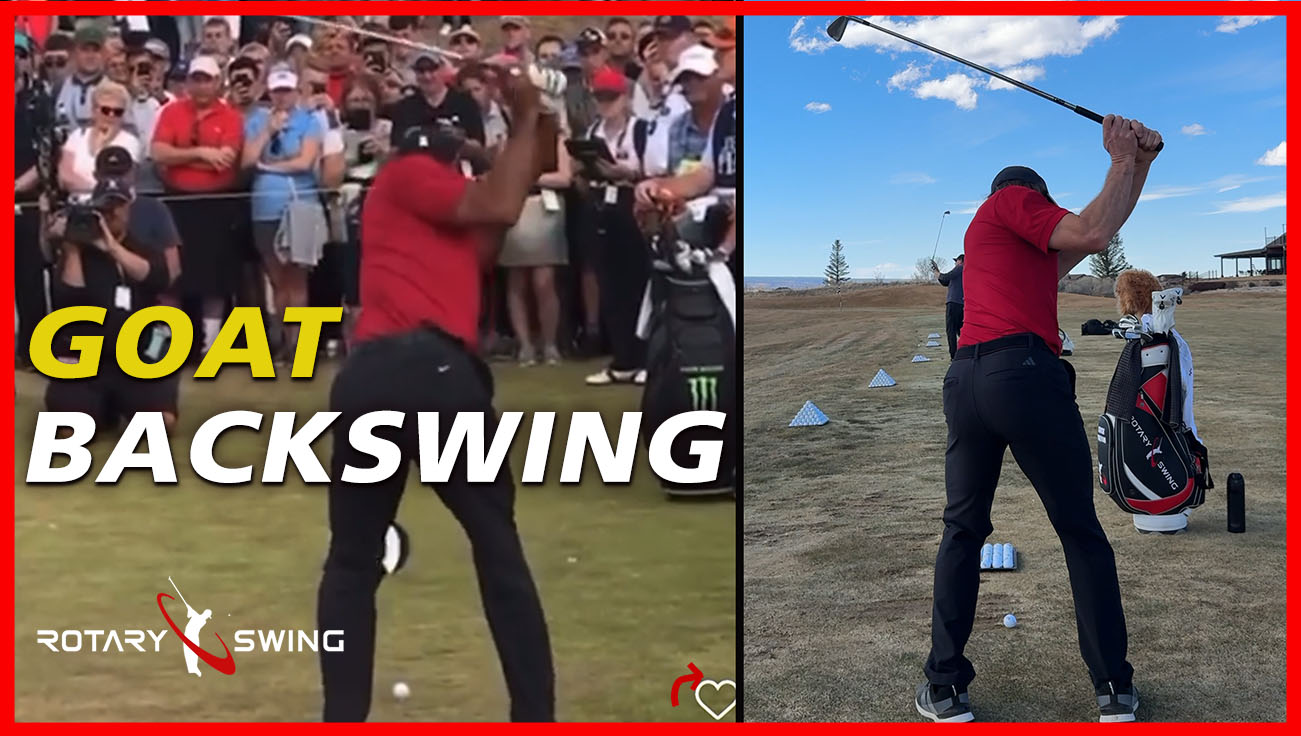
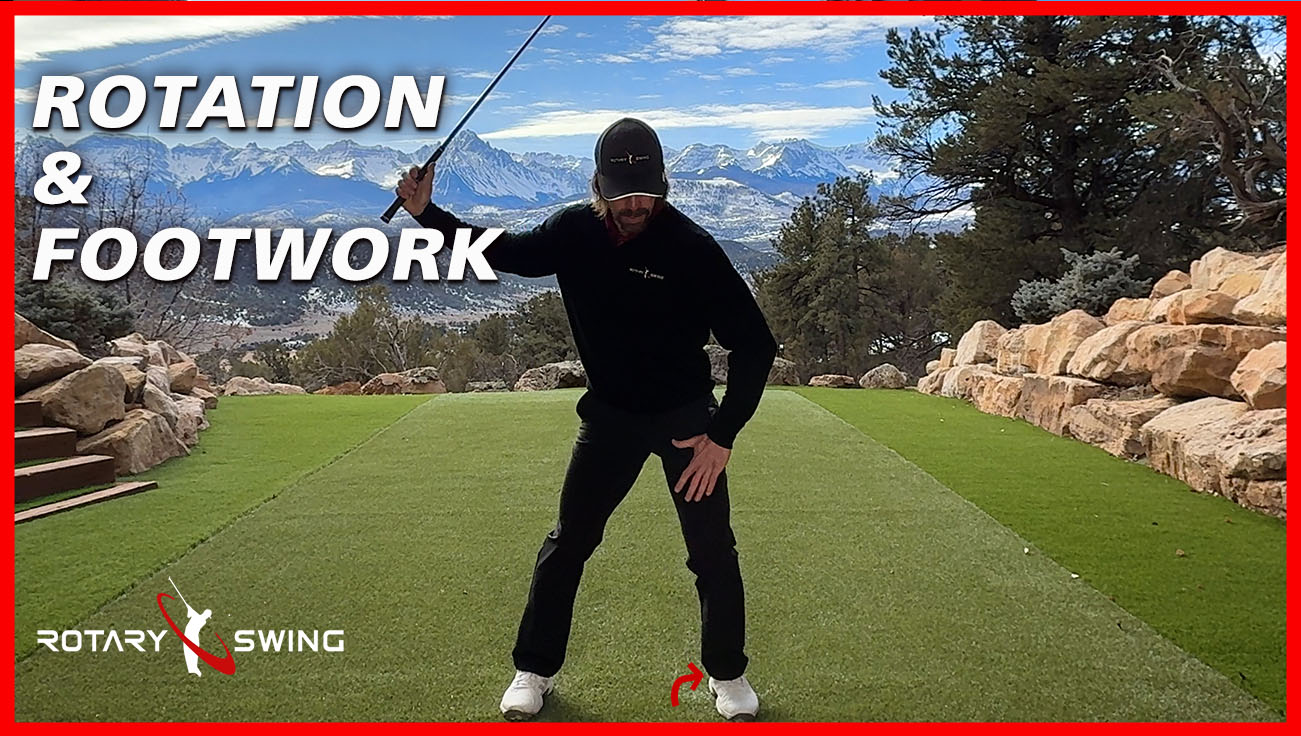
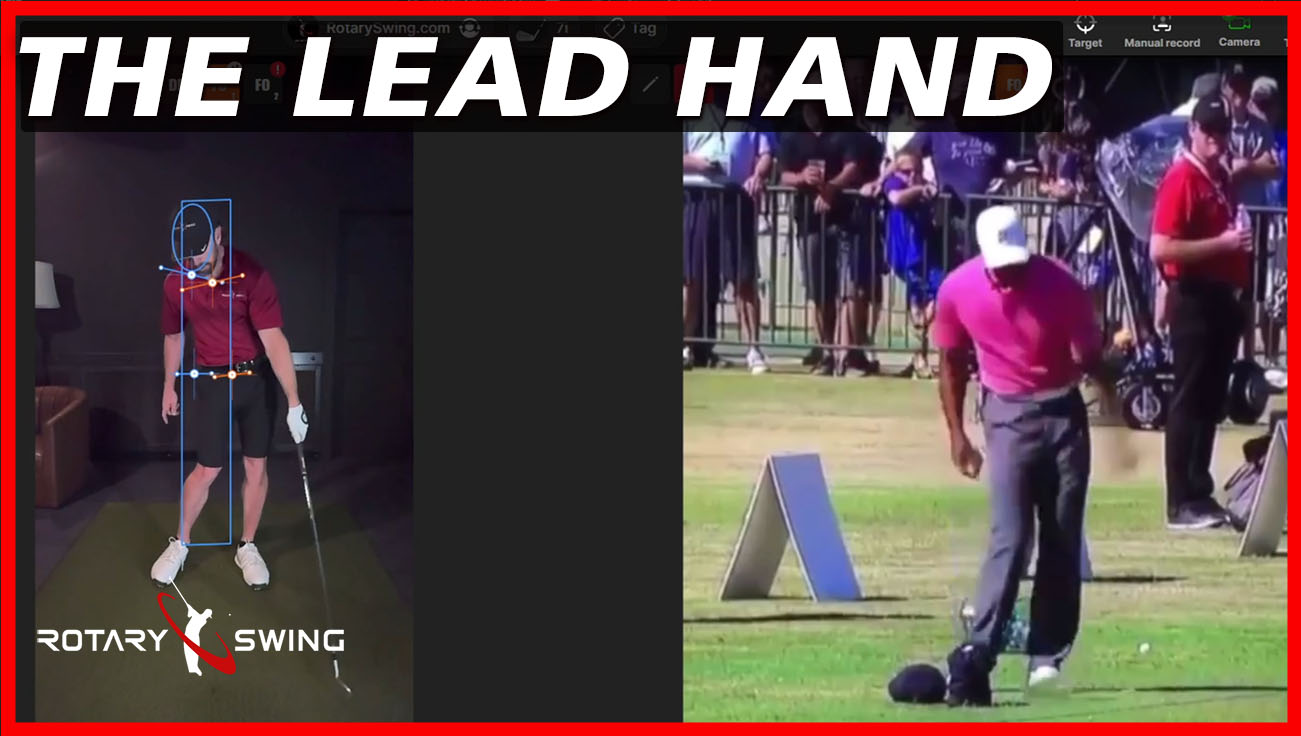
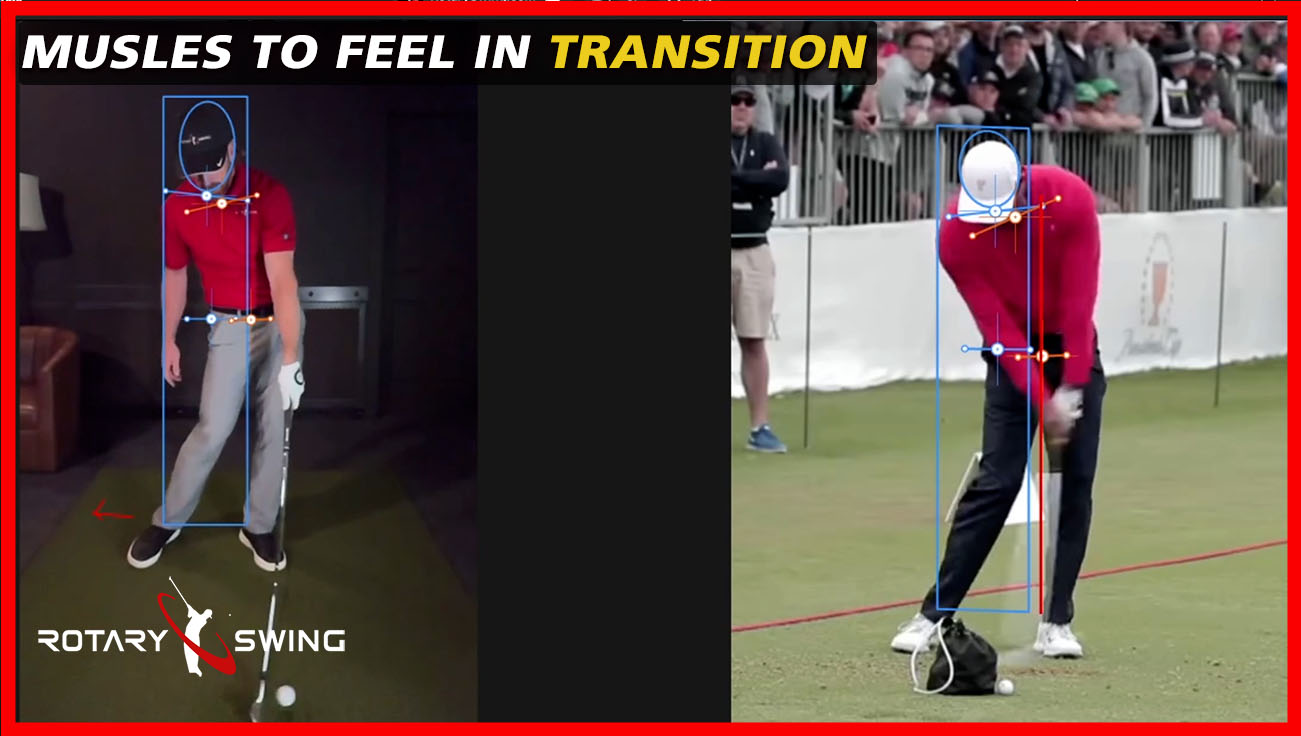












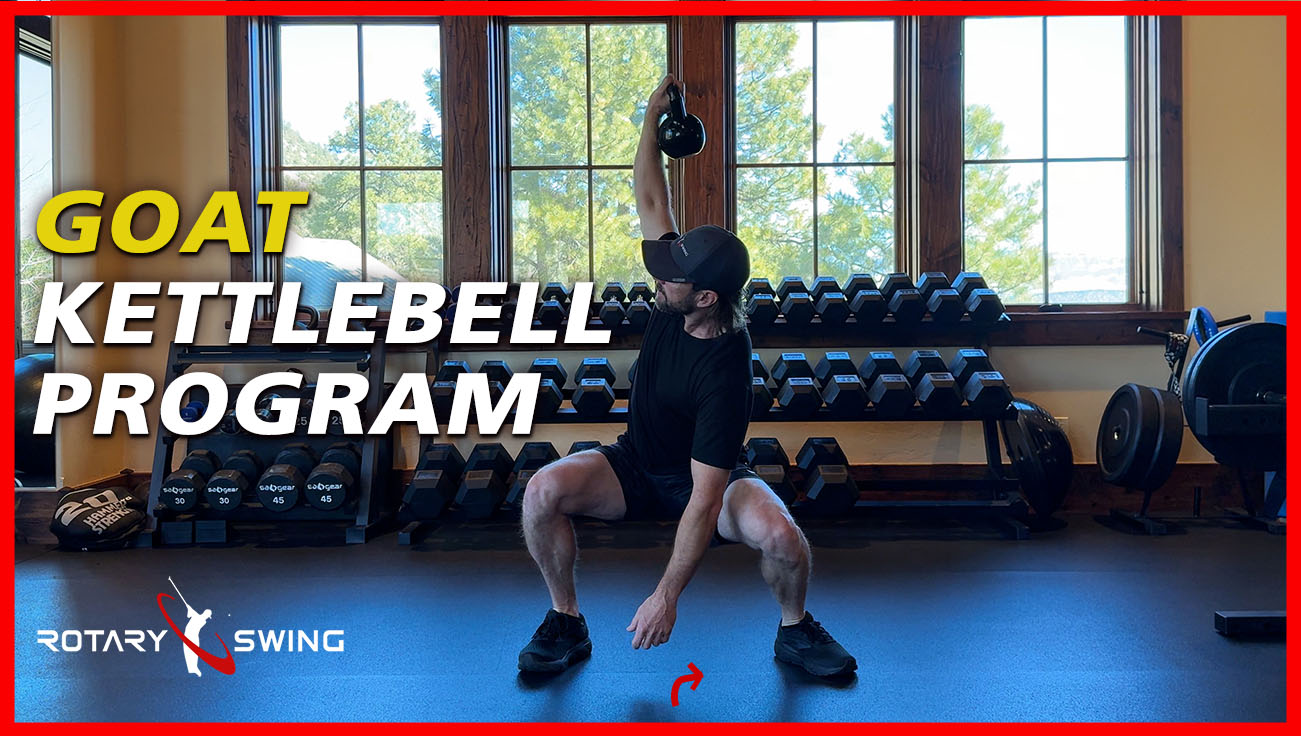











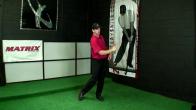
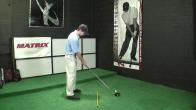










The GOAT Drill
Sorry, you need to be a member to access this video. You Are Just Seconds Away!

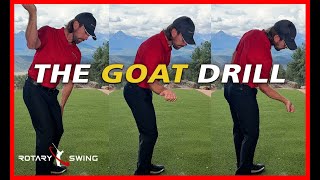
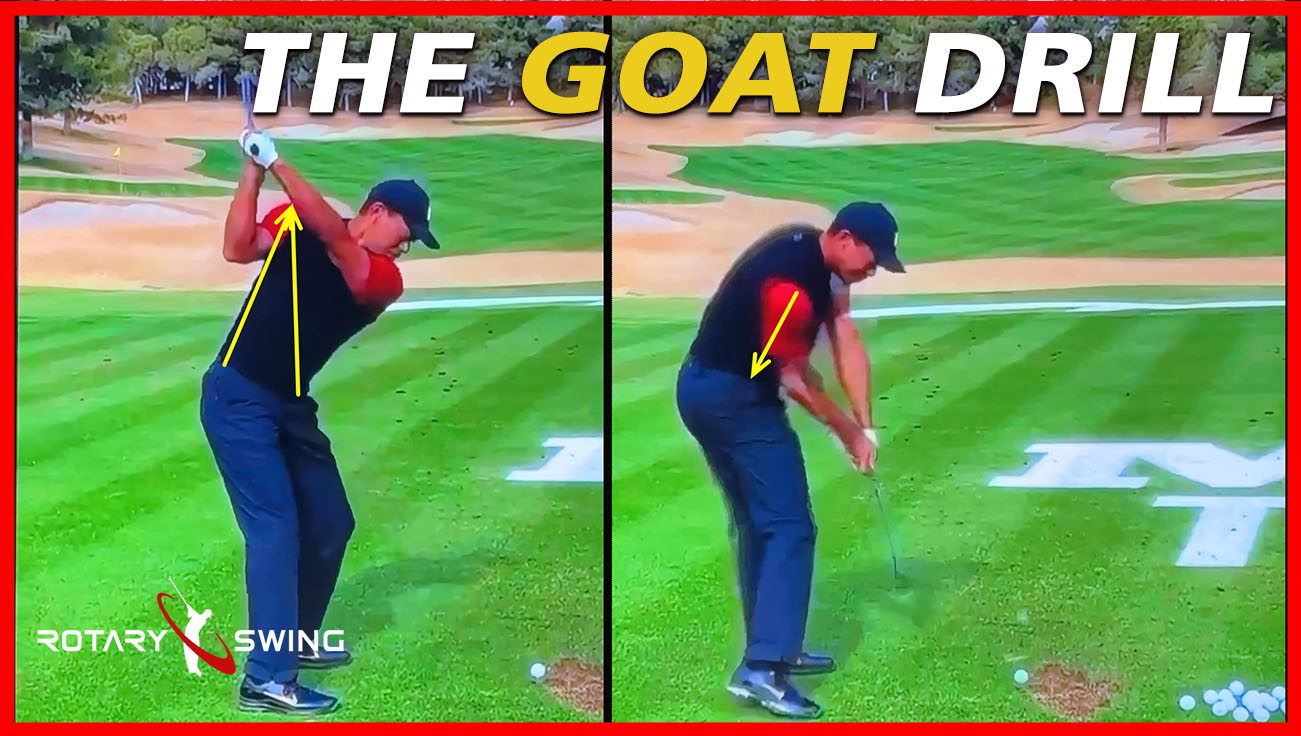
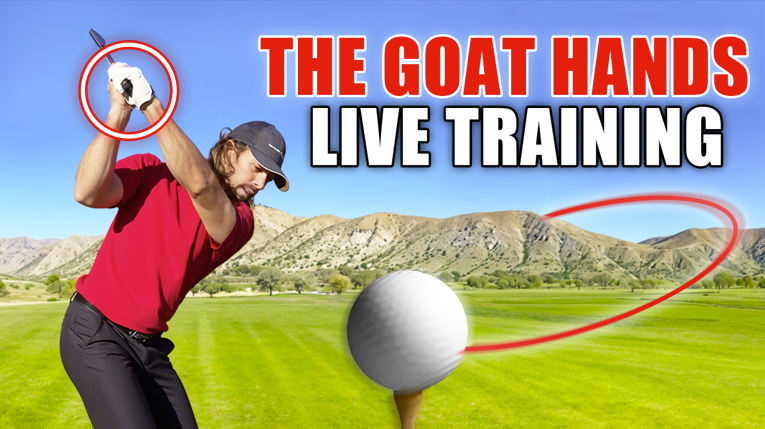
The GOAT Drill is how to gain instant consistency and clubface control in the golf swing for a trail side pattern.
The number one thing I've been told over the last 30 years of giving golf lessons that every golfer wants is to be more consistent.
Consistency is really the name of the game in golf, but it's the one thing that almost everybody struggles with.
And in this video, I'm going to show you how to have instant and complete control over that club face through a move that you've never heard of before, you've never seen before, But that's why it works, because it's just doing the exact opposite of what you're probably doing right now.
And that's one of the natures of golf is that it truly involves you doing the opposite of what you think you should do.
Or what feels right in order to actually have a proper golf swing.
And in this movie, in this video, you're going to see exactly that.
You're going to see that you're the way that you square the club face and the way that you gain instant control over that club face.
To be able to guarantee that you can have it square at impact every single time is a strange and even somewhat unnatural feeling.
But as you're going to learn, it's what all the greatest of golf have always done.
It's just a not a natural or intuitive move.
So to feel this, I want you to get up with me and walk through this very quickly.
It's going to be very, very simple.
You're going to be blown away how simple it really is.
I want you to start with your trail hand.
So if you're a right-handed golfer, you're going to start with your right arm.
And I want you to focus on two different things.
One, your elbow pit.
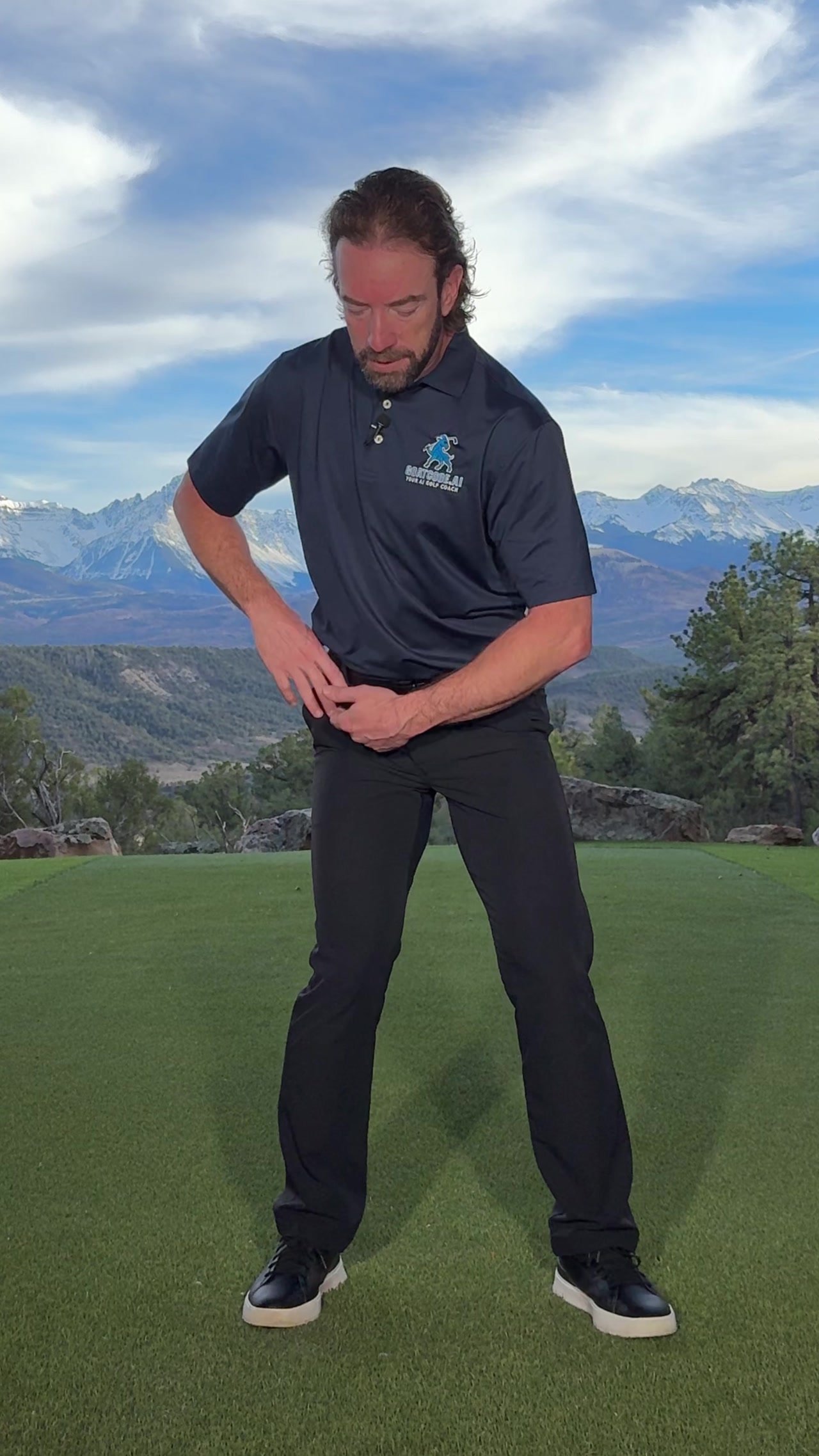
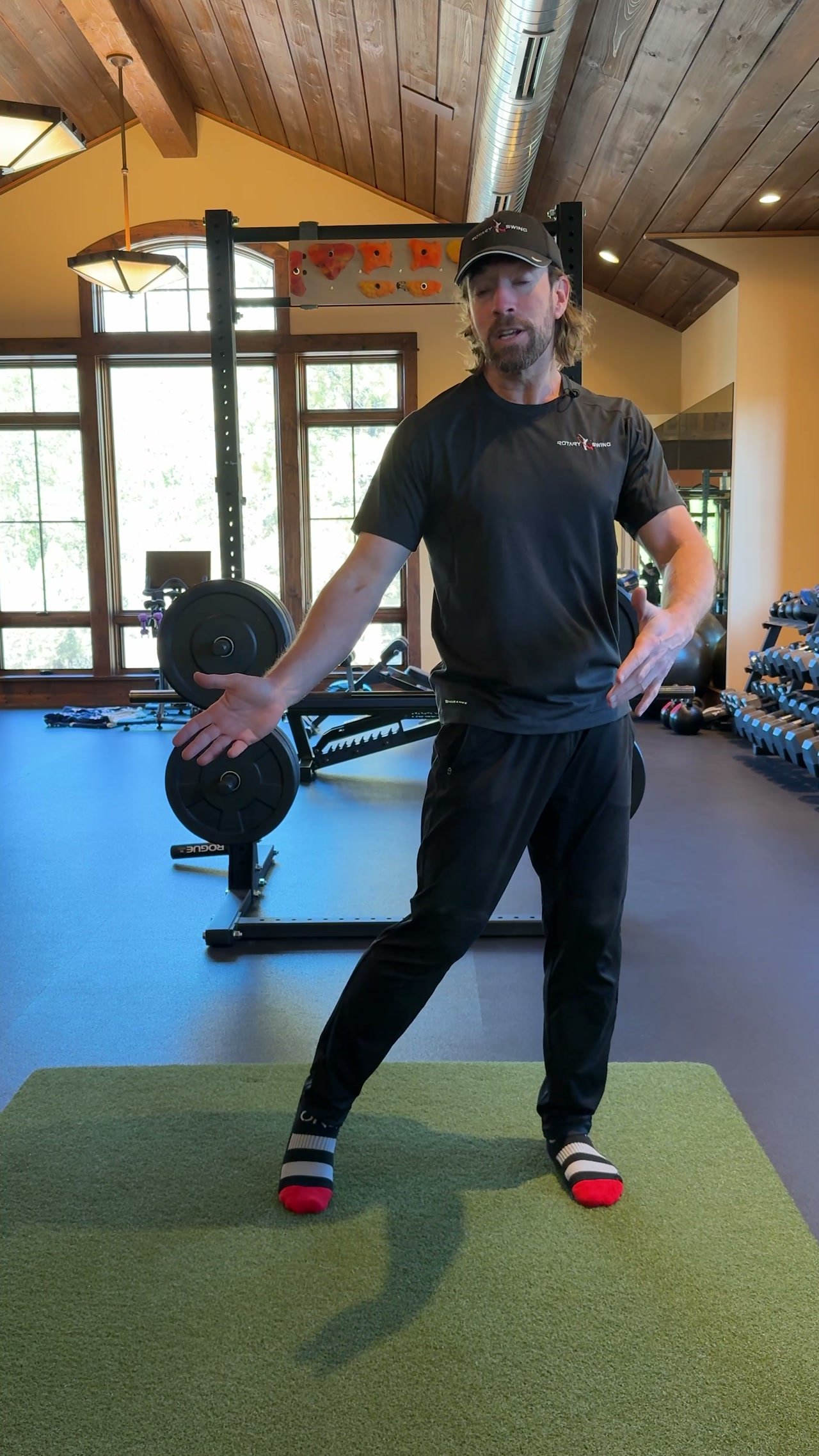
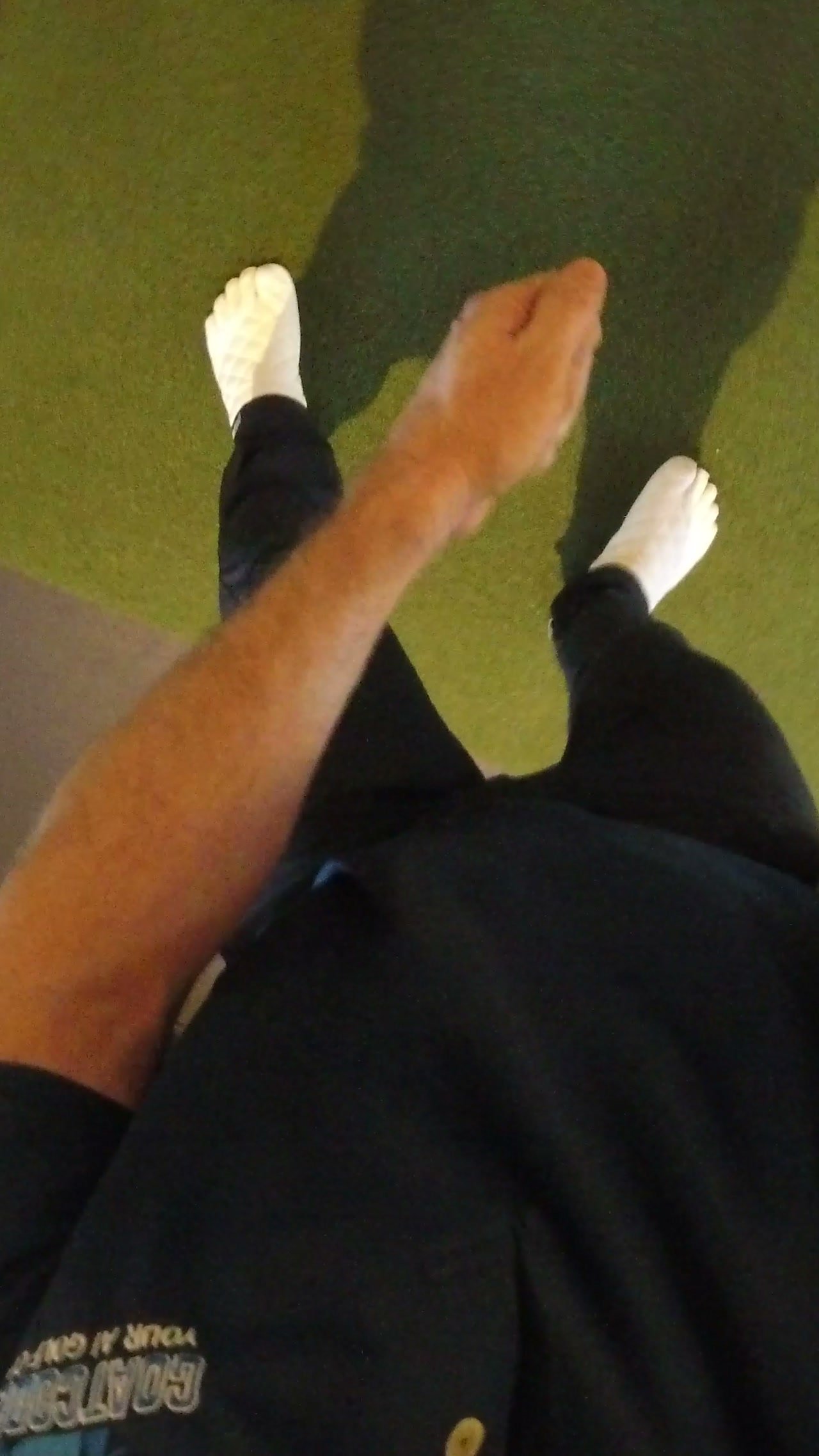
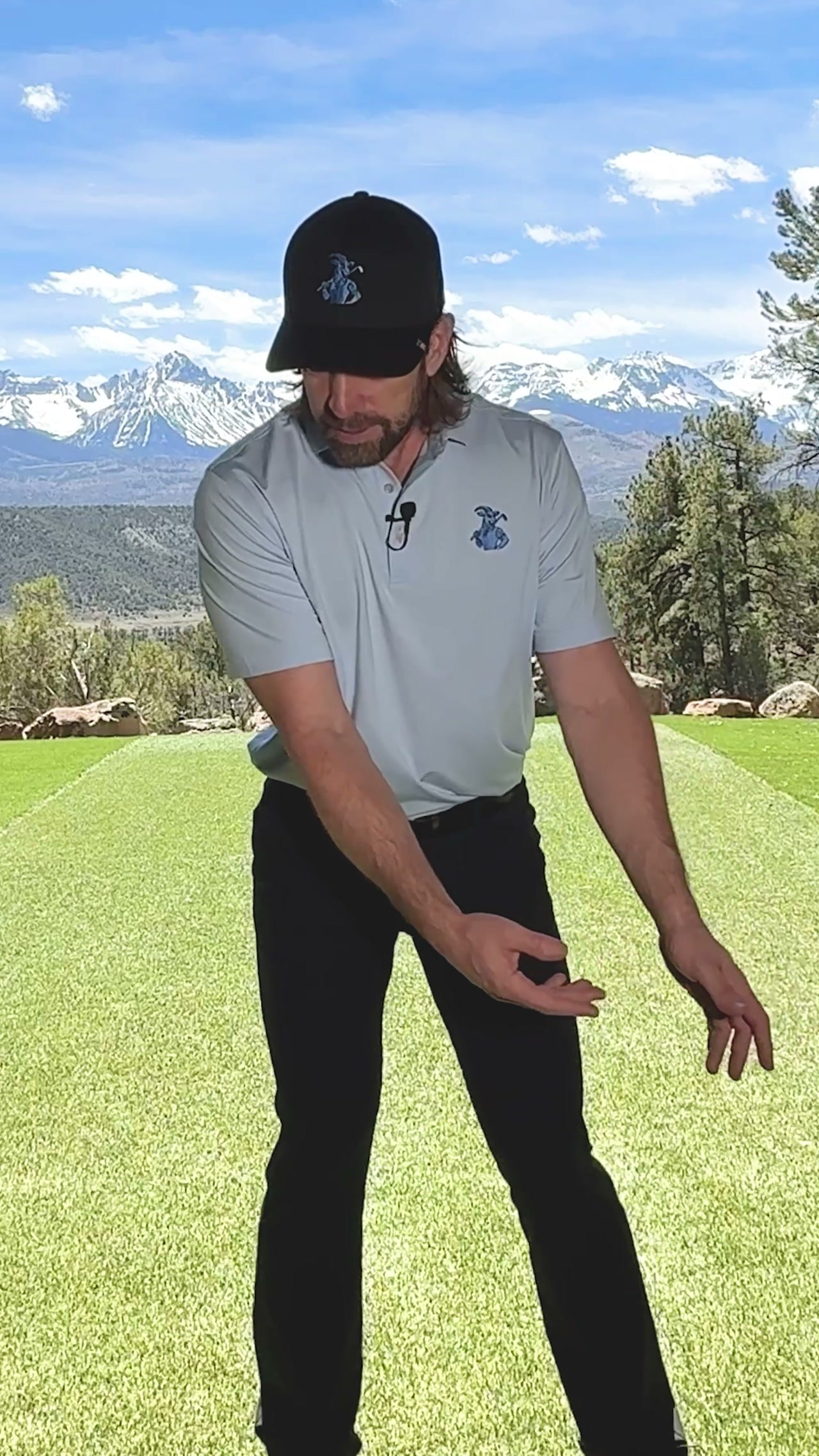
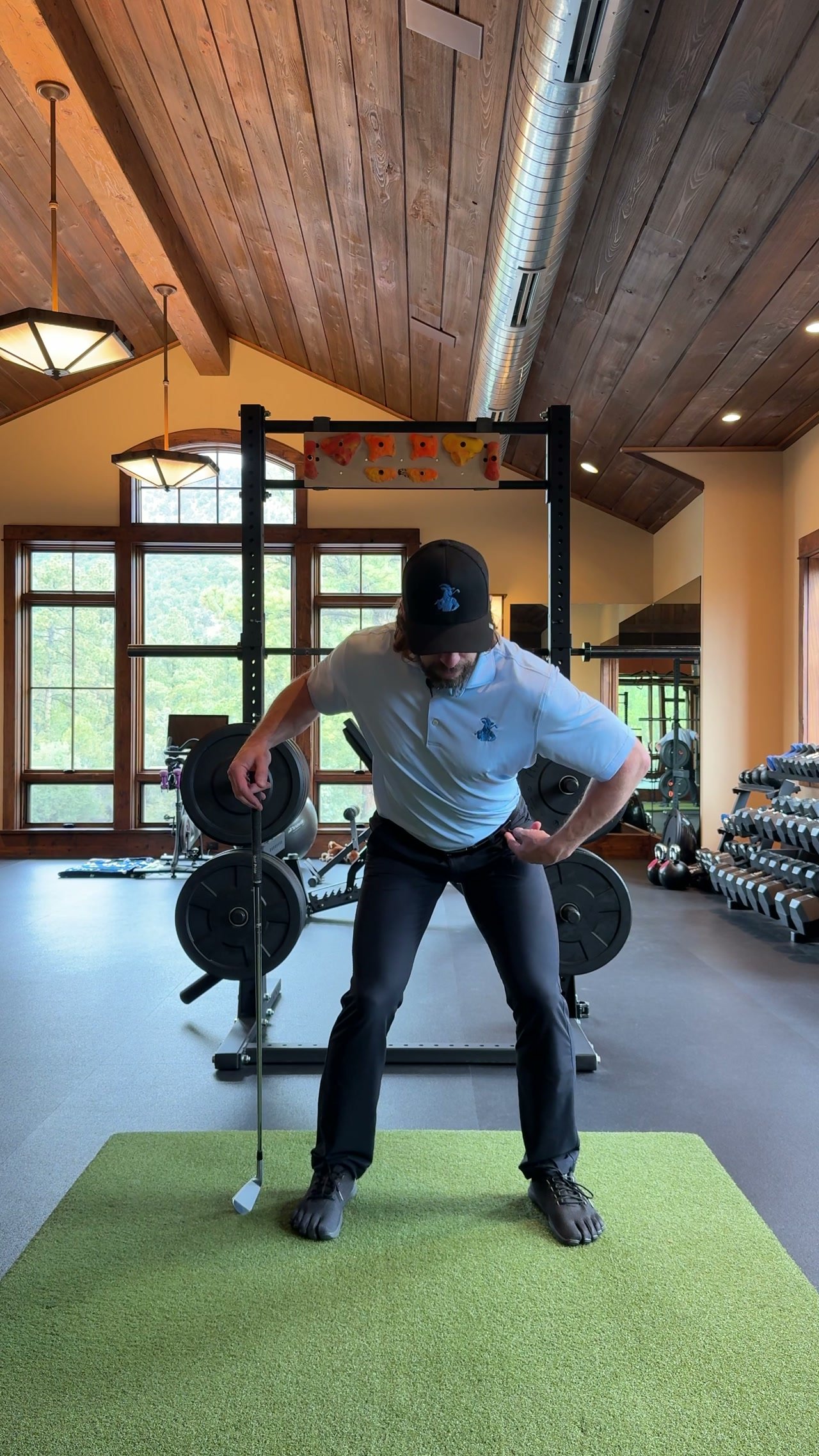
So if you were kind of taking a pseudo golf setup position here, I want you to have the pit of your elbow facing directly away from you.
And then I want you to have the palm of your hand facing directly away from you.
This is critical.
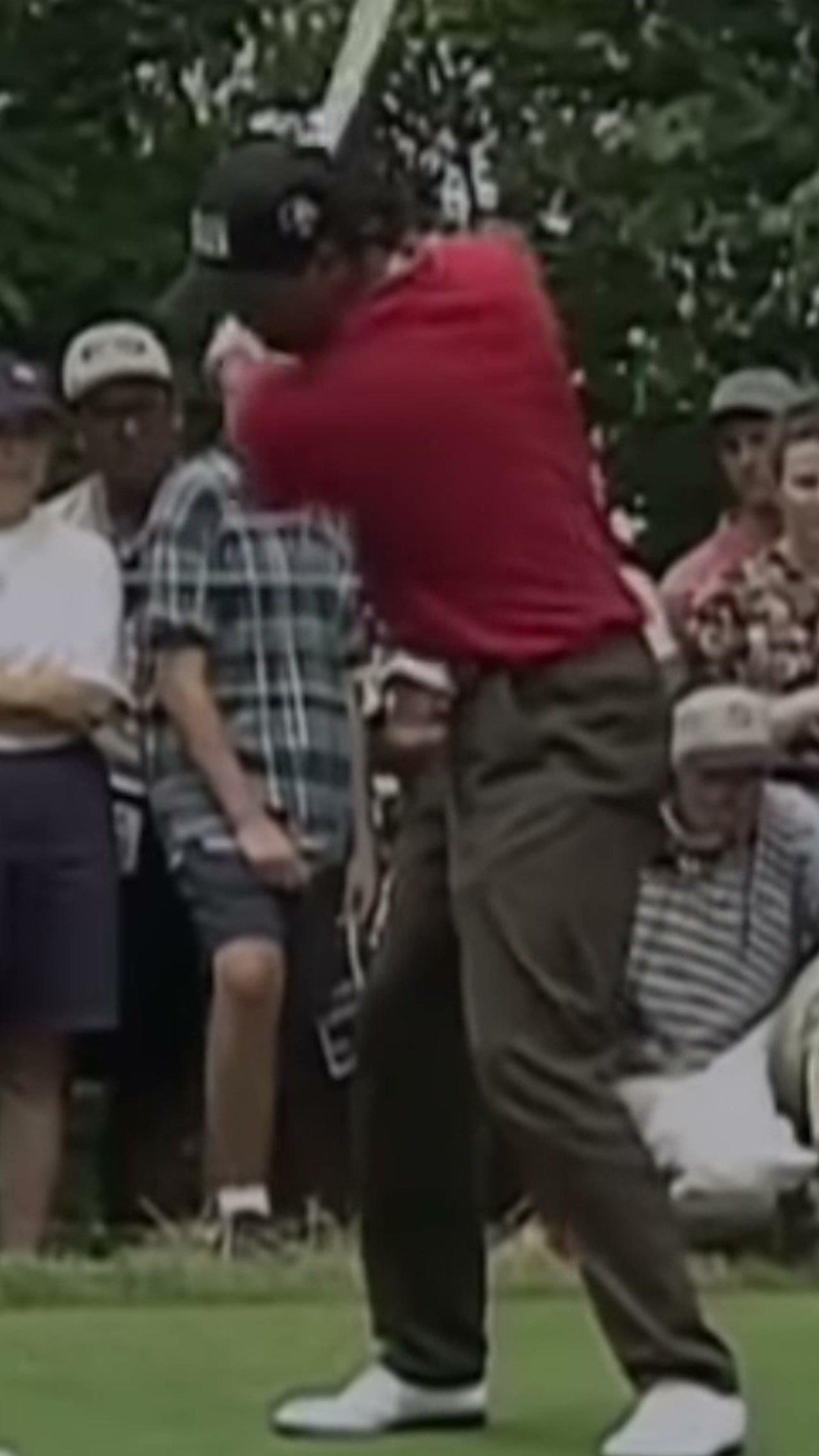
And this is setting up what we call the Goat delivery position, or GDP, that all the greats get into just before they deliver the club into the ball.
And this is key.
This is the final checkpoint, And the most important one, as to whether or not you're going to have both consistency and control of that club.
Face and speed.
So getting this right is not optional.
And what's the difficult thing about this for most golfers is it's the opposite of how they generally swing.
Their arms tend to what we call pronate or internally rotate.
And to do this move, you're going to have to supinate or externally rotate.
So your palm is facing away from you and your elbow pit is facing away from you.
Now, I want you to feel that you exaggerate this motion at first.
I'm going to give you a few different exaggerations that are going to help you feel this movement.
And then once you have a good grasp of it, you can begin to alter it for your preferences.
But for right now, I want you to exaggerate externally rotating, supinating that arm.
And if you stick your thumb out, like you're hitchhiking and you twist it even a little bit more, so it goes past 90 degrees if you have that much mobility.
If not, it doesn't matter.
I just want you to get a feel for how this locks your arm in to this part of your body.
So you'll feel if you take your arm this way that these muscles have to relax.
And the moment you do this, your arm is going to come into your body and that's going to feel a great sense of connection.
And this is absolutely the most important thing for squaring the club face, Because what you're going to realize is that in order to square the club, face every single time at impact, you have to not unsquare it in your swing.
And that's what really.
What happens is golfers don't know how to use their arms and hands, and the arms and hands can move the club all over the place.
And that's a death move in the swing.
And as you're going to learn, your arms and hands do almost nothing in the golf swing when it comes to squaring the face.
So from this position, so I've got my hitchhiker thumb, my palm is out facing the camera and my elbow pit is facing the camera.
And now because this arm is kind of internally rotated and kind of locked in place, it doesn't have a lot of free range of motion.
You'll feel that if you're supinating it, it kind of locks that shoulder and arm in place.
And so now how would you move the arm?
Focus on moving your shoulder right now.
So if I can't move my arm free of my body, I've got to move my shoulder back.
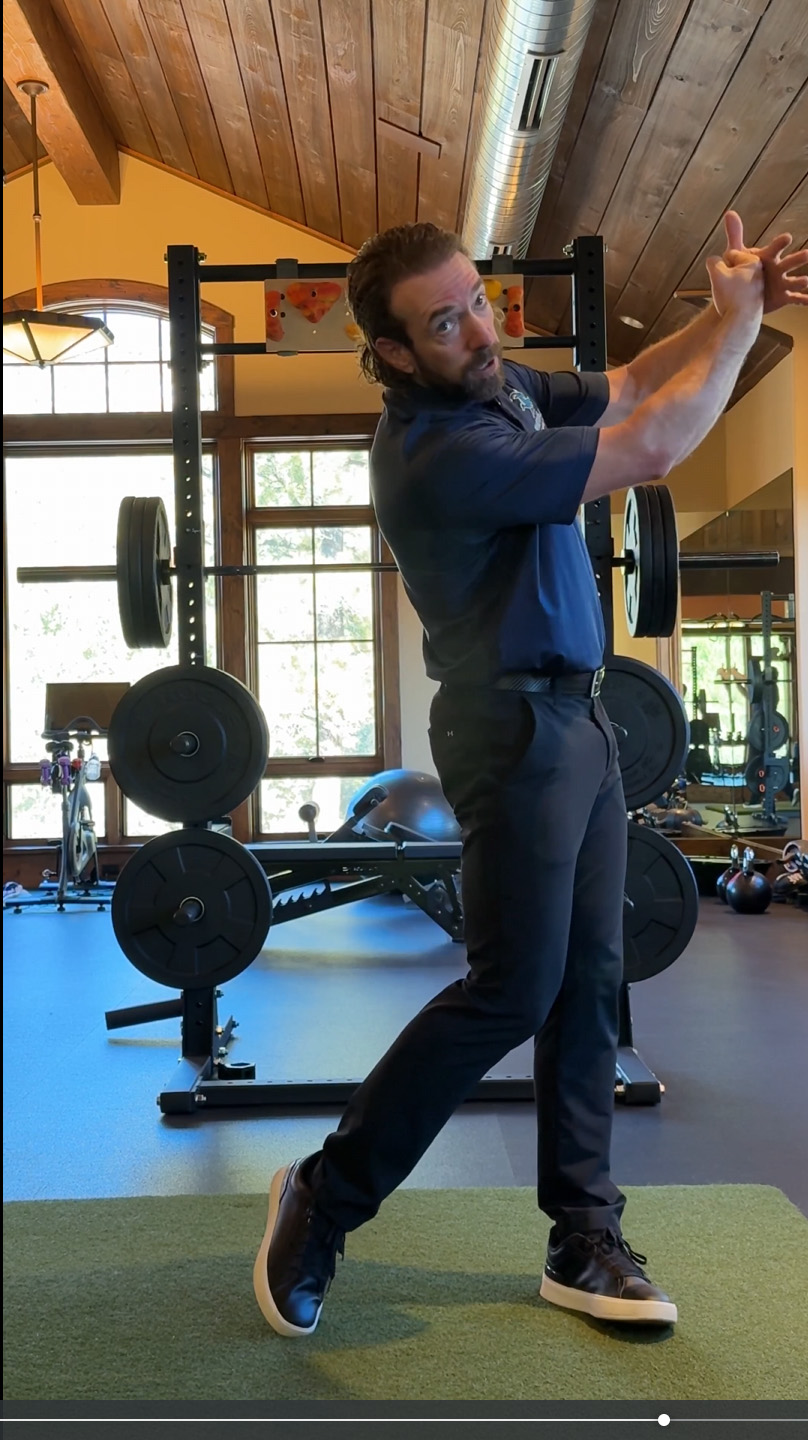
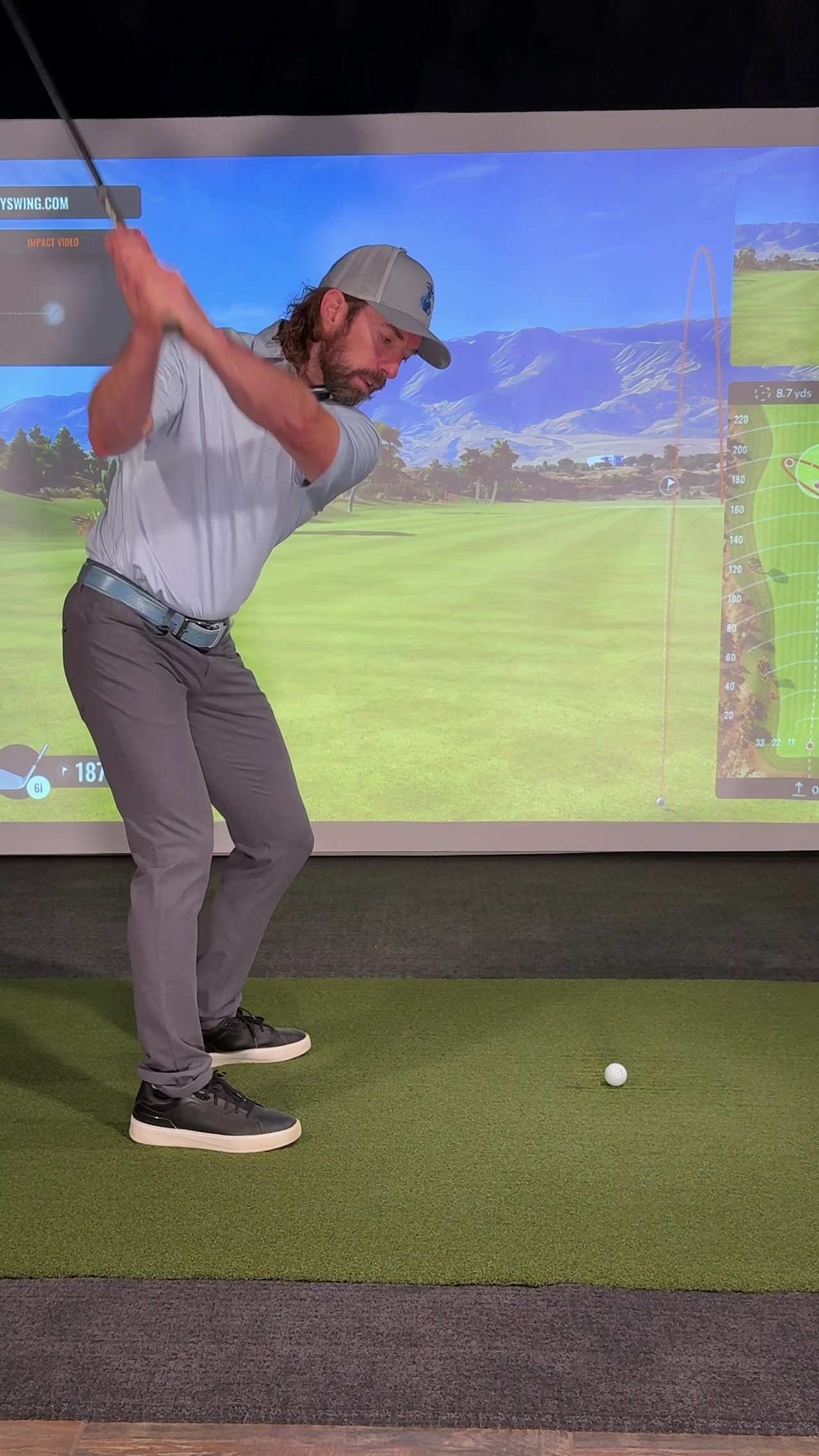
I'm going to go into a little bit side bend, extension, rotation, and that's going to move my arm into this position from down the line.
So again, I can't move my arm all over the place.
So I'm just going to move my shoulder.
Obviously my entire body's moving to help transport the arm up there.
But as you get up here, I want you to see that your palm is looking back at you.
If you start doing stuff like this, where your palm's facing this way, you're going to start pronating too soon incorrectly, and it's going to completely change the face angle.
And you'll always struggle to be consistent.
Make it simple on yourself, palm, elbow pit together.
And note that your arm is roughly 90 degrees to your chest.
I want you to maintain that relationship, maintain that supination as you go back.
So halfway back, my elbow pit's still facing the sky, palm's starting to go up because I'm supinating that hand, hitchhiker thumb.
I keep going.
My elbow pit's still facing up towards the sky, so as is my palm.
And from this position, all I need to do is move this package.
I call this the Goat Power package because this relationship of your arm and wrist and shoulder and chest is what drives the power in the golf swing.
This motion or this package is what's going to be released.
And so you have to store up energy in this package in order to have something released.
And you should feel that as you go to the top, the back of your shoulder is going to kind of feel loaded up and stretched.
And that's fascia that you're feeling, that's going to create an expendable energy that's going to load as you go back.
And then it's going to want to rebound really quickly.
So if you feel as you're supinating and exaggerating the supination to the point where my thumb's actually pointing back at the wall behind me, I'm going to feel tension in my arm and shoulder.
That's what we want.
So from here, if I can't move my arm because it's kind of locked in due to the supination, I then have to somehow get my arm and the club in a moment back down to the ball.
How would I do that?
Well, I've got to unwind what I did with my body.
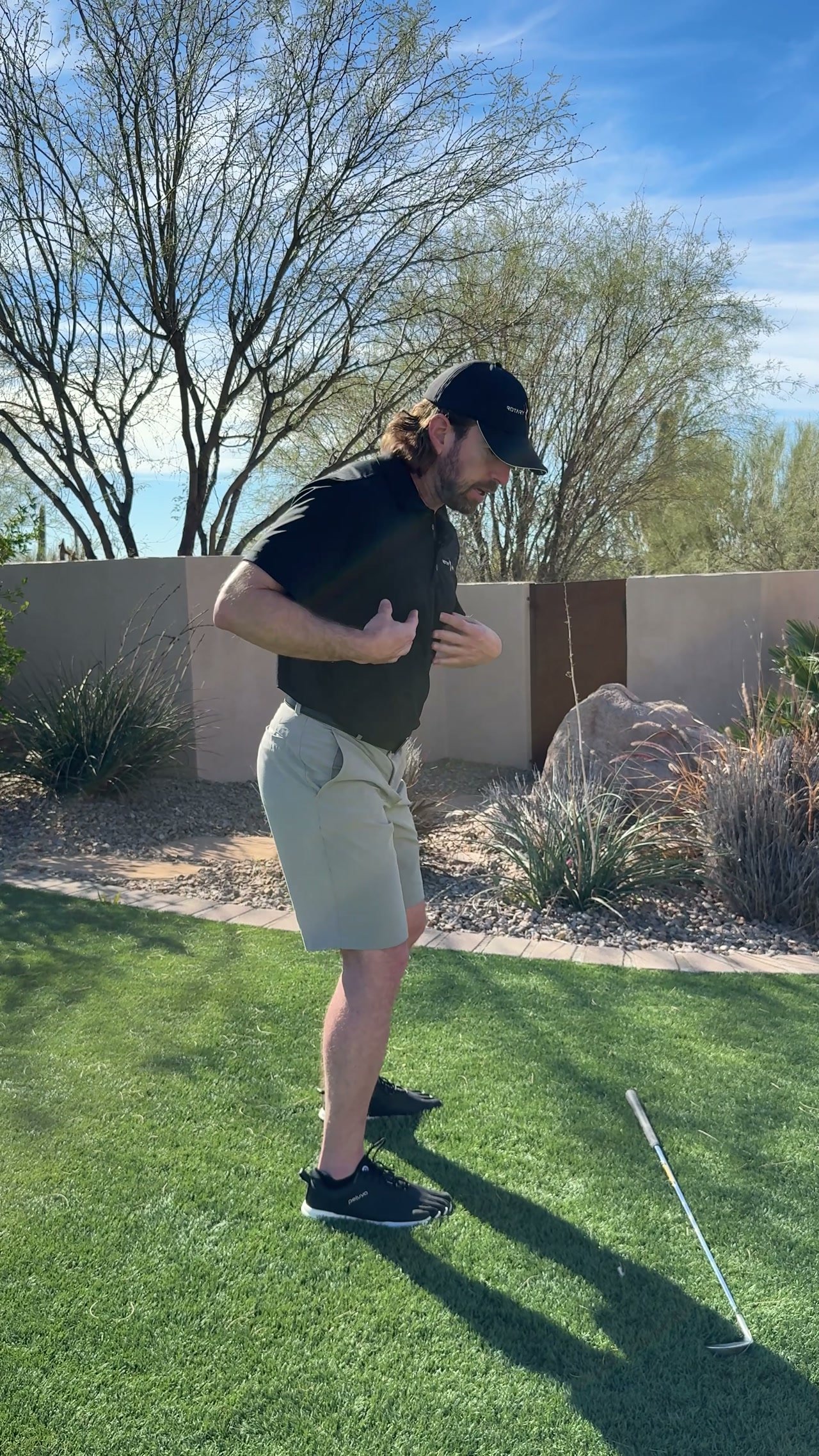
So now, instead of turning and swinging straight over the top, like most golfers do, I'm going to side bend.
And as I come into side bend, I'm going to keep that motion, that supination.
In fact, I'm going to start to do it even more.
So as I've gotten my hitchhiker thumb, it's now doing this.
For those of you who are familiar with the axiom, it's that clockwise motion.
So as I go from here and I start moving my shoulder to move my arm, I'm moving my entire rib cage, my spine, Everything is moving this package back down to the ball, to the point that my elbow is kind of leading my hand into the back of the ball, but I'm not just ripping my arm down there or my arm, if it's supinated, feels locked in.
So I've got to use my whole body, my rib cage, my legs, my hips, everything to move this power package down into impact.
And from here, as soon as we have a club in our hand, just a moment, you're going to see the club face is going to be dead square, instantly de-lofted.
You're going to have shaft lean, you're going to have compression, and you're going to be able to know exactly where that ball is going all by doing exactly this.
Keep this out, move the shoulder back, move it down into side bend.
And now that's all you have to do to have instant control of that club face.
Now let's grab a club and see how this works showing the club face and the shaft lean at address, at impact.
All right, are you ready to see the magic unfold?
If you have a club, there's a couple things I'm going to have you focus on with the club.
The biggest key is understanding that you don't want that club to have a lot of momentum during the backswing because it's going to pull you out of position.
There's just too much inertia with it.
So you're going to have to learn how to control it.
And this is very simple.
I'm going to give you one simple trick to feel that.
Take your normal trail hand grip, but notice before we were starting with our palm facing out like this.
Now, if I grip the club like this, that's going to be a super strong grip.
We don't want it to obviously be that strong.
You can see that my fingernails would be kind of be sitting to the side of the center of the shaft.
I want you to get your fingernails on top of that shaft.
So it's still going to be probably a stronger grip than you're used to.
Again, once you get used to this, you can adjust it.
This is really important to get the feel of how the club has to be loaded in the backswing, how we load the muscles and how we move the club correctly to be able to keep it square.
So my fingernails are going to sit right on top of the shaft roughly.
So that's going to be, instead of being like this, I've come back about halfway.
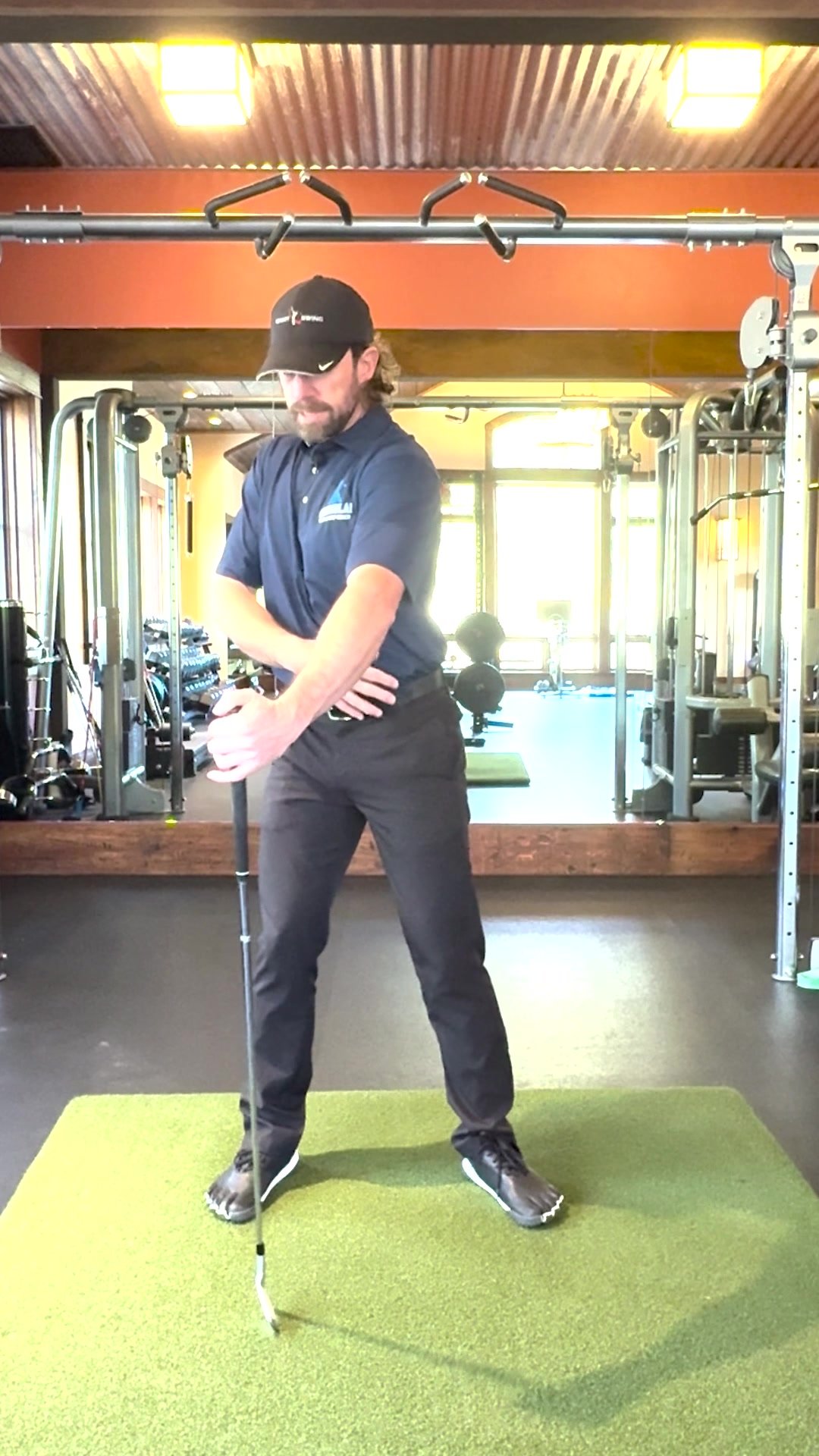
Now from here, I want you to take your wrist and bow it.
So this is bowing.
This is what we'd call flexion and extension.
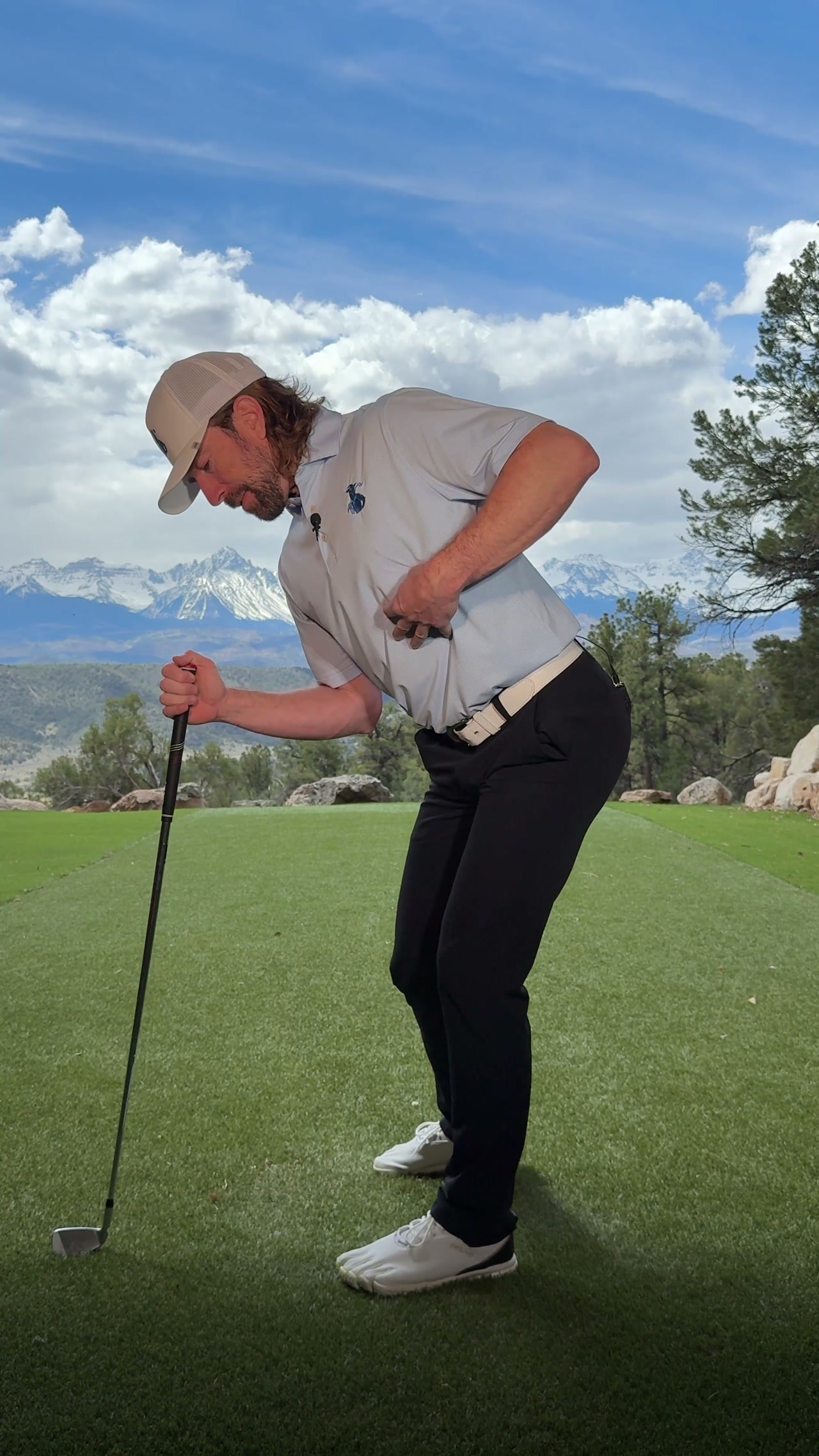
So I want you to get the club, the butt of the club to touch you in the forearm.
So the shaft is actually going to be leaning away from the target at setup.
Now this may seem strange at first, But you're going to understand that what most golfers do is they immediately start extending their wrist too much in the backswing in an incorrect way.
And then the club face is now completely changed angles.
And you hopefully have got to get that all squared back up.
I'm going to show you, you don't have to do that.
And if you want consistency, it's the last thing on earth you want to do.
So take your grip and get the butt of the club to touch you in the forearm, elbow pits still out.
My wrist is now bowed.
Now what I want you to do as you're going back, you still have the supination feel, the locked in feeling of the trail arm.
And as you're going back, I want you to try and keep this club on your forearm as long as you can.
Now, at some point you can see here, my arm is still straight.
My wrist is still bowed.
That's keeping the club face in line with my hands.
For those of you who take the club way inside, that's all you're doing.
Just getting sloppy with your wrists.
So we're keeping it here bowed.
Now, as I keep turning at some point, this club is going to start to feel awkward.
And so I'm going to let it set just a little bit.
So it's going to come off my forearm.
I'm going to go back, still going in the side bend, extension, rotation.
And then my wrist is going to set just a little bit.
I want you to feel like it sets the absolute minimum amount.
Because the trick to understanding how to really square the club face is understanding how to release it.
And you can't release it when your wrist is doing all sorts of crazy stuff at the top.
It makes it much more difficult.
To release it correctly is generally the opposite of how most people do it.
The release of the wrist is actually supination, deviation, and then pronation.
What most golfers do is start pronating their arms right away, their wrist.
And so that starts getting the club steep and over the top and casted.
I want you to feel that you're trying to keep that exact same relationship all the way to the top.
And again, at some point it's going to fall, it's going to feel too awkward and heavy.
And so it's going to set a minimal amount.
Now, once I have the club in this position, my arm is still supinated.
It's still roughly 90 degrees to my chest.
Now, all I want you to do is keep that exactly like it is.
Don't do anything at all with your arm or hand and start side bending to get your trail shoulder going from, at the top of your swing, it's going to be stretched, this side of your body is going to be stretched.
You're going to have a big space between your belt and your shoulder.
And now you're going to compress that space.
And now I'm in GDP, goat delivery position, the same position that all the greats get into right before impact.
And I did it by doing nothing.
I didn't try and move my arms or hands or any of that stuff.
I tried to keep them from moving as much as I can.
I lock this in, it gets a little awkward and heavy.
I let it set just a little bit.
And then as I start to side bend, my arm's going to naturally move back into my side a little bit.
My elbow pit, palm are facing directly away from me.
And if I continue this motion, look at the club face.
It's dead square, completely de-lofted.
And all I had to do was nothing.
Let's do this from down the line.
So I'm going to exaggerate.
I'm turning, opening up my body, Club face is in line with my hands because I'm keeping that butt of the club locked into the forearm.
It's going to feel a little awkward, a minimal set.
Now I'm going to side bend.
Look at the club face.
It's already squared up for me.
I'm in GDP.
And now if I keep moving that trail shoulder down, the club face is completely de-lofted so you can compress the ball like you never have before.
But what did you do with your wrist to do that?
Nothing.
You're trying to maintain these angles.
So I'm not trying to start, you know, doing something goofy with my hands immediately to start the swing.
I'm getting it here.
Now, of course my wrist is going to throw a little bit from the top, But what you really need to focus on right now is how to move this power package as one piece down into the ball.
Until you can keep the club shaft that de-lofted, that angled forward with that little loft on the club face.
And that is the key to consistency.
You can see the club face will come down dead square every single time.
And all you have to do is focus on how to move your body, which we've talked about.
We extend, we open this side up, then we compress, we side bend.
And the more that I side bend, the more that I bring this shoulder down, the longer I can keep that club face square and generate a square or path through the ball.
So what I mean by that, watch what happens with most golfers' swings.
They kind of get sloppy with their wrists, club gets off playing at the top somewhere, and then they start turning instead of side bending.
And as you turn, the club comes out over the top and then you're trying to save it.
And the club's going to swing across the line.
It's going to come in with a different club face angle every single time because you're trying to time everything with your hands, which is just too difficult.
Things are moving too fast.
Tour pros and the Greats know that they try to do as little as they can with all of these parts.
So that they can get everything to be consistently brought back down the same way every time.
So you'll see now that I'm here, I'm in GDP, from here what I need to do, if I keep that shoulder going down to keep moving my arm and club the power package forward, the club face stays square.
And the more that I keep that shoulder down, the more side bend I have, The longer I'm able to keep that club face square to the target line and the path of the club straight down the line.
So you don't see any over the top move.
That's all coming from incorrect rotation.
If you're coming too far from the inside, you're using your hips incorrectly and your arms are getting stuck.
The moment you get this feeling, it's truly just this, the hitchhiker thumb supination, move that with your body, move it back down with your body and then the club face is already squared up.
You're going to instantly be consistent and you're going to instantly have complete control over the club face.
From there, once you're in this position, Now, of course, this is going to feel a little bit more awkward and heavy because we're doing this really slow.
And the truth in the real swing, things are happening super fast, right?
So we're not just picking this thing up and holding it and trying to fight it off.
There's momentum, there's speed, there's all sorts of things happening.
This is to get you the feeling of how to keep that club face square with supination of your trail arm.
From here, once I'm, if I was making a real swing, I would just simply let it release.
So I'm here, I'm going to continue that axiom, that clockwise motion, because that's how you release the club.
And you'll see that as I do that and I let the club release, the club is going to do all the work for me and it's already squared up.
I don't have to try and do anything funky with my hands.
I just have to let it release and I will have instant control of the club face and instant club head speed, all just through supination of my trail arm.
Consistency is really the name of the game in golf, but it's the one thing that almost everybody struggles with.
And in this video, I'm going to show you how to have instant and complete control over that club face through a move that you've never heard of before, you've never seen before, But that's why it works, because it's just doing the exact opposite of what you're probably doing right now.
And that's one of the natures of golf is that it truly involves you doing the opposite of what you think you should do.
Or what feels right in order to actually have a proper golf swing.
And in this movie, in this video, you're going to see exactly that.
You're going to see that you're the way that you square the club face and the way that you gain instant control over that club face.
To be able to guarantee that you can have it square at impact every single time is a strange and even somewhat unnatural feeling.
But as you're going to learn, it's what all the greatest of golf have always done.
It's just a not a natural or intuitive move.
So to feel this, I want you to get up with me and walk through this very quickly.
It's going to be very, very simple.
You're going to be blown away how simple it really is.
I want you to start with your trail hand.
So if you're a right-handed golfer, you're going to start with your right arm.
And I want you to focus on two different things.
One, your elbow pit.
So if you were kind of taking a pseudo golf setup position here, I want you to have the pit of your elbow facing directly away from you.
And then I want you to have the palm of your hand facing directly away from you.
This is critical.
And this is setting up what we call the Goat delivery position, or GDP, that all the greats get into just before they deliver the club into the ball.
And this is key.
This is the final checkpoint, And the most important one, as to whether or not you're going to have both consistency and control of that club.
Face and speed.
So getting this right is not optional.
And what's the difficult thing about this for most golfers is it's the opposite of how they generally swing.
Their arms tend to what we call pronate or internally rotate.
And to do this move, you're going to have to supinate or externally rotate.
So your palm is facing away from you and your elbow pit is facing away from you.
Now, I want you to feel that you exaggerate this motion at first.
I'm going to give you a few different exaggerations that are going to help you feel this movement.
And then once you have a good grasp of it, you can begin to alter it for your preferences.
But for right now, I want you to exaggerate externally rotating, supinating that arm.
And if you stick your thumb out, like you're hitchhiking and you twist it even a little bit more, so it goes past 90 degrees if you have that much mobility.
If not, it doesn't matter.
I just want you to get a feel for how this locks your arm in to this part of your body.
So you'll feel if you take your arm this way that these muscles have to relax.
And the moment you do this, your arm is going to come into your body and that's going to feel a great sense of connection.
And this is absolutely the most important thing for squaring the club face, Because what you're going to realize is that in order to square the club, face every single time at impact, you have to not unsquare it in your swing.
And that's what really.
What happens is golfers don't know how to use their arms and hands, and the arms and hands can move the club all over the place.
And that's a death move in the swing.
And as you're going to learn, your arms and hands do almost nothing in the golf swing when it comes to squaring the face.
So from this position, so I've got my hitchhiker thumb, my palm is out facing the camera and my elbow pit is facing the camera.
And now because this arm is kind of internally rotated and kind of locked in place, it doesn't have a lot of free range of motion.
You'll feel that if you're supinating it, it kind of locks that shoulder and arm in place.
And so now how would you move the arm?
Focus on moving your shoulder right now.
So if I can't move my arm free of my body, I've got to move my shoulder back.
I'm going to go into a little bit side bend, extension, rotation, and that's going to move my arm into this position from down the line.
So again, I can't move my arm all over the place.
So I'm just going to move my shoulder.
Obviously my entire body's moving to help transport the arm up there.
But as you get up here, I want you to see that your palm is looking back at you.
If you start doing stuff like this, where your palm's facing this way, you're going to start pronating too soon incorrectly, and it's going to completely change the face angle.
And you'll always struggle to be consistent.
Make it simple on yourself, palm, elbow pit together.
And note that your arm is roughly 90 degrees to your chest.
I want you to maintain that relationship, maintain that supination as you go back.
So halfway back, my elbow pit's still facing the sky, palm's starting to go up because I'm supinating that hand, hitchhiker thumb.
I keep going.
My elbow pit's still facing up towards the sky, so as is my palm.
And from this position, all I need to do is move this package.
I call this the Goat Power package because this relationship of your arm and wrist and shoulder and chest is what drives the power in the golf swing.
This motion or this package is what's going to be released.
And so you have to store up energy in this package in order to have something released.
And you should feel that as you go to the top, the back of your shoulder is going to kind of feel loaded up and stretched.
And that's fascia that you're feeling, that's going to create an expendable energy that's going to load as you go back.
And then it's going to want to rebound really quickly.
So if you feel as you're supinating and exaggerating the supination to the point where my thumb's actually pointing back at the wall behind me, I'm going to feel tension in my arm and shoulder.
That's what we want.
So from here, if I can't move my arm because it's kind of locked in due to the supination, I then have to somehow get my arm and the club in a moment back down to the ball.
How would I do that?
Well, I've got to unwind what I did with my body.
So now, instead of turning and swinging straight over the top, like most golfers do, I'm going to side bend.
And as I come into side bend, I'm going to keep that motion, that supination.
In fact, I'm going to start to do it even more.
So as I've gotten my hitchhiker thumb, it's now doing this.
For those of you who are familiar with the axiom, it's that clockwise motion.
So as I go from here and I start moving my shoulder to move my arm, I'm moving my entire rib cage, my spine, Everything is moving this package back down to the ball, to the point that my elbow is kind of leading my hand into the back of the ball, but I'm not just ripping my arm down there or my arm, if it's supinated, feels locked in.
So I've got to use my whole body, my rib cage, my legs, my hips, everything to move this power package down into impact.
And from here, as soon as we have a club in our hand, just a moment, you're going to see the club face is going to be dead square, instantly de-lofted.
You're going to have shaft lean, you're going to have compression, and you're going to be able to know exactly where that ball is going all by doing exactly this.
Keep this out, move the shoulder back, move it down into side bend.
And now that's all you have to do to have instant control of that club face.
Now let's grab a club and see how this works showing the club face and the shaft lean at address, at impact.
All right, are you ready to see the magic unfold?
If you have a club, there's a couple things I'm going to have you focus on with the club.
The biggest key is understanding that you don't want that club to have a lot of momentum during the backswing because it's going to pull you out of position.
There's just too much inertia with it.
So you're going to have to learn how to control it.
And this is very simple.
I'm going to give you one simple trick to feel that.
Take your normal trail hand grip, but notice before we were starting with our palm facing out like this.
Now, if I grip the club like this, that's going to be a super strong grip.
We don't want it to obviously be that strong.
You can see that my fingernails would be kind of be sitting to the side of the center of the shaft.
I want you to get your fingernails on top of that shaft.
So it's still going to be probably a stronger grip than you're used to.
Again, once you get used to this, you can adjust it.
This is really important to get the feel of how the club has to be loaded in the backswing, how we load the muscles and how we move the club correctly to be able to keep it square.
So my fingernails are going to sit right on top of the shaft roughly.
So that's going to be, instead of being like this, I've come back about halfway.
Now from here, I want you to take your wrist and bow it.
So this is bowing.
This is what we'd call flexion and extension.
So I want you to get the club, the butt of the club to touch you in the forearm.
So the shaft is actually going to be leaning away from the target at setup.
Now this may seem strange at first, But you're going to understand that what most golfers do is they immediately start extending their wrist too much in the backswing in an incorrect way.
And then the club face is now completely changed angles.
And you hopefully have got to get that all squared back up.
I'm going to show you, you don't have to do that.
And if you want consistency, it's the last thing on earth you want to do.
So take your grip and get the butt of the club to touch you in the forearm, elbow pits still out.
My wrist is now bowed.
Now what I want you to do as you're going back, you still have the supination feel, the locked in feeling of the trail arm.
And as you're going back, I want you to try and keep this club on your forearm as long as you can.
Now, at some point you can see here, my arm is still straight.
My wrist is still bowed.
That's keeping the club face in line with my hands.
For those of you who take the club way inside, that's all you're doing.
Just getting sloppy with your wrists.
So we're keeping it here bowed.
Now, as I keep turning at some point, this club is going to start to feel awkward.
And so I'm going to let it set just a little bit.
So it's going to come off my forearm.
I'm going to go back, still going in the side bend, extension, rotation.
And then my wrist is going to set just a little bit.
I want you to feel like it sets the absolute minimum amount.
Because the trick to understanding how to really square the club face is understanding how to release it.
And you can't release it when your wrist is doing all sorts of crazy stuff at the top.
It makes it much more difficult.
To release it correctly is generally the opposite of how most people do it.
The release of the wrist is actually supination, deviation, and then pronation.
What most golfers do is start pronating their arms right away, their wrist.
And so that starts getting the club steep and over the top and casted.
I want you to feel that you're trying to keep that exact same relationship all the way to the top.
And again, at some point it's going to fall, it's going to feel too awkward and heavy.
And so it's going to set a minimal amount.
Now, once I have the club in this position, my arm is still supinated.
It's still roughly 90 degrees to my chest.
Now, all I want you to do is keep that exactly like it is.
Don't do anything at all with your arm or hand and start side bending to get your trail shoulder going from, at the top of your swing, it's going to be stretched, this side of your body is going to be stretched.
You're going to have a big space between your belt and your shoulder.
And now you're going to compress that space.
And now I'm in GDP, goat delivery position, the same position that all the greats get into right before impact.
And I did it by doing nothing.
I didn't try and move my arms or hands or any of that stuff.
I tried to keep them from moving as much as I can.
I lock this in, it gets a little awkward and heavy.
I let it set just a little bit.
And then as I start to side bend, my arm's going to naturally move back into my side a little bit.
My elbow pit, palm are facing directly away from me.
And if I continue this motion, look at the club face.
It's dead square, completely de-lofted.
And all I had to do was nothing.
Let's do this from down the line.
So I'm going to exaggerate.
I'm turning, opening up my body, Club face is in line with my hands because I'm keeping that butt of the club locked into the forearm.
It's going to feel a little awkward, a minimal set.
Now I'm going to side bend.
Look at the club face.
It's already squared up for me.
I'm in GDP.
And now if I keep moving that trail shoulder down, the club face is completely de-lofted so you can compress the ball like you never have before.
But what did you do with your wrist to do that?
Nothing.
You're trying to maintain these angles.
So I'm not trying to start, you know, doing something goofy with my hands immediately to start the swing.
I'm getting it here.
Now, of course my wrist is going to throw a little bit from the top, But what you really need to focus on right now is how to move this power package as one piece down into the ball.
Until you can keep the club shaft that de-lofted, that angled forward with that little loft on the club face.
And that is the key to consistency.
You can see the club face will come down dead square every single time.
And all you have to do is focus on how to move your body, which we've talked about.
We extend, we open this side up, then we compress, we side bend.
And the more that I side bend, the more that I bring this shoulder down, the longer I can keep that club face square and generate a square or path through the ball.
So what I mean by that, watch what happens with most golfers' swings.
They kind of get sloppy with their wrists, club gets off playing at the top somewhere, and then they start turning instead of side bending.
And as you turn, the club comes out over the top and then you're trying to save it.
And the club's going to swing across the line.
It's going to come in with a different club face angle every single time because you're trying to time everything with your hands, which is just too difficult.
Things are moving too fast.
Tour pros and the Greats know that they try to do as little as they can with all of these parts.
So that they can get everything to be consistently brought back down the same way every time.
So you'll see now that I'm here, I'm in GDP, from here what I need to do, if I keep that shoulder going down to keep moving my arm and club the power package forward, the club face stays square.
And the more that I keep that shoulder down, the more side bend I have, The longer I'm able to keep that club face square to the target line and the path of the club straight down the line.
So you don't see any over the top move.
That's all coming from incorrect rotation.
If you're coming too far from the inside, you're using your hips incorrectly and your arms are getting stuck.
The moment you get this feeling, it's truly just this, the hitchhiker thumb supination, move that with your body, move it back down with your body and then the club face is already squared up.
You're going to instantly be consistent and you're going to instantly have complete control over the club face.
From there, once you're in this position, Now, of course, this is going to feel a little bit more awkward and heavy because we're doing this really slow.
And the truth in the real swing, things are happening super fast, right?
So we're not just picking this thing up and holding it and trying to fight it off.
There's momentum, there's speed, there's all sorts of things happening.
This is to get you the feeling of how to keep that club face square with supination of your trail arm.
From here, once I'm, if I was making a real swing, I would just simply let it release.
So I'm here, I'm going to continue that axiom, that clockwise motion, because that's how you release the club.
And you'll see that as I do that and I let the club release, the club is going to do all the work for me and it's already squared up.
I don't have to try and do anything funky with my hands.
I just have to let it release and I will have instant control of the club face and instant club head speed, all just through supination of my trail arm.
La première chose qu'on m'a dit au cours des 30 dernières années de cours de golf et que chaque golfeur souhaite, c'est d'être plus cohérent.
La cohérence est vraiment le nom du jeu au golf, mais c'est la seule chose avec laquelle presque tout le monde a du mal.
Et dans cette vidéo, je vais vous montrer comment avoir un contrôle instantané et complet sur la face de ce club grâce à un mouvement dont vous n'avez jamais entendu parler auparavant, que vous n'avez jamais vu auparavant, mais c'est pourquoi cela fonctionne, car cela fait exactement le contraire de ce que vous faites probablement en ce moment.
Et c’est l’une des caractéristiques du golf : il vous oblige à faire le contraire de ce que vous pensez devoir faire.
Ou ce qui semble juste pour avoir un swing de golf correct.
Et dans ce film, dans cette vidéo, vous allez voir exactement cela.
Vous allez voir comment vous alignez la face du club et comment vous obtenez un contrôle instantané sur cette face du club.
Être capable de garantir que vous pouvez l'avoir à l'endroit à chaque impact est une sensation étrange et même quelque peu contre nature.
Mais comme vous allez l’apprendre, c’est ce que tous les plus grands du golf ont toujours fait.
Ce n’est tout simplement pas un mouvement naturel ou intuitif.
Alors pour ressentir cela, je veux que vous vous leviez avec moi et que vous traversiez cela très rapidement.
Cela va être très, très simple.
Vous serez époustouflé par sa simplicité.
Je veux que tu commences avec ta main de départ.
Donc, si vous êtes un golfeur droitier, vous allez commencer avec votre bras droit.
Et je veux que vous vous concentriez sur deux choses différentes.
Un, ton creux de coude.
Donc, si vous adoptez une position de pseudo-golf ici, je veux que le creux de votre coude soit directement tourné vers l'extérieur.
Et puis je veux que la paume de votre main soit tournée directement vers l'extérieur.
C'est crucial.
Et cela met en place ce que nous appelons la position de livraison de chèvre, ou GDP, dans laquelle tous les grands se placent juste avant de lancer le club dans la balle.
Et c’est la clé.
C'est le point de contrôle final, et le plus important, pour savoir si vous allez avoir à la fois de la cohérence et du contrôle de ce club.
Visage et vitesse.
Il n’est donc pas facultatif de réussir ce processus.
Et ce qui est difficile pour la plupart des golfeurs, c'est que c'est l'opposé de la façon dont ils swinguent habituellement.
Leurs bras ont tendance à ce que nous appelons la pronation ou la rotation interne.
Et pour faire ce mouvement, vous allez devoir effectuer une supination ou une rotation externe.
Ainsi, votre paume est tournée vers l'extérieur et votre creux de coude est tourné vers l'extérieur.
Maintenant, je veux que vous sentiez que vous exagérez ce mouvement au début.
Je vais vous donner quelques exagérations différentes qui vont vous aider à ressentir ce mouvement.
Et puis, une fois que vous l’aurez bien compris, vous pourrez commencer à le modifier selon vos préférences.
Mais pour l'instant, je veux que vous exagériez la rotation externe, en supination de ce bras.
Et si vous sortez votre pouce, comme si vous faisiez de l'auto-stop et que vous le tournez encore un peu plus, il dépasse 90 degrés si vous avez autant de mobilité.
Sinon, ce n’est pas grave.
Je veux juste que vous ayez une idée de la façon dont cela verrouille votre bras dans cette partie de votre corps.
Donc, si vous prenez votre bras de cette façon, vous sentirez que ces muscles doivent se détendre.
Et au moment où vous faites cela, votre bras va entrer dans votre corps et vous ressentirez une grande sensation de connexion.
Et c'est absolument la chose la plus importante pour mettre la face du club en carré, car ce que vous allez réaliser, c'est que pour mettre la face du club en carré à chaque impact, vous ne devez pas la déséquerrer dans votre swing.
Et c'est vraiment ça.
Ce qui se passe, c'est que les golfeurs ne savent pas comment utiliser leurs bras et leurs mains, et les bras et les mains peuvent déplacer le club partout.
Et c'est un mouvement mortel dans le swing.
Et comme vous allez l'apprendre, vos bras et vos mains ne font presque rien dans le swing de golf lorsqu'il s'agit de mettre le visage en carré.
Donc, à partir de cette position, j'ai mon pouce d'auto-stoppeur, ma paume est tournée vers la caméra et mon creux de coude est tourné vers la caméra.
Et maintenant, parce que ce bras est en quelque sorte tourné vers l'intérieur et en quelque sorte verrouillé en place, il n'a pas beaucoup de liberté de mouvement.
Vous sentirez que si vous le faites en supination, cela verrouille en quelque sorte l'épaule et le bras en place.
Et maintenant, comment déplaceriez-vous le bras ?
Concentrez-vous sur le mouvement de votre épaule en ce moment.
Donc si je ne peux pas bouger mon bras pour le libérer de mon corps, je dois bouger mon épaule vers l'arrière.
Je vais faire un peu de flexion latérale, d'extension, de rotation, et cela va déplacer mon bras dans cette position à partir de la ligne.
Donc encore une fois, je ne peux pas bouger mon bras partout.
Alors je vais juste bouger mon épaule.
De toute évidence, tout mon corps bouge pour aider à transporter le bras là-haut.
Mais lorsque vous vous levez ici, je veux que vous voyiez que votre paume vous regarde.
Si vous commencez à faire des choses comme ça, où votre paume est tournée dans cette direction, vous allez commencer à pronation trop tôt de manière incorrecte, et cela va complètement changer l'angle du visage.
Et vous aurez toujours du mal à être cohérent.
Faites-le simple pour vous-même, paume, coude ensemble.
Et notez que votre bras est à environ 90 degrés par rapport à votre poitrine.
Je veux que tu maintiennes cette relation, que tu maintiennes cette supination pendant que tu reviens.
Alors à mi-chemin du retour, mon coude est toujours tourné vers le ciel, la paume commence à se lever parce que je suis en supination avec cette main, le pouce de l'auto-stoppeur.
Je continue.
Mon coude est toujours tourné vers le ciel, tout comme ma paume.
Et depuis cette position, tout ce que j’ai à faire est de déplacer ce paquet.
J'appelle cela le package Goat Power parce que cette relation entre votre bras, votre poignet, votre épaule et votre poitrine est ce qui détermine la puissance du swing de golf.
C'est cette motion ou ce paquet qui va être publié.
Et donc vous devez stocker de l’énergie dans ce paquet afin d’avoir quelque chose à libérer.
Et vous devriez sentir qu’au fur et à mesure que vous montez vers le haut, l’arrière de votre épaule va se sentir chargé et étiré.
Et c'est ce fascia que vous ressentez, qui va créer une énergie consommable qui va se charger au fur et à mesure que vous revenez.
Et puis il va vouloir rebondir très vite.
Donc, si vous avez l'impression de supiner et d'exagérer la supination au point où mon pouce pointe vers le mur derrière moi, je vais ressentir une tension dans mon bras et mon épaule.
C'est ce que nous voulons.
Donc à partir de là, si je ne peux pas bouger mon bras parce qu'il est en quelque sorte bloqué à cause de la supination, je dois alors d'une manière ou d'une autre ramener mon bras et le club en un instant jusqu'à la balle.
Comment ferais-je cela ?
Eh bien, je dois décompresser ce que j'ai fait avec mon corps.
Alors maintenant, au lieu de me tourner et de balancer directement au-dessus, comme le font la plupart des golfeurs, je vais me pencher sur le côté.
Et lorsque j'arrive en flexion latérale, je vais garder ce mouvement, cette supination.
En fait, je vais commencer à le faire encore plus.
Alors, comme j'ai mon pouce d'auto-stoppeur, il fait maintenant ça.
Pour ceux d'entre vous qui connaissent l'axiome, c'est le mouvement dans le sens des aiguilles d'une montre.
Alors, à partir d'ici et en commençant à bouger mon épaule pour bouger mon bras, je bouge toute ma cage thoracique, ma colonne vertébrale, tout déplace ce paquet vers le bas jusqu'au ballon, au point que mon coude conduit en quelque sorte ma main à l'arrière du ballon, mais je ne déchire pas simplement mon bras là-bas ou mon bras, s'il est en supination, semble bloqué.
Je dois donc utiliser tout mon corps, ma cage thoracique, mes jambes, mes hanches, tout pour déplacer ce paquet de puissance vers le bas jusqu'à l'impact.
Et à partir de là, dès que nous avons un club dans notre main, juste un instant, vous allez voir que la face du club va être carrée, instantanément dé-loftée.
Vous allez avoir une inclinaison du manche, vous allez avoir une compression, et vous allez pouvoir savoir exactement où va cette balle, tout cela en faisant exactement cela.
Gardez cela à l'extérieur, déplacez l'épaule vers l'arrière, déplacez-la vers le bas dans la flexion latérale.
Et maintenant, c'est tout ce que vous avez à faire pour avoir un contrôle instantané de la face du club.
Prenons maintenant un club et voyons comment cela fonctionne en montrant la face du club et l'inclinaison du manche à l'adresse, à l'impact.
Très bien, êtes-vous prêt à voir la magie opérer ?
Si vous avez un club, il y a quelques points sur lesquels je vais vous demander de vous concentrer avec le club.
La clé la plus importante est de comprendre que vous ne voulez pas que ce club ait beaucoup d'élan pendant le backswing, car cela va vous sortir de votre position.
Il y a tout simplement trop d’inertie.
Vous allez donc devoir apprendre à le contrôler.
Et c'est très simple.
Je vais vous donner une astuce simple pour ressentir cela.
Prenez votre prise de main normale, mais remarquez qu'avant, nous commencions avec notre paume tournée vers l'extérieur comme ceci.
Maintenant, si je tiens le club comme ça, ce sera une prise très forte.
Nous ne voulons pas que ce soit trop fort, de manière évidente.
Vous pouvez voir que mes ongles seraient en quelque sorte placés sur le côté du centre de la tige.
Je veux que tu mettes tes ongles sur cette tige.
Donc, ce sera probablement toujours une prise plus forte que celle à laquelle vous êtes habitué.
Encore une fois, une fois que vous vous y êtes habitué, vous pouvez l’ajuster.
C'est vraiment important de comprendre comment le club doit être chargé dans le backswing, comment nous chargeons les muscles et comment nous déplaçons le club correctement pour pouvoir le garder carré.
Mes ongles vont donc reposer à peu près sur le dessus de la tige.
Donc ça va être, au lieu d'être comme ça, je suis revenu à peu près à mi-chemin.
Maintenant, à partir d'ici, je veux que vous preniez votre poignet et que vous l'incliniez.
Donc c'est ça s'incliner.
C'est ce que nous appellerions la flexion et l'extension.
Je veux donc que vous ameniez le club, que la crosse du club vous touche l'avant-bras.
Ainsi, l'arbre va en fait s'incliner loin de la cible lors de l'installation.
Cela peut paraître étrange au début, mais vous allez comprendre que ce que font la plupart des golfeurs, c'est qu'ils commencent immédiatement à trop étendre leur poignet lors du backswing de manière incorrecte.
Et puis la face du club a maintenant complètement changé d'angle.
Et j’espère que vous parviendrez à remettre tout cela en ordre.
Je vais te montrer, tu n'es pas obligé de faire ça.
Et si vous voulez de la cohérence, c'est la dernière chose que vous voulez faire au monde.
Alors, prenez votre prise et faites en sorte que la crosse du club vous touche à l'avant-bras, les creux des coudes toujours en dehors.
Mon poignet est maintenant courbé.
Maintenant, ce que je veux que vous fassiez lorsque vous revenez en arrière, c'est que vous ayez toujours la sensation de supination, la sensation de verrouillage du bras de traction.
Et pendant que vous revenez en arrière, je veux que vous essayiez de garder ce club sur votre avant-bras aussi longtemps que vous le pouvez.
Maintenant, à un moment donné, vous pouvez voir ici, mon bras est toujours droit.
Mon poignet est toujours courbé.
Cela permet de garder la face du club alignée avec mes mains.
Pour ceux d'entre vous qui empruntent le chemin du club à l'intérieur, c'est tout ce que vous faites.
Tu es juste en train de négliger tes poignets.
Nous le gardons donc ici courbé.
Maintenant, comme je continue à tourner à un moment donné, ce club va commencer à me sembler gênant.
Et donc je vais le laisser reposer un petit peu.
Donc ça va sortir de mon avant-bras.
Je vais revenir en arrière, toujours en flexion latérale, extension, rotation.
Et puis mon poignet va se détendre un tout petit peu.
Je veux que vous ayez l’impression que cela définit le montant minimum absolu.
Parce que l’astuce pour comprendre comment vraiment aligner la face du club est de comprendre comment la relâcher.
Et vous ne pouvez pas le relâcher lorsque votre poignet fait toutes sortes de choses folles au sommet.
Cela rend les choses beaucoup plus difficiles.
Le relâcher correctement est généralement le contraire de la façon dont la plupart des gens le font.
La libération du poignet est en fait une supination, une déviation, puis une pronation.
Ce que font la plupart des golfeurs, c'est commencer immédiatement à pronation leurs bras et leur poignet.
Et donc cela commence à rendre le club raide, au-dessus et moulé.
Je veux que vous sentiez que vous essayez de maintenir exactement la même relation jusqu'au sommet.
Et encore une fois, à un moment donné, ça va tomber, ça va sembler trop gênant et trop lourd.
Et donc cela va fixer un montant minimal.
Maintenant, une fois que j'ai le club dans cette position, mon bras est toujours en supination.
Il fait encore environ 90 degrés par rapport à ma poitrine.
Maintenant, tout ce que je veux que vous fassiez, c'est de garder cela exactement tel quel.
Ne faites rien du tout avec votre bras ou votre main et commencez à vous pencher sur le côté pour faire avancer votre épaule arrière, au sommet de votre swing, elle va être étirée, ce côté de votre corps va être étiré.
Vous allez avoir un grand espace entre votre ceinture et votre épaule.
Et maintenant vous allez compresser cet espace.
Et maintenant, je suis dans la position de livraison du PIB, la même position dans laquelle tous les grands se trouvent juste avant l'impact.
Et je l’ai fait en ne faisant rien.
Je n'ai pas essayé de bouger mes bras ou mes mains ou quoi que ce soit de ce genre.
J'ai essayé de les empêcher de bouger autant que possible.
Je verrouille ça, ça devient un peu gênant et lourd.
Je l'ai laissé reposer un petit peu.
Et puis, lorsque je commence à me pencher sur le côté, mon bras va naturellement revenir un peu sur le côté.
Mon coude et ma paume sont tournés directement vers moi.
Et si je continue ce mouvement, regardez la face du club.
C'est un carré mort, complètement dé-lofté.
Et tout ce que j'avais à faire, c'était ne rien faire.
Faisons-le depuis le bas de la ligne.
Alors je vais exagérer.
Je me tourne, j'ouvre mon corps, la face du club est alignée avec mes mains parce que je garde la crosse du club verrouillée dans l'avant-bras.
Cela va sembler un peu gênant, un décor minimaliste.
Maintenant, je vais me pencher sur le côté.
Regardez la face du club.
C'est déjà réglé pour moi.
Je suis dans le PIB.
Et maintenant, si je continue à déplacer l'épaule de la piste vers le bas, la face du club est complètement dé-loftée, ce qui vous permet de compresser la balle comme jamais auparavant.
Mais qu'as-tu fait avec ton poignet pour faire ça ?
Rien.
Vous essayez de maintenir ces angles.
Donc je n'essaie pas de commencer, vous savez, à faire quelque chose de bizarre avec mes mains immédiatement pour démarrer le swing.
Je le reçois ici.
Maintenant, bien sûr, mon poignet va bouger un peu du haut, mais ce sur quoi vous devez vraiment vous concentrer en ce moment, c'est comment déplacer ce paquet de puissance en une seule pièce vers le bas dans la balle.
Jusqu'à ce que vous puissiez conserver le manche du club dé-lofté, incliné vers l'avant avec ce petit loft sur la face du club.
Et c’est la clé de la cohérence.
Vous pouvez voir que la face du club descendra à chaque fois à un angle droit.
Et tout ce que vous avez à faire est de vous concentrer sur la façon de bouger votre corps, dont nous avons parlé.
On étend, on ouvre ce côté vers le haut, puis on comprime, on plie le côté.
Et plus je me penche sur le côté, plus j'abaisse cette épaule, plus je peux garder la face du club carrée et générer un carré ou un chemin à travers la balle.
Donc ce que je veux dire par là, c'est qu'il faut regarder ce qui se passe avec les swings de la plupart des golfeurs.
Ils deviennent un peu négligents avec leurs poignets, le club se met à jouer au sommet quelque part, puis ils commencent à tourner au lieu de se pencher sur le côté.
Et quand vous tournez, le club sort par-dessus et vous essayez alors de le sauver.
Et le club va franchir la ligne.
Il y aura un angle de face de club différent à chaque fois parce que vous essayez de tout chronométrer avec vos mains, ce qui est tout simplement trop difficile.
Les choses vont trop vite.
Les pros du circuit et les grands savent qu'ils essaient de faire le moins possible avec toutes ces pièces.
Pour qu'ils puissent tout ramener systématiquement de la même manière à chaque fois.
Donc vous verrez maintenant que je suis ici, je suis dans le PIB, à partir de là, ce que je dois faire, si je garde cette épaule vers le bas pour continuer à déplacer mon bras et à enfoncer le groupe motopropulseur vers l'avant, la face du club reste carrée.
Et plus je garde cette épaule vers le bas, plus j'ai de courbure latérale, plus je suis capable de garder la face du club perpendiculaire à la ligne cible et la trajectoire du club directement sur la ligne.
Vous ne voyez donc aucun mouvement excessif.
Tout cela vient d’une rotation incorrecte.
Si vous venez trop loin de l'intérieur, vous utilisez vos hanches de manière incorrecte et vos bras restent coincés.
Au moment où vous ressentez cette sensation, c'est vraiment juste ça, la supination du pouce de l'auto-stoppeur, bougez-la avec votre corps, ramenez-la vers le bas avec votre corps et alors la face du club est déjà carrée.
Vous serez instantanément cohérent et vous aurez instantanément un contrôle total sur la face du club.
À partir de là, une fois que vous êtes dans cette position, maintenant, bien sûr, cela va sembler un peu plus gênant et lourd parce que nous le faisons très lentement.
Et la vérité dans le vrai swing, c'est que les choses se passent super vite, n'est-ce pas ?
Nous ne nous contentons donc pas de ramasser cette chose, de la tenir et d’essayer de la combattre.
Il y a de l’élan, de la vitesse, il se passe toutes sortes de choses.
Ceci vous donne une idée de la façon de garder la face du club carrée avec la supination de votre bras arrière.
À partir de là, une fois que je suis en train de faire un vrai swing, je le laisserais simplement se relâcher.
Alors je suis là, je vais continuer cet axiome, ce mouvement dans le sens des aiguilles d'une montre, parce que c'est comme ça qu'on lâche le club.
Et vous verrez que lorsque je fais cela et que je laisse le club se libérer, le club va faire tout le travail pour moi et il est déjà au carré.
Je n’ai pas besoin d’essayer de faire quelque chose de bizarre avec mes mains.
Il me suffit de le laisser se relâcher et j'aurai un contrôle instantané de la face du club et une vitesse instantanée de la tête du club, tout cela simplement grâce à la supination de mon bras arrière.
La cohérence est vraiment le nom du jeu au golf, mais c'est la seule chose avec laquelle presque tout le monde a du mal.
Et dans cette vidéo, je vais vous montrer comment avoir un contrôle instantané et complet sur la face de ce club grâce à un mouvement dont vous n'avez jamais entendu parler auparavant, que vous n'avez jamais vu auparavant, mais c'est pourquoi cela fonctionne, car cela fait exactement le contraire de ce que vous faites probablement en ce moment.
Et c’est l’une des caractéristiques du golf : il vous oblige à faire le contraire de ce que vous pensez devoir faire.
Ou ce qui semble juste pour avoir un swing de golf correct.
Et dans ce film, dans cette vidéo, vous allez voir exactement cela.
Vous allez voir comment vous alignez la face du club et comment vous obtenez un contrôle instantané sur cette face du club.
Être capable de garantir que vous pouvez l'avoir à l'endroit à chaque impact est une sensation étrange et même quelque peu contre nature.
Mais comme vous allez l’apprendre, c’est ce que tous les plus grands du golf ont toujours fait.
Ce n’est tout simplement pas un mouvement naturel ou intuitif.
Alors pour ressentir cela, je veux que vous vous leviez avec moi et que vous traversiez cela très rapidement.
Cela va être très, très simple.
Vous serez époustouflé par sa simplicité.
Je veux que tu commences avec ta main de départ.
Donc, si vous êtes un golfeur droitier, vous allez commencer avec votre bras droit.
Et je veux que vous vous concentriez sur deux choses différentes.
Un, ton creux de coude.
Donc, si vous adoptez une position de pseudo-golf ici, je veux que le creux de votre coude soit directement tourné vers l'extérieur.
Et puis je veux que la paume de votre main soit tournée directement vers l'extérieur.
C'est crucial.
Et cela met en place ce que nous appelons la position de livraison de chèvre, ou GDP, dans laquelle tous les grands se placent juste avant de lancer le club dans la balle.
Et c’est la clé.
C'est le point de contrôle final, et le plus important, pour savoir si vous allez avoir à la fois de la cohérence et du contrôle de ce club.
Visage et vitesse.
Il n’est donc pas facultatif de réussir ce processus.
Et ce qui est difficile pour la plupart des golfeurs, c'est que c'est l'opposé de la façon dont ils swinguent habituellement.
Leurs bras ont tendance à ce que nous appelons la pronation ou la rotation interne.
Et pour faire ce mouvement, vous allez devoir effectuer une supination ou une rotation externe.
Ainsi, votre paume est tournée vers l'extérieur et votre creux de coude est tourné vers l'extérieur.
Maintenant, je veux que vous sentiez que vous exagérez ce mouvement au début.
Je vais vous donner quelques exagérations différentes qui vont vous aider à ressentir ce mouvement.
Et puis, une fois que vous l’aurez bien compris, vous pourrez commencer à le modifier selon vos préférences.
Mais pour l'instant, je veux que vous exagériez la rotation externe, en supination de ce bras.
Et si vous sortez votre pouce, comme si vous faisiez de l'auto-stop et que vous le tournez encore un peu plus, il dépasse 90 degrés si vous avez autant de mobilité.
Sinon, ce n’est pas grave.
Je veux juste que vous ayez une idée de la façon dont cela verrouille votre bras dans cette partie de votre corps.
Donc, si vous prenez votre bras de cette façon, vous sentirez que ces muscles doivent se détendre.
Et au moment où vous faites cela, votre bras va entrer dans votre corps et vous ressentirez une grande sensation de connexion.
Et c'est absolument la chose la plus importante pour mettre la face du club en carré, car ce que vous allez réaliser, c'est que pour mettre la face du club en carré à chaque impact, vous ne devez pas la déséquerrer dans votre swing.
Et c'est vraiment ça.
Ce qui se passe, c'est que les golfeurs ne savent pas comment utiliser leurs bras et leurs mains, et les bras et les mains peuvent déplacer le club partout.
Et c'est un mouvement mortel dans le swing.
Et comme vous allez l'apprendre, vos bras et vos mains ne font presque rien dans le swing de golf lorsqu'il s'agit de mettre le visage en carré.
Donc, à partir de cette position, j'ai mon pouce d'auto-stoppeur, ma paume est tournée vers la caméra et mon creux de coude est tourné vers la caméra.
Et maintenant, parce que ce bras est en quelque sorte tourné vers l'intérieur et en quelque sorte verrouillé en place, il n'a pas beaucoup de liberté de mouvement.
Vous sentirez que si vous le faites en supination, cela verrouille en quelque sorte l'épaule et le bras en place.
Et maintenant, comment déplaceriez-vous le bras ?
Concentrez-vous sur le mouvement de votre épaule en ce moment.
Donc si je ne peux pas bouger mon bras pour le libérer de mon corps, je dois bouger mon épaule vers l'arrière.
Je vais faire un peu de flexion latérale, d'extension, de rotation, et cela va déplacer mon bras dans cette position à partir de la ligne.
Donc encore une fois, je ne peux pas bouger mon bras partout.
Alors je vais juste bouger mon épaule.
De toute évidence, tout mon corps bouge pour aider à transporter le bras là-haut.
Mais lorsque vous vous levez ici, je veux que vous voyiez que votre paume vous regarde.
Si vous commencez à faire des choses comme ça, où votre paume est tournée dans cette direction, vous allez commencer à pronation trop tôt de manière incorrecte, et cela va complètement changer l'angle du visage.
Et vous aurez toujours du mal à être cohérent.
Faites-le simple pour vous-même, paume, coude ensemble.
Et notez que votre bras est à environ 90 degrés par rapport à votre poitrine.
Je veux que tu maintiennes cette relation, que tu maintiennes cette supination pendant que tu reviens.
Alors à mi-chemin du retour, mon coude est toujours tourné vers le ciel, la paume commence à se lever parce que je suis en supination avec cette main, le pouce de l'auto-stoppeur.
Je continue.
Mon coude est toujours tourné vers le ciel, tout comme ma paume.
Et depuis cette position, tout ce que j’ai à faire est de déplacer ce paquet.
J'appelle cela le package Goat Power parce que cette relation entre votre bras, votre poignet, votre épaule et votre poitrine est ce qui détermine la puissance du swing de golf.
C'est cette motion ou ce paquet qui va être publié.
Et donc vous devez stocker de l’énergie dans ce paquet afin d’avoir quelque chose à libérer.
Et vous devriez sentir qu’au fur et à mesure que vous montez vers le haut, l’arrière de votre épaule va se sentir chargé et étiré.
Et c'est ce fascia que vous ressentez, qui va créer une énergie consommable qui va se charger au fur et à mesure que vous revenez.
Et puis il va vouloir rebondir très vite.
Donc, si vous avez l'impression de supiner et d'exagérer la supination au point où mon pouce pointe vers le mur derrière moi, je vais ressentir une tension dans mon bras et mon épaule.
C'est ce que nous voulons.
Donc à partir de là, si je ne peux pas bouger mon bras parce qu'il est en quelque sorte bloqué à cause de la supination, je dois alors d'une manière ou d'une autre ramener mon bras et le club en un instant jusqu'à la balle.
Comment ferais-je cela ?
Eh bien, je dois décompresser ce que j'ai fait avec mon corps.
Alors maintenant, au lieu de me tourner et de balancer directement au-dessus, comme le font la plupart des golfeurs, je vais me pencher sur le côté.
Et lorsque j'arrive en flexion latérale, je vais garder ce mouvement, cette supination.
En fait, je vais commencer à le faire encore plus.
Alors, comme j'ai mon pouce d'auto-stoppeur, il fait maintenant ça.
Pour ceux d'entre vous qui connaissent l'axiome, c'est le mouvement dans le sens des aiguilles d'une montre.
Alors, à partir d'ici et en commençant à bouger mon épaule pour bouger mon bras, je bouge toute ma cage thoracique, ma colonne vertébrale, tout déplace ce paquet vers le bas jusqu'au ballon, au point que mon coude conduit en quelque sorte ma main à l'arrière du ballon, mais je ne déchire pas simplement mon bras là-bas ou mon bras, s'il est en supination, semble bloqué.
Je dois donc utiliser tout mon corps, ma cage thoracique, mes jambes, mes hanches, tout pour déplacer ce paquet de puissance vers le bas jusqu'à l'impact.
Et à partir de là, dès que nous avons un club dans notre main, juste un instant, vous allez voir que la face du club va être carrée, instantanément dé-loftée.
Vous allez avoir une inclinaison du manche, vous allez avoir une compression, et vous allez pouvoir savoir exactement où va cette balle, tout cela en faisant exactement cela.
Gardez cela à l'extérieur, déplacez l'épaule vers l'arrière, déplacez-la vers le bas dans la flexion latérale.
Et maintenant, c'est tout ce que vous avez à faire pour avoir un contrôle instantané de la face du club.
Prenons maintenant un club et voyons comment cela fonctionne en montrant la face du club et l'inclinaison du manche à l'adresse, à l'impact.
Très bien, êtes-vous prêt à voir la magie opérer ?
Si vous avez un club, il y a quelques points sur lesquels je vais vous demander de vous concentrer avec le club.
La clé la plus importante est de comprendre que vous ne voulez pas que ce club ait beaucoup d'élan pendant le backswing, car cela va vous sortir de votre position.
Il y a tout simplement trop d’inertie.
Vous allez donc devoir apprendre à le contrôler.
Et c'est très simple.
Je vais vous donner une astuce simple pour ressentir cela.
Prenez votre prise de main normale, mais remarquez qu'avant, nous commencions avec notre paume tournée vers l'extérieur comme ceci.
Maintenant, si je tiens le club comme ça, ce sera une prise très forte.
Nous ne voulons pas que ce soit trop fort, de manière évidente.
Vous pouvez voir que mes ongles seraient en quelque sorte placés sur le côté du centre de la tige.
Je veux que tu mettes tes ongles sur cette tige.
Donc, ce sera probablement toujours une prise plus forte que celle à laquelle vous êtes habitué.
Encore une fois, une fois que vous vous y êtes habitué, vous pouvez l’ajuster.
C'est vraiment important de comprendre comment le club doit être chargé dans le backswing, comment nous chargeons les muscles et comment nous déplaçons le club correctement pour pouvoir le garder carré.
Mes ongles vont donc reposer à peu près sur le dessus de la tige.
Donc ça va être, au lieu d'être comme ça, je suis revenu à peu près à mi-chemin.
Maintenant, à partir d'ici, je veux que vous preniez votre poignet et que vous l'incliniez.
Donc c'est ça s'incliner.
C'est ce que nous appellerions la flexion et l'extension.
Je veux donc que vous ameniez le club, que la crosse du club vous touche l'avant-bras.
Ainsi, l'arbre va en fait s'incliner loin de la cible lors de l'installation.
Cela peut paraître étrange au début, mais vous allez comprendre que ce que font la plupart des golfeurs, c'est qu'ils commencent immédiatement à trop étendre leur poignet lors du backswing de manière incorrecte.
Et puis la face du club a maintenant complètement changé d'angle.
Et j’espère que vous parviendrez à remettre tout cela en ordre.
Je vais te montrer, tu n'es pas obligé de faire ça.
Et si vous voulez de la cohérence, c'est la dernière chose que vous voulez faire au monde.
Alors, prenez votre prise et faites en sorte que la crosse du club vous touche à l'avant-bras, les creux des coudes toujours en dehors.
Mon poignet est maintenant courbé.
Maintenant, ce que je veux que vous fassiez lorsque vous revenez en arrière, c'est que vous ayez toujours la sensation de supination, la sensation de verrouillage du bras de traction.
Et pendant que vous revenez en arrière, je veux que vous essayiez de garder ce club sur votre avant-bras aussi longtemps que vous le pouvez.
Maintenant, à un moment donné, vous pouvez voir ici, mon bras est toujours droit.
Mon poignet est toujours courbé.
Cela permet de garder la face du club alignée avec mes mains.
Pour ceux d'entre vous qui empruntent le chemin du club à l'intérieur, c'est tout ce que vous faites.
Tu es juste en train de négliger tes poignets.
Nous le gardons donc ici courbé.
Maintenant, comme je continue à tourner à un moment donné, ce club va commencer à me sembler gênant.
Et donc je vais le laisser reposer un petit peu.
Donc ça va sortir de mon avant-bras.
Je vais revenir en arrière, toujours en flexion latérale, extension, rotation.
Et puis mon poignet va se détendre un tout petit peu.
Je veux que vous ayez l’impression que cela définit le montant minimum absolu.
Parce que l’astuce pour comprendre comment vraiment aligner la face du club est de comprendre comment la relâcher.
Et vous ne pouvez pas le relâcher lorsque votre poignet fait toutes sortes de choses folles au sommet.
Cela rend les choses beaucoup plus difficiles.
Le relâcher correctement est généralement le contraire de la façon dont la plupart des gens le font.
La libération du poignet est en fait une supination, une déviation, puis une pronation.
Ce que font la plupart des golfeurs, c'est commencer immédiatement à pronation leurs bras et leur poignet.
Et donc cela commence à rendre le club raide, au-dessus et moulé.
Je veux que vous sentiez que vous essayez de maintenir exactement la même relation jusqu'au sommet.
Et encore une fois, à un moment donné, ça va tomber, ça va sembler trop gênant et trop lourd.
Et donc cela va fixer un montant minimal.
Maintenant, une fois que j'ai le club dans cette position, mon bras est toujours en supination.
Il fait encore environ 90 degrés par rapport à ma poitrine.
Maintenant, tout ce que je veux que vous fassiez, c'est de garder cela exactement tel quel.
Ne faites rien du tout avec votre bras ou votre main et commencez à vous pencher sur le côté pour faire avancer votre épaule arrière, au sommet de votre swing, elle va être étirée, ce côté de votre corps va être étiré.
Vous allez avoir un grand espace entre votre ceinture et votre épaule.
Et maintenant vous allez compresser cet espace.
Et maintenant, je suis dans la position de livraison du PIB, la même position dans laquelle tous les grands se trouvent juste avant l'impact.
Et je l’ai fait en ne faisant rien.
Je n'ai pas essayé de bouger mes bras ou mes mains ou quoi que ce soit de ce genre.
J'ai essayé de les empêcher de bouger autant que possible.
Je verrouille ça, ça devient un peu gênant et lourd.
Je l'ai laissé reposer un petit peu.
Et puis, lorsque je commence à me pencher sur le côté, mon bras va naturellement revenir un peu sur le côté.
Mon coude et ma paume sont tournés directement vers moi.
Et si je continue ce mouvement, regardez la face du club.
C'est un carré mort, complètement dé-lofté.
Et tout ce que j'avais à faire, c'était ne rien faire.
Faisons-le depuis le bas de la ligne.
Alors je vais exagérer.
Je me tourne, j'ouvre mon corps, la face du club est alignée avec mes mains parce que je garde la crosse du club verrouillée dans l'avant-bras.
Cela va sembler un peu gênant, un décor minimaliste.
Maintenant, je vais me pencher sur le côté.
Regardez la face du club.
C'est déjà réglé pour moi.
Je suis dans le PIB.
Et maintenant, si je continue à déplacer l'épaule de la piste vers le bas, la face du club est complètement dé-loftée, ce qui vous permet de compresser la balle comme jamais auparavant.
Mais qu'as-tu fait avec ton poignet pour faire ça ?
Rien.
Vous essayez de maintenir ces angles.
Donc je n'essaie pas de commencer, vous savez, à faire quelque chose de bizarre avec mes mains immédiatement pour démarrer le swing.
Je le reçois ici.
Maintenant, bien sûr, mon poignet va bouger un peu du haut, mais ce sur quoi vous devez vraiment vous concentrer en ce moment, c'est comment déplacer ce paquet de puissance en une seule pièce vers le bas dans la balle.
Jusqu'à ce que vous puissiez conserver le manche du club dé-lofté, incliné vers l'avant avec ce petit loft sur la face du club.
Et c’est la clé de la cohérence.
Vous pouvez voir que la face du club descendra à chaque fois à un angle droit.
Et tout ce que vous avez à faire est de vous concentrer sur la façon de bouger votre corps, dont nous avons parlé.
On étend, on ouvre ce côté vers le haut, puis on comprime, on plie le côté.
Et plus je me penche sur le côté, plus j'abaisse cette épaule, plus je peux garder la face du club carrée et générer un carré ou un chemin à travers la balle.
Donc ce que je veux dire par là, c'est qu'il faut regarder ce qui se passe avec les swings de la plupart des golfeurs.
Ils deviennent un peu négligents avec leurs poignets, le club se met à jouer au sommet quelque part, puis ils commencent à tourner au lieu de se pencher sur le côté.
Et quand vous tournez, le club sort par-dessus et vous essayez alors de le sauver.
Et le club va franchir la ligne.
Il y aura un angle de face de club différent à chaque fois parce que vous essayez de tout chronométrer avec vos mains, ce qui est tout simplement trop difficile.
Les choses vont trop vite.
Les pros du circuit et les grands savent qu'ils essaient de faire le moins possible avec toutes ces pièces.
Pour qu'ils puissent tout ramener systématiquement de la même manière à chaque fois.
Donc vous verrez maintenant que je suis ici, je suis dans le PIB, à partir de là, ce que je dois faire, si je garde cette épaule vers le bas pour continuer à déplacer mon bras et à enfoncer le groupe motopropulseur vers l'avant, la face du club reste carrée.
Et plus je garde cette épaule vers le bas, plus j'ai de courbure latérale, plus je suis capable de garder la face du club perpendiculaire à la ligne cible et la trajectoire du club directement sur la ligne.
Vous ne voyez donc aucun mouvement excessif.
Tout cela vient d’une rotation incorrecte.
Si vous venez trop loin de l'intérieur, vous utilisez vos hanches de manière incorrecte et vos bras restent coincés.
Au moment où vous ressentez cette sensation, c'est vraiment juste ça, la supination du pouce de l'auto-stoppeur, bougez-la avec votre corps, ramenez-la vers le bas avec votre corps et alors la face du club est déjà carrée.
Vous serez instantanément cohérent et vous aurez instantanément un contrôle total sur la face du club.
À partir de là, une fois que vous êtes dans cette position, maintenant, bien sûr, cela va sembler un peu plus gênant et lourd parce que nous le faisons très lentement.
Et la vérité dans le vrai swing, c'est que les choses se passent super vite, n'est-ce pas ?
Nous ne nous contentons donc pas de ramasser cette chose, de la tenir et d’essayer de la combattre.
Il y a de l’élan, de la vitesse, il se passe toutes sortes de choses.
Ceci vous donne une idée de la façon de garder la face du club carrée avec la supination de votre bras arrière.
À partir de là, une fois que je suis en train de faire un vrai swing, je le laisserais simplement se relâcher.
Alors je suis là, je vais continuer cet axiome, ce mouvement dans le sens des aiguilles d'une montre, parce que c'est comme ça qu'on lâche le club.
Et vous verrez que lorsque je fais cela et que je laisse le club se libérer, le club va faire tout le travail pour moi et il est déjà au carré.
Je n’ai pas besoin d’essayer de faire quelque chose de bizarre avec mes mains.
Il me suffit de le laisser se relâcher et j'aurai un contrôle instantané de la face du club et une vitesse instantanée de la tête du club, tout cela simplement grâce à la supination de mon bras arrière.
Lo primero que me han dicho durante los últimos 30 años al dar clases de golf y que todo golfista desea es ser más constante.
La constancia es realmente la clave del juego en el golf, pero es algo con lo que casi todo el mundo tiene dificultades.
Y en este video, te voy a mostrar cómo tener control instantáneo y completo sobre la cara del palo a través de un movimiento del que nunca has oído hablar antes, nunca has visto antes, pero es por eso que funciona, porque simplemente hace lo opuesto de lo que probablemente estás haciendo ahora mismo.
Y una de las características del golf es que realmente implica hacer lo contrario de lo que crees que deberías hacer.
O lo que se siente bien para realmente tener un swing de golf apropiado.
Y en esta película, en este vídeo, veréis exactamente eso.
Verás que es la forma en que cuadras la cara del palo y la forma en que obtienes control instantáneo sobre esa cara.
Poder garantizar que puedes tenerlo en ángulo recto en el impacto cada vez es una sensación extraña y hasta un tanto antinatural.
Pero, como aprenderás, es lo que siempre han hecho los mejores golfistas.
Simplemente no es un movimiento natural ni intuitivo.
Entonces, para sentir esto, quiero que te levantes conmigo y caminemos a través de esto muy rápidamente.
Va a ser muy, muy sencillo.
Te sorprenderá lo sencillo que realmente es.
Quiero que empieces con tu mano de seguimiento.
Entonces, si eres un golfista diestro, comenzarás con el brazo derecho.
Y quiero que os centréis en dos cosas diferentes.
Uno, tu codo.
Entonces, si estuvieras adoptando una especie de posición de preparación de golf aquí, quiero que tengas la punta del codo orientada directamente hacia afuera de ti.
Y luego quiero que tengas la palma de tu mano mirando directamente hacia afuera.
Esto es crítico.
Y esto es lo que establece lo que llamamos la posición de lanzamiento de la cabra, o GDP, en la que se colocan todos los grandes justo antes de lanzar el palo hacia la pelota.
Y esto es clave.
Este es el punto de control final, y el más importante, en cuanto a si vas a tener o no consistencia y control de ese palo.
Cara y velocidad.
Así que hacer esto bien no es opcional.
Y lo difícil para la mayoría de los golfistas es que es lo opuesto a cómo suelen hacer su swing.
Sus brazos tienden a lo que llamamos pronación o rotación interna.
Y para hacer este movimiento, tendrás que supinar o rotar externamente.
Entonces, la palma de la mano mira hacia afuera y la zona del codo mira hacia afuera.
Ahora, quiero que sientas que exageras este movimiento al principio.
Voy a darte algunas exageraciones diferentes que te ayudarán a sentir este movimiento.
Y luego, una vez que lo domines bien, puedes empezar a modificarlo según tus preferencias.
Pero por ahora, quiero que exageres la rotación externa y la supinación de ese brazo.
Y si sacas el pulgar, como si estuvieras haciendo autostop y lo giras un poquito más, pasa los 90 grados si tienes tanta movilidad.
Si no, no importa.
Sólo quiero que tengas una idea de cómo esto fija tu brazo a esta parte de tu cuerpo.
Entonces, si mueves el brazo de esta manera, sentirás que estos músculos tienen que relajarse.
Y en el momento en que hagas esto, tu brazo se acercará a tu cuerpo y sentirás una gran sensación de conexión.
Y esto es absolutamente lo más importante para cuadrar la cara del palo, porque lo que te darás cuenta es que para cuadrar la cara del palo cada vez que impactas, no tienes que descuadrarla en tu swing.
Y eso es realmente.
Lo que sucede es que los golfistas no saben cómo utilizar sus brazos y manos, y los brazos y las manos pueden mover el palo por todas partes.
Y ese es un movimiento mortal en el swing.
Y como aprenderás, tus brazos y manos no hacen casi nada en el swing de golf cuando se trata de cuadrar la cara.
Entonces, desde esta posición, tengo mi pulgar de autoestopista, mi palma está orientada hacia la cámara y mi codo está orientado hacia la cámara.
Y ahora, debido a que este brazo está como rotado internamente y bloqueado en su lugar, no tiene mucho rango de movimiento libre.
Sentirás que si lo supinas, en cierto modo bloqueas el hombro y el brazo en su lugar.
Y ahora ¿cómo moverías el brazo?
Concéntrese en mover el hombro ahora mismo.
Entonces, si no puedo separar mi brazo de mi cuerpo, tengo que mover mi hombro hacia atrás.
Voy a hacer una pequeña flexión lateral, extensión, rotación y eso va a mover mi brazo a esta posición desde abajo.
Entonces, de nuevo, no puedo mover mi brazo por todas partes.
Así que simplemente voy a mover mi hombro.
Obviamente todo mi cuerpo se mueve para ayudar a transportar el brazo hasta allí.
Pero cuando llegues aquí arriba, quiero que veas que tu palma está mirándote.
Si comienzas a hacer cosas como esta, donde la palma mira hacia este lado, comenzarás a pronar incorrectamente demasiado pronto y eso cambiará por completo el ángulo de la cara.
Y siempre lucharás por ser consistente.
Hazlo simple para ti, junta la palma y el codo.
Y ten en cuenta que tu brazo está aproximadamente a 90 grados con respecto a tu pecho.
Quiero que mantengas esa relación, que mantengas esa supinación mientras retrocedes.
Entonces, a mitad de camino, mi codo todavía mira hacia el cielo, la palma comienza a subir porque estoy supinando esa mano, pulgar de autoestopista.
Sigo adelante.
Mi codo todavía mira hacia el cielo, al igual que mi palma.
Y desde esta posición, todo lo que necesito hacer es mover este paquete.
Lo llamo el paquete Goat Power porque esta relación entre el brazo, la muñeca, el hombro y el pecho es lo que impulsa la potencia en el swing de golf.
Esta moción o este paquete es lo que se va a publicar.
Y entonces tienes que almacenar energía en este paquete para poder liberar algo.
Y deberías sentir que a medida que llegas a la cima, la parte posterior de tu hombro se sentirá como cargada y estirada.
Y esa fascia que estás sintiendo va a crear una energía prescindible que se va a cargar a medida que retrocedes.
Y luego querrá recuperarse muy rápidamente.
Entonces, si sientes que estás supinando y exagerando la supinación hasta el punto en que mi pulgar apunta hacia la pared detrás de mí, voy a sentir tensión en mi brazo y hombro.
Eso es lo que queremos.
Entonces, desde aquí, si no puedo mover mi brazo porque está como bloqueado debido a la supinación, entonces tengo que, de alguna manera, llevar mi brazo y el palo hacia la pelota.
¿Cómo haría eso?
Bueno, tengo que deshacerme de lo que hice con mi cuerpo.
Así que ahora, en lugar de girar y hacer un swing recto hacia arriba, como hacen la mayoría de los golfistas, voy a hacer un giro lateral.
Y a medida que hago la flexión lateral, voy a mantener ese movimiento, esa supinación.
De hecho, voy a empezar a hacerlo aún más.
Entonces, como tengo mi pulgar de autoestopista, ahora está haciendo esto.
Para aquellos de ustedes que están familiarizados con el axioma, es ese movimiento en el sentido de las agujas del reloj.
Entonces, a medida que voy desde aquí y comienzo a mover mi hombro para mover mi brazo, estoy moviendo toda mi caja torácica, mi columna, todo está moviendo este paquete de regreso a la pelota, hasta el punto en que mi codo está llevando mi mano hacia la parte posterior de la pelota, pero no estoy simplemente desgarrando mi brazo allí abajo o mi brazo, si está supinado, se siente bloqueado.
Así que tengo que usar todo mi cuerpo, mi caja torácica, mis piernas, mis caderas, todo para mover este paquete de potencia hacia el impacto.
Y desde aquí, tan pronto como tengamos un palo en la mano, en un momento, veremos que la cara del palo estará completamente cuadrada, instantáneamente desloftada.
Tendrás inclinación del eje, tendrás compresión y podrás saber exactamente hacia dónde va la bola haciendo exactamente esto.
Mantén esto afuera, mueve el hombro hacia atrás, muévelo hacia abajo en una flexión lateral.
Y ahora eso es todo lo que tienes que hacer para tener control instantáneo de la cara del palo.
Ahora tomemos un palo y veamos cómo funciona esto, mostrando la cara del palo y la inclinación del eje en la dirección, en el impacto.
Muy bien, ¿estás listo para ver cómo se desarrolla la magia?
Si tienes un club, hay un par de cosas en las que te voy a pedir que te concentres con respecto al club.
La clave más importante es entender que no quieres que el palo tenga mucho impulso durante el backswing porque te sacará de posición.
Hay demasiada inercia en ello.
Así que tendrás que aprender a controlarlo.
Y esto es muy sencillo.
Te voy a dar un truco sencillo para que puedas sentirlo.
Tome su agarre de mano habitual, pero note que antes de comenzar estábamos con la palma hacia afuera de esta manera.
Ahora, si agarro el palo de esta manera, será un agarre súper fuerte.
No queremos que sea tan fuerte obviamente.
Puedes ver que mis uñas quedarían como a un lado del centro del eje.
Quiero que pongas tus uñas encima de ese eje.
Así que probablemente seguirá siendo un agarre más fuerte del que estás acostumbrado.
Nuevamente, una vez que te acostumbres a esto, podrás ajustarlo.
Esto es muy importante para tener la sensación de cómo se debe cargar el palo en el backswing, cómo cargamos los músculos y cómo movemos el palo correctamente para poder mantenerlo cuadrado.
Entonces mis uñas se colocarán aproximadamente encima del eje.
Así que eso va a ser, en lugar de ser así, he regresado aproximadamente a la mitad del camino.
Ahora desde aquí, quiero que tomes tu muñeca y la arquees.
Así que esto es una reverencia.
Esto es lo que llamaríamos flexión y extensión.
Entonces quiero que hagas llegar el palo, que la culata del palo te toque en el antebrazo.
De hecho, el eje se inclinará en dirección opuesta al objetivo durante la configuración.
Ahora bien, esto puede parecer extraño al principio, pero comprenderás que lo que hacen la mayoría de los golfistas es comenzar inmediatamente a extender demasiado la muñeca en el backswing de manera incorrecta.
Y ahora la cara del palo tiene ángulos completamente cambiados.
Y con suerte tendrás que volver a poner todo en orden.
Te lo voy a demostrar, no tienes que hacer eso.
Y si quieres consistencia, es lo último que quieres hacer.
Entonces toma tu agarre y haz que la culata del palo te toque en el antebrazo, con los codos aún hacia afuera.
Ahora mi muñeca está doblada.
Ahora lo que quiero que hagas mientras retrocedes es que aún tengas la sensación de supinación, la sensación de bloqueo del brazo de arrastre.
Y mientras regresas, quiero que intentes mantener este palo en tu antebrazo tanto tiempo como puedas.
Ahora, en algún punto como puedes ver aquí, mi brazo todavía está recto.
Mi muñeca todavía está doblada.
Esto mantiene la cara del palo alineada con mis manos.
Para aquellos de ustedes que toman el club desde adentro, eso es todo lo que están haciendo.
Simplemente estás siendo descuidado con tus muñecas.
Así que lo mantendremos aquí inclinado.
Ahora, a medida que sigo girando en algún punto, este club comenzará a sentirse incómodo.
Así que lo voy a dejar reposar un poquito.
Así que lo voy a sacar de mi antebrazo.
Voy a volver atrás, todavía en flexión lateral, extensión, rotación.
Y luego mi muñeca se va a endurecer un poquito.
Quiero que sientas que establece el monto mínimo absoluto.
Porque el truco para entender cómo cuadrar realmente la cara del palo es entender cómo soltarlo.
Y no puedes soltarlo cuando tu muñeca está haciendo todo tipo de locuras en la parte superior.
Lo hace mucho más difícil.
Liberarlo correctamente es generalmente lo opuesto a cómo lo hace la mayoría de la gente.
La liberación de la muñeca es en realidad supinación, desviación y luego pronación.
Lo que hacen la mayoría de los golfistas es comenzar a pronar inmediatamente los brazos, las muñecas.
Y así es como comienza a ponerse el palo empinado y sobre la superficie y lanzado.
Quiero que sientas que estás intentando mantener exactamente esa misma relación hasta llegar a la cima.
Y de nuevo, en algún momento se caerá, se sentirá demasiado incómodo y pesado.
Y entonces se va a fijar una cantidad mínima.
Ahora, una vez que tengo el palo en esta posición, mi brazo todavía está supinado.
Mi pecho todavía está a unos 90 grados aproximadamente.
Ahora, todo lo que quiero que hagas es dejarlo exactamente como está.
No hagas nada en absoluto con el brazo o la mano y comienza a inclinarte hacia un lado para hacer avanzar tu hombro trasero, en la parte superior de tu swing se va a estirar, este lado de tu cuerpo se va a estirar.
Vas a tener un gran espacio entre tu cinturón y tu hombro.
Y ahora vamos a comprimir ese espacio.
Y ahora estoy en posición de PIB, de entrega de cabras, la misma posición en la que todos los grandes se ponen justo antes del impacto.
Y lo hice sin hacer nada.
No intenté mover los brazos ni las manos ni nada de eso.
Intenté evitar que se movieran lo máximo que pude.
Lo bloqueo y se vuelve un poco incómodo y pesado.
Lo dejé reposar un poquito.
Y luego, cuando empiezo a inclinarme hacia un lado, mi brazo se moverá naturalmente hacia atrás un poco hacia mi costado.
La zona del codo y la palma de la mano miran directamente en dirección opuesta a mí.
Y si continúo este movimiento, mira la cara del palo.
Está completamente cuadrado y sin loft.
Y lo único que tuve que hacer fue nada.
Hagámoslo desde abajo.
Así que voy a exagerar.
Estoy girando, abriendo mi cuerpo, la cara del palo está alineada con mis manos porque mantengo la parte trasera del palo bloqueada en el antebrazo.
Se sentirá un poco incómodo, un conjunto minimalista.
Ahora voy a hacer una flexión lateral.
Mira la cara del palo.
Para mí ya está todo resuelto.
Estoy en PIB.
Y ahora, si sigo moviendo ese hombro trasero hacia abajo, la cara del palo se reduce completamente, de modo que puedes comprimir la pelota como nunca antes.
¿Pero qué hiciste con tu muñeca para lograr eso?
Nada.
Estás intentando mantener estos ángulos.
Así que no estoy tratando de comenzar, ya sabes, haciendo algo tonto con mis manos inmediatamente para iniciar el swing.
Lo estoy consiguiendo aquí.
Ahora, por supuesto, mi muñeca se moverá un poco desde arriba, pero en lo que realmente necesitas concentrarte ahora es en cómo mover este paquete de potencia como una sola pieza hacia abajo dentro de la pelota.
Hasta que puedas mantener el eje del palo que está deslofteado, que está inclinado hacia adelante con ese pequeño loft en la cara del palo.
Y esa es la clave de la consistencia.
Se puede ver que la cara del palo caerá perfectamente cuadrada en cada intento.
Y todo lo que tienes que hacer es concentrarte en cómo mover tu cuerpo, de lo que hemos hablado.
Extendemos, abrimos este lado hacia arriba, luego comprimimos, doblamos lateralmente.
Y cuanto más me inclino hacia un lado, cuanto más bajo este hombro, más tiempo puedo mantener la cara del palo en escuadra y generar un cuadrado o trayectoria a través de la pelota.
Entonces, lo que quiero decir con esto es que hay que observar lo que sucede con el swing de la mayoría de los golfistas.
Se vuelven un poco descuidados con sus muñecas, el palo se baja tocando en la parte superior en algún lugar y luego comienzan a girar en lugar de doblarse hacia los lados.
Y cuando giras, el palo sale por encima y entonces intentas salvarlo.
Y el club va a cruzar la línea.
Vas a tener un ángulo de cara del palo diferente cada vez porque estás intentando sincronizar todo con tus manos, lo cual es demasiado difícil.
Las cosas se están moviendo demasiado rápido.
Los profesionales del Tour y los Grandes saben que intentan hacer lo menos posible con todas estas piezas.
Para que puedan lograr que todo vuelva a ser consistentemente el mismo en cada ocasión.
Entonces, verán ahora que estoy aquí, estoy en PIB, desde aquí lo que tengo que hacer, si mantengo ese hombro hacia abajo para seguir moviendo mi brazo y golpeo el paquete de potencia hacia adelante, la cara del palo permanece cuadrada.
Y cuanto más mantengo ese hombro abajo, más curvatura lateral tengo y más tiempo puedo mantener la cara del palo en escuadra con la línea del objetivo y la trayectoria del palo recta a lo largo de la línea.
Así que no vemos ningún movimiento exagerado.
Todo esto se debe a una rotación incorrecta.
Si te alejas demasiado desde adentro, estás usando tus caderas incorrectamente y tus brazos se quedan atascados.
En el momento en que tienes esta sensación, es realmente solo esto, la supinación del pulgar del autoestopista, mueve eso con tu cuerpo, muévelo hacia abajo con tu cuerpo y luego la cara del palo ya está cuadrada.
Serás consistente instantáneamente y tendrás control total sobre la cara del palo.
Desde allí, una vez que estés en esta posición, ahora, por supuesto, esto se sentirá un poco más incómodo y pesado porque estamos haciendo esto muy lento.
Y la verdad en el verdadero swing, las cosas están sucediendo súper rápido, ¿no?
Así que no estamos simplemente recogiendo esa cosa, sosteniéndola y tratando de luchar contra ella.
Hay impulso, hay velocidad, están sucediendo todo tipo de cosas.
Esto es para que tengas la sensación de cómo mantener la cara del palo en escuadra con la supinación del brazo trasero.
Desde aquí, una vez que estoy, si estuviera haciendo un swing real, simplemente lo dejaría soltar.
Así que estoy aquí, voy a continuar con ese axioma, ese movimiento en el sentido de las agujas del reloj, porque así es como se suelta el palo.
Y verás que mientras hago eso y dejo que el palo se suelte, el palo hará todo el trabajo por mí y ya está cuadrado.
No tengo que esforzarme ni hacer nada raro con mis manos.
Solo tengo que soltarlo y tendré control instantáneo de la cara del palo y velocidad instantánea de la cabeza del palo, todo simplemente a través de la supinación de mi brazo trasero.
La constancia es realmente la clave del juego en el golf, pero es algo con lo que casi todo el mundo tiene dificultades.
Y en este video, te voy a mostrar cómo tener control instantáneo y completo sobre la cara del palo a través de un movimiento del que nunca has oído hablar antes, nunca has visto antes, pero es por eso que funciona, porque simplemente hace lo opuesto de lo que probablemente estás haciendo ahora mismo.
Y una de las características del golf es que realmente implica hacer lo contrario de lo que crees que deberías hacer.
O lo que se siente bien para realmente tener un swing de golf apropiado.
Y en esta película, en este vídeo, veréis exactamente eso.
Verás que es la forma en que cuadras la cara del palo y la forma en que obtienes control instantáneo sobre esa cara.
Poder garantizar que puedes tenerlo en ángulo recto en el impacto cada vez es una sensación extraña y hasta un tanto antinatural.
Pero, como aprenderás, es lo que siempre han hecho los mejores golfistas.
Simplemente no es un movimiento natural ni intuitivo.
Entonces, para sentir esto, quiero que te levantes conmigo y caminemos a través de esto muy rápidamente.
Va a ser muy, muy sencillo.
Te sorprenderá lo sencillo que realmente es.
Quiero que empieces con tu mano de seguimiento.
Entonces, si eres un golfista diestro, comenzarás con el brazo derecho.
Y quiero que os centréis en dos cosas diferentes.
Uno, tu codo.
Entonces, si estuvieras adoptando una especie de posición de preparación de golf aquí, quiero que tengas la punta del codo orientada directamente hacia afuera de ti.
Y luego quiero que tengas la palma de tu mano mirando directamente hacia afuera.
Esto es crítico.
Y esto es lo que establece lo que llamamos la posición de lanzamiento de la cabra, o GDP, en la que se colocan todos los grandes justo antes de lanzar el palo hacia la pelota.
Y esto es clave.
Este es el punto de control final, y el más importante, en cuanto a si vas a tener o no consistencia y control de ese palo.
Cara y velocidad.
Así que hacer esto bien no es opcional.
Y lo difícil para la mayoría de los golfistas es que es lo opuesto a cómo suelen hacer su swing.
Sus brazos tienden a lo que llamamos pronación o rotación interna.
Y para hacer este movimiento, tendrás que supinar o rotar externamente.
Entonces, la palma de la mano mira hacia afuera y la zona del codo mira hacia afuera.
Ahora, quiero que sientas que exageras este movimiento al principio.
Voy a darte algunas exageraciones diferentes que te ayudarán a sentir este movimiento.
Y luego, una vez que lo domines bien, puedes empezar a modificarlo según tus preferencias.
Pero por ahora, quiero que exageres la rotación externa y la supinación de ese brazo.
Y si sacas el pulgar, como si estuvieras haciendo autostop y lo giras un poquito más, pasa los 90 grados si tienes tanta movilidad.
Si no, no importa.
Sólo quiero que tengas una idea de cómo esto fija tu brazo a esta parte de tu cuerpo.
Entonces, si mueves el brazo de esta manera, sentirás que estos músculos tienen que relajarse.
Y en el momento en que hagas esto, tu brazo se acercará a tu cuerpo y sentirás una gran sensación de conexión.
Y esto es absolutamente lo más importante para cuadrar la cara del palo, porque lo que te darás cuenta es que para cuadrar la cara del palo cada vez que impactas, no tienes que descuadrarla en tu swing.
Y eso es realmente.
Lo que sucede es que los golfistas no saben cómo utilizar sus brazos y manos, y los brazos y las manos pueden mover el palo por todas partes.
Y ese es un movimiento mortal en el swing.
Y como aprenderás, tus brazos y manos no hacen casi nada en el swing de golf cuando se trata de cuadrar la cara.
Entonces, desde esta posición, tengo mi pulgar de autoestopista, mi palma está orientada hacia la cámara y mi codo está orientado hacia la cámara.
Y ahora, debido a que este brazo está como rotado internamente y bloqueado en su lugar, no tiene mucho rango de movimiento libre.
Sentirás que si lo supinas, en cierto modo bloqueas el hombro y el brazo en su lugar.
Y ahora ¿cómo moverías el brazo?
Concéntrese en mover el hombro ahora mismo.
Entonces, si no puedo separar mi brazo de mi cuerpo, tengo que mover mi hombro hacia atrás.
Voy a hacer una pequeña flexión lateral, extensión, rotación y eso va a mover mi brazo a esta posición desde abajo.
Entonces, de nuevo, no puedo mover mi brazo por todas partes.
Así que simplemente voy a mover mi hombro.
Obviamente todo mi cuerpo se mueve para ayudar a transportar el brazo hasta allí.
Pero cuando llegues aquí arriba, quiero que veas que tu palma está mirándote.
Si comienzas a hacer cosas como esta, donde la palma mira hacia este lado, comenzarás a pronar incorrectamente demasiado pronto y eso cambiará por completo el ángulo de la cara.
Y siempre lucharás por ser consistente.
Hazlo simple para ti, junta la palma y el codo.
Y ten en cuenta que tu brazo está aproximadamente a 90 grados con respecto a tu pecho.
Quiero que mantengas esa relación, que mantengas esa supinación mientras retrocedes.
Entonces, a mitad de camino, mi codo todavía mira hacia el cielo, la palma comienza a subir porque estoy supinando esa mano, pulgar de autoestopista.
Sigo adelante.
Mi codo todavía mira hacia el cielo, al igual que mi palma.
Y desde esta posición, todo lo que necesito hacer es mover este paquete.
Lo llamo el paquete Goat Power porque esta relación entre el brazo, la muñeca, el hombro y el pecho es lo que impulsa la potencia en el swing de golf.
Esta moción o este paquete es lo que se va a publicar.
Y entonces tienes que almacenar energía en este paquete para poder liberar algo.
Y deberías sentir que a medida que llegas a la cima, la parte posterior de tu hombro se sentirá como cargada y estirada.
Y esa fascia que estás sintiendo va a crear una energía prescindible que se va a cargar a medida que retrocedes.
Y luego querrá recuperarse muy rápidamente.
Entonces, si sientes que estás supinando y exagerando la supinación hasta el punto en que mi pulgar apunta hacia la pared detrás de mí, voy a sentir tensión en mi brazo y hombro.
Eso es lo que queremos.
Entonces, desde aquí, si no puedo mover mi brazo porque está como bloqueado debido a la supinación, entonces tengo que, de alguna manera, llevar mi brazo y el palo hacia la pelota.
¿Cómo haría eso?
Bueno, tengo que deshacerme de lo que hice con mi cuerpo.
Así que ahora, en lugar de girar y hacer un swing recto hacia arriba, como hacen la mayoría de los golfistas, voy a hacer un giro lateral.
Y a medida que hago la flexión lateral, voy a mantener ese movimiento, esa supinación.
De hecho, voy a empezar a hacerlo aún más.
Entonces, como tengo mi pulgar de autoestopista, ahora está haciendo esto.
Para aquellos de ustedes que están familiarizados con el axioma, es ese movimiento en el sentido de las agujas del reloj.
Entonces, a medida que voy desde aquí y comienzo a mover mi hombro para mover mi brazo, estoy moviendo toda mi caja torácica, mi columna, todo está moviendo este paquete de regreso a la pelota, hasta el punto en que mi codo está llevando mi mano hacia la parte posterior de la pelota, pero no estoy simplemente desgarrando mi brazo allí abajo o mi brazo, si está supinado, se siente bloqueado.
Así que tengo que usar todo mi cuerpo, mi caja torácica, mis piernas, mis caderas, todo para mover este paquete de potencia hacia el impacto.
Y desde aquí, tan pronto como tengamos un palo en la mano, en un momento, veremos que la cara del palo estará completamente cuadrada, instantáneamente desloftada.
Tendrás inclinación del eje, tendrás compresión y podrás saber exactamente hacia dónde va la bola haciendo exactamente esto.
Mantén esto afuera, mueve el hombro hacia atrás, muévelo hacia abajo en una flexión lateral.
Y ahora eso es todo lo que tienes que hacer para tener control instantáneo de la cara del palo.
Ahora tomemos un palo y veamos cómo funciona esto, mostrando la cara del palo y la inclinación del eje en la dirección, en el impacto.
Muy bien, ¿estás listo para ver cómo se desarrolla la magia?
Si tienes un club, hay un par de cosas en las que te voy a pedir que te concentres con respecto al club.
La clave más importante es entender que no quieres que el palo tenga mucho impulso durante el backswing porque te sacará de posición.
Hay demasiada inercia en ello.
Así que tendrás que aprender a controlarlo.
Y esto es muy sencillo.
Te voy a dar un truco sencillo para que puedas sentirlo.
Tome su agarre de mano habitual, pero note que antes de comenzar estábamos con la palma hacia afuera de esta manera.
Ahora, si agarro el palo de esta manera, será un agarre súper fuerte.
No queremos que sea tan fuerte obviamente.
Puedes ver que mis uñas quedarían como a un lado del centro del eje.
Quiero que pongas tus uñas encima de ese eje.
Así que probablemente seguirá siendo un agarre más fuerte del que estás acostumbrado.
Nuevamente, una vez que te acostumbres a esto, podrás ajustarlo.
Esto es muy importante para tener la sensación de cómo se debe cargar el palo en el backswing, cómo cargamos los músculos y cómo movemos el palo correctamente para poder mantenerlo cuadrado.
Entonces mis uñas se colocarán aproximadamente encima del eje.
Así que eso va a ser, en lugar de ser así, he regresado aproximadamente a la mitad del camino.
Ahora desde aquí, quiero que tomes tu muñeca y la arquees.
Así que esto es una reverencia.
Esto es lo que llamaríamos flexión y extensión.
Entonces quiero que hagas llegar el palo, que la culata del palo te toque en el antebrazo.
De hecho, el eje se inclinará en dirección opuesta al objetivo durante la configuración.
Ahora bien, esto puede parecer extraño al principio, pero comprenderás que lo que hacen la mayoría de los golfistas es comenzar inmediatamente a extender demasiado la muñeca en el backswing de manera incorrecta.
Y ahora la cara del palo tiene ángulos completamente cambiados.
Y con suerte tendrás que volver a poner todo en orden.
Te lo voy a demostrar, no tienes que hacer eso.
Y si quieres consistencia, es lo último que quieres hacer.
Entonces toma tu agarre y haz que la culata del palo te toque en el antebrazo, con los codos aún hacia afuera.
Ahora mi muñeca está doblada.
Ahora lo que quiero que hagas mientras retrocedes es que aún tengas la sensación de supinación, la sensación de bloqueo del brazo de arrastre.
Y mientras regresas, quiero que intentes mantener este palo en tu antebrazo tanto tiempo como puedas.
Ahora, en algún punto como puedes ver aquí, mi brazo todavía está recto.
Mi muñeca todavía está doblada.
Esto mantiene la cara del palo alineada con mis manos.
Para aquellos de ustedes que toman el club desde adentro, eso es todo lo que están haciendo.
Simplemente estás siendo descuidado con tus muñecas.
Así que lo mantendremos aquí inclinado.
Ahora, a medida que sigo girando en algún punto, este club comenzará a sentirse incómodo.
Así que lo voy a dejar reposar un poquito.
Así que lo voy a sacar de mi antebrazo.
Voy a volver atrás, todavía en flexión lateral, extensión, rotación.
Y luego mi muñeca se va a endurecer un poquito.
Quiero que sientas que establece el monto mínimo absoluto.
Porque el truco para entender cómo cuadrar realmente la cara del palo es entender cómo soltarlo.
Y no puedes soltarlo cuando tu muñeca está haciendo todo tipo de locuras en la parte superior.
Lo hace mucho más difícil.
Liberarlo correctamente es generalmente lo opuesto a cómo lo hace la mayoría de la gente.
La liberación de la muñeca es en realidad supinación, desviación y luego pronación.
Lo que hacen la mayoría de los golfistas es comenzar a pronar inmediatamente los brazos, las muñecas.
Y así es como comienza a ponerse el palo empinado y sobre la superficie y lanzado.
Quiero que sientas que estás intentando mantener exactamente esa misma relación hasta llegar a la cima.
Y de nuevo, en algún momento se caerá, se sentirá demasiado incómodo y pesado.
Y entonces se va a fijar una cantidad mínima.
Ahora, una vez que tengo el palo en esta posición, mi brazo todavía está supinado.
Mi pecho todavía está a unos 90 grados aproximadamente.
Ahora, todo lo que quiero que hagas es dejarlo exactamente como está.
No hagas nada en absoluto con el brazo o la mano y comienza a inclinarte hacia un lado para hacer avanzar tu hombro trasero, en la parte superior de tu swing se va a estirar, este lado de tu cuerpo se va a estirar.
Vas a tener un gran espacio entre tu cinturón y tu hombro.
Y ahora vamos a comprimir ese espacio.
Y ahora estoy en posición de PIB, de entrega de cabras, la misma posición en la que todos los grandes se ponen justo antes del impacto.
Y lo hice sin hacer nada.
No intenté mover los brazos ni las manos ni nada de eso.
Intenté evitar que se movieran lo máximo que pude.
Lo bloqueo y se vuelve un poco incómodo y pesado.
Lo dejé reposar un poquito.
Y luego, cuando empiezo a inclinarme hacia un lado, mi brazo se moverá naturalmente hacia atrás un poco hacia mi costado.
La zona del codo y la palma de la mano miran directamente en dirección opuesta a mí.
Y si continúo este movimiento, mira la cara del palo.
Está completamente cuadrado y sin loft.
Y lo único que tuve que hacer fue nada.
Hagámoslo desde abajo.
Así que voy a exagerar.
Estoy girando, abriendo mi cuerpo, la cara del palo está alineada con mis manos porque mantengo la parte trasera del palo bloqueada en el antebrazo.
Se sentirá un poco incómodo, un conjunto minimalista.
Ahora voy a hacer una flexión lateral.
Mira la cara del palo.
Para mí ya está todo resuelto.
Estoy en PIB.
Y ahora, si sigo moviendo ese hombro trasero hacia abajo, la cara del palo se reduce completamente, de modo que puedes comprimir la pelota como nunca antes.
¿Pero qué hiciste con tu muñeca para lograr eso?
Nada.
Estás intentando mantener estos ángulos.
Así que no estoy tratando de comenzar, ya sabes, haciendo algo tonto con mis manos inmediatamente para iniciar el swing.
Lo estoy consiguiendo aquí.
Ahora, por supuesto, mi muñeca se moverá un poco desde arriba, pero en lo que realmente necesitas concentrarte ahora es en cómo mover este paquete de potencia como una sola pieza hacia abajo dentro de la pelota.
Hasta que puedas mantener el eje del palo que está deslofteado, que está inclinado hacia adelante con ese pequeño loft en la cara del palo.
Y esa es la clave de la consistencia.
Se puede ver que la cara del palo caerá perfectamente cuadrada en cada intento.
Y todo lo que tienes que hacer es concentrarte en cómo mover tu cuerpo, de lo que hemos hablado.
Extendemos, abrimos este lado hacia arriba, luego comprimimos, doblamos lateralmente.
Y cuanto más me inclino hacia un lado, cuanto más bajo este hombro, más tiempo puedo mantener la cara del palo en escuadra y generar un cuadrado o trayectoria a través de la pelota.
Entonces, lo que quiero decir con esto es que hay que observar lo que sucede con el swing de la mayoría de los golfistas.
Se vuelven un poco descuidados con sus muñecas, el palo se baja tocando en la parte superior en algún lugar y luego comienzan a girar en lugar de doblarse hacia los lados.
Y cuando giras, el palo sale por encima y entonces intentas salvarlo.
Y el club va a cruzar la línea.
Vas a tener un ángulo de cara del palo diferente cada vez porque estás intentando sincronizar todo con tus manos, lo cual es demasiado difícil.
Las cosas se están moviendo demasiado rápido.
Los profesionales del Tour y los Grandes saben que intentan hacer lo menos posible con todas estas piezas.
Para que puedan lograr que todo vuelva a ser consistentemente el mismo en cada ocasión.
Entonces, verán ahora que estoy aquí, estoy en PIB, desde aquí lo que tengo que hacer, si mantengo ese hombro hacia abajo para seguir moviendo mi brazo y golpeo el paquete de potencia hacia adelante, la cara del palo permanece cuadrada.
Y cuanto más mantengo ese hombro abajo, más curvatura lateral tengo y más tiempo puedo mantener la cara del palo en escuadra con la línea del objetivo y la trayectoria del palo recta a lo largo de la línea.
Así que no vemos ningún movimiento exagerado.
Todo esto se debe a una rotación incorrecta.
Si te alejas demasiado desde adentro, estás usando tus caderas incorrectamente y tus brazos se quedan atascados.
En el momento en que tienes esta sensación, es realmente solo esto, la supinación del pulgar del autoestopista, mueve eso con tu cuerpo, muévelo hacia abajo con tu cuerpo y luego la cara del palo ya está cuadrada.
Serás consistente instantáneamente y tendrás control total sobre la cara del palo.
Desde allí, una vez que estés en esta posición, ahora, por supuesto, esto se sentirá un poco más incómodo y pesado porque estamos haciendo esto muy lento.
Y la verdad en el verdadero swing, las cosas están sucediendo súper rápido, ¿no?
Así que no estamos simplemente recogiendo esa cosa, sosteniéndola y tratando de luchar contra ella.
Hay impulso, hay velocidad, están sucediendo todo tipo de cosas.
Esto es para que tengas la sensación de cómo mantener la cara del palo en escuadra con la supinación del brazo trasero.
Desde aquí, una vez que estoy, si estuviera haciendo un swing real, simplemente lo dejaría soltar.
Así que estoy aquí, voy a continuar con ese axioma, ese movimiento en el sentido de las agujas del reloj, porque así es como se suelta el palo.
Y verás que mientras hago eso y dejo que el palo se suelte, el palo hará todo el trabajo por mí y ya está cuadrado.
No tengo que esforzarme ni hacer nada raro con mis manos.
Solo tengo que soltarlo y tendré control instantáneo de la cara del palo y velocidad instantánea de la cabeza del palo, todo simplemente a través de la supinación de mi brazo trasero.
Das Wichtigste, was mir in den letzten 30 Jahren, in denen ich Golfunterricht gegeben habe, gesagt wurde, ist, dass jeder Golfer konstanter spielen möchte.
Beim Golf kommt es wirklich auf die Konstanz an, aber das ist auch der Punkt, mit dem fast jeder zu kämpfen hat.
Und in diesem Video zeige ich Ihnen, wie Sie mit einer Bewegung, von der Sie noch nie gehört und die Sie noch nie gesehen haben, sofort die vollständige Kontrolle über die Schlagfläche erlangen. Aber deshalb funktioniert es, weil es genau das Gegenteil von dem bewirkt, was Sie wahrscheinlich gerade tun.
Und das liegt in der Natur des Golfsports: Man tut genau das Gegenteil von dem, was man eigentlich tun sollte.
Oder was sich richtig anfühlt, um tatsächlich einen ordentlichen Golfschwung hinzubekommen.
Und in diesem Film, in diesem Video werden Sie genau das sehen.
Sie werden sehen, wie Sie die Schlagfläche des Schlägers ausrichten und sofort die Kontrolle über diese Schlagfläche gewinnen.
Die Garantie zu haben, dass der Ball beim Aufprall jedes Mal gerade ist, ist ein seltsames und sogar etwas unnatürliches Gefühl.
Aber wie Sie gleich erfahren werden, ist es genau das, was die größten Golfspieler schon immer getan haben.
Es ist einfach keine natürliche oder intuitive Bewegung.
Damit Sie das spüren, möchte ich, dass Sie mit mir aufstehen und das Ganze ganz schnell durchgehen.
Es wird ganz, ganz einfach sein.
Sie werden überrascht sein, wie einfach es wirklich ist.
Ich möchte, dass Sie mit Ihrer hinteren Hand beginnen.
Wenn Sie also ein Rechtshänder-Golfer sind, beginnen Sie mit Ihrem rechten Arm.
Und ich möchte, dass Sie sich auf zwei verschiedene Dinge konzentrieren.
Erstens, Ihre Ellbogenbeuge.
Wenn Sie hier also eine Art Pseudo-Golf-Aufstellung einnehmen, möchte ich, dass die Achse Ihres Ellbogens direkt von Ihnen weg zeigt.
Und dann möchte ich, dass Ihre Handfläche direkt von Ihnen weg zeigt.
Das ist entscheidend.
Und dadurch wird die sogenannte Goat-Delivery-Position (GDP) geschaffen, die alle Großen einnehmen, kurz bevor sie den Schläger in den Ball befördern.
Und das ist der Schlüssel.
Dies ist der letzte und wichtigste Kontrollpunkt, der zeigt, ob Sie mit diesem Schläger sowohl Beständigkeit als auch Kontrolle haben.
Gesicht und Geschwindigkeit.
Es ist also keine Option, dies richtig zu machen.
Und das Schwierige daran ist für die meisten Golfer, dass es das Gegenteil von ihrem normalen Schwung ist.
Ihre Arme neigen zu dem, was wir Pronation oder Innenrotation nennen.
Und um diese Bewegung auszuführen, müssen Sie supinieren oder nach außen rotieren.
Ihre Handfläche zeigt also von Ihnen weg und Ihre Ellbogenbeuge zeigt von Ihnen weg.
Nun möchte ich, dass Sie zunächst das Gefühl haben, dass Sie diese Bewegung übertreiben.
Ich werde Ihnen einige verschiedene Übertreibungen zeigen, die Ihnen helfen werden, diese Bewegung zu spüren.
Und wenn Sie es dann gut verstanden haben, können Sie beginnen, es nach Ihren Wünschen zu ändern.
Aber jetzt möchte ich, dass Sie die Außenrotation und Supination des Arms übertreiben.
Und wenn Sie Ihren Daumen ausstrecken, als würden Sie per Anhalter fahren, und ihn noch ein kleines bisschen mehr drehen, sodass er über 90 Grad hinausgeht, wenn Sie über eine derartige Beweglichkeit verfügen.
Wenn nicht, ist es egal.
Ich möchte nur, dass Sie ein Gefühl dafür bekommen, wie Ihr Arm dadurch an diesem Körperteil fixiert wird.
Wenn Sie Ihren Arm in diese Richtung bewegen, werden Sie spüren, dass sich diese Muskeln entspannen müssen.
Und in dem Moment, in dem Sie dies tun, wird Ihr Arm in Ihren Körper eindringen und ein großartiges Gefühl der Verbundenheit verspüren.
Und das ist das absolut Wichtigste, um die Schlagfläche des Schlägers rechtwinklig auszurichten. Denn Sie werden feststellen, dass Sie die Schlagfläche des Schlägers beim Schwung nicht verdrehen dürfen, um sie bei jedem Aufprall rechtwinklig auszurichten.
Und das ist es wirklich.
Das Problem ist, dass Golfer nicht wissen, wie sie ihre Arme und Hände einsetzen sollen, und dass die Arme und Hände den Schläger überall hin bewegen können.
Und das ist eine tödliche Bewegung im Schwung.
Und wie Sie gleich erfahren werden, leisten Ihre Arme und Hände beim Golfschwung fast nichts, wenn es darum geht, die Schlagfläche auszurichten.
Von dieser Position aus habe ich meinen Anhalter-Daumen, meine Handfläche zeigt zur Kamera und meine Ellbogenbeuge zeigt zur Kamera.
Und da dieser Arm nach innen gedreht und an seinem Platz fixiert ist, hat er keinen großen Bewegungsspielraum.
Sie werden spüren, dass die Supination die Schulter und den Arm gewissermaßen an Ort und Stelle fixiert.
Und wie würden Sie jetzt den Arm bewegen?
Konzentrieren Sie sich jetzt darauf, Ihre Schulter zu bewegen.
Wenn ich meinen Arm also nicht vom Körper lösen kann, muss ich meine Schulter nach hinten bewegen.
Ich werde eine leichte Seitbeuge, Streckung und Drehung machen und dadurch meinen Arm von unten in diese Position bringen.
Ich kann meinen Arm also wieder nicht überall hin bewegen.
Also werde ich einfach meine Schulter bewegen.
Offensichtlich bewegt sich mein ganzer Körper, um den Arm dort oben zu transportieren.
Aber wenn Sie hier hochkommen, möchte ich, dass Sie sehen, dass Ihre Handfläche zu Ihnen zurückblickt.
Wenn Sie anfangen, Dinge wie diese zu tun, bei denen Ihre Handfläche in diese Richtung zeigt, beginnen Sie zu früh mit der falschen Pronation und der Gesichtswinkel ändert sich vollständig.
Und Sie werden immer darum kämpfen müssen, konsequent zu sein.
Machen Sie es sich einfach, Handflächen und Ellbogen aneinander legen.
Und beachten Sie, dass Ihr Arm ungefähr einen 90-Grad-Winkel zu Ihrer Brust bildet.
Ich möchte, dass Sie diese Beziehung beibehalten, diese Supination beibehalten, wenn Sie zurückgehen.
Auf halbem Weg zurück zeigt meine Ellbogengrube immer noch zum Himmel, die Handfläche beginnt sich nach oben zu bewegen, weil ich die Hand supiniere, Anhalter-Daumen.
Ich mache weiter.
Meine Ellbogenbeuge zeigt immer noch zum Himmel, ebenso wie meine Handfläche.
Und von dieser Position aus muss ich nur dieses Paket verschieben.
Ich nenne dies das Goat Power-Paket, weil diese Beziehung zwischen Arm, Handgelenk, Schulter und Brust die Kraft beim Golfschwung erzeugt.
Dieser Antrag oder dieses Paket wird veröffentlicht.
Sie müssen also Energie in diesem Paket speichern, um etwas freizusetzen.
Und Sie sollten spüren, dass sich die Rückseite Ihrer Schulter beim Hochgehen irgendwie belastet und gedehnt anfühlt.
Und das ist die Faszie, die Sie spüren. Sie erzeugt eine verbrauchbare Energie, die sich auflädt, wenn Sie zurückgehen.
Und dann wird es sich sehr schnell wieder erholen wollen.
Wenn Sie also das Gefühl haben, dass Sie supinieren und die Supination so weit übertreiben, dass Ihr Daumen tatsächlich nach hinten auf die Wand hinter mir zeigt, werden Sie eine Spannung in Ihrem Arm und Ihrer Schulter spüren.
Das ist, was wir wollen.
Wenn ich meinen Arm also nicht bewegen kann, weil er aufgrund der Supination irgendwie blockiert ist, muss ich meinen Arm und den Schläger irgendwie in einem Moment wieder nach unten zum Ball bringen.
Wie würde ich das machen?
Nun, ich muss wiedergutmachen, was ich meinem Körper angetan habe.
Anstatt mich jetzt zu drehen und gerade über die Spitze zu schwingen, wie es die meisten Golfer tun, werde ich eine Seitwärtsbeuge machen.
Und wenn ich in die Seitbeuge komme, werde ich diese Bewegung, diese Supination beibehalten.
Tatsächlich werde ich anfangen, es sogar noch häufiger zu tun.
So, wie ich meinen Anhalter-Daumen bekommen habe, macht er jetzt Folgendes.
Für diejenigen unter Ihnen, die mit dem Axiom vertraut sind: Es handelt sich um die Bewegung im Uhrzeigersinn.
Wenn ich also von hier gehe und anfange, meine Schulter zu bewegen, um meinen Arm zu bewegen, bewege ich meinen gesamten Brustkorb, meine Wirbelsäule. Alles bewegt dieses Paket zurück nach unten zum Ball, bis zu dem Punkt, an dem mein Ellbogen meine Hand gewissermaßen in Richtung der Rückseite des Balls führt, aber ich reiße meinen Arm nicht einfach dort unten hin oder mein Arm fühlt sich, wenn er supiniert ist, eingeklemmt an.
Ich muss also meinen ganzen Körper einsetzen, meinen Brustkorb, meine Beine, meine Hüften, alles, um dieses Kraftpaket nach unten zum Aufprall zu bewegen.
Und von hier aus werden Sie, sobald wir einen Schläger in der Hand haben, einen Moment lang sehen, dass die Schlagfläche absolut quadratisch ist und sofort keinen Loft mehr aufweist.
Sie werden eine Schaftneigung und eine Kompression haben und Sie werden genau wissen, wohin der Ball geht, und zwar, indem Sie genau dies tun.
Halten Sie diese Position, bewegen Sie die Schulter nach hinten und nach unten in die Seitbeuge.
Und das ist alles, was Sie tun müssen, um sofort die Kontrolle über die Schlagfläche zu haben.
Nehmen wir jetzt einen Schläger zur Hand und sehen uns an, wie das funktioniert. Dabei zeigen wir die Neigung der Schlagfläche und des Schafts beim Ansprechen und beim Aufprall.
Also gut, sind Sie bereit, die Magie zu erleben?
Wenn Sie einen Club haben, möchte ich Sie bitten, sich in Bezug auf den Club auf ein paar Dinge zu konzentrieren.
Der wichtigste Schlüssel liegt darin, zu verstehen, dass der Schläger beim Rückschwung nicht zu viel Schwung haben sollte, da er Sie aus der Position ziehen würde.
Es herrscht einfach zu viel Trägheit.
Sie müssen also lernen, es zu kontrollieren.
Und das ist ganz einfach.
Ich werde Ihnen einen einfachen Trick zeigen, damit Sie das spüren.
Nehmen Sie Ihren normalen Griff für die hintere Hand ein, aber beachten Sie, dass unsere Handflächen vorher so nach außen zeigten.
Wenn ich den Schläger jetzt so halte, ist das ein superstarker Griff.
Wir wollen nicht, dass es offensichtlich so stark ist.
Sie können sehen, dass meine Fingernägel irgendwie seitlich von der Mitte des Schafts sitzen würden.
Ich möchte, dass Sie Ihre Fingernägel auf die Oberseite dieses Schafts legen.
Der Griff wird also wahrscheinlich immer noch fester sein, als Sie es gewohnt sind.
Auch hier gilt: Sobald Sie sich daran gewöhnt haben, können Sie es anpassen.
Dies ist wirklich wichtig, um ein Gefühl dafür zu bekommen, wie der Schläger im Rückschwung belastet werden muss, wie wir die Muskeln belasten und wie wir den Schläger richtig bewegen, um ihn gerade halten zu können.
Meine Fingernägel werden also ungefähr direkt oben auf dem Schaft sitzen.
Anstatt so zu sein, bin ich also etwa auf halbem Weg zurück.
Von hier aus möchte ich, dass Sie Ihr Handgelenk beugen.
Das ist also eine Verbeugung.
Dies ist das, was wir als Beugung und Streckung bezeichnen würden.
Ich möchte also, dass Sie den Schläger so führen, dass das Ende des Schlägers Ihren Unterarm berührt.
Daher neigt sich der Schaft beim Aufstellen tatsächlich vom Ziel weg.
Das mag zunächst seltsam erscheinen, aber Sie werden verstehen, dass die meisten Golfer beim Rückschwung sofort beginnen, ihr Handgelenk auf falsche Weise zu weit auszustrecken.
Und dann hat die Schlagfläche jetzt einen völlig veränderten Winkel.
Und Sie müssen das hoffentlich alles wieder in Ordnung bringen.
Ich werde Ihnen zeigen, dass Sie das nicht tun müssen.
Und wenn Sie Konsistenz wollen, ist es das Letzte, was Sie auf der Welt tun möchten.
Greifen Sie also zu und bringen Sie das Ende des Schlägers dazu, Ihren Unterarm zu berühren, die Ellbogen bleiben dabei nach außen gerichtet.
Mein Handgelenk ist jetzt gebeugt.
Was ich jetzt von Ihnen möchte: Wenn Sie zurückgehen, haben Sie immer noch das Supinationsgefühl, das Gefühl, den hinteren Arm einzuklemmen.
Und wenn Sie zurückgehen, möchte ich, dass Sie versuchen, den Schläger so lange wie möglich auf Ihrem Unterarm zu behalten.
Irgendwann können Sie hier sehen, dass mein Arm immer noch gerade ist.
Mein Handgelenk ist immer noch gebeugt.
Dadurch bleibt die Schlagfläche des Schlägers auf einer Linie mit meinen Händen.
Für diejenigen unter Ihnen, die den Club ganz nach innen führen, ist das alles, was Sie tun.
Sie gehen einfach schlampig mit Ihren Handgelenken um.
Also halten wir es hier gebeugt.
Wenn ich mich jetzt weiter umdrehe, wird sich dieser Club irgendwann komisch anfühlen.
Und deshalb werde ich es einfach ein wenig trocknen lassen.
Also wird es von meinem Unterarm abgehen.
Ich gehe zurück und mache immer noch die Seitbeuge, Streckung und Drehung.
Und dann wird sich mein Handgelenk ein wenig beruhigen.
Ich möchte, dass Sie das Gefühl haben, dass hier der absolute Mindestbetrag festgelegt ist.
Denn der Trick, um zu verstehen, wie man die Schlagfläche wirklich gerade hält, besteht darin, zu verstehen, wie man sie loslässt.
Und Sie können es nicht loslassen, wenn Ihr Handgelenk oben alle möglichen verrückten Sachen macht.
Es macht es viel schwieriger.
Das richtige Loslassen ist im Allgemeinen das Gegenteil von dem, was die meisten Leute tun.
Die Entspannung des Handgelenks erfolgt tatsächlich in Supination, Deviation und dann Pronation.
Die meisten Golfer beginnen sofort mit der Pronation ihrer Arme und Handgelenke.
Und so beginnt man, den Schläger steil und über die Spitze zu schwingen und zu werfen.
Ich möchte, dass Sie das Gefühl haben, dass Sie versuchen, genau diese Beziehung bis ganz nach oben aufrechtzuerhalten.
Und irgendwann wird es wieder zusammenbrechen und sich zu unbeholfen und schwer anfühlen.
Daher wird ein Mindestbetrag festgelegt.
Wenn ich den Schläger jetzt in dieser Position habe, ist mein Arm immer noch supiniert.
Es ist immer noch etwa 90 Grad zu meiner Brust.
Jetzt möchte ich nur noch, dass Sie es genau so belassen, wie es ist.
Machen Sie überhaupt nichts mit Ihrem Arm oder Ihrer Hand und beginnen Sie mit der Seitwärtsbeugung, um Ihre hintere Schulter in Bewegung zu bringen. Am höchsten Punkt Ihres Schwungs wird sie gedehnt, diese Seite Ihres Körpers wird gedehnt.
Zwischen Ihrem Gürtel und Ihrer Schulter wird viel Platz sein.
Und jetzt werden Sie diesen Raum komprimieren.
Und jetzt bin ich in der GDP-Position, der Ziegenlieferposition, derselben Position, die alle Großen kurz vor dem Aufprall einnehmen.
Und ich habe es geschafft, indem ich nichts getan habe.
Ich habe nicht versucht, meine Arme oder Hände oder dergleichen zu bewegen.
Ich habe versucht, sie so weit wie möglich davon abzuhalten, sich zu bewegen.
Wenn ich das einschließe, wird es etwas umständlich und schwer.
Ich lasse es nur ein wenig fest werden.
Und wenn ich dann anfange, mich zur Seite zu beugen, bewegt sich mein Arm ganz natürlich wieder ein wenig zur Seite zurück.
Meine Ellbogenbeuge und Handflächen zeigen direkt von mir weg.
Und wenn ich diese Bewegung fortsetze, schauen Sie auf die Schlagfläche des Schlägers.
Es ist absolut quadratisch und hat keinen Loft.
Und ich musste nichts tun.
Lassen Sie uns dies von vorne beginnen.
Also werde ich übertreiben.
Ich drehe mich und öffne meinen Körper. Die Schlagfläche des Schlägers befindet sich auf einer Linie mit meinen Händen, weil ich das Ende des Schlägers fest im Unterarm halte.
Es wird sich ein wenig seltsam anfühlen, ein Minimal-Set.
Jetzt mache ich eine Seitwärtsbeuge.
Schauen Sie sich die Schlagfläche des Schlägers an.
Für mich ist es bereits geklärt.
Ich bin im BIP.
Und wenn ich jetzt die hintere Schulter weiter nach unten bewege, wird der Loft der Schlagfläche vollständig verringert, sodass Sie den Ball komprimieren können wie nie zuvor.
Aber was haben Sie mit Ihrem Handgelenk gemacht, um das zu erreichen?
Nichts.
Sie versuchen, diese Winkel beizubehalten.
Ich versuche also nicht, sofort etwas Dummes mit meinen Händen zu machen, um den Schwung einzuleiten.
Ich bekomme es hier.
Jetzt wird mein Handgelenk natürlich ein wenig von oben wegwerfen, aber worauf Sie sich jetzt wirklich konzentrieren müssen, ist, wie Sie dieses Kraftpaket als Ganzes nach unten in den Ball bewegen.
Bis Sie den Schlägerschaft mit diesem geringen Loft, also nach vorne geneigt und mit diesem kleinen Loft auf der Schlagfläche halten können.
Und das ist der Schlüssel zur Konsistenz.
Sie können sehen, dass die Schlagfläche jedes Mal absolut rechtwinklig aufkommt.
Und Sie müssen sich nur darauf konzentrieren, wie Sie Ihren Körper bewegen, worüber wir gesprochen haben.
Wir strecken uns, wir öffnen diese Seite nach oben, dann komprimieren wir uns, wir beugen uns zur Seite.
Und je mehr ich mich zur Seite beuge, je weiter ich die Schulter nach unten bringe, desto länger kann ich die Schlagfläche gerade halten und ein Quadrat oder einen Pfad durch den Ball erzeugen.
Was ich damit meine, ist, zu beobachten, was bei den Schwüngen der meisten Golfer passiert.
Sie gehen mit ihren Handgelenken etwas nachlässig um, der Schläger verliert irgendwo oben sein Spiel und dann beginnen sie, sich zu drehen, anstatt sich zur Seite zu beugen.
Und wenn Sie sich drehen, kommt der Schläger über die Spitze hinaus und dann versuchen Sie, ihn zu retten.
Und der Schläger wird über die Linie schwingen.
Der Schlägerkopfwinkel wird jedes Mal anders sein, weil Sie versuchen, alles mit Ihren Händen zeitlich abzustimmen, was einfach zu schwierig ist.
Die Dinge bewegen sich zu schnell.
Tour-Profis und die Großen wissen, dass sie versuchen, mit all diesen Teilen so wenig wie möglich zu machen.
Damit können sie erreichen, dass alles jedes Mal auf die gleiche Weise wieder heruntergefahren wird.
Sie sehen also, dass ich jetzt hier bin, ich bin im GDP. Von hier aus muss ich Folgendes tun: Wenn ich die Schulter weiter nach unten drücke, um meinen Arm weiter zu bewegen und das Kraftpaket nach vorne zu schlagen, bleibt die Schlagfläche gerade.
Und je weiter ich die Schulter unten halte, desto stärker ist meine Seitwärtsbeugung. Umso länger kann ich die Schlagfläche rechtwinklig zur Ziellinie halten und die Flugbahn des Schlägers gerade entlang der Linie.
Sie sehen also keine übertriebene Bewegung.
Das liegt alles an einer falschen Drehung.
Kommst du zu weit von innen, setzt du deine Hüfte falsch ein und deine Arme bleiben hängen.
In dem Moment, in dem Sie dieses Gefühl bekommen, ist es wirklich nur die Supination des Daumens, den Sie mit Ihrem Körper bewegen, ihn mit Ihrem Körper wieder nach unten bewegen und dann ist die Schlagfläche bereits gerade.
Sie werden sofort konstant sein und sofort die vollständige Kontrolle über die Schlagfläche haben.
Von da an, wenn Sie erst einmal in dieser Position sind, wird es sich natürlich etwas unangenehmer und schwerer anfühlen, weil wir das wirklich langsam machen.
Und die Wahrheit ist: Beim echten Schwung geht alles superschnell, nicht wahr?
Wir heben das Ding also nicht einfach auf, halten es fest und versuchen, es abzuwehren.
Es herrscht Dynamik, es herrscht Geschwindigkeit, es passieren alle möglichen Dinge.
Dadurch bekommen Sie ein Gefühl dafür, wie Sie die Schlagfläche durch Supination Ihres hinteren Arms gerade halten.
Wenn ich von hier aus einen richtigen Schwung machen würde, würde ich ihn einfach loslassen.
Ich bin also hier und werde dieses Axiom fortsetzen, diese Bewegung im Uhrzeigersinn, denn so lässt man den Schläger los.
Und Sie werden sehen, dass, wenn ich das tue und den Schläger loslasse, der Schläger die ganze Arbeit für mich erledigt und alles bereits geklärt ist.
Ich muss nicht versuchen, mit meinen Händen etwas Ausgefallenes zu machen.
Ich muss ihn nur loslassen und habe sofort Kontrolle über die Schlagfläche und die Schlägerkopfgeschwindigkeit, und das alles nur durch Supination meines hinteren Arms.
Beim Golf kommt es wirklich auf die Konstanz an, aber das ist auch der Punkt, mit dem fast jeder zu kämpfen hat.
Und in diesem Video zeige ich Ihnen, wie Sie mit einer Bewegung, von der Sie noch nie gehört und die Sie noch nie gesehen haben, sofort die vollständige Kontrolle über die Schlagfläche erlangen. Aber deshalb funktioniert es, weil es genau das Gegenteil von dem bewirkt, was Sie wahrscheinlich gerade tun.
Und das liegt in der Natur des Golfsports: Man tut genau das Gegenteil von dem, was man eigentlich tun sollte.
Oder was sich richtig anfühlt, um tatsächlich einen ordentlichen Golfschwung hinzubekommen.
Und in diesem Film, in diesem Video werden Sie genau das sehen.
Sie werden sehen, wie Sie die Schlagfläche des Schlägers ausrichten und sofort die Kontrolle über diese Schlagfläche gewinnen.
Die Garantie zu haben, dass der Ball beim Aufprall jedes Mal gerade ist, ist ein seltsames und sogar etwas unnatürliches Gefühl.
Aber wie Sie gleich erfahren werden, ist es genau das, was die größten Golfspieler schon immer getan haben.
Es ist einfach keine natürliche oder intuitive Bewegung.
Damit Sie das spüren, möchte ich, dass Sie mit mir aufstehen und das Ganze ganz schnell durchgehen.
Es wird ganz, ganz einfach sein.
Sie werden überrascht sein, wie einfach es wirklich ist.
Ich möchte, dass Sie mit Ihrer hinteren Hand beginnen.
Wenn Sie also ein Rechtshänder-Golfer sind, beginnen Sie mit Ihrem rechten Arm.
Und ich möchte, dass Sie sich auf zwei verschiedene Dinge konzentrieren.
Erstens, Ihre Ellbogenbeuge.
Wenn Sie hier also eine Art Pseudo-Golf-Aufstellung einnehmen, möchte ich, dass die Achse Ihres Ellbogens direkt von Ihnen weg zeigt.
Und dann möchte ich, dass Ihre Handfläche direkt von Ihnen weg zeigt.
Das ist entscheidend.
Und dadurch wird die sogenannte Goat-Delivery-Position (GDP) geschaffen, die alle Großen einnehmen, kurz bevor sie den Schläger in den Ball befördern.
Und das ist der Schlüssel.
Dies ist der letzte und wichtigste Kontrollpunkt, der zeigt, ob Sie mit diesem Schläger sowohl Beständigkeit als auch Kontrolle haben.
Gesicht und Geschwindigkeit.
Es ist also keine Option, dies richtig zu machen.
Und das Schwierige daran ist für die meisten Golfer, dass es das Gegenteil von ihrem normalen Schwung ist.
Ihre Arme neigen zu dem, was wir Pronation oder Innenrotation nennen.
Und um diese Bewegung auszuführen, müssen Sie supinieren oder nach außen rotieren.
Ihre Handfläche zeigt also von Ihnen weg und Ihre Ellbogenbeuge zeigt von Ihnen weg.
Nun möchte ich, dass Sie zunächst das Gefühl haben, dass Sie diese Bewegung übertreiben.
Ich werde Ihnen einige verschiedene Übertreibungen zeigen, die Ihnen helfen werden, diese Bewegung zu spüren.
Und wenn Sie es dann gut verstanden haben, können Sie beginnen, es nach Ihren Wünschen zu ändern.
Aber jetzt möchte ich, dass Sie die Außenrotation und Supination des Arms übertreiben.
Und wenn Sie Ihren Daumen ausstrecken, als würden Sie per Anhalter fahren, und ihn noch ein kleines bisschen mehr drehen, sodass er über 90 Grad hinausgeht, wenn Sie über eine derartige Beweglichkeit verfügen.
Wenn nicht, ist es egal.
Ich möchte nur, dass Sie ein Gefühl dafür bekommen, wie Ihr Arm dadurch an diesem Körperteil fixiert wird.
Wenn Sie Ihren Arm in diese Richtung bewegen, werden Sie spüren, dass sich diese Muskeln entspannen müssen.
Und in dem Moment, in dem Sie dies tun, wird Ihr Arm in Ihren Körper eindringen und ein großartiges Gefühl der Verbundenheit verspüren.
Und das ist das absolut Wichtigste, um die Schlagfläche des Schlägers rechtwinklig auszurichten. Denn Sie werden feststellen, dass Sie die Schlagfläche des Schlägers beim Schwung nicht verdrehen dürfen, um sie bei jedem Aufprall rechtwinklig auszurichten.
Und das ist es wirklich.
Das Problem ist, dass Golfer nicht wissen, wie sie ihre Arme und Hände einsetzen sollen, und dass die Arme und Hände den Schläger überall hin bewegen können.
Und das ist eine tödliche Bewegung im Schwung.
Und wie Sie gleich erfahren werden, leisten Ihre Arme und Hände beim Golfschwung fast nichts, wenn es darum geht, die Schlagfläche auszurichten.
Von dieser Position aus habe ich meinen Anhalter-Daumen, meine Handfläche zeigt zur Kamera und meine Ellbogenbeuge zeigt zur Kamera.
Und da dieser Arm nach innen gedreht und an seinem Platz fixiert ist, hat er keinen großen Bewegungsspielraum.
Sie werden spüren, dass die Supination die Schulter und den Arm gewissermaßen an Ort und Stelle fixiert.
Und wie würden Sie jetzt den Arm bewegen?
Konzentrieren Sie sich jetzt darauf, Ihre Schulter zu bewegen.
Wenn ich meinen Arm also nicht vom Körper lösen kann, muss ich meine Schulter nach hinten bewegen.
Ich werde eine leichte Seitbeuge, Streckung und Drehung machen und dadurch meinen Arm von unten in diese Position bringen.
Ich kann meinen Arm also wieder nicht überall hin bewegen.
Also werde ich einfach meine Schulter bewegen.
Offensichtlich bewegt sich mein ganzer Körper, um den Arm dort oben zu transportieren.
Aber wenn Sie hier hochkommen, möchte ich, dass Sie sehen, dass Ihre Handfläche zu Ihnen zurückblickt.
Wenn Sie anfangen, Dinge wie diese zu tun, bei denen Ihre Handfläche in diese Richtung zeigt, beginnen Sie zu früh mit der falschen Pronation und der Gesichtswinkel ändert sich vollständig.
Und Sie werden immer darum kämpfen müssen, konsequent zu sein.
Machen Sie es sich einfach, Handflächen und Ellbogen aneinander legen.
Und beachten Sie, dass Ihr Arm ungefähr einen 90-Grad-Winkel zu Ihrer Brust bildet.
Ich möchte, dass Sie diese Beziehung beibehalten, diese Supination beibehalten, wenn Sie zurückgehen.
Auf halbem Weg zurück zeigt meine Ellbogengrube immer noch zum Himmel, die Handfläche beginnt sich nach oben zu bewegen, weil ich die Hand supiniere, Anhalter-Daumen.
Ich mache weiter.
Meine Ellbogenbeuge zeigt immer noch zum Himmel, ebenso wie meine Handfläche.
Und von dieser Position aus muss ich nur dieses Paket verschieben.
Ich nenne dies das Goat Power-Paket, weil diese Beziehung zwischen Arm, Handgelenk, Schulter und Brust die Kraft beim Golfschwung erzeugt.
Dieser Antrag oder dieses Paket wird veröffentlicht.
Sie müssen also Energie in diesem Paket speichern, um etwas freizusetzen.
Und Sie sollten spüren, dass sich die Rückseite Ihrer Schulter beim Hochgehen irgendwie belastet und gedehnt anfühlt.
Und das ist die Faszie, die Sie spüren. Sie erzeugt eine verbrauchbare Energie, die sich auflädt, wenn Sie zurückgehen.
Und dann wird es sich sehr schnell wieder erholen wollen.
Wenn Sie also das Gefühl haben, dass Sie supinieren und die Supination so weit übertreiben, dass Ihr Daumen tatsächlich nach hinten auf die Wand hinter mir zeigt, werden Sie eine Spannung in Ihrem Arm und Ihrer Schulter spüren.
Das ist, was wir wollen.
Wenn ich meinen Arm also nicht bewegen kann, weil er aufgrund der Supination irgendwie blockiert ist, muss ich meinen Arm und den Schläger irgendwie in einem Moment wieder nach unten zum Ball bringen.
Wie würde ich das machen?
Nun, ich muss wiedergutmachen, was ich meinem Körper angetan habe.
Anstatt mich jetzt zu drehen und gerade über die Spitze zu schwingen, wie es die meisten Golfer tun, werde ich eine Seitwärtsbeuge machen.
Und wenn ich in die Seitbeuge komme, werde ich diese Bewegung, diese Supination beibehalten.
Tatsächlich werde ich anfangen, es sogar noch häufiger zu tun.
So, wie ich meinen Anhalter-Daumen bekommen habe, macht er jetzt Folgendes.
Für diejenigen unter Ihnen, die mit dem Axiom vertraut sind: Es handelt sich um die Bewegung im Uhrzeigersinn.
Wenn ich also von hier gehe und anfange, meine Schulter zu bewegen, um meinen Arm zu bewegen, bewege ich meinen gesamten Brustkorb, meine Wirbelsäule. Alles bewegt dieses Paket zurück nach unten zum Ball, bis zu dem Punkt, an dem mein Ellbogen meine Hand gewissermaßen in Richtung der Rückseite des Balls führt, aber ich reiße meinen Arm nicht einfach dort unten hin oder mein Arm fühlt sich, wenn er supiniert ist, eingeklemmt an.
Ich muss also meinen ganzen Körper einsetzen, meinen Brustkorb, meine Beine, meine Hüften, alles, um dieses Kraftpaket nach unten zum Aufprall zu bewegen.
Und von hier aus werden Sie, sobald wir einen Schläger in der Hand haben, einen Moment lang sehen, dass die Schlagfläche absolut quadratisch ist und sofort keinen Loft mehr aufweist.
Sie werden eine Schaftneigung und eine Kompression haben und Sie werden genau wissen, wohin der Ball geht, und zwar, indem Sie genau dies tun.
Halten Sie diese Position, bewegen Sie die Schulter nach hinten und nach unten in die Seitbeuge.
Und das ist alles, was Sie tun müssen, um sofort die Kontrolle über die Schlagfläche zu haben.
Nehmen wir jetzt einen Schläger zur Hand und sehen uns an, wie das funktioniert. Dabei zeigen wir die Neigung der Schlagfläche und des Schafts beim Ansprechen und beim Aufprall.
Also gut, sind Sie bereit, die Magie zu erleben?
Wenn Sie einen Club haben, möchte ich Sie bitten, sich in Bezug auf den Club auf ein paar Dinge zu konzentrieren.
Der wichtigste Schlüssel liegt darin, zu verstehen, dass der Schläger beim Rückschwung nicht zu viel Schwung haben sollte, da er Sie aus der Position ziehen würde.
Es herrscht einfach zu viel Trägheit.
Sie müssen also lernen, es zu kontrollieren.
Und das ist ganz einfach.
Ich werde Ihnen einen einfachen Trick zeigen, damit Sie das spüren.
Nehmen Sie Ihren normalen Griff für die hintere Hand ein, aber beachten Sie, dass unsere Handflächen vorher so nach außen zeigten.
Wenn ich den Schläger jetzt so halte, ist das ein superstarker Griff.
Wir wollen nicht, dass es offensichtlich so stark ist.
Sie können sehen, dass meine Fingernägel irgendwie seitlich von der Mitte des Schafts sitzen würden.
Ich möchte, dass Sie Ihre Fingernägel auf die Oberseite dieses Schafts legen.
Der Griff wird also wahrscheinlich immer noch fester sein, als Sie es gewohnt sind.
Auch hier gilt: Sobald Sie sich daran gewöhnt haben, können Sie es anpassen.
Dies ist wirklich wichtig, um ein Gefühl dafür zu bekommen, wie der Schläger im Rückschwung belastet werden muss, wie wir die Muskeln belasten und wie wir den Schläger richtig bewegen, um ihn gerade halten zu können.
Meine Fingernägel werden also ungefähr direkt oben auf dem Schaft sitzen.
Anstatt so zu sein, bin ich also etwa auf halbem Weg zurück.
Von hier aus möchte ich, dass Sie Ihr Handgelenk beugen.
Das ist also eine Verbeugung.
Dies ist das, was wir als Beugung und Streckung bezeichnen würden.
Ich möchte also, dass Sie den Schläger so führen, dass das Ende des Schlägers Ihren Unterarm berührt.
Daher neigt sich der Schaft beim Aufstellen tatsächlich vom Ziel weg.
Das mag zunächst seltsam erscheinen, aber Sie werden verstehen, dass die meisten Golfer beim Rückschwung sofort beginnen, ihr Handgelenk auf falsche Weise zu weit auszustrecken.
Und dann hat die Schlagfläche jetzt einen völlig veränderten Winkel.
Und Sie müssen das hoffentlich alles wieder in Ordnung bringen.
Ich werde Ihnen zeigen, dass Sie das nicht tun müssen.
Und wenn Sie Konsistenz wollen, ist es das Letzte, was Sie auf der Welt tun möchten.
Greifen Sie also zu und bringen Sie das Ende des Schlägers dazu, Ihren Unterarm zu berühren, die Ellbogen bleiben dabei nach außen gerichtet.
Mein Handgelenk ist jetzt gebeugt.
Was ich jetzt von Ihnen möchte: Wenn Sie zurückgehen, haben Sie immer noch das Supinationsgefühl, das Gefühl, den hinteren Arm einzuklemmen.
Und wenn Sie zurückgehen, möchte ich, dass Sie versuchen, den Schläger so lange wie möglich auf Ihrem Unterarm zu behalten.
Irgendwann können Sie hier sehen, dass mein Arm immer noch gerade ist.
Mein Handgelenk ist immer noch gebeugt.
Dadurch bleibt die Schlagfläche des Schlägers auf einer Linie mit meinen Händen.
Für diejenigen unter Ihnen, die den Club ganz nach innen führen, ist das alles, was Sie tun.
Sie gehen einfach schlampig mit Ihren Handgelenken um.
Also halten wir es hier gebeugt.
Wenn ich mich jetzt weiter umdrehe, wird sich dieser Club irgendwann komisch anfühlen.
Und deshalb werde ich es einfach ein wenig trocknen lassen.
Also wird es von meinem Unterarm abgehen.
Ich gehe zurück und mache immer noch die Seitbeuge, Streckung und Drehung.
Und dann wird sich mein Handgelenk ein wenig beruhigen.
Ich möchte, dass Sie das Gefühl haben, dass hier der absolute Mindestbetrag festgelegt ist.
Denn der Trick, um zu verstehen, wie man die Schlagfläche wirklich gerade hält, besteht darin, zu verstehen, wie man sie loslässt.
Und Sie können es nicht loslassen, wenn Ihr Handgelenk oben alle möglichen verrückten Sachen macht.
Es macht es viel schwieriger.
Das richtige Loslassen ist im Allgemeinen das Gegenteil von dem, was die meisten Leute tun.
Die Entspannung des Handgelenks erfolgt tatsächlich in Supination, Deviation und dann Pronation.
Die meisten Golfer beginnen sofort mit der Pronation ihrer Arme und Handgelenke.
Und so beginnt man, den Schläger steil und über die Spitze zu schwingen und zu werfen.
Ich möchte, dass Sie das Gefühl haben, dass Sie versuchen, genau diese Beziehung bis ganz nach oben aufrechtzuerhalten.
Und irgendwann wird es wieder zusammenbrechen und sich zu unbeholfen und schwer anfühlen.
Daher wird ein Mindestbetrag festgelegt.
Wenn ich den Schläger jetzt in dieser Position habe, ist mein Arm immer noch supiniert.
Es ist immer noch etwa 90 Grad zu meiner Brust.
Jetzt möchte ich nur noch, dass Sie es genau so belassen, wie es ist.
Machen Sie überhaupt nichts mit Ihrem Arm oder Ihrer Hand und beginnen Sie mit der Seitwärtsbeugung, um Ihre hintere Schulter in Bewegung zu bringen. Am höchsten Punkt Ihres Schwungs wird sie gedehnt, diese Seite Ihres Körpers wird gedehnt.
Zwischen Ihrem Gürtel und Ihrer Schulter wird viel Platz sein.
Und jetzt werden Sie diesen Raum komprimieren.
Und jetzt bin ich in der GDP-Position, der Ziegenlieferposition, derselben Position, die alle Großen kurz vor dem Aufprall einnehmen.
Und ich habe es geschafft, indem ich nichts getan habe.
Ich habe nicht versucht, meine Arme oder Hände oder dergleichen zu bewegen.
Ich habe versucht, sie so weit wie möglich davon abzuhalten, sich zu bewegen.
Wenn ich das einschließe, wird es etwas umständlich und schwer.
Ich lasse es nur ein wenig fest werden.
Und wenn ich dann anfange, mich zur Seite zu beugen, bewegt sich mein Arm ganz natürlich wieder ein wenig zur Seite zurück.
Meine Ellbogenbeuge und Handflächen zeigen direkt von mir weg.
Und wenn ich diese Bewegung fortsetze, schauen Sie auf die Schlagfläche des Schlägers.
Es ist absolut quadratisch und hat keinen Loft.
Und ich musste nichts tun.
Lassen Sie uns dies von vorne beginnen.
Also werde ich übertreiben.
Ich drehe mich und öffne meinen Körper. Die Schlagfläche des Schlägers befindet sich auf einer Linie mit meinen Händen, weil ich das Ende des Schlägers fest im Unterarm halte.
Es wird sich ein wenig seltsam anfühlen, ein Minimal-Set.
Jetzt mache ich eine Seitwärtsbeuge.
Schauen Sie sich die Schlagfläche des Schlägers an.
Für mich ist es bereits geklärt.
Ich bin im BIP.
Und wenn ich jetzt die hintere Schulter weiter nach unten bewege, wird der Loft der Schlagfläche vollständig verringert, sodass Sie den Ball komprimieren können wie nie zuvor.
Aber was haben Sie mit Ihrem Handgelenk gemacht, um das zu erreichen?
Nichts.
Sie versuchen, diese Winkel beizubehalten.
Ich versuche also nicht, sofort etwas Dummes mit meinen Händen zu machen, um den Schwung einzuleiten.
Ich bekomme es hier.
Jetzt wird mein Handgelenk natürlich ein wenig von oben wegwerfen, aber worauf Sie sich jetzt wirklich konzentrieren müssen, ist, wie Sie dieses Kraftpaket als Ganzes nach unten in den Ball bewegen.
Bis Sie den Schlägerschaft mit diesem geringen Loft, also nach vorne geneigt und mit diesem kleinen Loft auf der Schlagfläche halten können.
Und das ist der Schlüssel zur Konsistenz.
Sie können sehen, dass die Schlagfläche jedes Mal absolut rechtwinklig aufkommt.
Und Sie müssen sich nur darauf konzentrieren, wie Sie Ihren Körper bewegen, worüber wir gesprochen haben.
Wir strecken uns, wir öffnen diese Seite nach oben, dann komprimieren wir uns, wir beugen uns zur Seite.
Und je mehr ich mich zur Seite beuge, je weiter ich die Schulter nach unten bringe, desto länger kann ich die Schlagfläche gerade halten und ein Quadrat oder einen Pfad durch den Ball erzeugen.
Was ich damit meine, ist, zu beobachten, was bei den Schwüngen der meisten Golfer passiert.
Sie gehen mit ihren Handgelenken etwas nachlässig um, der Schläger verliert irgendwo oben sein Spiel und dann beginnen sie, sich zu drehen, anstatt sich zur Seite zu beugen.
Und wenn Sie sich drehen, kommt der Schläger über die Spitze hinaus und dann versuchen Sie, ihn zu retten.
Und der Schläger wird über die Linie schwingen.
Der Schlägerkopfwinkel wird jedes Mal anders sein, weil Sie versuchen, alles mit Ihren Händen zeitlich abzustimmen, was einfach zu schwierig ist.
Die Dinge bewegen sich zu schnell.
Tour-Profis und die Großen wissen, dass sie versuchen, mit all diesen Teilen so wenig wie möglich zu machen.
Damit können sie erreichen, dass alles jedes Mal auf die gleiche Weise wieder heruntergefahren wird.
Sie sehen also, dass ich jetzt hier bin, ich bin im GDP. Von hier aus muss ich Folgendes tun: Wenn ich die Schulter weiter nach unten drücke, um meinen Arm weiter zu bewegen und das Kraftpaket nach vorne zu schlagen, bleibt die Schlagfläche gerade.
Und je weiter ich die Schulter unten halte, desto stärker ist meine Seitwärtsbeugung. Umso länger kann ich die Schlagfläche rechtwinklig zur Ziellinie halten und die Flugbahn des Schlägers gerade entlang der Linie.
Sie sehen also keine übertriebene Bewegung.
Das liegt alles an einer falschen Drehung.
Kommst du zu weit von innen, setzt du deine Hüfte falsch ein und deine Arme bleiben hängen.
In dem Moment, in dem Sie dieses Gefühl bekommen, ist es wirklich nur die Supination des Daumens, den Sie mit Ihrem Körper bewegen, ihn mit Ihrem Körper wieder nach unten bewegen und dann ist die Schlagfläche bereits gerade.
Sie werden sofort konstant sein und sofort die vollständige Kontrolle über die Schlagfläche haben.
Von da an, wenn Sie erst einmal in dieser Position sind, wird es sich natürlich etwas unangenehmer und schwerer anfühlen, weil wir das wirklich langsam machen.
Und die Wahrheit ist: Beim echten Schwung geht alles superschnell, nicht wahr?
Wir heben das Ding also nicht einfach auf, halten es fest und versuchen, es abzuwehren.
Es herrscht Dynamik, es herrscht Geschwindigkeit, es passieren alle möglichen Dinge.
Dadurch bekommen Sie ein Gefühl dafür, wie Sie die Schlagfläche durch Supination Ihres hinteren Arms gerade halten.
Wenn ich von hier aus einen richtigen Schwung machen würde, würde ich ihn einfach loslassen.
Ich bin also hier und werde dieses Axiom fortsetzen, diese Bewegung im Uhrzeigersinn, denn so lässt man den Schläger los.
Und Sie werden sehen, dass, wenn ich das tue und den Schläger loslasse, der Schläger die ganze Arbeit für mich erledigt und alles bereits geklärt ist.
Ich muss nicht versuchen, mit meinen Händen etwas Ausgefallenes zu machen.
Ich muss ihn nur loslassen und habe sofort Kontrolle über die Schlagfläche und die Schlägerkopfgeschwindigkeit, und das alles nur durch Supination meines hinteren Arms.


Robert
Craig (Certified RST Instructor)
Paul (Vinni)
Chuck
STEPHEN
Chuck
Ronald
Chuck
Ronald
Chuck
William (Jeff)
Chuck
William (Jeff)
Chuck
Cormac
Chuck
Jayden
Jayden
Chuck
Jayden
Jayden
Chuck
Jayden
Chuck
Lee
Chuck
Lee
William (Jeff)
Chuck
gary
Steve
Chuck
William (Jeff)
Chuck
Johnny
Andrew
Chuck
Jayden
Chuck
Andrew
Chuck
Mark
Chuck
George
Chuck
Deleted
Chuck
Andrew
Chuck
David
Chuck
Johnny
Chuck
Ron
Chuck
stephen
Chuck
stephen
stephen
Chuck
stephen
Ricky
Chuck
Nick
Chuck
Eric
Chuck
Eric
John H
Chuck
David
Chuck
John
Michael
Michael
Chuck
Nick
Chuck
Ricky
Chuck
Talmadge
Chuck
Talmadge
Talmadge
Harold
Chuck
Harold
John H
Chuck
Michael
Chuck
Michael
Chuck
Michael
John
Chuck
John
Christopher
Chuck
David
David
Chuck
Talmadge
Chuck
Talmadge
John
Chuck
John