













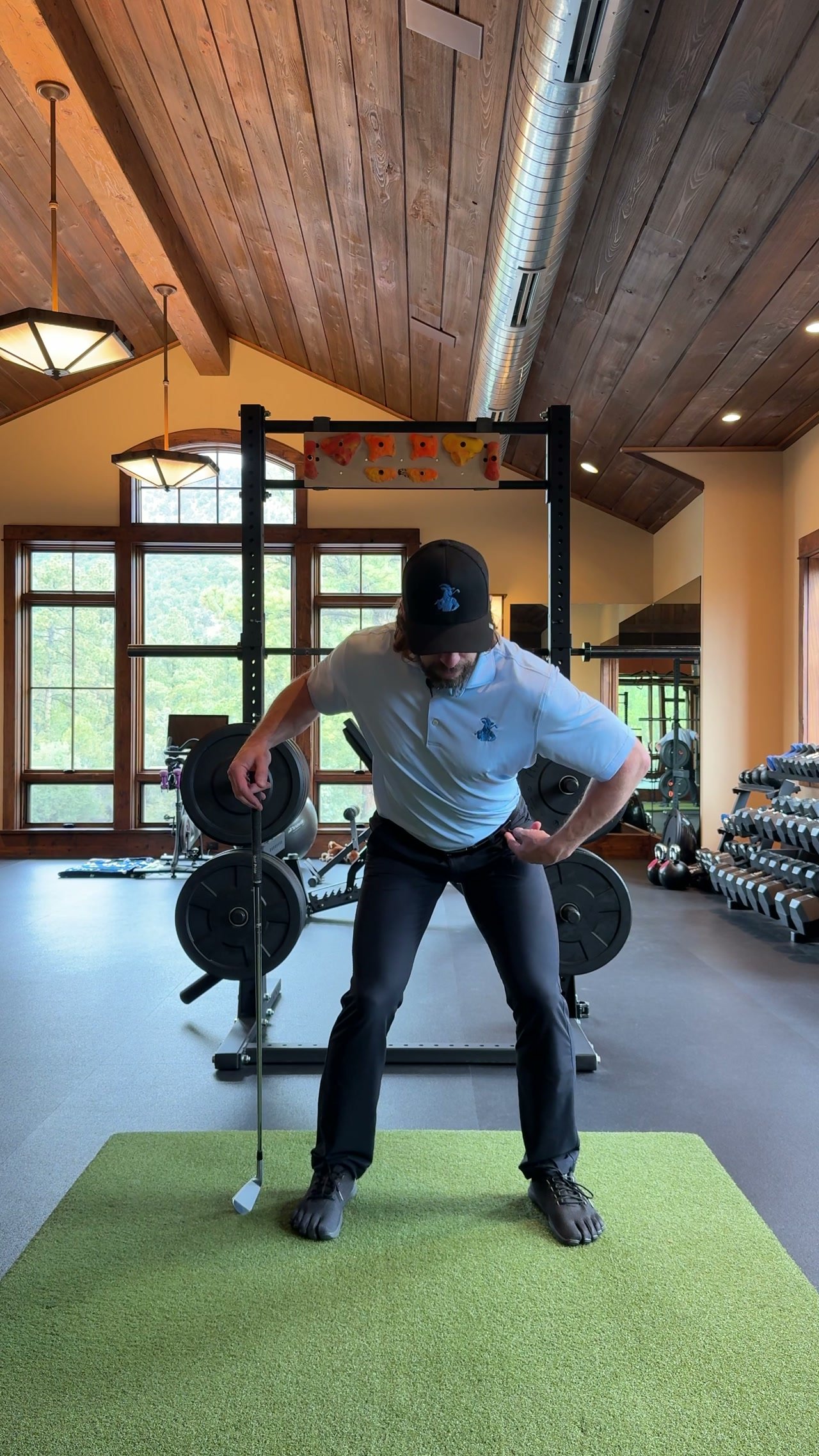
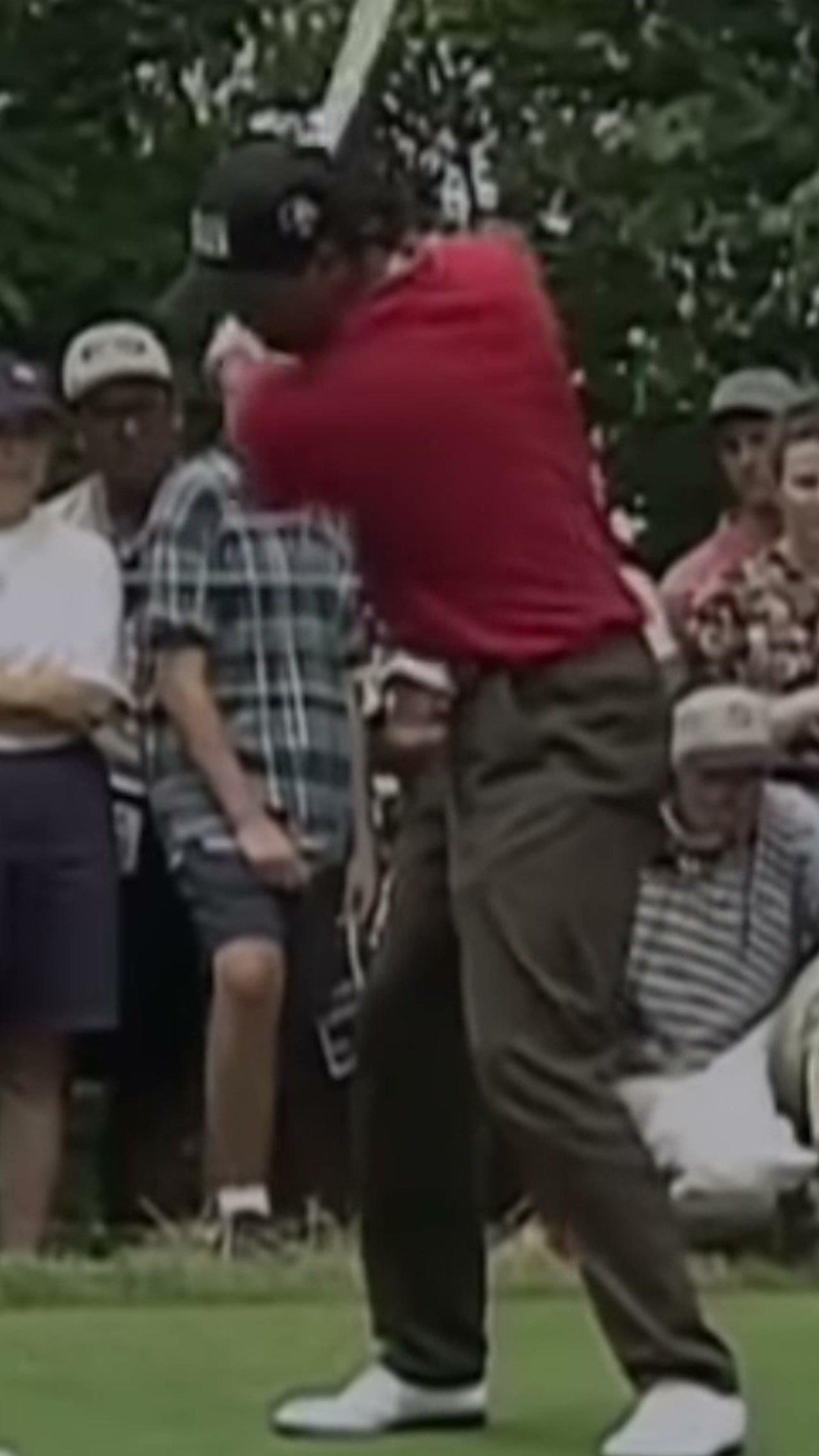
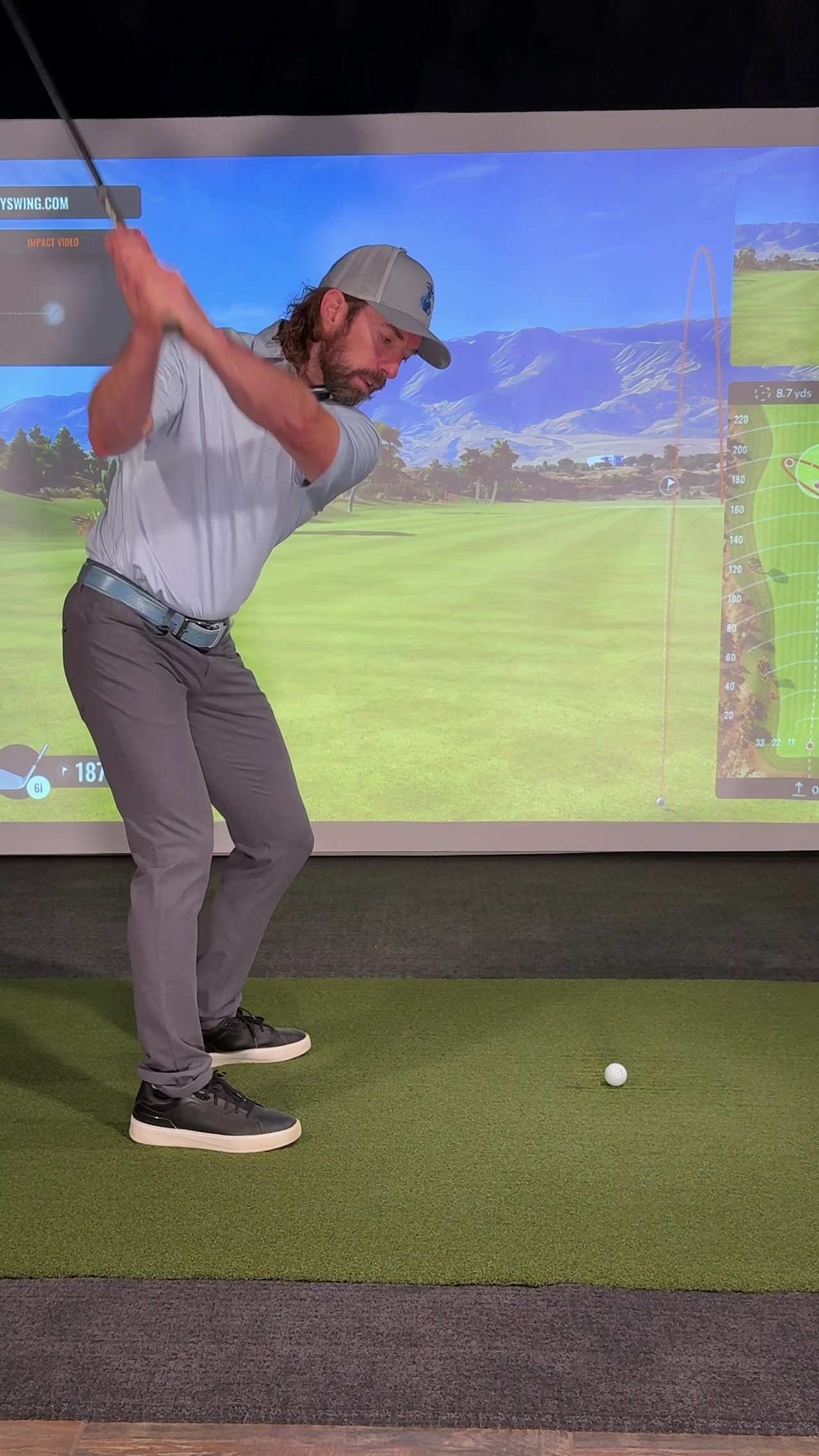
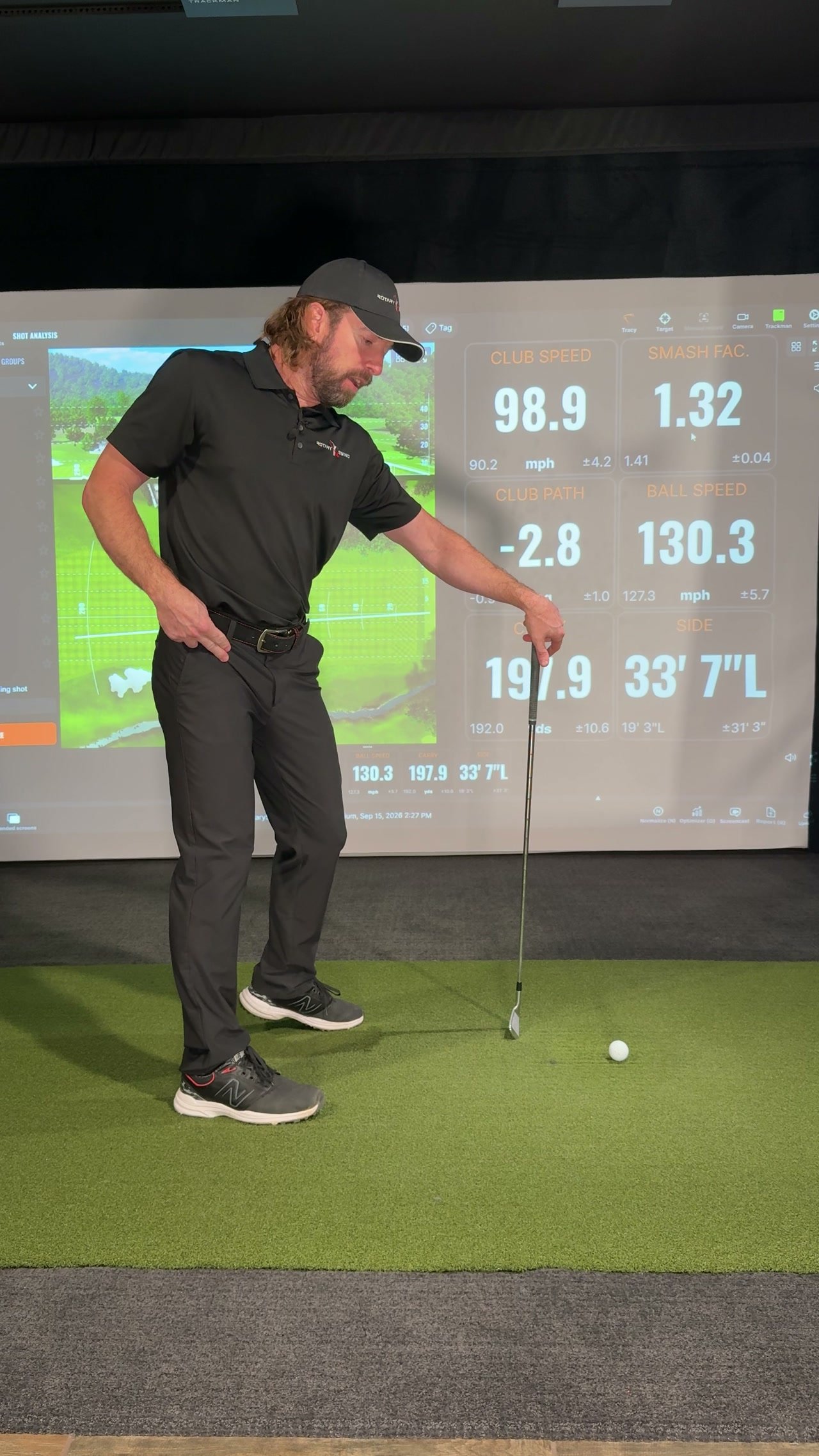








































































































































































































































Q-n-A Webinar 10: August 13
Sorry, you need to be a member to access this video.
You Are Just Seconds Away - Become a member here!
Already a member? Log in now


Try a free live lesson with GOATY
GOATY, my AI golf coach, watches your swing through your phone camera and coaches every rep. Free, about 20 minutes, no credit card.
Q-n-A with Craig Morrow, tenth webinar, August 13th 2025
Ladies and gentlemen, can you hear me?
Because if you can, I'm going to be ecstatic.
Yes, okay.
So, sorry for the delay.
Obviously, a few minutes right there.
There was something going on with the year, date, set situation.
But I think we're all rectified now because, according to David, you can hear me, I know you can't.
You can see the screen, right?
Anybody?
Is the camera working too?
Okay, all right, well, so that's a good.
That was a daunting start.
Uh, last four minutes in crisis mode to get this thing loaded.
So how are we doing today?
How are we doing today?
It's me again, your humble swing guy, RST instructor Craig.
So I hope everybody's doing well today.
And I got a couple questions in the community.
I thought I would have a little bit more considering how hard I was on everybody last time by getting some questions in.
So what we will do is the same protocol as usual.
We had a little bit more time for people to pile in because of the technical difficulties.
I won't spend too much time waiting on everybody because I can see the ticker going up right now.
But after that, we're going to talk about the questions that were sent in.
And if I finish with those, which I think I will, I'll get probably close to it.
Then we shall open it up to the class and see what everybody else wants to talk about.
So I hope everybody's having a good week so far.
I'm going to get a sip of drink right here.
How's everybody's week going?
Everybody feeling good?
Everybody enjoying?
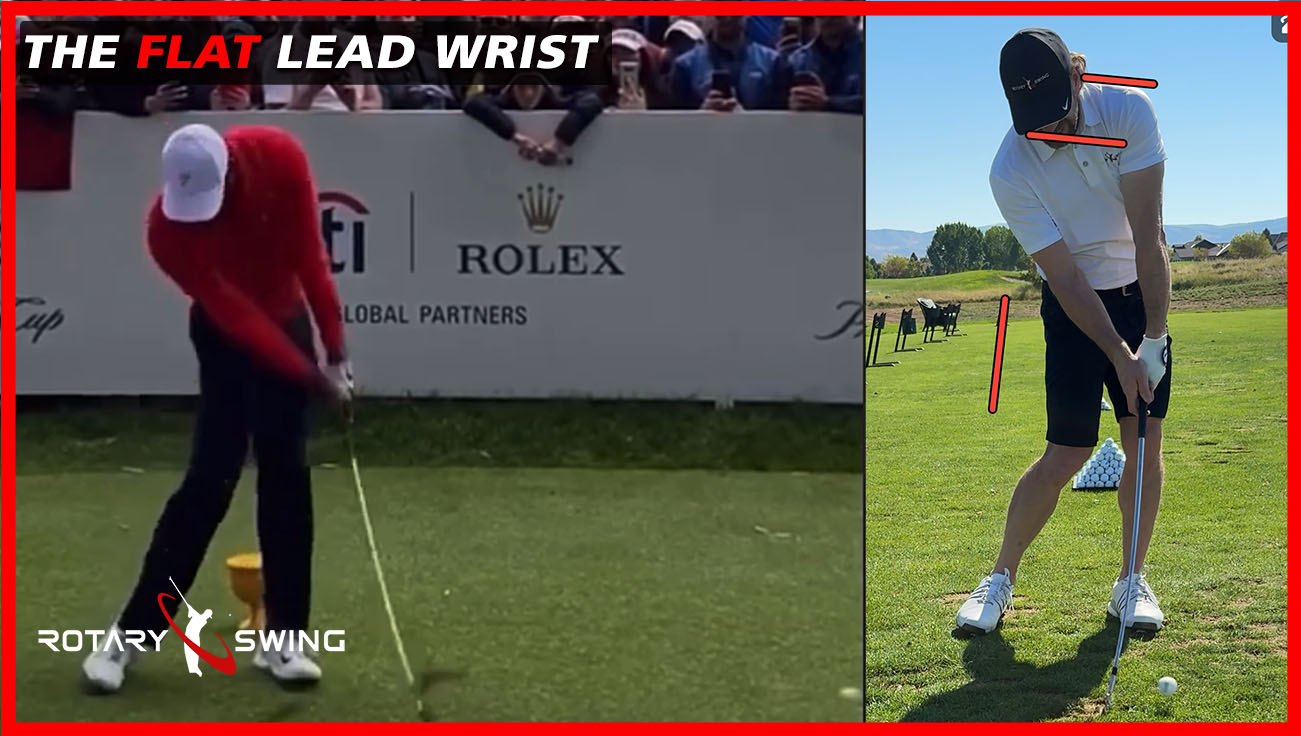
Everybody working on their new goat lead hand?
Getting that down?
Getting their pressure shift back correctly?
Hope so.
It's important.
It's important.
You got two hands.
Still, even though you're being trailside driven, this guy's got to do something.
Same thing even for me.
Being a lead side player, I don't really use a ton of trail side, but if I have to hit it over a mountain, I have to add some type of throw from my trail side to get a little bit more juice on it.
Because I just can't get that solely from my left leg and lead on.
That's normal and natural.
Anything new in the world?
Anything good going on out in golf land?
Want to give everybody just a couple more seconds?
Nothing new.
I think that this little date thing kind of messed up everybody's registration link, so I'm glad that y'all are in here.
That's a good thing.
Because we were looking at an RN and something was going, the date and time and all that were correct, but the system wasn't registering the proper year.
So hopefully people will be able to get in here.
I see it growing a little bit more right now, So I'll kind of give everybody about one more minute and then I will get started.
Because I know I hope everybody's had a little bit better weather than we've had down here.
We keep going between 95 and sunny.
80, rain and humid as can be.
We can't catch a break on anything.
Give about one more minute and we will get started.
After my pulse rate, my heart had to calm down for a second.
Don't like technical difficulties.
Well, I think we might as well get started.
I don't see, it's not really changing.
I'm going to guess that the link did something, but everybody's still going to get the recording.
So the ones that are here, thank you for showing up.
Thank you for using the link or hanging around long enough to get into it.
Apologies about the delay, but without further ado, let's get started on this.
Craig, this question is for the weekly webinar.
Having trouble.
With the idea that the core moves everything together, yet torque is supposed to be created by the upper and lower body moving separately.
In the backswing, if I think about using my core to rotate back, then it looks like everything turns together.
My trail hip gets really deep.
My right leg gets close to straight.
My left knee collapsed.
So we don't want too much left knee collapse because that's actually going to delete tension.
If I try to keep my lower body stable and just rotate my upper core, then when it comes time to fire my downswing, my hips beat my upper body and I end up being stuck.
So if I try to keep my lower body stable and just rotate, so that's X factor.
So which if you try to keep your lower body stable and just rotate with your core, which now I can obviously get a lot of tightening.
When it comes time to fire the downswing, my hips beat my upper body and they end up getting stuck.
And that's why.
You know, there is an X factor in the golf swing.
It's also why the X Factor guys got sued, because they destroyed a lot of people's backs by saying, don't let your hip rotate at all.
Um, can you give some clarification on everything moving together but still creating torque?
It's because everything's moving at a different rate.
I mean, if you think of like, what the shoulders are doing or what the hips are doing, I mean, when I.
My shoulder right here is roughly moving about 16 to 18 inches from here to here.
All right.
My hip only has a couple inches that it's moving right here.
The club has, you know, the hands have seven feet club ETC.
As I move this way, I can still get separation just because the old adage of saying like 90 degrees of shoulder turn, 45 degrees of hip turn.
All right.
That's what everybody was like.
Get 45, 90 right here.
And there's nothing that's, that's still kind of where it needs to be.
You need to be in that kind of spectrum right there.
You don't have to be zero.
and 90.
That does create a lot of torque, but as you're experiencing, you get so wound up that you either have to get your legs driving soon to try to get rid of this tension, or you start firing from the upper half because you've wound your torque so much.
You don't have to be so loaded that you can't move.
I tend to think about it more as like a spring.
I tend to think about the movements as like I'm coiling a spring in my swing.
Like I'm lengthening, I'm tightening at the same time, I'm getting taller, I'm compressing it, I'm letting that spring bounce and snap.
And so I can still, you can see how much hip turn I have right here.
I'd say that's roughly 40 degrees of hip turn right there.
and my shoulders right here, I can feel the lengthening of my trail side right here.
I can feel the stretch from my toe, my lead toe, all the way to my trail hand right here.
I can feel this kind of line of power right here as I get this big stretch.
Now, if I were to move my hips like this, yeah, I'd feel a lot more torque.
but I don't need that much in the golf swing.
I want to be able to use a combination of everything, this stretch, getting the scapula in position, the raising, the elevation right here, because I want it to feel more like a spring that I'm trying to fire.
Torque is important, but you don't get it and you don't need it at the cost of blowing out your back.
Think about when you watch Chuck Swing.
Think about like when you watch Tiger swing, you watch your favorite pro swing.
They're working hard.
Don't get me wrong.
They're working hard.
But do you see kind of how effortless and flowy it looks?
Like, you know, you watch Chuck swing and his swing looks like I'm moving here and I'm just moving back.
It doesn't look bound up.
It looks free.
And that's because these muscles right here, we're just stretching them.
We're not trying to kill ourselves to get to a certain set position.
So what I would do, or how I want you to think about it, the core, this is the engine, right?
This is the engine.
So I'm moving my engine.
And as I move my engine, I'm still getting torque because it's still beating my hip.
I'm still rotating more right here than my hip.
And I'm just allowing these components to move.
So I can do it safely.
You're going to get enough stretch to create enough power.
You don't have to create this ridiculous X factor because I want you to be able to take this coil and drive from the side.
Actually, I think there's another question on this somewhere in here that talks about that.
Well, I think there's another one on here, so I'll come back to that.
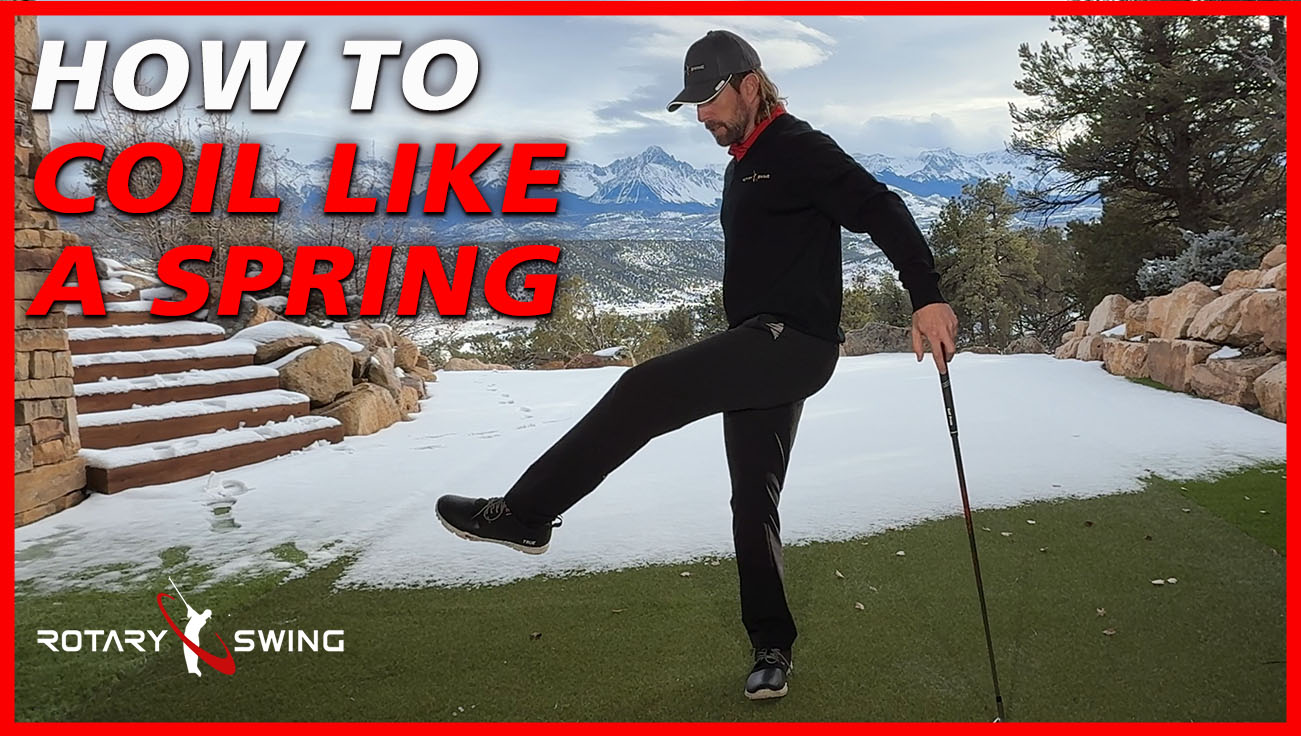
But that's why I like when you think of go to the how to coil video.
So Chuck, in that video, as you put your right leg here, drop your left leg back or trail and lead, and then says, okay, I want you to load, and then I want you to coil back, and you'll start to feel how this glute loads.
Well, as I get this internal femur rotation, I'm not externally rotating this way.
It's internal femur rotation.
As I get this right here, I feel really tight and loaded, but I don't.
feel like I'm so bound up that I'm going to have to fire from a muscle that doesn't need to fire right now.
I feel more like a spring that I'm ready to go from.
So think about it more as I'm not trying to get so bound up I can't do anything.
I'm trying to get stretch.
I'm trying to get this kind of rubber band effect where I'm just tightening this rubber band and having it unwind coming down.
Webinar question, Craig.
Snap, sling, whip, release.
Is this more the same or are there differences?
It is important to be aware of.
They're all the same.
I mean, you could put a little bit more emphasis on one main being than the other in a lead side versus a trail side pattern.
But snap, sling, whip, and release are all the same.
What you're really trying to do at the end of the day is what?
You're trying to generate club head speed.
Now, impact is the only thing that really matters in golf.
You have to be in the proper impact position.
But you're trying to generate club head speed so you can hit the ball a long way.
So snapping the club, whipping the club, releasing the club are all letting this club do what it wants to do.
That's all that is.
It doesn't matter.
So when Chuck says, get down here and let it snap.
You're snapping the club into the release.
When he says, let it whip through here, it's driving, creating a little bit of counter torque with the trail leg and letting it whip through here.
All those terms are kind of synonymous.
So I can understand why that may be confusing because you hear snap.
You're like, well, think about like Chuck's most recent video.
You hear snap and you're like, oh, well, Chuck's just meaning like I need to just snap my wrist.
Like just get this owner deviation right here and get into this position.
And then hold off on the club, like, I'm just trying to snap this down and then hold like this.
No, you got to still let it release, once you get start getting this feeling and you get your pressure back this way, you still got to let this club release.
That's why the whole emphasis is on making sure that when you get up here, we let this lead.
Wrist break down and getting the toe into the right position.
Because it still has to have some whip, some speed, some snap coming through.
So I like the question because I can understand why.
It may seem like there's differences, but snap whip release is all letting this club speed up.
It's all letting you have, uh, some free speed.
Because that you have to get it from here.
And what I mean by this is, you got to let your, you got to transfer all these forces.
I literally finished the Zoom lesson right before I turned this camera on, uh, and I was talking to the player about it.
That he was getting his arms and hands as he was working on his drill all the way down here.
And then saying, Okay, well, with release, now, what do I have to do?
Or what I'm like, you can't do anything for me?
I can't add any power from vertical force because I don't have time to get my vertical force.
And get this snap to happen, get this release to happen right here.
So my point behind that being is as we're moving through here and we're moving through these positions, it's all about making sure that we're maximizing this clubhead speed.
It's making sure that this whole sequence and everything that we're doing is to get this clubhead to whip at the right time.
So I can understand why that would be a little bit confusing, but they're all the same thing.
It's all about transferring what we have here through the club.
And getting it to snap going into the next question, correct How much right wrist power is there in GOAT Release?
Okay, is it like a throw or skipping stone on the water?
Yes, it's very similar to a throw and skipping a stone on the water.
That's the two analogies I use for everybody first, if you think about a throw.
If I had a ball in my hand, which should be somewhere around here, but my dog probably stole it If I had a ball in my hand, I would be coiling back into this position, letting my trail wrist start to load at the top.
And then as I start to pivot and I start to work around, now I'm releasing that ball with my hands and wrists going this way.
And it's very similar to the sequencing.
Same thing as skipping an underhanded stone right here.
I'm letting my body pivot, speed me up, and then letting my wrist snap.
In this case, I feel like I put a lot of effort into the right wrist throw.
Is that the case in the golf swing as well?
How does the whip or swing manifest itself?
It manifests itself through the sequence.
The big thing is you have to let your right wrist snap.
That's going to be where you're getting this speed from.
I think that when we see the thumb push, how Chuck talks about, When he gets up here where he feels like, you know, he's throwing the club as hard as he can in this direction as he's coming down.
Because, as Jack said, you can move laterally, you can throw as hard from the top as you want, as long as you're still moving laterally right there.
But that doesn't mean that you're powering it with the hand.
I think that's where players start to get a little bit of a skew with this is that they start trying to motor it with it.
Let me kind of expand upon that.
I'm not trying to power the swing just like I wanted to throw by pushing my arm or by flinching my wrist.
All right.
By trying to make my speed be generated by this.
All right.
Think about.
100 mile an hour fastball pitcher.
Can they get that solely from their arm?
can they get that solely from their wrist?
Not a chance they got to get all this through the kinetic chain with how they're throwing it.
Same thing with the basketball.
I can get here and I can do this, and I can get this all the way about maybe the free throw line and maybe a little bit further, but then I'm going to kind of be maxed out.
I'm not solely depending on like, how fast I can or how hard I can push my arm or push my wrist.
I'm using my legs, my core, my jumping, my vertical motion to transfer everything through this.
So the right wrist has to still be allowed to snap.
I think players when they started getting the goat grip and started adding a little bit more pressure because you tend to grip it a little bit firmer.
Go grip wise, in a trail side pattern.
That they, they got this notion of that as they start to work through impact right here, that they're holding on for dear life and never letting this club go.
And especially because when you start working on short game, you start working on chipping, you're really trying to maintain that position.
But what do we not need in a chip?
I'm not trying to hit a chip 200 yards.
It'd kind of be cool if you could, but I'm not trying to hit a chip 200 yards.
This right wrist or this trail wrist has to be allowed to snap.
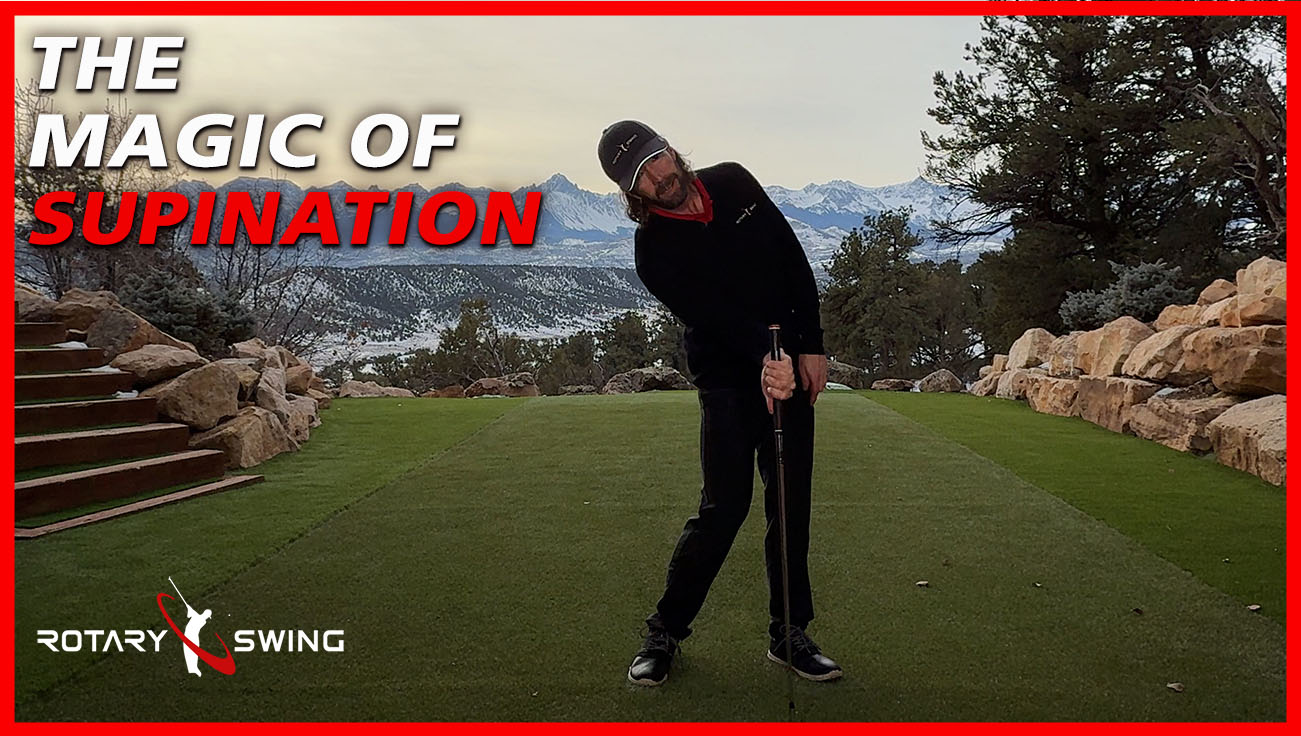
So like in the last webinar, when I had the players sit here and feel supination and work down this way, this trail wrist has to be allowed to snap if you're going to have speed.
Now I can combine it with a little bit more lateral motion and a little bit more side bend.
If I want this point down here, and I'll show you what I mean.
If I'm right here, this is going to be where my arm's straightening.
Now if I add.
a little bit more side bend, and more lateral motion as I do this, I can kind of extend that period where this face is staying a little bit more stable, driving it a little bit further down the line.
So if you want to prioritize, you know, a little bit of consistency, adding a little bit more side bend, you can do that.
You can keep that face square for just a little bit longer as it's going through there.
For me, I don't like that much side bend because it puts a lot of pressure on my spine.
Because I'd really have to get my hips a little bit more open.
Well, for some of you that know this, I broke my left hip in 21.
So my left hip really doesn't want to do that.
So with that being said, I like to have a little bit more freedom and a little bit more snap.
The thing that you have to kind of get over, the thing that you have to really accept is you're not getting power from your arm.
And that's kind of the biggie.
If you can understand that you're not getting power by how much you're trying to motor it with your hand or motor it with your arm, snapping it and adding a little bit, just as Chuck talks about in the videos, that's going to add a little bit more juice, 100%.
But that's not your sole motor, right?
That's not where you're getting that speed from.
So if you can kind of think about that your speed is just like a basketball shot or just like throwing a ball or just like skipping a stone.
I need to have enough pressure in here to maintain control of the club, to feel the supination, to maintain this as I'm driving it.
And at some point in time, I've got to let it snap.
At some point in time, I've got to transfer that energy somehow.
And the only way to do it is I've got to let it do it.
I can't make this club move faster than physics can.
I think that's kind of the whole spiel behind it is the club needs to move fast.
And I've got to trust Sir Isaac Newton to do this.
I can't make that move faster than he can with the physics.
Having the width, having the drive, having the counter torque, the deceleration so that I get this kind of independent speeding up of the club because I can only push that so fast.
And I see it on the driving range, Zoom lessons, swing reviews all the time.
where a player will get to here.
I actually had somebody send me this one on Instagram today, that getting to here, somebody trying to generate speed this way, trying to get their arm.
Well, that's as fast as their club's going to be able to move.
As soon as their scapula starts to disconnect and their trail shoulder's pushing and their trail arm's pushing, this is as fast as you can make that move to the club.
Players get stuck, especially driver -wise.
If you look at the averages through, Throughout the history of golf, players get their drivers stuck in the high 80s, low 90s, and they can't crack 100.
There's a gazillion of them out there.
They're like, I can never crack 100.
I can never crack 100.
If you can't crack 100, it's solely because you're using your arms.
That's it.
If you start to get your body to generate some speed with that snap, there's no reason you can't get to 100.
You're solely using your arms, just like the person I was talking about earlier.
You're just powering it that way, so you're not trying to power it with your right wrist, the power is working through your right wrist.
Because everything that you're doing here, just like skipping a stone, I can get here and skip a stone like this pretty far.
But I can make that same motion, doing my body like that.
But I, I let it snap, I didn't, I didn't try to push it out there and muscle it.
That's what I see all the time.
Okay, number four.
Explain what dynamic stretching is.
Okay.
Where in the swing this should be going on how to do it and what we can gain from it and how important it might be.
It's very important.
What can we gain from it?
A lot of free speed and a lot of free sequence.
A lot of byproducts.
Is this mostly missing amongst amateurs?
I mean, I can't say mostly, but I'd say the vast majority of students that I work with it is.
What will it take to make this workforce?
Well, you can think about Chuck's new recent video, but I'll kind of expand upon that a little bit.
So for those of you that don't know, dynamic stretching.
is what we're kind of trying to use to get to the short stretch cycle.
So as I'm going this way, as I'm finishing my backswing and I start to move forward, I can create a dynamic stretch.
Same thing like throwing.
If I'm rearing back and I'm stepping forward, I can create more stretch.
Like this, I can get stretch.
But if I start going forward now and going back, now I've created a real dynamic stretch, which now starts to get into short stretch cycle.
Okay, and so, or SSC.
For short, when you get into a short stretch cycle, the muscles can rebound faster then you can make them rebound.
All right, this is kind of how you get a little bit of free speed with this.
And so this happens as you're going towards the top and you start to transition.
It's part of the reason why, uh, in the how the Goats use their lead arm.
Chuck wanted you to do the stepping because he wanted you.
To start to get the feel for not only getting lateral right here, but to get the feel of how to start to make this dynamic right here.
So that as you start to post right here, you start to create more stretch than you can just create on your own.
By question number one restricting your hips or trying to create torque in the backswing, so where in the swing should this be going on?
How to do it, and what will it take to make this work for.
So where is this going on?
In the vast majority of standard stock swings, you're going to start to see that players get their load and they get their shift early.
And by the time that they're done with the takeaway, they're typically kind of done with their pressure shift for this side.
But if you look at kind of like a stock swing, as I'm going from the takeaway to about lead arm parallel to the ground, That's going to be where you start to see on a force plate that a player starts to move back into their lead side.
Now they're not getting here and they're just dumping themselves.
And then they've got to arm it the rest of the way.
And now they've got no way at getting down.
I've got a student right now that we're working on that, that he's worked really hard and the swing's really good at this point.
But the problem is, is he's getting here and he's dumping everything to the side, trying to get that pressure shift done too soon.
But as soon as he gets here, he's got no way of getting his arms and hands down from this position because he has no lateral motion left.
He's got nothing left to kind of create any sequence with it.
But when you look at the vast majority of players, you're going to see that by the time when this arm starts kind of getting parallel to the ground, this is going to be where you start to see the hips, the sacrum, the tailbone are going to start to make this little bit of this pressure shift back to the lead side as they're finishing their backswing.
This starts to create a little bit more of a dynamic stretch.
Because my hips are now going towards the target as I'm still going away from the target with my upper half.
And so as I'm starting to create this stretch right here, as my hips are going this way, that's going to start to help us out with a short stretch cycle.
That's going to be free speed.
I can unwind faster.
without me trying to unwind faster.
Because I've now taken this rubber band, I've stretched it to here, but now somebody's pulled on it on this end, and now I've added more to here to where it's almost to the kind of breaking point.
And so this starts to become a little bit of a byproduct sequence-wise.
When I start to load muscles correctly, players get so caught up on where the club is.
Is the club position important?
Absolutely.
But players get so caught up in chasing this thing that if I could get them solely just to focus on, hey, give me a little bit of weight right here.
Give me a proper stretch right here.
And I want you to start feeling that you start shifting a little bit sooner before you get towards the top.
And when you start feeling getting shifting a little bit sooner before you get to the top, I want you to start to drive.
I haven't really thought about anything at this point, and I'm already in GDP.
I haven't done anything other than focus on my body and focus on the sequencing of what I'm doing right here.
All the positions that you go through in the swing are byproducts of what I'm doing.
It's byproducts of sequencing and loading correctly.
If I load a muscle correctly and in the proper sequence, what's going to happen?
I'm going to unload that correctly.
So this kind of goes in.
How do you work on this well?
Working on dynamic stretching, you can't break things like into chunks.
You can't go here and then go here.
It doesn't work that way.
One, you can work on how the goats use the lead arm swing.
But one way to do it is the exact same way I was just doing it right there.
Work on getting dynamic load early.
Work on getting the weight, stretching to the top.
And then before you finish, start working on getting it back.
I'm here, stretch, get it back.
That's a good way of doing it.
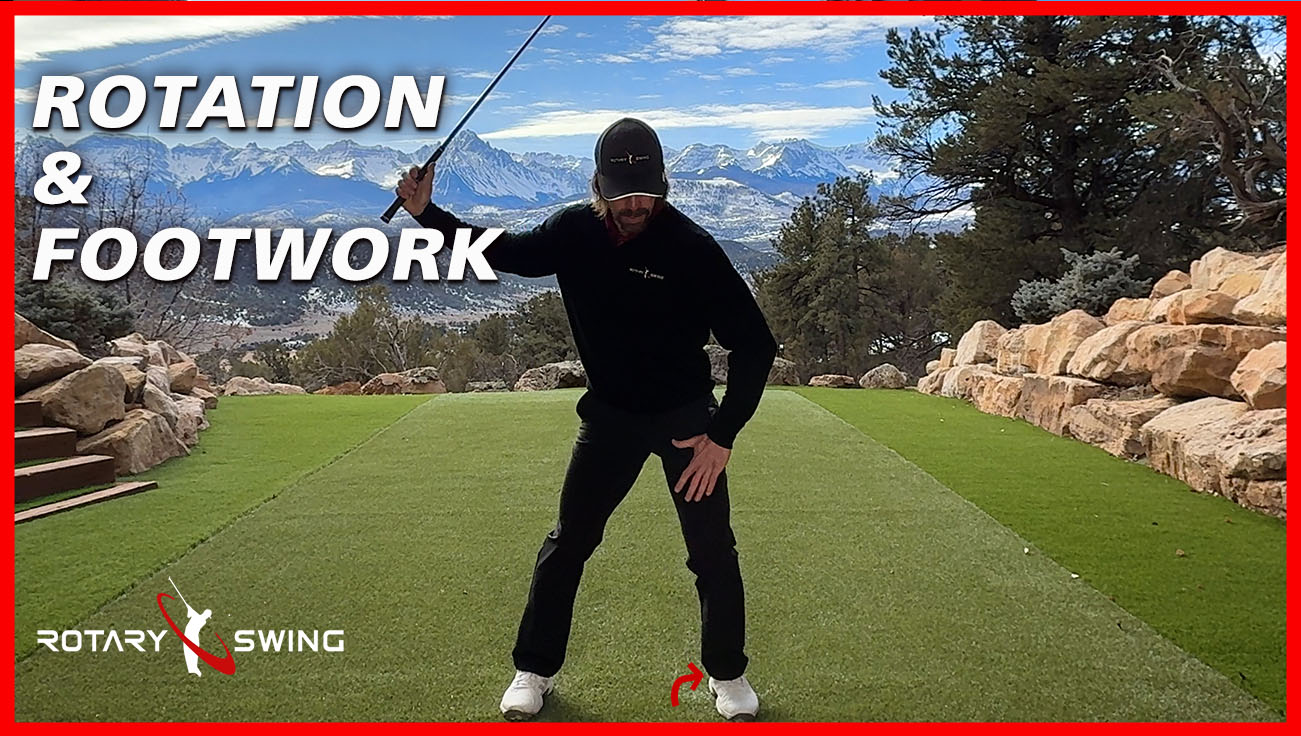
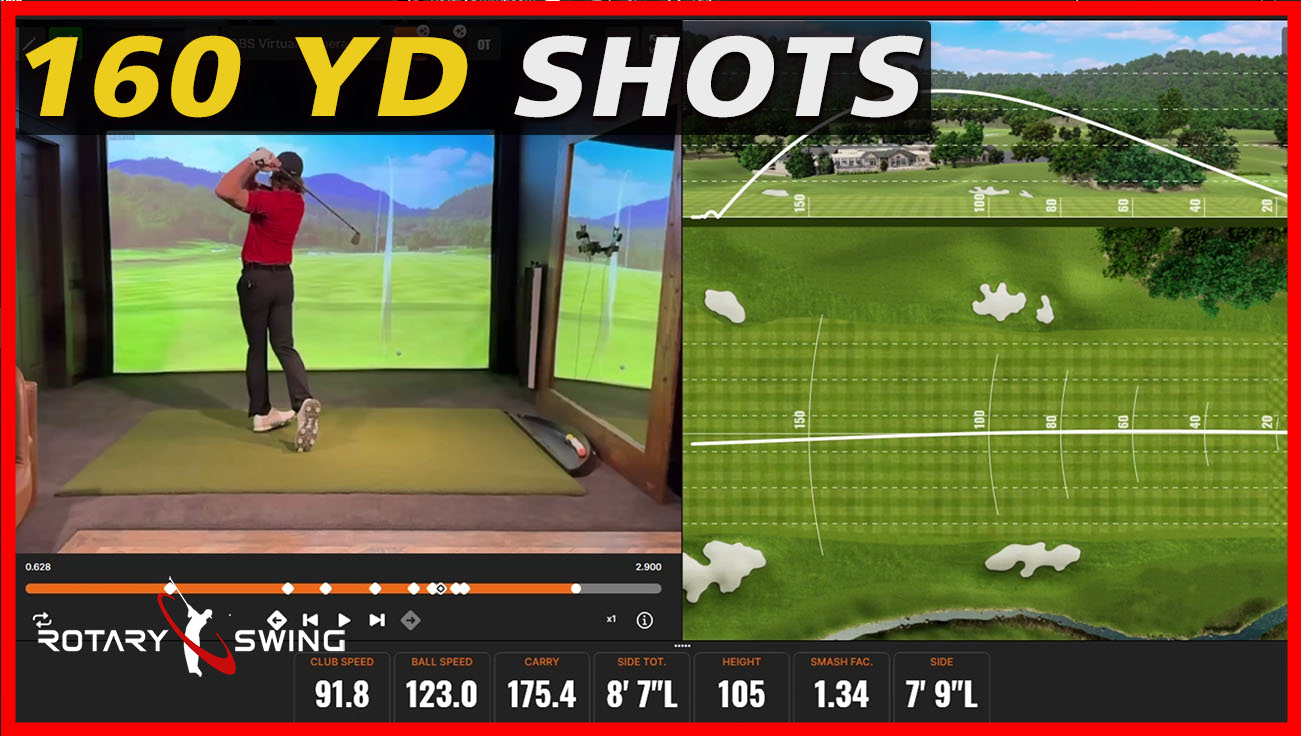
If you think of the rotation and footwork video and I want to say the 160-yard eight-iron sequence video, if you watched as I was doing it right there, what is my heel doing?
See how my heel's going this way?
That's giving me this big trigger.
To be like, okay, as I'm finishing, let me get this back so that now as I start to crunch and dry my side, I can brace myself into this side.
So one is stepping.
That's a good way to get it.
Another one is start to get loaded hard into your trail side and dynamically get up here, transition.
Dynamically get up here, transition.
And start working on, all right, how can I.
Get this position right here.
And you can hear my voice right now.
I'm starting to lose breath.
I'm out of shape.
I ain't that out of shape.
But I'm starting to do it because it starts to compress my lungs even more because I'm still finishing as I'm getting my step.
And I'm making sure that I'm going this direction as I'm going that way.
That's one of my best.
That's kind of one of the best ways I like to do that.
And that's more than likely what a lot of amateurs miss.
The two things I see most often when it comes to not having the dynamic stretch in the swing, two things I see most often.
Players start from here, and they were told not to sway.
They were told, don't move this way.
You've got to stay centered.
And so what I see a ton of, players start right here, and they go to the top, and nothing ever moves.
Now, I don't really have any lateral motion that I can really make right here, and I'm just going to make everything standing up.
And so I typically see players just staying here, and they have nothing to kind of create any juice with, and so they just start pushing with their right leg, and they start standing up prematurely throwing the club down.
The other one is the player that was taught to shift their way.
Like, hey, get into your trail side.
And so they get here, and they start shifting into their trail side.
But they take the whole backswing to do it.
And so by the time they're finishing their arms, they're still shifting weight.
A sequence killer is waiting too long to go back the other direction.
If you're still shifting weight as your arms are above parallel to the ground, you're never going to have good club head speed and you're shooting yourself in the foot.
I always used to tell players, and I still say this on.
to players is that professionals are usually just one step ahead of amateurs.
Doesn't mean that they're anything special or anything like that, but with their sequencing, as amateurs are still trying to get loaded over here, I'm already going this way.
That's what I mean.
As amateurs are trying to move and shift down, I'm already to my vertical post.
Like we're just kind of one step ahead.
Everything's just a little bit.
Snappier, a little bit faster, they're still being done, they're just a little bit snappier, a little bit crisper right there.
But if you're still shifting weight as you're getting towards the top, you're.
You won't have enough time to get your lateral motion, your rotational motion and your vertical motion done.
By the time you get the impact you, you can get about two of them, you may get here, and you might get Rotation and vertical, but you're going to have all your pressure back on this foot.
You're not going to have any lateral motion.
Or you get to here, and then you get that all the way back.
But by the time you get to here, well, now I can't get my post-up done because I had to spend all my time getting my weight back.
Remember, this motion, as I'm going from the top, this has to be snappy, snappy, snappy.
I need to get this done so I can get this club to snap.
And so amateurs, they tend to either stay centered, and they can't do it.
Or they were taught to shift weight and they keep going, but they can't get it done.
Get the weight shift early, get it done, and get it back.
Get the weight shift early, get it done, and get it back.
Always think the next step.
Always think like, all right, I got to get the weight here, but I got to get it back.
Always kind of be thinking ahead.
It's kind of like driving a car.
I do this.
I don't know if you do this.
But it's like looking down there.
It's thinking ahead.
Like, you know, I'm looking, you know, half a mile down the road.
Hey, that guy's kind of wobbly over there.
This is going on or that tree just came down or, you know, that might be a state trooper.
I'm always kind of planning ahead.
I get this done to get this done to get that.
I've already done everything I need to do.
Now I can just let this club snap.
So at the end of the day, yeah, I would agree to get.
You need dynamic stretching, and it gets you into a short stretch cycle, and it does a lot of free stuff for you.
I kind of like that.
It's like playing the Powerball.
You know, the American dream.
Do a little and get a lot of reward.
Two questions.
Two answers.
But I see a lot of question marks on this.
I don't know if this is two questions.
Can you talk about turning into the right leg on the backswing?
Kind of did a little bit.
Don't feel tightness in my right glute unless I preset my right quad by internally rotating it to the right before I start the swing, which kind of causes a Gary Player knee buckle.
See, that puts it a lot right here, too.
I try to keep this tension turning into a counterclockwise quack leg on the backswing while putting pressure on my foot early.
Is that the right feeling?
A little bit.
I mean, there is a thing to getting this knee kind of kicked in so that you can brace in this way.
One caveat that I've always had with that is literally just what happened right there.
As I started to do that right there, I started to feel a lot of pressure on my knee.
Now, I can change that by kind of manipulating how I do my hip.
I can get my pressure out of my knee.
But the knee is only designed to have a few degrees of rotation, unfortunately, two to three.
degrees of rotation.
And so if you're using that knee as kind of the bracing point, you're going to wear it out.
It's just not designed to do it.
And now you're trying to rotate against the joint or against a position that doesn't want to rotate.
Your hip can rotate all day long.
If I'm right here, my hip can rotate all day long.
He likes this.
He ain't got no problem with that.
But this guy, he doesn't want to rotate.
He likes going this way.
He doesn't like going this way and this way.
So what I would do is actually what I was saying earlier with the other gentleman's question is.
I would kind of drop my foot back like this?
So if I'm, if I'm setting up square right here, like I'm going to hit it towards the wall, I would drop this foot back right here.
I would feel some loading early because I can feel like just even doing that.
I can feel my glue right now and then dynamically wind up to the top, and I can really, kind of feel this in my glute right here.
But what this is going to help you do, speaking of dynamic stretching, it's going to help with that.
What this is going to help you do is get this internal femur rotation.
All right, most players, and it's like, what you're saying right here with the Gary Player thing if you start to get this foot splayed this way.
Because I see this all the time in backswings is that players try to rotate in the backswing.
And their knee starts to go this way, so their hip and their femur, they get externally rotated.
That's never going to get back.
What we want is internal femur rotation.
That's how the hips rotate back and through.
It's internal.
It's not external.
And so what I would do is I'd actually drop the foot back this way, get the weight into it.
So you can see I'm really kind of forcing myself to feel activating that glute right there, and then dynamically wind myself up.
And when I do that, I can feel how this side's really loaded right now.
This is going to be what I start to use and what I drive off of the downswing.
So if you can use the knee, I would just be really, really, really careful of it.
But also, how much do you really need to feel?
I think that's a, you didn't ask this question, but how much do you really need to feel?
Like I don't, when I, I feel like the spring, I feel a coil.
I don't feel like I've got a 500-pound dumbbell sitting right here to get that load.
I don't feel that.
I feel more springy, like I'm working into that position to make this fast.
So I think players often kind of search for a specific cue.
Chuck said I've got to load the glute.
And so I don't know if I feel loading the glute right here enough.
I don't know.
And then they'll come to me for a lesson.
They'll do something.
I'll be like, look, you're loaded.
Like that's not the problem.
You're overly loaded.
You're so loaded.
You're locked up and you can't do anything else right here.
Yes, it needs to load and have this pressure right here for you to go.
But there's so many other moving components that have to move dynamically.
So you're not trying to feel like a 500 pound barbell right there.
Second question.
Same person.
On the takeaway, I tend to get the shaft a bit flat at P3.
Uh-oh, here we go.
Here are the fun terms.
And up to P4, all right?
P3, P4.
And for those of you that don't know, so P3 is going to kind of be lead arm parallel to the ground.
P4 is going to be the top of the back swing.
Can you talk about the role of the left forearm?
Should it be supinated until P3?
I'm still pronating it to start the downswing while the right wrist forearm supinates.
I really like the drill that you did in one of the webinars, holding your hands with a small space in between and keeping them in the same position to P3.
Thank you.
But I still tend to get flat during my actual swing.
Am I thinking of this correctly, that supinating the left forearm will help get the shaft a bit more vertical in the backswing, or is this done by preventing the left shoulder from rolling in or something else?
It kind of depends on why you're doing it.
So what I'm gathering from that question is that as you're going through your backswing, you're getting up to here.
You're getting into P3 position.
Is that you're you're having a tendency to still get a bit flat?
That's how I'm kind of picturing and seeing that.
Is this getting a bit flat right here?
So there's a couple different ways of why that would be happening, so you can see right here.
If I quit rotating all right and I just start pushing with my left arm and it starts to, I start to add a lot of internal rotation.
This way.
Yeah, that's gonna, that's gonna cause some problems right there, that's gonna tend to get it flat.
Another thing is, is if I'm going here, I start getting into P3 in this position and I start to get a little bit flat this way.
I can do it from this one, but I also can start to suck my trail arm back.
I can start to really overly get this trail arm engaged, start to bend and add too much flexion.
What I would do, if you have, I don't have any sticks around here, so we'll just use this club.
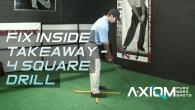
What I would do is think about like the old four squared rule.
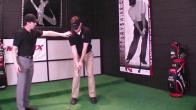
So if I were to set up right here, I would typically do this standing on it.
And I've got this club kind of going through the arches of my feet right here.
And so as I set up right here, I start to make the takeaway.
All right.
So my lead arm right here still have the extension of my wrist.
My trail wrist is still inflection right here.
Club out in front.
This is a little exaggerated just for demonstration purposes.
So I'm right here, my lead shoulder's working down, trail, hips working back right here.
As I start to go up this way.
I don't want a ton of wrist or anything, I still got to maintain some extension in this wrist.
I'm going to feel as if the club stays in front of that stick all the way to the top.
All right now, this is exaggerated.
I'm going to feel that as I start to make this more dynamic.
It's going to start to kind of plane out a little bit, it's going to start to get a little bit more.
What we're looking for, kind of over the ankle joint right here.
So what's really changing to keep me to getting too flat right here?
Like, I'm exaggerating it right here?
I'm keeping it out in front.
What's really changing right here?
Well, my wrist angle.
I'm not losing this extension.
in fact, this extension has barely changed, but as you're saying, with the supination and the pronation, I'm not taking my arm, rotates about this much.
It's rotating as a function of how much my right arm's folding.
I'm not adding any right here, trying to add this supination too soon.
And that may be what you're doing is that you're getting here and you're adding, you're trying to add trail arm supination too soon, which is flattening out.
And so all I would do is I'd just get this club right here.
And just do a couple feelings where you're getting the takeaway right here and just keep the club in front right here.
Like this is too far in front.
But get the feeling of how little your lead arm has to work, how little your lead wrist has to work.
The backswing, there's not a whole bunch going on, at least with the arms.
I'm not trying to have any overly lifty things.
I'm not trying to have any crazy wrist sets or anything.
So I start to get into the takeaway.
I can feel the weight of the club setting up.
Exaggerate a little bit this feeling.
To me, this club's pretty nice and light right here.
It's a little bit too far in front because of this, but you'll see kind of how little to get it there.
And now when you get that feeling of one, make one dynamic and don't think about that.
You'll see how it starts to get a little deeper.
but you're going to see how your lead arm and hand are literally not changing that much.
How much is my lead arm changing right now?
I'm not really doing anything.
I've got a big rotation.
It's not really doing anything right now.
If I start to add, push, fold, I'm going to be in trouble.
But that's a good way to kind of get yourself into that position to keep it from doing too much.
All right, next question.
Make sure there's nothing going on up here.
When you're working on your own golf swing, whether it's a major change or just trying to make an improvement, how do you go about practicing to get the most out of it?
That's a loaded question.
What advice would you give somebody working on their swing and how to go about practicing?
Also, what is your advice for taking it to the range of the course?
Well, what are your goals?
I mean, that's really the big thing.
Are you wanting to make the swing change fast and permanent?
Or you're like, I'm just going to kind of go along with the flow and stack one.
And then when I get that down, stack another.
You first have to think about what you're really trying to achieve.
Am I trying to get this down in the shortest amount of time possible?
Or am I going to kind of take my time going through this?
Because that's the way that I think about it.
How do I get about practicing the most out of it?
Okay, well, I've talked about this on other webinars.
When I have to get something down, I get down to brass tacks.
It may take me a month.
It may take me two weeks.
But I'm like this, just like with me when I used to have to fix weight transfer issues.
I used to get here and I'd do this all the time.
Literally all the time.
I'd do three, 400 reps a day.
Swing, swing, swing, maybe hit a ball.
Swing, swing, swing, maybe hit a ball.
But if I need it, if I was just like, hey, there's a certain thing I ought to get down, I wouldn't be that crazy about it.
If you're working on your swing, how to go about practicing.
First, figure out what your goal is, all right?
What is my goal?
I'm going to kind of take my time through it, or I want to get this down in three months.
So if you're going to work on your swing, and let's say the three-month approach, well, if you're playing 18 holes a day, And you're spending an hour on the range.
It's never going to change.
You've got to get reps in and you've got to get proper reps in.
But it still goes back to question number one.
If you're working on your swing and you're still trying to play and you're kind of going through the process, you just have to take it step by step and know that as your swing is changing, you're now going to kind of get caught in between movement patterns.
And I think that's where players try to.
They kind of give up on things.
They tend to work on the swing.
The swing gets better.
It's not where it needs to be, but it's better than it was.
But since you're caught in between both movement patterns, you have absolutely no idea how to play with it, No idea how to save the shot that you used to know how to save it from coming over the top or coming too far into playing, or sliding, or doing whatever you're doing.
So you're just kind of stuck in the water right there.
I think that's where players are like, I want to go back to what I was used to doing because I don't know if I can finish making this change.
I'd say be easy on yourself.
Making a swing change is not easy.
Unfortunately, it's just not.
I think players are a little brutal.
Golf is already tough enough.
We're the toughest critics.
But I'd say first, figure out what your goal is.
Are you still trying to play a lot in the meantime?
Are you trying to get this swing changed down?
Second, what advice would I give on how to go about practicing?
Schedule your times.
Say, all right, this is my, you know, if you only have your hour or your two hours that you have to work on a day, you have to practice with a purpose.
What am I doing today?
I'm not just going to make a couple golf swings and then walk out of the room or just make 100.
Have a purpose to what you're trying to do right there.
Have a purpose to it.
I think that's a really big thing to it.
And taking it from the range of the course.
Most players, when they go from the range of the course, they try to take every single thought.
All right, I worked on my takeaway.
I worked on my backswing.
I worked on this.
You're never going to get your swing from the range of the course if you can't do it.
The two things that really help you getting those two.
Number one, doing it fast on the range.
The faster you can do something correctly, the easier it's going to be to repeat out there.
The second thing is when you go to the course, make it a productive session.
When you go to the course, make it a productive session.
If I'm going out there and I'm working, pick one thing to work on.
Just one.
Just one.
All right.
Pick one thing to work on.
Say, I'm come hell or high water, I'm going to get this down, everything else, just do whatever, do whatever you want.
All right, that's the way I would take it.
Okay, figure out your goal, figure out your time slots, what you need to do to achieve that goal.
Talk to me, talk to Chuck, talk to Anthony, talk to whomever and we will set a plan for you.
And then when you start trying to take it from the range of the course, Don't just be when you're on the range and you're working on your swing, separate it.
Be like, OK, I've done my swing work.
Well, now I'm going to start to make this dynamic and move fast.
And the faster I can get it without it breaking down, the less chance you're going to have to worry about thinking about it once you get to the course.
And when you get to the course, just take one or two aspects of it at most.
Just be like, let me just get this implemented and just stack the next one.
All right.
And so let's see.
With that being said.
This next question is pretty loaded.
We really don't have the time for it, but I know who this student is, so I'm going to go ahead and apologize.
Rich, I will get this answer to you, whether it be in this or a swing review.
Because that's a pretty loaded question.
He's working on training both arms kind of independently and then blending them together, which is kind of the best way.
Kind of get the feels is, you know, kind of training a little bit independently and then progressively putting them back together.
I'll get you something rich in the meantime on a swing review.
But I, I will get to this.
But this is going to be a pretty loaded question, so my apologies.
I'm actually going to save that one, or I'll get to you in the meantime on the community version.
Because I think that the next kind of set of videos coming out are going to kind of help tackle this.
But I'm going to save that one if that's Don't yell at me, Rich.
So with that being said, I always like to finish these sessions with kind of opening up to the class and answering the questions of what we need to do.
And, you know, before I finish this, you know, other than thank you for spending your time with me.
These webinars, for some reason, I have no idea why, because it's just me up here talking, have been very popular.
And so we're going to keep them going.
And so for right now, I'm going to commit to doing these to where we get a once a month in.
All right.
So at least a once a month, we're going to get this kind of live Q&A.
And so what I'm going to do is I'm going to put a post on the community.
And if you want these sessions to be longer, if you want them to only be once a month, if you think twice a month is good, if there's certain ways that you would rather ask questions, if any comments that you have on this.
We're going to try to do them on Wednesdays, either the first of the month or the second week of the month, depending on if there's a holiday or not.
But kind of let us know how you want these adjusted.
They've been really popular, and I've taken advice on kind of opening up to the forum and what we're doing and how often we're doing them.
But if there's a certain way that you like this structured, if enough people tell me like, hey, Craig, this is kind of the way that I want it, I'm going to do it because this is for you guys.
All right.
But they've been a pretty big hit.
So we're going to keep these going.
The next one is either going to be the first Wednesday in September or the second Wednesday.
It just kind of depends on what's going on with the holiday right there.
But we're going to try to shoot for like the first Wednesday of every month.
But if you think the second one is, I'm going to put something up there where I want your feedback on it.
All right.
I'd appreciate anything that you have to say on it.
So with that, I'm going to go to this board right now.
Grant, how are you doing, bud?
Is there a dynamic stretch in a wedge swing?
A little bit.
There's not a whole bunch.
I mean, think about dynamic stretching as like, you know, when I'm trying to get into a short stretch cycle, I'm trying to do things with speed.
All right.
So I'm wanting to have things work really fast, which I'm not trying to hit it that far.
theoretically speaking, but a wedge, I'm not trying to hit it that far.
So as I'm making a little wedge swing right here, and I go this way, you can see I've got a little bit of weight going as I'm finishing here, but I'm not trying to make it like, I'm not trying to make this big, fast, powerful moment.
So is there dynamic stretching?
Yeah, 100%.
I may not have a ton of it, but I don't want to.
moving into this position and waiting towards the top for you to finally start to come down.
You have to get from here towards the top.
And as you're getting towards the top, you've got to start getting things started early.
Even if it's just a little bit on a wedge swing where I'm going from here and I'm going back that way.
Even that little bit is creating a little bit of a dynamic stretch right there.
I never want this to where I'm moving this way, staying here.
Now let me get this way.
I always want you thinking about the road ahead.
I always want you kind of swinging with the idea of the road ahead.
I'm moving through here, but I know I've got to start getting back, and I know I've got to start clearing.
I didn't have to think about my arm or anything then because as I'm moving through all this, my sequence is what's bringing it down, so I can delete a whole lot of thoughts by doing that.
All right.
Anybody else?
Any other questions?
I know the group's a little bit different tonight just because of the issue with the email link.
I don't know what the heck happened with that.
No other questions?
Sorry for the first couple minutes.
You had no idea what I was talking about because I was, even in my brain, I was like, I was a little flustered.
Nobody has any questions?
Nothing?
You can ask me anything.
This is free time.
This is recess right now.
You can do what you want.
No other questions?
Come on.
It's got to be something.
All right.
Well, if there's not any questions, then.
All right.
Here we go.
David.
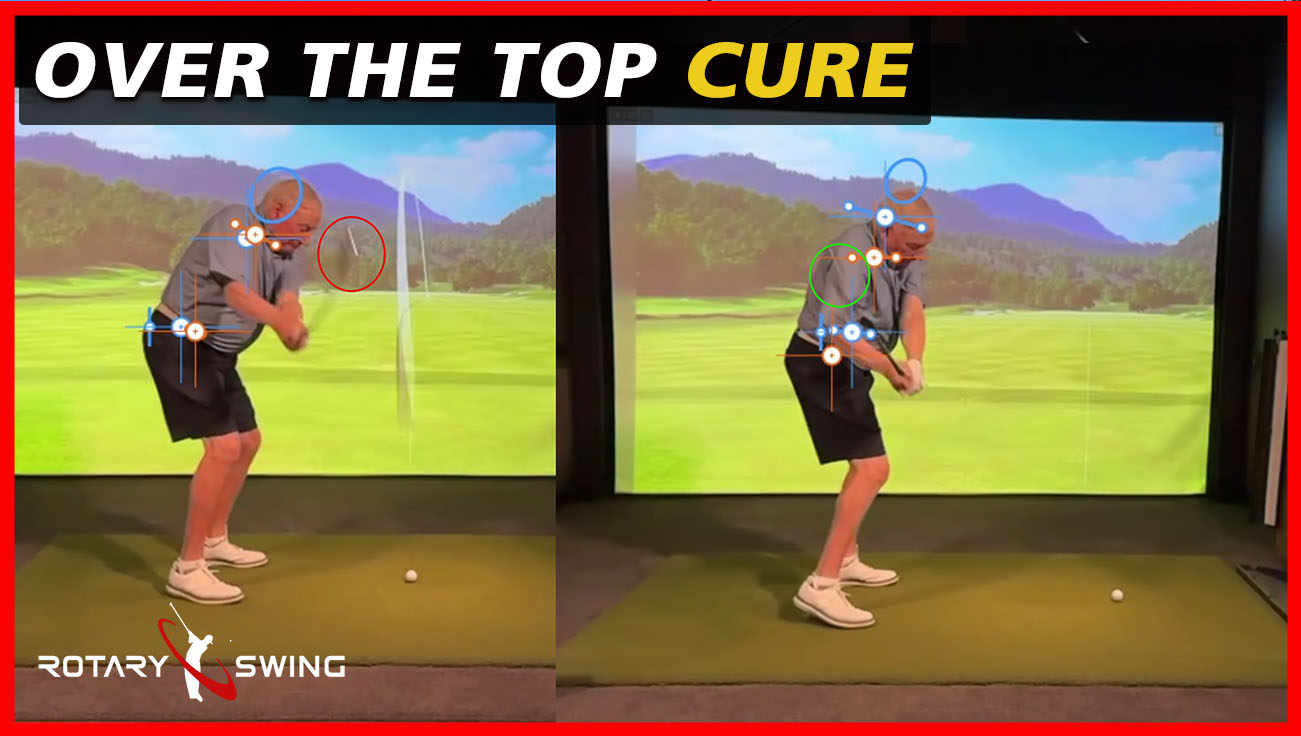
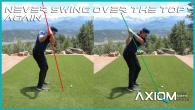
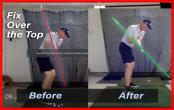
Can you demonstrate the over-the-top fix the one from the video David or just over the top in general?
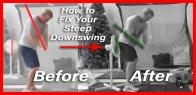
All right, So the Video version, I'm assuming you're talking about the instant over the top.
So what Chuck was talking about right here is that when you get into said position up here at the top, everybody tends to fire this way.
All right, right shoulder, right arm and hand.
The problem is is that that's not how the golf swing works.
The arm, I'm going to lose this elevation and then my arm is going to straighten, and as this is happening, all right.
So let me kind of demonstrate it from this view.
First, my arm is going to come down, lose the flexion, and as I'm doing that, I'm moving laterally back into the lead side.
Now you can see I haven't done anything other than drop my arm this way, elbow down, straighten it, and move laterally at the same time.
Where am I at right now?
I literally haven't done anything.
I'm literally feeling like I'm doing this and then moving laterally at the same time.
But now as I start to let it go down, as I go laterally and pivot, I'm at impact.
I think the big thing is, and where I've seen people kind of mess up this drill, David, has been they've gotten up here, and they're like, okay, it's drop, extend.
I'm dropping, extending as I go laterally.
Where players have gone wrong, what I've seen is these are the two things that they've done.
They're like, okay, I'm going to drop my arms.
That's not dropping my arms.
It's throwing my wrist.
Now I'm gonna drop my okay.
Well now I'm kind of in trouble right here.
All right, so think about it I always tell people think about it like a hammer, right?
If this was a hammer right here, how would I get rid of this angle?
All right, this would be a hammer So if I'm right here and I was trying to hammer the nail into the ground what would happen?
My arm would drop, my elbow would extend, and then I'd kind of move into a little bit older deviation.
Now if I do that, I go this way with a little pivot.
Because the arms, hands, and club have so far to go.
They have so much further to travel.
You got to give them a little bit of time.
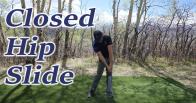
So when you think of the hips in transition video, where Chuck talks about the feeling of kind of getting the axiom feeling and getting that kind of closed hip slide.
Well, as I'm doing that motion right there, now my arms and hands as I'm crunching right here, I've got to let these get down.
These are working down as I'm making that lateral motion right there.
Think about how easy it is for this to steepen.
I can take my trail hand.
I can take my lead hand.
I can take my trail shoulder.
I can yank it.
I'm trying to get here, and you can really see it in Rory's swing.
Rory's swing is probably the easiest to see it on because Rory will go from here, and you'll see that when he gets into this position here, he literally looks like he's going down an elevator shaft.
But he's not taking all these angles and trying to hold them like that.
He's got speed.
He's got to get this club accelerating.
So as he's working from here, you'll kind of see how his arms look like they're going down an elevator shaft.
But look at my arms and hands right now.
I've got plenty of angle.
I've still got plenty of everything left to work with into the strike.
So the kind of feeling is getting here, letting the arms work down.
And straighten, look where the club is, letting them work down and straighten.
I combine that with a little bit of lateral motion.
Now I'm ready to impact.
I had plenty of time to get my hips and work down into here.
It's just the hearing arms, or let your arms straighten, or anything like that is so against everything you hear in golf instruction.
They're like, don't cast, hold the arms here, they don't.
You can't let your arms straighten on the downswing.
You're going to go into casting the club.
Look at the data.
Look at what people do.
I'm up here at the top of my backswing.
Here's my right arm right here.
Let me make a full swing.
Here's my right arm right here.
If I didn't let my arms and hands come down, this is where my arm would be.
I can't get to the golf ball from here.
As I'm here, my arms are coming down and straightening.
This is a different position.
And so players get so concerned with trying to hold the lag angle.
Or I've got to do something with this elbow, or I've got to shove this elbow in front.
I've got to get all these.
My arm started here, right?
It didn't start like this.
My arm started here.
Then I had a little bit of elevation as it started to bend a little bit.
And then now as I started to come down, it had to start to straighten.
Nothing goes out.
I go up.
I move a little lateral as it goes down.
Now I can pivot coming through.
And even if you're just here, here, and just did that slowly just to kind of get the sequence of events.
But I think that players are so scared of casting, overworking their arms, leaving the face open, that I got to hold this angle.
This goes up.
down.
Now if I make this same downward motion and I combine a little lateral and hip, still got plenty of extension in my wrist, everything like that.
This goes down, combining a little bit with the body.
Remember, think even old school RST.
What do we say in lead side swings?
What have we always said about the arms?
Still hasn't changed.
What direction do arms and hands go?
They go up, they go down.
Don't go left and right.
I'm working my body.
Arms can only go up and they only go down.
It's only when they start going left and right that's when you start to get in the problem.
Up and down as I take care of what I need to with my body.
So hopefully that answers that.
All right.
I will do you, Jim, and then we will.
Take a siesta until the next session.
And hopefully that answered your question, dude.
When I play around the first few holes, my swing's pretty good.
Good speed, good accuracy.
Then I start to revert to old habits over the top and slicing.
Do you have a suggestion for a quick routine to help me remember proper swing sequence and form that I can use on the course?
Depends on what you're doing.
I kind of design.
What I want my players to do, like when they go out and play practicing wise, depending on what they're doing.
So if you're reverting back to old habits over the top and slicing, do you have a suggestion for a quick routine to help me remember proper sequence that I can use on the course?
Well, I'll tell you the one thing, and then you can probably see all the players do this all the time.
What's one thing you see golfers do all the time?
The easiest way to get that feeling back to me is get one of your hands off the club.
You always see players either stand, I mean, I do this religiously, or either sitting here getting the feel for the release this way or even just sitting here making little right hand swings like this.
So routine-wise, the first thing that I would do, if you go a good few holes and now all of a sudden the wheels start to fall off, and let's just say you're going over the top.
Let's just pick that one.
What have you done?
You've gone from you probably warmed up good.
You're nice and flowy sequencing.
Everything's happening.
Everything's working as a good little byproduct.
And then you start to get into your round.
You're like, all right, I'm going to not I'm not saying you're doing this consciously, but I'm going to start to put a little mustard on this.
I'm hitting it pretty good today.
So I'm going to start to swing a little harder.
And all of a sudden you start to get this firing.
Or you get a little bit of a challenging shot.
So you start steering it and you start adding a component in that you don't need at that point in time.
But you get into the round, you're like, all right, I'm going to go after this one.
And you told your body to fire trail shoulder and now you can't get out of it.
One of the things I always used to do, especially me being a lead sider, is I just sit here.
If I got off on the course.
I'd make two or three swings, four, eight swings.
Just getting back the feel of letting the sequence happen and feeling the speed in the club down here is I did literally nothing.
Same thing for trail side.
Take your trail arm in hand right here and focus on, all right, I'm going to get a little load, rotate.
I'm going to feel my little supination as I go through.
Just make some trail arm only swings.
This is a really good way.
To start turning it off, and I'll show you why.
I.
I've never really seen this.
I'm making a trail arm only swing, let's say I just started going over the top, pushing my shoulder or something.
I've never seen somebody get here and be like, All right, I'm gonna, I'm gonna go through your little weight crag and get this swinging and just kind of turn off.
I've never seen somebody get here and go like that.
They may start a little steep and they're like, Oh, that's, that's getting a little steep on me right here.
Well, I'm either not kind of rotating back or I'm throwing, let me start to get a feel for rotation and start getting the feel from arm and hand working down.
I've never seen anybody get to here and just be like, wait a minute, I'm just going to keep doing that.
That feels great.
So routine-wise, depending on what you're doing, if you're coming over the top and you're following goat code and you're being a little bit more trail side, that's all I would do.
At first, I'd get relaxed right here and I'd focus on, all right, let me get a little load and rotate.
And just feel some exaggerated supination as I pivot.
All right?
Load rotate, little supination as I pivot.
And get back to feeling of the club, shallowing and swinging.
Turn things off.
Feel the club kind of work for you.
But in all honesty, it just kind of depends on what your major problem is.
But to get the proper sequence, take one off or.
If you want to get really fancy with it too, grab a couple extra clubs.
You can do this anywhere on the golf course.
Grab two or three clubs.
Grab them like this.
Just grab two or three clubs.
Just like you would do when you're warming up.
Just to get your back loose or get your arms stretched.
Just grab two or three clubs and start swinging it back and forth.
You're going to be like, wait, that doesn't feel right.
Start to feel the weight.
Move again.
Your body move again.
Feeling the sequence.
You can really feel some supination on this.
But start to get back the feel of not muscling it.
I think that's the big thing is not trying to make things happen.
You're allowing for things to happen.
I like making lead arm only swings.
Trail side, you can do lead arm only swings or you can do trail arm only swings.
But just get back a feel for the club snapping and releasing itself without you muscling it.
You can't even take two clubs like this.
just to slow yourself down from a second for firing, firing, because that's all that's happening.
You're not going to take this weight and go like this.
You'd be like, all right, I'm going to let the weight fall down, and then I'm going to go through.
It's a good little way to kind of just cheat for a second.
Be like, oh, wait a minute.
I just swing this weight right here versus kind of forget about golf.
It's going to work.
All right.
Sound like a plan?
Cool.
Yeah, I think that's what I would do.
Great suggestions.
I appreciate that.
I had to come up with them right there.
All right, everybody.
I appreciate you spending your Wednesday evening with me.
I don't know if I'd do this.
So thank you again for spending your time with me.
And we're going to do this again.
I don't know if it's going to be the first Wednesday in September or the second.
I'm going to talk to the boss man.
We'll figure that out, but we will get that link out to you.
And if you're already registered, you don't have to worry about it.
We'll get it to you.
So I hope that you enjoyed this.
I hope that you liked it.
Today was a little bit off.
I know I was a little bit off to start out with, but try to round out with some good stuff.
But thank you again.
I'm going to create a post.
Let me know if there's things you want to see, not see.
If we go to one a month, do you want it 90 minutes?
What do you want out of these?
These are for you all.
All right?
So I want to make them exactly how everybody wants them.
It's kind of the point.
So I hope you all have a wonderful, wonderful week working on the swing.
And if you need any help, you know where to find me.
Try a free live lesson with GOATY
GOATY, my AI golf coach, watches your swing through your phone camera and coaches every rep. Free, about 20 minutes, no credit card.



Seth
Craig (Certified RST Instructor)